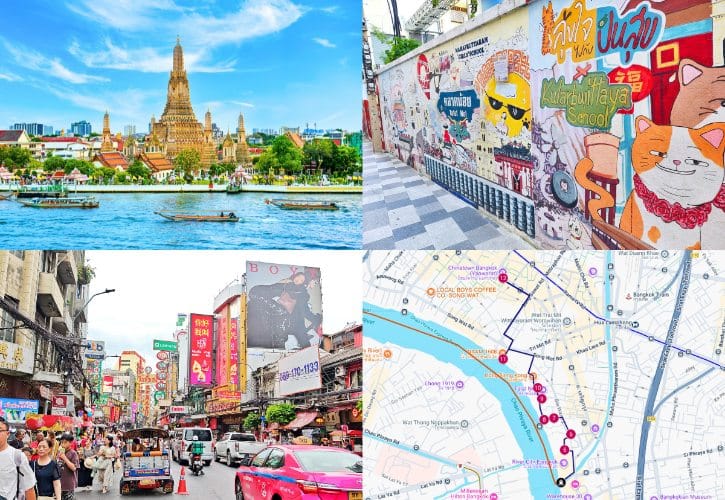
Bangkok is the kind of city that surprises you at every turn. Royal palaces sit next to smoky street food carts.
Ancient temples share the skyline with creative cafes in old neighborhoods.
This one-day route gives you a true cross-section of it all, from iconic historic temples and hidden cultural spots to riverside cafes, local street snacks, and the electric energy of Chinatown after dark.
Whether you’re visiting Thailand for the first time or coming back for more, this itinerary will make your day in Bangkok feel like several trips in one. Here’s the route. 😊
9:00 AM: The Grand Palace
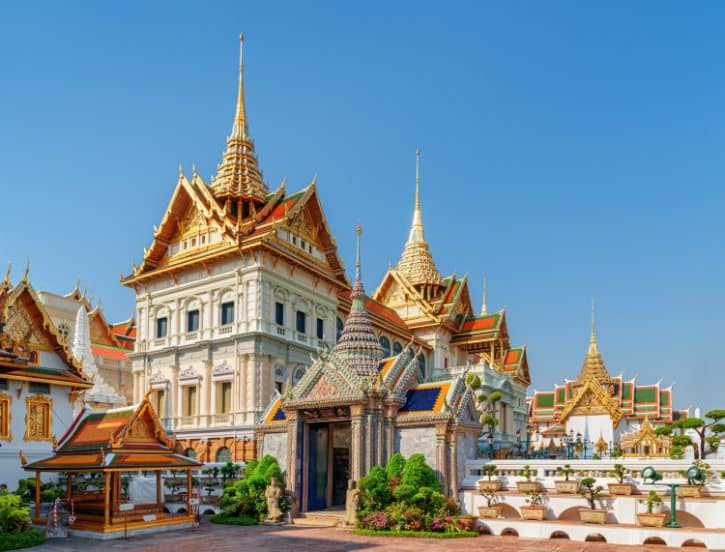
Start your morning at The Grand Palace, the most important landmark in Bangkok.
Built in 1782 by King Rama I, this massive complex covers over 218,000 square meters and served as the official royal residence for generations.
Walking through its grounds, you’ll see traditional Thai architecture blending with European design, ornate golden spires, and some of the finest craftsmanship in the country.
a. Wat Phra Kaew (Temple of the Emerald Buddha)
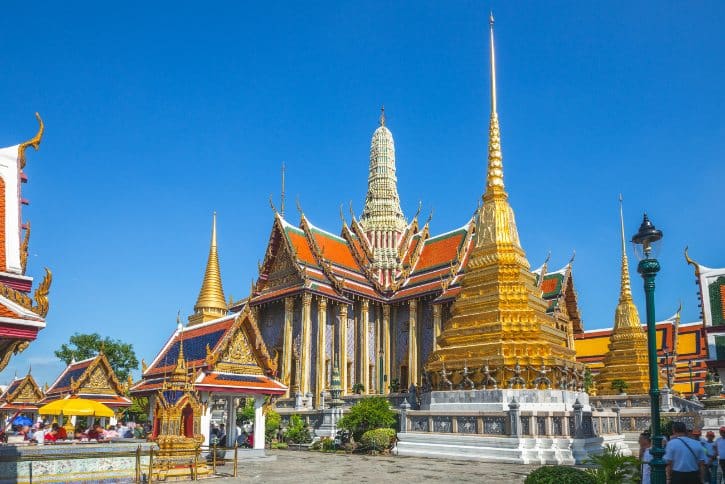
Inside the palace grounds sits Wat Phra Kaew, the most sacred Buddhist temple in Thailand.
The star of the temple is the Emerald Buddha, a 66-centimeter statue carved from a single block of green jade.
It dates back to 1434, and the King himself changes the Buddha’s golden robes three times a year to match the seasons.
Surrounding the main sanctuary, you’ll find 178 mural panels depicting the Ramakien, the Thai version of the ancient Ramayana epic. The detail in these murals is stunning.
Key highlights:
- Dress code: Strictly enforced. No shorts, sleeveless shirts, or leggings allowed.
- Photography: Not permitted inside the main hall of the Emerald Buddha
Arrive as early as possible. Crowds build quickly, and the midday heat can be intense.
11:00 AM: Wat Pho
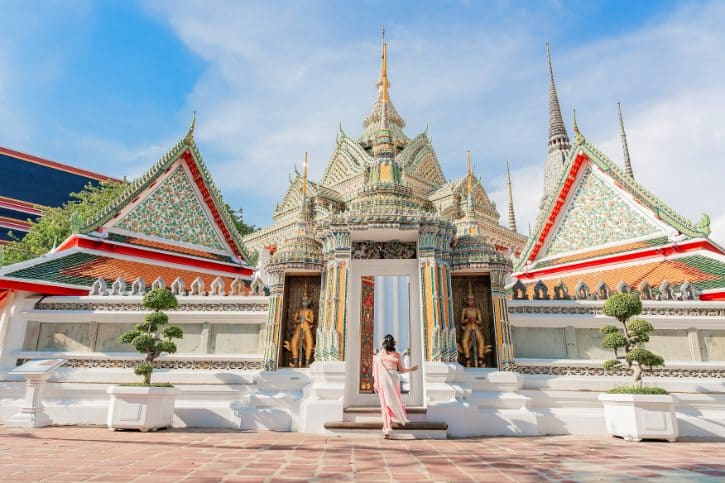
Just south of the Grand Palace, Wat Pho is one of the oldest and largest temple complexes in Bangkok.
King Rama III expanded the temple in the 19th century and turned it into what many call Thailand’s first university.
The grounds are covered in thousands of stone inscriptions on subjects like medicine, history, and literature.
In 2008, these inscriptions were added to the UNESCO Memory of the World Program.
a. The Reclining Buddha
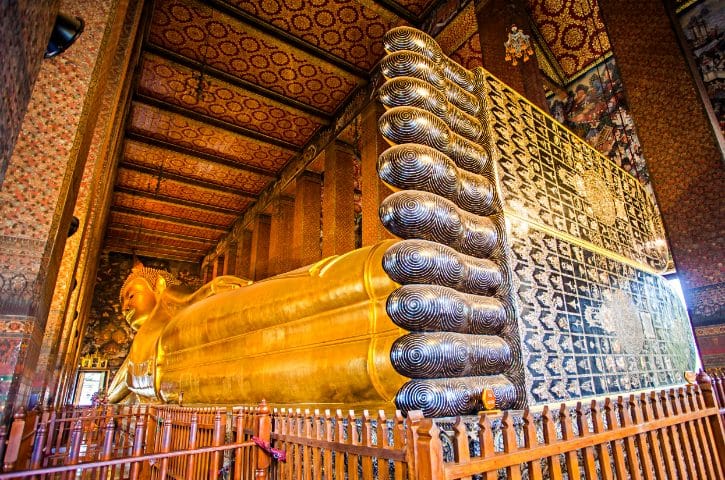
The main attraction is the Reclining Buddha, a gold-plated statue stretching 46 meters long and 15 meters high.
It represents the Buddha’s passage into Nirvana. Take a close look at the soles of the feet, where 108 auspicious symbols are inlaid in mother-of-pearl.
b. Traditional Thai Massage
Wat Pho is also the national center for traditional Thai massage.
The Wat Pho Thai Traditional Massage School has been teaching and offering treatments here for decades, and its certifications are recognized worldwide.
Key highlights:
- Massage: 400 to 600 THB depending on duration
- Don’t miss: The four large chedis (stupas) decorated in colorful porcelain tiles, each dedicated to one of the first four kings of the Chakri Dynasty
12:00 PM: Pad Thai Kratong Thong by Ama (Lunch)
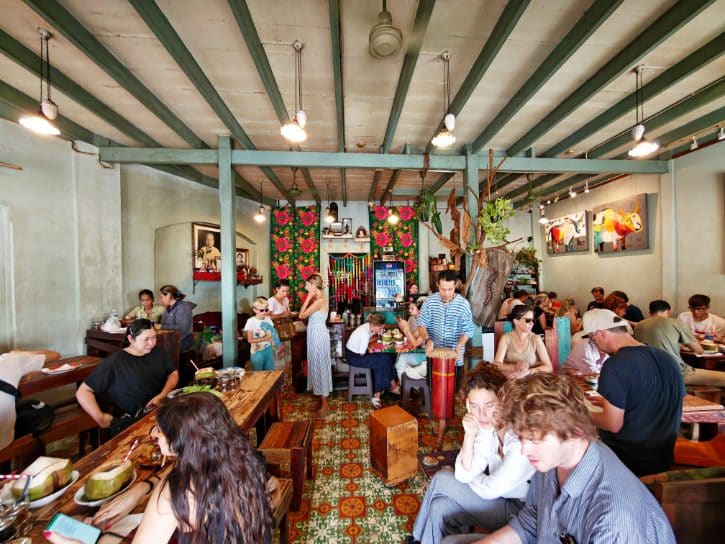
Time for lunch. Head to Pad Thai Kratong Thong by Ama, tucked away in a historic alley near the Tha Tien pier.
This small restaurant takes Thailand’s most famous dish and gives it a creative twist.
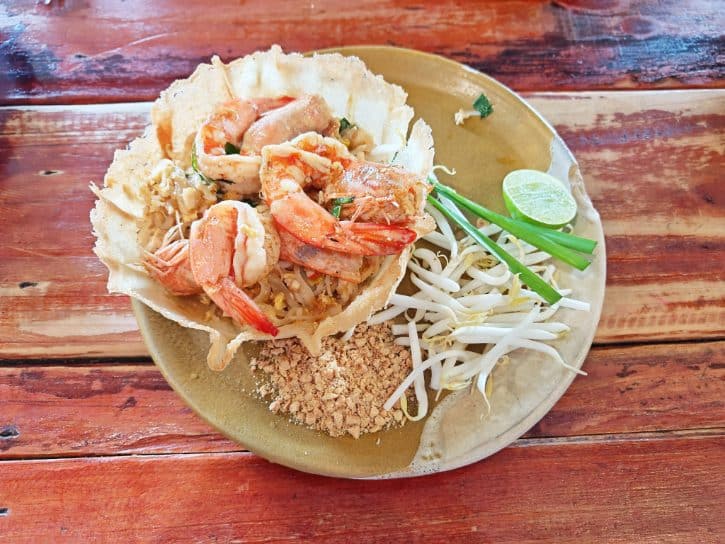
The signature here is Kratong Thong, or Golden Cups. Classic Pad Thai noodles are served inside thin, crispy shells made from rice flour and coconut milk.
The contrast between the crunchy cup and the soft, tangy noodles is something special.
Here’s a fun bit of history. Pad Thai was actually a nation-building project.
In the 1940s, the Thai government promoted the dish to create a national identity and reduce rice consumption during wartime. It worked, and Pad Thai became Thailand’s most recognizable dish worldwide.
Key highlights:
- Specialty: Pad Thai served in crispy golden cups (Kratong Thong)
- Vibe: Simple, local, and genuinely delicious
1:00 PM: Wat Arun
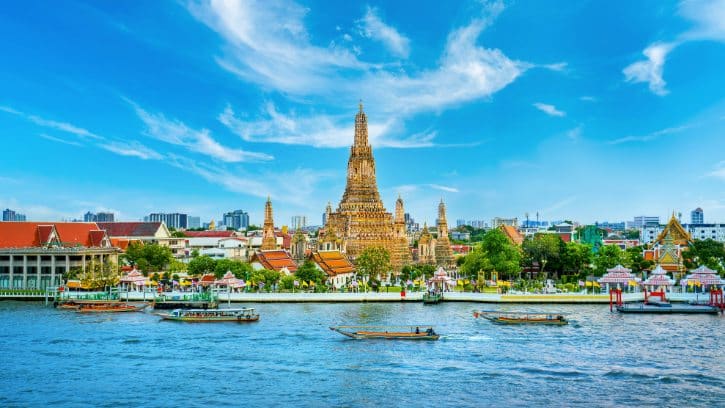
After lunch, cross the river to Wat Arun, the Temple of Dawn. This is one of the most photographed landmarks in Bangkok, and for good reason.
The temple’s history goes back to the Thonburi period. Legend says King Taksin arrived here at sunrise after the fall of Ayutthaya, giving the temple its name, which honors Aruna, the Indian god of dawn.
a. The Central Prang
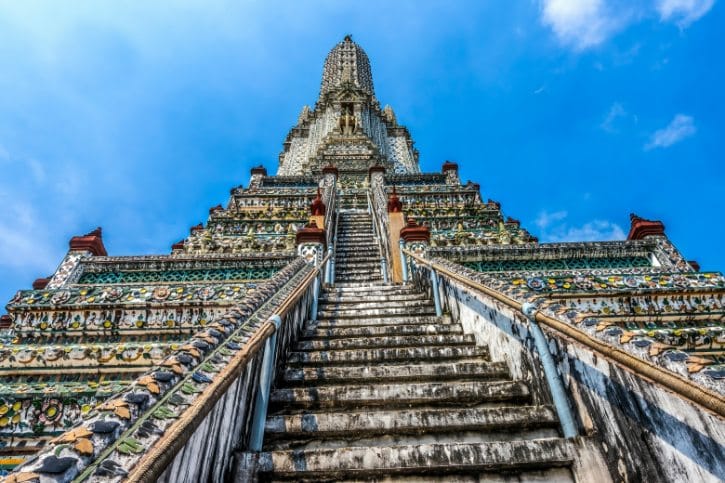
The main spire stands nearly 80 meters tall and represents Mount Meru, the center of the universe in Buddhist cosmology.
What makes Wat Arun unique is its surface decoration. Millions of fragments of Chinese porcelain and seashells cover the structure in intricate floral patterns.
These porcelain pieces were originally used as ballast in Chinese trading ships and later repurposed as decoration.
You can climb the steep steps of the central prang for panoramic views of the river and the old city. Trust me, the view from up there is worth the climb.
Key highlights:
- Don’t miss: The Kinnaree and Yaksa statues guarding the base of the prang
- Tip: Many visitors rent traditional Thai costumes to take photos against the porcelain towers
3:00 PM: Holy Rosary Church
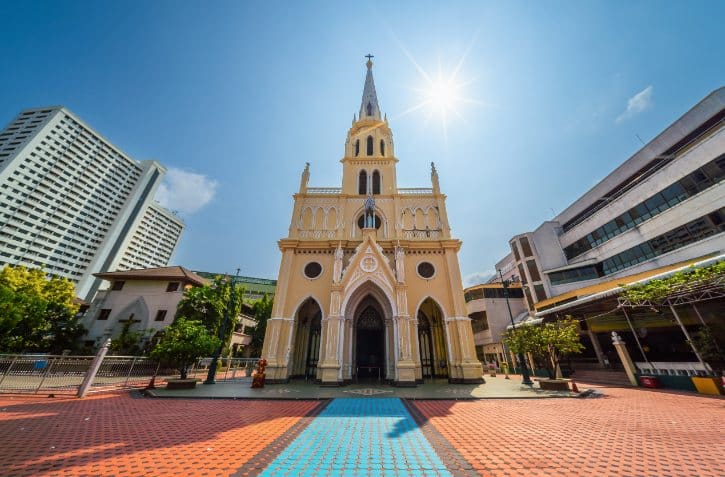
Back on the eastern bank of the river, you’ll find a surprising change of scenery.
Holy Rosary Church (also known as Wat Kalawar) is one of the oldest Catholic churches in Bangkok, founded in 1787 by Portuguese Catholics who relocated from the former capital of Ayutthaya.
The current building, completed in 1897, is a beautiful example of Gothic Revival architecture with pointed arches, a soaring steeple, and a cruciform floor plan.
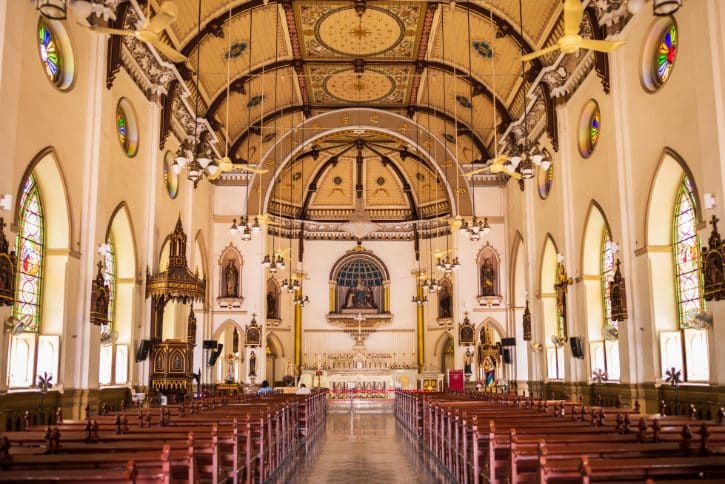
Inside, the Romanesque stained-glass windows are widely considered the finest in Thailand. They depict biblical stories and the mysteries of the Rosary.
The church received the Architectural Conservation Award from the Association of Siamese Architects in 1987.
What makes this stop meaningful is what it represents. For centuries, Thai kings granted freedom of worship to diverse religious communities, and this church is a quiet reminder of that long tradition of tolerance.
3:30 PM: TumLubThai Khanom Krok
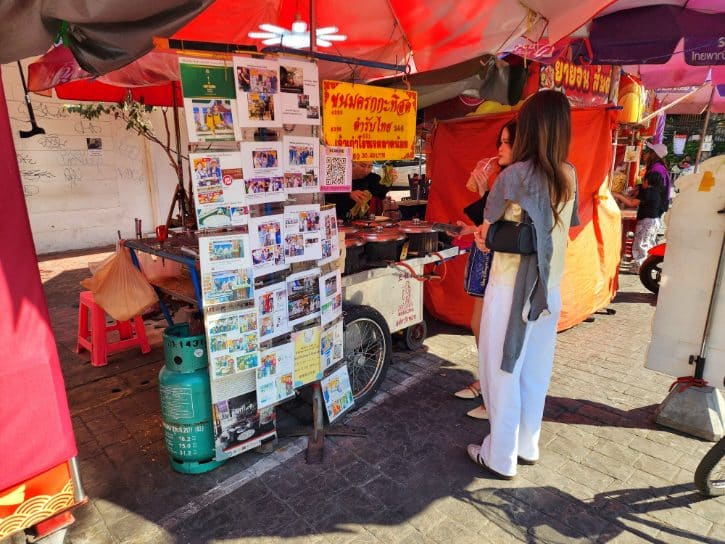
Right near the church, TumLubThai Khanom Krok serves one of Thailand’s oldest and most beloved street snacks: khanom krok, or Thai coconut pancakes.
These are small, two-layered griddle cakes. The bottom is a savory, slightly crispy layer made from rice flour, and the top is a sweet, custardy layer of coconut milk and sugar.
They’re cooked in a specialized cast-iron pan, which gives them a gentle smokiness.
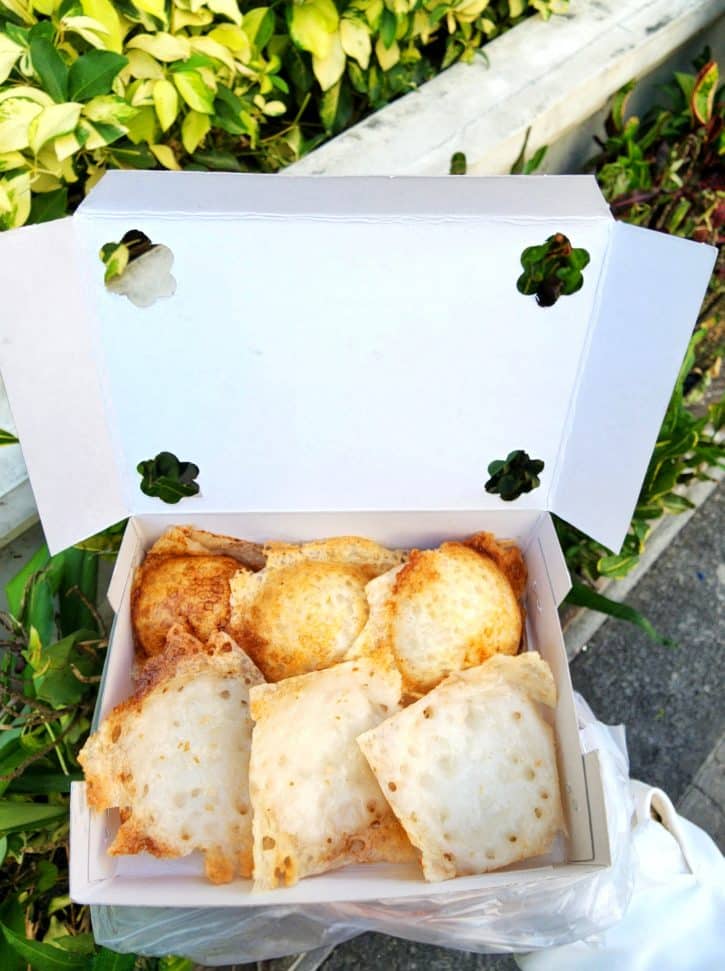
Key highlights:
- Classic style: Plain coconut, crispy on the outside, creamy inside
- Best enjoyed: Fresh and warm, straight from the pan
These have been a staple of Thai morning markets and community gatherings for generations.
Simple, perfectly balanced, and the kind of snack you’ll remember long after you leave Bangkok.
3:45 PM: Talat Noi Street Art
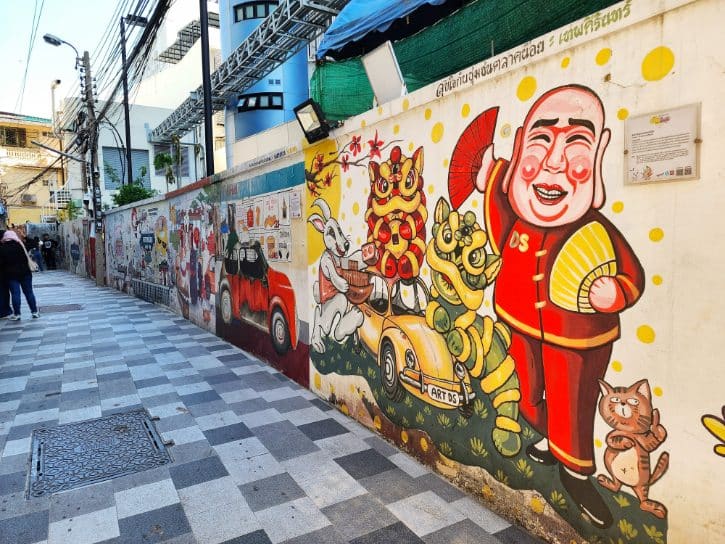
Welcome to Talat Noi, one of Bangkok’s most fascinating neighborhoods.
This area was historically the heart of the “Sieng Kong” district, the city’s largest hub for second-hand car parts and scrap metal.
Today, while the metalworkers are still around, the narrow alleys have become a canvas for local and international street artists.
What’s special about the art here is that it’s site-specific. Murals work with the neighborhood’s rusty textures, old shophouses, and industrial scraps.
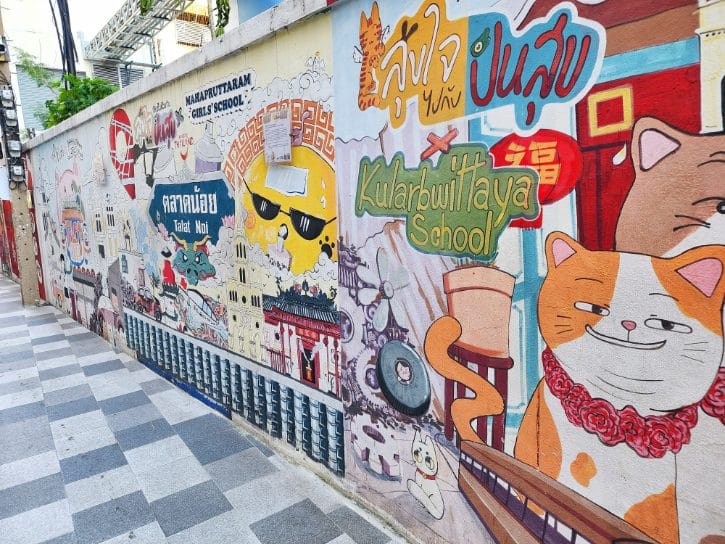
The highest concentration of art is in the alleys around Trok San Chao Rong Kueak. You’ll find portraits of elderly residents, playful depictions of the area’s many cats, and intricate Chinese cultural motifs painted into walls and doorways.
Unlike the pristine restorations at the Grand Palace, Talat Noi celebrates age and character.
The murals tell the story of the Chinese-Thai families, mostly Hokkien and Hakka, who have called this neighborhood home for over 200 years.
It’s like walking through a living museum where motor oil and street art coexist in the best possible way.
4:15 PM: Rong Kuak Shrine (Horseshoe Shrine)

Deeper into the neighborhood, Rong Kuak Shrine (also called the Hon Wong Kung Shrine) is the spiritual heart of the local Hakka Chinese community.
The shrine’s name translates to “Horseshoe Shrine”, and the origin is literal.
The Hakka immigrants who settled here in the 19th century were master blacksmiths and metalworkers.
When Charoen Krung Road was the main route for horse-drawn carriages, this alley was where riders came to have their horses shod.
Established during the reign of King Rama V, the shrine features a bright red facade, detailed stone carvings, and murals depicting legendary Chinese figures.
Its location right on the riverbank makes it a peaceful spot with views of the passing boat traffic.

Key highlights:
- Deity: Hon Wong Kung, protector of tradesmen and financial prosperity
- Architecture: Traditional Hakka design with terracotta roof dragons
- Still active: Worshippers visit regularly, especially during Chinese New Year
4:45 PM: Antique Turtle Car & 32Bar X
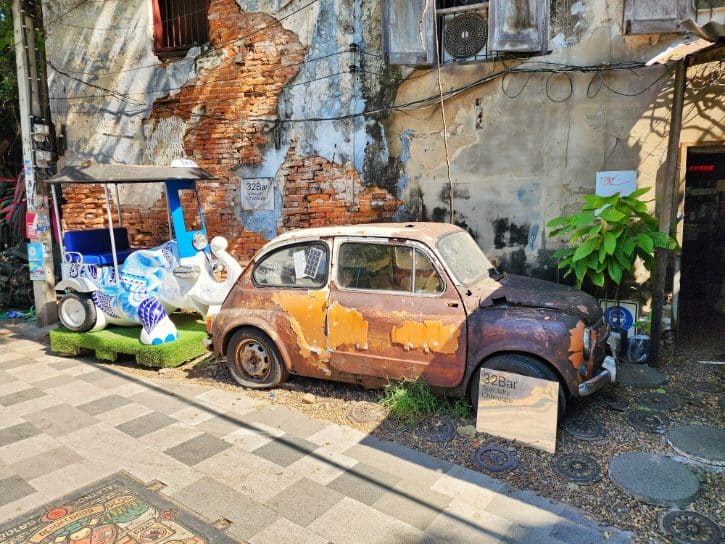
One of Talat Noi’s most photographed spots is the Antique Turtle Car, a rusted, ivy-covered Fiat 500 that has become an unofficial symbol of the neighborhood.
It’s the perfect example of Talat Noi’s character, where nothing old is ever truly thrown away.
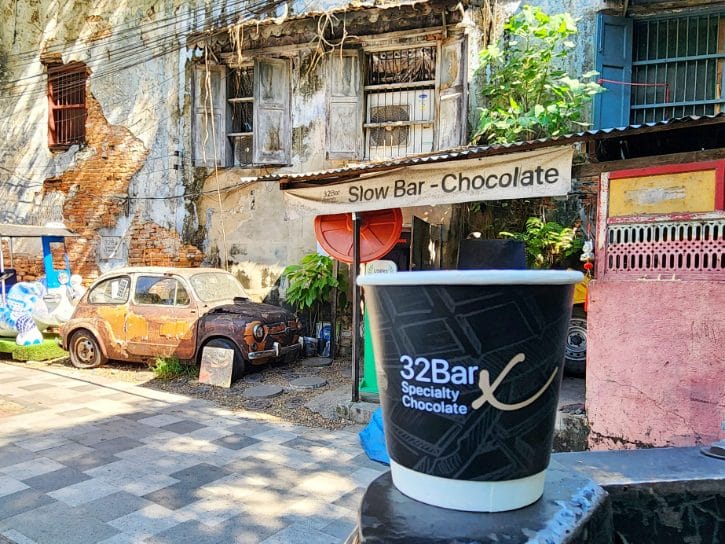
Right next to the car is 32Bar X, a specialty chocolate cafe housed in a 200-year-old building with original red brick walls.
This place focuses on the Thai cacao industry, sourcing beans from provinces like Chanthaburi, Chiang Mai, and Surat Thani.
What makes it different from a typical coffee shop is the experience. You can sample different chocolate profiles before choosing your drink.
The menu features concentrated hot and iced chocolate beverages, each highlighting specific flavor notes, from fruity and acidic to nutty and earthy.
It’s a cool, unexpected stop that shows how Talat Noi is evolving from a center of raw materials to a hub for artisanal businesses.
5:30 PM: Photohostel & Photocafe
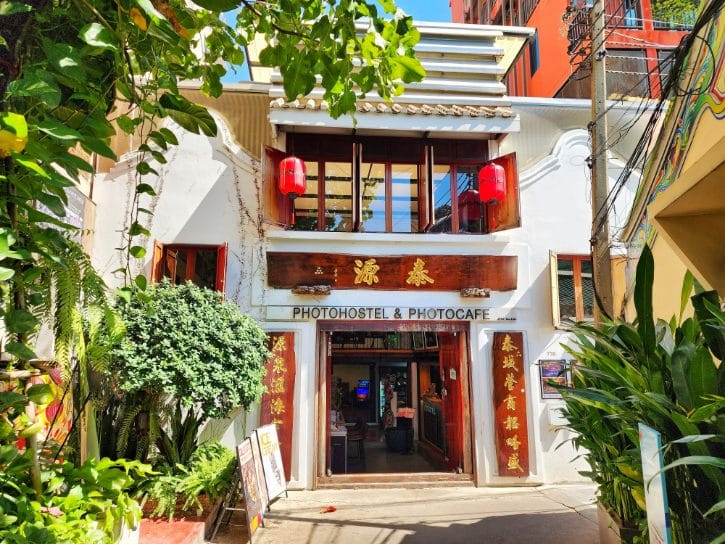
A short walk away, Photohostel and Photocafe is set inside the beautifully restored Taiyuan Building, a structure over 200 years old that was originally built by a prominent Hokkien Chinese merchant.
The ground floor serves specialty coffee and light meals surrounded by photography books and rotating art exhibitions.
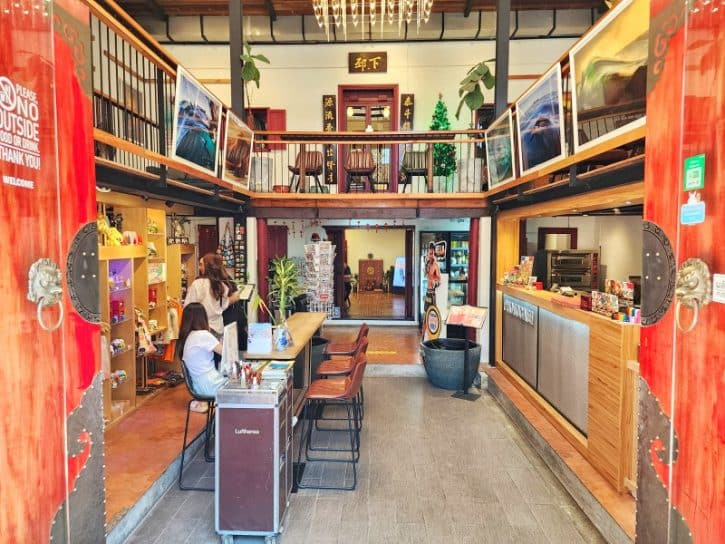
The building itself is a highlight, with an original 200-year-old roof and a mix of industrial-loft elements with traditional Chinese masonry.
The venue also hosts photography workshops and photo walks around the Talat Noi area.
It’s a relaxed, cozy place to slow down and recharge before heading into the evening.
6:00 PM: NAAM 1608 (Dinner)
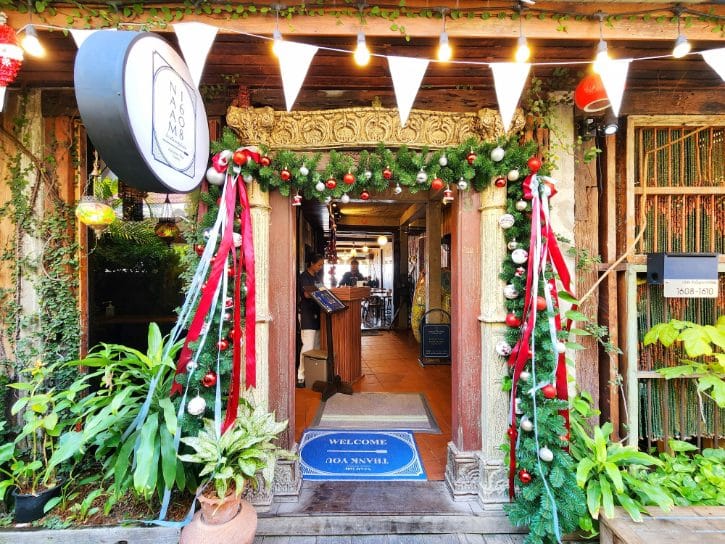
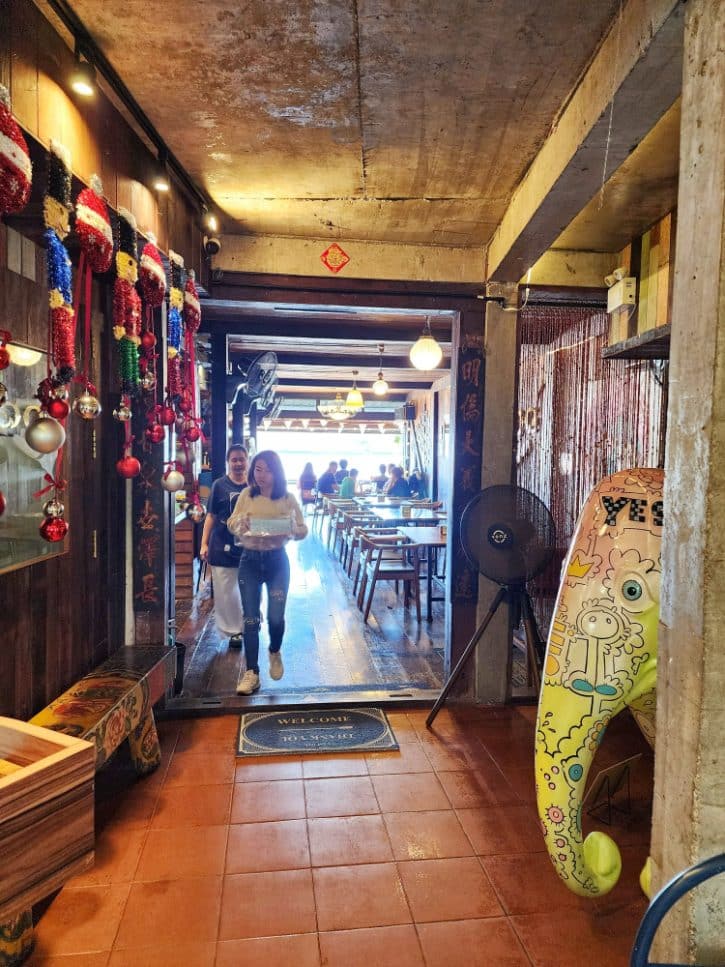
As the sun starts setting, make your way to NAAM 1608 for dinner. Tucked down a narrow alley on Song Wat Road, this restaurant sits in a traditional wooden house that opens directly onto the Chao Phraya River.
The menu focuses on authentic Thai flavors, balancing sweet, sour, salty, bitter, and spicy.
Popular dishes include the Marian Plum Spicy Salad and the Stir-fried Crispy Pork Belly.
The real draw here is the atmosphere. The open-air seating catches the river breeze, and the golden hour light over the water is genuinely beautiful. Some evenings feature live acoustic music.
Key highlights:
- Setting: Heritage wooden house, right on the river
- Best time: Sunset for the golden hour views
- Vibe: Relaxed and romantic, the perfect bridge between your afternoon explorations and the energy of Chinatown
7:00 PM: Yaowarat Night Market
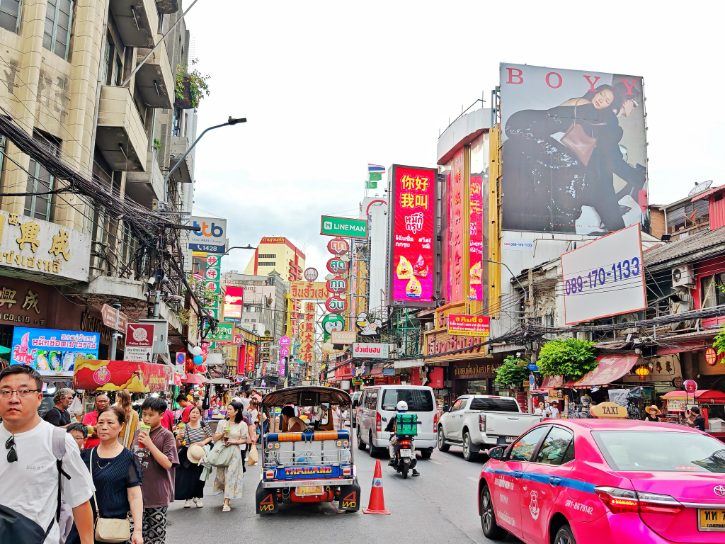
End your day at Yaowarat Road, the heart of Bangkok’s Chinatown and one of the world’s greatest street food scenes.
After 6:00 PM, the street transforms into a glowing, neon-lit stretch of food stalls, charcoal smoke, and some of the best things you’ll ever eat.
Yaowarat has been a culinary landmark for over a century, blending Chinese cooking with bold Thai flavors.
a. The Must-Try Street Food Spots
With hundreds of stalls lining the road, it’s easy to feel overwhelmed. Here are the places worth seeking out:
- Guay Jub Ouan Pochana: A Michelin Bib Gourmand recipient. Famous for rolled rice noodles in a clear, peppery pork broth simmered for hours with pork offal and crispy pork belly.
- T&K Seafood (The Green Shirts): A Yaowarat legend. Staff in bright green shirts serve massive portions of grilled prawns, steamed sea bass with lime and chili, and stir-fried morning glory right on the pavement.
- Lek and Rut Seafood (The Red Shirts): Directly across from T&K, this rival stall offers a nearly identical menu. The friendly “green vs. red” rivalry is part of the fun.
- Jek Pui Curry: No tables here. You sit on plastic stools along the street and eat incredible Chinese-style curries. The Yellow Pork Curry with Chinese sausage is the standout.
- Pa Tong Go Savoey: Michelin-recommended, specializing in deep-fried dough fritters, crispy outside and airy inside, served with a fragrant pandan custard dip.
- Yaowarat Toast: A newer sensation. Thick buns toasted over charcoal and stuffed with fillings like condensed milk, chocolate, or chili paste. The long queues tell you everything.
Yaowarat is more than just food. It’s a full sensory experience, and the perfect ending to a day that starts with royal gold and finishes under the golden glow of Chinatown’s street food lanterns.
Map of the One-Day Route
I’ve mapped out all the attractions mentioned above and included the route between each stop so you can clearly see how to move from one place to the next.
The map shows the full journey step by step, making it easier to visualize the route and plan your day efficiently.
Hopefully, this saves you time when organizing your Bangkok itinerary and helps you explore the city more smoothly without the hassle of figuring out the order yourself.