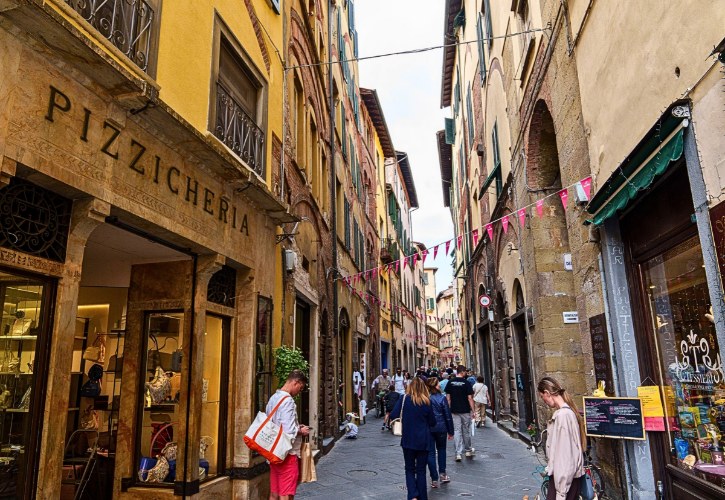
A short train ride from Florence drops you into a town that feels worlds apart. Lucca is a historic walled town, still wrapped in a complete ring of Renaissance ramparts, where the pace is slower and the mood friendlier.
Inside the walls you will find quiet stone lanes, sunlit squares, and a warm local rhythm that never feels rushed. Even better, you can see the whole place on foot in a single, easy day. 😊
1. Why Lucca Earns a Day Away From Florence
a. A Town That Always Protected Its Freedom
Lucca has always gone its own way. While Florence grew rich and powerful through its link to the sea, smaller Lucca spent centuries fiercely guarding its independence. It began as a Roman colony in 180 BC, became a political capital under later rulers, and even bought back its freedom from an emperor in 1369. Right up until Napoleon reshaped its government, the city proudly defended its motto, Libertas.
b. The Silk Fortunes That Built a City
That independence was paid for by trade, and the signs are everywhere you look.
- From the eleventh century, Lucca built one of Europe’s earliest major silk industries.
- Its weavers shipped prized damasks and gold-thread brocades to papal courts and French fairs.
- Local merchant families even ran banking houses in Bruges, Paris, and London.
- That wealth funded the towers, churches, and palaces you still admire today.
c. A Center Made for Walking
One of Lucca’s great joys is how easy it is to explore on foot.
- The historic center is flat and compact, so nothing is ever far away.
- A tidy Roman street grid shapes the northern half of the old town.
- Medieval brick towers and merchant houses line the traffic-free alleys.
- The intact ramparts wrap the whole core in one green, walkable loop.
d. A Place Where Tradition Still Breathes
Here is what really sets Lucca apart from Florence. It feels lived-in rather than museum-bound. The city is proudly tied to its hometown opera composer, Giacomo Puccini, and it fills the calendar with music, from its historic opera house to open-air summer concerts.
Depending on when you visit, you might catch a candlelit procession, a spring flower fair, or marathon runners circling the walls. That everyday, approachable heritage is exactly what makes it such a rewarding day trip.
2. The Easy Train Ride From Florence
a. Where Your Journey Begins
Getting to Lucca by rail is simple, and the key details are easy to remember.
- Leave from: Firenze Santa Maria Novella, Florence’s main station.
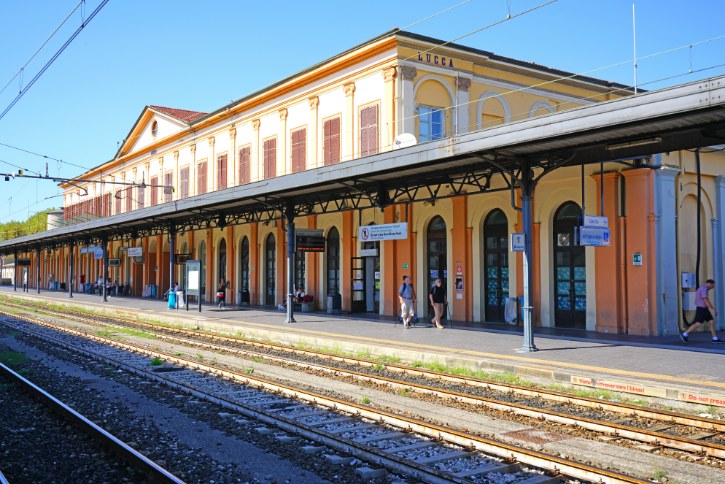
- Arrive at: Lucca station, a short walk from the walls.
- Train company: Trenitalia, on its regional service.
- Route: the line runs via Prato and Altopascio, with many trains continuing toward Viareggio.
b. The Train to Look For
You will want the Regionale service, the local train that links the two cities. Both direct trains and services with a connection run throughout the day, so you will have plenty of departures to choose from. For the smoothest trip, aim for a direct one and you can simply settle in for the ride.
c. How Long You Will Be on Board
Your travel time depends on which train you pick.
- The quickest direct trains take about 1 hour 15 to 1 hour 20 minutes.
- Slower direct trains with more stops take around 1 hour 30 to 1 hour 45 minutes.
- Services with a connection usually take 1 hour 50 minutes to 2 hours or more.
d. Why You Can Leave the Car Behind
Skip the car without a second thought. Lucca has strict driving limits in its historic center, so a car is more trouble than it is worth. The train sets you down right beside the walls, ready to explore on foot from the moment you step off.
3. The Walls and Towers You Cannot Miss
a. Strolling the Green Ring of Ramparts
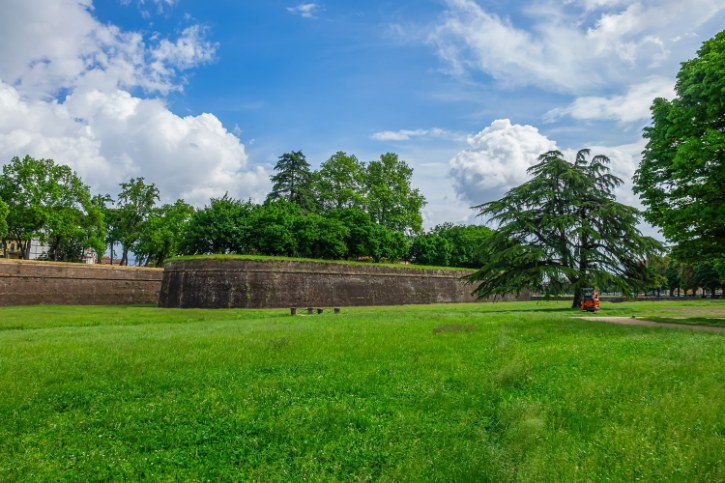
Step out of the station and Lucca’s signature sight is right in front of you: an unbroken ring of brick and turf wrapped around the old town. Most of what you see was built in the sixteenth and early seventeenth centuries, with twelve wide walls linking eleven bastions in a complete 4.2-kilometer loop.
Here is the lovely twist. These defenses were never tested in battle, so instead of being torn down, they slowly became an elevated park. Walking or cycling the flat, tree-lined promenade is now an essential Lucca ritual, and the views over rooftops, spires, and distant hills are worth the trip on their own.
b. The Tower With Trees on Its Roof
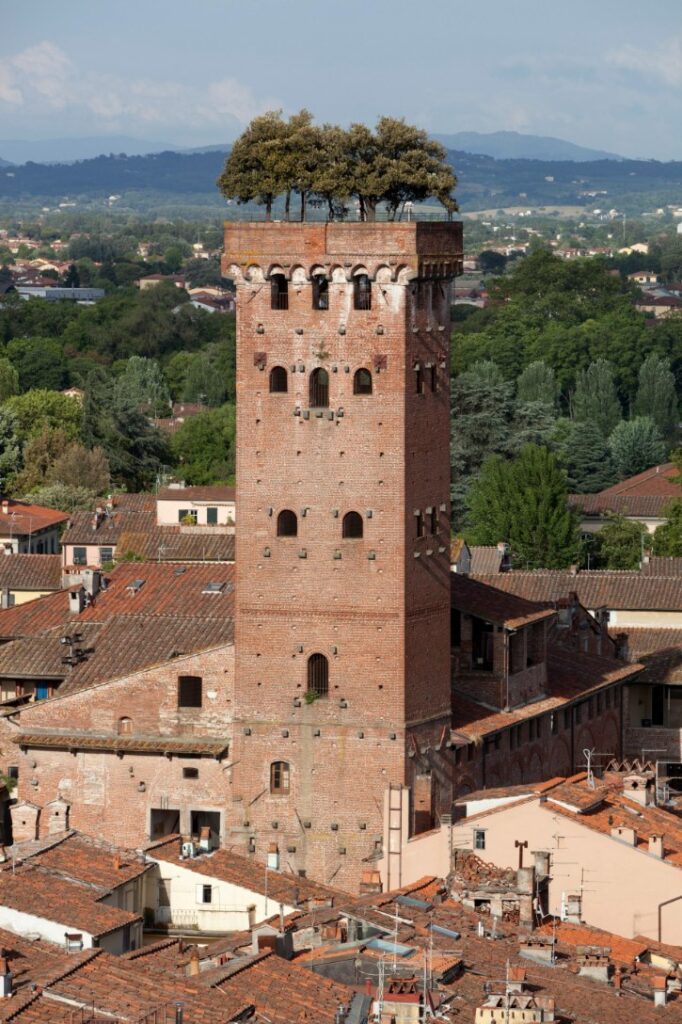
Lucca’s most surprising landmark is a medieval tower crowned with a little grove of living oak trees.
- Guinigi Tower stands 45 meters tall and dates to the late 1300s.
- It was built by the city’s leading noble family as a show of wealth.
- A climb of 230 steps takes you to the top, with no elevator.
- You step out straight into the shade of gnarled holm oaks, a sight unlike any other tower in Italy.
- From up here you look down over warm roofs, bell towers, and rolling countryside.
c. A Square Shaped by a Roman Arena
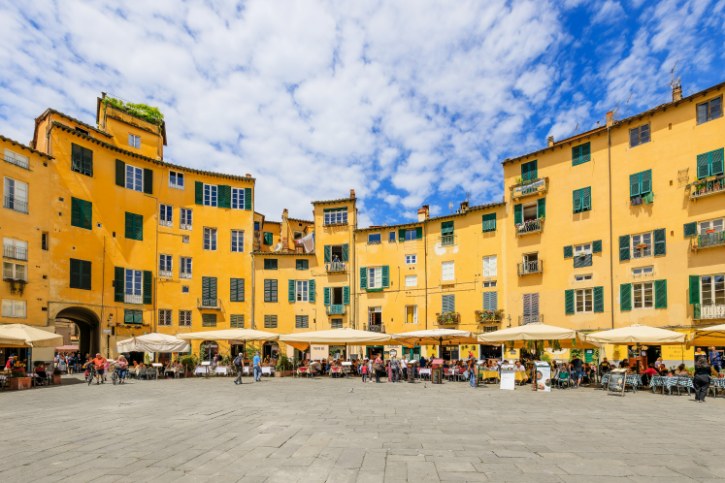
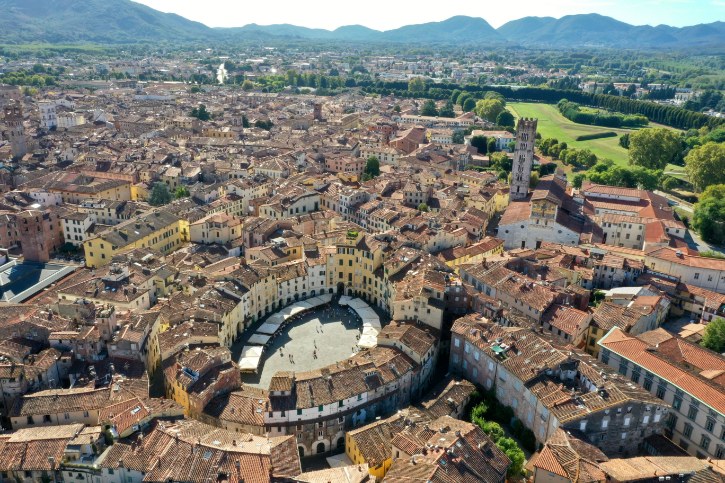
A short walk northwest leads you through a low archway into one of Italy’s most captivating squares. At first glance, Piazza dell’Anfiteatro looks like a cheerful oval ringed with pastel houses and cafés. Look closer, though, and that perfect shape traces an ancient Roman amphitheater that once seated around 10,000 spectators.
Over the centuries the ruins were filled in with houses and workshops, and a nineteenth-century architect later cleared the center to reveal the oval you see today. The old arena floor still lies buried below the cobblestones, so you are quite literally walking on Roman history.
d. Climbing Into the Old Clock Tower
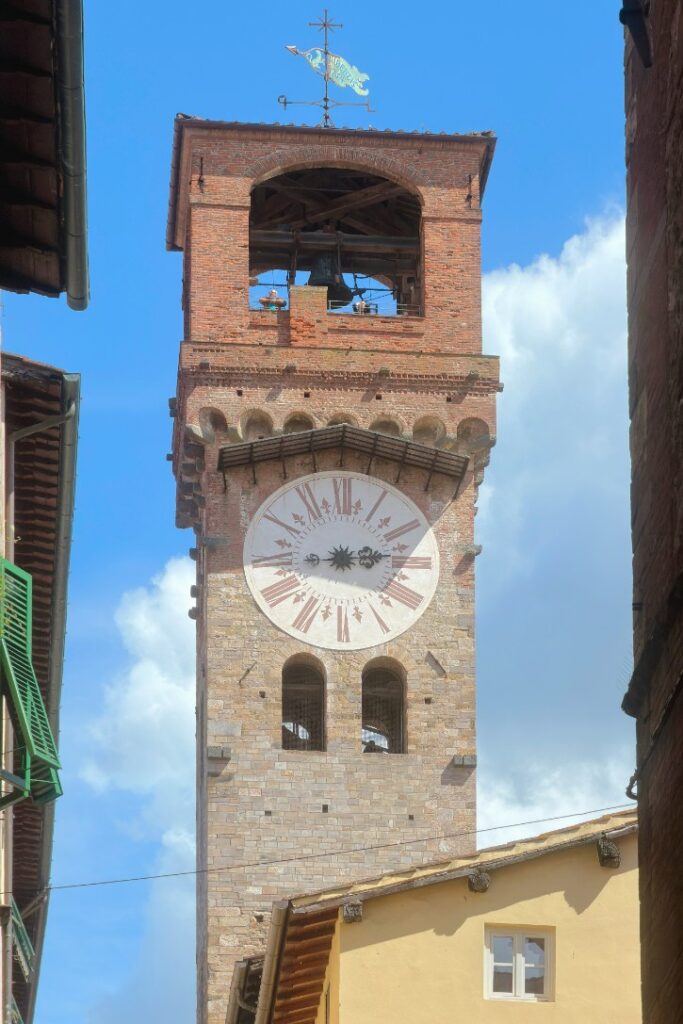
For a different kind of climb, head to Lucca’s historic clock tower.
- The Torre delle Ore is the tallest tower in Lucca, at about 50 meters.
- You climb 207 original wooden steps to reach the top.
- Near the summit you pass right beside the old hand-wound clock mechanism from the 1750s.
- Time your visit for the chimes and you can watch the heavy gears turn.
- Your reward at the top is a clean view straight down Via Fillungo.
4. Beautiful Churches and Buried Secrets
a. The Cathedral and Its Ancient Holy Face
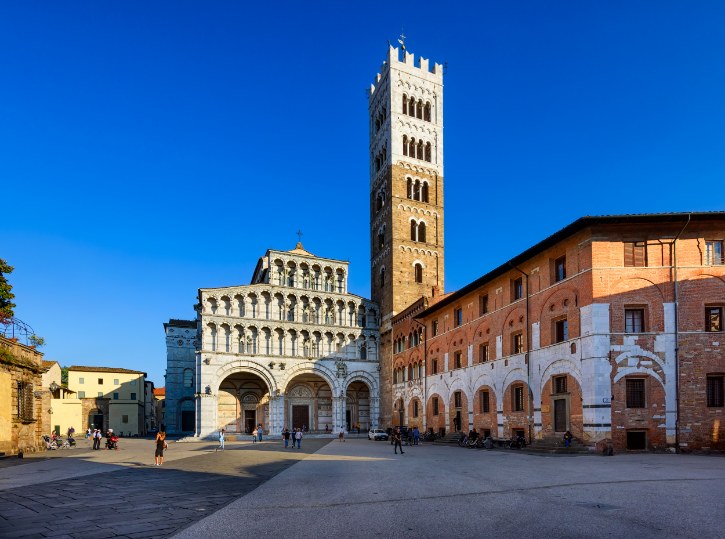
Lucca’s cathedral rewards a slow, curious look.
- The Cathedral of San Martino was rebuilt in 1070 and wears a richly carved Romanesque façade.
- Its right-hand arch is noticeably narrower, because the bell tower already stood in the way.
- Inside rests the Volto Santo, a revered wooden crucifix known as the Holy Face, recently returned to its shrine after a careful restoration.
- Modern testing dates the crucifix to around the ninth century, making it one of the oldest in Western Europe.
- Do not miss the serene marble tomb of Ilaria del Carretto, a masterpiece of lifelike carving.
b. The Soaring White Front of San Michele
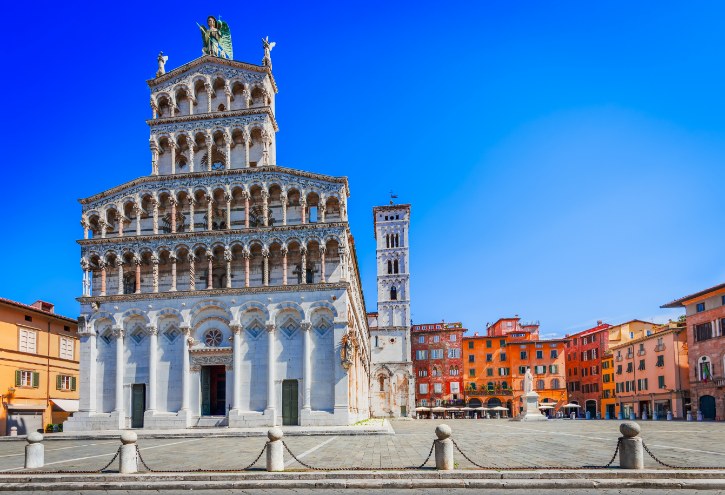
Walk toward the center and the streets suddenly open onto a dazzling white façade. San Michele in Foro was built in grand Romanesque style directly atop Lucca’s ancient Roman forum, which is how it earned its name. Its tall, four-tiered front climbs well above the roof behind it, a bold reminder of a far larger church that was planned but never finished.
Crowning the top is a striking statue of the Archangel Michael slaying a dragon. Local legend even claims a diamond on his finger glints at dusk, though that one is pure folklore. Step inside for a quieter mood and a fine painted panel by Filippino Lippi.
c. The Golden Mosaic of San Frediano
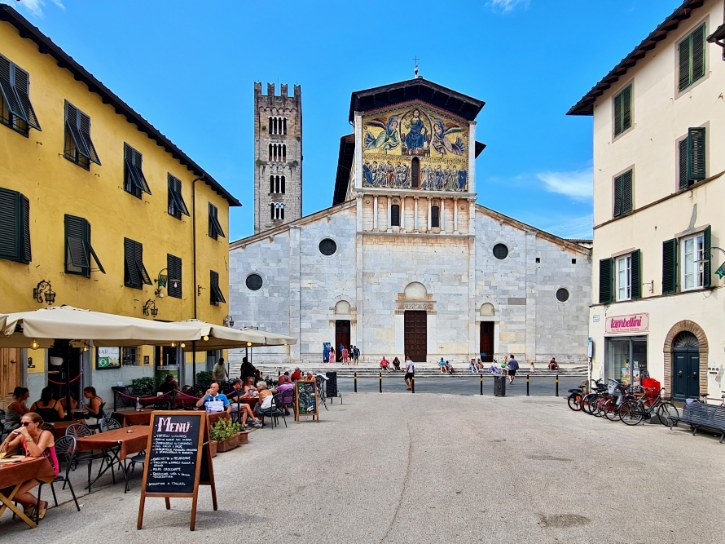
Near the northern edge of the center, one church stands out not for its carvings but for its color.
- The Basilica di San Frediano was founded in the sixth century and later rebuilt.
- Its façade carries a radiant gold-ground mosaic showing Christ carried upward by angels.
- It is one of only two surviving Romanesque façade mosaics in all of Tuscany.
- Inside sits a remarkable twelfth-century marble baptismal font, carved with scenes from the life of Moses.
- The church also holds the preserved body of Saint Zita, the beloved local patron of workers and flowers.
d. Roman Ruins Beneath a Quiet Church
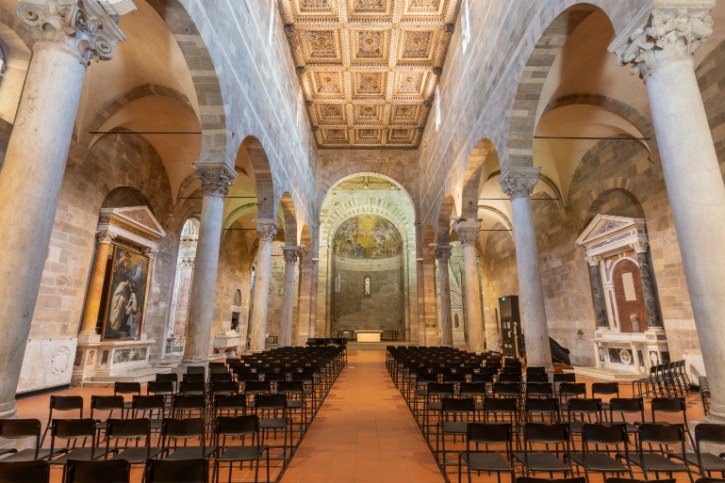
Just steps from the cathedral, a plain church hides its best story underground.
- Long ago, Santi Giovanni e Reparata served as Lucca’s very first cathedral.
- Excavations below have uncovered five layers of history, reaching back to the second century BC.
- You walk above mosaic floors from a Roman house and the remains of a Roman bath.
- Higher levels reveal an early Christian basilica, a baptistery, and ancient burials.
- If you love archaeology, this layered site is one of the most rewarding stops in town.
5. Lively Streets and Grand Palaces
a. Wandering Down Via Fillungo
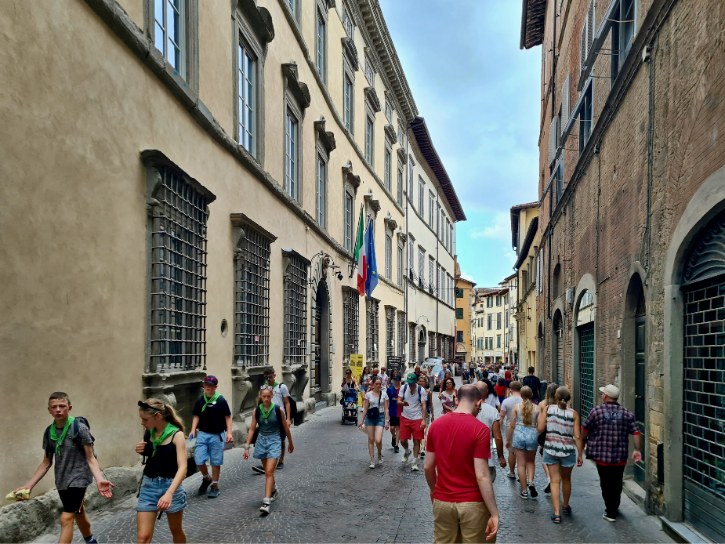
Between the great churches, Lucca’s everyday life unfolds along Via Fillungo, the gently curving main street that runs through the walled core. Today it hums with traditional cafés, jewelers, and small independent shops.
The real reward sits just above the windows, so slow down and look up at the elegant old façades. Turn off onto the quiet side lanes and you will find narrow medieval passages and private courtyards within a few steps. Wandering here feels far less staged than Florence’s busy tourist streets.
b. The Grand Square and Its Ducal Palace
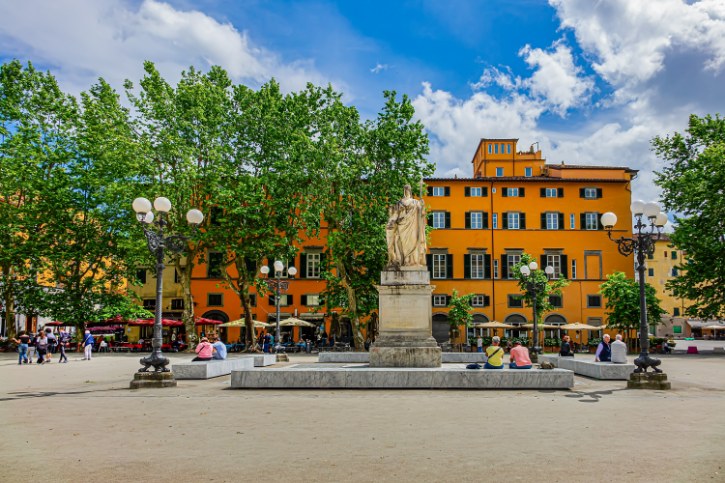
Step out of the tight lanes and the town opens into its grandest space.
- Piazza Napoleone, known locally as Piazza Grande, is a broad, tree-shaded square.
- It was reshaped by Napoleon’s sister, Elisa Bonaparte, when she ruled the city.
- Along one edge rises Palazzo Ducale, for centuries the seat of Lucca’s rulers.
- You can explore its grand courtyards and a small museum on most days.
- Nearby stands the handsome Teatro del Giglio, one of Tuscany’s finest opera houses.
c. A Dreamy Garden at Palazzo Pfanner
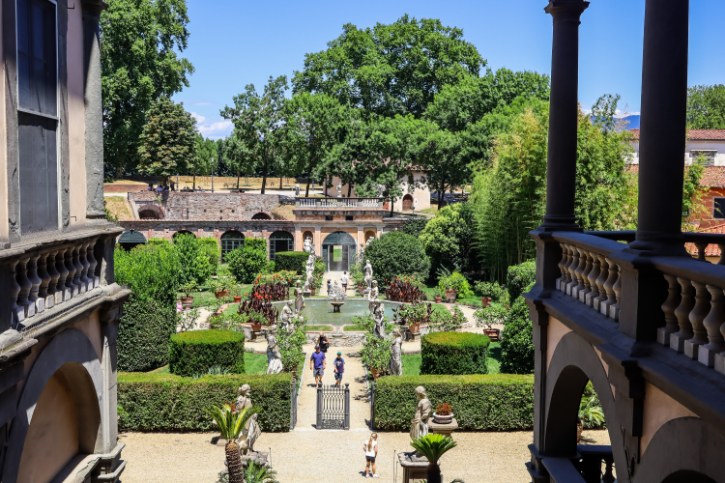
Near the northern ramparts, one palace trades grand ceremony for peaceful greenery.
- Palazzo Pfanner is best known for its lush rear garden, framed by Lucca’s brick walls.
- A theatrical open-air staircase overlooks blooming paths and rows of lemon-tree pots.
- You may recognize the garden from films, including Jane Campion’s The Portrait of a Lady.
- Inside, the one grand hall open to guests is covered in early frescoes and period furnishings.
- Both the garden and the small palace museum welcome visitors.
d. The Silk-Era Riches of Palazzo Mansi
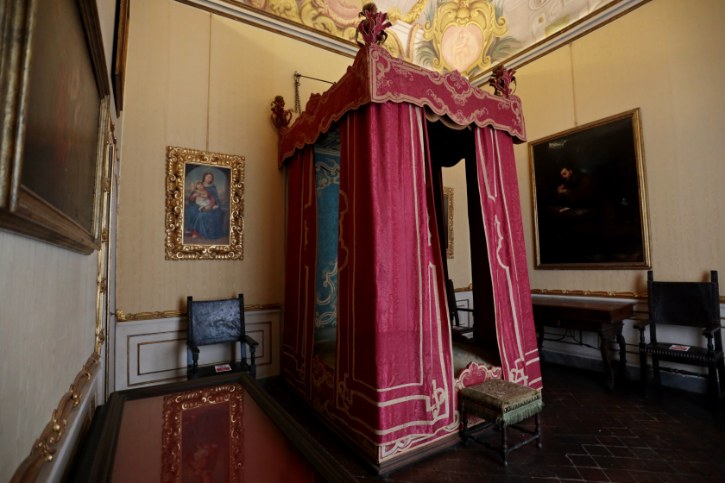
For a look at how Lucca’s silk money shaped noble life, head west to another great house.
- Palazzo Mansi hides lavish interiors behind a deliberately plain exterior.
- A wealthy silk merchant turned it into a glittering show-home full of gilded rooms.
- Its showpiece is the Bridal Chamber, draped in richly embroidered Lucchese fabric.
- The galleries display fine old paintings and centuries of local textile artistry.
- Where Pfanner charms outdoors, Mansi dazzles indoors with its museum treasures.
6. More Special Experiences Worth Your Time
a. The House Where Puccini Was Born
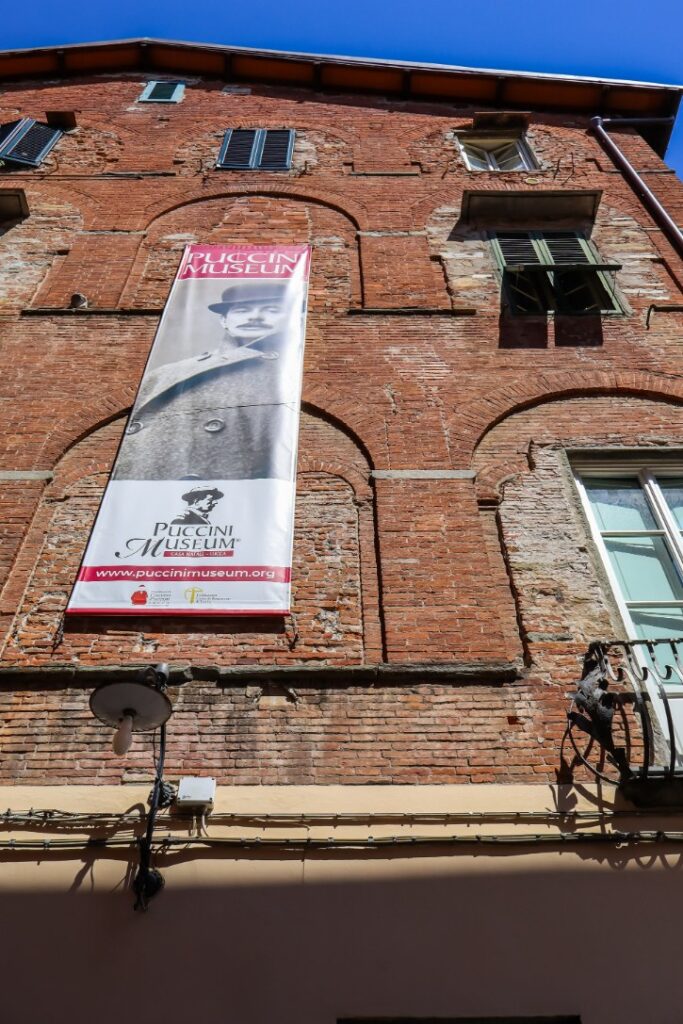
Lucca’s fame owes as much to opera as to architecture, and that story begins at the Puccini Museum, Casa Natale, the modest apartment in Corte San Lorenzo where Giacomo Puccini was born.
Inside you will find the family’s furniture, letters, and the grand piano on which he composed Turandot
Even if opera is not your thing, these intimate rooms are genuinely touching. Glance out the attic windows and you will see the very rooftops young Giacomo grew up with.
b. A Quiet Escape at the Botanical Garden
When all the stone and galleries have you craving greenery, head to the Orto Botanico di Lucca, the city’s botanical garden in the southeastern corner of the walls.
- It was founded in 1820 on open ground inside the ramparts.
- Its star resident is a towering Cedar of Lebanon, planted two centuries ago.
- Come autumn, a huge ginkgo turns a brilliant gold and drops a leafy carpet.
- Accessible boardwalk paths wind past redwoods, magnolias, and fragrant shrubs.
- A small museum inside preserves antique plant collections and ancient fossils.
c. The Secret Passages Beneath the Ramparts
The walls keep a secret, and it lies inside them. Beneath the grassy mounds runs a network of brick-vaulted chambers and tunnels, built to shelter soldiers and hide heavy cannons. They were never tested in a siege, though they served as air-raid shelters during the Second World War. Stepping into these cool, echoing vaults reveals a side of the walls you would never guess from the promenade above.
d. Where You Can Step Inside the Walls
Not every passage is open to wander freely, so it helps to know where to go.
- For an easy self-guided visit, head into the gallery of Baluardo Santa Croce and its exhibition on the walls.
- You can walk freely through the old tunnels at Baluardo San Colombano, directly facing the station.
- The chambers of Baluardo San Regolo pair nicely with a visit to the botanical garden next door.
- Larger bastion interiors are usually seen on guided tours or during special openings.
7. The Local Food You Have to Try
a. Hearty Pasta and Soups to Begin
Start your meal with the dishes Lucca does best.
- Tordelli lucchesi are the local stuffed pasta, with each family guarding its own recipe.
- Garmugia is a fresh spring soup that celebrates the season’s first tender vegetables.
- Zuppa frantoiana is a hearty bowl served year-round, rich with greens and beans.
b. Small Bites to Snack On
When you want something lighter, keep an eye out for these local favorites.
- Cecina is a warm, savory snack you will spot in bakeries around town.
- Necci are traditional treats cooked over a fire between hot iron disks.
- Look too for fried bites called frati fritti, best eaten fresh and warm.
c. Sweets You Should Not Skip
Leave room for dessert, because Lucca’s bakeries are a real highlight.
- Torta coi becchi is a fragrant, herb-filled pastry tied to the town’s spring festivities.
- Buccellato is the city’s signature treat, an anise-scented ring bread with a scored crust.
- Locals say you have not truly visited Lucca until you have tasted buccellato.