Packing for Thailand goes beyond light clothes and a swimsuit.
The country has its own medication rules, environmental laws, temple dress codes, and a new digital arrival system. Get these right and your trip runs smoothly.
Here are the ten things to pack, and the three things to leave at home.
1. Prescription Medication with Doctor’s Letter

Why this matters
- Bringing your own medicine into Thailand is not as simple as packing it in your wash bag.
- The rules sit under the Narcotics Code, the Psychotropic Substances Act, and Ministerial Regulation B.E. 2567 (2024), which sort medicines by “schedule” to set limits and permit rules.
How much you can bring
- Stronger narcotic-type medicines: up to a 90-day supply, with a permit.
- Psychotropic-type medicines (such as some sleep and anxiety medicines): up to a 30-day supply with a valid prescription, no permit.
- For a 31 to 90-day supply of psychotropic medicines, you need an official permit.
The permit and timeline
- Apply online at least 15 days before arrival via fda.moph.go.th.
- Processing takes about three working days, and the permit arrives by email.
What your doctor’s letter needs
- Your name and address
- The diagnosed condition
- The generic and brand names, strengths, and dosage
- The total quantity prescribed
- The doctor’s name, address, and license number
Packing and customs
- Keep medicines in their original packaging with labels, with your letter and permit handy.
- Carry only the permitted quantity.
- Use the Red Channel for permitted narcotic or long-stay psychotropic medicines, and the Green Channel for a short-stay psychotropic supply with a prescription.
2. A Small Travel Health and Medicine Kit
Why you need one
- Dengue is a year-round risk, peaking in the monsoon season, May to October.
- In 2025 there were over 51,795 cases and 120 deaths, plus active Zika across 46 provinces.
The daytime surprise
- The Aedes aegypti mosquito bites in daylight, not just at dusk and dawn.
One key medical rule
- If you suspect dengue, avoid aspirin and ibuprofen, which raise bleeding risk.
- Use paracetamol for fever and pain instead.
What to pack
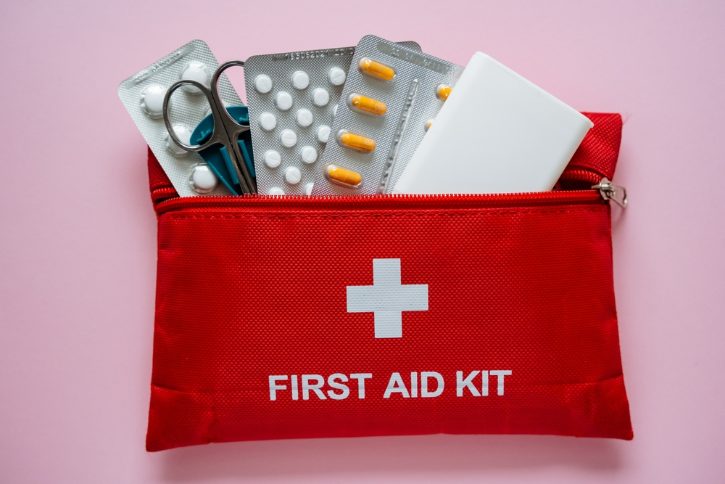
- Paracetamol and oral rehydration salts
- Anti-diarrheal medicine like loperamide
- Antihistamines
- Wound disinfectant, plasters, and blister plasters
- Hand sanitiser, disinfectant wipes, and a thermometer
Local notes
- Malaria risk is localized to forests and border zones, so cities and major islands are low risk.
- Boots and Watsons are easy to find in cities, but remote islands have limited supplies, so a pre-packed kit is worth it.
3. A Reliable Phone Setup Before You Land
eSIM vs physical SIM
- An eSIM installs before you fly, keeps your home number active, and skips airport queues.
- A physical SIM means a queue and showing your passport at the counter.
The networks
- AIS has the widest rural and island coverage.
- True Move H (merged with dtac) is strong for urban 5G.
- Tourist plans start around 299 THB (about $9 USD) for 15GB, valid 8 days.
Coverage reality
- Strong in Bangkok, Phuket, Chiang Mai, and Pattaya.
- Weaker on smaller islands and rural areas, so plan for dropouts.
Apps to download first
- Google Maps, with offline maps saved
- Grab for clearly priced rides
- LINE, used by hotels and tour operators
- Google Translate, with the offline Thai pack
- THIM for immigration
One simple tip
- Buy and activate your eSIM before boarding, while you still have your home connection.
4. The THIM Mobile App and Digital Arrival Setup
What THIM is
- THIM is the Thailand Immigration Management System, the official app from Digital Identity Co., Ltd. with the Thailand Immigration Bureau.
- It runs on secure AWS cloud infrastructure with end-to-end encryption.
Goodbye paper card
- The old TM6 paper card ended and was replaced by the online TDAC on May 1, 2025.
- All foreign travelers now register their arrival digitally.
How THIM helps
- AI scanning (OCR) reads your passport, so you register once.
- Details auto-fill on repeat visits.
- It syncs with border scanners, aiming for checks under 40 seconds.
Why it pays off later
Thailand plans to grow THIM into a full immigration “super app”, so the real benefit comes on your future trips and longer stays.
- Faster repeat visits. Once your profile is set, you only update details like your flight number and return date, instead of filling in every field again.
- Visa extensions in the app. Handle extensions through the e-Extension system, without the usual paperwork.
- 90-day reporting. Long-stay visitors can complete 90-day address reporting online rather than in person.
- Appointment and queue booking. Book immigration appointments and queue slots in advance.
- Group applications. Families or travel groups can add several people to one application.
- Trip management and alerts. Manage upcoming trips and get reminders about deadlines so nothing slips.
- More support. Plans also include digital document services and access to a 24/7 tourist police hotline.
Where it stands
- THIM is in a pilot phase in 2026, available now on iOS and Android, currently in English, Russian, Japanese, and Chinese.
- The full official launch is set for October 1, 2026, with the bureau aiming to support 15 languages by that date.
- Until then, the current procedures still apply, so download the app early to set up your profile in advance.
Your arrival steps
- Complete the digital arrival card within 72 hours of arriving, on THIM or at immigration.go.th.
- Save the emailed QR code offline to show with your passport, or use the biometric gates.
5. Small Cash, Backup Card, and Daily Carry Pouch
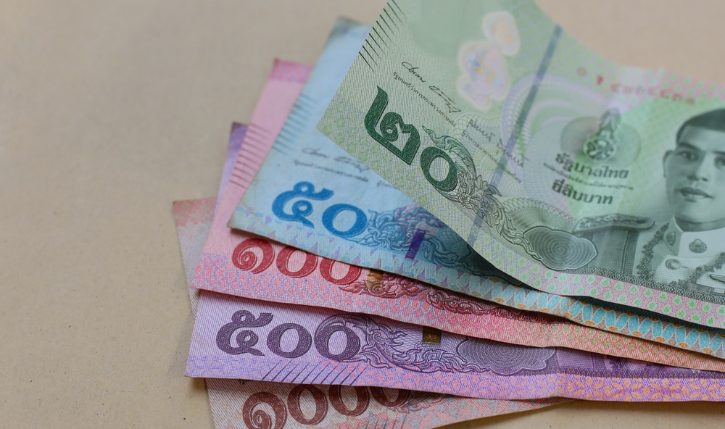
Cash still rules
- Keep cash for markets, street food, temples, tuk-tuks, ferries, and rural areas.
Watch the ATM fees
- At ATMs and shop card machines, you will often be asked if you want to be charged in your home currency. This is Dynamic Currency Conversion (DCC).
- It usually comes with poor exchange rates and high markups, so decline it.
- Always choose Thai Baht and let your own card handle the conversion.
Decline DCC
- When asked to be charged in your home currency, say no.
- Always choose Thai Baht and let your own card convert.
Smart money moves
- Exchange cash at Super Rich Thailand or Vasu Exchange for better rates than airports.
- Carry a low-fee backup card like Wise, Revolut, or YouTrip.
Daily carry pouch
- Use it to separate daily cash from your passport copy, backup card, and documents.
6. A Universal Travel Adapter
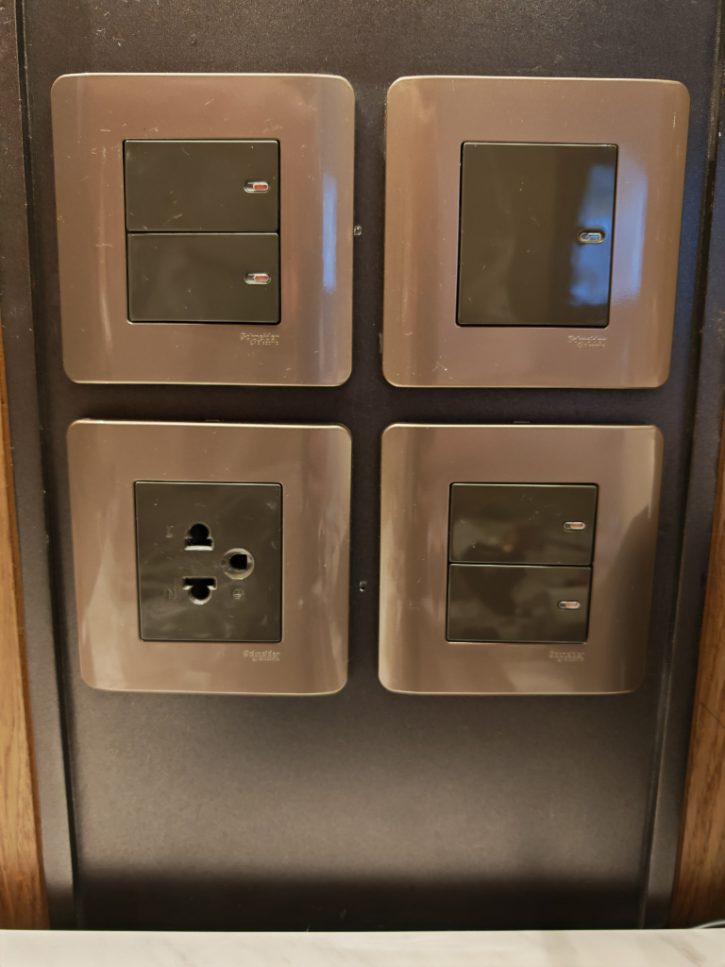
Thailand’s sockets
- You will see types A, B, C, F, and the local Type O.
- Type O is unique to Thailand, with three round pins in a triangle.
- The grid runs at 220 to 230V, 50Hz.
Read your device label
- Dual-voltage devices say “INPUT: 100-240V, 50/60Hz” and need only a plug adapter.
- Single-voltage 110-120V devices need a voltage converter.
The heating-appliance warning
- North American hair dryers, straighteners, and curling irons built for 110V can fail or spark.
- Leave them home unless you have a heavy-duty step-down converter.
Pick the right adapter
- Choose a universal adapter with interchangeable heads and USB-A and USB-C ports.
- It helps when budget rooms and bungalows have just one outlet.
One habit
- Pack it in your carry-on so you can charge if your checked bag is delayed.
7. Insect Repellent and Bite Care

Why it matters here
- The same mosquitoes that bite can carry dengue and Zika, so repellent is about health, not just comfort.
- Aedes aegypti is active in daylight and peaks at dawn and dusk, so cover the daytime too.
Choose the right strength
- The WHO and CDC recommend DEET at 15% to 30%, or Picaridin.
- Low-concentration natural repellents wear off fast and may not be enough in jungle.
Use it correctly
- Sunscreen first, wait 15 to 20 minutes, then apply repellent.
- Strong DEET can damage plastics, including camera grips and watch straps.
Buy local, pack your bite care
- Cheap local DEET brands like Soffell and OFF! are sold at 7-Eleven and pharmacies.
- Bring antihistamine cream and a soothing balm to stop itching turning into infection.
8. Reef-Safe Sunscreen
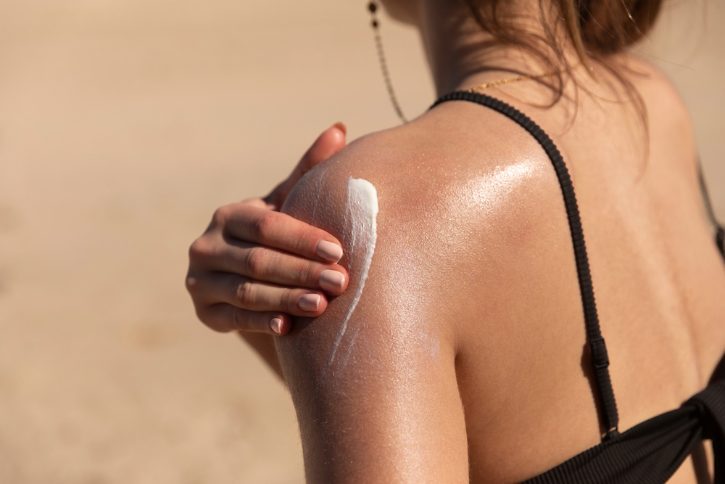
Good to know before the beach
- If your trip includes snorkeling, islands, or marine national parks, the type of sunscreen you bring matters.
- Thailand asks visitors to use reef-friendly sunscreen in these parks, under the National Park Act 2019, to help protect the coral.
Ingredients to leave off
A few common chemical filters are not allowed in the parks, so it helps to check your bottle for:
- Oxybenzone
- Octinoxate
- 4-Methylbenzylidene Camphor (4MBC)
- Butylparaben
Where it applies
- The rule covers Thailand’s marine national parks, including favorites like Koh Lanta, Mu Ko Surin, and the Phi Phi Islands.
- It is worth taking seriously, as fines can reach up to 100,000 THB (about $3,050 USD or £2,270 GBP), but the easy fix is simply choosing the right sunscreen before you go.
Why it helps
- These chemicals can harm coral reproduction and contribute to bleaching, even in tiny amounts.
- A small change in your beach bag makes a real difference to the reefs you came to see.
What to buy
- Choose a physical mineral sunscreen using zinc oxide or titanium dioxide, ideally the non-nano
- Be aware that “reef-safe” is not a regulated term worldwide, so always read the active ingredients yourself.
- Avoid spray or aerosol mineral sunscreens, because of the inhalation risk from titanium dioxide particles.
- Aim for at least SPF 30 with broad-spectrum UVA and UVB protection, and reapply every two hours, especially after swimming.
9. Temple and Palace-Ready Clothing Layer
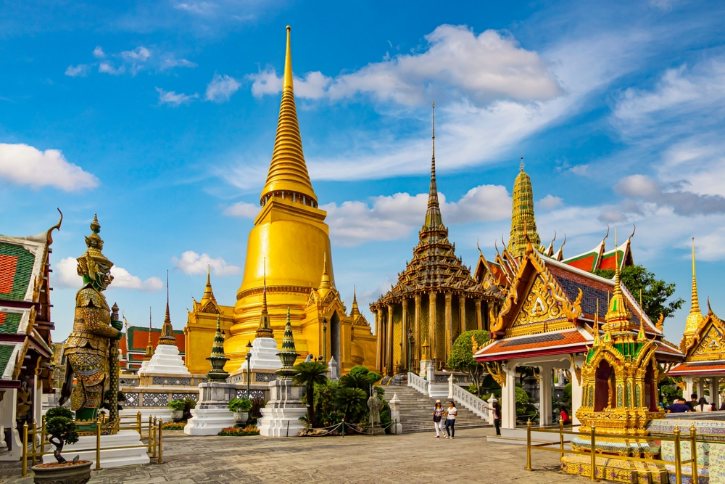
The baseline rule
- Shoulders and knees covered, for men and women alike.
- That means sleeves and trousers, long skirts, or sarongs to the knee or ankle.
The Grand Palace is strictest
Not allowed at the Grand Palace and Wat Phra Kaew:
- Sleeveless tops, tank tops, or crop tops
- Shorts, capri pants, or torn jeans
- Leggings, tight trousers, or see-through fabric
Temple etiquette
- Remove your shoes before main worship halls, so slip-ons help.
- Take off hats and sunglasses inside sacred spaces.
- Avoid offensive prints or slogans near temples.
Pack one easy layer
- A long linen shirt, cotton sarong, or flowy skirt that lives in your daypack.
- It works for temples, sun, and cold air-conditioning.
10. A Microfibre Towel
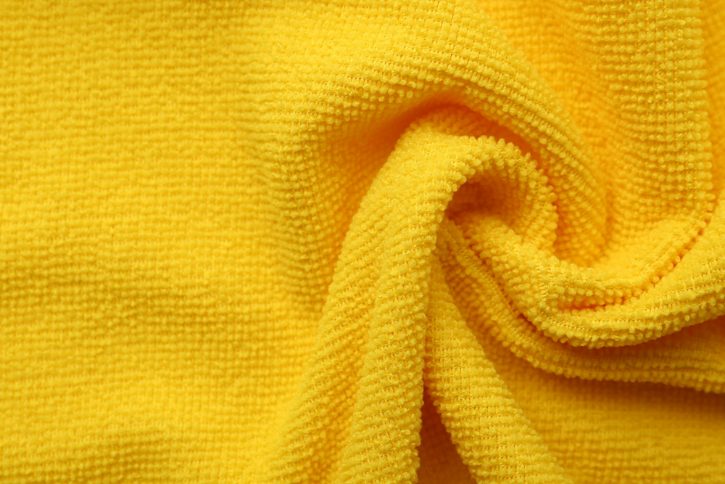
Why cotton struggles here
- Thailand’s humidity keeps cotton towels damp, leading to mildew.
- You will want a quick-drying towel for waterfalls, boats, and beach hopping.
Microfibre wins
- Dries three to five times faster than cotton
- Packs small and weighs little
- Naturally repels sand
Even for hotel guests
- Handy for day trips, island hops, and sleeper trains, or where hotels ban room towels at the pool.
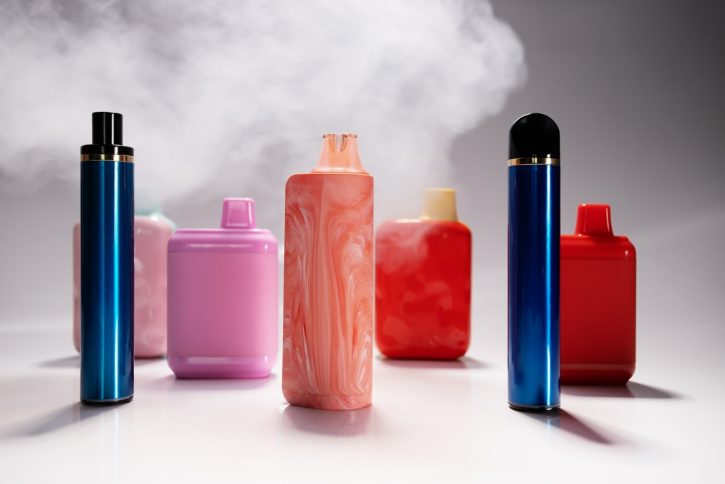
11. Leave Behind: Vapes, E-Cigarettes, and Vape Liquids
The simple rule
- The easiest advice for Thailand is to leave all vaping gear at home.
- The ban covers disposables, pods, e-liquids, and heated tobacco like IQOS and glo, and even empty devices count, so there is no safe way to pack them.
Why it is worth taking seriously
Penalties here are higher than many travelers expect, which is exactly why it is best to avoid the risk:
- Possession or use: up to 30,000 THB (about $900 USD)
- Bringing them through customs: based on the device value, with the possibility of more serious consequences
- Selling them: much larger fines still
A heads-up at the airport
- Airport scanners at Suvarnabhumi, Don Mueang, and Phuket do check both checked and carry-on bags for vaping devices.
- There is also a reward system that encourages people to report it, so even quiet use is not really private.
A quick note
- You may see vapes for sale near some tourist areas, but that does not mean they are allowed, so it is best not to be tempted.
An easy alternative
- If you use nicotine, patches and chewing gum are perfectly fine to bring, so pack those instead and travel with peace of mind.
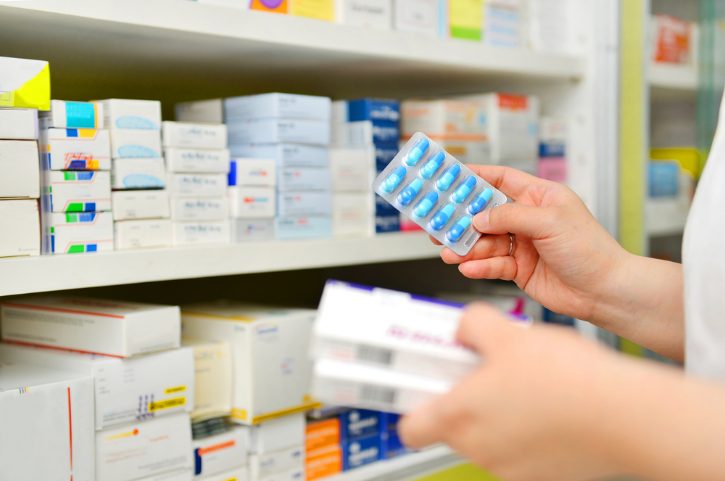
12. Leave Behind: Medications with Banned or Controlled Substances
A quick check goes a long way
- Thailand’s list of controlled medicines is a little different from your home country’s.
- Common, prescribed, or over-the-counter at home does not always mean allowed here.
Worth double-checking
A few everyday medicines are best confirmed before you travel:
- Pseudoephedrine (in decongestants like Sudafed)
- Codeine (in some cough syrups and painkillers)
- Benzodiazepines like Xanax and Valium
- Cannabis and CBD products, including hemp, which cannot be brought in
A note on ADHD medicines
- Methylphenidate-based medicines like Ritalin and Concerta can be brought with a permit for stays over 30 days.
- Amphetamine-based medicines like Adderall and Dexedrine are in the strictest category, so these are ones to leave at home and speak to your doctor about.
The simplest way to be sure
- Check your medicines against the Thai FDA list at fda.moph.go.th.
- If a medicine is allowed and you genuinely need it, follow the steps in section 1.
- Declare any permitted controlled medicines at the Red Channel on arrival.
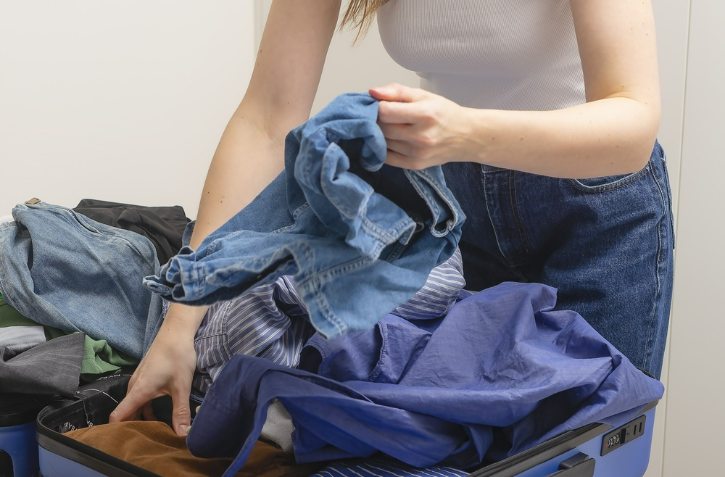
13. Leave Behind: Overpacked Clothing
The climate decides
- Thailand stays hot and humid for most of the year, so light, breathable clothes are your friend.
- Heavy denim, thick synthetics, and wool trap heat and can cause chafing, so they are best left at home.
Laundry is cheap
- Local shops charge about 40 to 80 THB (around $1.20 to $2.50 USD) per kilogram to wash and press.
- That alone makes a big suitcase pointless.
Shop as you go
- Light cotton and linen pieces cost around 150 to 350 THB ($4.50 to $10.70 USD) at markets.
- Heavy bags are a pain on longtail boats, ferries, tuk-tuks, and guesthouse stairs.
Pack light and re-wear
- Bring just a few light, mix-and-match outfits rather than a full wardrobe.
- Travel here is relaxed, so the same outfit can carry you through several activities in a day.