Chiang Rai sits in the quiet highlands of northern Thailand, and it moves at a slower, gentler pace than the big tourist cities.
This is a land of striking temples, misty mountains, and green tea plantations that roll on for miles.
You will also find peaceful riverside cafés, lively local markets, and cultural spots you will not see anywhere else.
If you want beauty without the crowds and the rush, Chiang Rai delivers. Here are 15 spots worth building your whole trip around.
1. Wat Rong Khun (White Temple)
a. A temple like no other
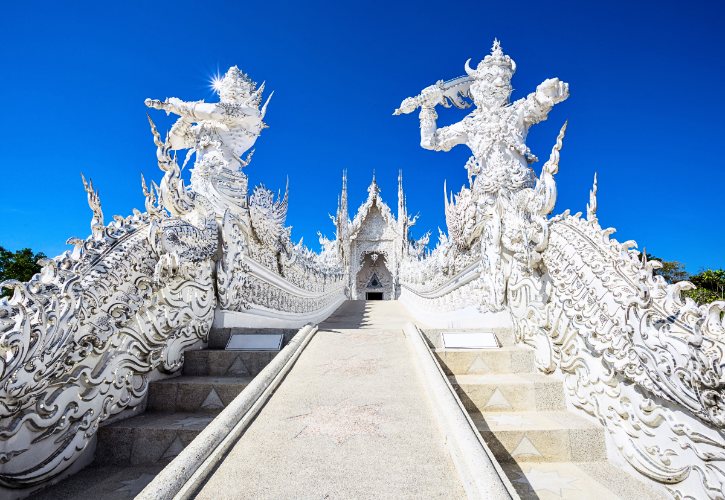
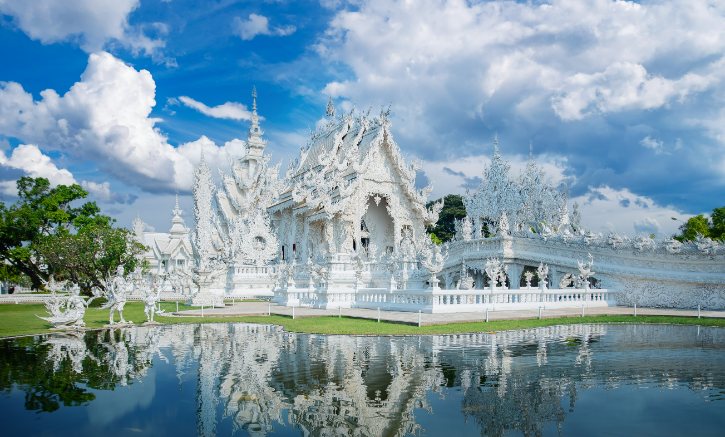
Wat Rong Khun is Chiang Rai’s most famous sight, and it is known everywhere as the White Temple.
It is not a normal temple, though. It is an ongoing work of art, created by Thai artist Chalermchai Kositpipat, who began building it in 1997 and funded it himself so he could keep full creative freedom.
It is still unfinished, and the artist planned it as a lifelong project.
b. Why it looks so unusual
The moment you arrive, you will see this is nothing like a traditional temple.
- The whole exterior is pure white, standing for the purity of the Buddha.
- It is set with thousands of tiny mirror pieces that sparkle in the sun, meant to show the light of Buddhist teaching.
- It blends classic Buddhist ideas with bold, modern art and imagery.
c. The symbols to look for
The path to the main hall crosses the Bridge of the Cycle of Rebirth. Below it, hundreds of sculpted hands reach up from the ground, standing for greed, desire, and temptation, the things you must rise above.
Beyond the bridge is the Gate of Heaven. Inside the hall, the murals mix Buddhist scenes with modern pop-culture icons, a reminder of the distractions of everyday life.
Even the golden building, which houses the restrooms, carries a message: gold for material life, white for the spirit.
d. Best photo spots
- The straight-on front view of the temple
- Reflections in the water nearby
- The bridge and the reaching hands
- Close-ups of the white detail and mirror work
e. Good to know before you go
- Dress modestly, with shoulders and knees covered.
- Photography is not allowed inside the main hall.
- Take it in slowly. This is art as much as a temple, so do not rush through just for a photo.
2. Rong Suea Ten Temple (Blue Temple)
a. The colorful opposite
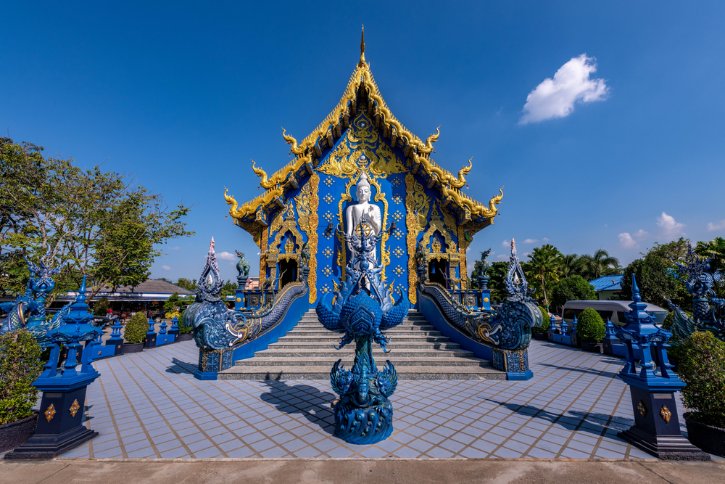
If the White Temple is all about purity, the Blue Temple is its vivid opposite. Its name means “Temple of the Dancing Tiger”, a nod to the tigers that once roamed here.
It is one of Chiang Rai’s newer temples, finished in 2016, and it was designed by Putha Kabkaew, a local artist who studied under the creator of the White Temple.
b. A world of blue and gold
- The whole temple glows in deep sapphire blue with gold trim, inside and out.
- The blue stands for purity, boundless wisdom, and letting go of material things.
- Two huge naga (serpent) guardians frame the entrance.
c. Step inside
The walls are covered in modern murals of the Buddha’s life, painted in the same rich blue and gold.
At the back of the hall sits a large, pure white porcelain Buddha that glows beautifully against the blue under shifting colored lights.
The whole space feels calmer and more compact than the White Temple, so it has a lovely, intimate feel.
d. A sweet local treat
- Outside, local vendors sell a coconut mango ice cream, naturally dyed blue with butterfly pea flower. It is worth a try.
e. Temple manners
- Remove your shoes before entering the prayer hall.
- Cover your shoulders and knees.
- Keep your voice low. This is still an active place of worship.
3. Baan Dam Museum (Black House)
a. The dark counterpart
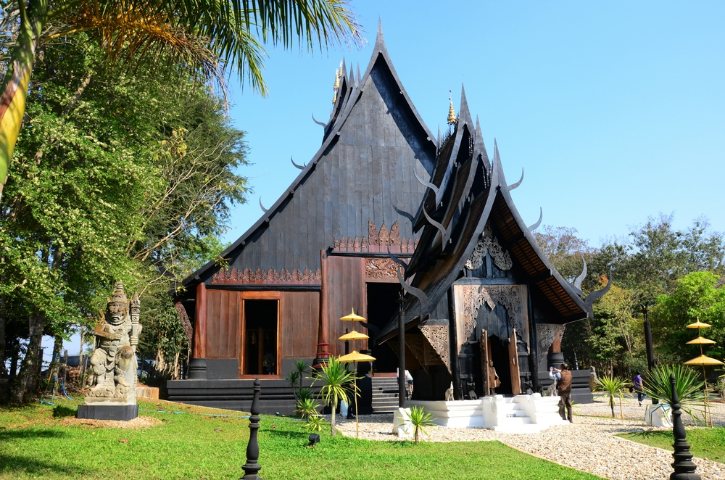
Where the White and Blue Temples are bright and cheerful, Baan Dam, known as the Black House, goes the other way.
First, an important note: this is a private museum and studio, not a temple. It was created by the late national artist Thawan Duchanee, who spent more than forty years shaping the site.
b. What the art explores
- Heavy, honest themes like suffering, desire, and the impermanence of life
- Ideas drawn deeply from Buddhist philosophy
- More than 40 black wooden buildings with fine, hand-carved detail, in a bold Lanna style
c. What you’ll see inside
The main hall holds an unusual collection of animal remains, including buffalo horns, snake skins, and bones, shaped into furniture and art.
The outdoor grounds feel far gentler, with neat lawns, white dome-shaped structures, and a whale-shaped pavilion.
You can also scan QR codes near some works to unlock digital animations.
d. Is it for you?
- The animal imagery can feel intense or macabre.
- It may not suit young children or more sensitive visitors.
- It is perfect for art lovers and anyone who enjoys the unusual.
e. A note on dress
- The rules are relaxed compared to a temple, but respectful clothing that covers your shoulders and knees is still a good idea.
4. Wat Huay Pla Kang
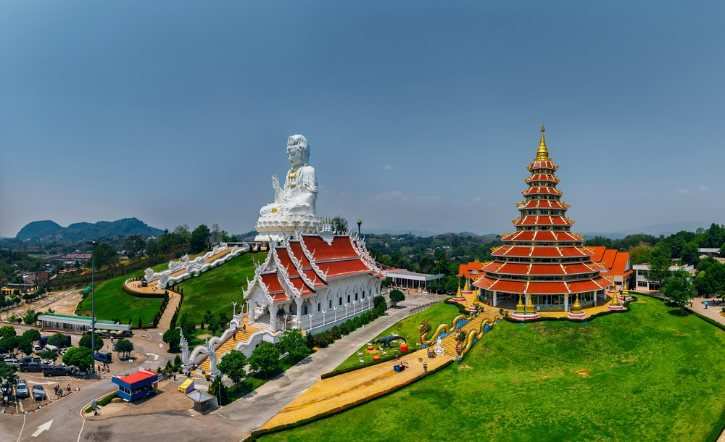
a. The giant on the hill
Wat Huay Pla Kang is a large hilltop complex you can spot from far away. That towering white figure is often called the “Big Buddha”, but it is actually Guan Yin, the Goddess of Mercy. Getting that right adds a lot to the visit.
b. Three things to see
- The giant white Guan Yin statue that dominates the skyline
- A nine-story pagoda, Phobchok Dhamma Chedi, with a red roof and white dragons
- A pristine white ordination hall in an ornate Lanna and Chinese style
c. Inside the pagoda and statue
The pagoda’s central column holds a hand-carved sandalwood image of Guan Yin, with different wooden Buddha images on each level as you climb.
The real treat is going up inside the statue itself. An elevator rises to a high chamber decorated with white dragons, where small round windows at the eye and “third eye” levels reveal sweeping views over the valleys and mountains.
d. Temple manners
- Cover your shoulders and knees.
- Behave respectfully. This is an active temple.
- Wear comfortable shoes, as there is a fair bit of walking.
e. Pair it up
- Lalitta Café sits right at the entrance, so many travelers combine the two in one easy visit.
5. Chiang Rai Clock Tower
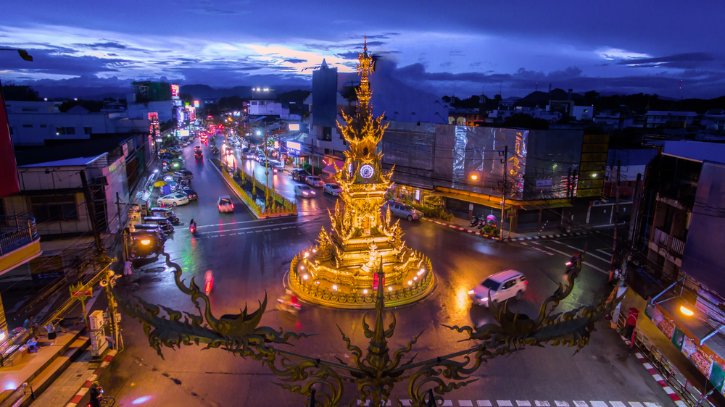
a. A golden landmark
The Chiang Rai Clock Tower is a small but eye-catching golden monument in the center of the city, best enjoyed as a quick stop.
It was designed by Chalermchai Kositpipat, the same artist behind the White Temple, and it clearly shows his style.
It honors His Majesty King Bhumibol Adulyadej, with links to honoring Her Majesty Queen Sirikit as well.
b. By day
- It stands around 20 meters tall, covered in golden spires and fine filigree.
- Lotus flowers and celestial figures appear in the classic Lanna style.
- The gold shimmers in the northern sun, and matching gilded streetlights line the road nearby.
c. By night
After dark, the tower comes alive with a short light and music show. It shifts through dramatic colors, from gold to pink, purple, and green, all set to music. It is brief, but it is a quintessential Chiang Rai moment that draws a small crowd to the sidewalks.
d. Stay safe
- The tower sits in a busy traffic roundabout.
- Stay on the sidewalks and never step into the road for photos.
e. Make an evening of it
- It is a short walk to the Night Bazaar, so pair it with dinner and some easy shopping.
6. Chiang Rai Night Bazaar
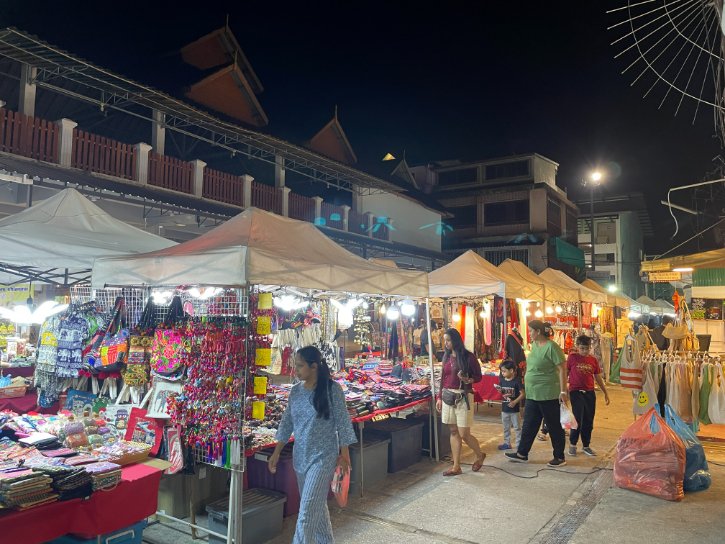
a. The easy evening out
For a relaxed evening in the heart of the city, the Chiang Rai Night Bazaar is your everyday go-to. It runs nightly, so you do not need to plan around it. It is smaller and calmer than the huge markets in Bangkok or Chiang Mai, and it is easy to wander.
b. What’s on the stalls
- Local handicrafts and hill tribe bags and textiles
- Lanna silver jewelry and wood carvings
- Casual clothing and affordable souvenirs
c. The food courts
The real highlight is a pair of open-air food courts ringed by dozens of local food stalls, with shared wooden tables to sit at.
Stages host nightly performances, from traditional Lanna folk dances to live acoustic music and retro cover bands. It gives the whole place a friendly, communal buzz.
d. Tasty things to try
- Jim jum, a herby clay-pot hot pot
- Khao soi, the northern egg noodle curry
- Sai ua, grilled northern sausage
- Fresh fruit smoothies
e. Handy to know
- Bring cash. It is strongly preferred by the vendors.
- Not every stall or show runs every night, so keep an open mind.
- It is a great fit for families, food lovers, and first-time visitors.
7. Chiang Rai Walking Street
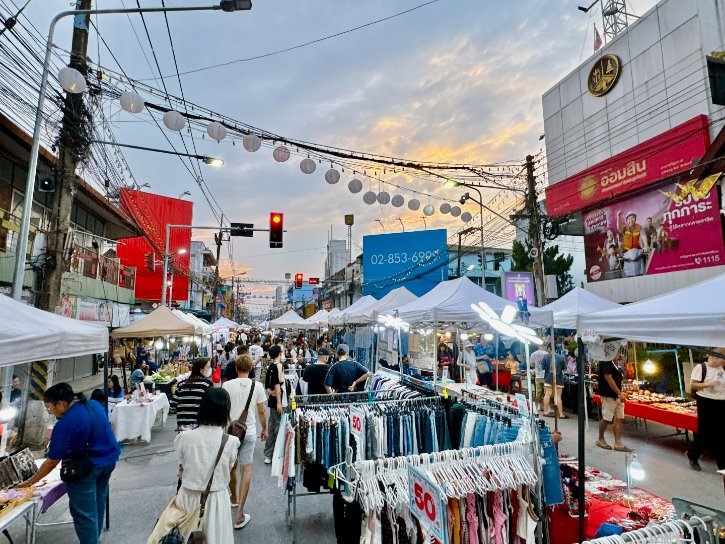
a. A weekend treat
On weekends, whole streets close to traffic and fill with vendors for a bigger, livelier market than the daily Night Bazaar. This is where you really feel local life, with families out in force. There are two, and each has its own character.
b. Saturday Walking Street (Kad Kon Muan)
- The largest and most organized of the two
- An OTOP zone with quality goods made by local hill tribes
- A handicraft zone of fine Lanna arts and woodwork
- A souvenir and clothing zone, with folk dancing on a central stage
c. Sunday Walking Street (Sankhong Happy Street)
This one is smaller, cozier, and more of a neighborhood market. It still sells crafts and textiles, but it is loved most as a food paradise, packed with street food vendors.
Stage performances and dances take place near a local temple, adding to the warm community feel.
d. Good to know
- Both markets run rain or shine, under umbrellas and canvas stalls.
- Cash is the norm here.
e. Which one to choose?
- The Night Bazaar is easier for a regular weeknight.
- The Walking Streets give you a bigger local weekend feel.
- If you can, plan your Chiang Rai dates to catch at least one weekend evening.
8. Singha Park Chiang Rai
a. A huge green escape
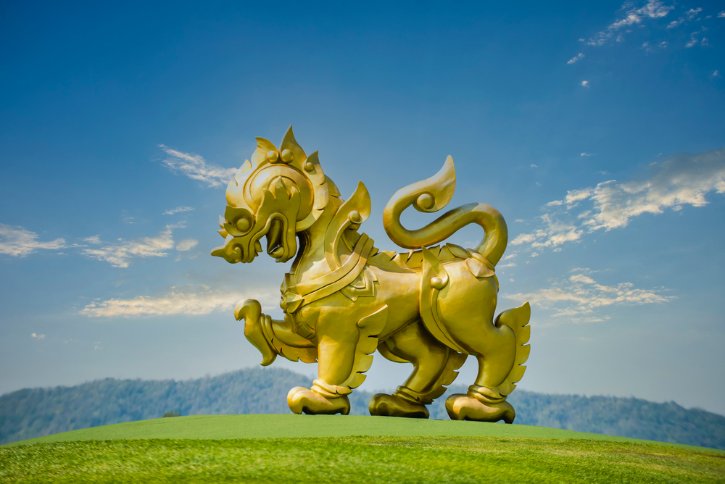
Singha Park is a vast, beautifully kept farm and eco-tourism park, a lovely nature break without heading deep into the mountains. Owned by Boon Rawd Brewery, it is known for its rolling tea fields, flower gardens, and calm lakes.
b. The famous photo spot
- A giant golden Singha lion statue stands on a grassy hill.
- It is one of the most popular photo backdrops in the whole province.
c. Things to do
- Ride the farm tram past viewpoints, a lakeside café, and Swan Lake
- Feed giraffes and zebras in the animal area
- Rent a bicycle for the paved trails
- Try the zipline over the tea plantations
d. A note on size
The park is far too big to explore on foot, so hop on the tram or grab a bike to see it properly. At certain times of year, it also hosts the colorful International Balloon Fiesta, which is a real treat if your visit lines up.
e. Who it suits
- Families, couples, and photo lovers
- Easy to combine with the White Temple, which is nearby
9. Choui Fong Tea Plantation
a. Tea with a view
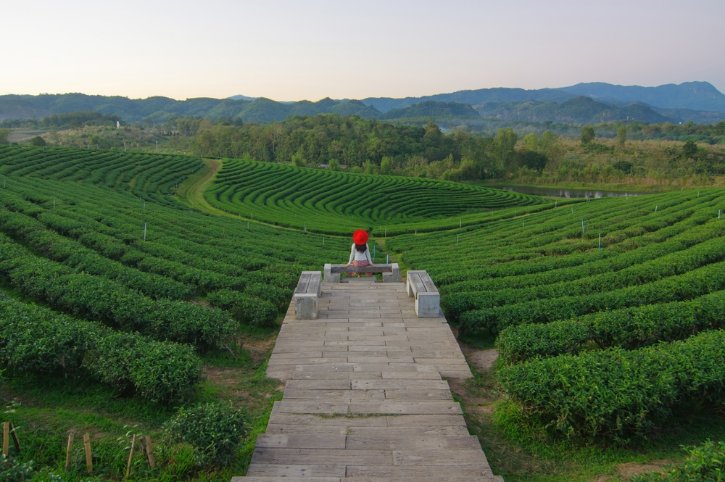
Choui Fong is one of the most photogenic and relaxing tea stops in the whole north. It is the province’s largest and most prominent tea producer, with more than forty years of experience, set high on gently sloping ridges.
b. The signature scene
- Endless, neat rows of terraced tea that sweep across the hills
- Walking paths that wind right through the green fields
- Workers harvesting the young leaves by hand in the early hours
c. Sip and shop
Sleek modern cafés sit above the fields with sweeping 360-degree views, alongside a tea-tasting bar and a shop selling premium loose-leaf teas, matcha, and tea-infused cosmetics.
One quick tip: there is more than one branch, and the Mae Chan branch is the one with the modern cafés and restaurant.
d. Café favorites
- Iced matcha latte
- Green tea crepe cake and green tea roll cake
- Crispy fried tea leaves
e. Handy tips
- The mountain sun can be strong, so bring a hat and sunscreen.
- Wear comfortable flat shoes for the pathways.
- Take your time here rather than snapping one photo and leaving.
10. Golden Triangle
a. Where three countries meet
The Golden Triangle is the famous point where Thailand, Laos, and Myanmar come together along the Mekong River.
Once one of the world’s most secretive opium-producing regions, it has since become a peaceful, tourism-focused area with a fascinating story.
b. The main view
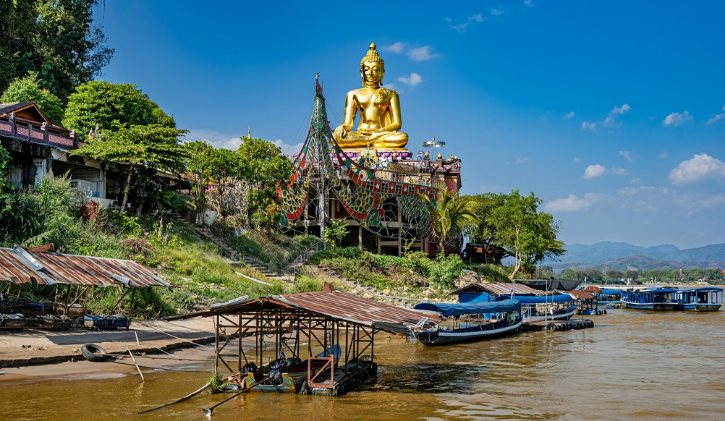
- The Sop Ruak viewpoint lets you see all three countries at once.
- The muddy Mekong acts as a natural border between them.
- A large golden Buddha sits on a boat-shaped platform facing the river.
c. Learn the history
Two museums bring the past to life. The House of Opium is a quick, interesting collection of artifacts, weight scales, pipes, and photos.
The larger Hall of Opium is a world-class multimedia museum with a deeper, more sober look at the opium trade, the harm of addiction, and the royal programs that gave local communities new livelihoods.
d. On the water
- Longtail boats can be hired at the pier for scenic cruises along the Mekong border.
e. Who it suits
- Travelers drawn to river scenery, border areas, and history
- Best enjoyed as part of a fuller day out in the north
11. Doi Mae Salong
a. A slice of Yunnan
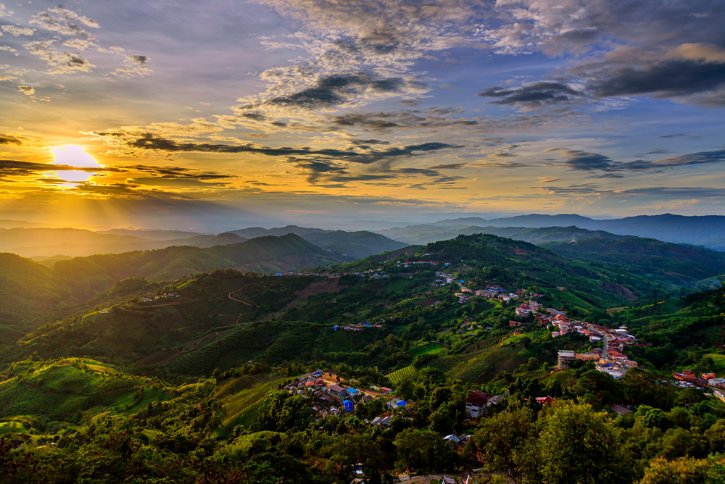
Doi Mae Salong, officially named Ban Santikhiri, is a mountain village unlike anywhere else in Thailand. Cool air, terraced tea, and a strong Chinese heritage give it a character all its own.
b. The story behind it
- It was founded in 1961 by former Nationalist Chinese (KMT) soldiers who left Yunnan after the Chinese Civil War.
- Over the years, the community shifted from opium cultivation to tea and fruit farming.
- Today it feels like a pocket of Yunnan set among the Thai hills.
c. What to do
Wander the lively morning market, sip complimentary tastings at the oolong tea shops that line the streets, and climb to the hilltop Phra That Sri Maha Santi Khiri pagoda for sweeping views.
Chinese-style architecture and Mandarin signage add to the sense that you have crossed into another world.
d. Yunnanese food to try
- Stewed pork leg with steamed mantou buns
- Black bone chicken soup
- Freshly brewed High-Mountain Oolong tea
e. Make the most of it
The magic of Doi Mae Salong is not one single viewpoint. It is the whole experience: the winding drive, the tea culture, the hearty food, the cool air, and the village feel.
Staying overnight lets you catch the morning mist rolling over the tea fields, which is well worth it. Pack a warm layer, as it can be cool up here.
12. Doi Tung Royal Villa
a. History, gardens, and heart
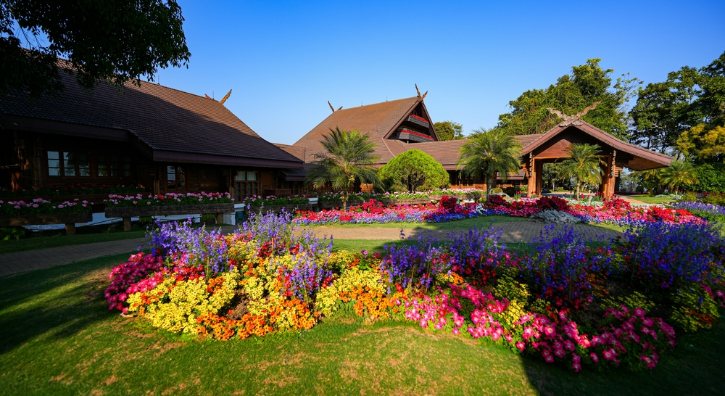
Doi Tung Royal Villa brings together royal history, beautiful gardens, and a genuinely moving social story. The villa was built as the summer home of Her Royal Highness Princess Srinagarindra, the Princess Mother, who was the mother of King Rama IX.
b. The story behind it
- Before her arrival, this area was barren and scarred by opium farming and smuggling.
- The Princess Mother founded the Doi Tung Development Project to change that.
- It restored the land and gave local hill tribes lawful livelihoods, such as coffee farming.
c. The villa itself
The building is a beautiful blend of Lanna style and Swiss alpine chalet, a nod to her years living in Switzerland. It is built largely from recycled teak and mountain pine
Its centerpiece is the grand audience hall, with a hand-carved “Star Ceiling” showing the exact position of the stars on the day she was born.
d. The garden
- The Mae Fah Luang Garden sits just below the villa.
- It is a world-class landscaped garden set in a natural valley.
- Temperate flowers, walking paths, and sculptures keep it vibrant all year.
e. Good to know
- A strict royal dress code applies, so cover your shoulders and knees.
- An audio guide comes with the villa and adds rich, detailed history.
- Give yourself plenty of time, as mountain sites take longer than you expect.
13. Lalitta Café
a. A fantasy garden
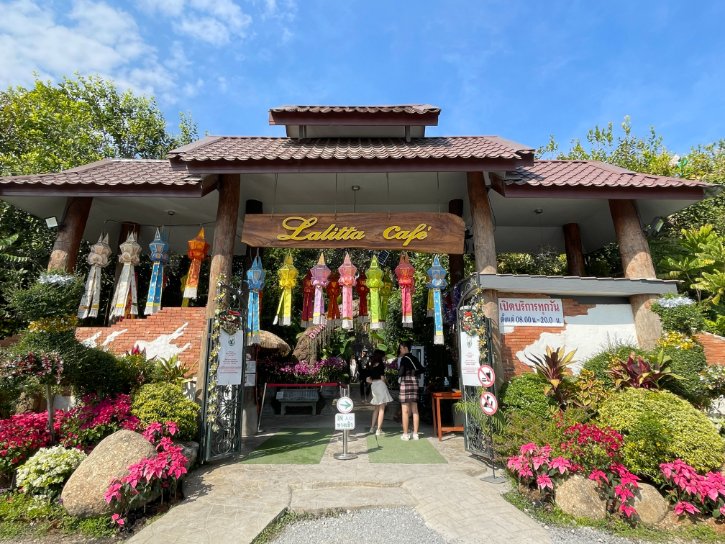
Lalitta Café is Chiang Rai’s fantasy garden café, one of the most photogenic stops around, and a fun break from temple-hopping. It sits right beside Wat Huay Pla Kang, which makes the two easy to combine.
b. The theme
- It is built to feel like the mythical Himmapan forest.
- Cool artificial mist drifts around cliffs and cascading waterfalls.
- Koi ponds, wooden footbridges, and fairy-tale statues fill the greenery.
c. More than a café
This is really a walk-through themed attraction with a café inside, so there is a small entrance fee. The good news is that the fee is fully redeemable against food and drink inside the domed dining pavilion.
The menu is broad, covering northern Thai favorites, Western options, specialty coffees, and pretty cakes.
d. Who will love it
- Photo lovers, couples, and families
- Anyone who wants a relaxed, whimsical garden break
e. Pair it up
- Combine it with Wat Huay Pla Kang right next door for an easy half-day out.
14. Chivit Thamma Da Coffee House
a. Slow living by the river
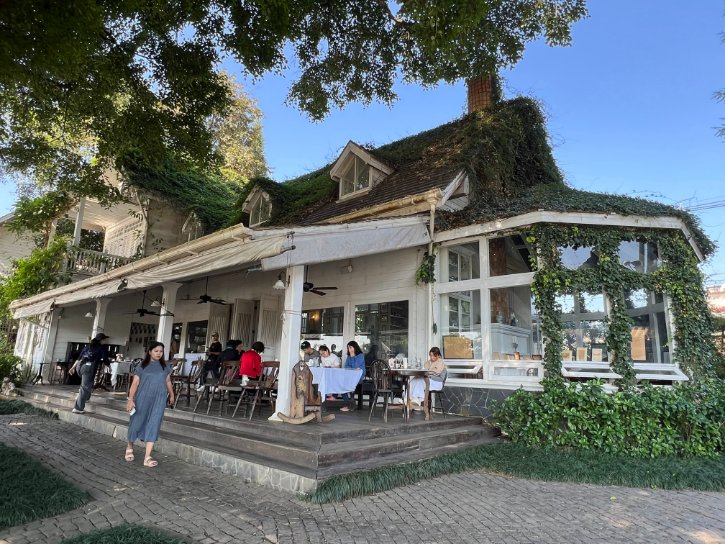
Chivit Thamma Da, whose name means “The Ordinary Life”, is a peaceful riverside café and restaurant that has been loved for years. Set on the banks of the Kok River, it offers a calm, elegant, slow-living mood that invites you to stay a while.
b. The setting
- A beautifully restored white colonial-style English cottage
- Lush gardens, climbing ivy, and rustic iron fountains
- Cozy indoor parlors and wide wooden decks right by the river
c. What’s on offer
The menu is generous, with artisan coffees, organic local teas, elaborate pastries, northern Thai dishes, and Western bistro fare.
There are clearly labeled vegetarian and vegan options too. It is known for its warm service and consistent quality, so it is a place made for lingering rather than rushing.
d. Good to know
- It works well for breakfast, lunch, high tea, or a riverfront dinner.
- Prices sit a little higher, in keeping with the setting and ingredients.
- Reservations help at busy weekend meals, especially for riverside seats.
e. A gentle pairing
- It is near the Blue Temple, so the two make a lovely combination.
15. Akha Farmview
a. Sheep in the mountains
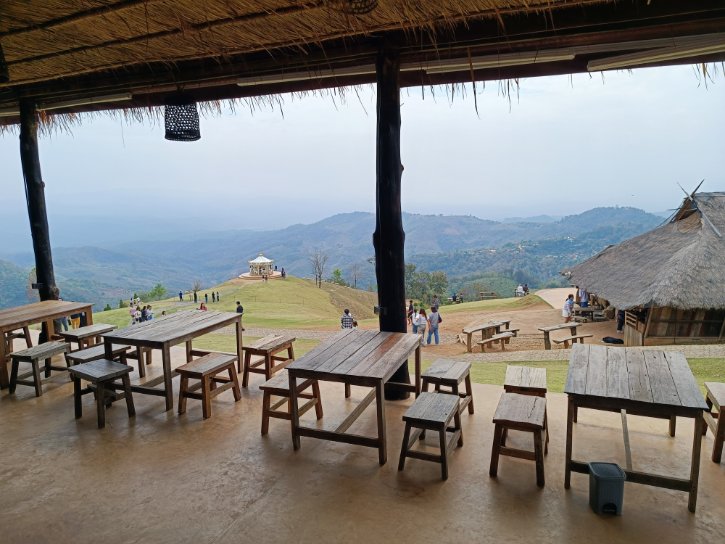
Akha Farmview, which operates officially as Akha FarmVille, is a highland farm café on the ridges of Doi Chang. Expect cool mountain breezes, wide valley views, and a setting styled to feel like a European alpine pasture.
b. Meet the flock
- A large herd of fluffy, free-roaming Corriedale sheep
- Open fields where you can pet and feed the friendly animals
- Live sheepdog demonstrations featuring clever dogs named Wa Wa and Oh No
c. An honest note
The farm has a few minor Akha design touches and is run by local staff, but it is designed mainly as a scenic sheep farm and leisure café, not a cultural preservation site.
Enjoy it for the views and the animals, and simply keep in mind that it is not the same as genuine Akha cultural tourism.
d. Fun extras
- A small fantasy-style carousel
- A “Hobbit-style” village photo zone
- A rustic open-air café with hillside seating to soak up the view
e. Who it suits
- Families, couples, and photo lovers
- On misty mornings, the valley can fill with a beautiful sea of cloud
- Dress for cooler mountain air
Planning Your Trip
Chiang Rai’s beauty is spread out, so it helps to group your days by what you love most.
- First-time visitors: Start with the White Temple, Blue Temple, Black House, and the golden Clock Tower.
- Temple lovers: Add the hilltop Wat Huay Pla Kang to the classic temple pair.
- Café and photo fans: Lalitta Café, Chivit Thamma Da, Akha Farmview, and Choui Fong Tea Plantation.
- Mountain scenery lovers: Doi Mae Salong and Doi Tung Royal Villa.
- Families: Singha Park and Akha Farmview.
However you plan it, the best thing you can do here is slow down. Chiang Rai rewards travelers who leave a little room to sit with a cup of tea, watch the mist, and simply enjoy the view.