
Tokyo has more famous places than any short trip can hold. When your days are limited, choosing well matters more than seeing everything.
The truth is, not every famous spot gives first time visitors the same value. The best places reward you with a strong mix of culture, food, atmosphere, and memories that stick.
Here are the spots worth your time first, plus a few popular places that are still nice but simply lower priority when the clock is ticking.
1. Asakusa: Tokyo’s Most Atmospheric Old Town
a. Why It’s Such a Good First Stop
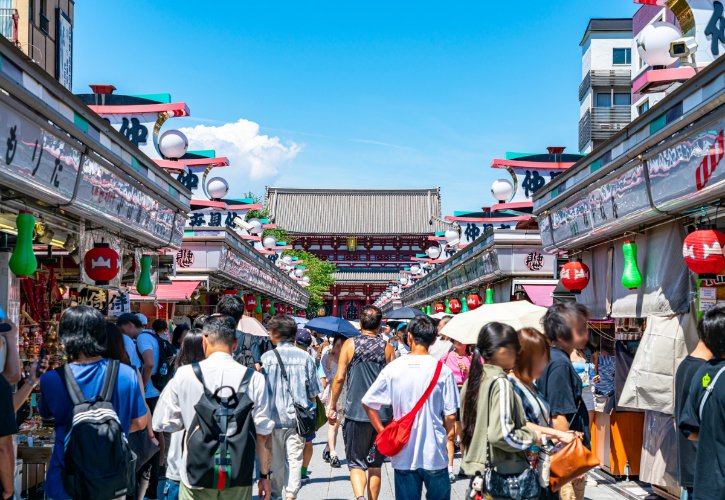
If you only have time for one traditional area, start here. Asakusa hands you old Tokyo, temple culture, street food, and classic photo spots in one easy place, no complicated planning required.
b. The Heart of It
At the center sits Sensoji, a Buddhist temple founded in 645 AD and one of Tokyo’s oldest. You enter through the towering Kaminarimon Gate, with its giant red lantern, then follow the temple approach toward the main hall and the five story pagoda.
c. Down Nakamise Street
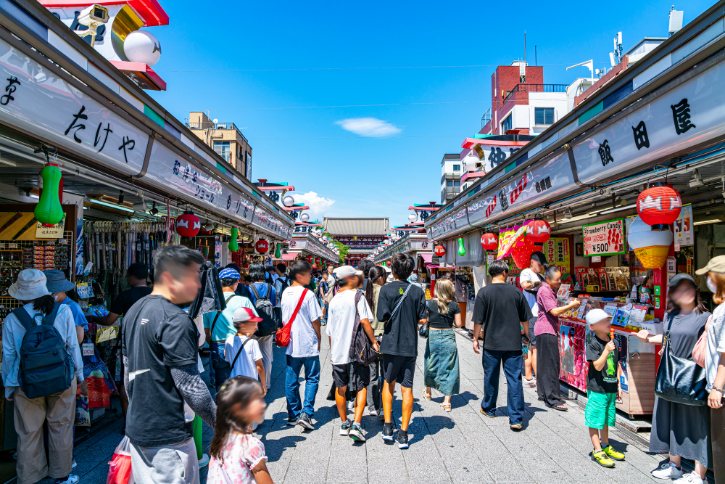
That approach is Nakamise Shopping Street, about 250 meters lined with 80 to 100 small stalls. It is part souvenir market, part snack corridor. Look out for:
- Traditional souvenirs like tenugui cotton towels, wooden kokeshi dolls, and folding fans
- Warm local snacks like ningyo yaki (sponge cakes filled with sweet red bean paste), agemanju (fried sweet buns), and toasted senbei rice crackers
d. Old Meets New
Part of the magic here is the contrast. From the ancient wooden eaves of the temple, you can see the futuristic Tokyo Skytree rising across the Sumida River, old and new Tokyo standing side by side.
e. Where the Real Charm Hides
Do not stop at the main street. The quiet side alleys are full of rickshaws, kimono rentals, and small snack shops.
Nearby, Kappabashi Kitchen Street sells beautiful Japanese knives and wax food models, while Hoppy Street is a row of retro open air taverns known for slow cooked beef tendon stew. Trust me, the side streets are where Asakusa truly comes alive.
f. Nearby Attractions to Combine
- Tokyo Skytree and the Sumida River, both an easy walk away
- Kappabashi Kitchen Street and Hoppy Street for food and browsing
- Ueno or Akihabara if you want a full east Tokyo day
Read More: 17 Wonderful Things to Do in Asakusa for First-Timers
2. Shinjuku: Tokyo’s Most Multi Layered District
a. A City Within a City
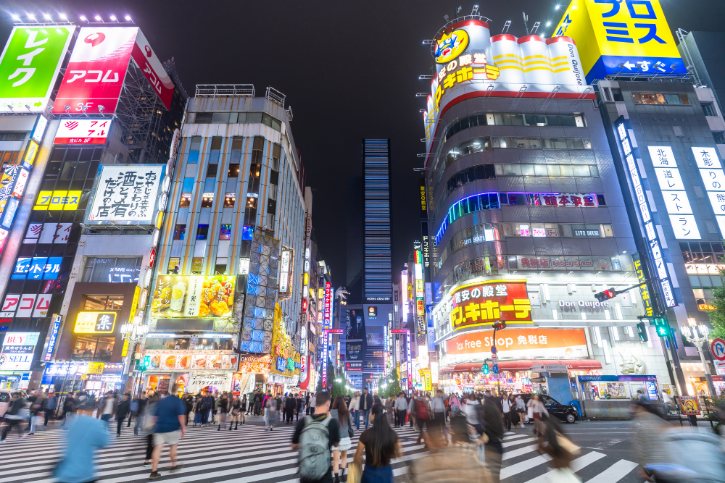
Shinjuku is Tokyo turned up to full volume. Neon streets, food alleys, a peaceful garden, free viewpoints, and buzzing nightlife all sit in one area. It is really several districts in one, and it feels completely different by day and by night.
b. The Skyscraper Side
To the west, tall towers rise around the Tokyo Metropolitan Government Building. Its observation decks sit about 202 meters up and are completely free, with views that can reach Mount Fuji on clear days.
There is even a grand piano decorated by artist Yayoi Kusama that anyone can play.
c. A Green Escape
In the middle of all this energy sits Shinjuku Gyoen, a calm imperial garden that balances the busy streets. It blends three styles in one: a formal French garden, a wide English landscape garden, and a traditional Japanese garden with tea houses.
d. Where the Night Comes Alive
Once the sun goes down, the eastern side lights up:
- Omoide Yokocho, a maze of narrow lanes with tiny grills serving charcoal yakitori
- Golden Gai, six passages packed with over 200 miniature bars, each with its own character
- Kabukicho, the big entertainment district, home to the famous Godzilla head peering down from a rooftop
Spend a calm morning in the garden, catch sunset from the towers, then wander the glowing alleys after dark. Few places give you this much Tokyo in a single day.
e. Nearby Attractions to Combine
- Meiji Shrine and Harajuku, a short train ride away
- Shibuya, just down the JR Yamanote line
- Department store food floors right around the station
Read More: 17 Best Things to Do in Shinjuku with My Perfect Itinerary
3. Shibuya: The Beating Heart of Modern Tokyo
a. Modern Tokyo, On Full Display
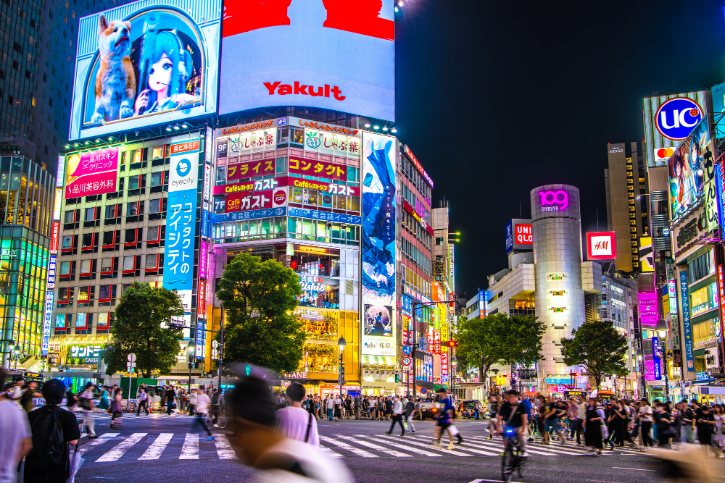
Shibuya is where the city shows off, with giant screens, youth fashion, rooftop views, and streets that seem to change every year. For first time visitors chasing that modern buzz, it is a must.
b. The Famous Crossing
The star is the Shibuya Scramble Crossing, where thousands of people cross at once under glowing screens. Experience it two ways: walk across it yourself, then watch the wave from above, using the free elevated view along the walkway to Shibuya Mark City.
Right beside it stands the Hachiko statue, honoring the famously loyal dog and now one of Tokyo’s favorite meeting spots.
c. Up on the Rooftop
For the big view, head to Shibuya Sky on top of Shibuya Scramble Square. The open air rooftop gives you a sweeping look across the whole city, and it is breathtaking at sunset. Book ahead, since the best time slots go fast.
d. Shop, Snack, and Wander
There is plenty to explore on the ground too:
- Center Gai, the busy shopping and entertainment core
- Miyashita Park, a rooftop park with trendy dining
- Shibuya Parco and Shibuya 109 for fashion and pop culture
- Nonbei Yokocho, a cluster of tiny old bars for a quieter drink
e. Nearby Attractions to Combine
- Harajuku and Omotesando for shopping and architecture
- Daikanyama and Nakameguro for a stylish, calmer stroll
- Yoyogi Park and Meiji Shrine for greenery
- Okushibuya, ten minutes north, for quiet coffee shops and bookstores
Read More: 17 Top Things to Do in Shibuya with My Ideal Itinerary
4. Akihabara: Japan’s Pop Culture Capital
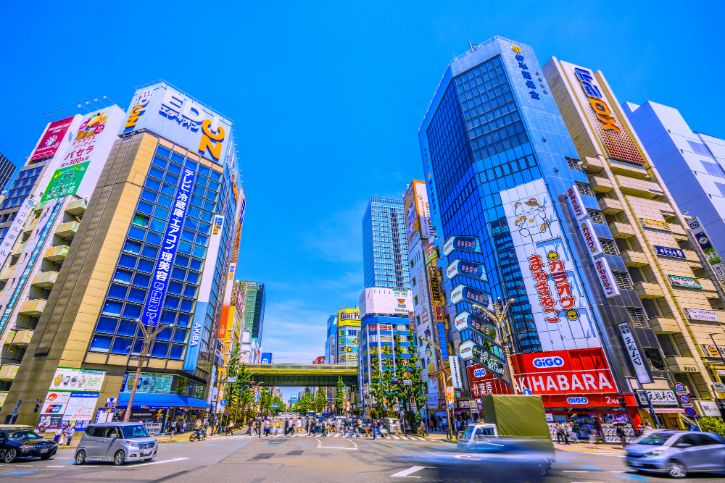
a. From Electric Town to Pop Culture Capital
Akihabara is colorful, loud, and wonderfully specific. Once known as “Electric Town” for its electronics shops, it is now the world capital of anime, gaming, and otaku culture. You will enjoy it most when you know what you are hunting for.
b. What You’ll Find
There is far more here than anime alone:
- Retro game shops, figure stores, and manga sellers
- Capsule toy machines and arcades
- Themed cafes and maid cafes
- Electronics and camera gear for the tech fans
c. The Art of Treasure Hunting
The real fun here is the search. Rare finds are tucked inside multi story buildings rather than shown in big windows.
Radio Kaikan near the Electric Town exit has ten floors of hobby shops, trading cards, and figures, and retro gaming fans love shops like Super Potato. Poke into the smaller side alley stores too, where prices are often lower.
d. A Word on Prices
One honest tip: do not expect cheap electronics anymore. Online pricing has mostly leveled things out, so the real value of Akihabara today is in rare collectibles, vintage gaming gear, and the atmosphere, not discounted gadgets.
e. Nearby Attractions to Combine
- Kanda Myojin Shrine, a short walk away
- 2k540 Aki Oka Artisan for craft and design shops
- Ueno and Ameya Yokocho for an easy east Tokyo pairing
- Jimbocho for book lovers
5. Ginza: Tokyo’s Most Elegant District
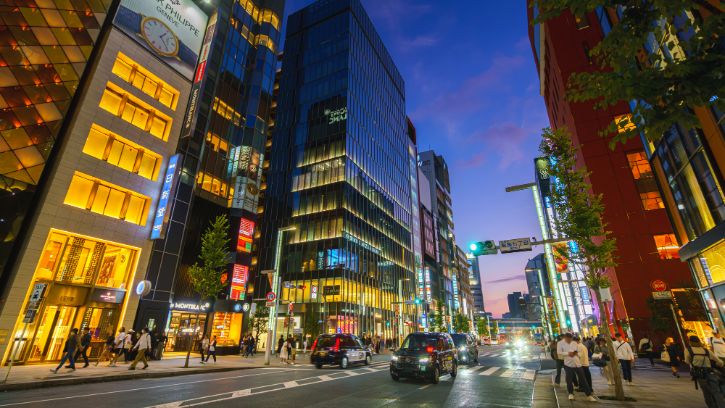
a. Tokyo’s Polished Side
Ginza is Tokyo at its most refined, and it offers far more than luxury shopping. You get striking architecture, stylish cafes, design and stationery shops, galleries, and wonderful food, all on clean, calm streets. It feels a world away from the neon rush of Shibuya.
b. More Than Luxury
There is something here for every budget:
- Chuo Dori, the elegant main boulevard, closed to cars on weekends
- Ginza Six and grand department stores
- Historic shops selling stationery, incense, and fine ceramics
- The lovely Itoya stationery flagship, a joy to browse
c. The Basement Food Halls
Do not skip the depachika, the food halls in the basements of stores like Mitsukoshi and Matsuya. They are a feast for the eyes, filled with beautiful Japanese pastries, bento boxes, and high grade green teas.
d. Enjoying Ginza on a Budget
You do not need deep pockets to love Ginza. The rooftop garden at Ginza Six is free and offers a striking green space with city views. Add the architecture, the galleries, and those food floors, and you have a full afternoon that costs very little.
e. Nearby Attractions to Combine
- Tsukiji Outer Market for a morning of food
- Tokyo Station, Yurakucho, and Hibiya
- Hamarikyu Gardens and the Imperial Palace East Gardens
Read More: Top 17 Things to Do in Ginza
6. Ueno Park & Ameya-Yokocho Market: Tokyo’s Best Value Culture and Food Area
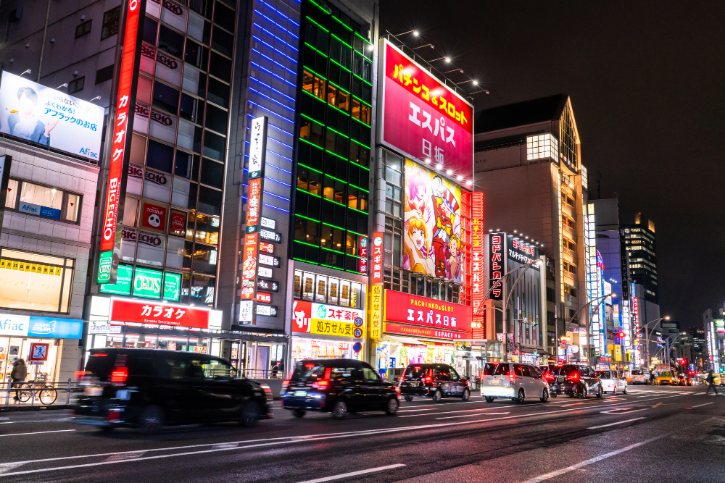
a. The Best Value Area in Tokyo
Ueno is one of the smartest picks for a short trip. In one compact area you get world class museums, a big public park, seasonal cherry blossoms, and a lively old market, all close enough to enjoy on foot.
b. Culture in the Park
Ueno Park is home to some of Japan’s finest cultural institutions:
- The Tokyo National Museum, with samurai armor and imperial treasures
- The National Museum of Nature and Science
- Ueno Zoo, a favorite with families
- Shinobazu Pond, lovely for a quiet stroll
A friendly tip: pick one main museum rather than trying to see them all. The Tokyo National Museum alone deserves a couple of hours.
c. Cherry Blossom Season
In spring, Ueno Park becomes one of Tokyo’s most famous cherry blossom spots, its central avenues turning into tunnels of pink petals. It is stunning, though be ready for big crowds at the peak.
d. Into the Market: Ameya Yokocho
Just beside the park runs Ameya Yokocho, a bustling market street that began as a black market after the war. It still keeps that energetic, unpolished character:
- Cheap street food like fresh fruit skewers, takoyaki, and kebabs
- Discount goods and everyday bargains
- A lively, shoulder to shoulder atmosphere that is pure fun
e. Nearby Attractions to Combine
- Ameya Yokocho and Okachimachi
- Akihabara for pop culture
- Yanaka Ginza for a slower neighborhood walk
- Asakusa for temples and old Tokyo
7. Tsukiji Outer Market: Tokyo’s Easiest Food Market Experience
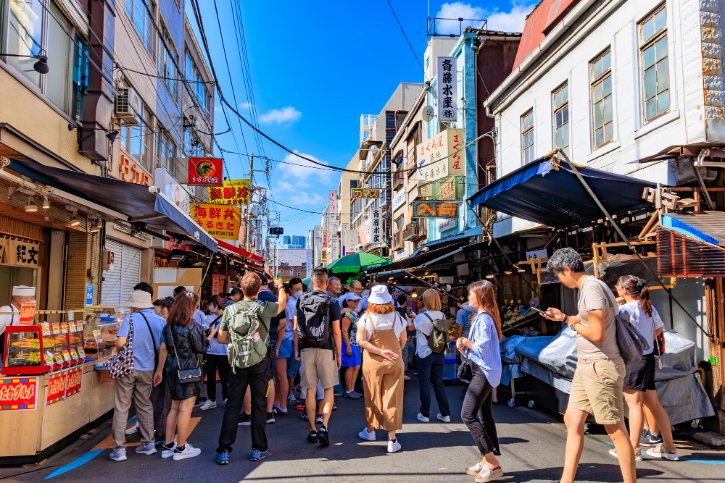
a. Still Very Much Alive
Yes, the famous tuna auction moved to Toyosu back in 2018, but only the wholesale side left. The Tsukiji Outer Market is still buzzing, with its dense grid of narrow lanes full of seafood stalls, knife shops, tea vendors, and small sushi bars.
For food lovers, it remains the easiest and most rewarding morning food stop in central Tokyo.
b. What to Eat
Come hungry, the choices are wonderful:
- Freshly shucked giant oysters
- Grilled scallop skewers with sweet soy sauce
- High grade wagyu beef skewers
- Tamagoyaki, a sweet rolled omelet served on a stick
- Kaisendon, a fresh seafood rice bowl, and sushi made to order
c. How to Do It Right
Skip breakfast, bring some cash, and share snacks with your group so you can try more. One bit of etiquette: eat each item right at the stall where you bought it, rather than walking and eating.
The lanes are narrow, and slowing down to enjoy every bite is both polite and more fun. A morning here pairs perfectly with a walk through nearby Ginza afterward.
d. Nearby Attractions to Combine
- Ginza, an easy walk for shopping and coffee
- Hamarikyu Gardens and Tsukiji Hongwanji Temple
- Toyosu Market, and TeamLab Planets if it suits your route
8. Yanaka Ginza: Tokyo’s Slower Old Neighborhood Walk
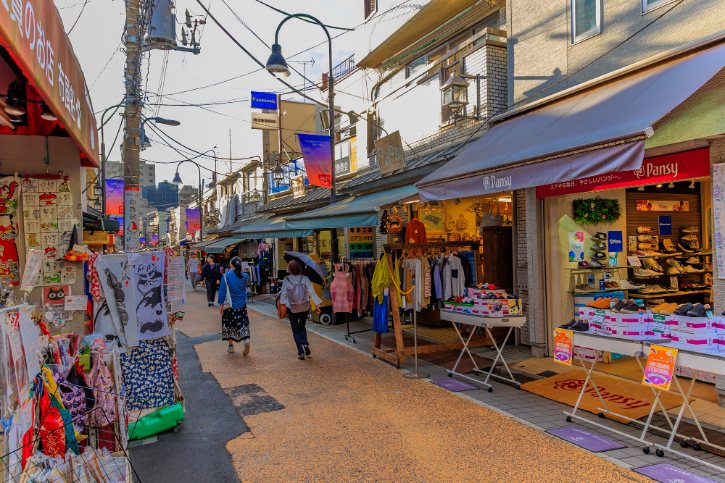
a. A Gentle Change of Pace
Tired of giant crossings and neon streets? Yanaka Ginza is your reset. This is the soft, slow, old neighborhood side of Tokyo, and it feels like stepping back a few decades. It survived the wartime bombing and the rush of modernization, keeping its warm, retro charm.
b. The Charm of the Street
This short shopping street is all about small, human details:
- Family run shops and traditional craft workshops
- Cozy snack shops selling potato croquettes and manju cakes
- Cat themed shops and cute retro storefronts
- Quiet lanes where everyday Tokyo life unfolds
c. Sunset at Yuyake Dandan
Do not miss Yuyake Dandan, the “Sunset Steps”. This little staircase looks down over the entrance of the shopping street, and in the late afternoon light it becomes one of the prettiest, most photographed views in the neighborhood.
d. Wander the Wider Area
Give yourself time beyond the main street. The nearby Yanaka Cemetery is a peaceful, lovely walk, especially in cherry blossom season, and Nezu Shrine rewards you with a hillside path of bright red torii gates.
Set your expectations right: this is a small local street, not a big tourist district, and that is exactly the point.
e. Nearby Attractions to Combine
- Yanaka Cemetery and Nezu Shrine
- Ueno Park, a short walk or ride away
- Nippori Fabric Town and the wider Yanesen area
9. Taishakuten-Sando: Nostalgic Old Tokyo Outside the Center
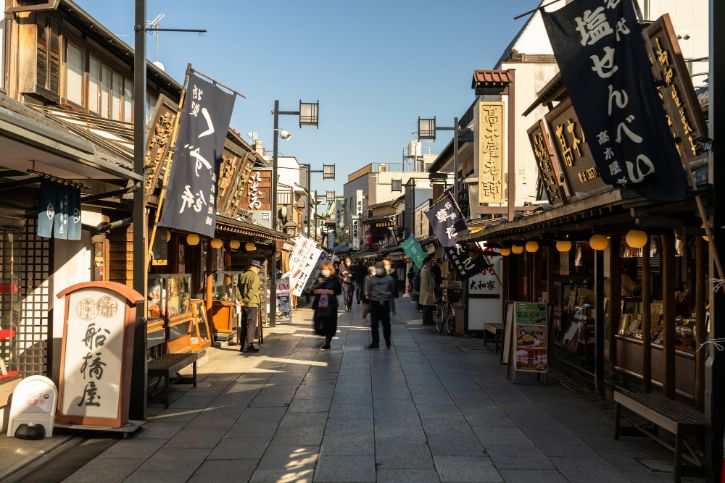
a. Old Tokyo, Far From the Crowds
Shibamata sits on the eastern edge of Tokyo, along the Edogawa River, a nostalgic journey into the mid twentieth century far from the tourist crush of the center. If you love traditional streets and a calm local mood, this one rewards the extra travel.
b. A Street Frozen in Time
The approach to the temple, called Taishakuten Sando, is lined with wooden, tile roofed buildings holding traditional sweetshops, dango vendors, and river fish restaurants.
Be sure to try the local kusa dango, mugwort rice dumplings topped with sweet red bean paste. The whole street feels like a bygone era.
c. The Temple and the Villa
At the end of the street stands Shibamata Taishakuten Temple, famous for its intricate wood carvings depicting Buddhist scriptures.
Just behind it lies Yamamoto tei, a beautiful old residence blending Meiji era Western influenced architecture with a peaceful Japanese viewing garden.
Shibamata is also beloved across Japan as the setting for the long running film series about the character Tora san, and fans can visit the dedicated Tora san Museum nearby.
d. Who It’s Really For
Let’s be honest: if it is your first trip and you only have two or three days, save this one for next time. But for repeat visitors, slow travelers, and anyone craving a calmer, older Tokyo, Shibamata is a real treat.
e. Nearby Attractions to Combine
- Yamamoto tei and the Tora san Museum
- The Edogawa riverside and its historic ferry
- Local dango shops along the temple street
- Asakusa, if your route through northeast Tokyo allows
10. Nakano: A Laid Back Alternative to Akihabara
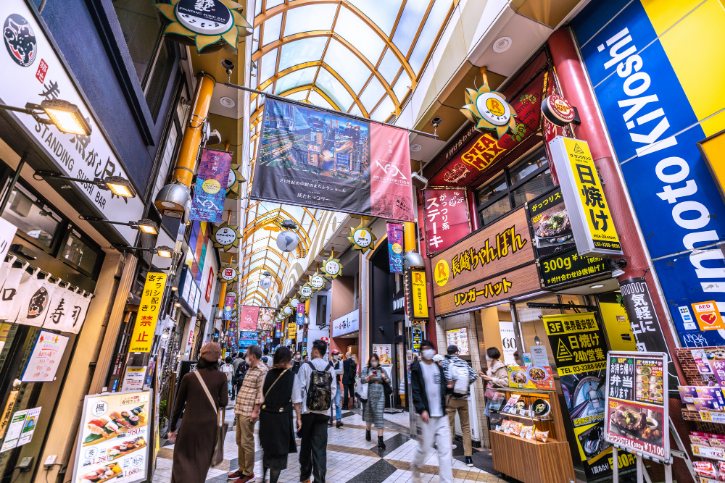
a. Akihabara’s Quieter Cousin
Just a few minutes from Shinjuku, Nakano shares Akihabara’s love of anime and collectibles, but with a more local, treasure hunting feel and far less neon. If you enjoy digging for rare finds, you will love it here.
b. Inside Nakano Broadway
The heart of it is Nakano Broadway, a wonderfully quirky retro complex reached through the covered Sun Mall arcade. Because it is entirely indoors, it also makes a great rainy day pick. Inside you will find:
- Mandarake, with dozens of themed storefronts for vintage toys, rare manga, and animation cels
- Nostalgic movie memorabilia and collector treasures
- Luxury and vintage watch dealers like Jackroad
- A retro, slightly eccentric atmosphere that is fun to explore on its own
c. Eating and Drinking Nearby
When hunger strikes, the streets around the north exit are the real reward. Just off the station you will find Nakano Kitaguchi Sanbangai, a retro, Showa era dining and drinking lane packed with tiny izakaya, old fashioned coffee shops, and casual eateries.
It is a warm, unpretentious spot after a day of shopping, and it shows you a side of Tokyo that does not perform for tourists.
d. Why Choose Nakano
Pick Nakano over Akihabara if you care more about vintage finds and a genuine local feel than big electronics stores and maid cafes. It is smaller, cheaper, and far less crowded, which for many travelers is exactly the charm.
e. Nearby Attractions to Combine
- Nakano Broadway and the Sun Mall food alleys
- Nakano Kitaguchi Sanbangai and the nearby izakaya streets
- Koenji, a nearby vintage clothing haven
- Shinjuku, just a few minutes away by train
11. Skip: Harajuku and Takeshita Street
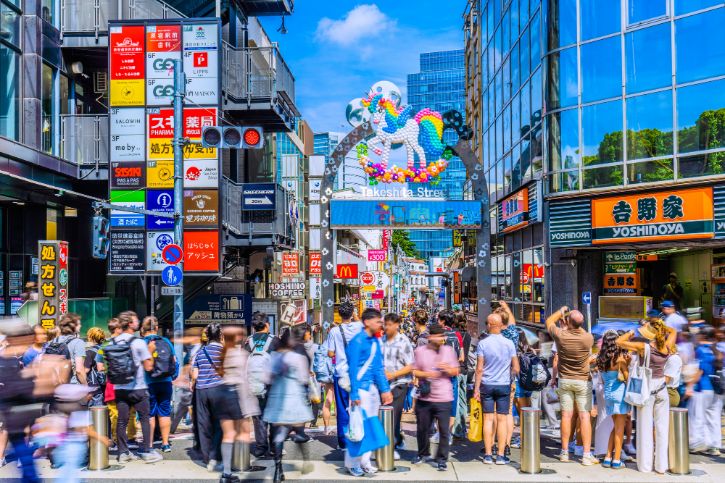
a. The Honest Truth
Let’s be fair, Harajuku is not a bad place and it can be fun. The problem is that most first time visitors only walk Takeshita Street, and for a short trip that offers less value than the areas above.
b. How It Has Changed
Takeshita Street once led the world in bold youth fashion. Today it is mostly a crowded, commercial tourist lane of generic souvenir shops, fast food, character stores, and pricey photogenic snacks.
The crowds are intense, queues form even for small treats, and prices run high. The creative scene that made it famous has largely moved on.
c. If You Do Go
There is still good reason to pass through, mainly for what surrounds it. The forested shrine of Meiji Jingu sits right beside Harajuku Station, with quiet gravel paths and classic Shinto architecture.
From there you can stroll down Omotesando, an elegant, tree lined boulevard full of striking architecture and refined cafes. Visit with a clear purpose, and keep Takeshita Street itself short.
12. Skip: Roppongi
a. A Different Kind of Tokyo
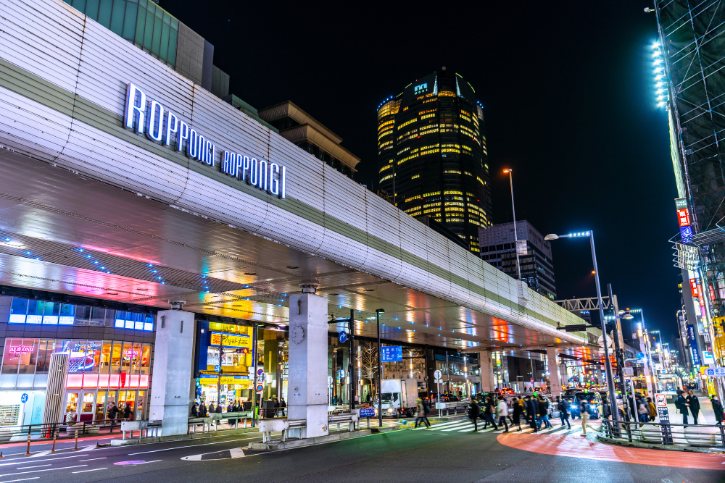
Roppongi is worth knowing about, but it is lower priority for many first time visitors. It is famous for international nightlife, high end shopping, and a business district feel that can seem a little Westernized compared with the rest of the city.
b. Why It’s Lower Priority
For a short first trip, Roppongi offers less of that distinctly Japanese atmosphere you came for.
The nightlife zones can feel tourist oriented, with persistent street hawkers, and dining and entertainment costs run high for the value. It rewards a clear plan far more than a casual wander.
c. Where It Does Shine
That said, Roppongi has real highlights. The Mori Art Museum and the Tokyo City View observation deck in Roppongi Hills are genuinely excellent, especially if you love contemporary art and city panoramas.
Save it for a return trip, or visit when you already have a specific goal like a museum, a special dinner, or a night out.
13. Skip: Tokyo Disney Resort
a. Wonderful, But a Whole Day Gone
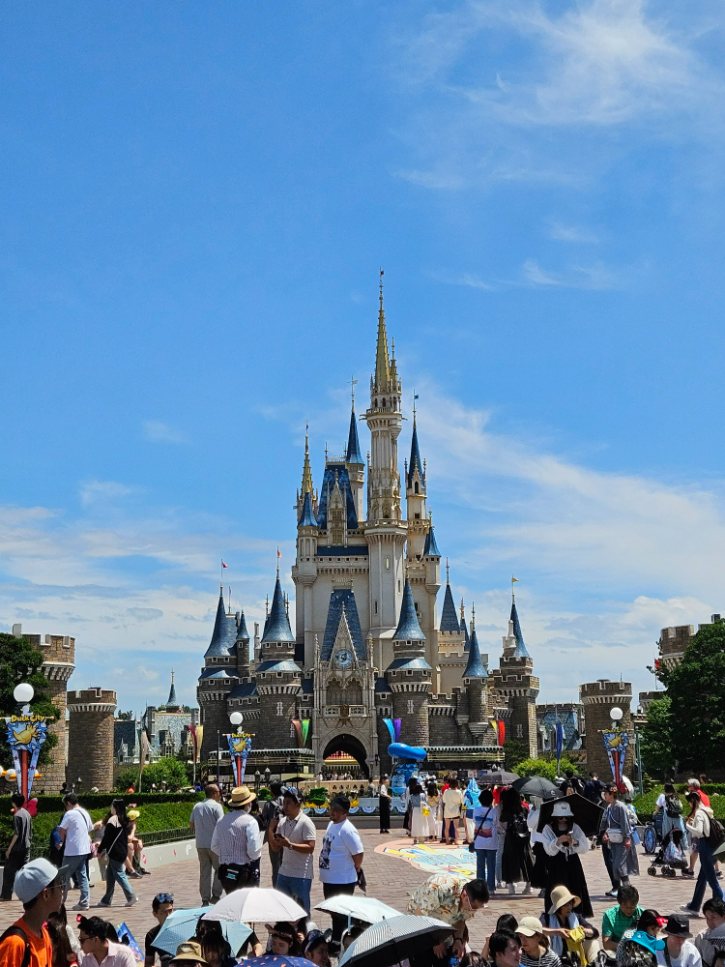
Tokyo Disney Resort is genuinely excellent, and Tokyo DisneySea in particular is beloved worldwide. The catch is simple. It is not a casual sightseeing stop, but a full day commitment, and on a short trip that is a big trade off.
b. The Real Trade-Off
The resort sits in Maihama, just outside central Tokyo, so doing it right eats up an entire day. That means date specific tickets, careful use of the official app for ride passes, and, on busy days, waits that can top two hours.
For a three to five day trip, one Disney day swallows a large chunk of your time in the city itself.
c. When It Makes Sense
None of this means you should never go. Disney is a wonderful choice for:
- Big Disney fans and families with children
- Theme park lovers and repeat Tokyo visitors
- Travelers on longer Japan trips who can spare a full day
If you do go, treat it as its own separate day, never as an add on after regular sightseeing.
And if it is your first visit with only a couple of days, consider putting the city first, unless Disney has always been a personal dream. Have a wonderful trip, whichever way you choose.
Related Posts

Photo Credit:
Photos by PIXTA