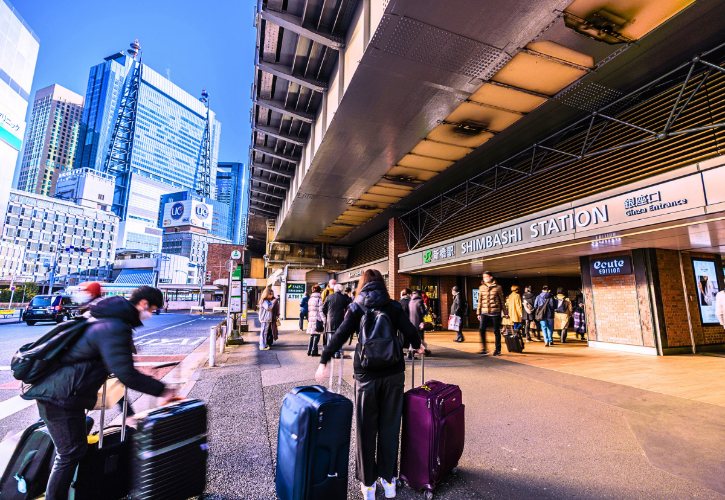
Tokyo is one of the easiest big cities in the world to enjoy. The trains run on time, the streets feel safe, and people are kind and helpful.
But here is the part many tourists forget. A few small mistakes can still cost you money, waste your time, or cause real stress.
The good news is that almost all of them are easy to avoid once you know what to watch for. Here are ten things to plan for before you go.
1. Be Careful Before You Even Land: Passport, Medicine, Customs, and Tax Free Rules
a. Always carry your passport
In Japan, tourists must carry their physical passport at all times. Police can ask foreign nationals for ID without needing a reason.
If you cannot show a valid physical passport, it can lead to detention, arrest, or a fine. A hotel photocopy or a photo on your phone is not accepted as a substitute.
b. Check the ingredient, not the brand
Japan has some of the strictest medicine rules in the world, and it judges medicine by its active ingredient, not the brand name. A medicine that is normal at home can be restricted or banned here.
If you stay under the official limits, you usually do not need a certificate. Go over them and you may need an import certificate called a Yunyu Kakunin-sho.
c. What you can bring without a certificate
Based on official MHLW limits, these amounts are generally allowed for personal use:
- Prescription drugs: up to a 1 month supply, with no banned narcotics or stimulants.
- Over the counter and quasi drugs: up to a 2 month supply. External use items such as eye drops and ointments, up to 24 units.
- Vitamins and supplements: up to a 4 month supply.
- Asthma inhalers: up to a 1 month supply, such as salbutamol.
- Household medical devices: up to 1 set, such as a CPAP machine.
- Disposable contact lenses: up to a 2 month supply (60 pairs of daily lenses).
- Self injection kits: up to a 1 month supply, such as insulin pens. Empty syringes alone need a certificate from 1 piece.
Limits can change, so confirm the current numbers on the official MHLW and NCD pages before you fly.
d. What is banned or restricted
Some ingredients are banned no matter what your home doctor says:
- Stimulants such as amphetamines and methamphetamines are fully prohibited. Because of this, Adderall cannot be brought into Japan.
- Cannabis, THC products, CBD gummies, and CBD oils are strictly prohibited. Bringing in anything with THC can lead to immediate arrest and a severe prison sentence.
Others are possible only with advance written permission:
- Narcotics such as morphine, fentanyl, oxycodone, and tapentadol.
- Codeine medicine with more than 1 percent codeine phosphate.
- Pseudoephedrine or ephedrine over 10 percent concentration is treated as a stimulant raw material, so strong decongestants such as high strength Sudafed are banned.
- Vyvanse (lisdexamfetamine) for ADHD, treated as a stimulant raw material.
Methylphenidate (Ritalin or Concerta) is different. You may bring up to a 1 month supply, not over 1.8 grams of active ingredient, without advance permission.
Sleep and anxiety medicines such as alprazolam, diazepam, lorazepam, and zolpidem are psychotropics. Below the set limits and not in injection form, you generally do not need certification, but you must declare them on the customs form.
e. Applying for permission
If your medicine needs approval, apply through the right channel well ahead of time:
- Yunyu Kakunin-sho: apply online through the MHLW Application for Import Confirmation system. You need a signed doctor’s letter with your diagnosis, dosage, prescriptions, and flight details. Save the certificate on your phone to show customs.
- Narcotics and stimulant raw materials: apply directly to the regional NCD office for your airport. For Narita and Haneda, that is the Kanto-Shin’etsu Regional Bureau. Apply by email at least 14 days before departure, since last minute requests are rarely accepted.
f. Tax free rules are changing
Japan’s tax free system is in transition, so timing matters.
- Until October 31, 2026: instant exemption at checkout. There is a ¥5,000 pre tax minimum per store per day, and consumables must stay sealed.
- From November 1, 2026: you pay the full price with tax, then claim the 10 percent refund at the airport when you leave.
Under the new system, remember these points:
- Show your passport and goods at an electronic kiosk before departure.
- Do not check tax free goods into your luggage until you have scanned your passport, or the refund is lost.
- Allow an extra 30 to 60 minutes at Narita or Haneda.
2. Do Not Underestimate Tokyo’s Train System, IC Cards, and Luggage Rules
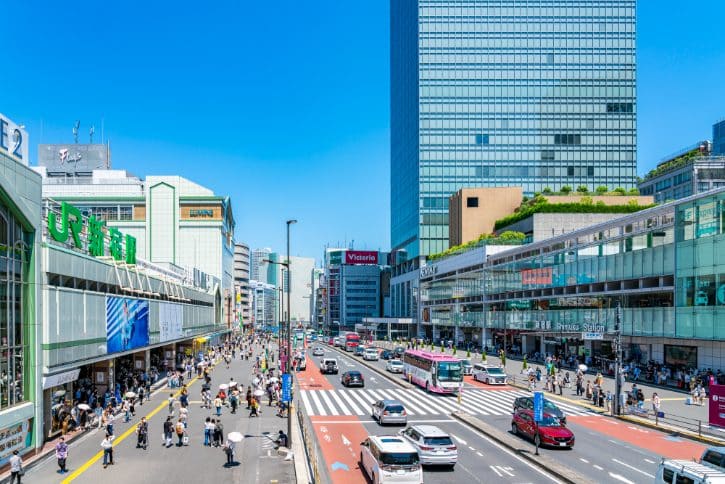
a. One city, many train companies
Tokyo’s rail network is split between JR East, Tokyo Metro, Toei Subway, and private lines such as Keikyu, Odakyu, Tokyu, and Keio.
Transferring between different companies often means passing through exit gates and paying a separate fare, even when you stay underground. It helps to know which company runs your line.
b. Watch your exits
Big stations like Shinjuku, Shibuya, Tokyo, Ikebukuro, Ueno, and Shinagawa are huge multi level hubs. Shinjuku alone has over 200 exits.
Trust me, this will save you stress. Check your exit before leaving the platform, using codes such as Exit A1 or Hachiko Exit. The wrong exit can mean a 20 minute walk back through crowded corridors.
c. Choosing an IC card
An IC card lets you tap through the gates instead of buying tickets each time:
- Standard Suica or PASMO: sold at JR East travel centers and major stations. A ¥500 refundable deposit, valid for 10 years.
- Welcome Suica: sold at Narita, Haneda, and key JR hubs. No deposit, valid 28 days, but non refundable, so unused balance is lost.
- Mobile Suica or PASMO: through Apple Wallet on iPhone. No deposit, but it depends on your battery.
d. Shinkansen luggage rules
If you plan to take the bullet train from Tokyo to Kyoto or Osaka, check your suitcase size first.
- Luggage with total dimensions (length plus width plus height) over 160 cm and up to 250 cm counts as oversized.
- You must reserve a seat with an oversized baggage area, which is free.
- Boarding without a reservation means a ¥1,000 penalty. Suitcases over 250 cm are not allowed at all.
e. Smart luggage tips
- Search by the exact station and line name so you do not end up somewhere similar sounding.
- The shortest route on a map is not always the easiest with heavy bags.
- Consider a luggage delivery service (Takuhaibin) such as Yamato Transport, usually under ¥3,000 per bag and delivered within 24 hours.
- Avoid dragging large suitcases through packed stations during rush hour.
3. Be Extra Careful With Rush Hour, Train Manners, and Platform Behavior
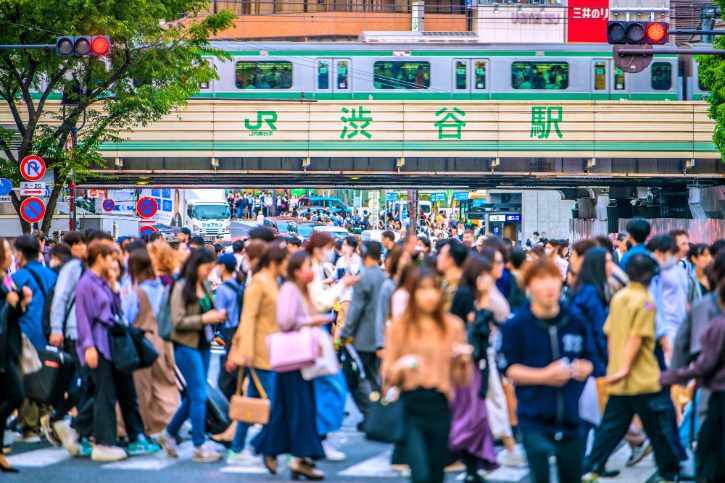
a. On the platform
- Stay behind the yellow tactile safety lines at all times.
- Line up in the marked rows and let arriving passengers off first.
- Do not rush the doors as they close. It triggers the safety sensors and delays the whole line.
b. Inside the train
- Take your backpack off and hold it in front, on the rack, or between your feet.
- Silence your phone and avoid voice calls.
- Keep audio in your headphones and low.
- Do not film or photograph strangers without permission. This is a serious privacy breach and can involve the police.
c. Seats and special cars
Priority seats are for elderly people, pregnant women, passengers with disabilities, and those with young children.
During peak hours, roughly 7:30 to 9:30 in the morning and 5:30 to 7:30 in the evening, some cars are Women-Only Cars, marked with pink signs.
d. Small habits that matter
- Do not open a map app in the middle of a ticket gate. Step aside and stand against a wall first.
- Do not stop at the top or bottom of an escalator.
- Do not crowd the door if your stop is not next.
- If a train is too full and you have luggage, just wait for the next one. It is usually only minutes away.
These feel like tiny things, but in Tokyo they are very noticeable. A calm, aware traveler blends right in.
4. Plan Around Crowds, Peak Seasons, and Sold Out Tickets
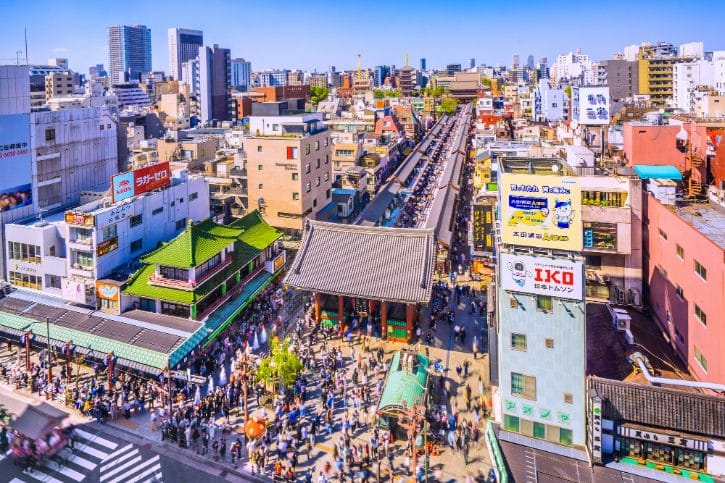
a. Japan’s busiest travel periods
During these times, hotels fill up, trains get packed, and tickets sell out fast:
- New Year holidays, late December to early January. Many shops close, and hubs get crowded.
- Golden Week, late April to early May. Trains, hotels, and attractions book up months ahead.
- Obon, mid August. Bullet trains run at capacity.
- Cherry blossom season, late March to early April. Big park crowds, and hotel prices rise.
- Autumn foliage, late November to early December. Heavy crowds near gardens and temples.
Read More: These Are the Best and Worst Times to Visit Tokyo
b. Where crowds hit hardest
Central areas such as Shibuya, Asakusa, Harajuku, Ginza, Ueno, and Akihabara get very busy in these periods.
Coin lockers at major stations are often full by 9:00 AM, and popular restaurants can have waits over two hours. Plan around these pinch points.
c. Attractions that need advance tickets
- Ghibli Museum (Mitaka): booking opens on the 10th of each month at 10:00 AM Japan time for the next month, through Lawson Ticket. No on site sales, non refundable, tied to your passport name.
- Shibuya Sky: opens 14 days ahead at midnight Japan time, through the official portal. Pricing is ¥2,700 before 3:00 PM and ¥3,400 after. Sunset slots sell out instantly.
- teamLab Planets and teamLab Borderless: timed entry on a rolling multi week release, through their official pages.
Always book through the official website and check the release date.
Read More: 10 Tokyo Attractions You Should Book Early
d. Keep your days realistic
Here is a mistake that catches out first time visitors. Trying to squeeze Asakusa, Harajuku, Shibuya, and a museum into one day usually ends in exhaustion and a missed entry slot.
Aim for one major reserved attraction per day, visit popular spots early morning or later evening, and build in flexible time.
5. Be Careful in Nightlife Areas: Touts, Rip Off Bars, and Drink Safety
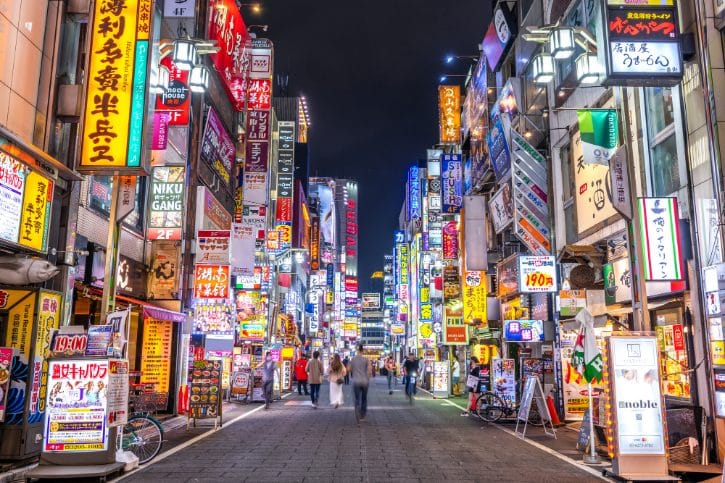
a. Areas to approach with care
Tokyo is one of the safest big cities at night, so please do not feel nervous. The real risk in a few areas is financial scams.
The Tokyo Metropolitan Police have flagged Kabukicho (in Shinjuku), Roppongi, Shibuya, and Kinshicho as high alert zones for these scams.
b. What a tout is
A tout, known locally as kyakuhiki, is someone on the street who tries to lead you into a bar or club. Touting is illegal but still common, and touts often use fluent English to offer all you can drink deals or cheap entry.
The rule is simple. Never follow a street tout into a venue. Places that use touts are often fronts for extortion.
c. Common scams
- Drink spiking and card fraud: a tout leads you to a bar, your drink is spiked, and you wake up with an empty wallet and large charges.
- The dating app trap: a match invites a tourist to a certain bar, then slips away, leaving a huge bill and pressure to withdraw cash.
- Deposit extortion: a large non refundable cash deposit for a companion who never arrives.
d. How to stay safe
- Ignore street invitations and keep walking.
- Check pricing, the table charge (otoshi), and reviews before entering anywhere.
- Keep your card in sight and watch the transaction.
- Do not leave your drink unattended, and stay with your group.
- If a tout follows you, step into a Koban (police box), a bright convenience store, or a hotel lobby.
e. Emergency numbers
- Police: You can ask for an English translator right away.
- Ambulance and Fire:
- JNTO Travel Hotline: 050-3816-2787, available 24/7 in English, Chinese, and Korean.
Read More: 5 Safe Areas to Stay in Tokyo and 3 Areas to Be Careful In
6. Watch Local Rules on Smoking, Drinking, Cycling, Scooters, and Go Karts
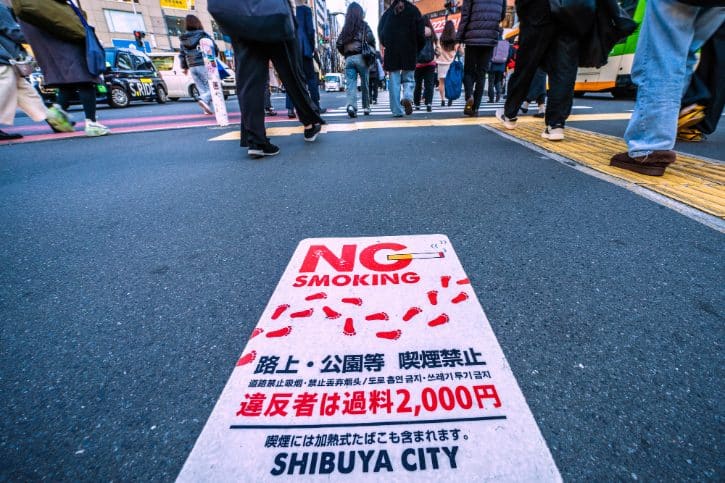
a. Smoking
- Walking while smoking is illegal on the streets of almost all central Tokyo wards.
- Wards such as Chiyoda, Shibuya, and Kita issue ¥2,000 fines on the spot. In Shinagawa it is ¥1,000.
- The rules cover heated tobacco too, such as IQOS, Glo, and Ploom.
- Smoke only in designated cabins near stations, hotel smoking rooms, or licensed bars.
b. Drinking in public
Public drinking is generally legal in Japan. However, Shibuya Ward bans street and park drinking near Shibuya Station year round, from 6:00 PM to 5:00 AM.
Police patrol during these hours and will confiscate alcohol. Wherever you drink, take your cans and bottles with you.
c. Cycling
- Ride on the left side of the road or on marked cycling paths, not on sidewalks.
- It is illegal to ride while holding an umbrella, using your phone, or wearing headphones.
- Cycling under the influence is a serious crime with fines and possible jail time.
d. E scooters and go karts
Rented e scooters must follow the same traffic laws as bicycles.
Renting a street go kart requires a valid International Driving Permit, and Japan only accepts IDPs issued under the 1949 Geneva Convention.
IDPs under the 1968 Vienna Convention, common in Europe, are not valid. Driving without a valid one is treated as driving unlicensed, which can lead to arrest and deportation.
7. Take Weather Seriously: Heat, Typhoons, and Sudden Disruption
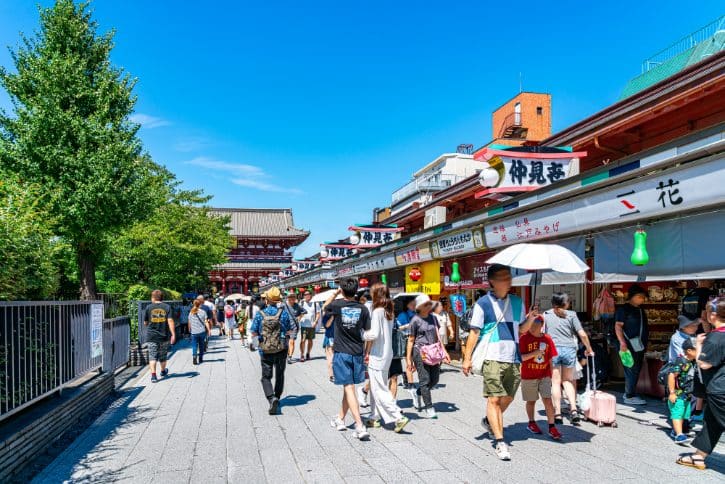
a. Summer heat
From July to September, Tokyo gets very hot and humid, often above 35°C (95°F), which brings a real risk of heatstroke.
- Drink water and electrolyte drinks such as Pocari Sweat from vending machines.
- Use a UV umbrella, a wide brimmed hat, and high SPF sunscreen.
- Rest in air conditioned spaces before you feel tired, and use the underground malls to cross districts out of the sun.
b. Typhoon season
August and September are the peak of the Pacific typhoon season, and a big storm can disrupt everything:
- Trains, Shinkansen lines, and flights are often suspended in advance.
- Outdoor attractions, theme parks such as Tokyo Disney Resort, and rooftop decks close during high winds or lightning.
- Keep an indoor backup plan ready, such as museums or department stores.
c. Earthquakes
Mild earthquakes are fairly common, and Tokyo’s buildings and trains are built to handle them. If a strong one happens:
- Drop, cover, and hold on under a sturdy table until the shaking stops.
- On a platform, follow the staff’s instructions.
- Download the free Safety Tips app from the Japan Tourism Agency for real time alerts.
d. Check before outdoor plans
Weather can shape your whole day, so check it every morning.
Always look at the forecast before visiting outdoor spots such as Shibuya Sky, Tokyo Disney Resort, gardens, or river cruises, since these can close in bad weather.
8. Respect Public Manners: Trash, Eating While Walking, Noise, Queues, and Shoes
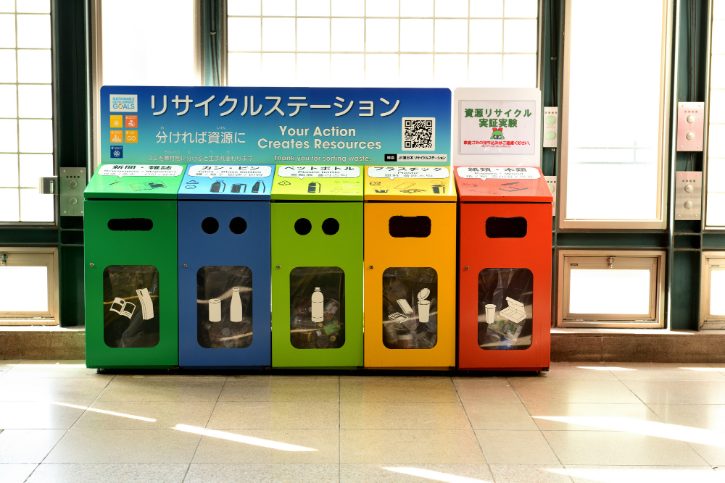
a. Trash
Public trash cans are rare in Tokyo, a habit dating back to the 1990s.
- Carry a small plastic bag to hold your trash until you reach your hotel.
- When bins are available, separate your trash into categories such as burnable waste, bottles, cans, and glass.
- Littering can carry a ¥2,000 fine in Shibuya Ward.
b. Eating while walking
Walking while eating or drinking (tabearuki) is generally seen as bad manners, partly because it risks spilling on people in crowded streets.
Eat or drink right next to the shop where you bought it, or find a bench. In busy areas like Asakusa and Takeshita Street in Harajuku, signs ask visitors not to walk while eating.
c. Noise
- Keep your voice low on trains, in hotel corridors, and on quiet streets at night.
- Never play music or video sound out loud without headphones.
d. Queues
Tokyo relies on orderly lines. Look for the marked queue at restaurants, bus stops, platforms, and convenience store registers, and never cut in.
e. Shoes
Removing outdoor shoes indoors is a deeply held custom. Watch for it here:
- Private homes and ryokan: shoes off at the entrance step, then use the indoor slippers.
- Temples and castles: many wooden buildings ask you to remove shoes and use the racks.
- Traditional restaurants: tatami rooms need shoes off, and even slippers come off before the mats.
- Fitting rooms: shoes off before the carpeted floor.
9. Check Attraction Rules Before You Go: Photos, Bags, Time Slots, and Weather Closures
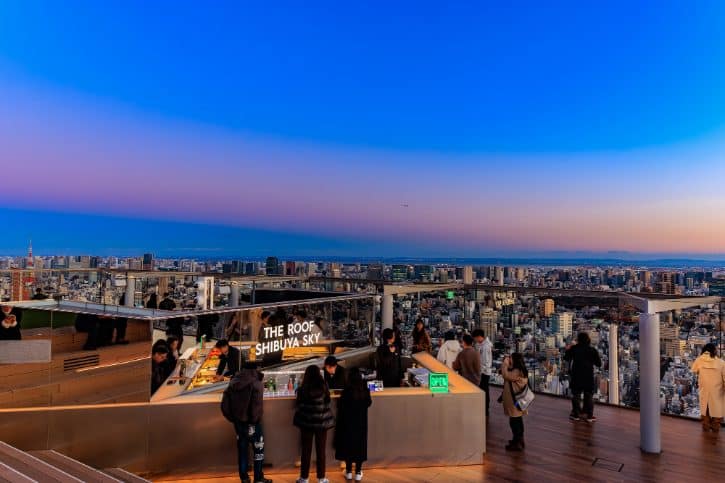
a. Check the rules first
Many Tokyo attractions have strict rules, so read the official website the same week you visit.
Common rule types include advance ticket only entry, timed entry, no re entry, no refunds, photo and video limits, and bans on tripods, selfie sticks, or large bags.
b. Rooftop decks
Rooftop decks such as Shibuya Sky’s Sky Stage have strict rules because wind can blow objects off the building:
- Loose items are not allowed on the open deck, including hats, scarves, umbrellas, bags, drink containers, tripods, and selfie sticks.
- Store them in the 100 yen refundable lockers on the 46th floor.
c. Mirrored floors
Museums such as teamLab Planets and teamLab Borderless have rooms with mirrored floors and walls. It looks amazing, but there is one thing to plan for.
Skirts or dresses risk exposure from below, so the venues suggest wearing pants, longer trousers, or shorts underneath. teamLab Planets also lends loaner shorts at the entrance.
d. teamLab Planets water
At teamLab Planets specifically, you walk barefoot through knee deep water:
- Wear clothing you can roll above the knee, and avoid long, tight jeans.
- Store your shoes and socks in the free lockers at the entrance.
Screenshot your tickets, charge your phone before timed attractions, and leave big luggage at your hotel.
10. Be Careful With Accommodation, Private Lodgings, Noise, and Neighborhood Respect
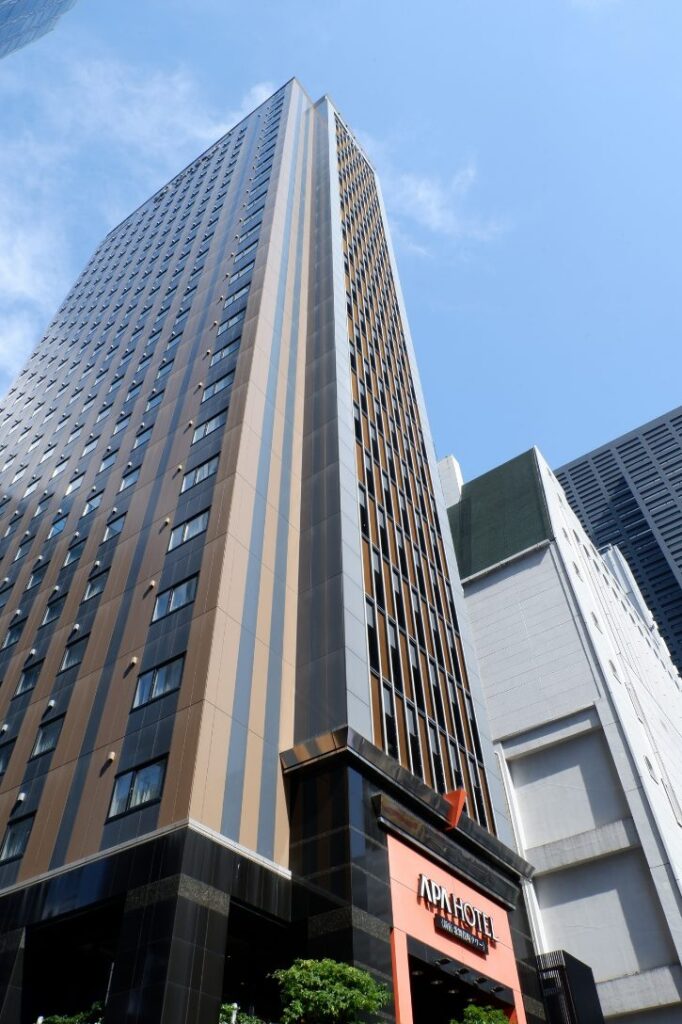
a. Small rooms are normal
Tokyo’s business hotels, such as APA, Toyoko Inn, and Sotetsu Fresa Inn, are clean and good value, but the rooms are compact.
Beds can be smaller than a Western queen, and floor space is tight, so you may struggle to open two large suitcases at once. If you need more room, check the square footage before booking.
Read More: 10 Best Hotels in Tokyo for Easy Travel
b. Check a private lodging is legal
If you book a private rental (minpaku), make sure it is licensed:
- Under the Private Lodging Business Act, all short term rentals must be registered with the local ward office.
- Unlicensed properties are illegal, and inspectors can cancel your booking on short notice.
- Look for a valid registration license number on the listing, usually starting with an “M”
c. Respect the neighborhood
Private rentals are often inside normal apartment buildings where families live:
- Keep your voice down in hallways and on balconies.
- Do not drag heavy suitcases down residential streets late at night.
- Sort your trash exactly as the building requires.
- Do not smoke on balconies. Most buildings ban this.
d. Route, not just distance
A hotel listed as “500 meters from the station” can still be a long walk if it involves stairs, bridges, or a huge station complex.
Check the actual walking route, find out which exit has elevator access, and read recent reviews for noise and check in. Do not book on price alone.
Tokyo is a wonderful, welcoming city, and none of this should make you nervous. Think of it as a little homework that lets you relax once you arrive.
Get these ten things right, and you can spend your trip enjoying Tokyo instead of untangling small problems. Have a great trip. 😊