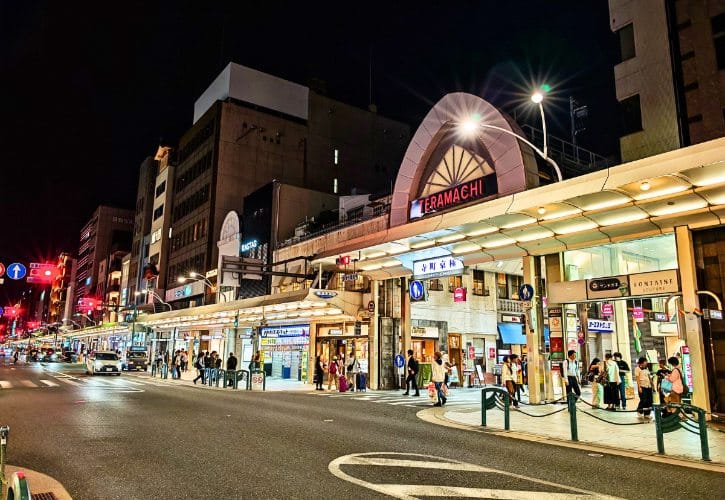
Where you stay in Kyoto can change your whole trip. Your hotel spot shapes how far you walk, how easily you move luggage, how many crowds you meet, and whether a good dinner waits nearby at night.
Pick well and your days flow. Pick poorly and you lose hours on packed buses and steep lanes. Some areas make a great home base. Others are better saved for a day trip or one special night. 😊
1. Downtown Kyoto (Shijo-Kawaramachi / Karasuma)
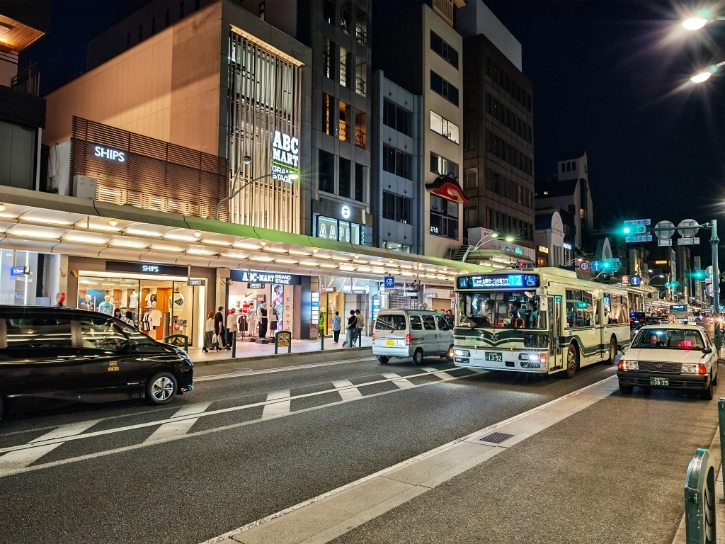
The Smart Traveler’s Base: Best All-Round Pick
If you only remember one area from this guide, make it this one. Downtown Kyoto, around Shijo-Kawaramachi, Karasuma, and the Karasuma-Oike intersection, is the most practical base for most visitors.
It gives you the best all-round balance of food, shopping, walking, transport, and sightseeing. This is the city’s commercial core, yet it sits close enough to old Kyoto to reach the classic sights on foot.
a. Where It Is and What’s Walkable
Think of a flat grid in the middle of the city. The rough boundaries are Oike-dori to the north, Gojo-dori to the south, Karasuma-dori to the west, and the Kamo River to the east. The Karasuma-Oike intersection sits at the northern edge, where Kyoto’s two subway lines meet.
The area splits into two zones. Shijo-Kawaramachi on the eastern side is the lively heart, full of department stores and street energy.
Karasuma and Karasuma-Oike on the western side feel quieter and more business-like, with wider sidewalks and easy subway access.
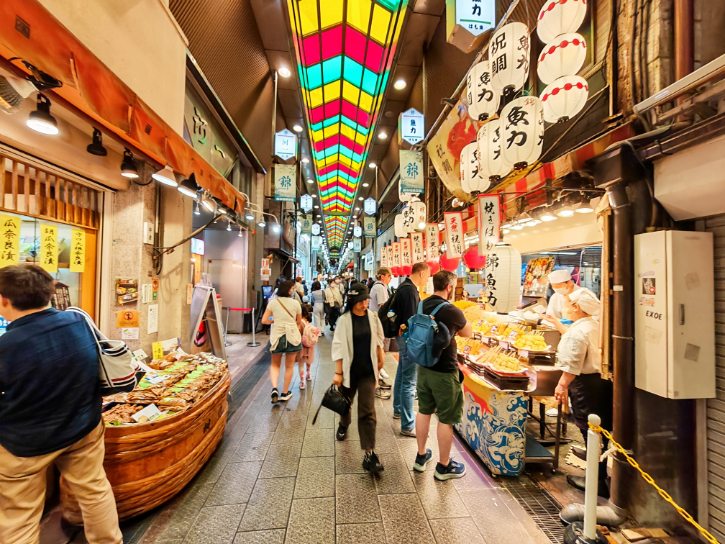
Because the whole grid is flat, the walks are easy and kind to families, older travelers, and anyone carrying bags:
- Nishiki Market: 3 to 5 minutes, right in the shopping grid.
- Pontocho Alley and Kamo River: 5 to 10 minutes east on flat, scenic paths.
- Gion and Yasaka Shrine: a 10 to 15-minute walk across the Shijo Bridge.
- Teramachi and Shinkyogoku arcades: covered shopping streets in the center.
- Southern Higashiyama (lower slopes): about 15 to 20 minutes of flat walking before the hills begin.
b. Why This Area Works So Well
The big advantage is simple: almost everything you need is a few steps away, from restaurants and cafes to department stores, craft shops, and 24-hour convenience stores.
That is why it suits first-timers and repeat visitors alike. Here is the fun part. You can explore temples all day, come back to rest, then walk straight out for dinner, a wander through Pontocho, and a quiet stroll along the Kamo River, with no tiring commute at night.
c. Transport Strengths
The best thing about staying downtown is that you can often skip the crowded buses and use fast trains instead. The lines you will actually use:
- Karasuma Subway Line: a direct 4-minute ride south to Kyoto Station.
- Tozai Subway Line: east to west, useful for Nijo Castle and crossing the city.
- Hankyu Kyoto Line: direct express to central Osaka (Umeda), with an Arashiyama link via Katsura.
- Keihan Main Line: just east of the river, connecting to Fushimi Inari, Uji, and Osaka.
- Buses from Shijo and Kawaramachi: handy for temples, but they can get crowded at peak times.
Rough times from downtown: Kyoto Station 4 minutes, Fushimi Inari 10 minutes, Nijo Castle 5 minutes, Kiyomizu-dera 25 minutes, Arashiyama 30 minutes, and Osaka 45 minutes.
d. Food, Dining, Nightlife, and Shopping
This district has one of the highest concentrations of restaurants in the whole Kansai region. You will find ramen, conveyor-belt sushi, lively izakaya, craft beer bars, cafes, bakeries, dessert shops, multi-course kaiseki, and department store food halls.
Pontocho Alley is the highlight for evening dining, a narrow historic lane along the river where many restaurants build wooden platforms over the water in summer.
A fair note on nightlife: Kyoto is not Tokyo or Osaka after dark. It leans laid-back, with refined bars and late-night dining. Still, it is the best area for dinner after sightseeing, and you can walk home after a late meal.
The shopping is just as easy:
- Department stores: Daimaru and Takashimaya S.C. sit right on Shijo-dori.
- Nintendo Kyoto: in the T8 zone at Takashimaya S.C. (opened October 2023), with a rooftop Mario photo spot.
- Covered arcades: Teramachi and Shinkyogoku are a lifesaver in bad weather.
- Convenience stores: everywhere, perfect for umbrellas, chargers, snacks, and toiletries.
e. Accommodation and Booking Tips
You will find a wide mix here: modern business hotels, mid-range chains, boutique stays, some luxury properties, and a few traditional ryokan.
Rooms in the busy core can be compact but are modern and functional. For quiet, look at Karasuma and Karasuma-Oike, which feel calm at night while still being a short walk from the action.
One thing to know before booking. Under Kyoto’s revised rules starting March 1, 2026, all overnight stays carry a progressive accommodation tax, charged per person, per night, and collected at the hotel desk. It applies to the room rate and service charges only, not to consumption tax or meals.
Before you book, check these:
- Station exits. With big bags or a stroller, aim for exits with elevators, such as Karasuma Station Exits 19 or 23, or Kyoto-Kawaramachi Station Exit 3B.
- Which side of the river. West of the Kamo River keeps you in the flat downtown grid. East shifts you into Gion or Higashiyama, with narrower, sloped streets.
- Street noise. On busy roads like Shijo-dori or Kawaramachi-dori, look for double-glazed windows.
Read More: 10 Best Hotels in Kyoto
2. Kyoto Station Area (Shimogyo-ku)
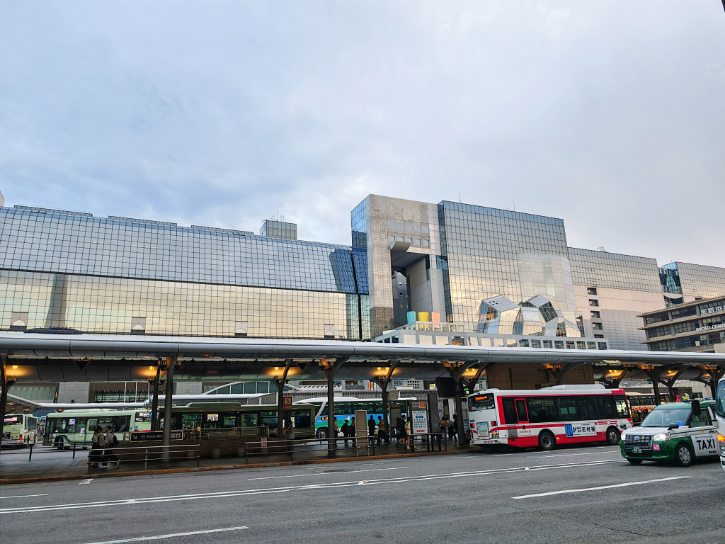
The Practical Base: Best for Logistics-Heavy Travelers
If your trip is all about smooth transport, easy luggage, late arrivals, early departures, Shinkansen rides, and day trips, the Kyoto Station area is hard to beat
Just be honest with yourself first. This is a modern, efficient district, not a romantic one. You will not get the postcard Kyoto atmosphere here, but for travelers who value logistics over scenery, it is one of the smartest choices in the city.
a. What Makes This Area Special
Kyoto Station is the city’s main transport gateway, handling over 300,000 passengers a day, pulling high-speed rail, regional trains, subways, and the main bus terminal into one huge hub.
The streets around it are flat and modern, with wide, step-free sidewalks. That makes moving with a stroller or heavy suitcase far easier than in the older, sloped, narrow-lane neighborhoods, and plenty of hotels sit within walking distance of the platforms.
b. Transport and Airport Access
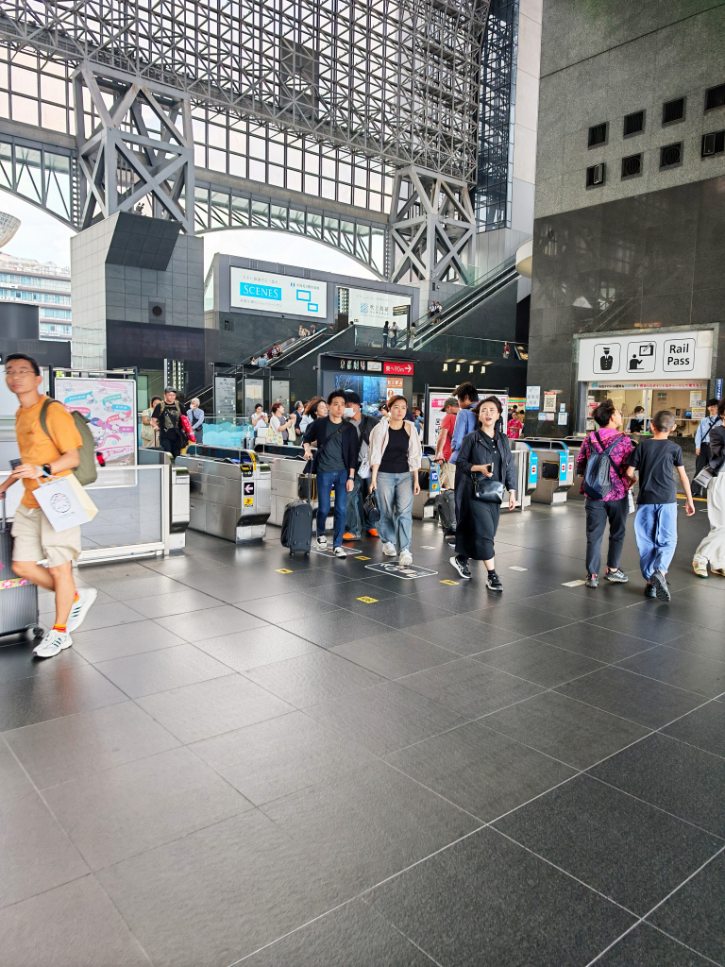
This is the strongest transport hub in Kyoto, and the real benefit is how few transfers you need:
- Tokaido Shinkansen: direct to Tokyo, Nagoya, and Shin-Osaka.
- JR Nara Line: Fushimi Inari (Inari Station) in about 5 minutes, Nara in about 50 minutes.
- JR Sagano Line: direct to Arashiyama (Saga-Arashiyama Station).
- JR Kyoto Line (Special Rapid): Osaka Station in about 30 minutes.
- Karasuma Subway Line: direct north to downtown (Shijo and Karasuma-Oike).
- Central bus terminal: at the north exit, the main dispatch point for city buses.
Airport access is reliable too. The direct JR Haruka to Kansai Airport (KIX) takes about 75 minutes, while the Airport Limousine Bus from the Hachijo Exit runs about 80 to 90 minutes. Buses to Itami Airport (ITM) take about 55 minutes.
c. Luggage Convenience
This is where the station really shines. It is built for hands-free travel.
- Coin lockers: all over the upper and lower levels, including cashless options.
- Porta underground storage: extra lockers in the basement mall.
- Crosta Kyoto: storage on floor B1 for about JPY 1,000 per day.
- Same-day Carry Service: drop bags by 2:00 PM for about JPY 1,500 per piece, delivered to partner hotels after 5:00 PM.
That last one is a gem. It lets you start sightseeing the moment you arrive. Compared with Gion, Higashiyama, Arashiyama, or any narrow-lane area, the station is far easier with big luggage. Just check the exact route to your specific hotel.
d. Food, Shopping, and Amenities
The station is a shopping and dining destination on its own. The underground Porta mall has casual restaurants, bakeries, and pharmacies, while JR Kyoto Isetan offers higher-end dining upstairs.
There is also Kyoto Ramen Street, with regional ramen from across Japan, plus standouts like Kyoto Wakuden for kaiseki and Moritaya (founded 1869) for premium Wagyu sukiyaki.
All of this makes the area handy for breakfast before a morning train, dinner after a late arrival, or eating in bad weather without stepping outside. It is highly practical, just more functional than charming.
e. Nearby Attractions and Sightseeing Reality
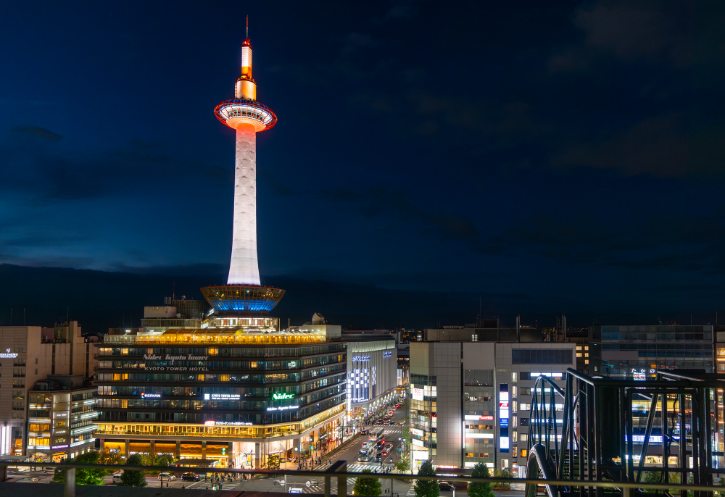
A few sights are genuinely close to the platforms:
- Kyoto Tower: directly across from the northern Karasuma Exit.
- Higashi Hongan-ji and Nishi Hongan-ji: two large temple complexes a short walk north.
- To-ji Temple: about 15 minutes southwest, with its five-story pagoda.
- Kyoto Railway Museum and Umekoji Park: a family-friendly stop a short walk west.
- Fushimi Inari Shrine: a quick, direct 5-minute ride on the JR Nara Line to Inari Station.
Here is the honest catch. The famous streets and temples are not on your doorstep. Reaching Gion, Kiyomizu-dera, or northern Kyoto means a train, subway, or bus, and temple-bound buses get very crowded in peak seasons. Think of the station as a superb day-trip launchpad, not a place where classic Kyoto is right outside.
f. Hotels and Booking Tips
Expect large, modern, Western-style chain hotels, efficient business hotels, and some luxury options, usually with more spacious rooms than the historic districts. You give up atmosphere for practicality, and the main payoff is stress-free arrival and departure days.
Before you book:
- Choose the right side. The northern Karasuma (Central) Exit faces downtown, Kyoto Tower, the bus terminal, and the subways. The southern Hachijo Exit is quieter and handles the Shinkansen platforms and airport bus stops.
- Look for underground access. Some hotels connect to the station through covered passages, shielding you from rain, snow, and summer heat.
- Verify the walking route. A few places are marketed as “near Kyoto Station” but need you to cross busy overpasses that are awkward with luggage.
3. Gion & Southern Higashiyama
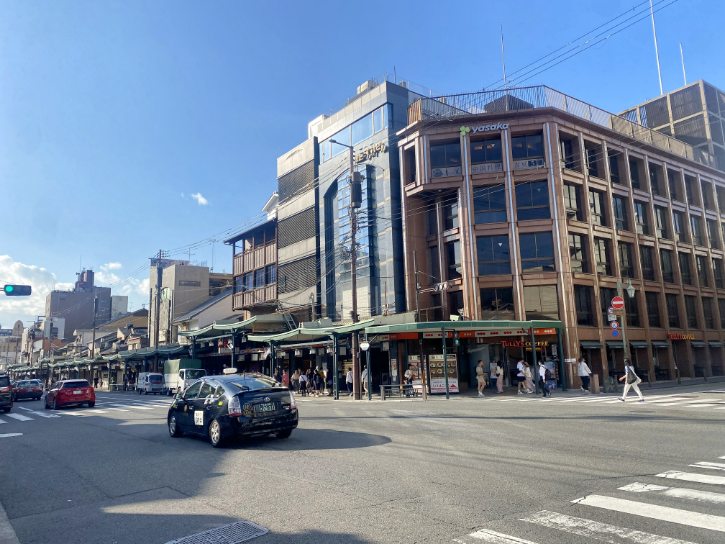
The Soulful Pick: Best for Atmosphere and Cultural Immersion
This is the Kyoto of your imagination: wooden merchant houses, lantern-lit stone lanes, and old temples set against forested hills. If you want atmosphere and cultural immersion, Gion and Southern Higashiyama are unmatched.
There are real trade-offs, though. It is less convenient for luggage, day trips, and airport access, and it is not the easiest transport base. You stay here for the feeling, not the logistics.
a. What This Area Is and Why It Feels Special
Gion sits around Shijo Avenue and is famous for traditional wooden teahouses, quiet side alleys, and preserved merchant buildings. Southern Higashiyama stretches south from Yasaka Shrine, up sloped, stone-paved lanes such as Ninenzaka and Sannenzaka, all leading to Kiyomizu-dera.
The look is unmistakable: dark wooden buildings, hanging lanterns, stone paths, and small shops selling crafts and green tea sweets. Staying here puts you inside pre-modern Japan.
You can sleep in a restored machiya townhouse, a historic ryokan, or a boutique hotel, and walk lanes that glow under soft lanterns after dark. You may even catch a respectful glimpse of a geiko or maiko heading to an evening appointment.
Read More: The Perfect One-Day Walking Route for Higashiyama in Kyoto
b. Cultural Highlights and the Best Times to Walk
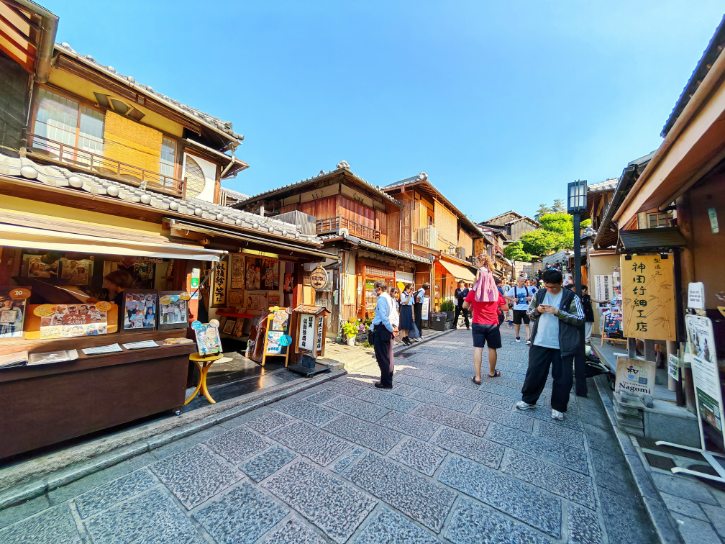
You are surrounded by major sights, most within walking distance.
A quick note: these paths are beautiful but often sloped and stepped, so they can tire families with strollers or older travelers.
- Kiyomizu-dera: famous for its huge wooden stage, reached up steep slopes.
- Ninenzaka and Sannenzaka: two lovely stone-paved streets lined with shops and teahouses.
- Yasaka Pagoda (Hokan-ji): the iconic five-story pagoda that defines the skyline.
- Kodai-ji: known for Zen gardens and seasonal evening light-ups.
- Kennin-ji: the oldest Zen temple in Kyoto, with twin-dragon ceiling paintings.
- Shirakawa Canal: a quiet, willow-lined waterway in northern Gion.
Here is the real reward of staying nearby. You get these streets without the heavy daytime crowds. Step out at dawn and enjoy Ninenzaka, Sannenzaka, and the Yasaka Pagoda in near silence.
After about 6:00 PM, when the tour buses leave, the lanes turn peaceful again. Many shops close early, but for photographers and slow walkers, that stillness is the point.
c. Transport Access and Reality
The area is wonderful to walk once you are there, but the historic layout makes transport trickier:
- Keihan Main Line (Gion-Shijo and Kiyomizu-Gojo): runs along the western edge, with direct access to Fushimi Inari and Osaka.
- Hankyu Kyoto Line: reachable by crossing the Shijo Bridge to Kyoto-Kawaramachi Station.
- Tozai Subway Line (Higashiyama Station): serves the northern edge.
- Buses on Higashiyama-dori: frequent, but slow in cherry blossom and autumn seasons.
- Taxis: available, but often kept out of the narrowest historic lanes.
One helpful option from Kyoto Station is the Sightseeing Limited Express Bus, launched in June 2024. The EX100 route reaches Gojozaka (for Kiyomizu-dera), Gion, and beyond in about 10 to 12 minutes, and the EX101 is a direct shuttle to Gojozaka.
Fares are JPY 500 for adults and JPY 250 for children, covered by the Subway & Bus 1-Day Pass (JPY 1,100).
Be clear-eyed, though: this area is excellent once you are here, but not the easiest base for JR, Shinkansen, airport trips, or day trips.
d. Hotels, Luggage, and Access
Accommodation here leans toward high-end luxury, historic ryokan, and beautifully restored machiya townhouses. Budget options are scarce, and prices climb steeply in peak seasons.
Compared with Downtown Kyoto and Kyoto Station, you are paying for the historic setting and prime location, not for a big room or easy transport.
This is also one of the hardest districts for heavy luggage. Sloped streets, stone stairs, and narrow lanes make wheeling a large suitcase a chore, and many ryokans sit inside pedestrian lanes where cars cannot go, so you may carry your bags the final stretch.
It does not make the area bad, but check your hotel’s access carefully before booking.
e. Dining and Nightlife
The area is known for traditional kaiseki dining, exclusive teahouses, sweets shops, and elegant cocktail bars. Many historic restaurants need reservations well in advance and cost more than downtown spots.
Casual, late-night dining is less common in these quiet lanes. The good news is that you can cross the Kamo River to reach the lively izakaya and casual restaurants of Pontocho and Downtown Kyoto in minutes.
So keep the difference in mind: this area is about atmospheric dining, while everyday convenience is stronger just across the river.
4. Avoid: Arashiyama (The Far Western Suburbs)
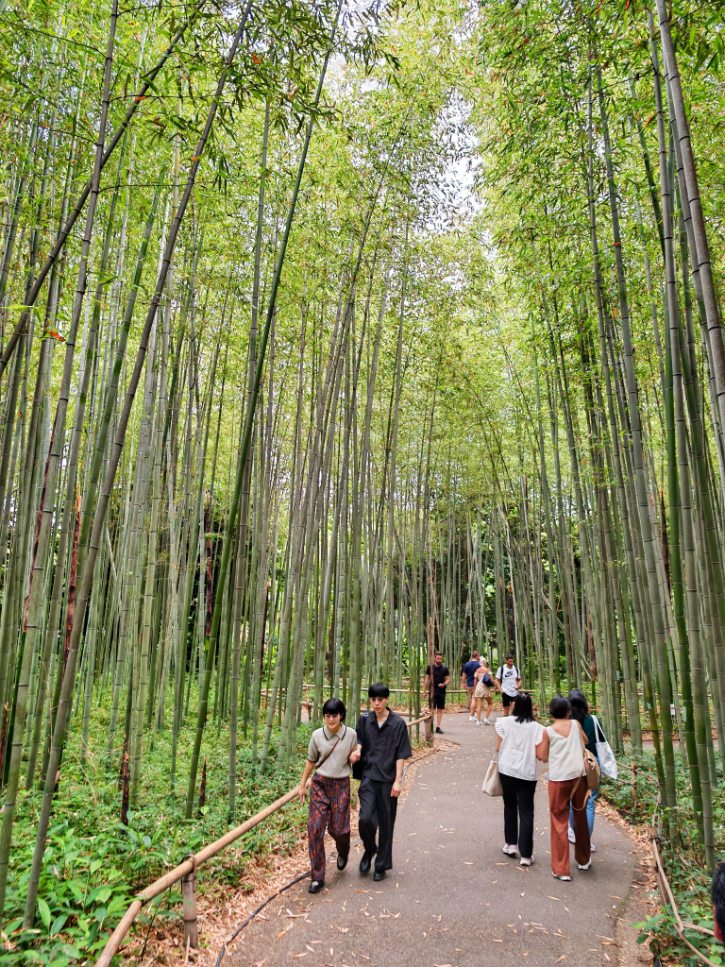
Beautiful as a Day Trip, Risky as a Main Base
Let me be fair from the start. Arashiyama is safe, beautiful, and absolutely worth visiting. Its bamboo, river, and temples are some of the most photographed sights in Japan.
The problem is using it as your main base. It sits far out on the western edge of the city, which can make the rest of your Kyoto trip tiring and slow.
a. The Appeal: Why People Book It Anyway
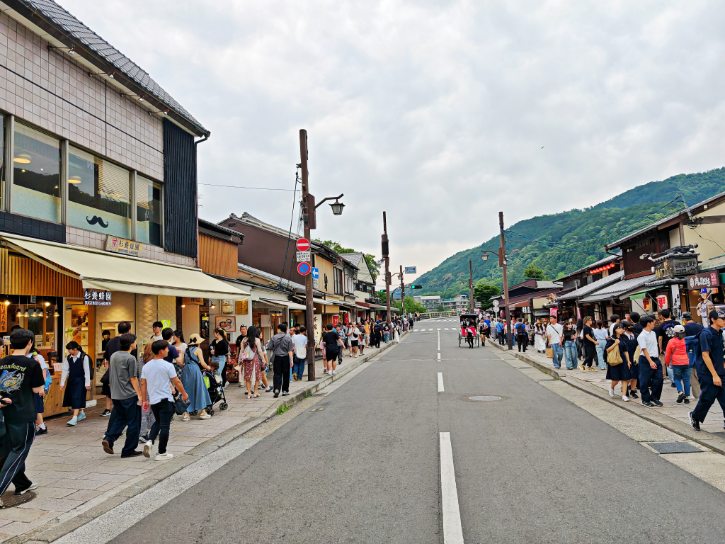
It is easy to see why Arashiyama tempts people. The brochure photos are stunning.
- Bamboo Grove: the famous towering green path.
- Togetsukyo Bridge: the scenic bridge over the river.
- Mountain and river views: peaceful and wide open.
- Historic temples: including Tenryu-ji and Daikakuji.
- Luxury ryokan: some of Kyoto’s finest hot-spring inns are here.
For a nature escape far from the city rush, it looks like a dream, and in the quiet early morning or evening, it can be. Just know the photos show the calmest possible version.
b. The Core Problem: Isolation
The main issue is location. Arashiyama is on the far western edge of Kyoto, while many top sights sit in the east and south. To reach Gion, Southern Higashiyama, or Fushimi Inari, you cross the entire width of the city, and a one-way trip east can easily take 45 to 60 minutes.
On a short visit, close to two hours a day of commuting eats up your sightseeing time. That is why it works better as a day trip for most travelers.
You can see the highlights, the Bamboo Grove, Tenryu-ji, and a scenic boat or train ride, in a single day, and staying overnight rarely adds much for a first-timer’s itinerary.
Read More: Kyoto Itinerary: Your Best 3 Days Travel Guide
c. Transport Limitations
Arashiyama is cut off from Kyoto’s main subway lines, so daily transit takes more effort:
- JR Sagano Line (Saga-Arashiyama): connects directly to Kyoto Station, but very crowded in peak seasons.
- Randen Tram (Keifuku): charming but slow, and it needs transfers to reach downtown.
- Hankyu Arashiyama Line: runs south and needs a transfer at Katsura for central Kyoto or Osaka.
- Buses: face heavy delays on the narrow roads near Togetsukyo Bridge on weekends and holidays.
There is no direct subway line, so almost every trip out involves a transfer. If you do stay, base yourself close to Saga-Arashiyama Station to keep things simpler.
d. Evenings and the Crowd Reality
Arashiyama is mostly a daytime place. By around 5:00 PM, most cafes, souvenir shops, and food stalls close. Once the crowds leave, the streets get quiet and dark, casual dinner options are limited, and you may rely on pricier hotel dining or a long trip back to central Kyoto for a meal.
Here is the twist many people miss. Staying overnight does not guarantee a peaceful Bamboo Grove. Because it is so popular, day-trippers arrive early, so you need to be there at dawn for real quiet. And you can do that easily from central Kyoto with an early 15-minute JR train from Kyoto Station.
e. Luggage, Logistics, and Booking Tips
Wheeling heavy bags from Saga-Arashiyama Station to hotels deep in the riverside or hillside areas can be a struggle. Some high-end ryokans offer shuttle service, but on foot you share narrow, crowded roads, and doing that daily with luggage gets tiring. The logistics are simply weaker than downtown or the station.
If you do book here, keep it smart:
- Limit the stay. Consider one night for a ryokan experience, then move to a central base.
- Book half-board. Since restaurants close early, choose a place that includes dinner and breakfast.
- Confirm a shuttle. Ask about a station pickup, especially with heavy bags.
- Match it to your plans. Make sure the location fits the rest of your itinerary, not just the view.
5. Avoid: Deep Northern Kyoto (Kita-ku / Kinkaku-ji Area)
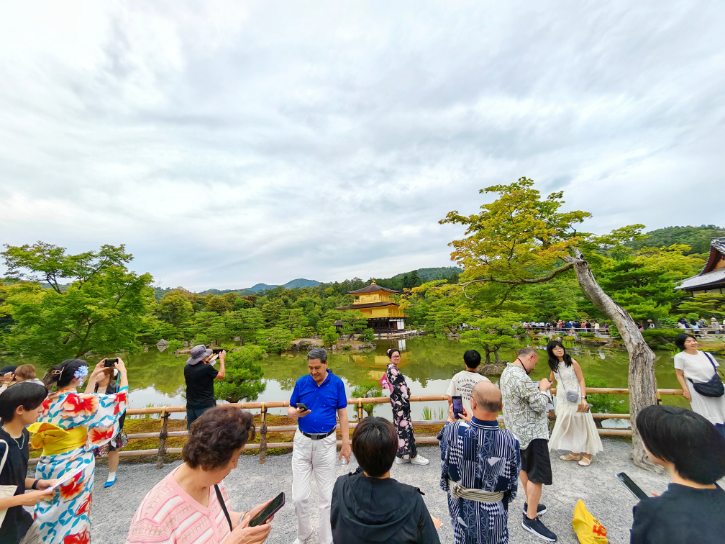
Peaceful to Visit, Frustrating as a Main Base
Deep Northern Kyoto, around Kita-ku and the Kinkaku-ji area, is calm, local, and full of famous temples. It is safe and lovely to explore. But as a base for a multi-day trip, it is tough going. There is no direct rail line, so you lean heavily on city buses, and the famous sights are spread out.
a. What This Area Covers and Its Appeal
This northern district includes the residential streets of Kita-ku and the quiet lanes around some of Kyoto’s most famous temples: Kinkaku-ji (the Golden Pavilion), Ryoan-ji with its rock garden, Ninna-ji, and Kitano Tenmangu shrine nearby.
The area is mostly residential, with narrow streets, family homes, and small shops. The appeal is easy to understand: famous temples close by, calm and uncrowded streets, quiet evenings, and hotel prices that can run lower than central Kyoto.
For repeat visitors and slow travelers, that quiet is a real draw. The catch is what comes next.
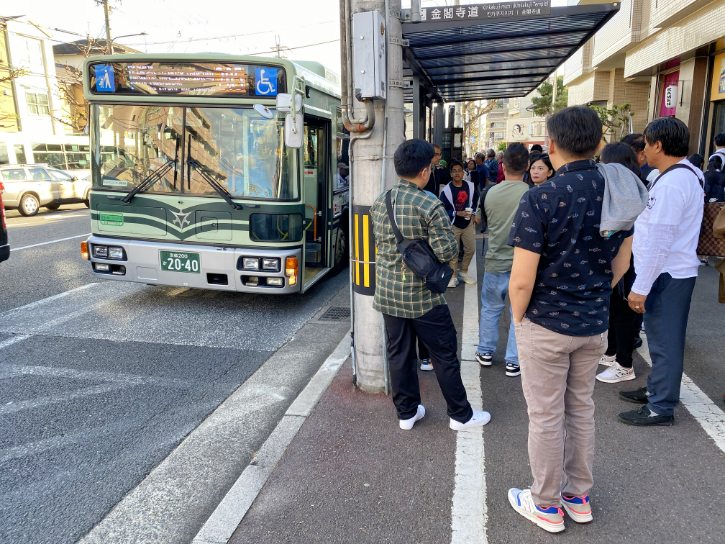
b. Main Problem: Weaker Transport
The defining issue is that this area is cut off from fast rail:
- No direct subway or train line. You rely heavily on city buses.
- Slow bus rides. Kinkaku-ji from Kyoto Station on Bus Route 205 takes about 40 minutes on a good day, and over an hour in peak seasons.
- Crowded buses. These routes carry commuters and tourists, so they are often full.
- Awkward transfers. Reaching eastern or southern Kyoto usually means a bus to the Karasuma Subway Line at Kitaoji or Imadegawa, then a train.
In short, most trips out involve a bus plus a transfer, and that wears on you across a multi-day trip.
c. Dining and Evening Convenience
This is a residential district, so there is little commercial development. Do not expect big shopping streets, covered arcades, or lively dining alleys.
- Casual, late-night dining is limited.
- Fewer cafes and shops stay open in the evening.
- English-friendly restaurants are harder to find.
- You will want to plan breakfast and dinner carefully.
The quiet can be a plus if that is what you want. But after a long day out, finding an open dinner spot near your hotel can be a real challenge.
d. Accommodation, Luggage, and Family Practicality
Lodging here is limited, mostly small guesthouses, vacation rentals, and basic business hotels. The area also has fewer convenience stores, pharmacies, and supermarkets than the central districts, which makes last-minute needs harder to cover.
Getting around with heavy bags, strollers, or mobility needs is tough. Carrying large suitcases onto crowded buses is exhausting.
Taxis work, but daily trips to central sights add up quickly, and finding one in busy seasons can be difficult. For families especially, Kyoto Station or Downtown Kyoto will feel much easier day to day.
e. Better as a Day Trip, Plus Booking Tips
This area is a great daytime stop, not a base. You can chain Kinkaku-ji, Ryoan-ji, and Ninna-ji into a smooth half-day, then return to a central hotel for dinner.
My honest advice: see Kinkaku-ji as a sightseeing stop, not a reason to book a hotel here.
If you still want to stay north, book carefully:
- Check real travel times to Shijo, Karasuma-Oike, and Kyoto Station before you commit.
- Use transport nodes as anchors. Prioritize spots near the Kitaoji Bus Terminal, which connects to the Karasuma Subway Line, or Enmachi Station on the JR Sagano Line, so you have at least one fast rail link.
- Avoid long bus plus long walk combos. Skip any place that needs a long bus ride and then a walk of more than 15 minutes, especially with bags.