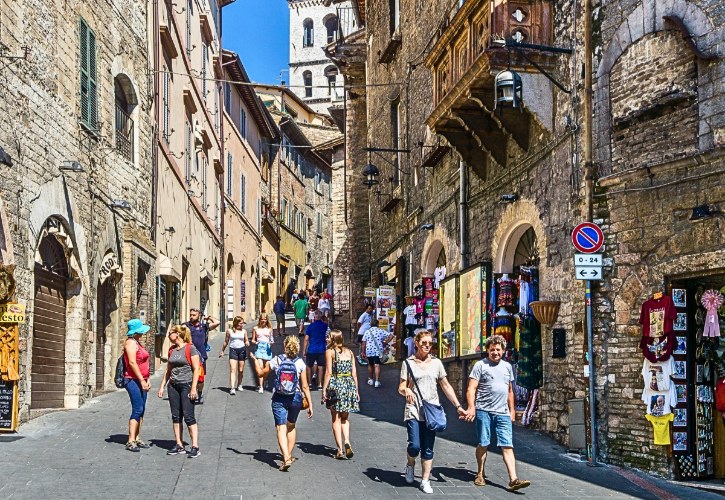
Some of Italy’s best moments happen far from the crowds. In the green heart of the country, a cluster of old hill towns sits quietly among olive groves and forested slopes.
Stone lanes climb toward hilltop fortresses, flowers spill from doorways, and the countryside rolls out in every direction.
Three towns here reward you with history, art, and real local life, all without the long lines. Pack comfortable shoes and a little curiosity, and you are in for a treat. 😊
1. Spello
a. A Pink-Stone Town That Slows You Down
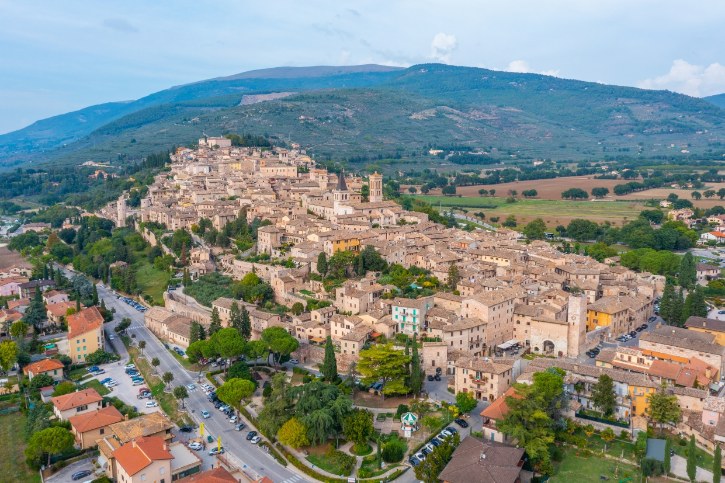
Spello sits on the lower southern slopes of Mount Subasio, and it is one of the prettiest historic towns in Umbria. Its warm pink limestone glows in the afternoon light, and its lanes are famous for flowers.
This is a place for slow mornings. If you love quiet walks, photography, and Renaissance art, you will feel right at home. Spello belongs to both the club of “I Borghi più belli d’Italia” (the most beautiful villages in Italy) and holds the Touring Club’s Orange Flag for quality small towns.
b. From Roman Colony to Medieval Jewel
Spello’s story runs deep, and you can still see it in the stones:
- Early Umbrian people settled here long before Rome arrived.
- Around 41 BC, the Romans founded the colony of Colonia Julia Hispellum, later praised as a “splendid” Julian colony.
- Roman Spello had a theatre, an amphitheatre, and a hillside sanctuary.
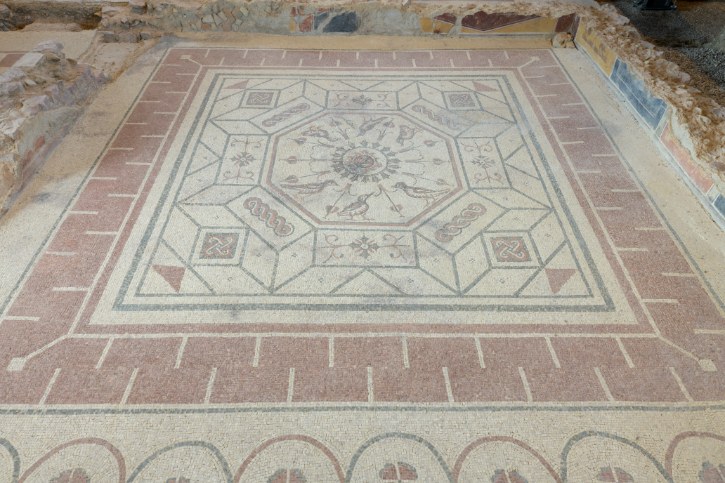
- The Villa dei Mosaici still shows colorful ancient mosaic floors.
- By the late 1200s, Spello was a strong medieval town, and the old town hall dates to 1270.
- In 1426, Pope Martin V granted the town to Malatesta Baglioni, and the powerful Baglioni family went on to spark its artistic golden age.
c. Ancient Gates and Hidden Towers
Walking Spello’s edge is like reading a timeline in stone. The town keeps one of Italy’s best-preserved rings of Roman walls, built in the age of Augustus from local limestone.
Three gateways are worth seeking out:
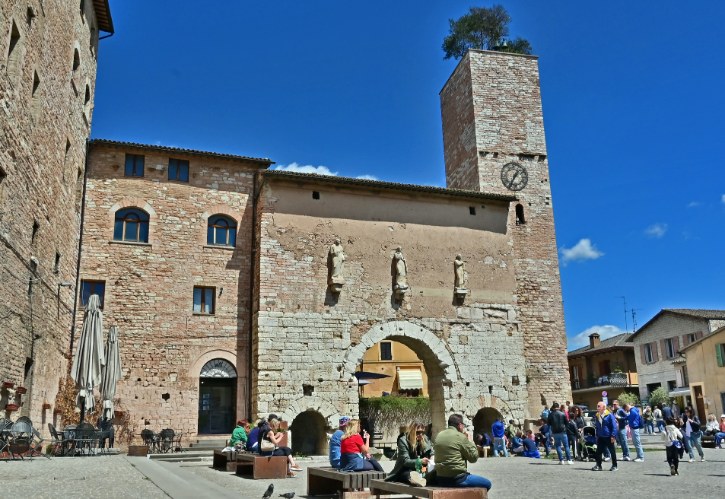
- Porta Consolare: A Roman gate topped with three marble statues, beside a 14th-century clock tower famously crowned with little trees.
- Porta Urbica: A single-arch Roman gate set near an old church.
- Porta Venere: An elegant triple-arched Roman gateway from the age of Augustus, and the real showstopper.
The reason to linger at Porta Venere is the pair of twelve-sided Towers of Properzio beside it, built in pink and white limestone and thought to date from medieval times. Climb the spiral staircases inside, and you reach a lovely panoramic terrace.
d. Where Renaissance Art Comes Alive
Spello packs a lot of great art into a small space, so slow down here. The town’s finest treasure is the Church of Santa Maria Maggiore, founded in the 11th to 12th centuries.
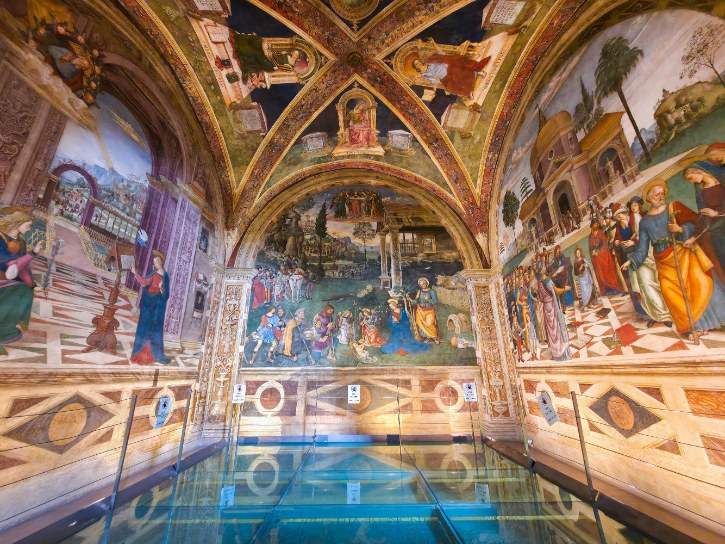
Look for these inside:
- The famous Baglioni Chapel, frescoed by Pinturicchio around 1500 to 1501, including an Annunciation that hides the artist’s own self-portrait.
- Two frescoes by the celebrated painter Perugino.
- A gilded silver crucifix from the late 1300s.
One honest tip that many guides get wrong: the town’s art collection, the Pinacoteca Civica, is kept in the nearby Palazzo dei Canonici, right beside the church, not in Palazzo Baglioni.
e. The Famous Flowers and the Infiorate
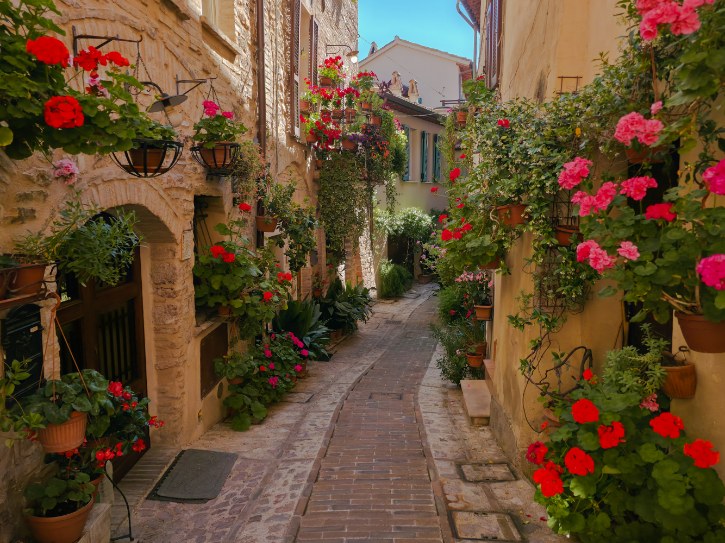
Spello is often called Umbria’s “flowered town”, and residents love to dress their doorways and stairways with potted blooms.
A realistic expectation helps:
- The flowers are at their best from mid-May through mid-August.
- Outside those months, the color is lighter and varies street by street.
- The prettiest lanes include Via Cappuccini, Via Consolare, and Via Cavour.
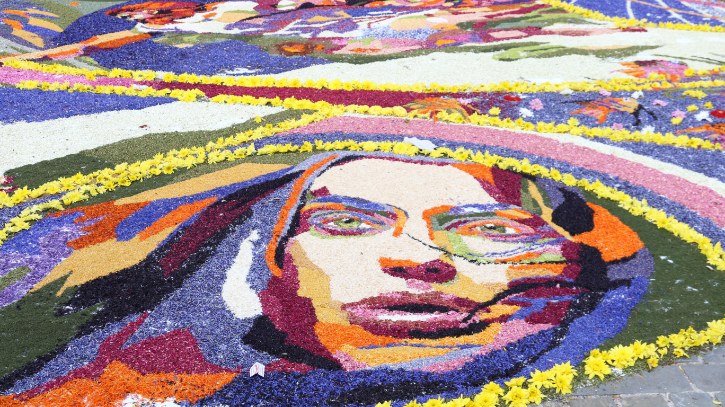
The town’s grand flower event is the Infiorate di Spello, held on the feast of Corpus Christi. The date shifts each year, since it falls nine weeks after Easter, so it usually lands in late spring, somewhere from late May to June. Over one night, local artists cover the historic center with around 1,500 square metres of intricate petal “carpets”, using only loose petals and no glue or dyes. It is a beautiful, short-lived masterpiece.
f. Olive Oil, Big Views, and Slow Living
Spello sits in prime olive country, and its extra-virgin olive oil is the heart of the local table. Each November, the town celebrates L’Oro di Spello, a festival of olive oil and bruschetta with carts, music, and dancing. The local oil is so loved that it even gets its own tastings in the town taverns at Carnival time.
Come hungry and try these:
- Strangozzi and umbricelli pasta
- Local black truffles from Mount Subasio
- Cured meats, pecorino, and the flatbread torta al testo
- Regional wines like Sagrantino and Grechetto
For the best view, climb to the Belvedere terrace, set on the old Roman forum, where you look out over red rooftops and the hills toward Assisi and Perugia. The streets are steep, so take your time and enjoy the stops.
2. Assisi
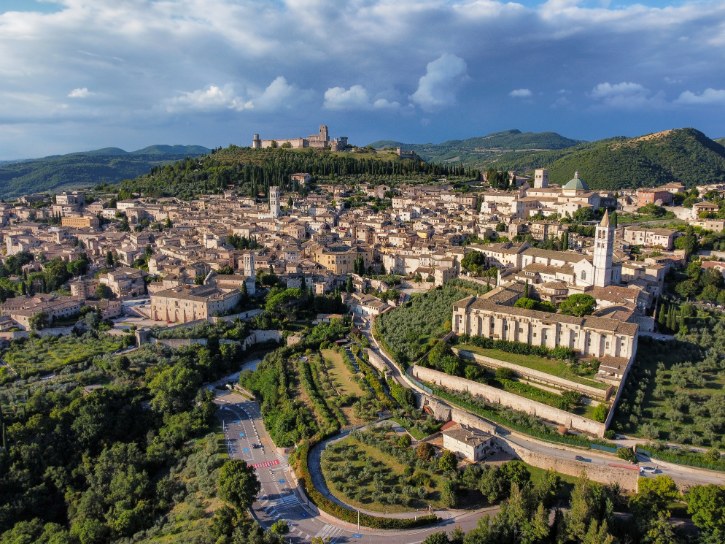
a. A Hillside Town Like No Other
Set across the slopes of Mount Subasio in glowing pink-and-white stone, Assisi is one of Italy’s most storied towns. Its name is forever tied to Saint Francis and Saint Clare, and it earned a spot on the UNESCO World Heritage List.
You do not need to be a pilgrim to love it. Fans of Roman ruins, medieval buildings, quiet woods, and groundbreaking painting all find plenty here. The pink-stone streets and peaceful squares give the whole hillside a calm, timeless feel.
b. Two Basilicas That Changed Art Forever
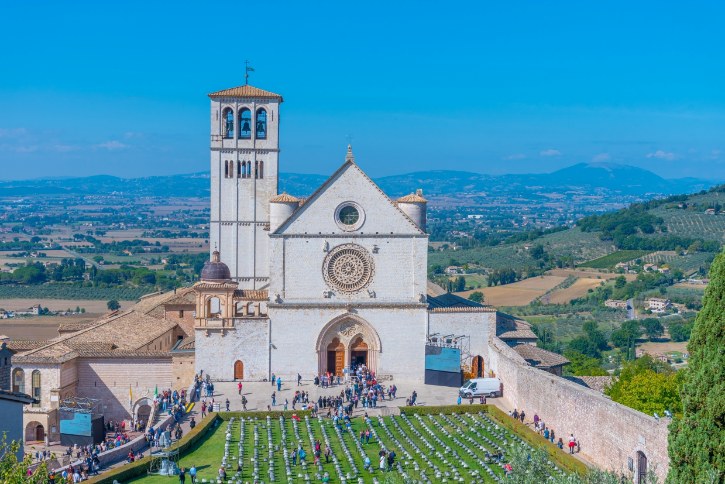
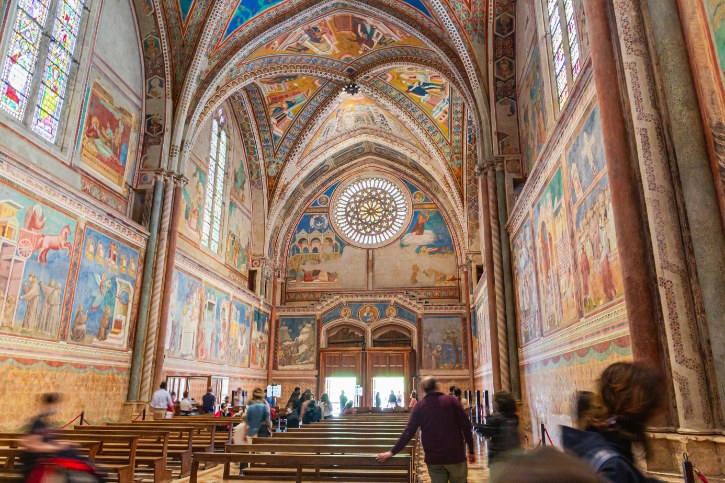
The spiritual heart of town is the Basilica of Saint Francis, begun in 1228. It is really two churches stacked together:
- The Lower Basilica, finished in 1230, is low and dim and leads to the tomb of Saint Francis.
- The Upper Basilica, consecrated in 1253, soars with light-filled Gothic lines.
- Its famous cycle on the Life of Saint Francis is traditionally linked to Giotto and his followers.
- Cimabue painted dramatic scenes in the transept, now darkened with age.
- Downstairs you can see early work by the Master of Saint Francis and jewel-like frescoes by Simone Martini.
Across town, the striped Basilica of Saint Clare (Santa Chiara) holds Saint Clare’s remains and the revered Crucifix of San Damiano.
c. A Faith You Can Still Feel
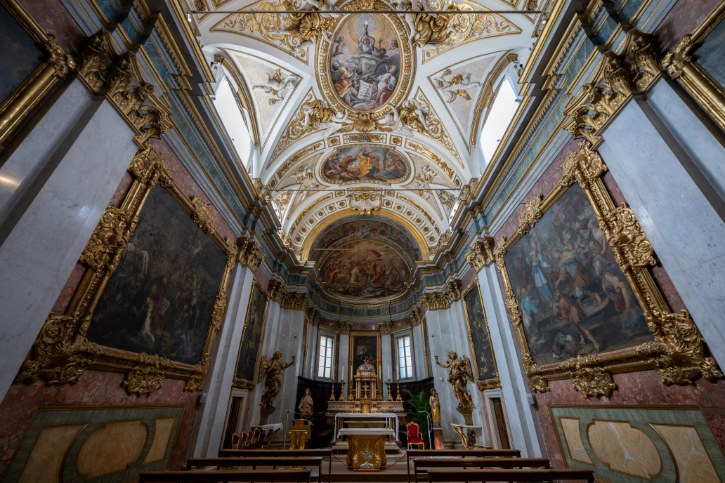
What makes Assisi special is that its faith still feels alive. These are working churches, not museum pieces, and daily prayers still fill them.
In the upper old town stands the Romanesque Cathedral of San Rufino, built over a much older early-Christian church.
A few things to look for:
- A pink-stone façade with three rose windows and medieval carvings
- The old baptismal font where, by tradition, both Saint Francis and Saint Clare were christened
- Quiet stepped streets that turn rosy gold at dawn and late afternoon
d. Roman Ruins and Medieval Power
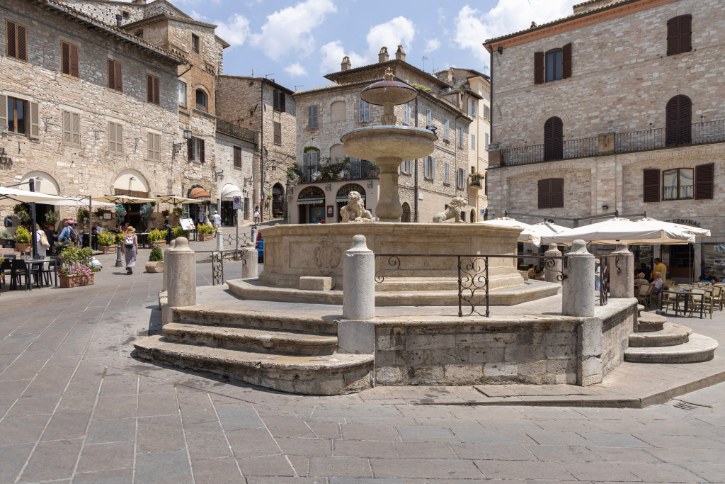
Assisi is not only about saints. Its civic heart shows a proud town built on Roman foundations:
- Piazza del Comune sits on the terrace of the ancient Roman Forum, which you can explore underground.
- The Temple of Minerva, with six intact Corinthian columns, so impressed the writer Goethe that he wrote about it.
- The tall Torre del Popolo rises beside the square.
- High above town, the fortress of Rocca Maggiore offers sweeping valley views from Perugia toward Spoleto.
These sites give you a whole different side of Assisi, beyond its churches.
e. Quiet Shrines in the Hills
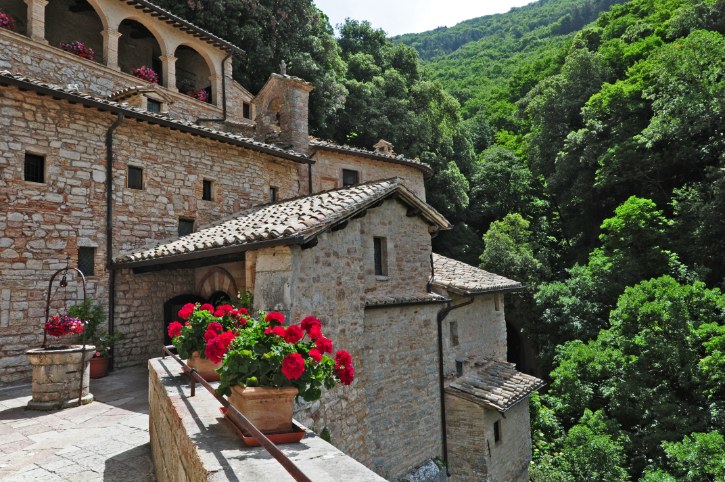
Some of the most peaceful corners lie just outside the walls. If you want a calmer side of the Franciscan story, head for the hills:
- The Eremo delle Carceri, high on Monte Subasio among ancient oaks, where Francis found quiet caves for prayer.
- The Basilica of Santa Maria degli Angeli, which shelters the humble Porziuncola chapel on the plain below.
- The Sanctuary of Rivotorto, preserving a tiny early Franciscan structure inside a later church.
- The Bosco di San Francesco, with shaded woodland paths and valley views.
f. Walks and Celebrations to Time Right
The best way to know Assisi is on foot. One fine walk climbs from Piazza del Comune, past San Rufino, up to Rocca Maggiore, tying together Roman stone and hilltop ramparts. The long Via di Francesco route even connects Assisi toward Gubbio.
Two celebrations show the town’s living heritage:
- Calendimaggio: A spring festival of medieval costumes, music, and friendly contests between districts. Its current format dates to 1954, so it is a loving revival rather than an unbroken ancient rite.
- Feast of Saint Francis (October 3 to 4): Italy’s patron saint is honored with ceremonies and a procession through town.
3. Gubbio
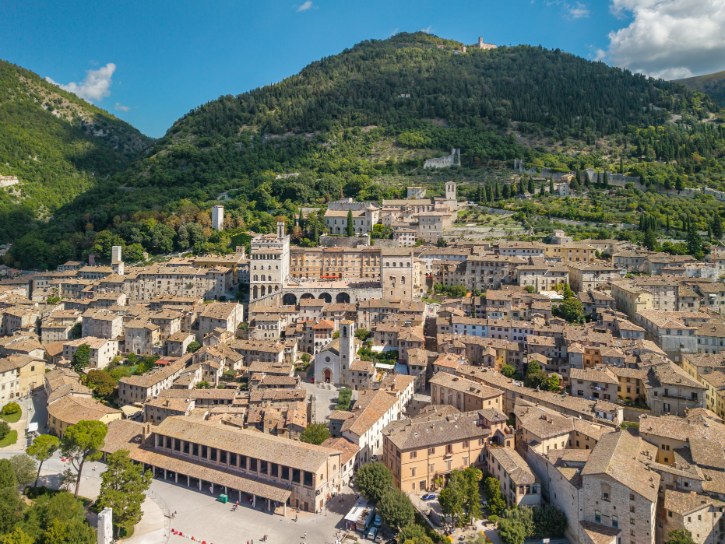
a. The City Carved From Stone
Anchored into the steep flanks of Monte Ingino, Gubbio has Umbria’s most rugged, monumental mood. Where Spello charms with flowers and Assisi glows with calm faith, Gubbio impresses with sheer gray stone and bold civic pride.
This town feels carved rather than built. It climbs the mountain in dramatic tiers, linked by vaulted arches and steep staircases. For the best wandering, explore the San Martino quarter and the artisan streets of Via dei Consoli.
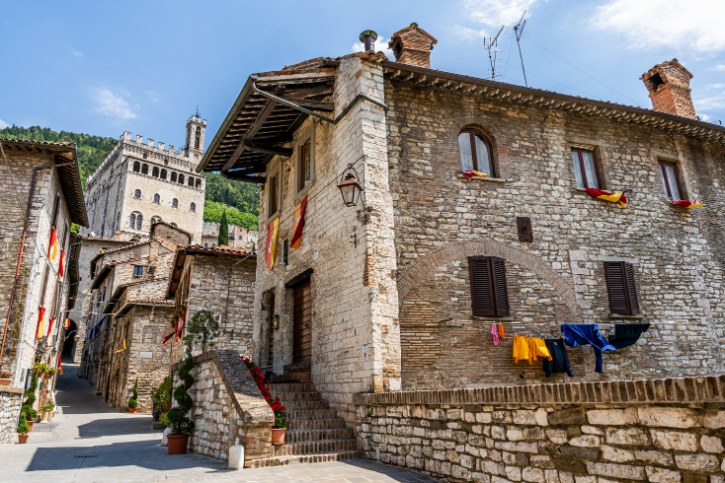
b. Ancient Roots and a Golden Age
Gubbio’s history reaches far back, and its treasures prove it:
- Ancient Ikuvium was a leading center of pre-Roman Umbrian life.
- Its greatest treasure is the set of Eugubine Tablets, seven bronze tablets from the 3rd to 1st century BC.
- They hold the largest surviving text in the ancient Umbrian language, now in the town museum.
- Under Rome, the lower plain gained a theatre, a mausoleum, and an aqueduct.
- In the 1200s and 1300s, Gubbio grew rich as an independent commune.
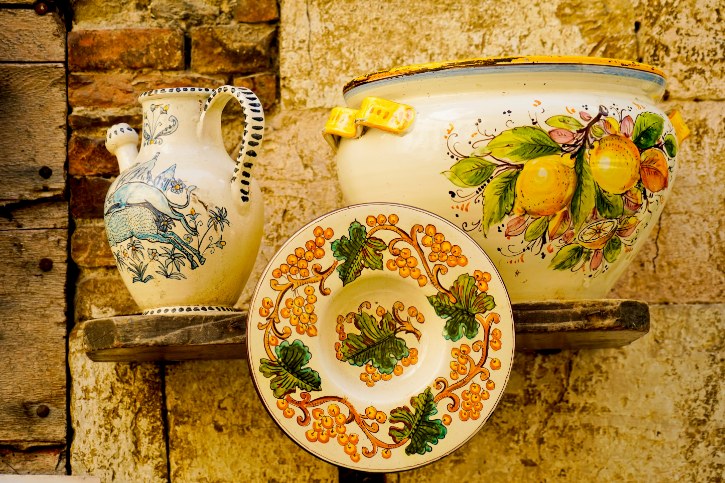
- The town is famous for its majolica ceramics, still made in local workshops.
c. The Hanging Square and Its Palaces
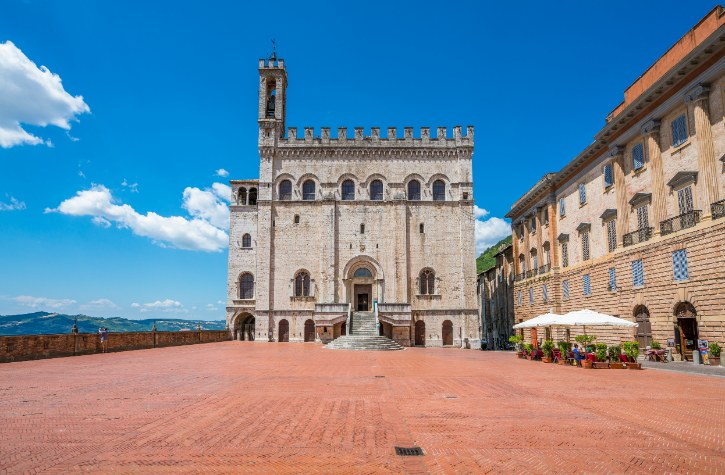
If one spot sums up Gubbio’s ambition, it is Piazza Grande. Planned from 1321 and built through the mid-1300s, it is a bold piece of medieval engineering, a raised “hanging” terrace set out over the hillside on massive stone supports.
Standing at its edge, you look straight over rooftops and the valley. The square is framed by two grand buildings:
- Palazzo dei Consoli, a towering Gothic palace whose museum holds the Eugubine Tablets and fine paintings.
- Palazzo del Podestà, planned as the twin of the Consoli palace but left unfinished.
It is the perfect place to pause, take photos, and soak in the town’s medieval grandeur.
d. Renaissance Elegance and Local Legends
Facing the cathedral, the Ducal Palace brings a touch of Renaissance grace to Gubbio’s stern stone. It was built from 1476 for Federico da Montefeltro, Duke of Urbino, to a design by Francesco di Giorgio Martini, and it offers elegant halls and public hanging gardens with lovely views.
A highlight inside is a faithful copy of the wood-inlaid Studiolo, whose clever paneling recreates a famous original now kept in New York.
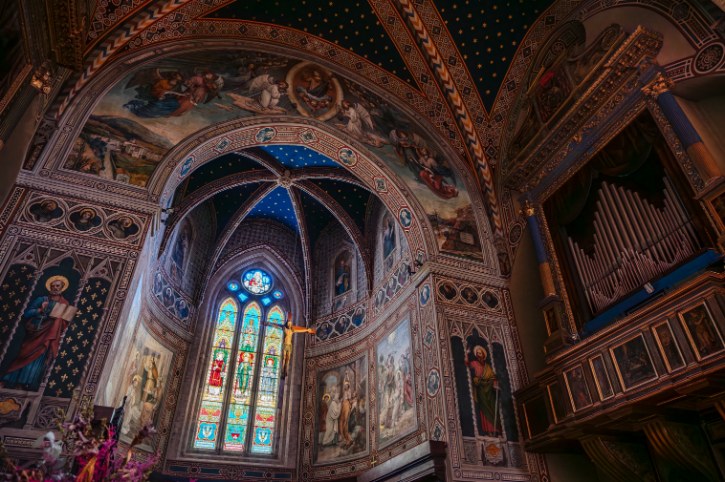
While you explore, keep an eye out for these:
- The Gothic Duomo, home to a huge old wooden wine cask.
- The Church of San Francesco, with 15th-century frescoes by Ottaviano Nelli.
- The “Door of the Dead”, narrow second doorways tied to a local legend that historians treat as folklore, not fact.
e. Playful Traditions and a Fiery Festival
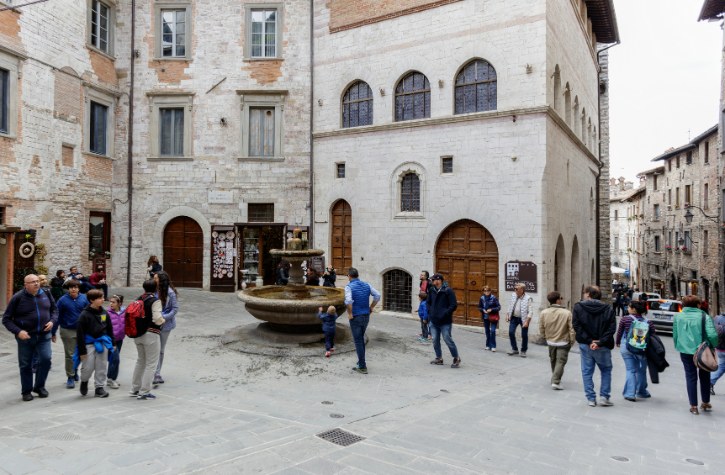
Gubbio has a wonderfully playful side. At the Fountain of the Madmen, you can earn a tongue-in-cheek “madman’s license” year-round. The exact ritual varies with local lore, so just ask a resident and enjoy the fun.
The town’s grandest event is far more intense:
- Festa dei Ceri, held each May 15, on the eve of Saint Ubaldo’s feast.
- Teams race up Monte Ingino carrying three towering wooden structures called Ceri.
- The run ends at the Basilica of Sant’Ubaldo at the top.
- The three resting Ceri stay on display in the basilica all year, so you can see them anytime.
f. The Cable Car to the Top
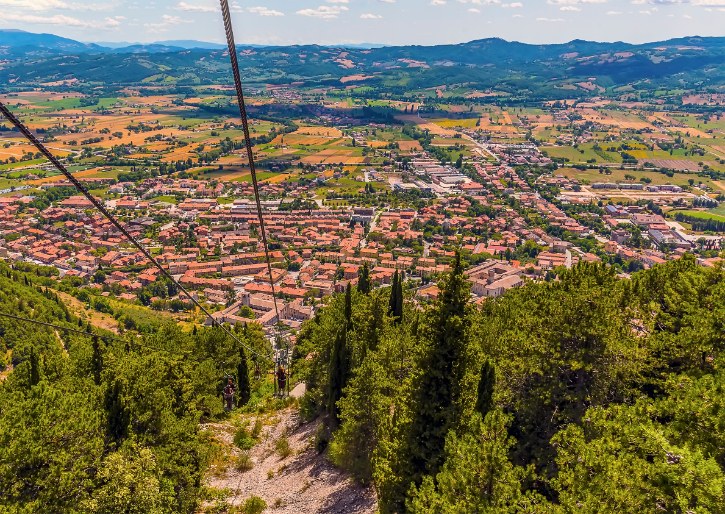
Save some energy for the climb up Monte Ingino. It is Gubbio at its most memorable. High on the mountain, at about 850 metres above sea level, the Basilica of Sant’Ubaldo guards the relics of the town’s patron saint.
Getting up there is half the fun:
- The Funivia Colle Eletto cable car runs year-round.
- You stand in an open-air, two-person “birdcage” basket.
- It glides quietly above rooftops, churches, and pine slopes.
- From the top, the views sweep over medieval rooftops and distant Umbrian hills.
Combine the breezy ride, the historic basilica, and those big panoramas, and you have one of Gubbio’s finest experiences.
Three Towns, One Unforgettable Trip
Each of these towns offers something the others do not, which is exactly why they belong together:
- Spello wins you over with flowered lanes, Roman gates, and jewel-like Renaissance frescoes.
- Assisi inspires with its Franciscan heritage, extraordinary art, and a beautiful hillside setting.
- Gubbio impresses with dramatic stone, bold architecture, big mountain views, and spirited traditions.
Visit all three, and you experience the full range of Umbria: its history, its art, its faith, and its warm everyday life. If you want an Italy trip that feels authentic rather than crowded, these three medieval gems deserve a firm spot on your list. Pack good walking shoes, leave room to wander, and let Umbria surprise you.