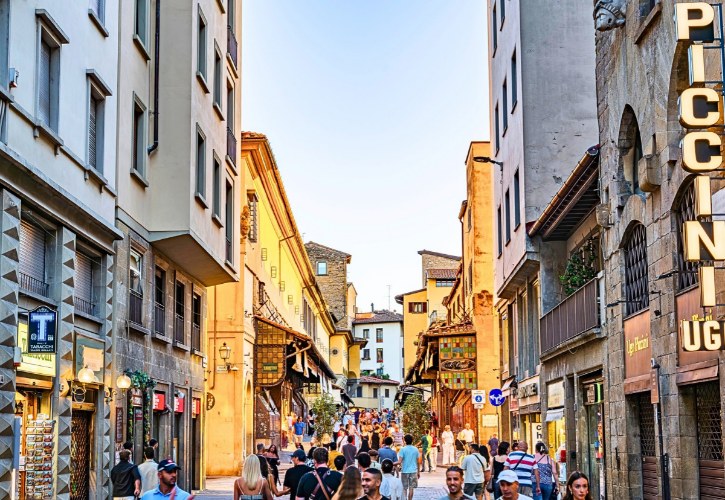
Ask anyone who has been to Florence and they will tell you the same thing: where you stay shapes the whole trip.
The big sights sit inside a small, walkable core with no metro, so you will spend most days on foot. Where you sleep decides your nightly price, how well you rest, and how fast you reach the station, a good dinner, or a quiet corner.
On a first visit, that one choice matters more than you might expect. So it helps to know how the neighborhoods differ before you book.
1. Santa Maria Novella & San Lorenzo (Train Station & Central Market Area)
a. A Lively Base Built Around the Station
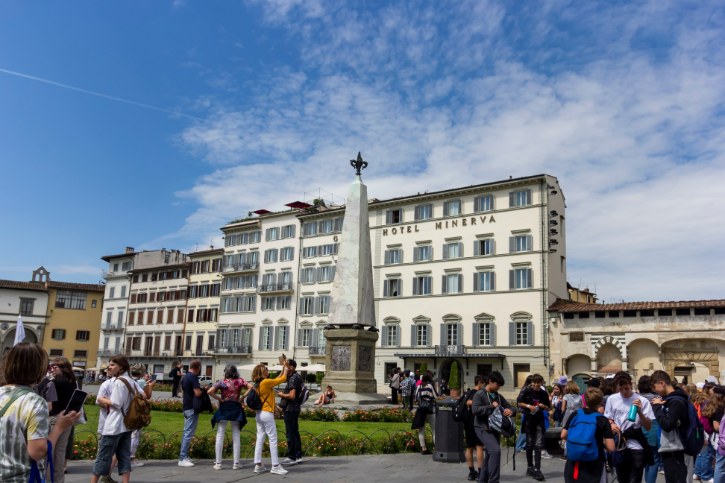
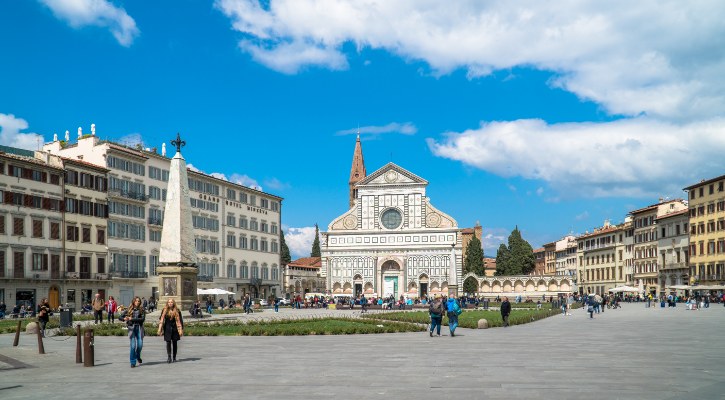
This corner of the historic center wraps around Florence’s main train station and the open space of Piazza Santa Maria Novella. It has two very different moods, depending on which way you walk.
Right by the tracks, the streets are practical and busy, full of arriving travelers and shoppers heading toward the Duomo. Turn toward the basilica and things calm down, with the green-and-white marble Basilica of Santa Maria Novella and a historic perfume-apothecary on Via della Scala setting a gentler tone.
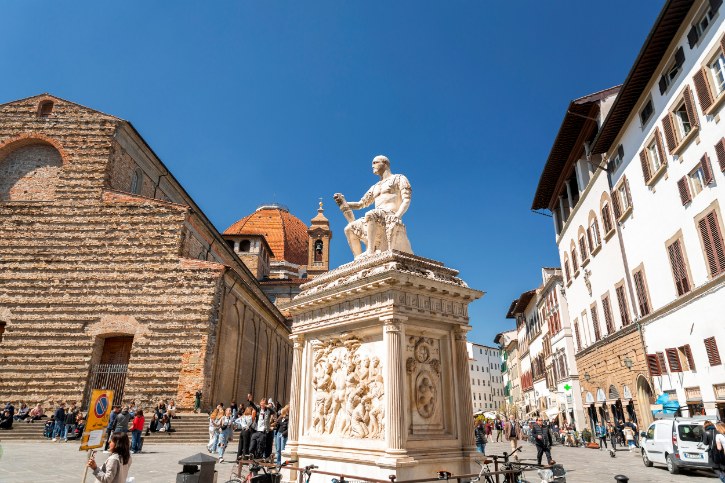
A short walk east sits San Lorenzo, old Medici territory and the city’s food heartland. It wears two faces each day:
- By day, outdoor stalls selling leather and souvenirs crowd the streets around the market.
- In the evening, the stalls pack up and the action moves indoors to the buzzing food hall at Mercato Centrale.
Put simply, each side rewards a different traveler:
- Santa Maria Novella suits you if you value easy trains, airport arrivals, and the shortest fuss with luggage.
- San Lorenzo suits you if you would rather wake up among market stalls, food counters, and Medici history.
b. What You Can Reach on Foot
You can sightsee here without ever touching public transport. From a room near the station or the market, these are realistic walks:
- Basilica of Santa Maria Novella sits right across from the station.
- The perfume-apothecary on Via della Scala is about 5 minutes away.
- Piazza del Duomo is 10 to 15 minutes from the station, or around 8 minutes from the basilica side.
- The Uffizi Gallery is 15 to 20 minutes on foot through the center.
- Ponte Vecchio and the river sit just past the Duomo.
From San Lorenzo, you shave a few minutes off the northern walks:
- The Duomo is 6 to 10 minutes away.
- Galleria dell’Accademia, home of Michelangelo’s David, is 8 to 12 minutes.
- Museo di San Marco is about 9 minutes.
Read More: 15 Beautiful Attractions in Florence: The Perfect Walking Route to Explore Them All
c. Easy Comings and Goings
This area is the smoothest base in Florence for arrivals, departures, and day trips.
- Everything central is walkable, so you rarely need wheels once you are here.
- You are steps from the city’s main station, which makes it the easiest launchpad for day trips to Pisa, Lucca, or Siena.
- A tram links Florence Airport to the center near the station in roughly 20 minutes, so you can roll your suitcase almost door to door.
- San Lorenzo sits about 10 minutes on foot from the platforms, close enough for an early train without the station noise.
The one catch in San Lorenzo: daytime market stalls can block taxis from reaching your door, so plan to walk the last stretch with your bags.
d. Finding the Right Street for Your Room
Your experience changes a lot from one block to the next, so choose with intent:
- Right by the platforms (Via Fiume, Via Alamanni): fastest for trains and luggage, but the busiest and noisiest choice.
- The basilica side (Piazza Santa Maria Novella, Via della Scala, Via Faenza): better evening atmosphere and good value, ideal for a first visit.
- Borgo Ognissanti: quieter and more upscale, leaning toward the river.
- San Lorenzo side streets: apartments and guesthouses near the market, where booking a block back from the stalls buys you calmer nights.
Expect a mix of budget rooms, mid-range hotels, and a few luxury addresses, so you can match the area to almost any budget.
e. Where to Eat Well Nearby
Skip the fast-food spots right inside the station and walk a few blocks for the real thing.
- Il Latini (Via dei Palchetti) is a beloved old-school trattoria serving Tuscan classics like ribollita and bistecca.
- Osteria Novella (Via della Scala) and La Sosta 111 (Via Faenza) are solid, unfussy local tables.
- In San Lorenzo, Mercato Centrale is the star: grab a lampredotto panino from Da Nerbone downstairs, then graze the upstairs food hall for pizza, pasta, and more.
- Around the market, Trattoria Zà Zà, Il Vezzo, and Ciro and Sons (with vegan options) are reliable picks.
- For self-catering, handy supermarkets sit along the western edge near the station.
A simple trick serves you well all over this area: step a block or two off the station concourse and read a posted menu before you sit down. You will eat far better for it.
2. San Giovanni & Santa Croce (Duomo & East of the Duomo)
a. In the Heart of the Action
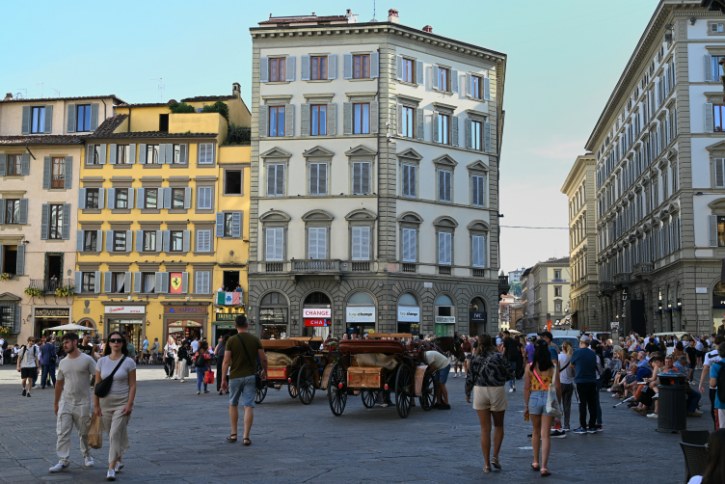
San Giovanni is the dead center of Florence, radiating out from the Duomo and down the pedestrian spine of Via dei Calzaiuoli. It is packed with flagship monuments, grand cafés, and shopping, and it carries the heaviest foot traffic in the city.
That central position comes at a price. Rooms here are among the priciest in Florence, and the main streets stay lively, and loud, well into the night.
This central base rewards first-time visitors on short stays who want to roll out of bed and be standing in front of the Duomo within minutes.
Just east, Santa Croce feels more like a real neighborhood and leans hard into food and local life. After dark it splits in two:
- The western bar strips (Via dei Benci, Via Verdi, Via Ghibellina) fill with pubs, cocktail bars, and clubs.
- Farther east, Sant’Ambrogio stays residential and quiet, built around a lively morning produce market.
b. Monuments Right Outside Your Door
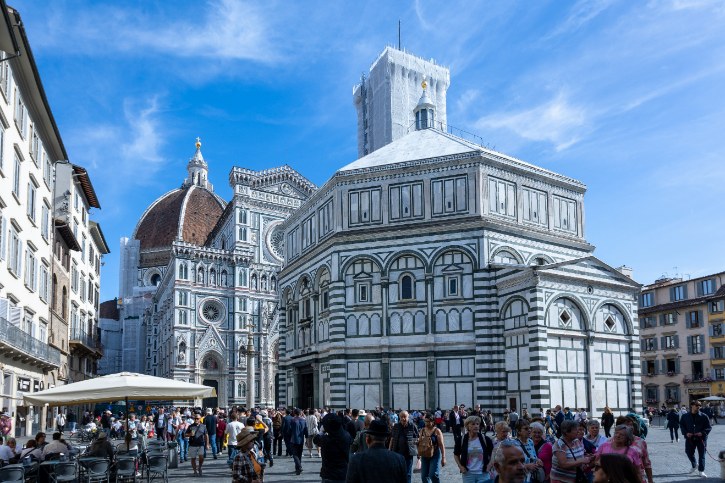
From a room near the Duomo, almost every north-bank landmark is a short walk, most within 3 to 15 minutes.
- The Duomo, Baptistery, Bell Tower, and cathedral museum are right on the square.
- Walk down Via dei Calzaiuoli to Piazza della Signoria and the Uffizi in about 5 minutes, a little longer in crowds.
- The Accademia is 8 to 12 minutes north.
- The Bargello museum is about 7 minutes away.
- Ponte Vecchio is 3 to 5 minutes south.
From Santa Croce, you trade a few extra minutes to the Duomo for easy access to its own highlights:
- The Basilica di Santa Croce and the Sant’Ambrogio market are just minutes from your door.
- The Uffizi is about 7 minutes away.
- The Duomo is 9 to 15 minutes on foot.
Read More: 12 Amazing Florence Spots Less Than 5 Minutes Apart
c. Getting Around Without the Fuss
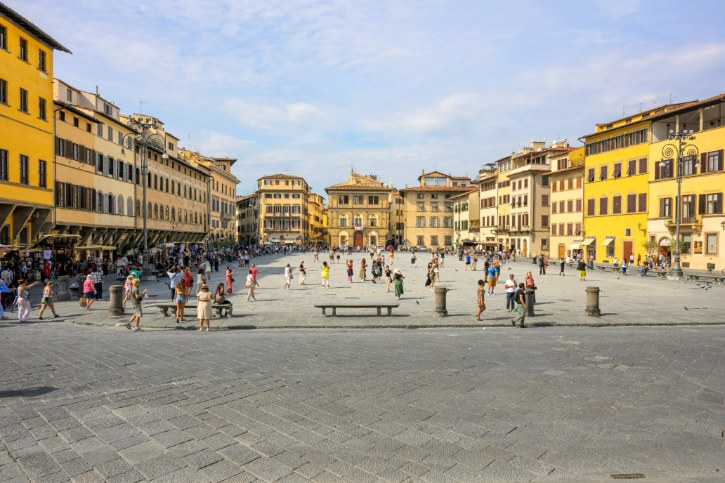
You will walk nearly everywhere in both districts, and it is almost always the quickest way across the center.
- San Giovanni reaches the main station in 10 to 15 minutes on foot.
- Santa Croce sits about 20 minutes from the station, so it is less convenient if you plan lots of day trips.
- Deep pedestrian zones block cars from some hotel doors, so taxis serve the outer, western streets more easily than the core.
For most travelers, that means you lean on your feet by day and save a taxi for arrival and departure.
d. Choosing Your Perfect Room
Both districts suit different trips, so match the micro-area to your priorities:
- Right on the Duomo squares: unbeatable views and instant monument access, paired with late-night street noise.
- Side streets east (toward Via dell’Oriuolo) or courtyard rooms: the same central base with far more peace.
- Santa Croce apartments and guesthouses: usually cheaper than rooms at the Duomo, with a neighborhood feel.
- Sant’Ambrogio: a favorite for longer and family stays near the morning market.
If you are a light sleeper in Santa Croce, avoid rooms directly over the bar strips and the busiest squares. One street back makes all the difference.
e. Where to Eat and Drink
San Giovanni is grand historic cafés and convenient meals between sights. Santa Croce is where you eat like a local.
- In San Giovanni, sip at Caffè Paszkowski or Le Giubbe Rosse on Piazza della Repubblica, or Procacci on Via de’ Tornabuoni.
- For sit-down Tuscan food, duck onto the side lanes to Lo Scudo, Ristorante il Paiolo, or Il Caminetto.
- In Santa Croce, the Mercato di Sant’Ambrogio is the real draw, with produce stalls and lampredotto counters like Da Rocco and I’Trippaio.
- Nearby, try La Buchetta, Murales Bistrò, a fully gluten-free Trattoria Boboli, and the famous Gelateria dei Neri. For a splurge, the three-star Enoteca Pinchiorri is here too.
3. Oltrarno (Across the Arno River)
a. A Calmer Florence Across the River
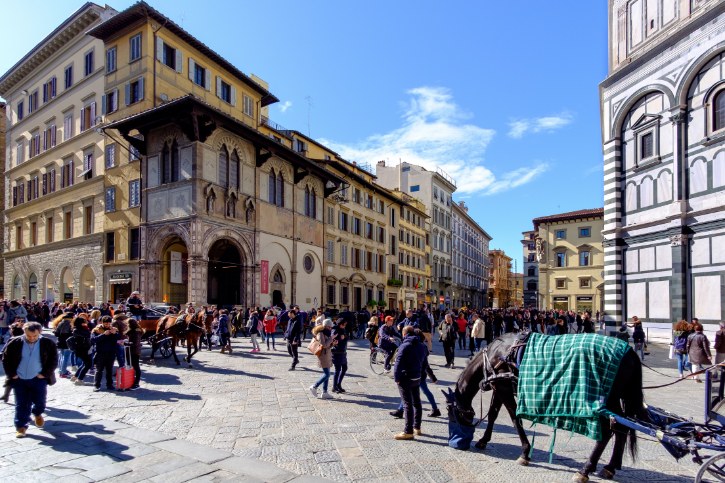
“Oltrarno” simply means “across the Arno”, the stretch of Florence on the south bank. Shaped by artisan workshops, antique dealers, and the old Medici palace at Palazzo Pitti, it feels calmer and more lived-in than the monument-heavy north side.
The layout is simple to picture. A flat, walkable strip hugs the river, while steep hills rise quickly behind it. The most important thing to remember is this: do not treat Oltrarno as one place. It is three distinct districts.
b. Three Districts, Three Personalities
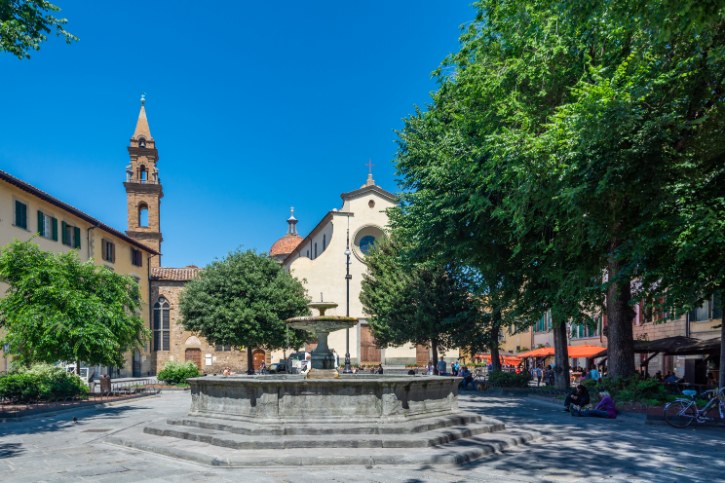
Each pocket draws a different kind of traveler:
- Santo Spirito is the lively heart, with a daytime piazza market and a buzzing scene of bars and aperitivo after dark. Book one street back and you keep the energy without the late-night noise.
- San Frediano is quieter and more residential, full of workshops and local life, with fewer tourists. The trade-off is longer walks the farther west you go.
- San Niccolò is the quietest and most scenic, tucked below the famous Piazzale Michelangelo viewpoint. It is flat and easy by the river, but steep stone steps lead up the hill.
Here is the quick way to choose between them:
- Pick Santo Spirito for nightlife, markets, and the shortest walks to the sights.
- Pick San Frediano for a calm, local feel close to the river.
- Pick San Niccolò for peace and a view, as long as you are ready for the climb.
c. Crossing Over to the Sights
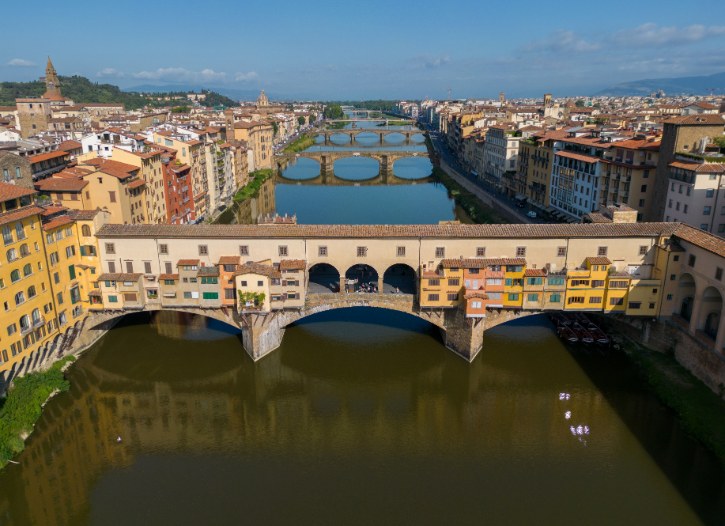
Staying here means crossing a bridge to reach the north-bank museums, and the bridge you pick matters.
- Ponte Santa Trinita gives you the same quick crossing as Ponte Vecchio, with far fewer crowds and the best views back over the river.
- Ponte Vecchio is scenic and pedestrian-only, but almost always packed.
Once you are oriented, the walks are short and pleasant:
- Palazzo Pitti and the Boboli Gardens sit right inside Santo Spirito.
- The Uffizi is about 15 minutes on foot from Piazza Santo Spirito.
- The Brancacci Chapel in San Frediano is only a few minutes from Santo Spirito.
- Piazzale Michelangelo is about a 12-minute climb up the steps from the river, or 25 to 35 minutes from the Duomo.
d. Moving Around the South Bank
North of the river, your own two feet usually beat any ride.
- Walking the center stays faster than wheels. The Duomo to Palazzo Pitti is about 15 minutes on foot.
- There is no tram on the south bank, and the airport tram runs on the far side near the station.
- Small electric minibuses loop the flat streets, while local buses and taxis handle the hill climbs and the runs to the station or airport.
- Frequent day-trippers will find Oltrarno less handy than the station area, since every trip starts with a river crossing.
San Niccolò’s hill is the one feature to plan around. After a long day of sightseeing, take a taxi or a local bus up rather than tackling the stone steps on tired legs.
e. Picking the Right Spot to Stay
Choose your district by the kind of stay you want:
- Santo Spirito: book one block off the piazza for quick river crossings without the nightlife noise. Great for couples and food lovers.
- San Frediano: residential apartments near Piazza del Carmine balance calm with a walkable location. Streets far to the west get a long way from the center.
- San Niccolò: stay flat along lower Via San Niccolò unless a hilltop view is your whole reason for coming, since the climb is tough with luggage.
Expect mostly boutique guesthouses, apartments, and historic palazzo stays rather than big hotels, which is part of the area’s charm.
f. Where to Eat and Drink
Oltrarno is one of the best places in Florence to eat, especially in and around Santo Spirito.
- Santo Spirito has the richest scene: try Osteria Santo Spirito on the square, Volume for drinks with live music, and a run of gluten-free trattorias along Via Romana.
- San Frediano keeps things quieter, with local spots and live-music bars around Borgo San Frediano. For more choice, the fuller Santo Spirito scene is a short walk away.
- San Niccolò has a smaller cluster of neighborhood places, so it is worth checking what is open near your booking before you arrive.
Quick Guide: Which Area Fits You?
Still deciding? Match yourself to the shortlist:
- You want day trips and easy luggage: Santa Maria Novella, right by the station.
- You want to wake up beside the big sights: San Giovanni, around the Duomo.
- You want food, markets, and local life: San Lorenzo or Santa Croce.
- You want a calmer, more authentic base: Oltrarno, one street back from Piazza Santo Spirito.
- You want quiet and a view, and do not mind a hill: San Niccolò.