Nice sits within reach of a dozen famous day trips, and choosing between them is harder than it looks. Some places shine on a map but quietly eat your day: awkward transport, scattered sights, long walks, heavy crowds.
None of them are bad, and three popular ones are genuinely excellent for the right traveler. They just rank lower when your time is short. Here are the five I’d choose first, and the three I’d save for later.
1. Èze Village
a. Why It Earns a Spot
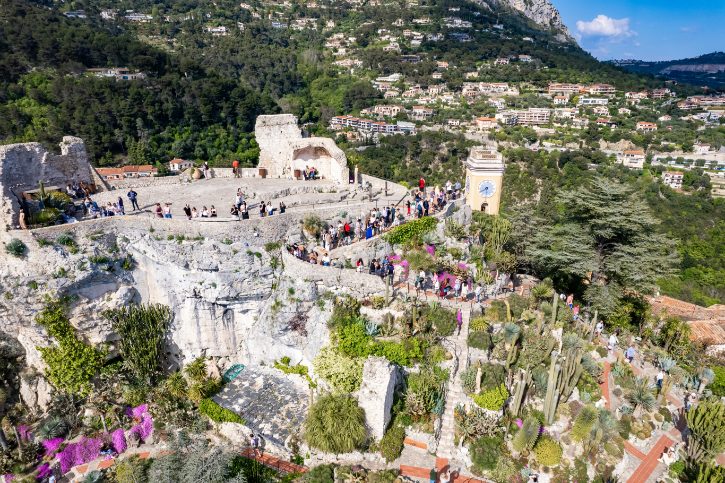
Èze is the classic “eagle’s nest” of this coast, perched at an official elevation of 429 metres above the Mediterranean. That number explains everything.
You are not strolling a promenade here. You are standing on a cliff top, looking straight down at open sea.
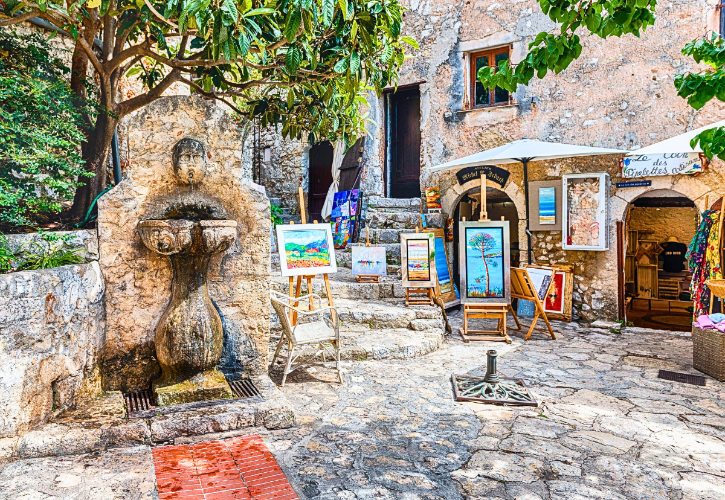
The village itself is a fully pedestrianized medieval core of narrow stone lanes and vaulted archways, now filled with artisan workshops and galleries.
b. Don’t Miss
- The 14th-century fortified stone gate. Cross it and the modern road disappears behind you.
- Rue du Barri. A main lane framed by historic masonry, bougainvillea and stone vaults.
- Église Notre-Dame-de-l’Assomption d’Èze. Built in 1764, a light ochre Baroque church with trompe-l’œil interior decoration.
- Jardin Exotique d’Èze. The summit garden, inside the ruins of the medieval castle at 429 metres. Cacti, succulents, the “Earth Goddesses” sculptures by Jean-Philippe Richard, and views as far as Saint-Tropez. This is the highlight.
c. Walkability
Getting around means a continuous series of steep stone steps, worn slick over centuries. Wear shoes with grip, because compact does not mean flat.
Allow three to four hours for the lanes, the garden and a perfume stop at Fragonard Parfumeur Èze near the entrance.
d. Essential Transport Warning
Èze Village and Èze-sur-Mer are two different places, 429 metres apart vertically.
The railway station sits at sea level, and there is no easy walk up. Arrive by train and you face either a 1.5-hour climb on the rugged Chemin de Nietzsche or a wait for the infrequent local Bus 83. Take the bus from Nice instead.
e. How to Get There from Nice
- Depart: Vauban Bus Station
- Arrive: Èze Village
- Route: Lignes d’Azur Bus 82
- Duration: 35 to 40 minutes
- Alternative: ZOU! Bus 602, 35 minutes, Monday to Saturday only
The last return bus is relatively early, so check it before you walk in.
2. Villefranche-sur-Mer
a. Why It Earns a Spot
Six minutes on the train and you are somewhere completely different. That alone makes Villefranche the best value day trip from Nice.
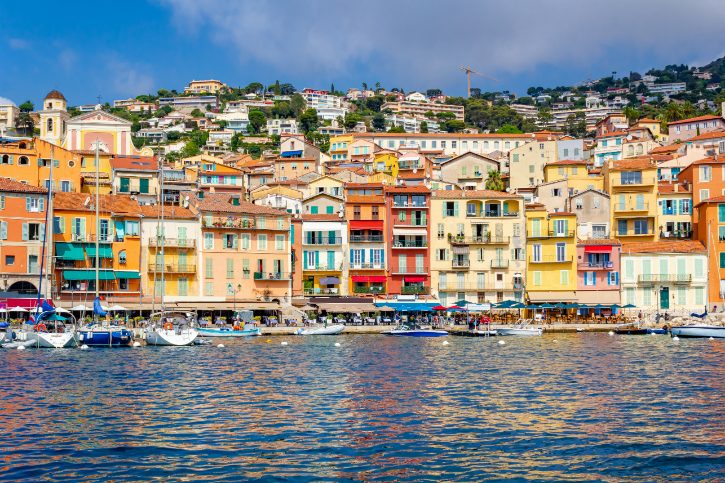
The town wraps around one of the deepest natural harbours in the Mediterranean. Pastel Belle Époque facades cascade down terraced hills to the water, and the energy of Nice is replaced by a quiet fishing-port mood.
Better still, it packs a beach, a historic core, a 16th-century citadel and a genuine cultural gem into one walkable loop.
b. Don’t Miss
- Plage des Marinières. A sweeping sandy-pebble beach right below the station, with shallow water and views back at the old town.
- Chapelle Saint-Pierre. A 16th-century chapel on the quay, decorated inside and out by Jean Cocteau in 1957, with frescoes showing scenes from the life of Saint Peter.
- Rue Obscure. A 130-metre covered passageway dating to 1260, running beneath the town’s first rampart. Still dark and vaulted.
- Citadelle Saint-Elme. A stone fortress built in 1557, with ramparts, courtyards and gardens that are freely accessible.
c. Walkability
The waterfront and beach are flat and easy. The old town above them is steep, with narrow stone streets and staircases that arrive quickly. No local transport is needed.
d. Realistic Scope
Villefranche works perfectly as a half-day trip, and stretches into a relaxed full day of beach time, citadel walls and a long lunch by the harbour.
Resist the urge to over-plan it. This is a place to sit down. If you want more distance, the walk toward Beaulieu-sur-Mer is the one sensible extension.
e. How to Get There from Nice
- Depart: Gare de Nice-Ville, or Gare de Nice-Riquier if you are staying on the eastern side
- Arrive: Gare de Villefranche-sur-Mer
- Route: TER ZOU! Line 4
- Duration: 6 to 7 minutes
3. Antibes
a. Why It Earns a Spot
Antibes is the all-rounder, and the one I’d pick if you only have a single day.
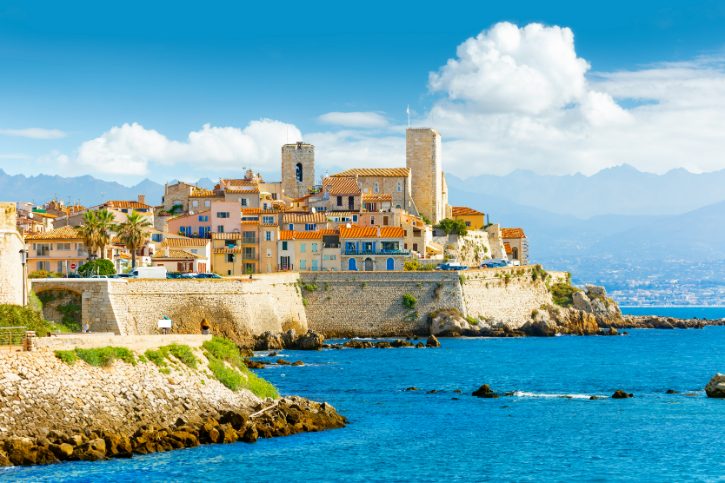
Historic ramparts, a world-class Picasso collection, a Provençal market and a sheltered sandy cove all sit within a five-minute walk of each other. Add Port Vauban, the largest yachting marina in Europe, and a flat old town.
That density is the point. Nothing here is scattered, and nothing needs a bus.
b. Don’t Miss
- Musée Picasso. Inside Château Grimaldi, the castle Picasso used as his workshop in the autumn of 1946. He left behind 23 paintings and 44 drawings, displayed in rooms overlooking the sea. Seeing the work in the light it was made in is the whole point.
- Marché Provençal. The covered market on Cours Masséna, full of regional cheeses, olives, cured meats and flowers.
- Promenade Amiral de Grasse. A windswept walk along the top of the high sea-facing ramparts.
- Plage de la Gravette. A crescent of sand sheltered behind the harbour walls, steps from the old town.
c. Walkability
The historic centre, ramparts and marina are flat and highly walkable, with no local transit needed once you leave the station.
One important split: Cap d’Antibes is a separate day. The peninsula and the two-hour Sentier de Tirepoil, which starts at Plage de la Garoupe, are too far to add to a central itinerary. Fort Carré is a 30-minute walk each way from the old town.
d. How to Get There from Nice
- Depart: Gare de Nice-Ville
- Arrive: Gare d’Antibes
- Route: TER ZOU! Line 3 or Line 4
- Duration: 20 to 25 minutes
4. Menton
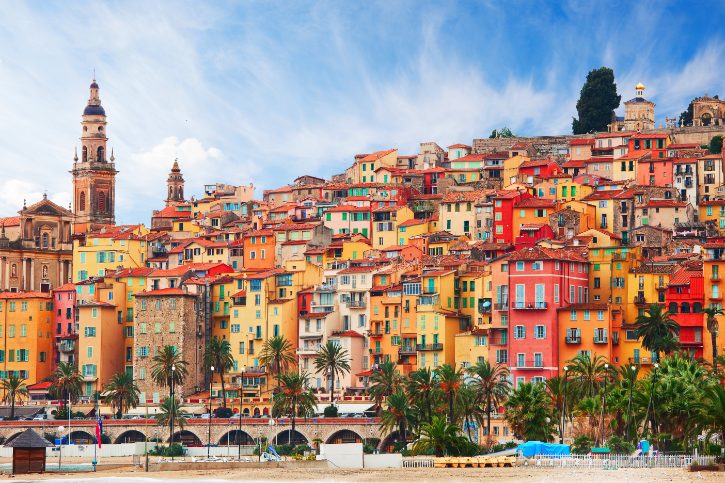
a. Why It Earns a Spot
Menton sits right on the Italian border, and it feels like it. The result is a French-Italian border culture you can see in the architecture and taste in the food.
Warm pastel buildings in yellow, terracotta and orange cascade down a steep hillside to the sea. Above them sits a grand Baroque complex, and above that, a hilltop cemetery with panoramas over the Italian coast.
Add a famous citrus identity and world-renowned subtropical gardens, and you have a complete destination. The 40-minute train is worth it.
b. Don’t Miss
- Marché des Halles de Menton. A covered market built in 1898, known for terracotta brickwork, lemon specialties and local cheeses. The best introduction to the town.
- Rampe Saint-Michel and Parvis Saint-Michel. A grand double-flight brick staircase leading to an elevated mosaic square above the bay. This is the view you have seen.
- Basilique Saint-Michel-Archange. A masterpiece of 17th-century Baroque, with a grand bell tower and a dramatic interior.
- Cimetière du Vieux Château. At the summit, on the ruins of the medieval castle, resting British and Russian aristocrats who came here for the climate. Steep, quiet, worth every step.
c. Walkability
The waterfront and shopping streets are flat, and Gare de Menton is a level 10-minute walk from the sea. The old town is the opposite: an intensely vertical maze of steep streets and long staircases.
d. Realistic Scope
Menton is a full-day trip. The market, the waterfront, the climb to the basilica and the cemetery will fill most of it. Then add one garden. Jardin botanique Val Rahmeh-Menton, a lush subtropical garden 20 minutes east on foot, is the realistic choice.
Serre de la Madone sits 4 kilometres inland, and Maria Serena and Colombières only open for booked guided tours on fixed days.
One note: the Musée Jean Cocteau Collection Séverin Wunderman is currently closed for renovation. The Bastion Musée Jean Cocteau on the harbour wall is the one that welcomes visitors.
e. How to Get There from Nice
- Depart: Gare de Nice-Ville
- Arrive: Gare de Menton, not Menton Garavan or Carnolès
- Route: TER ZOU! Line 4
- Duration: 40 minutes
5. Saint-Paul-de-Vence
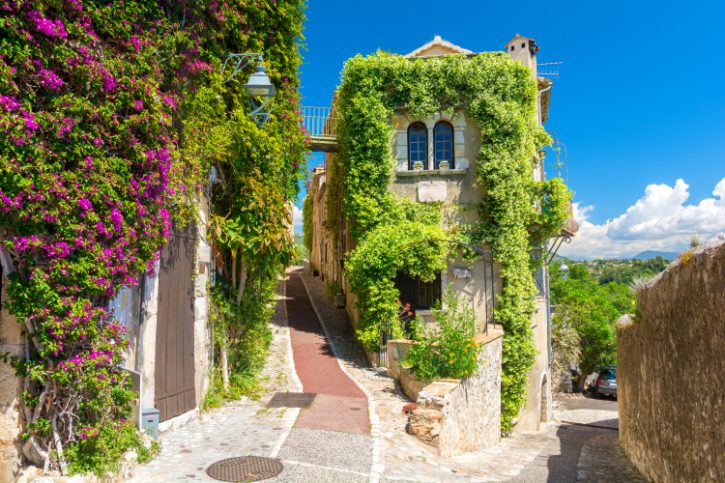
a. Why It Earns a Spot
Every other trip here ends at the sea. Saint-Paul-de-Vence deliberately does not.
The village sits 6 kilometres inland, on a rocky spur above the valleys, wrapped in an intact circuit of ramparts built between 1538 and 1547.
What makes it different is its post-war art legacy. Picasso, Matisse, Miró and Chagall all made this village a sanctuary in the mid-20th century, and that lineage still runs through the galleries on its stone streets. Olive groves and alpine peaks instead of open water.
b. Don’t Miss
- Rue Grande. The main street, lined with preserved 16th and 17th-century facades, galleries and workshops, with the 17th-century Grand Fontaine partway along it.
- Chapelle Folon. A 17th-century chapel decorated by Jean-Michel Folon in pastel mosaics, stained glass and sculpture, his final major work in 2005.
- Cimetière de Saint-Paul-de-Vence. At the southern tip, with valley views and the grave of Marc Chagall, who spent his final decades here.
- Fondation Maeght. A world-class modern art museum in pine forest outside the walls, designed by Josep Lluís Sert, with the Labyrinthe Miró sculpture garden and works by Giacometti and Calder.
c. Realistic Scope
Give this a full day: the village and its ramparts in the morning, Fondation Maeght in the afternoon. Inside the walls, expect steep, uneven cobblestone lanes.
The museum sits 930 metres to 1.5 kilometres uphill along Chemin de Sainte-Claire / Montée des Trious. The walk is scenic and often faster than waiting for the bus, though Bus 655 serves both stops.
d. How to Get There from Nice
There is no direct bus from central Nice. Plan two legs.
- Leg 1: Gare de Nice-Ville to Gare de Cagnes-sur-Mer, TER ZOU! Line 3 or Line 4, 15 minutes
- Leg 2: the Gare SNCF stop outside the station to Saint-Paul Village, ZOU! Bus 655, 35 minutes
Buses run roughly every 30 minutes Monday to Saturday, but only every 1 to 2 hours on Sundays and holidays. With the transfer wait, allow about an hour door to door on a weekday, and check the last return before you go in. It is early.
6. Skip: Saint-Jean-Cap-Ferrat
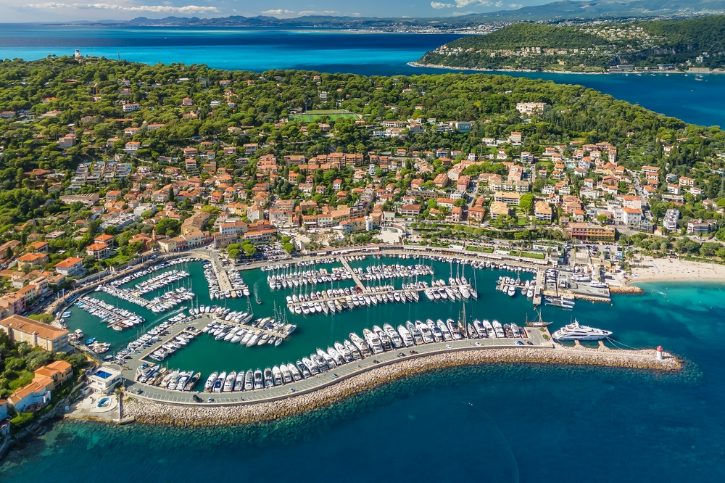
a. Why It Is Popular
This peninsula is the pinnacle of Belle Époque elegance on the Riviera: pine groves, rocky shorelines, deep coves and grand estates behind stone gateways.
b. What Is Worth Seeing
- Villa Ephrussi de Rothschild. A rose-tinted Italian Renaissance palazzo built between 1905 and 1912 for Baroness Béatrice de Rothschild, surrounded by nine themed gardens, including a French garden with musical fountains.
- Sentier du Littoral de Saint-Hospice. A flat 2-kilometre coastal path around the pine-covered eastern tip, past the 11th-century Chapelle Saint-Hospice.
- Port de Saint-Jean-Cap-Ferrat, a chic historic yacht harbour, plus Plage de Passable and Plage Paloma on opposite sides of the peninsula.
c. Why I’d Skip It If Time Is Short
The peninsula is beautiful. The problem is that it was built as a private residential sanctuary, so its highlights sit far apart.
Getting from Villa Ephrussi to the port or Plage Paloma means 20 to 30 minutes along hot, high-walled asphalt streets with sea views blocked by hedges. There is no old town to fall back on, and the bus is at the mercy of coastal traffic.
Without a car, seeing it properly costs real energy and time. Fine on a long holiday, expensive on a short one.
d. When It’s Still Worth Going
Go if Villa Ephrussi is a genuine priority, if a coastal hike is your main goal, if you have already done the old towns, or if you are staying nearby in Beaulieu-sur-Mer or Villefranche-sur-Mer.
e. How to Get There from Nice
- Depart: Lycée Masséna, Nice
- Arrive: Passable / Rothschild for the villa, or the Port de Saint-Jean terminus
- Route: Lignes d’Azur Bus 15
- Duration: 45 to 50 minutes
7. Skip: Cannes
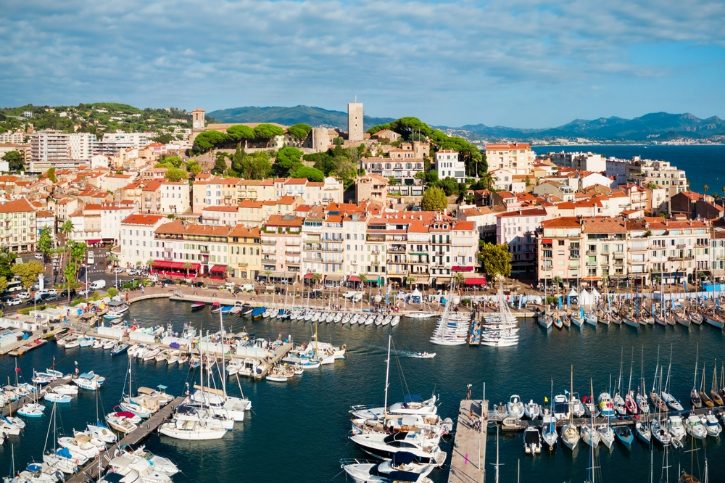
a. Why It Is Popular
Few towns this size carry such global recognition: the Festival de Cannes, the red carpet, the palm-lined Boulevard de la Croisette, the palace hotels, the yachts and decades of celebrity association.
b. What Is Worth Seeing
- Palais des Festivals et des Congrès and Les Marches du Palais, the famous red-carpeted steps, plus the handprints along Chemin des Étoiles.
- Le Suquet. The steep hillside quarter that was the original medieval fishing village, topped by the Gothic Église Notre-Dame-d’Espérance and the viewpoints of Place de la Castre.
- Île Sainte-Marguerite. A 15-minute ferry from the Vieux-Port, home to Fort Royal and the original cell of the legendary Man in the Iron Mask.
c. Why I’d Skip It If Time Is Short
Central Cannes can feel like a quick checklist. The Palais, the steps, the handprints and a stretch of Croisette take about an hour, and then the list is mostly done.
Apart from Le Suquet, which is small next to Vieil Antibes, the city is a polished flat resort of designer shopping and private beach clubs. Its most distinctive experience, the Lérins Islands, needs a ferry commitment that swallows most of a day.
As another coastal city with a promenade and a beach strip, it also feels less different from Nice than Èze or Menton.
d. When It’s Still Worth Going
Film buffs, luxury shoppers, yacht watchers, sandy-beach lovers and anyone drawn to the Lérins Islands will rank it far higher. It also suits you if you’d rather walk flat promenades than steep steps.
e. How to Get There from Nice
- Depart: Gare de Nice-Ville
- Arrive: Gare de Cannes
- Route: TER ZOU! Line 3 or Line 4
- Duration: 35 to 40 minutes
8. Skip: Monaco
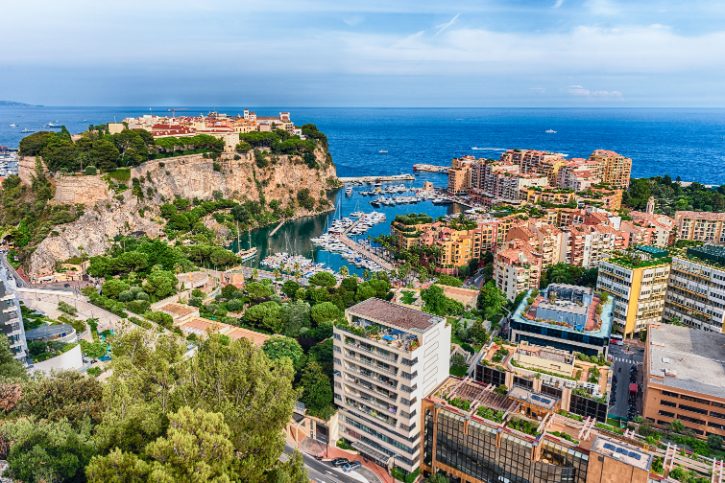
a. Why It Is Popular
An independent country you can reach in twenty minutes: the Palais Princier, the historic quarter on Le Rocher, the cliff-face Musée Océanographique, the superyachts of Port Hercule, the Casino de Monte-Carlo, and a Formula One circuit made of ordinary streets.
b. What Is Worth Seeing
- Monaco-Ville, on the rocky headland of Le Rocher, with Place du Palais and its views over the harbour.
- Cathédrale Notre-Dame-Immaculée, holding the tombs of Monaco’s sovereigns, including Prince Rainier III and Princess Grace.
- Musée Océanographique de Monaco, a marine-science palace carved into the cliff, with a world-class aquarium.
- Place du Casino, the Beaux-Arts Casino de Monte-Carlo by Charles Garnier, and the Hôtel de Paris Monte-Carlo beside it.
c. Why I’d Skip It If Time Is Short
Monaco’s challenge is vertical. The territory splits into distinct tiers: Monaco-Ville high on its plateau, Port Hercule at sea level, Monte-Carlo climbing the hill opposite. Moving between them means public lifts, long escalators, tunnels or city buses, and it is easy to turn the day into a rushed transit checklist.
The old town on Le Rocher is polished but lacks the medieval atmosphere of Èze or Saint-Paul-de-Vence, and Monte-Carlo leans heavily on luxury retail. Glamour is not quite the same thing as atmosphere.
d. Getting Around, If You Go
The station is entirely underground, and choosing the right exit is the most important decision of your day.
- Fontvieille / Le Rocher exit on Avenue du Prince Pierre, for Monaco-Ville
- Port Hercule exit, for the harbour promenade
- Monte-Carlo / Pont Sainte-Dévote exit, for Place du Casino
Use the free network of 79 public lifts, 35 escalators and 8 moving walkways. CAM Bus Lines 1 and 2 link Monaco-Ville, Port Hercule and Place du Casino, saving you the climb between tiers.
e. How to Get There from Nice
- Depart: Gare de Nice-Ville, or Gare de Nice-Riquier
- Arrive: Gare de Monaco-Monte-Carlo
- Route: TER ZOU! Line 4
- Duration: 20 to 25 minutes
My Final Thoughts
There is no bad destination on this coast. But when time is short, the winning formula is a strong visual identity, easy transport and a walking route that does not fight you. Èze, Villefranche-sur-Mer, Antibes, Menton and Saint-Paul-de-Vence deliver exactly that.
Whatever you choose, check the timetable before you leave. Schedules shift with seasons and holidays, and the last bus out of a hill village is always earlier than you expect.