
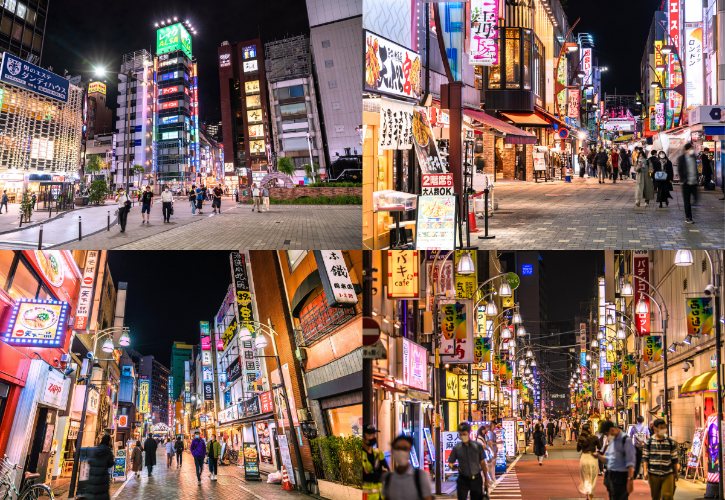
Tokyo has a reputation for being expensive, and honestly, it can be.
But here’s the thing: picking the right neighborhood can save you a lot of money on hotels, food, and even daily expenses.
The best part? These areas are well-connected to major train lines, so you won’t feel like you’re staying in the middle of nowhere.
Here are five budget-friendly neighborhoods that give you great value without sacrificing convenience. 😊
1. Shinbashi & Shiodome
a. Why Stay Here
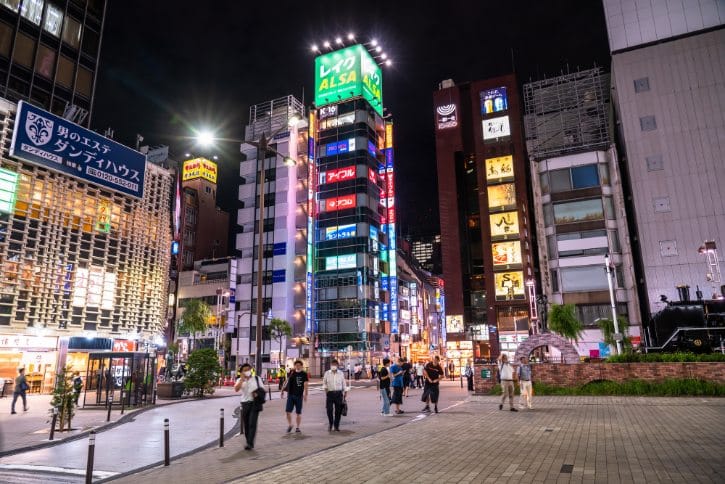
Shinbashi is one of Tokyo’s major business districts, and that works in your favor as a tourist.
The area is packed with business hotels like Sotetsu Fresa Inn, Tokyu Stay, and the b Shimbashi. These hotels were built for corporate travelers, which means clean rooms, modern facilities, and surprisingly affordable rates.
Some properties like Hotel Villa Fontaine Grand Shiodome and Candeo Hotels even offer rooftop spas and high-end amenities at competitive rates. You get a lot more for your money here compared to staying in nearby premium districts.
You’re also right next to Ginza, one of Tokyo’s most famous shopping and dining districts. That means you get the benefit of world-class surroundings without paying Ginza hotel rates.
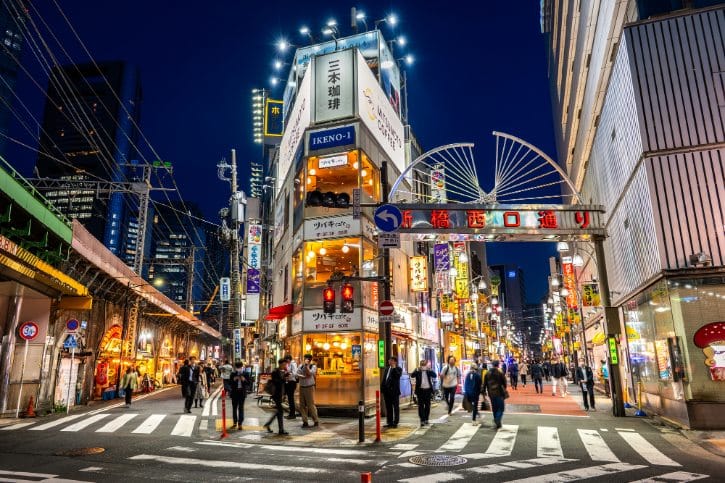
On the food side, Shinbashi is a goldmine. The alleyways under the train tracks are filled with small restaurants, standing bars, and ramen shops where you can get a filling meal for very little.
Trust me, you’ll eat well here without breaking the bank.
b. What It’s Best For
– Solo travelers and couples looking for a modern, metropolitan base with good value
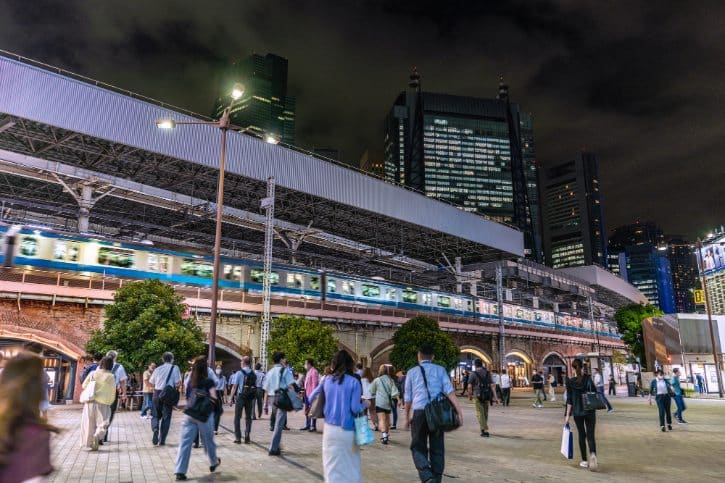
– History and railway fans, as the area is home to the birthplace of Japan’s railway industry and the free Former Shimbashi Station museum
– Families on a budget, with free attractions like the Ghibli Clock at Nippon Television Tower and the free 46th-floor observation deck at Caretta Shiodome
– Nature lovers, with the stunning Hama-rikyu Gardens, a peaceful Edo-period stroll garden, just a short walk away
c. Transport Convenience
1. From Haneda Airport
- Keikyu Airport Line (through to Toei Asakusa Line). Direct, about 21–25 minutes
- Tokyo Monorail to Hamamatsucho, then JR Yamanote Line. Transfer at Hamamatsucho, about 25 minutes
2. From Narita Airport
- Keisei Skyliner to Nippori, then JR Yamanote Line. Transfer at Nippori, about 51–60 minutes
- Keisei Access Express (through to Toei Asakusa Line). Direct, about 60–75 minutes
3. From Key Tokyo Areas
Shinjuku: JR Yamanote Line, direct, about 30 minutes
Shibuya: Tokyo Metro Ginza Line, direct, about 14–16 minutes
Asakusa: Toei Asakusa Line or Ginza Line, direct, about 13–15 minutes
Ueno: JR Yamanote Line or Tokyo Metro Ginza Line, direct, about 10–12 minutes
Akihabara: JR Yamanote Line, direct, about 6–8 minutes
Ginza: Tokyo Metro Ginza Line, direct, about 2 minutes
Harajuku: JR Yamanote Line, direct, about 20–24 minutes
Ikebukuro: JR Yamanote Line, direct, about 27–30 minutes
2. Nippori & Nishi-Nippori
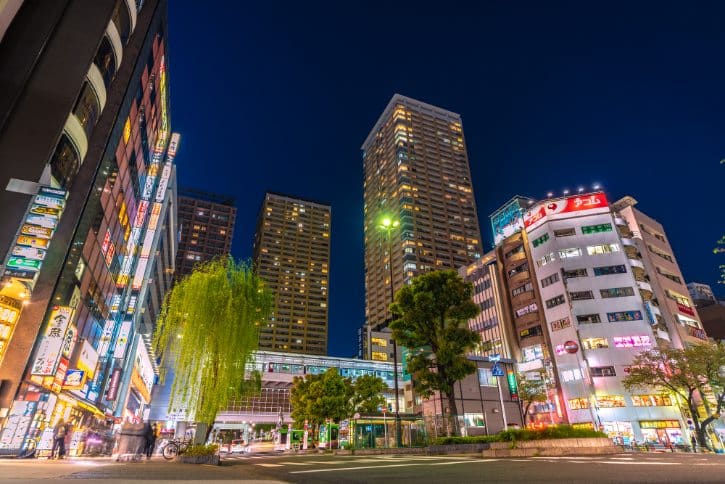
a. Why Stay Here
If you’re arriving from Narita Airport, Nippori is one of the smartest places to base yourself.
It’s the first stop on the Keisei Skyliner from Narita, so you can go from the airport to your hotel in under 40 minutes. That alone makes it incredibly convenient.
Nippori and Nishi-Nippori sit in the quieter, more traditional part of Tokyo known as “Shitamachi” (the old low city).
Because this area is mostly residential, hotel rates are noticeably lower than in central districts.
Properties like fav TOKYO Nishi-Nippori even offer boutique-style apartments with kitchenettes and in-room laundry, which is perfect for longer stays or families.
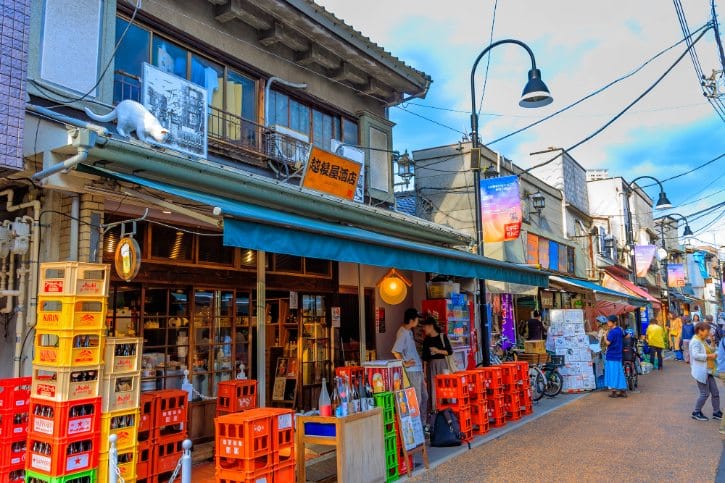
The neighborhood also keeps your daily costs low. The famous Yanaka Ginza shopping street is full of affordable local food and charming small shops. It’s a place where you’ll eat and shop at local prices, not tourist prices.
b. What It’s Best For
– Slow travelers who prefer a calm, community-oriented atmosphere over busy commercial districts
– Photography and history enthusiasts, with highlights like the Yuyake Dandan sunset staircase and the historic Yanaka Cemetery, which is especially beautiful during cherry blossom season
– Fabric and craft lovers, as the nearby Nippori Textile District stretches for about a kilometer with around 90 fabric and sewing supply shops
– Solo travelers looking for a safe, walkable neighborhood with an authentic local feel and affordable dining spots like the udon shop Akau
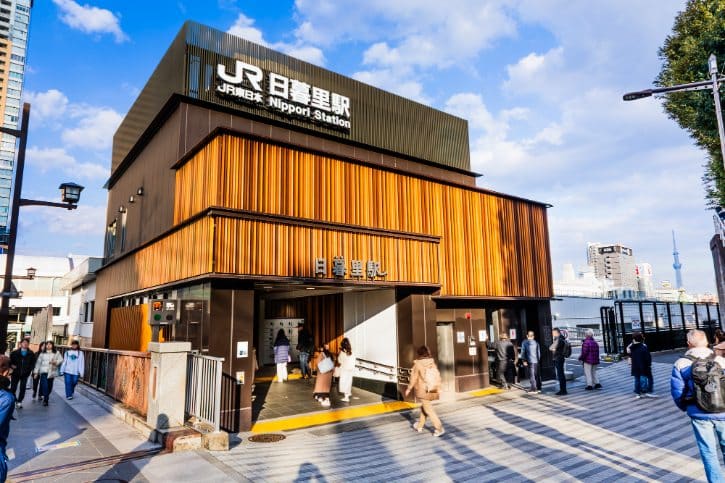
c. Transport Convenience
1. From Haneda Airport
- Tokyo Monorail to Hamamatsucho, then JR Yamanote Line. Transfer at Hamamatsucho, about 43–46 minutes
- Keikyu Airport Line to Shinagawa, then JR Yamanote Line. Transfer at Shinagawa, about 45 minutes
2. From Narita Airport
Keisei Skyliner. Direct, about 36–40 minutes
3. From Key Tokyo Areas
Shinjuku: JR Yamanote Line, direct, about 21 minutes
Shibuya: JR Yamanote Line, direct, about 28 minutes
Asakusa: JR Yamanote Line to Ueno, then Tokyo Metro Ginza Line, transfer at Ueno Station, about 20 minutes
Ueno: JR Yamanote Line or JR Joban Line, direct, about 4 minutes
Akihabara: JR Yamanote Line, direct, about 8–10 minutes
Ginza: JR Yamanote Line to Kanda, then Tokyo Metro Ginza Line, transfer at Kanda Station, about 20–25 minutes
Harajuku: JR Yamanote Line, direct, about 26 minutes
Ikebukuro: JR Yamanote Line, direct, about 11–13 minutes
3. Asakusa
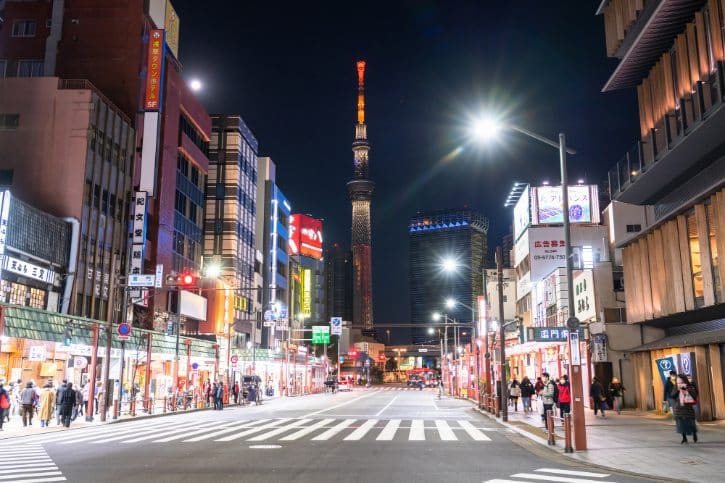
a. Why Stay Here
Asakusa is the traditional heart of Tokyo, and it also happens to be one of the most affordable areas in central Tokyo.
The neighborhood has a huge variety of accommodation options, from budget-friendly hostels to traditional Japanese ryokans (guesthouses with tatami rooms and communal baths).
In most parts of Tokyo, a ryokan stay is considered a luxury experience. In Asakusa, it’s surprisingly accessible.
Competition among hotels here is strong, which keeps rates favorable for travelers.
You’ll also find well-known options like Asakusa Tobu Hotel, which offers comfortable rooms in a convenient location right near the main sightseeing areas.
If you’re willing to stay in the quieter Oku-Asakusa area, just a 10-minute walk from the main station, you can find even better deals.
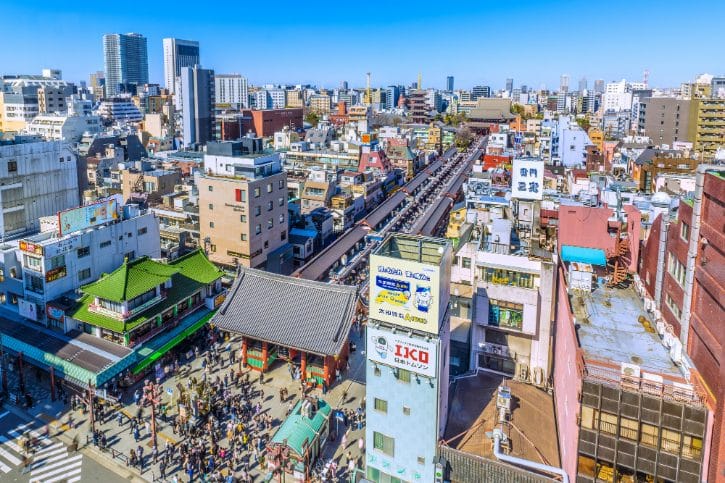
The food scene here is a real highlight. Nakamise shopping street and the surrounding lanes are packed with affordable street food like yakitori, takoyaki, and dango.
For sit-down meals, Asakusa is home to Kura Sushi’s flagship location.
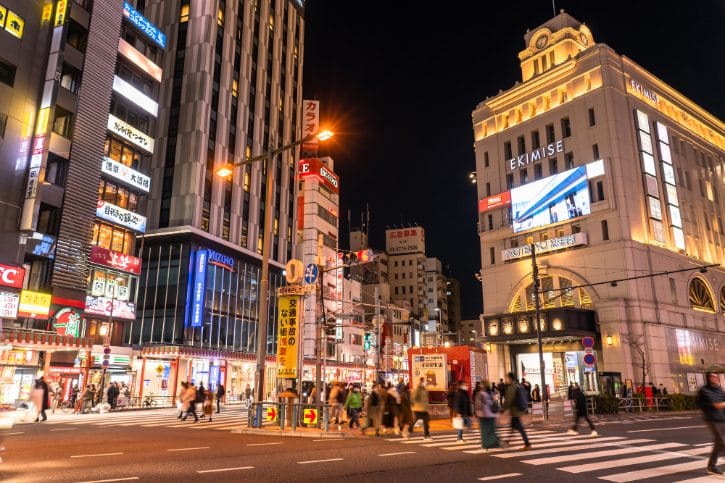
And when evening comes, Hoppy Street offers rows of traditional outdoor izakayas where you can enjoy drinks and stewed dishes at genuinely local prices.
b. What It’s Best For
– First-time visitors and culture seekers who want an atmospheric, human-scaled introduction to Tokyo
– Families and travelers with older parents, as the area is pedestrian-friendly, calm in the mornings, and winds down early in the evening
– Early risers, as visiting Senso-ji Temple and Nakamise Dori in the early morning or late evening lets you enjoy the grounds in peaceful, lantern-lit quiet
– Food lovers and craft fans, with Kappabashi Kitchenware Town and the Ganso Food Sample Shop nearby
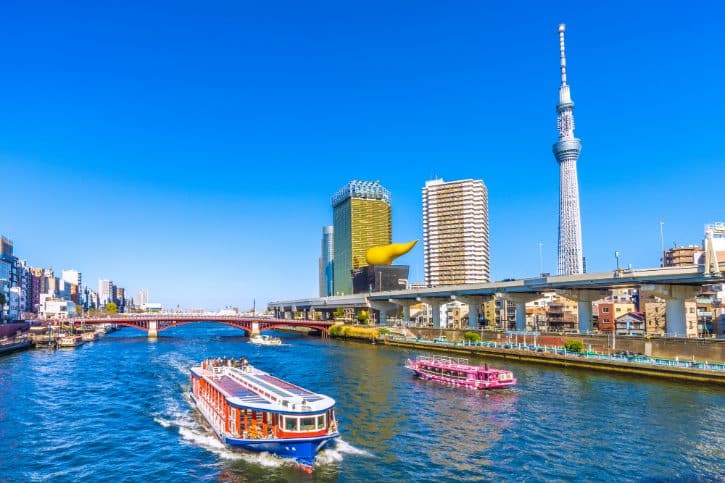
– Waterfront explorers, with Sumida River cruises, Sumida Park riverside walks, and Tokyo Skytree views right from the neighborhood
c. Transport Convenience
1. From Haneda Airport
Keikyu Airport Line (through to Toei Asakusa Line). Direct, about 32–40 minutes
2. From Narita Airport
Keisei Access Express (through to Toei Asakusa Line). Direct, about 50–60 minutes
3. From Key Tokyo Areas
Shinjuku: Tokyo Metro Ginza Line to Kanda, then JR Chuo Line, transfer at Kanda Station, about 25 minutes
Shibuya: Tokyo Metro Ginza Line, direct, about 33–35 minutes
Ueno: Tokyo Metro Ginza Line, direct, about 8 minutes
Akihabara: Tokyo Metro Ginza Line, direct, about 10 minutes
Ginza: Tokyo Metro Ginza Line, direct, about 15–18 minutes
Harajuku: Tokyo Metro Ginza Line to Omote-sando, then Tokyo Metro Chiyoda Line, transfer at Omote-sando Station, about 35 minutes
Ikebukuro: Tokyo Metro Ginza Line to Ueno, then JR Yamanote Line, transfer at Ueno Station, about 38 minutes
4. Ueno
a. Why Stay Here
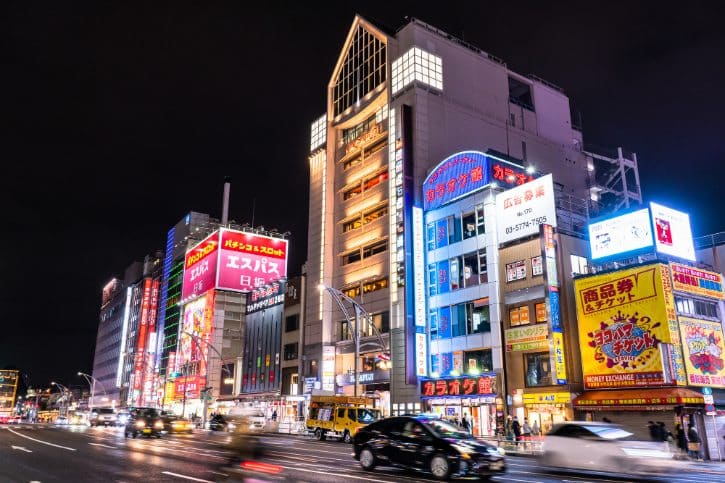
Ueno is consistently rated as one of the best value-for-money areas in all of Tokyo.
It’s a massive transport hub, which has naturally created a highly competitive hotel market.
You’ll find reliable chains like APA Hotel, Sotetsu Fresa Inn, and Super Hotel offering rooms that often include complimentary breakfast and even natural hot spring baths in their base rates.
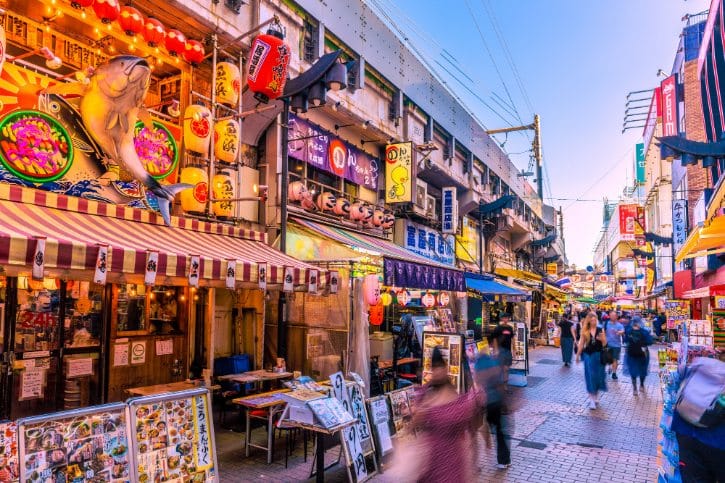
A big part of what makes Ueno so budget-friendly is Ameyoko (Ameya-Yokocho), a 500-meter open-air market with roots in the postwar era.
It’s one of the few places in central Tokyo where you can find genuine deals on fresh food, snacks, cosmetics, and clothing.
Hundreds of small eateries line the market streets, serving quality seafood, yakitori, and takoyaki at local prices.
The area also gives you flexible options depending on how close you want to be to the station.
Hotels right next to JR Ueno Station are already well-valued, but if you stay slightly farther out in areas like Higashi-Ueno or Iriya, you can stretch your budget even further while still being just a few minutes’ walk away.
b. What It’s Best For
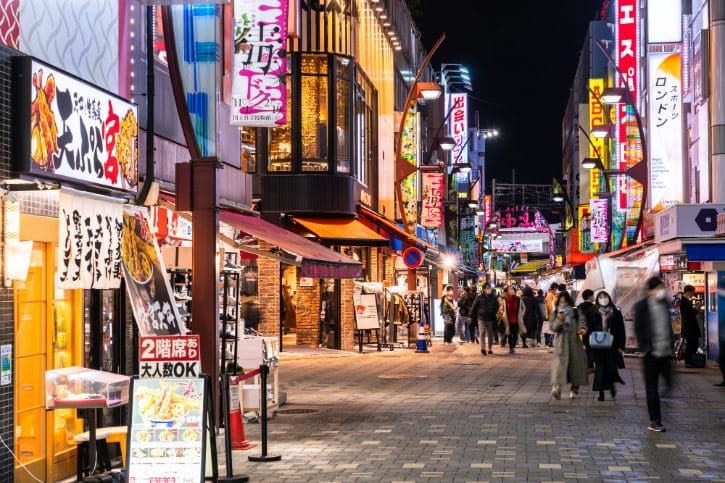
– Shoppers and food lovers, with the lively Ueno Nakadori Street (locally known as “Uechun”) offering a more relaxed pedestrian shopping and dining experience right alongside Ameyoko
– Families and culture enthusiasts, with Ueno Park housing the Tokyo National Museum, the National Museum of Western Art (UNESCO World Heritage site), and the National Museum of Nature and Science
– First-time visitors who want a balance of big-city energy and peaceful temple grounds, like the gold-leafed Ueno Toshogu Shrine
– Cherry blossom lovers, as Ueno Park is Tokyo’s most famous hanami spot with over 1,200 cherry trees
– Regional travelers, since Ueno Station is a terminal for Shinkansen lines heading to northern Japan (Tohoku, Joetsu, and Hokkaido)
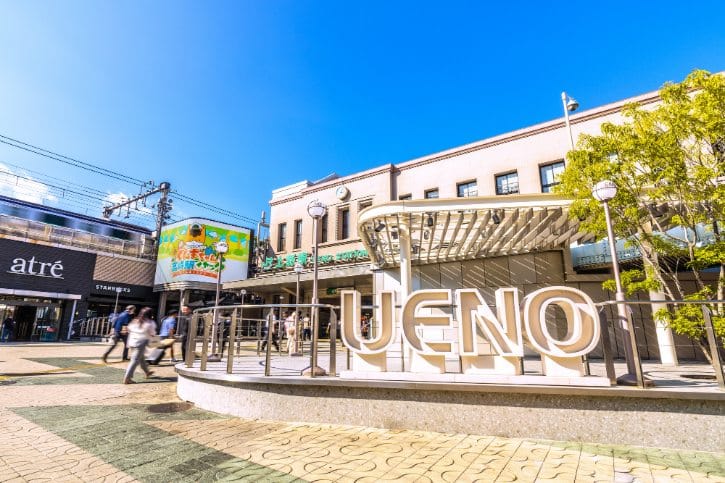
– Convenience seekers, with shopping malls like Atre Ueno and Ecute integrated directly into the station
c. Transport Convenience
1. From Haneda Airport
Tokyo Monorail to Hamamatsucho, then JR Yamanote Line. Transfer at Hamamatsucho Station, about 35 minutes
2. From Narita Airport
Keisei Skyliner. Direct, about 41–45 minutes
3. From Key Tokyo Areas
Shinjuku: JR Yamanote Line, direct, about 25–27 minutes
Shibuya: Tokyo Metro Ginza Line, direct, about 27–30 minutes
Asakusa: Tokyo Metro Ginza Line, direct, about 5 minutes
Akihabara: JR Yamanote Line or JR Keihin-Tohoku Line, direct, about 3 minutes
Ginza: Tokyo Metro Ginza Line or Hibiya Line, direct, about 12–15 minutes
Harajuku: JR Yamanote Line, direct, about 28–30 minutes
Ikebukuro: JR Yamanote Line, direct, about 16–20 minutes
5. Ikebukuro
a. Why Stay Here
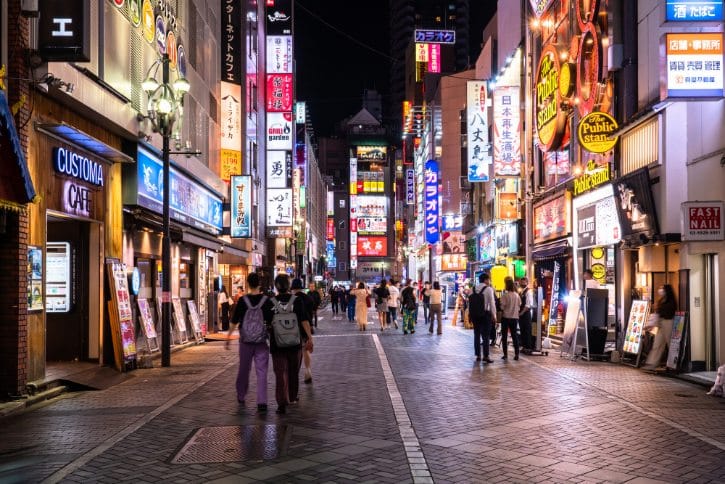
Ikebukuro is one of Tokyo’s three major sub-centers, but it remains significantly more affordable than many other commercial districts.
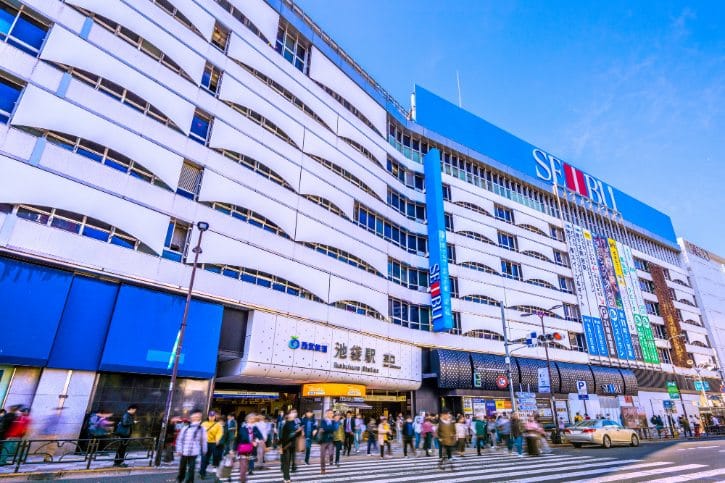
Anchored by Ikebukuro Station, the third-busiest rail terminal in the world, the area gives you big-city energy and excellent access without the big-city price tag.
The hotel selection here is solid. Chains like Toyoko Inn, Super Hotel, and APA Hotel offer clean, modern rooms at competitive rates. Some even include standout perks.
Super Hotel Ikebukuro West, for example, has on-site natural hot spring baths.
Tokyu Stay properties offer in-room washing machines and microwaves, which can help you save on laundry and dining costs over a longer trip.
Daily expenses stay low here too. The Sunshine Seiyu supermarket near Sunshine City is open 24 hours and great for affordable groceries.
The Seibu and Tobu department stores also have basement food halls (depachika) that heavily discount prepared meals in the evening. You can pick up a quality dinner at a great value.
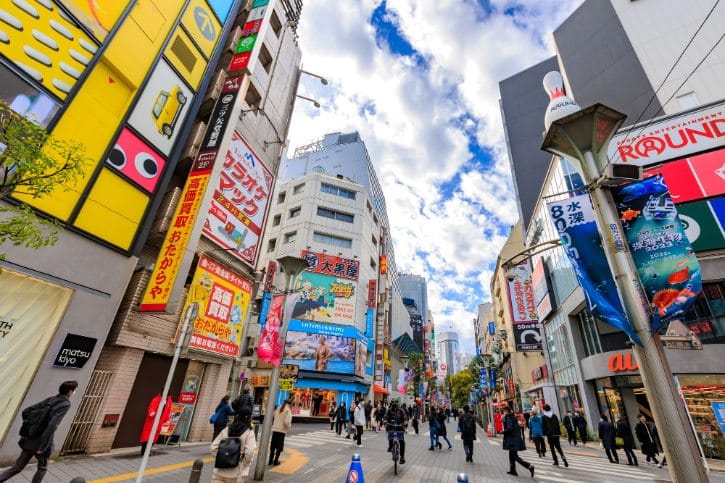
Ikebukuro is also known as a “ramen battleground”, so you’ll find world-class noodle shops where a full meal is very reasonably priced.
b. What It’s Best For
– Pop culture and anime fans, with Otome Road, the world’s largest Animate store, themed butler cafes, and extensive manga specialty shops
– Families, with Sunshine City offering an aquarium, planetarium, the world’s largest Pokémon Center, and the retro Namja Town indoor theme park
– Rainy day travelers, since the concentration of indoor entertainment makes Ikebukuro ideal during Tokyo’s humid summers or unpredictable weather
– Culture lovers, with the Tokyo Metropolitan Theatre hosting international opera, dance, and concerts
– Travelers seeking quiet pockets, as Ikebukuro West Gate Park and Zoshigaya Kishimojindo Temple offer peaceful escapes just minutes from the station
c. Transport Convenience
1. From Haneda Airport
- Tokyo Monorail to Hamamatsucho, then JR Yamanote Line. Transfer at Hamamatsucho, about 45–55 minutes
- Keikyu Airport Line to Shinagawa, then JR Yamanote Line. Transfer at Shinagawa, about 50 minutes
2. From Narita Airport
Keisei Skyliner to Nippori, then JR Yamanote Line. Transfer at Nippori, about 60–65 minutes
3. From Key Tokyo Areas
Shinjuku: JR Yamanote, Saikyo, or Shonan-Shinjuku Line, direct, about 6–9 minutes
Shibuya: JR Yamanote Line or Tokyo Metro Fukutoshin Line, direct, about 13–15 minutes
Asakusa: JR Yamanote Line to Ueno, then Tokyo Metro Ginza Line, transfer at Ueno Station, about 25–30 minutes
Ueno: JR Yamanote Line, direct, about 16–18 minutes
Akihabara: JR Yamanote Line, direct, about 18–20 minutes
Ginza: Tokyo Metro Marunouchi Line, direct, about 20 minutes
Harajuku: JR Yamanote Line, direct, about 13 minutes
Related Posts

Photo Credit:
Photos by PIXTA