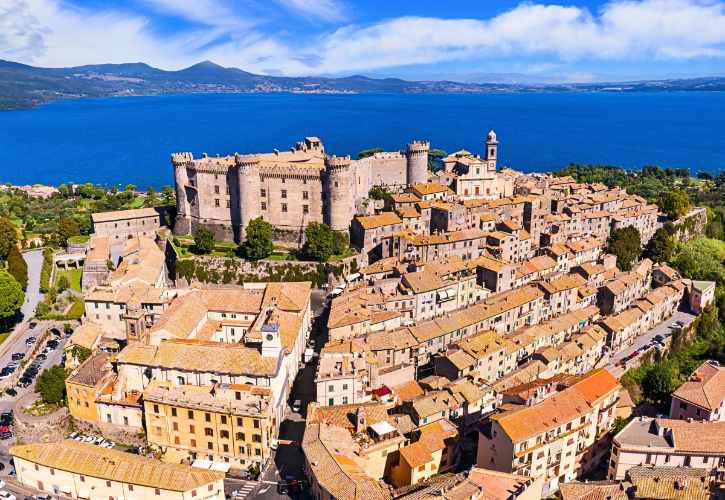
Rome is magical, but you do not have to spend every single day inside the city. Just beyond it, the Lazio region hides some of Italy’s most rewarding places, often left in the shadow of the capital’s big names.
You can wander ancient ruins, Renaissance gardens, hilltop castles, volcanic lakes, and seaside fortresses, each with its own food and wine.
Most are an easy train ride away, and a few will genuinely surprise you. A handful of favorite escapes are waiting whenever you feel ready to explore further. 😊
1. Tivoli
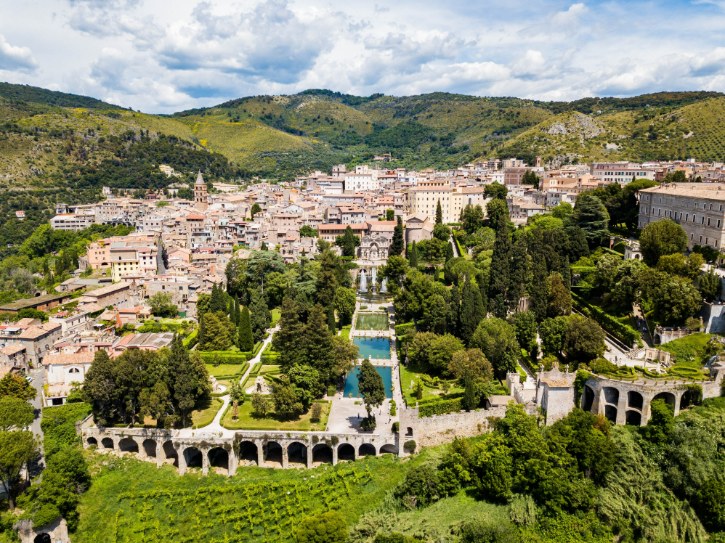
a. Two UNESCO Villas, Two Different Worlds
Tivoli gives you two UNESCO World Heritage sites from two completely different eras, and seeing both in one town feels a little unreal.
- Villa d’Este: a Renaissance villa and garden from the 1550s, famous for fountains that run entirely on gravity with no pumps at all. Look for the water organ, the corridor of a hundred fountains, and terraces with sweeping countryside views.
- Villa Adriana (Hadrian’s Villa): Emperor Hadrian’s vast country retreat from the second century AD. You can see the Canopus reflecting pool, the island-like Maritime Theatre ringed by water, and the soaring arches of the Large Baths.
- Good to know: the two villas sit about five kilometers apart, so they are not side by side. You will need a short local hop to link them.
b. A Wild Gorge and a Thundering Waterfall
Parco Villa Gregoriana is the complete opposite of those polished gardens. Here you get a steep, forested river gorge with a great waterfall that drops more than 100 meters into the valley.
Stone paths and stairways wind down past caves and cliffs, and across the gorge you reach two ancient Roman temples perched on the edge. Bring comfortable shoes, because the climb up and down is part of the fun.
c. A Medieval Heart Worth Wandering
The old center of Tivoli has been lived in since before Roman times, and it shows.
- Narrow cobbled alleys and medieval archways reveal old Roman columns built straight into the walls.
- The Cathedral of San Lorenzo keeps a tall Romanesque bell tower and a rare carved wooden medieval masterpiece inside.
- Local flavors include cold-pressed olive oil and the curved, pointed Pizzutello grape, a treat at harvest time.
d. Why You Will Want a Full Day
Tivoli packs three very different experiences into one town, which is exactly what makes it special.
- Villa Adriana is all about imperial Rome, spread across a huge archaeological plain.
- Villa d’Este is Renaissance art and clever water engineering at its finest.
- Villa Gregoriana is raw nature, with its gorge, waterfall, and clifftop temples.
Because the sights are spread out, do not rush it. Give yourself the full day and you will enjoy each one properly.
e. How to Get There From Rome
- Train: Trenitalia’s FL2 line from Roma Tiburtina to Tivoli station, about 45 to 60 minutes.
- Bus for Villa Adriana: CAT city bus, Line 4 or Line 4X, from central Tivoli, about 10 to 15 minutes.
2. Castel Gandolfo
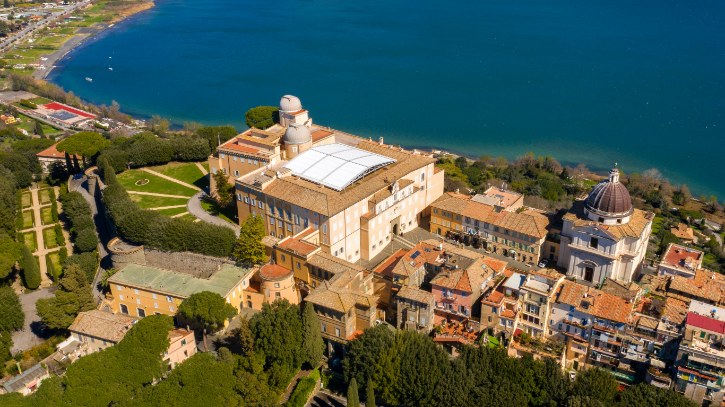
a. A Papal Palace You Can Finally Step Inside
Sitting on a volcanic ridge above a crater lake, Castel Gandolfo served as the popes’ summer refuge for four hundred years. It stayed private until Pope Francis opened it to the public as a permanent museum.
Today you can walk through the State Apartments, the papal bedchamber, and galleries full of vestments and papal history. The grounds even hide the ruins of an ancient Roman imperial villa among the hedges.
b. A Volcanic Lake Right Below Town
Lake Albano fills an old volcanic crater and sits directly beneath the village.
- The water is clear and calm, framed by steep, forested slopes.
- A road and footpaths lead down to black-sand beaches and a lakeside promenade.
- With no heavy motorboat traffic, it is perfect for kayaking, canoeing, and paddleboarding.
- The lakeside feels like a different world from the village above, quieter and cooler, and a lovely place to slow down for an hour or two.
c. A Pretty Square and Views for Days
The heart of town is Piazza della Libertà, with a Bernini fountain, café tables, and the Baroque Church of San Tommaso da Villanova, also designed by Bernini.
Because the town perches on the ridge, you get wide views over the blue crater lake from nearly every corner. You will keep stopping just to look.
d. Flavors of the Castelli Romani
The food here comes straight from the surrounding hills.
- Classic Roman pastas like carbonara, amatriciana, and cacio e pepe, often with wild porcini mushrooms.
- Porchetta and cured meats from the nearby hill towns.
- Crisp Castelli Romani white wines grown in volcanic soil.
- Delicate local peaches worth seeking out in season.
e. A Few Extra Surprises
There is more to the town than the palace alone.
- Traces of its medieval origins survive inside the foundations of the papal complex.
- The Vatican Observatory sits on the palace roofline, its telescope domes a quiet nod to science meeting the papacy.
- It all adds up to a rare combination of papal history and volcanic lake scenery, which is why the town makes such a popular escape from Rome.
f. How to Get There From Rome
- Train: Trenitalia’s FL4 line, Albano Laziale branch, from Roma Termini to Castel Gandolfo station, about 40 to 45 minutes. Trains headed to Frascati or Velletri do not stop here, so check the destination.
- Local buses: shuttle minibuses connect the station, the upper town, and the lakefront.
3. Santa Severa
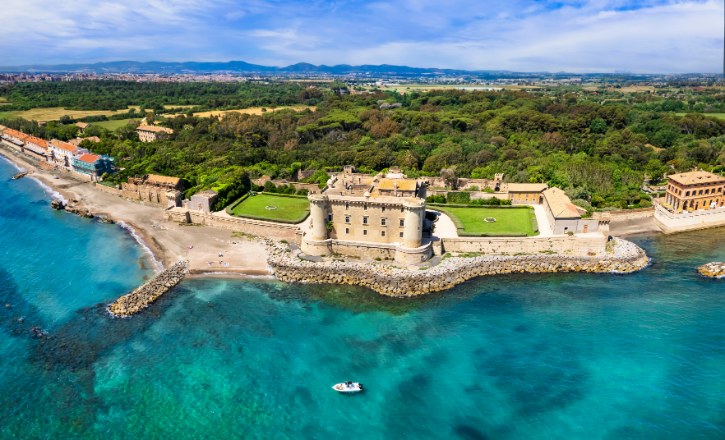
a. A Castle With Its Feet in the Sea
Right on the Tyrrhenian shore, the Castello di Santa Severa is one of the most striking coastal fortresses in central Italy. Its outer walls are washed by the sea, and a tall medieval tower rises above courtyards and battlements.
You can walk the seaside ramparts, climb the restored towers for wide water views, and explore museum halls that trace the fortress through the centuries. A medieval castle standing right in the sea is the kind of sight you will want to photograph again and again.
b. Ancient Pyrgi Beneath Your Feet
Long before the castle, this was Pyrgi, a busy Etruscan port.
- It served as the main harbor for the Etruscan city of Caere, where Etruscan, Phoenician, and Greek traders met.
- Digs along the beach revealed a sacred sanctuary and the famous gold Pyrgi Tablets.
- The original tablets are now kept in a Rome museum, but on site you can still see the old temple foundations in the ground.
- A few museums inside the castle cover the ancient port of Pyrgi, the sea and ancient navigation, and the local territory, helping tie the whole story together.
c. Beach Days Beside Old Walls
What makes this spot special is the mix of medieval stone and easy beach life.
- Wide stretches of dark, mineral-rich sand run right from the fortress base, so you can swim in the shadow of the walls.
- The public beach is broad and relaxed, especially lovely in spring and early autumn.
- Open-air seafood trattorias nearby serve mussels, fried calamari, and spaghetti with clams.
d. Layers of History in the Stones
This stretch of coast has been settled for roughly three thousand years, and you can read those layers as you walk.
- The castle takes its name from Saint Severa, an early Christian woman said to have been martyred on this beach.
- Over the centuries it grew from an Etruscan port to a Roman fortress, then a medieval stronghold.
- A quiet old borgo sits within the walls, and in summer its courtyards host open-air performances and film screenings.
e. How to Get There From Rome
- Train: Trenitalia’s FL5 line (Rome to Civitavecchia) from Roma Termini, Roma Ostiense, or Roma San Pietro to Santa Severa station, about 40 to 60 minutes.
4. Ostia Antica
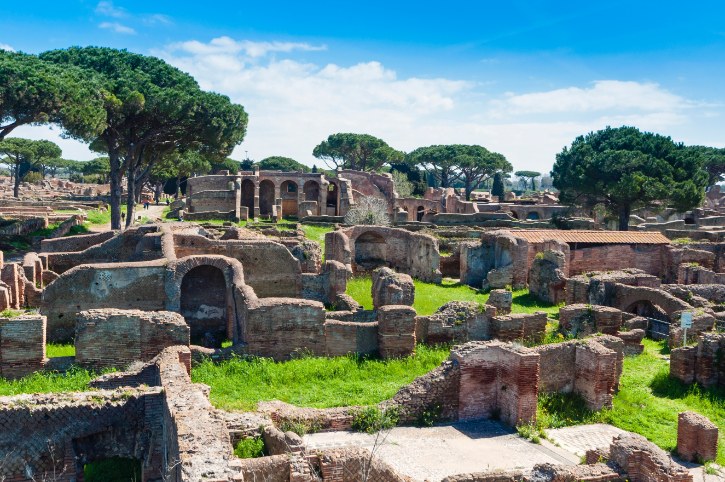
a. Rome’s Ancient Port, Beautifully Preserved
Ostia Antica was ancient Rome’s main commercial port, a city of more than 50,000 people where grain, oil, and marble arrived by sea. Today you can walk its streets much as they were, which makes it one of the best ways to picture everyday Roman life.
The site is large and the ground is uneven, so give yourself a few unhurried hours and wear good walking shoes.
b. What to Look For Inside
A few highlights stand out as you explore:
- The Decumanus Maximus, the main street that runs over a kilometer through the city.
- The Baths of Neptune, with striking black-and-white sea-themed mosaics.
- The Piazzale delle Corporazioni, the old commercial square, its floors still showing trading emblems.
- The House of Diana, a multi-story Roman apartment block, plus the on-site museum of sculptures and everyday objects.
c. Not Quite Pompeii, and Better for Some Things
People call it the “Pompeii of Rome”, but the two are very different. Pompeii was frozen in a single eruption, while Ostia grew and changed over five centuries before it was slowly abandoned.
The result is a clearer picture of a dense, working Roman city, with apartment blocks, taverns, public latrines, and grain mills. Because far fewer people come here than to central Rome, you can often have whole courtyards to yourself.
d. A Medieval Village Next Door
Just outside the ruins sits a small medieval borgo that is easy to add to your visit.
- The Castello di Giulio II, a late-fifteenth-century fortress once used as a customs post on the river.
- The Basilica di Sant’Aurea, a Renaissance church tied to Saint Monica, mother of Saint Augustine.
- A quiet square and narrow lanes that make a nice contrast to the open ruins.
e. A Peaceful Place to Wander
One of the best things about Ostia Antica is simply how calm it feels.
- Umbrella pines shade the brick ruins and wildflower-lined avenues.
- Birdsong and the wind through the trees follow you along the ancient streets.
- It is a quiet, almost pastoral escape from the busy heart of Rome.
f. How to Get There From Rome
- Train: the Metromare line (run by Cotral and Astral, not Trenitalia) from Roma Porta San Paolo (linked to Piramide on Metro Line B) to Ostia Antica station, about 25 to 30 minutes.
5. Bracciano
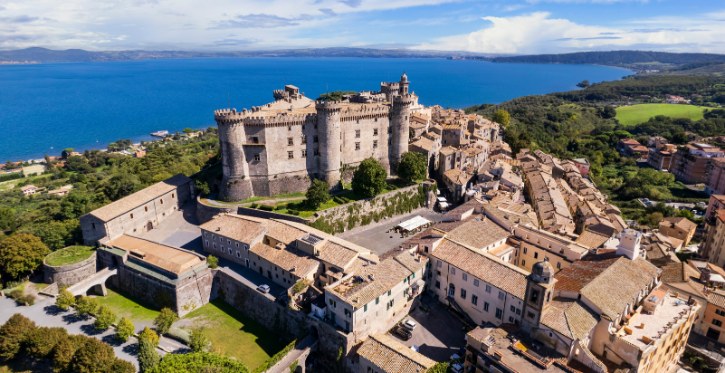
a. A Protected Lake Like No Other
Lake Bracciano sits inside an ancient volcanic crater, and it is unusually clean and calm.
- It also supplies drinking water to Rome, so private motorboats are banned.
- That quiet makes it a favorite for swimming, sailing, and kayaking.
- Small volcanic-sand beaches dot the shoreline, framed by hills of olive groves and oak woods.
- Keep in mind the town sits on a ridge about 120 meters above the water, so the center and the shore are two separate experiences.
b. A Castle Straight Out of a Storybook
The Castello Orsini-Odescalchi crowns the skyline and is one of the best-preserved castles in Europe. Built in the late fifteenth century, it blends heavy military defenses with a Renaissance residence, and the Odescalchi family still owns it while running it as a museum.
Inside, more than twenty furnished halls hold armor, weapons, and period rooms, and the high ramparts open onto views across the whole lake.
c. An Old Town to Get Lost In
Just below the castle walls, Bracciano’s medieval quarter is a maze of cobbled alleys, stone stairways, and tuff houses. Piazza Mazzini, lined with cafés and wine bars, sits right at the castle entrance.
Wandering these quiet lanes is one of the simplest pleasures here, with flower-filled balconies framing the ramparts above.
d. Food and the Best View in Town
Bracciano rewards you with both a great meal and a great overlook.
- Lakeside trattorias serve fresh freshwater fish, like coregone whitefish, pike, and tiny fried lattarini.
- The Belvedere della Sentinella, on a high bluff at the edge of the old town, gives you the whole lake in one sweep.
- From there you see the castle towers, red rooftops, and blue water all at once.
- Come in late afternoon, when the light softens and the ramparts begin to glow.
e. How to Get There From Rome
- Train: Trenitalia’s FL3 line (Rome to Viterbo) from Roma Ostiense, Roma Trastevere, Roma San Pietro, or Roma Valle Aurelia to Bracciano station, about 50 to 65 minutes.
- Local buses: minibuses run from the station area down to the lakefront.
6. Anguillara Sabazia
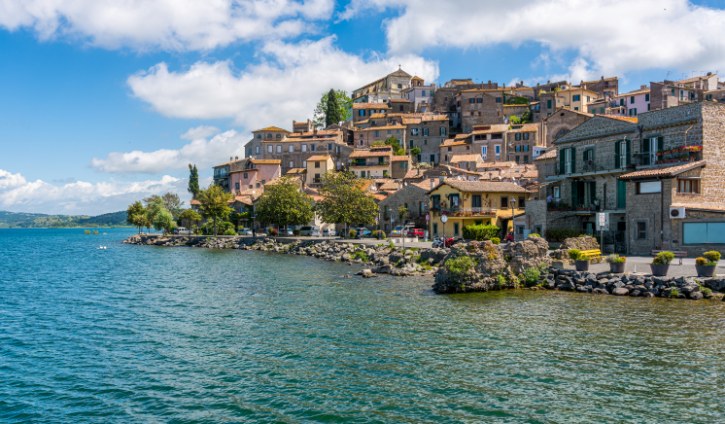
a. A Village Built Right on the Water
Anguillara sits on a rocky point reaching into Lake Bracciano, and unlike Bracciano up on its ridge, this village is built right along the shore. Old stone houses step down to the water, forming a natural amphitheater facing the lake.
Down at the base, a shaded promenade runs past benches, gelato shops, and café tables, with swans drifting along a calm, motorboat-free shore.
b. A Tower, a Church, and Big Lake Views
A few landmarks reward the climb through the village.
- The Torrione, a fifteenth-century defensive tower with panoramic gardens and sweeping views over the lake and the village rooftops.
- The Church of Santa Maria Assunta, crowning the hilltop, with a near 360-degree view across the lake.
- The Madonna delle Grazie sanctuary, just outside the old center, with an elegant portico and a revered old fresco.
c. Everyday Life by the Lake
Life here still revolves around fishing and the water.
- Local fishermen bring in whitefish, pike, and tiny smelt each morning.
- Village trattorias serve crispy fried lattarini with a squeeze of lemon.
- Piazza del Molo is the social hub, and waterfront kiosks rent kayaks and paddleboards in season.
- A folk museum in the historic center displays old farming tools, fishing gear, and everyday objects from village life.
- Seasonal passenger ferries also link Anguillara with Bracciano and Trevignano Romano for a gentle lake crossing.
d. Why It Feels Different From Bracciano
Both towns share the same lake, but the mood is not the same. Bracciano is about its grand hilltop castle, while Anguillara is all about closeness to the water.
Here the lake is always right there, waves lapping at stone foundations and boats rocking at the docks. If you love quiet corners and slow walks, this is a gem.
e. How to Get There From Rome
- Train: Trenitalia’s FL3 line (Rome to Viterbo) from Roma Ostiense, Roma Trastevere, Roma San Pietro, or Roma Valle Aurelia to Anguillara station, about 35 to 50 minutes.
- Bus: a local shuttle run by Schiaffini Travel, Line A or Line B, from the station down to the lakeside center, about 8 to 10 minutes. The station sits inland, so this short bus is the easy way in.
7. Frascati
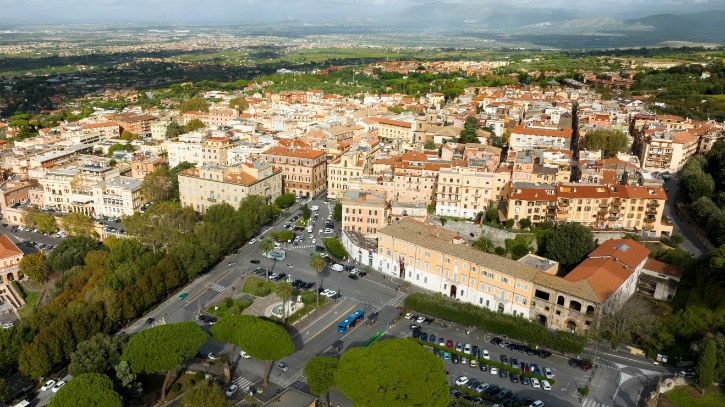
a. Italy’s Favorite Wine Town
Frascati is the wine capital of the Castelli Romani, with winemaking roots going back more than two thousand years. The crisp white wines here, protected under the Frascati DOC and Frascati Superiore DOCG labels, come from vines grown in mineral-rich volcanic soil.
Wine culture is part of daily life, and the old fraschette tradition lives on in enotecas pouring tastings with local cheeses and cold cuts.
b. Grand Villas on the Hillside
Frascati is ringed by the Ville Tuscolane, elegant country estates built by popes and noble families.
- Villa Aldobrandini, with its bold facade and a dramatic Water Theatre fountain behind the palace.
- Villa Falconieri, known for its cypress pond and frescoes.
- Villa Torlonia, whose grounds are now a public park with monumental water cascades.
c. A Historic Center With Rome on the Horizon
The old center is a pleasure to wander on foot.
- Piazza San Pietro and the Baroque Cathedral of San Pietro Apostolo anchor the town.
- The Church of the Gesù hides a famous painted “false dome” that tricks the eye.
- Public terraces look out over the plain, and on clear days you can spot Rome’s landmarks on the horizon.
d. Food, Wine, and Evening Strolls
Frascati mixes grand estate culture with an easygoing town feel. Trattorias serve hearty porchetta and baked specialties, and one local treat is the Pupazza, a honey-and-orange biscuit tied to old local lore.
In the late afternoon, join the passeggiata, the slow evening stroll, as the piazzas fill with locals and the wine starts flowing.
e. A Surprising Scientific Side
There is more to Frascati than wine and villas.
- The town is home to one of Italy’s major physics research centers.
- It was here that scientists built the world’s first electron-positron storage ring, a step toward modern particle colliders.
- A European space observation center sits here too, though for most visitors the real draw remains the wine, villas, and historic streets.
f. How to Get There From Rome
- Train: Trenitalia’s FL4 line, Frascati branch, direct from Roma Termini to Frascati station, about 30 minutes.
- Bus alternative: Cotral buses from the Anagnina terminus on Metro Line A.
8. Anagni
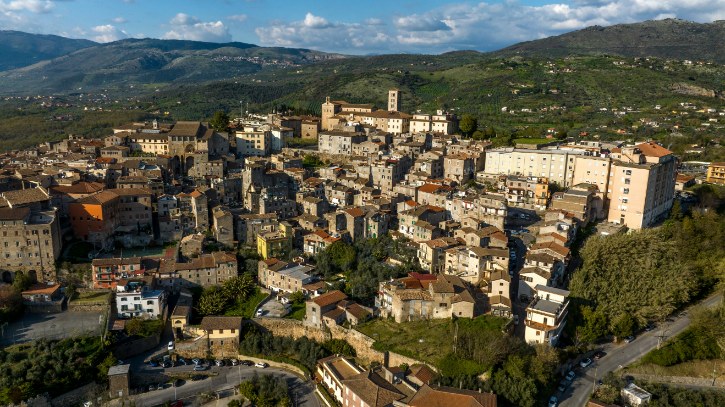
a. The City of the Popes
Anagni sits on a limestone ridge and earned the nickname City of the Popes, since it produced four medieval pontiffs. Its most famous moment was the Slap of Anagni, when the elderly Pope Boniface VIII was seized inside his own palace during a bitter clash with the king of France.
You can tour those Gothic halls and the museum galleries that tell this turning-point story in European history.
b. The “Sistine Chapel of the Middle Ages”
The real showstopper is the cathedral and, especially, its crypt.
- The Cathedral of Santa Maria Annunziata, a fine Romanesque church with an intact medieval marble floor.
- The Crypt of San Magno, covered head to toe in luminous medieval frescoes, which earns it that famous nickname.
- The fresco cycles mix biblical scenes with medieval ideas about science and the universe.
- The treasury, which includes the ceremonial cope of Pope Boniface VIII.
c. A Medieval Town Made for Walking
Anagni keeps a genuine medieval layout that is a joy to explore on foot.
- The main street runs along the crest of the hill, lined with noble palazzi and stone arches.
- The Palazzo Comunale is famous for its ground-floor arcade of huge barrel vaults over a public street.
- Viewpoints along the walls look out over the Sacco River Valley and the surrounding mountains.
- Local food leans into the Ciociaria region, from the festive baked Timballo di Bonifacio VIII to the local Cesanese red wine.
d. Ancient Roman Roots
Long before its medieval fame, Anagni had deep Roman history.
- It became a Roman town in 306 BC, and you can still spot old Roman arcades supporting the hillside.
- About six kilometers away lies Villa Magna, an imperial Roman country estate once used by Emperor Marcus Aurelius.
- That site is a specialized open-air dig without regular hours, so most visitors are better off focusing on the walkable historic center.
e. How to Get There From Rome
- Train: Trenitalia’s regional trains on the Rome to Cassino line from Roma Termini to Anagni-Fiuggi station, about 45 to 55 minutes.
- Bus: a local Corsi & Pampanelli bus from the station up to the hilltop historic center, about 15 to 20 minutes. The station sits down in the valley, so this connecting bus is the practical way up.
9. Santa Marinella
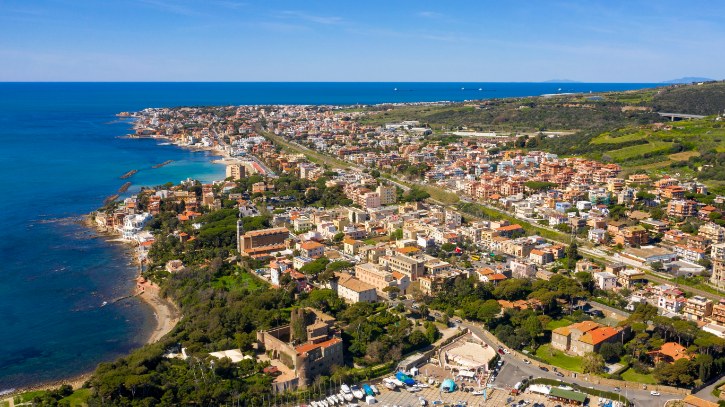
a. A Seaside Fortress and a Pretty Harbor
Santa Marinella is anchored by the Castello Odescalchi, a coastal fortress built over an old watchtower and later turned into an elegant seaside residence. It is a private estate today, so the inside is generally closed, but its battlements and sea-facing towers make a lovely backdrop from the public harbor pier.
b. Roman Ruins Right by the Shore
Beneath the modern town lies the Roman city of Castrum Novum.
- Founded in the third century BC as a fortified coastal colony north of Rome.
- Recent digs have uncovered city walls, part of the forum, paved streets, and a small theatre.
- Along the water, archaeologists even found Roman baths and fish-breeding tanks carved into the rock.
- Guided educational visits to the ongoing excavations are organized locally.
c. A Coastline With a Bit of Everything
What sets Santa Marinella apart is how varied its shoreline is.
- A calm, sandy central beach that is great for easy swimming.
- Rocky stretches around Capo Linaro that are popular for snorkeling and diving.
- Consistent waves at Banzai Beach that draw surfers, plus a protected wetland reserve just outside the center.
- Historic Liberty-style villas lining the seafront from its glamorous resort days.
d. A Glamorous Seaside Past
Santa Marinella was once known as the Pearl of the Tyrrhenian, a fashionable resort for European high society.
- Its avenues are lined with pastel Liberty-style villas from that elegant era.
- In the mid twentieth century it became a favorite retreat for the film world.
- Today the marina mixes that charm with seafood restaurants and open-air bars, and it feels especially calm outside the busiest summer weeks.
e. How to Get There From Rome
- Train: Trenitalia’s FL5 line (Rome to Civitavecchia) from Roma Termini, Roma Ostiense, or Roma San Pietro to Santa Marinella station, about 40 to 60 minutes.
10. Anzio
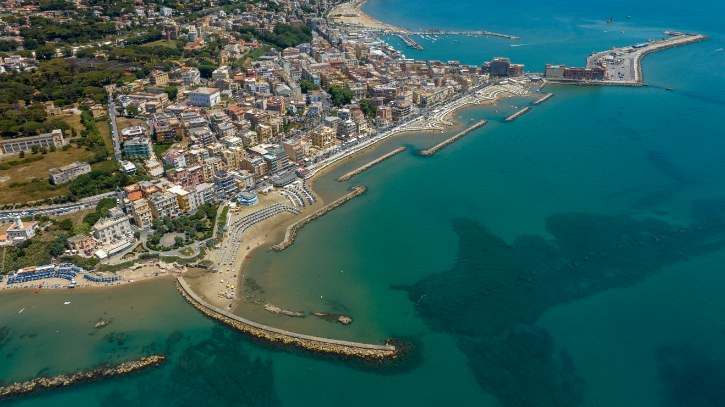
a. Nero’s Seaside Palace by the Waves
Anzio stands on the site of ancient Antium, birthplace of two Roman emperors. Its highlight is the sprawling seaside Villa di Nero, whose ruins stretch along the coastal cliffs.
Down at the Grotte di Nerone beach, massive Roman breakwaters run straight into the sea, so you can swim right beside imperial masonry. Famous ancient sculptures, now in the Vatican and the Louvre, were unearthed here.
b. Where History Was Made in World War II
Anzio holds a major place in modern history as the site of Operation Shingle.
- Allied forces landed on the beaches of Anzio and nearby Nettuno in January 1944.
- The Beachhead Museum, inside Villa Adele, displays uniforms, weapons, and personal accounts from both sides.
- Two Commonwealth war cemeteries lie within Anzio, while the large American cemetery is in neighboring Nettuno.
c. Beaches, Harbor, and Fresh Seafood
Beyond the history, Anzio is simply a great seaside town.
- Wide golden beaches split into two coastlines, framed by warm tuff cliffs.
- A busy working harbor with one of central Italy’s largest fishing fleets.
- Harborfront trattorias famous for fish soup, mixed fried fish, and tender local baby octopus.
- A palm-shaded central square, Piazza Pia, where cafés and shops spill out around a grand church.
d. A Town of Three Histories in One
What makes Anzio special is how it layers different eras into one compact coastal town.
- Ancient Rome, through Nero’s cliffside villa.
- World War II, through its beaches, museum, and memorials.
- Living seaside Italy, through its working port and quayside seafood.
- You could easily fill a day moving from imperial ruins to wartime memory to a fresh fish dinner by the water.
e. How to Get There From Rome
- Train: Trenitalia’s FL8 line from Roma Termini to Anzio station, about 55 to 60 minutes.
- For the American cemetery: stay on the same train one more stop to Nettuno station, about 3 minutes more, or take a local Cotral bus between the two town centers.