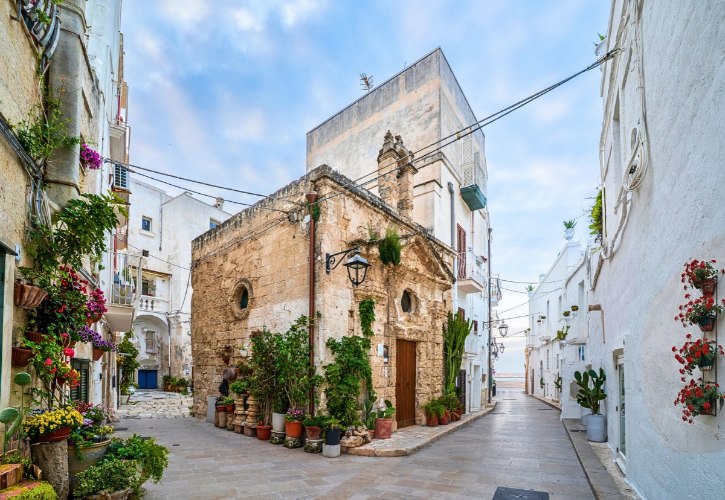
You do not need a rental car to fall in love with southern Italy. Start and end in Rome, let the trains carry you, and you trade tolls, fuel, and parking stress for a front-row seat to ancient ruins, glowing coastal towns, grand palaces, and quiet hilltop villages.
One loop, three regions, and a string of lesser-known towns most visitors miss. Here are the 12 stops that make it unforgettable.
1. Rome
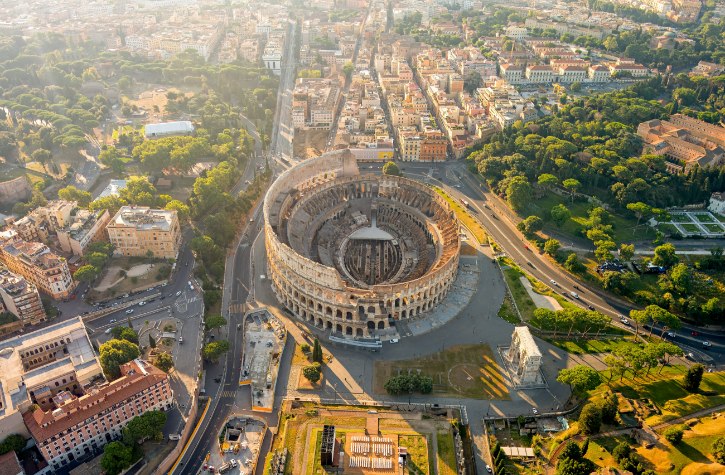
Rome is where your journey begins, and it sets the bar high. Its history runs unbroken from antiquity through the medieval centuries, the Renaissance, and the Baroque era, all packed into a walkable historic center that is a UNESCO World Heritage Site. Explore on foot and you will spot how imperial Roman foundations became the base for later churches and palaces built right on top.
a. Gladiators, Temples, and the Heart of Empire
The Colosseum and Roman Forum sit side by side, and together they tell the story of Roman power.
- The Colosseum, started in 72 AD and finished in 80 AD, hosted gladiator contests and public spectacles
- Look for its three tiers of arches, framed by Doric, Ionic, and Corinthian columns and topped by a solid upper storey, plus the exposed hypogeum, the underground maze beneath the arena floor
- In the Forum, walk the Via Sacra past the Curia Julia (senate house), the Arch of Septimius Severus, and the Temple of Saturn, which once held the state treasury
b. Vatican City: Faith and Art on a Grand Scale
An independent country within the city, Vatican City is one of the world’s great centers of religion and art.
- St. Peter’s Basilica was shaped by Bramante, Michelangelo, and Bernini
- Don’t miss Michelangelo’s dome, Bernini’s bronze baldachin, and his sweeping colonnade framing the square like open arms
- The Vatican Museums build toward the Sistine Chapel, where Michelangelo’s ceiling and his altar wall, The Last Judgment, still stop you in your tracks
Read More: The Best Walk From the Colosseum to Vatican City
c. The Pantheon’s Perfect Dome
The Pantheon is the best-preserved monument of Roman imperial architecture, rebuilt under Emperor Hadrian. You enter through massive granite columns, then the space opens up.
- Its concrete dome is the largest unreinforced one in the world, exactly 43.3 meters across and tall
- The nine-meter oculus is the only light source, sweeping a circle of daylight across the marble
- It survived because it became a church, and it now holds the tomb of the painter Raphael
d. Fountains and Squares Worth Lingering In
Rome’s Baroque personality shines in its public squares, and they are free to enjoy.
- Piazza Navona traces an ancient stadium and centers on Bernini’s Fountain of the Four Rivers
- The Spanish Steps climb gracefully from Piazza di Spagna toward the church of Trinità dei Monti
- The Trevi Fountain blends Baroque and Rococo design, with Oceanus at its heart
Read More: The Best Walking Route Around Trevi Fountain and Nearby Attractions
e. Two Easy Escapes by Train (Nearby Day Trip)
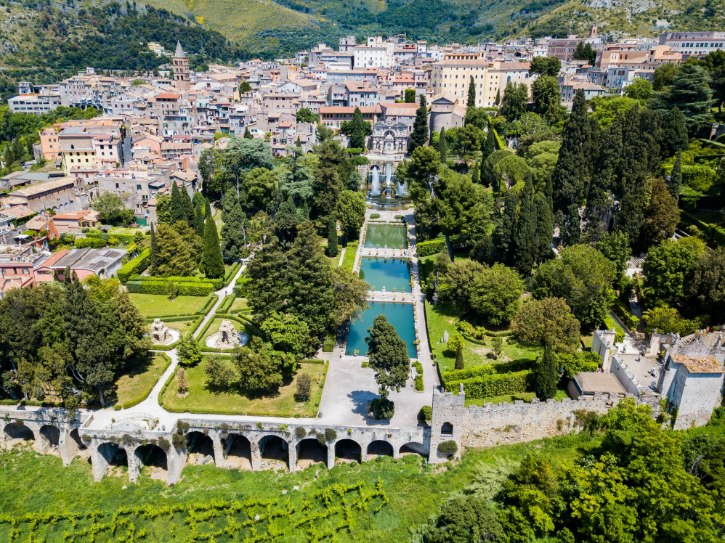
Both of these day trips are genuinely car-free and worth your time.
- Tivoli offers two UNESCO sites: the fountain-filled gardens of Villa d’Este and the sprawling ruins of Hadrian’s Villa. It is an easy train trip, with local buses linking the station to the sites
- Ostia Antica is Rome’s ancient port, reachable by suburban rail, with apartment blocks, warehouses, and baths. It is the perfect follow-up once you have seen the Forum
2. Caserta
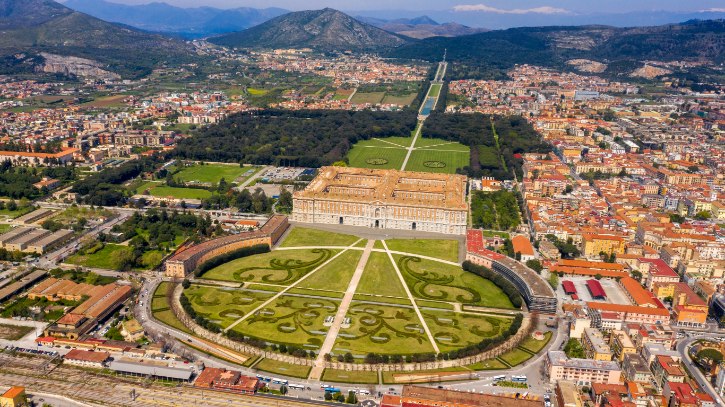
Here you swap ancient ruins for royal grandeur. Caserta was built by the Bourbon kings who wanted an inland palace to rival Versailles, and the result is one of Europe’s most impressive royal residences, designed by architect Luigi Vanvitelli. The whole complex is a UNESCO World Heritage Site.
a. Inside Europe’s Largest Royal Palace
The Reggia di Caserta is built to overwhelm, and it does.
- The interior covers about 47,000 square meters across five floors, around four courtyards
- Climb the Grand Staircase, with 116 marble steps and a hidden musicians’ gallery overhead
- Tour the Throne Room, the Palatine Chapel (modeled on Versailles), and the vast library, all dripping with gilded stucco and marble
b. Gardens That Stretch for Miles
The gardens run more than three kilometers in one dramatic line, and you can walk or shuttle along them.
- A central canal with cascades leads to the Great Waterfall, crowned by the sculptures of Diana and Actaeon
- The romantic English Garden breaks the symmetry with winding paths, exotic plants, and artificial ruins
c. A Medieval Village on the Hill (Nearby Day Trip)
Casertavecchia is the original medieval Caserta, and it feels like the opposite of the palace.
- Narrow stone streets, arched passageways, and views toward the Gulf of Naples
- The Cathedral of San Michele Arcangelo blends Norman, Lombard, and Arab-Islamic styles under an octagonal dome
- There is no train, so you reach it by local bus from the station square; plan around the bus schedule
d. The Royal Silk Town of San Leucio (Nearby Day Trip)
Just four kilometers from the palace, San Leucio is part of the same UNESCO listing and tells a surprising story.
- King Ferdinand IV turned it into a silk-making community with free housing, healthcare, and equal pay for its time
- Today it is a working silk museum with original looms and water-powered mills
- Reach it car-free by local bus from the Caserta rail station
3. Trani
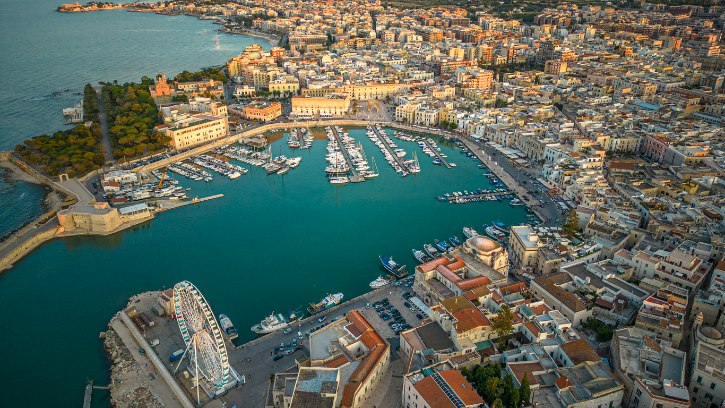
Arriving in Trani, the mood shifts to pure Adriatic calm. This refined port town is built from luminous local limestone, wrapped around a deep natural harbor, and full of well-preserved medieval streets. After bigger cities, it is the kind of place you slow right down.
a. A Cathedral Rising From the Sea
The Cathedral of San Nicola Pellegrino has one of the most striking settings in Italy, standing on a promontory right over the water.
- Begun in 1099, it is a classic of the Apulian Romanesque style
- Note the pale facade, delicate rose window, and the bronze doors cast in 1175 with 32 panels
- Inside are three levels, including a crypt with 28 slender marble columns
b. A Castle Built by an Emperor
Across the harbor sits the Swabian Castle, founded in 1233 by Emperor Frederick II.
- A tidy square plan with corner towers, part of his coastal defense chain
- His son King Manfred celebrated his royal wedding inside these walls
- You can explore restored chambers, courtyards, and artillery platforms above the shore
c. The Harbor and the Old Jewish Quarter
Trani’s port is the heart of town, framed by 18th-century palazzi and seafood trattorias.
- Head inland to the Giudecca, the old Jewish district that thrived under Norman and Swabian rule
- See the Scolanova Synagogue, once a church and reconsecrated as a working synagogue
- Walk the waterfront gardens for wide views back toward the cathedral
d. An Easy Hop to Barletta (Nearby Day Trip)
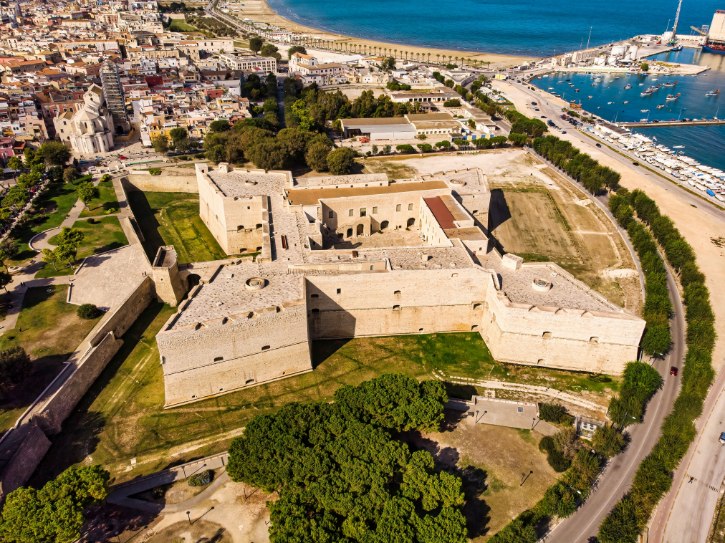
Barletta is one of the easiest side trips of the whole route, a quick train ride up the Adriatic coast.
- Barletta Castle wraps massive Spanish bastions around older walls
- The Colossus of Barletta is a 5.11-meter Roman bronze statue, likely an emperor
- Art lovers can visit the Pinacoteca dedicated to the local Impressionist De Nittis
4. Bari
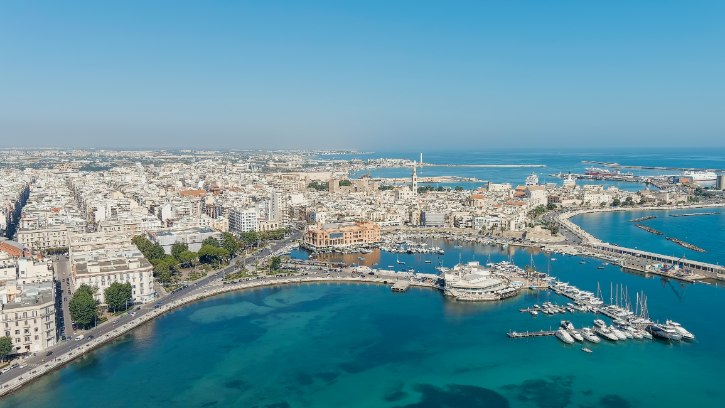
Bari deserves far more than a quick train change. The capital of Puglia splits into two worlds: the tangled medieval lanes of Bari Vecchia and the grand 19th-century grid of the Murat district. It is also the resting place of Saint Nicholas, which makes it a bridge between Catholic and Orthodox Christianity.
a. The Basilica of Saint Nicholas
Founded in 1087, the Basilica di San Nicola is the model for Apulian Romanesque design.
- A fortress-like limestone facade flanked by two low towers
- Inside, the 12th-century ciborium is the oldest in Puglia
- The crypt holds the tomb of Saint Nicholas and still draws pilgrims from East and West
b. Life in the Old Town
Bari Vecchia is where tradition stays alive, and wandering it is the whole point.
- In the Arco Basso, local women hand-roll orecchiette pasta on wooden tables in their doorways
- Visit Bari Cathedral and its underground zone of Roman roads and Byzantine foundations
- The lanes open onto Piazza Mercantile and Piazza del Ferrarese, the old civic hubs
c. The Castle and the Seafront
Two very different landmarks anchor the modern city.
- The Norman-Swabian Castle, rebuilt by Frederick II, surrounds a courtyard with a dry moat and holds a cast collection of regional sculpture
- The Lungomare Nazario Sauro is one of Italy’s longest waterfront walks, with the salmon-pink Teatro Margherita built on pilings over the sea
Read More: 17 Beautiful Spots in Puglia That Are Surprisingly Close Together
d. Trulli Country at Alberobello (Nearby Day Trip)
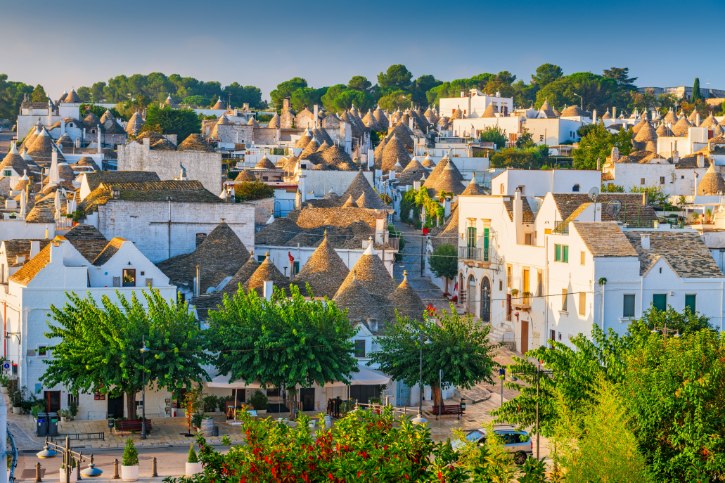
Alberobello is famous for its trulli, whitewashed dry-stone homes with conical roofs built without mortar, and it is a UNESCO site.
- Rione Monti is the busier quarter with over 1,000 trulli; Aia Piccola is quieter and more residential
- You can reach it from Bari by regional train, though some legs run as replacement buses, so check before you go
e. The Cave City of Matera (Nearby Day Trip)
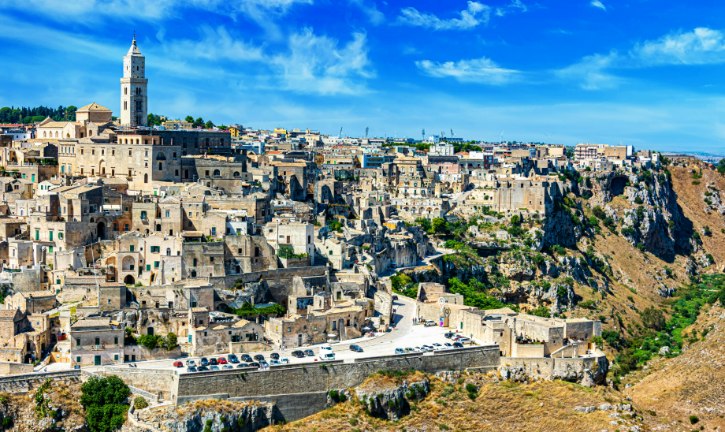
Matera, just over the Basilicata border, is one of the most extraordinary places in southern Italy.
- Its Sassi districts are a maze of cave dwellings and rock-cut churches, UNESCO-listed and unforgettable
- Reach it car-free, but not on the national railway: it runs on a separate private line from its own dedicated terminal at Bari Centrale, so check that line’s schedule separately
5. Polignano a Mare
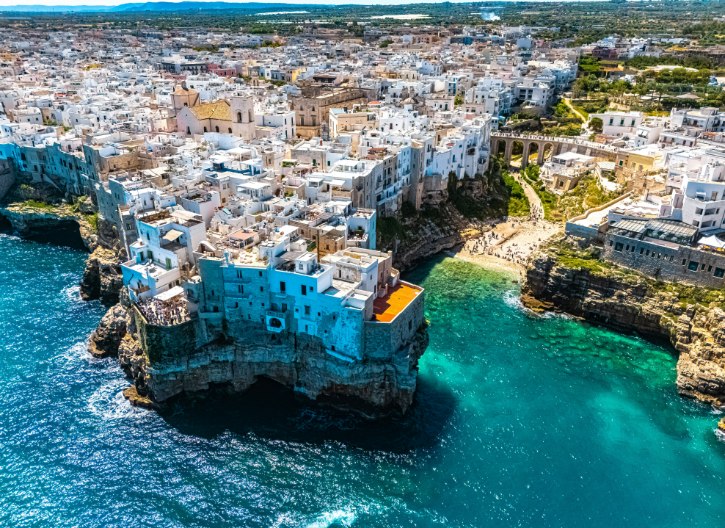
One look at the coastline explains why Polignano is so photographed. The old town perches on a limestone cliff that drops straight into turquoise water, riddled with sea caves and arches. Up top, it is all narrow lanes, sea-view terraces, and whitewashed walls.
a. The Cliffside Cove of Lama Monachile
This is the view everyone pictures when they think of Polignano.
- A small pebble cove set between sheer cliffs, crossed by a high stone bridge on the old Roman road
- The contrast of white houses, golden crags, and clear water is unforgettable
- It is known for cliff diving, but enjoy it from the bridge and viewpoints rather than attempting it yourself
b. Wandering the White Old Town
Enter through the 16th-century Arco Marchesale into a quiet maze of lanes.
- Find Piazza Vittorio Emanuele II, its clock tower, and the Church of Santa Maria Assunta
- Reach clifftop terraces like Terrazza Santo Stefano for sheer drops over the caves
- Look for painted poetic verses tucked onto staircases and walls, and the statue of singer Domenico Modugno
c. A Famous Sea Cave
Grotta Palazzese is the largest and most famous of the town’s sea caves.
- Since the 18th century it has been used as a grand banqueting grotto, and today it is a private dining venue
- You cannot simply walk in, but you can view the cave mouth from authorized boat trips and clifftop vantage points
d. Modern Art by the Waves
The Pino Pascali Museum sits in a restored seaside slaughterhouse and is the leading contemporary art museum in Puglia.
- It honors Pino Pascali, a pioneer of the Arte Povera movement who grew up in the town
- Glass-walled galleries pair modern sculpture with the crashing Adriatic outside
e. A Quick Bus to Conversano (Nearby Day Trip)
Conversano, ten kilometers inland, makes an easy car-free side trip.
- The Norman castle holds a dramatic Baroque painting cycle, alongside a Romanesque cathedral and an ancient monastery
- A short local bus connects the two towns
6. Monopoli
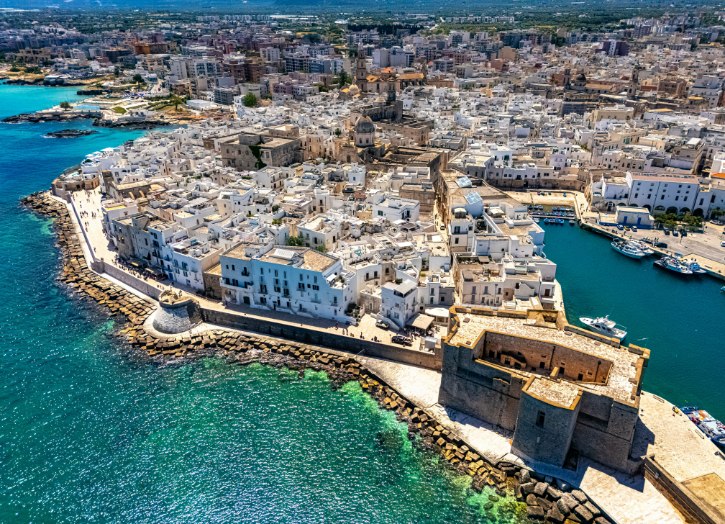
Just five minutes down the line from Polignano, Monopoli earns its own stop with a completely different feel. Instead of sheer cliffs, it embraces the sea through 16th-century walls, bastions, and enclosed harbors. This is a true working town, with a living fishing port and Baroque churches.
a. A Castle Guarding the Harbor
The Castle of Charles V stands on a headland at the harbor entrance.
- Built in 1552 as part of the Spanish coastal defense system, with a pentagonal plan
- It incorporates a 10th-century church in its lower chambers
- Today it hosts exhibitions, with public ramparts over the old port
b. A Cathedral With a Legend
The Cathedral of Santa Maria della Madia is a superb southern Baroque church with a wonderful backstory.
- Tradition says a raft of pine beams carrying a Byzantine icon drifted miraculously into the harbor
- The grand Baroque building replaced the medieval one in the 18th century
- Inside are rich marble inlays, the Diocesan Museum, and the revered Madonna della Madia icon
c. Whitewashed Streets and Hidden Corners
Monopoli’s old town is a dense network of white alleys and covered archways with Venetian and Spanish influences.
- The social center is Piazza Garibaldi, framed by a Venetian Gothic loggia
- Seek out the Church of the Purgatorio, with carved skeletons on its portal
- Ancient cannons still sit on the stone bastions along the sea walls
d. The Old Port and Easy Beaches
The Porto Vecchio is the heart of Monopoli’s maritime life.
- It is filled with traditional blue-and-red wooden fishing boats called gozzi
- Swim at Cala Porta Vecchia, tucked beneath the walls, or walk south to coves like Porto Bianco and Porto Rosso
- Strolling the harbor and shoreline, with the boats and old walls around you, is the simple joy here
7. Ostuni
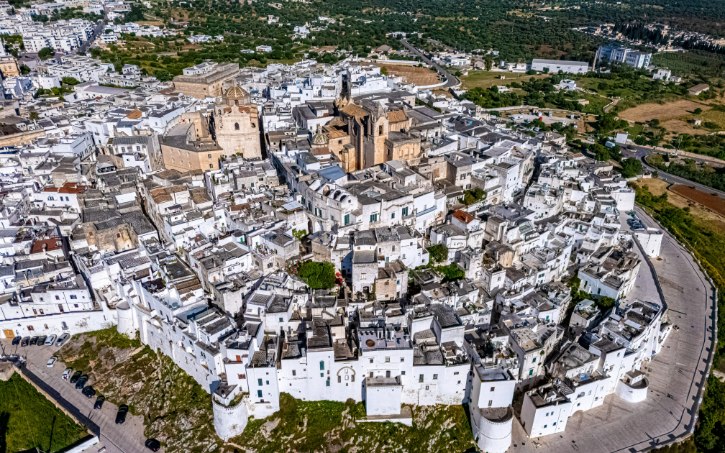
Ostuni is unforgettable from a distance. Known as La Città Bianca, the White City, it rises across three hills, gleaming white above a plain of ancient olive trees. That brilliant white comes from centuries of lime whitewash, once used to keep homes cool and guard against plague.
a. A Cathedral Crowned by a Rose Window
At the top of the old town stands the Concattedrale di Santa Maria Assunta, built in the late 15th century.
- It blends late Gothic, Venetian, and Renaissance styles
- The star feature is its 24-ray rose window, one of the largest in Europe
- Give the carved facade a few minutes, because the detail rewards close attention
b. Climbing the Whitewashed Maze
Exploring Ostuni means climbing, and that is part of the charm.
- The main artery, Via Cattedrale, winds past artisan and olive-wood workshops
- At the base lies Piazza della Libertà with its 20-meter Baroque column of Sant’Oronzo
- Slip into the quiet alleys of the Terra district, a defensive maze built to confuse invaders
c. Views Over a Sea of Olive Trees
Ostuni’s hilltop turns its whole edge into a series of lookouts.
- From the northern ramparts, gaze over silvery olive groves ending at the blue Adriatic
- Near the elegant Arco di Scoppa, frame the white houses cascading down the slopes
- The mix of white stone, green-silver trees, and distant sea is the signature view
d. A 28,000-Year-Old Discovery
The Museum of Preclassical Civilizations sits in a restored former monastery.
- Its most famous exhibit is “Delia”, the skeleton of a young pregnant woman buried around 28,000 years ago
- She wore a headdress of over 600 marine shells coated in red ochre, a deeply moving find
e. Hilltop Towns of the Valle d’Itria (Nearby Day Trip)
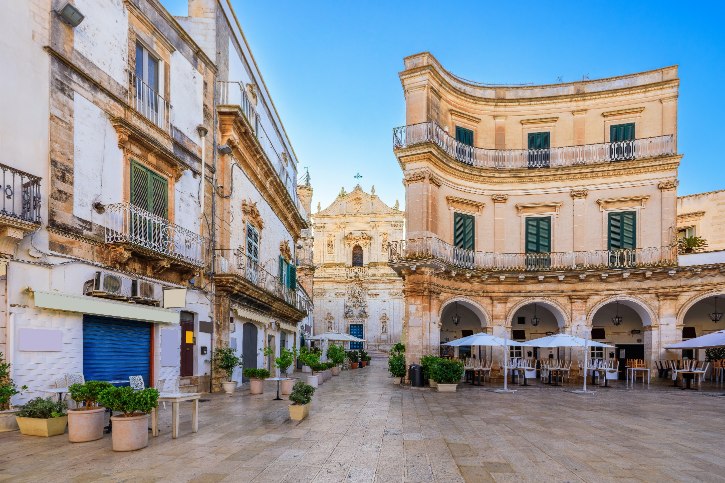
Two nearby towns make rewarding car-free trips by regional bus.
- Martina Franca dazzles with honey-colored Baroque architecture and the cured pork specialty Capocollo, reachable by a weekday regional bus
- Cisternino is famous for its grill-it-yourself butcher shops serving bombette, a short bus ride away. Both are buses, not trains, so check return times
8. Lecce
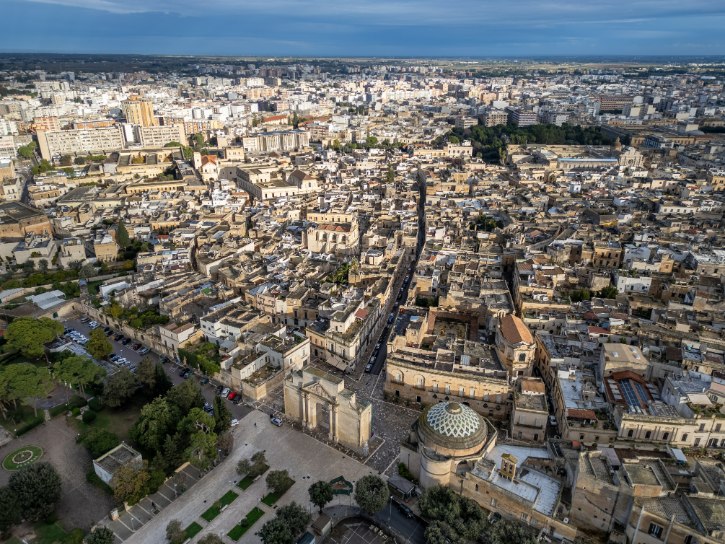
Lecce is often called the Florence of the South, and its fame rests on one glorious thing: the Barocco Leccese, an explosion of expressive stone carving. The soft golden pietra leccese limestone made it possible, carving easily when fresh, then hardening into a honey color. Beyond the Baroque, the city keeps papier-mâché crafts and a rich food culture alive.
a. The Masterpiece Facade of Santa Croce
The Basilica di Santa Croce is the undisputed star of Lecce Baroque, built over more than a century.
- The lower tier keeps calm classical lines
- The upper tiers erupt with atlantes, monsters, dragons, and lions supporting a balustrade
- A huge central rose window crowns it, framed by laurel and acanthus leaves
b. A Square Like a Hidden Stage
Piazza del Duomo is one of the most theatrical cathedral squares in Italy.
- You enter through a single narrow opening, and the space suddenly expands
- The Cathedral is framed by a soaring 70-meter bell tower with views reaching the Albanian mountains
- Elegant palaces complete this enclosed stone stage
c. A Roman Arena Beneath Your Feet
The Roman Amphitheatre sits sunk beneath the modern civic center.
- Built in the 2nd century AD and uncovered in the early 20th century
- Only about half is visible, the rest still buried under the city
- It once held an estimated 14,000 to 15,000 spectators, with carved friezes of animal hunts
d. The Crossroads of Piazza Sant’Oronzo
This square is the main crossroads of Lecce, where eras meet.
- The 29-meter Column of Sant’Oronzo is topped by a copper statue of the patron saint
- The austere Sedile once served as the town hall
- Grab a pasticciotto, a warm custard-cream pastry, at a cafe ringing the amphitheater
e. Two Coastal Towns by Public Transport (Nearby Day Trip)
Both are reachable car-free by public transport.
- Otranto, on Italy’s easternmost tip, has Aragonese walls and a cathedral floor covered by a vast 12th-century Tree of Life mosaic
- Gallipoli sits on a limestone island linked by a stone bridge, ringed by a sea castle and an active fishing harbor. Confirm the day’s schedule before you plan around it
9. Taranto
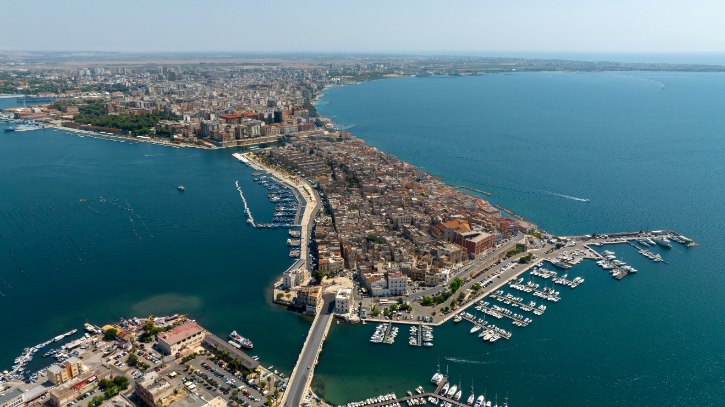
Taranto has a one-of-a-kind backstory: it is the only colony Sparta ever founded, and it grew into the richest city of Magna Graecia. Geography defines it, sitting between two seas, the open Mar Grande and the sheltered Mar Piccolo, with the old town on an artificial island between them.
a. A Castle Between Two Seas
The Aragonese Castle guards the canal linking the two seas.
- Built in the late 15th century over older Norman, Byzantine, and Greek fortifications
- Low rounded bastions designed to absorb cannon fire
- Run by the Italian Navy, which offers tours past towers, halls, and excavated Greek foundations
b. The Dazzling Gold of Taranto
The National Archaeological Museum (MArTA) is one of the Mediterranean’s most important.
- Its crown jewel is the Ori di Taranto, the Gold of Taranto
- See gold crowns of laurel and oak leaves, winged-victory earrings, and spiral bracelets
- Together they reveal the astonishing wealth and skill of the ancient city
c. Greek Temples Older Than the Parthenon
On the edge of Piazza Castello stand two tall columns of a Doric temple.
- Dating to the early 6th century BC, they are the oldest monumental remains in all of Magna Graecia
- Standing 8.45 meters high, they predate the Parthenon in Athens
- Seeing them amid the medieval city is a powerful reminder of Taranto’s Greek roots
d. The Island Old Town
The Città Vecchia covers the island between the bridges, built to confuse naval invaders.
- Narrow alleys cut between crumbling palazzi and underground cellars
- The Cathedral of San Cataldo is the oldest in Puglia, with a lavish Baroque chapel
- Along the quay, fishermen sell the famous cozze tarantine, the local mussels
e. Ancient Ruins at Metaponto (Nearby Day Trip)
Metaponto, west along the Ionian coast, is where Pythagoras is said to have spent his final years.
- The Tavole Palatine are the evocative remains of a 6th-century BC Doric temple
- Honest logistics: regional trains reach the station, but the ruins sit 2 to 3 kilometers away, so you will need a taxi or rural bus for the last stretch. It often works better as a planned stop than a quick dash
10. Salerno
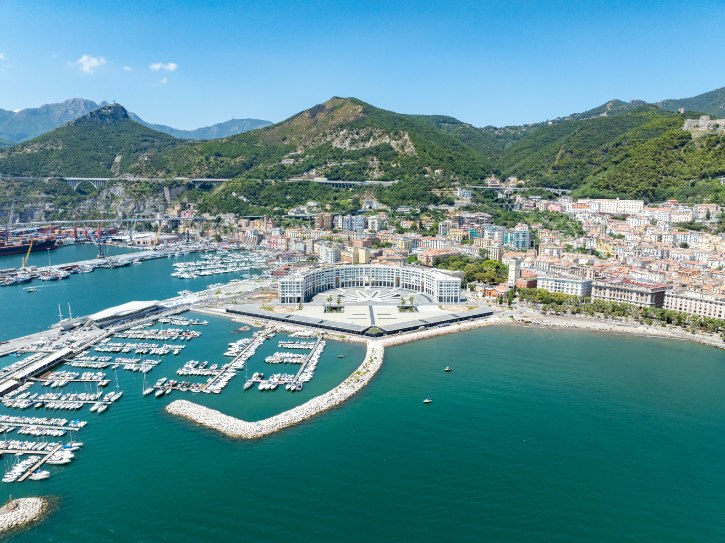
Salerno sits on a lovely Tyrrhenian bay, and it rewards attention on its own terms, not just as a gateway to the Amalfi Coast. It flourished under Lombard and Norman rule and is famous in medical history as home to the Salerno Medical School, the earliest in Western Europe. You get an intact medieval old quarter paired with a long, inviting seafront.
a. A Cathedral of Mosaics and Bronze
The Cathedral of San Matteo is one of Italy’s great medieval monuments.
- Consecrated in 1084, it holds the relics of the Apostle Saint Matthew
- Enter through an atrium of 28 antique columns beside an Arabic-Norman bell tower
- Inside are bronze doors cast in Constantinople, mosaic pulpits, and a richly decorated crypt
b. A Castle With the Best Views in Town
Arechi Castle sits high on a hill, 300 meters above the city.
- Transformed in the 8th century into an impregnable citadel
- Features bastions, a watchtower, and an archaeological museum
- Reach it car-free by local bus; the views over the gulf alone are worth the ride
c. Medieval Streets and the First Botanical Garden
Salerno’s historic center keeps its early medieval street plan.
- Its spine is Via dei Mercanti, lined with medieval shops and Renaissance palaces
- Visit the Giardino della Minerva, considered Europe’s first true botanical garden, built for the medical school
- Wander the lanes for local food, small shops, and quiet architectural details
d. A Seafront Made for Strolling
The Lungomare Trieste is a palm-lined promenade running nearly two kilometers along the shore.
- Car-free, with wide views across the water to the Amalfi cliffs
- It opens into the broad Piazza della Concordia near the station and ferry terminal
- This is where Salerno socializes, a breezy contrast to the medieval streets uphill
e. Greek Temples at Paestum (Nearby Day Trip)
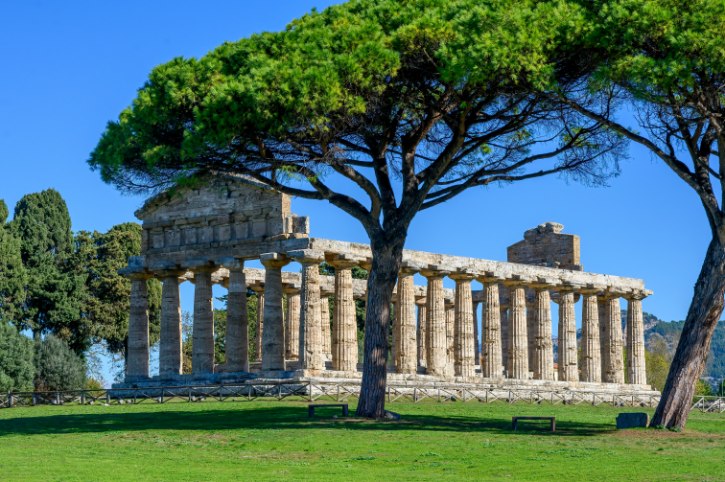
Paestum is one of Europe’s great archaeological sites and the easiest day trip here.
- Three of the best-preserved Doric temples in the world, including the magnificent Temple of Neptune
- The museum holds the famous Tomb of the Diver, a rare painted Greek tomb
- Direct regional trains run from Salerno, and the park is a short walk from the station
11. Pompeii
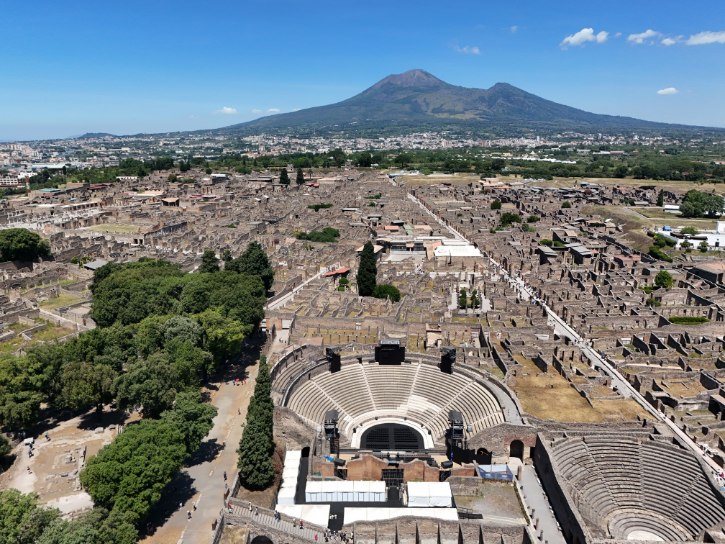
Pompeii gives you an unrivaled look at Roman daily life, frozen in a single moment. When Vesuvius erupted in 79 AD, it buried a thriving city of 15,000 people under meters of ash, preserving streets, houses, shops, baths, and temples. You walk genuine Roman streets and step into homes that look much as they did two thousand years ago.
a. Walking the Ancient City
The Archaeological Park covers about 66 hectares, with roughly 45 excavated.
- Walk the basalt streets, worn with ruts from Roman wagon wheels
- See the Forum, framed by the Temple of Jupiter and the law courts
- Step into the House of the Vettii and House of the Faun, and the Villa of the Mysteries with its vivid frescoes
b. Why the World Treasures This Site
Pompeii is the centerpiece of a UNESCO property alongside Herculaneum and Torre Annunziata.
- It gives a complete record of Roman society at one exact moment
- Ongoing work under the Great Pompeii Project keeps uncovering fresh discoveries
- Remember the site mixes excavated, restored, and still-buried areas, so stick to the open zones
c. The Volcano That Looms Over Everything
Throughout the ruins, Mount Vesuvius looms on the skyline, and that view is part of the power.
- Look north across the Forum to see temple columns with the volcano rising behind
- That single alignment tells the whole story: the volcano both destroyed and preserved the city
d. The Carbonized City of Herculaneum (Nearby Day Trip)
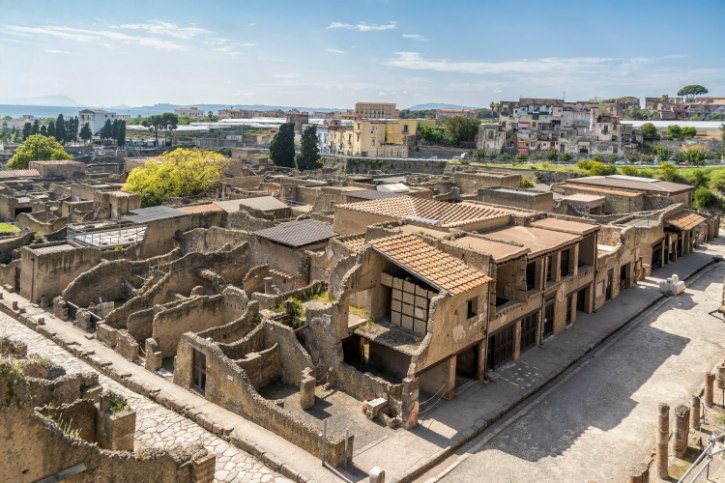
Just up the coast, Herculaneum is an intimate, car-free contrast.
- Sealed under hot pyroclastic flows, it preserved organic materials destroyed at Pompeii
- See carbonized wooden beds, doors, and even food, plus complete two-story houses
- Its compact size makes for a rewarding visit entirely on foot from the station
e. Climbing to the Crater (Nearby Day Trip)
You can make the volcano itself the destination.
- Take the train to Ercolano, then a shuttle bus into the national park
- Hike the gravel trail to the Gran Cono crater, with steam vents and sweeping bay views
- You cannot reach the summit by train; the final ascent needs the shuttle bus plus a walk
12. Naples
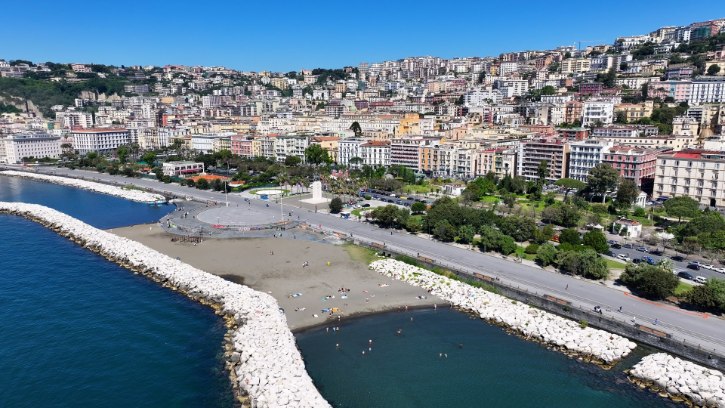
Naples is the thrilling finale before your return to Rome. Founded by the Greeks and carrying 2,800 years of history, its UNESCO-listed center still follows the ancient street grid. Add the street life, the music, and the fact that this is the birthplace of true Neapolitan pizza, and it is a feast for the senses.
a. The Beating Heart of the Old City
The historic center is cut through by the straight, narrow street known as Spaccanapoli.
- Walk it and Via dei Tribunali past monumental churches like Gesù Nuovo and Santa Chiara
- Visit the Cathedral and its Baroque Chapel of San Gennaro
- Reach the grand Piazza del Plebiscito, framed by the Royal Palace and a curved colonnade
b. The Castle of the Egg
Rising from a rocky islet, Castel dell’Ovo is the oldest fortification in Naples.
- Its name comes from a legend about a magical egg hidden in the foundations by the poet Virgil
- It evolved from a Roman villa into a monastery, a stronghold, and a prison
- Interior chambers close at times for restoration, but the causeway rewards you with sea views
c. Treasures From Pompeii and Beyond
The National Archaeological Museum (MANN) is one of the world’s great classical museums.
- It holds the Farnese Collection, including the colossal Farnese Bull
- The centerpiece is the Alexander Mosaic, made of around 1.5 million tiny tiles
- Seeing these ties together everything you saw at Pompeii and Herculaneum
d. The Hidden City Underground
Beneath the busy streets lies a vast world carved into soft tuff rock.
- Napoli Sotterranea takes you 40 meters down through ancient cisterns and wartime shelters
- The Catacombs of San Gennaro feature paleochristian burial chambers and rock-cut frescoes
- Each reveals a different layer of the city, distinct from the churches above
e. Islands and Volcanoes to End On (Nearby Day Trip)
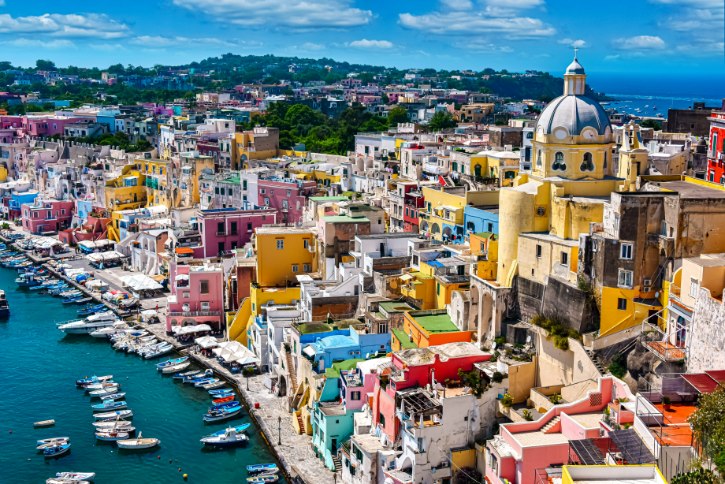
Two final escapes are both practical without a car.
- Procida: the most colorful island in the bay, with the pastel harbor of Marina Corricella. Regular hydrofoils and ferries reach it, the perfect low-key finish
- Mount Vesuvius: take the train to Ercolano, then a shuttle bus and a walk to the crater
Read More: The Best Route to Explore the Amalfi Coast and Its Beautiful Nearby Places