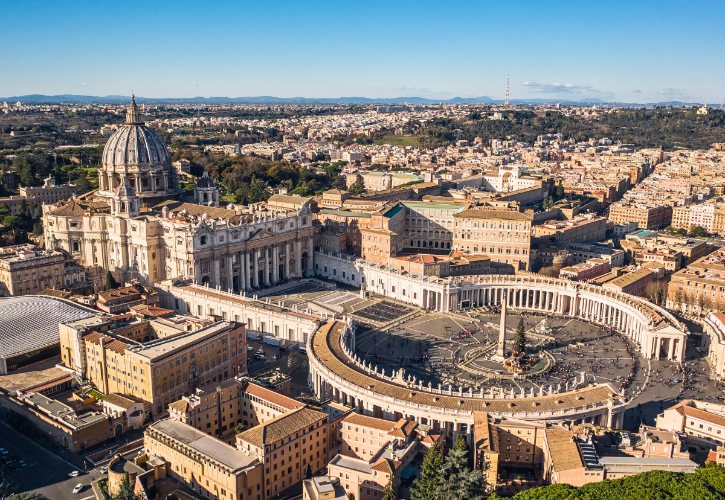
You might picture the Colosseum and the Vatican as two far-apart bucket-list stops. In truth, you can stroll between them and soak up nearly three thousand years of Rome along the way.
You start among ancient ruins, drift through Renaissance lanes and lively Baroque squares, then reach the heart of the Catholic world.
Every stop sits just 1 to 5 minutes apart, so the magic keeps coming. Lace up and enjoy. 😊
1. Colosseum
a. Why it still amazes you
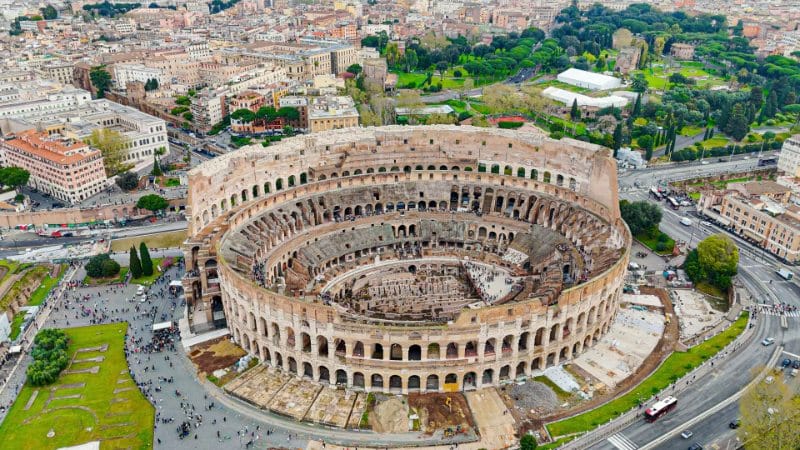
You start at the Colosseum, the giant arena Romans called the Flavian Amphitheatre. Emperor Vespasian began it around 70 CE, Titus opened it with a hundred days of games, and Domitian finished it off. It was cleverly built over the drained lake of Nero’s private palace, handing that land back to the public. Its size and story are why it still stands as Rome’s boldest symbol.
b. What to look for
- Eighty arched entrances that once moved huge crowds inside
- Four stacked levels of columns, each in a different style
- The arena floor, where gladiators once fought on sand
- Around 50,000 seats, arranged strictly by social rank
- Stone brackets near the top that held a huge canvas sunshade
c. Step down into the underground
- The exposed lower level, once hidden beneath the arena floor
- A maze of narrow corridors and holding cells
- Old shafts and lifts that raised animals and scenery through trapdoors
- A real feel for the “backstage” that powered the games
d. Moments you’ll remember
- Standing on the tiers and feeling the sheer scale
- Picturing a roaring crowd of tens of thousands
- Looking down into the open underground world
- Spotting where that vast sunshade once stretched overhead
e. Your walk to the arch
Step out to the west and a grand gateway stands just a few steps away. That’s the Arch of Constantine, and it points you toward the ancient Forum.
2. Arch of Constantine
a. The story behind it
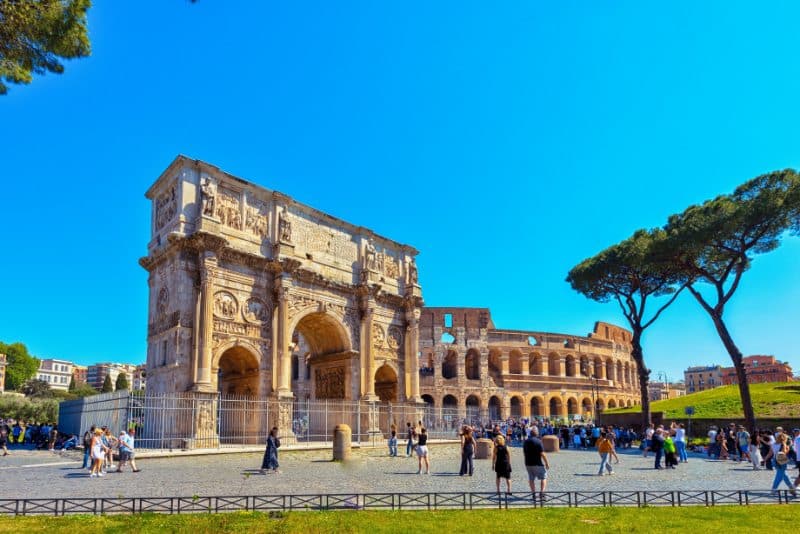
Right next to the Colosseum stands the largest triumphal arch still surviving from ancient times. The Senate built it to celebrate Emperor Constantine’s great victory at the Battle of Milvian Bridge. Standing about 21 meters tall, it was made to impress everyone who passed beneath it.
b. Borrowed beauty
- Much of its carving was lifted from older monuments to earlier emperors
- Eight statues of captured prisoners line the very top
- Round stone panels show hunting scenes and offerings to the gods
- A newer band of carving tells Constantine’s own story in six scenes
- The reuse was on purpose, linking him to Rome’s most admired rulers
c. Why you’ll want a closer look
- Carving styles spanning centuries sit side by side
- It stands right on the old victory-parade route
- Its spot beside the Colosseum makes it a quick, easy stop
- The fine details reward a slow walk around all four sides
d. Good to know
- It’s free to admire from the outside, with no ticket needed
- Early morning light is lovely for photos here
- You can pair it with the Colosseum in one short visit
e. Where you’re headed next
Follow the old parade route as it curves toward the Palatine Hill. Just ahead, the ground opens into the Roman Forum, the political heart of the ancient city.
3. Roman Forum
a. The heart of ancient Rome
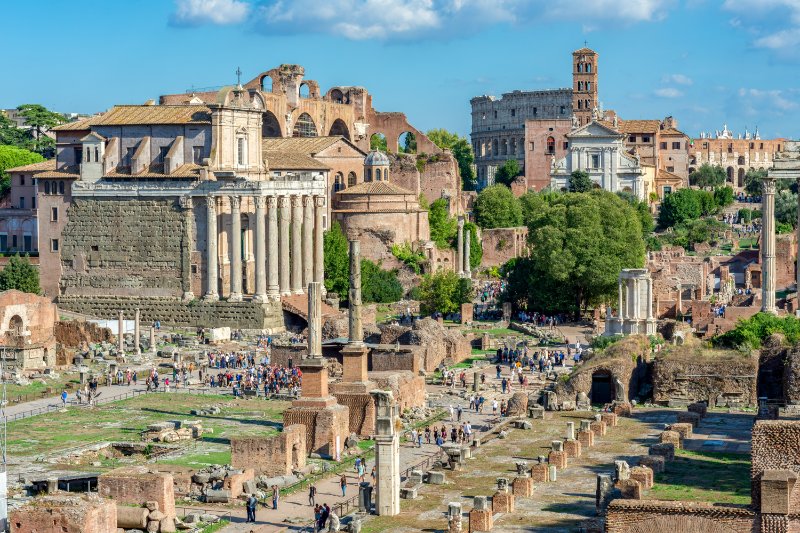
For more than a thousand years, this was where Rome truly lived. Law, religion, business, and politics all played out here every single day. What began as drained marshland grew into the most important public space in the entire ancient world, and you can still feel that pull as you walk it.
b. What to look for
- The Curia Julia, the old senate house, still remarkably intact
- The Rostra, the raised stage where leaders gave speeches
- The Temple of Saturn, once Rome’s treasury, with tall columns still standing
- The House of the Vestals, home to the priestesses of the sacred fire
- The Via Sacra, the ancient road threading through the ruins
c. Moments to picture
- Great speakers rousing the crowd from the speaker’s platform
- Traders, judges, and worshippers filling the busy square
- Grand triumphs and ceremonies passing along the Via Sacra
- Game boards still scratched into old steps by bored Romans
d. A short climb ahead
Leave the Forum and the ground rises toward the Capitoline. Emperors kept building ever grander spaces, and your next stop shows Rome at its absolute peak.
4. Trajan’s Forum & Trajan’s Column
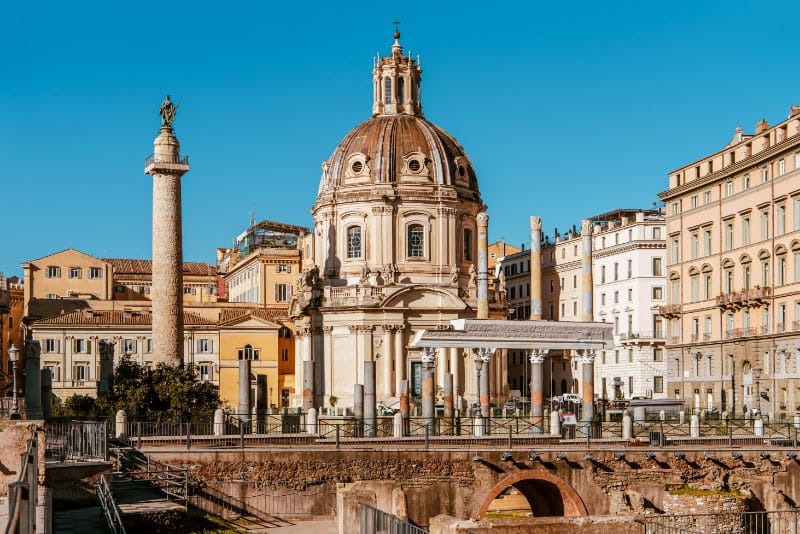
a. Rome at its peak
This was the largest and boldest of Rome’s imperial squares. It was paid for entirely with the spoils of Trajan’s foreign wars. Builders even carved away a whole hillside to clear the space, which tells you just how ambitious the plan really was.
b. The amazing column
- A 30-meter marble column wrapped in a spiral carved story
- Around 155 scenes and over 2,500 figures across its surface
- A hidden staircase of 185 steps once led to a viewing platform
- Trajan’s ashes were kept in the base, making it a tomb too
- A statue of Saint Peter now stands on top, added long after
c. What to spot today
- Rows of column stumps marking a huge vanished hall
- The towering column, best read slowly from bottom to top
- The spots where two libraries once flanked the column
- Fragments and paving that hint at the grand original scale
d. What made it special
- Laid out with neat, almost military order
- Far larger than the older Forum next door
- Built around a grand public hall rather than a temple
- A bold statement of imperial power
e. Onward to modern Italy
Look up toward the hill and ancient stone gives way to gleaming white marble. That’s your cue to head for Piazza Venezia and its towering monument.
5. Monument to Victor Emmanuel II & Piazza Venezia
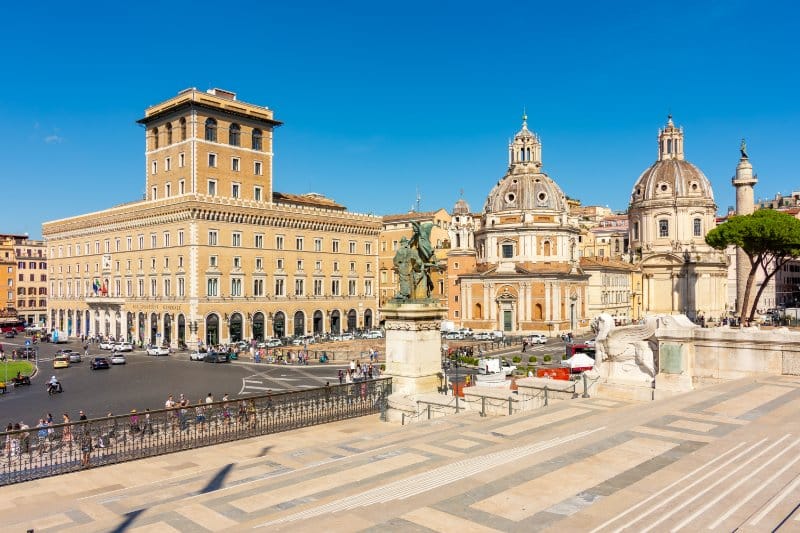
a. A monument to a nation
This enormous white marble monument celebrates Italy becoming one country, and it honors its first king, Vittorio Emanuele II. Locals fondly nickname it the Altar of the Fatherland, though some also joke that it looks like a giant wedding cake.
b. What to notice
- A giant bronze statue of the king on horseback, cast from old cannons
- A sweeping curve of tall, elegant columns
- Two four-horse bronze chariots crowning the top
- The Tomb of the Unknown Soldier, guarded by an eternal flame
c. Why it’s worth your time
- It looks nothing like the ruins around it, and that’s the whole point
- It tells the proud story of modern, united Italy
- Its terraces and viewpoints give you sweeping city views
d. Don’t miss the rooftop
- A lift can carry you right up to the very top
- The panorama stretches over the Forum and far beyond
- It’s one of the finest views on the whole walk
e. Into the old lanes
Below the monument, Piazza Venezia is one of Rome’s busiest crossroads. From here you slip into narrow streets and soon reach the richly decorated Church of the Gesù.
6. Church of the Gesù
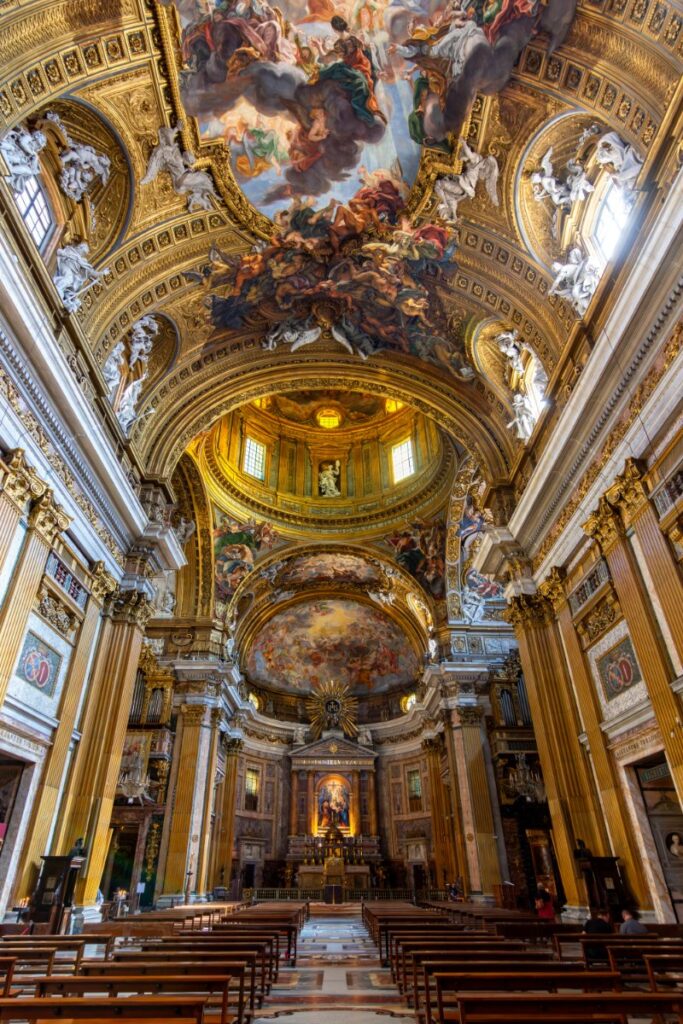
a. The Jesuit mother church
This is the main church of the Jesuits, founded by Saint Ignatius of Loyola. Its bold design went on to shape countless churches around the world. From the fairly plain front, you’d never guess how dazzling it is inside.
b. Why the design mattered
- One wide open hall instead of narrow side aisles
- Clear views straight to the altar and pulpit
- Better sound, so everyone could hear the sermon
- A scrolled front that became a Baroque favorite
c. What to look up and see
- A ceiling painting that seems to burst the roof open with light
- The glittering chapel of Saint Ignatius, framed in deep blue stone
- The saint’s remains resting beneath its altar
- The preserved arm of Saint Francis Xavier in the facing chapel
d. How to enjoy it
- Look straight up first, then let your eyes drift back down
- Notice how the painting and sculpture blur together
- Sit for a moment and take in the play of light and gold
e. A change of mood ahead
Step back outside and the feeling shifts quickly. A short walk brings you to Largo di Torre Argentina, a sunken square full of ancient ruins.
7. Largo di Torre Argentina
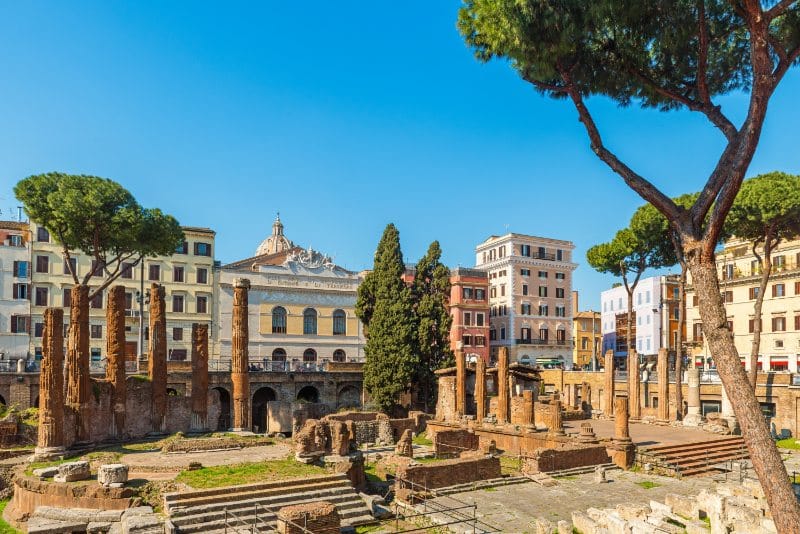
a. Ruins with a famous story
Below street level sit four very old temples from the days of the Roman Republic. Behind them once stood the hall where Julius Caesar was assassinated on the Ides of March in 44 BCE, struck down at the foot of a statue of his rival Pompey.
b. What you’ll see
- Four temple platforms, simply labeled A, B, C, and D
- Six standing columns of the round temple
- Ancient paving set several meters below the modern streets
- Stone blocks marking the hall linked to Caesar’s death
c. A surprise you’ll love
- A cat sanctuary tucked right into the ancient vaults
- Rescued cats lounging among two-thousand-year-old stones
- A favorite quick stop for anyone who loves animals
d. Good to know
- You view the site from railings above, then can head down to visit
- It’s a great short stop between the bigger sights
- Photos from the corner catch both the ruins and the cats
e. The contrast that makes it special
Here quiet ruins sit in a pit while busy Rome hums all around the edges. From here, the Renaissance streets carry you to the wonderfully preserved Pantheon.
8. Pantheon
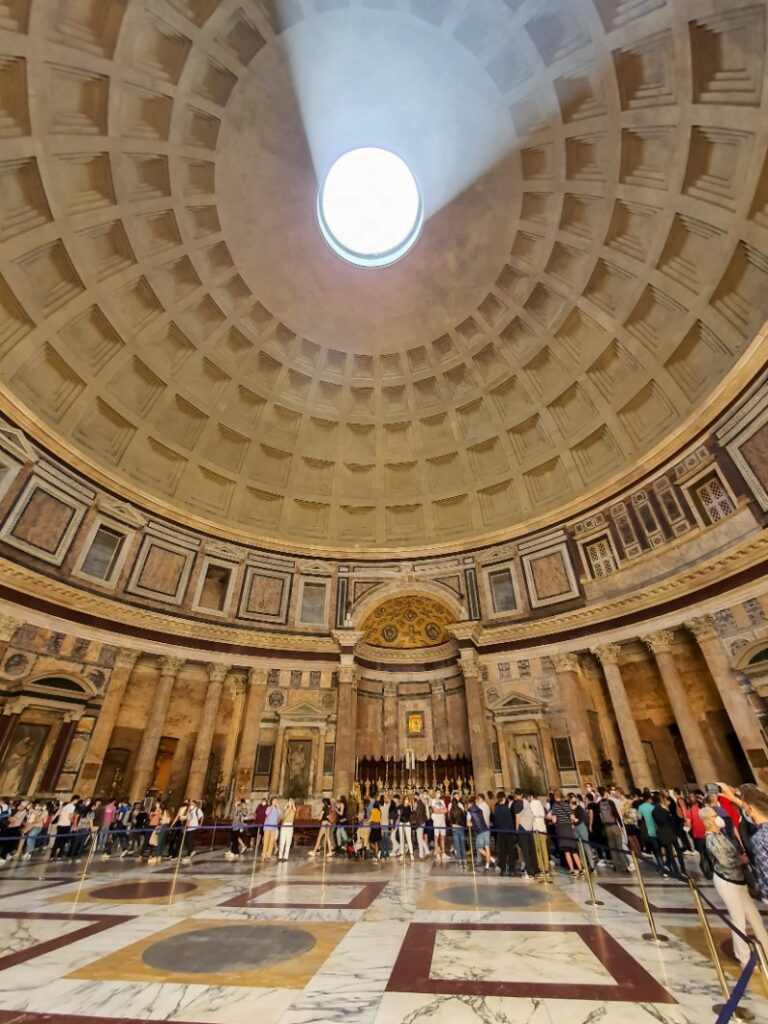
a. An ancient wonder still standing
The Pantheon is the best-preserved building from ancient Rome, and stepping inside feels a little like time travel. Emperor Hadrian rebuilt it, yet he kept the original builder’s name proudly over the door. Becoming a church later helped keep it safe for you to enjoy today.
b. What to look for
- Sixteen massive granite columns across the front porch
- The huge bronze doors, originals from Roman times
- The famous dome, still the largest of its kind in plain concrete
- A single round opening at the very top, called the oculus
- The tomb of the painter Raphael resting inside
c. The moment you’ll remember
- Standing under the dome as light streams through the oculus
- Watching that beam drift slowly across the floor like a sundial
- Seeing rain fall straight through and vanish into floor drains
- Realizing the dome’s height and width are exactly equal
d. Where to next
Leave the porch and follow the curve of the building around. A short stroll brings you to a church packed with masterpieces, San Luigi dei Francesi.
9. Church of Saint Louis of the French
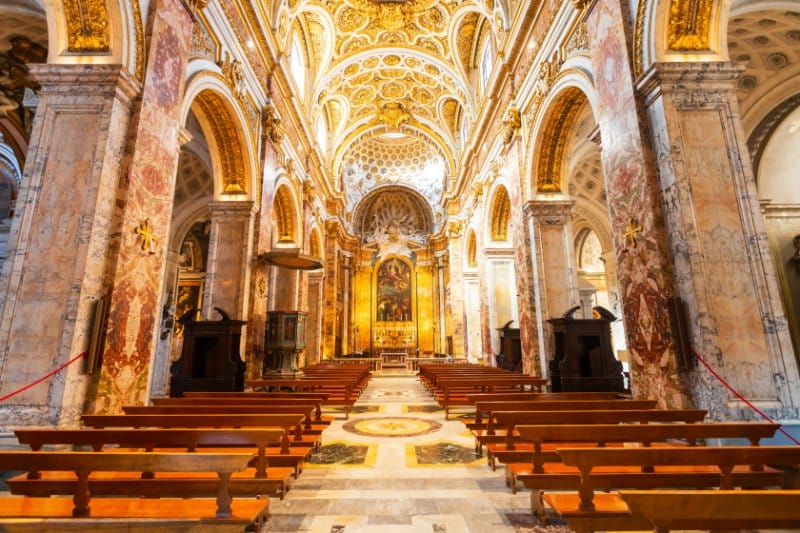
a. France’s church in Rome
This has served as the French national church in Rome for centuries, paid for by a French queen. Statues of French saints and kings line the front, but the real treasures are waiting quietly inside for you.
b. The Caravaggio masterpieces
- Three paintings of Saint Matthew, all by the great Caravaggio
- The Calling of Saint Matthew, where light slices through a dark room
- The Inspiration of Saint Matthew, hanging above the altar
- The Martyrdom of Saint Matthew, with the artist’s own face in the crowd
c. How to enjoy them
- Slow down and let your eyes adjust to the shadows
- Watch how bright light pulls the figures out of the dark
- Follow the pointing hands that drive each scene
- Notice the ordinary, real faces on the holy figures
d. Good to know
- The paintings sit in a side chapel to the left of the altar
- There’s often a coin-operated light to see them clearly
- It’s free to step inside, so it’s an easy, rewarding stop
e. A burst of open space ahead
Step out of the quiet, dim church and the sudden daylight feels wonderful. Just to the west lies one of Rome’s grandest squares, Piazza Navona.
10. Piazza Navona
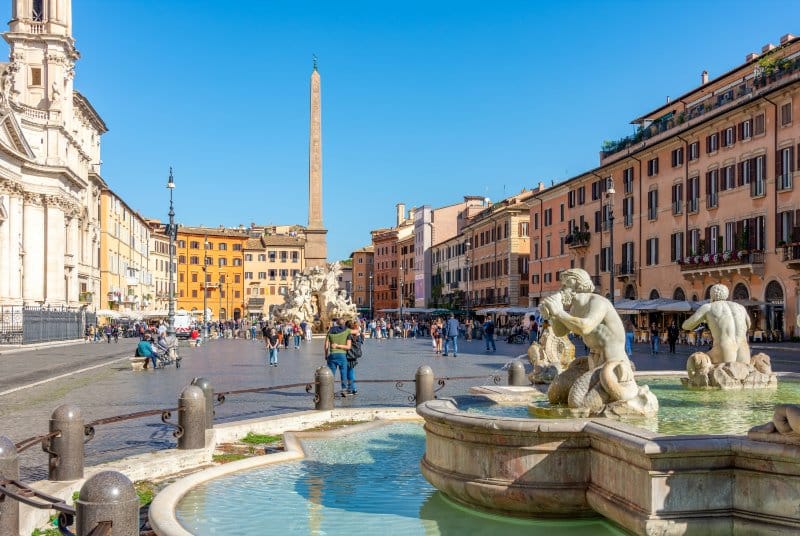
a. Baroque Rome at its best
This long, lively square sits right on top of an ancient stadium, which is why it has that stretched, oval shape. A pope later turned it into a showcase for his family, adding a grand church, a palace, and a spectacular central fountain.
b. The famous fountains
- Bernini’s Fountain of the Four Rivers at the very center
- Four giant figures standing for four great rivers and continents
- An ancient Egyptian obelisk rising from the rocky base
- Two more fountains anchoring each end of the square
c. What to expect today
- Splashing fountains and grand facades all around you
- Cafes lining the edges, perfect for a coffee break
- Street artists sketching and painting as you pass
- A relaxed, people-watching kind of buzz
d. Why you’ll love it
- It shows off Baroque style better than almost anywhere
- The buildings, statues, and fountains work as one big scene
- There’s always something to catch your eye
- It’s a lovely spot to simply sit and soak it in
e. Slipping into an old lane
Leave by the far corner and the wide square narrows into a quiet street, Via dei Coronari, once walked by pilgrims on their way to Saint Peter’s.
11. Via dei Coronari
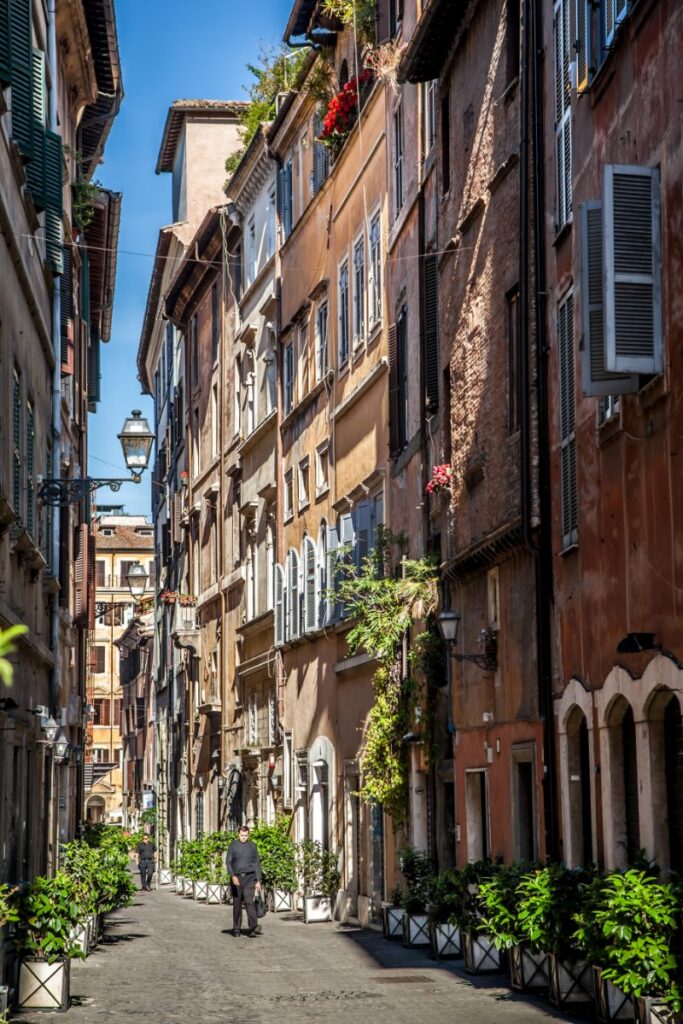
a. A charming Renaissance street
A pope straightened this street in the 1470s to guide pilgrims toward Saint Peter’s. Its name comes from the merchants who once lined it, selling rosary beads and holy souvenirs to travelers passing through.
b. What to notice
- Elegant old noble houses in warm, honeyed stone
- Wide carved doorways and overhanging wooden eaves
- Delicate patterns scratched into the plaster walls
- Small shrines to the Virgin Mary tucked on street corners
c. The vibe today
- A quiet, human-scale stroll away from the crowds
- Antique shops and craft workshops to peek into
- Hidden courtyards behind heavy old doors
- A genuine, unhurried slice of old Rome
d. A little tip
- It’s a lovely street to wander with no fixed plan
- Great for a slower moment between the big sights
- Look up often, as the best details sit above eye level
e. Toward the river
The lane runs straight down to the Tiber, where the walls open up. Ahead waits a beautiful old bridge lined with angels, the Ponte Sant’Angelo.
12. Ponte Sant’Angelo
a. A bridge of angels
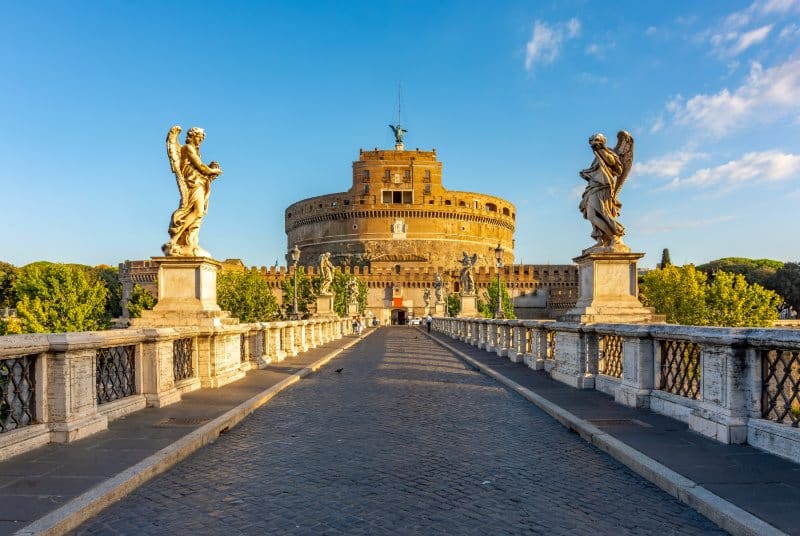
This crossing has linked the city to the Vatican for nearly two thousand years. Emperor Hadrian first built it, and three of its central arches are still the original Roman stone beneath your feet.
b. Bernini’s angels
- Ten marble angels line the walkway, each holding a symbol of Christ’s suffering
- The great sculptor Bernini designed the whole set
- His two personal carvings were moved indoors to keep them safe
- The angels you see today are faithful copies made under his eye
c. What to enjoy as you cross
- The row of expressive angel statues on both sides
- The round fortress of Castel Sant’Angelo straight ahead
- The Tiber flowing gently below you
- A framed view toward Saint Peter’s dome
d. A photo tip
- The bridge is one of the best photo spots on the walk
- Line up an angel with the castle behind for a classic shot
- Softer light near the ends of the day looks lovely here
e. Straight to the fortress
The bridge leads you right to the foot of a massive round castle. Cross over, and you arrive at Castel Sant’Angelo.
13. Castel Sant’Angelo
a. A building of many lives
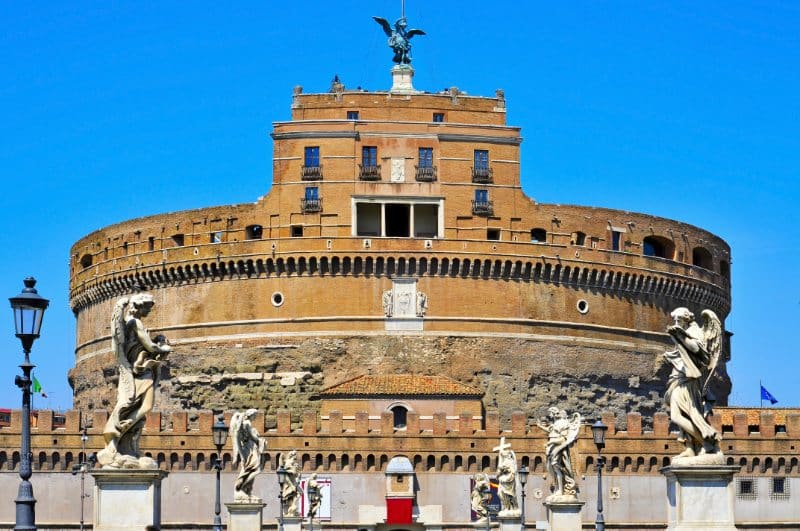
Few places have changed roles as often as this one. It began as Emperor Hadrian’s tomb, then became a fortress, a safe refuge for popes, a prison, and finally the museum you can explore today.
b. How its story unfolded
- Built as a grand emperor’s tomb
- Turned into a fortress within the city walls
- Named after a vision of the Archangel Michael during a plague
- Later a hidden refuge for popes in danger
c. What to see inside
- A long spiral ramp built by the ancient Romans
- Richly painted papal apartments upstairs
- The Passetto, a raised escape corridor to the Vatican
- The bronze Archangel Michael crowning the very top
d. The best view of the walk
- Head up to the rooftop terrace for a sweeping panorama
- All of Rome opens up right in front of you
- You get a clear line straight toward Saint Peter’s
- It’s a perfect spot to pause and take it all in
e. On toward the Vatican
From the terrace, one grand avenue leads straight to the Vatican. Head down and step onto Via della Conciliazione for the final stretch.
14. Via della Conciliazione
a. The grand approach
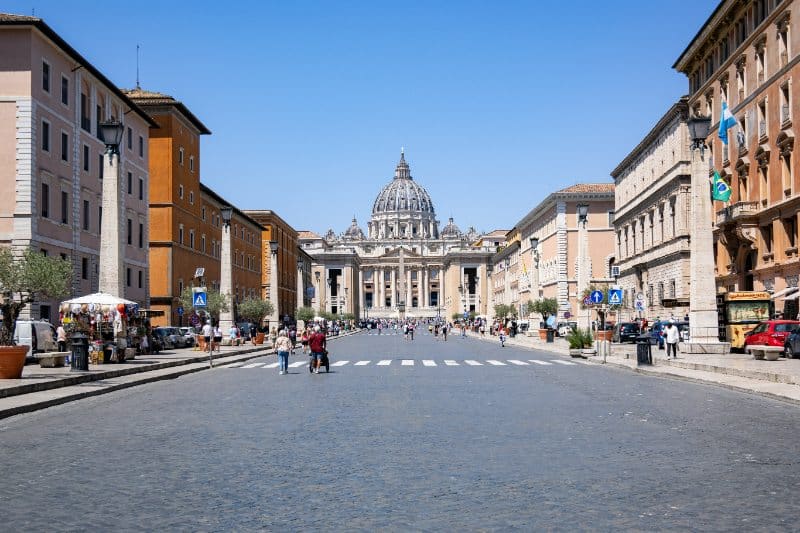
This wide boulevard was built to give Saint Peter’s a dramatic, open approach. Creating it meant clearing away a tangle of old medieval streets. The result is a broad, ceremonial path leading toward the basilica.
b. What to notice
- Two rows of tall, lantern-topped pillars leading your eye forward
- Grand old palaces preserved along both sides
- A view of Saint Peter’s that grows with every step
- A wide, open feel that builds a real sense of arrival
c. The story in its name
- The name means “reconciliation”
- It marks a 1929 agreement between Italy and the Vatican
- That deal recognized Vatican City as its own state
- It settled a long dispute that had dragged on for decades
d. Good to know
- It’s a flat, easy walk of about ten minutes
- Cafes and shops line parts of the route
- The view opens up best as you near the square
e. Crossing into the Vatican
As you walk, Saint Peter’s grows larger and clearer with each step. Cross the marble line set into the pavement, and you’ve officially entered Vatican City.
15. Vatican City’s Most Famous Sights
You’ve reached the grand finale. Four world-famous sights wait inside the smallest country on earth, and together they close your walk with unforgettable art, history, and faith.
a. St. Peter’s Square
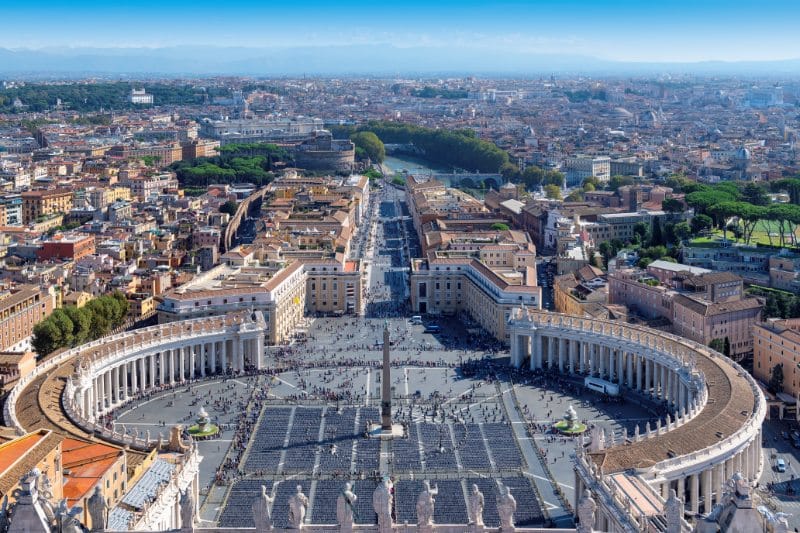
Bernini designed this vast square to feel like two arms opening wide to welcome you.
- A sweeping double colonnade of 284 columns
- 140 statues of saints looking down from above
- An ancient Egyptian obelisk standing tall at the center
- Two matching fountains framing the open space
- Marker stones where the rows of columns line up into one
b. St. Peter’s Basilica
This is one of the largest churches in the world, built over the traditional tomb of Saint Peter.
- Michelangelo’s Pietà, a tender and famous marble sculpture
- Bernini’s towering bronze canopy over the high altar
- Michelangelo’s soaring dome, high above the crossing
- The traditional resting place of Saint Peter below the altar
c. Vatican Museums
Miles of galleries hold some of the greatest art ever created.
- The Laocoön, an ancient marble of a priest and sea serpents
- The graceful Apollo Belvedere, a classical favorite
- A long hall lined with beautiful painted maps of Italy
- Raphael’s rooms, including the famous School of Athens
d. The Sistine Chapel
Save the very best for last. Michelangelo painted this ceiling between 1508 and 1512, filling it with scenes from the Book of Genesis. At its heart, God and Adam reach toward each other in the unforgettable Creation of Adam. Years later he returned to paint the powerful Last Judgment on the wall behind the altar. It’s the perfect place to end your journey, gathering Rome’s finest art into one breathtaking room.