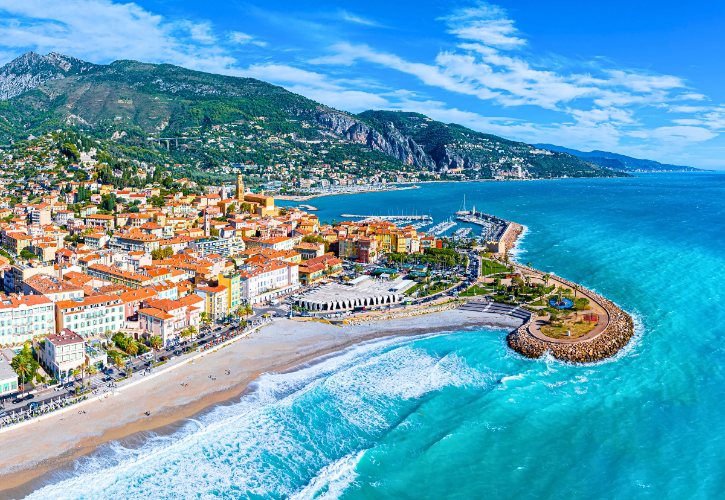
The French Riviera can seem like a lot to fit into one trip. The truth is friendlier. Twelve of its finest stops line up within short drives, most only 15 to 30 minutes apart.
Roll east from glamorous Cannes and the mood keeps changing, through quiet inland villages, then back to the coast, all the way to Menton by the Italian border.
Beaches, hilltop lanes, gardens, and sea views wait at every turn, without long hours behind the wheel. 😊
1. Cannes
a. The Glamour of Boulevard de la Croisette
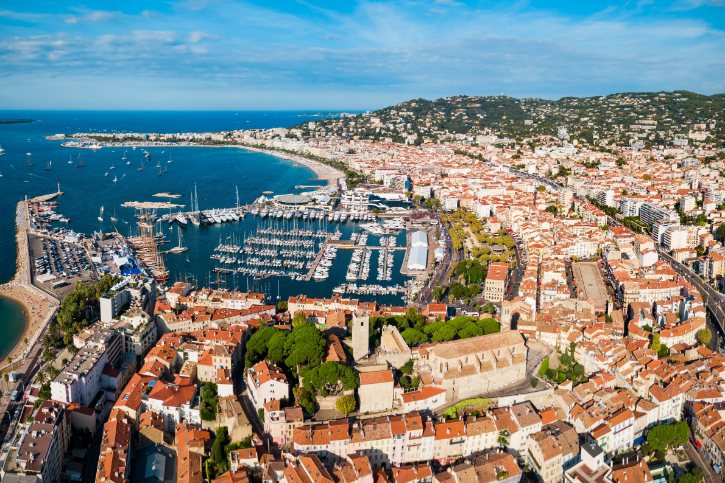
The Croisette is the face of Cannes, curving about three kilometers along the Bay of Cannes from the Palais des Festivals to the Pointe de la Croisette. Once a simple coastal track, it grew into one of the most famous seafront walks in the world.
As you stroll, keep an eye out for:
- Grand hotels like the Belle Époque Carlton and the Art Deco Martinez
- The Palais des Festivals, home of the famous film festival
- Palm-lined walkways, private beach clubs, and open public beaches
- Designer shops on one side, blue water and the red Estérel peaks on the other
b. Climbing Le Suquet, the Historic Old Town
Le Suquet is the old heart of Cannes, and the climb takes you up cobbled lanes past shuttered pastel houses. At the top and along the way, look for:
- The Église Notre-Dame-d’Espérance, a Provençal Gothic church from the 1500s and 1600s
- The old castle, now the Musée des Explorations du Monde, with art and artifacts from around the world
- A 12th-century watchtower reached by 109 steps
- A full 360-degree view over the town, the harbor, and the islands
c. The Old Port and a Market Worth Your Time
Down by the water, the old port mixes multi-million-euro yachts with brightly painted wooden fishing boats called pointus. The cafés along the quay are a fine place to sit and watch the harbor go about its day.
At the covered Marché Forville nearby, come hungry and look for:
- Local melons, sun-ripened tomatoes, and fresh vegetables
- Courgette flowers and other seasonal Provençal produce
- Fish brought straight off the boats, from sea bass to red mullet
- Socca, a hot chickpea-flour pancake cooked over a wood fire
d. A Quick Escape to the Lérins Islands
A short ferry takes you to two calm islands just offshore:
- Île Sainte-Marguerite, home to a fort that once held the “Man in the Iron Mask”
- Île Saint-Honorat, a monastery island where monks still tend vineyards and make wine
- Shaded paths under pines and eucalyptus, quiet coves, and clear water on both
From Cannes, the road climbs north into the hills, and the coast soon gives way to pine ridges and olive groves around Mougins.
2. Mougins
a. A Medieval Village Built in a Spiral
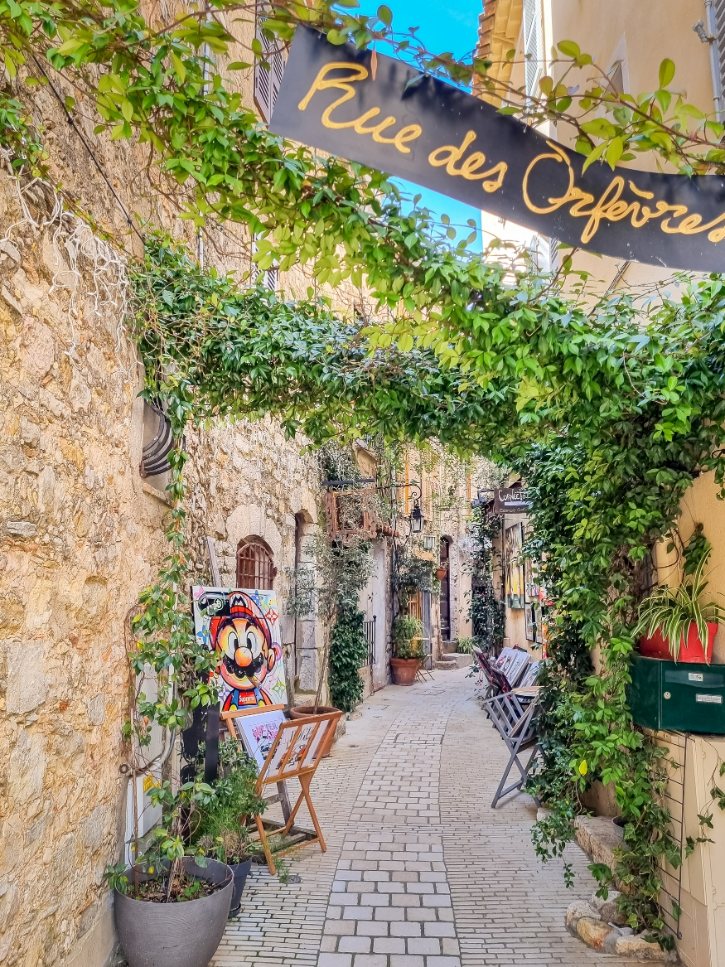
Mougins sits about 260 meters up, and after the buzz of the coast, the hush here is a real change of pace. As you climb, look for:
- Old streets coiling toward the summit in a spiral, once built to confuse attackers
- A surviving medieval stone gateway with crenellations
- Stone houses draped in bougainvillea and jasmine
- Wide views over the hills, the vineyards, and the sea to the south
b. A Long Home for Great Artists
Mougins has drawn creative people for generations, as you feel while you wander:
- Pablo Picasso spent the last twelve years of his life here
- Léger, Cocteau, Picabia, and Man Ray were all connected to the village
- FAMM, a museum devoted entirely to women artists, opened here recently
- Small sculpture studios, ceramic workshops, and galleries still fill the lanes
c. A Village That Shaped French Cooking
Chef Roger Vergé opened his famous mill restaurant here and helped create a lighter, sun-driven style of Mediterranean cooking, training future stars like Alain Ducasse. Today you can enjoy:
- Bistros, fine-dining rooms, and artisan food shops
- Regional sweets, candied fruit, and local olive oil
- A gastronomy festival that gathers celebrated chefs every two years
d. Green Space Just Outside the Walls
Beyond the village lies the Parc de la Valmasque, a large nature preserve that is easy to explore:
- Trails for walking, running, and cycling under umbrella pines and oaks
- A pond famous for its sacred lotus blooms in summer
- Wide views over olive-covered hills rolling toward the mountains
A short drive down toward the coast brings you into Antibes.
3. Antibes
a. Inside the Walls of the Old Town
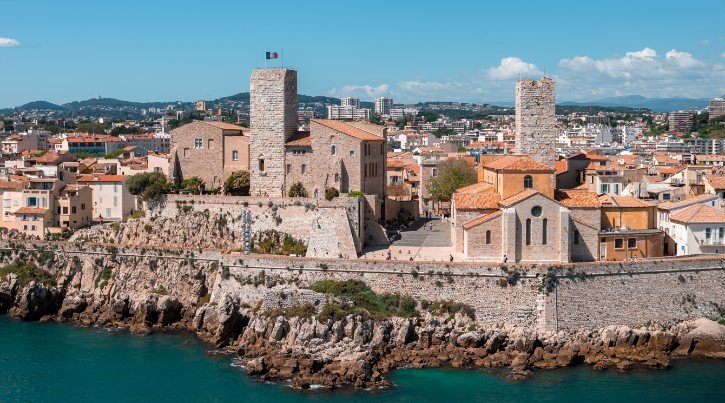
Founded by Greeks over two thousand years ago, Antibes still sits behind thick sea ramparts, with long views across the bay toward the snowcapped Alps. Inside the old town, you can:
- Wander narrow lanes to the ochre cathedral with its Renaissance altarpiece
- See Fort Carré, a star-shaped fortress on a promontory over the harbor
- Browse the covered Provençal market for cheeses, honey, and olive oil
b. The Castle Where Picasso Worked
The seafront Château Grimaldi gave Picasso a studio for a couple of months in 1946, and it is worth a visit even if art is not your main focus:
- Picasso worked here and left behind dozens of paintings and drawings
- It became a dedicated Picasso museum in 1966, one of the first anywhere
- A stone terrace looks straight out over the sea
- An outdoor sculpture garden sets modern bronze against the deep blue water
c. Yachts, Harbor, and Easy Beaches
Antibes has one of the great harbors of the coast, ringed by sand and history:
- Port Vauban is one of the largest marinas in the Mediterranean
- Le Nomade, a giant figure made of white steel letters, gazes out to sea
- Plage de la Gravette is a sheltered sandy cove beneath the ramparts
- Plage de la Salis is a wide beach with views back to the old town
d. The Green Side of Cap d’Antibes
The wooded peninsula south of town is a quiet, green counterpoint to the busy port, and you do not need a private villa to enjoy it:
- A coastal path runs for about five kilometers past rocks and scented scrubland
- The Villa Thuret botanical garden helped bring exotic plants to the coast
- Villa Eilenroc sits in public parkland with a large rose garden
From here the route turns back inland toward the craft village of Biot.
4. Biot
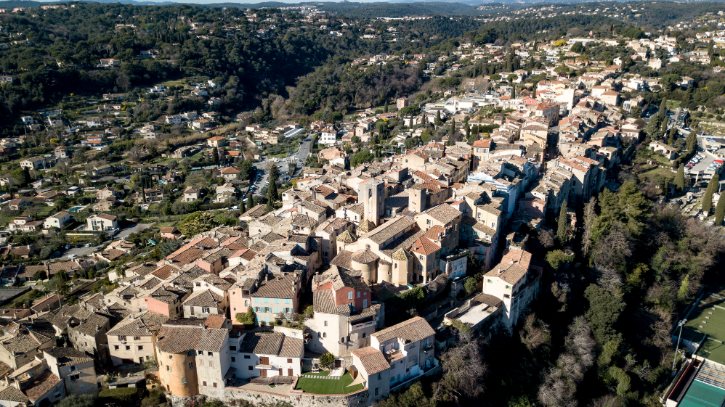
a. A Medieval Craft Village
Biot sits on a ridge above a wooded valley, just a few kilometers from the shore. As you explore its cobbled center on foot:
- Enter past the remains of old stone gateways into flower-filled lanes
- Reach the Place des Arcades, a medieval square framed by arched galleries
- Notice stone houses with floral ironwork, staircases, and vaulted passages
- Step into the church to see two Renaissance altarpieces
b. Famous for Bubbled Glass
Biot is known across the region for verre bullé, or bubbled glass, a local style that traps tiny air bubbles inside hand-blown crystal. The craft scene is very much alive:
- Watch master glassblowers gather glowing glass and shape it by hand
- Visit the main glassworks and smaller private studios around the village
- See how an old glassmaking flaw was turned into a signature look
- Look for pottery, ceramics, and other artisan work alongside the glass
c. The Fernand Léger Museum
Just below the village, set among pines and olive trees, stands a national museum built for the artist on land he once bought:
- A huge facade covered in bright ceramic and mosaic designs
- The most complete public collection of his work anywhere
- Pieces ranging from early Cubist experiments to bold images of workers and machines
- A quiet setting among pines and olive trees at the foot of the hill
d. Quiet Views Above the Valley
Because it sits on a ridge, Biot feels tucked away from the busy coast, and that setting shapes its calm mood:
- Green river country and wooded parkland spreading to the north
- The shine of the sea on the horizon to the south
- A slower pace, centered on the village’s crafts rather than the crowds
A short drive deeper into the hills leads to Saint-Paul-de-Vence.
5. Saint-Paul-de-Vence
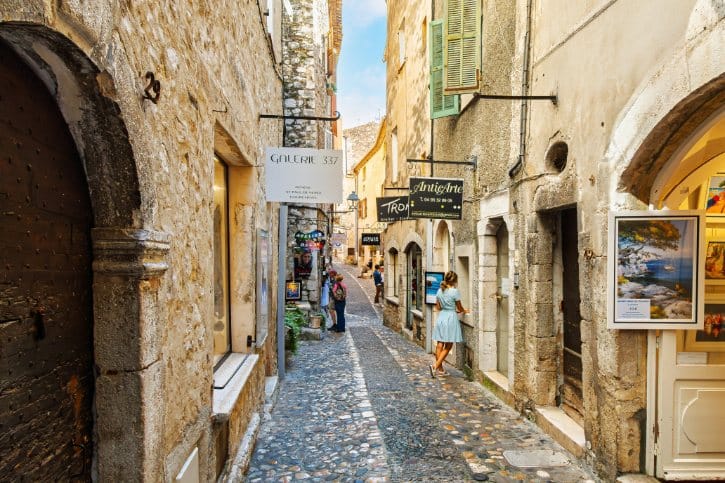
a. A Fortified Hilltop Village
Saint-Paul-de-Vence stands on a narrow limestone ridge behind walls built in the 1500s, and it is fully pedestrian, so you explore entirely on foot. Following the main street, you can:
- Pass through the Porte Royale, guarded by an old cannon
- Walk pebble-paved lanes lined with 16th- and 17th-century stone houses
- Reach the historic church, the urn-shaped Grande Fontaine, and its old vaulted washhouse
b. A Magnet for Modern Artists
Few small villages have drawn so many great painters:
- La Colombe d’Or, an old inn, still holds works by Matisse, Picasso, and Miró
- The Fondation Maeght shows sculpture by Giacometti and Miró in its gardens
- A large mosaic and pool designs by Braque and Chagall sit within the foundation
- Marc Chagall lived here for nearly twenty years and is buried in the village
c. The Feel of the Place
The village has a soft, intimate charm that rewards a slow wander:
- Warm grey stone that catches the light through the day
- Cypress, olive branches, and cascading wisteria framing the archways
- Galleries and craft shops lining the pedestrian lanes
- A quiet early hour that reveals the village’s real weight of history
- Views from the southern wall across terraced hills and vineyards toward the sea
d. Back Down to the Coast
Leaving the ridge, the road drops toward the wide Var valley, until the palm-lined seafront carries you into the energy of Nice.
6. Nice
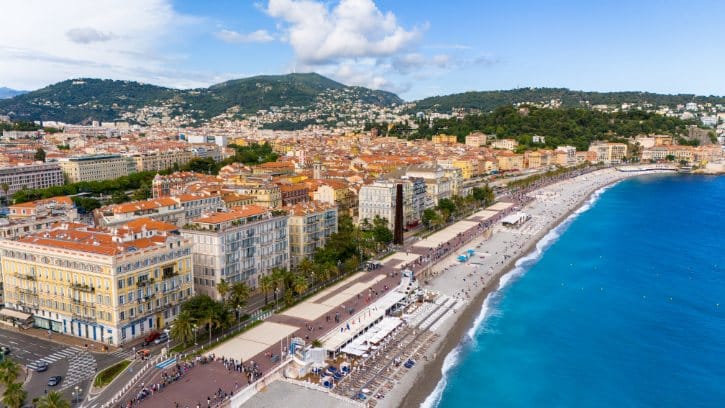
a. Walking the Promenade des Anglais
Nice’s famous seafront runs for seven kilometers along the curved Bay of Angels, and it is the defining walk of the city. Along it you will find:
- Tall palms and the well-known blue chairs facing the sea
- Separate lanes for walking, running, and cycling
- The landmark Hôtel Negresco with its salmon-pink dome
- Wide beaches and open views across the whole bay
b. Old Nice and Its Flavors
The old town still feels distinctly Italian, with tall ochre facades and green shutters:
- The Baroque Cathédrale Sainte-Réparate on Place Rossetti
- Cours Saleya, home to the lively flower and produce market
- Socca and pissaladière, an onion and anchovy tart, sold hot
- Small shops selling olive oil, herbs, and local sweets
c. The Best Views and Landmarks
Nice rewards anyone willing to climb a little or wander inland:
- Castle Hill, a green park with the finest views over the bay and old port
- Place Masséna, the grand civic square with its checkered plaza
- The Russian Orthodox cathedral, the largest of its kind in Western Europe
d. A City Made for Art
Nice’s light and setting have long drawn painters, and its museums reflect that:
- The Matisse Museum in the hillside Cimiez district, tracing the artist’s long life in the city
- The Marc Chagall museum, built around his large biblical canvases
- Roman ruins and garden terraces around both hillside sites
- A modern art museum currently closed for renovation, with works shown at other venues
Heading east, the coast road wraps around the cliffs of Mont Boron and soon reaches the sheltered bay of Villefranche-sur-Mer.
Read More: The Perfect 3 Day Nice Itinerary to See the Best of Nice
7. Villefranche-sur-Mer
a. A Chapel Painted by Cocteau
On the fishing quay stands the small Chapelle Saint-Pierre, a tiny space with a big personality:
- Once used by local fishermen to store their nets and gear
- Restored and decorated by the artist Jean Cocteau
- Frescoes that blend biblical scenes with everyday fishing life
- Small details like painted eyes on boat bows and fishermen hauling nets
b. One of the Deepest Bays on the Coast
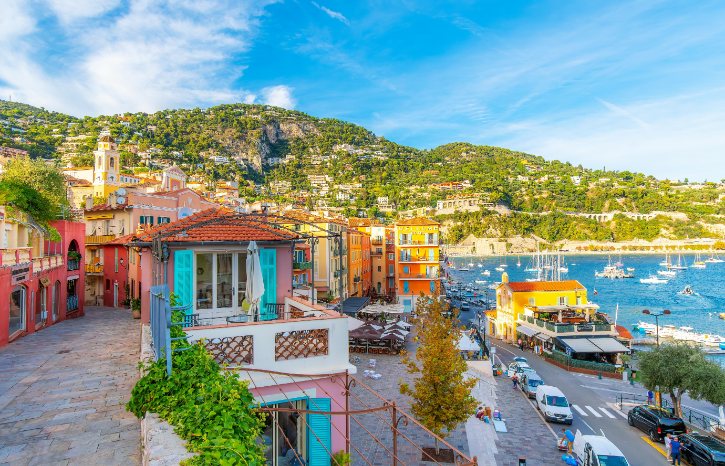
Villefranche wraps around a deep natural harbor that has welcomed ships since ancient times:
- Pastel houses in terracotta, peach, and pale yellow line the water
- Wooden fishing boats bob beside private yachts
- An old royal military port nearby now holds a marine research center
- The sheltered bay gives calm, clear water and wide views
c. The Citadel and Its Museums
Above the water sits the 16th-century Citadelle Saint-Elme, one of the earliest bastioned forts in Europe and now full of things to see:
- It houses the town hall, gardens, and open ramparts
- Small museums show sculpture and works by Picasso, Miró, and Picabia
- Vaulted tunnels and courtyards lead out to views toward Cap Ferrat
d. Climbing the Old Streets
Behind the harbor, the old town rises on a web of staircases and narrow alleys that are a pleasure to get lost in:
- The Rue Obscure, a covered stone passage from the 1200s
- The Baroque Église Saint-Michel with its old organ and carved figure of Christ
- Quiet squares and cafés tucked between the staircases
- Plage des Marinières, the main beach curving around the bay
A short drive brings you onto the peninsula of Saint-Jean-Cap-Ferrat.
8. Saint-Jean-Cap-Ferrat
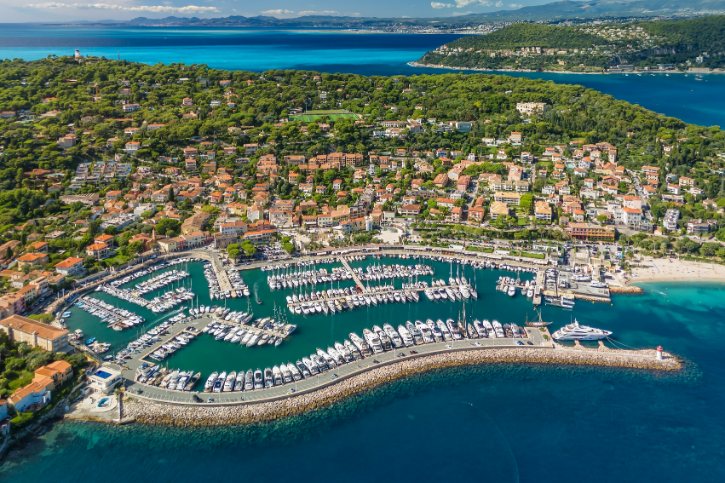
a. A Wooded, Peaceful Peninsula
This green peninsula reaches nearly three kilometers into the sea between two bays, and you do not need an invitation to enjoy it:
- Once rough grazing land, later a retreat for royalty and the wealthy
- A gentle climate that draws visitors all year
- Public paths tracing the rocky shore
- Coves, gardens, and coastal walks open to anyone on foot
b. The Villa Ephrussi de Rothschild
The peninsula’s star attraction is a pink Italian-style villa on the narrowest crest, with sea on both sides:
- Rooms full of French furniture, porcelain, and Old Master paintings
- Nine themed gardens, from French formal to Spanish, Japanese, and exotic
- A ship-shaped canal with musical fountains
- Terraces and rose beds with wide ocean views
c. Beaches and Coastal Walks
Some of the finest coastal walks in southern France trace this cape:
- A six-kilometer loop path circles the southern tip past cliffs and pines
- A shorter walk leads to an old chapel and a bronze statue of the Virgin
- Paloma Beach sits in a sheltered cove on the eastern shore
- Plage de Passable offers calm swimming with views toward Villefranche
d. The Village and Port
At the base of the cape lies the small village and harbor of Saint-Jean, once a quiet fishing community:
- A yacht harbor now lined with seafood bistros and cafés
- Pedestrian lanes leading to a 19th-century church
- A grand old hotel at the southern tip, with a seawater pool among the pines
From here the road climbs steeply toward the clifftop village of Èze.
9. Èze
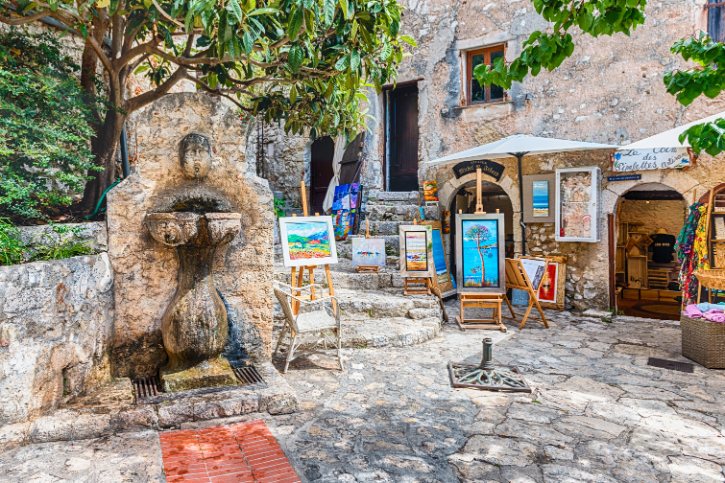
a. A Village in the Clouds
Èze sits about 427 meters above the sea, so high above its seaside counterpart that it earned the nickname “eagle’s nest”. Suspended between mountain and sea, it is a joy to wander:
- An old fortified gate leading into a fully car-free village
- A maze of stone lanes, vaulted tunnels, and hidden courtyards
- Old fountains and medieval houses of rough limestone
- A cool breeze and views running all along the shoreline
b. The Exotic Garden and Its Famous View
At the very top, on the ruins of the old castle, sits the Jardin Exotique:
- Thousands of cacti and succulents from the Americas and Africa
- Slender bronze sculptures set into the rocks
- A 360-degree panorama over the coast, one of the most famous on the Riviera
- Views reaching as far as Corsica on clear days
c. Shops, Perfume, and a Historic Church
The lanes below the garden are full of craft and scent:
- Old cellars and guard posts now hold artisan studios and galleries
- Sculpture galleries and small boutiques tucked into the lanes
- The Fragonard perfumery runs factory tours at the base of the village
- The 18th-century Baroque church, with trompe-l’oeil ceilings and an Adoration of the Magi
d. The Philosopher’s Path
One more highlight rewards walkers before you leave the village:
- The Chemin de Nietzsche, a steep trail linking Èze to the shore far below
- A path named for the philosopher who climbed it while composing a famous work
- Sweeping coastal views the whole way down
From Èze, the road descends toward the towers of Monaco.
10. Monaco
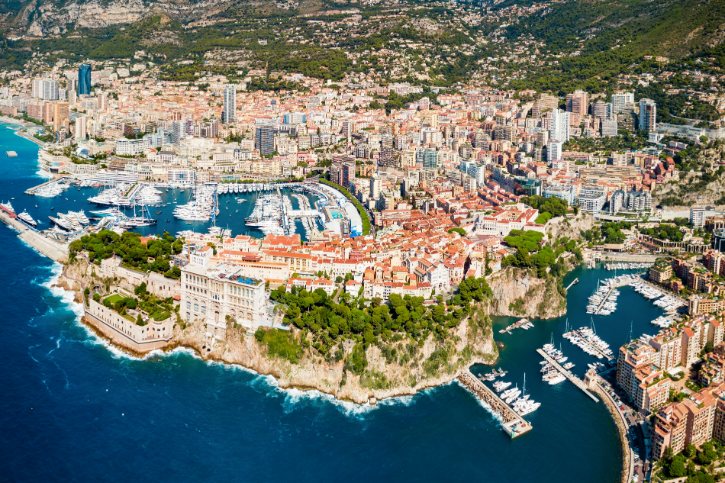
a. The Rock, Monaco’s Old Quarter
The oldest part of Monaco sits on a high limestone rock above the sea, set apart from the modern towers below:
- Narrow historic streets set apart from the modern towers below
- The Prince’s Palace, home to the Grimaldi family for centuries, with a changing of the guard each day at 11:55 in the morning
- The cathedral, resting place of the princes and of Princess Grace
- The Oceanographic Museum, built dramatically into the cliff above the water
b. Monte Carlo and the Casino Square
Across the harbor lies Monte Carlo, built up long ago to draw visitors with luxury and gaming. The grand Place du Casino is its showpiece:
- The Casino de Monte-Carlo, designed by the architect behind the Paris opera house
- Marble columns, gold-leaf moldings, and stained glass inside
- An ornate opera house, the Salle Garnier, built into the casino
- Famous hotels and cafés framing the square around it
c. Two Harbors and Green Corners
Monaco packs a surprising amount of variety into a tiny space:
- Port Hercule, the deep-water bay that hosts the Formula 1 Grand Prix
- Port de Fontvieille, a modern marina built on reclaimed land
- Cliffside gardens with pines and exotic plants above the sea
- A large rose garden planted in memory of Princess Grace
d. Crossing Back into France
Leaving Monaco, the road crosses back into France and climbs the mountain slopes, reaching the olive groves and cypress trees of Roquebrune-Cap-Martin.
11. Roquebrune-Cap-Martin
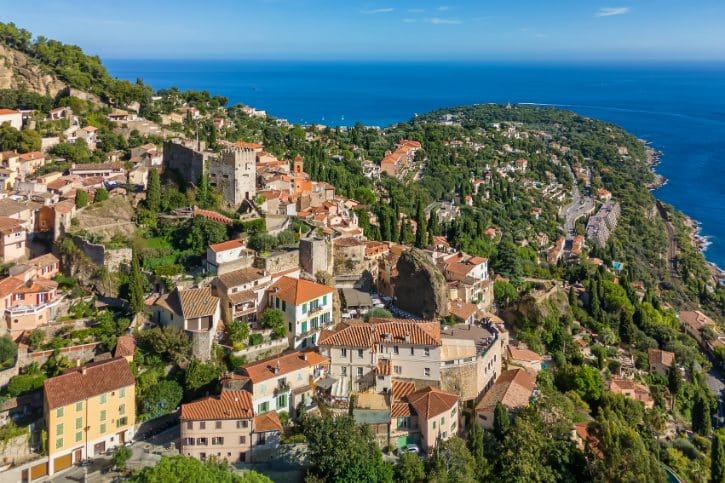
a. A Medieval Village and Ancient Keep
The village clings to a limestone hillside, and its old stone core is a joy to explore:
- The Château de Roquebrune has one of the oldest surviving feudal keeps in France
- Lanes like the Rue Couverte run as covered tunnels beneath the houses
- A 12th-century church, later reworked in Baroque style, sits near the center
- A rooftop terrace looks from Monaco all the way to Cap Martin
b. The Cape and Its Modern Landmarks
Below the village, a wooded cape meets the sea, traced by a coastal path:
- A shoreline trail named after the architect Le Corbusier
- Le Cabanon, his tiny wooden cabin, now a World Heritage site
- Villa E-1027, an early modern house designed by Eileen Gray
- Quiet coves and sea-facing views along the way
c. The Coast at Carnolès and an Ancient Tree
The lower, eastern part of town borders the bay of Carnolès and stretches toward Menton:
- Wide pebble beaches, seafront avenues, and public parks
- One of the oldest olive trees in France growing nearby
- An age estimated at roughly two thousand years or more, though sources differ
- A tree that still blossoms and produces small black olives each season
d. A Quiet Bridge Between Two Worlds
Roquebrune-Cap-Martin has a split personality that sets it apart from its busy neighbors:
- A medieval fortress high on the rock, and pine-shaded trails on the cape below
- None of the density of Monaco or the resort scale of the towns further west
- A calm, unhurried mood, with cliff trails, ancient olive groves, and sea views
- A natural link between the central coast and the Italian-flavored towns ahead
A short drive brings you into Menton.
12. Menton
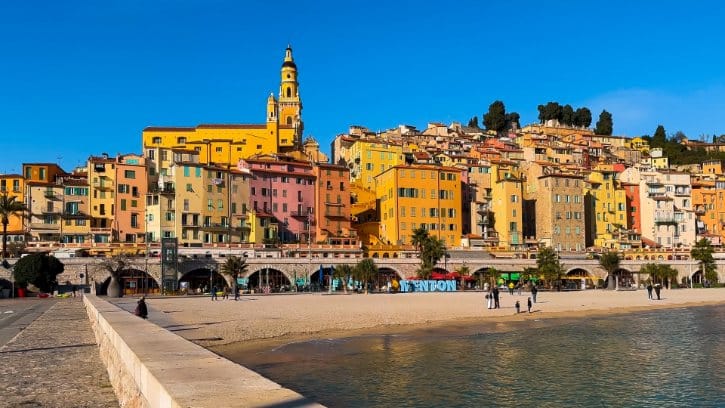
a. An Old Town with an Italian Feel
Menton sits right by the Italian border, and the old town spills down toward the sea in a skyline of terracotta roofs, ochre facades, and bell towers. Its landmarks include:
- The Baroque Basilique Saint-Michel-Archange with its tall bell tower
- A pebble-paved square laid with the Grimaldi coat of arms
- Stone ramps and stairways descending toward the water
- A covered market decorated with colorful ceramics
b. Gardens and Lemons
Menton’s sheltered climate gives it the mildest winters on the coast, making it a garden town like no other:
- Val Rahmeh, a botanical garden with rare plants from around the world
- Serre de la Madone, with subtropical trees and terraced pools
- Other historic gardens rich in ceramics, palms, and sea views
- The prized Menton lemon, used in marmalades, tarts, and limoncello
c. Cocteau’s Menton
The artist Jean Cocteau left a strong mark on the town, and you can still see it in several places:
- An old seafront fort he restored, now filled with his pastels, tapestries, and ceramics
- Pebble mosaics he set into the fort’s outer alcoves
- Sweeping murals covering the wedding hall inside the town hall
- A separate modern Cocteau museum, closed after flood damage, with works shown elsewhere
d. The Famous Lemon Festival
Each late winter, Menton throws a spectacle found nowhere else, the Fête du Citron:
- Giant sculptures, some up to ten meters tall, built entirely from citrus fruit
- More than a hundred tons of lemons and oranges pinned onto wire frames
- Parades of citrus-covered floats, bands, and dancers along the seafront
- A tradition that began in the 1930s to celebrate the local harvest
e. The End of the Road
Menton pulls the whole trip together, blending French and Italian life, citrus heritage, gardens, and warm sea views, and a walk east along the shore brings you to the Italian border itself. Twelve stops, each close to the next, and every one its own small world. That is the real charm of the French Riviera: not a list of separate places, but one connected coast that keeps changing around every bend.