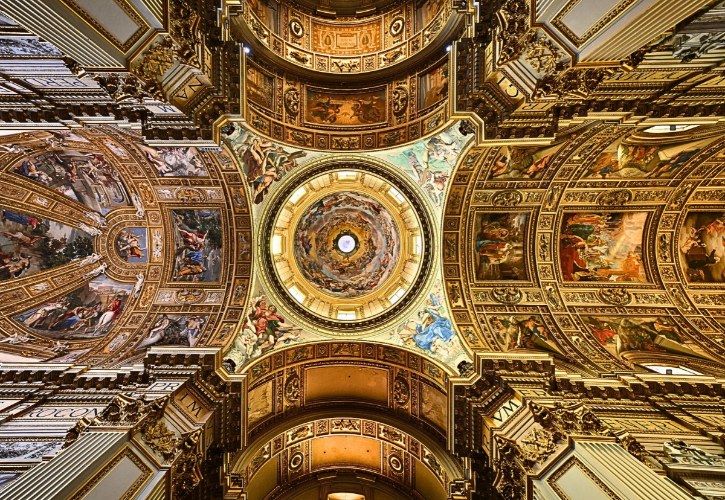
Rome’s famous basilicas pull the crowds, but the city saves some of its most jaw-dropping beauty for quiet lanes most travelers never find. Push past a plain door, and you step into gold-lined ceilings, glowing mosaics, and marble that catches the afternoon light.
These overlooked churches rival the headline landmarks, and they reward anyone curious enough to look. Here are twelve worth seeking out, and exactly what to look for inside each one. 😊
1. Chiesa di Santa Maria dell’Orto
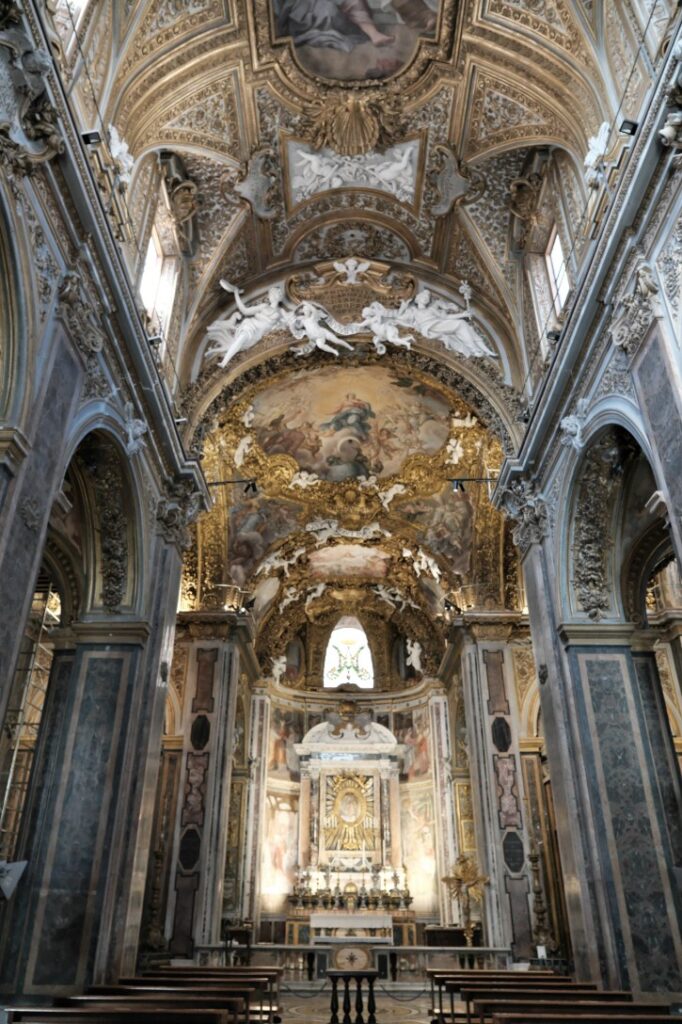
You’ll find it tucked into the southern corner of Trastevere, an easy add-on while you wander the neighborhood’s lanes.
a. A Guild Church Dripping in Gold
Hidden in a corner of Trastevere, this church grew from a humble garden shrine into one of Rome’s most lavish Baroque interiors. What makes it unusual is who built it: thirteen Roman trade guilds, from market gardeners to grocers, whose emblems are still woven into the stonework.
b. Why It Belongs on Your List
- It is the national church of Rome’s Japanese Catholic community, a link going back to a Japanese delegation that reached Rome in 1585.
- The interior is a rare survivor cared for by one of the city’s oldest active confraternities.
- You get full-blown Baroque splendor without the crowds.
c. What to Look For Inside
- A Latin-cross plan with three naves, reshaped by Guidetto Guidetti, described as a pupil of Michelangelo.
- A dazzling polychrome marble floor by Gabriele Valvassori, laid with garlands of fruit honoring the fruit-sellers’ guild.
- Gilded stucco festoons crowning the upper windows.
d. The Art You Came to See
- The high altar by Giacomo della Porta, holding a venerated 15th-century image of the Madonna and Child.
- Calandrucci’s ceiling fresco, The Assumption of Mary.
- Apse frescoes of the Stories of the Virgin by the Zuccari brothers, Taddeo and Federico.
Trust me, those fruit garlands underfoot are a detail you’ll keep thinking about.
2. Basilica di Sant’Andrea della Valle
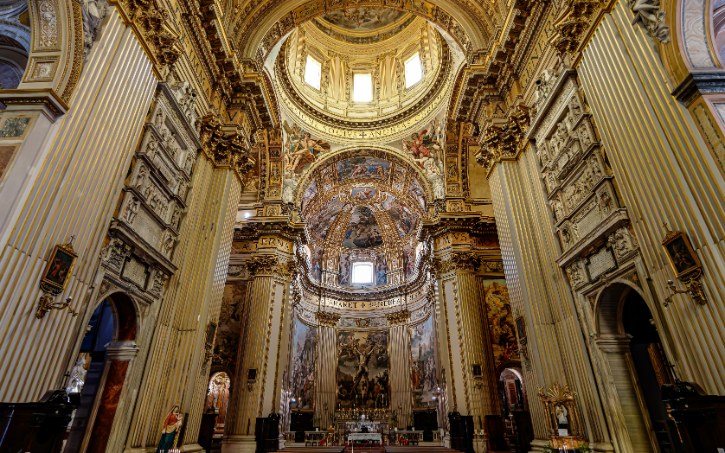
It sits along Corso Vittorio Emanuele II, a short stroll from Piazza Navona and Campo de’ Fiori.
a. One of Rome’s Grandest Baroque Stages
Step inside and the scale hits you instantly: vast proportions, soaring height, and a gold-rich apse. Fans of opera will recognize it, too, since Act I of Puccini’s Tosca is set right here.
b. The Dome That Defines It
- A colossal dome, long ranked the tallest in Rome after St. Peter’s.
- Designed and built by Carlo Maderno in the 1620s.
- Decorative details on the lantern carved by a young Francesco Borromini.
c. Masterpieces Overhead
- Giovanni Lanfranco’s Assumption of the Virgin Mary, filling the dome and setting the standard for Baroque ceilings for decades.
- Domenichino’s Evangelists on the pendentives and scenes of St. Andrew in the apse.
- Three colossal apse frescoes by Mattia Preti, showing the martyrdom of St. Andrew.
d. A Rivalry You Can Feel
Lanfranco and Domenichino worked here at the same time, in fierce competition. Knowing that as you look up adds a very human spark to all that grandeur. Look also for a St. John the Baptist carved by Pietro Bernini, father of the more famous Gian Lorenzo.
3. Santi Giovanni e Paolo al Celio
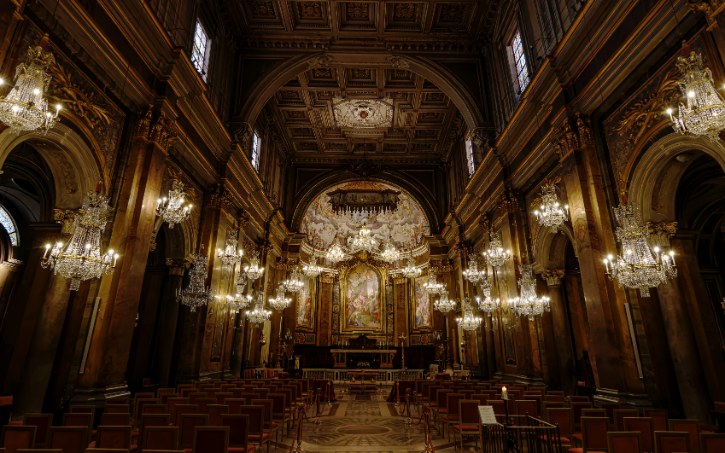
It stands on the peaceful Caelian Hill, just a few minutes’ walk from the Colosseum.
a. The Church of the Chandeliers
On the peaceful Caelian Hill, a modest exterior hides a showstopper. Locals call it the Chiesa dei Lampadari, and the name fits:
- Around 35 crystal chandeliers hang across the nave, packed with hundreds of bulbs.
- Together with the gilded ceiling and organ music, the effect feels like a luminous ballroom.
- It is now one of Rome’s most sought-after churches for weddings.
b. Ancient Rome Beneath Your Feet
- The church sits atop the Case Romane del Celio, ancient Roman houses with early Christian wall paintings.
- A floor plaque marks the traditional martyrdom site of the brothers John and Paul.
- Keep fact and legend separate here: archaeology proves early Christian activity below, but the martyrdom link rests on devotion.
c. Treasures to Track Down
- The apse fresco Christ in Glory by Cristoforo Roncalli, known as Il Pomarancio.
- Three monumental paintings beneath it, by Triga, Piastrini, and Barbieri.
- An ornate coffered wooden ceiling and a pair of historic organs.
4. Santa Prassede
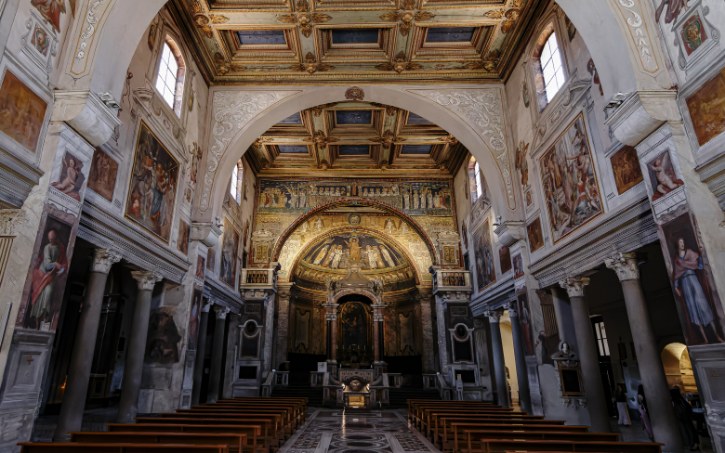
You’ll find it just one block behind Santa Maria Maggiore, in the Monti district.
a. Gold Mosaics Straight Out of Byzantium
One block behind Santa Maria Maggiore, this basilica holds the most complete 9th-century mosaics in Rome. Elsewhere you dig underground for early medieval art. Here it glows in gold in the open church, no descent required, in a style closer to Byzantium than to Baroque Rome.
b. The Chapel That Steals the Show
- The tiny Chapel of Saint Zeno, built by Pope Paschal I for his mother.
- Walls and vault completely sheathed in shimmering mosaics.
- A portrait of Theodora wearing a square halo, the medieval sign a person was still living when the work was made.
c. Reading the Sanctuary Mosaics
- The apse vault shows Christ among saints, with Paschal I holding a model of the church.
- The arches draw on the Book of Revelation, with angels, the winged Evangelists, and elders offering golden crowns.
- Look for the stylized jeweled city of the Heavenly Jerusalem.
d. Small Wonders, Big History
- A marble bust by Gian Lorenzo Bernini, one of his earliest works.
- The Column of the Flagellation, brought to Rome in 1223 (its link to Christ rests on tradition).
- A red porphyry disc marking a well tied to a martyr legend.
5. Sant’Andrea al Quirinale
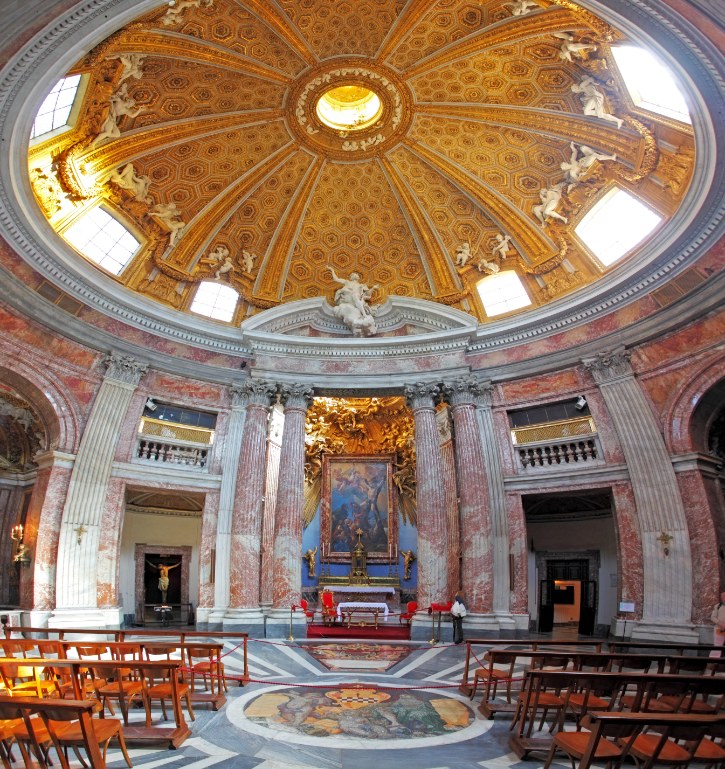
It sits on Via del Quirinale, directly opposite the Quirinal Palace.
a. Bernini’s Pocket-Sized Masterpiece
Small but theatrical, this Jesuit church is one Gian Lorenzo Bernini is said to have treasured above his other works, returning in old age to sit inside it for hours. Despite its compact size, it feels grand, thanks to the way architecture, sculpture, painting, and sunlight fuse into a single composition.
b. A Clever Oval Plan
- Bernini built it on an oval, wide rather than deep.
- Step inside and the high altar greets you at once, straight across the room.
- An oval dome and lantern crown everything in marble, gilding, and stucco.
c. The Drama at the Altar
- A high altar of gilded bronze and lapis lazuli.
- The altarpiece Martyrdom of St. Andrew by Guillaume Courtois.
- Above it, a marble St. Andrew rising toward a golden sunburst of angels, by Antonio Raggi.
d. How to See It Like Bernini Intended
Pause just inside the entrance and let your eye travel up from the altar into the dome. That upward sweep is exactly the effect he designed. Look for the eight sculpted figures seated around the dome’s base, and paintings by Baciccia in the first chapel on the right.
6. Santa Cecilia in Trastevere
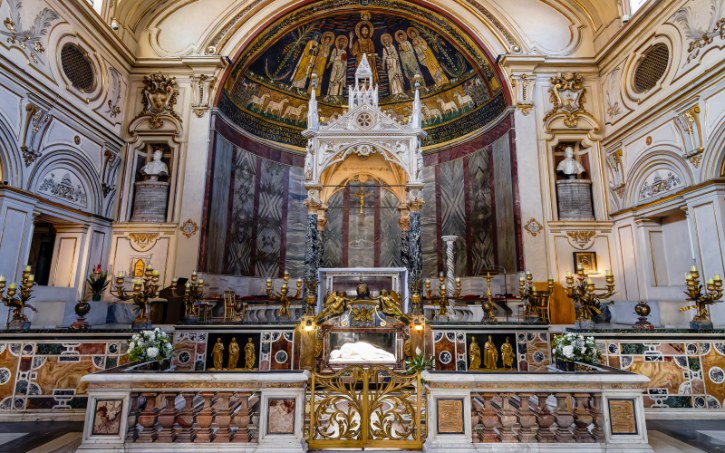
It’s in the heart of Trastevere, perfect to pair with an evening stroll through the quarter.
a. Home of the Patron Saint of Music
Behind a serene forecourt sits a church honored as the Roman home of Saint Cecilia. Beyond the devotional story, it rewards art lovers with an astonishing span of eras under one roof.
b. Centuries of Art in One Room
- A glowing 9th-century apse mosaic with Christ, saints, and Pope Paschal I.
- Arnolfo di Cambio’s Gothic marble ciborium, dated 1293, rising over the altar.
- A lively 18th-century ceiling fresco by Sebastiano Conca.
c. The Sculpture You Won’t Forget
- Stefano Maderno’s Saint Cecilia (1600), carved in luminous white marble.
- The story behind it: her body was reportedly found intact during excavations, and the sculpture captures the exact pose.
- Look closely at her fingers, three on one hand and one on the other, a quiet sign of the Trinity.
d. A Masterpiece Behind Closed Doors
- Pietro Cavallini’s Last Judgment (around 1290), a breakthrough in Italian painting.
- Important: it is not visible from inside the church. It sits in the nuns’ choir and must be reached separately through the monastery.
- Below the church lie excavated Roman rooms and a jewel-like crypt.
Read More: Rome’s Trastevere Is Easy to Explore — These 12 Amazing Spots Are Just Minutes Apart
7. Santi Ambrogio e Carlo al Corso
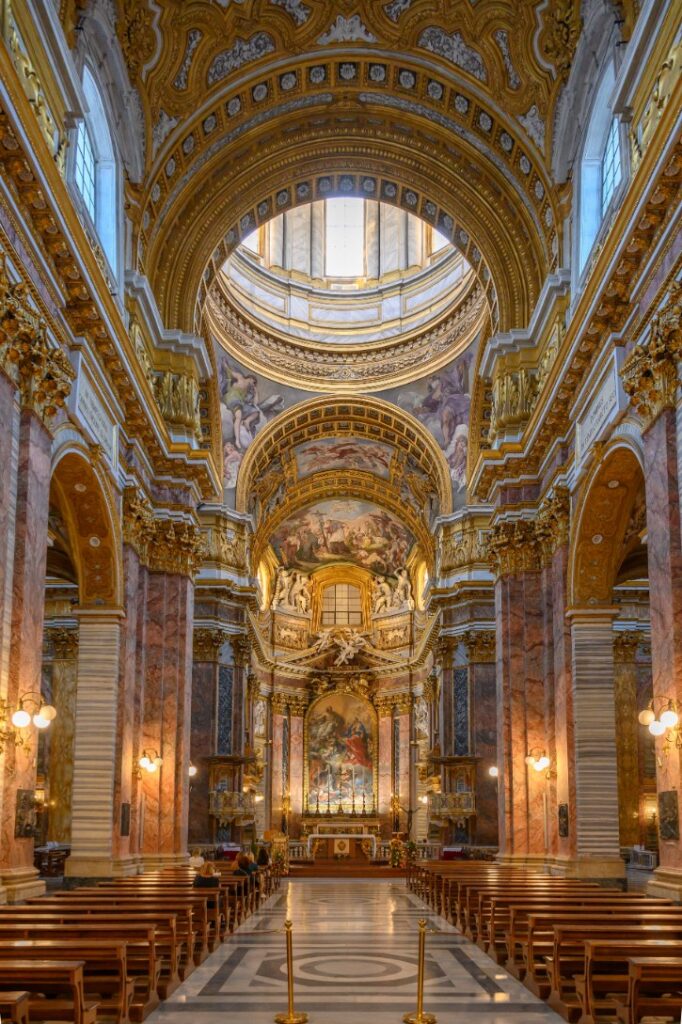
It fronts the busy Via del Corso, right in the thick of Rome’s main shopping street.
a. Grandeur Off a Busy Shopping Street
Step off the bustling Via del Corso and the shift is astonishing: a soaring, brightly lit sanctuary that counts among the grandest Baroque interiors in Rome. It serves as the national church of Rome’s Lombard community.
b. A Milanese Touch in Rome
- A broad central nave, side aisles, and a wide transept.
- The crossing dome and apse by Pietro da Cortona.
- A rare curved ambulatory behind the altar, echoing Milan Cathedral.
c. The Highlights Overhead and Behind
- Giacinto Brandi’s dramatic ceiling fresco, The Fall of the Rebel Angels.
- A high altarpiece of Sts. Ambrose and Charles by Carlo Maratta.
- A gilded reliquary holding the Heart of Saint Charles Borromeo, donated from Milan.
d. Hidden Corners Worth Your Time
- Walk the ambulatory to find a full cycle of allegorical ceiling paintings most people miss.
- Seek out the Chapel of Saint Olav, the national shrine of Norwegian Catholics in Rome.
- Look into the transept for marble statues of David and Judith.
8. Chiesa Nuova di Santa Maria in Vallicella
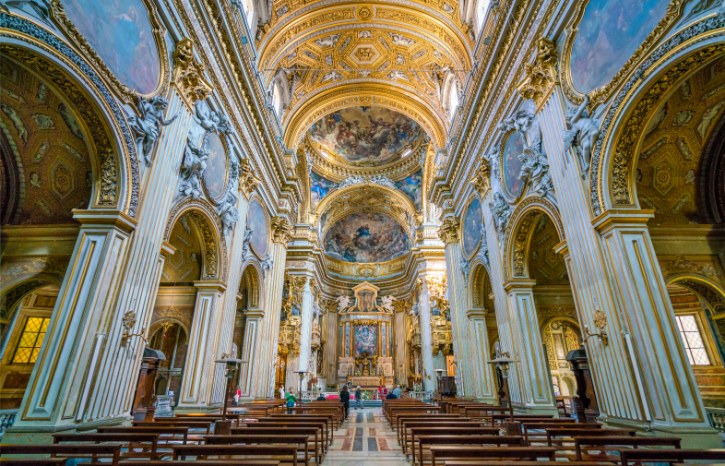
You’ll find it just steps from Piazza Navona, along Corso Vittorio Emanuele II.
a. A Museum of Baroque Painting
Nicknamed the “New Church”, this sanctuary belonged to St. Philip Neri and his Oratory. Though he wanted plain simplicity, it became a treasure house, and it holds a genuine headline: the only paintings by Peter Paul Rubens in Rome still in their original spot.
b. The Rubens Altar and Its Secret
- Rubens’s three-part ensemble at the high altar, completed in 1608.
- Because glare ruined his first version, he repainted it on matte slate.
- A central oval panel lifts away to reveal a venerated medieval Madonna beneath.
c. More to Discover
- Dramatic nave, dome, and apse frescoes by Pietro da Cortona.
- The glittering Chapel of Saint Philip Neri, encrusted with rare marbles and mother-of-pearl.
- In the sacristy, Alessandro Algardi’s marble St. Philip Neri and the Angel.
d. A Caravaggio Footnote
Keep in mind that Caravaggio’s famous Entombment once hung here before moving to the Vatican. A faithful copy now stands in its place, so you can still picture the original setting.
9. Santa Maria dell’Anima
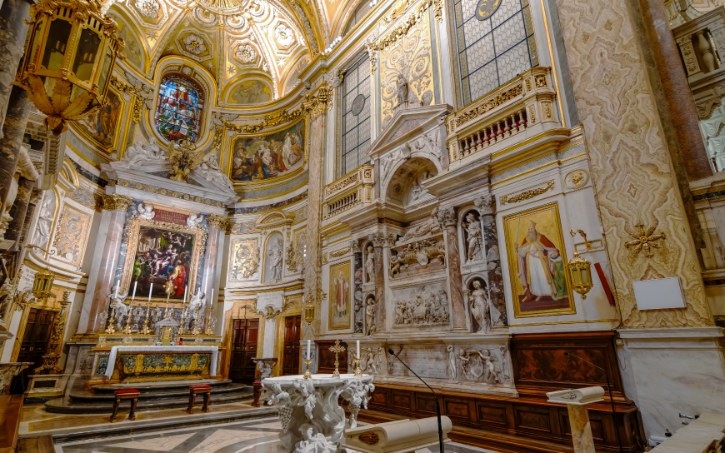
It hides on a quiet lane right behind Piazza Navona.
a. Rome’s German Church with a Northern Soul
Tucked behind Piazza Navona, this is Rome’s German national church, and it feels different from almost anywhere else in the city. Built deliberately “in the German style”, it fuses Northern European design with Italian Renaissance and Baroque art.
b. An Unusual Layout
- A broad three-nave hall with eight side chapels.
- A brick bell tower topped by a conical spire of colorful majolica scales.
- Looking back toward the entrance, a vibrant stained-glass window of the Madonna.
c. The Standout Works
- Giulio Romano’s luminous Holy Family and Saints over the high altar.
- The evocative Funerary Monument of Pope Adrian VI, the Dutch-born pope, designed by Baldassarre Peruzzi.
- A marble Pietà by Lorenzetto that reworks Michelangelo’s famous version.
d. A Hidden Pantheon
Behind the plain street facade hides a gallery of German and Netherlandish tombs, including monuments by the Flemish master François Duquesnoy. The contrast between the understated outside and the rich interior is a big part of the charm.
10. Santa Maria in Portico in Campitelli
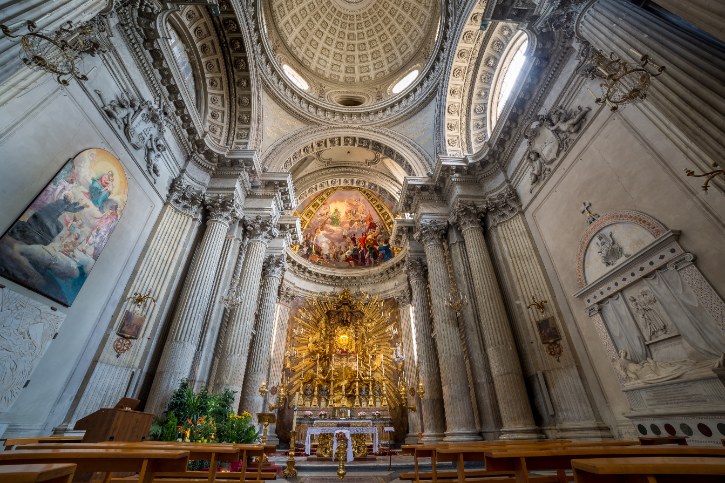
It rises over Piazza di Campitelli, next to Rome’s historic Jewish Quarter.
a. A Grand Thank-You Born from Crisis
When plague struck Rome in the mid-1600s, the city vowed to honor a revered Marian image. Once the epidemic passed, this grand sanctuary rose to house it, designed by Carlo Rainaldi into one of Rome’s most dramatic Baroque interiors.
b. Fact Versus Legend
- The plague and the civic vow are documented history.
- The story of the icon appearing miraculously centuries earlier is devotional tradition.
- The surviving icon itself dates to the 11th century, a small work of silver-gilt and enamel.
c. The Theatrical High Altar
- A sweeping hall of freestanding columns, rare in Roman Baroque and inspired by Palladio.
- A towering altar of clouds, sunburst rays, and angels.
- At its heart, the tiny gilded-silver icon, a striking contrast of miniature and monumental.
d. Genuine Treasures, One Myth to Skip
- A painting of St. Michael by Sebastiano Conca and a canvas by Luca Giordano.
- A Birth of St. John the Baptist by Baciccia.
- Skip the hunt for the ancient alabaster column some guidebooks mention, since it has never actually been confirmed here. Head instead to the Chapel of the Relics, where a rare Byzantine portable altar is the real reward.
11. San Marcello al Corso
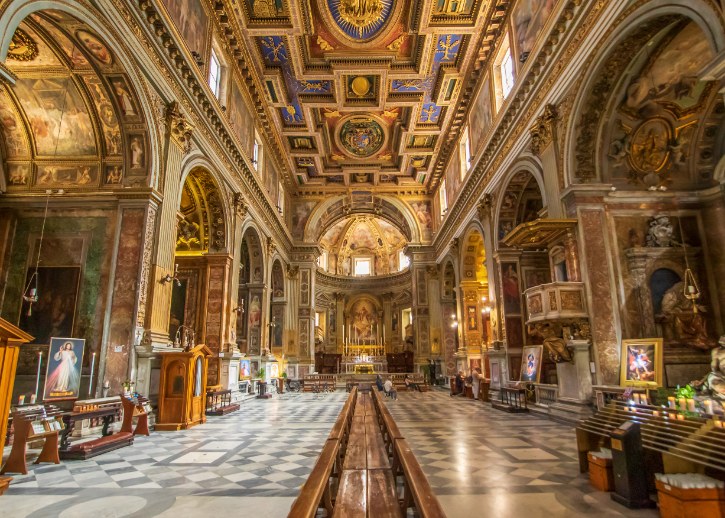
It sits midway along the busy Via del Corso, in the center of the city.
a. A Church That Survived the Flames
Behind Carlo Fontana’s sweeping Baroque facade sits a sanctuary with a dramatic survival story. The building burned to the ground in 1519, yet its 14th-century wooden crucifix survived intact and became a focus of devotion during plague processions.
b. A Ceiling Worth Looking Up For
- A long single nave with five chapels on each side.
- A richly carved wooden coffered ceiling, created in the 1590s.
- Mannerist frescoes that set the church apart from Rome’s bigger basilicas.
c. The Must-See Art
- The Miraculous Crucifix of San Marcello, carved and gilded wood from around 1370.
- A monumental Crucifixion and Passion scenes on the counter-facade.
- A Venetian-style double tomb by Jacopo Sansovino near the entrance.
d. Easy to Walk Past
- A dramatic Baroque wooden pulpit with a sculpted angel supporting it.
- Perino del Vaga’s Mannerist chapel frescoes, finished by Daniele da Volterra.
- Turn back toward the door on your way out. The counter-facade art is simple to miss on the way in.
12. Basilica di Santa Francesca Romana
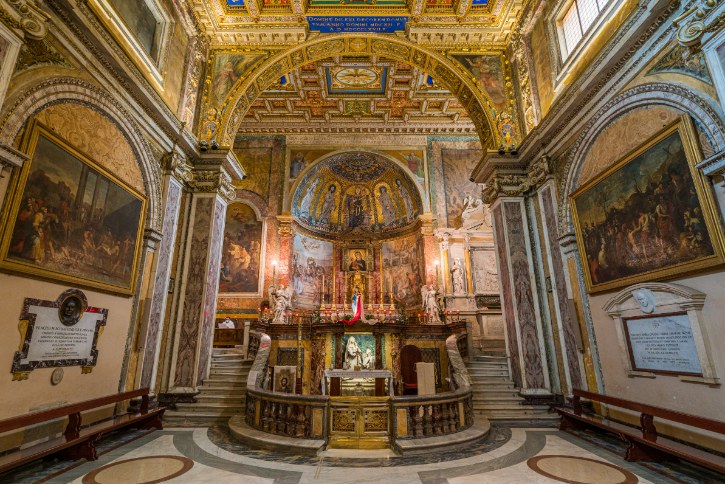
It stands right beside the Roman Forum, directly facing the Colosseum.
a. Fifteen Centuries Beside the Forum
Standing between the Roman Forum and the Colosseum, this basilica packs nearly fifteen centuries of history inside its walls. Even after a day among the ruins, stepping in unites early Christian painting, medieval mosaic, Renaissance tombs, and Baroque marble under one roof.
b. A Colorful Ceiling Over Ancient Bones
- A 12th-century apse and soaring Romanesque bell tower survive intact.
- Overhead stretches a wooden coffered ceiling in vivid blue, red, and gold.
- The contrast between the golden medieval apse and the rich ceiling is unforgettable.
c. Bernini, and What’s Left of It
- The Confession of Saint Frances of Rome, designed by Gian Lorenzo Bernini.
- You can still admire his architecture: double staircases, a curved balustrade, and red jasper columns.
- His original bronze sculpture was melted down in 1798. The marble group you see today was carved later, in 1866.
d. A Precious Early Icon
- A Marian icon dating to the 5th or 6th century, rescued from crumbling Santa Maria Antiqua.
- Hidden for centuries beneath later overpainting until a careful restoration revealed it.
- Nearby hangs a rich Nativity by Carlo Maratta.
e. A Legend Set in Stone
Near the right transept, look for a stone slab with two rounded hollows, revered by tradition as the knee-prints of Saints Peter and Paul. Historians read it as pious legend tied to the church’s spot on the ancient Via Sacra, a charming end to your tour of Rome’s quiet masterpieces.