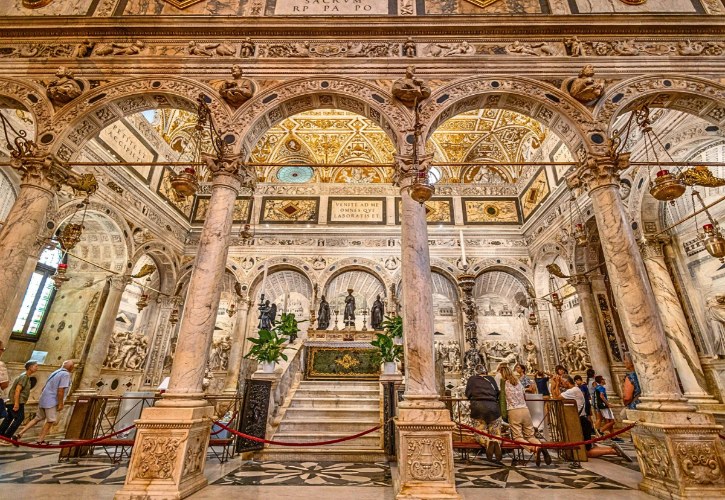
Here is a tip worth taking: when you are in Venice, give yourself a day in Padua. In under 30 minutes by train you can swap the crowds and high prices for a city that feels calmer, friendlier, and every bit as rich in history.
You will stand beneath world-changing frescoes, wander one of the grandest squares in Europe, and sip coffee where students have argued about life for nearly two centuries, all on foot in a single easy day. 😊
1. Scrovegni Chapel: The Little Room That Changed Art
a. A Masterpiece Born From One Commission
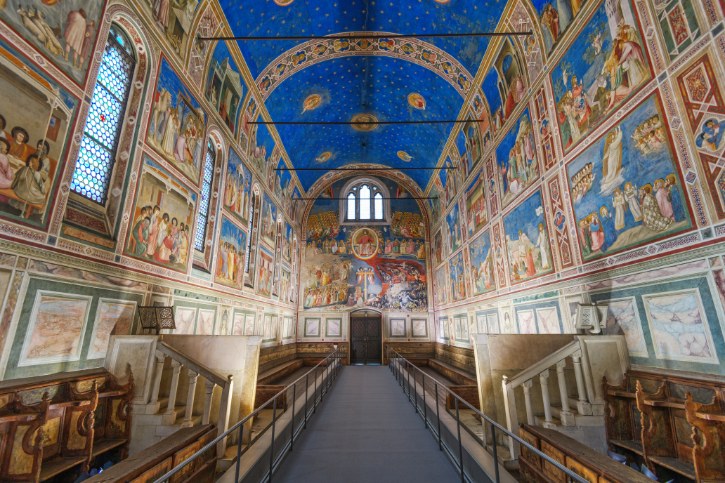
In the early 14th century, a wealthy local named Enrico Scrovegni hired the painter Giotto to decorate a small family chapel. Giotto worked here between 1303 and 1305. From the outside it is a plain little building, yet it hides one of the most important rooms in the history of art.
b. What You Will See Inside
Step through the door, let your eyes adjust, then look for:
- Scene after scene telling the lives of the Virgin Mary and Jesus Christ
- A huge, dramatic Last Judgment filling the wall opposite the altar
- A deep-blue ceiling scattered with golden stars, which may just be your favorite part
c. Why It Still Feels So Alive
Before Giotto, painters gave you flat, stiff figures against plain backgrounds. He gave his scenes real depth and his people real feelings, with faces full of grief, tenderness, and anger. You are looking at what many call the first real step toward perspective in Western painting, and you do not need any art training to feel it.
d. How to Visit
- It joined the UNESCO World Heritage List in 2021, as the star of a group of eight sites across the city
- Book ahead, as there are no walk-in visits. Online bookings need at least a day’s notice
- You go in with a small group, in a timed slot of about 15 minutes
2. Basilica of Saint Anthony: Padua’s Most Magnificent Landmark
a. The Saint Who Made Padua Famous
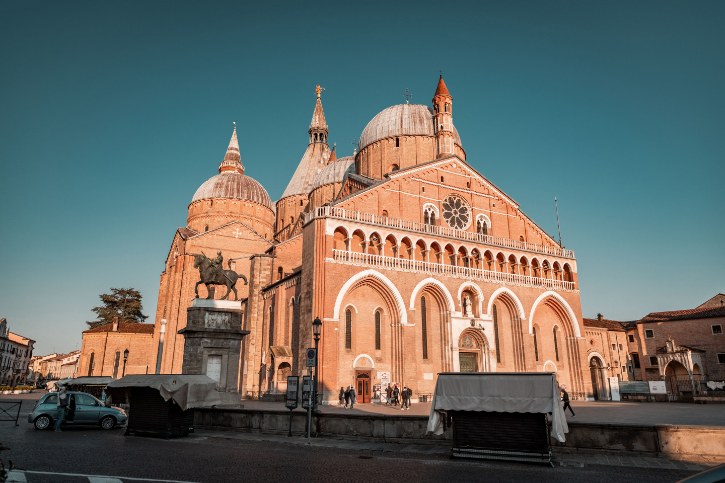
Ask anyone for Il Santo, “the Saint”, and they will point you straight here. Saint Anthony was born in Lisbon but made his home in Padua, loved for his preaching and the miracles people credited to him. He was declared a saint just a year after his death, work on the basilica began in 1232, and his tomb has rested in a chapel built for him here since 1350.
b. A Building Like No Other
Pause outside before you go in, because the shape of this place is wonderful.
- A striking blend of Romanesque, Byzantine, and Gothic design
- Eight domes that echo Saint Mark’s Basilica over in Venice
- Slender bell towers that look almost like minarets
- A brick front with deep Gothic niches, a wide balcony, and tall spires
c. The Art You Should Not Miss
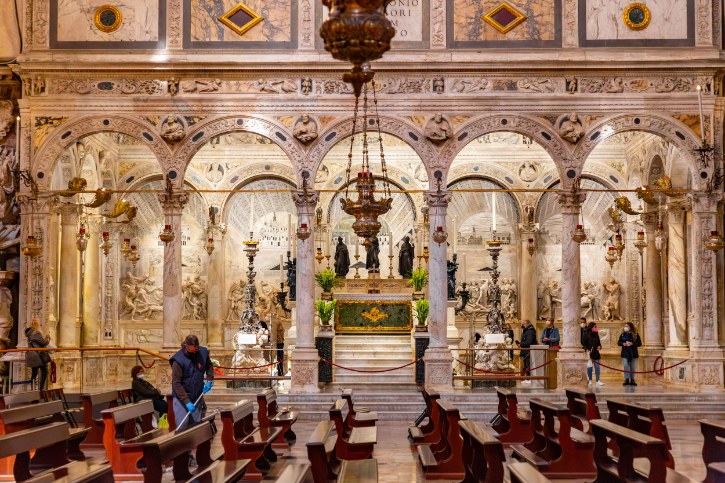
- Donatello’s bronzes on the high altar, made in the 1440s, count among Italy’s finest Renaissance sculpture
- His famous Gattamelata horseman stands out on the square
- Marble reliefs surround the saint’s tomb in the Chapel of Saint Anthony
- Gothic frescoes fill the Chapel of Saint James, and Andrea Briosco’s bronze Easter candlestick stands in the apse, finished in 1515
d. Why It Stays With You
You do not have to be religious to feel something here. Around the saint’s marble tomb, people rest a hand on the stone in prayer and tuck written notes into the gaps. When you need a breather, slip into the peaceful cloisters or the small museum nearby, where you can see three early paintings by a young Titian.
3. Prato della Valle: One of Europe’s Grandest Squares
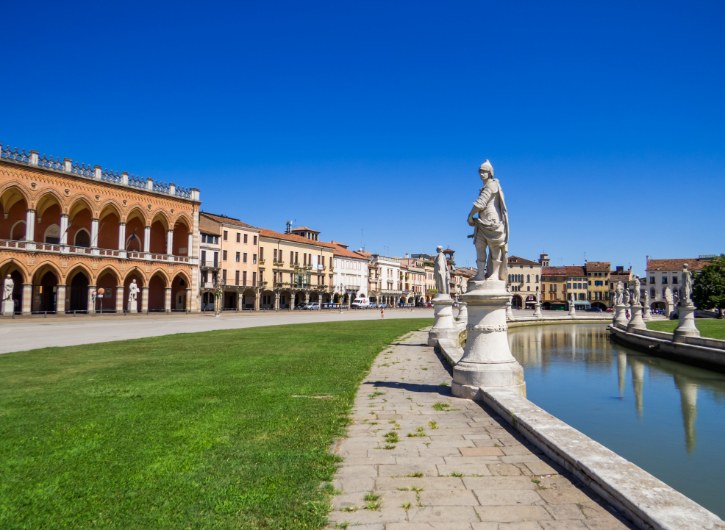
a. A Square You Have to See to Believe
Walk two minutes south of the basilica and the city opens up in front of you. Prato della Valle is enormous, a giant oval covering around 90,000 square meters. It is one of the largest public squares in Europe, and its sweeping symmetry is a sight in itself.
b. The Island and Its Statues
- A green central island called Isola Memmia, ringed by a canal and little bridges
- A double row of 78 statues of scholars, artists, and scientists, originally meant to number 88
- Faces you will know, including Galileo, Mantegna, Petrarch, and Canova
- Dante and Giotto standing near the arches
c. History Beneath Your Feet
The ground you stand on has quite a past. Diggers here once uncovered the remains of a Roman theater. The grand space you enjoy today took shape in the late 1700s, when a Venetian nobleman named Andrea Memmo led the project with the architect Domenico Cerato, turning swampy ground into a place for the whole city to gather.
d. The Best Things to Do Here
- Walk the full loop around the canal
- Cross the bridges onto the central island
- Hunt for famous faces among the statues
- Sit on the grass and watch local life drift by
4. Palazzo della Ragione: An Extraordinary Medieval Hall
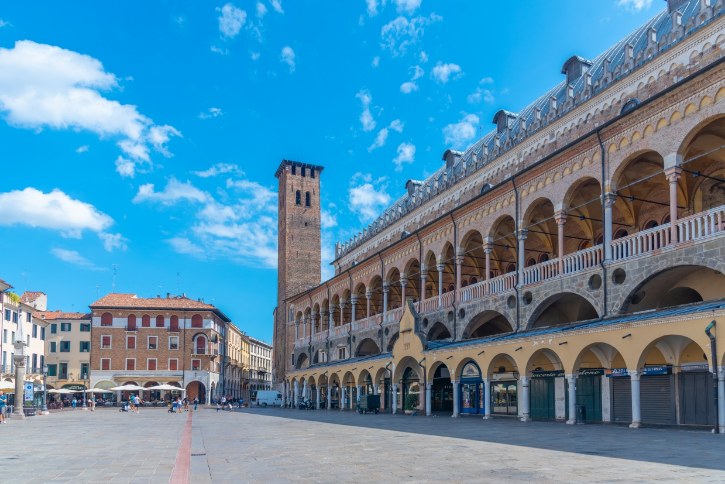
a. The Great Palace of Reason
Tucked between two market squares, you will find a vast medieval hall the locals simply call Il Salone. For centuries this was the center of city life, with the law courts upstairs and the market below, where traders still gather after some 800 years.
b. A Roof Like No Other
Head upstairs and look up. You will feel like you are standing under the upturned hull of an enormous wooden ship.
- A huge curved wooden roof raised between 1306 and 1309
- No central columns, just open space above you
- About 81 meters long, 27 wide, and 24 high, one of the largest raised halls of its kind
- Rebuilt after a tornado tore the roof away in 1756
c. Frescoes and Curiosities
The walls carry more than 300 painted panels, the largest set of frescoes in Padua’s UNESCO collection. Giotto painted the originals, but a fire destroyed them in 1420, and the frescoes you see now came soon after. As you circle the room, hunt for:
- A giant wooden horse, built long ago for a city festival
- The Pietra del Vituperio, a stone seat where debtors were once shamed in public
- A golden sun relief that drops a midday sunbeam onto a line on the floor
- A Foucault pendulum swinging slowly across the room
d. A Rare Kind of Treasure
Most of Padua’s great frescoes decorate churches. These do not. They were made for a working civic building, which makes them a rare and special survivor.
5. The Three Historic Squares: The Heart of Padua
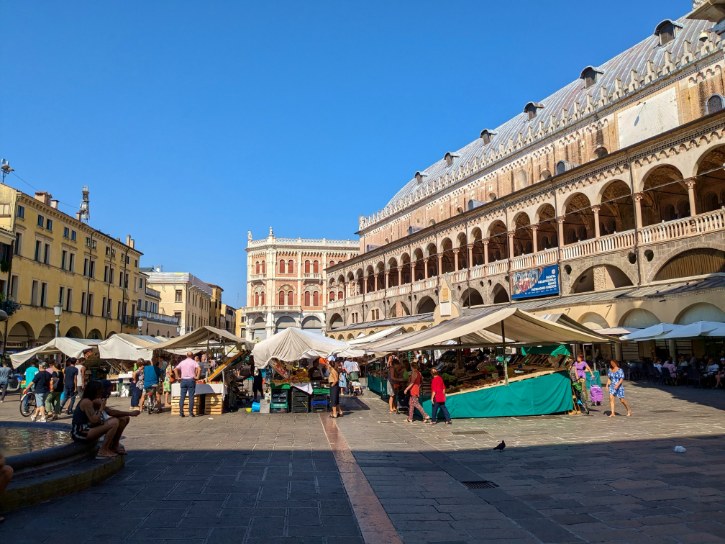
a. The Twin Market Squares
On either side of Palazzo della Ragione lie two lively squares that have been Padua’s marketplace for centuries.
- Piazza delle Erbe, named for the old herb market
- Piazza della Frutta, named for the fruit market
- Together, one of the largest open-air food markets in Europe
- Daily stalls of fresh fruit and vegetables, where locals really shop
b. Look Up as You Shop
As you browse, lift your eyes to the arched walls of Palazzo della Ragione. Under one archway, the Volto della Corda, you can still spot the old Paduan measuring units carved into the stone, once used so shoppers could check they were getting a fair deal.
c. The Clock Tower of Piazza dei Signori
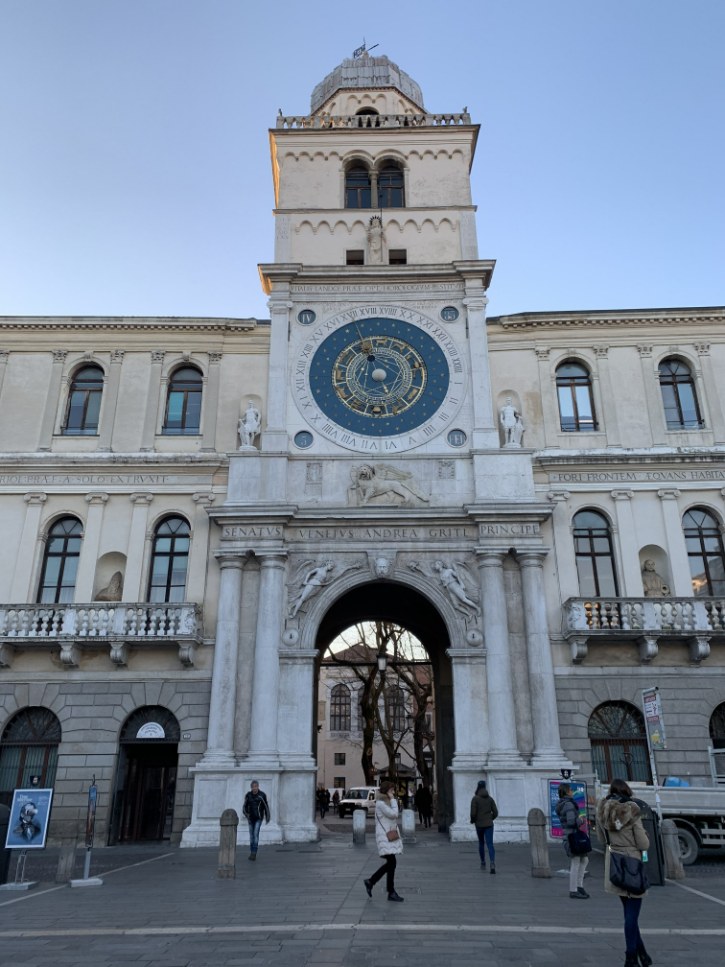
A short walk west brings you to Piazza dei Signori and its Torre dell’Orologio, a 30-meter tower carrying one of the earliest astronomical clocks of its kind in Europe. Its blue and gold stand out beautifully against the white stone, and it follows the movement of the heavens as well as the time.
d. Where Daily Life Happens
These three squares are the social heart of Padua. Mornings hum with market shoppers, and by late afternoon the tables fill with spritz drinkers. Nearby stand two grand old buildings, Palazzo del Capitanio, once home to Venice’s governor, and Palazzo dei Camerlenghi. Grab a seat and let the day unfold around you.
6. Palazzo Bo: Inside One of Europe’s Oldest Universities
a. A True University Town
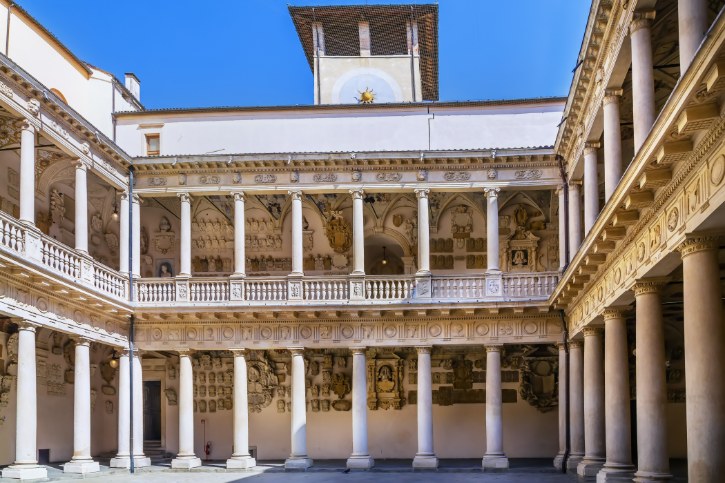
Padua has learning in its bones. The University of Padua was founded in 1222, making it the second oldest in Italy. Its historic home for more than 500 years has been Palazzo del Bo, whose odd name comes from an old inn that once stood here, known as the “Sign of the Ox”.
b. Inside the Historic Palace
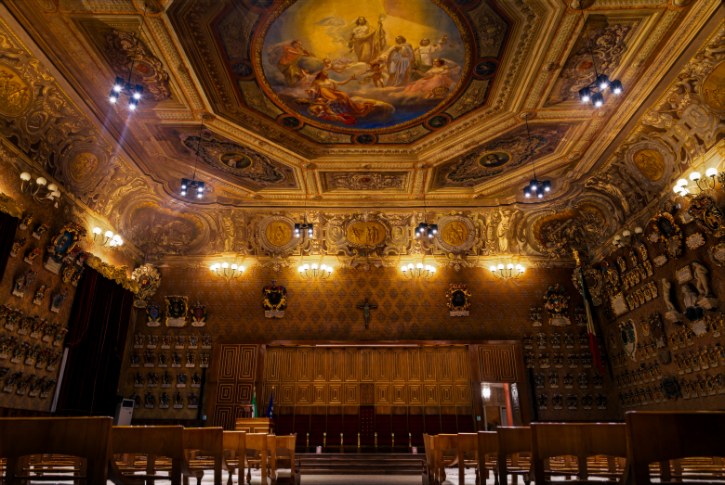
- The handsome old courtyard, the Cortile Antico, its walls covered with centuries of carved coats of arms
- The world’s first permanent anatomical theatre, opened in 1595, where students once watched dissections
- The grand main hall, the Aula Magna
c. Standing Where Galileo Taught
For me, the real thrill is seeing the lectern where Galileo Galilei once taught. It is a simple wooden stand, but knowing who stood behind it gives you goosebumps. And in 1678, Elena Lucrezia Cornaro Piscopia earned her degree here, becoming the first woman anywhere in the world to graduate from a university.
d. Visiting
- You see the historic rooms on a guided tour, the Historical Tour (Giro Storico)
- It covers the courtyard, the Aula Magna, Galileo’s lectern, and the anatomical theatre
- Those last two are the moments you will still be talking about later
7. Orto Botanico: The World’s Oldest Botanical Garden
a. A Garden With a Record to Its Name
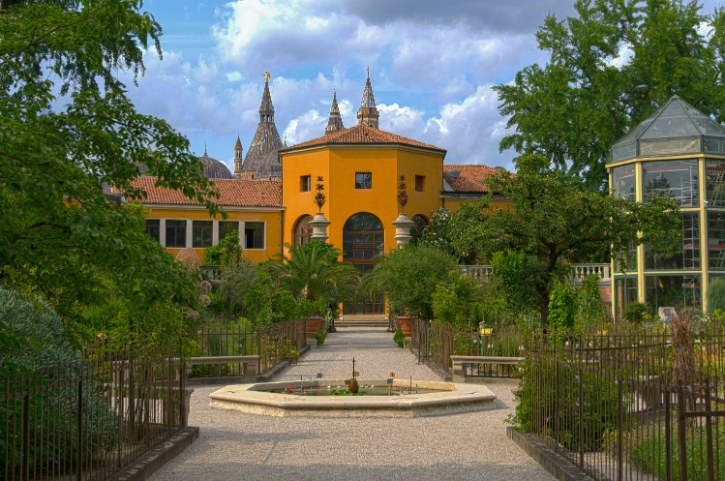
A short walk from the basilica, you can step into a quiet green place with a remarkable claim. Founded in 1545 by the Venetian Republic, this is the world’s first botanical garden, and the oldest still sitting in its original spot. It began as the Orto dei Semplici, a garden for growing the plants used in medicine.
b. A Garden Shaped Like the World
- A circular garden enclosed within a ring of water, designed to represent the whole world
- The original 1545 Renaissance plan, still here for you to walk
- Gates, balustrades, and greenhouses added by later generations around that core
c. What to Look For
- Goethe’s palm, planted in 1585 and said to have sparked the poet’s ideas about how plants grow
- A grand old ginkgo tree, still studied by the university’s scientists
- Tropical plants and palms gathered from warmer corners of the world
d. Still Growing After Centuries
The garden earned its own place on the UNESCO World Heritage List in 1997 and remains a busy center of research. A newer wing, the Garden of Biodiversity, opened in 2014 with greenhouses that recreate climates from around the globe. Whether you love history or just enjoy a peaceful stroll, you will be glad you came.
8. Cathedral and Baptistery: A Hidden Artistic Jewel
a. A Plain Church With a Secret
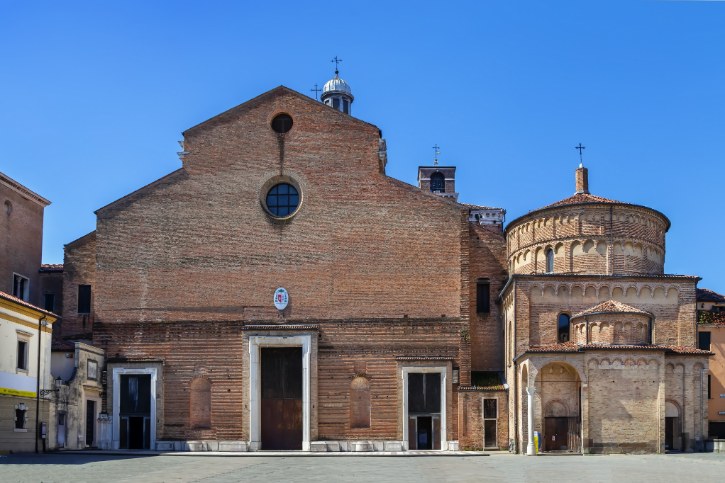
On a quiet square you will find Padua Cathedral, or the Duomo, dedicated to Santa Maria Assunta. Its plain, unfinished brick front is easy to stroll right past. Do not be fooled, because the real treasures wait inside and next door.
b. Inside the Cathedral
The cathedral holds the remains of three saints honored in Padua: Saint Daniel, Saint Leoninus, and Saint Gregory Barbarigo. Take a quiet look, then save your energy, because the best is still to come next door.
c. The Dazzling Baptistery
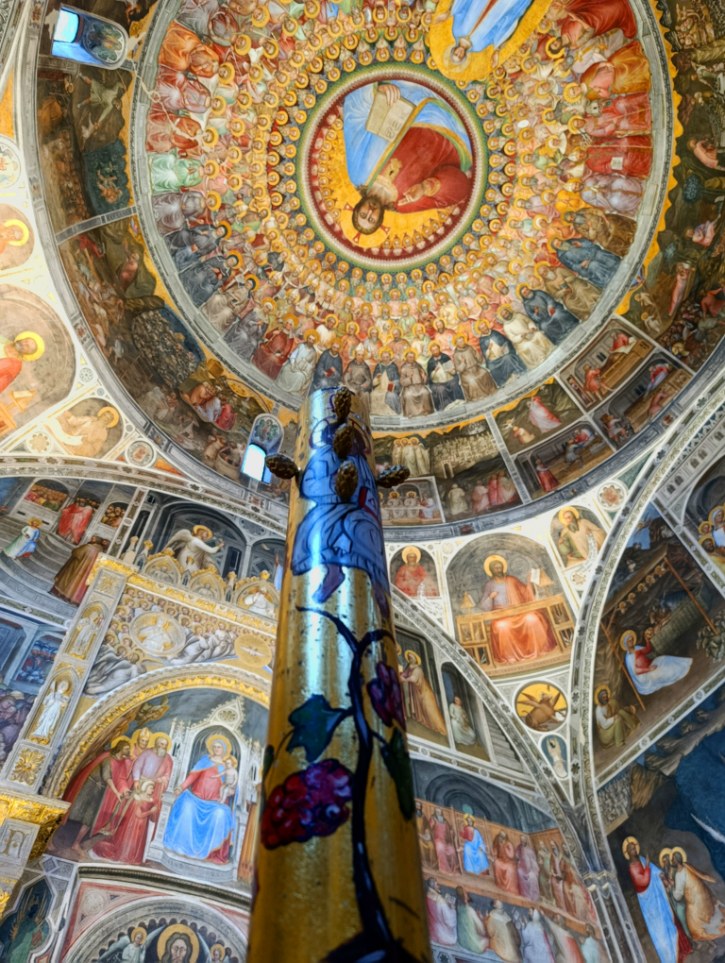
Step into the Baptistery of San Giovanni and prepare for a real wow moment. Almost every surface glows with 14th-century frescoes by Giusto de’ Menabuoi, painted between 1375 and 1376. The dome overhead holds Christ surrounded by rings of saints and angels, while scenes like the Creation of the World run along the walls. My advice: find a spot, rest your neck, and gaze upward for a while.
d. A Point Worth Knowing
It is the Baptistery, not the cathedral, that belongs to the 2021 UNESCO listing. Side by side, they give you a lovely contrast: a plain church beside a glowing painted jewel.
9. Church of the Eremitani and the Civic Museums
a. A Church Beside the Scrovegni Chapel
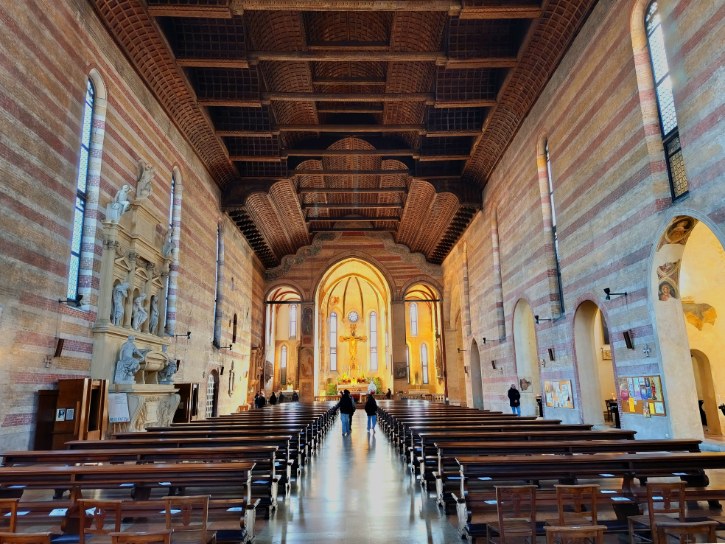
A short walk from the Scrovegni Chapel brings you to the Church of the Eremitani, a large 13th-century church once home to Augustinian friars. It shares a place with its famous neighbor as part of Padua’s UNESCO listing.
b. Scarred by War
This church carries a sad story. During the Second World War, a bombing in 1944 shattered its greatest treasure, a set of frescoes by Andrea Mantegna, into tens of thousands of fragments. Ever since, patient restorers have worked to piece them back together.
c. Mantegna’s Chapel
- The Ovetari Chapel was set up through the will of a Paduan notary named Antonio Ovetari
- The young, Padua-born Andrea Mantegna painted it between 1448 and 1457, telling the lives of Saints James and Christopher
- Only two scenes and some rebuilt fragments survived the bombing, yet they still show the hand of a master
d. Two Museums in One Stop
Right beside the church sit the Civic Museums. The Archaeology Museum traces Padua from the ancient Veneti through Roman times, while the Art Gallery (Pinacoteca) is full of painting and sculpture from the Veneto. Together they carry you back long before the city’s medieval churches ever rose.
10. Padua’s Lesser-Known Gems
a. Oratorio di San Giorgio
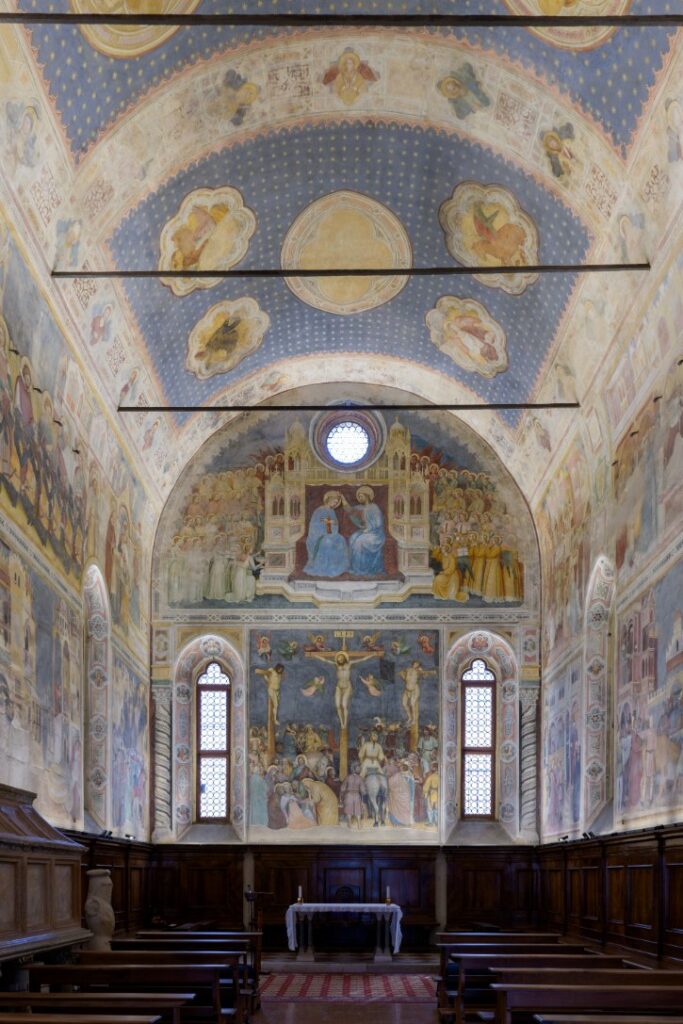
If you like to wander past the big sights, start right beside the Basilica of Saint Anthony, where the same museum ticket gets you into the Oratorio di San Giorgio. Inside sits one of the richest late-14th-century fresco cycles in the whole Veneto, painted by Altichiero da Zevio, full of color and clever painted depth. Restored in the 1990s and part of Padua’s UNESCO listing, it will stop you in your tracks.
b. Oratorio di San Michele
If you still have an appetite for frescoes, the small Oratorio di San Michele belongs to the same UNESCO group and makes an easy, peaceful stop.
c. A Handy Shortcut at Palazzo Moroni
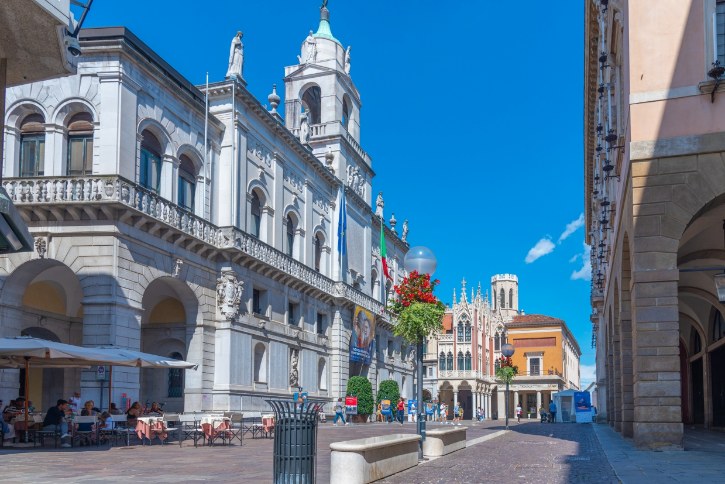
Near the central squares, Palazzo Moroni serves as Padua’s town hall. Its courtyard doubles as a step-free route through to Palazzo della Ragione, handy if you would rather skip the stairs.
11. The Jewish Quarter and Padua’s Arcaded Streets
a. An Atmospheric Old Quarter
Just off Piazza delle Erbe, you can slip into Padua’s Jewish Quarter, a maze of narrow lanes like Via delle Piazze, Via San Martino e Solferino, and Via dell’Arco.
Jews have lived here since the 1200s, and by the 14th century the city had become a center of Jewish learning.
In 1601 the community was confined to a ghetto in these streets, and those rules lasted until 1797.
On Via dell’Arco, look up for a chimney carved with a dove, the emblem of the Salom family, which once marked the old rabbinical academy.
b. Synagogue and Museum
- The Italian Rite Synagogue, founded in 1548, is still in use today (closed on Saturdays)
- A carved wooden pulpit, said to come from a single tree that fell in the botanical garden, faces a grand marble ark
- The Museum of Jewish Padua sits inside a former synagogue dating to 1525, with rare textiles, Torah scrolls, and a moving work on ten local Jewish lives
c. Remembering the Past
As you walk, keep an eye on the ground as well as the buildings. Several old Jewish cemeteries survive, including the visitable one on Via Wiel, with the oldest reaching back to the 14th century. Small brass “stumbling stones” are set into the pavements, each carrying the name of a local person killed in the Holocaust, a quiet and powerful thing to come across.
d. Padua’s Covered Streets
All through the old center you will notice the portici, covered walkways running beneath the buildings on rows of stone arches. They shelter you from sun and rain alike. My advice: do not rush. Let yourself get a little lost and enjoy the details as you go.
12. Historic Cafés, Local Flavors and the Italian Lifestyle
a. Caffè Pedrocchi
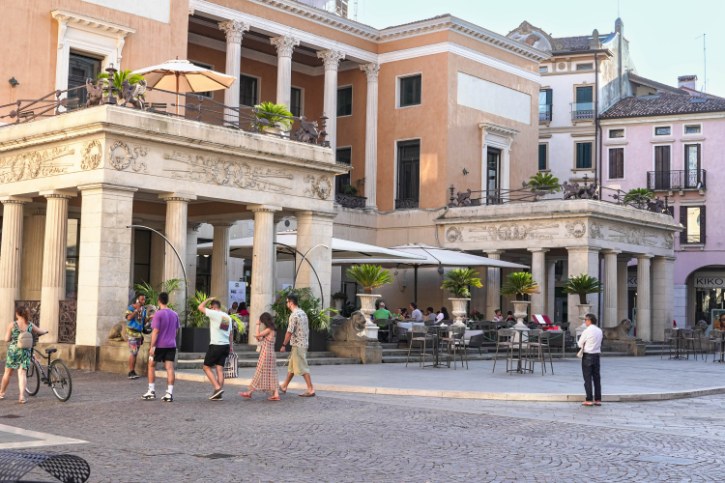
Do not leave Padua without a stop at Caffè Pedrocchi, the city’s grandest old café. The Venetian architect Giuseppe Jappelli designed it, and it opened in 1831. People called it the “café without doors”, because for decades it stayed open day and night, and writers like the French novelist Stendhal made it their meeting place.
b. The Famous Rooms
- The White, Red, and Green Rooms, echoing the colors of the Italian flag
- The Red Room, with its original marble counter, the lively heart of the place
- The Green Room, where tradition still lets you sit and rest without buying a thing
- Grand upstairs halls decorated in Roman, Greek, and Egyptian styles
c. Market Treats to Try
When hunger strikes, head beneath Palazzo della Ragione to the covered market known as Sotto il Salone, still going after some 800 years. Here, and on the squares just outside, you can gather regional cheeses and cured meats, plus fresh produce, bread, and pastries for an easy picnic.
d. The Birthplace of Aperol
Here is a fun fact to share over a drink. That bright orange Aperol you see in spritz glasses all across Italy was born right here, unveiled by the Barbieri brothers at the Padua International Fair in 1919. So when you join the locals for an evening spritz, raise your glass. You are keeping a true Padua tradition alive.
13. How to Get From Venice to Padua by Train
a. Where to Catch Your Train
- Staying on Venice’s historic island? Leave from Venezia Santa Lucia
- On the mainland? Use Venezia Mestre
- Look for Padua’s main station, listed as Padova, and steer clear of “Padova Autostazione”, which is the bus hub
b. Choose the Fast Regional Train
For most visitors, the fast regional train (Regionale Veloce) is the easy winner. It gets you to Padua quickly and lets you hop on whichever departure suits you. Relaxed and flexible, which is exactly what a day trip should feel like.
c. A Scenic Ride Across the Lagoon
If you set off from Santa Lucia, the first stretch treats you to a lovely crossing over the Venetian Lagoon before you reach the mainland. Grab a window seat for it.
d. Getting Around Once You Arrive
Padua is flat and easy to explore on foot, so plan your day around where you land:
- The Scrovegni Chapel and Church of the Eremitani are about a 10-minute walk from the station, down Corso del Popolo
- The market squares and Palazzo Bo sit a little further on
- The Basilica, Botanical Garden, and Prato della Valle cluster together, around 20 to 25 minutes away
- Prefer to ride? The city tram stops right outside the station and runs close to both the Scrovegni Chapel and the basilica
With a ride this short and a center this walkable, you will find Padua one of the easiest and most rewarding escapes you can make from Venice. Give it a day, and it just might surprise you.