Many visitors hop on the metro or bus from the Vatican into the center of Rome and miss the quiet surprises waiting along the way.
On foot, that same short trip becomes a string of churches, fountains, ancient ruins, and quiet streets, each just one to five minutes apart.
You begin among the giant religious landmarks near St. Peter’s, then slip into the warm, lived-in heart of old Rome.
Every few steps brings something new. Pack comfortable shoes and a little curiosity, and give yourself a couple of easy hours for the full route. 😊
1. Vatican City
a. Begin Where the Colonnade Opens Its Arms
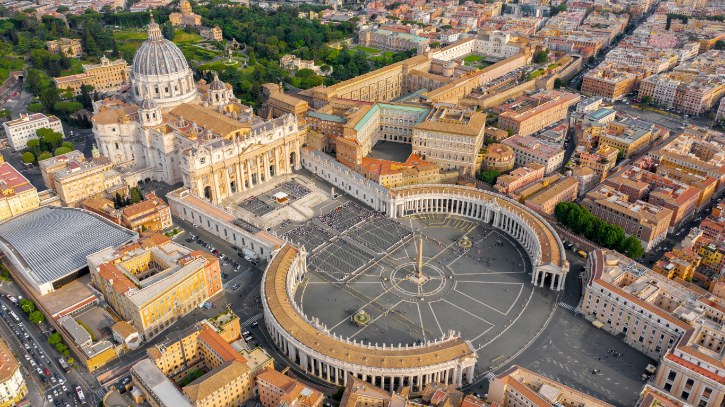
Your walk starts in St. Peter’s Square, one of the most recognizable spaces on earth. Pope Alexander VII asked Gian Lorenzo Bernini to design it in 1656, and Bernini wrapped it in a sweeping oval colonnade that he pictured as the arms of the Church reaching out to welcome you. Step into the middle, and that feeling hits you right away.
b. What to Admire Before You Head Inside
Take a slow look around before going into the basilica:
- The colonnade, four rows of columns, 284 in all, topped by 140 statues of saints.
- The Egyptian obelisk at the center, brought to Rome by Caligula and moved to this exact spot in 1586.
- Two fountains flanking the obelisk, one by Carlo Maderno and one by Bernini.
- A hidden trick in the pavement. Find the round stones marked Centro del Colonnato, stand on one, look at the columns, and the four rows line up into a single row.
c. Step Into the Greatest Church in Rome
St. Peter’s Basilica rises over the tomb of Saint Peter and took shape between 1506 and 1626. The finest names of the age worked on it, from Bramante and Michelangelo to Maderno. Michelangelo designed the great dome but did not live to see it finished. Giacomo della Porta and Domenico Fontana completed it in 1590, and that dome is the silhouette you see across the whole skyline. Inside, it all feels even bigger than you expect.
d. The Masterpieces Waiting Inside
Head straight for these, and you will not feel rushed:
- Michelangelo’s Pietà, in the first chapel on the right, carved from a single block of marble when he was only twenty-four. It is the only work he ever signed.
- Bernini’s bronze Baldacchino, the towering canopy over the main altar, wrapped in gilded olive branches and small Barberini bees.
- The Confessio, the open crypt below the altar, ringed by 99 oil lamps and leading toward Saint Peter’s tomb.
- The altar “paintings”, which are actually mosaics made to survive Rome’s damp air. Look closely and you will see the tiny pieces.
- Good to know: entering the main floor is free, but climbing the dome needs a ticket, and the grottoes below are reached by their own separate route.
e. The Museums and the Sistine Chapel
A short way off, the Vatican Museums hold one of the world’s great art collections. Make time for these:
- The Gallery of Maps, a long corridor of painted Italian regions under a golden ceiling.
- The classical sculptures, including the graceful Apollo Belvedere and the dramatic Laocoön wrapped in marble serpents.
- The Sistine Chapel ceiling, where Michelangelo painted The Creation of Adam between 1508 and 1512.
- The Last Judgment on the altar wall, where he even hid his own face in a flayed skin.
2. Via della Conciliazione
a. A Grand Avenue With a Surprisingly Modern Past
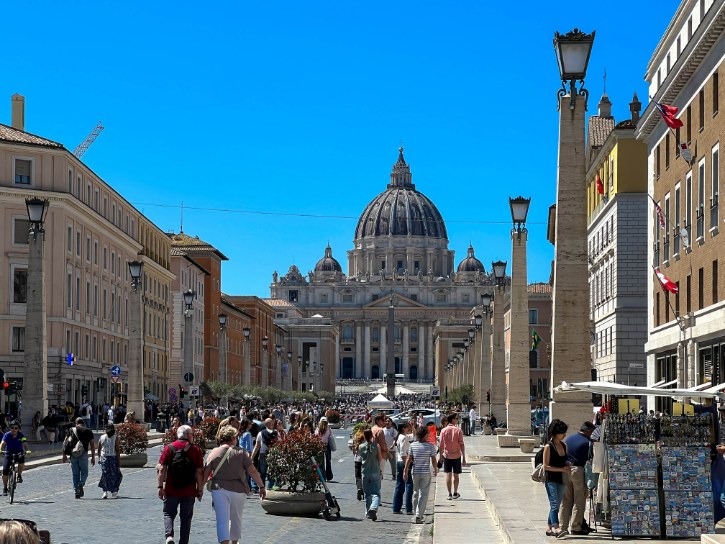
This wide 500-meter boulevard runs straight from St. Peter’s Square down to the river. It looks ancient, but it is not. It was built in the 20th century, after the 1929 agreement between the Vatican and Italy, and finished for the Holy Year of 1950. Creating it meant clearing away a dense old neighborhood that had stood for centuries.
b. Why You Should Keep Looking Back
Here is the move most people miss. As you walk away from the Vatican, turn around now and then. From the edge of the square, the dome hides partly behind the facade, but the farther you go, the higher and prouder it seems to climb against the sky.
c. Historic Palaces Along the Sides
The avenue is more than its famous view. Glance at these old residences as you pass:
- Palazzo dei Penitenzieri, with a fortress-like front and Pinturicchio frescoes inside.
- Palazzo Torlonia, built around 1500 and modeled on a famous Bramante design.
- Palazzo Cesi-Armellini, once home to the noble Cesi family.
d. Small Details That Lead You Onward
A few quiet touches guide your steps toward the next stop:
- Travertine lampposts shaped like little obelisks, pointing you toward the fortress ahead.
- A modest church front on the left side, easy to walk past but worth a stop.
3. Church of Santa Maria in Traspontina
a. A Church Built Low for a Strange Reason
An older church once stood closer to the river, until Pope Pius IV had it torn down in 1564 so it would not block the cannons of nearby Castel Sant’Angelo. The Carmelite friars were given this new plot with one firm rule. The building could not rise high enough to get in the way of cannonballs fired across the district. That is why the dome sits so flat.
b. What to See Inside
Step in from the busy avenue and look for these:
- The Chapel of Saint Barbara (first on the right), paid for by the fortress gunners, with carved cannons and cannonballs around an altarpiece of her martyrdom.
- The Chapel of Saints Peter and Paul (third on the left), keeping two ancient columns where tradition says the apostles were whipped.
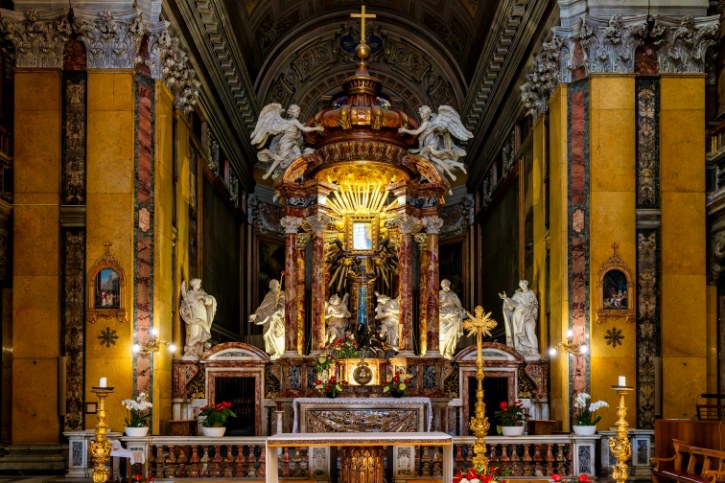
- The High Altar, designed by Carlo Fontana in 1674, framing a 13th-century icon of the Virgin that the Carmelite friars brought from the Holy Land.
c. A Quiet Pause Off the Avenue
After the vast scale of the Vatican, this small, calm interior feels gentle and personal. It rarely draws a crowd, so you can take a few unhurried minutes here before stepping back into the daylight.
d. What You See When You Leave
As you walk out, two things stand out:
- The modest facade, built partly from stone taken from the Colosseum.
- The fortress straight ahead, the very one that forced this church to stay low.
4. Castel Sant’Angelo
a. One Building, Many Lives
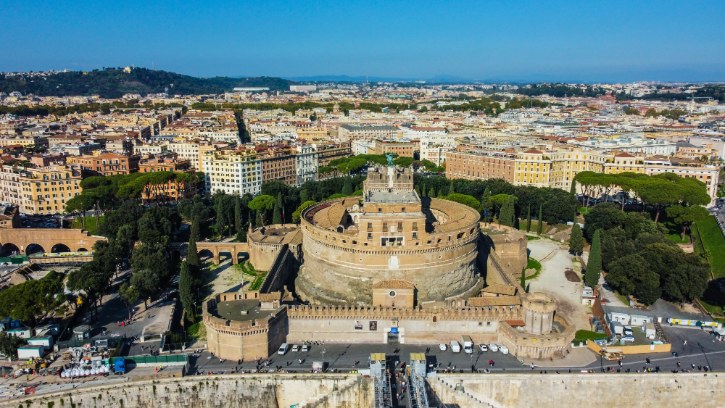
Few places in Rome have changed as often as this one. Emperor Hadrian began it as a grand tomb around 134 AD, and it was completed in 139, just after his death. Over the centuries it became a fortress, a papal refuge, a residence, a prison, and finally a museum. You can read all of those layers as you climb through it.
b. The Angel That Gave It Its Name
The name comes from a vision in 590 AD. As Pope Gregory the Great led a procession praying for the end of a plague, he saw the Archangel Michael on the roof, sheathing his sword as a sign the sickness would lift. Several angel statues have crowned the summit over the centuries, destroyed and replaced more than once. The bronze one you see today was placed in 1753.
c. Inside the Fortress Walls
Work your way up through its different eras:
- The Roman spiral ramp, which once led to Hadrian’s burial chamber.
- The Papal Apartments, elegant Renaissance rooms including the richly frescoed Sala Paolina.
- The Passetto di Borgo, an 800-meter walled passage to the Vatican, used by popes escaping danger in 1494 and during the 1527 Sack of Rome.
d. The Views From the Top
Climb to the upper terrace for some of the best views in the city:
- St. Peter’s dome rising to the west.
- The Tiber and the angel-lined bridge right below you.
- The domes of the old center spread out to the east.
Trust me, this is a view worth the climb. Walk out of the gates afterward, and the river appears, with a beautiful old bridge leading across it.
5. Ponte Sant’Angelo
a. Rome’s Most Beautiful Bridge
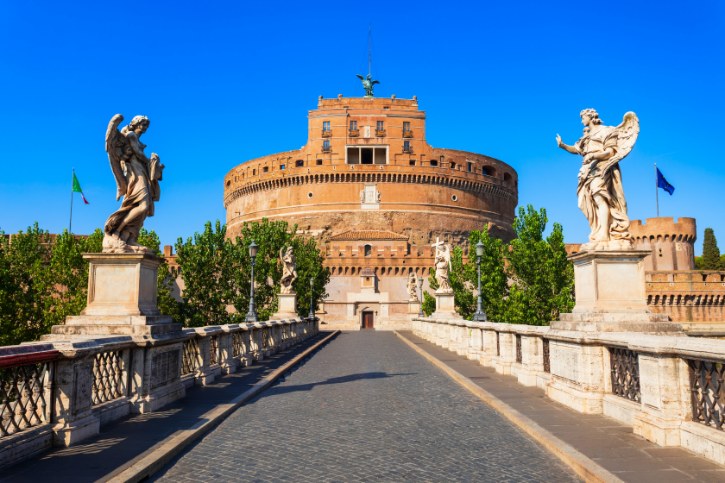
Emperor Hadrian built this bridge in 134 AD to reach his tomb across the river, and three of its arches still hold their original Roman core. For centuries it was the main crossing for pilgrims walking to Saint Peter’s. Today it is simply one of the loveliest spots on the whole route.
b. The Ten Angels and What They Carry
In 1669, Bernini lined the bridge with ten marble angels, each holding a symbol of Christ’s Passion. Look for these:
- The column of the flogging and the crown of thorns.
- The cloth bearing Christ’s face.
- The nails, the sponge, and the lance.
- Two older statues of Saint Peter and Saint Paul, welcoming you onto the bridge at the city end.
c. A Secret About Bernini’s Own Hands
Bernini personally carved two of the angels, but the pope thought them too fine to leave out in the damp river air. Workshop copies went onto the bridge instead, and the two originals are kept safe inside the church of Sant’Andrea delle Fratte, over near the Spanish Steps.
d. The Views Worth Stopping For
Pause halfway across and take it all in:
- The white marble angels against the warm stone of the fortress.
- The Tiber flowing beneath you.
- Distant domes framing the scene on either side.
For the best photo, try to catch the angels, the castle, and the river all in one shot.
6. Via dei Coronari
a. A Beautiful Old Street With a Pilgrim’s Past
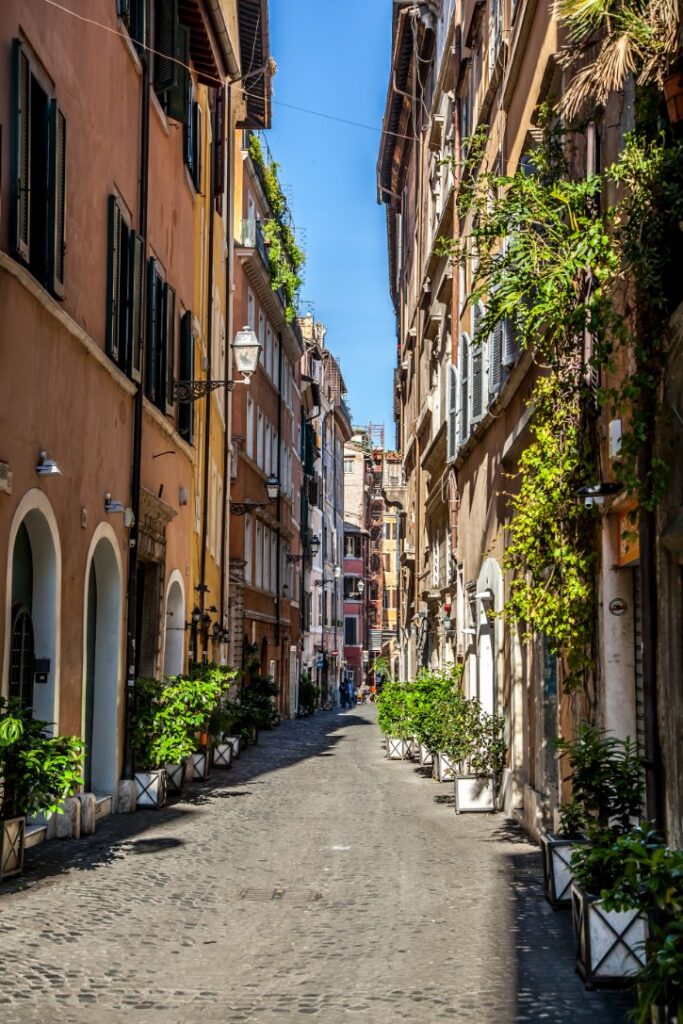
This 500-meter lane is one of the best-preserved old streets in Rome. Pope Sixtus IV straightened and paved it for the pilgrims of the 1475 Jubilee, making it the city’s first straight Renaissance street. Its name comes from the merchants who once sold rosaries and holy objects to those pilgrims heading for the Vatican.
b. What to Look Up For
Slow down here and raise your eyes to the details:
- Palazzo Salimei (No. 31), once home to a papal charitable pawnshop, with Latin inscriptions by the door.
- The Immagine di Ponte, an elegant street shrine from 1523 with a fresco of the Virgin.
- The small wall shrines, or edicole sacre, a quiet old-Rome tradition tucked high on the buildings.
c. A Hidden House With a Story
Just off the street, in a small square, stands the Casa di Fiammetta, a 15th-century house once owned by a Renaissance courtesan linked to Cesare Borgia. It is an easy detour and a charming one.
d. Why This Street Feels Different
Walking here is nothing like standing in the grand piazzas:
- The pace is slower, with antique shops and workshops set under warm ochre walls.
- The details are smaller, from worn doorways to a 16th-century fountain midway along.
7. Chiesa di Santa Maria della Pace
a. A Small Church That Gives Back a Lot
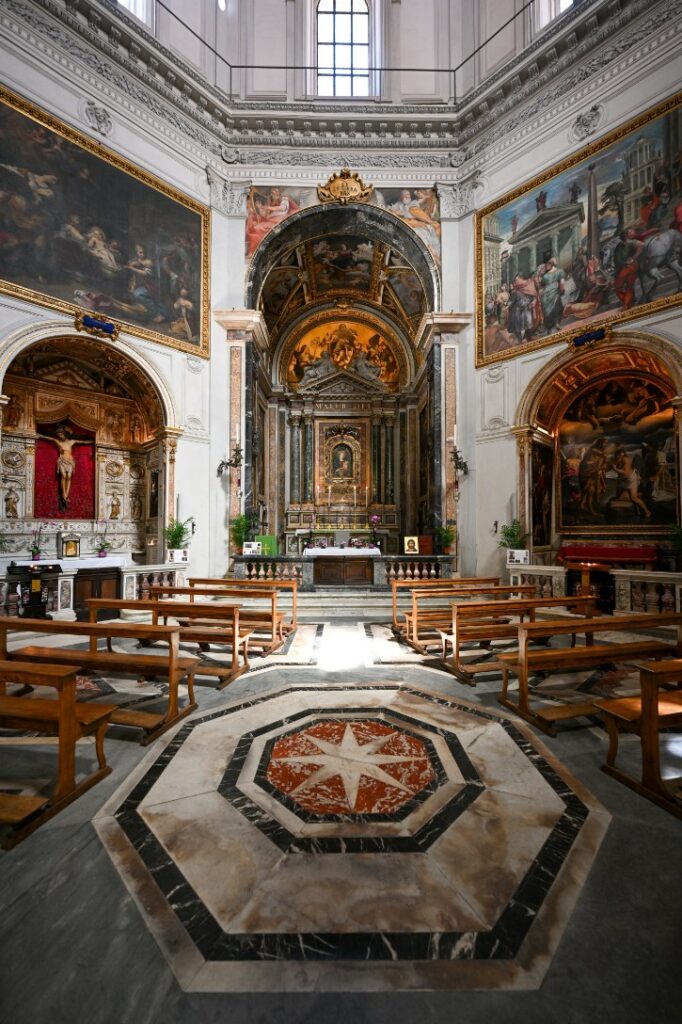
Tucked in a tangle of narrow alleys, this little church rewards you far beyond its size. It began in 1480, after an image of the Virgin was said to bleed when struck by a stone, and Pope Sixtus IV built a sanctuary on the spot.
b. The Stage-Like Front
Pietro da Cortona reworked the exterior like a theater set. He reshaped the houses around a tiny square and set a curved porch out in front. The play of light, shadow, and curved stone is one of the finest small Baroque scenes in the city, and the piazza is so snug it feels like a stage built just for you.
c. The Art to Seek Out Inside
Step in for these highlights:
- Raphael’s Sibyls and Angels, painted in 1514 above the first chapel on the right, four prophetesses receiving messages from hovering angels.
- The Cesi Chapel, with refined Renaissance marble sculptures.
- Fine details throughout, from beautiful marble to well-balanced proportions.
d. The Cloister Next Door
Right beside the church sits Bramante’s Cloister, finished in 1504:
- It was Bramante’s first major project in Rome, a key step toward High Renaissance design.
- Its two calm levels are perfectly balanced, with columns set neatly above the arches below.
- It works today as a cultural venue, reached from the side street.
8. Piazza Navona
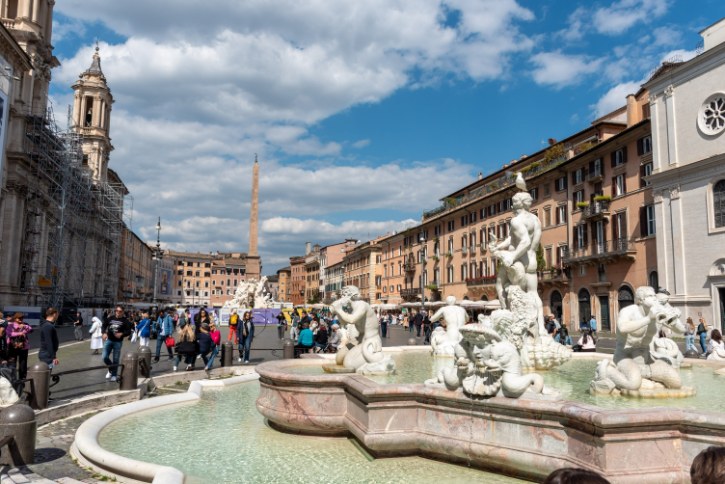
a. A Square Shaped Like an Ancient Stadium
Piazza Navona’s long oval shape is no accident. It sits on top of an ancient stadium built in 86 AD for athletic contests, and the buildings around it rest on the old foundations. The curve at the north end still follows the exact turn where Roman runners once rounded the track.
b. The Three Fountains, and Which Is Which
Three fountains give the square its rhythm:
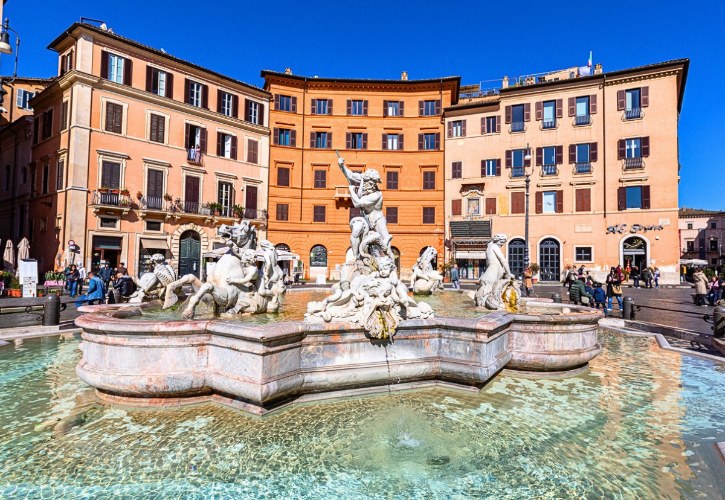
- The Fountain of the Four Rivers (center), Bernini’s 1651 masterpiece, with figures for the Danube, Ganges, Nile, and Río de la Plata beneath a Roman-made obelisk carved from Egyptian granite.
- The Fontana del Nettuno (north end), where Neptune battles a sea creature.
- The Fontana del Moro (south end), with a muscular figure wrestling a dolphin.
Walk a full circle around the central fountain, since every angle shows you something new.
c. The Church and Palace That Frame It
Two more landmarks complete the scene:
- Sant’Agnese in Agone, a church redesigned by Borromini, whose curved front seems to cradle the fountain in front of it.
- Palazzo Pamphilj, with an interior gallery frescoed by Pietro da Cortona, which helped give the square its grand Baroque face.
d. How to Enjoy It, and Where to Go Next
There is more to do here than snap a photo of the main fountain. Find a spot at the edge, watch the artists and street life, and look for the small carved details, like the animals around the fountain and the dove on top. When you are ready, slip out through the eastern alleys toward a church that hides three of Caravaggio’s greatest paintings.
9. Church of Saint Louis of the French (San Luigi dei Francesi)
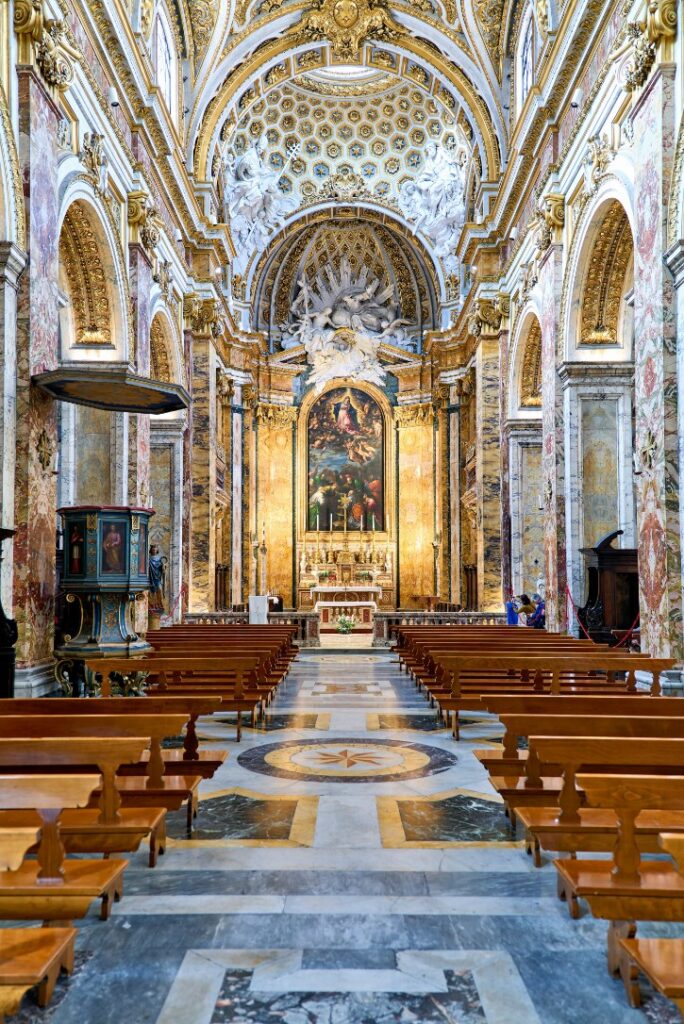
a. Plain Outside, Astonishing Inside
From the street this church looks modest, which makes the treasures within even more of a surprise. It serves as the national church of France in Rome, finished in the 1580s with support from Queen Catherine de’ Medici. Art lovers come here for one chapel in particular.
b. The Three Caravaggio Masterpieces
In the Contarelli Chapel, you will find three paintings by Caravaggio from around the year 1600:
- The Calling of Saint Matthew (left wall), where a shaft of light follows Christ’s hand to a tax collector who points at himself in disbelief.
- The Inspiration of Saint Matthew (altar wall), with an angel swooping down to guide his writing.
- The Martyrdom of Saint Matthew (right wall), a dramatic scene where Caravaggio painted his own sorrowful face in the shadows.
c. Why These Paintings Stay With You
What makes them unforgettable is Caravaggio’s bold use of light and dark, and the raw, human faces. Stand quietly for a few minutes and let your eyes move across each scene before the next group of visitors arrives.
d. More to See Before You Go
The church has other rewards too:
- A fresco cycle on the life of Saint Cecilia by Domenichino, softer and calmer than the Caravaggios.
- Colored marble and gilded detail running through the three aisles.
10. Pantheon
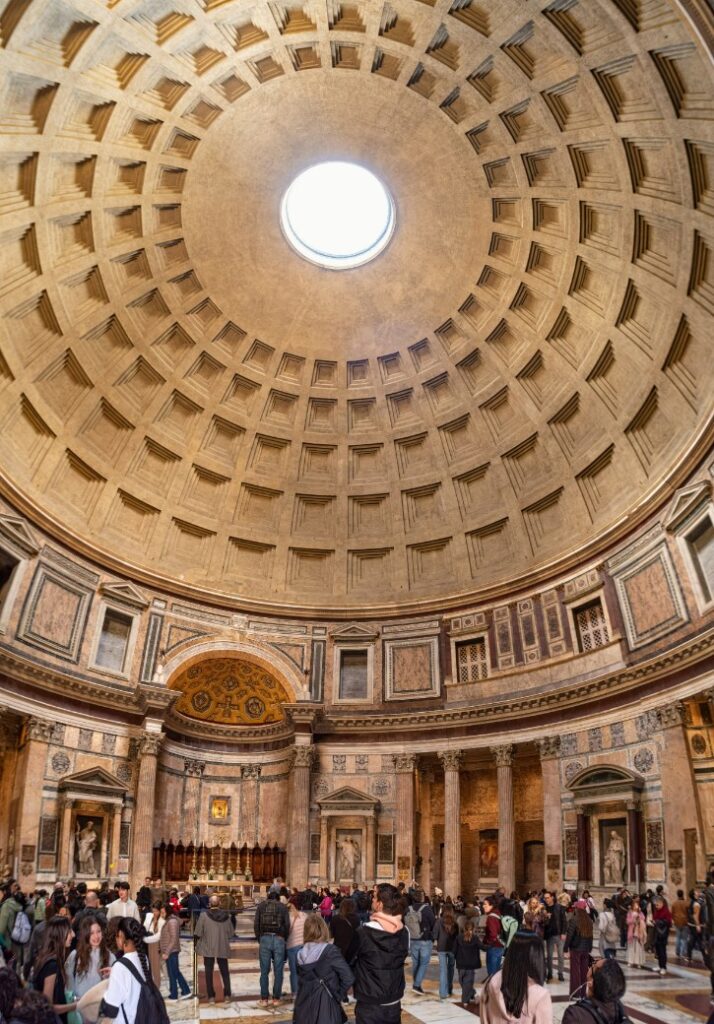
a. The Best-Preserved Monument of Ancient Rome
The Pantheon has survived almost intact for nearly two thousand years, mostly because it never fell out of use. Built as a temple under Emperor Hadrian and later turned into a church, it escaped the stone-robbing that stripped other ruins. Walking through its doors still feels remarkable.
b. A Front Built to Impress
Pause under the porch before you step inside:
- Sixteen huge columns, each carved from a single block of granite.
- Carried all the way from Egypt, an astonishing feat for the time.
- An old inscription across the top that still names the original builder, Agrippa.
c. The Dome and the Eye to the Sky
Inside, the real wonder is overhead:
- A perfect circle, where the height to the top exactly equals the width.
- The largest unreinforced concrete dome ever built, made lighter toward the top.
- The oculus, an 8.8-meter opening to the open sky, and the only source of natural light apart from the doorway.
Watch the circle of sunlight slide slowly across the floor. When it rains, the water simply drains away through small holes below.
d. History Beneath Your Feet
There is history underfoot as well:
- The tomb of Raphael, resting beneath an ancient marble sarcophagus.
- The tombs of two kings of Italy, facing it across the floor.
e. Step Outside for the Full Picture
Out in the Piazza della Rotonda, an Egyptian obelisk rises from a 16th-century fountain, framing the building beautifully. Many visitors admire the front and move on, but stepping inside is a completely different experience, so do go in. A short walk behind the Pantheon leads to a very different kind of church.
11. Basilica of Santa Maria sopra Minerva
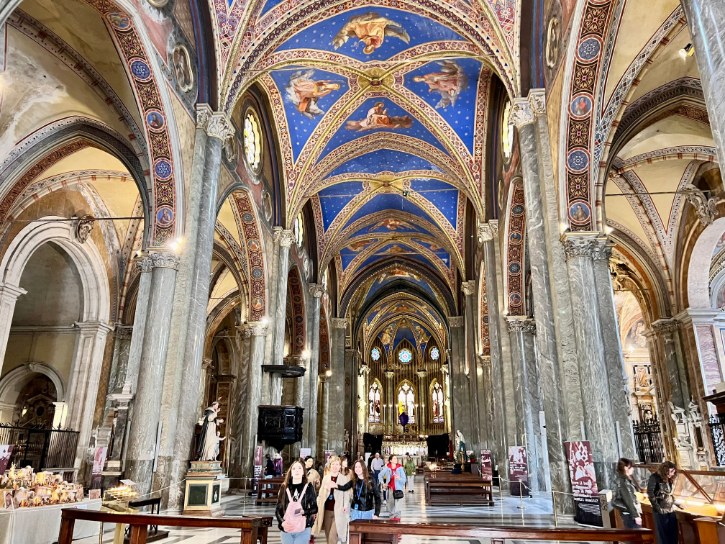
a. Rome’s One Great Gothic Surprise
This church hides a rare treat. It is the only major church in Rome that still shows a true Gothic interior. Dominican friars founded it in 1280, building over the ruins of an ancient temple. From outside it looks plain, but inside is another world entirely.
b. What Makes the Interior Special
Step through the door and look for these:
- The Gothic ceiling, with pointed arches painted deep blue and scattered with golden stars.
- Michelangelo’s Christ the Redeemer, a marble statue of the risen Christ holding the cross, finished in 1521.
- The Carafa Chapel, with bright, lively frescoes by Filippino Lippi.
c. Famous Figures Resting Here
The church holds some important tombs:
- Saint Catherine of Siena, under the high altar.
- The painter Fra Angelico, in a marble tomb nearby.
- Two Medici popes, in grand wall monuments.
d. The Cheerful Elephant Outside
Out in the little piazza stands one of Rome’s most charming sights, Bernini’s marble elephant carrying an ancient obelisk on its back, from 1667. The idea is simple and sweet. It takes a strong mind to carry true wisdom. That smiling elephant next to such a solemn interior is exactly why this easy-to-miss stop feels like a find. From here, a short walk northeast leads to an unforgettable ceiling.
12. Chiesa di Sant’Ignazio di Loyola in Campo Marzio
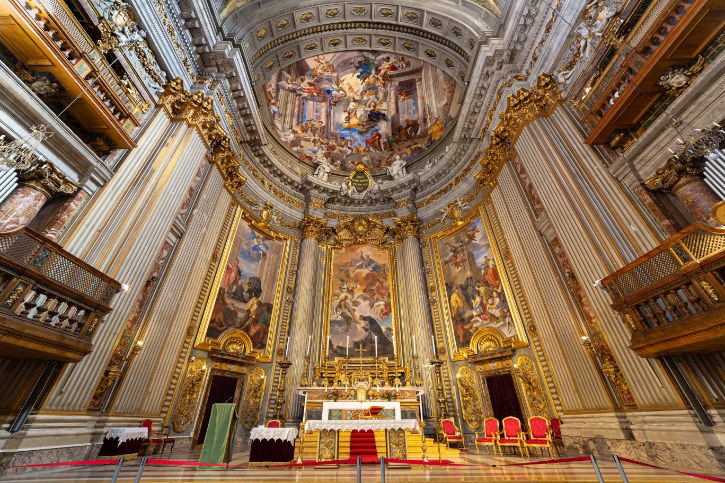
a. A Ceiling That Opens to Heaven
This church looks like a handsome Baroque hall until you tilt your head back. Then it becomes one of the most astonishing interiors in Rome. The master painter Andrea Pozzo covered the ceiling with such clever perspective that the solid vault seems to melt away into open sky, with painted columns rising upward forever.
b. The Trick That Fools Everyone
There is a second illusion waiting near the crossing:
- A painted dome, which is really a flat canvas 13 meters across.
- From the right spot, it rises into a deep, convincing cupola.
- Step away, and it flattens back into a clever skew of painted lines.
c. How to See Both Illusions
Look for the two small yellow marble discs set into the floor:
- The first disc, in the middle of the nave, where the painted ceiling lines up perfectly without distortion.
- The second disc, near the crossing, where the flat dome suddenly snaps into shape.
Stand on each disc in turn, look up, and watch the room transform. It is one of the most fun moments on the whole walk.
d. A Few More Things to Notice
Beyond the ceiling, the church has fine chapels and sculptures, including a detailed marble altarpiece in the right transept. What stays with you is the gap between what is real and what is painted. Step outside, and the next stop trades painted illusion for solid ancient stone.
13. Piazza di Pietra
a. Giant Ancient Columns in an Everyday Square
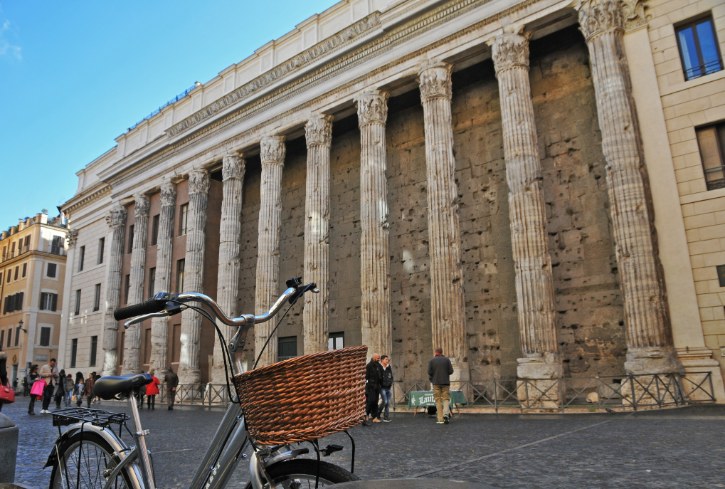
This small square holds a big surprise, a row of giant columns from an ancient temple standing right in the middle of modern Rome. They belonged to the Temple of Hadrian, dedicated in 145 AD by Emperor Antoninus Pius in honor of his adopted father.
b. What Survives Today
Take a moment to judge their scale:
- Eleven colossal columns, once the northern side of the temple.
- About 15 meters tall each, carved from white marble.
- The old carved top above them, still showing classical detail worn by time.
c. Ancient and Modern, Side by Side
The clever part is how past and present blend together here:
- In 1695, an architect wrapped the columns into a new palace, first used as a customs house.
- Later it became the city’s stock exchange, and today it houses the Chamber of Commerce.
- Look closely and you will see later windows and cornices built straight into the ancient stone.
d. A Calmer Corner of Rome
This square is smaller and quieter than Rome’s famous piazzas, which is part of its charm. In the evenings, a lighting display often picks out the carved leaves at the top of the columns. For anyone who loves ancient Rome, it is a quiet reward, so linger a little before moving on.
14. Piazza Colonna
a. A Square at the Heart of Italian Life
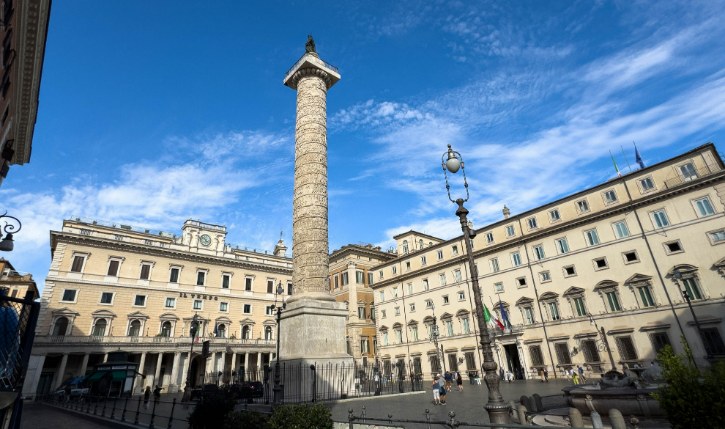
Piazza Colonna sits at the civic center of Rome, and its centerpiece is an ancient column that has stood here since the second century. The square took its present shape in the late 16th century, and today it mixes imperial history with the daily business of the Italian government.
b. The Column and Its Carved Stories
The Column of Marcus Aurelius is a marvel of ancient storytelling:
- Nearly 40 meters tall with its base, made of 28 stacked marble drums.
- A spiral band of carving that winds around it 21 times, showing soldiers, cavalry, and battles.
- A statue of Saint Paul now standing on top, where the emperor’s bronze figure once stood.
c. The Palaces Around the Square
Grand buildings frame the space, and it helps to know which is which:
- Palazzo Chigi (north side), the office of the Italian Prime Minister.
- Palazzo Wedekind (west side), with a portico of sixteen ancient Roman columns.
- Galleria Alberto Sordi (east side), a refined old shopping arcade with a stained-glass ceiling.
d. A Point That Prevents Confusion
One thing to keep straight. Palazzo Montecitorio, home of the Italian Chamber of Deputies, stands just behind Palazzo Wedekind in its own separate square, not on Piazza Colonna itself. Look up at the carved column, take in the palaces, then step east onto the final stretch of the walk.
15. Via del Corso
a. Rome’s Great Central Street
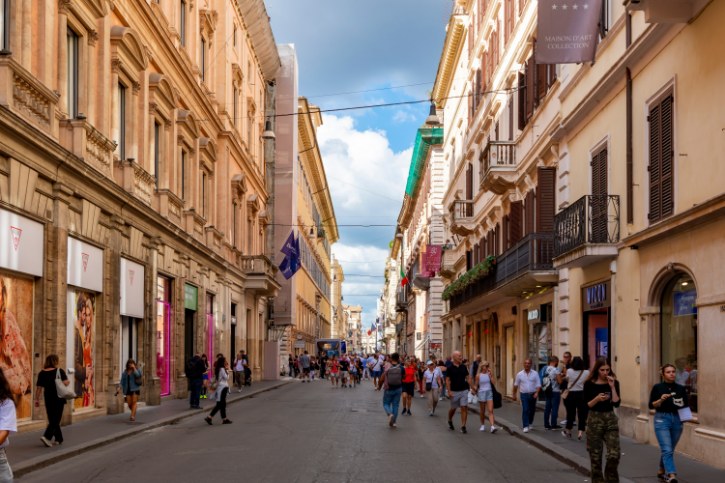
Via del Corso is one of the most famous streets in Rome and a lively way to end the walk. It follows the line of an ancient Roman road and forms the central spine of the city, linking the northern gate with the square at the foot of the Capitoline Hill.
b. The Story Behind the Name
The name comes from the Carnival races once held here, when riderless horses galloped down the packed street from one end to the other. The spectacle ran for centuries before being stopped in the late 1800s for safety reasons.
c. Palaces Hidden Above the Shops
The ground floors are full of shops now, but look up and you will find grand old palaces:
- Palazzo Doria Pamphilj, home to a famous gallery with works by Caravaggio, Velázquez, and Titian.
- Palazzo Ruspoli, known for a marble staircase of 120 steps.
- San Marcello al Corso, a historic church with a curved Baroque front.
d. A Fitting End to the Walk
This last stretch brings the whole route full circle:
- The energy is the opposite of the quiet churches earlier, full of crowds and easy evening life.
- The history is still there, in the coats of arms and fine facades above your head.
In a short distance on foot, you have crossed from the vast world of the Vatican, over an ancient river, through quiet lanes and dazzling churches, past imperial monuments, and into the warm heart of the city. That is the real gift of walking Rome. The famous sights are only the start, and the best moments are often the ones waiting quietly in between.