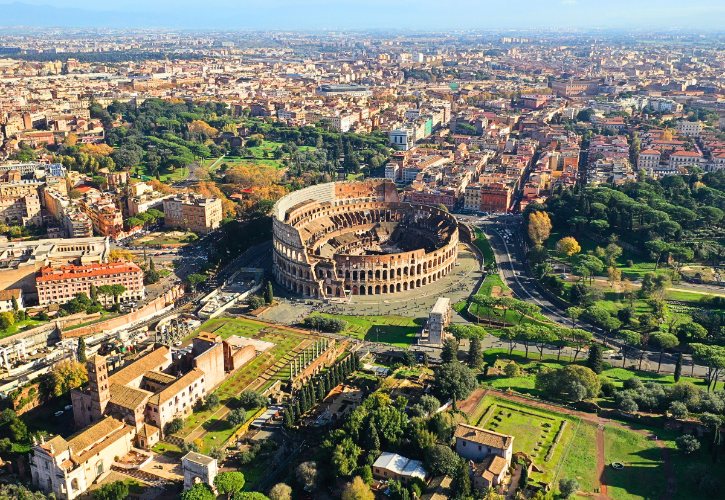
The Colosseum is the reason most people come to this corner of Rome, and it lives up to the hype. But the real magic is what surrounds it.
Within a short walk you can move from imperial ruins to a buried early church, a hilltop orange garden, and a Renaissance square glowing in the evening light.
This one-day route strings the best of it together on foot, so you see far more than the amphitheatre alone. 😊
8:30 AM – Colosseum & Arch of Constantine
a. Colosseum
Why it’s the heart of the day
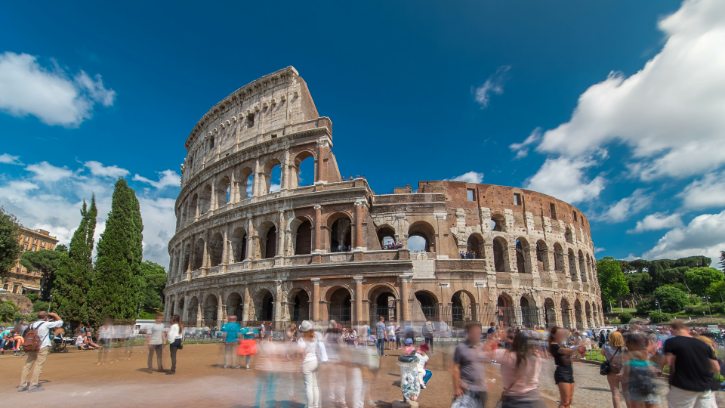
The Colosseum is the anchor of this route, not just the first box to tick. Everything you see later makes more sense once you have stood inside it. Getting there right at opening also means smaller crowds and cooler air, which makes a real difference on a full day.
A quick history
The Flavian Amphitheatre was begun under Emperor Vespasian in 72 AD and finished by his son Titus in 80 AD. It was built on the drained lake of Nero’s former palace grounds, a deliberate gift of public land back to the people of Rome.
What to notice
- The stacked columns on the outside, plain Tuscan at the bottom, Ionic in the middle, and ornate Corinthian on top.
- The hypogeum, the underground maze of corridors, cages, and lifts once hidden beneath a wooden arena floor.
- The seating layout, arranged strictly by class, from marble seats for senators near the floor to standing room for the poor at the very top.
Making the most of your visit
The standard daytime ticket is all you need for this plan, and it gives you the first and second tiers with wide views over the arena. The second-level northern balcony frames the Arch of Constantine and the distant Forum beautifully, so linger there. Skip the Underground and Arena add-ons today, since they take extra time you will want for the afternoon.
Good to know
- Arrive around 8:15 AM for an 8:30 AM entry.
- Every person needs a photo ID matching the name on the ticket.
- Bags go through security, and large backpacks, glass, and alcohol are not allowed inside.
b. Arch of Constantine
Why it’s worth a pause
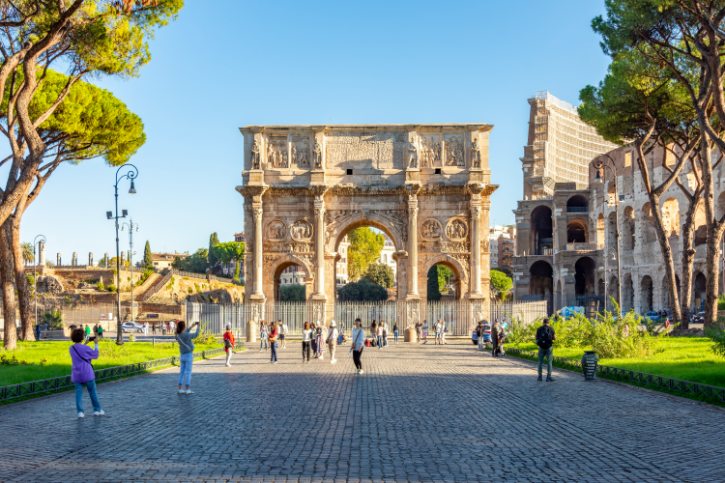
Just steps from the Colosseum stands the Arch of Constantine, the largest surviving triumphal arch in Rome. It is easy to treat it as a photo backdrop, but a few minutes here really pay off.
The story behind it
It was dedicated in 315 AD to celebrate Emperor Constantine’s victory over Maxentius at the Battle of the Milvian Bridge in 312 AD. That battle was a turning point in Roman history, and the arch marks it in grand style.
Spot the “spolia”
Here is the fun part. Much of the carving is older than the arch itself, reused from earlier monuments. This reuse is called spolia, and it linked Constantine to Rome’s most admired emperors. Look for:
- Statues of captured Dacian prisoners, from the age of Trajan.
- Panels of military scenes, from the time of Marcus Aurelius.
- Round hunting reliefs, from the reign of Hadrian.
10:20 AM – Roman Forum & Palatine Hill
a. What you’re walking through
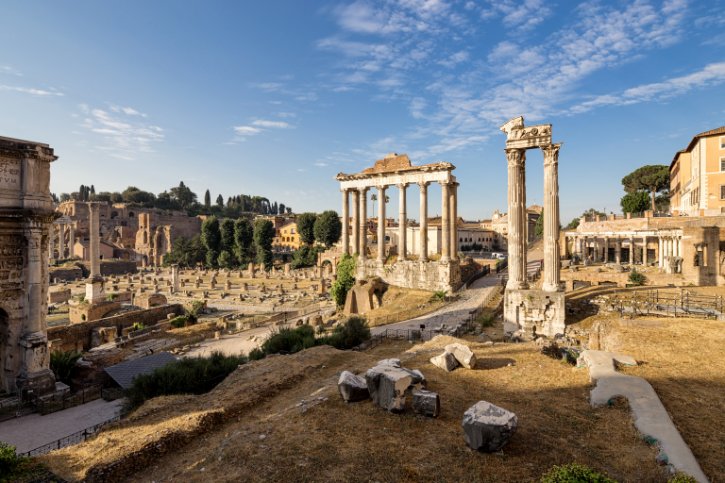
The Roman Forum was the beating heart of ancient Rome, its center of politics, religion, law, and daily business. What looks like scattered stone today was once the most important square in the western world. Give yourself a couple of hours here so you can take it in without rushing.
b. Forum highlights
Focus on these standouts rather than trying to see everything:
- Arch of Titus: marks the conquest of Jerusalem, with reliefs showing the sacred Menorah carried in triumph.
- Basilica of Maxentius: the Forum’s largest building, with vast surviving vaults.
- Temple of Antoninus and Faustina: survived so well because it was later turned into a church.
- House of the Vestal Virgins: home of the priestesses who guarded Rome’s sacred flame.
- Temple of Saturn: eight tall columns that once fronted the state treasury.
- Arch of Septimius Severus: a triple arch marking the corner of the square.
c. Up on the Palatine Hill
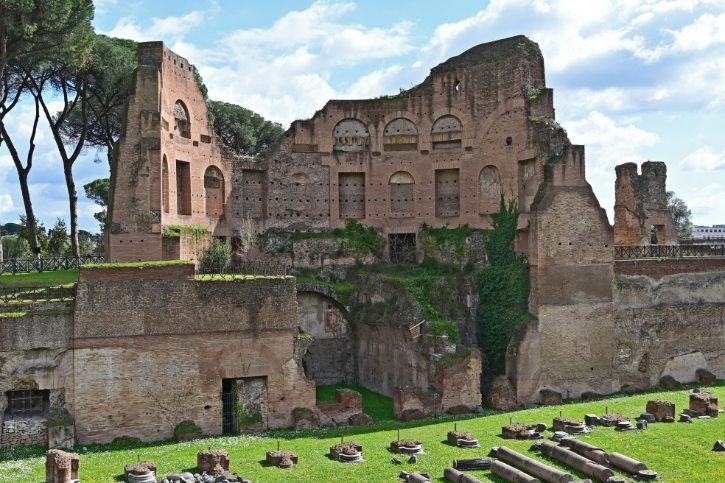
From the Forum, climb onto the Palatine Hill, the legendary spot where Romulus is said to have founded Rome in 753 BC. Later it became the palace district of the emperors, and you can walk through the ruins of their grand halls and private residences perched above the city.
d. The best views
The Farnese Gardens terraces on the Palatine offer the finest views of the day so far. From up here you can see the whole Forum spread out below, with the Colosseum beyond. Trust me, this is the moment the ancient city finally clicks into place as one connected world.
e. Good to know
- Wear sturdy, comfortable shoes, since the ground is uneven ancient stone, gravel, and dirt.
- Shade is scarce, so bring water and a hat in summer. You can refill at the public fountains inside the park.
- The House of Livia is closed for restoration from 24 August 2026, with no reopening date announced. This route does not rely on it, so you won’t miss out.
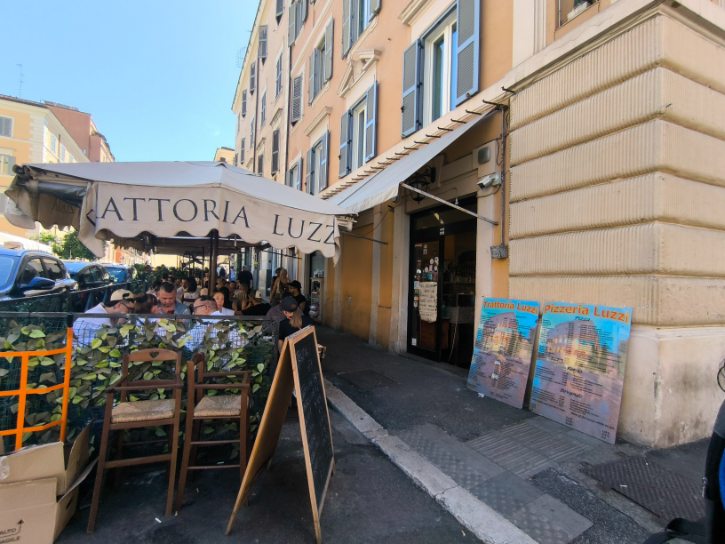
1:00 PM – Lunch: Trattoria Luzzi
a. Why stop here
After a morning among the ruins, Trattoria Luzzi is a welcome, unfussy break. It has been feeding Romans since 1945, and it sits right between the Forum and your afternoon stops, so you refuel without going out of your way.
b. What to order
Expect honest, traditional Roman cooking:
- Cacio e pepe and carbonara, the two Roman pasta classics.
- Bucatini all’amatriciana, rich with tomato and cured pork.
- Saltimbocca alla romana, tender veal with sage and prosciutto.
- Thin-crust, wood-fired Roman pizza.
Service is quick and friendly, which is exactly what you want with an afternoon still ahead.
2:20 PM – Basilica of San Clemente
a. Why it’s unmissable
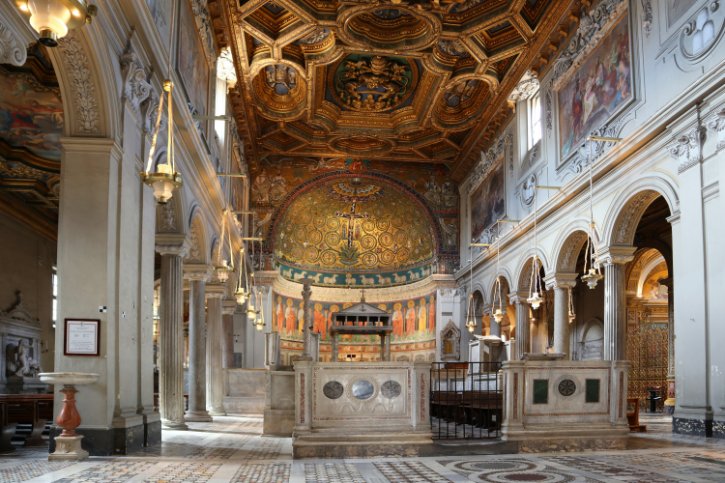
If you want one clear reason to explore beyond the Colosseum, San Clemente is it. In a single building you descend through nearly two thousand years of Rome, one layer at a time.
b. The layers of history
- Street level: a beautiful church from around 1100 AD.
- Four meters down: an earlier 4th-century church, buried to support the one above.
- Deepest level: Roman buildings and a Mithraeum, a temple to a Persian mystery cult, with an underground stream you can still hear rushing past.
c. Highlights to notice
- The glowing apse mosaic of the Triumph of the Cross in the upper church.
- The inlaid Cosmatesque marble floor.
- The early frescoes downstairs, whose captions are among the oldest written Italian.
- The altar in the Mithraeum showing Mithras slaying the sacred bull.
d. Good to know
- The upper church is free, but the excavations need an advance online timed ticket, so book ahead.
- Photography is not allowed anywhere inside.
- Time underground is limited, so plan for around 50 minutes to cover all the levels.
3:35 PM – Circus Maximus & Giardino degli Aranci
a. Circus Maximus
Picture the scale
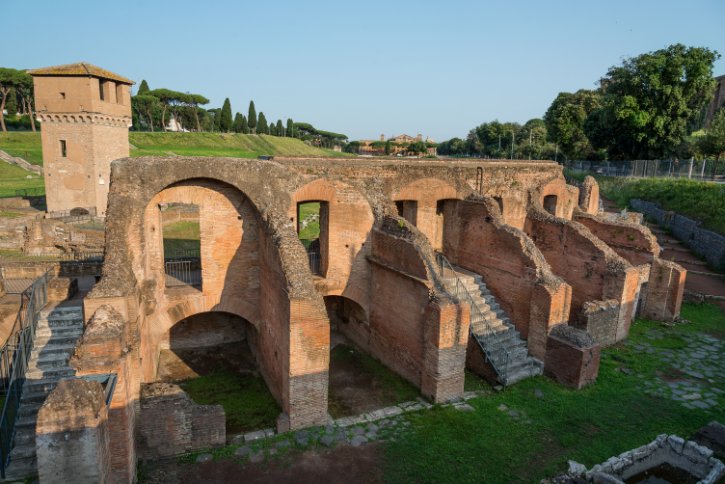
The Circus Maximus was ancient Rome’s largest venue, a vast track that held well over 150,000 spectators for chariot races. Today it is a wide open green space, but stand at the eastern end and it is easy to imagine the roar of the crowd.
What to see
- Look across the track toward the central spine where obelisks once stood.
- Look up to the Palatine palaces rising above, the same imperial homes you saw earlier.
- The medieval Torre della Moletta marks the eastern rim and makes a great photo point.
Keep it simple
For this itinerary, enjoy the Circus as a quick outdoor stop. The ticketed archaeological area and the virtual-reality experience are interesting but eat into your afternoon, so save them for another visit.
b. Giardino degli Aranci
A garden with a view
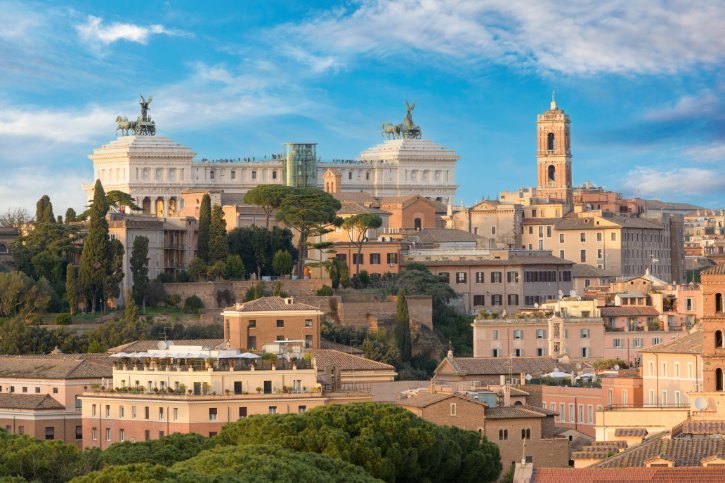
A short climb up the Aventine Hill brings you to the Giardino degli Aranci, the Orange Garden, laid out in 1932 on the site of a medieval fortress. Rows of bitter orange trees lead you toward one of the loveliest viewpoints in the whole city.
The best view
From the walled terrace you look out over the Tiber, the rooftops of Trastevere, and the dome of St Peter’s in the distance. There are stone benches and a fountain here too, so it is the perfect place to rest your feet and take photos.
What to skip nearby
- The famous Knights of Malta keyhole is close, but its queue often runs 45 minutes or more, so leave it for another day.
- The nearby Rose Garden only blooms in spring, roughly late April to June, so outside that window there is little to see.
4:45 PM – Santa Maria in Cosmedin & Theatre of Marcellus
a. Santa Maria in Cosmedin & the Mouth of Truth
More than a photo stop
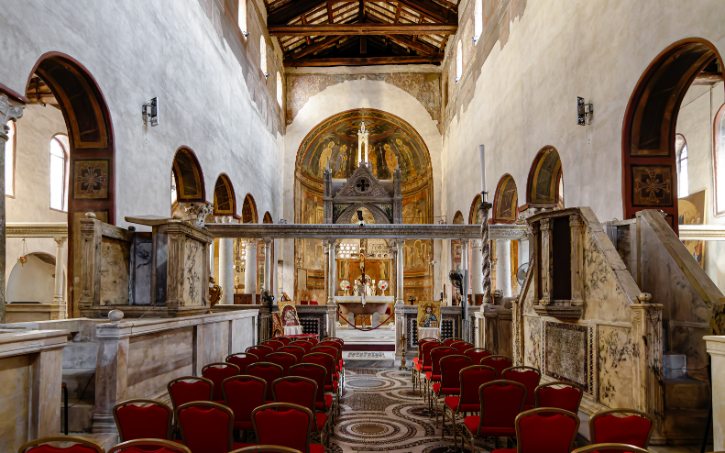
Most people come here for the Mouth of Truth, but the Basilica di Santa Maria in Cosmedin is a gem in its own right. It was given to Greek-speaking monks in the 8th century, which earned it the nickname Schola Graeca.
Inside the church
- A graceful 12th-century Romanesque bell tower.
- A beautiful Cosmatesque marble floor.
- Ancient columns reused from a Roman grain hall.
The Mouth of Truth
In the church porch sits the Bocca della Verità, a huge marble disk carved with a river god’s face over two thousand years ago. Legend says it bites the hand of anyone who tells a lie. The photo line can run long, so if it stretches past the arches, view the stone through the fence and step into the free church instead.
b. Theatre of Marcellus
A building of many eras
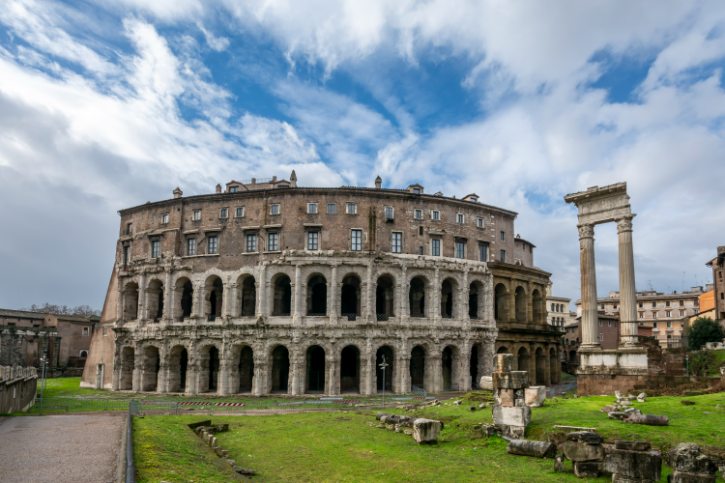
The Theatre of Marcellus is one of Rome’s most fascinating layered buildings. Begun by Julius Caesar and finished by Augustus, who named it for his nephew, it later became a medieval fortress and then a Renaissance palace. People still live in apartments built above the ancient arches today.
What makes it special
- Its arches, with Doric columns below and Ionic above, became the model for the Colosseum.
- The nearby standing columns of the Temple of Apollo add to the scene.
- Seeing ancient, medieval, and Renaissance work stacked in one structure is genuinely rare.
6:00 PM – Piazza del Campidoglio
a. From ancient to Renaissance Rome
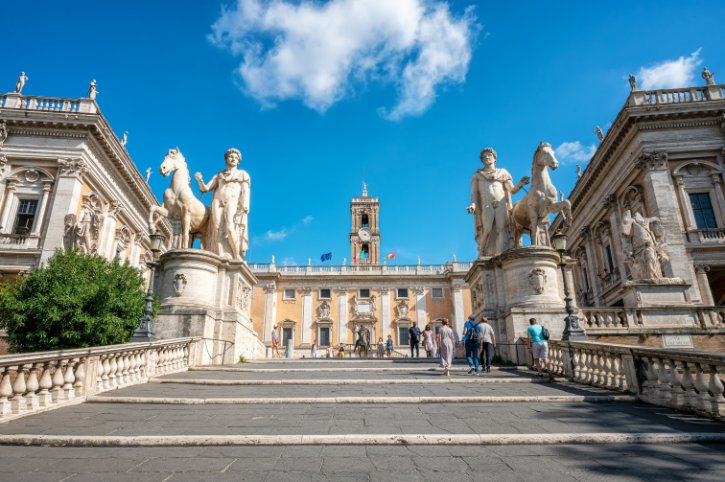
Climbing to Piazza del Campidoglio shifts the day from ancient Rome into the Renaissance. In 1536, Pope Paul III asked Michelangelo to redesign the hill, and he turned the whole square to face the growing papal city rather than the old Forum below.
b. What to look for
- The gently rising Cordonata ramp, flanked by ancient statues.
- The star-patterned paving that symbolizes Rome as the center of the world.
- The equestrian statue of Marcus Aurelius at the center, a replica, with the ancient original kept safely indoors.
- The three palaces framing the square in perfect balance.
c. The best free view
Walk to the side of the central palace and you reach a terrace overlooking the Roman Forum. With the late afternoon light on the ruins and the Colosseum in the distance, it is one of the finest free views in the city.
d. Good to know
- The Capitoline Museums here are wonderful but need a couple of hours, so save them for a separate day.
- Nearby Piazza Venezia is under major Metro construction, with fencing and pedestrian detours. Follow the current signs, since the layout can change from week to week.
6:45 PM – Trajan’s Column & Evening Walk in Monti
a. Trajan’s Column
The story in stone
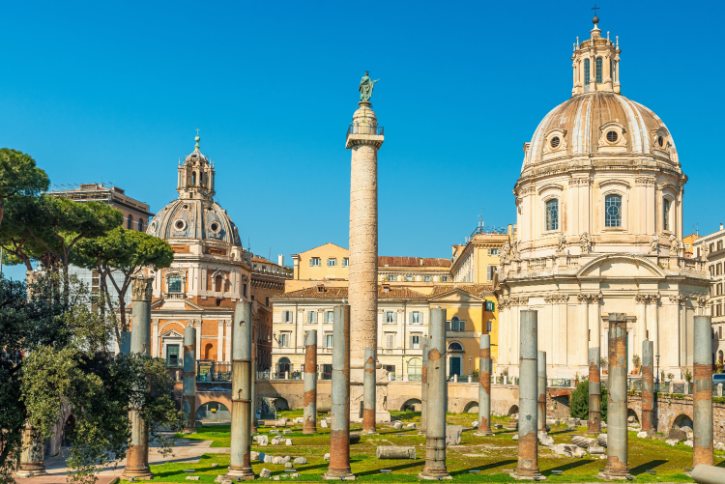
Trajan’s Column is a masterpiece of Roman storytelling. Dedicated in 113 AD, it stands about 30 meters tall and is wrapped in a spiral relief that winds around it roughly 23 times. Together those bands tell the story of Trajan’s campaigns in Dacia, with over 2,500 carved figures.
How to read it
Step back a little rather than standing right at the base. From a short distance you can follow the spiral upward and take in the story, especially the clearer scenes lower down. It is best seen earlier in the evening while there is still good light on the carvings.
Details worth knowing
- The base held a chamber with the ashes of Trajan and his wife.
- The original statue of Trajan on top was lost long ago. Since 1587, a statue of Saint Peter has stood there instead.
b. Evening Walk in Monti
A gentler side of Rome
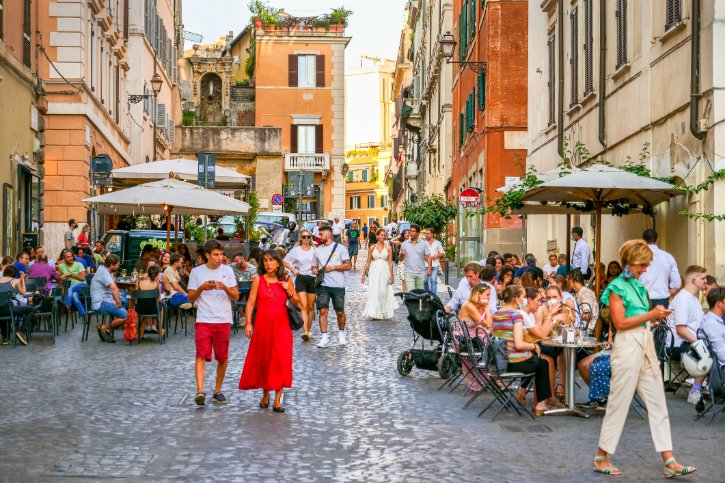
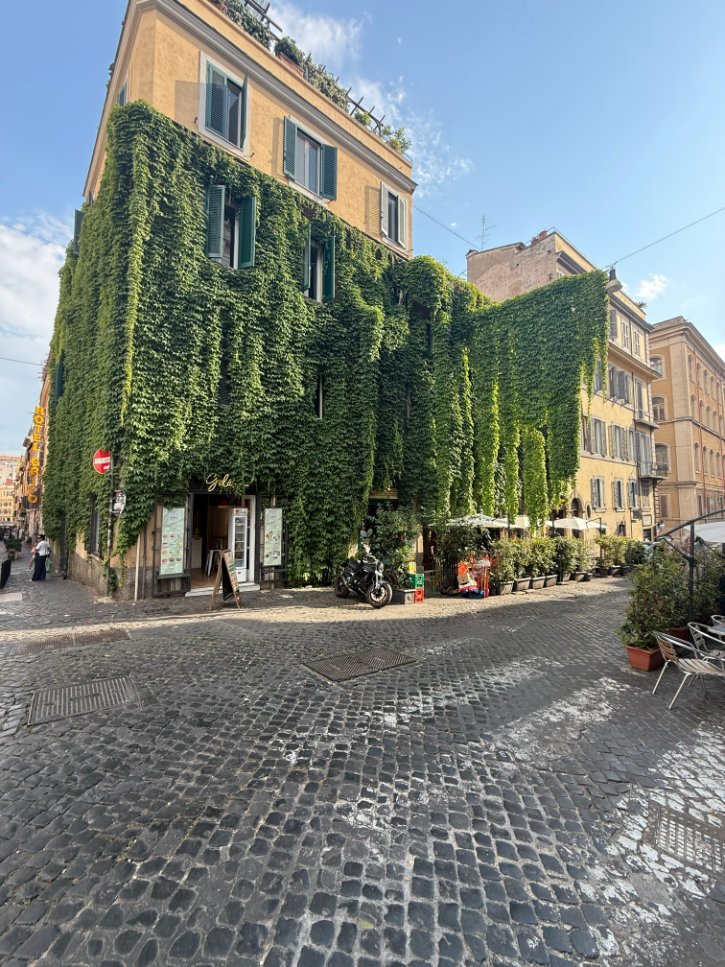
After a day of grand monuments, the Monti neighborhood is the perfect wind-down. Once a crowded ancient district, it is now full of quiet lanes, ivy-draped houses, and small shops. The change of pace feels wonderful after so much stone and history.
What to enjoy
- The pretty little Piazza della Madonna dei Monti with its old fountain.
- The boutiques and cafés along Via del Boschetto.
- The lively early-evening buzz of Via Panisperna.
Let yourself wander slowly here. This part of the day is about atmosphere, not ticking off sights.
8:00 PM – Dinner: Ai Tre Scalini or Taverna Romana
a. Ai Tre Scalini
The atmosphere
Tucked on Via Panisperna, Ai Tre Scalini is a cozy wine bar and osteria that has been going since 1895. With vine-covered arches outside and warm lantern light within, it has a relaxed, welcoming feel that suits the end of a long day on your feet.
What to try
- Boards of cheese and cured meats to share.
- Eggplant parmesan, baked and comforting.
- Slow-cooked beef stew in local red wine.
- Classic baked Roman pastas.
b. Taverna Romana
The atmosphere
A short stroll away, Taverna Romana is a small, traditional trattoria with a homely, no-frills charm. It is the kind of place where the pasta arrives in the pan and the flavors are pure Roman comfort.
What to try
- Carbonara and cacio e pepe, done the classic way.
- Amatriciana, tangy and rich.
- Fried artichokes when they are in season.
c. Which to choose
Both sit right where the Monti walk naturally leads, so you really cannot go wrong. Choose Ai Tre Scalini for a lively, casual finish, or Taverna Romana for a quieter, classic sit-down meal. Either way, it is a fitting end to a day that began inside the Colosseum.