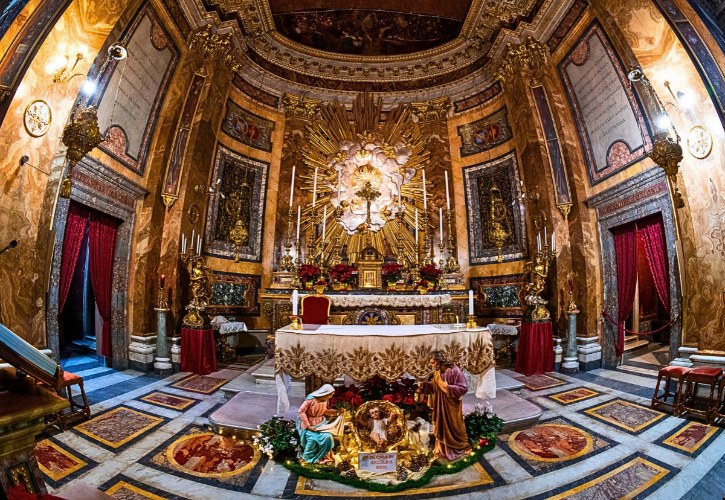
Some of Rome’s finest sculptures are not locked behind museum glass. They sit inside working churches, where you can walk in off the street, stand just a few feet away, and pay nothing at all.
You get lifelike marble, raw emotion, and strange backstories that most visitors stroll right past. If you want world-class art without the ticket lines, these four stops belong on your list.
Here is exactly what to look for and why each one is worth your time. 😊
1. Santa Maria della Vittoria: Where Marble Turns Into Theater
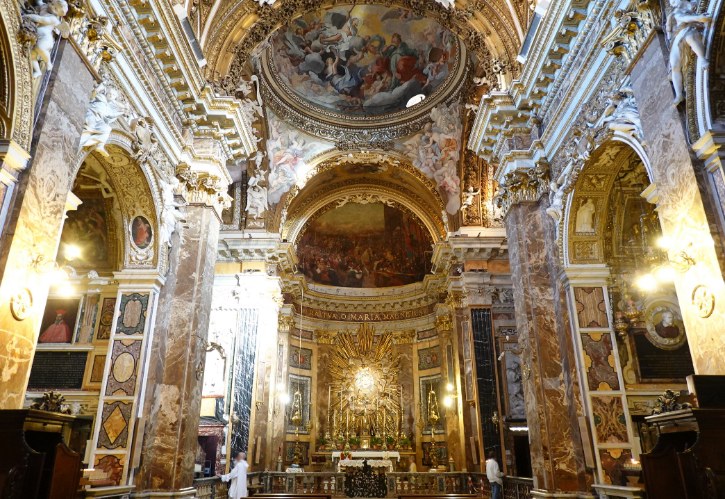
a. From a Humble Chapel to a Baroque Showstopper
This church did not start out grand. Here is how it grew into the showpiece you will walk into today:
- It was founded in 1605 as a modest chapel for the Discalced Carmelite order
- After a major Catholic victory at the Battle of White Mountain in 1620, it was rededicated to the Virgin Mary as Our Lady of Victory, and that grand name stuck
- Carlo Maderno led the building work
- The facade was funded by Cardinal Scipione Borghese in a clever trade for an ancient statue dug up on the grounds
b. Step Inside and Prepare to Be Dazzled
From the street it looks plain. Inside, it is full-blown High Baroque, and your eyes will not know where to land first. Look for:
- A single wide nave under a painted vault showing the Triumph of the Virgin Mary over Heresy
- Gilded stucco, giant columns, and richly colored marble on nearly every surface
- Side chapels with paintings by Domenichino, Guercino, and Guido Reni
- The Cornaro Chapel in the left transept, which is the real reason you came
c. The Vision That Bernini Froze in Stone
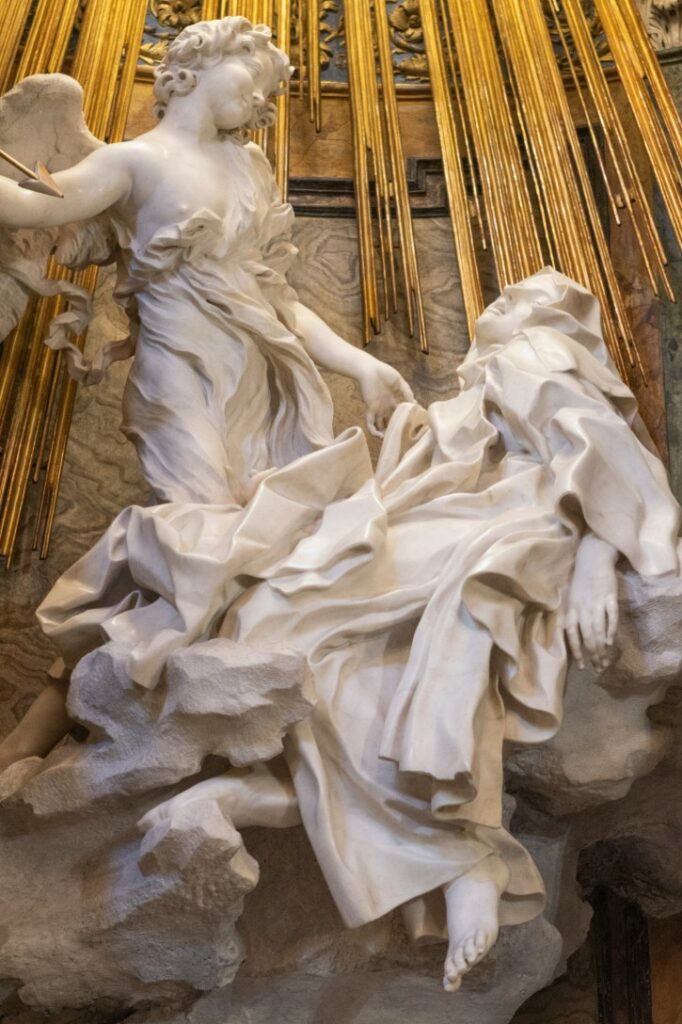
Bernini carved the Ecstasy of Saint Teresa between 1647 and 1652 for Cardinal Federico Cornaro. It captures a vision described by Saint Teresa of Ávila, a Spanish nun and mystic. In her own words, a glowing angel pierced her heart again and again with a long golden spear tipped with fire. The pain made her cry out, yet it came wrapped in a sweetness so deep that she never wanted it to end. That exact mix of agony and bliss is written all over her face.
d. A Sacred Stage Built From Hidden Light
Bernini did not simply set a statue on an altar. He built a theater, and you are part of the audience. Notice how he pulls it off:
- Teresa floats backward on a rough marble cloud as the angel stands over her
- Gilded bronze rays pour down behind them like frozen beams of light
- A concealed window with yellow glass lights the figures from above with real sunlight
- Carved portraits of the Cornaro family watch from theater boxes along both walls, as if seeing the miracle with you
e. What to Catch Before You Head Out
Take in the whole chapel first, then move closer and study the finer points:
- Teresa’s parted lips and loosened, surrendered expression
- The angel’s gentle, almost playful half-smile
- The rough matte clouds set against the high polish of the angel’s skin
- The deeply gouged folds of Teresa’s robe, which seem to churn on their own
- A restoration finished in October 2021 brought back the original lighting, and it is all free to see
2. San Francesco a Ripa: A Quiet Marvel in Trastevere
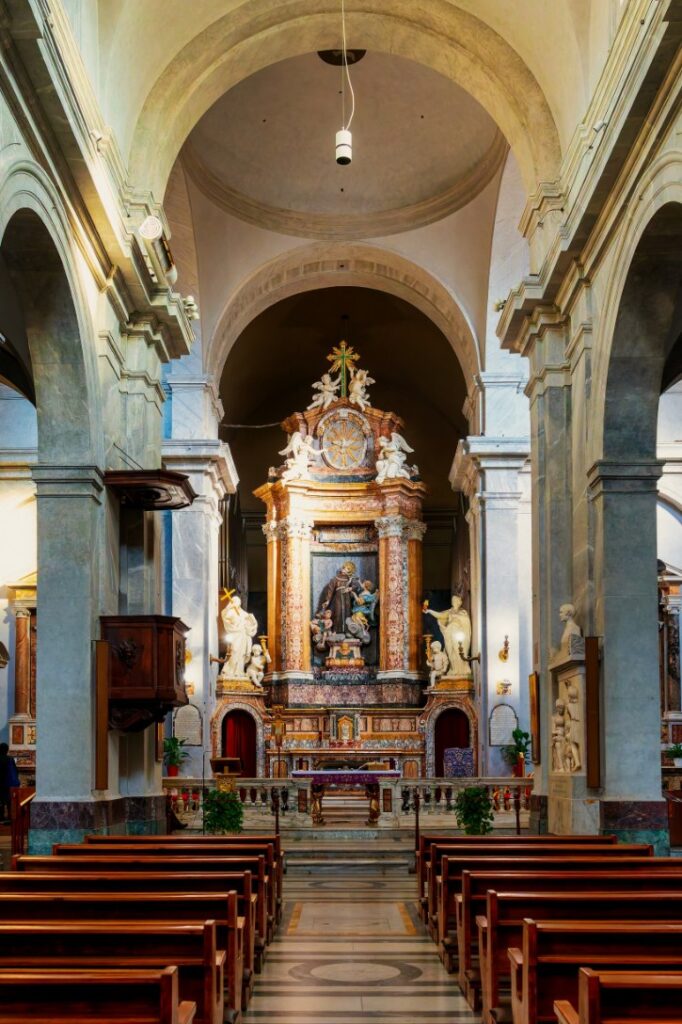
a. A Hidden Gem Across the River
This one sits a little off the usual tourist path, but the short trip across the river pays off. A few things to know before you go:
- It stands in the lived-in neighborhood of Trastevere, away from the crowds
- It marks the spot where the Franciscan order began in Rome
- The story reaches back to 1209, when Saint Francis came to seek the pope’s blessing for his new rule
- The church you see today rose over those old foundations starting in 1603
b. Meet the Woman Behind the Marble
The sculpture only hits home once you know her story. Here is the short version:
- Ludovica Albertoni was a Roman noblewoman who lived from 1473 to 1533
- After her husband died, she gave her wealth and her remaining years to the poor of Trastevere
- She joined the Third Order of Saint Francis and became known for her deep faith
- In 1671, Pope Clement X confirmed her long-standing cult, and she was beatified that same year
c. Bernini’s Last Great Masterpiece
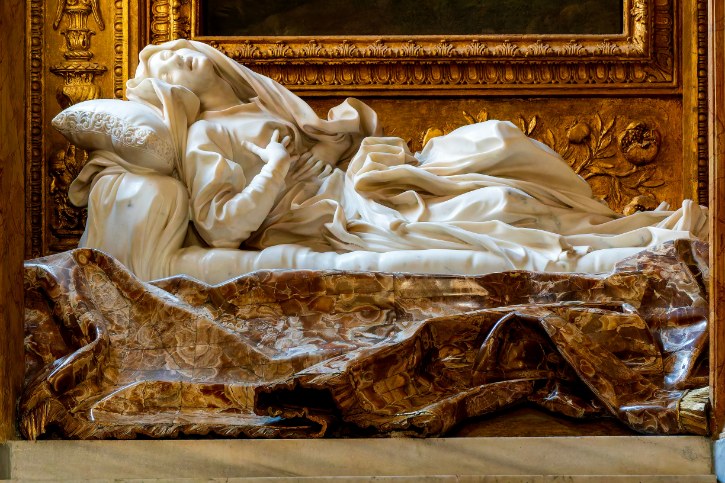
To honor her, Cardinal Altieri hired an aging Bernini, who carved the Blessed Ludovica Albertoni between 1671 and 1674. This is late Bernini, and it feels different from his earlier work. Instead of floating in rapture, Ludovica lies on a carved mattress in her final earthly moment. Her head falls back, her mouth parts, and her hands press to her chest as if holding in a force too big for her body. It is quiet, intense, and deeply moving.
d. How He Made a Tiny Chapel Feel Grand
The Altieri Chapel is small, so Bernini worked with the limits and turned them to his favor. Look for the tricks:
- He reshaped the back wall into a deep recess and tucked her inside it
- He cut two hidden side windows, so sharp light rakes across the white marble
- A frieze of bursting pomegranates stands for resurrection and eternal life
- Flaming hearts below the windows stand for divine love
- Carved cherubim gaze down as if ready to carry her soul upward
e. Lean In, Then Keep Exploring
Get close for the craftsmanship, then look around before you leave:
- The folds of her habit look like her whole body is clenching, while her face stays calm and smooth
- Below the mattress, a drape carved from deep red Sicilian jasper anchors her to the earthly world
- Ask the sacristan to visit the upstairs cell of Saint Francis, which holds the stone he is said to have used as a pillow
- Bernini’s masterpiece sits here free for anyone who walks through the door
3. San Pietro in Vincoli: Michelangelo’s Moses and Its Famous Horns
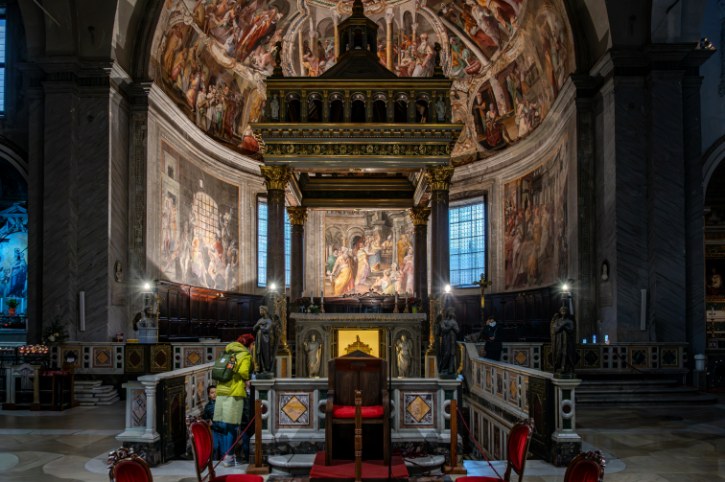
a. An Ancient Basilica Built for Sacred Chains
A short walk from the Colosseum, this basilica hides a remarkable backstory. Here is what gives it such a powerful setting:
- It dates to the 5th century, around 440 AD, and its name means Saint Peter in Chains
- It was built to house the iron chains said to have bound the apostle during his imprisonment
- Tradition says that when two separate sets of his chains were brought together, they fused into one unbreakable chain
- You can still see the relic, glittering in a case beneath the high altar
- Treat the fusion as a cherished legend rather than proven history
b. The Tomb That Dragged On for 40 Years
Michelangelo bitterly called this project the “tragedy of the tomb”, and the timeline shows why:
- In 1505, Pope Julius II ordered a huge freestanding tomb with more than 40 statues
- After Julius died, the plan shrank to a wall tomb, and Moses was carved around 1513 to 1515
- The design was cut back again, then finally installed here in 1545
- Julius is not even buried here, which makes the grand monument an empty tomb
c. Why on Earth Does Moses Have Horns?
The first thing you will notice is the pair of small horns on his head, and the reason comes down to translation. The original Hebrew said Moses’s face “shone” with light after meeting God, but a close cousin of that word also means “horn”. Saint Jerome’s Latin Bible chose “horned”, and a thousand years of Christian art followed his lead. Scholars still argue over whether it was an honest slip or a deliberate symbol of power. Either way, it is not a simple mistake, and it is not meant to look sinister.
d. The Small Details That Reward a Close Look
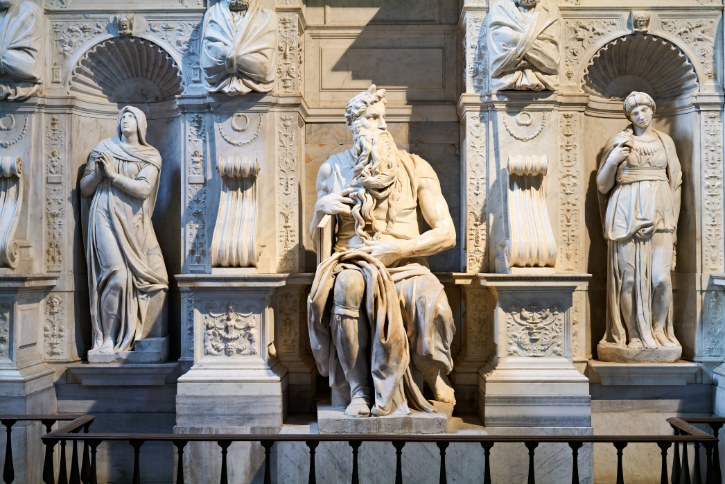
Moses is seated, yet he looks ready to leap up at any second. Study these closely:
- His head turned sharply left, brow furrowed, as if he just caught his people worshipping a false idol
- One foot planted firmly, the other pulled back on its toes, as if about to rise
- His fingers plunging into a long, river-like beard
- A tiny forearm muscle carved mid-flex, proof of Michelangelo’s secret anatomy studies
e. More Treasures Beyond the Big Name
Give the rest of the church a few minutes, because there is plenty to see:
- The chains of Saint Peter in their reliquary beneath the altar
- A grand coffered ceiling crowned with a fresco of the chains’ miracle
- Paintings by Guercino and Domenichino along the side aisles
- The Renaissance tomb of the Pollaiolo brothers near the entrance
- Both the church and the Moses are entirely free, with no ticket or tour needed
4. Sant’Andrea delle Fratte: The Angels That Never Reached Their Bridge
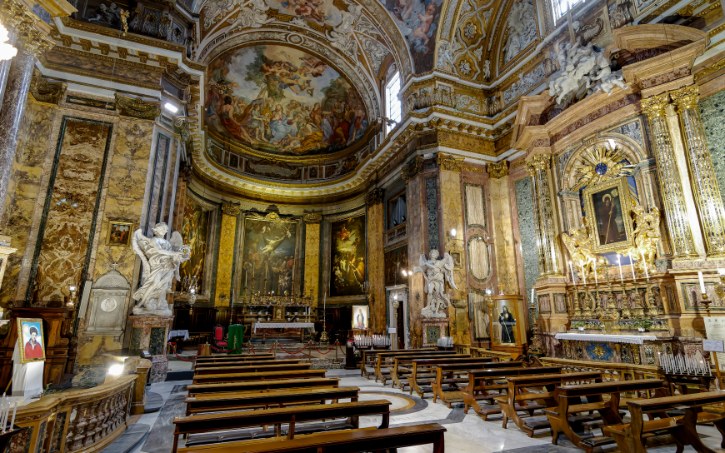
a. A Church Named for Wild Thickets
You will find this basilica close to the Spanish Steps. A couple of quick notes set the scene:
- Its odd name comes from the past, when the area was overgrown “thickets” on the city’s edge
- In the 1600s it got a bold makeover led by Francesco Borromini, Bernini’s great rival
- That rivalry sets up a neat twist you will spot in a moment
b. The Bell Tower That Seems to Dance
Before you even reach the altar, step back and take in Borromini’s work. It is one of the most original sights in Baroque Rome:
- A complex brick dome unlike anything else nearby
- A bell tower with a square base that shifts into a round colonnade
- Angel figures near the top holding flaming torches, framed by scrolls shaped like half-folded hearts
- A spiky crown decorated with the Del Bufalo family buffalo
- When the big bell rings, the whole tower seems to sway, which earned it the local nickname “the dancer” (la ballerina)
c. Two Angels Carved by the Master Himself
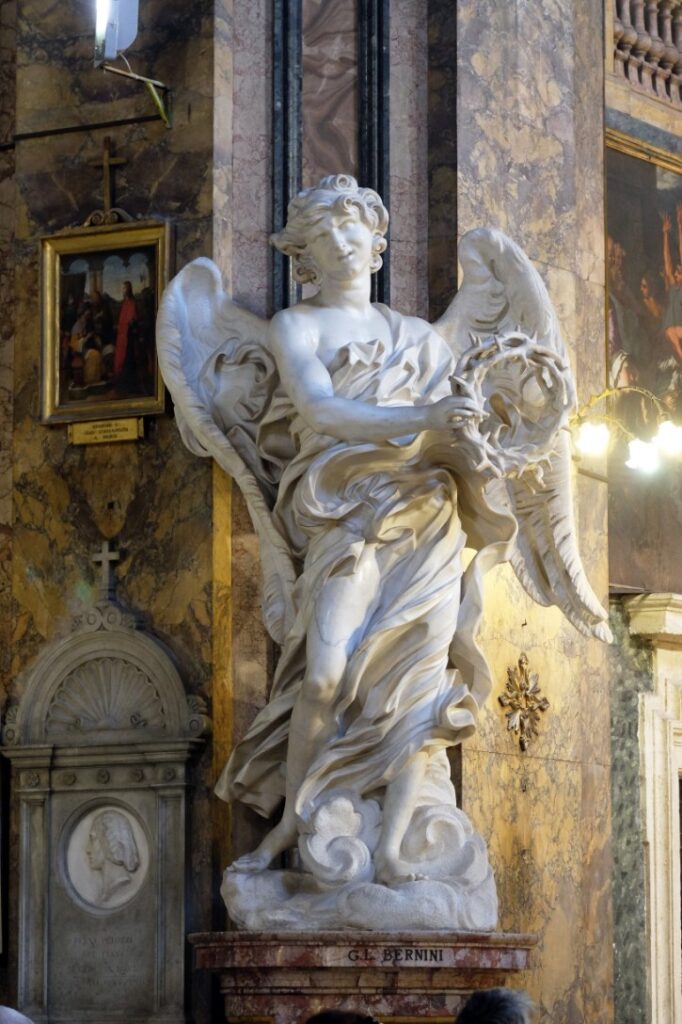
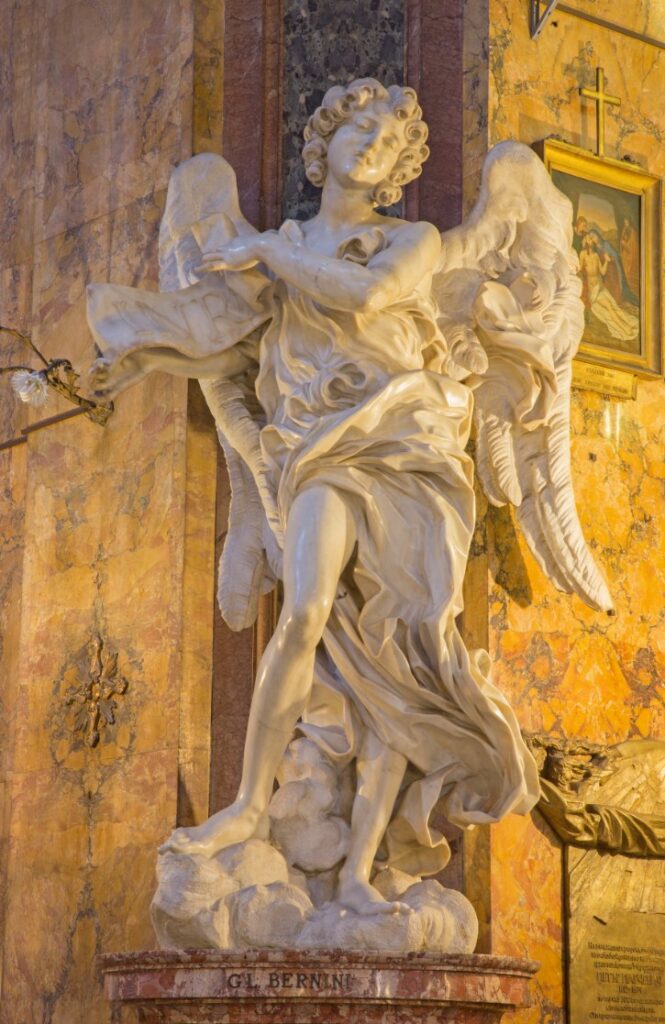
The real prize is a pair of marble angels flanking the high altar, carved by Bernini between 1667 and 1670. One holds the crown of thorns, and the other holds the INRI sign that hung above Christ on the cross, naming him “King of the Jews”. Bernini designed a full set of ten angels for a public project but reserved only these two for his own hands. You can feel the difference in their emotion and their flawless finish.
d. The Surprising Journey That Brought Them Indoors
These angels were never meant for this church, and the story behind them is a good one:
- They were made for the Ponte Sant’Angelo, the bridge leading to Castel Sant’Angelo
- Pope Clement IX saw the finished originals and declared them too precious for the harsh weather
- He ordered copies for the bridge, and those copies still stand there today
- In 1729, Bernini’s grandson donated the originals to this church, the family’s parish
- So Bernini’s personal masterpieces now live in a church shaped by his rival, Borromini
e. What to Enjoy on the Same Visit
Give yourself time for the rest of what is here:
- The Chapel of the Madonna of the Miracle, tied to a reported 1842 vision and still a pilgrimage spot, best understood as a religious tradition
- The angels’ feathered wings, soft curls, and the raw chisel marks Bernini left to catch the light
- Their two different faces: one in shared agony, one gazing upward in sorrowful devotion
- A rare, close-up view of figures built to stand high on a bridge, all of it free to see