Naples hides its best stories below the surface. As you wander its loud, sunny streets, you walk right over secret chapels, ancient tombs, wartime shelters, and strange rituals built around the dead.
Most visitors miss them completely. If you are ready to see a deeper, stranger side of the city, these five places will stay with you long after you leave. 😊
1. Sansevero Chapel Museum
a. Meet the “Dark Prince” Behind It All
This chapel is the life’s work of Raimondo di Sangro, the seventh Prince of Sansevero, who lived from 1710 to 1771. He was one of the most unusual men of his time.
- A scholar, inventor, and alchemist, and a high-ranking freemason.
- He ran a private printing press and published daring philosophical books.
- His 1750 book, the Lettera Apologetica, was placed on the Church’s list of forbidden books.
- Locals came to call him the “Dark Prince”.
In the 1740s, he reshaped his family burial chapel into a single space packed with hidden meaning, right down to a marble labyrinth once set into the floor.
b. A Veil Carved From Solid Stone
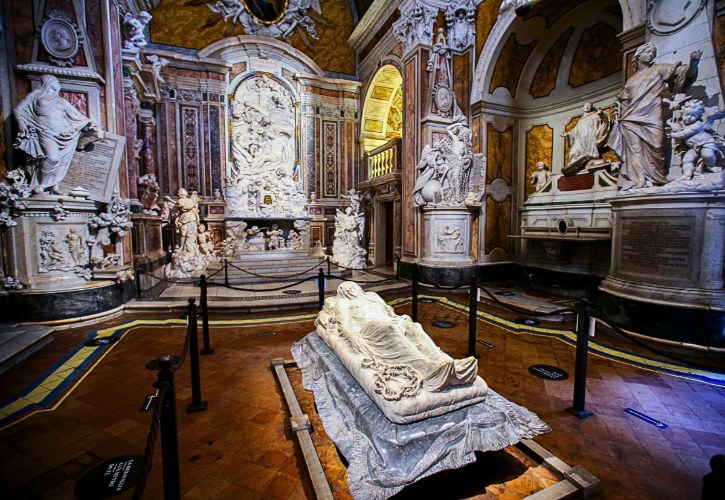
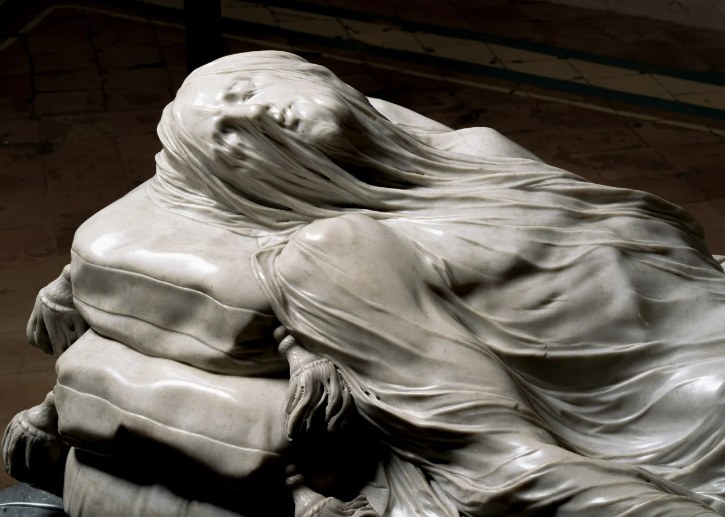
The chapel’s star is the Veiled Christ (Cristo Velato), finished in 1753 by Giuseppe Sanmartino. It shows the dead Christ under a thin, see-through shroud, all cut from one block of marble. Trust me, photos do not do it justice.
- The veil looks damp and weightless, clinging to the body.
- You can see the wounds, the calm face, and the tight tendons in the feet.
- The crown of thorns, nails, and pincers rest nearby in sharp detail.
Two more sculptures deserve a long look:
- Modesty, carved for the prince’s mother, wrapped in a soft-looking marble veil.
- Disillusion, a man pulling free from a marble fishing net cut from a single block, which reportedly took about seven years to carve.
c. The Skeletons That Spooked a City
Head down to the crypt for the chapel’s most unsettling sight: the Anatomical Machines, built between 1756 and 1764 by the anatomist Giuseppe Salerno.
- Two upright skeletons, a man and a pregnant woman, each wrapped in a full model of the blood system.
- Old legend said the prince injected living servants to preserve them forever.
- Modern study disproved this. The bones are real, but the vessels are made from beeswax, iron wire, and dyed silk.
The detail is still astonishing, copying the body down to the smallest vessels. A third model, a tiny fetus, was stolen in the 1990s and has never been found.
d. Sorting the Legends From the Truth
A dark legend still surrounds this place, so it helps to know what is real. The rumor that the prince turned real fabric to stone over the Veiled Christ does not hold up, because surviving payment records show Sanmartino carved it from a single block.
Other tales, that he could make eternal light or turn water into blood, grew from genuine experiments that a superstitious public misread. He really did invent colored waxes, early lighting tricks, and even an amphibious carriage. He was a scientist and a showman, not a sorcerer.
e. What to Look For When You Go
The main floor leads you in a natural circle toward the Veiled Christ at the center.
- Give time to the quieter statues like Sincerity, Self-Control, and Decorum.
- Expect a sharp mood shift when you walk down to the crypt.
- Photography and video are not allowed anywhere inside.
With no camera to rely on, you will notice far more, from the folds in the marble to the labyrinth fragments under your feet.
2. The Bourbon Tunnel (Galleria Borbonica)
a. A King’s Secret Escape Plan
Beneath the San Ferdinando district runs a tunnel born out of royal fear. After violent uprisings in 1848, King Ferdinand II wanted a way out.
- In 1853, he ordered a passage linking the Royal Palace to the military barracks.
- The architect was Errico Alvino.
- It was built wide enough for troops and cavalry to defend the palace, and to let the royal family flee toward the sea.
The king died in 1859, the kingdom fell in 1860, and the tunnel was abandoned, unfinished and never used for the escape it was meant for.
b. Digging Through a Buried City
Cutting this tunnel meant carving through hard volcanic tuff, and Naples was already full of older tunnels and water systems.
- The work ran straight into a 17th-century aqueduct and ancient cisterns.
- Alvino built bridges and vaulted arches to pass over the deep water tanks.
- The walls still show pickaxe marks from labor done by candlelight.
The finished passage looks surprisingly elegant, blending new engineering with ancient waterworks.
c. Where 10,000 People Hid From Bombs
During World War II, Naples was bombed heavily, and the old tunnel became a lifesaving shelter.
- Up to 10,000 people sheltered here during air raids.
- It had basic lighting, latrines, and wooden beds.
- The walls still carry graffiti, including the defiant words “NOI VIVI” (We are alive).
- Toys, combs, old bottles, and broken beds still lie on the floor.
These simple objects connect you directly with the frightened families who once waited out the bombs in the dark.
d. A Graveyard of Cars and Lost History
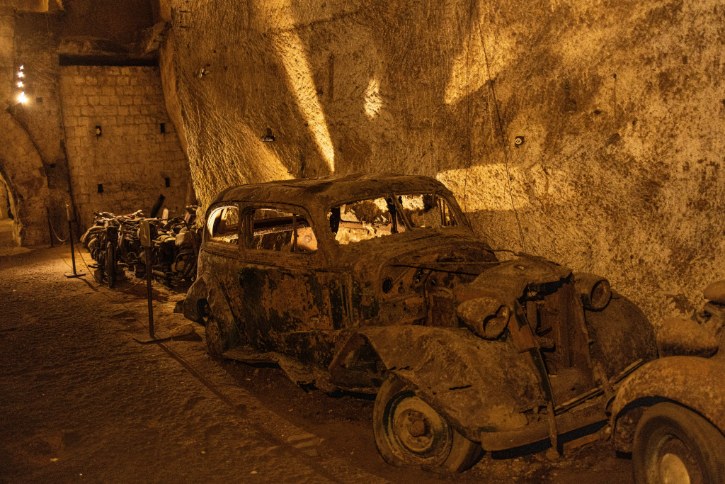
After the war, the city used the empty tunnel as an impound lot and a dumping ground.
- Through the 1950s to the 70s, it filled with vintage cars, Vespas, and motorcycles.
- Later clearing work uncovered marble pieces of a fascist monument.
- That monument once honored a local fascist leader and was torn down, then hidden underground, after Mussolini’s fall in 1943.
Today, dusty old vehicles sit beside the shattered monument, like a quiet graveyard of 20th-century history.
e. Choosing Your Way Underground
Forgotten for decades, the tunnel was cleared by volunteers from 2005 and reopened in 2010. You can pick from several routes:
- Standard Route: the main tunnel, cistern bridges, war shelter, and vintage cars. Wide and well-lit.
- Via delle Memorie: starts above ground and descends through old quarries and workshops.
- Adventure Route: helmets, headlamps, and a short raft crossing over flooded ground.
- Speleo Light Route: an adults-only crawl through tight channels. Wear clothes you do not mind ruining.
Each route shows different things, so choose the one that fits you best.
3. Ipogeo dei Cristallini
a. A Greek World Beneath the Streets
Pompeii shows the region’s Roman side, but this site reveals the city’s older Greek roots. Beneath the lively Rione Sanità neighborhood lies a burial complex from the late 4th and early 3rd centuries BC, back when Naples was a Greek colony called Neapolis. The tombs belonged to the city’s elite, and they stayed hidden for more than 2,000 years, until a baron searching for water in 1889 broke through their ceiling by accident.
b. Tombs Built Like Homes
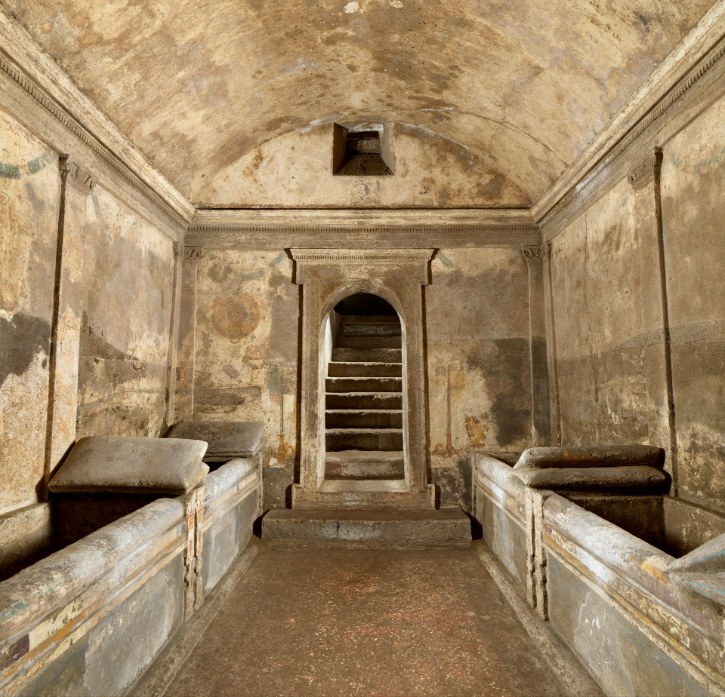
The complex holds four rock-cut chambers, each shaped to look like a living family’s home.
- The ancient Greeks saw a tomb as an eternal dwelling, not just a resting place.
- The main features are klinai, bed-like tombs carved straight from the rock.
- The stone is shaped to look like soft fabric, with plump, stacked pillows.
- Carved columns and niches make the rooms feel like a grand dining hall.
Later Roman families even added their own burial niches, some with Latin writing still visible today.
c. Colors That Survived Two Thousand Years
Ancient Greek wall paintings almost never survive, yet one chamber here still glows with color.
- Sealed in a dry, dark, and steady space, the paint never faded.
- You can see deep reds, purples, yellows, and the rare pigment called Egyptian blue.
- Painted garlands and ritual objects line the walls.
- A carved Medusa face, still showing paint, was meant to scare away evil.
- Figures of Dionysus and Ariadne stand for rebirth and a happy afterlife.
d. How You Can Visit Today
Because the ancient paint is so fragile that even your breath could harm it, visits are carefully controlled.
- Expert teams added climate control, sensors, and soft lighting.
- Access is limited to very small guided groups with a strict daily cap.
- You walk down a modern staircase through the layers of the city’s past.
Standing just a few feet from the stone pillows and the painted Medusa feels like stepping into a silent pocket of the ancient world.
4. Cappella dei Bianchi
a. An Old Masterpiece Reborn for Today
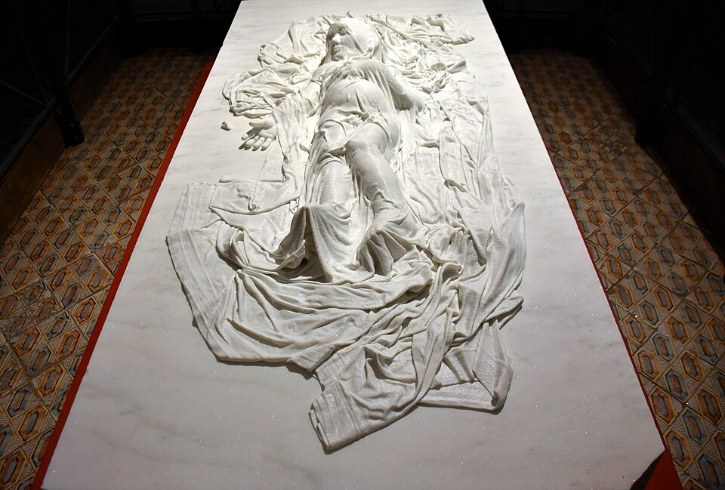
In Rione Sanità, old and new Naples meet in a single sculpture. Il Figlio Velato (The Veiled Son) was created in 2019 by the Italian sculptor Jago.
- He carved it from one block of Danby marble in his New York studio.
- It is a direct nod to Sanmartino’s Veiled Christ nearby.
- Instead of an adult figure, it shows a young child beneath a shroud.
- Jago calls it a statement for the innocent victims of modern conflict and neglect.
Keep in mind that this is a modern work, not an ancient relic.
b. Soft Cloth Made From Hard Marble
The craftsmanship rewards slow, quiet looking. Using old Baroque methods, Jago turned solid marble into what looks like soft, see-through cloth. The veil hugs the child’s face, ribs, and small hands, and instead of peaceful rest it gives a raw sense of loss that hits you right away. There are no legends at work here, just pure skill turning cold stone into deep human feeling.
c. Why This Neighborhood Matters
Where this sculpture stands is part of its meaning. It sits in the Cappella dei Bianchi, inside a 16th-century basilica in a district long marked by poverty and crime.
- Local youth groups helped bring the artwork here.
- They lead the neighborhood’s cultural and economic revival.
- Placing world-class art in a forgotten chapel drew visitors into an area they once avoided.
The result stands as a quiet symbol of pain turning into hope and renewal.
d. Seeing It in Person
Your ticket links the sculpture with the nearby Jago Museum, about a ten-minute walk away.
- The chapel is filled with centuries-old paintings and Baroque ceiling scenes.
- The bright white marble child sits at the center, a striking contrast.
- You can walk all the way around it, up close.
More than anything, it shows that Naples is a living city, still making powerful new art.
5. Chiesa Museo di Santa Luciella ai Librai
a. A Small Church With a Big Secret
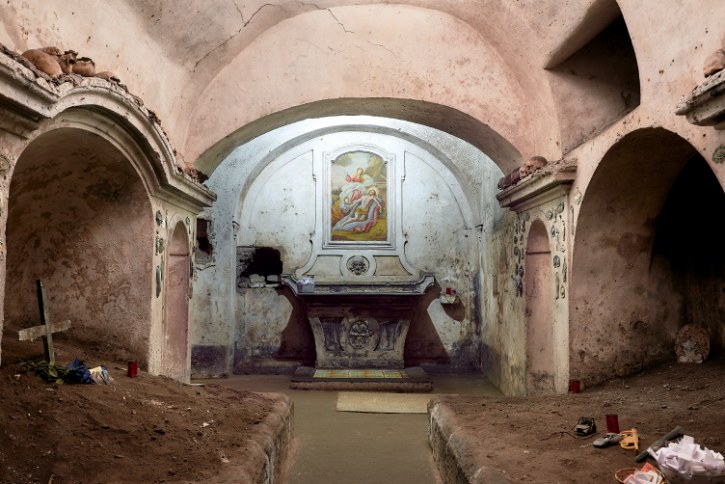
Tucked into the narrow lanes of the historic center, this modest church hides something strange below.
- It was founded in 1327 by an advisor to the Angevin kings.
- It became the home church of the pipernieri, stonemasons who risked blindness from flying rock chips.
- They dedicated it to Saint Lucy, the patron saint of eyesight.
Closed for about 30 years after the 1980 earthquake, the church was rescued by the young volunteers of Respiriamo Arte and reopened to the public in 2019.
b. Caring for the Forgotten Dead
Beneath the floor lies a crypt tied to one of Naples’ most striking traditions: the cult of the anime pezzentelle, the “poor souls”.
- People believed the anonymous skulls belonged to souls stuck in Purgatory.
- A living person would “adopt” a skull, clean it, and offer prayers and flowers.
- In return, the soul was expected to grant favors, or even lucky lottery numbers in dreams.
The caretaking was a real, recorded practice, while the promised favors were popular belief. The Church banned the worship in 1969, yet the habit of caring for the dead lived on.
c. The Famous Skull With Ears
The crypt’s most famous resident is the teschio con le orecchie, the “skull with ears”.
- It kept bits of mummified tissue on each side, shaped like two human ears.
- Believers thought it could hear their whispered prayers and pass them to the afterlife.
- It now rests on a velvet cushion, still on display.
These powers belong to folklore, not fact. You are welcome to look closely, but please respect the remains and never touch them.
d. A Hidden Painting Comes to Light
The slow restoration here keeps turning up surprises. While working on a damaged painting of flames and devils in the crypt, restorers noticed older colors underneath. As they gently peeled back the later plaster, they revealed an 18th-century wall painting hidden for generations, showing a large cross with the crown of thorns and two souls of Purgatory below it. It fits the crypt’s history perfectly. The painting has since been cleaned and restored, and you can see it during a visit.
e. Why You Should Not Skip It
This tiny church offers something very different from Naples’ grand cathedrals.
- You can stand in the quiet crypt and see the skull with ears for yourself.
- You can view the newly uncovered 18th-century fresco.
- You can feel the care of the young restorers who saved the building from ruin.
Come with respectful curiosity, and this easily missed church shows you how Naples treats death not as an ending, but as an ongoing bond between the living and the dead.