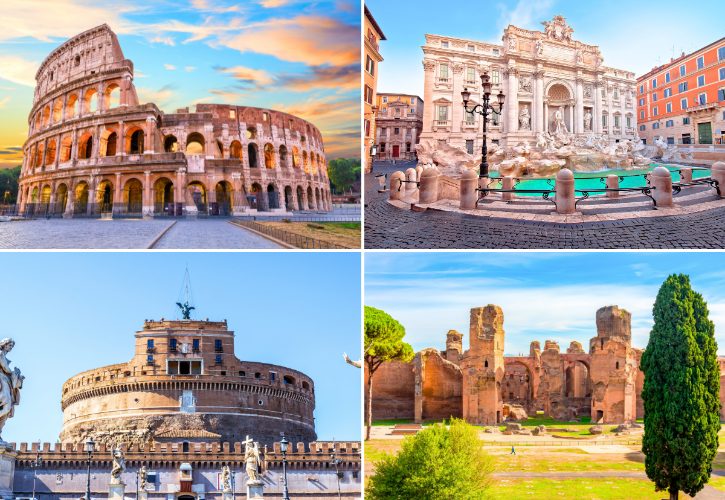
Rome is a city you feel as much as you see. Beyond the famous names lies an unmatched mix of ancient ruins, Renaissance and Baroque masterpieces, grand museums, working churches, lively squares, and sweeping viewpoints, all layered on top of one another.
The real joy is how it all connects, from a 2,000-year-old temple to a fountain just around the corner. Slow down, look a little closer, and Rome rewards you. Here are 17 of the best places to start. 😊
1. Galleria Borghese
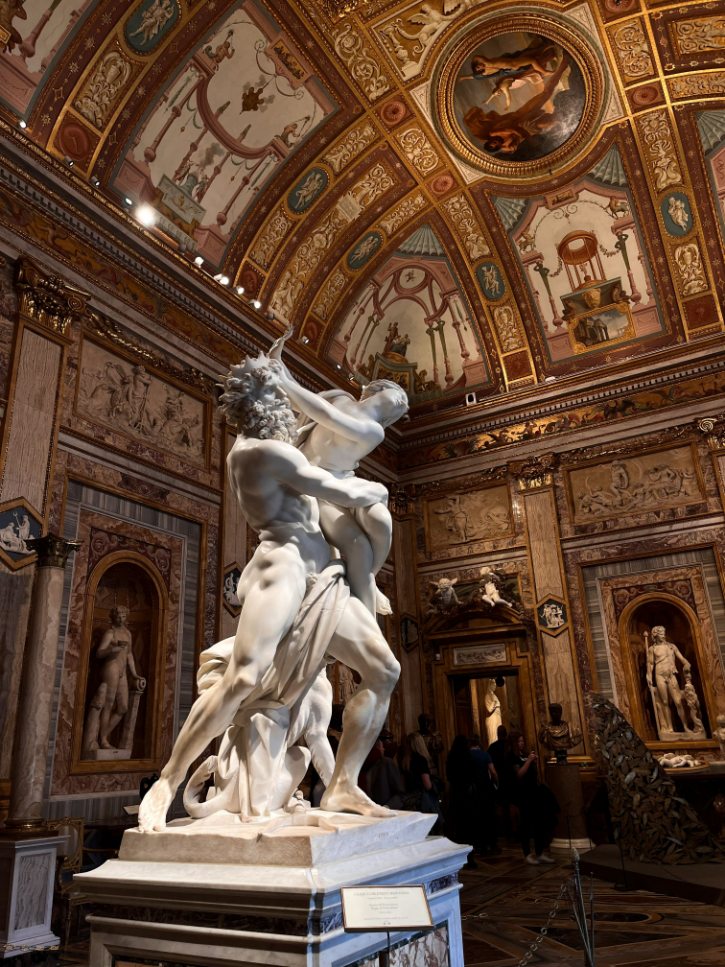
Think of this less as a museum and more as a carefully staged show. Everything was chosen to impress, and it still works.
a. The villa and its collection
The gallery sits inside a grand villa built in the early seventeenth century for Cardinal Scipione Borghese, a passionate collector who wanted a private showcase for his treasures.
Instead of endless halls, you get room after room of genuine masterpieces. The ground floor is about sculpture and ancient works. The upper floor, the Pinacoteca, holds the great paintings.
b. What to see first
- Bernini, Apollo and Daphne, David, and The Rape of Proserpina: marble carved so finely that flesh seems to turn to bark, or a god’s hand appears to press into soft skin.
- Caravaggio, David with the Head of Goliath: the severed head is the artist’s own face.
- Raphael’s Deposition, Titian’s Sacred and Profane Love, and Canova’s Paolina Borghese round out the highlights.
Bernini is the reason many people come. Get close and study the hands, hair, and skin.
c. Know before you go
- Entry runs on a strict two-hour timed reservation, and walking up without a ticket is close to impossible in busy months.
- The only official ticketing partner is TicketOne, through the museum portal. Other sites add markups.
- Arrive 30 minutes early for security, and leave larger bags at the cloakroom.
Tip: Plan your priority rooms in advance. The two-hour limit is enforced, and unprepared visitors often run out of time before the paintings upstairs.
2. Spanish Steps
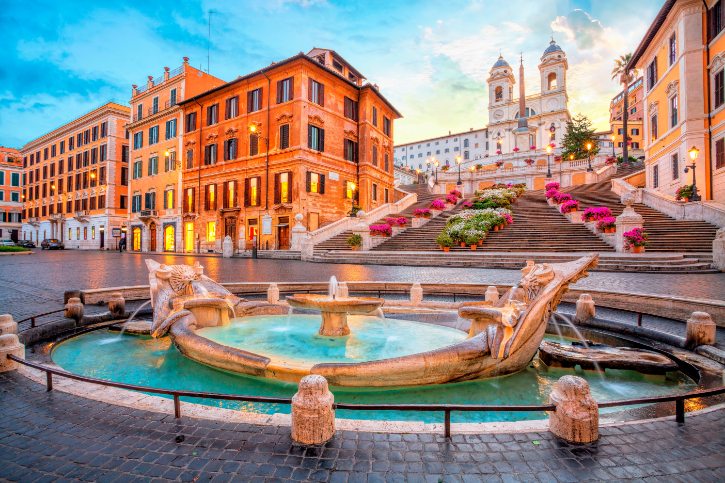
The Spanish Steps are more than a photo backdrop. They are a complete piece of city design linking a lower square to a church on the hill above.
a. More than a staircase
Built between 1723 and 1725, the roughly 135 travertine steps rise in a graceful mix of terraces and curves. They connect Piazza di Spagna at the bottom with the church of Trinità dei Monti at the top.
The best way to enjoy them is as a journey. Start at the base, climb through the terraces, then look back down from above.
b. What to notice
- Fontana della Barcaccia: the boat-shaped fountain at the foot, designed by Bernini and his father.
- Trinità dei Monti and its ancient obelisk crown the summit.
- Keats-Shelley House beside the steps is a nice extra, where the poet died in 1821.
c. Rules and access
- Sitting on the steps is not allowed, along with reclining or dragging suitcases up the stone. Fines run from 160 to 450 euros.
- If stairs are hard, use the public elevator inside the Spagna Metro station.
- Each spring, usually mid-April to mid-May, the steps are lined with potted azaleas. It is seasonal, so you only see it then.
3. Trevi Fountain
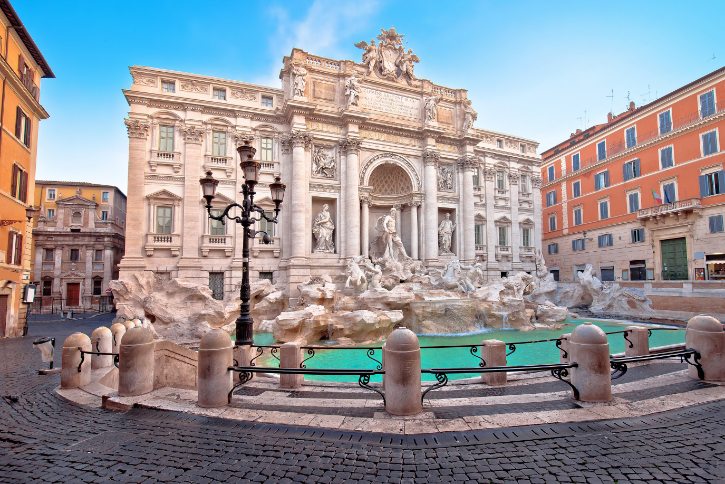
The Trevi Fountain is the grand finale of an ancient aqueduct, and crowd control now shapes how you visit.
a. The story in the stone
Completed in 1762 and built into the back of Palazzo Poli, the fountain centers on Oceanus riding a shell chariot pulled by two sea horses, one wild and one calm. Statues of Abundance and Health stand on either side.
b. The coin toss
Toss a coin over your left shoulder with your right hand. One coin means you will return to Rome, a second brings romance, and a third brings marriage.
The confirmed part: every coin becomes city property and is given to the Caritas charity to help people in need. Climbing into the basin is illegal.
c. Access and rules
- Viewing remains free, but the city uses controlled, one-way routes and caps crowds near the basin. Expect to follow a set path and keep moving.
- No sitting on the rim, eating, drinking alcohol, smoking, or touching the carved stone. Fines apply.
4. Pantheon
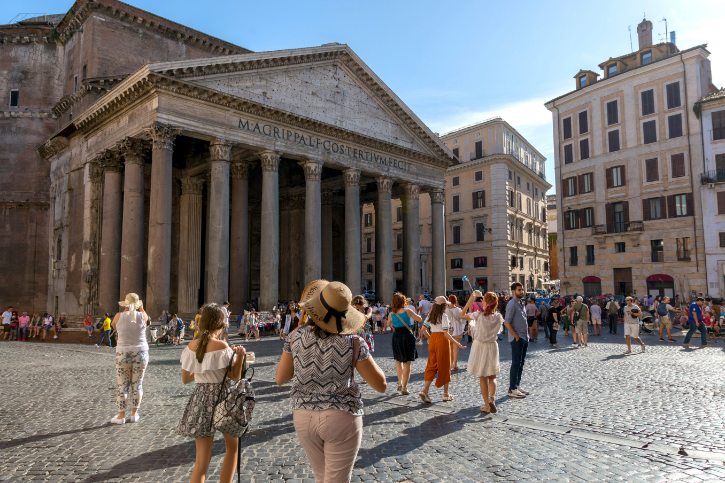
The Pantheon is a rare survivor, an ancient Roman monument still standing because it became a church.
a. Two lives in one building
It is the best-preserved building from ancient Rome, rebuilt under Emperor Hadrian around 118 to 125 AD. In 609 AD it became a Christian church, which is exactly why it was never stripped for materials.
b. What to look for
- The dome: still the largest unreinforced concrete dome ever built. Its width and height are equal.
- The oculus: the open eye at the top, the only source of daylight. Rain falls through and drains away through the floor.
- The tombs: the painter Raphael and the kings of unified Italy rest here.
c. Know before you go
- Book through museiitaliani.it with a timed slot, required on weekends and holidays.
- Dress modestly, with shoulders and knees covered.
- This is still an active church, so visits pause during Mass and ceremonies even if you have a ticket.
5. Piazza Navona
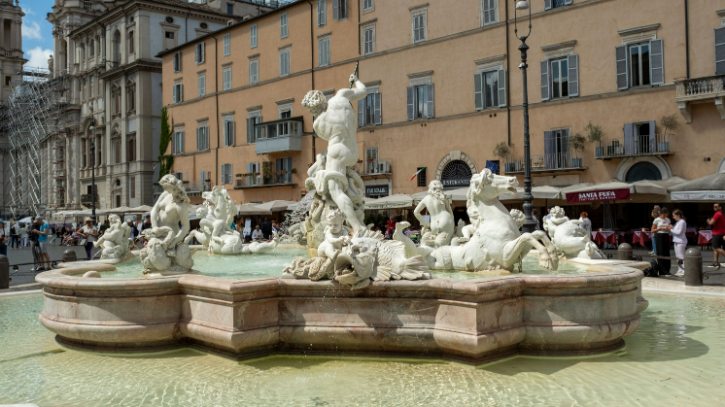
Here two versions of Rome overlap. Its shape belongs to an ancient stadium, while its fountains are pure Baroque theater.
a. A stadium beneath the square
The long, rounded shape follows the outline of the ancient Stadium of Domitian. In the seventeenth century, Pope Innocent X turned the space into a grand showpiece of palaces and fountains.
b. The fountains and the famous rivalry
- Fountain of the Four Rivers (Bernini): four giant figures represent four great rivers and continents, with an Egyptian obelisk rising from the center.
- Two more fountains, the Moro and the Nettuno, anchor each end.
You will hear that Bernini carved one figure shielding its eyes in fear of Borromini’s church collapsing. It is a great story, but the dates prove it false.
c. The underground and nearby walks
You can descend to see the ancient stadium ruins, entering from Via di Tor Sanguigna 3. It needs its own ticket and is reached by stairs, so it is not wheelchair accessible. The square pairs well with the Pantheon and Campo de’ Fiori nearby.
6. Castel Sant’Angelo
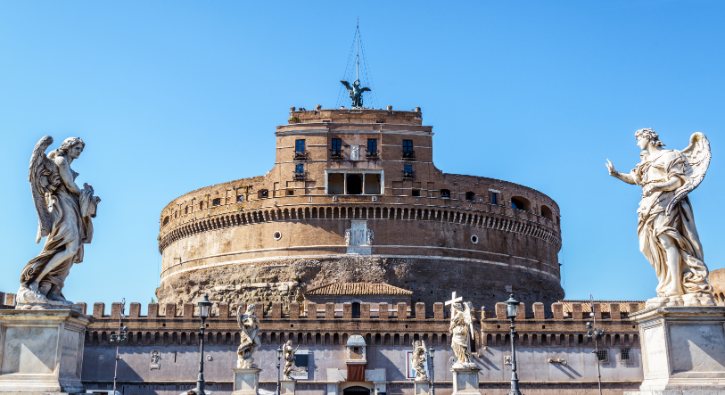
Few buildings have lived as many lives as this one. Following its story makes the climb far more interesting than the rooftop view alone.
a. Many lives
It began as Emperor Hadrian’s tomb (135 to 139 AD), became a river fortress, then a papal stronghold with a treasury and prison, and finally a museum.
b. What to see
The route climbs level by level, from the Roman helical ramp and burial chamber, through the Courtyard of the Angel and the painted Papal Apartments, up to the Angel’s Terrace with sweeping views over the river and Saint Peter’s.
Do not rush to the terrace. The ramp and the papal rooms are the best parts.
c. The Passetto di Borgo
This fortified corridor once linked the castle to the Vatican as an escape route. It is not included with standard admission and only opens on special guided tours or evening events. Standard tickets go through museiitaliani.it, and the upper levels are not accessible.
7. Vatican Museums
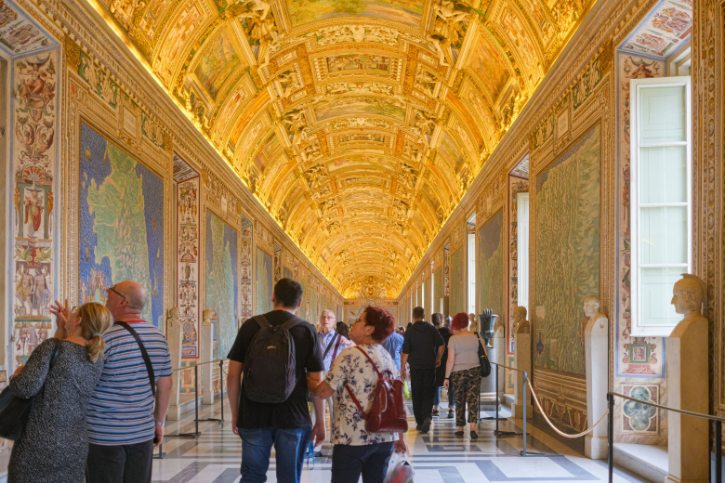
The Vatican Museums are enormous, around seven kilometers of galleries. The trick for a first visit is not seeing everything, but choosing well.
a. How to approach it
Pick a plan. An efficient highlights visit hits the essentials on the way to the Sistine Chapel, while a deeper visit slows down in the collections you love. The route is largely one-way, so it is easy to be swept along and miss a gallery. Know your priorities before you enter.
b. The collections to prioritize
- Pio-Clementino Museum: the great classical sculptures, including the Laocoön and Apollo Belvedere.
- Gallery of Maps: a stunning 120-meter hall of painted maps.
- Raphael Rooms: home to the famous School of Athens.
- Pinacoteca: a rewarding extra with Raphael, Leonardo, and Caravaggio.
c. Tickets and rules
- The only official site is museivaticani.va. Advance booking is required in busy periods, and tickets carry your name with an ID check.
- Dress code: shoulders and knees covered, hats off. Larger bags, tripods, and umbrellas go to the cloakroom.
Tip: Check the web address carefully. Many other sites resell the same tickets at higher prices.
8. Sistine Chapel
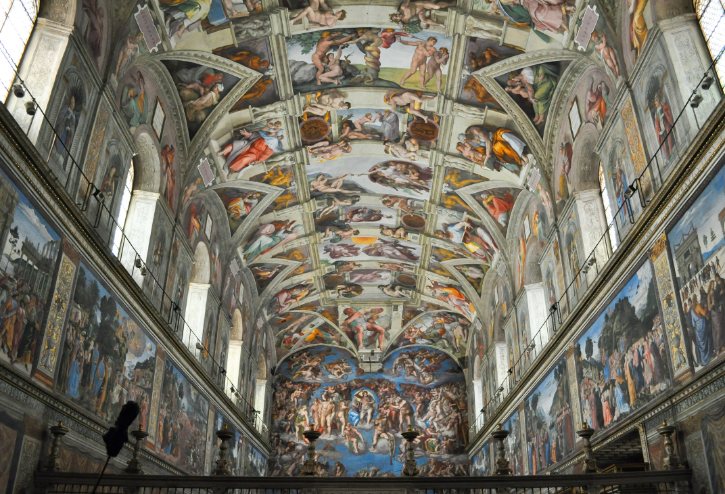
The chapel sits at the end of the Vatican route, but it deserves its own moment. Learn the key scenes before you go in, because the room moves fast.
a. The ticket
Your regular Vatican Museums ticket already includes the Sistine Chapel. There is no separate ticket. You just walk the full route to reach it.
b. What you are looking at
- Michelangelo’s ceiling: nine scenes from Genesis, with the famous Creation of Adam in the middle.
- The Last Judgement: a swirling vision on the altar wall, with the artist’s own face hidden in a piece of flayed skin.
- The side walls: earlier frescoes by Botticelli, Perugino, and Ghirlandaio.
The chapel is still used today to elect new popes.
c. The rules
- No photos, no video, no phones. This is stricter than the rest of the museums.
- Keep silent. Guides cannot speak inside, so all explanations happen beforehand in the courtyards.
9. Saint Peter’s Basilica
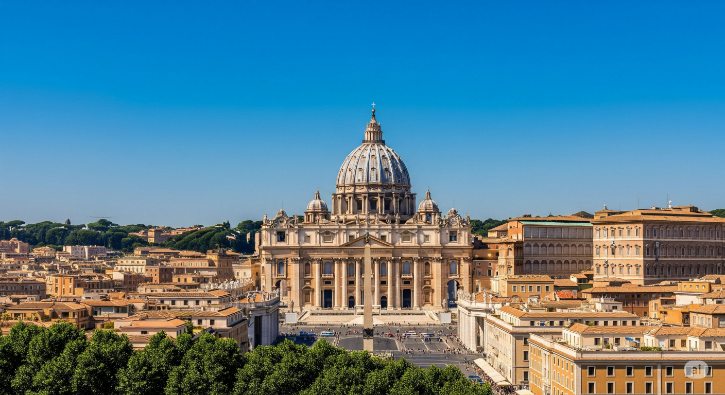
Saint Peter’s confuses many visitors because “a Vatican ticket” can mean several things. Here is what you actually need.
a. What you need for each part
- Basilica floor: free, but everyone passes through mandatory security. No ticket skips it.
- Dome climb: a paid ticket.
- Vatican Grottoes: free, leading to papal tombs.
- Scavi (Tomb of Saint Peter): a paid, specialized tour arranged well in advance.
Commercial “skip the line” products cannot bypass the security screening.
b. What to see
- Michelangelo’s Pietà, carved when he was just 24.
- Bernini’s Baldachin, the towering bronze canopy over the main altar.
- Bernini’s Chair of Saint Peter, lit by a glowing alabaster window.
The basilica is the combined work of Bramante, Michelangelo, Maderno, and Bernini.
c. The dome climb
You can go stairs only (551 steps) or take the elevator plus 320 steps. The final stretch is narrow, steep, and tightly curved. It is not advised for anyone with claustrophobia, vertigo, or heart trouble, but the views are superb.
d. Notes
Dress modestly, and remember that normal visits pause during Papal Masses, Wednesday audiences, and major ceremonies.
10. Campo de’ Fiori
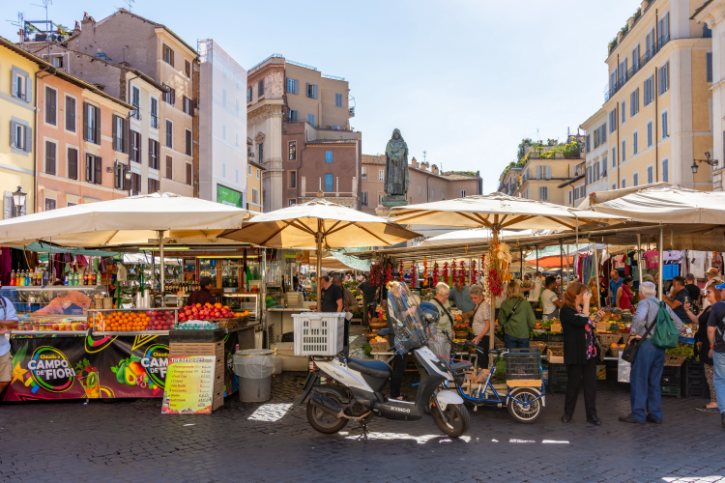
Campo de’ Fiori is really several squares in one, depending on the hour.
a. A square with many faces
It is unusual because no church faces onto it. For centuries it was a market and a place of public executions. Today, mornings bring a market and evenings bring a lively nightlife.
b. The market today
- The market runs Monday through Saturday
- It sells produce, spices, and food, along with plenty of tourist goods. Many traditional sellers have given way to stalls of packaged spices, limoncello, and pasta, so it is worth a stroll but no longer a purely local market.
c. The history beneath the buzz
At the center stands the statue of Giordano Bruno, a philosopher burned at the stake here in 1600 for his beliefs. The hooded figure deliberately faces the Vatican.
d. After dark
At night the square fills with people, and the city enforces order. Drinking from glass containers on the streets after set hours is banned. There is no single best time to come, so let the market, history, food, or nightlife decide your hour.
11. Monument to Victor Emmanuel II
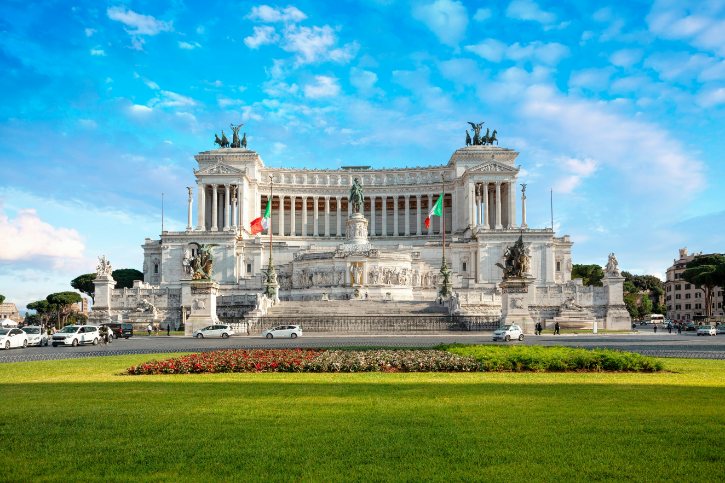
This huge white monument goes by several names, and sorting them out makes your visit clearer.
a. Sorting out the names
- The Vittoriano: the whole monument, honoring the first king of unified Italy.
- Altare della Patria: the central terrace with its great sculptures.
- Tomb of the Unknown Soldier: guarded day and night beside two eternal flames.
- VIVE: the body running the paid galleries and elevators.
b. What to see
The grand staircases, the towering gilded bronze statue of the king, and the solemn Tomb of the Unknown Soldier are the highlights. Best of all is the panoramic roof terrace, reached by glass elevators, with a 360-degree view over the Forum and Colosseum. Trust me, it is one of the best views in Rome.
c. Free versus paid
- Free: the lower stairs, colonnades, and Tomb.
- Paid: the roof elevators and museums.
Military decorum is strict near the Tomb, and the monument can close on short notice for state ceremonies and national holidays.
12. Capitoline Museums
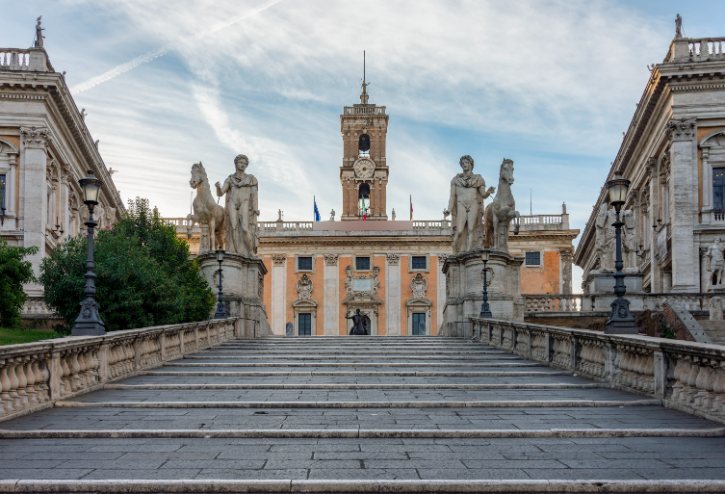
If you are exploring ancient Rome, these museums are the perfect companion. The original statues here bring the ruins across the city to life.
a. The world’s oldest public museum
The collection began in 1471 and opened to the public in 1734, making it often called the world’s first public museum. It surrounds Piazza del Campidoglio, the square redesigned by Michelangelo, so pause there before heading in.
b. The pieces to find
- Equestrian Statue of Marcus Aurelius: the only intact gilded bronze rider from antiquity. The one in the square is a replica, and the original is inside.
- Capitoline Wolf, Colossus of Constantine, Dying Gaul, and Capitoline Venus are the other must-sees.
- The Tabularium offers one of the finest views over the Roman Forum.
c. Notes
Book online at museicapitolini.org in high season. Elevators connect the wings, though some ancient floors mean sloped ramps.
13. Roman Forum
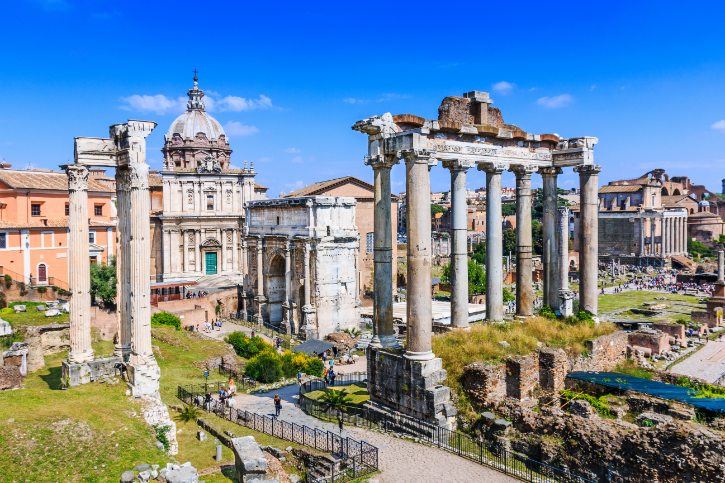
The Forum can look like a jumble of broken columns until you give it a spine to follow.
a. The heart of ancient Rome
This was the center of Roman public life. The clearest way to understand it is to walk the Via Sacra, the old sacred road, from one end to the other.
b. The monuments to prioritize
- Arch of Titus, marking the capture of Jerusalem.
- Basilica of Maxentius, whose huge vaults inspired Renaissance architects.
- Curia Julia, the ancient Senate House.
- House of the Vestal Virgins and Temple of Vesta, home of Rome’s sacred flame.
Find a raised viewpoint to see how it all fits together.
c. SUPER sites and tickets
Some fragile interiors, like Santa Maria Antiqua and the Temple of Romulus, open only with a Forum Pass SUPER or Full Experience ticket, and not always. The standard ticket is a 24-hour combined pass with the Colosseum and Palatine Hill.
d. Come prepared
The Forum is open-air with rough, uneven ground and little shade. Wear comfortable shoes, bring sun protection, and carry water you can refill at the public nasoni fountains. The San Gregorio and Salara Vecchia gates usually have shorter lines.
14. Papal Basilica of Saint Mary Major
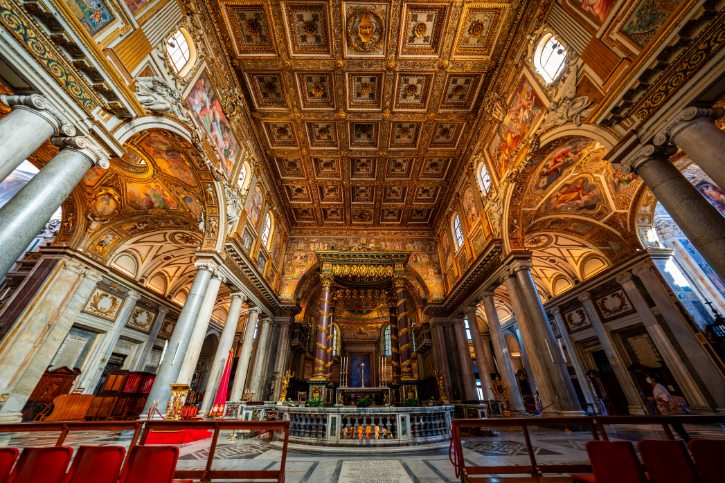
This is one of Rome’s four great papal basilicas and its most important church devoted to Mary.
a. Legend and foundation
Tradition tells of the Miracle of the Snow, when Mary is said to have asked for a church where snow fell one summer morning. The building you see was completed in the 440s, and each August 5th white petals fall from the ceiling to recreate the story.
b. The art to see
- The ancient nave mosaics, among the oldest early Christian mosaics in Rome.
- The radiant apse mosaic of the Coronation of the Virgin.
- The Salus Populi Romani, a deeply revered Byzantine icon of Mary and the child Jesus.
c. The Pope Francis connection
Pope Francis had a close bond with this basilica and chose to be buried here, breaking the custom of resting at Saint Peter’s. His tomb sits in a niche along the left side of the nave. Expect crowd management and quiet, respectful conduct.
d. The Holy Door and entry
The Holy Door was opened for the 2025 Jubilee and has since been sealed again, so you will see it closed now. Entering the basilica floor is free, with security and a modest dress code, while a separate paid ticket covers the museum complex and upper areas.
15. Colosseum
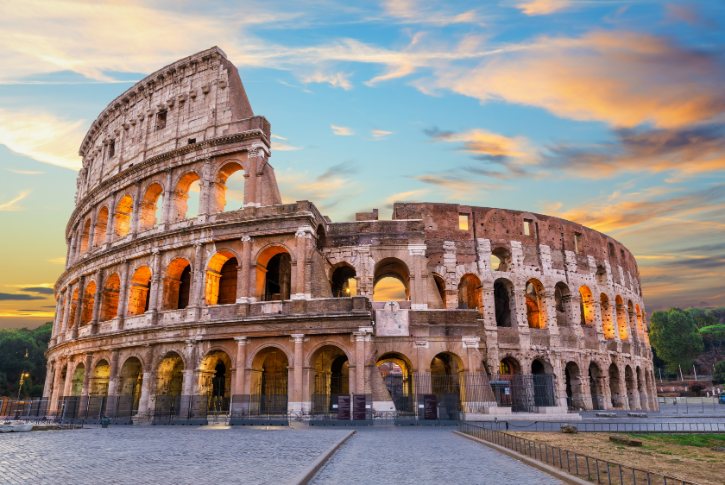
The Colosseum is two things at once, a breathtaking ancient arena and a genuine ticket puzzle.
a. How the arena worked
Opened in 80 AD, it held more than 50,000 spectators, seated strictly by class. Below the floor lay an underground level with lifts that raised animals into the arena, and a huge awning shaded the crowd.
b. The ticket types, made clear
Standard admission does not include several major areas.
- Standard Admission (24 hours): Colosseum lower tiers, plus the Forum and Palatine. It does not include the Arena Floor, Underground, or Attic.
- Full Experience with Arena: adds the reconstructed arena floor.
- Full Experience with Underground and Arena: adds the underground, with an escort.
- Full Experience with Attic: adds the high upper tier.
- Forum Pass SUPER: covers the Forum and Palatine but excludes the Colosseum.
Do not assume every ticket includes the Arena, Underground, or Attic.
c. The underground and booking
- The underground is escorted only and can be canceled for weather or safety.
- The only official site is ticketing.colosseo.it. All tickets are personalized, with names given at booking and IDs checked at entry.
- There is no bag storage, so anyone with a rolling suitcase will be turned away.
Read More: The Perfect One-Day Colosseum Walking Route and Nearby Sights
16. Palatine Hill
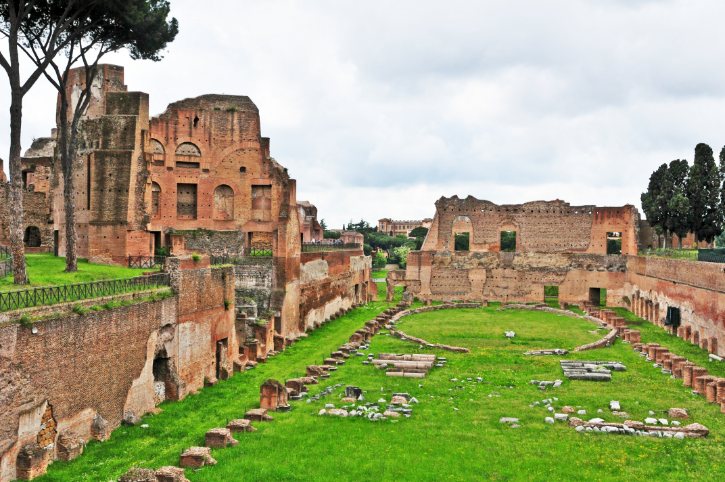
Palatine Hill deserves more than a quick pass on your way out of the Forum. This is where Rome’s founding legend lives and where emperors built their homes.
a. Legend and empire
Roman myth places the founding of the city here. Later it became the address of emperors, and the very word “palace” comes from the Palatine.
b. What to see
- Domus Tiberiana, recently reopened with a walkway over the Forum.
- House of Augustus and House of Livia, with vivid painted frescoes.
- The Palatine Museum and the Farnese Gardens, one of Europe’s earliest botanical gardens.
Follow a planned route, since the site is large and easy to get lost in.
c. Viewpoints and notes
Seek out the terrace over the Roman Forum and the balcony over the Circus Maximus. The House of Livia keeps a limited schedule and closes for conservation, so check first. Expect steep, uneven paths, so bring water and good shoes.
17. Baths of Caracalla
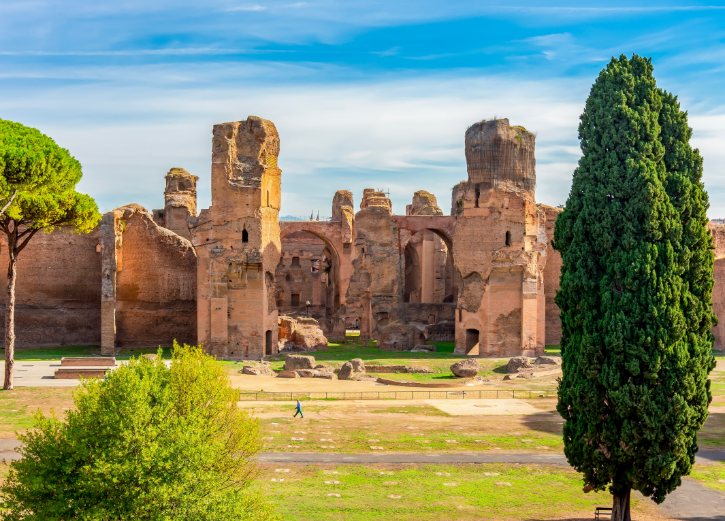
Save this one for when you want to understand how ordinary Romans actually lived. The Baths were far more than a place to wash.
a. More than a bath
Opened in 216 AD, the complex covered more than 11 hectares and could hold up to 1,600 people. It combined bathing halls with exercise courtyards, libraries, gardens, and lecture rooms.
b. Reading the ruins
You can still trace the sequence of rooms: the open-air cold pool, the grand central cold hall, the warm room, and the huge round hot room. The engineering was remarkable, with a dedicated aqueduct, huge cisterns, and underground tunnels where workers fed furnaces to heat the floors and walls.
c. Treasures and a modern touch
After the baths fell out of use, they were quarried, and their finest sculptures scattered to museums in Naples and the Vatican. On-site, you can still see vast mosaics and brick walls rising up to 30 meters. A modern reflecting pool, Lo Specchio d’Acqua, brings back some of the feel of water with jets and light.
d. Notes
- Book through museiitaliani.it, the official platform.
- The underground tunnels and a preserved Mithraeum can sometimes be seen on special guided visits, not with an ordinary ticket.
- It is open-air with uneven ground, so bring water and good shoes. Each summer an outdoor opera season can change the paths on one side of the site.