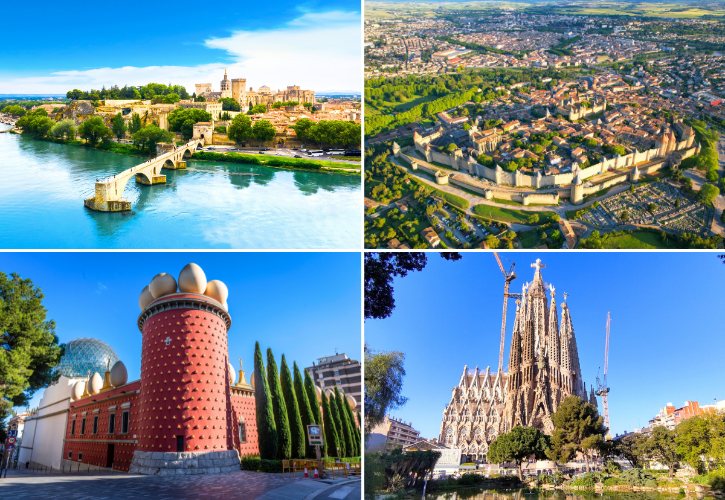
You could take one fast train straight from Paris to Barcelona and arrive the same day. But the best part of this trip is everything in between.
Ride the regional trains south instead and watch France slowly change around you, from grand boulevards to Roman ruins, fishing ports, a medieval fortress, and finally colorful Catalonia.
No car needed, just easy hops between stops. Here is the full route, one beautiful stop at a time. 🙂
1. Paris, France
a. Why Visit
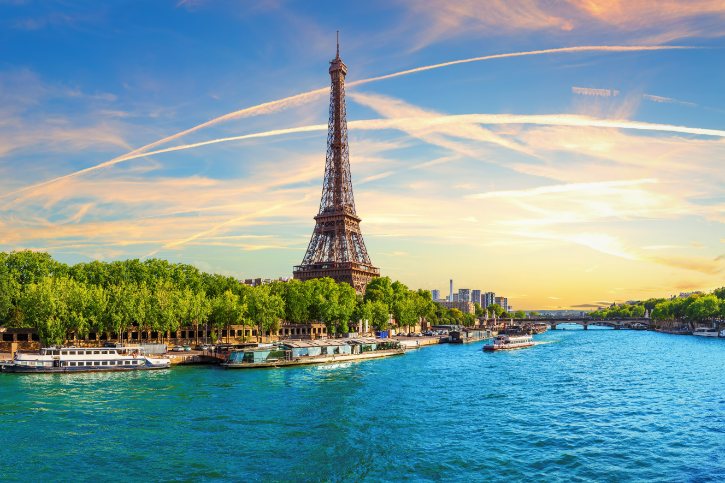
Paris sets the tone for the whole trip. Its grand boulevards, matching cream-stone buildings, and world-class museums are the polished starting point. As you travel south, this royal order slowly gives way to Roman ruins and Mediterranean color, so Paris is where the story begins.
b. Top Sights
- Louvre and Tuileries: The grand courtyard and formal gardens, next to one of the world’s greatest museums.
- Sainte-Chapelle and Île de la Cité: Glowing thirteenth-century stained glass, plus the square in front of Notre-Dame.
- Eiffel Tower and Champ de Mars: Climb the tower, or enjoy the classic view from the lawn below.
- Montmartre and Sacré-Cœur: A steep climb to the white basilica and citywide views. Go early to beat the crowds.
c. Day Trips Nearby
- Château de Versailles: The grand royal palace of Louis XIV, with the famous Hall of Mirrors and vast formal gardens. Worth a full day.
Read More: 9 Best Day Trips from Paris
d. How Long to Stay
Three nights is the sweet spot for first-timers. Add a fourth if you want a full day at Versailles.
e. Your Next Train
- Route: Paris Gare de Lyon to Lyon Part-Dieu
- Service: SNCF, TGV INOUI (high-speed, direct)
- Time: About 2 hours
- Tip: Leave from Gare de Lyon. A seat reservation is included.
2. Lyon, France
a. Why Visit
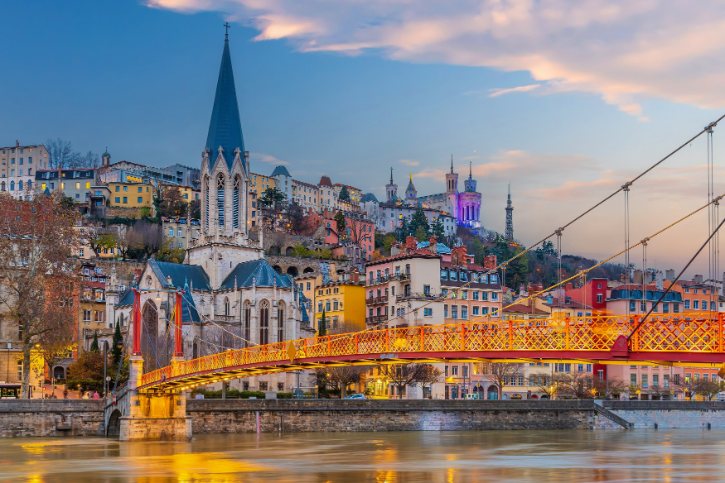
Lyon is the perfect first stop after Paris, and it feels wonderfully different. Set where two rivers meet, it mixes Renaissance old-town lanes, a Roman hill, and France’s finest food scene. Think of it as the bridge between the north and the warm south.
b. Top Sights
- Vieux Lyon: A UNESCO old town of Renaissance courtyards and hidden passageways called traboules. Walk quietly, as many are private.
- Fourvière Hill: Ride the funicular up to the basilica and Alps views, then walk down to the Roman theatres.
- La Presqu’île: The lively civic heart, with grand squares and the fine arts museum.
- A bouchon dinner: Eat at a certified Bouchon Lyonnais for hearty local dishes and regional wine. Come hungry.
Read More: 15 Best Spots to Visit in Lyon
c. Day Trips Nearby
- Beaujolais wine country: Rolling vineyards and golden-stone villages north of the city, home of the Gamay grape.
- Pérouges: A walled medieval village of cobbled lanes, worth a half day for its old-world charm and local galette.
d. How Long to Stay
Two nights is the balanced choice. Add a third only if you want the wine country or Pérouges.
e. Your Next Train
- Best option: Direct regional TER from Lyon Part-Dieu to Avignon Centre (about 2.5 hours). Easiest with luggage.
- Faster option: TGV to Avignon TGV (about 1 hour), but that station sits 5 km out and needs a shuttle.
- Tip: Avignon Centre drops you right by the old town. Choose it.
3. Avignon, France
a. Why Visit
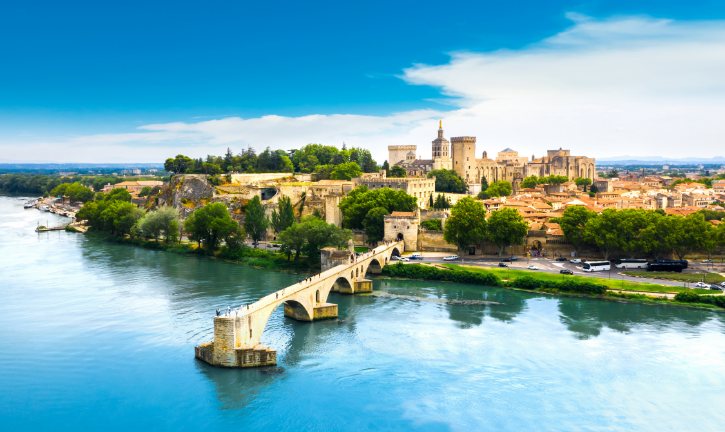
Avignon is your arrival into sunny Provence, with olive groves and plane trees. It was home to the popes in the 1300s, and that history left a mighty palace and thick medieval walls around a lovely, walkable old town.
b. Top Sights
- Palais des Papes: The largest Gothic palace in the world, with an augmented-reality tablet tour included. About 2 to 3 hours.
- Pont Saint-Bénézet: The famous half-bridge reaching out into the Rhône.
- Rocher des Doms: Hilltop gardens with wide river views.
- Rue des Teinturiers: A quiet, pretty street along a canal with old waterwheels.
c. Day Trips Nearby
- Pont du Gard: A stunning first-century Roman aqueduct bridge over the river. You only need to visit it once, from here or Nîmes.
- Châteauneuf-du-Pape: A famous wine village known for its bold reds and vineyards of big round stones.
- Orange: Home to a superb, well-preserved Roman theatre with its huge intact stage wall.
d. How Long to Stay
Two nights is ideal: one for the city, one for a day trip.
e. Your Next Train
- Route: Avignon Centre to Arles (direct TER)
- Time: About 17 to 20 minutes
- Tip: Leave from Avignon Centre, not Avignon TGV, to avoid backtracking.
4. Arles, France
a. Why Visit
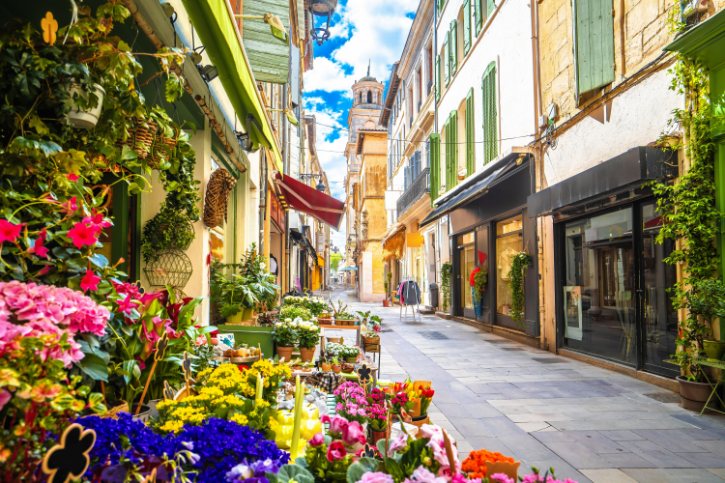
Arles feels different from every other stop. It is all Roman history and Van Gogh, wrapped in a small, sun-bleached town by the Rhône. The pace is slow and rustic, perfect for wandering.
b. Top Sights
- Les Arènes: A grand Roman amphitheatre you can still climb for rooftop views.
- Théâtre Antique: A first-century Roman theatre next door.
- Van Gogh trail: See the spots he painted, from Place du Forum to the riverbank.
- LUMA Arles: A striking modern art tower by Frank Gehry.
c. Day Trips Nearby
- The Camargue: A wild delta of flamingos, white horses, and salt marshes, with a bird sanctuary and the coastal town of Saintes-Maries-de-la-Mer.
- Les Baux and Saint-Rémy: A dramatic ruined hilltop fortress, plus the monastery where Van Gogh painted The Starry Night.
d. How Long to Stay
One night covers the town. Add a second if you want a full day in the Camargue.
e. Your Next Train
- Route: Arles to Nîmes Centre (direct TER)
- Time: About 30 to 35 minutes
- Tip: Take the direct westbound train. Ignore any route that loops back through Avignon.
5. Nîmes, France
a. Why Visit
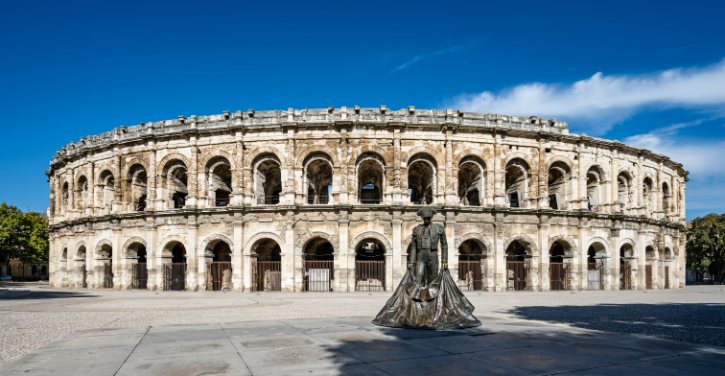
Nîmes is called the “Rome of France”, and for good reason. Its Roman monuments are some of the best-preserved anywhere, standing proud within an elegant city. It makes a great comparison to Arles just up the line.
b. Top Sights
- Maison Carrée: The most complete Roman temple façade left from the ancient world (UNESCO listed).
- Arènes de Nîmes: A Roman arena even better preserved than the Colosseum. About 1.5 hours.
- Musée de la Romanité: A modern museum of Roman treasures across from the arena.
- Jardins de la Fontaine and Tour Magne: Elegant gardens climbing to an old Roman tower with wide views.
c. Day Trips Nearby
- Pont du Gard: The great Roman aqueduct, if you skipped it at Avignon. You only need to see it from one base.
- Uzès: A charming medieval town nearby, with a duke’s castle and a lively market square.
d. How Long to Stay
One night is enough for the city. Add a second only for the Pont du Gard and Uzès.
e. Your Next Train
- Route: Nîmes Centre to Montpellier Saint-Roch (direct TER or Intercités)
- Time: About 25 to 35 minutes
- Tip: Use the downtown stations. Avoid Nîmes Pont-du-Gard and Montpellier Sud de France.
6. Montpellier, France
a. Why Visit
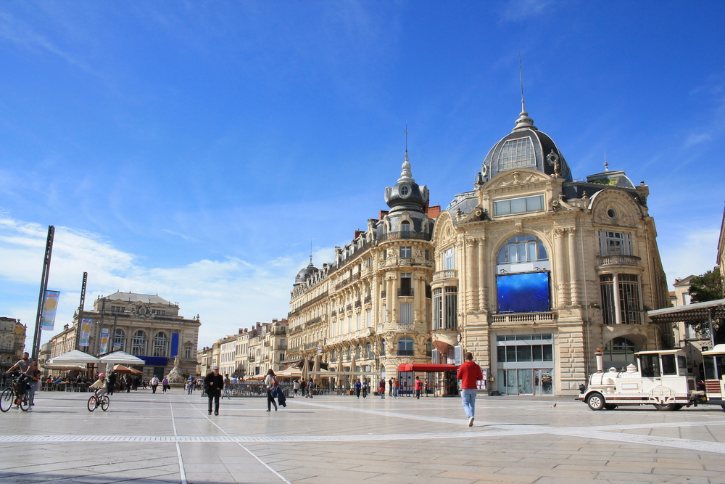
After all that Roman stone, Montpellier is a lively change of pace. It is a young university city with a tangle of medieval lanes, grand squares, and bold modern districts. Come to soak up the atmosphere.
b. Top Sights
- Place de la Comédie and the Écusson: The grand main square and the maze of old pedestrian streets around it.
- Promenade du Peyrou: An elevated park with an aqueduct and the city’s own Arc de Triomphe.
- Cathédrale Saint-Pierre: A fortress-like Gothic cathedral by France’s oldest botanical garden.
- Antigone: A striking modern neighborhood on a grand classical scale.
c. Day Trips Nearby
- Saint-Guilhem-le-Désert: A UNESCO village set in a dramatic limestone gorge, with a beautiful old abbey.
- Pic Saint-Loup: Dramatic limestone wine country north of the city.
- Skip the beach here. Sète does the coast better.
d. How Long to Stay
Two nights lets you enjoy the city and one day trip. One night works if you are short on time.
e. Your Next Train
- Route: Montpellier Saint-Roch to Sète (direct TER or Intercités)
- Time: About 15 to 18 minutes
- Tip: Watch for flamingos from the window as you near Sète.
Read More: 10 Must Visit Spots in Occitanie
7. Sète, France
a. Why Visit
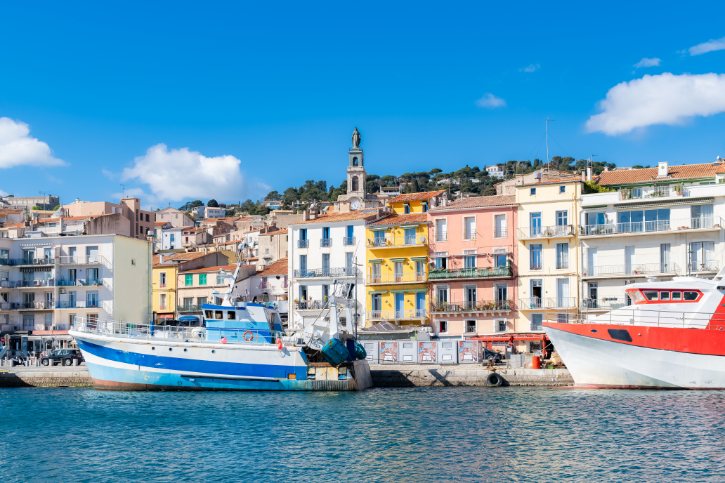
Sète is where the trip turns to the sea. This is a real working fishing port, laced with canals and topped by a hill, with some of the best seafood on the coast. A refreshing change after all those monuments.
b. Top Sights
- Canal Royal: The lively main waterway, lined with boats and seafood restaurants. Water-jousting matches in summer.
- Les Halles de Sète: The morning market, and the place to try a tielle (octopus pie) and fresh oysters.
- La Pointe Courte: A tiny, charming old fishing quarter.
- Mont Saint-Clair: A short climb rewarded with 360-degree views over the sea and lagoon.
c. Day Trips Nearby
- Bouzigues: The lagoon’s oyster-farming village, perfect for eating fresh shellfish by the water.
- Marseillan: A pretty lagoon town, home to the historic Noilly Prat vermouth cellars.
d. How Long to Stay
One night is plenty, and worth it for the evening harbor atmosphere. Two in summer for the beaches.
e. Your Next Train
- Route: Sète to Béziers (direct TER)
- Time: About 25 to 30 minutes
- Tip: You may see it listed as “Train liO”, the regional brand. Same train.
8. Béziers, France
a. Why Visit
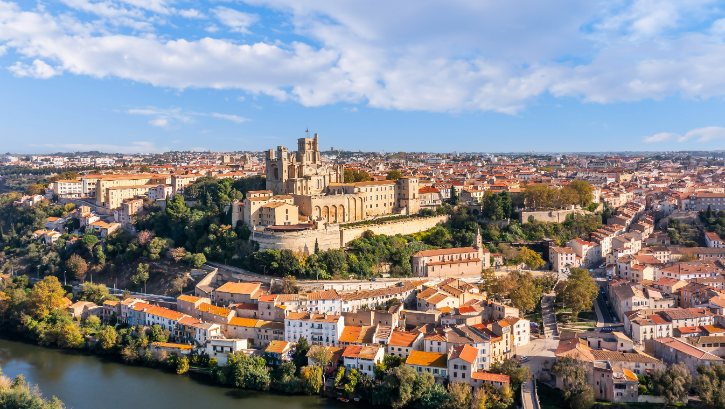
Béziers looks like a simple southern town, but it has a clever claim to fame. This is the birthplace of the engineer who built the Canal du Midi, and its hilltop cathedral offers sweeping views toward the Pyrenees.
b. Top Sights
- Nine Locks of Fonseranes: A remarkable “staircase” of canal locks, about 2 km from the center.
- Cathédrale Saint-Nazaire: A fortress-like cathedral with a superb viewpoint over the river valley.
- Pont Vieux: A twelfth-century bridge with a great view up to the cathedral.
- Allées Paul Riquet: A leafy esplanade in the heart of town.
c. Day Trips Nearby
- Pézenas: A handsome old town of Renaissance mansions and artisan workshops, linked to the playwright Molière.
d. How Long to Stay
One night is the sweet spot, giving you both the old town and the canal. It also smooths the trip between Sète and Carcassonne.
e. Your Next Train
- Route: Béziers to Carcassonne (direct TER, Intercités, or TGV INOUI)
- Time: Direct trains about 45 to 55 minutes
- Tip: If no direct train fits, change at Narbonne. It is a quick, easy cross-platform swap.
9. Carcassonne, France
a. Why Visit
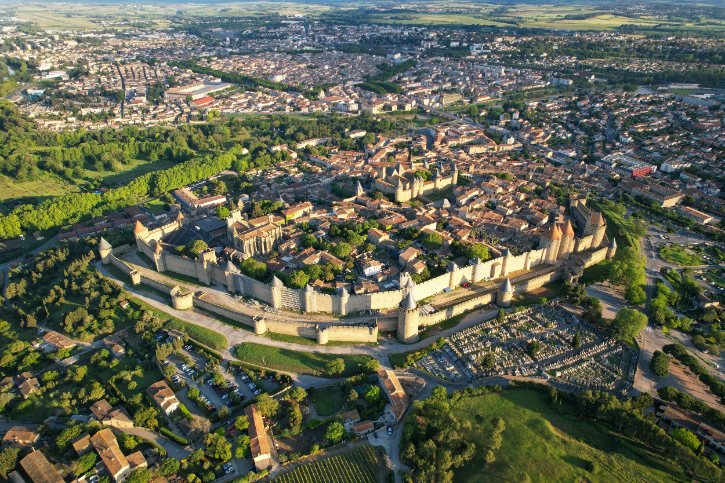
Carcassonne is a short detour inland, and completely worth it. Its walled medieval city, the largest in Europe, looks straight out of a storybook. Seeing it lit up at night is unforgettable.
b. Top Sights
- The Cité Médiévale: Wander the stone lanes and squares inside the double walls. Come early or in the evening, once the day crowds thin out.
- Château Comtal and ramparts: Tour the medieval castle and walk along the fortified walls.
- Basilique Saint-Nazaire: A lovely Romanesque and Gothic church with beautiful rose windows.
- Bastide Saint-Louis: The lower town, with a market square and the Canal du Midi.
c. Day Trips Nearby
- Lastours Castles: Four ruined Cathar towers crowning a rocky ridge north of the city.
- Canal du Midi: Shaded towpaths for easy walking or cycling right from town.
d. How Long to Stay
One night is the minimum, so you can see the fortress both at night and in the quiet morning. Note the Cité sits across the river and uphill from the station, about a 30-minute walk or a short taxi ride.
e. Your Next Train
- Route: Carcassonne to Perpignan (TER, direct or via Narbonne)
- Time: About 1 hour 15 minutes to 1 hour 35 minutes
- Tip: Take a direct TER if one fits, or change at Narbonne. This leg turns you back south toward the coast.
10. Perpignan, France
a. Why Visit
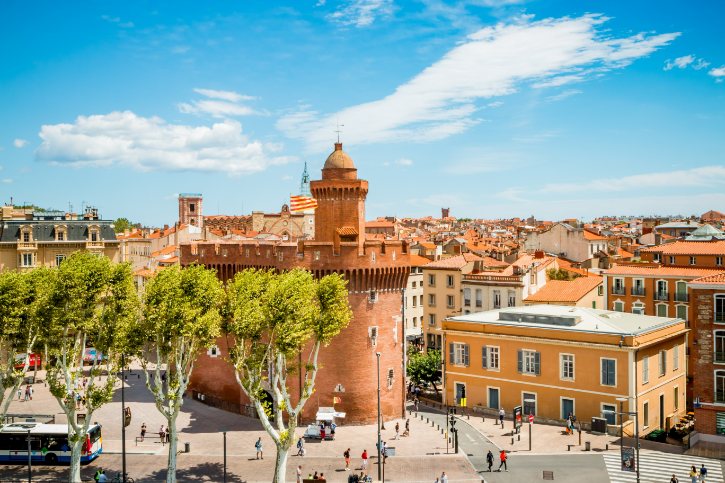
Perpignan is where France starts to feel like Spain. Once the capital of the medieval Kingdom of Majorca, it has a strong Catalan character in its red-brick buildings, palm-lined squares, and food. A nice taste of Catalonia before you cross the border.
b. Top Sights
- Palais des Rois de Majorque: A grand Gothic palace with tower views toward Mount Canigou.
- Le Castillet: The city’s red-brick landmark gatehouse and folk museum.
- Cathédrale Saint-Jean-Baptiste and Campo Santo: A Catalan Gothic cathedral beside France’s largest medieval cloister cemetery.
- Catalan food: Try boles de picolat, cargolade, and sweet rousquilles.
c. Day Trips Nearby
- The Little Yellow Train: A historic narrow-gauge railway that climbs through Pyrenean valleys, over tall stone viaducts and a suspension bridge. A full day out.
- Skip Collioure, it is your next stop.
d. How Long to Stay
One night for the city. Two if you want the Yellow Train, which needs a full day.
e. Your Next Train
- Route: Perpignan to Collioure (direct TER)
- Time: About 15 to 20 minutes
- Tip: Trains are not frequent, so plan around a departure time.
11. Collioure, France
a. Why Visit
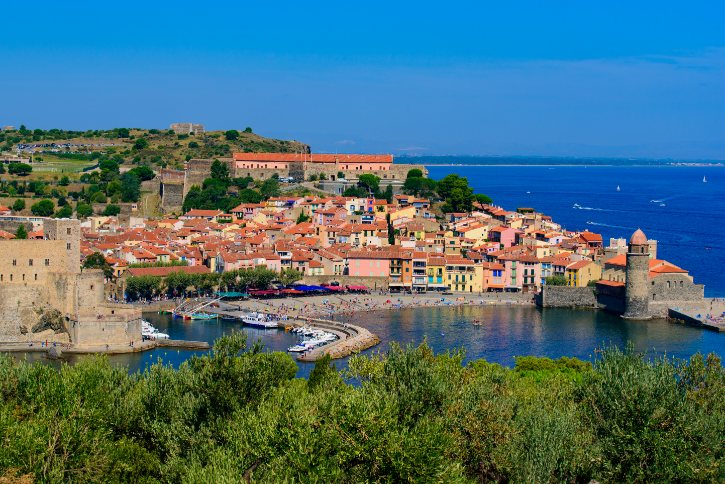
Collioure is one of the prettiest stops of the whole trip, so slow down here. Picture a Catalan fishing village on a rocky bay, with vineyards running down to the sea and a castle on the waterfront. It also launched the Fauvism art movement in 1905.
b. Top Sights
- Notre-Dame-des-Anges: The waterfront church with a bell tower that was once a lighthouse.
- Château Royal: A seafront castle to explore, about 1.5 to 2 hours.
- Le Mouré: The old fishermen’s quarter of pastel houses and galleries.
- Fauvism Path: A trail marking where Matisse and Derain painted.
- Anchovies: Taste the town’s famous cured anchovies at a historic salting house.
c. Day Trips Nearby
- Port-Vendres: A neighboring working port, known for its fish auction and waterfront seafood restaurants.
- Banyuls-sur-Mer: A seaside town famous for its sweet fortified wines and terraced vineyards.
d. How Long to Stay
One night is the minimum. Two nights is better for a true coastal pace and the nearby walks.
e. Your Next Train (the big one)
Getting from Collioure to Figueres means crossing into Spain, and there is no single direct train. You change at the border town of Portbou.
- Leg 1: Collioure to Portbou (SNCF TER, about 25 to 33 minutes). Ride to the last stop, Portbou.
- Transfer: At Portbou, walk across the station and board the Spanish train. Waits run 15 to 45 minutes, sometimes longer.
- Leg 2: Portbou to Figueres (Renfe Rodalies R11, about 22 minutes).
- Total: Plan for 1 hour 15 minutes to 2 hours.
- Important: Timetables are not synced, so check your exact date on SNCF Connect and Rodalies before booking anything in Figueres.
12. Figueres, Spain
a. Why Visit
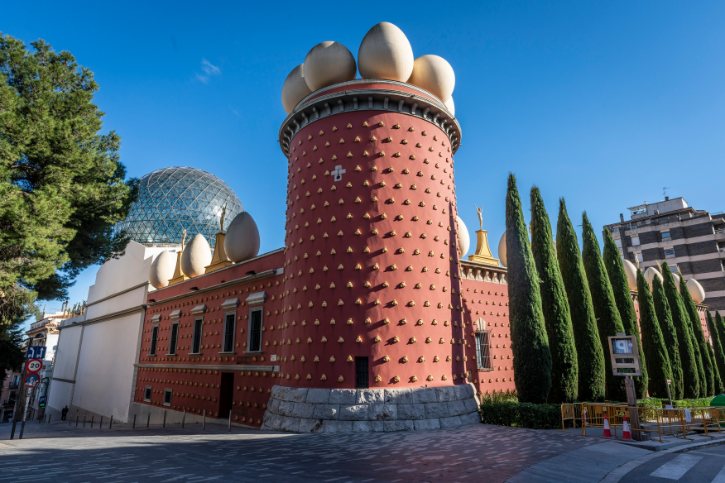
Welcome to Spain. Figueres is all about one man: Salvador Dalí, who was born here and built his wild museum here. After Collioure’s Fauvism, it immerses you in twentieth-century Surrealism.
b. Top Sights
- Teatre-Museu Dalí: Often called the largest surrealist object in the world, topped by a glass dome and giant eggs, and holding his art and his crypt. About 2 to 2.5 hours.
- Castell de Sant Ferran: A huge eighteenth-century fortress above town, the largest in Catalonia by area.
- La Rambla: The leafy main promenade for a relaxed stroll.
c. Day Trips Nearby
- Cadaqués and Portlligat: A whitewashed village on a rocky peninsula, home to Dalí’s seaside house and studio. A full-day trip.
d. How Long to Stay
One night is ideal, especially after the border crossing. Two if you want Cadaqués.
e. Your Next Train
- Route: Figueres (central) to Girona (Renfe Rodalies R11, direct)
- Time: About 30 to 40 minutes
- Tip: You arrive from Portbou at the central station, so just take the direct R11 from there. No need for the outlying Vilafant station.
13. Girona, Spain
a. Why Visit
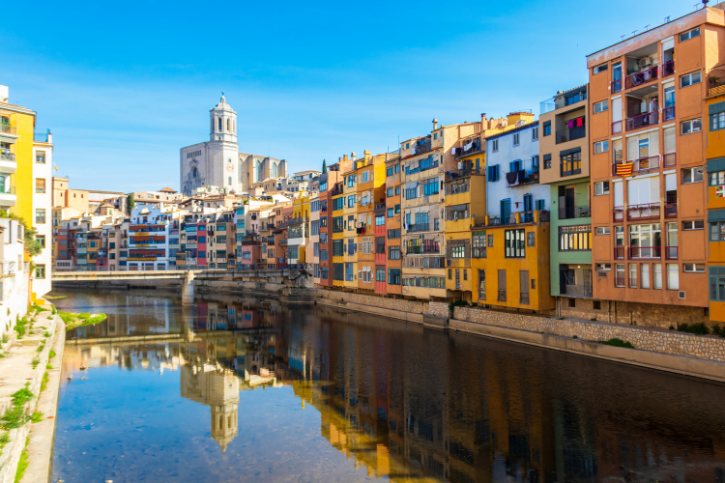
Girona is a gentle pause before busy Barcelona. This beautifully preserved medieval city sits along a river, with one of Europe’s best-kept old Jewish quarters. Calm, compact, and lovely to wander.
b. Top Sights
- Girona Cathedral: Climb the grand staircase to the widest Gothic nave in the world.
- El Call: The atmospheric medieval Jewish Quarter.
- City walls: Walk the ramparts for views over the old town.
- Onyar River bridges: See the colorful riverfront houses, and a bridge built by Eiffel’s company.
c. Day Trips Nearby
- Besalú: A striking medieval town entered across an old fortified stone bridge, with a rare medieval Jewish ritual bath.
- Lake Banyoles: Catalonia’s largest natural lake, ringed by peaceful waterside paths.
- The Costa Brava: The rugged nearby coast, if you would rather have sea and beaches.
d. How Long to Stay
One night for the city, best enjoyed in the quiet evening and morning. Two nights if you want a day trip.
e. Your Next Train
- Fast option: Renfe Avant high-speed to Barcelona Sants (about 40 minutes). Reservation needed.
- Flexible option: Rodalies R11 (about 1 hour 20 minutes), which drops you central at Passeig de Gràcia. No reservation.
- Tip: The R11 is often the smarter choice for a central hotel.
14. Barcelona, Spain
a. Why Visit
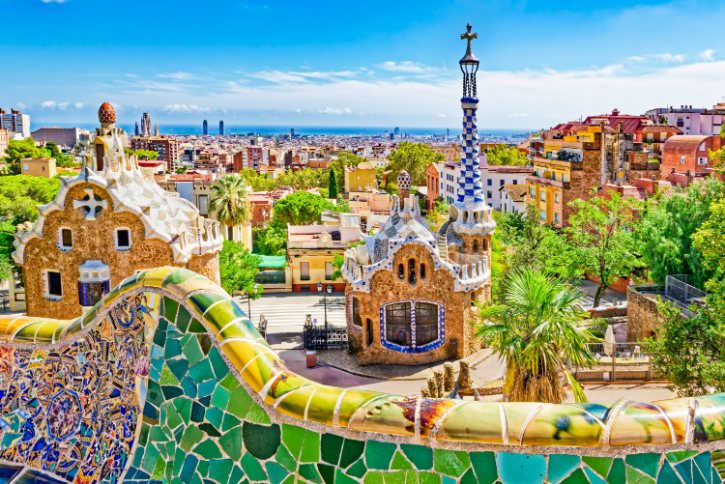
You made it. Barcelona is the grand finale, pulling together everything you have seen: Roman roots, Gothic architecture, sea life, and Gaudí’s colorful Modernisme. Arriving slowly by train is what makes it feel like a reward.
b. Top Sights
- Sagrada Família: Gaudí’s astonishing basilica, with tree-like stone columns and glowing stained glass. About 2 to 2.5 hours.
- Park Güell: A hillside park of colorful mosaics, curving benches, and wide views over the city.
- Casa Batlló and Casa Milà: Two more Gaudí masterpieces on Passeig de Gràcia, famous for their wavy stone and sculptural rooftops.
- Gothic Quarter: The medieval heart of the city, with the cathedral and ancient Roman remains.
- La Rambla and the Boqueria market: The famous boulevard and its lively food hall, plus Montjuïc hill for museums and views.
c. Day Trips Nearby
- Montserrat: A dramatic serrated mountain crowned by a famous Benedictine monastery and its Black Virgin statue. A full day out.
- Sitges: A pretty coastal town with a whitewashed old quarter, seaside mansions, and sandy beaches.
- Skip Girona and Figueres, you have already seen them.
d. How Long to Stay
Three nights is the minimum for a first visit. Four is better, with room for a day trip. After such a journey, you have earned a proper stay.
e. Arriving in Barcelona
- Barcelona Sants: The main station on the west side, on Metro Lines L3 and L5.
- Passeig de Gràcia: The central station for regional trains, right in the Eixample.
- Tip: Sants is large and under renovation, so allow 15 to 20 minutes to reach the metro or taxis.
And that is the route, one beautiful stop at a time. Enjoy every minute. You earned it.