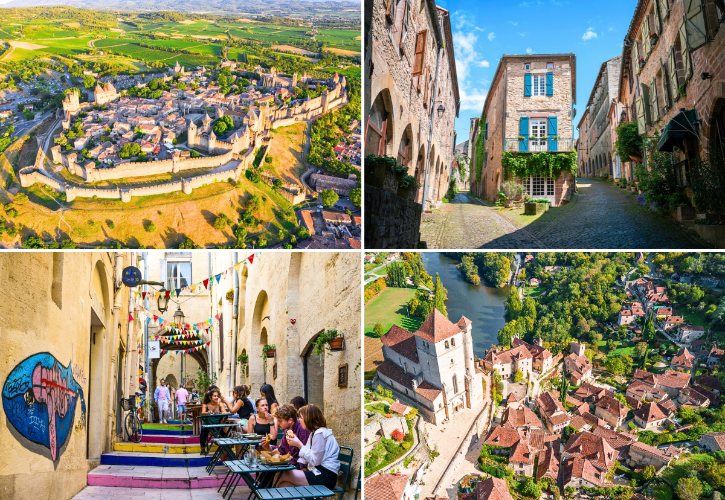
Some regions give you one kind of trip. Occitanie gives you many.
In a single week you can step inside a complete walled medieval city, walk beneath a Roman aqueduct, and stand in the same light that once inspired famous painters.
This southern corner of France blends pink brick cities, dramatic hilltop villages, river valleys, old markets, quiet sacred sites, and easy coastal towns.
It rewards slow travel and a bit of planning. Here are ten spots that show just how varied it can be. 😊
1. Carcassonne – Europe’s Most Spectacular Medieval Fortress
a. Why You Should Visit
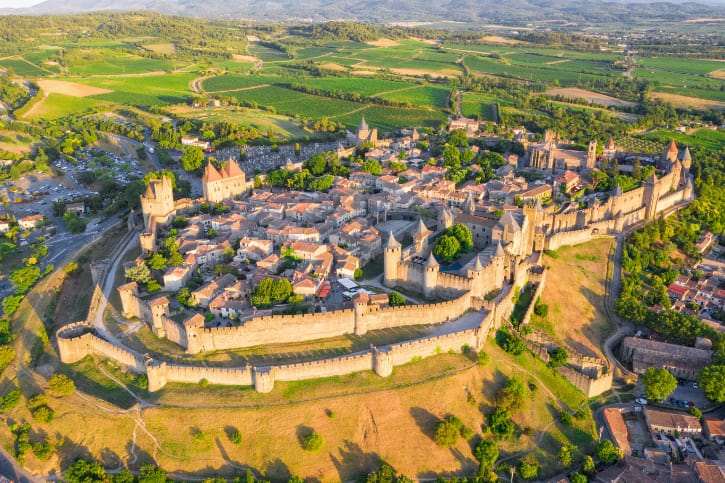
Carcassonne is not a normal old town. It is a complete walled medieval city, and the moment you walk through its gates, you feel like you have stepped into another era. Its fairy tale skyline of double walls, round towers, and gates rises above the Aude plain.
The scale of the Cité de Carcassonne is hard to match in Europe. The inner wall dates back to the Gallo-Roman period, and in the late 13th century the French crown doubled it, creating a perimeter of about 3 kilometers guarded by 52 towers. It is a UNESCO World Heritage Site.
b. A Bit of History
By the 19th century the walls had fallen into ruin and were even used as a quarry, until the architect Eugène Viollet le Duc led one of the largest restoration projects in European history.
Sitting at a crossroads between the Atlantic, the Mediterranean, and Spain, the fortress was a key stronghold during the Cathar Crusade and later part of the royal defense against Aragon. It lost its military role after the 1659 Treaty of the Pyrenees.
c. What to See and Do
- Walk the Cité through its narrow lanes, stone facades, and small shops.
- Visit the Château Comtal, built in the 12th century by the Trencavel family, with a dry moat and a small museum.
- Walk the ramparts for wide views over the countryside.
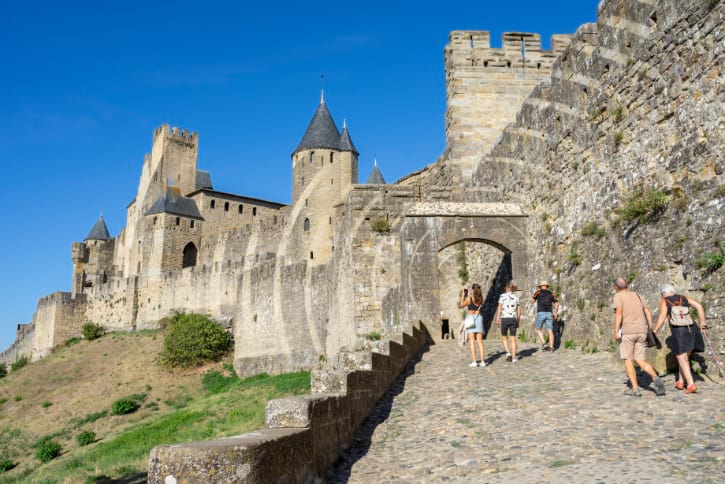
- Enter through the gates, like the Porte Narbonnaise with its twin towers, and the steep Porte d’Aude.
- Step into the Basilica of Saint Nazaire, with its Romanesque nave and fine medieval stained glass.
- Stroll the lower town, the Bastide Saint Louis, and the tree lined Canal du Midi, a second UNESCO site.
d. How Much Time You May Need
- Half day: The Cité, the castle, the ramparts, and the basilica.
- Full day: Add the lower town, the Canal du Midi, and the walls lit up at dusk.
2. Toulouse – The Pink City of the South
a. Why You Should Visit
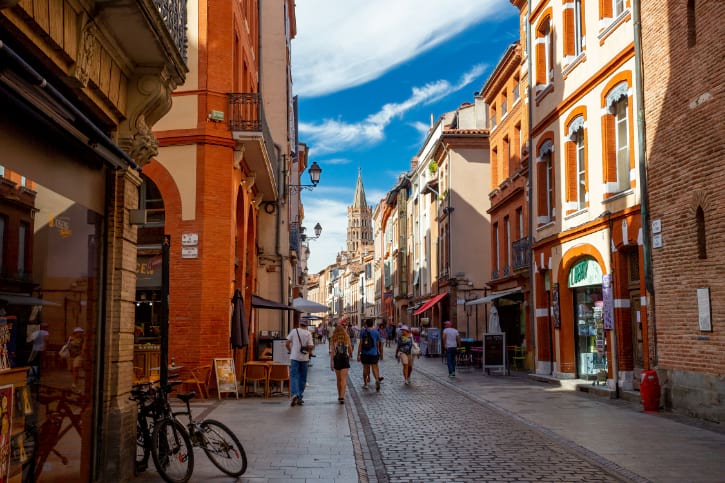
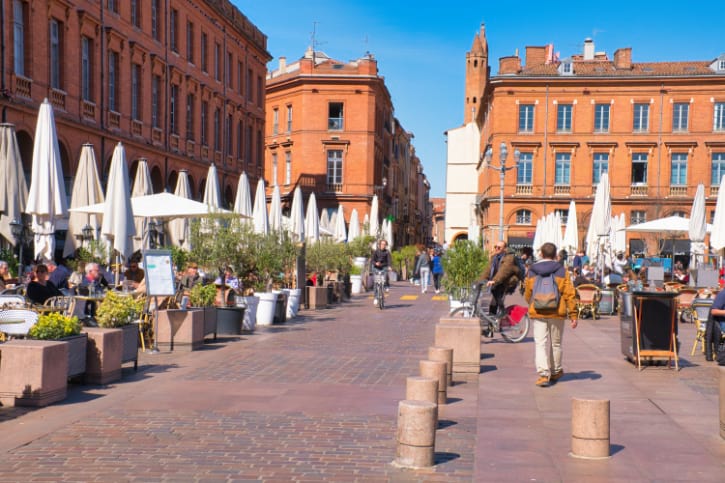
Toulouse is the lively capital of Occitanie, and you will quickly see why people call it La Ville Rose, the Pink City. Its warm pink brick gives the whole place a soft glow. The look comes from clay brick used because the Garonne plains had little natural stone.
This is a city where Roman roots, medieval faith, and old wealth sit next to a modern identity as Europe’s main aerospace hub. A historic university keeps it young, and the food and riverfront keep it lively.
b. A Bit of History
As the Roman city of Tolosa, Toulouse grew into a busy trading center, then became the seat of the powerful Counts of Toulouse.
Its later wealth came from the trade in pastel, a blue dye, which funded grand mansions. In the 20th century that spirit turned to aviation, with the city helping develop the Concorde and Airbus.
c. What to See and Do
- Place du Capitole, the wide central square framed by the grand Capitole facade.
- Basilique Saint Sernin, a huge Romanesque church on the medieval route to Santiago de Compostela.
- Couvent des Jacobins, with its famous “palm tree” stone vault and quiet cloister.
- The Garonne riverbanks and Pont Neuf, the 16th century bridge.
- Victor Hugo Market, a covered market for regional produce and southwestern dishes like cassoulet.
- Cité de l’Espace, a space themed park with full scale rocket and station replicas.
- Musée des Augustins, the fine arts museum set in a 14th century convent.
d. How Much Time You May Need
- One day: The historic center and a sunset walk along the Garonne.
- Two days or more: Add the market, the museums, the Cité de l’Espace, and the Canal du Midi.
3. Albi – The Red Brick City and UNESCO Treasure
a. Why You Should Visit
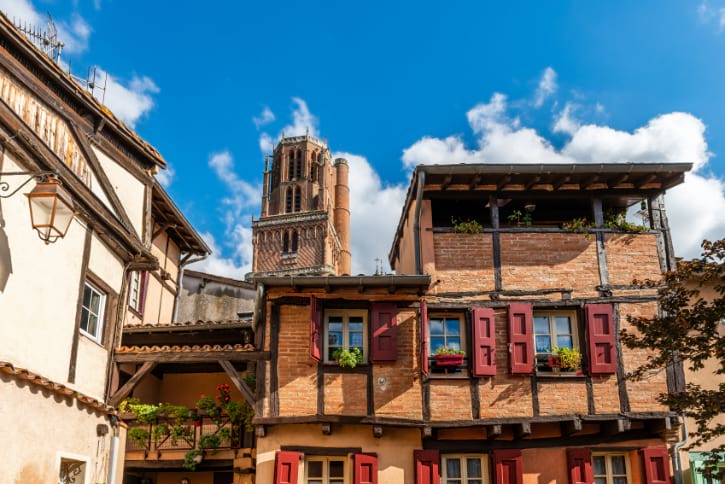
Albi rises straight from the banks of the Tarn River in warm shades of red brick, earning it the name Ville Rouge, the Red City. Its old center is built almost entirely from bricks made of local river clay, which gives it a rare visual unity.
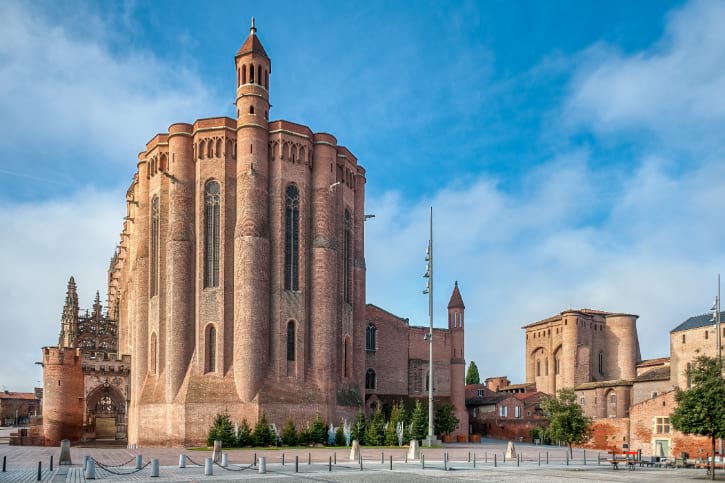
The historic core is a UNESCO World Heritage Site, anchored by the Episcopal City, a monumental fortress quarter where the huge cathedral and the bishops’ palace form one defensive complex.
b. A Bit of History
This grand complex reflects the strong role of the Catholic bishops after the Albigensian Crusade, when the brick architecture was built to project their authority over the region.
c. What to See and Do
- Sainte Cécile Cathedral, a brick fortress on the outside and a richly frescoed space within, including a huge Last Judgment scene. It is an active place of worship, so visit with quiet respect.
- Palais de la Berbie, a 13th century bishop’s palace that now holds the Toulouse Lautrec Museum and its collection of over 1,000 works.
- The Berbie Gardens, set on the old ramparts, with wide views over the Tarn.
- Pont Vieux, built around 1040 and one of the oldest bridges still in use in France.
- The Saint Salvi quarter, with half timbered houses, quiet lanes, and a peaceful cloister.
d. How Much Time You May Need
- Half day: The cathedral, the palace, the museum, the gardens, and the old town.
- Full day: Add a riverside walk, the historic mills, and a deeper look at the galleries.
4. Montpellier – A Youthful, Art Filled Mediterranean City
a. Why You Should Visit
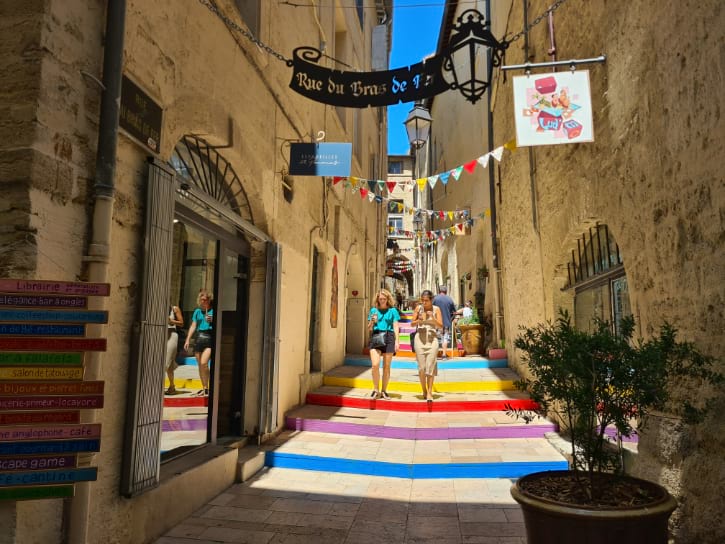
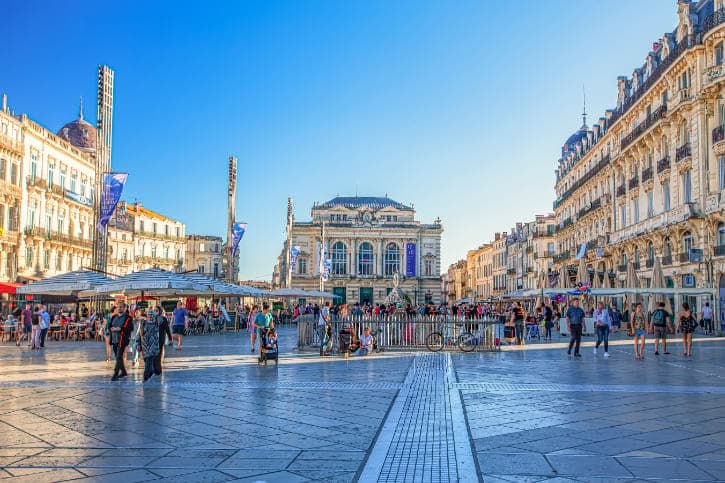
Montpellier is a bright, youthful Mediterranean city that mixes historic elegance with bold modern design. Unlike many French cities built around one monument, its appeal is its atmosphere, with lively café squares, walkable medieval lanes, and easy access to the sea.
It is defined by the contrast between its medieval core, the Écusson, and modern districts like Antigone.
b. A Bit of History
Founded in the 10th century, Montpellier has no Roman roots. Its university, established in the 12th century, became one of Europe’s leading centers for medical study and drew scholars such as Rabelais and Nostradamus.
The city was a Protestant stronghold during the Wars of Religion, and its later rebuilding produced the elegant squares you see today.
c. What to See and Do
- The Écusson quarter, a car free maze of stone lanes, hidden squares, and over 80 historic private mansions.
- Place de la Comédie, the wide central plaza known as L’Œuf, lined with café terraces.
- Saint Pierre Cathedral, with its unusual fortress like porch on two massive stone pillars.
- Promenade du Peyrou, a neoclassical terrace with a water tower, an old aqueduct, and a triumphal arch.
- Musée Fabre, one of France’s most important regional art museums.
- Jardin des Plantes, founded in 1593 as France’s oldest botanical garden.
- The Antigone district, a striking modern neighborhood designed in the 1980s.
d. How Much Time You May Need
- One day: The historic center, the Peyrou, the cathedral, and the main square.
- Two days or a weekend: Add the museums, Antigone, and the nearby beaches.
5. Nîmes – France’s Most Roman City
a. Why You Should Visit
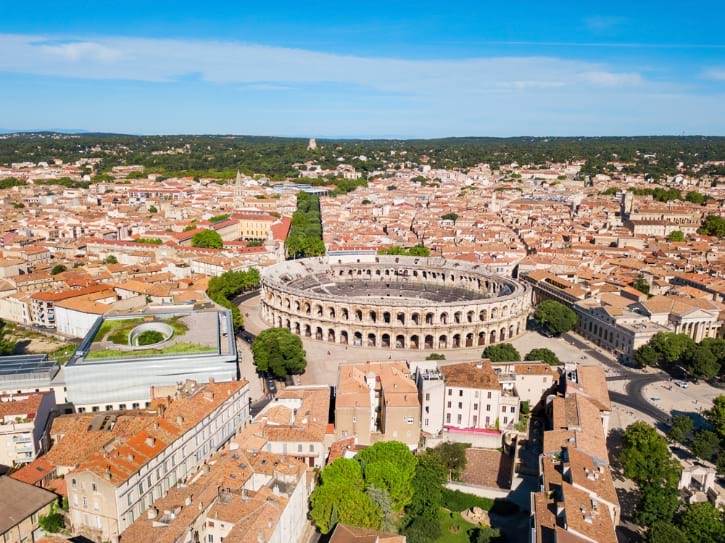
Nîmes is one of the best places in France to feel the ancient Roman world, because its monuments are still part of everyday life. While many cities built over their Roman past, Nîmes kept its monuments alive by using them across the centuries.
It also pairs naturally with the nearby Pont du Gard, the aqueduct built to supply it with water.
b. A Bit of History
Known in ancient times as Colonia Augusta Nemausus, Nîmes was an important Roman colony on the Via Domitia trade route, and Emperor Augustus funded its walls, gates, and temples.
The city’s emblem, a crocodile chained to a palm tree, recalls Roman veterans of the Egyptian campaigns who settled here. It remains the official emblem today.
c. What to See and Do
- Arènes de Nîmes, a double tiered amphitheater built around 100 AD and one of the best preserved in the world. It still hosts events today.
- Maison Carrée, a remarkably complete Roman temple whose balanced proportions later inspired neoclassical architects, including Thomas Jefferson.
- Jardins de la Fontaine, formal gardens built around an ancient spring, with the ruins of the Temple of Diana.
- Tour Magne, the tallest tower of the old Roman wall, with sweeping views over the city.
- Musée de la Romanité, a modern museum that ties the monuments into a single story.
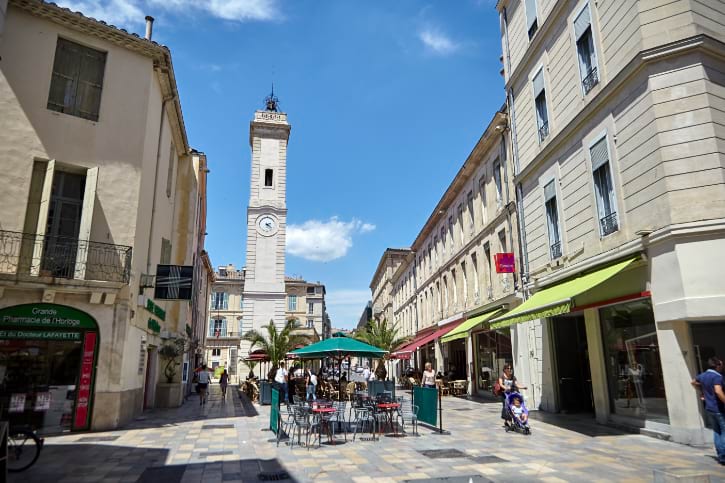
- The old town, with pedestrian lanes, fountains, and historic squares.
d. How Much Time You May Need
- Half day: The main Roman monuments.
- Full day or two days: Add the museum, the gardens, the Tour Magne, and a trip to the Pont du Gard or Uzès.
6. Rocamadour – A Vertical Village on a Cliff
a. Why You Should Visit
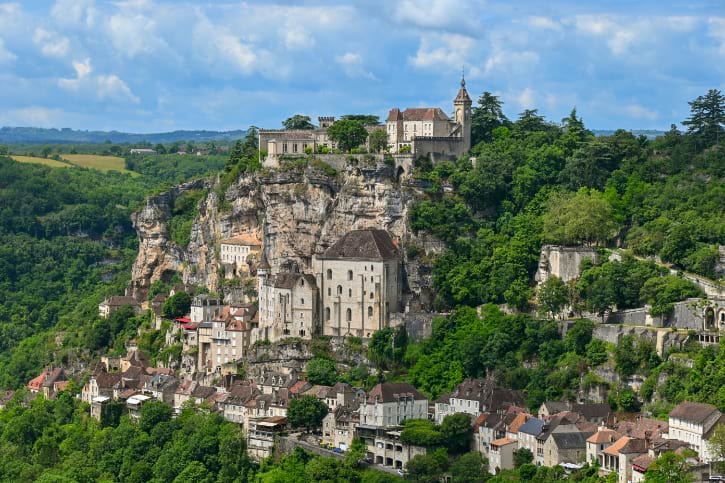
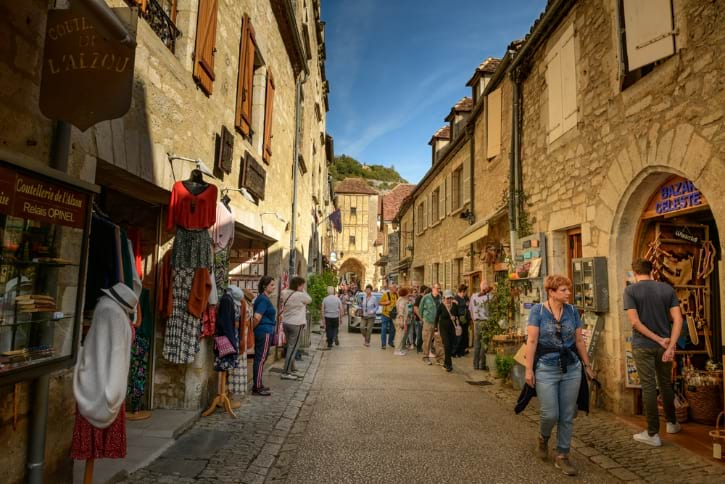
Rocamadour seems to grow straight out of a sheer cliff in the Alzou canyon. Houses, grand chapels, and a crowning castle rise in three levels up the rock face, and the setting alone is one of the main reasons to come.
Suspended about 120 meters above the canyon floor, the village was once organized by level, with lay workers below, the sanctuary in the middle, and the castle above.
As a stop on the Camino de Santiago, it has drawn pilgrims for nearly a thousand years to honor the Black Madonna, and the whole site is a UNESCO World Heritage Site.
b. A Bit of History
Rocamadour’s fame grew quickly after 1166, when the body of an ancient hermit, Saint Amadour, was found well preserved in a rock shelter.
That discovery sparked reports of miracles, drawing famous medieval figures such as King Louis IX.
c. What to See and Do
- The lower village, centered on the narrow Rue de la Couronnerie and its medieval gates.
- The Grand Escalier, a monumental staircase of 216 steps up to the sanctuary.
- The Sanctuary Complex, a cluster of seven chapels built into the cliff face.
- The Chapelle Notre Dame, home to the small 12th century walnut Black Madonna and an ancient iron bell.
- The château ramparts, reached by the Way of the Cross, with panoramic views over the canyon.
- The public lifts, helpful if you have limited mobility.
d. How Much Time You May Need
- Half day: The village, the sanctuary chapels, and the château ramparts.
- Full day: Add valley walks and nearby caves in the Causses du Quercy regional park.
7. Saint-Cirq-Lapopie – France’s Most Beautiful Village Above the Lot
a. Why You Should Visit
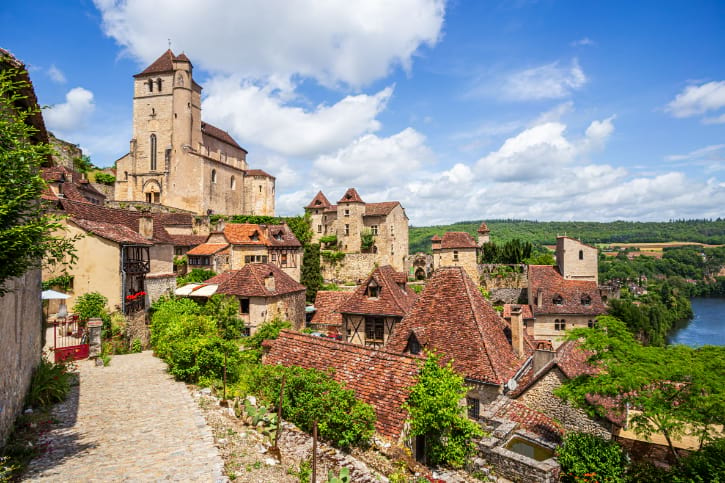
Saint Cirq Lapopie sits about 100 meters above the Lot River, its stone houses spilling down a rocky cliff. Classified as one of “Les Plus Beaux Villages de France”, it is less about big monuments and more about the simple joy of slow wandering through medieval lanes and artisan workshops.
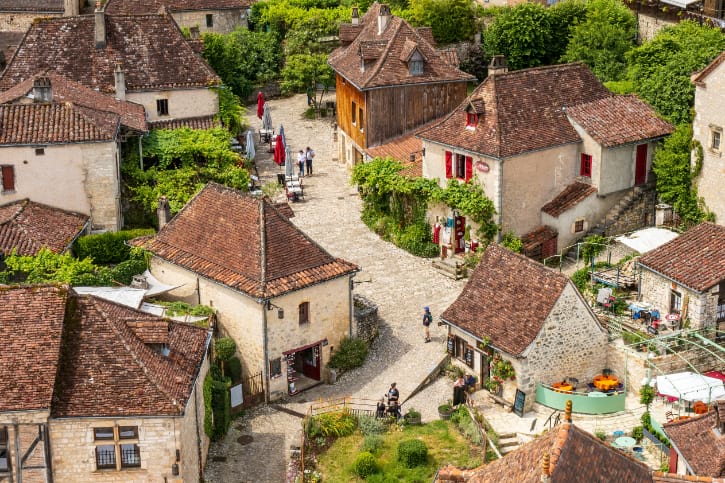
Its narrow streets are lined with stone houses from the 13th to 15th centuries, untouched by modern building.
b. A Bit of History
In the Middle Ages it was the head of one of the four viscountcies of Quercy, which led to several fortresses on the ridge. Its strategic role faded after the medieval period, which left it well preserved.
That timeless character later drew surrealist artists, including André Breton, who settled here in the 1950s.
c. What to See and Do
- The medieval lanes, especially Rue de la Pélissaria, with stone houses and wooden balconies.
- The Église Saint Cirq, a 15th century Gothic church on the cliff edge.
- The Château des Cardaillac ruins, which give the highest view over the village and river.
- The Musée Rignault, a restored fortified house with art and terrace gardens.
- The Chemin de Halage, a dramatic towpath carved into the limestone cliffs by the river.
d. How Much Time You May Need
- A short visit (2 to 3 hours): The lanes, the church, and the castle ruins.
- Half day: Add the museum, the artisan shops, and a riverside walk.
8. Collioure – The Town That Invented Fauvism
a. Why You Should Visit
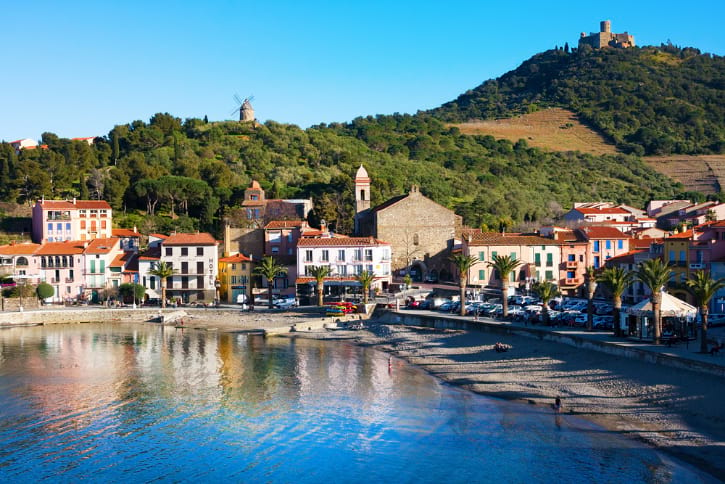
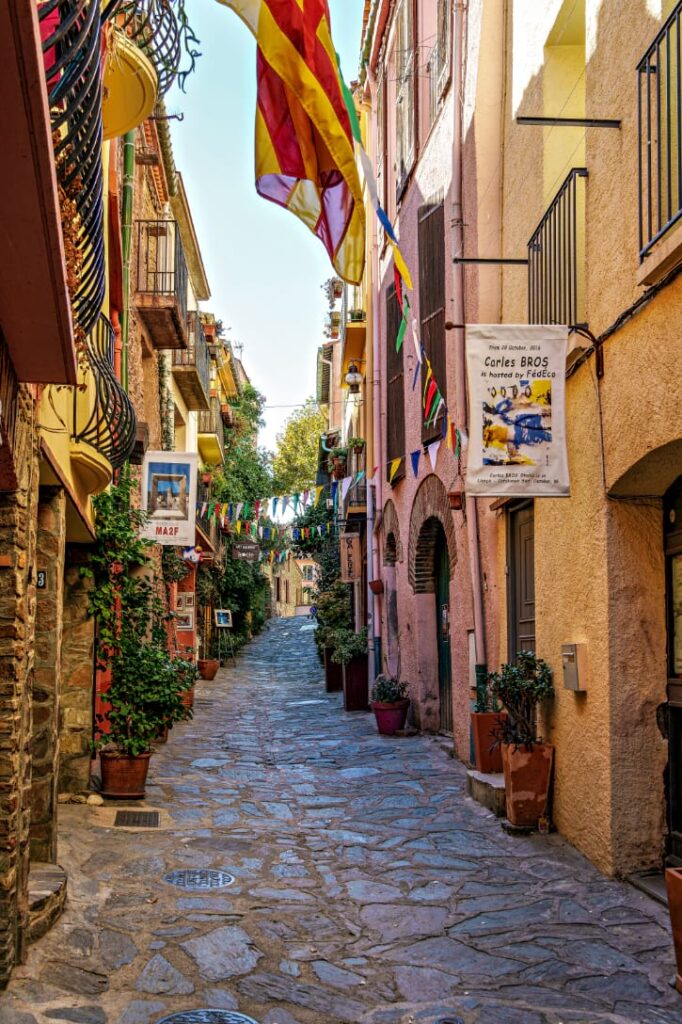
Collioure is a burst of color on the Côte Vermeille, the Vermilion Coast, where the foothills of the Pyrenees meet the Mediterranean. With its sea facing fortress, its iconic waterfront church, and its strong Catalan character, it is an artist’s town at heart.
It has a relaxed feel, easy beaches, and a rich food tradition built around the famous local anchovies.
b. A Bit of History
This is where the Fauvism art movement was born. In 1905, the painters Henri Matisse and André Derain came here, drawn by the bright light and the contrast of pink and ochre buildings against the blue sea, and their bold paintings launched the movement.
The town has been a trading port since antiquity, and its position on the France-Spain border shaped a deep Catalan culture, still seen today in its architecture, music, and food.
c. What to See and Do
- Château Royal de Collioure, a massive seaside fortress that once housed the Court of Majorca, later strengthened by Vauban.
- The Church of Notre Dame des Anges, with a former lighthouse belfry and a richly gilded interior.
- The Quartier Mouré, narrow pastel lanes filled with art studios and galleries.
- The Fauvism Trail, a walk past 20 outdoor easels showing reproductions where the artists painted them.
- The harbor and Boramar Cove, with pebbled beaches and colorful Catalan boats.
- The coastal path, for sweeping bay views.
d. How Much Time You May Need
- Half day: The harbor, the church, the old town, and the castle exterior.
- Full day or a weekend: Add the castle interior, the Fauvism Trail, the beach, and a Catalan dinner.
9. Cordes-sur-Ciel – The Bastide That Floats Above the Clouds
a. Why You Should Visit
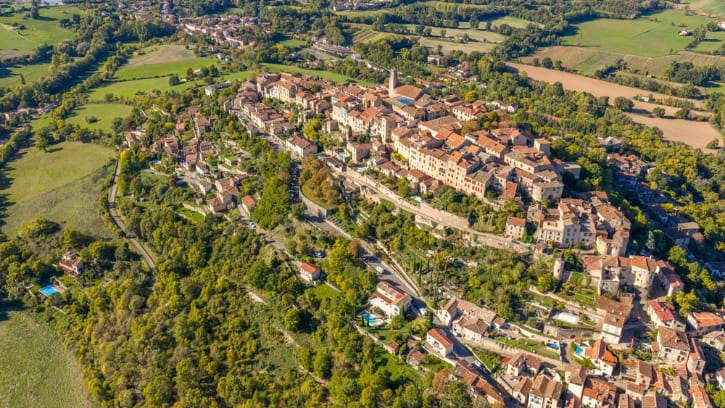
Cordes sur Ciel perches on a high ridge with a dramatic outline against the sky. On misty mornings the valley fills with fog and the town seems to float above the clouds, which is how it earned its name. The charm is in the climb, the streets, and the views, not a single attraction.
Its core is lined with Gothic merchant houses, and it remains a center for craft today.
b. A Bit of History
Cordes sur Ciel was founded in 1222 by Raymond VII, Count of Toulouse, during the Albigensian Crusade. It was built as a fortified bastide, a planned new town, to shelter displaced people.
During its golden age it grew wealthy through trade, which funded its Gothic houses. In the 20th century, a wave of artists saved the town from decline.
c. What to See and Do
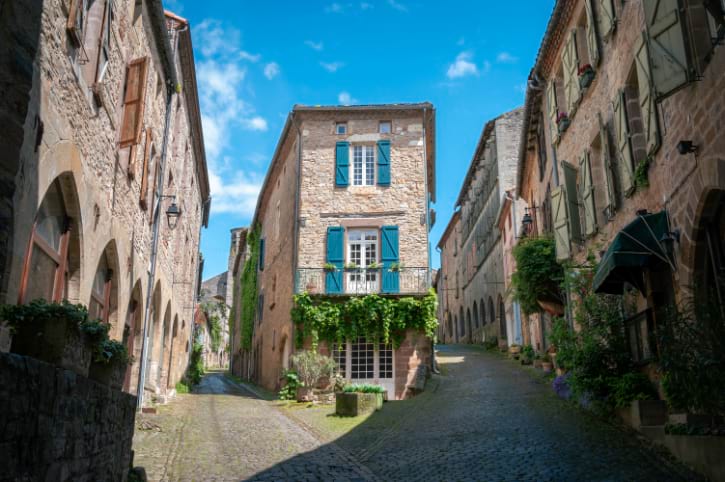
- The climb up the Grand Rue, passing through monumental stone gates like the Porte de l’Horloge.
- The Gothic mansions, such as the Maison du Grand Veneur, with their fine sandstone carvings.
- La Halle, a 13th century covered market with a well that drops over 100 meters into the rock.
- The sugar art museum, set in the historic Maison Prunet.
- The Place de la Bride, with panoramic views over the Cérou valley.
- The Croquant de Cordes, a traditional almond biscuit to try before you leave.
d. How Much Time You May Need
- A short visit (2 to 3 hours): The gates, La Halle, and the summit views.
- Half day: Add the museum, the artisan studios, and a relaxed lunch.
10. Pont du Gard – The Most Magnificent Roman Monument in France
a. Why You Should Visit
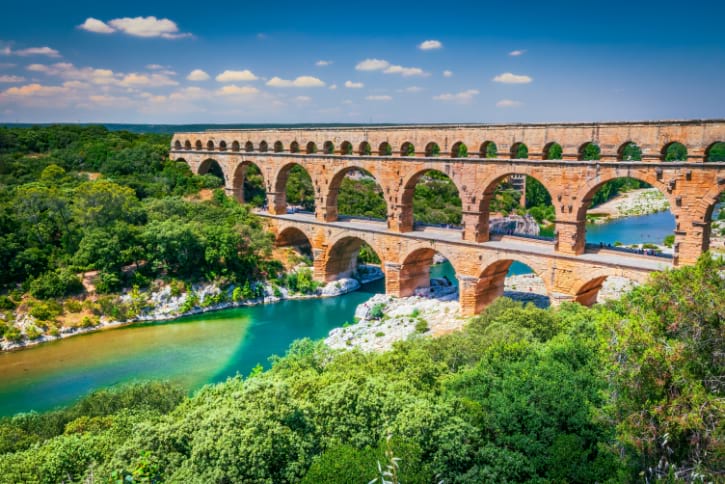
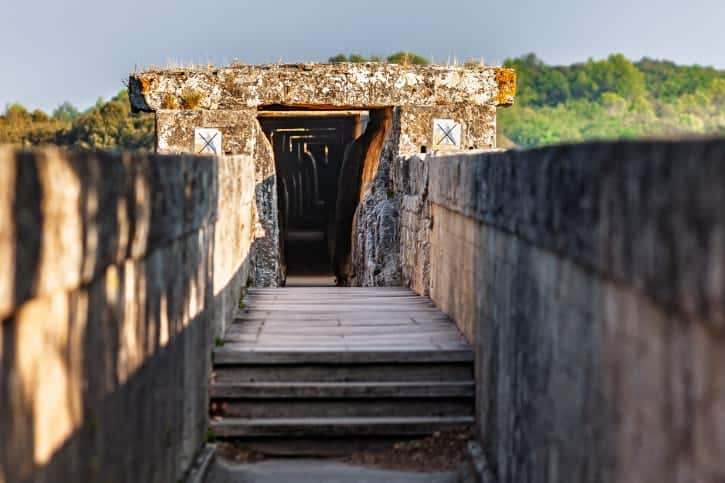
The Pont du Gard is one of the great achievements of ancient Roman engineering. This triple tiered aqueduct bridge spans the Gardon River and rises 49 meters above the riverbed, making it the tallest surviving Roman aqueduct bridge.
What makes it truly remarkable is that its massive limestone blocks, some weighing up to six tons, were fitted together without mortar, held by precise cutting and gravity alone. It is a UNESCO World Heritage Site.
Today the site is much more than a bridge. It is a full landscape experience with trails, riverbanks, and a museum.
b. A Bit of History
The bridge was a key part of a 50 kilometer system built to carry water from springs near Uzès to Roman Nîmes, working on gravity alone.
Over its full length, the slope drops on average only about 34 centimeters per kilometer, which shows just how precise the Roman builders were.
c. What to See and Do
- Walk the lower tier, where a path lets you study the dry stone masonry up close.
- Relax on the riverbanks, the best spot to take in the full scale of the three tiers.
- Visit the museum, an underground display explaining how the Romans moved water.
- Walk the Mémoires de Garrigue trail, a nature loop through olive groves and dry stone walls.
- Climb to the viewpoints on both banks for views over the upper tier.
- Swim or kayak (seasonal), when conditions allow, beneath the ancient arches.
d. How Much Time You May Need
- A short visit (2 to 3 hours): A walk across the bridge and views from both banks.
- Half day or full day: Add the museum, the nature trails, and seasonal swimming or kayaking.
How to Get Around Occitanie Easily
Occitanie is one of the largest and most varied regions in France, and that is part of its appeal. It also means a little planning goes a long way.
a. Why Getting Around Occitanie Needs Planning
The region covers high mountains, rolling countryside, steep river canyons, and busy coastal plains. The places you want to see range from major cities to isolated villages perched on ridges or tucked into river bends.
Because of this variety, transport options differ a lot from place to place. Some spots are easy to reach by train, while others are far simpler with a car.
b. Easiest Places to Visit by Train
The main cities and historic towns along the plains and river valleys are well served by the regional rail network, run by SNCF under the liO Train TER Occitanie brand.
- By train, you can move easily between Toulouse, Carcassonne, Albi, Montpellier, Nîmes, and the coastal town of Collioure.
- These places work well if you would rather not drive or deal with parking.
- There is also a regional rail pass that can be a good value option for independent travelers.
- Whatever you choose, always check current schedules and seasonal connections before you plan.
c. Places Where a Car Helps More
For the rural villages, river valleys, and remote natural landmarks, a car gives you far more freedom.
- Places like Rocamadour, Saint Cirq Lapopie, Cordes sur Ciel, and the Pont du Gard sit away from the main rail lines.
- A car lets you handle winding country roads, reach scenic overlooks, and link several rural sites in a single day.
- It is especially useful in the Lot and Tarn valleys, where public transit connections are infrequent.
d. Best Base Cities for Exploring Occitanie
- Toulouse: The natural western base, with good links to Carcassonne, Albi, and Cordes sur Ciel.
- Montpellier: A great Mediterranean base for the coast, nearby towns, and easy beach access.
- Nîmes: The best base for Roman heritage, within easy reach of the Pont du Gard, Uzès, and the Camargue.
- Carcassonne: An atmospheric base for the medieval city and the surrounding Aude countryside and vineyards.
e. Suggested Route
The easiest way to enjoy Occitanie is to group nearby places together rather than crossing the whole region at once.
- Western Occitanie: Toulouse, Albi, Cordes sur Ciel, and Carcassonne.
- Lot and cliff villages: Rocamadour, Saint Cirq Lapopie, and nearby stops like Cahors.
- Mediterranean and Roman side: Montpellier, Nîmes, Pont du Gard, and Collioure.
Trying to cover all ten places in one rushed trip can mean long travel times. Grouping nearby spots together gives you a smoother, more relaxed itinerary.
f. Train, Car, and Mixed Travel Style
There are three simple ways to plan your journey.
- Train focused trip: Best for cities and larger towns. The regional network connects Toulouse, Carcassonne, Montpellier, Nîmes, and Collioure.
- Car focused trip: Best for villages, countryside, viewpoints, and flexible pacing through the Lot and Tarn valleys.
- Mixed trip: Often the easiest of all. Take trains between the major cities, then rent a car for a day or two to reach the rural villages and scenic sites.