Rome’s historic centre rewards those who explore it slowly and on foot. Its greatest sights sit close together, tied by old streets, hidden lanes, and open squares that come alive at street level.
A good route is about more than famous names, though. Crowds shift through the day, some areas are pedestrian only, and a few sights now have entry rules worth knowing. Here is a full day, planned to flow from morning light to evening dinner. 😊
8:30 AM – Piazza del Popolo & Terrazza del Pincio
a. A Grand Start to the Day
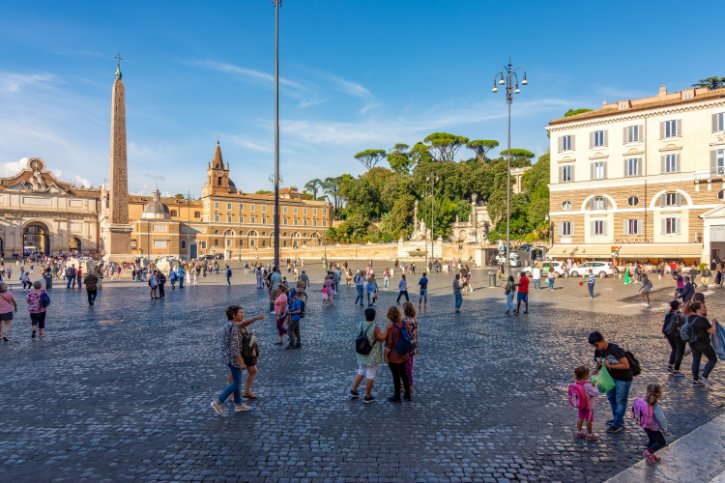
Piazza del Popolo is the grand square that has welcomed travellers into Rome from the north for centuries. It is a calm, open place to begin, and the perfect spot to get your bearings before the day unfolds. Designed in its current oval shape by Giuseppe Valadier between 1811 and 1822, it feels spacious and unhurried this early.
b. Where the Trident Begins
This square is where Rome’s famous Trident begins, three straight streets that fan out to the south:
- Via del Babuino, heading toward Piazza di Spagna
- Via del Corso, running straight down the middle toward Piazza Venezia
- Via di Ripetta, curving toward the river and the Vatican
c. What to Notice in the Square
- The Flaminio Obelisk at the centre, an ancient Egyptian obelisk brought to Rome by Augustus in 10 BC and raised here in 1589
- The twin churches on the southern side, Santa Maria dei Miracoli and Santa Maria in Montesanto, which frame the start of the Trident
- The fountains of Neptune and Roma set into the walls on each side
- The Pincio rising above the eastern edge, where you head next
d. Why 8:30 AM Works
Arriving this early is a real gift. Delivery vans and commuters are few, the light is soft, and you can enjoy the square almost to yourself. If photography is your thing, an even earlier start gives you the calmest scene of the day.
Read More: 17 Best Things to Do in Rome
e. The View from the Terrazza del Pincio
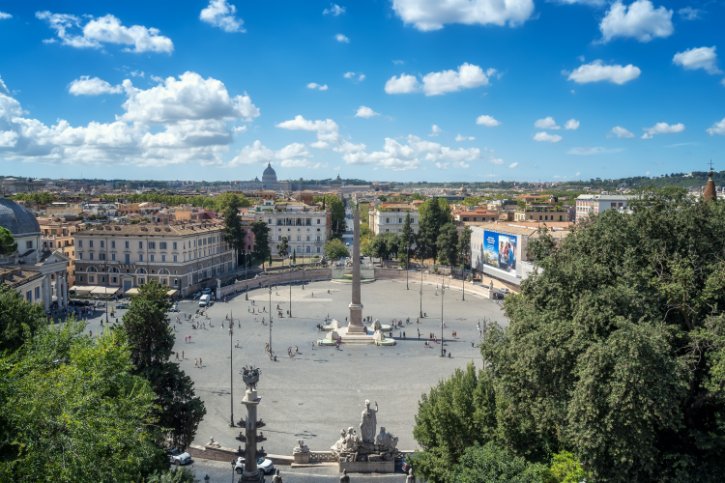
A short climb up the ramped path leads to the Terrazza del Pincio, one of the finest free viewpoints in Rome. Trust me, this view sets the tone for everything that follows. Looking west across the historic centre, you can pick out:
- The dome of Peter’s Basilica in the distance
- The dome of San Carlo al Corso
- The Vittoriano monument
- The green slopes of the Janiculum Hill
9:20 AM – Via Margutta & Via del Babuino
a. Two Streets, One Artistic Heart
Tucked between Piazza del Popolo and Piazza di Spagna, this pair of streets is the quiet, creative soul of the Trident. You do not need to step into a single shop to enjoy them. The atmosphere is the whole point.
b. Via Margutta: The Artists’ Lane
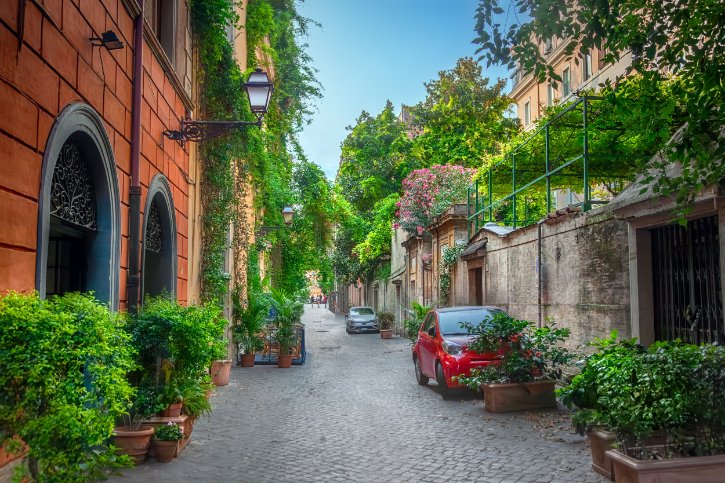
For centuries, Via Margutta was a peaceful lane behind the grander palazzi nearby. From the 1600s it drew painters and sculptors with its good light and affordable studios, and that creative spirit still lingers today. It offers a lovely contrast to the busier avenues around it.
c. What to Notice on Via Margutta
- Ivy-draped façades and worn cobblestones
- Art galleries and restoration workshops
- Quiet residential courtyards
- 110, once home to the film director Federico Fellini and his wife, the actress Giulietta Masina
- The Fontana delle Arti, a 1927 fountain carved with artists’ easels, palettes, and dramatic masks
d. Via del Babuino: Refined and Elegant
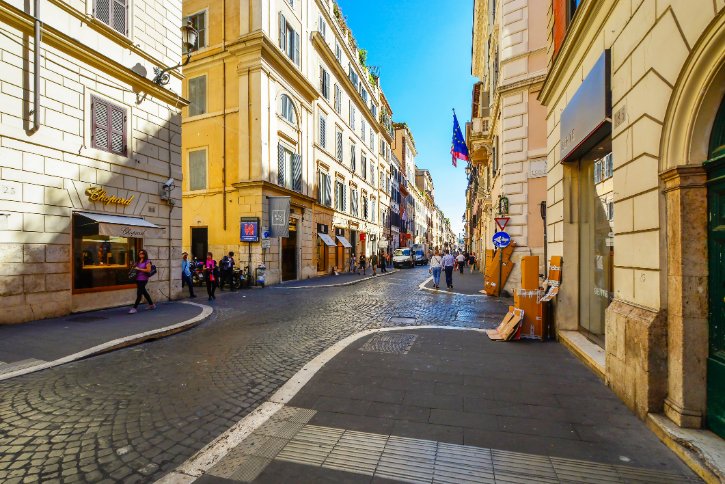
Via del Babuino is the eastern arm of the Trident, running from Piazza del Popolo toward Piazza di Spagna. Its odd name comes from a 16th century fountain with a statue so worn and strange looking that locals nicknamed it “Il Babuino”, the baboon.
Today it is a graceful avenue lined with neoclassical buildings, smart boutiques, antique dealers, and the historic Hotel de Russie. Even a quick stroll here feels grand.
10:00 AM – Spanish Steps
a. One of the World’s Most Famous Staircases
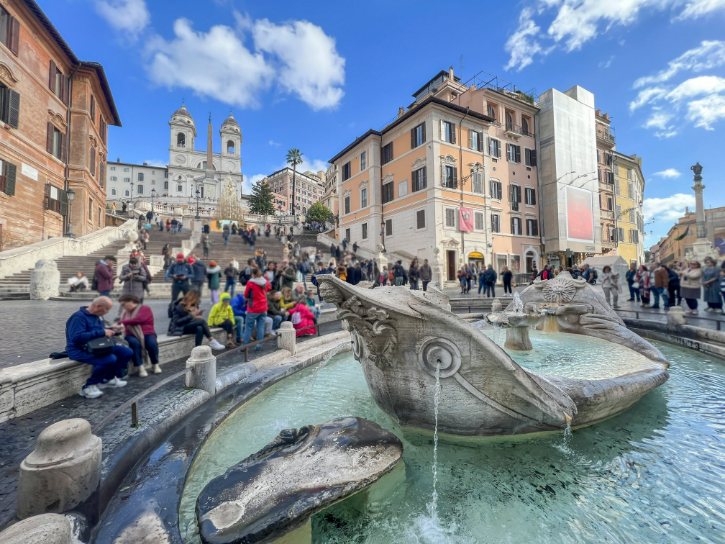
Piazza di Spagna is home to the Spanish Steps, a sweeping 135 step staircase built between 1723 and 1725. It rises from the lower square to the church of Trinità dei Monti at the top, and it has drawn travellers for generations. The steps also link back toward the higher ground near the Pincio, where you began your morning.
b. The Barcaccia Fountain
At the foot of the steps sits the Barcaccia fountain, shaped like a half-sunken boat. Pietro Bernini and his son Gian Lorenzo built it in the late 1620s. The sunken design was a clever solution to the low water pressure at this exact spot, turning a problem into something beautiful.
c. Should You Climb to the Top?
Here is the honest answer: not for this route. You already enjoyed a wider view from the Pincio this morning, so the climb up and down adds real effort with little new reward. Treat it as optional. If you love the idea, go for it. If not, the scene from the base is lovely on its own.
d. A Quick Word on Construction
- The Spanish Steps and the main square are fully open
- Current municipal works are nearby, around Piazza Mignanelli and Via di Propaganda
- You may meet small detours on side streets, nothing that blocks your walk
- Crowds begin to build right around 10:00 AM, so enjoy the calm while it lasts
11:00 AM – Trevi Fountain
a. Rome’s Baroque Showstopper
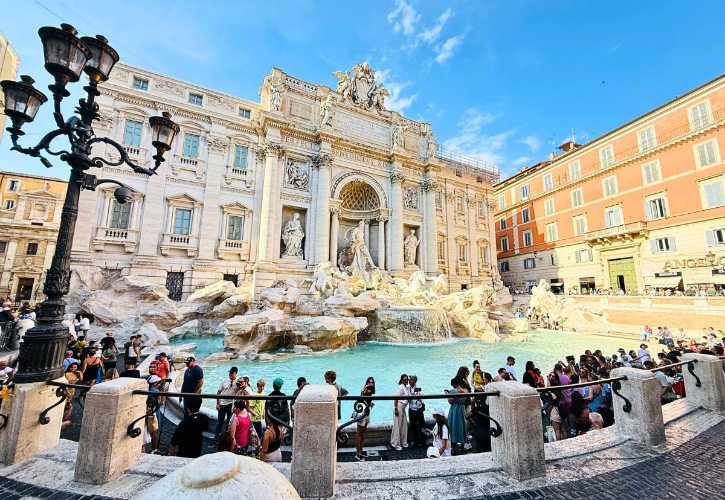
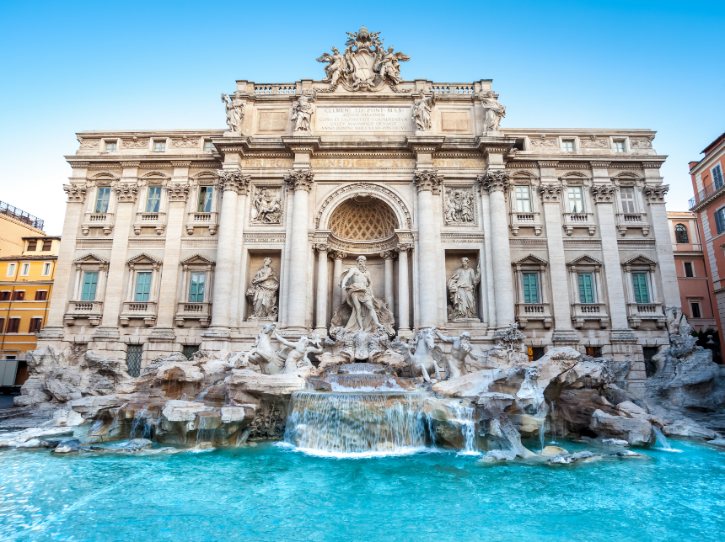
The Trevi Fountain is the largest Baroque fountain in Rome, standing around 26 metres tall. Nicola Salvi designed it, and it was completed in 1762. At its centre stands Oceanus in a shell chariot pulled by sea horses, a scene that still stops people in their tracks. The fountain marks the end point of an ancient aqueduct that has supplied this part of Rome since 19 BC.
b. How Access Works Now
Rome introduced a system to manage crowds and protect the fountain. Here is what to expect:
- The upper piazza is free, with no ticket needed to view and photograph the fountain
- The lower basin, the steps closest to the water, now requires a paid ticket for non-residents
- Free lower access is given to Rome residents, young children, and visitors with certified disabilities plus one companion
c. The One Day-of-Week Catch
The lower basin follows a schedule. On most days it opens in the morning, but on Monday and Friday it stays closed until 11:30 AM for weekly cleaning and maintenance.
If you arrive at 11:00 AM on one of those days, do not worry. Simply enjoy the fountain from the free upper piazza first, take your overhead photos, then join the queue as the basin opens. You never have to move Trevi around in your day.
d. Setting Your Expectations
Let’s be real. Even at 11:00 AM, Trevi is busy. That is exactly why the access system exists. Come expecting crowds, toss your coin, take your photos, and enjoy the moment anyway. It remains one of the great sights in the world, and the energy around it is part of the experience.
11:50 AM – Piazza Colonna
a. A Square with Political Weight
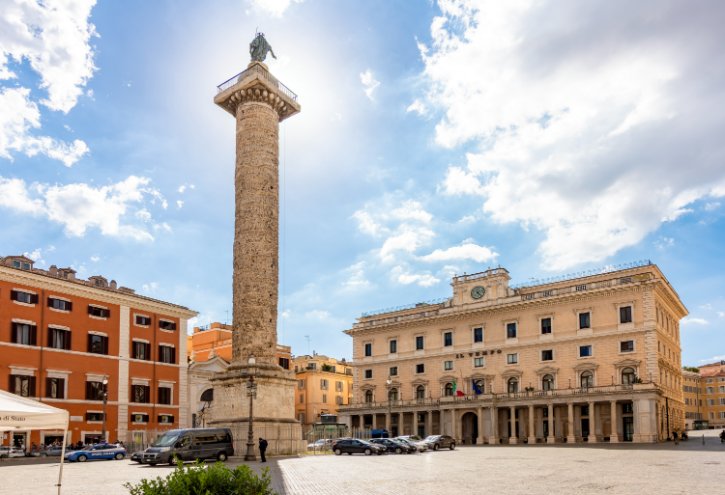
Piazza Colonna is a short but rewarding stop, and a nice bridge between Trevi and your next church. It is named after the towering column at its centre, and it sits at the very heart of Italy’s political life today.
b. The Column of Marcus Aurelius
The Column of Marcus Aurelius has stood here since AD 193. Nearly 30 metres tall, it is wrapped in a continuous spiral carving that tells the story of the emperor’s military campaigns. A bronze statue of Saint Paul was placed on top in 1589.
c. What Surrounds the Square
- Palazzo Chigi on the north side, the official residence of Italy’s Prime Minister
- The Galleria Alberto Sordi to the east, an elegant covered shopping arcade with lovely Art Nouveau details
- Palazzo Wedekind to the west
d. Why It Is Worth a Pause
This is not a major attraction, and it does not try to be. Think of it as a pleasant, interesting stop between the drama of Trevi and the artistry of Sant’Ignazio. Walk around the base of the column, take in the fine carvings, and enjoy the quiet sense of standing where modern Italy is governed.
12:30 PM – Chiesa di Sant’Ignazio di Loyola
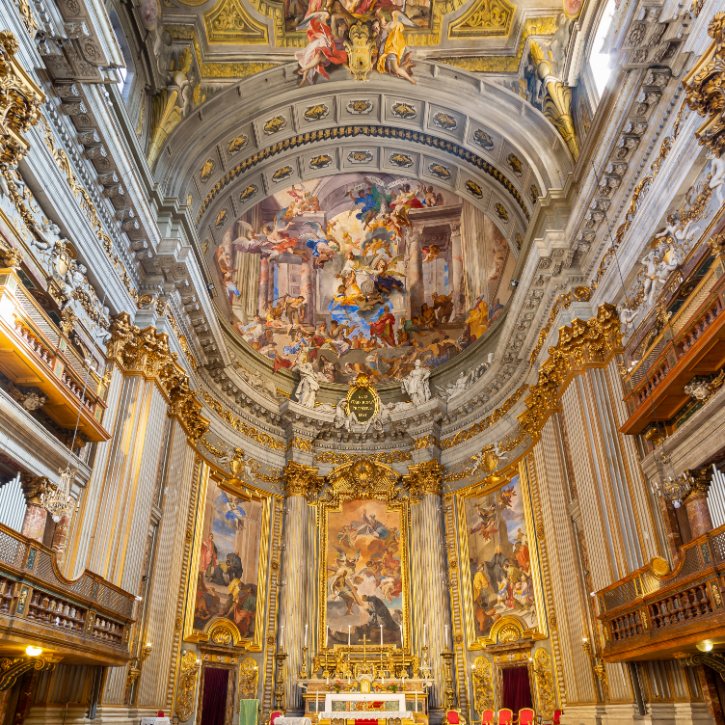
a. A Ceiling Like No Other
From the outside, Sant’Ignazio looks like many Baroque churches. Step inside, and you meet one of the cleverest ceilings in all of Rome. The church was built in the 1600s, and its interior was painted by the Jesuit artist Andrea Pozzo. That ceiling is the real reason to come.
b. What to Look For
- The ceiling fresco, painted so skilfully that the flat surface seems to open into deep, three-dimensional sky
- The fake dome, a flat canvas painted to look like a real stone cupola after the money for one ran out
- The marble disc on the floor, the exact spot where the illusion lines up perfectly. Stand on it, look up, and enjoy the magic
c. The Famous Floor Mirror
There is a large floor-level mirror in the nave that lets you view the ceiling without craning your neck. It has become very popular, and the queue can run long. My honest advice is to skip the line. Stand on the floor markers in the central aisle instead, and you will get the full illusion right away. The ceiling, not the mirror, is the reason to visit.
d. Good Manners Inside
- This is an active church, and entry is free
- Modest dress is required, with shoulders and knees covered
- Keep your voice low, especially near the prayer chapels
1:10 PM – Lunch near the Pantheon
a. Two Very Different Lunches
You have earned a proper break, and the streets around the Pantheon offer two lovely, contrasting options. One is quick and casual, the other a relaxed sit-down meal. Both sit within a couple of minutes of the Pantheon itself, so either choice keeps you close to your next stop.
b. All’Antico Vinaio: Fast and Delicious
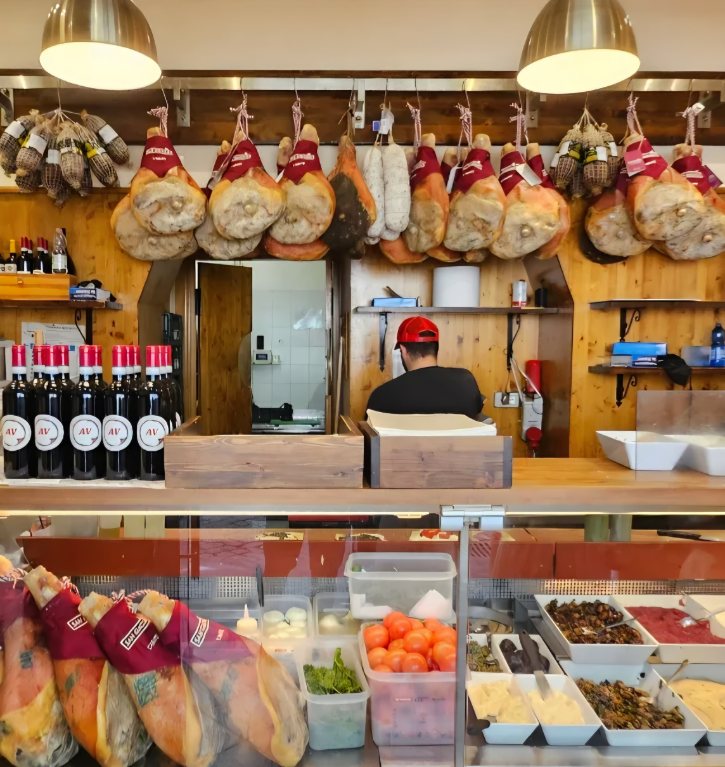
This famous shop began in Florence and serves some of the best sandwiches you will find in the city. The star is warm, crisp schiacciata bread, stacked with freshly sliced cured meats, cheeses, and creamy spreads.
A favourite is La Paradiso, layered with mortadella, stracciatella, and pistachio. There is no indoor seating, so most people grab their sandwich and enjoy it on a nearby bench, watching the piazza go by. This is the choice if you want to eat well and keep the day moving.
c. Osteria da Fortunata: A Sit-Down Roman Meal
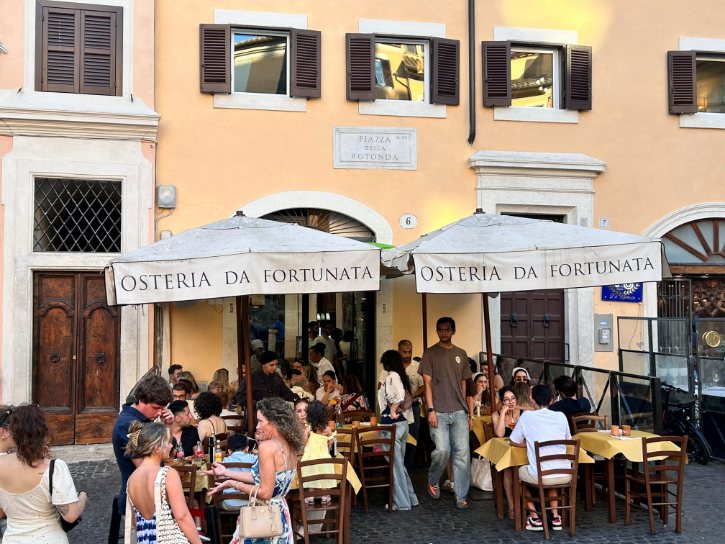
For something slower, this traditional osteria is a treat. Through the window you can watch the sfogline, the pasta makers, hand-roll fresh pasta right in front of you.
On the plate, you will find Roman classics done well, including Carbonara, Amatriciana, and Cacio e Pepe, served in hearty, satisfying portions. It is the choice for a proper, relaxed lunch before the afternoon ahead.
2:20 PM – Pantheon
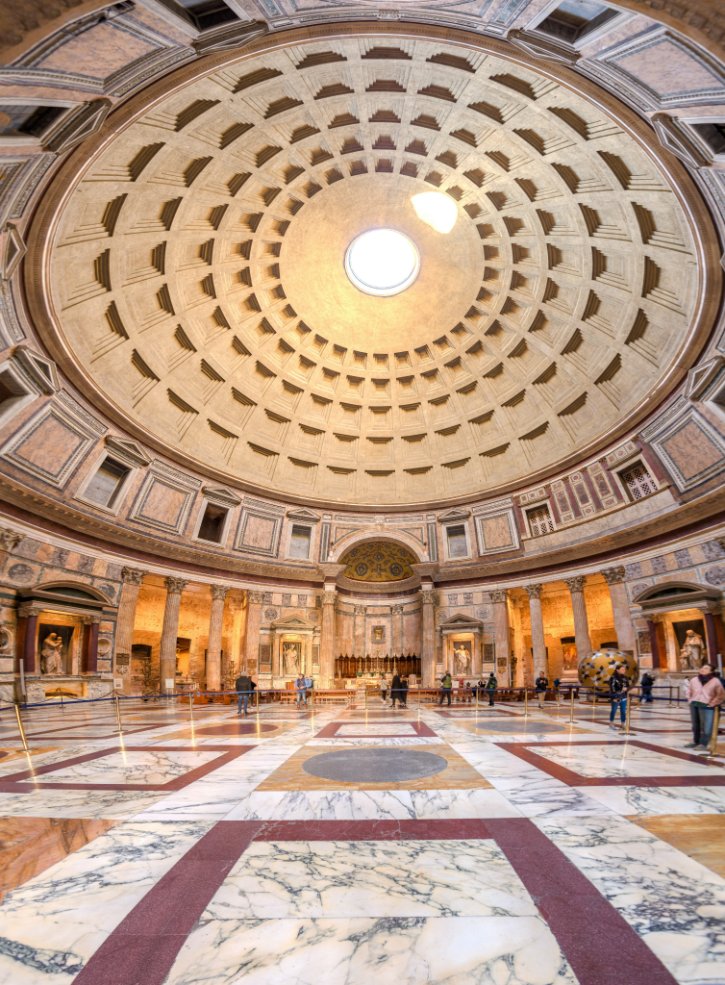
a. The Best-Preserved Building of Ancient Rome
The Pantheon is nearly 2,000 years old and still breathtaking. Rebuilt by Emperor Hadrian around AD 126, it survived the centuries partly because it became a church, Santa Maria ad Martyres, in AD 609. Walking through the doors still feels like stepping straight into the ancient world.
b. A Note on Entry
- Entry requires a ticket
- Booking a timed slot in advance online is the smartest move, letting you skip the slower on-site lines
- There is a quick, standard security check at the entrance
- As an active church, access can pause briefly during religious services
c. What to Look For Inside
- The grand portico with its huge, single-piece Egyptian granite columns
- The vast round rotunda
- The famous dome, whose width and height are exactly equal at 43.3 metres
- The sunken square coffers that pattern the underside of the dome
- The tomb of the great painter Raphael
d. The Genius of the Oculus
At the very top of the dome sits the oculus, an open circle nearly 9 metres wide. It is the building’s only source of daylight, and it links the space directly to the sky above.
On a bright day, watch the beam of sunlight travel slowly across the marble as the hours pass. It is a quiet, unforgettable moment, and a reminder of just how far ahead of their time these builders were.
Read More: 10 Surprising Pantheon Details Most Tourists Completely Miss
3:30 PM – Piazza Navona
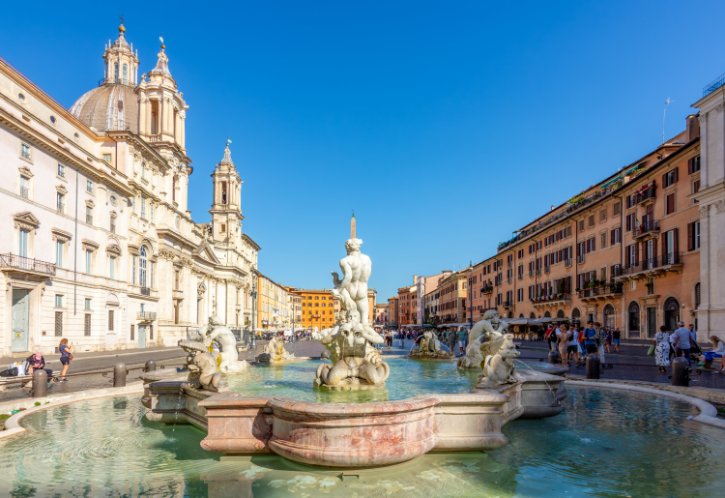
a. Rome’s Baroque Stage
Piazza Navona is one of Rome’s most beautiful open spaces, and it deserves more of your time than the smaller squares earlier in the day. Its long oval shape traces the exact footprint of an ancient stadium, built in AD 86 for Greek-style athletic games. That history is why the square still feels like a grand arena.
b. Three Magnificent Fountains
- Fontana dei Quattro Fiumi, Bernini’s 1651 masterpiece, with four giant figures representing four great rivers, gathered around an Egyptian obelisk
- Fontana del Moro at the southern end, showing a figure wrestling a dolphin
- Fontana del Nettuno at the northern end, with Neptune spearing an octopus
c. Bernini, Borromini, and a Famous Rivalry
On the western side stands the church of Sant’Agnese in Agone, with its graceful curved front designed by Borromini. He was Bernini’s great rival, and here their work sits side by side in the same square. If you have a moment, step inside for a look at the interior.
d. At Its Best Today
Good news for your visit: all three fountains were fully restored ahead of the Jubilee Year. The scaffolding is gone, and they are running beautifully. Walk the full length of the square, photograph the fountains from every angle, and settle in at a café table for a gelato or coffee. This is a place made for lingering.
5:00 PM – Campo de’ Fiori & the Artisan Streets
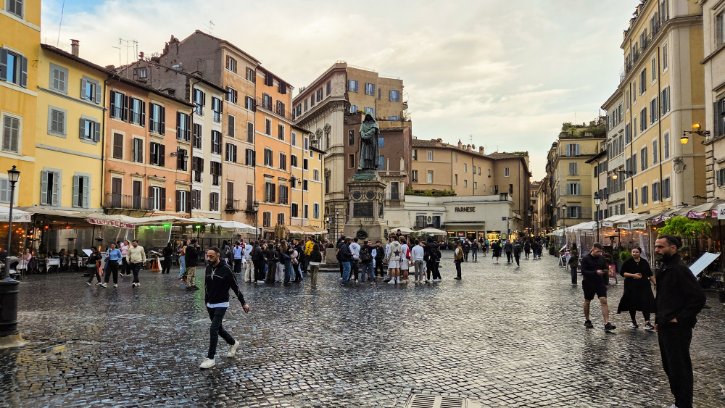
a. A Different Square by Evening
By late afternoon, Campo de’ Fiori has a completely different feel. The famous market here runs in the morning only, so by 5:00 PM the stalls are packed away and the square has been cleaned. Come for the evening mood instead, as cafés and wine bars fill up for aperitivo, that relaxed early-evening drink Romans love.
b. What to Enjoy Here
- The open, lively piazza itself
- The bronze statue of the philosopher Giordano Bruno at the centre, a powerful symbol of free thought
- Handsome old buildings framing the square
- The gentle shift from day to evening, a welcome moment after a long day on foot
c. The Artisan Street Loop
From here, you can explore two of the prettiest old streets in this part of Rome, Via del Pellegrino and Via dei Coronari, as one relaxed loop. They are a lovely, unhurried way to end the day, full of small shops, old façades, and quiet corners worth slowing down for.
d. Via del Pellegrino
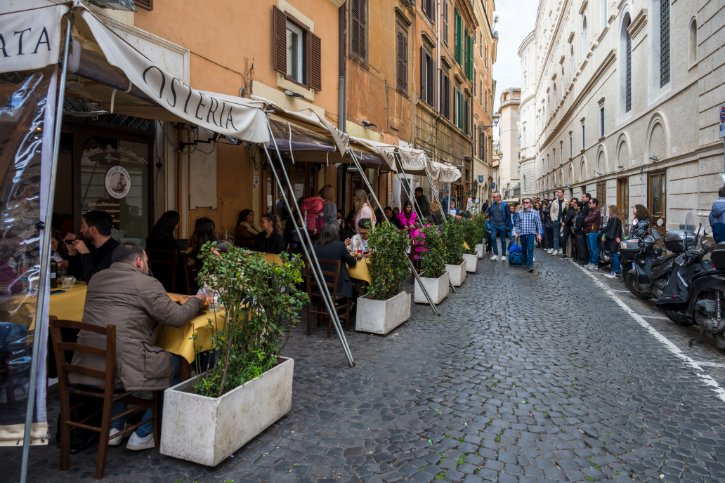
This narrow medieval street was once part of the ceremonial route that newly elected popes took through the city. Today it is lined with independent shops, small studios, and hidden corners like the tiny, picture-perfect Arco degli Acetari.
Do not expect a solid wall of workshops. The charm is in the whole streetscape, and you do not need to enter anywhere to enjoy it.
e. Via dei Coronari
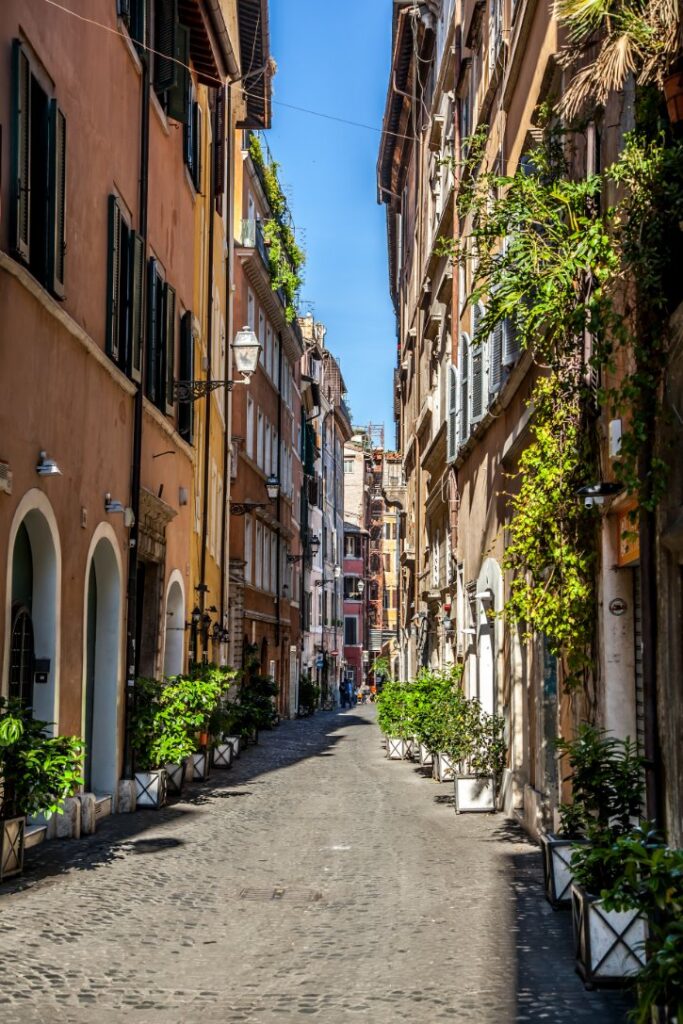
A short walk north brings you to Via dei Coronari, a graceful Renaissance street. Its name comes from the coronari, the sellers of rosary beads who once served pilgrims heading to St. Peter’s.
Today it is known for antique shops, art galleries, elegant 16th century palazzi, and classical stone archways. It has a calm, timeless feel, even if you never step inside a single shop.
6:30 PM – Dinner in the Old Streets
a. A Fitting End to the Day
You finish where the day’s walking naturally leads, with a proper Roman dinner in the same streets you have just explored. There are two wonderful options, each with its own character, and both sit right where your afternoon wander winds down.
b. Cantina e Cucina
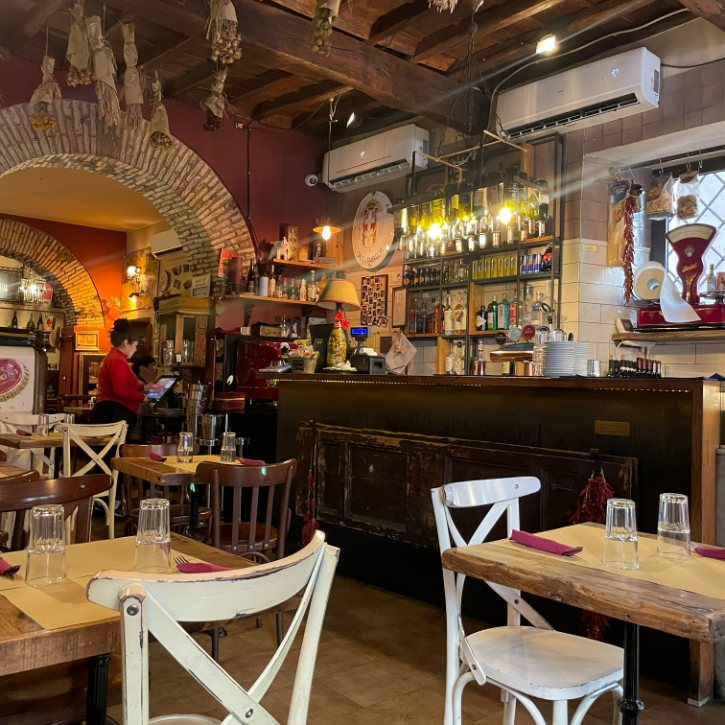
Tucked along Via del Governo Vecchio, this is a lively, vintage-style trattoria and pizzeria with a warm, welcoming feel. It is known for thin-crust Roman pinsa, generous plates of classic pasta, and hearty dishes like meatballs in sauce. The atmosphere is energetic and friendly, a great way to celebrate a full day on foot.
c. Osteria da Fortunata
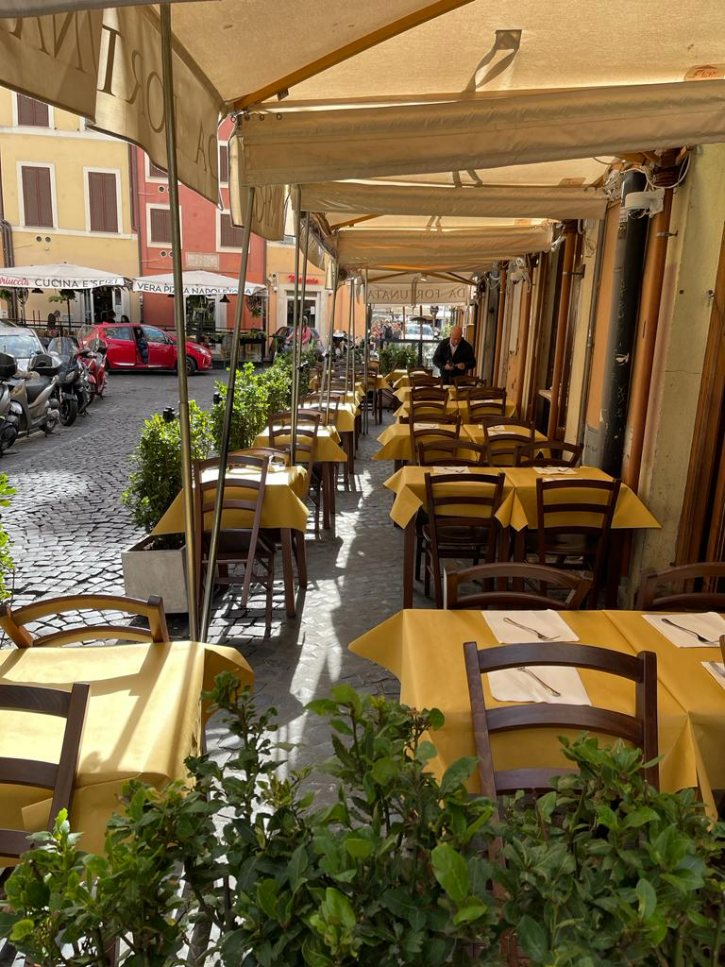
On Via del Pellegrino, this rustic pasta house is all about fresh, hand-rolled pasta. You can watch it being shaped in the window before you eat. Look for shapes like scialatielli and strozzapreti, paired with rich, classic sauces built on guanciale, pecorino Romano, and egg yolk. It is simple, traditional, and deeply satisfying.
d. Which One to Choose
Both sit right in the streets you have wandered, so neither adds a long detour. If your walk winds down along Via del Governo Vecchio, Cantina e Cucina is right there. If you finish on Via del Pellegrino, Osteria da Fortunata is the natural pick. Either way, it is a delicious close to a wonderful day in Rome.