Milan has a way of quietly winning you over. Most first-time visitors arrive picturing fashion and finance, then find something deeper underneath.
There is soaring Gothic marble, some of Italy’s finest art, hushed Renaissance churches, elegant streets, green parks, and old canals that still fill with life at night.
The city layers Roman roots, Sforza-era power, and modern energy right on top of each other. Give it a little time, and it opens up beautifully. Here are the 12 places that show you the real Milan. 😊
1. Arco della Pace & Parco Sempione
a. Why start here
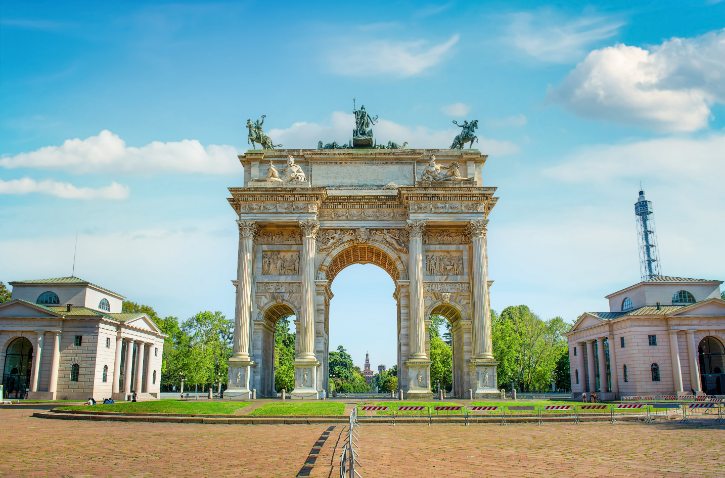
Start on foot, and start relaxed. The Arch of Peace and Parco Sempione work best as one experience, a single green corridor along the old northwestern edge of the center.
The land was once a ducal parade ground and hunting park, reshaped in 1890 into the romantic, English-style garden you stroll through today. It is a gentle, leafy way to ease into the city before the grand monuments begin.
b. The walk to take
The nicest route runs from the castle to the arch, and it flows naturally:
- Enter from the rear gates of Castello Sforzesco and follow the central path.
- Pass shaded groves and cross the pretty Bridge of the Little Mermaids.
- Circle the calm ornamental pond in the heart of the park.
- Arrive at Piazza Sempione, right in front of the Arco della Pace.
If you want more, ride the elevator up Torre Branca for wide rooftop views, or slip into Triennale Milano for its rotating design exhibitions. Give the walk 45 minutes to an hour, or stretch it to a couple of hours if you linger.
c. A tip most people miss
Here is a detail worth knowing. The park closes behind its gates at night, but the plaza around the arch stays lively far later, with cafés and a relaxed evening crowd. If you are around after dark, this is a pleasant place to end up.
d. Getting there
- For the arch: Take Tram 1 or 10 to the Piazza Sempione stop, about a 1-minute walk.
- Also for the arch: Metro M5 or Trenord rail to Domodossola, roughly 10 minutes on foot.
- For the park’s south side: Metro M1 to Cairoli, about 3 minutes away.
- Also for the south side: Metro M2 to Lanza or Cadorna FN, around 5 minutes on foot.
2. Sforzesco Castle
a. More than a photo stop
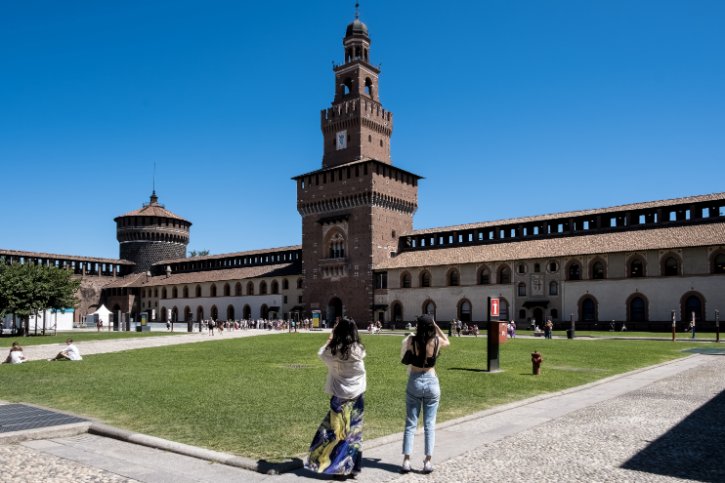
It is tempting to photograph the walls and keep walking. Do not. Castello Sforzesco is one of the largest citadels in Europe, built by the Visconti in the 14th century and expanded by Francesco Sforza in the 15th.
Inside its brick ramparts sit seven separate museums, and the courtyards are grand and free to wander, a fine place to feel the scale of the place before you go in.
b. What to prioritize inside
You do not need to see all seven collections. Focus on the highlights:
- Michelangelo’s Pietà Rondanini, his final, unfinished sculpture, displayed on its own in the restored Spanish Hospital. It is raw and unforgettable, and it is the one to see first.
- The ancient art and painting collection, where you will find works by Mantegna, Titian, and Canaletto.
Pair those two and you have seen the heart of the castle without losing half a day.
c. What you can’t see right now
One honest note before you plan. Leonardo’s famous painted vault, the Sala delle Asse, is still under conservation, so you cannot walk through it at the moment. You are not shut out of the Leonardo story, though. A multimedia presentation nearby, in the Sale Panoramiche, tells it instead.
d. Getting there
- Take Metro M1 to Cairoli, about a 2-minute walk to the gate.
- Or Metro M2 to Cadorna FN or Lanza, roughly 5 minutes on foot.
- Trams 1, 4, 12, and 14 stop near the castle.
- Central trams near Cordusio and Duomo are sometimes diverted, so check the live ATM app before you set off.
3. Pinacoteca di Brera
a. The one museum to see
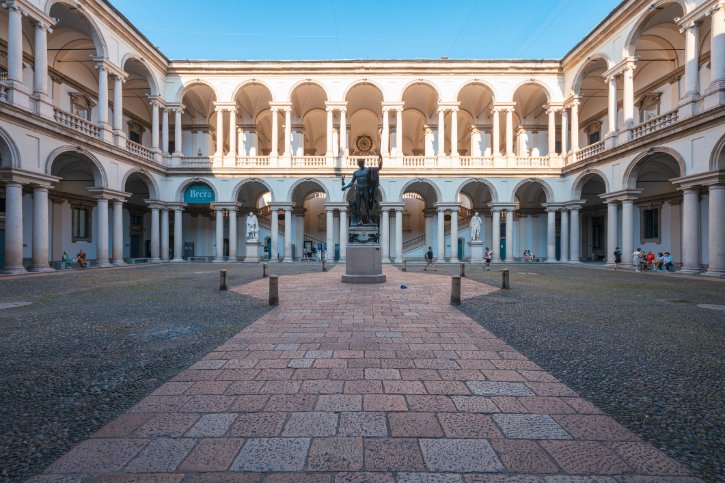
If you see a single museum in Milan, make it this one. Brera is Italy’s leading gallery for Venetian and Lombard painting, set inside a handsome 17th-century palazzo.
It is also growing into the wider Grande Brera system, now linked with the nearby Palazzo Citterio and its modern collections. The secret to enjoying it is restraint, so skip the marathon and choose a few works to really study.
b. The masterpieces to focus on
- Mantegna, Lamentation over the Dead Christ. Notice the bold foreshortening. The body seems to reach toward you, and the grief lands hard.
- Raphael, Marriage of the Virgin. A lesson in perspective that pulls your eye back to a domed temple.
- Caravaggio, Supper at Emmaus. All the storytelling happens through light and shadow.
- Piero della Francesca, Montefeltro Altarpiece. Calm, balanced, and quietly precise.
- Hayez, The Kiss. A romantic favorite that doubles as a symbol of Italian unity.
c. Plan ahead
There is one thing you must sort out before you arrive. Booking a timed slot online in advance is required for everyone, so reserve your entry rather than turning up and hoping.
d. Getting there
- Take Metro M2 to Lanza, about a 5-minute walk.
- Or Metro M3 to Montenapoleone, around 6 minutes.
- Or Metro M1 to Cairoli, about 8 minutes.
- Trams 1 and 2 also stop close to the gallery.
- There is ongoing track work on the M2 line around the Cadorna to Garibaldi stretch, which can affect Lanza, so lean on Montenapoleone if it is active and check the live ATM app before you go.
4. Brera District
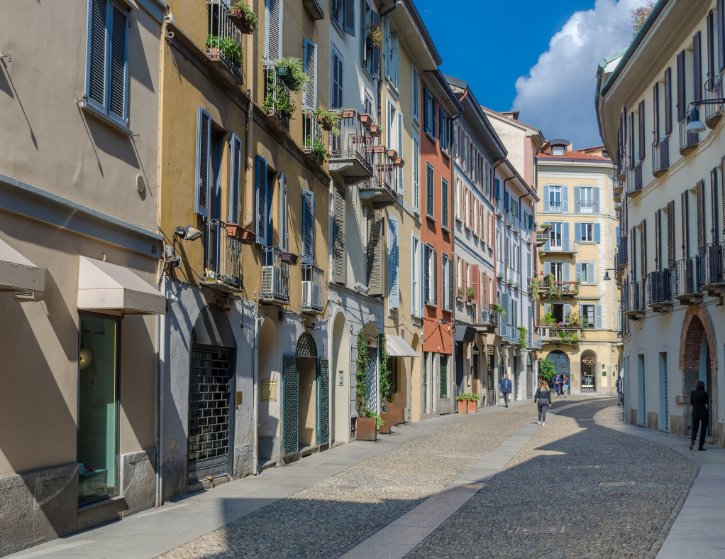
a. The ticket-free heart of Milan
Brera is the part of Milan you enjoy without a ticket. This is the city’s artistic quarter, all narrow cobblestone lanes, 18th-century palazzi, hidden courtyards, small galleries, and antique shops. The pace is unhurried, and that is exactly the point. Let yourself slow down and wander.
b. A wander worth taking
Here is a loose route that shows off the best of it:
- Begin on Via Brera, then drift into Via della Madonnina and Via Fiori Chiari, where cafés, artisan shops, and the occasional street fortune teller set the tone.
- Duck behind the palazzo to the Orto Botanico di Brera, a small shaded botanical garden that feels like a secret.
- Loop back near Via Solferino and the old Church of Santa Maria del Carmine.
c. When to go
Late afternoon is the magic window here. Browse the galleries, then settle in for a proper Milanese aperitivo as the light softens.
One practical tip: wear comfortable shoes, because those pretty cobblestones are uneven and can be tiring.
d. Getting there
- Take Metro M2 to Lanza or Moscova, about a 4 to 6 minute walk into the heart of the district.
- Or Metro M3 to Montenapoleone, around 5 minutes away.
- Trams 1, 2, 12, and 14 stop around the edges of the district.
- Keep the M2 track work around Cadorna to Garibaldi in mind, since it can affect Lanza, and check the live ATM app if you are relying on that line.
5. Quadrilatero della Moda
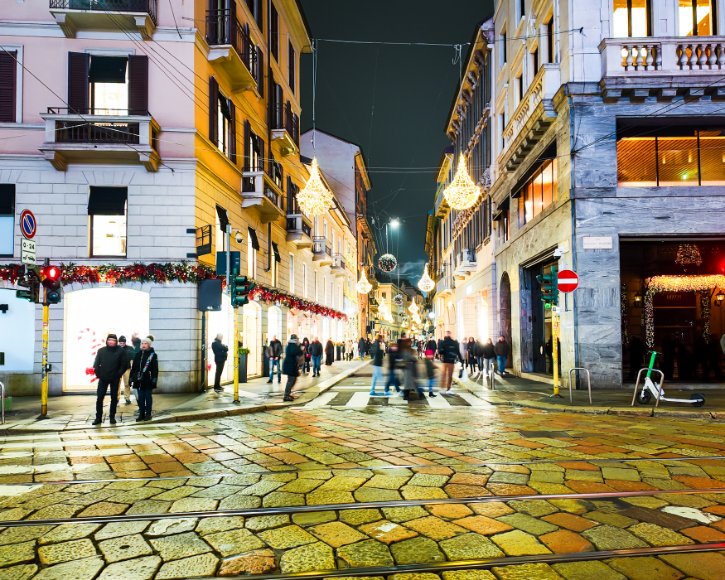
a. Worth it even without shopping
You do not need to spend a euro to enjoy the Fashion Quadrilateral. Yes, the great fashion houses live here, but the real treat is the setting. Elegant palazzi, refined stone facades, and shop windows dressed like small stage sets make this an open-air gallery, whether or not you plan to buy a thing.
b. The loop to follow
Walk it as a circuit so you never double back:
- Start on Via Montenapoleone, the grand main axis.
- Turn onto Via della Spiga, a pedestrian lane with greenery and beautiful displays.
- Continue along Via Sant’Andrea and Via Manzoni.
- Close the loop on Corso Venezia.
c. Beyond the labels
Two lovely stops hide in plain sight. Palazzo Morando holds a museum of costume and fashion, and Palazzo Bagatti Valsecchi is a late 19th-century house museum full of Renaissance-style interiors.
The whole area is a study in contrast, old Milanese heritage rubbing shoulders with sleek modern luxury. If you can, time your visit for the Fashion Weeks in February or September, or the Christmas lighting season, when the windows are at their most theatrical.
d. Getting there
- Take Metro M3 to Montenapoleone, which brings you straight into the district.
- Or Metro M1 or M4 to San Babila, about 3 minutes away.
- Tram 1 stops along Via Manzoni.
6. Teatro alla Scala
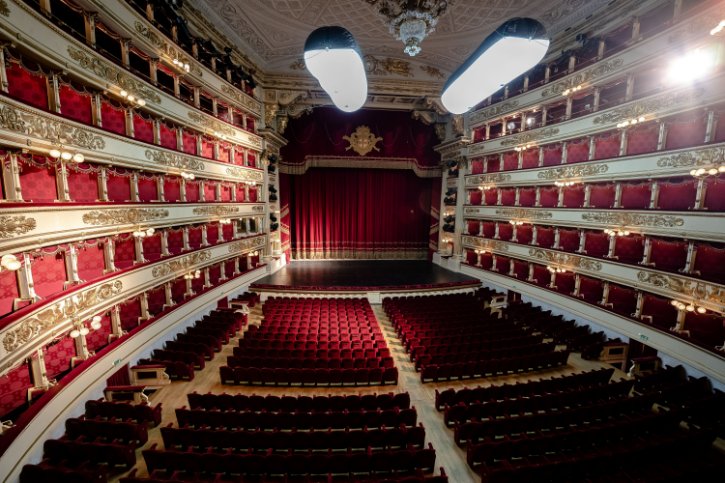
a. Two ways to experience it
La Scala is one of the world’s great opera houses, and there are two very different ways to visit. Knowing the difference saves disappointment.
The first is an evening performance, which means formal tickets, a dress code, and a fixed show time. The second, and the one most travelers choose, is the daytime museum, which is a rich visit on its own.
b. Inside the museum
There is plenty to enjoy without ever seeing a show:
- Portraits of Verdi and Puccini, historic instruments, and rare scores.
- Costumes worn by legends like Maria Callas.
- A step into one of the historic boxes to look out over the gilded, horseshoe-shaped auditorium and its enormous chandelier.
Just know that this box view can be closed off when rehearsals or stage tests are underway, which is simply the reality of a working theater.
c. If you want a performance
If your heart is set on seeing an opera, ballet, or concert, plan far ahead. Popular nights sell out months in advance, so buy only through the official box office and steer clear of unofficial resellers.
d. Getting there
- Take Metro M1 or M3 to Duomo, about a 4-minute walk.
- Or Metro M3 to Montenapoleone, also around 4 minutes.
- Tram 1 stops right outside at the Teatro alla Scala
7. Galleria Vittorio Emanuele II
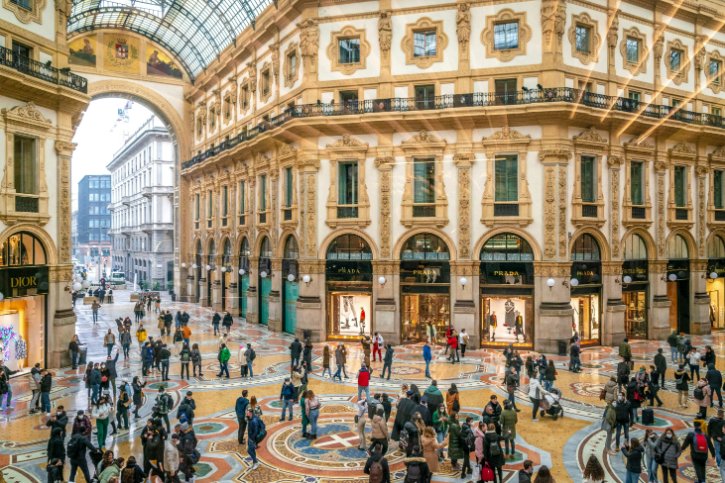
a. Milan’s drawing room
Everyone photographs the Galleria, and for good reason. Beneath its glass-and-iron roof, this is one of Milan’s most beautiful public spaces, and passing through it costs nothing. Locals call it Il Salotto di Milano, Milan’s drawing room, and it links Piazza della Scala directly to the Duomo.
b. What to look for
Take your time and notice the details:
- The Octagon, the great glass dome overhead, decorated with mosaics of the four continents.
- The mosaic floor, carrying the emblems of Italy’s old capitals, including Rome’s she-wolf and Turin’s bull.
- The bull tradition, where visitors place a heel on the mosaic bull and spin three times for good luck. It is a small ritual in a very grand room.
c. When to visit
The Galleria is loveliest early in the morning, when it is quiet and the light is soft. But since it connects the opera house to the cathedral, you will likely pass through more than once, and it is worth it every single time.
d. Getting there
- Take Metro M1 or M3 to Duomo, which connects directly into the arcade through the station’s stairs and lifts.
- Trams 2, 14, and 16 stop at Piazza del Duomo, just outside the southern arch.
8. Duomo di Milano
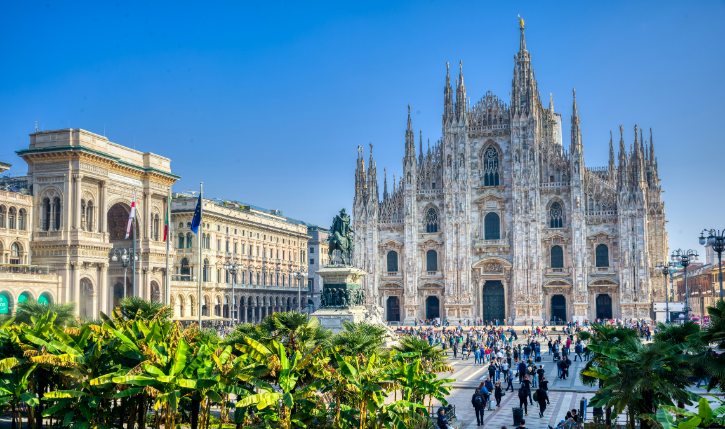
a. Not just a cathedral
The Duomo is not only a church interior. It is a whole monumental complex, one of the largest in the world, built over nearly six centuries in pale pink Candoglia marble. It comes in several parts, and you get to choose how deep you go.
b. What to experience
Each part offers something different:
- The rooftop. For many visitors, this is the moment they remember most. You walk among 135 marble spires and thousands of statues, with the golden Madonnina watching from the highest point and the whole city spread out below. Trust me, this view stays with you.
- The interior. Fifty-two towering columns lead you down the nave, past glowing stained glass, to the unsettling statue of Saint Bartholomew Flayed.
- The archaeological area. Below ground, the remains of a 4th-century baptistery are tied to the baptism of Saint Augustine in 387 AD.
c. What to plan for
A little preparation goes a long way here:
- Book the rooftop ahead, especially on busy weekends, so you are not stuck in line.
- Dress respectfully, with shoulders and knees covered, and expect airport-style bag screening. Large backpacks and glass bottles are not allowed.
- Keep worship and tourism separate. Worshippers enter free through a dedicated door for Mass and prayer, which is not a sightseeing shortcut, and group tourist entry pauses during Sunday morning services.
- Take your time across days if you can. Some tickets stay valid for more than one day, so you can split the cathedral, rooftop, and museum across separate visits rather than rushing.
d. Getting there
- Take Metro M1 or M3 to Duomo, which lets you out right on the square, with elevator access to the terraces on the south side.
- Trams 2, 3, 12, 14, 15, 16, 19, 24, and 27 stop at Piazza del Duomo.
9. Leonardo’s Last Supper Museum
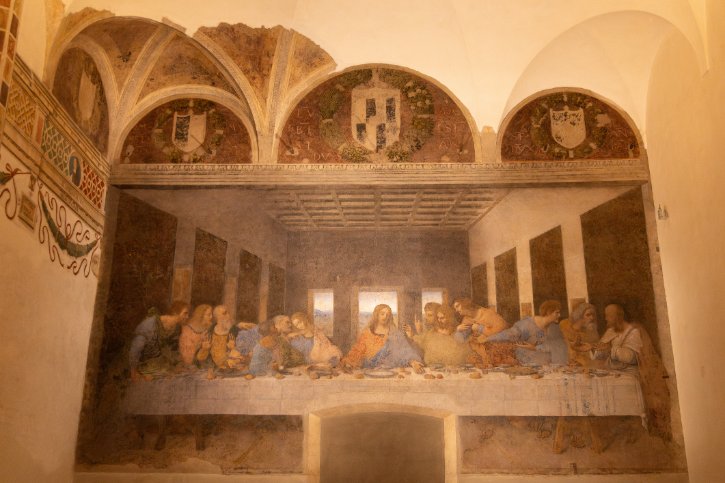
a. Read this carefully
Of everything on this list, this is the one where preparation matters most. Get the planning wrong and you simply will not get in, so read this section slowly.
Leonardo painted The Last Supper on the wall of a former convent refectory between 1495 and 1498, using experimental materials that left it fragile. A climate-controlled system now protects it, admitting only small groups for a strict 15-minute viewing.
b. What you’ll see
Inside the refectory, two works face each other. Leonardo’s mural is the reason everyone comes, but do not forget to turn around. On the opposite wall hangs Donato Montorfano’s dramatic Crucifixion, which many visitors overlook entirely. Give it a moment before you leave.
c. The rules that matter
These rules exist to protect the painting, and they are firm:
- Booking is completely mandatory. There are no walk-up tickets, ever.
- Tickets are released online in quarterly blocks, months ahead, and sell out within minutes. Mark the release date and be ready.
- Arrive at least 30 minutes early with valid photo ID that matches the names on the booking. Late arrivals lose their spot with no refund.
- Leave big bags behind. Large backpacks, suitcases, food, and liquids are not allowed inside, and the small lockers will not cover luggage, so store it elsewhere first.
The viewing itself lasts just 15 minutes, but set aside about an hour overall for check-in, security, and the wait.
d. Getting there
- Take Metro M1 to Conciliazione, about a 5-minute walk.
- Tram 16 stops right outside at the Santa Maria delle Grazie
- Metro M1 or M2 to Cadorna FN is around 8 minutes on foot.
- Metro M2 or M4 to Sant’Ambrogio is about 10 minutes.
10. Basilica di Santa Maria delle Grazie
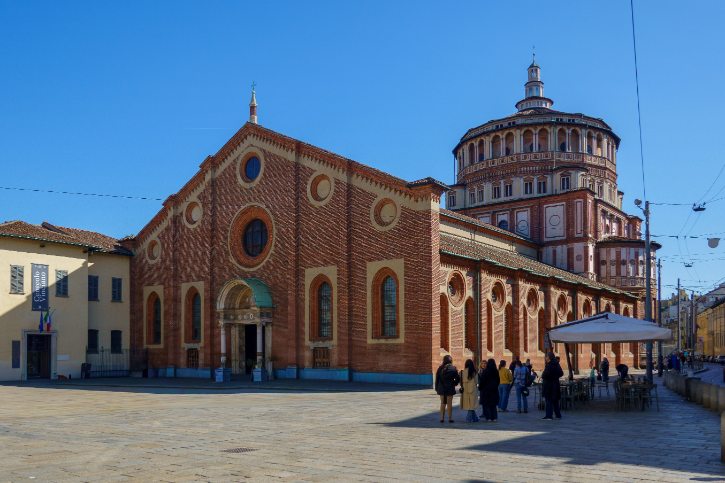
a. More than the Last Supper’s neighbor
It would be a shame to treat this church as just “the building next to the Last Supper”. The mural actually lives in the old refectory beside it, while the basilica itself is a UNESCO World Heritage landmark that stands proudly on its own.
Rebuilt in the late 15th century under Duke Ludovico il Moro as the Sforza family’s mausoleum, it lets you watch architecture change before your eyes, from earlier Lombard Gothic brickwork to the calm proportions of the Renaissance.
b. What to look for
The interior rewards a slow look:
- Bramante’s Tribune, with its soaring circular space and hemispherical dome.
- The Cloister of the Frogs, a peaceful courtyard named for the little bronze frogs around its pool.
- Renaissance frescoes by Gaudenzio Ferrari in the side chapels.
If you have already seen the Last Supper, these details give you a fresh, quieter story to enjoy.
c. How to sequence it
Entry to the basilica is free, with no ticket needed, which is a helpful contrast to the tightly controlled mural next door. Just remember the two are entirely separate, and that the church shuts for a stretch in the middle of the day.
Because the Last Supper has strict timed check-in, book that slot first and fit the church in before or after your appointment.
d. Getting there
- Take Metro M1 to Conciliazione, about 5 minutes away.
- Or Metro M1 or M2 to Cadorna FN, around 8 minutes on foot.
- Tram 16 stops right outside at the Santa Maria delle Grazie stop, serving both the church and the refectory next door.
11. Basilica di Sant’Ambrogio
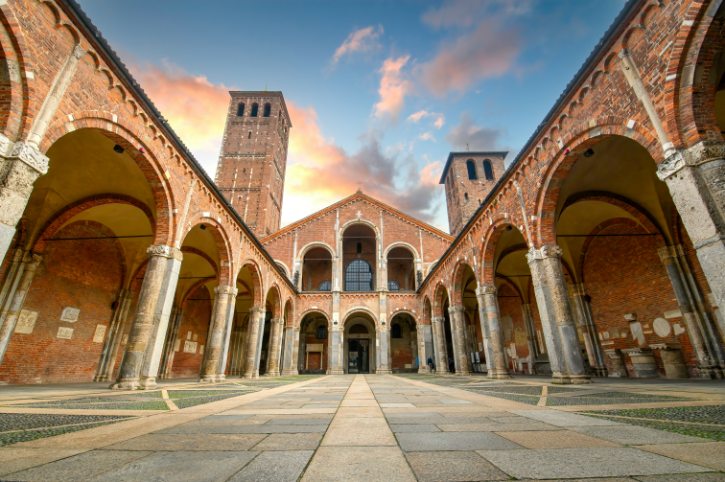
a. Ancient and foundational
If the Duomo feels grand and Santa Maria delle Grazie feels refined, Sant’Ambrogio feels ancient and foundational. This is Milan’s original great church, founded in 379 AD by the city’s patron saint, and later rebuilt as the model for Romanesque basilicas across Northern Italy.
Your visit begins in the Atrio di Ansperto, a wide arcaded courtyard of old brick and carved stone that prepares you before you even step inside.
b. Treasures to seek out
Within, the highlights come thick and fast:
- The Golden Altar of Vuolvinio, a Carolingian masterpiece from around 835 AD, covered in gold, enamel, and gems.
- The crypt beneath the high altar, where the remains of Saint Ambrose rest alongside two early martyrs.
- San Vittore in Ciel d’Oro, a small 4th-century chapel with shimmering gold-leaf mosaics overhead.
c. Free entry and easy access
Entry to the main basilica and crypt is free. If you want to go deeper, the small Museo Sant’Ambrogio, the treasury, is a worthwhile optional extra, though you do not need it to appreciate the church.
There is good news for accessibility, too. The nearby station is a fully step-free interchange with working lifts, and the courtyard and main nave both offer ramped entry.
d. Getting there
- Take Metro M2 or M4 to Sant’Ambrogio, just a 2-minute walk away.
- Buses 50, 58, and 94 also serve the area.
12. Navigli District
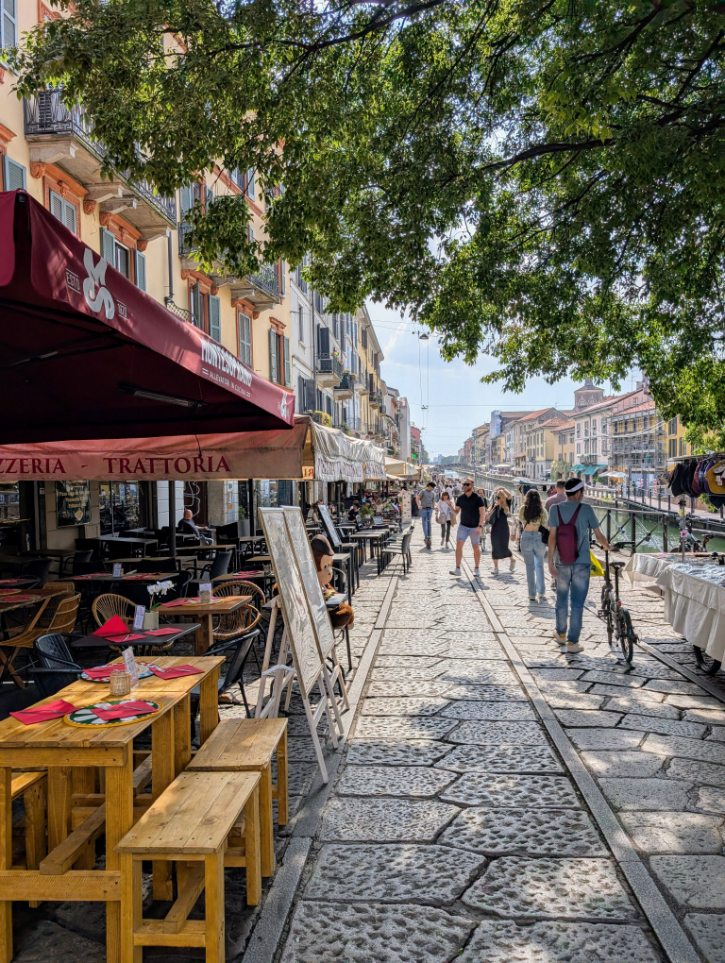
a. Milan’s softer side
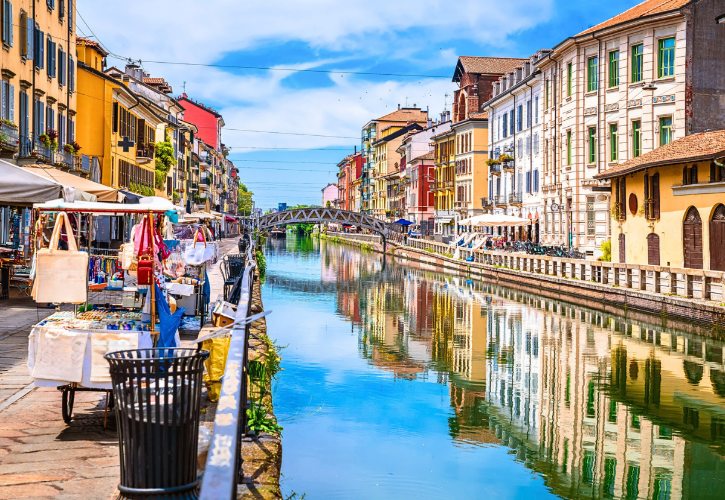
After all that marble and masterwork, Navigli gives you Milan’s softer, more social side. This is the district of canals, aperitivo, dinner, and easy evening walks, and it makes a perfect finish.
There is a lovely thread of history here, too. These canals grew from a medieval network, later expanded with input from Leonardo da Vinci, and they once carried the very Candoglia marble used to build the Duomo into the heart of the city. In a way, the water you are strolling beside helped raise the cathedral you saw earlier.
b. Getting your bearings
The layout is simple once you know the three main pieces:
- The Darsena, the restored old harbor basin, now a broad pedestrian promenade.
- Naviglio Grande, the main canal, lined with old apartment houses, artist studios, and cafés.
- Naviglio Pavese, a quieter canal running south, with casual bars and music venues.
Start at the Darsena, follow the Naviglio Grande, and dip into the side streets and little bridges as you go. Keep an eye out for Vicolo dei Lavandai, a small historic alley with 19th-century stone washing troughs where locals once did their laundry. It is a charming quick stop, so let it surprise you.
c. What to do through the day
The district changes character through the day, and it is not only about nightlife. By daylight the canals and reflections are calm and photogenic. As aperitivo hour arrives in the early evening, the canalside bars fill with people over spritzes and small plates.
If you happen to visit on the last Sunday of the month, a large antique market spreads along the water, and in the warmer months you can take a short boat tour on the Naviglio Grande.
d. Getting there
- Take Metro M2 to Porta Genova FS, about a 4-minute walk to the Naviglio Grande.
- Or Metro M4 to Coni Zugna or De Amicis, around 8 minutes on foot.
- Trams 3, 9, and 10 stop at Piazza 24 Maggio and the Darsena, handy if you are starting there.