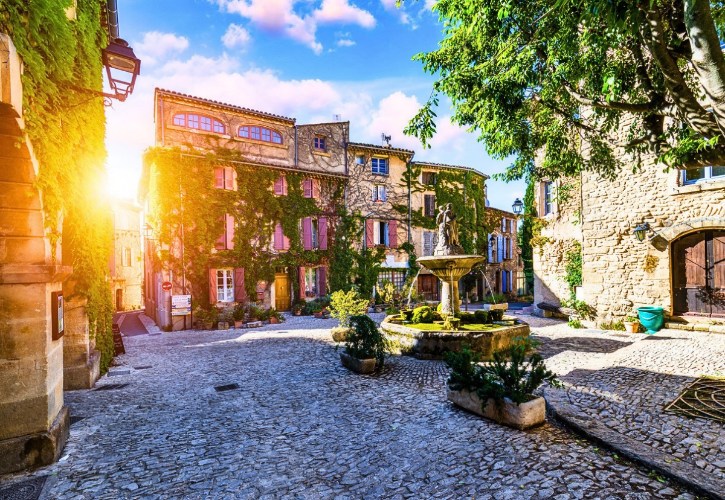
One short drive can take you from a medieval fortress to a Roman arena, then on to a shimmering pink salt lagoon.
Southern France packs centuries of history and wildly different scenery into easy, unhurried roads.
Grand cities, sleepy stone villages, and open countryside sit surprisingly close together, often just 20 to 40 minutes apart. Grab the keys and let the south surprise you. 😊
1. Carcassonne
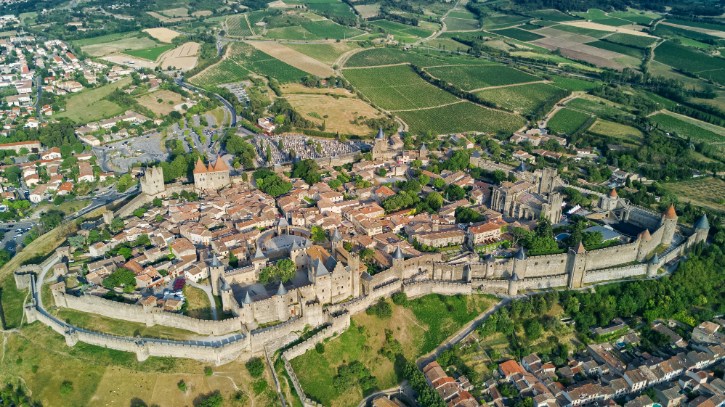
a. The Fairytale Fortress on the Hill
Carcassonne’s walled city sits high above the River Aude and still looks like something from a storybook. It is one of Europe’s largest and best-preserved fortified towns, protected as a UNESCO World Heritage site.
b. What Makes the Citadel So Dramatic
- Two rings of stone walls wrap the city for nearly three kilometers.
- They are dotted with 52 watchtowers.
- The inner wall dates back to Gallo-Roman times and the Visigoth era.
- The outer ring was added later, in the 13th century, under the French crown.
c. The Best Sights Inside the Walls
- Château Comtal, a 12th-century castle with its own moat and round towers.
- Basilique Saint-Nazaire, blending a Romanesque nave with a soaring Gothic choir.
- Some of the finest medieval stained glass in the south.
- A big 19th-century rescue by architect Viollet-le-Duc gave the towers their pointed slate roofs.
d. The Lower Town and the Best Views
Cross the river to the Bastide Saint-Louis, a planned grid town founded in 1247. Its everyday heart is Place Carnot, with a market and a marble fountain.
- The 14th-century Pont Vieux links the lower town to the fortress.
- That old bridge is also the classic spot for photos of the full skyline.
- Morning light turns the towers honey-gold; evening floodlights make them glow.
e. Rolling On to Narbonne
As you drive east, the vineyards flatten out and the Languedoc countryside gives way to the Mediterranean. Your next stop trades medieval walls for Roman ruins.
2. Narbonne
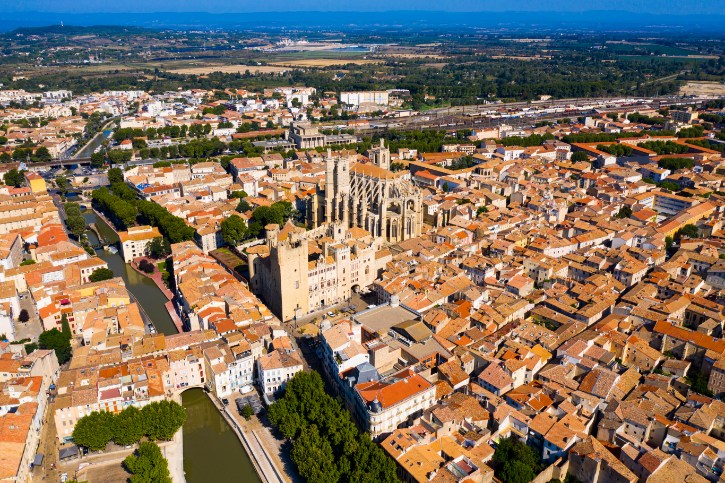
a. A Roman Capital With Deep Roots
Narbonne began in 118 BC as Narbo Martius, Rome’s first colony outside Italy and the capital of the province of Gallia Narbonensis. Traces of that ancient city still hide in the modern streets.
b. Where to Find the Roman Story
- A sunken trench by the town hall shows a real stretch of the Via Domitia, the old Roman road.
- You can still see grooves worn by chariot wheels.
- The Horreum, an underground vaulted warehouse, stored oil, grain, and cargo.
- Narbo Via, a modern museum, is built around a wall of 760 ancient carved stones.
c. The Cathedral That Was Never Finished
- The Cathédrale Saint-Just-et-Saint-Pasteur was started in 1272 with soaring ambitions.
- Finishing it meant knocking down the city’s Roman walls, so the town refused.
- You see only the grand choir and cloisters today.
- The half-built result is striking in its own way.
d. A Palace, a Bridge, and a Market
- The Palais des Archevêques has a tall keep you can climb for rooftop views.
- The Pont des Marchands is one of France’s few inhabited bridges, topped with shops.
- The Canal de la Robine runs through the center, part of the Canal du Midi’s UNESCO listing.
- Les Halles de Narbonne, open since 1901, overflows with seafood, olives, cheeses, and local wines.
e. Heading Toward Béziers
Where Carcassonne is pure medieval drama, Narbonne leans into Roman roots and easy coastal living, close to lagoons and vineyards. Following the canal northeast, the road leads to Béziers.
3. Béziers
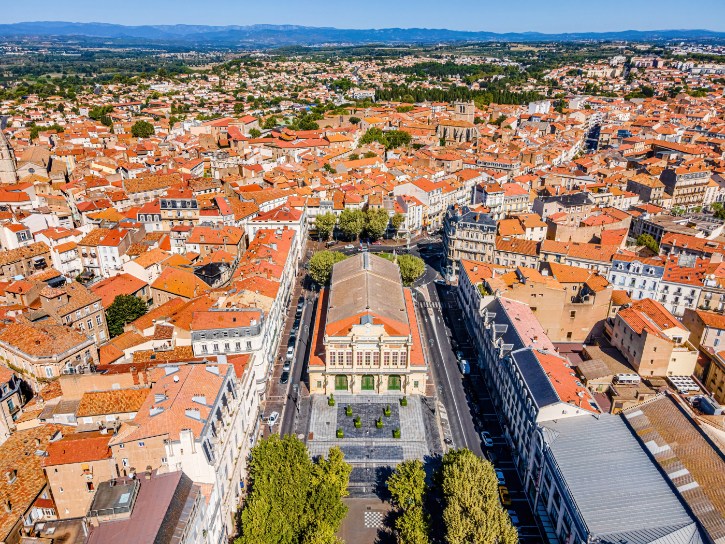
a. A Cathedral Built Like a Fortress
The Cathédrale Saint-Nazaire crowns a rocky height above the River Orb and looks more like a castle than a church. After crusader armies destroyed the original in 1209, the rebuilt version was made to defend as much as to pray, with battlements and a tall watchtower.
b. The View From the Bishops’ Garden
- A Gothic cloister leads to the Jardin des Évêques, with one of the best views in town.
- You look out over the old Pont Vieux and the green banks of the Orb.
- Wine estates roll toward the surrounding hills.
- Inside, 14th-century rose windows light the austere Gothic space.
c. The Man Behind the Canal du Midi
Béziers is the birthplace of Pierre-Paul Riquet, the engineer behind the Canal du Midi.
- The Écluses de Fonseranes are a staircase of locks that lift boats about 21 meters.
- Several chambers still work, and watching boats climb is quietly fascinating.
- The Orb Aqueduct of 1858 carries the canal over the river on a 240-meter bridge.
- From the towpath, boats seem to float against the fortified cathedral.
d. Grand Boulevards and Leafy Gardens
- The Allées Paul Riquet is a broad, plane-tree-lined esplanade full of café terraces.
- A bronze statue of Riquet stands at its midpoint.
- The Plateau des Poètes is a romantic English-style garden from 1867.
- Look for winding paths, marble busts, and the dramatic Fontaine du Titan.
e. On to Montpellier
Compared with Narbonne’s flat calm, Béziers feels vertical and dramatic, its cathedral high above the river. From here the route crosses the plains toward a lively university city.
4. Montpellier
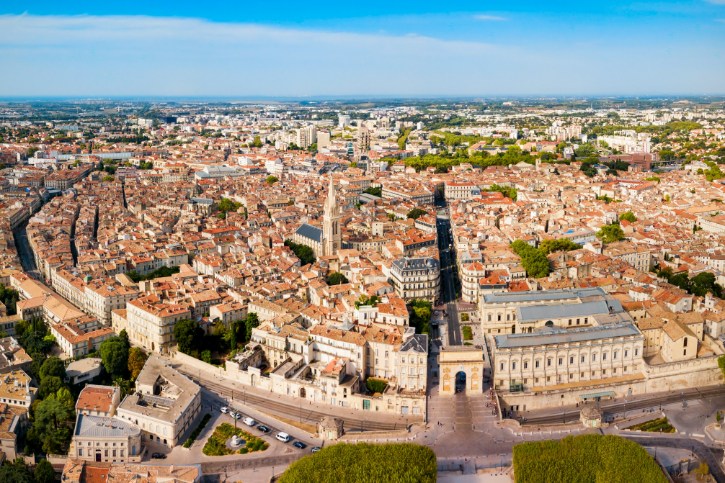
a. A Maze of Medieval Lanes
The Romans did not found Montpellier; it grew in the early Middle Ages. Its old center, the Écusson, is a tangle of polished limestone lanes full of bookshops, boutiques, and student cafés, kept lively by one of France’s oldest universities.
b. The Egg at the Heart of the City
- The Place de la Comédie is a big oval plaza locals call L’Œuf, “The Egg”.
- The 19th-century Opéra Comédie anchors one side.
- The Fontaine des Trois Grâces stands in front of the Opéra.
- Café terraces stretch toward leafy promenades, perfect for people-watching.
c. A Fortress Cathedral and Hidden Mansions
- The Cathédrale Saint-Pierre has a huge porch with two cone-topped pillars, like a fortress gate.
- It sits beside the famous Faculty of Medicine, the oldest still-running medical school in the West.
- The city’s rich nobles built more than 80 grand townhouses called hôtels particuliers.
- Plain outside, their doorways hide courtyards with sweeping stone staircases.
d. Royal Terraces and Grand Gardens
- The Promenade du Peyrou is a royal terrace with wide views.
- Its Arc de Triomphe was built in 1692.
- The Aqueduc Saint-Clément, an 800-meter arcade, feeds its water tower.
- The Jardin des Plantes, from 1593, is France’s oldest botanical garden.
e. Old Meets New, Then On to the Marshes
For contrast, the Antigone district reimagines Greek and Roman style in golden concrete. Leaving the city, the streets open into the flat wetlands of the Petite Camargue, where the walls of Aigues-Mortes rise from the plain.
5. Aigues-Mortes
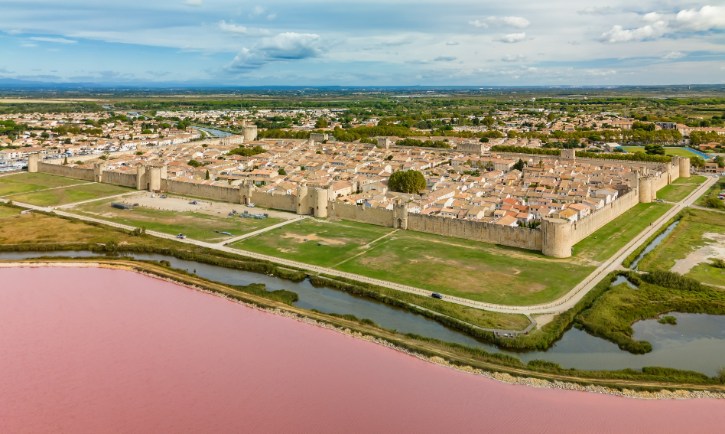
a. A Royal Port Wrapped in Stone
Aigues-Mortes is a near-perfect planned medieval town, rising from the salt marshes. King Louis IX founded it in 1240 to give France its own Mediterranean port, and launched two Crusades from its harbor.
b. Walls, Towers, and a Defiant Message
- An unbroken ring of ramparts runs 1,640 meters, with 20 towers and 10 gates.
- Walk the top for views over rooftops, marshland, and salt pans.
- The Tour de Constance is a massive keep with walls six meters thick.
- Held here 38 years, Marie Durand is linked to the word Register, Occitan for “resist”, carved into the stone.
c. Straight Streets and Quiet Corners
- Inside, streets run in a tidy grid built for trade and defense.
- Life centers on Place Saint-Louis, a plane-shaded square with a royal statue.
- Low stone houses hide quiet courtyards sheltered from the wind.
- Bakeries sell Fougasse d’Aigues-Mortes, an orange-blossom sweet brioche.
d. The Famous Pink Salt Flats
- The Salin d’Aigues-Mortes has been worked since ancient times.
- In summer and early autumn, the basins can turn pink, magenta, and copper.
- The color comes from tiny salt-loving algae and shifts with the weather.
- From the walls, pale stone drops toward rosy water edged by white salt.
e. Into the Camargue Wilds
The land blends into the wider Camargue of lagoons and reed beds. This is ranching country, where herdsmen raise black bulls and white Camargue horses, and you may spot wild flamingos feeding.
6. Saintes-Maries-de-la-Mer
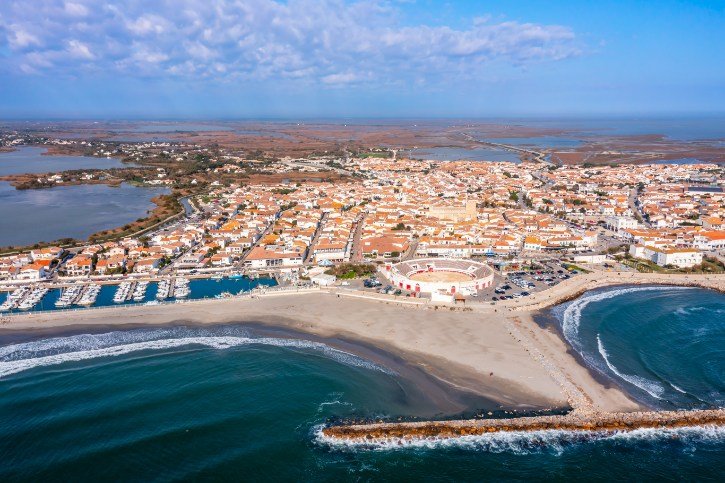
a. Where Legend Washed Ashore
Where the Rhône meets the sea, Saintes-Maries-de-la-Mer is the spiritual heart of the Camargue. Tradition says a boat without sails once drifted ashore carrying several holy women and their servant, Sara, a tale that has shaped the town for centuries.
b. A Church Built for Defense
- The Église des Saintes Maries is a 12th-century church built like a fortress against pirate raids.
- It has heavy battlements and a towering choir.
- A crypt holds the statue of Saint Sara, patron saint of the Romani people.
- Each May, pilgrims carry her statue to the sea, escorted by gardians on horseback.
c. Living Camargue Traditions
- The gardians, or herdsmen, still work the ranches with traditional tridents.
- The arenas host the Course camarguaise, a local bull game.
- Unlike Spanish bullfighting, it does not harm the animal.
- Runners in white dart in to pluck ribbons from the bull’s horns.
d. Beaches, Lagoons, and Wild Birds
- The broad Étang de Vaccarès is the core of the Camargue Regional Nature Park.
- It is a vital stop for migrating birds.
- With patience, you may see flamingos, herons, and egrets.
- The horses and bulls here are managed livestock, while the birds are wild.
e. Following the River to Arles
The seafront and sunlit streets give the town a warm feel. Leaving the marshes, the road turns north to Arles, home to one of the finest sets of Roman monuments in France.
7. Arles
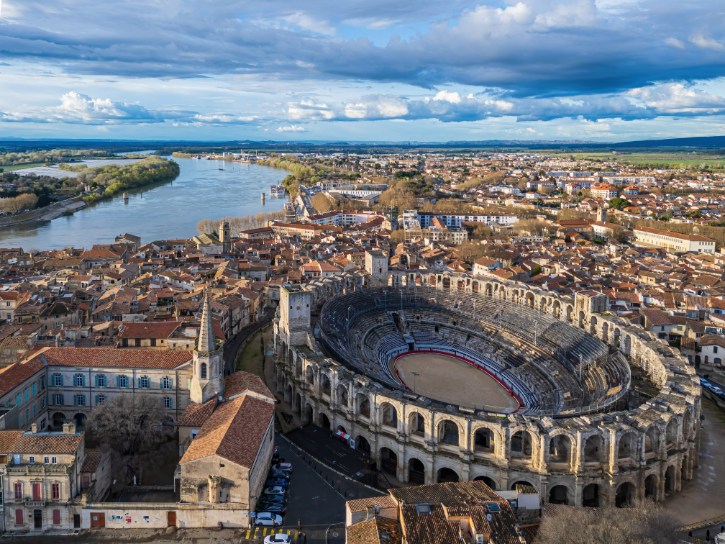
a. Rome’s Legacy in Stone
In Roman times Arles was Arelate, a thriving port rewarded by Julius Caesar in 46 BC. That golden age left a remarkable collection of ancient architecture, now protected by UNESCO.
b. The Great Roman Monuments
- The Arles Amphitheatre, built around 90 AD, seated over 20,000 people.
- Locals later turned it into a walled town, and towers still stand on top.
- The Roman Theatre keeps two marble columns called the “Two Widows”.
- The underground Cryptoporticus once supported the forum above.
c. Where Roman and Medieval Meet
- The Église Saint-Trophime is the highlight of Romanesque art here.
- Its carved portal shows the Last Judgment in vivid detail.
- Its quiet cloister mixes 12th-century capitals with Gothic vaults.
- The Alyscamps is an ancient burial avenue lined with weathered stone tombs.
d. Walking in Van Gogh’s Footsteps
- Van Gogh arrived in 1888 and produced hundreds of paintings in about 15 months.
- Café Terrace at Night was painted at the Place du Forum.
- Starry Night Over the Rhône was painted along the river quays.
- His Yellow House was lost to wartime bombing, but the restored hospital garden survives.
e. Markets, Art, and the Road to the Alpilles
Modern Arles buzzes with café terraces, big markets along Boulevard des Lices, and the summer Rencontres d’Arles photography festival. Leaving town, the road climbs toward olive groves and the quiet lanes of Saint-Rémy.
8. Saint-Rémy-de-Provence
a. An Ancient Town Beneath the Hills
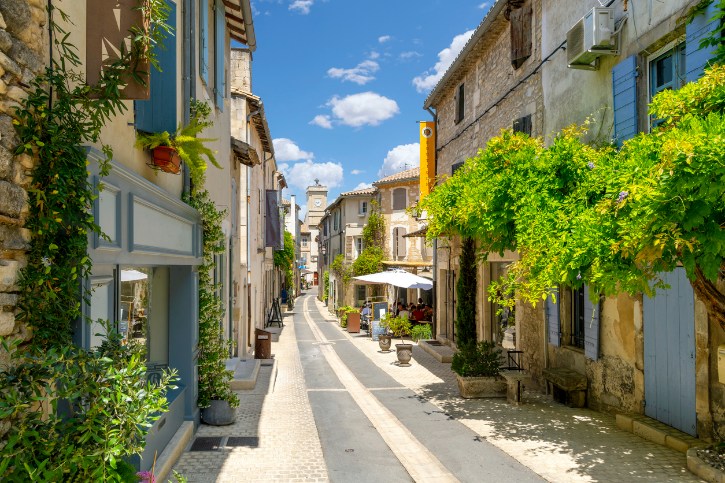
Just south of town lies Glanum, settled around the sixth century BC and later a Roman civic center. Beside it stand Les Antiques, two of the best-preserved Roman monuments in the western empire.
b. What to See at the Ruins
- The archaeological park reveals Roman baths, a forum, and villas with mosaics.
- The Mausoleum of the Julii rises about 18 meters, carved with battle scenes.
- The Triumphal Arch marks Roman victories in Gaul.
- The whole site sits against the dramatic limestone Alpilles.
c. The Asylum That Inspired Masterpieces
- Saint-Paul-de-Mausole is a 12th-century monastery that became a psychiatric hospital.
- Van Gogh stayed here voluntarily from May 1889.
- He painted some of his greatest works here, including The Starry Night and Irises.
- You can walk the peaceful cloister and see a recreation of his small room.
d. A Classic Provençal Village
- The old center grew in a circle, ringed by shaded boulevards.
- Stone lanes lead to quiet squares with mossy fountains.
- The Fontaine Nostradamus marks the birthplace of the famous astrologer, born here in 1503.
- Olive oil shops and café terraces sit under the plane trees.
e. Olive Groves and the Road to Avignon
Behind the village rises the Parc naturel régional des Alpilles, scented with rosemary and thyme, the same landscape that inspired Van Gogh. North across the plains, the countryside gives way to the grandeur of Avignon.
9. Avignon
a. The Greatest Gothic Palace of All
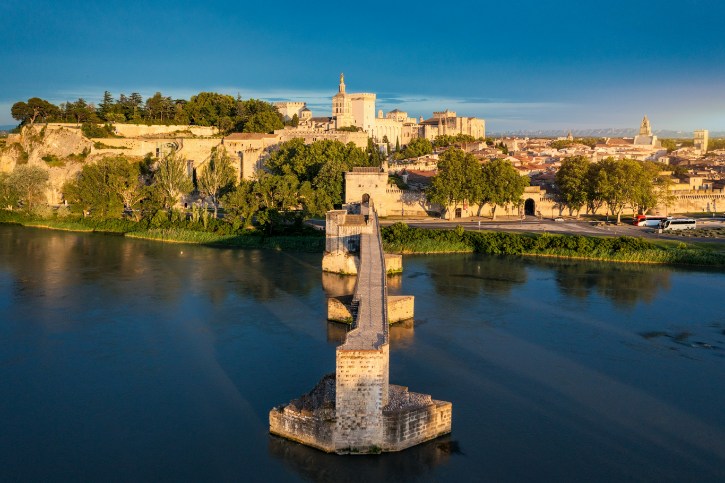
For most of the 14th century, the popes lived in Avignon, not Rome. Seven French popes turned this river port into the capital of Western Christianity, and the result is the Palais des Papes.
b. Inside the Papal Fortress
- It is the largest Gothic palace in the world, covering 15,000 square meters.
- It is a UNESCO site, made of two linked fortresses.
- The plain Palais Vieux was built by Pope Benedict XII.
- The lavish Palais Neuf was added by Pope Clement VI for grand courts.
c. The Bridge From the Famous Song
- The Pont Saint-Bénézet is the bridge from the song Sur le pont d’Avignon.
- Folklore says a shepherd boy built it after hearing divine voices.
- The first bridge rose in the late 1100s; a later stone version spanned 22 arches.
- Floods wore it down, and only four arches remain today.
d. Walls, Terraces, and the Arts
- Avignon sits inside a 4.3-kilometer circuit of 14th-century ramparts.
- The Rocher des Doms is a garden terrace with sweeping views.
- The Place de l’Horloge is shaded by plane trees and lined with grand buildings.
- Every July, the Festival d’Avignon turns the palace courtyard into a world stage for theater.
e. Toward the Water City
Avignon mixes grand monuments with a buzzing arts and food scene. Heading east, the massive stone city fades and gentle green waterways take over.
10. L’Isle-sur-la-Sorgue
a. The Venice of Provence
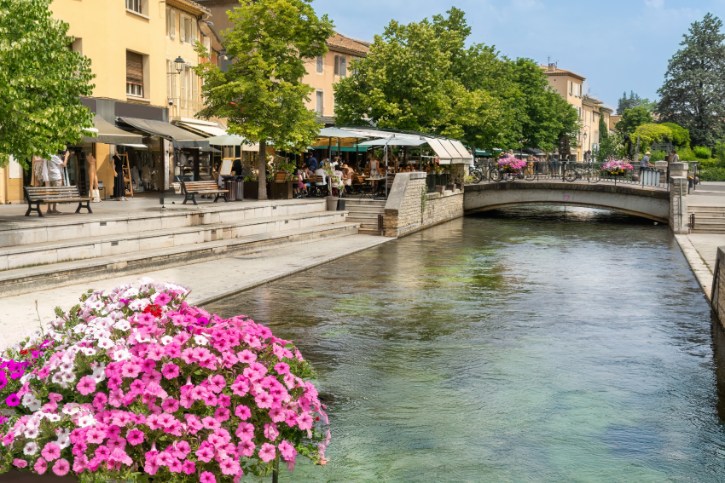
L’Isle-sur-la-Sorgue earns its nickname, the “Venice of Provence”. The clear River Sorgue splits into channels that wrap around and through the town, fed by a dramatic spring just upstream and cool all year.
b. Wheels, Antiques, and Markets
- 15 preserved paddle waterwheels still turn in the current.
- Once, over 60 of them powered mills and a busy textile industry.
- More than 300 permanent antique dealers make this France’s antiques capital outside Paris.
- A big brocante market fills the quays every Sunday, with huge fairs at Easter and mid-August.
c. A Baroque Surprise in the Old Heart
- At the center rises the Collégiale Notre-Dame-des-Anges, rebuilt in the mid-1600s.
- Its plain outer walls hide a dazzling Baroque interior.
- Inside are more than 220 gilded wooden angels.
- A towering carved altarpiece anchors the nave.
d. Life Along the Riverbanks
- Shaded promenades and little bridges line the channels.
- Waterside cafés sit right by the flowing water.
- Clear currents let you watch trout drift over the reeds.
- The sound of running water gives the whole town an easy calm.
e. Climbing Into the Luberon
After Avignon’s monuments, this town feels refreshingly small and gentle. Leaving the river, the road climbs into the Luberon hills toward a peaceful abbey.
11. Abbaye Notre-Dame de Sénanque
a. A Monastery Hidden in a Valley
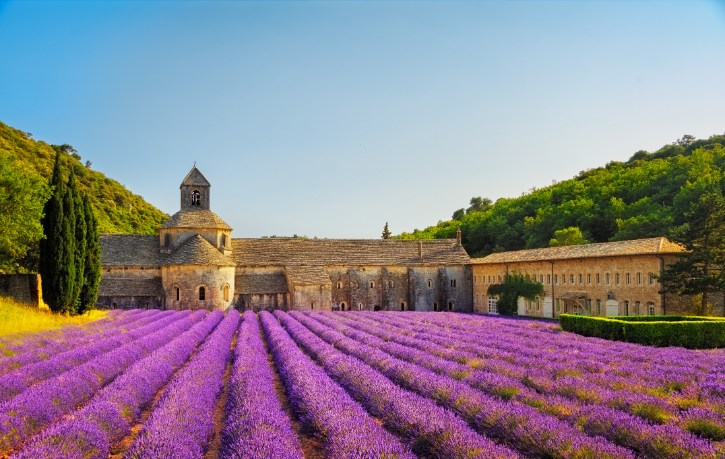
Tucked into a secluded valley, the Abbaye Notre-Dame de Sénanque is a masterpiece of 12th-century Cistercian architecture, founded in 1148. The monks chose this remote spot on purpose, and the setting still feels deeply still.
b. Simplicity Carved in Stone
- The abbey church has a plain barrel-vaulted nave and few windows.
- The Romanesque cloister rests on paired columns with simple leaf carvings.
- The chapter house carries a speaker’s voice evenly without echo.
- The dormitory is a long hall under a high stone vault.
c. The Famous Lavender Fields
- Sénanque is famous for rows of lavender glowing purple before pale stone.
- The bloom is seasonal, roughly late June to late July.
- After harvest, the fields turn green or bare.
- The abbey itself stays lovely to look at all year.
d. A Living, Working Abbey
Sénanque is still home to a community of monks who keep the daily hours of prayer and a strict silence. The hidden valley, oak-covered hills, and pale stone are genuinely memorable. For the best views, admire it from the approach and marked paths, and leave the fields to the monks.
e. Rising Toward Gordes
After the busy villages, the hush here stands out. Climbing out of the ravine, the road reaches the plateau’s edge, where the hilltop village of Gordes comes into view.
12. Gordes
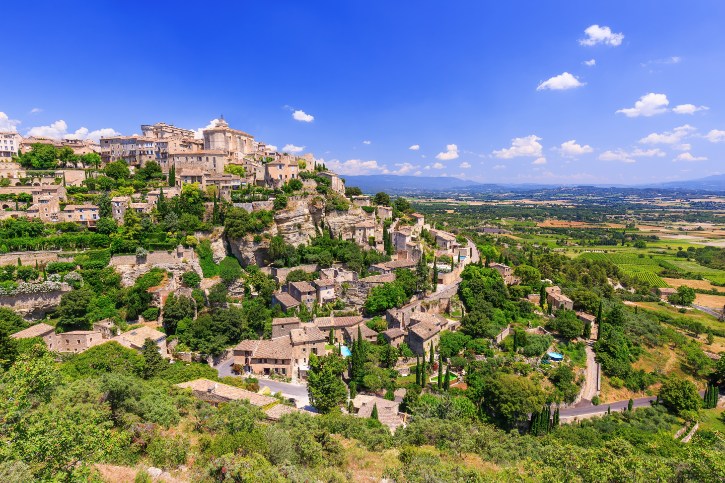
a. A Village That Clings to the Cliff
Gordes is one of France’s most celebrated perched villages, and your first sight of it is unforgettable. Stone houses tumble down a steep cliff like an amphitheater, 340 meters above the valley.
b. How to See It at Its Best
- The classic viewpoint is along the southern approach road.
- From there the whole honey-colored village rises toward the fortress on top.
- Inside, steep cobbled lanes called calades wind upward.
- They are paved with limestone slabs set on edge to shed rainwater.
c. A Castle of War and Elegance
- The Château de Gordes was first built in 1031 and rebuilt in 1525.
- Its northern side keeps a tough medieval look with round towers and gunports.
- Its southern face has elegant Renaissance windows.
- Inside, the grand hall holds a magnificent carved fireplace from 1541.
d. The Mysterious Stone Huts
- The Village des Bories is a cluster of about 30 dry-stone huts built without mortar.
- Legend once linked them to Celts or Romans.
- Research shows they date from the 17th to early 19th centuries.
- They were farm buildings: dwellings, sheepfolds, bread ovens, and wine rooms.
e. On to a Burst of Color
Beyond the famous panorama, Gordes rewards a slow wander through its squares and galleries. From its pale stone streets, the road runs east toward a village that could hardly look more different.
13. Roussillon
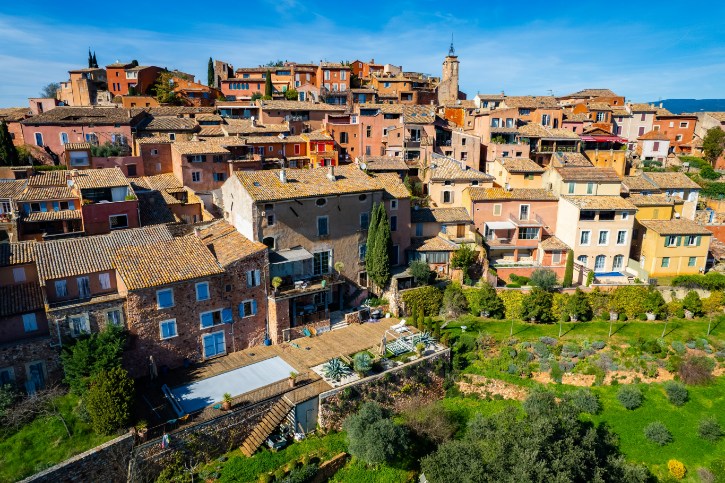
a. The Village Painted in Ochre
If Gordes is pale limestone, Roussillon is a burst of color. The village sits on a ridge of intense orange and red sandstone, set within some of the world’s largest ochre deposits.
b. A Palette Built Into the Walls
- The pigments formed over millions of years as iron in the sand oxidized.
- They create up to 17 shades, from pale yellow to deep red.
- Facades and shutters across the village wear warm ochre tones.
- The streets glow in gold, apricot, and terracotta.
c. The Trail Through Fiery Cliffs
- The Sentier des Ocres winds through former quarries nature has reshaped.
- Expect sculpted cliffs, fluted spires, and “fairy chimneys”.
- The contrast of red, yellow, green, and blue is spectacular for photos.
- The Ôkhra conservatory, in a former factory, shows how pigment was made.
d. Strolling the Village Center
- Warm-toned houses line the lanes up to the Place de la Mairie.
- The Église Saint-Michel sits near the cliff edge with a panoramic terrace.
- From there you look out over the ochre valleys toward Mont Ventoux.
- A 16th-century belfry crowns the old village gate below.
e. Toward a Quieter Perch
Roussillon’s glowing color sets it firmly apart from its neighbors. Heading east through orchards around Apt, the bright cliffs give way to a calmer village on a great rock.
14. Saignon
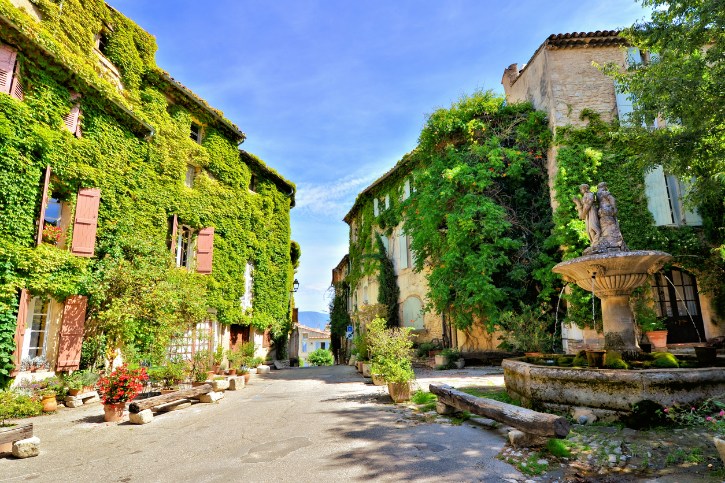
a. A Lookout Above the Valley
Saignon rises above the Apt and Calavon valley, marked by a huge limestone rock at its summit, the Rocher de Bellevue. Used since the Stone Age, it served as a medieval lookout where signal fires warned nearby villages.
b. The View From the Top
- A short climb up carved stone stairs leads to an orientation table.
- From there a full 360-degree view opens up.
- You see the rooftops of Apt and the lavender plateaus.
- On a clear day, Mont Ventoux and the distant Alps appear.
c. Churches, Castles, and Old Stones
- The Église Notre-Dame-de-Pitié is a fine Romanesque church from the 11th and 12th centuries.
- It once welcomed pilgrims heading toward Santiago de Compostela and Rome.
- The rock once held three feudal castles, and traces of them remain.
- A kilometer east lie the ruins of the Abbaye Saint-Eusèbe, a former Benedictine abbey.
d. An Authentic, Lived-In Feel
- Saignon has kept its character, largely free of heavy tourism.
- Its heart is the Place de la Fontaine, with a carved stone fountain of Agriculture and Abundance.
- Silent lanes hide vaulted passageways and old stone washhouses.
- To the south, the Plateau des Claparèdes rolls out in lavender.
e. Dropping Down to the Pond Village
Where Gordes and Roussillon draw crowds, Saignon offers calm. Dropping from its heights, the road curves toward the gentler southern Luberon and the shady basin of Cucuron.
15. Cucuron
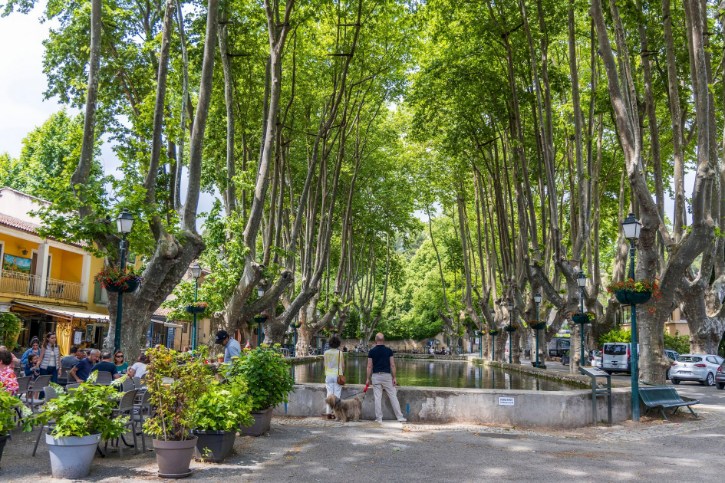
a. The Pond That Became a Living Room
The signature sight in Cucuron is its Bassin de l’Étang, a large rectangular pool at the village entrance. Built in the 14th century as a mill pond, it has anchored village life for centuries.
b. A Shaded, Social Heart
- It once gathered spring water to power mills and feed gardens.
- In 1813, villagers planted plane trees around its stone edge.
- Those trees are now huge, casting cool shade over café tables.
- The basin works like the village’s open-air living room.
c. Climbing the Medieval Core
- Old Cucuron climbs the slope in concentric rings of streets.
- The Donjon Saint-Michel, a 14th-century keep, crowns the top.
- Its terrace gives views over red roofs and the Durance valley.
- The 13th-century Église Notre-Dame-de-Beaulieu mixes Romanesque and Gothic.
d. Everyday Life in the Southern Luberon
- Cucuron shines in its everyday rhythm, gathered around the basin and squares.
- The Tuesday market fills the water’s edge with produce, cheeses, and honey.
- A historic mill still presses local olive oil.
- It feels like a real working village, not a showpiece.
e. Winding On to Lourmarin
From here the road winds west along the foot of the Luberon. The land softens into orchards and vineyards on the way to Lourmarin, a village with Renaissance style and a literary past.
16. Lourmarin
a. The First Renaissance Castle in Provence
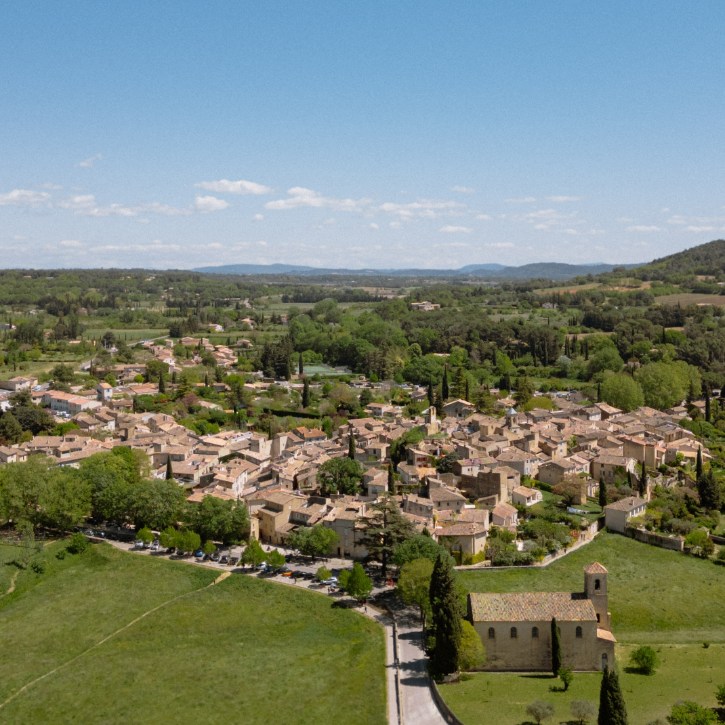
At the mouth of a dramatic canyon sits Lourmarin, one of the region’s prettiest villages. Guarding the pass is the Château de Lourmarin, often called the first Renaissance castle built in Provence.
b. A Castle of Two Ages
- It grew in two stages: a medieval wing from around 1480 and a Renaissance wing from the 1540s.
- Look for a double-tiered loggia and an open spiral staircase with no central pillar.
- By the early 1900s it had fallen into ruin, used as a sheep barn.
- Scholar Robert Laurent-Vibert bought and restored it in 1920.
c. Lanes, Fountains, and a Literary Past
- Honey-colored stone houses line concentric pedestrian lanes.
- Art galleries and small bookshops fill the shaded squares.
- The writer Albert Camus fell for the village and bought a home here in 1958.
- He is buried in the village cemetery, near his friend the novelist Henri Bosco.
d. Market Mornings and Café Culture
- On Friday mornings, Lourmarin hosts one of the Luberon’s most popular markets.
- Stalls brim with textiles, ceramics, dried herbs, and local specialties.
- Café terraces under the plane trees invite a leisurely glass of chilled rosé.
- Fine architecture, art, and easy living together give the village its character.
e. Leaving the Hills Behind
Leaving the village, the route finally drops out of the Luberon. The rural hills open toward the grand boulevards and cultural energy of Aix-en-Provence.
17. Aix-en-Provence
a. A Grand Boulevard of Fountains
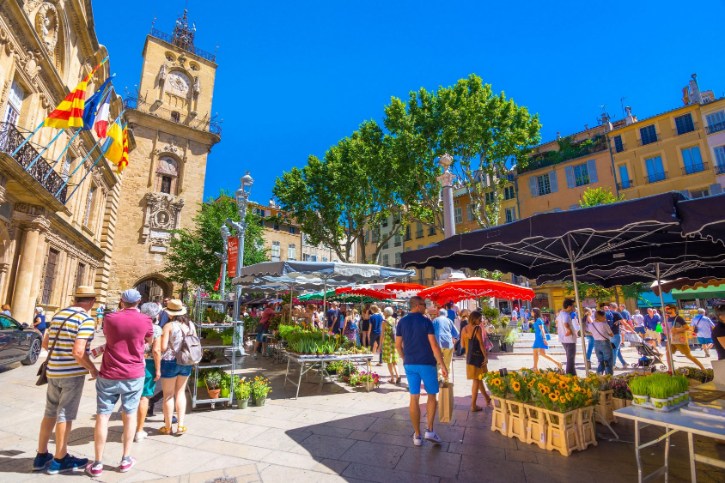
Aix-en-Provence is a graceful finale. Founded by the Romans in 122 BC around thermal springs, it became the proud capital of Provence. Its great avenue is the Cours Mirabeau, a 440-meter boulevard roofed by plane trees.
b. The Fountains That Define the City
- The Fontaine de la Rotonde, at the western end, is topped by three marble statues.
- The Fontaine Moussue, on the Cours, is wrapped in moss and warmed by a thermal spring.
- The Fontaine du Roi René shows the king holding Muscat grapes.
- The Fontaine des Quatre Dauphins, in the Mazarin quarter, circles an obelisk with four dolphins.
c. Elegant Baroque Streets
- South of the Cours lies the Quartier Mazarin, a neat grid of stone mansions.
- The Cathédrale Saint-Sauveur spans more than a thousand years of building.
- It blends a 5th-century baptistery with a Romanesque nave and Gothic doors.
- Watch for ornate façades and carved figures holding up balconies throughout.
d. Markets, Culture, and Cézanne
- Place Richelme holds a daily food market of cheeses, fruit, and honey, with extra stalls at Place des Prêcheurs on market days.
- The Caumont Centre d’Art pairs gilded salons with fine-art exhibitions.
- The Atelier Cézanne is the painter’s studio, kept as he left it in 1906.
- A nearby viewpoint faces Mont Sainte-Victoire, the ridge he painted dozens of times.
e. A Fitting End to the Journey
Don’t leave without a calisson, the city’s diamond-shaped almond sweet. After the small hilltop villages, Aix feels polished and grand, yet still southern. In one elegant city you find the Roman history, fine architecture, rich art, and warm Provençal spirit that run through every stop, a fitting close to a journey across Occitanie and Provence.