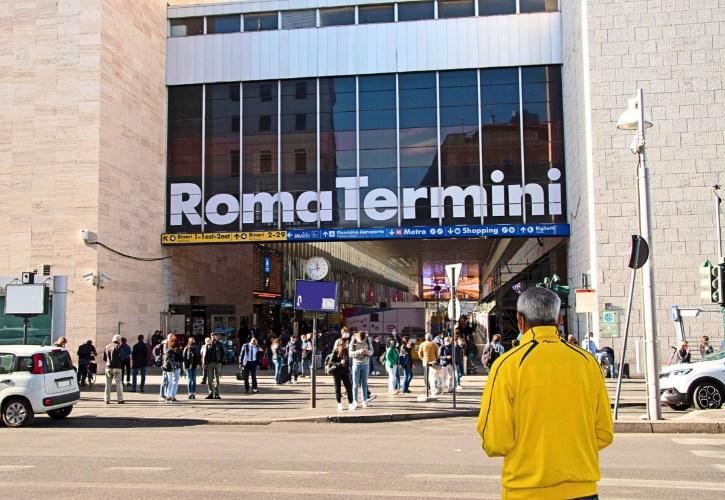
Rome rewards travelers who understand its trains before stepping aboard. The city runs several rail systems at once, each with its own rules, tickets, and stations, and the gaps between them catch visitors off guard every single day.
One small slip, like skipping validation or boarding the wrong service, can mean an on-the-spot fine and a wrecked schedule. Knowing how it all fits together keeps your trips smooth, your wallet safe, and your Italian adventure right on track. 😊
1. Don’t Confuse Rome’s Metro, Regional Trains, and High-Speed Trains
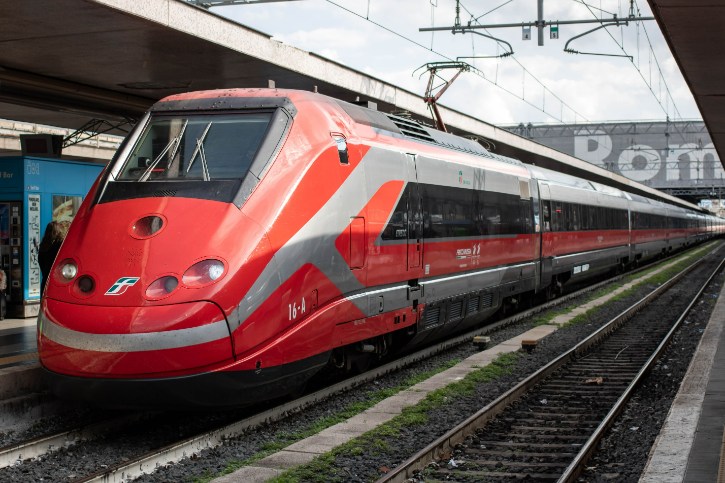
Rome’s railways work on three layers, and different companies run each one. There is the city transit inside Rome, the regional commuter trains, and the long-distance high-speed trains. Many visitors treat these as one big network, and that is where the trouble starts.
a. Separate networks, separate tickets
- ATAC runs the city transit: Metro Lines A, B/B1, and C, the trams, the city buses, and the small Termini to Centocelle light rail.
- The suburban lines, the Roma to Lido line (now called Metromare) and the Roma to Civita Castellana to Viterbo railway, are handled by Cotral and ASTRAL.
- The regional commuter trains (the FL lines, FL1 through FL8) and the Intercity services are run by Trenitalia.
- The high-speed trains come from two companies, Trenitalia (Frecciarossa, Frecciargento) and Italo.
Here is the part that trips people up. Rome’s city travel passes work under one system called Metrebus Roma, and they only cover travel inside the city boundary (Zone A).
- BIT single ticket: €1.50, valid for 100 minutes
- ROMA 24H: €8.50
- ROMA 48H: €15.00
- ROMA 72H: €22.00
- CIS weekly pass: €29.00
A validated Metrebus ticket lets you ride all ATAC buses, trams, and trolleybuses, take one Metro entry (with line changes at stations like Termini and San Giovanni without exiting the barriers), and use second-class Trenitalia regional trains between city stations. The covered stations include Roma Termini, Tiburtina, Ostiense, Trastevere, San Pietro, and Tuscolana.
b. ATAC vs. Trenitalia and Italo
Think of it this way. ATAC moves you around inside Rome. Trenitalia and Italo move you across Italy.
These tickets do not cross over. A Metrebus ticket or a Roma Pass cannot get you onto an Intercity, a Frecciarossa, or an Italo train, not even for a quick hop between Termini and Tiburtina inside the city. Before you board, check which company is running your train and buy the matching ticket.
c. Urban vs. commuter lines
To tell them apart in real life:
- The Metro (A, B, C) and trams are pure city transit, fully covered by Metrebus.
- The FL regional lines are Trenitalia commuter trains. Metrebus covers them only within the Rome city zone. Go beyond the city limit and you need a proper regional ticket.
- The Roma to Lido (Metromare) and Roma to Viterbo lines sit on the regional side under Cotral.
One more warning worth repeating. Boarding a high-speed, Intercity, or dedicated airport train with only a city ticket counts as traveling with no valid ticket. That brings a fine of €50 to over €100, plus the full fare on top.
2. Check Your Departure Station Carefully Because Rome Has Several Major Railway Stations
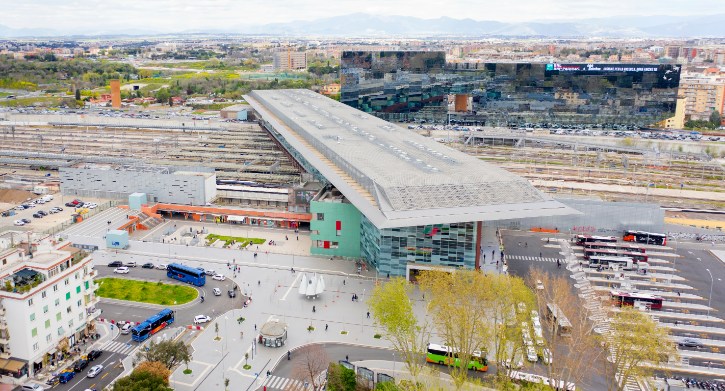
A lot of people assume every big train leaves from Roma Termini. It does not. Rome spreads its rail traffic across several hubs, so always check the exact station printed on your booking.
a. Roma Termini vs. Roma Tiburtina (and others)
- Roma Termini is the main station, built as a dead-end terminal with 32 platforms. Because trains have to pull in and then reverse to leave, routing through Termini adds about 15 to 20 minutes to long trips.
- To skip that delay, many high-speed trains running between the north (Turin, Milan, Florence) and the south (Naples, Salerno) bypass Termini completely and stop only at Roma Tiburtina.
- Roma Tiburtina sits in the northeast and works as a through-station, so trains roll straight through. Both Trenitalia and Italo use it heavily.
- Roma Ostiense and Roma Trastevere handle lots of commuter and airport traffic, but very few high-speed trains.
b. Trains from each station
Here is how it plays out in practice:
- Need a fast train to Naples that skips the Termini reverse? It may only stop at Tiburtina.
- Heading to the airport on the FL1? That line serves Trastevere, Ostiense, Tuscolana, and Tiburtina, not Termini.
- Booked on Italo? It runs big timetables from both Termini and Tiburtina, so the station really depends on your specific train.
The safest move is simple. Read the station name on your ticket, every time, instead of walking to Termini out of habit.
c. Station logistics
Both big stations are large, so give yourself room to move.
- Roma Termini has ticket-controlled barriers before the platforms. Central tracks 5 through 24 sit right by the main hall. But the EST platforms (1 EST and 2 EST) and tracks 25 to 29 are set far back, about 500 metres along platforms 1 and 24, so reaching them means an extra 8 to 12 minute walk, which is rough with heavy bags and a tight clock.
- Roma Tiburtina uses an overhead bridge concourse across the tracks and connects to Metro Line B and the intercity bus terminal.
- Transferring between Termini and Tiburtina runs on Metro Line B. The ride is only 7 to 10 minutes, but plan for a full 30 to 40 minutes once you add walking and platform time.
If you are traveling with luggage, kids, or need assistance, build in that extra time before you arrive.
3. Pay Close Attention to Ticket Types Before Choosing the Cheapest Fare
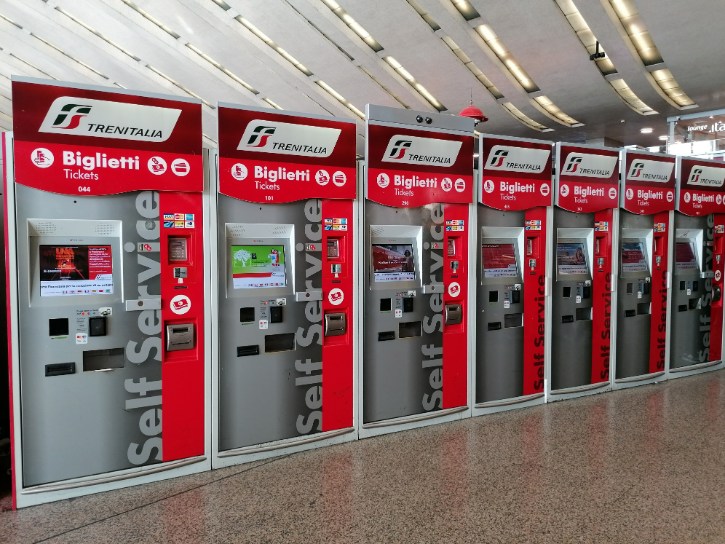
High-speed tickets in Italy work like airline fares. The cheaper the price, the fewer your options later. Grab the lowest fare without reading the rules and a small delay can cost you the whole ticket.
a. Tiered fares have restrictions
Trenitalia offers three fare levels:
- Base: the most flexible. Unlimited free date and time changes before departure, plus one change allowed up to an hour after your train left, done at the station ticket office. Refundable before departure with a 20% deduction.
- Economy: changes allowed before departure if you pay the price difference up to Base. Not refundable by default, and no options once the train leaves.
- Super Economy: the cheapest. No changes by default, and the ticket is void the moment the train departs.
Trenitalia now offers an optional add-on called tiRimborso, which you buy at the same time as your ticket. It makes even Economy and Super Economy tickets refundable, up to midnight two days before departure, with a 10% deduction. It costs about €1 for Economy and €3 for Super Economy, and it is not available on tickets costing €10 or less. If your plans might shift, that small add-on is worth considering.
Quick tip. These fare rules are about flexibility, not comfort. Comfort levels are separate: Trenitalia has Standard, Premium, Business, and Executive, while Italo has Smart, Prima Business, and Club Executive.
b. Non-transferable and time-specific
All high-speed tickets are nominative, meaning they carry the passenger’s full name. Your ID must match the name when the conductor checks. You cannot hand your ticket to a friend, and your booking is tied to a specific train and time unless your fare rules allow a change.
c. Beware special discounts
Discounts sound great until you read the fine print. Youth and senior fares usually require a membership card like CartaFRECCIA (Trenitalia) or Italo Più (Italo). The card itself is free to join, but you have to register first, and many visitors simply arrive without one.
And keep this in mind. Tourist passes like the Roma Pass give you no discount and no validity on high-speed trains. Compare discounted fares carefully before you assume you qualify.
4. Understand the Digital Regional Ticket Rules Before Your Train Departs
Regional ticketing went digital, and the rules changed along the way. The good news is the newest system is easier than it used to be.
a. What is a Digital Regional Ticket (DRT)?
The Digital Regional Ticket (BDR) is bought through the Trenitalia website, the app, or authorized sellers. The best part is that it validates itself automatically at the scheduled departure time of the train you picked, so there is no tap or check-in to forget.
Before you travel, you have real flexibility:
- Change the date or time as many times as you want, free, up to 23:59 the day before travel.
- On travel day, change the departure time freely, as long as you do it before the scheduled departure.
Once that departure time hits, the ticket locks to that exact train. From that moment, no more changes or refunds.
b. Usage on board
When the conductor comes by, you must show the live digital ticket on your phone, with its moving security bar and QR code, along with a government photo ID.
- Screenshots and printouts are not accepted and can lead to a fine.
- Keep your phone charged and your data working before you board.
- If your train runs late, a validated BDR stays valid so you can finish your trip on that delayed train.
c. Don’t abuse the flexibility
The flexibility only exists before departure. Once the clock passes your train’s departure time and the ticket activates, it is fixed. If your plans change, adjust the ticket early, well before departure, rather than hoping to shuffle it afterward.
One more note. The BDR is not the same as the Electronic Regional Ticket (BER), which covers things like group bookings and bicycle supplements. The BER stays open for 4 hours, letting you take another regional train on the same route, while the BDR locks to one train only.
5. Don’t Forget to Validate Paper Regional Train Tickets Before Boarding
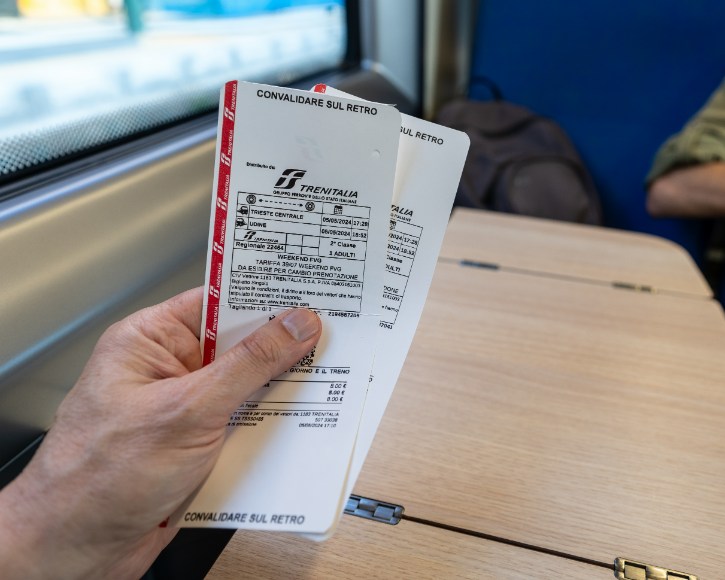
If you buy a paper regional ticket, you have a job to do before you step on the train. This one catches tourists all the time.
a. Stamp before you ride
Paper regional tickets from ticket windows, machines, newsstands, and tabacchi shops carry no fixed time or train number. That is why you must validate them before boarding, by law.
- Look for the small green-and-white or yellow stamping machines near entrances and along platform ramps.
- Slide the ticket in face up until the machine prints the date, time, and station.
- Skip this step and you are counted as traveling without a valid ticket, with fines of €50 to over €100 plus the fare.
b. 4-hour rule
In the Lazio region around Rome, a stamped paper regional ticket is valid for 4 hours.
- Start and finish your trip within that window.
- If you are already moving and the 4 hours run out mid-journey, you can still reach your destination without penalty, as long as you make no stopovers.
- Short break-of-journey stops are allowed at stations along your direct route, as long as the whole trip wraps up inside the 4 hours.
c. If machines fail
Sometimes the machines are broken, especially at smaller stops on the FL3 or FL5 lines. Here is what to do:
- Do not sit down and wait to be found.
- Board through the front doors of the first carriage and go straight to the conductor before departure or right as the train leaves. Report the broken machine and ask for a manual validation.
- Where local rules allow, you can also write the date, departure time, and boarding station by hand in permanent ink on the ticket before you board.
Keep in mind, a free pass for onboard validation is not guaranteed in every case, so always try to validate properly first.
6. Arrive Early Enough to Find the Correct Platform at Roma Termini or Roma Tiburtina
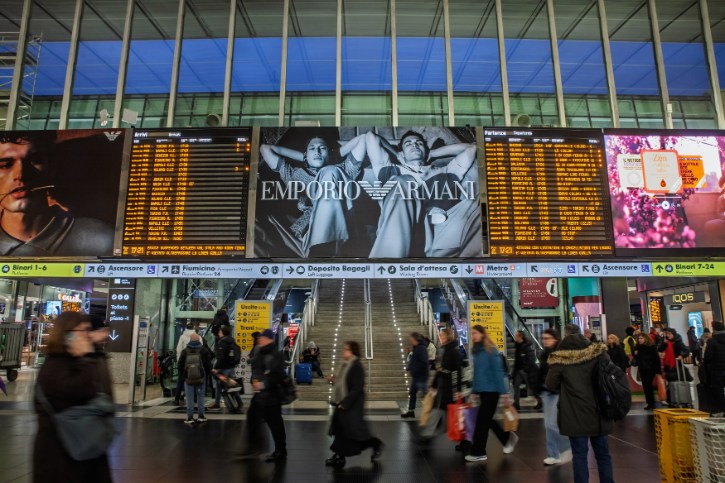
Reaching the station is not the same as reaching your platform. At these big hubs, that difference can cost you your train.
a. Big stations, busy schedules
The departure boards list trains by type (Frecciarossa, Italo, Intercity, Regionale), time, and a four-digit train number.
- The board shows the final destination, not the stops in between. A train passing through Florence, Bologna, and Milan might simply read Torino Porta Nuova.
- So match your train number, not just your destination city.
- Platform numbers appear only about 10 to 15 minutes before departure, managed by RFI to keep crowds safe. Once your platform shows, move.
b. Security gates at Termini
Roma Termini uses security barriers and ticket turnstiles across the main hall. You will need to scan a valid paper or digital QR code, or show it to staff, before reaching the platforms.
During busy mornings, evenings, holidays, and peak tourist season, these gates get crowded and can add 5 to 10 minutes. Do not leave platform access until the last minute.
c. Know the Metro connection
Both stations link to the Metro:
- Termini connects to Metro Lines A and B.
- Tiburtina connects to Metro Line B.
- Moving between the two takes 7 to 10 minutes on the train, but give yourself 30 to 40 minutes in total once you add walking and platform time, especially if your next ride is a high-speed train.
d. Night and peak hours
Early departures, late-night trains, holidays, and strikes can all change how the station runs, with some desks and services operating on reduced hours. Check live updates through official tools like ViaggiaTreno (Trenitalia) or Italo in Viaggio (Italo) for delays, platform changes, and strike news. A quick check beats a nasty surprise.
7. Don’t Confuse the Leonardo Express With the FL1 Train to Fiumicino Airport
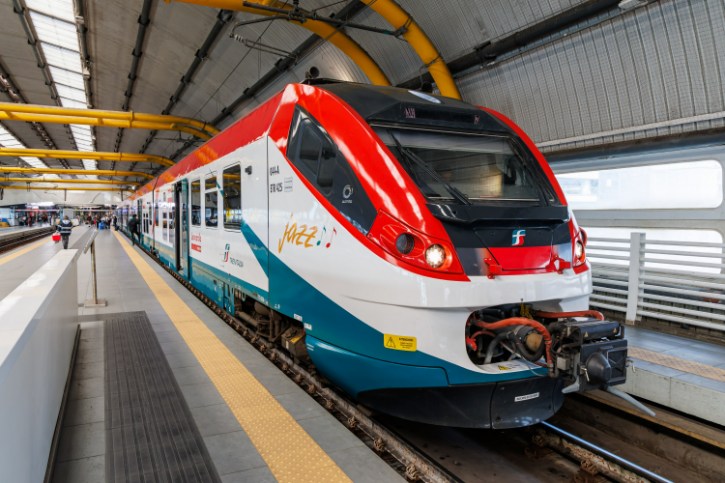
Two Trenitalia trains run between central Rome and Fiumicino Airport (FCO), and they go to very different places. Pick the wrong one and you could miss a flight or end up across the city.
a. Leonardo Express (Termini to FCO)
- Non-stop between Roma Termini and Fiumicino, covering 31 km in 32 minutes.
- Runs every 15 minutes at peak times, every 30 minutes off-peak, from platforms 23/24 at Termini.
- One-way fare is €14.00.
- Children under 4 ride free, and one child aged 4 to 12 rides free with each paying adult.
- You can tap a contactless card at the Tap & Tap readers at Termini and FCO, with no need to tap out on arrival.
b. FL1 (Regional to the airport)
- A commuter line that does not stop at Termini.
- It calls at Roma Trastevere (27 min from the airport), Roma Ostiense (31 min, Metro B at Piramide), Roma Tuscolana (41 min, Metro A at Ponte Lungo), and Roma Tiburtina (48 min, Metro B and high-speed links).
- One-way fare between the airport and any Rome city station is €8.00.
- Runs every 15 minutes on working days, every 30 minutes on Sundays and holidays.
c. Planning tip
Choose based on where you are staying:
- Staying near Termini, Repubblica, or Esquilino, or catching a Frecce from Termini? Take the Leonardo Express.
- Staying in Trastevere, Testaccio, or Aventino, or connecting at Tiburtina? Take the FL1.
These tickets do not swap. An €8 FL1 ticket on the Leonardo Express means a fine plus the fare difference, and a €14 Leonardo ticket is useless on the FL1. Check your Rome destination before you buy, and find the airport’s train station before you rush off.
8. Pay Attention to Luggage Rules and Keep Your Belongings Secure
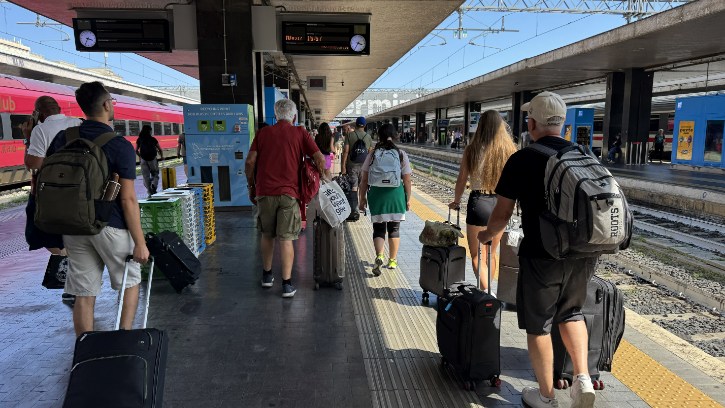
Italian trains are pretty relaxed about bags, but space is tight and theft is real. A little care goes a long way.
a. Luggage is free but limited by space
- On Trenitalia Frecciarossa, Intercity, and regional trains, luggage is free with no fixed bag limit. A proposed two-bag limit on Frecciarossa back in early 2024 was suspended after pushback, so it never took effect.
- You must be able to lift and handle your own bags without holding up boarding.
- Store them in the right spots: overhead shelves, under the seat, floor gaps between back-to-back seats, or the luggage stacks at the carriage ends. Never block aisles, doorways, or exits, or you risk an €8 to €10 fine and being asked to offload at the next stop.
- Italo sets size limits by class. In Smart Class, bags max out at 75 x 53 x 30 cm. Prima Business and Club Executive allow larger trunks that fit the bays.
b. Bulky items
- Trenitalia Frecce and Intercity: folded or bagged bikes and e-scooters ride free (max 80 x 110 x 45 cm). Assembled bikes are allowed on select Intercity trains with a €3.50 ticket.
- Trenitalia Regionale: folded or bagged bikes free (max 80 x 120 x 45 cm). Assembled bikes on designated trains with a €3.50 daily pass.
- Italo: folded bikes and strollers go in vestibule racks, but assembled, non-folding bikes are not allowed at all.
Check your item’s rules before buying your ticket so there are no surprises at the door.
c. Keep valuables safe
Busy stations like Termini and Tiburtina attract pickpockets, especially during the shuffle of boarding.
- Bags left in the shared racks at carriage ends are easy targets at intermediate stops, where someone can grab a bag and hop off before the doors close.
- Keep passports, phones, and valuables in a small bag on your lap or under the seat in front of you.
- A compact cable lock can secure a big suitcase in the rack.
None of this means Rome’s stations are dangerous. Just stay aware, the same as you would in any major city.
d. Never leave bags alone
An unattended bag is treated as a security risk. The railway police (Polfer) may cordon off the area and disrupt service, so keep your luggage with you.
Need to stash your bags for a few hours? Roma Termini has a staffed KiPoint storage depot on the ground floor along Via Giolitti, open daily from 07:00 to 21:00.
9. Be Extra Careful When Booking Journeys That Require Connecting Trains
Connections are where good trips go sideways. A bit of planning protects you if one leg runs late.
a. Allow plenty of transfer time
Booking sites sometimes suggest transfers of 20 to 30 minutes, but real life needs more.
- A transfer between Termini and Tiburtina really needs 45 to 60 minutes once you factor in exiting, buying a Metro ticket, riding, and clearing the gates.
- Even within Termini, moving from a regional train on a satellite track like 29 to a high-speed train on Track 8 needs 15 to 20 minutes.
- Add more time if you have bags, kids, or mobility needs.
b. Single ticket vs. separate tickets
This is the big one, protected by EU Regulation 2021/782.
- A single through-ticket bought in one transaction is protected. If a delay makes you miss your connection, the operator must rebook you free, provide care like meals or a hotel if needed, and handle compensation.
- Separate tickets bought in different transactions are not protected. If your first train is late, the second carrier simply treats you as a no-show, and that ticket is lost unless its fare allows a change.
So before you pay, ask yourself whether your connection is one protected ticket or two separate ones.
c. Switching stations
Sometimes you arrive at one station and leave from another, like landing at Ostiense but departing from Tiburtina.
- Plan the transfer on Metro Line B or a local link, and remember you will likely need a separate city ticket.
- Build in realistic time for the move, and treat the station change as its own small journey when you plan.
d. Strikes and disruptions
Rail strikes (scioperi) happen, but they are announced in advance.
- Italian law guarantees minimum service during weekday peaks, 06:00 to 09:00 and 18:00 to 21:00.
- Both Trenitalia and Italo publish lists of guaranteed long-distance trains that run no matter what, so you can rebook onto a protected departure.
- Watch official sources from Trenitalia, Italo, and RFI, and give yourself backup options when you have a flight or a fixed reservation waiting.
10. Don’t Assume You Can Board the Next Train If You Miss Your Scheduled Departure
Holding a ticket does not mean you can simply hop on the next train. On Italian railways, that counts as boarding without a valid ticket.
a. High-speed tickets
Every seat on a Frecciarossa, Frecciargento, or Italo train is reserved, and crews check live digital passenger lists. Step onto a later train with a missed-departure ticket and you face the full Base fare plus a surcharge starting at €50 per person.
What you can do depends on your fare:
- Trenitalia Base: you have a 1-hour grace window after departure to change your booking at the departure station ticket office. After 60 minutes, the ticket expires.
- Trenitalia Economy and Super Economy: nothing. The ticket is void once the train leaves.
- Italo Flex: the Extra Tempo feature gives you a 1-hour window to rebook the next train by contacting Italo staff at the station or calling Italo Assistenza at 892020.
- Italo Economy: Extra Tempo is available within an hour for a €10 fee plus any fare difference.
- Italo Low Cost: expires the moment the train departs, with no rebooking.
b. Regional tickets
Regional rules split sharply by ticket type:
- A Digital Regional Ticket (BDR) is locked to one train. Miss it due to your own delay and it cannot be reused. You will need to buy a fresh ticket.
- A stamped paper regional ticket is valid on the same route for 4 hours from the stamp. Miss your train and you can simply catch the next regional train on that route, as long as you arrive before the 4 hours are up.
c. No free rebooking
The key is to tell the difference between your own delay and a problem caused by the railway.
- If you were late, chose the wrong station, or booked separate tickets, a missed train usually means forfeiture or extra charges.
- If the railway caused a missed connection on a protected ticket, you are entitled to rebooking and help.
- Either way, speak to Trenitalia or Italo staff before or right after departure rather than guessing.
Above all, never board a train hoping to smooth things over with the conductor after it leaves. In Rome, the trick is simple: pick the right operator, validate when required, check your station and platform early, and give yourself time. Do that, and the trains become one of the easiest, most rewarding ways to see Italy.