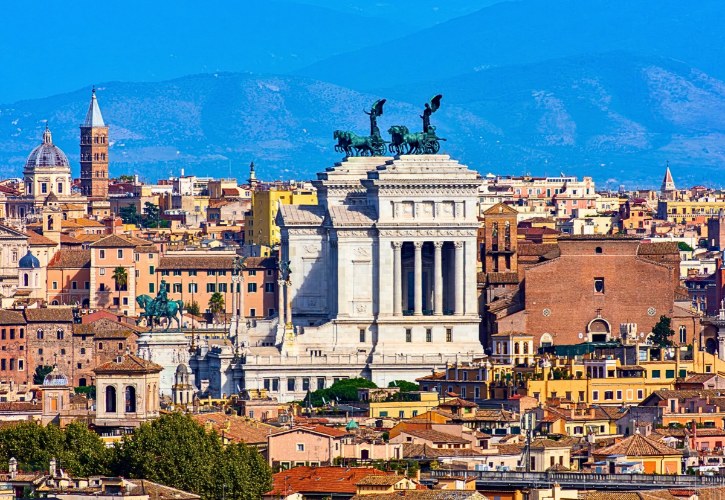
You already know the Colosseum and the Vatican. But Rome keeps a stranger, more playful side just out of sight.
Picture a world record hiding in a quiet park, ancient water rushing beneath a famous square, and a baroque trick that fools your eyes completely. These are the corners most visitors walk straight past.
Here are seven of the best. 😊
1. Cinema dei Piccoli (Villa Borghese’s Tiny Movie Theatre)
a. The Smallest Cinema on Earth
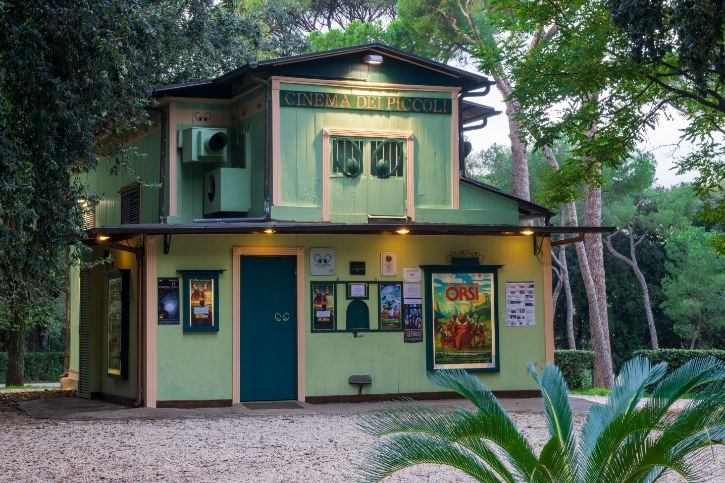
Inside the green of the Villa Borghese park, you will find a tiny wooden chalet with a surprising claim to fame.
- It is officially the smallest building in the world used for cinema shows, a title awarded by Guinness World Records in 2005.
- It covers just 71.52 square meters and seats exactly 63 people.
- It first opened in 1934, and a full restoration in 1991 brought it up to date.
- You get an alpine-style cabin among Mediterranean pines, not a giant multiplex.
b. A Theatre Built Just for Children
A man named Alfredo Annibali built it for kids, and that spirit still runs through the place.
- Early shows were comedy shorts and the first animated cartoons, on a matinee schedule.
- It survived a wartime closure and a rough patch in the 1970s before a full revival.
- Today you get afternoon animation for families and subtitled art-house films at night.
c. What You’ll Find Inside
The room is small, and that is the whole charm. You share the moment with everyone else instead of scattering across a huge dark hall.
- A historic foyer and a vintage box-office window where tickets are still sold outside.
- Quiet modern comforts, including air conditioning, surround sound, and a 4K screen.
- A warm, mid-century feel that big cinemas simply cannot copy.
d. The Mickey Mouse Secret on the Roof
Here is the part most people never hear about this little place.
- Annibali first named it “Casa di Topolino”, or Mickey Mouse House, with a wooden Mickey on the roof.
- Disney noticed, opened a copyright dispute, and forced him to drop the name.
- The wooden Mickey stayed up on the roof until the early 1970s.
- Locals kept calling it “Cinema Topolino” for decades afterward.
2. Palazzo del Freddo di Giovanni Fassi (Historic Gelato Palace)
a. A Gelato Shop the Size of a Palace
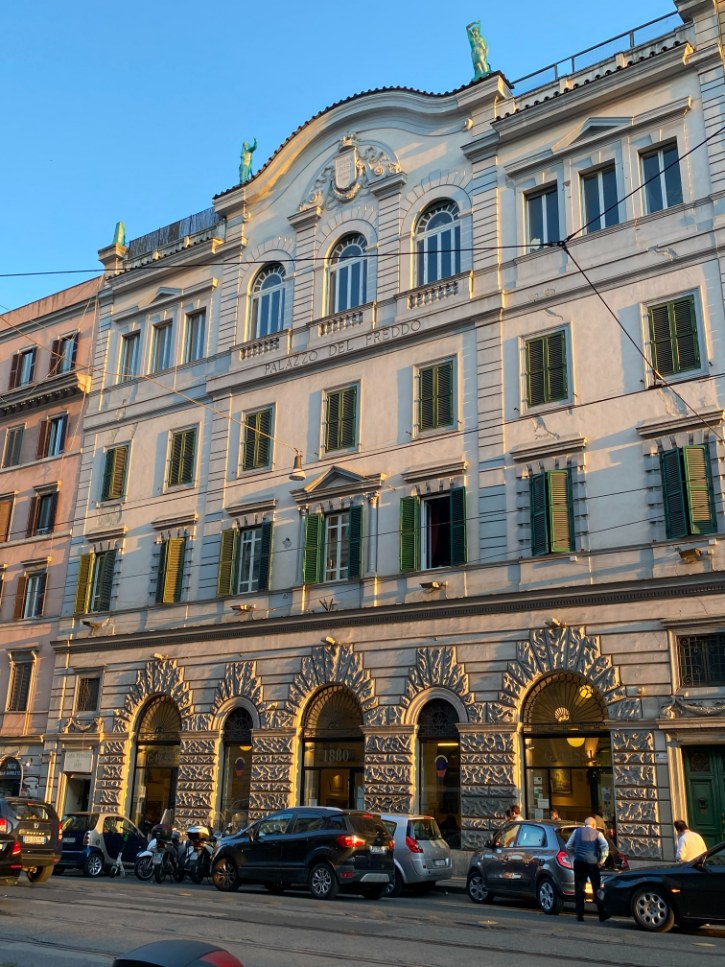
Over in the Esquilino district, you will find a gelateria that behaves more like a grand hall.
- It is widely considered Rome’s oldest gelateria, with family roots reaching back to 1880.
- Giovanni Fassi opened the grand Palazzo del Freddo in 1928.
- The building spans roughly 700 square meters, with 200 set aside for an open gelato laboratory.
- Inside you get marble tables and historic machinery, more culinary temple than ice cream counter.
b. The Mustache That Changed His Path
Giovanni learned his craft at the very top, and one stubborn choice shaped his whole career.
- He worked as gelato maker for the Italian Royal House, earning the title Gelatiere Sovrano.
- A palace rule then banned kitchen staff from keeping mustaches.
- Proud of his, he resigned rather than shave and took his talents back to the public.
c. The Inventions That Made Fassi Famous
The workshop produced real breakthroughs, and you can still taste a few of them:
- The Telegelato Giuseppina, packed in dry ice so it stayed solid for up to 48 hours and could travel across Italy.
- The Ninetto, widely called the world’s first gelato on a wooden stick.
- The Caterinetta, a semifreddo inspired by the seamstresses of Turin.
- The Sanpietrino, shaped to look like the square cobblestones of Rome’s old streets.
d. The Secret Link to a Global Brand
During the war, the American Red Cross used the building to make ice cream for troops, then left its machinery behind.
- Giovanni sold that industrial equipment rather than go mass-market himself.
- The company that grew from it became Algida, known worldwide today.
- By the family’s own account, Algida’s early hits borrowed from Fassi recipes, with the Cremino echoing the Ninetto and the Viennetta drawing on the Caterinetta.
3. Centrale Montemartini (Power Plant Turned Antiquities Museum)
a. Where Marble Gods Meet Giant Engines
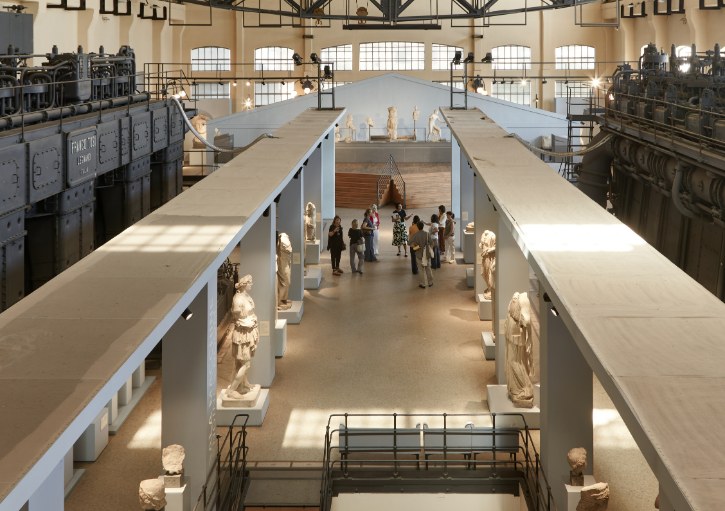
In the Ostiense district, you will find one of the most surprising museums in Europe. Centrale Montemartini sets pure white Roman marble against the dark iron of an old power station. The plant opened in 1912 and ran until the mid-1960s, and because the machinery was never removed, ancient statues now stand beside enormous engines.
b. The Masterpieces to Look For
Against those giant engines, some of Rome’s finest ancient art comes alive. Keep an eye out for:
- The Pediment of the Temple of Apollo Sosianus, Greek sculptures from 450 to 425 BC showing a battle between Greeks and Amazons.
- The Statue of Polymnia, a graceful marble figure of the Muse of sacred poetry.
- The Colossal Head of Fortuna, the head and arm that survive from a cult statue that once stood about 8 meters tall.
- The Santa Bibiana Mosaic, a large late-Imperial floor mosaic full of hunting scenes.
c. How a Power Plant Became a Museum
The whole thing began as a happy accident.
- In 1997, the Capitoline Museums needed repairs and had to move hundreds of sculptures.
- They staged them in the old plant for a show called “The Machines and the Gods”.
- Visitors loved the contrast between soft marble and hard steel so much that the show became permanent.
d. The Pope’s Train in the Boiler Room
A later addition brought a whole new layer to the story. In the former boiler room, you can now see the Train of Pope Pius IX:
- Built in 1858, it is among the oldest surviving railway carriages in Italy.
- It features a loggia for blessings, a throne room, and a chapel with a silver altar.
- Seeing it beside ancient gods and old turbines makes for a strange, layered tour of power and faith.
4. Janiculum Cannon (The Noon-Time Gun Salute)
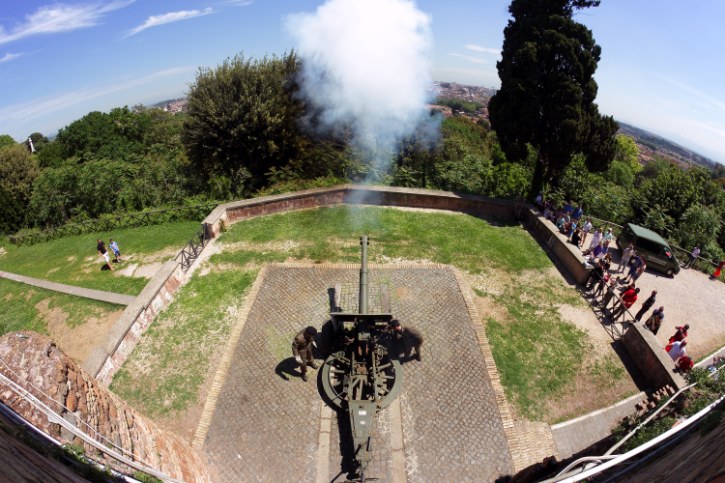
a. The Boom That Marks Your Noon
High above Trastevere, the Janiculum Hill hides a loud surprise among its wide views.
- Every day at exactly noon, soldiers fire a historic cannon over the old center.
- The shot is a blank, a pure blast with no projectile.
- Watching a cannon work as a public clock is something you have to see to believe.
b. Why a Pope Started Firing a Cannon
The tradition goes back to a papal decree from 1847, and the reason is wonderfully practical:
- Before it, Rome’s churches rang their midday bells on their own loose timing.
- The result was several minutes of overlapping, messy clanging across the city.
- One cannon fired a single clear signal, and every bell rang together the moment it heard the blast.
c. A Cannon That Keeps Moving
Over the years, the cannon has changed homes and gone quiet more than once:
- It first fired from Castel Sant’Angelo, then moved briefly to Monte Mario.
- It settled on the Janiculum Hill in 1904.
- The blast fell silent during the war, then returned on the anniversary of Rome’s founding.
- The gun you hear today is a 20th-century army howitzer, in service since 1991, not the historic piece that breached the walls at Porta Pia in 1870.
d. The Falling Ball Trick
Before radios, timing the blast took real ingenuity:
- The signal came from the roof of the Church of Sant’Ignazio in the city center.
- At exactly noon, a large basket holding a black ball was dropped from a tall pole.
- An officer at the cannon watched through binoculars and fired the instant the ball dropped.
5. Vicus Caprarius, The City of Water (Underground Aqueduct Ruins)
a. An Ancient City Under the Crowds
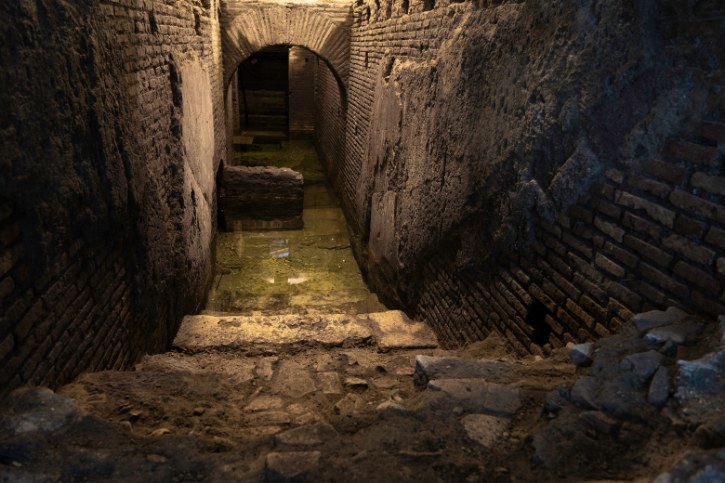
Crowds pack the Trevi Fountain at every hour, and almost none of them know that a vast ancient site sits about nine meters below the pavement nearby. Known as Vicus Caprarius, or the “City of Water”, it was found by accident during building work and opened to the public after a careful excavation. Exploring so much ancient Rome beneath its most crowded square is hard to beat.
b. Roman Homes and a Working Aqueduct
Going down into the site shows just how many layers Rome is built on:
- You walk through old apartment blocks, later remodeled into a rich home with colored marble and mosaics.
- At its heart sits a huge ancient water tank, or castellum aquae, fed by the Aqua Virgo aqueduct of 19 BC.
- The Aqua Virgo is the only ancient Roman aqueduct still working today, and it still feeds the Trevi above.
- Because the old channels run through the ruins, clear water still flows and pools among the stone.
c. Treasures Pulled From the Mud
The on-site collection displays thousands of objects recovered from the mud that buried the complex. Two finds stand out:
- A fine marble head believed to show Alexander Helios, the twin son of Mark Antony and Cleopatra.
- A hidden hoard of more than 800 bronze coins, likely buried in a hurry by a resident fleeing a sack of Rome.
d. The Trevi Fountain Seen From Below
The link between this site and the fountain above is the real fascination:
- The same Aqua Virgo that runs through these ruins is the water system tied to the Trevi.
- You are standing inside the engineering that makes the famous fountain possible.
- Above, visitors toss coins in the sun. Below, it is cool, quiet, and full of running water.
6. Galleria Spada (Palazzo Spada and Borromini’s Illusion)
a. A Quiet Palace Full of Masterpieces
A short walk from Campo de’ Fiori, Palazzo Spada is a rich Renaissance palace with a facade lined with statues of Roman emperors. Its four-room gallery stays calm and uncrowded, and it rewards a slow look:
- Portraits by Guido Reni and Guercino.
- Early works by Titian.
- Striking canvases by Artemisia Gentileschi.
- A few minor works are linked to Caravaggio, though those attributions are debated rather than settled.
b. The Corridor That Lies to Your Eyes
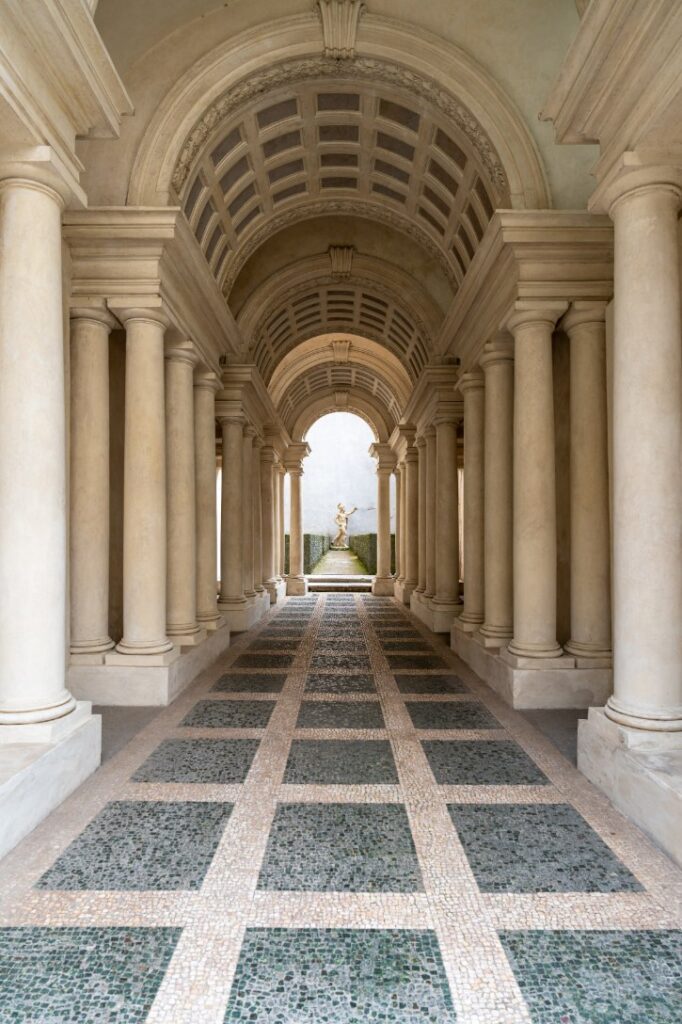
The showstopper waits near the palace garden. It is the Forced Perspective Gallery, built by the baroque architect Francesco Borromini with the help of a skilled mathematician. From the viewing spot, the corridor looks like a grand tunnel roughly 35 to 37 meters deep, ending at a sunlit garden with a life-sized warrior. The reality is almost comical, and knowing the trick only makes it better.
c. How Borromini Fools You
Every part of the corridor is designed to deceive your eye:
- The whole thing is only about 8.82 meters long, not 35.
- The floor slopes sharply upward toward the back.
- The ceiling drops down quickly to match.
- Each pair of columns is shorter, narrower, and closer together than the last.
- The “life-sized” warrior at the end is just 60 centimeters tall.
d. What to Know Before You Look
A couple of quick notes will help you get the most from it:
- You view the corridor from a fixed spot, not by walking through it, and that exact position makes the illusion work.
- Save time for the painting rooms too, since their quiet, ornate interiors are a real part of the visit.
7. Museo e Cripta dei Cappuccini (Capuchin Crypt and Museum)
a. A Church Built Above the Bones
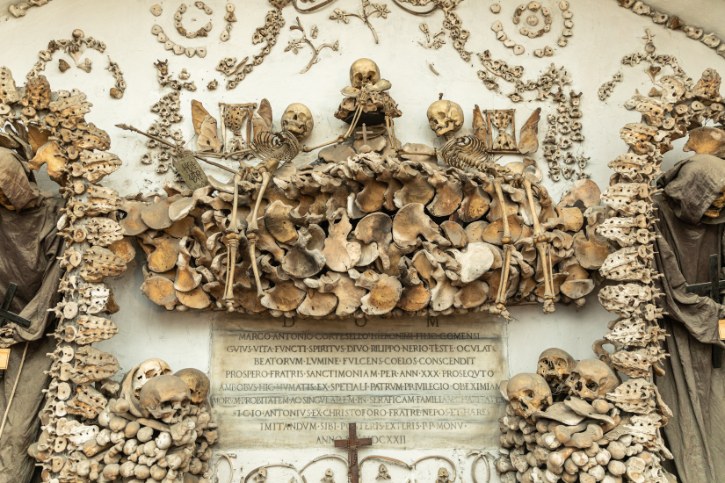
Beneath a plain church on Via Veneto, you will find a place of deep reflection and startling artistry. The complex was built in the late 1620s under Pope Urban VIII, whose brother was a devoted Capuchin. When the friars moved here, they brought 300 cartloads of remains with them, and over the centuries the space gathered the bones of roughly 3,700 people.
b. Six Chapels Made of the Dead
Rather than bury the remains, the monks used the bones themselves to decorate the space. The crypt runs as a corridor of six chapels, five built from human remains sorted by type:
- Walls and niches formed from hundreds of skulls.
- Pelvic bones arranged into symmetrical decorative patterns.
- Chandeliers built from vertebrae and arm bones.
- Robed skeletons in the niches, plus one chapel of three complete skeletons.
c. Beautiful, Not Macabre
It can look frightening at first, but the friars meant the opposite. The arrangements are an expression of memento mori, a reminder that you will die, meant to strip away vanity. A placard in the final chapel sums it up in five languages: “What you are now we used to be; what we are now you will be”.
d. The Painting That Ties It Together
Before the crypt, the adjoining museum sets the stage, walking you through the order’s austere life so the bones read as a message rather than a spectacle.
- Its highlight is Saint Francis in Meditation, attributed to the baroque master Caravaggio.
- It shows Saint Francis kneeling in darkness, studying a human skull.
- The image mirrors the crypt almost exactly, asking you to pause and reflect.