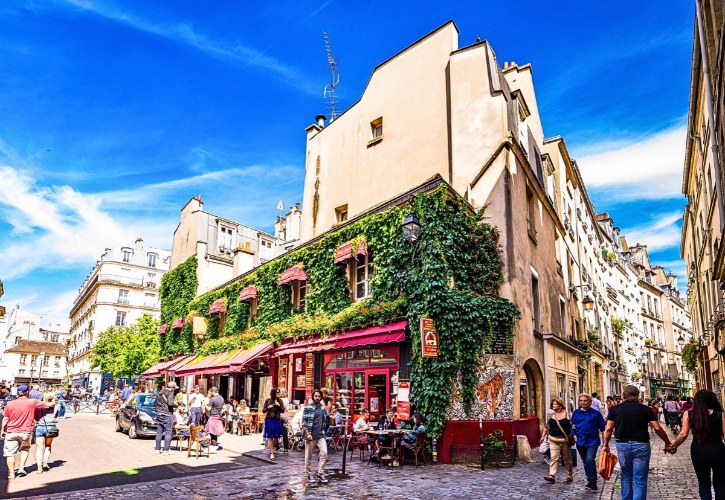
Imagine waking up over what were once medieval marshlands, now one of the most charming quarters in central Paris.
Le Marais mixes grand old mansions, a red-brick royal square, and narrow cobbled lanes with stylish boutiques, café terraces, and real city energy.
It is compact, walkable, and just steps from the Seine. Learn it street by street, and you’ll see exactly why so many travelers never want to stay anywhere else. 😊
1. Why Le Marais Works So Well as Your Home Base
a. Centuries of History on Every Corner
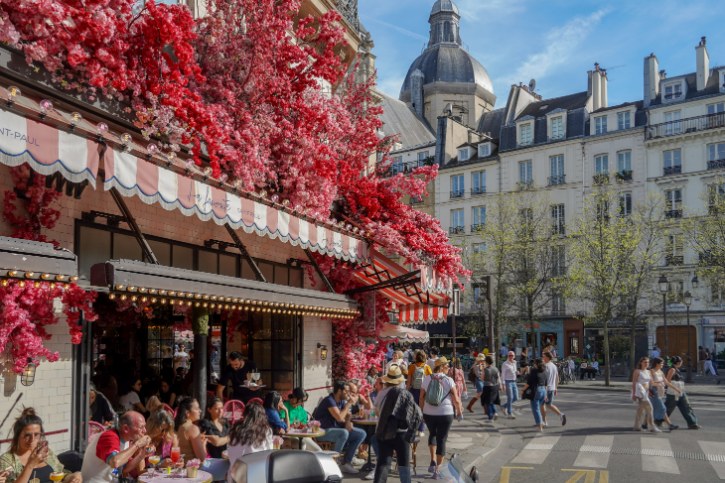
You are never far from the past here. Le Marais hit its golden age in the seventeenth century, when nobles filled it with grand private mansions, the hôtels particuliers, many of which still shape the streets you’ll walk every day.
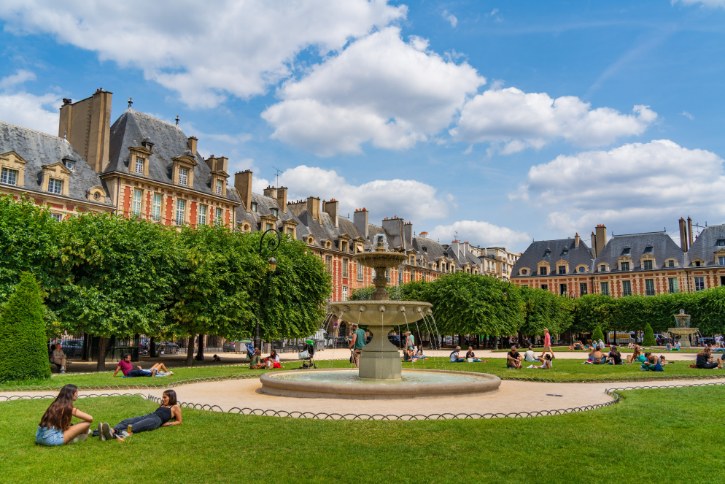
The crown jewel is Place des Vosges, laid out in 1605 as one of Paris’s oldest planned squares. Its red-brick arcades, central garden, and the former home of Victor Hugo give you a living slice of classic Paris right outside your door.
b. A Village Feel in the Heart of the City
People call Le Marais a “village in the city”, and you’ll feel exactly why within your first hour. What makes it special:
- Quiet squares like Place du Marché Sainte-Catherine pull in locals for a calm coffee or lunch.
- Historic residential streets sit right beside designer boutiques, concept stores, and galleries.
- Around Rue de Bretagne in the north, daily life feels genuinely local and lived-in.
- One note: the historic covered market there was destroyed by a fire in October and is closed for a multi-year rebuild, though the surrounding shops and cafés stay open.
c. Small Enough to See on Foot
Here’s the part you’ll love most. The quarter is so compact that you can loop past most of its highlights in about two hours of easy strolling.
- The main museums sit within a short walk of one another.
- The Châtelet–Les Halles transport hub is roughly a 10-minute walk west.
- Exploring on foot saves you endless transfers and lets you slow right down.
- Expect some cobblestones and busy shopping pavements, so comfortable shoes help.
d. Cafés, Shops and Galleries at Every Turn
Variety is the rule, and each street has its own flavor:
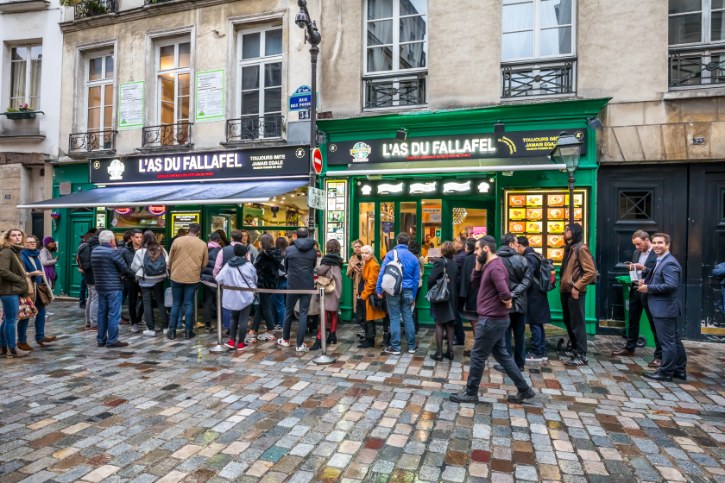
- Rue des Rosiers anchors the historic Jewish quarter, famous for bakeries and falafel.
- Rue Vieille-du-Temple and Rue de Turenne blend fashion labels with cafés and evening spots.
- Place des Vosges frames galleries, tea rooms, and fine dining under its arcades.
- Rue des Archives and Rue de la Verrerie add lively terraces and creative patisseries.
2. Where It Sits and How Fast You Can Reach the Sights
a. Getting Your Bearings
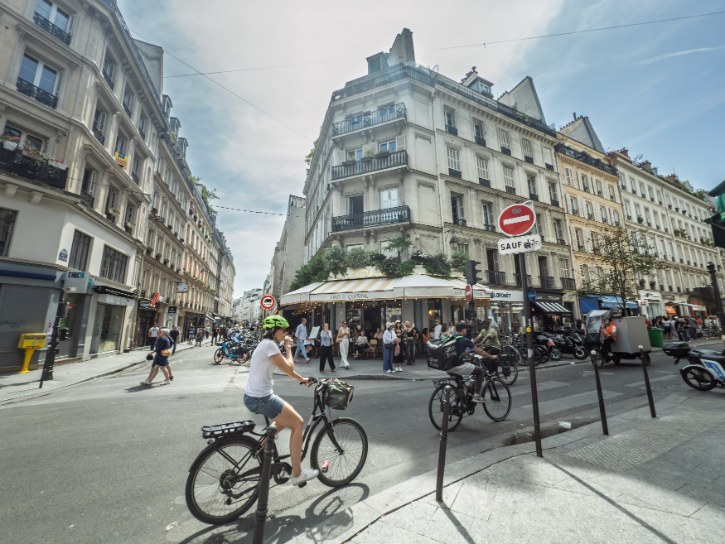
Le Marais sits in central Paris on the Right Bank, spreading across the 3rd and 4th arrondissements. Because it grew as a historic quarter rather than a fixed district, its edges blur a little, but it runs from the Seine in the south up toward Place de la République in the north, with Bastille marking the southeastern corner and Centre Pompidou the western edge.
b. The Metro Stations That Ring the Neighborhood
You’re surrounded by stations, so the whole city opens up fast:
- Saint-Paul (Line 1): southern and central Marais, Place des Vosges, Rue des Rosiers.
- Hôtel de Ville (Lines 1 and 11): the southwestern edge facing the Seine.
- Rambuteau (Line 11): the western side near Centre Pompidou.
- Temple (Line 3) and Filles du Calvaire (Line 8): the northern Marais.
- République (Lines 3, 5, 8, 9, 11): a major hub on the northern rim.
c. How Close the Big Landmarks Really Are
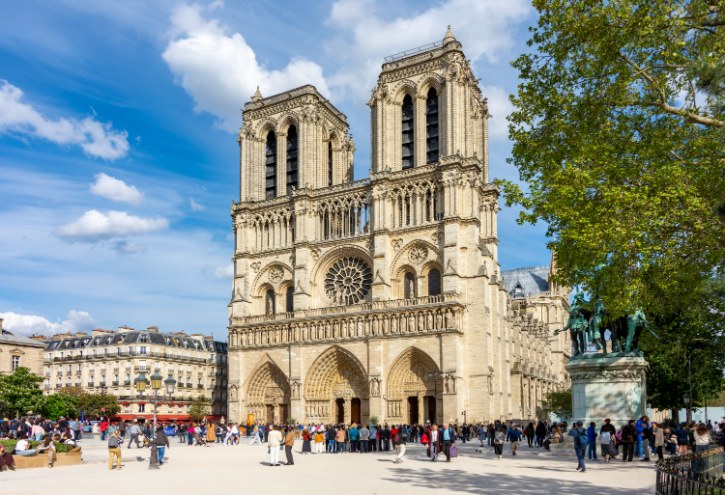
Plenty of famous sights are closer than you’d think:
- Notre-Dame is about a 15 to 20-minute walk away.
- The Louvre is roughly 20 to 25 minutes on foot, or about 5 minutes on Metro Line 1.
- Île Saint-Louis is just across Pont Marie, only a few minutes away.
- Place de la Bastille sits right on the southeastern edge, a short stroll down Rue Saint-Antoine.
Read More: The Best Walking Route From Le Marais to Sainte-Chapelle and Notre-Dame Cathedral
d. When to Walk and When to Ride
A simple rule keeps your feet happy:
- Walk for anything nearby and scenic, like the riverbanks or the bridges to the islands.
- Ride when you’re short on time or heading farther out.
- First-timers, older travelers, and families save energy on Metro Line 1 or Bus 69 from Hôtel de Ville.
- Trips to the Eiffel Tower, Arc de Triomphe, or Montmartre usually save 30 minutes or more by metro or bus.
3. What Daily Life Here Actually Feels Like
a. Slow, Golden Mornings
The early hours are the quarter’s best-kept secret. Before the shoppers arrive, Le Marais is calm and distinctly residential, perfect for a slow wander around Place des Vosges in soft light.
Grab a terrace coffee on Rue des Archives and watch the streets slowly come to life, then pick up a warm pastry from the bakeries along Rue Rambuteau or Rue des Rosiers.
b. The Midday Buzz
From late morning, the energy builds along the main shopping streets:
- Boutiques, galleries, and cafés draw steady foot traffic on Rue des Francs-Bourgeois and Rue Vieille-du-Temple.
- Lunchtime brings long queues at the falafel counters on Rue des Rosiers, especially at weekends.
- Sunday afternoons stay lively, with bookshops and shops full of browsers.
- Step one block into a quiet square, and the calm returns instantly.
c. Evenings That Come Alive
After dark, the neighborhood turns into one of Paris’s great dining and nightlife hubs:
- Bistros, wine bars, and contemporary restaurants fill up across the quarter.
- You’re in the heart of France’s largest LGBTQIA+ district, buzzing since the late 1970s.
- Late activity clusters around Rue des Archives, Rue Sainte-Croix-de-la-Bretonnerie, and Rue Vieille-du-Temple.
d. Sleeping Soundly Amid the Buzz
All that life has a soundtrack, so a little planning helps you rest well:
- Expect busy terraces, late crowds, music, and early-morning deliveries on the central streets.
- Noisy works are restricted overnight and on Sundays, which helps.
- If you’re a light sleeper, choose a room facing an inner courtyard.
- Picking a quieter side street over a main nightlife strip makes a real difference.
4. The Best Corners to Book Your Stay
Where you stay inside Le Marais matters, because the mood changes block by block. Here are the strongest pockets to aim for, matched to the kind of trip you want.
a. Grand and Quiet Around Place des Vosges
- The most elegant, historic setting in the quarter, close to the Seine.
- Vaulted arcades, gardens, galleries, and tea rooms are right on your doorstep.
- Streets like Village Saint-Paul stay noticeably calmer than the busier shopping lanes.
- Best for: couples, older travelers, and anyone who loves classic Parisian charm.
b. The Stylish Central Spine
- Streets like Rue de Turenne and Rue Vieille-du-Temple run through the heart of the action.
- You get designer shops, cafés, museums, and nightlife all within reach.
- Central and lively, so expect evening noise in the busier sections.
- Best for: first-timers, independent travelers, and night owls who want to be in the middle of it.
c. Shopping and Heritage in the Center
- Rue des Francs-Bourgeois is the premier fashion artery, lined with grand mansions.
- Nearby Rue de Sévigné is calmer and museum-lined, great for a heritage feel.
- The Hôtel de Ville area offers the best transit links of all.
- Best for: shoppers, families, and visitors who prioritize easy sightseeing.
d. Flavor and Culture on Rue des Rosiers
- The historic Jewish quarter, packed with bakeries, delis, and falafel shops.
- Lively by day and evening, with narrow lanes and lunchtime queues.
- Well connected to Saint-Paul and Hôtel de Ville stations.
- Best for: food lovers and travelers drawn to cultural heritage.
e. Calm and Local in the Haut-Marais
- The northern streets feel more residential and creative than the south.
- Galleries, independent boutiques, and neighborhood cafés line quieter lanes.
- Keep in mind the market there is closed for rebuilding after the fire.
- Best for: returning visitors, longer stays, and anyone wanting a local feel.
5. How Far the Highlights Are on Foot
For a sense of scale, picture Place des Vosges as your starting point and a relaxed walking pace with time for photos.
a. Right on Your Doorstep
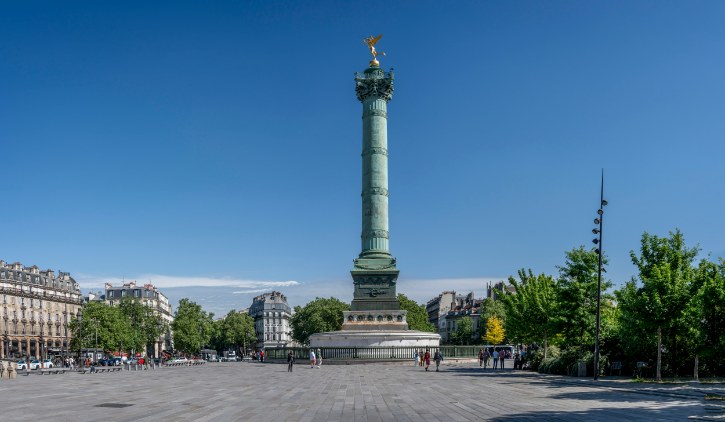
- Place de la Bastille: a short, flat walk down Rue Saint-Antoine.
- Île Saint-Louis: just across Pont Marie, only a few minutes away.
- Centre Pompidou: about 15 minutes to the exterior, though the inside is closed for renovation until 2030.
b. An Easy, Scenic Walk Away
- Notre-Dame: roughly 15 to 20 minutes via the Seine bridges, flat and lovely.
- Louvre and Palais Royal: about 20 to 25 minutes west along Rue de Rivoli or the river.
- Both walks are a pleasure in good weather, with plenty to see on the way.
c. A Longer Riverside Stroll
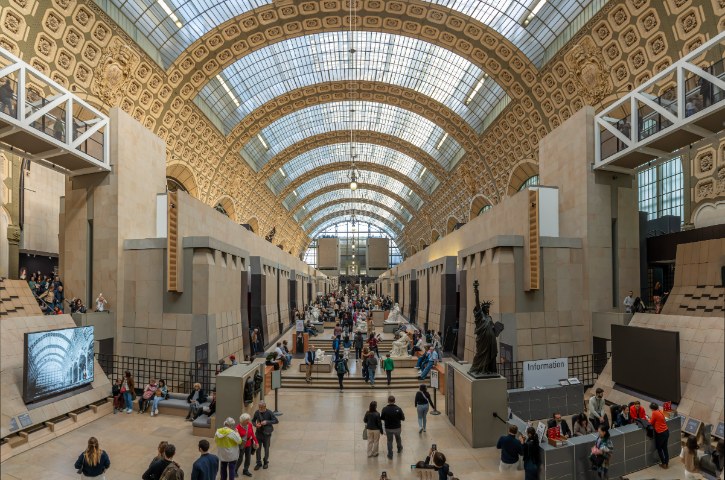
For Musée d’Orsay, allow around 35 to 40 minutes on foot, mostly because you’ll pass the Louvre and cross the Seine to reach it. If you’d rather save your legs, Bus 69 from Hôtel de Ville drops you nearby, and the museum has its own direct train station.
d. Better by Metro or Bus
Some icons are simply too far to walk comfortably:
- Arc de Triomphe: over an hour on foot, but a single direct ride on Metro Line 1.
- Eiffel Tower: well over an hour walking, so take Bus 69 or the metro instead.
- Sacré-Cœur: around 45 to 55 minutes plus a steep hill, so ride up and save your energy.
6. Getting Around From Your Front Door
a. What to Expect Underfoot
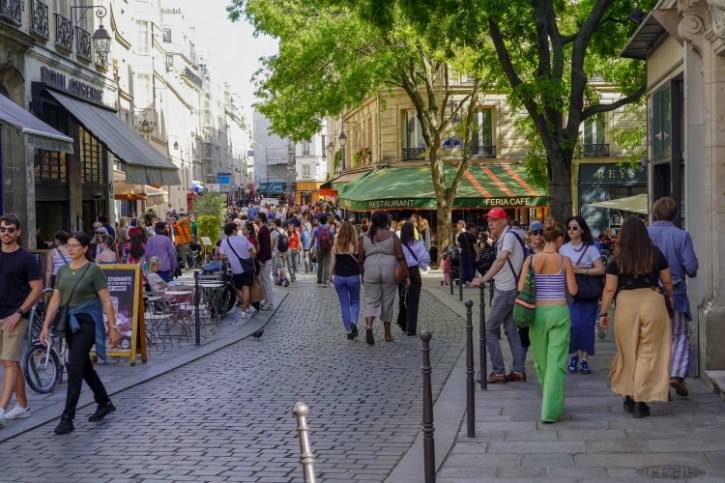
Le Marais is mostly flat, which makes walking easy, but the surfaces ask for a little care:
- Cobblestones appear on many historic lanes and courtyards.
- Shopping pavements and café terraces get crowded during the day.
- Supportive, flat, closed-toe shoes are the smart choice.
- Allow extra time if you have a stroller or prefer a slower pace.
b. The Trains and Stations You’ll Use
A quick snapshot of your rail options:
- Saint-Paul (Line 1) and Hôtel de Ville (Lines 1 and 11) serve the south and center.
- Rambuteau, Temple, and Filles du Calvaire cover the west and north.
- No regional RER station sits inside the quarter, so walk about 10 minutes west to Châtelet–Les Halles for RER lines.
- From there, Gare de Lyon and Gare du Nord, the Eurostar terminal, are both easy direct rides.
c. Buses, Taxis and the Airport Run
- Handy buses include 69 (toward the Eiffel area), 76, and 67.
- Taxis are easy to find along the main southern streets.
- From Charles de Gaulle, take RER B to Châtelet–Les Halles, a short walk from the western Marais.
- From Orly, Metro Line 14 reaches central Paris in about 25 minutes.
- The old OrlyBus and RoissyBus services no longer run, so don’t plan around them.
d. Bikes, Scooters and Accessibility
A few practical things worth knowing before you arrive:
- Vélib’ shared bikes are everywhere and work well along the riverbanks, though narrow streets need caution.
- Shared rental e-scooters are banned in Paris, so don’t count on them.
- The older metro lines here mostly lack elevators, which makes stairs tricky with heavy luggage.
- If you have mobility needs, taxis or the step-free Line 14 are often your easiest options, and it’s wise to confirm step-free entry before booking.
Read More: The Best Route to Explore Le Marais on Foot
7. The Beautiful Spots Just Outside Your Door
One of the quiet joys of staying here is how much sits within a short, spontaneous walk.
a. The Square That Started It All
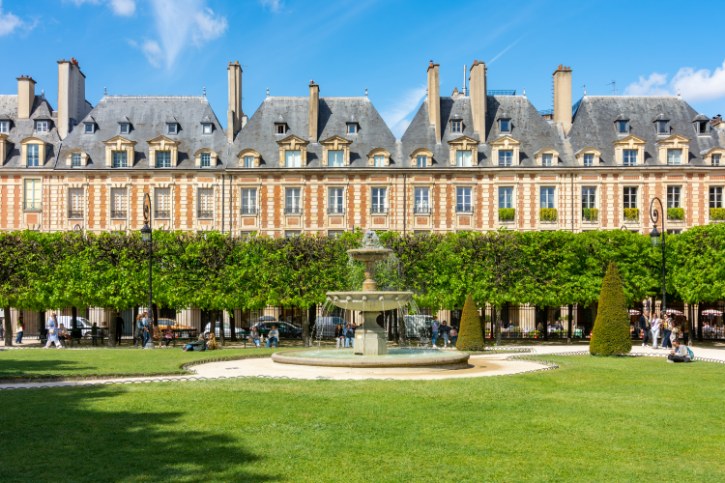
Place des Vosges is the heart of the quarter, created in 1605 as one of Paris’s earliest planned squares. Red-brick arcades, art galleries, tea rooms, the Maison de Victor Hugo, and a central garden let you sit and soak up centuries of history. Come early, and you’ll have the arcades almost to yourself.
b. Hidden Courtyards and Grand Mansions
Wander off the main streets and you’ll stumble into pockets of quiet:
- Village Saint-Paul: a maze of car-free cobbled courtyards and passages.
- Hôtel de Sully: a Baroque mansion whose garden links secretly through to Place des Vosges.
- Hôtel de Sens: one of the few Gothic townhouses left in Paris, complete with turrets.
c. World-Class Museums Minutes Away
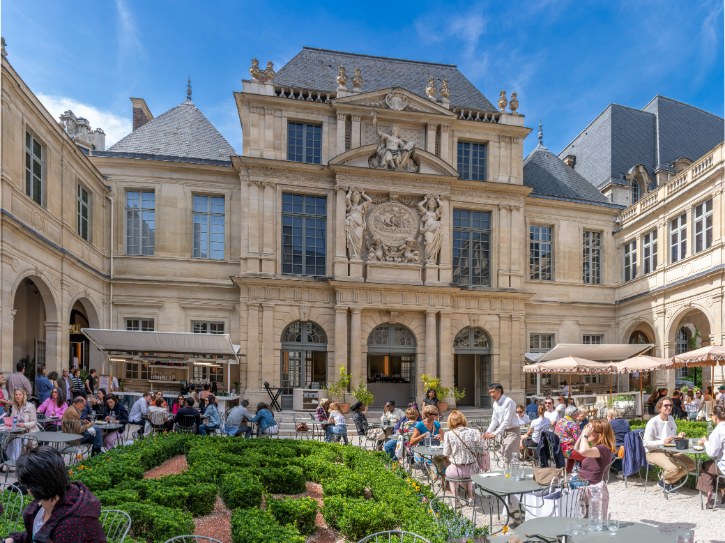
Two of the city’s best museums are an easy stroll apart:
- Musée Carnavalet tells the story of Paris through salvaged rooms, gardens, and art.
- Musée Picasso fills a magnificent seventeenth-century mansion with thousands of works.
- Staying here means you can drop into both on foot, no transit required.
d. Churches, Bridges and Quiet Gardens
The small discoveries are half the fun:
- Rue des Barres, a picturesque cobbled lane beside the striking Église Saint-Gervais-Saint-Protais.
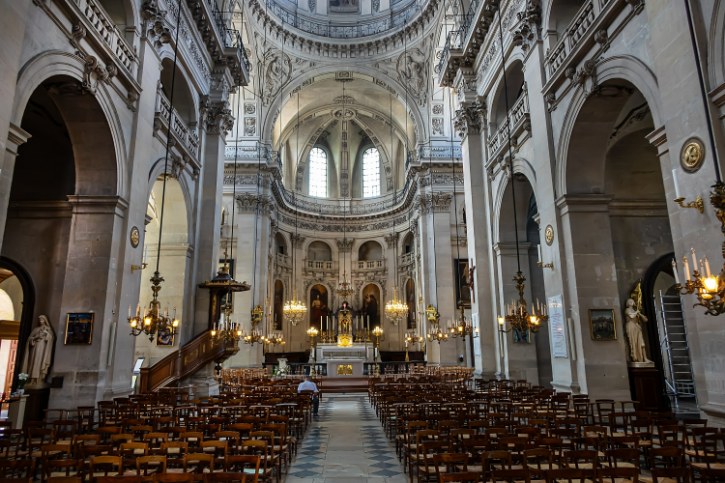
- Église Saint-Paul-Saint-Louis, a landmark Baroque church with an imposing dome.
- Pont Marie, your scenic crossing onto Île Saint-Louis and the riverbanks.
- Tucked-away greenery like Jardin Anne-Frank, Square du Temple, and the gardens behind the old mansions.
8. Why the Food Alone Is Worth the Trip
Food might be the best reason to base yourself here. You’ll find French classics, world kitchens, deep Jewish culinary roots, and famous bakeries, all minutes from wherever you sleep.
a. Falafel and the Flavors of the Pletzl
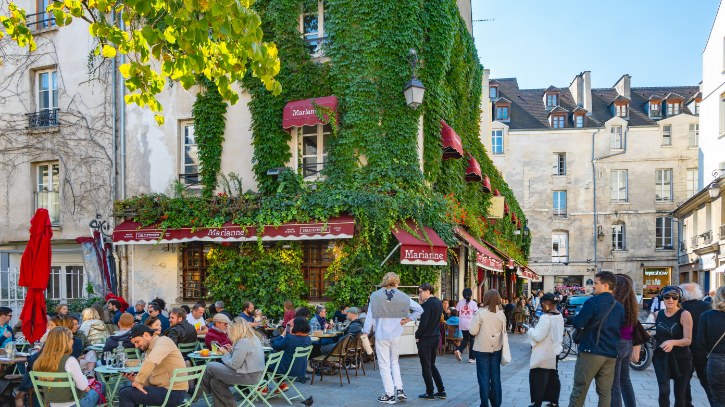
- Chez Marianne serves beloved Jewish and Mediterranean specialties right in the heart of the Pletzl.
- Nearby, Miznon, Chez Hanna, and Tavline round out the Levantine scene.
- Rue des Rosiers is falafel central, home to the legendary L’As du Fallafel.
b. Classic Cafés and French Bistros
- Les Philosophes, a classic Xavier Denamur bistro on Rue Vieille-du-Temple, is a lovely spot for homemade French dishes.
- Café Charlot near Rue de Bretagne is a reliable people-watching spot.
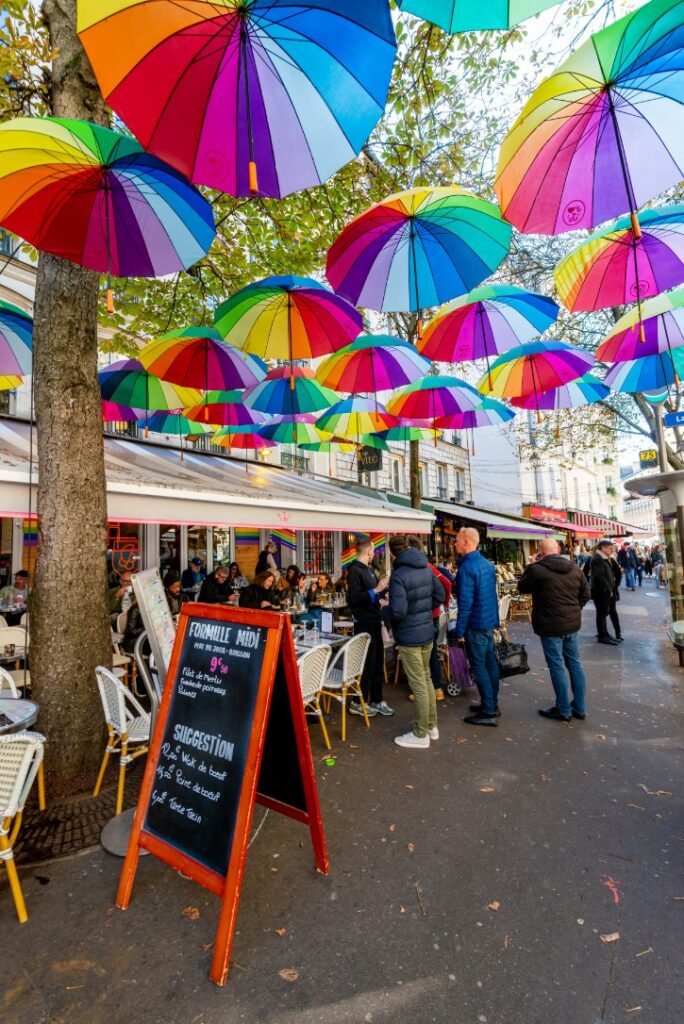
- Le Ju’, a lively all-day brasserie on Rue des Archives near BHV and Hôtel de Ville, is great for an affordable breakfast or weekend brunch under its colorful umbrellas.
- Kozy serves generous all-week brunch and excellent coffee over by Centre Pompidou on the western edge, so expect a queue at peak times.
- For a proper heritage meal, book Benoit, a Michelin-listed table for traditional French cooking.
c. Bakeries and Sweet Stops
- Head to Rue de la Verrerie when you want the most creative patisseries.
- Seek out the classic neighborhood boulangeries tucked along the quieter side streets for a fresh baguette or croissant.
- Two famous names, Stohrer and Du Pain et des Idées, are worth a detour, though both sit just outside the neighborhood.
d. A World of International Kitchens
While the historic covered market is closed for rebuilding after the fire, brick-and-mortar dining thrives:
- Ilô for Japanese fusion and Aldehyde for Tunisian-inflected creative cuisine.
- Baffo for Italian, Tavline for Israeli, Thaï Spices for Thai, and Matka for Polish.
- You’re never short of a new flavor within a few minutes’ walk.
e. Michelin Stars Without Leaving the Neighborhood
You can eat at five Michelin-starred restaurants without ever leaving the quarter:
- L’Ambroisie (three stars) on Place des Vosges, serving classic cuisine.
- Anne, Aldehyde, Datil, and Restaurant H, each holding one star.
- Beyond the stars, contemporary favorites like Terra, Ilô, and Auberge Nicolas Flamel keep food lovers busy for a whole trip.