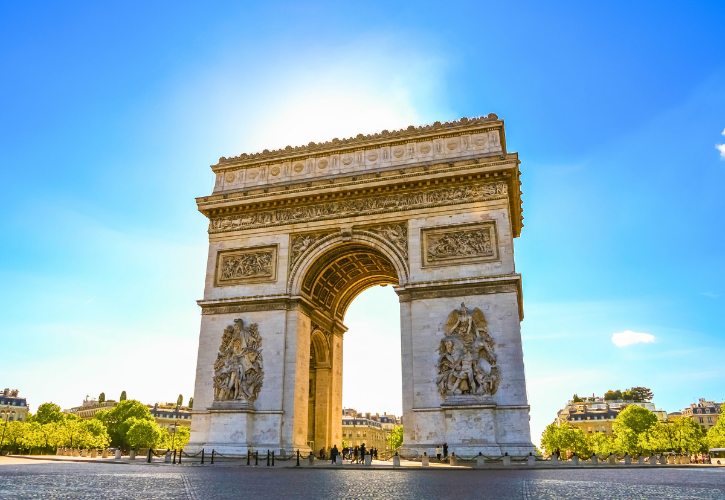
Walking west from Les Halles to the Arc de Triomphe is one of the easiest big adventures in Paris.
In a short, gentle line, the city changes character again and again: a lively market street, a giant church, a hidden arcade, royal courtyards, formal gardens, a historic square, and grand avenues, all leading to one final monument.
The stops sit close together, so it never feels like a slog. You just follow the axis west, and Paris keeps rewarding you. 😊
1. Rue Montorgueil
a. The heart of old Paris
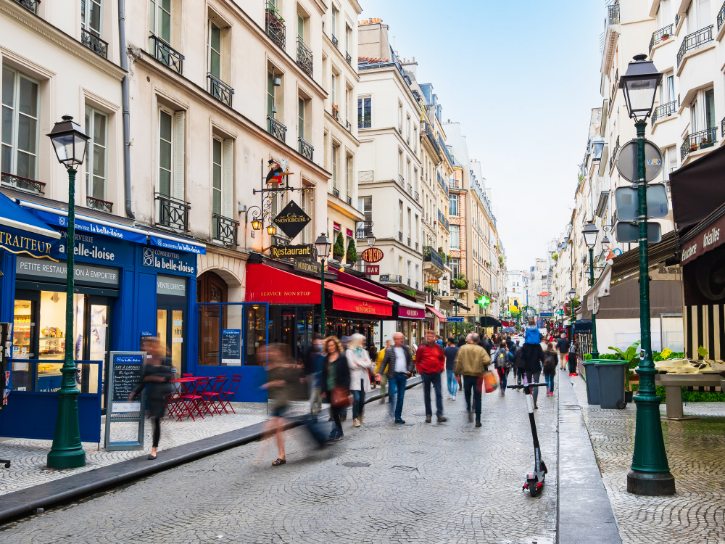
Rue Montorgueil is the old commercial belly of Paris, and it has fed the city for around eight centuries. It is paved with granite cobbles, fully pedestrian, and still a real working market street where locals shop for daily food right alongside travelers.
b. Why this makes the perfect start
- It feels lived-in, not staged: morning baguettes, farm cheeses, and seasonal produce.
- Crates of mushrooms and berries spill onto the pavement, and rotisseries turn golden chickens.
- Wicker café chairs pack the terraces, giving a warm, human scale.
- It is the calm, everyday opposite of the giant monuments waiting farther west.
c. Stohrer, the oldest pâtisserie in Paris
The food anchor of the street is Maison Stohrer at No. 51, the oldest working pâtisserie in Paris, founded in 1730 by a pastry chef to Louis XV’s queen. It is a listed historic monument and is still open today.
- Stohrer is credited with inventing the baba au rhum.
- Inside, look up at the 1860 murals by Paul Baudry, who also decorated the Opéra Garnier foyer.
- Classic pastries are still made on site, including religieuses and puits d’amour.
d. Remember to look up
- The upper floors date from the 17th and 18th centuries, with uneven rooflines and gentle settlement curves.
- Iron balconies carry classical lyre and palmette motifs.
- At 38, spot L’Escargot Montorgueil, open since 1832, with a ceiling gifted by actress Sarah Bernhardt.
- For the best photo, look south, where the terraces frame the Gothic roofline of Saint-Eustache.
e. Mood, and moving on
This is the most informal chapter of the walk, full of warm bread, coffee, and market chatter. Head south past Rue Rambuteau, and the tight street suddenly opens onto the huge stone flank of Saint-Eustache.
2. Église Saint-Eustache
a. A bold church beside the market
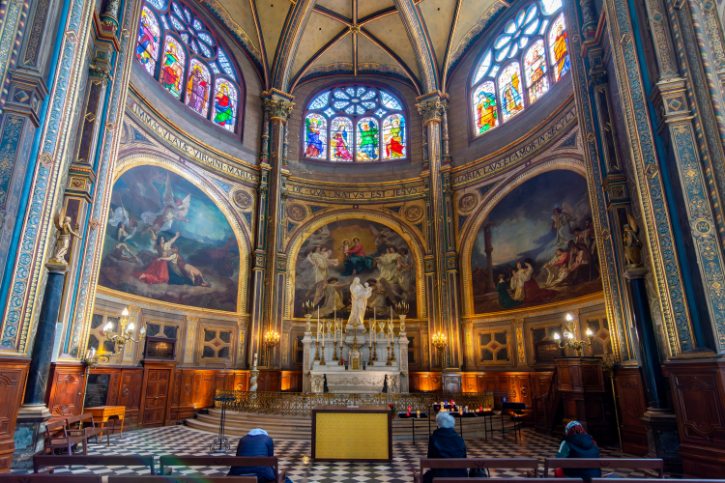
Saint-Eustache is one of the most daring parish churches in France, worth entering even if churches are not usually your thing. It mixes a soaring Gothic skeleton with rich Renaissance decoration, which is why it can look so unusual.
b. The story in brief
- Begun in 1532 under King François I and finished about a century later, around 1632.
- Designed to rival Notre-Dame for the wealthy market merchants.
- The nave reaches 33.46 meters, higher than Notre-Dame’s interior.
- Gothic rib vaults and flying buttresses meet Corinthian pilasters and round arches.
c. What to notice first
- Outside: rose windows, tall pinnacles, and flying buttresses, with Renaissance and classical ornamentation carved onto the Gothic frame.
- A later 18th-century classical portico on the western façade.
- Inside: five aisles, tall stone piers, and long views down the nave.
- The instant contrast between the cool interior and the busy market outside.
d. Make time for the music
- Saint-Eustache holds France’s largest pipe organ, with nearly 8,000 pipes.
- It premiered works by Berlioz and Liszt in the 1800s.
- Free organ recitals take place on Sunday afternoons.
- The acoustics are part of the experience, even for architecture fans.
e. The Keith Haring triptych
The star modern work is Keith Haring’s bronze triptych The Life of Christ (1990), in the Chapelle Saint-Vincent-de-Paul. Haring cast it shortly before his death from AIDS-related illness, and it was donated to the city to honor the parish’s early care for AIDS patients. For now, it is back on view after a major conservation project, though chapel access can change, so a quick check before you go is wise.
3. Galerie Véro-Dodat
a. A perfectly kept arcade
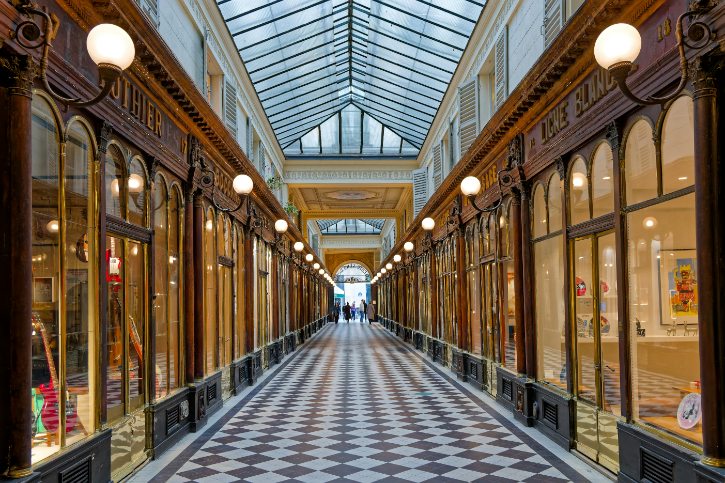
Built in 1826, Galerie Véro-Dodat is one of the best-preserved covered shopping arcades in Paris. Two businessmen created it as a sheltered shortcut linking the Les Halles market with the coach offices nearby.
b. Why covered passages mattered
- Early 1800s streets had no sidewalks, dangerous carriages, and open gutters.
- Roofing shopping streets with iron and glass created clean, gas-lit corridors.
- These passages invented a new kind of leisurely strolling.
- Because it is compact and intact, this one is very easy to understand.
c. What to notice inside
- It is only 80 meters long but looks far deeper, thanks to clever forced perspective.
- A black-and-white marble diamond floor pulls the eye toward the light at each end.
- Dark wood storefronts, faux-marble pilasters, and original brass kickplates line the way.
- A painted neoclassical ceiling shows Mercury, the Roman god of commerce.
d. Still a living place
- Christian Louboutin opened his very first boutique here in 1991.
- His red-soled women’s shop is still anchored here, with a men’s shop opposite.
- Art galleries, violin makers, book dealers, and doll restorers fill the rest.
- Early converted gas globe lamps still glow softly over the floor.
e. Photography, and moving on
- Stand on the central line at either entrance for the full perspective.
- Watch for carved cornices, brass fittings, and mirrors that bounce in daylight.
After the height of Saint-Eustache, this feels intimate and secret. Leave by the western door, and a short stroll opens into the sunlit courtyards of the Palais-Royal.
4. Domaine National du Palais-Royal and Jardin du Palais Royal
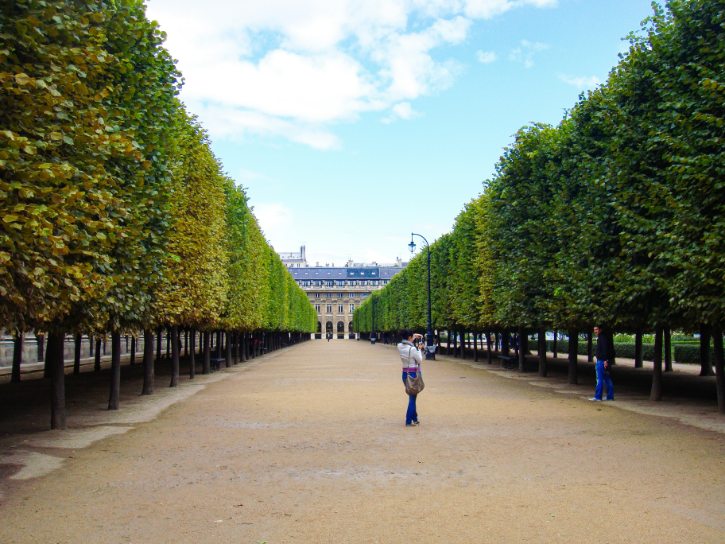
a. A small city within the city
The Palais-Royal is not just a garden. It brings together royal history, revolutionary politics, elegant arcades, contemporary art, and a formal garden behind one set of gates, so it feels almost like its own little district.
b. The history that explains it
- Built in 1629 as Cardinal Richelieu’s private residence, next to the Louvre.
- Young Louis XIV lived here during a revolt that pushed him toward Versailles.
- In the 1780s the Orléans family lined the gardens with rentable arcades.
- As private land, police could not enter, so it became a hotbed of revolution in 1789.
c. Start in the Cour d’Honneur
The first thing you meet is Daniel Buren’s striped columns, completed in 1986.
- There are 260 columns of black and white stone, all of different heights.
- Through floor grates you can see water channels lit beneath them.
- Walk between them and change your eye level to watch the scene rearrange.
- Nearby, Pol Bury’s fountains spin polished steel spheres under trickling water.
d. Then let the garden reveal itself
- Pass under the colonnade and a calm, hidden garden opens up.
- Double rows of clipped linden and chestnut trees line gravel paths.
- A round fountain sits at the center.
- Despite being central, it feels protected, like a private palace garden.
e. What most visitors walk past
- Le Grand Véfour, the first grand restaurant in Paris, running since 1784.
- A tiny solar cannon that once fired at noon so people could set their watches.
- Plaques marking the homes of writers Colette and Jean Cocteau.
f. Mood, and moving on
This is where the walk shifts toward royal scale and open sky. Cross Place Colette and Rue de Rivoli, and the enormous wings of the Louvre take over.
5. Louvre Museum
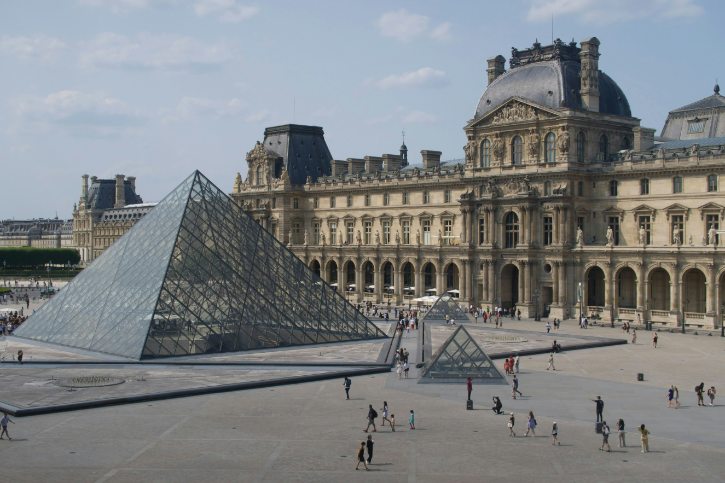
a. A building, not just a museum
Here, enjoy the Louvre as architecture rather than a gallery of paintings. The palace is a physical timeline of French history, and you can read most of it from the courtyards without a ticket.
b. Eight centuries in one palace
- A medieval fortress around 1190.
- A Renaissance palace for François I in 1546.
- Grand classical wings under Henri IV and Louis XIV.
- Second Empire wings under Napoleon III that enclosed the Cour Napoléon, the courtyard where the glass Pyramid stands today.
c. The Pyramid in the Cour Napoléon
The defining view is the meeting of old stone pavilions and I. M. Pei’s glass Pyramid, inaugurated in 1989 and 21.6 meters tall.
- It moved the main entrance underground without touching the old façades.
- Pei used extra-clear, low-iron glass so the stone shows through without a green tint.
- Walk around it to see the palace through the glass from different sides.
- Look for reflections of the façades in the surrounding pools.
d. What else to spot outside
- Carved figures along the Napoleon III rooflines.
- 86 statues of famous French thinkers on the upper balustrades.
- A copy of Bernini’s statue of Louis XIV, marking the start of the great axis.
e. The current picture
The museum is planning a major long-term overhaul called Louvre Nouvelle Renaissance, with a new eastern entrance and a dedicated room for the Mona Lisa. As things stand, it is still in the planning phase: the Pyramid remains the main entrance, and the courtyards are fully open. Treat the plans as announced, not finished, and recheck before you travel.
f. Mood, and moving on
The Louvre expands everything: vast plazas, reflecting pools, and long views down the city’s main axis. Look west between the wings, and the line leads straight to a smaller pink-marble arch.
6. Arc de Triomphe du Carrousel
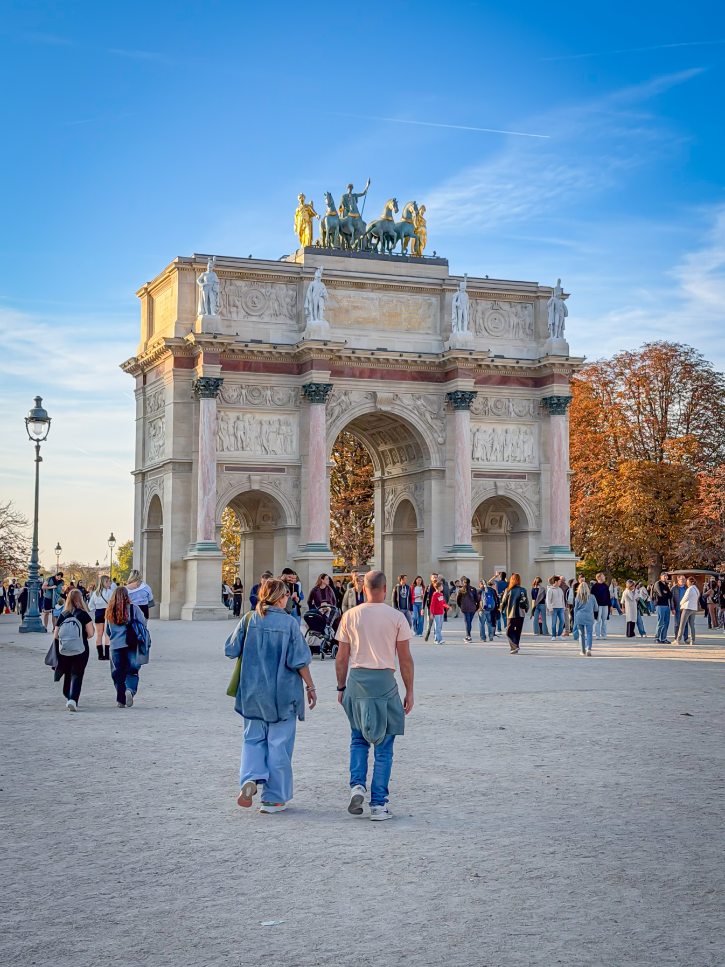
a. A proud monument, not a mini version
It is easy to treat this as a small copy of the famous arch, but it is a Napoleonic monument in its own right, with a surprisingly dramatic backstory.
b. Why it stands here
- Built between 1806 and 1808 to celebrate Napoleon’s 1805 victories.
- Designed as the ceremonial gateway to the Tuileries Palace.
- That palace burned in 1871 and was demolished, leaving the arch alone.
- It now frames the long western view toward the gardens.
c. Look closely, do not just pass under
- It copies the Roman Arch of Septimius Severus, with three openings.
- Eight columns are cut from rose-pink Griotte marble veined with white.
- On top of each column stands a statue of a different Imperial soldier.
- Relief panels show real battles, including Ulm and Austerlitz.
d. The hidden story: look at the horses
The chariot on top has a wild past. In 1797, Napoleon seized the ancient bronze Horses of Saint Mark from Venice and brought them here. After his defeat, France returned the originals in 1815, so King Charles X commissioned an entirely new bronze group in 1828, which is what crowns the arch today.
e. Where the name comes from
- In 1662, Louis XIV staged a grand equestrian festival, a “carrousel”, on this ground.
- He appeared dressed as a Roman emperor.
- He took the emblem of the Sun for the first time, becoming the Sun King.
7. Jardin des Tuileries
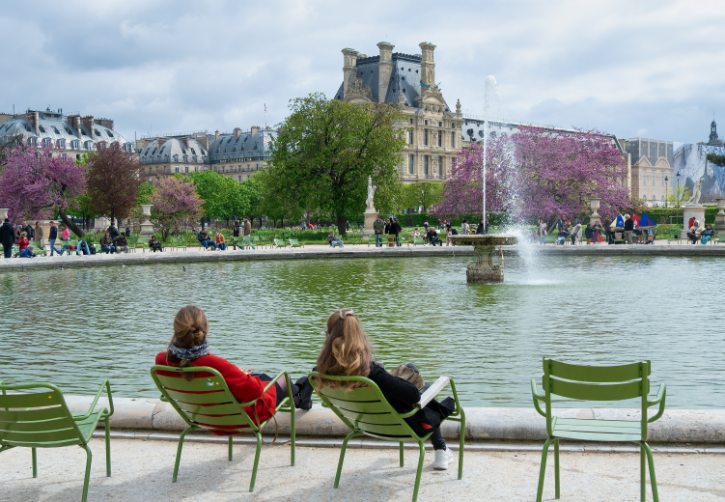
a. More than a pretty park
The Tuileries is a landmark of French formal garden design and the central link in the long axis between the Louvre and Concorde. It rewards slow walking and constant looking around.
b. The story behind it
- The name comes from the medieval tile kilns once on this ground.
- Catherine de’ Medici bought the land in 1564 for a palace and garden.
- André Le Nôtre redesigned it for Louis XIV in the 1660s.
- His central avenue set the axis for the westward growth of Paris.
c. Enjoy the perspective, both ways
Keep turning around as you walk. Look west and your eye travels across the basins to the obelisk at Concorde and on to the distant Arc de Triomphe. Look east and the palace wings frame the Carrousel arch in near-perfect symmetry.
d. Features to seek out
- The round basin in the east and the octagonal basin near the western gate.
- The raised Terrasse des Feuillants on the north side, named after a moderate Revolution-era club that met in the convent nearby, and the Terrasse du Bord-de-l’Eau along the Seine, with elevated river views.
- The horseshoe ramps at the western gates, designed by Le Nôtre.
- Plenty of green chairs to sit and take it all in.
e. A sculpture treasure hunt
- Classical marbles line the main paths.
- Modern works by Rodin, Henry Moore, and others hide among the trees.
- Eighteen sculptures by Maillol stand in the Carrousel gardens.
- Many outdoor marbles are weatherproof copies, with the originals kept inside the Louvre.
f. Photography, and moving on
- Shoot reflections in the octagonal basin, using the green chairs in the foreground.
- Try low shots along the gravel paths, with trees forming neat vanishing lines.
After the heavy stone of the arch, the garden feels open and easy. Climb the ramps at the far end, and you step into the huge open square of Concorde.
8. Place de la Concorde
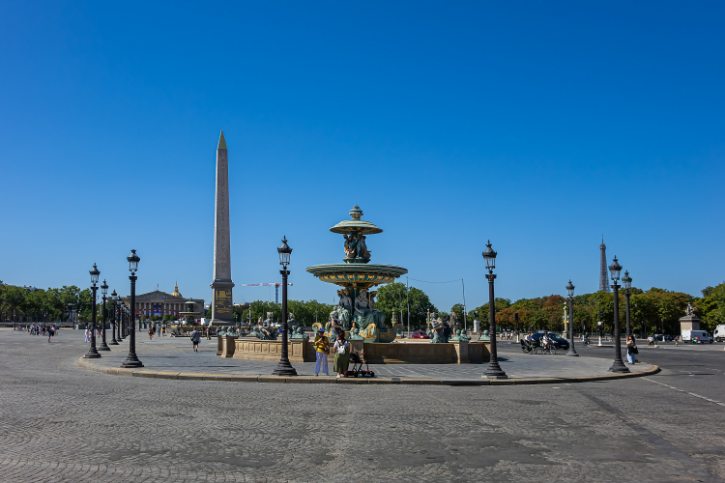
a. Beauty and a difficult past
Concorde is the largest square in Paris, and it holds a real tension. It is grand and elegant, yet its history is dark. During the Revolution the guillotine stood here, and more than a thousand people were executed, including Louis XVI and Marie Antoinette. Its later name, “concord”, was a pledge of reconciliation.
b. Start with the Luxor Obelisk
- A genuine ancient Egyptian monolith, around 3,300 years old.
- Given to France in 1830 and raised here in 1836 before huge crowds.
- It stands 23 meters tall and weighs 230 tons.
- The pedestal shows gilded diagrams of the engineering used to raise it.
c. Then the two great fountains
- Two monumental cast-iron fountains flank the obelisk, unveiled in 1840.
- The southern one celebrates the seas, with fish, coral, and shells.
- The northern one honors France’s rivers, with wheat and grapes.
- Both were restored for the 2024 Games, so the gold detail gleams.
d. Details around the edges
- Eight statues of French cities sit on raised pavilions around the square.
- The statue of Strasbourg was draped in black from 1871 to 1918 in protest.
- Look for the columns decorated with ship prows and the classic lampposts.
e. Mood, and moving on
After the shaded garden, Concorde feels vast and ceremonial. Cross the western edge, and the open square funnels into the tree-lined corridor of the Champs-Élysées.
9. Champs-Élysées
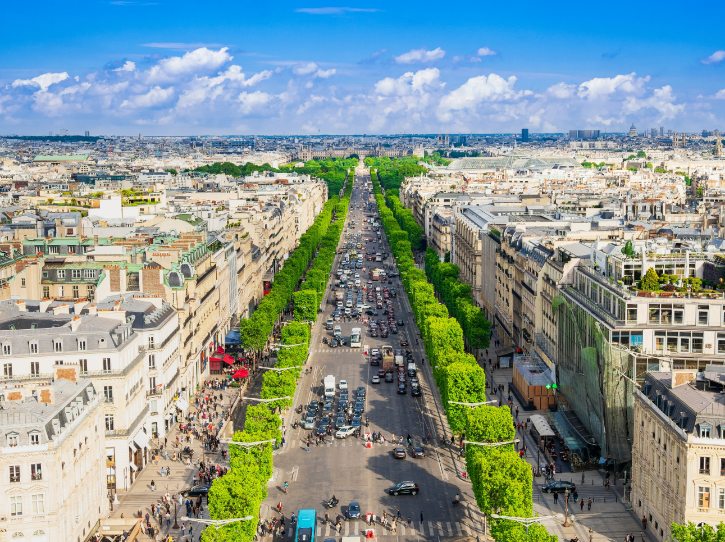
a. More than a shopping street
The Champs-Élysées is famous for shops, but that is the least interesting thing about it. It is a grand historic axis, a promenade, and a national stage, all in one long line.
b. Two very different halves
- It runs about 1.9 kilometers from Concorde to the Arc de Triomphe.
- The lower part is green and leafy, flanked by gardens.
- The upper part is where the stone façades and luxury flagships take over.
- A gentle slope means the Arc grows larger as you walk west.
c. A quick history
- Le Nôtre first extended the Tuileries axis here across marshy ground in 1667.
- It was named after the Elysian Fields of Greek myth in 1709.
- Later it was widened into a 70-meter boulevard with double rows of plane trees.
- It belongs to the same designed landscape you have followed since the Louvre.
d. What to notice instead of storefronts
- Pale limestone façades, iron balconies, and grand carriage gates.
- The wide plane trees and long sightlines across the avenue.
- The way the Arc keeps filling more of the horizon.
e. A stage for national moments
- De Gaulle led the Liberation march down the avenue in 1944.
- It hosts the July 14 Bastille Day military parade, which marches down the avenue from the Arc de Triomphe to Place de la Concorde.
- It is the finish of the Tour de France.
- Crowds fill it after major sporting victories.
10. Jardin des Champs-Élysées
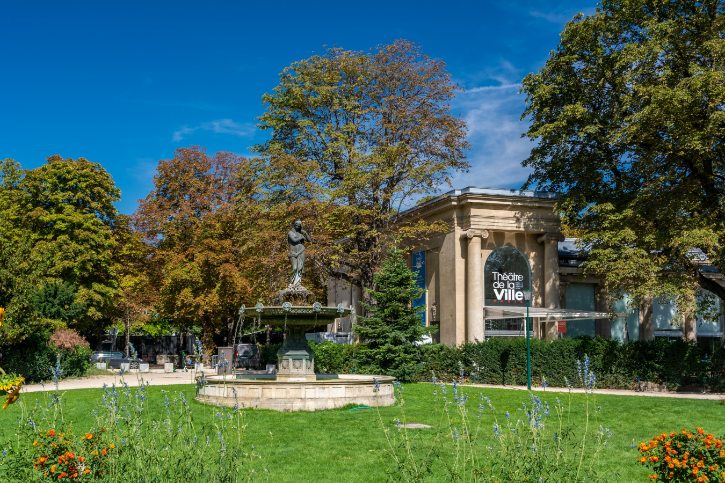
a. A green surprise
Most people picture only shops here, so these gardens come as a lovely surprise. They offer shade, birdsong, and greenery just steps from the traffic, and few travelers slow down to enjoy them.
b. How the historic promenade survives
- The gardens were first laid out in formal squares in 1765.
- In 1859, the engineer Alphand reshaped them into softer, English-style gardens.
- Expect curving paths, undulating lawns, and naturalistic ponds.
- They keep the old promenade idea in a form you can wander through.
c. What to look for
- The circular Théâtre Marigny, designed by the architect of the Opéra Garnier.
- The historic Pavillon Ledoyen, a gourmet address since 1848.
- Ornate fountains by Hittorff scattered through the sectors.
- The peaceful Swiss Valley, with grottoes, willows, and a little footbridge.
d. Part of the city’s greening work
These gardens are being renewed under the city greening program, with better soil, hardier planting, and restored irrigation. The aim is to strengthen their role as a cooling green corridor and reinforce the leafy character of the lower avenue.
e. Photography
- Shoot through the branches to frame the Grand Palais and Petit Palais.
- Capture a greener, quieter side of central Paris that most travelers miss.
- Use the willows and beeches for soft, natural framing.
f. Mood, and moving on
This is a genuine pause: shaded benches, gravel paths, and muffled traffic. Wander south, and the canopy parts to reveal the gilded gate and dome of the Petit Palais.
11. Petit Palais
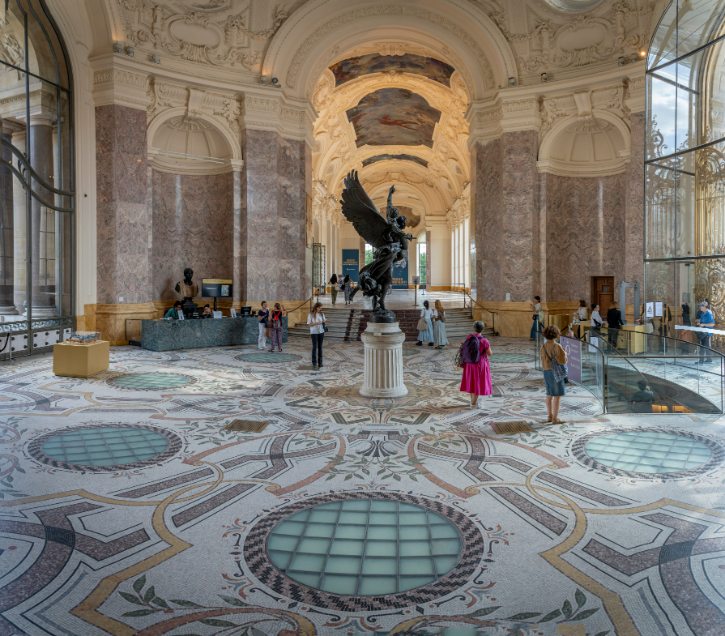
a. Born for the 1900 World’s Fair
The Petit Palais is a double treat: a serious art museum and a gorgeous building in its own right. Built for the 1900 World’s Fair, it became the city’s fine-arts museum two years later, and the architecture alone earns a stop.
b. What to notice outside
- A central arch topped by a low stone dome and fluted columns.
- A stunning golden gate covered in flowing Art Nouveau ironwork.
- A sculpted pediment showing the City of Paris among the Muses.
- A confident, ornate style meant to impress visitors.
c. The hidden inner garden
Step through and you reach a semicircular garden courtyard, a genuine surprise. A curved colonnade wraps around it, the ceilings are painted with the seasons, and the floor and pools are covered in fine mosaics. Palms and flowers surround the water, and there is a café. For first-timers, this quiet garden behind the grand façade is one of the best secrets on the walk.
d. Keep looking up inside
- Painted ceilings and murals took over two decades to finish.
- Vast ceiling scenes trace the history of Paris, ancient and modern.
- A dome fresco follows the story of French classical art.
- The building itself is as decorated as the art it holds.
e. The collection, in brief
- Entry to the permanent collection is free.
- It ranges from Greek and Roman antiquities to medieval ivories.
- Highlights include a Rembrandt self-portrait and 19th-century French masters.
- You do not need a plan; a slow loop is enough.
f. The takeaway, and moving on
The real point is that it rewards art lovers and architecture lovers equally, which is rare. Return through the gilded gate, and you reach a wide circular plaza where old landscaping meets modern design.
12. Rond-Point des Champs-Élysées Marcel-Dassault
a. More than a traffic circle
This is much more than a roundabout. Laid out by Le Nôtre in 1670, it is the hinge of the avenue, the exact point where the leafy lower gardens end and the busy commercial upper section begins.
b. The six modern fountains
- Six contemporary fountains by the Bouroullec brothers, unveiled in 2019.
- The basins had sat dry and broken for about two decades before.
- A private foundation paid for the redesign.
- They boldly insert new design into a strictly protected historic setting.
c. Why they are so unusual
- Each basin holds a 13-meter mast made of aerospace-grade metal.
- The masts carry thousands of custom Swarovski crystal modules.
- Water flows over the crystal without spraying passersby.
- The masts turn slowly, about one revolution per minute, and glow at dusk.
d. The bigger idea
The trick is to stop and watch, because these are not static objects. The slow spin, the falling water, and the changing light make them feel alive. They quietly prove that Paris keeps adding new layers to even its most protected spaces.
e. Photography
- Stand at the curb and frame the Arc through the crystal columns.
- Try a slow shutter at dusk for the shimmer and passing car lights.
- Combine wide shots with close-ups of the crystal.
f. Mood, and moving on
After the solid stone of the Petit Palais, this stop is all lightness and motion. Cross west, the greenery falls away, and a striking glass entrance signals the next stop, worth entering for the building itself.
13. Galeries Lafayette Champs-Élysées
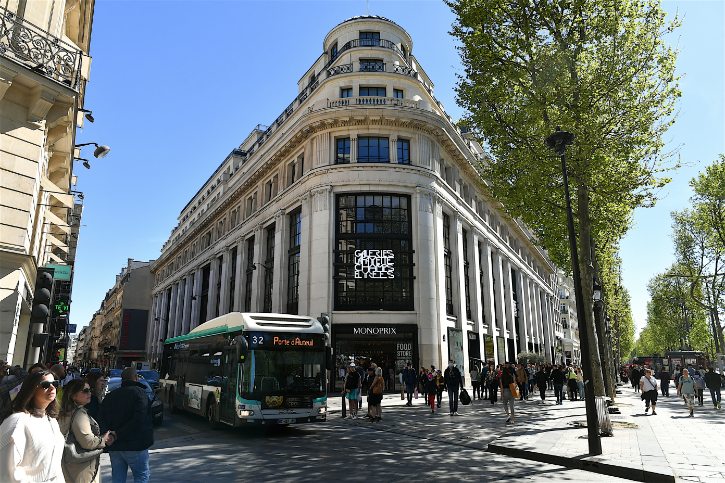
a. Not the famous flagship
First, clear up a common mix-up. This is not the historic flagship on Boulevard Haussmann with its famous dome. This is a separate, modern concept store at No. 60, worth a look even if you have no plans to shop.
b. A modern store in an old building
- It opened in 2019 as a 6,500-square-meter “retail laboratory”.
- The Danish firm BIG designed the transformation.
- The building was a 1930s bank, later the flagship Virgin Megastore.
- BIG stripped it back to reveal the original Art Deco lines.
c. Let the architecture pull you in
- A four-story circular atrium crowned by a restored glass dome.
- An entrance bridge with diagonal views into the void.
- Six glowing glass display boxes hanging in the atrium.
- A wide terrazzo bleacher staircase built for gathering, not just climbing.
d. What the design is trying to do
Instead of rigid departments, open concentric rings invite you to wander. The staircase and atrium were designed to feel like a social, almost public space, not simply a shop floor. It is a clear example of modern Paris reusing an old building with flair.
e. Why it belongs on this walk
- By now you have seen Gothic stone, a 19th-century arcade, and royal buildings.
- This adds a clean 21st-century chapter to the route.
- It keeps the 1930s stonework while adding steel, terrazzo, and concrete.
f. Photography, and moving on
Climb to the top of the staircase and look up into the glass dome, framing the hanging boxes and rings in one shot. Then step back onto the avenue toward No. 75, where glass gives way to a softer, sweeter kind of luxury.
14. Ladurée
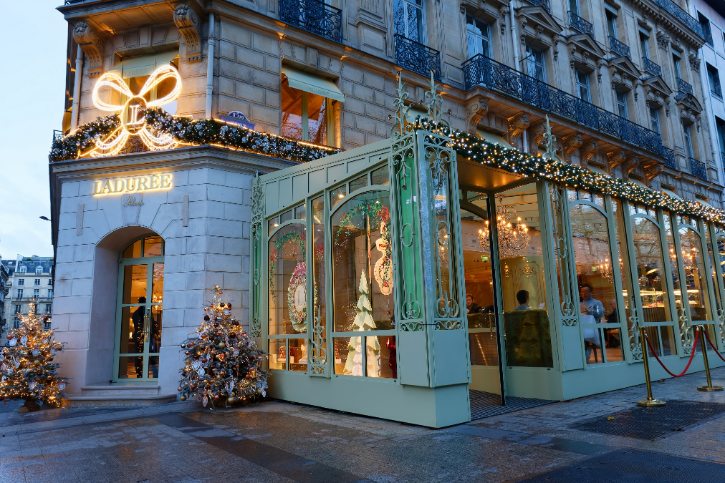
a. A sweet pause before the finish
Just before the final push to the Arc de Triomphe, Ladurée offers a slow, sensory pause. This flagship at No. 75 has run here since 1997, and the interiors and tea-room ritual are as much the point as the pastries.
b. The history, without the myths
- The house was founded in 1862 by a baker near the Madeleine.
- His wife pioneered the salon de thé, a respectable public space for women.
- The filled Parisian macaron was popularized around 1930 by a relative.
- Simple macarons existed for centuries, so Ladurée made the filled style famous rather than inventing it.
c. Why this branch is special
- The flagship recently reopened after a ten-month redesign.
- It spreads across 1,000 square meters of distinct spaces.
- A live dessert bar assembles plated sweets in front of you.
- A glass-roofed winter garden sits beneath painted floral murals.
d. A visual, not just tasty, checklist
- Upstairs salons glow in celadon green, rose, and soft blue.
- Chandeliers, antique mirrors, and pastel boxes fill the rooms.
- The tiny, precise pastries contrast with the huge vistas outside.
- A mezzanine atelier even hosts hands-on pastry classes.
e. The tea-room tradition
Sitting down beats grabbing and going. The salon de thé was a real social innovation, and lingering over tea and pastry is part of the experience, not just buying food to carry away. The crack of a macaron shell and the scent of brioche slow the walk before the big finish.
f. Mood, and moving on
After the raw, modern feel of the last stop, Ladurée is warm, colorful, and unhurried. Step back out, and the Arc de Triomphe now dominates the whole western horizon.
15. Arc de Triomphe
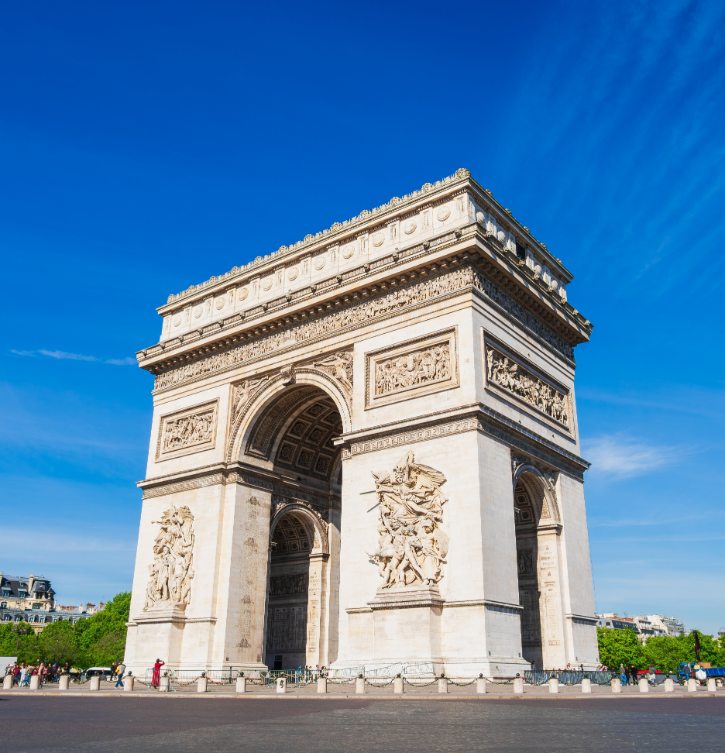
a. The grand finish
This is the payoff. The Arc de Triomphe is the climax of the whole route and of the long axis you have followed from the Louvre. It even answers the smaller Carrousel arch, locking the entire line together.
b. Why it stands here
- Commissioned by Napoleon in 1806 after his victory at Austerlitz.
- Designed on a huge scale, inspired by a Roman arch.
- Work stalled after Napoleon’s fall and finished in 1836.
- It was later dedicated to all French armies, not just Napoleon’s.
c. Start with the sculpture
- Four huge sculptural groups sit on the main pillars.
- The most famous, La Marseillaise, is a masterpiece of Romantic sculpture.
- It shows a winged figure of Liberty rallying citizens to defend the Republic.
- Up close, the Arc reads as a giant sculpture, not just a familiar outline.
d. The Tomb of the Unknown Soldier
Walk through the underpass to reach the emotional heart of the monument. An unidentified soldier who fell at Verdun was buried here in 1921, and an Eternal Flame, first lit in 1923, has burned ever since, even during the Nazi occupation. Every evening a solemn ceremony rekindles it. This changed the meaning of the arch, from a celebration of conquest into a tomb for anonymous sacrifice.
e. Look down as well as up
- The inner walls carry the names of 660 generals.
- Shields around the top name major victories like Austerlitz and Wagram.
- Bronze plaques in the ground mark key moments in modern French history.
- These include the Liberation of Paris in 1944.
f. The terrace, and photographing the Arc
Climb the 284 steps to the terrace, and the whole walk suddenly makes sense. Twelve avenues radiate out like spokes of a wheel. Look east and you can trace your entire route back to the Louvre; look west and the axis continues to the modern Grande Arche de la Défense. This view is the real reward, because it lets you decode the planning you just walked through.
- From a distance, catch the Arc closing the avenue’s perspective.
- Up close, focus on the sculpture and inscriptions.
- From the top, capture the radiating avenues and the long axis.
Trust me, looking back east from that terrace is the moment the whole walk comes together.