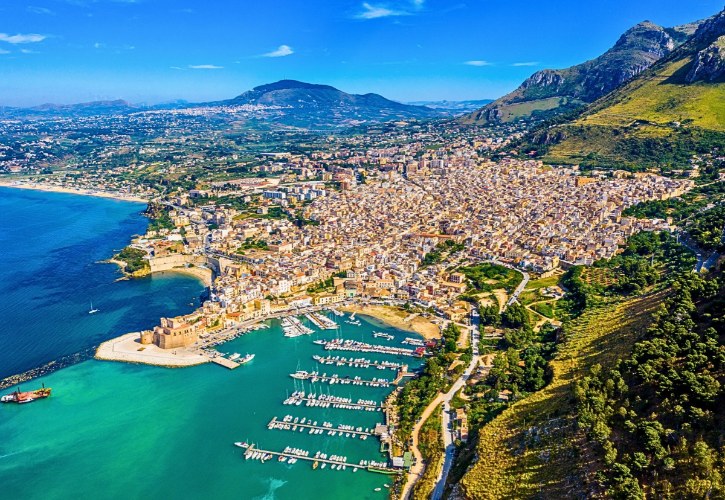
Sicily’s coast never repeats itself. You can stand on golden sand beneath a medieval town, then reach a rocky cove or a working fishing harbor an hour later. Here are seven seaside towns and villages that show off that range, and what to look for when you arrive at each one. 😊
1. Cefalù
a. Lose Yourself in the Medieval Old Town
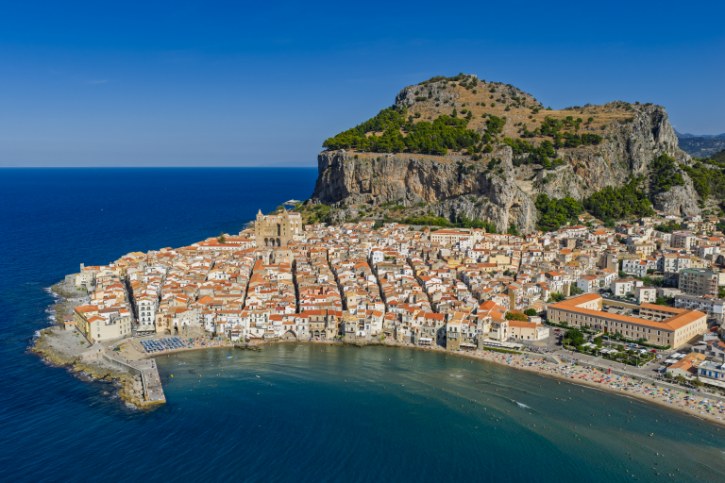
Cefalù sits on the north coast, about 70 kilometers east of Palermo, inside medieval walls beneath the limestone giant of La Rocca. You wander narrow stone streets shaped by everyday life, past the old wash-house with its twenty-two iron spouts. Give yourself time to get a little lost here.
b. Why the Cathedral Steals the Show
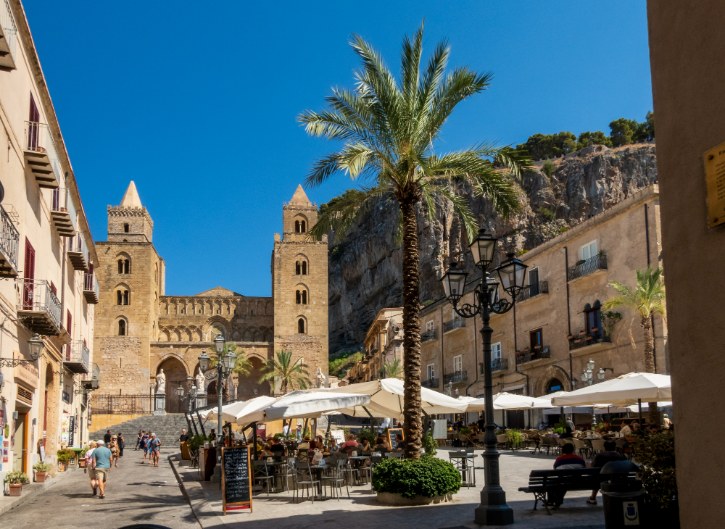
- Begun in 1131 by Roger II, the first Norman king of Sicily.
- Part of a UNESCO World Heritage group of Arab-Norman sites.
- Inside, Byzantine mosaics crowned by a huge Christ Pantocrator, among the oldest of their kind in Sicily.
- Outside, twin Romanesque towers frame a 15th-century portico.
- Sit in palm-lined Piazza Duomo and watch the lit facade against the cliff.
c. Climb La Rocca for the Big View
- The 268-meter crag that gave the Greek town its name, Kephaloidion, meaning “head”.
- Trails pass the Temple of Diana, a megalithic sanctuary dated by various accounts from the 9th century BC onward.
- At the top sit the ruins of a Norman-Swabian castle.
- Go on a dry morning in sturdy shoes, since the stone turns slippery after rain.
- Your reward: rooftops, cathedral towers, the sandy shore, and on clear days the distant Aeolian Islands.
d. Beaches That Go Beyond the Sand
- Main beach: nearly 2 kilometers of fine golden sand with shallow, usually calm water. Come early or at sunset to dodge the summer crowds.
- Caldura: a pebble-and-rock cove with exceptionally clear water for snorkeling.
- Sant’Ambrogio: a quieter shoreline of pale pebbles, gravel, and patches of sand.
- Capo Playa: windier, with a quick drop-off, better for windsurfing than for small children.
e. The Old Harbor at Golden Hour
Follow the lanes to Porta Pescara, whose stone arch frames a famous view of the sea and old harbor, best when sunset catches the waves. Just past it, boats rest below fishermen’s houses that rise straight from the water. This is the town at its most photogenic.
2. Taormina
a. A Town That Hangs Above the Sea
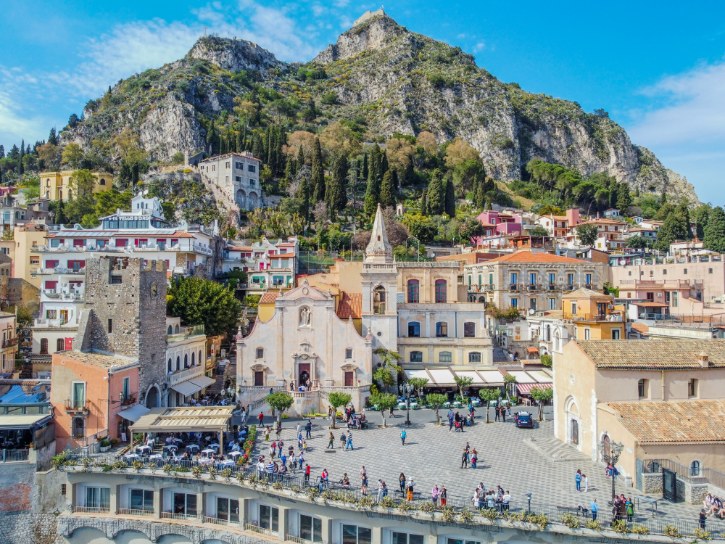
Perched on the ridge of Monte Tauro over the Ionian coast, Taormina earned the nickname “pearl of the Ionian Sea”. It feels different from Sicily’s low fishing villages: vertical, elegant, and all about the view.
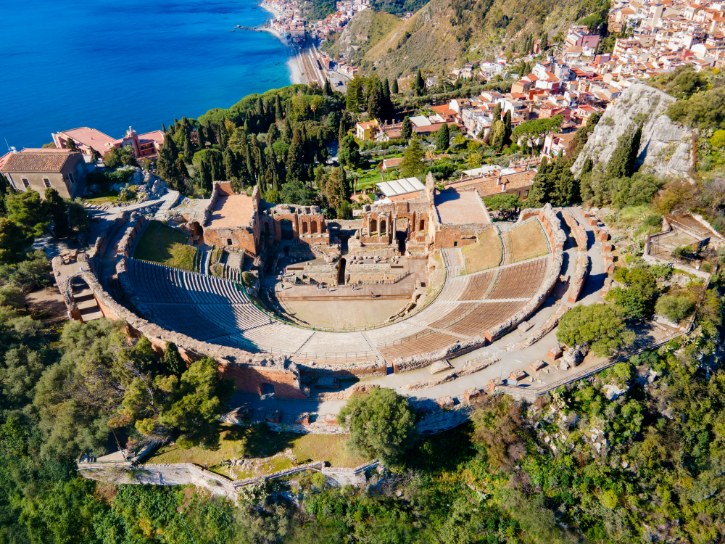
b. Step Inside the Ancient Theatre
- Carved by the Greeks in the 3rd century BC, the second-largest classical theatre in Sicily.
- Later rebuilt and enlarged by the Romans for games and spectacles.
- You can still trace the curved cavea, the orchestra, and the stage.
- The real showstopper is the framing: ancient stone set between the sea below and Mount Etna on the horizon.
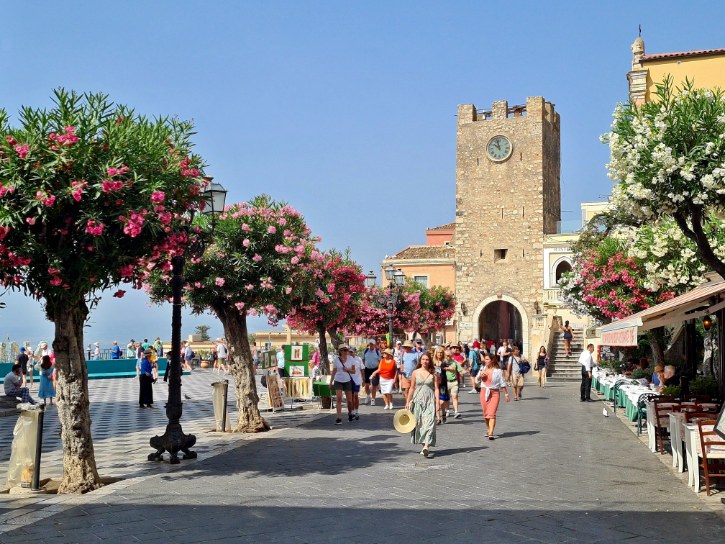
c. Stroll Corso Umberto at Your Own Pace
The upper town’s main street is made for slow walking, with squares and terraces that keep opening onto the water. For the view everyone remembers, head to the belvedere on Via Pirandello, which looks straight down to the sea and the islet of Isola Bella.
d. Find Your Swim Spot Below the Cliffs
- Taormina’s own beaches are pebbles, shingle, and rock rather than soft sand, which keeps the water clear.
- Isola Bella: a tiny nature-reserve islet linked to shore by a pebble strip you can cross at low tide in calm seas.
- Mazzarò Bay: a sheltered pebble bay with calm water and polished beach clubs.
- For real sand, head to Giardini Naxos just down the coast.
3. Scopello
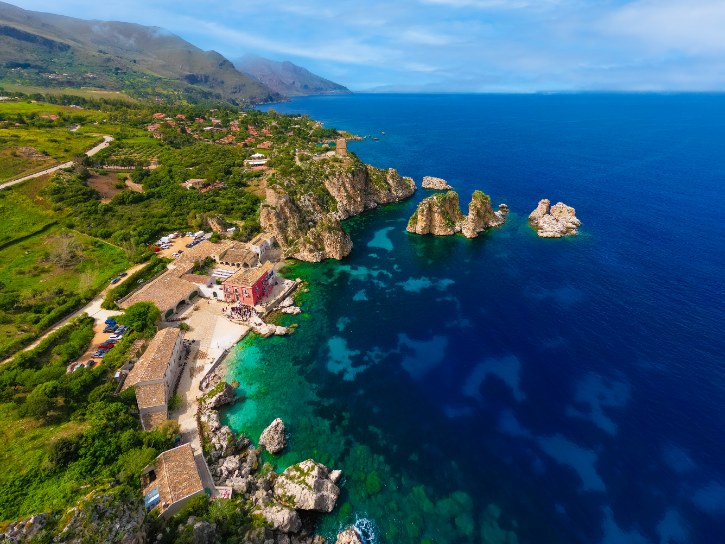
a. The Tonnara and Its Famous Sea Stacks
On the Gulf of Castellammare, the tiny clifftop village of Scopello looks down on a historic tuna station, the Tonnara, set beside clear water. In front of it rise the Faraglioni, dramatic rock stacks topped with prickly pears. It is one of Sicily’s most recognizable coastal scenes.
b. Know Before You Go
- The Tonnara is currently closed to visitors. Its official site lists it as shut for the winter season, with no reopening date posted, so check there before you plan a visit.
- A stretch of coast around the Tonnara and Faraglioni, roughly 900 metres, is off-limits to swimmers for safety under the regional bathing rules.
- Even when the site is open, the small cove and diving from the rocks are barred, since there are no lifeguards.
- You can still admire it from a public viewpoint just to the south, or from a sightseeing boat.
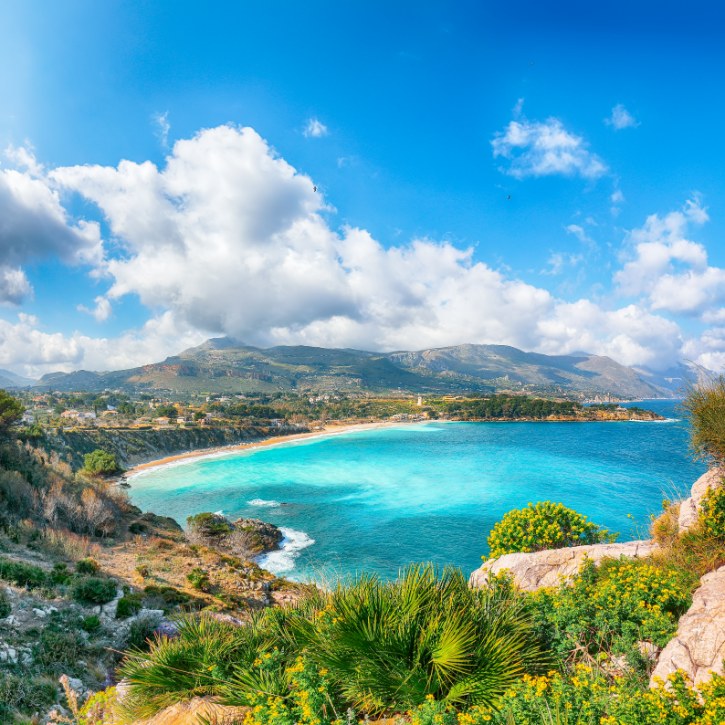
c. Coves Worth Seeking Out
- Guidaloca: the area’s largest and most popular beach, smooth pebbles fronting calm water.
- Cala Bianca: a cove local guides love for snorkeling.
- Cala Rossa: white gravel against red rock, a favorite with divers.
- Cala Mazzo di Sciacca: sheltered, with clear water over stones and plenty of small sea life.
d. Step Into the Zingaro Reserve
- Sicily’s first nature reserve, created in 1981 after locals blocked plans for a coastal highway.
- Seven kilometers of undeveloped cliffs and white-pebble coves, reachable only on foot.
- Look for dwarf palms, wild orchids, and Bonelli’s eagles overhead.
- Its trails have reopened after a wildfire and are accessible again, though it is worth checking current conditions before you set out.
- No bars, umbrellas, or sunbeds inside, so bring your own water and shade sense.
4. Marzamemi
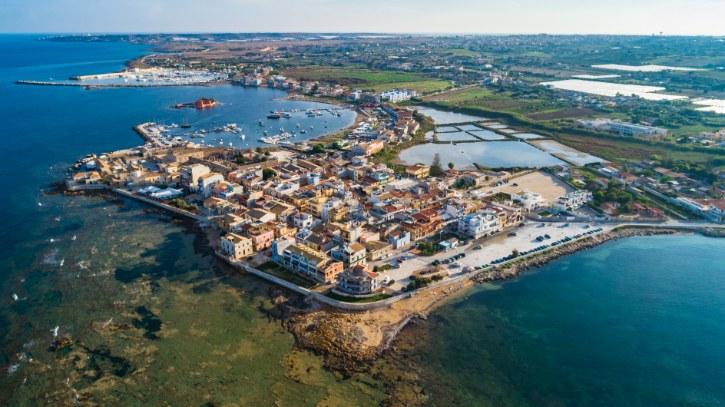
a. A Village Built Around One Square
In the province of Syracuse, Marzamemi gathers around Piazza Regina Margherita, widely loved as its historic heart. The square sits in the oldest quarter and carries an easy, lived-in charm you feel the moment you arrive.
b. The Tuna Trade That Shaped It
- The village grew up around the Tonnara di Marzamemi, the tuna fishery that drove local life.
- The grand Baroque Palazzo di Villadorata on the square shows how much the trade once mattered.
- Knowing this history makes the streets and waterfront read as more than pretty scenery.
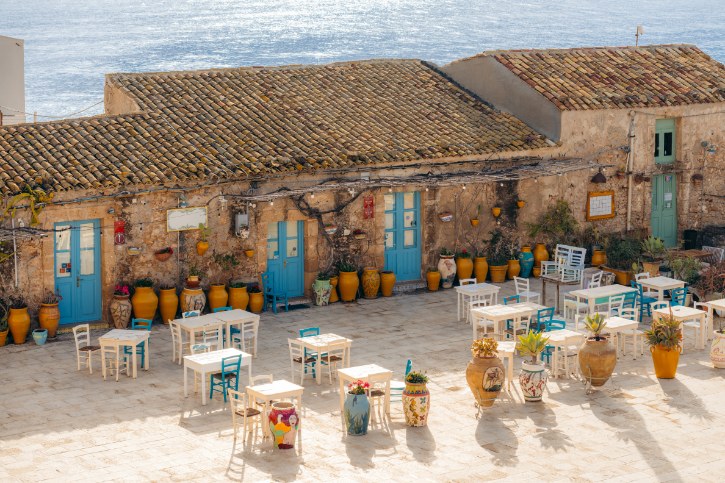
c. Down by the Water
Marzamemi’s identity has always come from the sea. Its small harbor and waterfront grew out of the fishery, and the appeal today is exactly that atmosphere: old stone beside blue water, a place still shaped by fishing rather than resorts.
d. Two Village Churches to Notice
- Both honor San Francesco di Paola, the patron celebrated each first Monday of August.
- The older Baroque church overlooks Piazza Regina Margherita.
- The newer parish church opened for worship in 1948, with a single nave ending in an apse.
5. Ortigia (Syracuse)
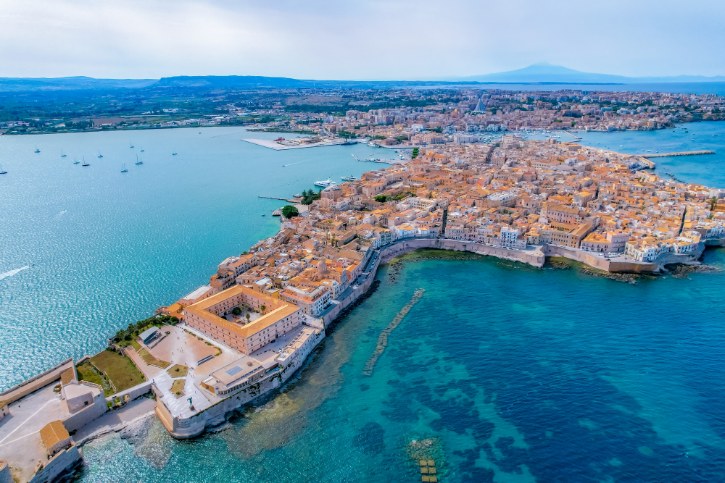
a. An Island Soaked in 3,000 Years
Linked to Syracuse by short bridges, the limestone island of Ortigia holds the core of a Greek city that once rivaled Athens. It belongs to a UNESCO World Heritage site, and its layers show best in Piazza Duomo, which glows at sunset.
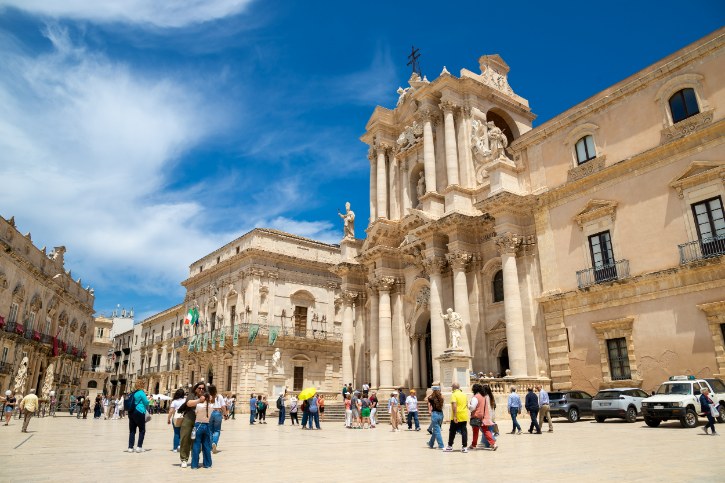
b. A Cathedral Built on a Greek Temple
- Raised over a Doric Temple of Athena from around 480 BC.
- Christian builders walled in the ancient columns to turn it into a church.
- Later a mosque, then a Norman cathedral, then a grand Baroque facade.
- Today 36 original Doric columns still stand inside the walls.
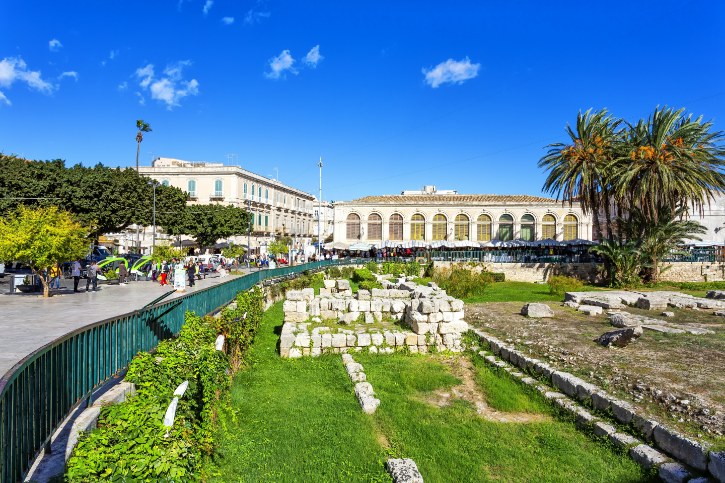
c. Ancient Ruins Among the Cafés
Just inside the island entrance sit the ruins of the Temple of Apollo, recognized as the oldest stone Doric temple in Sicily and the Greek West. Its standing columns and stepped base appear right beside everyday shops, a quick reminder of how deep the island’s history runs.
d. A Legendary Spring and a Sea Fortress
- Fonte Aretusa: a freshwater pool full of papyrus by the harbor, tied to a Greek myth and lovely at sunset.
- Castello Maniace: a Swabian fortress built under Frederick II, guarding the island’s southern tip.
- From there you can read the two historic harbors, broad Porto Grande and smaller Porto Piccolo.
e. Get Lost in the Market Streets
- Wander the medieval grid of stone walls, Baroque facades, and iron balconies.
- The Mercato di Ortigia runs on weekday mornings, just behind the Temple of Apollo.
- Stalls overflow with fresh fish, fruit, and dried goods.
- Evenings keep older traditions alive, like the Opera dei Pupi puppet theatre.
6. San Vito Lo Capo
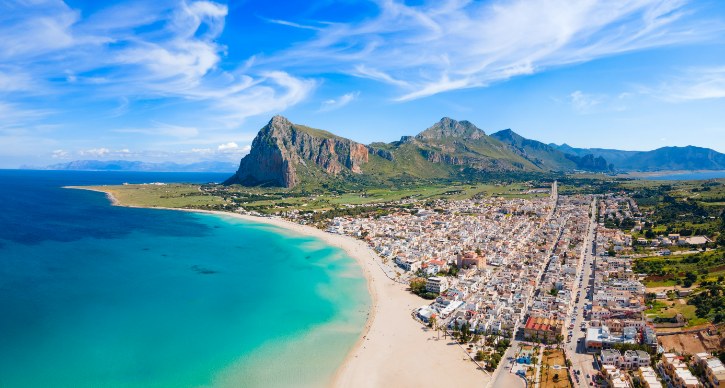
a. The Beach That Made It Famous
At Sicily’s northwestern tip, San Vito Lo Capo trades steep rocky coves for a three-kilometer sweep of fine, pale sand. It slopes gently into shallow, crystal-clear water, framed at the eastern end by the flat-topped massif of Monte Monaco. This is the open, easygoing beach day Sicily is known for.
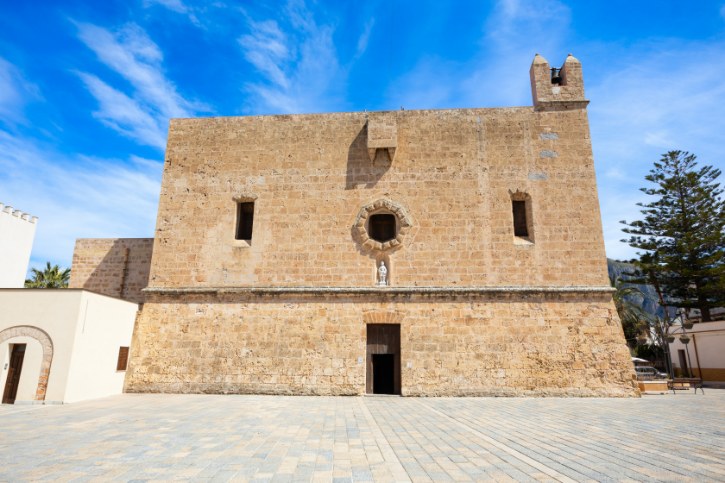
b. A Church That Doubles as a Fortress
- The Sanctuary of San Vito Martire was built in the 15th century to guard against pirate raids, which is why it looks like a stronghold.
- Inside you will find an old marble altar, an ancient underground chamber, and rooftop terraces.
- Nearby stand Il Torrazzo, an Arab watchtower, and the Moorish-Norman Chapel of Santa Crescenzia.
c. Settle Into Village Life
Sitting just steps from the beach, the town spreads out from Piazza Santuario along welcoming streets like Via Savoia. You will find neighborhood cafés, artisan shops, and open-air evenings, the kind of place that stays pleasant even when you skip the sand.
d. Wild Headlands on Either Side
- The northern gate of the Zingaro Reserve lies a short drive to the southeast.
- To the west rises Monte Cofano, a sun-baked limestone reserve with sea-facing trails and snorkeling coves.
- Its trails have reopened after the wildfire that also hit the Zingaro, though access can change, so check before you go.
- Expect little shade or water and no lifeguards, so come well prepared.
e. Come Hungry for Couscous
- The Cous Cous Fest fills the town every September with cooking shows and free beach concerts.
- The star is Trapani-style fish couscous, blending North African technique with Sicilian seafood.
- Other seasons bring the June patron festival and an October catch celebration.
7. Castellammare del Golfo
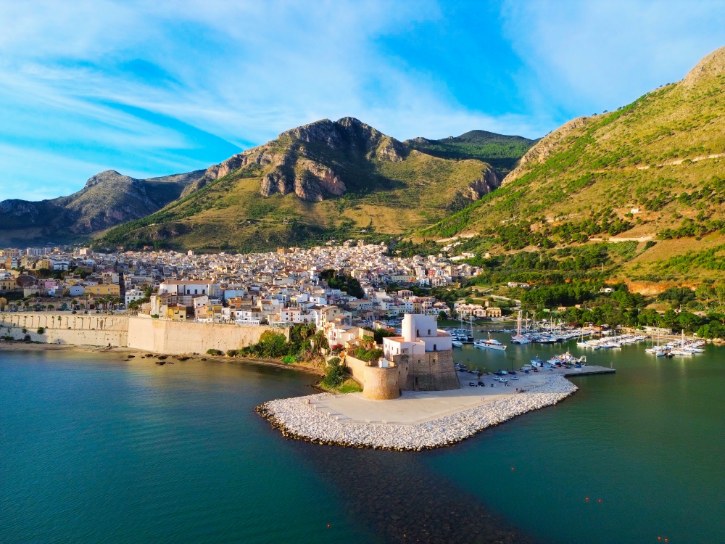
a. A Castle Named for the Sea
Castellammare del Golfo takes its name from the Castello a Mare, the “Castle on the Sea”, set on a rocky spur where waves once struck its walls. Built by Arab rulers around the 10th century and later expanded under the Normans, it still anchors the harbor view. Head up to the Belvedere terrace for the town’s signature sunset scene.
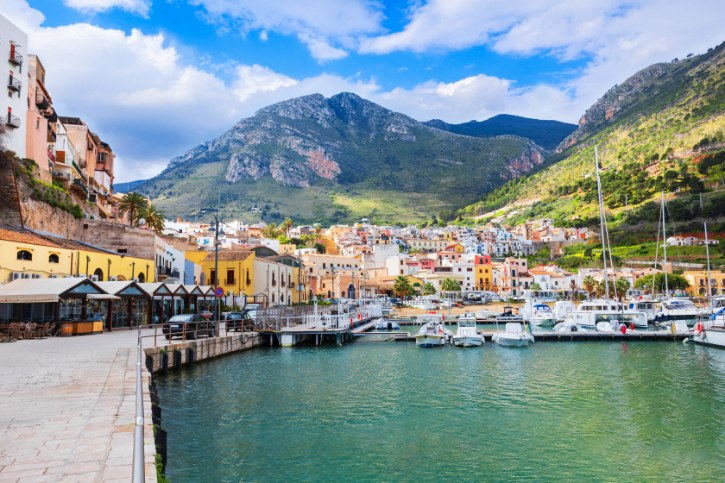
b. The Harbor and Its Historic Churches
- Cala Marina: the working harbor below the castle, lined with fishing boats and seafood restaurants.
- Madonna della Scala: a small white church marking a local storm legend.
- Madonna of the Rosary: Norman-era, with a 16th-century marble relief from the Gagini workshop.
- Palazzo Crociferi: now the Town Hall, with an Art Nouveau theatre tucked inside.
c. Know Where to Actually Swim
- Cala Marina is a boat harbor, not a swimming spot.
- Cala Petrolo: an easy urban cove of sand and pebbles below the Belvedere.
- Spiaggia della Plaja: the main long sandy beach, with soft sand and usually calm water.
- Skip the unverified sea caves and stick to these established beaches.
d. Taste the Flavors of the Town
- Daily harbor landings mean fresh fish, sarde a beccafico, and seafood pasta.
- The nearby hills add prized Sicilian truffles.
- Save room for Cassatella di Castellammare, the town’s signature sweet.