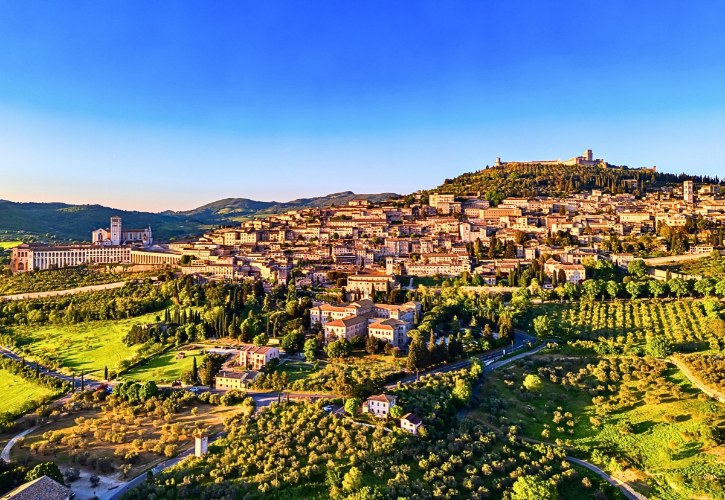
You don’t just visit Italy’s medieval hill towns. You step into them, and the centuries close in around you. Worn gateways open onto lanes of weathered stone, olive groves fall away below the walls, and quiet squares hold the weight of a thousand years.
The Middle Ages aren’t on display here. They’re simply still standing. These five towns let you feel that magic for yourself. 😊
1. Assisi (Umbria)
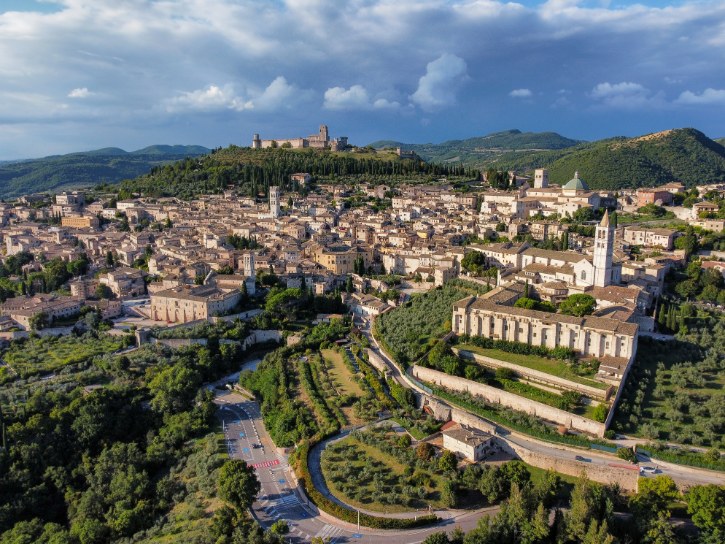
a. The Town That a Saint Made Famous
Assisi clings to the slopes of Monte Subasio, its pink and white stone glowing above the Umbrian valley. The town owes its soul to Saint Francis, whose message of poverty and compassion still runs through its streets.
- He founded the Order of Friars Minor in 1209 and preached brotherhood and care for all living things
- Eight hundred years after his death in 1226, pilgrims still walk the same lanes toward his tomb
- UNESCO protects Assisi and its Franciscan sites, honoring both the art and the movement Francis began
- The protected area reaches the hill town, its churches, and sanctuaries like San Damiano and the forest hermitage of Eremo delle Carceri
b. Frescoes That Rewrote Western Art
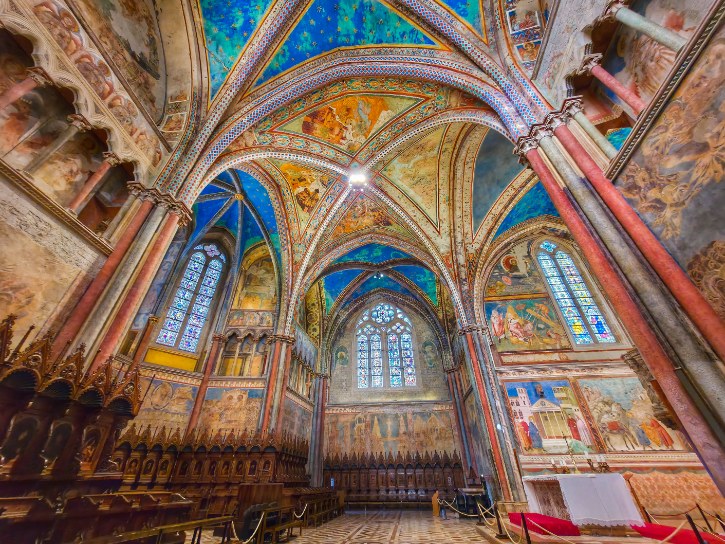
At the western edge of town stands the Basilica of San Francesco, and inside it you’ll find one of the great turning points in European painting.
- The Upper Church holds a famous cycle on the life of Saint Francis, long tied to Giotto, that broke with flat medieval style and gave its figures real human feeling
- Cimabue painted the apse and transept high above
- The Lower Church is a gallery of early masters, including Simone Martini, Pietro Lorenzetti, and Cimabue’s Madonna and Child with Saint Francis
- Beneath it all rests the saint’s tomb, kept in hushed, candlelit quiet
c. Churches and Squares Worth Slowing Down For
You don’t have to be a pilgrim to be moved by Assisi’s other great monuments.
- The Basilica of Santa Chiara dazzles with pink and white stripes and a bold rose window, holding the tomb of Saint Clare
- The Romanesque Cathedral of San Rufino keeps the font where both Francis and Clare were baptized
- Piazza del Comune layers three eras in one glance: a Roman Temple of Minerva, a medieval civic tower, and a Baroque church interior
- Beneath the square lie the remains of the ancient Roman forum
d. The Climb That Rewards You With Views
For the widest views in town, make the uphill walk to Rocca Maggiore.
- The fourteenth-century fortress crowns the highest ridge, with a keep, a courtyard, and rooms of medieval armor and instruments
- From the top, the whole valley opens toward Perugia and Foligno, and trust me, it’s worth every step
- For calm instead of panorama, the Eremo delle Carceri sits in the woods above town, where Francis withdrew to pray
- Even in busy months, its forest keeps a deep and welcome stillness
e. Lanes That Beg to Be Wandered
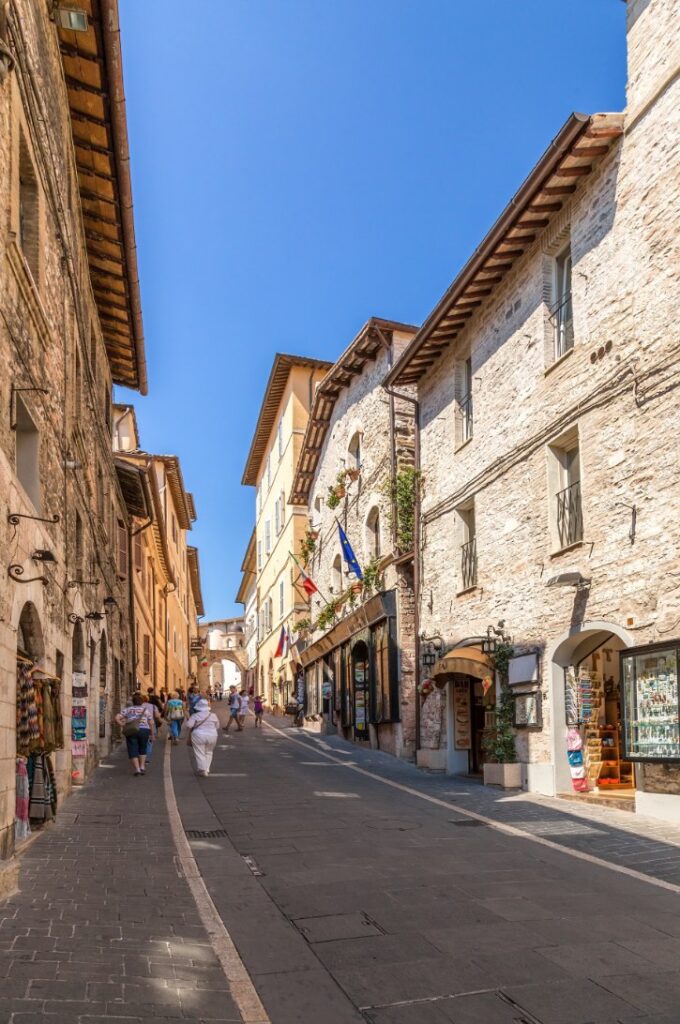
Some of Assisi’s magic is simply in walking it, with no particular place to be. Old street fountains line Via San Francesco, built long ago to give the public fresh water, and steep stone passages climb past medieval gates into small, quiet squares.
Wander a little and you’ll find peaceful corners like the Church of San Damiano waiting just beyond the walls. That blend of deep faith, great art, and intact medieval stone is what sets Assisi apart from every other hill town.
2. Spello (Umbria)
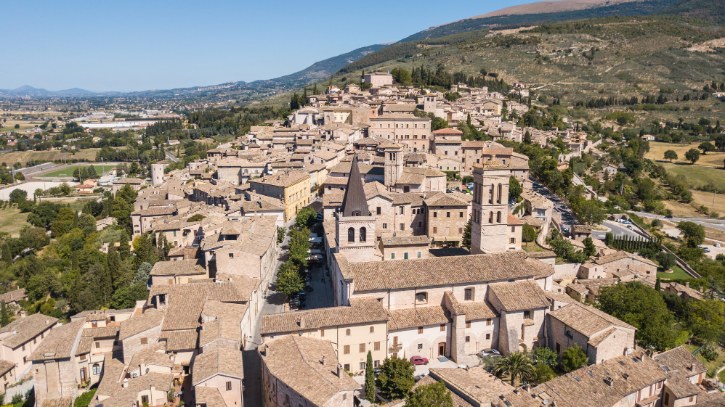
a. Roman Gates You Can Still Walk Through
Just south of Assisi, Spello wears its two thousand years lightly, with Roman monuments framing its medieval lanes.
- Porta Consolare, built around 40 BC, still guards the southern edge, topped by ancient statues and a medieval tower crowned with an olive tree
- Porta Venere, the most dramatic gate, is flanked by two twelve-sided Towers of Properzio you can climb for a view
- About half of Spello’s Roman wall still stands, among the best preserved in Italy
- Just outside the walls, the Villa dei Mosaici shelters beautiful Roman mosaic floors
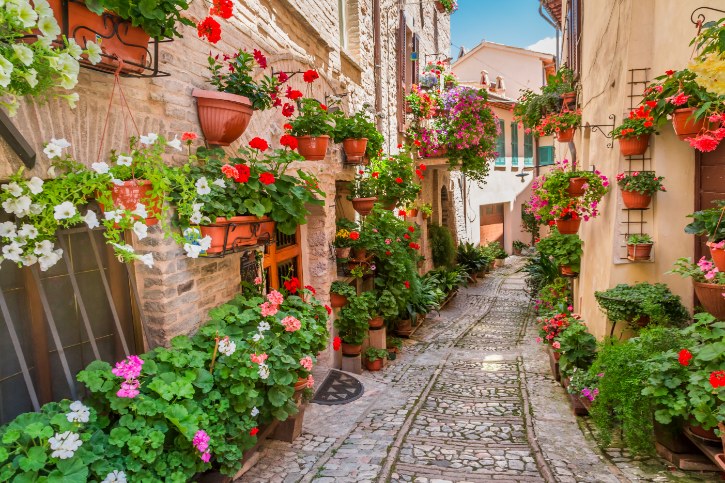
b. Flower-Draped Streets and a Festival of Petals
Spello is famous for its flowers, and it helps to know when and where to find them at their best.
- Potted plants and bright geraniums brighten the stone lanes all year
- From late spring into summer, residents compete to flood balconies and staircases with blooms
- For the feast of Corpus Christi, the town creates the Infiorate, nearly a mile of petal carpets laid overnight on the streets
- By sunrise, you can walk past religious scenes made entirely of flowers before the procession crosses them
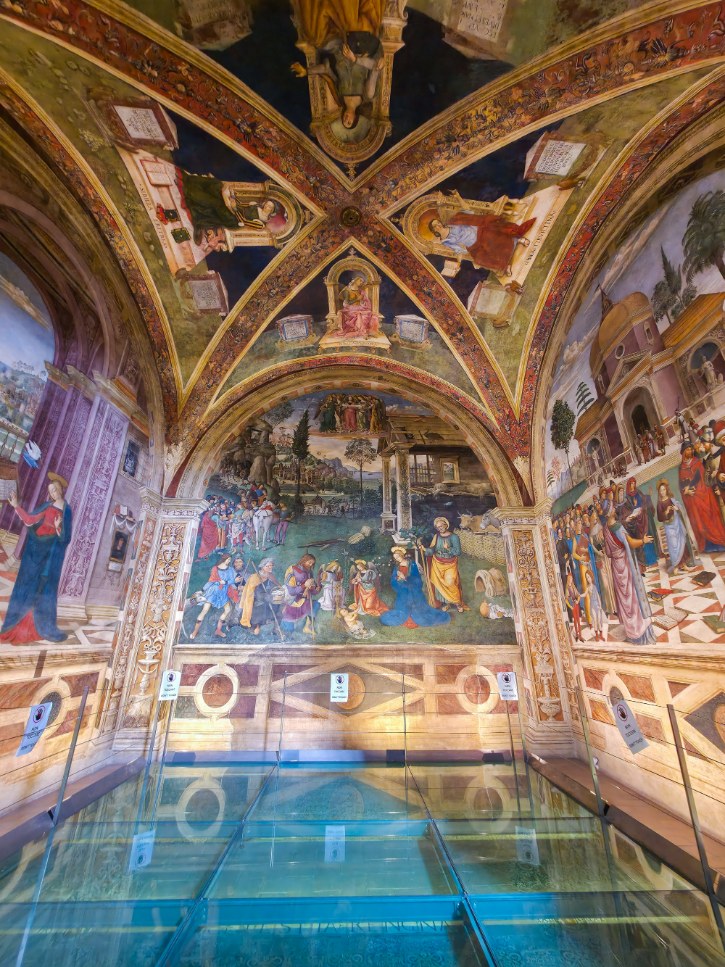
c. Renaissance Treasures Behind Simple Facades
Behind Spello’s modest church walls hide some of Umbria’s finest Renaissance paintings.
- Inside Santa Maria Maggiore, the Baglioni Chapel glows with frescoes painted by Pinturicchio around 1500
- Look near a painted window to spot his tiny signed self-portrait
- The chapel floor is laid with colorful ceramic tiles from nearby Deruta
- The Church of Sant’Andrea keeps another large Pinturicchio panel from 1508
d. Slow Strolls and Long Valley Views
Spello rewards an unhurried pace more than a checklist. Via Consolare climbs from the old gate into a web of quiet lanes and stone stairways, while Piazza della Repubblica centers the town around a medieval palace and fountain.
Two terraces open onto sweeping views over the Valle Umbra and its silvery olive groves, and just outside the walls, Villa Fidelia adds tranquil, formal Italian gardens. Compact and unforced, Spello hands you the quieter romance of medieval Umbria.
3. Anghiari (Tuscany)
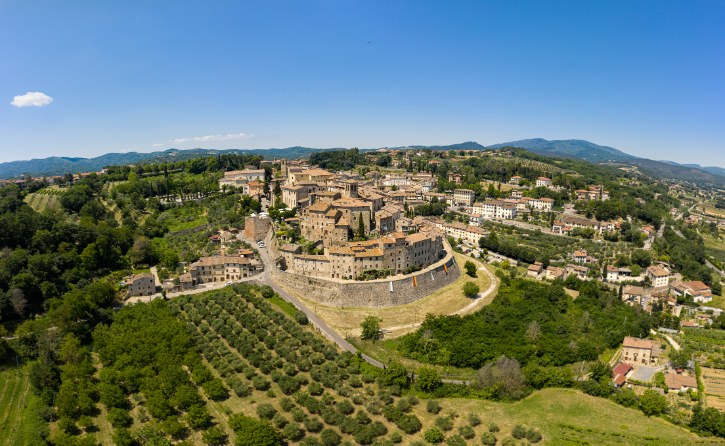
a. A Fortress Town With a Famous Battle
Anghiari sits tight and walled above Tuscany’s Valtiberina valley, still shaped like the frontier fortress it once was.
- Medieval walls, once ringed by a moat, still wrap the whole hilltop
- The town is counted among Italy’s most beautiful villages
- In 1440, Florence won a decisive battle on the plain below, a victory famous for generations
- In 1503, Florence hired Leonardo da Vinci to paint it, and his now-lost mural remains one of the Renaissance’s great mysteries
b. Reliving 1440 at the Battle Museum
To understand that single famous day, step into the Museo della Battaglia inside the Palazzo del Marzocco.
- The museum tells two stories at once: the long history of Anghiari and the memory of the 1440 battle
- Its displays trace everything from prehistoric stone tools to Leonardo’s lost fresco
- A visit adds real depth to a walk along the town’s old ramparts
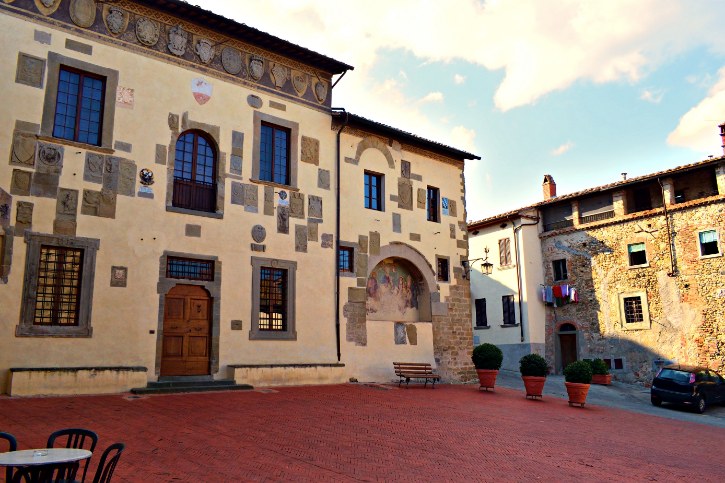
c. Civic Power Written in Stone
Climb to the top of the old center and you’ll find the seat of the town’s long history.
- Palazzo Pretorio still serves as the town hall, as it has for centuries
- Its facade is studded with carved coats of arms left by past rulers under Florence
- Inside, a former prison room keeps a striking old fresco of Justice
- A nearby staircase leads to Santa Maria delle Grazie, a later church holding valued Florentine paintings
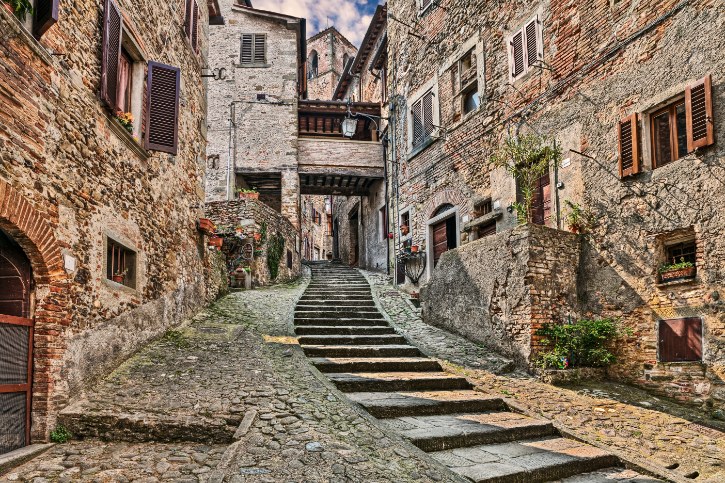
d. Quiet Lanes and Living Traditions
Anghiari stays wonderfully calm compared with Tuscany’s busier hill towns. Stone streets and stairways link its main squares and small museums, so you can wander for an hour and barely meet a crowd. The town keeps its past alive, too.
Every June it runs the Palio della Vittoria, said to be Tuscany’s oldest, born the year after the famous battle, and summer brings music festivals into the old center. What you get here is a genuine, lived-in medieval town rather than a crowded one.
4. Pitigliano (Tuscany)
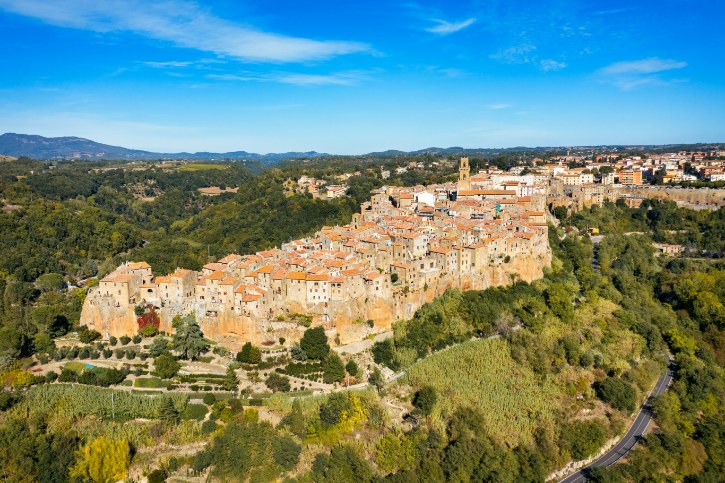
a. A Town Carved Out of the Cliffs
Few first sights in Italy match Pitigliano, which rises like part of the rock itself. The town sits on a narrow spur of volcanic tuff, and its houses seem to grow straight from the cliff, with walls and homes climbing directly from the sheer stone face.
Beneath the streets runs a hidden world of caves and cellars cut into the rock. For the full effect, look back as you approach across the surrounding valley, when the whole silhouette comes into view at once.
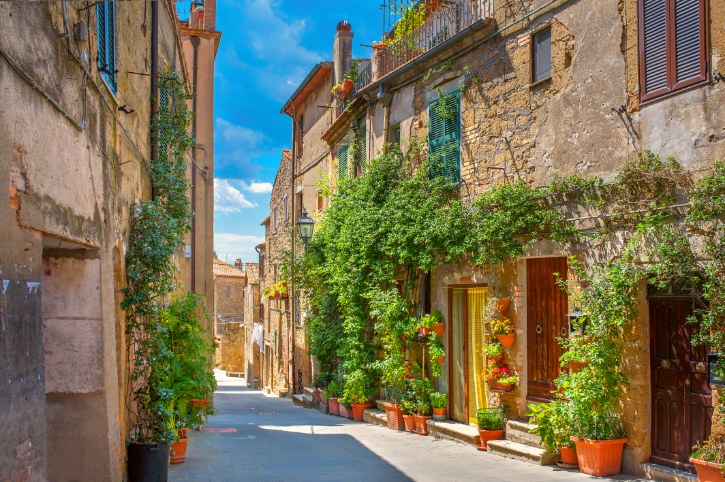
b. Layers of History, From Etruscans to Counts
Pitigliano stacks its past in clear chapters, each one still visible today.
- Etruscans left dramatic rock-cut roads in the land around the town
- A hilltop stronghold grew from a medieval convent into a fortress
- The powerful Orsini counts later turned it into a grand Renaissance palace
- In time, the whole county passed to the Medici of Florence
c. Little Jerusalem and Its Hidden Rooms
Pitigliano earned its nickname, Little Jerusalem, from a Jewish community that shaped the town for centuries.
- Jewish families settled here from the fifteenth century, and the town became a refuge for those exiled from the Papal States
- Its synagogue, from 1598, is among the oldest in Italy
- During the Second World War, local Catholic families hid and saved the Jews who remained
- Below ground you can still see the ritual bath, old bread oven, kosher butcher shop, and a wine cellar carved into the rock
d. The Palace That Holds the Town’s Story
At the top of the tuff spur stands the building that sums up Pitigliano’s whole history.
- Palazzo Orsini grew from a medieval stronghold into a Renaissance seat of power
- Its diocesan museum fills 21 frescoed rooms with centuries of sacred art
- A second museum next door shows Etruscan and local archaeological finds
- The Cathedral of Saints Peter and Paul anchors the town’s religious heart
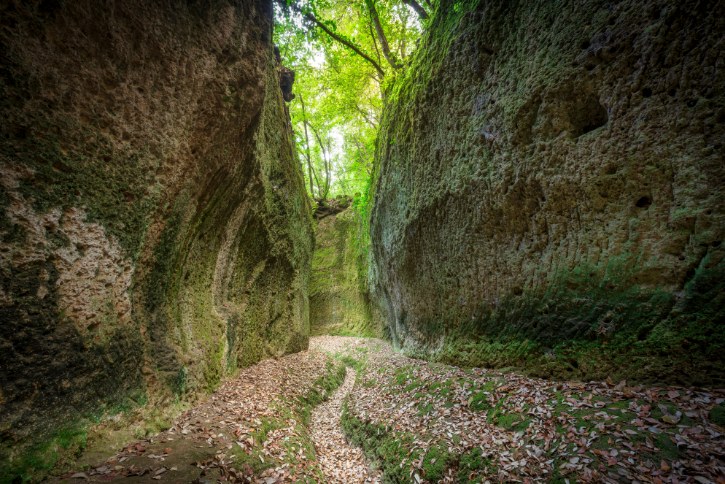
e. The Mysterious Etruscan Vie Cave
Just outside town wait some of Tuscany’s strangest ancient wonders.
- The vie cave are deep roads cut straight down into the tuff, linking Pitigliano with nearby Sovana and Sorano
- Towering rock walls rise on either side as you walk through them
- No one is certain why the Etruscans carved them, which only deepens the spell
Every step through Pitigliano reveals another world shaped from living stone.
5. San Gimignano (Tuscany)
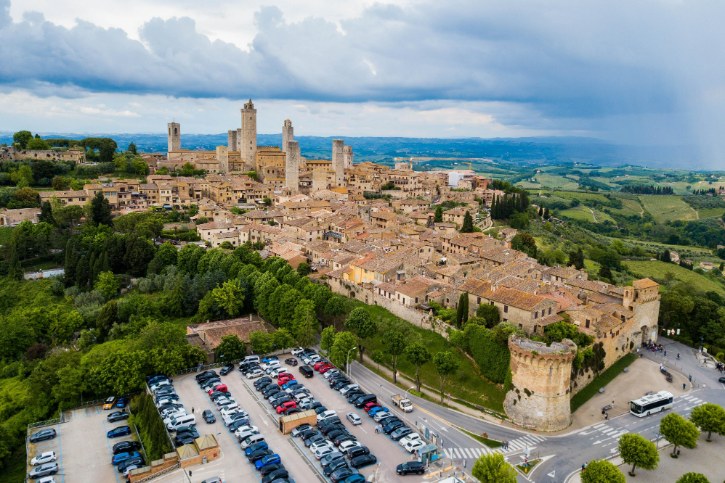
a. The Skyline of Medieval Towers
You’ll spot San Gimignano from far off, its stone towers rising over the Tuscan hills like nothing else in the region.
- Wealth from the Via Francigena pilgrim route made the town rich in the Middle Ages
- Rival families raised tall towers to flaunt their power, once around 72 of them
- Fourteen still stand today, and UNESCO protects the whole historic center
- That skyline is really a record of medieval pride, money, and rivalry
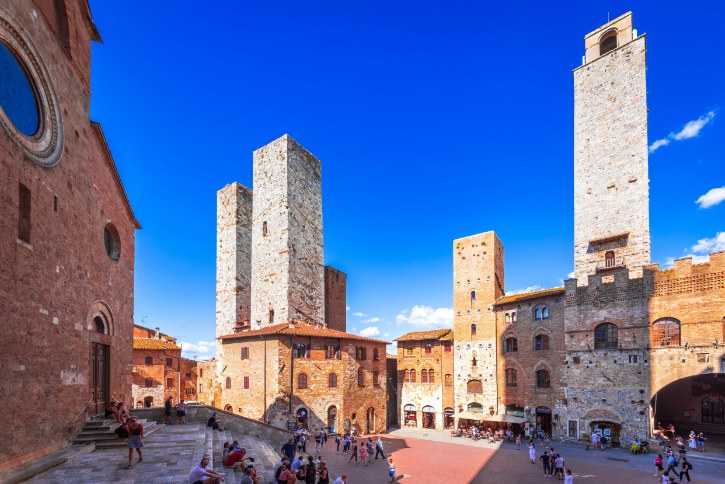
b. The Beating Heart of the Old Town
The center gathers everything that mattered to a medieval Tuscan town into a couple of linked squares. Piazza del Duomo brings religious and civic power together in one space, with the Collegiate Church rising above a broad flight of steps and the old civic palaces and tall Torre Grossa standing close by.
From there, the nearby Piazza della Cisterna completes the classic central walk, and the two squares flow into each other at the core of the old town.
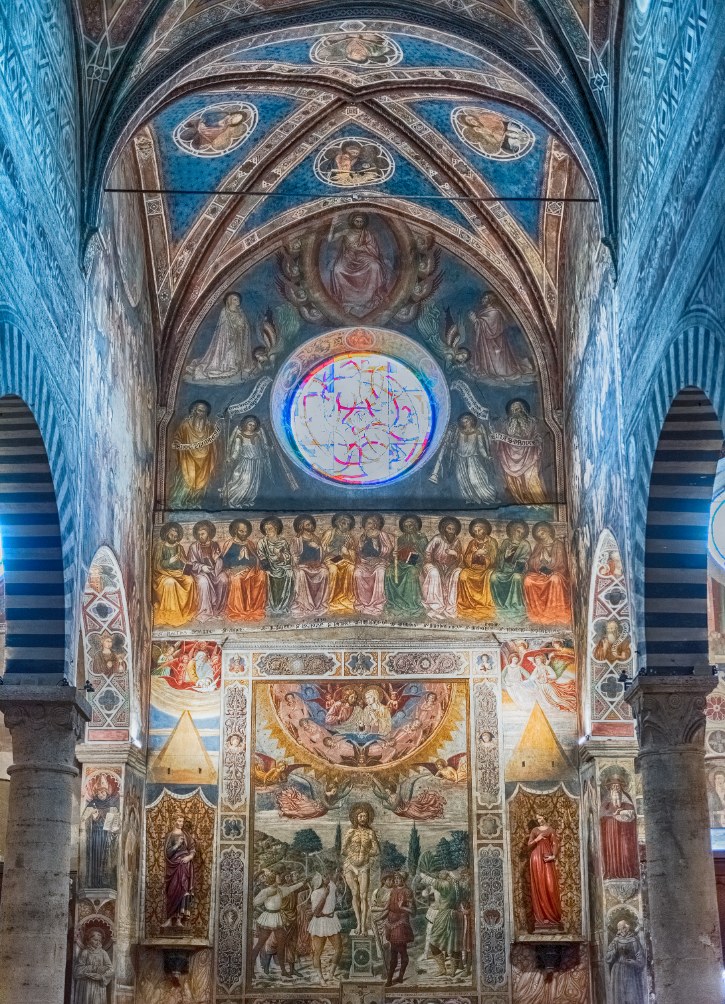
c. Masterpieces Hidden Inside the Duomo
Behind its plain walls, the Collegiate Church guards one of Tuscany’s richest painted interiors.
- The walls unfold with Old Testament scenes and a dramatic Last Judgment
- Works by Lippo Memmi, Benozzo Gozzoli, and other masters fill the church
- The Chapel of Santa Fina pairs fine architecture with frescoes by Domenico Ghirlandaio
- Nearby museums hold more treasures, including a clay model of the town when all 72 towers still stood
d. Climb a Tower, Then Taste the Hills
Save some energy for the climb, then reward yourself afterward.
- Torre Grossa, at 54 meters, is the tallest tower and the one open for you to climb
- From the top you look across the other towers, the old walls, and the vineyards of the Val d’Elsa
- Quieter streets like Via San Giovanni and Via San Matteo reward an aimless wander
- The surrounding hills produce local Vernaccia wine and prized saffron
Each of these towns casts its own spell, but San Gimignano leaves you with a skyline you’ll never forget.