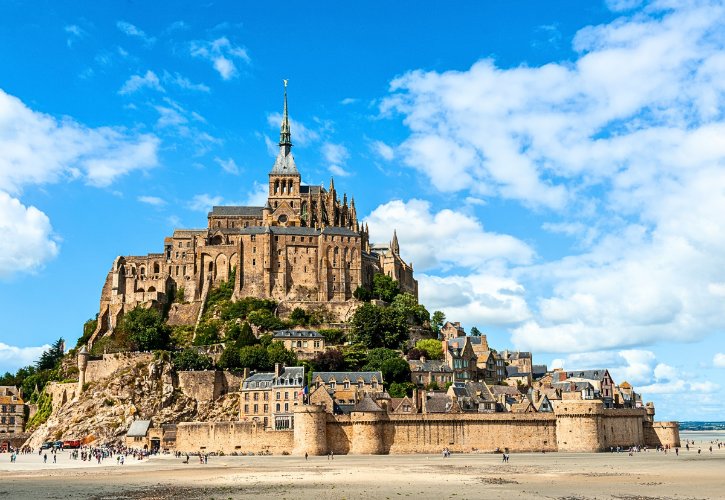
Normandy is one of the most rewarding road trips in France. In two weeks you can see medieval cities, white chalk cliffs, fishing harbors, elegant seaside towns, green countryside, moving D-Day beaches, and the famous Mont Saint-Michel.
This route starts in Rouen, follows the coast and countryside westward, and finishes near Mont Saint-Michel, using four main bases to keep things relaxed. Let’s hit the road.
Day 1: Arrival and Rouen (Base 1)
Overnight: Rouen
a. How to Structure the Day
Check into your accommodation first, then explore the historic center on foot. Arriving early leaves time for a full walk of about 5 hours.
An afternoon arrival suits a 3-hour loop, while an evening arrival is best kept to a short 2-hour stroll to see the illuminated cathedral. Avoid booking timed tickets on arrival day, since travel delays are common.
b. Main Places to Visit
- Rouen Cathedral. A Gothic masterpiece with a facade Monet painted many times, and the tomb of Richard the Lionheart inside.
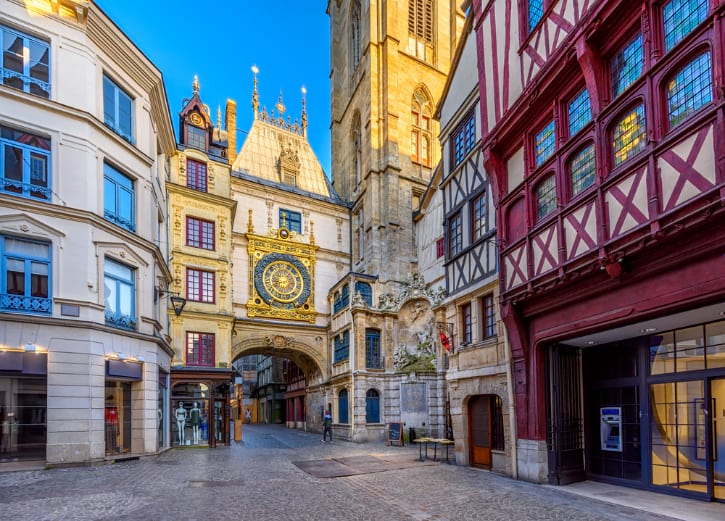
- Rue du Gros-Horloge and the Gros-Horloge. A half-timbered street leading to a grand Renaissance archway with a 14th-century astronomical clock.
- Place du Vieux-Marché. The square where Joan of Arc was executed in 1431.
- Church of Saint Joan of Arc. A striking 1979 building with a ship-shaped roof and salvaged 16th-century stained glass.
- Saint-Maclou Church. Flamboyant Gothic, with a rare plague courtyard nearby.
If time is short, focus on the Cathedral, Gros-Horloge, Place du Vieux-Marché, and Saint-Maclou.
c. What to Skip if Time Is Limited
Leave out distant viewpoints, indoor museums, and long walks along the Seine quays.
d. Why Rouen Works as a Base
Rouen is a walkable historic city with fast links to Paris and easy access to Giverny, the Seine Valley, and Lyons-la-Forêt. Staying three nights avoids constant hotel changes.
e. Best Area to Stay
Stay near the cathedral or old market for the most atmosphere and walkability. Choose the edge of the center for a quieter night and easier driving, or the station area if you want the simplest access by car.
Day 2: Day Trip to Giverny and Les Andelys
Starting point: Rouen. Overnight: Rouen. Visit Giverny first, then Les Andelys.
a. How to Structure the Day
Leave Rouen by 8:30 to reach Monet’s gardens before the tour buses. Explore Giverny in the morning, have lunch, then visit Les Andelys in the afternoon, when the fortress views look their best.
b. Driving Times
- Rouen to Giverny: about 1 hour.
- Giverny to Les Andelys: about 30 minutes.
- Les Andelys to Rouen: about 1 hour.
- Total: roughly 2 hours 30 minutes.
c. Giverny
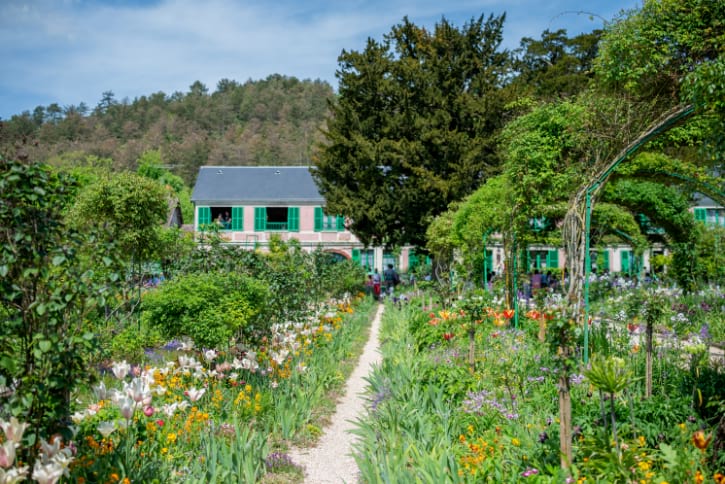
- Monet’s house and gardens. The Clos Normand flower garden, the water lily pond, and the green Japanese bridge.
- Village walk and Monet’s grave at Sainte-Radegonde Church.
- Museum of Impressionisms, optional.
The gardens open April 1 to November 1 and close in winter. Book a timed entry slot online in advance.
d. Les Andelys
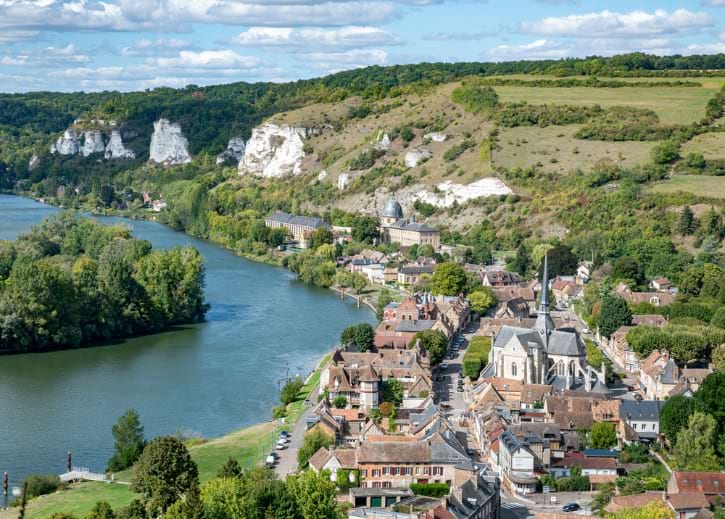
Focus on Petit-Andely, right on the Seine, with its half-timbered riverfront. High above sits Château Gaillard, built in a single year by Richard the Lionheart. The clifftop viewpoint is the highlight. The outer grounds are open year-round, while the inner keep is seasonal and closed in winter.
e. What to Skip if the Day Becomes Too Full
Skip the Museum of Impressionisms, the castle keep interior, and Grand-Andely. Protect the Monet gardens, Château Gaillard, and Petit-Andely.
f. Practical Advice
- Book Giverny in advance, as lines can top ninety minutes in peak season.
- The path up to Château Gaillard is steep and gravelly, and not suitable for strollers or wheelchairs.
- During the winter closure, focus the day on Vernon and Les Andelys instead.
Day 3: Day Trip to Lyons-la-Forêt and Abbaye de Jumièges
Starting point: Rouen. Overnight: Rouen. Visit Lyons-la-Forêt first, then Jumièges.
a. How to Structure the Day
These two sites sit on opposite sides of Rouen, so you cross the wider city in the middle of the day. Leave by 9:00, spend the morning in Lyons-la-Forêt, have lunch, and cross west in the early afternoon to reach Jumièges outside rush hour.
b. Driving Times
- Rouen to Lyons-la-Forêt: about 45 minutes.
- Lyons-la-Forêt to Jumièges: about 1 hour 15 minutes.
- Jumièges to Rouen: about 35 minutes.
- Total: roughly 2 hours 35 minutes.
c. Lyons-la-Forêt
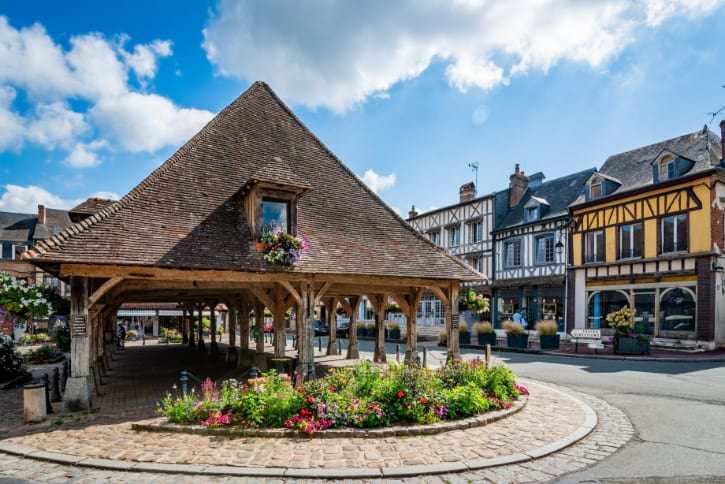
One of France’s prettiest villages, laid out in a circle around a 17th-century covered market hall, ringed by half-timbered houses and a large beech forest with easy walking loops.
d. Abbaye de Jumièges
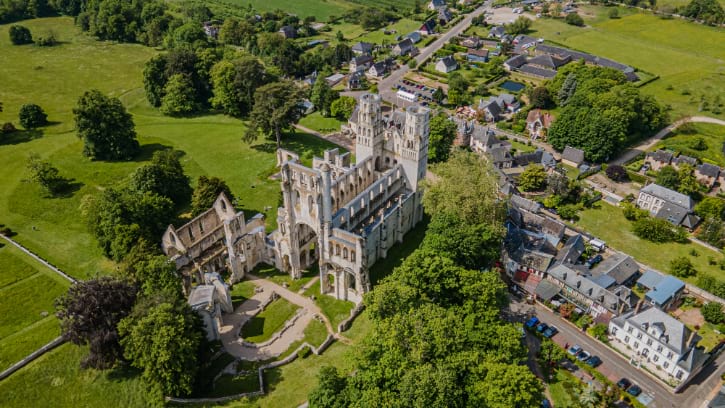
Founded in 654 AD, these are the ruins Victor Hugo called the most beautiful in France. Look for the roofless Romanesque nave, the twin white towers, and the ancient yew tree in the old cloister.
e. What to Skip if Time Is Limited
Skip the forest walk and the optional stop in Duclair.
f. Practical Advice
Between Rouen and Jumièges you can use the free local Seine ferries, which run every 20 to 30 minutes. Vehicles over 3.5 tonnes or 3 meters tall are not allowed.
Day 4: Travel Day from Rouen to Honfleur via Fécamp and Étretat (Base 2)
Overnight: Honfleur. Visit Fécamp first, then Étretat, then drive to Honfleur.
a. How to Structure the Day
Leave Rouen by 8:30, spend the morning and lunch in Fécamp, walk one Étretat cliff in the early afternoon, then cross the Seine estuary to reach Honfleur before sunset. In summer, allow extra time at Étretat.
b. Driving Times
- Rouen to Fécamp: about 1 hour.
- Fécamp to Étretat: about 25 minutes.
- Étretat to Honfleur: about 50 minutes.
- Total: roughly 2 hours 25 minutes.
c. Fécamp
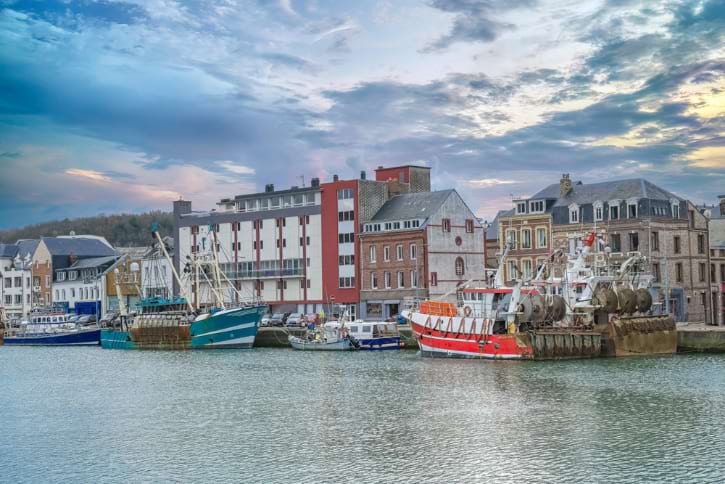
A lively fishing port between the cliffs. The harbor and seafront are the essentials. Cap Fagnet offers coastal views and WWII bunkers, and the Palais Bénédictine houses a museum and the working distillery of Bénédictine liqueur. A distillery tour is optional and needs advance booking.
d. Étretat
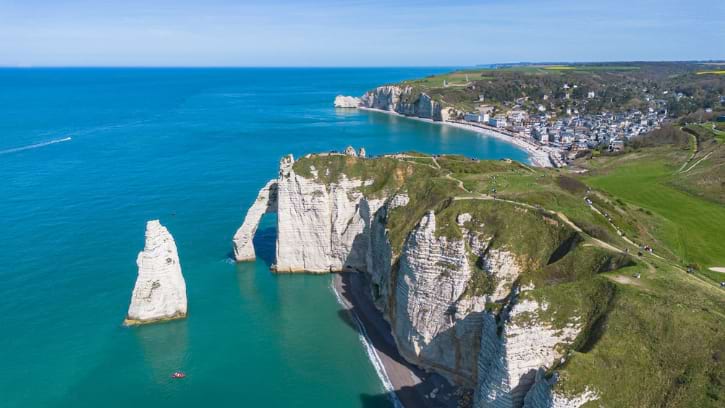
Famous for its white chalk cliffs and natural arches. The pebble beach sits between the Falaise d’Aval, with its arch and needle spire, and the Falaise d’Amont, topped by a chapel. Choose one cliff walk rather than both. The beach and one viewpoint are the essentials.
e. What to Skip if the Day Becomes Too Full
At Fécamp, skip a long indoor visit. At Étretat, complete only one cliff side.
f. Arrival in Honfleur
Keep the evening simple with a short walk around the Vieux Bassin and Saint Catherine’s Church. Save the deeper exploration for Day 5.
g. Best Area to Stay
The eastern center or the Jardin des Personnalités area is easiest with luggage and for driving. The Vieux Bassin and Sainte-Catherine quarter offer the most charm, but the streets are pedestrian, cobbled, and busier at night.
h. Practical Advice
- Étretat cliffs are unstable. Stay on marked paths, keep back from the edge, and do not walk under the cliffs or through the arches.
- Removing pebbles from the beach is illegal, with heavy fines.
- The Pont de Normandie has a toll and can face wind restrictions.
- Étretat is very crowded in summer, so arrive early or later in the afternoon.
Day 5: Explore Honfleur
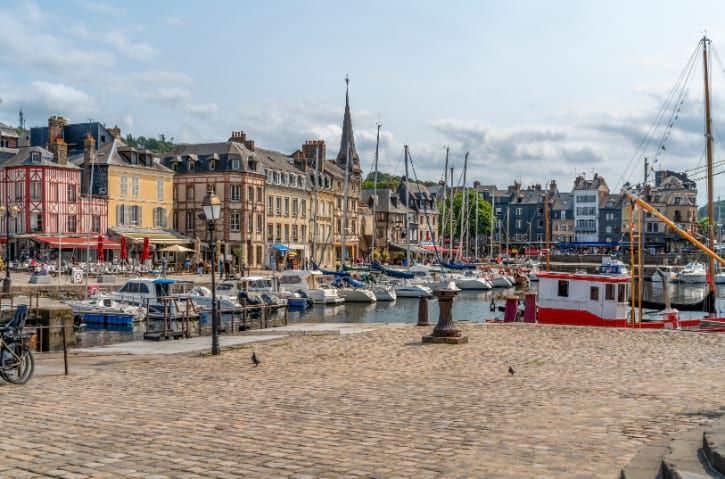
Overnight: Honfleur.
a. How to Structure the Day
A slow day with no driving. See the harbor early before the crowds, wander the historic quarters and a museum, then climb to Notre-Dame-de-Grâce for views over the estuary.
b. Main Places to Visit
- Vieux Bassin. The historic harbor lined with tall, narrow houses. Essential, and worth seeing at more than one time of day.
- Saint Catherine’s Church. Built of wood by shipwrights, with a ceiling shaped like two upturned ship hulls.
- Sainte-Catherine quarter and the Lieutenance, the old harbor gate.
- Saint-Léonard quarter and Jardin des Personnalités, quieter and greener.
- Eugène Boudin Museum, highly recommended for art lovers.
- Notre-Dame-de-Grâce and Mont-Joli viewpoint, up a steep hill, with panoramic views.
c. What to Skip if Time Is Limited
Skip the beach, Naturospace, or a museum. Protect the Vieux Bassin, Saint Catherine’s Church, and the historic streets.
d. Why Honfleur Works as a Base
Honfleur has a wonderful evening atmosphere, easy access to Trouville, Deauville, and the Pays d’Auge, and a compact, walkable center full of restaurants.
Day 6: Day Trip to Trouville-sur-Mer and Deauville
Starting point: Honfleur. Overnight: Honfleur. Visit Trouville first, then Deauville.
a. How to Structure the Day
See Trouville and its fish market in the morning, then Deauville in the afternoon. Park once in Trouville and walk across the bridge or take the small foot ferry, since driving between the two centers means heavy congestion.
b. Driving Times
- Honfleur to Trouville: about 20 minutes.
- Trouville to Deauville: a few minutes, best done on foot.
- Deauville to Honfleur: about 25 minutes.
- Total driving: roughly 50 minutes.
c. Trouville-sur-Mer
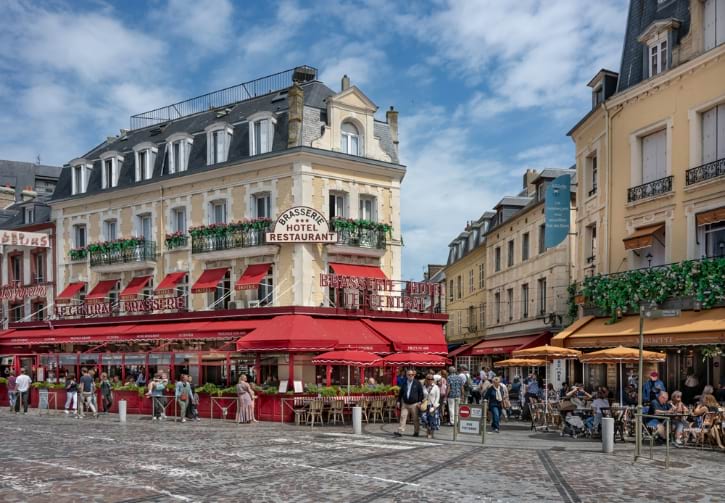
A relaxed fishing town with a busy fish market where you can buy fresh oysters, plus the Les Planches boardwalk and grand old villas.
d. Deauville
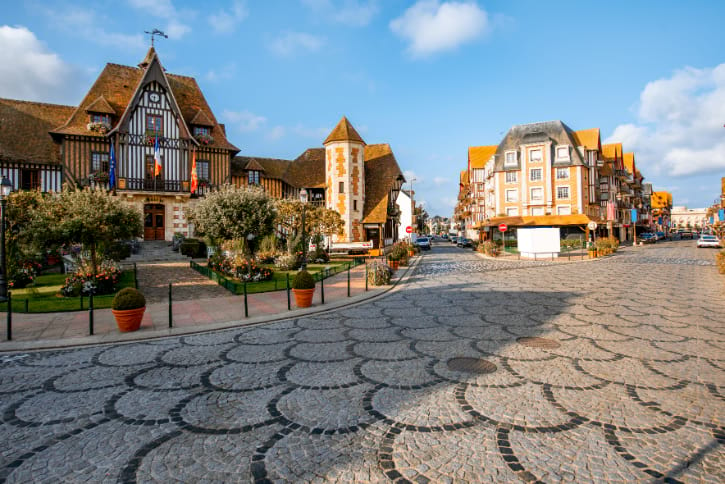
An elegant, purpose-built resort. Les Planches, the 1923 boardwalk with Art Deco cabins, is the essential sight, along with the parasol-dotted beach, Place Morny, the casino, and the grand hotels.
e. How to Compare the Two Towns
Trouville is a working town with an informal, nostalgic feel, while Deauville is polished and glamorous. Seeing both makes the day feel complete.
f. What to Skip if the Day Becomes Too Full
Skip Villa Strassburger, extended shopping, and a long stay on the beach. Keep Trouville’s harbor and boardwalk, and Deauville’s Les Planches.
g. Practical Advice
Festivals and horse-racing events crowd both towns and fill accommodation, so check the local calendar. Walking between the towns is usually faster than driving.
Day 7: Day Trip to Pont-l’Évêque and Beuvron-en-Auge
Starting point: Honfleur. Overnight: Honfleur. Visit Pont-l’Évêque first, then Beuvron-en-Auge.
a. How to Structure the Day
Swap the coast for the green Pays d’Auge. Take a relaxed morning start, explore Pont-l’Évêque and have lunch, then drive the scenic backroads to Beuvron-en-Auge.
b. Driving Times
- Honfleur to Pont-l’Évêque: about 20 minutes.
- Pont-l’Évêque to Beuvron-en-Auge: about 30 minutes.
- Beuvron-en-Auge to Honfleur: about 40 minutes.
- Total: roughly 1 hour 30 minutes.
c. Pont-l’Évêque
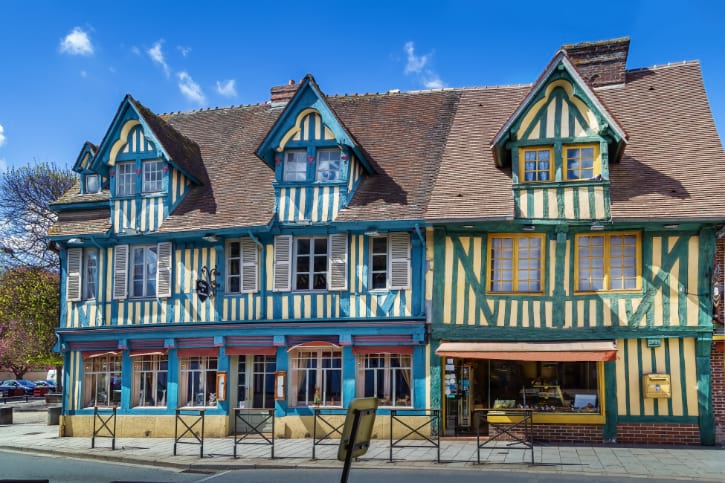
More than just a cheese, this market town has half-timbered houses, the Gothic Saint-Michel Church, old washing places, and a strong tradition of cheese, cider, and Calvados.
d. Beuvron-en-Auge
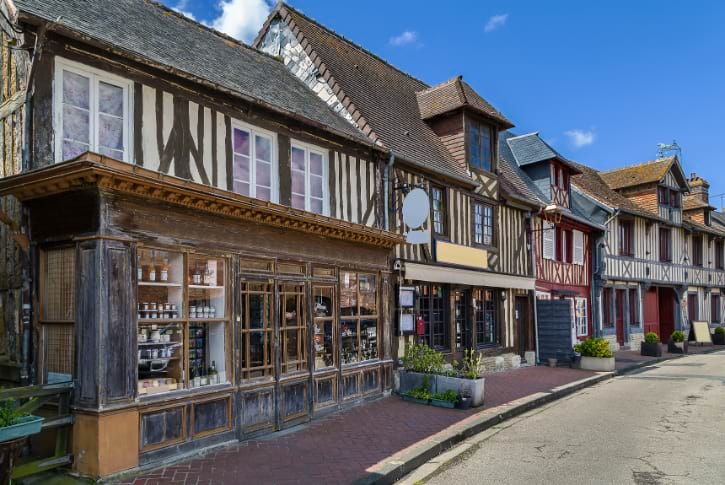
One of France’s prettiest villages, with a central square framed by half-timbered houses, a wooden market hall, and artisan shops, all surrounded by apple orchards.
e. Optional Cider Route Addition
The Pays d’Auge Cider Route winds through the orchards, with a good stop at Cambremer and the Pierre Huet distillery for tastings of cider, Pommeau, and Calvados.
f. What to Skip if Time Is Limited
Skip the Cider Route extension and keep both towns, since they feel very different.
g. Practical Advice
- Country roads are narrow, with slow farm traffic and limited visibility.
- Many shops and cideries close for lunch between 12:30 and 2:00.
- If you plan to taste alcohol, arrange a driver who is not drinking.
Day 8: Travel Day from Honfleur to Bayeux via Caen (Base 3)
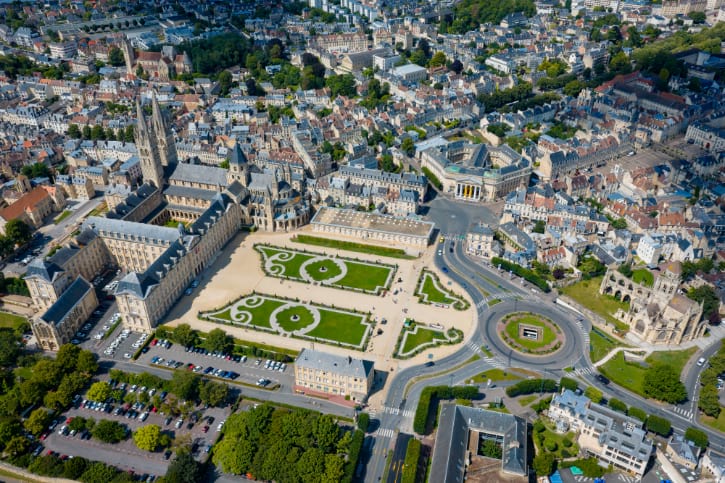
Overnight: Bayeux. Visit Caen, then continue to Bayeux.
a. How to Structure the Day
Choose one Caen experience, since doing both would leave you rushed. Option 1 is historic Caen. Option 2 is the Mémorial de Caen war museum.
b. Driving Times
- Honfleur to Caen: about 1 hour.
- Caen to Bayeux: about 30 minutes.
- Total: roughly 1 hour 30 minutes.
c. Historic Caen (Option 1)
Shaped by William the Conqueror. Visit the Château de Caen, a huge fortress reopened after renovation in 2025, with two museums inside, then Saint-Pierre Church, the Vaugueux quarter, and the Abbaye aux Hommes, where William is buried.
d. Mémorial de Caen (Option 2)
A world-class museum on the Second World War and the Battle of Normandy. Allow at least 3 hours, and be ready for an emotionally demanding visit.
e. Arrival in Bayeux
Keep the first evening calm, with a walk along the River Aure and the illuminated cathedral.
f. Why Bayeux Works as a Base
Bayeux is compact and walkable, with excellent access to the D-Day beaches and the Cotentin Peninsula, plus good road and rail links. Stay four nights.
g. Best Area to Stay
The cathedral quarter or River Aure area gives the best mix of charm and ease. The station area is most convenient if you are continuing by train.
Day 9: Explore Bayeux
Overnight: Bayeux.
a. Important 2026 and 2027 Update
The Bayeux Tapestry Museum is closed for renovation, from September 2025 until October 2027. The original tapestry is on loan to the British Museum from September 2026 to July 2027, so it cannot be seen in Bayeux during 2026 or 2027. Explore the high-resolution digital tapestry online, and recheck the reopening status before you travel.
b. Main Places to Visit
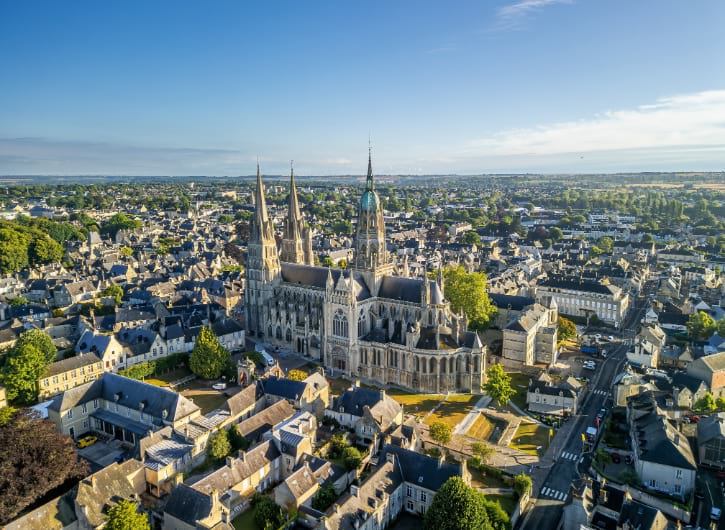
- Bayeux Cathedral. A Norman-Gothic cathedral consecrated in 1077, with a beautiful crypt.
- Old town and River Aure, with timber-framed streets and historic waterwheels.
- MAHB (Baron Gérard Museum), with paintings, lace, and Bayeux porcelain.
- Memorial Museum of the Battle of Normandy. A thorough account of the 1944 fighting.
- Bayeux War Cemetery. The largest Commonwealth WWII cemetery in France, deeply moving.
c. What to Skip if Time Is Limited
Skip the MAHB interior. Keep the cathedral, the old town, one museum, and the war cemetery.
Day 10: Day Trip to Arromanches-les-Bains, Omaha Beach, and Pointe du Hoc
Starting point: Bayeux. Overnight: Bayeux. Visit Arromanches first, then Omaha Beach, then Pointe du Hoc.
a. How to Structure the Day
This is a meaningful day that should not be rushed. Leave Bayeux by 8:30 and follow the sites in order. Plan for a full day of about 8 to 10 hours.
b. Driving Times
- Bayeux to Arromanches: about 15 minutes.
- Arromanches to the Omaha Beach area: about 35 minutes.
- Omaha Beach to Pointe du Hoc: about 15 minutes.
- Pointe du Hoc to Bayeux: about 35 minutes.
- Total: roughly 1 hour 40 minutes.
c. Arromanches-les-Bains
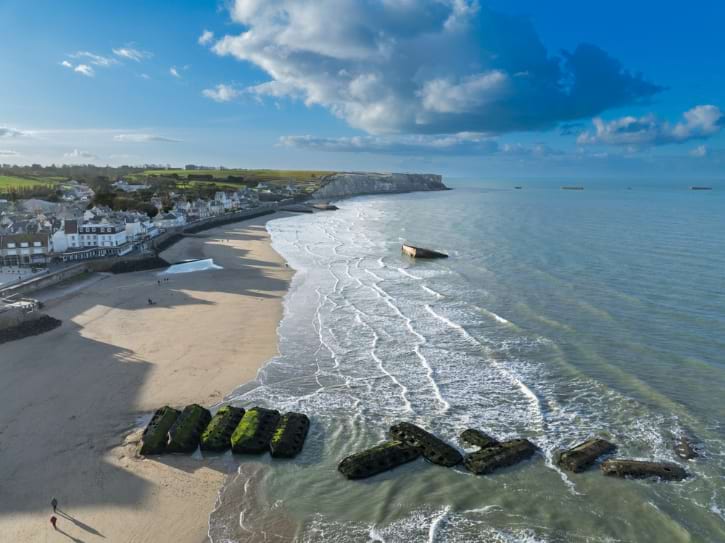
Site of the artificial “Port Winston” harbor, whose concrete remains are still visible at low tide. The D-Day Museum explains the engineering.
d. Omaha Beach

A large sector rather than one site. The Normandy American Cemetery, with 9,387 graves, is the emotional heart, along with the Les Braves monument. Expect security screening and strict rules on respectful conduct.
e. Pointe du Hoc
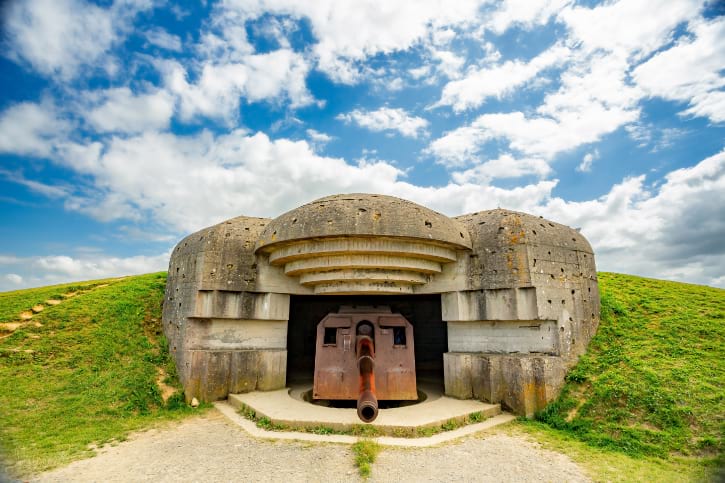
A dramatic clifftop battery where U.S. Rangers scaled the cliffs on D-Day, still marked by craters and bunkers. Because of a major restoration, the Visitor Center is closed from March 9, 2026, the Ranger Monument was relocated in June 2026, and access is restricted to the west pathway only, with several bunkers closed.
f. What to Skip if the Day Becomes Too Full
Skip a second Omaha museum, Vierville-sur-Mer, and minor memorials. Keep Arromanches, the American Cemetery, one beach stop, and Pointe du Hoc.
g. Practical Advice
- Behave respectfully and allow time for quiet reflection, especially at the cemetery.
- Traffic is much heavier around June 6.
Day 11: Day Trip to Saint-Vaast-la-Hougue and Barfleur
Starting point: Bayeux. Overnight: Bayeux. Visit Saint-Vaast-la-Hougue first, then Barfleur.
a. How to Structure the Day
This is the longest day trip. Leave Bayeux by 8:00, explore Saint-Vaast and have lunch, decide whether to add Tatihou Island, then continue to Barfleur before the long drive back.
b. Driving Times
- Bayeux to Saint-Vaast-la-Hougue: about 1 hour 10 minutes.
- Saint-Vaast-la-Hougue to Barfleur: about 15 minutes.
- Barfleur to Bayeux: about 1 hour 20 minutes.
- Total: roughly 2 hours 45 minutes.
c. Saint-Vaast-la-Hougue
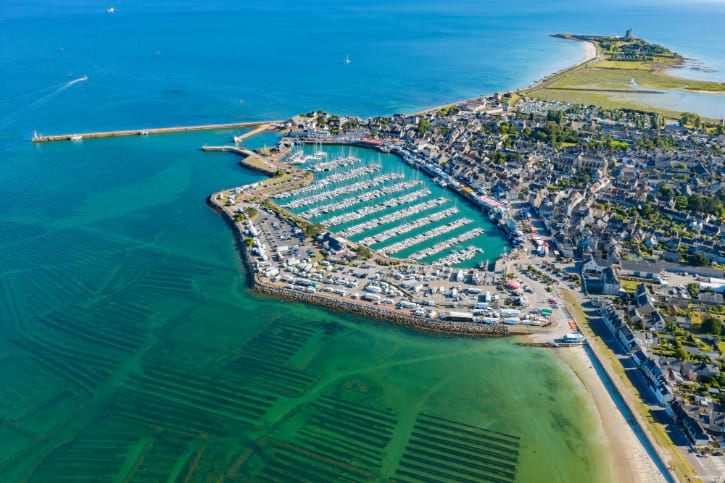
A charming fishing port with the oldest oyster beds in Normandy and a UNESCO-listed Vauban tower on the La Hougue peninsula.
d. Should Tatihou Island Be Added?
Tatihou is reached by an amphibious vessel and limited to 500 visitors a day, so book online. It is open from February 28 to November 1, 2026. Either take the relaxed route (Saint-Vaast and Barfleur) or the Tatihou-focused route, with Barfleur shortened to fit the boat schedule.
e. Barfleur
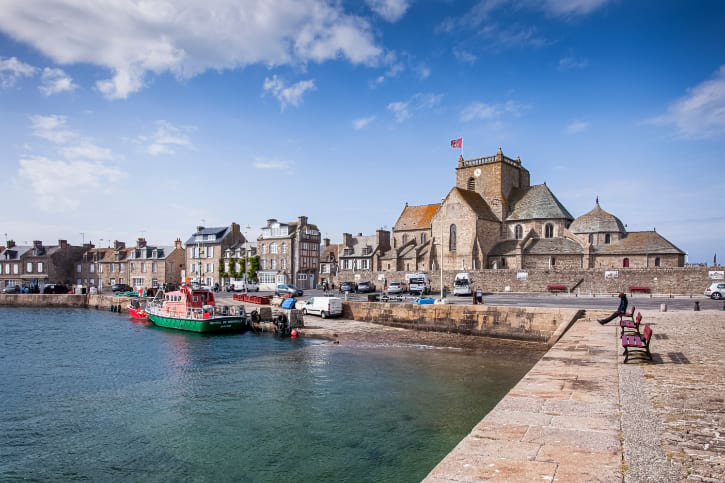
A quiet grey-granite fishing village, one of France’s prettiest, with a big square-towered church and fresh oysters by the harbor.
f. Optional Nearby Stop
If time and weather allow, add the Gatteville Lighthouse, with 365 steps and fine coastal views.
g. What to Skip if Time Is Limited
Skip the lighthouse first, then choose between Tatihou and Barfleur based on your interests.
h. Practical Advice
Tides affect island access and can cancel boat crossings, and the return drive is long, so keep the pace relaxed.
Day 12: Travel Day from Bayeux to Avranches via Granville (Base 4)
Overnight: Avranches. Visit Granville, then continue to Avranches.
a. How to Structure the Day
Leave Bayeux by 9:00, explore Granville and have lunch, then reach Avranches with enough daylight for the sunset view over Mont Saint-Michel Bay.
b. Driving Times
- Bayeux to Granville: about 1 hour 15 minutes.
- Granville to Avranches: about 30 minutes.
- Total: roughly 1 hour 45 minutes.
c. Granville
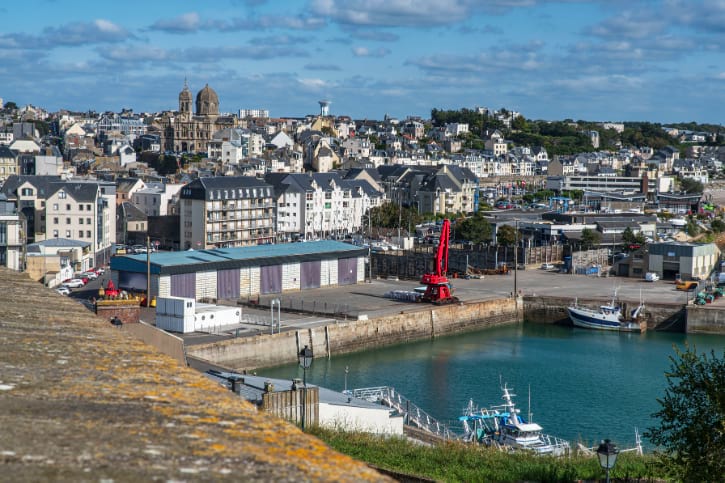
Known as the “Monaco of the North”, with a lower port and a walled upper town. Walk the harbor, the Haute Ville ramparts, and Notre-Dame du Cap Lihou, then Pointe du Roc. The free Christian Dior gardens are an optional add-on.
d. Avranches
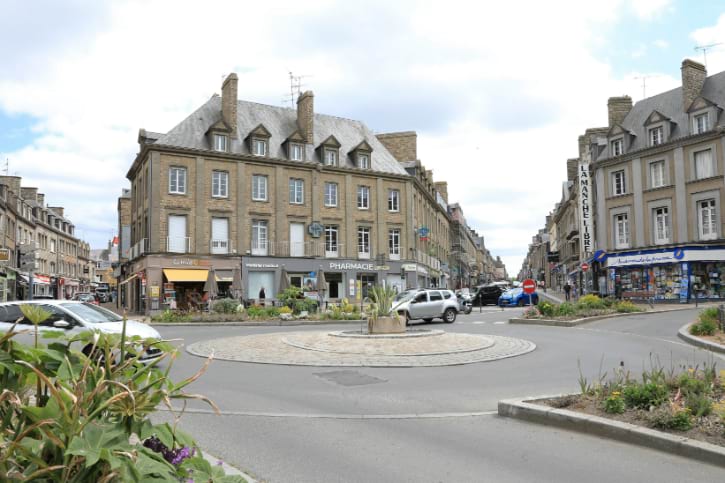
A hilltop town with grand bay views. The Jardin des Plantes offers the famous panorama of Mont Saint-Michel, best at sunset. The Basilica of Saint-Gervais and the Scriptorial manuscript museum are also worth a look. For the arrival evening, focus on the Jardin des Plantes and a short old-town walk.
e. Why Avranches Works as a Base
Avranches is close to Mont Saint-Michel, quieter than staying on the mount, with good road and rail links and access to Villedieu-les-Poêles.
f. Best Area to Stay
The Jardin des Plantes area gives the best views, while the station area is most convenient for onward travel.
g. What to Skip if Time Is Limited
In Granville, skip the Dior museum and focus on the Haute Ville, ramparts, and port. In Avranches, prioritize the Jardin des Plantes.
Day 13: Day Trip to Mont Saint-Michel
Starting point: Avranches. Overnight: Avranches.
a. How to Structure the Day
Choose the Early Arrival Plan, reaching the visitor area by 8:15 for the first shuttles and a quiet abbey opening, or the Late Arrival Plan, after 16:30, for evening light and thinner crowds. The early plan is best for a first visit.
b. Driving and Access Times
- Avranches to the visitor area: about 25 minutes.
- Free shuttle to the mount: about 10 minutes, or a 30-minute
- Allow at least 45 to 60 minutes total from your car to the main gate.
Private vehicles cannot drive to the mount, so you park in the mainland lots and walk or take the shuttle.
c. Recommended Order and Main Places
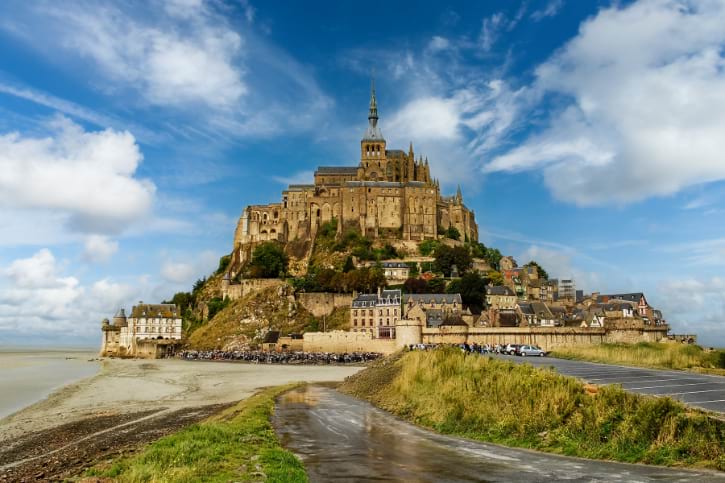
Start with photos from the causeway, enter through the King’s Gate, and walk up the Grande Rue. The abbey is the highlight, with its Romanesque church and the Gothic halls known as La Merveille. Afterward, explore the ramparts and the quiet side lanes.
d. Tides and Safety
Mont Saint-Michel has the highest tidal range in continental Europe, and high tides can briefly surround the mount. Never walk into the bay on your own, as it hides quicksand and fast tides. Guided crossings with a certified guide are the only safe way to cross.
e. Accessibility
The shuttle and causeway are wheelchair accessible, but the village is steep and cobbled, and the abbey has over 350 steps with no elevator.
f. What to Skip if Time Is Limited
Skip long meals, small museums, and repeated shopping. Protect time for the abbey, the ramparts, and the village lanes.
Day 14: Day Trip to Villedieu-les-Poêles and Departure
Starting point: Avranches. Plan the final day around your departure time.
a. How to Structure the Day
For an early departure, skip Villedieu-les-Poêles and head straight out. For a mid-afternoon departure, take a short two-hour visit with a foundry tour. For an evening departure, enjoy a relaxed few hours with lunch and the workshops.
b. Villedieu-les-Poêles
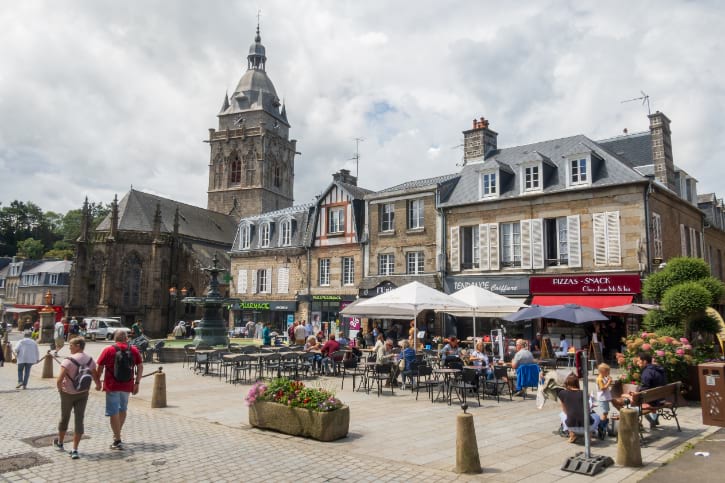
A “City of Art and History” known for copper-working and bell-making. The Cornille Havard Bell Foundry, one of the last active bell workshops in the world, cast bells for Notre-Dame de Paris. Guided visits take about 45 minutes. It is open from February 17 to November 7, 2026, Tuesday to Saturday.
c. Departure Preparation
- Never leave valuables visible in the car.
- Refuel your rental before returning it to avoid surcharges.
- Allow at least 45 minutes at the rental depot for inspection.
d. Continuing by Car
- To Rennes or Brittany: about 1 hour 10 minutes.
- To Caen: about 1 hour 10 minutes.
- To Paris: about 3 hours 15 minutes.
If heading toward Paris or past Rouen, carry a valid Crit’Air sticker and expect free-flow toll portals.
e. Continuing by Train
Direct trains run from Villedieu-les-Poêles to Paris Montparnasse in about 2 hours 50 minutes to 3 hours.
f. Continuing by Plane
Options include Rennes and Caen airports (each about 1 hour 10 minutes), Nantes (about 2 hours 15 minutes), and Paris Charles de Gaulle, which is best reached by rail and involves at least two changes.
g. What to Skip if Time Is Limited
If your schedule is tight, skip Villedieu-les-Poêles entirely and keep the final day stress-free.
Final Thoughts
This route takes you through the many faces of Normandy, from Rouen’s medieval streets and the Seine Valley to the white cliffs of the Alabaster Coast, the charm of Honfleur, the orchards of the Pays d’Auge, the history of Bayeux and the D-Day beaches, the fishing villages of the Cotentin, and finally Granville, Avranches, and Mont Saint-Michel.
Building the trip around four bases keeps it relaxed and cuts down on hotel changes. Take Normandy slowly, and the quiet moments between the famous sights will be the ones you remember most.