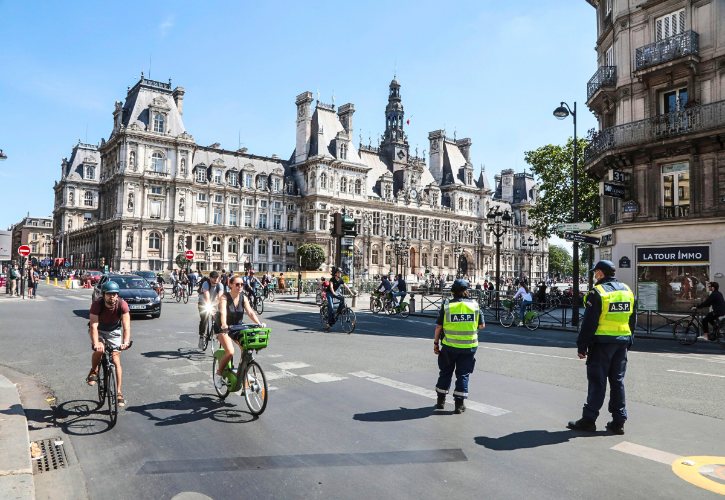
France is easy to love and surprisingly easy to misread. Habits that feel normal at home can land differently here, leading to awkward pauses, slower service, or confusion you never saw coming.
It is not that France hides a secret rulebook. Everyday life simply runs on different customs, professional habits, and public systems. Learn a handful of those differences and the whole trip gets smoother.
1. Walking In Without Saying “Bonjour”
a. Why It Matters
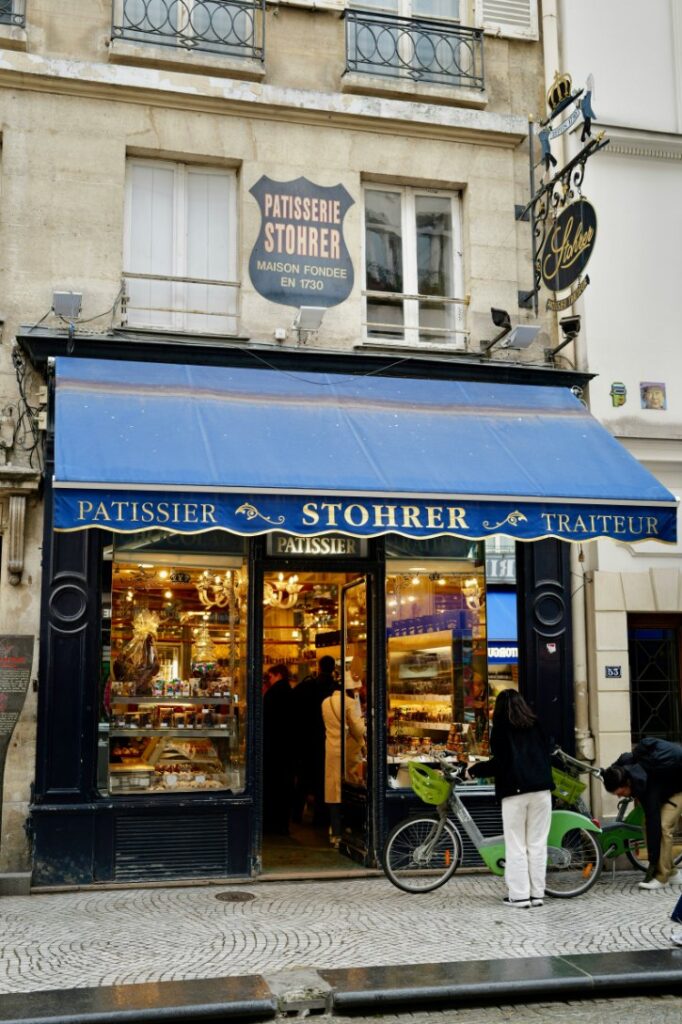
In France, a shop counter is a meeting between two people, not a vending machine. Walking in and leading with your request skips the human part.
“Bonjour”, which simply means “good day”, works like a small request for permission.
b. What Tourists Get Wrong
If you come from a place that values speed at the till, keeping things short feels polite, so greeting staff starts to look optional.
The classic slip is asking “Parlez-vous anglais ?”, meaning “Do you speak English?”, with no hello first. It sounds like a demand, even when you meant it kindly.
c. What To Do Instead
- Say Bonjour before asking directions, ordering, or approaching any counter. Make eye contact and give the person a second to reply.
- Switch to Bonsoir, meaning “good evening”, around 5:00 PM to 6:00 PM. It follows daylight, not a strict clock.
- Add Madame (Madam) or Monsieur (Sir) in formal settings. Optional elsewhere, never rude.
- Leave with Merci, au revoir, meaning “thank you, goodbye”.
d. Useful French
- Bonjour / Bonsoir: Good day / good evening.
- S’il vous plaît: Please. Add it to the end of every request.
- Excusez-moi: Excuse me. Use it to get someone’s attention politely.
e. Good To Know
This is a cultural custom, not a law.
- Strongest: small shops, bakeries, cafés, pharmacies, market stalls, reception desks.
- Not expected: self-checkouts, browsing a department store, crowded stations. Nobody expects you to greet every employee in a supermarket.
- Not everyone reacts badly if you forget. Many will not react at all.
2. Waving or Snapping at Waiters to Get Attention
a. Why It Matters
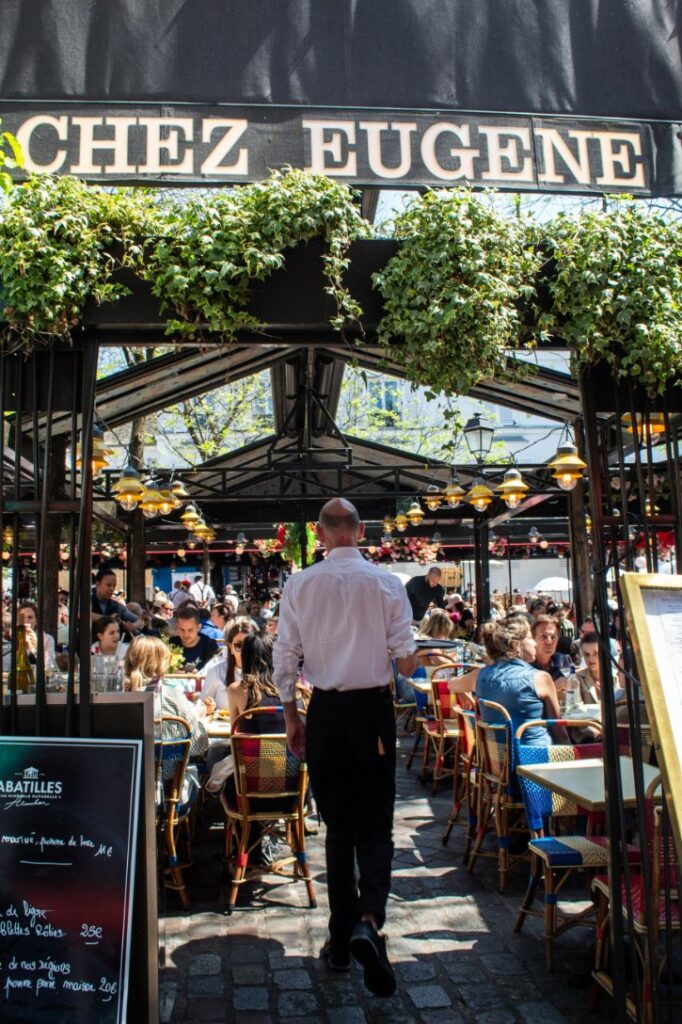
French waiting is a career, not a stopgap job. Servers run a whole section, coordinating with the kitchen, serving several tables, and handling payments at once.
They are not personal attendants. Snapping fingers, whistling, or shouting is read as an insult to that professional dignity.
b. What Tourists Get Wrong
If you are used to a server checking in every few minutes, French service can feel like you have been forgotten.
You have not. Servers step back deliberately so you can eat and talk without interruption. The quiet is intentional hospitality, not neglect.
c. What To Do Instead
- Wait until the server walks into your line of sight.
- Make eye contact, raise one hand calmly to shoulder height, and add a soft verbal cue.
- Never interrupt a server carrying hot plates or serving another table.
d. Useful French
- Excusez-moi, s’il vous plaît: Excuse me, please. The most natural way to get attention.
- L’addition, s’il vous plaît: The bill, please.
- Never say “Garçon”. It means “boy” and is now dated and offensive.
e. Good To Know
This is restaurant etiquette, not law. Raising a hand politely is normal and expected, and in a packed brasserie, a large, busy all-day restaurant, you may need to hold it up longer to be seen.
The problem is aggressive or repeated behavior, not signalling itself.
3. Seating Yourself at a Restaurant Without Checking First
a. Why It Matters
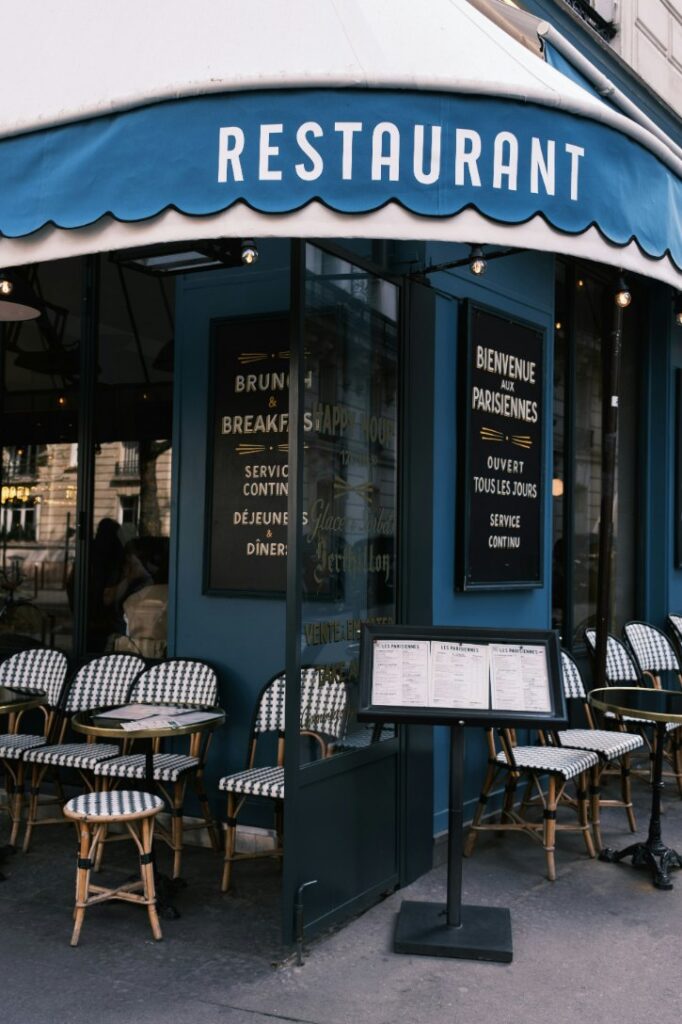
A restaurant floor during service is a moving puzzle. Tables are assigned around reservations, party sizes, accessibility needs, and server workloads.
That empty table may be held for a later booking, in a closed section, or reserved for full meals when you only want a drink.
b. What Tourists Get Wrong
Many visitors assume every empty table is first-come, first-served, especially on a terrace. If no host stand is visible, they walk in and pick a seat.
When staff then ask them to move, it can feel like hostility. It is just logistics.
c. What To Do Instead
- Pause at the entrance and wait to be acknowledged. It takes seconds.
- Greet the staff member, say how many people are in your group, and mention a reservation if you have one.
- Ask for the terrace or a quiet corner now, not later. If the restaurant has not opened yet, wait outside.
d. Useful French
- Une table pour deux, s’il vous plaît: A table for two, please.
- Nous sommes quatre: There are four of us.
- En terrasse / En salle: Outside on the terrace / inside.
- Réservé: Reserved. Usually on a card on the table.
e. Good To Know
This is restaurant operating practice. Self-seating is normal at fast-casual places, food halls, and cafeterias. The giveaway is a service counter where you order and pay before eating. If you see one, seat yourself. Otherwise watch the signs and the other customers.
4. Taking a Café Terrace Table Before Being Seated
a. Why It Matters
You will often read “never take a terrace table before being seated”. That is too absolute.
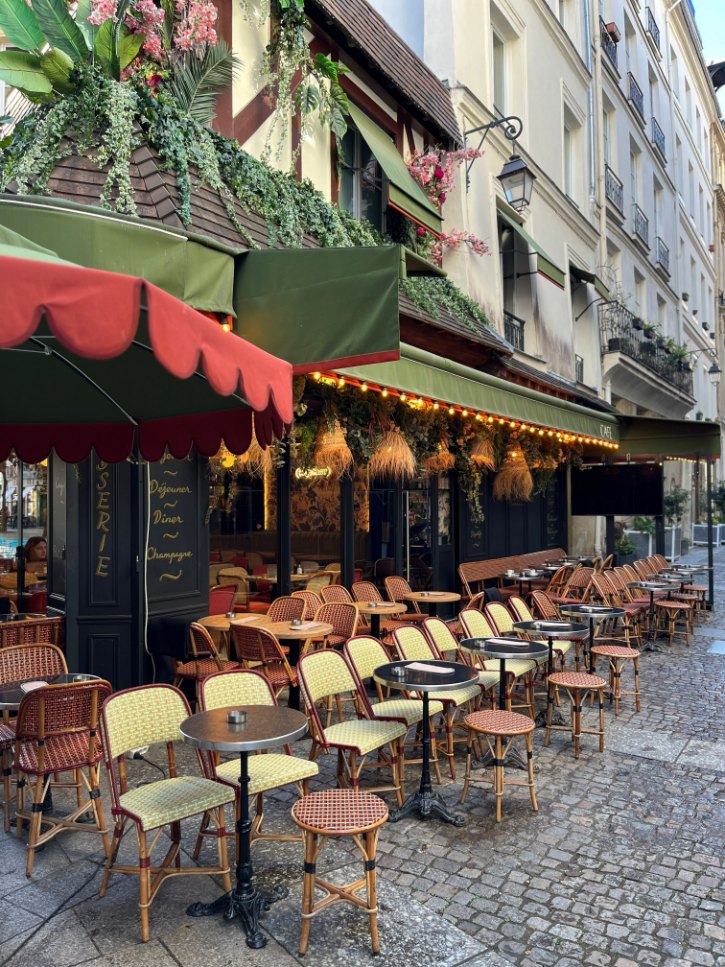
Some casual cafés fully expect you to find your own seat. Others want you to wait or ask. Terraces often split tables into drinks-only and meal zones, and that split shifts through the day.
b. How To Read A Terrace
Look at the table surface first.
- Cutlery, glasses, folded napkins: a dining table. Leave it unless you are eating a full meal.
- Bare wood, metal, or plastic: usually drinks, snacks, and self-seating.
Set tables are protected most during lunch and dinner service.
c. What Tourists Get Wrong
Most visitors assume every outdoor seat does the same job, so they take a lunch table and order a Coke.
The opposite mistake is just as common: waiting awkwardly at a relaxed café for a host who is never coming, while locals simply sit down.
d. Useful French
- C’est libre ?: Is this free? Say it while gesturing at the table.
- Un verre: A drink.
- Service continu: Literally “continuous service”. The kitchen stays open through the afternoon, so you can eat a real meal at 4:00 PM.
e. Good To Know
This is a venue-specific practice, not a nationwide rule.
- Rural villages: relaxed almost everywhere. Sit at any bare table.
- Paris, Bordeaux, Nice: high-demand terraces enforce firm boundaries between diners and drinkers.
- The same terrace can be self-seating at 4:00 PM and staff-seated at 8:00 PM. When unsure, ask.
5. Asking to Split the Restaurant Bill Item by Item
a. Why It Matters
Asking to divide a bill is not rude. The problem is landing a busy restaurant with a demand to calculate multiple individual totals at the worst moment.
Working out who had which starter and who shared the wine means the server manually runs several transactions, tying up the terminal while other tables wait.
b. What Tourists Get Wrong
In France, one bill per table is the norm unless you arrange otherwise. Some systems split easily, others genuinely cannot handle late-stage itemized splitting, and some restaurants forbid it by policy.
Restaurants must give you an itemized bill for a service of €25 or more. That is a receipt rule, not a right to a separate check per diner.
c. What To Do Instead
Ask early, ideally before you order. Then pick the smoothest option.
- Single payment: one person pays, everyone reimburses later. Universally accepted, best for large groups.
- Equal split: divide the total across several cards. Widely accepted and quick.
- Item-by-item split: frequently refused unless arranged in advance.
d. Useful French
- L’addition, s’il vous plaît: The bill, please.
- On peut payer séparément ?: Can we pay separately? Means genuinely separate payments.
- On peut diviser en quatre ?: Can we divide it by four? Requests an equal split.
- On est dix: There are ten of us.
- Par carte / En espèces: By card / in cash.
e. Good To Know
This is a payment practice, not an etiquette ban and not a law. Many restaurants accept several cards without any fuss. It depends on the venue, group size, and system.
The problem is last-minute demands. Asking politely is always fine.
6. Touching Produce at a Market Without Asking
a. Why It Matters
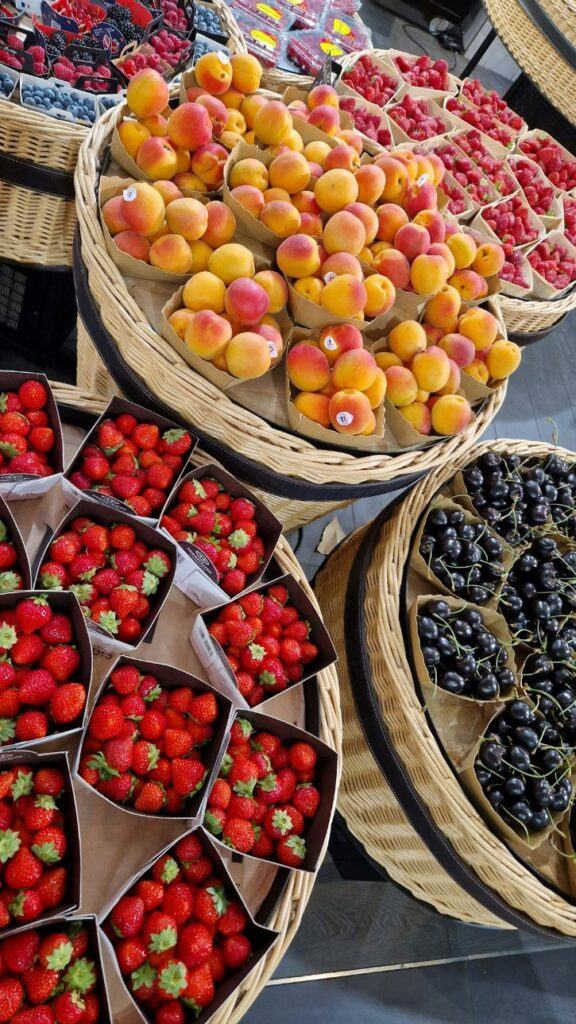
Traditional markets, called marchés, run on a protective handling custom built around hygiene and damage. Peaches, figs, and berries bruise easily, and ten shoppers squeezing the same peach ruins it.
Vendors also choose produce based on when you plan to eat it. That is a service, not a restriction.
b. What Tourists Get Wrong
Coming from self-service supermarkets, it feels natural to sort through a display and squeeze for ripeness. Do that at a fruit stall and you may get a sharp word.
Visitors read it as rudeness. It is someone protecting their livelihood. You do not need to find the ripest item yourself.
c. What To Do Instead
- Start with Bonjour, then point to what you want and say the quantity. Do not reach in.
- Say when you plan to eat it. This is the most useful trick at a French market.
- Baskets, bags, or tongs on your side mean self-service is fine for those items.
- Delicate produce (peaches, figs, berries): vendor selects. Sturdy produce (potatoes, apples, citrus): often self-serve.
d. Useful French
- Un kilo de tomates, s’il vous plaît: A kilo of tomatoes, please.
- C’est pour ce soir: For tonight. Prompts perfectly ripe items.
- Merci de ne pas toucher / Servez-vous: Please do not touch / help yourself. Your two signposts.
e. Good To Know
This is a market custom and stall-specific practice, not a national ban. Some stalls are fully self-service, and supermarkets work entirely on self-service.
Practice varies by region, product, and stallholder. Watch first, then act.
7. Looking for Ibuprofen or Paracetamol in a Supermarket
a. Why It Matters
Under French public health law, the retail sale of medicine is restricted to licensed pharmacies. Supermarkets and convenience stores are legally prohibited from stocking medication, including paracetamol, ibuprofen, and aspirin.
This is a legal structure, not a gap in the shop’s range.
b. Pharmacie vs Parapharmacie
The branding looks similar and both may show green. They are not the same.
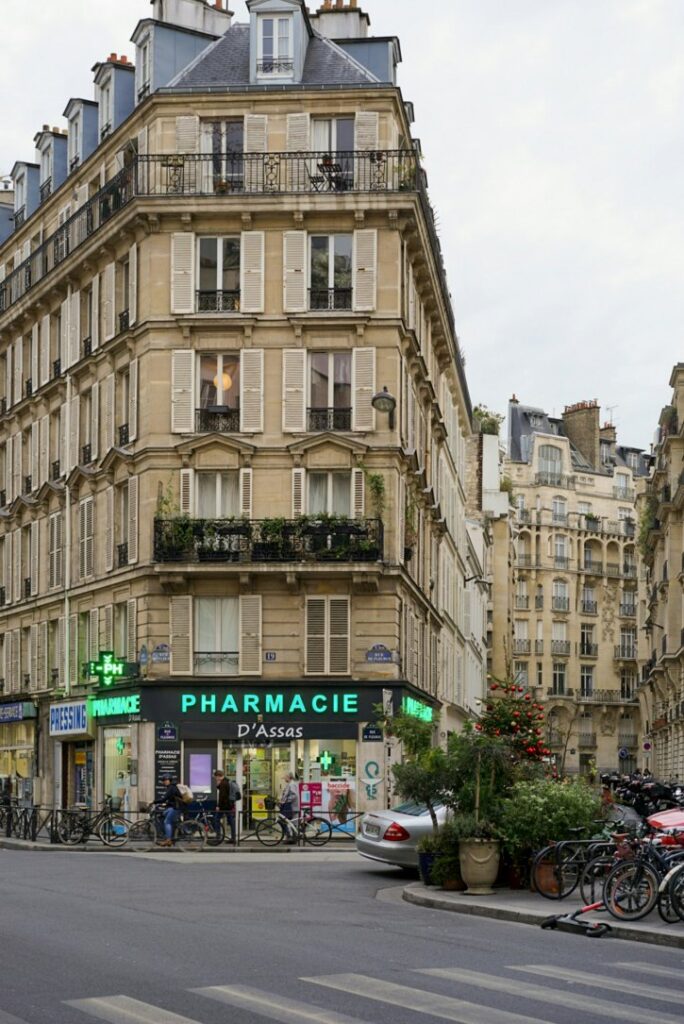
- Pharmacie: flashing green cross. Prescription and over-the-counter medicines, dispensed by a licensed pharmacist.
- Parapharmacie: often green but static. Skincare, cosmetics, vitamins. Legally barred from dispensing any medicine.
- Supermarché: the supermarket. Bandages, hygiene, supplements. No medication.
c. What Tourists Get Wrong
Brand names differ here. Doliprane is the paracetamol brand you will hear most, so asking for the active ingredient is more reliable than a brand from home.
France’s medicines agency also moved paracetamol, ibuprofen, and aspirin behind the pharmacy counter, to reduce accidental overdoses. Even inside a pharmacy, you ask a person rather than picking up a box.
d. What To Do Instead
- Look for the illuminated flashing green cross and the word Pharmacie.
- Go to the counter, greet the pharmacist, and ask by generic name. Expect questions about symptoms, age, allergies, or pregnancy. It is a safety check.
- For nights, Sundays, and holidays, find the pharmacie de garde, meaning the rotating on-call pharmacy. It is posted on closed pharmacy doors.
e. Useful French
- Paracétamol / Ibuprofène: Paracetamol, which is the same thing as acetaminophen in North America, and ibuprofen.
- Je voudrais du paracétamol, s’il vous plaît: I would like some paracetamol, please.
- Une boîte: A box. Medicine is sold by the box here.
8. Using Foldable Metro Seats During Rush Hour
a. Why It Matters
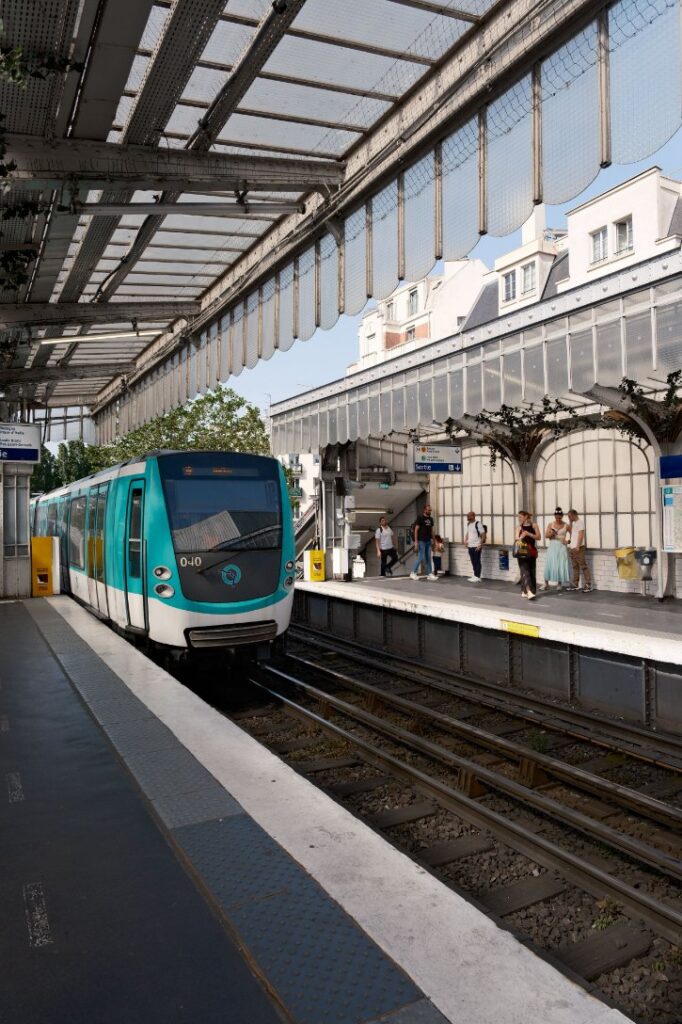
Many French transit vehicles have foldable, wall-mounted seats near the doors, called strapontins. You will find them on the Paris Metro, on the RER and Transilien lines that run out to the suburbs, and on some trams.
Left open in a crowd, each one eats into standing space where it is needed most and creates bottlenecks at the doors. Official rules say passengers must stand and let them fold shut when crowded.
b. What Tourists Get Wrong
Most visitors see an open seat as theirs for the whole journey, so they stay put as the carriage fills.
Locals do the opposite, without discussion. The moment the train gets busy, everyone on the strapontins stands and the seats snap flat against the wall.
c. Know Your Seat
- Strapontin: folding seat near the doors. Free when quiet, must be vacated when crowded.
- Place prioritaire: priority seat, marked with blue signage. Must be yielded to passengers with disabilities, older or pregnant passengers, and anyone with reduced mobility.
d. What To Do Instead
- Use the strapontin when the carriage is quiet. That is what it is for.
- As the train nears a busy station, stand before the doors open and let the seat fold flush.
- Move inward, and keep backpacks and luggage away from the doors.
e. Useful French and Signs
- Heures de pointe: Rush hour, roughly 7:30 to 9:30 AM and 5:00 to 7:30 PM.
- Affluence: Heavy crowding. You will hear it in announcements.
- Laissez descendre avant de monter: Let people off before boarding.
This is etiquette and also an official rule, enforced by RATP, the Paris transit operator, and SNCF, the national railway. Using a strapontin on an empty train is fine, and TER regional trains and quiet trams allow more flexibility. Not every carriage has them.
9. Ignoring the “Sortie” Signs When Leaving the Metro
a. Why It Matters
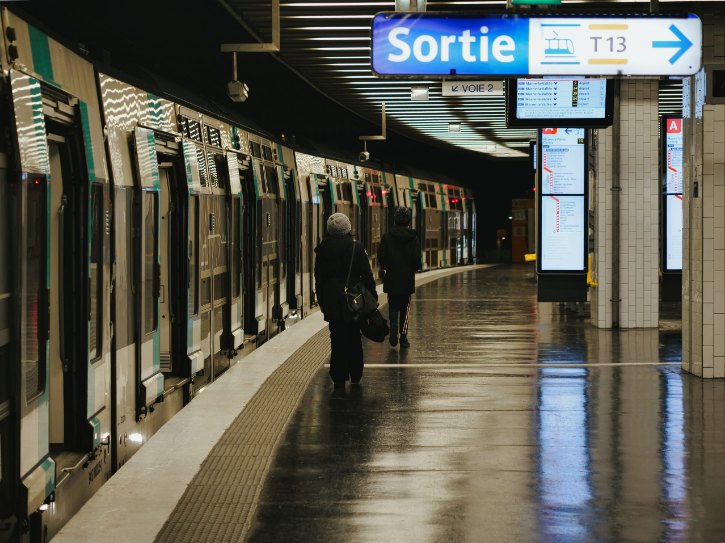
This one is not about etiquette. Nobody will judge you. Ignoring the Sortie signs, meaning the exit signs, is a navigation mistake that wastes time and can leave you on the wrong side of a huge station.
Châtelet-Les Halles has 19 separate exits, surfacing at different streets, plazas, and shopping centers.
b. What Goes Wrong
Pick an exit at random and you can end up:
- Walking long distances underground only to emerge blocks away
- Surfacing on a busy corner with no pedestrian crossing
- Stuck on a long stairwell with a suitcase, when another exit had an elevator
At Châtelet, the corridors alone can take up to ten minutes to cross.
c. What Tourists Get Wrong
Most visitors navigate by station name alone. They get off, spot a crowd moving, and follow it up, which bypasses the exit signs completely.
Keep two things separate. Sortie signs mean leaving and are blue. Correspondance signs mean transferring and are orange.
d. What To Do Instead
- Check your exit before you arrive. Use a transit app or station map to find the Sortie number or street name nearest your destination.
- Ignore the crowd and follow the blue signs to your Sortie number. Transferring? Follow the orange Correspondance signs instead.
- Find your platform using Direction, which names the final station on the line. French platforms are labeled this way, not by compass direction.
- With a wheelchair, stroller, or heavy bags, follow the Ascenseur It means elevator, and not every exit has one.
e. Useful French and Signs
- Sortie: Exit
- Correspondance: Transfer to another line
- Direction: Identifies the platform by the line’s last station
- Quai: Platform
- Ascenseur: Elevator
- Escalier mécanique: Escalator
At small single-exit stations this barely matters. It matters a lot at big interchanges and stations under shopping centers. Numbering varies between cities, so read the actual sign.
10. Assuming You Can Picnic Anywhere Around a Monument
a. Why It Matters
France has no single rule banning people from sitting or eating near every monument. Policies differ between museums, monuments, churches, cemeteries, and gardens.
Where restrictions exist, three things drive them:
- Access: groups on steps block fire escapes, security queues, and wheelchair ramps.
- Damage: dropped food and spilled drinks stain historic stonework, and cleaning porous stone means costly restoration.
- Respect: eating or lounging in active cemeteries or at memorials violates municipal codes.
b. What Tourists Get Wrong
Wide stone steps and low walls look exactly like casual seating, so people sit. Then they see other visitors doing it and assume the absence of a barrier means permission.
It does not. Staff are authorized to move you along, and those other tourists may not have checked either.
c. What To Expect Where
- Solemn spaces like Père Lachaise cemetery, the Mémorial de la Shoah (the Holocaust Memorial), or museum interiors: strictly prohibited.
- National monuments like the Arc de Triomphe rooftop or Mont-Saint-Michel: prohibited on the structures.
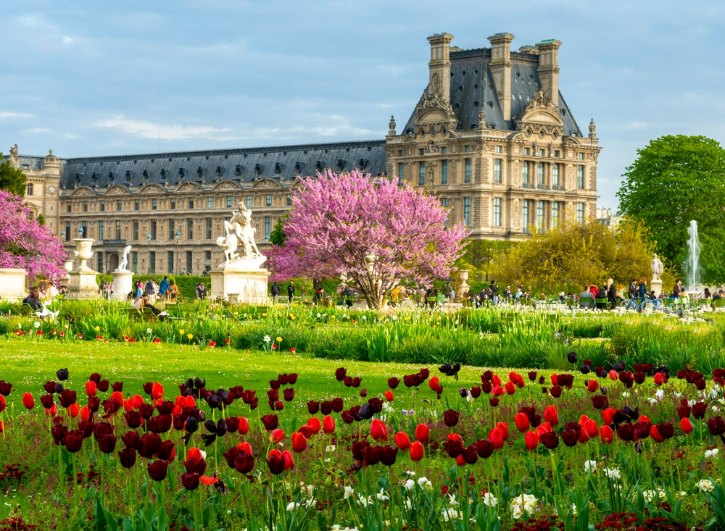
- Designated lawns like parts of the Jardin des Tuileries or Parc Montsouris, two large public gardens in Paris: permitted.
Rules vary by city and by attraction. The Tuileries allows picnics on some lawns and bans them on others, twenty meters apart.
d. What To Do Instead
- Check the site’s official visitor rules before bringing food, and look for posted signs and barriers.
- Keep doorways, queues, ramps, and steps clear. That single habit solves most of the problem.
- Move to a park, square, riverside, or official picnic zone. Follow staff instructions even when other visitors ignore them.
e. Useful French and Signs
- Pique-nique interdit: Picnicking prohibited.
- Interdiction de manger et de boire: Eating and drinking prohibited.
- Merci de ne pas vous asseoir: Please do not sit here. Often on steps and ledges.
- Pelouse interdite: Keep off the grass.
- Où peut-on pique-niquer ?: Where can we picnic?