
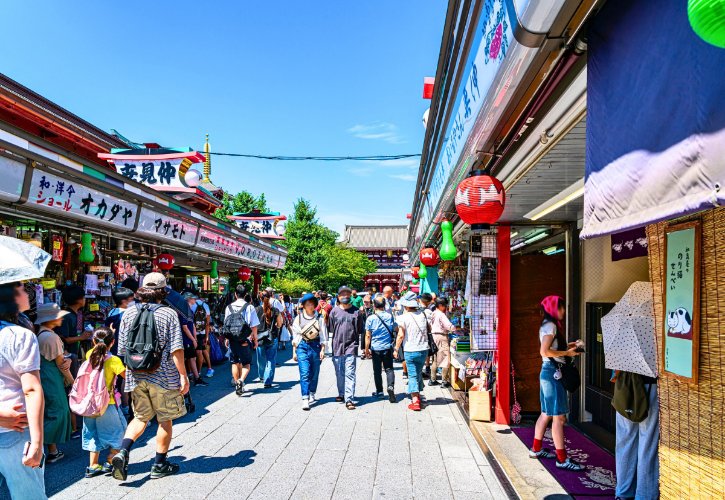
Asakusa is one of the easiest parts of Tokyo to explore on foot. The river, the temples, the old shopping lanes, the food counters, and the entertainment streets all sit within a few minutes of each other, so you can walk the whole route without a single train ride.
What makes it special is how the mood keeps changing. One moment you stand in quiet prayer, the next you are eating street food or watching a festival street come alive. 😊
1. Azuma Bridge
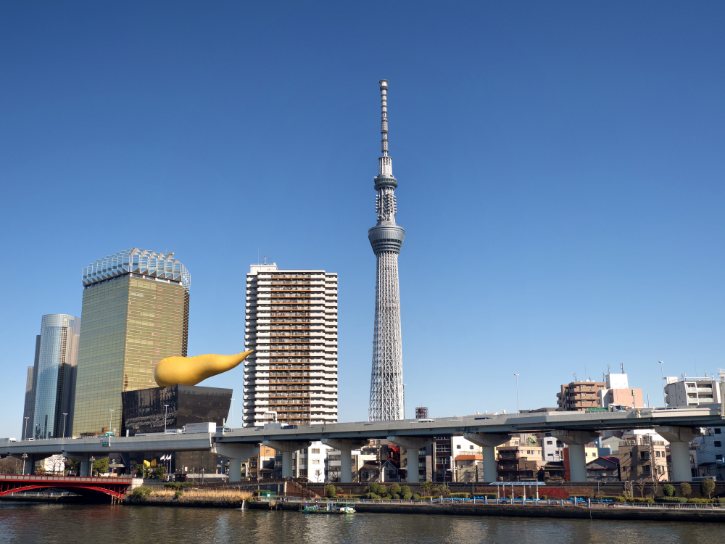
Start your walk at the water. Before Asakusa had temples or shops, it had the Sumida River, and this bridge is where the neighborhood meets it.
a. A bridge with deep roots
- The first bridge here opened in 1774, under the tenth Tokugawa shogun
- It was first called Ōkawa-bashi, meaning “Great River Bridge”, and was paid for with private money rather than shogun funds
- The bright red bridge you see today was finished in 1931, built to survive earthquakes
- It stretches just over 150 meters and links old, low-rise Asakusa with the modern towers across the river
b. What to see from the bridge
- Tokyo Skytree, rising 634 meters into the sky
- The Asahi Group headquarters, including a golden-topped building and an amber tower shaped like a beer mug
- The wide river flowing between old and new Tokyo
- In spring, rows of cherry blossoms along the riverbanks at Sumida Park
c. Where the whole story begins
Here is the part most people miss. This river is the birthplace of Asakusa’s most sacred site. According to legend, in the year 628, two fisherman brothers cast their nets and pulled up a small golden statue of Kannon, the goddess of mercy.
Each time they threw it back, it returned to their net. That single moment led to the founding of the great temple you will reach later.
Step one block inland, and your first stop helps you see the whole neighborhood from above.
2. Asakusa Culture Tourist Information Center
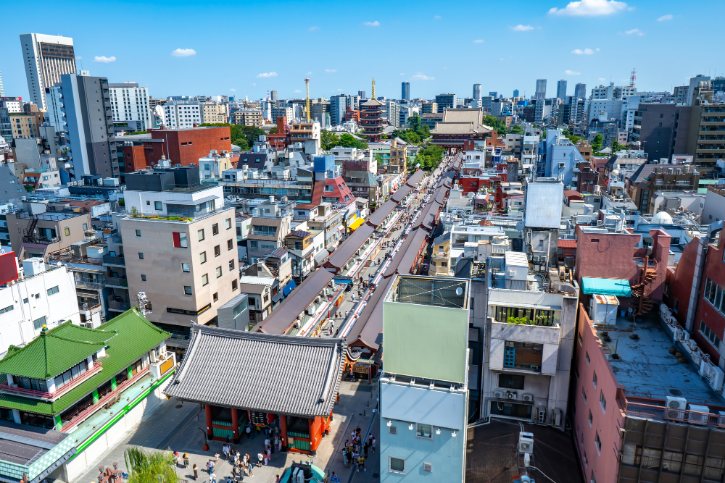
Right across from the temple’s main gate stands a tall building that looks like a stack of little wooden houses. It is the smartest place to get your bearings.
a. More than a place for maps
The center offers a free observation terrace on its top floor, where you can trace your entire walk before taking a step. Seeing the layout from above makes the rest of the day feel simple.
b. A clever building to notice
- Designed by the famous architect Kengo Kuma and opened in 2012
- Built on a narrow plot, yet nearly 40 meters tall
- Made of eight single-story “houses” stacked at slightly different angles
- Wrapped in strips of cedar wood, treated to meet fire rules while still looking traditional
c. What to spot from the terrace
- North: the red roof of Kaminarimon, the long line of Nakamise, the inner gate, the Main Hall, and the pagoda, all in one straight row
- East: across the river to the Skytree
- Inside: helpful multilingual staff, small cultural displays, and a scale model of the area
That view teaches you something useful. Asakusa is not a maze. It is a neat district built along one sacred line. Now cross the street to the grand front gate.
3. Kaminarimon Gate
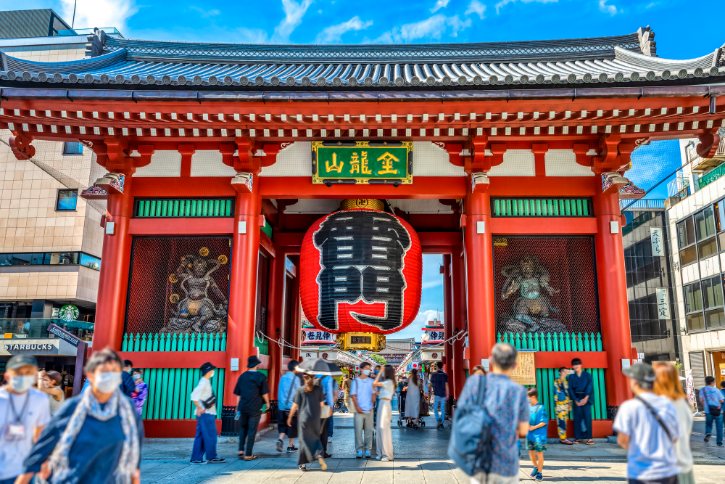
You have likely seen photos of the giant red lantern. It is famous for good reason, but it is only part of the story.
a. The gate of two gods
The gate’s real name means the “Gate of the Wind and Thunder Gods”.
- Fūjin, the God of Wind, stands on the right with a bag of winds over his shoulder
- Raijin, the God of Thunder, stands on the left, ringed by drums
- Both were placed here to protect the temple from storms and fires
b. A gate that kept vanishing
- First built in 942 by a military commander
- Destroyed by fire again and again over the centuries
- The last old wooden gate burned in 1865, and the gate then did not exist for 95 years
- The gate you see now was rebuilt in 1960, paid for by Kōnosuke Matsushita, founder of the company now called Panasonic
He had prayed to Kannon for relief from long-term pain, and after recovering, he funded the new gate and donated the famous lantern as thanks.
c. Details people walk past
- The lantern is huge, about 3.9 meters tall and roughly 700 kilograms, handmade from paper and bamboo
- Look straight up underneath it to find a carved wooden dragon
- Walk through and check the back of the gate, where two more guardian figures stand, a heavenly dragon and a golden dragon
Cross under the gate, and you step onto a street where prayer and shopping have gone together for centuries.
4. Nakamise Shopping Street
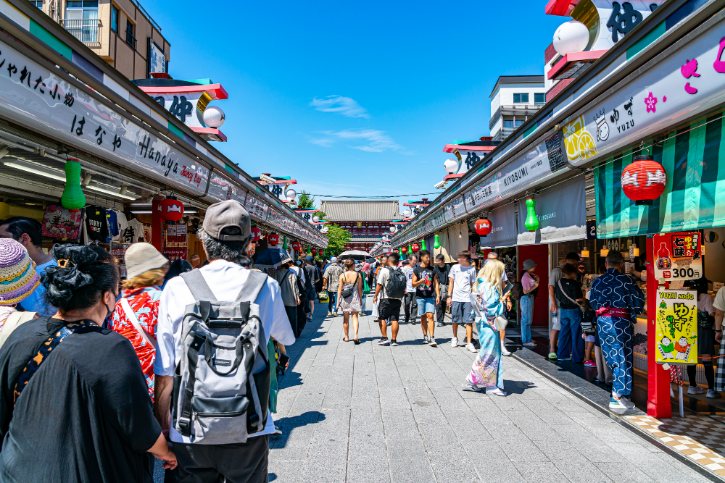
This looks like a souvenir strip at first. It is far older and more meaningful than that.
a. Shopping as part of the pilgrimage
Nakamise runs about 250 meters from the outer gate to the inner one, and it is one of the oldest shopping approaches in Japan. As more worshippers came to pray, the temple let local people who cared for the grounds set up small stalls selling tea, snacks, and religious goods. Over time, shopping here became part of the visit itself.
b. What to look for
- Sweets like kaminari-okoshi (crunchy puffed-rice cakes) and ningyō-yaki (small cakes filled with sweet red bean paste)
- Religious items such as incense, prayer beads, and lucky charms
- Handmade crafts including folding fans, masks, and wooden kokeshi dolls
A little care helps you tell real traditional craft from generic souvenirs.
c. The look of the street
- Around 89 shops with matching red fronts and low tiled roofs
- Rows of hanging lanterns and a long, straight view toward the temple
- A lovely surprise at night: when the shops close their shutters, the street turns into a long open-air painted gallery of Asakusa’s festivals and seasons
Where Nakamise meets a covered arcade at a right angle, the mood shifts from sacred to everyday.
5. Shin-Nakamise Shopping Street
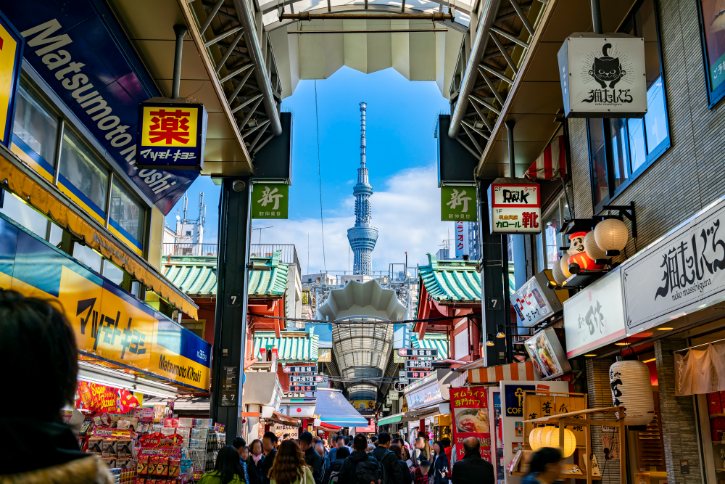
Turn onto this covered arcade and you leave the pilgrimage path behind. This is where locals shop.
a. A different kind of street
While Nakamise serves the temple, Shin-Nakamise is an everyday neighborhood arcade. It opened around 1929 and is now the longest arcade in Asakusa, stretching roughly 380 meters with more than 120 shops under one roof.
b. What you will find
- Shops selling traditional wooden sandals
- Tea merchants with loose-leaf green tea
- Clothing stores, kitchen tool shops, and knife sharpeners
- Old-style coffee lounges and casual noodle bars
c. A window into real Asakusa
Notice how the feeling changes here. On Nakamise you hear temple sounds and souvenir chatter. On this street you hear local shopkeepers, neighbors, and the rhythm of an ordinary Tokyo day. Keep walking west, and the arcade gives way to a street that looks like old Edo.
6. Denboin Street
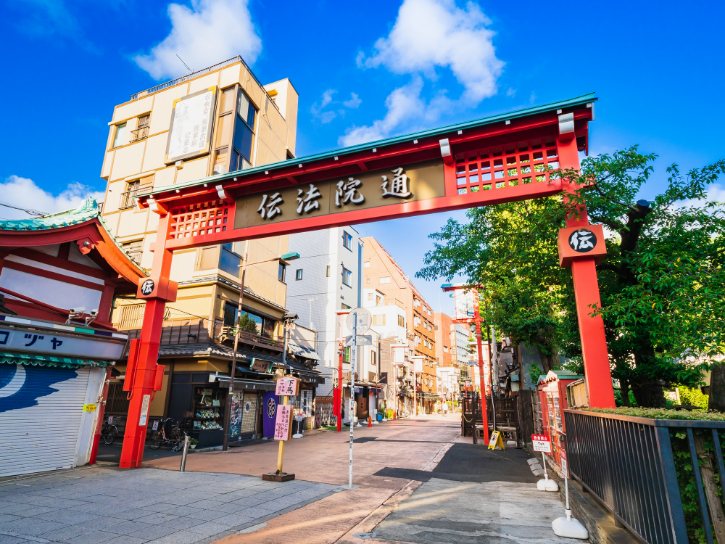
This short street is all about atmosphere. It was designed to feel like Asakusa did in the late Edo and early Meiji years.
a. Where the name comes from
Denboin Street takes its name from Denbō-in, the private home and office of the temple’s head priest, hidden behind the walls on the north side. Keep the two apart in your mind. The street is open to everyone, but Denbō-in itself, with its historic halls and a large garden, normally stays closed and opens only for rare seasonal viewings.
b. What to spot
- Dark wooden shopfronts and low tiled roofs
- Indigo fabric curtains and hand-painted signs
- Old-style street lamps
- Playful statues on the rooftops, including Nezumi Kozō, a legendary thief who stole from lords to help the poor
c. A neighborhood rebuilt
Denboin Street teaches an honest lesson. Fires, the 1923 earthquake, and the wartime air raids destroyed most of the old buildings, and almost nothing here survives from the Edo period. The traditional look you enjoy today came from a careful community rebuilding effort finished in the 2000s, when local owners chose timber fronts to bring back the old feeling.
Follow the smell of frying batter to the street’s most popular food stop.
7. Asakusa Menchi
One small counter, one product, and a steady line of happy customers. Here is why this fried cutlet is worth the wait.
a. What is inside
- A single dish: a deep-fried breaded meat cutlet called menchi-katsu
- Kōza pork from Kanagawa, a heritage breed with sweet, tender fat
- Kuroge Wagyu beef, which adds deep, savory richness
- Sweet diced onion, which softens and adds moisture inside
The cutlet is coated in coarse, fresh breadcrumbs and fried fresh for each order.
b. Why it tastes so good
- A crisp, shattering golden crust
- A soft, juicy, almost broth-like center
- Sweetness from the pork and deep savory flavor from the beef
c. How to enjoy it
The shop suggests eating it fresh and hot, without heavy sauce, so you taste the meat itself. Add a small dab of karashi, a sharp Japanese mustard, if you like. Eating while walking is discouraged here to keep the street clean, so use the small standing area by the counter.
Now head back toward the temple’s grand inner gate.
8. Hozomon Gate
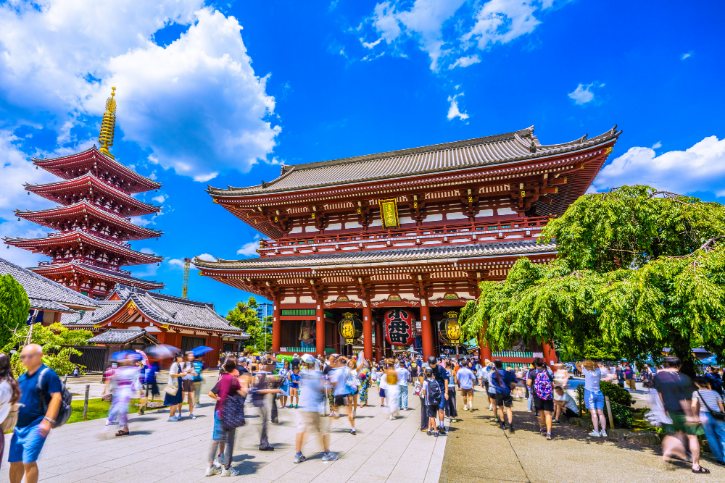
You have already passed one gate. This second one feels taller, heavier, and more sacred.
a. The inner gateway
Hōzōmon, the “Treasure-House Gate”, marks the border between the busy shopping street and the holy heart of the temple. If Kaminarimon is the public front door, this is the door into the temple’s inner world.
b. A gate rebuilt over time
- First built in 942, then rebuilt in grand style by the shogun in 1649
- Destroyed in the air raids of 1945
- The current gate was completed in 1964, funded by the founder of a major Tokyo hotel
- Its upper floor is fireproof and stores precious scriptures, which is how it earned its “treasure-house” name
c. What to spot
- Two towering guardian statues, each over 5 meters tall, with faces modeled on real sumo champions
- Three large hanging lanterns, one red paper lantern flanked by two heavy bronze ones
- A clear view ahead toward the Main Hall
d. The giant sandals
Walk through and look at the back wall. There hang two huge straw sandals, each about 4.5 meters long and roughly 500 kilograms, hand-braided by volunteers in Yamagata and replaced about once every ten years. In folk belief, their size shows the strength of the temple’s guardians and scares away evil spirits.
Look up and to the left, and a tall, elegant tower rises above the grounds.
9. Five-Storied Pagoda
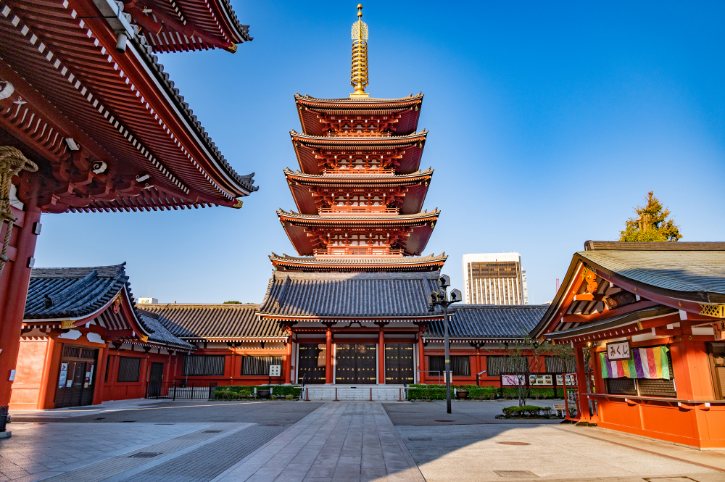
This tower is one of the most photographed shapes in Asakusa, and one of the most misunderstood.
a. Its true purpose
A pagoda is not a viewing tower. Its real job is to hold sacred Buddhist relics connected to the Buddha himself. The design grew out of ancient burial mounds in India.
b. A tower rebuilt many times
- First raised in 942, rebuilt in wood by the shogun in 1648
- Destroyed in the air raids of 1945
- The current tower was completed in 1973, rebuilt in fireproof materials and moved to the western side for better balance
- At over 53 meters, it is one of the tallest structures in the complex
c. What it holds and what to notice
- Real relics of the Buddha, given by a temple in Sri Lanka in 1966, rest in the very top level
- The lower levels hold more than 10,000 memorial tablets left by worshippers
- Each roof level narrows slightly as it rises, giving a graceful, steady shape
- At the very top sits a bronze spire meant to guard against lightning and fire
A few steps forward bring you to the true heart of Asakusa.
10. Sensō-ji
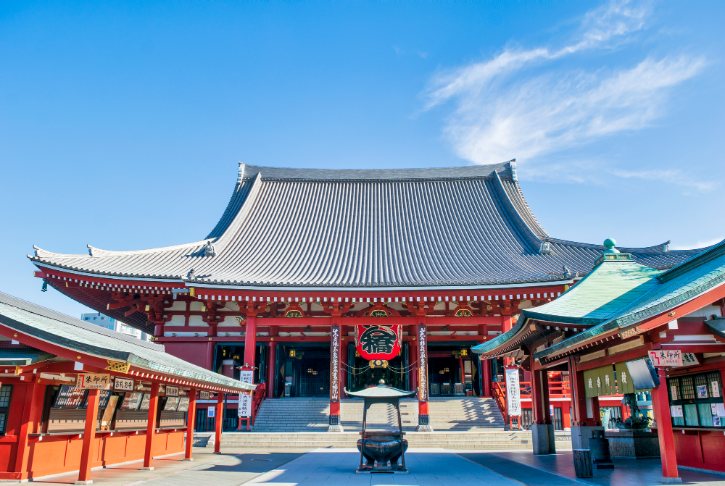
This is the reason Asakusa exists. Take your time here.
a. Tokyo’s oldest temple
Sensō-ji is the oldest Buddhist temple in Tokyo, and the whole district grew up around it. It is dedicated to Kannon, the goddess of mercy, and it welcomes over 30 million visitors and worshippers every year, making it one of the most visited sacred places on earth.
b. The founding story
Remember the two fishermen from the start of your walk. In the year 628, they pulled a tiny golden Kannon statue from the river and took it to their village headman, Haji no Nakatomo. He recognized it as sacred, turned his own home into a place of worship, and became a monk to care for it. Years later, a traveling priest built the first proper hall for Kannon.
c. The detail most visitors miss
- The main golden image is a hibutsu, or “hidden Buddha”, judged too sacred for human eyes
- It is sealed inside nested boxes deep within the Main Hall
- Even the head priest never looks upon it
- You pray to an unseen presence of mercy, not to a visible statue
d. The Main Hall and how it survived
The current Main Hall was rebuilt between 1951 and 1958 after the wartime bombing.
- It uses a strong, fireproof structure but keeps the grand look of the old 1649 hall
- Its steep, sweeping roof rises high above the courtyard
- The heavy roof tiles were later swapped for titanium tiles that look the same but weigh far less, helping the building survive earthquakes
e. How to visit respectfully
- Purify first at the water pavilion, rinsing your hands and mouth
- Waft the incense smoke from the large burner over yourself
- At the offering box, toss a coin, place your palms together, and pray in silence
- Do not clap here, since clapping belongs to Shinto shrines
- If you draw an omikuji fortune and get a bad one, tie it to the rack and leave the bad luck behind
Everything here traces back to that golden statue in the river, tying the temple to the very spot where your walk began. Just to the side stands a quieter building that tells the other half of the story.
11. Asakusa Shrine
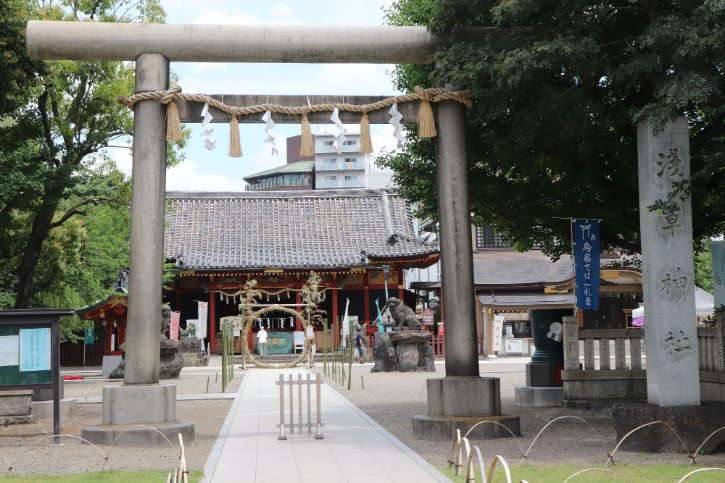
Right next to the temple sits a small, colorful shrine. It is easy to overlook, and that would be a mistake.
a. The link to the temple
Asakusa Shrine is not part of the temple. It is a separate Shinto shrine that honors the three people who founded the temple: the two fisherman brothers and their village headman, now worshipped as gods. Locals call them Sanja-sama, the “Three Deities”.
b. Two faiths, one place
- The temple honors the goddess Kannon
- The shrine honors the very people from the same founding legend
- For over a thousand years the two worked as one, until a government law forced them to separate in 1868
This is a lovely example of how Buddhism and Shinto lived side by side in Japan for centuries.
c. The great festival and a rare survivor
- The shrine hosts the Sanja Matsuri, one of Tokyo’s largest festivals, held over the third weekend of May
- It grew from an old boat ritual that reenacted the discovery of Kannon in the river
- Unlike the temple’s rebuilt hall, the shrine’s main building is an original wooden structure from 1649 that survived fires, the 1923 earthquake, and the wartime bombing
d. A note on etiquette
The customs differ from the temple. At a Shinto shrine, the practice is two bows, two claps, a silent prayer, then one more bow. Here, clapping is welcome.
From the quiet of the shrine, the walk turns toward one of Japan’s great pleasures, tea.
12. Suzukien Asakusa Matcha Gelato
This place went viral for its intensely green ice cream, but there is real depth behind the fame.
a. A tea house first
Before the gelato crowds, Suzukien was, and still is, a serious Japanese tea merchant. The business traces its roots to 1848, giving it nearly two centuries of knowing how to judge, blend, and source fine tea. Understanding that history changes how you taste what they serve.
b. The famous seven levels
- Suzukien teamed up with a tea producer to create a seven-level matcha gelato scale
- Level 1 is pale and mild, close to ordinary green tea ice cream
- Levels 2 to 4 grow richer and more balanced
- Levels 5 and 6 turn darker and stronger, made for real tea lovers
- Level 7 is the deepest of all, which the shop proudly markets as the richest matcha gelato in the world
Treat that “world’s richest” title as the shop’s own claim, and enjoy it in that spirit.
c. More than just bitterness
Good matcha is not simply bitter. The best leaves are grown in shade for several weeks before harvest, which builds a savory, broth-like richness called umami. Do not assume the strongest scoop is automatically best. A middle level often lets you taste the balance more clearly.
d. Beyond matcha
- Hōjicha, a roasted green tea with nutty, toasty notes
- Genmaicha, green tea blended with roasted brown rice
- Kurogoma, rich black sesame
From cool, concentrated tea, the next stop swings to warm bread and the quiet science of fermentation.
13. Asakusa Kagetsudo Melon Bread
Yes, the melon bread here is enormous. But the size is not the real story. The secret is time.
a. Not about being big
Kagetsudō has been baking since 1945, and its giant melonpan is famous online. Melonpan is a sweet bread with a soft, fluffy inside and a thin, crisp cookie layer on top. It is named for the crisscross pattern that looks like a melon rind, not for any melon flavor.
b. The slow-rise secret
- Most bakeries let melonpan dough rise for about 40 to 50 minutes
- Kagetsudō lets its dough ferment slowly for around three hours, more than three times the usual time
- The founder studied fermentation and borrowed ideas from traditional sake brewing to make better bread
- The bakers check air pressure, humidity, temperature, and even the flour daily, adjusting the timing by hand
c. What to taste for
- A thin, crisp crust dusted with sugar that shatters on the first bite
- A soft, light, airy inside that melts on the tongue
- A gentle, warm aroma when it is fresh
The bakery suggests eating it right away, while the crust is at its crispest. You can spot the shop by its wall of colorful wooden pinwheels, which mark the entrance to the next street.
14. Asakusa Nishi-sando Shopping Street
Step through the gate and the mood turns festive. This arcade was built to feel like a celebration.
a. A festival street
Nishi-sando is a covered arcade about 100 meters long, acting as a cheerful bridge between the temple and the old entertainment district ahead. This spot has fun in its blood. Long ago it was an open entertainment ground filled with acrobats, puppet shows, and peep-show booths. After years of decline, local owners gave it a full makeover into an Edo-style festival arcade.
b. The wooden road
- The whole walkway is paved with thick planks of Japanese cypress and cedar
- It feels soft and springy underfoot
- It softens the sound of footsteps
- It gives off a light, pleasant wood scent
c. What to spot
- Entry gates shaped like red temple portals
- Eaves trimmed in traditional festival patterns
- Paper lanterns floating down the center
- Shops selling festival coats, dance fans, and flutes, plus a goldfish-scooping booth open all year
d. Three streets, three moods
- Nakamise is pilgrimage shopping
- Shin-Nakamise is neighborhood shopping
- Nishi-sando is the festive path toward the entertainment quarter
At the far end, a narrow alley leads to a modern take on a very old Tokyo dish.
15. Asakusa Unana
Down a small alley you will find a counter grilling eel over charcoal. It is delicious, and refreshingly honest about what it is.
a. New, and proud of it
Unana is not a centuries-old institution. It opened only a few years ago and quickly won fans by turning eel, usually a formal and pricey dish, into an easy street snack. Its single specialty is a charcoal-grilled eel rice ball.
b. The long story of eel in Tokyo
Eel, or unagi, has deep roots in Tokyo food history. In the Edo period, wild eel filled the local rivers. Cooks developed a careful Tokyo style: the eel is split open, grilled, steamed to soften it, then grilled again while brushed with a sweet-savory sauce. Over time, wild eel grew scarce and expensive, turning it into a luxury usually served in sit-down restaurants.
c. How Unana does it
- It uses domestic Japanese eel, mostly from Miyazaki
- The eel is grilled over white charcoal for a smoky flavor and soft texture
- The rice is shaped into a firm ball, brushed with sweet-soy sauce, and grilled until a crisp crust forms
- A piece of eel goes on top, held with a skewer, then dusted with sanshō, a citrusy Japanese pepper that cuts through the richness
The pleasure is in the contrast. A crisp, browned rice crust gives way to soft rice inside, followed by the melting, smoky eel on top. One block south, the walk turns to Asakusa’s lively drinking street.
16. Hoppy Street
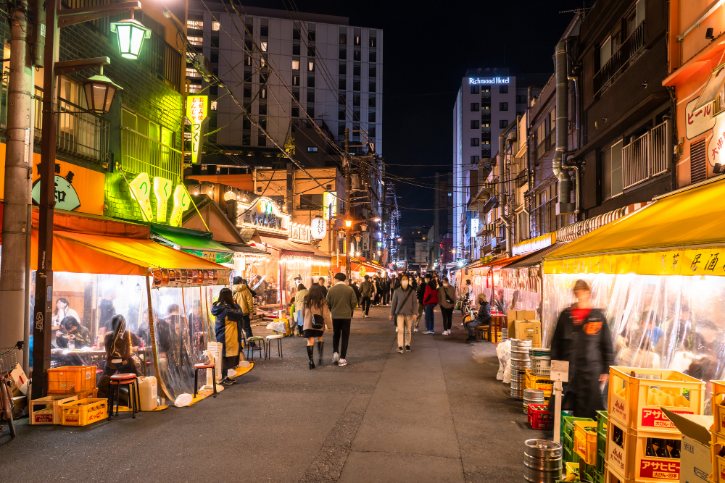
This short alley is packed with open-air taverns, low stools, and cheerful chatter. The name itself holds a slice of Tokyo history.
a. What is Hoppy?
Hoppy is a Tokyo drink first launched in 1948. It is a beer-flavored, fizzy drink with almost no alcohol, brewed from hops and malt. In the hard years after the war, real beer was heavily taxed, scarce, and far too expensive for most working people. Hoppy was made to be mixed with cheap shōchū, a distilled spirit, to create an affordable drink that looked and tasted like draft beer.
b. The old-Tokyo drinking ritual
- Naka is the shōchū, poured into a chilled mug
- Soto is the bottle of Hoppy served alongside
- You pour the Hoppy in without ice to keep it fizzy
- One bottle usually stretches to two or three mugs, making it a friendly, budget choice
c. Stew Street
Hoppy Street has another old nickname, “Stew Street”. Many taverns keep a pot of savory stew bubbling near the door, made with beef tendon, radish, and tofu in a rich miso or soy broth. Each shop has its own recipe, and it pairs perfectly with a cold Hoppy.
d. Not a drinker? Come anyway
You do not need to drink to enjoy this street. Order a soft drink, try the local comfort food, and soak up the warm atmosphere under the red lanterns, where locals and travelers mix freely. This street shows how Asakusa grew from a place of prayer into a district of everyday fun.
17. Rokku Broadway
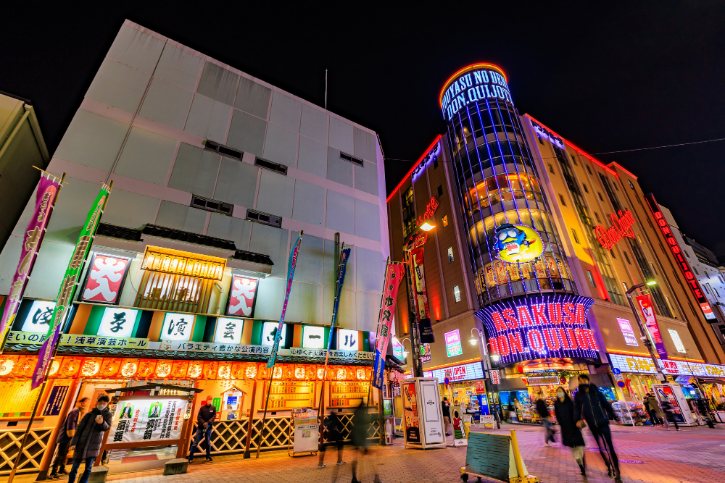
The walk ends where Asakusa once entertained all of Tokyo. This wide street was the country’s showbiz capital long before the big modern districts existed.
a. Tokyo’s original stage
In 1873, the city divided the temple’s outer grounds into six zones. The sixth, known as Rokku, became the official theater and entertainment quarter. For decades it was the beating heart of Japanese show business, well before Shinjuku, Shibuya, or Ginza rose to fame.
b. Where stars began
- It was the birthplace of popular mass entertainment for ordinary people
- Japan’s first permanent movie theater opened here in 1903
- The famous comedian and filmmaker Takeshi Kitano got his start here in the early 1970s, working his way up at a local theater
c. What to spot today
- The Asakusa Engei Hall stages comedy, storytelling, and acrobatics every single day of the year
- Nearby theaters keep older performance traditions alive
- Set into the sidewalk is the Plaza of Stars, with bronze plaques honoring more than 300 celebrated performers
- Bright theater fronts, glowing marquees, and a wide, busy street full of life
By the time you reach here, you have walked through four centuries of Tokyo’s spiritual, food, and social history, all at a gentle pace and without a single train ride.
Related Posts

Photo Credit:
Photos by PIXTA