
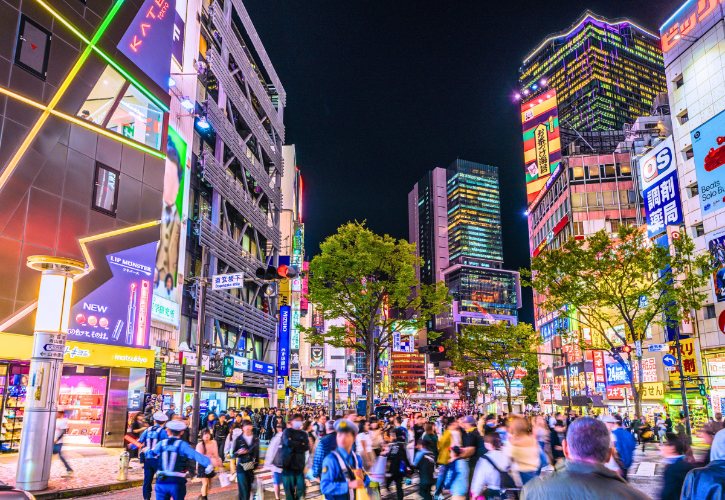
Shibuya is famous for one busy crossing, but the real surprise is how much more sits just steps away.
In a short walk you can go from a rooftop skyline view to a quiet lantern-lit alley, from cutting-edge fashion floors to a beloved old statue with a story behind it.
Modern towers, youth culture, music, gaming, and old-school corners all press right up against each other here.
Once you start walking, you’ll see just how closely these different worlds connect. 😊
1. Shibuya Hikarie
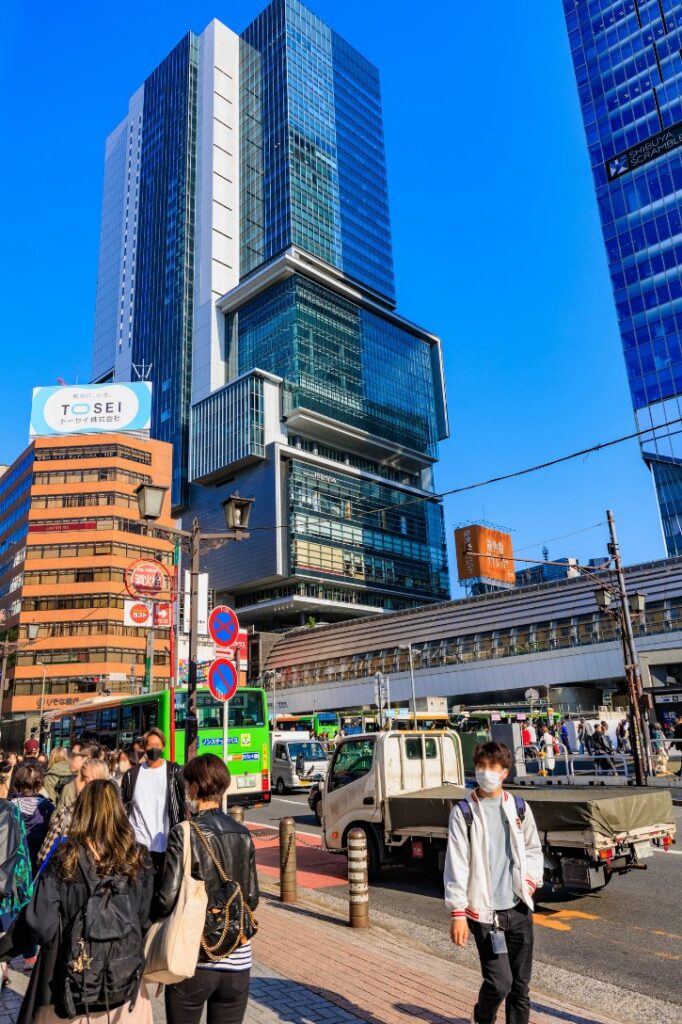
a. Why This Tower Makes the Perfect First Stop
Starting here eases you into the modern, grown-up side of Shibuya before you hit the crowds. This 34-story tower on the eastern side of the station was the first big milestone in Tokyu Corporation’s long-running plan to rebuild the whole area.
For years Shibuya was seen mainly as a young person’s playground, and Hikarie helped shift that image toward something more polished, aimed at professionals and international visitors just as much as students.
b. What You’ll Find Inside
The design pulls commuters straight up from the underground train lines into bright lifestyle floors above. Here’s what’s worth your attention:
- ShinQs, the shopping floors, which lean toward curated lifestyle boutiques and small cosmetics shops rather than rows of single-brand counters.
- Two international dining floors if you want a proper sit-down break.
- A basement food hall (Toyoko Noren-gai) packed with takeaway treats.
- The Tokyu Theatre Orb higher up, one of Tokyo’s larger theatres.
c. The Creative Floor Worth Slowing Down For
The “8” floor (said like “hachi”) is the one to explore slowly. It’s a permanent home for Japanese craft and sustainable design, and it feels different from the rest of the building.
- The anchor is the d47 MUSEUM, which runs rotating exhibitions on design, food, and craft from all 47 of Japan’s prefectures.
- There’s a design travel store stocked with regional goods.
- A cafeteria serves set meals made with ingredients from specific prefectures, so you can taste your way around the country.
d. The Free View Most People Overlook
Head to the 11th-floor Sky Lobby for a view that costs you nothing. It’s the glass-walled entrance space for the theatre, and it’s calmer than you’d expect. A few things to know before you go up:
- It’s an indoor lobby, not an open-air rooftop deck, so it’s comfortable in any weather.
- Older guides promise a clear look down at the Scramble Crossing. That’s no longer true, since a tall tower now sits in the way.
- What you actually get is a wide look over the train tracks, where the bright yellow Ginza Line coaches run above the JR Yamanote trains. It’s a quiet, architectural kind of view.
From Hikarie’s polished mood, the next stop takes you as high as Shibuya gets. Cross the elevated walkways over the rail tracks into Shibuya Scramble Square for something far more dramatic.
2. Shibuya Sky
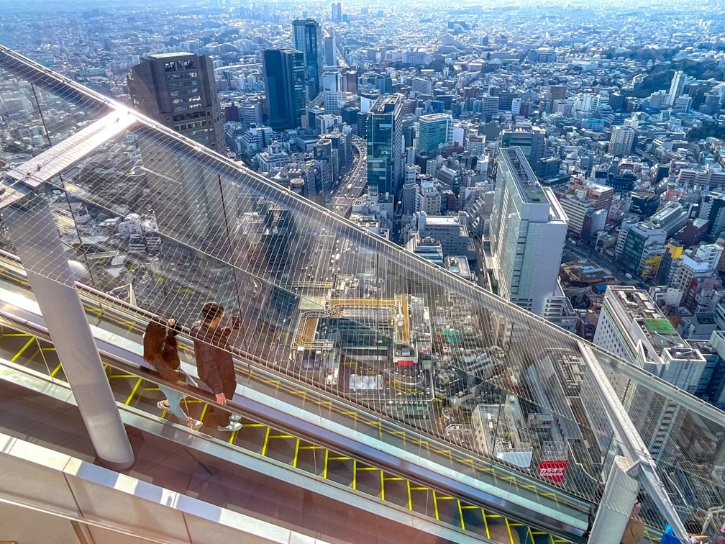
a. More Than Just an Observation Deck
Shibuya Sky sits 229 meters up, on top of the 47-story Shibuya Scramble Square tower. It’s less a plain viewing platform and more a full experience that builds as you climb.
Designed by Nikken Sekkei with the media art studio Rhizomatiks, it moves you through three distinct spaces, so the visit feels like a journey rather than a single lookout.
b. The Ride Up Is Part of the Show
The climb starts with the Sky Gate, where you board the “Transition Pod” elevators. These aren’t ordinary lifts:
- The cabins use moving ceiling displays
- The sound shifts as you rise, building anticipation.
- By the time the doors open, you’re already in the right mood for the view.
c. Up on the Open-Air Rooftop
The highlight is the Sky Stage, a wide open-air deck of wood and turf with the city spread all around you. A few features stand out here:
- Sky Edge, a glass-walled corner that lets you look straight down toward the crossing.
- Cloud Hammock, angled netting where you can lie back and watch the sky.
- Geo Compass, a simple compass set into the floor pointing to places worldwide.
- Crossing Light, a set of 18 searchlights that sweep the night sky in time with music.
There’s also an indoor Sky Gallery one floor down, with media installations and a café-bar, which is handy if the weather turns.
d. The Rules That Actually Affect Your Visit
Because the rooftop is fully open to the air, the rules are strict, and they shape what you can do up there:
- Store loose items in the lockers provided before heading outside.
- Allowed outside: phones and small devices, cameras on a neck or wrist strap, securely attached eyewear, and strapped binoculars.
- Not allowed outside: backpacks and loose bags, tripods, selfie sticks, hats, scarves, loose jackets, and umbrellas.
- In high wind, rain, or lightning, the outdoor deck closes for safety, so plan around clear conditions if you can.
e. What You Can See From the Top
On a clear day the payoff is huge. You’ll be able to pick out Mount Fuji to the west, Tokyo Tower and Tokyo Skytree to the east, the Shinjuku skyscrapers to the north, and Tokyo Bay to the southeast.
Since there’s no glass in the way outside, your photos come out clean with no window glare. Trust me, this is one you’ll remember.
After taking in the whole city, the next stop drops you back to the ground, to one of Shibuya’s smallest and most-loved landmarks.
3. Hachiko Statue
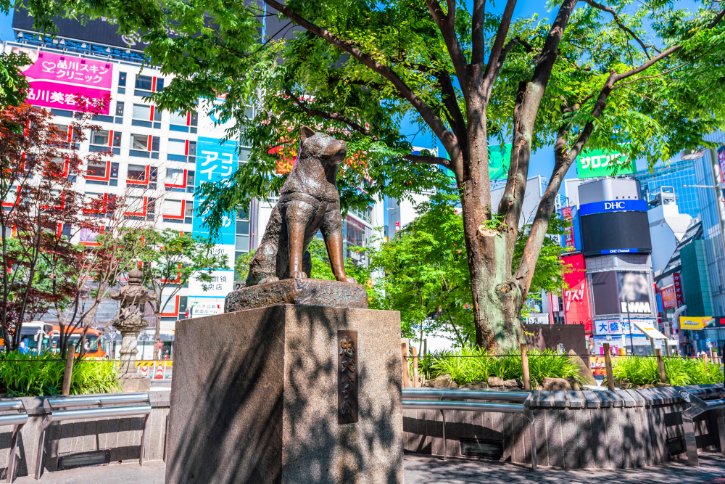
a. The Real Story Behind the Statue
The Hachiko Statue honors a real Akita dog, and the story is genuinely touching once you know it. Hachiko came to Shibuya in the 1920s with Hidesaburo Ueno, a university professor.
Each day the dog walked with him to the station in the morning and returned in the afternoon to meet his train home. When the professor died suddenly and never came back, Hachiko kept returning to the station at the same time each day for years, still waiting.
b. Myths Worth Clearing Up
You’ll hear a few things about Hachiko that aren’t quite right. Here’s the accurate version:
- He wasn’t a lonely stray. Ueno’s former gardener, who lived nearby, looked after him during those years.
- This isn’t the original statue. The first one was melted down for materials during the war, and the current bronze was put up afterward by the original sculptor’s son.
- His drooping left ear wasn’t a breed trait or an artistic touch. It came from a bite wound in a dogfight.
c. How People Use the Spot Today
Today the statue is one of Tokyo’s most popular meeting points, known simply as “Hachiko-mae”. The plaza around it works as a natural pause spot where commuters, locals, and travelers gather before scattering into the surrounding streets. It’s busy, friendly, and easy to find.
d. Little Details to Look For
While you’re there, glance around for a few related touches that most people walk right past:
- A large ceramic mural of a family of Akita dogs on the station wall.
- The ring of mature zelkova trees shading the plaza, lit up on winter evenings.
- The steady, orderly line of visitors patiently waiting for a photo with the statue.
That quiet, personal moment sits right on the edge of one of the busiest pedestrian spaces on earth. A few steps from the plaza, the famous crossing opens up in front of you.
4. Shibuya Scramble Crossing
a. An Urban Phenomenon, Not Just an Intersection
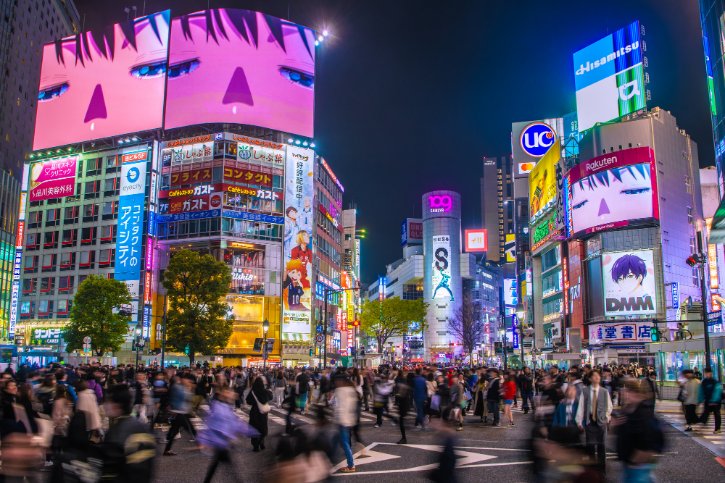
The Shibuya Scramble Crossing is best understood as an experience rather than a photo op. When the signals change, all car traffic stops at once and pedestrians pour across five crosswalks in every direction at the same time. It’s organized chaos, and being in the middle of it is the whole point.
b. What Actually Happens When You Cross
Step off the curb and you become part of the machine. What’s remarkable is how smoothly it all works:
- Each green phase sends somewhere between 1,000 and 3,000 people across at once.
- Everyone stays in motion with small shifts of the shoulders, quick glances, and a shared sense of where the crowd is heading.
- People rarely collide, even at full density, because the whole crowd seems to read itself.
- You’ll sometimes read that millions cross here every hour. That’s an exaggeration, though the daily total is still huge.
c. The Setting That Makes It Feel Bigger
The buildings around you do a lot of the work. The atmosphere comes from:
- Giant screens wrapping the surrounding towers, including the curved building facing the crossing.
- A layered soundscape of ad jingles, music, and the gentle electronic chirps that help visually impaired pedestrians.
- Shibuya’s location in a natural basin (the name means “bitter valley”), so neon reflects off the streets, which looks striking on a rainy evening.
d. Down in It Versus Above It
Being in the crowd feels completely different from looking down on it. At street level you feel the movement and energy pressing in around you. From above, the same scene turns into neat, shifting patterns of people.
To catch that view from just above the street, cross the northern diagonal to MAGNET by SHIBUYA109, right across from the station.
5. MAGNET by SHIBUYA109 Rooftop
a. A Closer Angle Than Shibuya Sky
The rooftop here, officially called CROSSING VIEW & ROOFTOP LOUNGE MAG8, gives you an eye-level angle on the crossing that a high tower can’t.
It recently reopened after a renovation, and it works as both a lounge and a photo platform, with an indoor all-weather area and an open-air deck enclosed by safety glass.
b. Why This Viewpoint Feels So Different
The magic is how close you are to the action. From just eight floors up:
- You can pick out individual people moving through the crossing.
- You can watch the crosswalks fill and clear in real time.
- You can even hear the street sounds drifting up from below.
- The lower height keeps everything human-scale, not distant.
c. The Perfect Photo Angle
The angle is what sells it. You look down over the crossing at roughly 45 degrees, which captures the movement without the flatness you get from far above. There’s also a camera boom mounted high on the building that pairs with your phone, so you can grab an overhead shot looking straight down onto the crossing below. It’s a fun, unusual souvenir.
d. Old Info to Ignore
A lot of travel articles are out of date about this spot, so keep these straight:
- The rooftop is no longer called “MAG’s PARK”, and it’s no longer a free space.
- It now runs as the MAG8 lounge, a proper managed viewpoint.
- Handheld umbrellas aren’t allowed on the outdoor deck in the rain, so you’d watch from indoors or use the rain gear provided.
From this elevated view of the crowds, the next stop puts you right back into that street-level energy. Ride the elevator down to the street, and from the Tsutaya and Starbucks corner facing the crossing, the arch into Center-Gai is just a moment away.
6. Shibuya Center-Gai
a. The Street That Sets the District’s Pulse
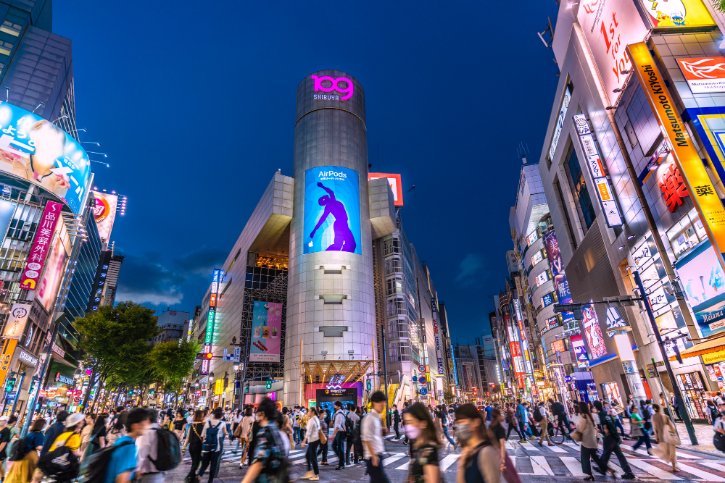
Center-Gai is a 350-meter pedestrian street running west from the crossing, and it’s the easiest way to feel Shibuya’s youth and shopping culture up close. For decades it has been a launching pad for Japanese street styles, so walking it is like reading the district’s mood in real time.
b. The Name Nobody Actually Uses
You may spot signs calling it “Basketball Street“. That official name was added years ago to give the street a cleaner image. In practice, locals, shop owners, and visitors all still call it Center-Gai, so don’t let the signs confuse you.
c. A Street for All Your Senses
The atmosphere comes at you from every direction, and it shifts through the day:
- Sights: layered hanging signs, seasonal banners, and bright storefronts stacked up the buildings.
- Sounds: arcade games, pop music spilling from shops, and staff calling out food specials.
- By day: students and shoppers browsing clothes, sneakers, and casual food.
- After dark: a nightlife street of izakaya, ramen shops, and karaoke.
d. Where the Street Gets Interesting
Don’t just stick to the main drag. The narrow side lanes branching off are where the character hides, holding vintage clothing shops, small upstairs record spots, old-style coffee houses, and photo-sticker booths. A few minutes of wandering here rewards you far more than the busy central strip.
All this street-level fashion leads naturally toward one of Shibuya’s most recognizable style landmarks. Follow Center-Gai west, turn down the first cross street, and Shibuya 109 rises up in about two minutes.
7. Shibuya 109
a. More Than a Mall
Shibuya 109 matters far more than a typical shopping center, because it helped shape Japanese youth fashion. Its cylindrical tower stands where two main streets split, and it’s one of Tokyo’s most photographed buildings. The name is a small joke, playing on the Tokyu name, since “tō” means ten and “kyū” means nine.
b. The Fashion Legacy It Built
In the late 1990s and early 2000s, this was the heart of the gyaru style movement. Its trendsetting sales staff became genuine fashion icons, launching nationwide trends right from their boutique counters. That history is a big part of why the building still carries so much weight in Japanese style.
c. What Fills the Floors Now
The lineup has moved well beyond its old image. Today you’ll find:
- Modern subcultural styles like jirai-kei, feminine kawaii, genderless streetwear, and Y2K retro.
- Rotating pop-ups and collaborations, including K-pop and J-pop merchandise and character tie-ins.
- Basement floors with beauty counters, lifestyle shops, and photo-sticker booths.
Skip the idea that 109 is a 1990s throwback. It reflects what young shoppers across East Asia are actually wearing right now.
d. Fun Even If You’re Not Buying
Even with no shopping plans, it’s worth a walk through:
- The creative storefront displays and neon are a snapshot of current street fashion.
- The tightly packed micro-boutiques make each floor feel like its own little world.
- The iconic exterior is a classic photo when you look up from the slope below.
From this curated, trend-driven fashion, the next stop swings to the complete opposite: the loud, everything-under-one-roof world of Japanese discount retail. Exit the back onto Bunkamura-dori and walk about two minutes north.
8. MEGA Don Quijote Shibuya
a. A Store That’s an Adventure in Itself
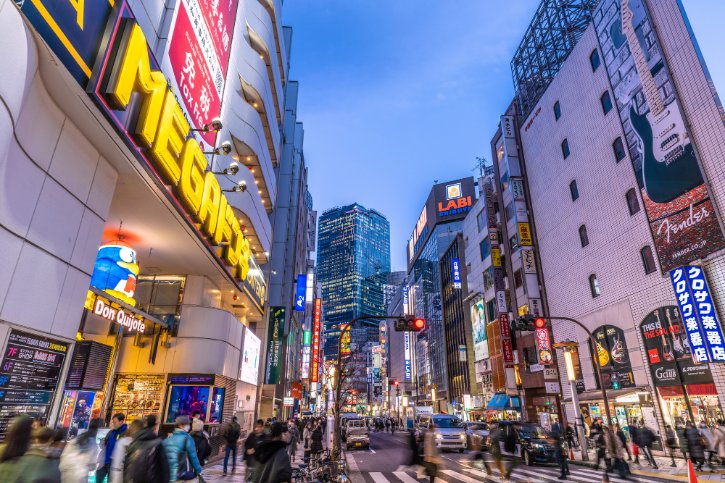
This is the largest Don Quijote in central Tokyo, and it’s an experience even if you don’t plan to buy much. Spread across eight floors, it’s built for browsing, wandering, and stumbling onto things you didn’t know existed. Think of it less as a shop and more as a treasure hunt.
b. The Famous Packed-to-the-Ceiling Style
The store is known for a display style the chain calls “compressed display”, and it’s unlike Western retail:
- Aisles are narrow and stacked floor to ceiling with products.
- Bright, cartoonish price signs fill every gap.
- The catchy store theme song loops endlessly in the background.
- The whole effect is deliberately overwhelming, in a fun way.
c. Floors Worth Exploring
Each floor has its own focus, and a few are especially enjoyable to roam:
- Basement: a full fresh supermarket with sushi, bento, produce, and a massive range of sake, beer, and spirits.
- Sweets floor: Japanese confections, a matcha section, and exclusive KitKat and Pocky flavors.
- Character floor: goods from Sanrio, Pokémon, and anime, plus toys and novelties.
- Travel floor: luggage, souvenirs, and travel gear all in one place.
d. Great for Gifts and Snacks
Part of the appeal is simply the sensory overload, but it’s also a reliable spot for practical finds. You’ll spot quirky Japanese snacks, beauty products, character merchandise, and small travel-friendly gifts that are easy to pack home. Even without a shopping list, it’s genuinely entertaining to explore.
That deliberate chaos makes a nice contrast with the next stop, which handles fashion, art, and pop culture in a far more curated way. Head east along Inokashira-dori toward the Koen-dori slope, and in about four minutes you reach Shibuya PARCO.
9. Shibuya PARCO
a. A Creative Complex, Not Just a Shopping Center
Shibuya PARCO is built like a vertical street rather than a standard mall. An outdoor staircase wraps the exterior, guiding you past open terraces all the way up to a rooftop park with wide skyline views.
The mood shifts as you climb, moving between mirrored dining floors, independent fashion labels, an art gallery, and a dedicated gaming and pop-culture floor. It rewards slow exploring far more than a quick browse.
b. Inside Nintendo TOKYO
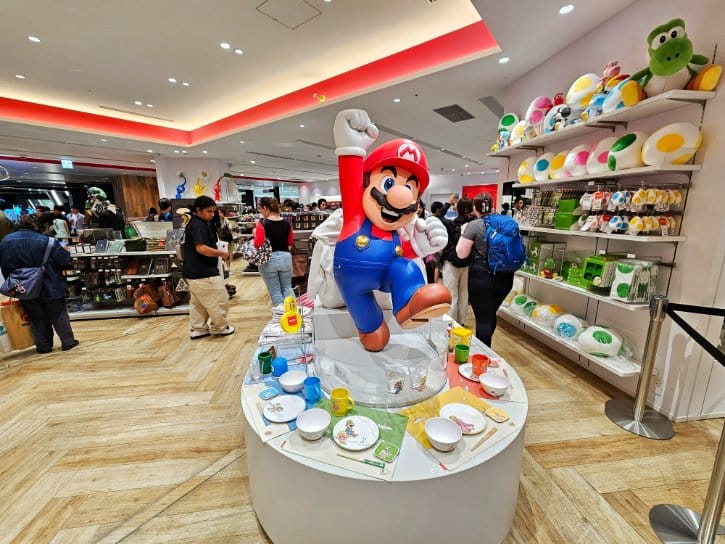
Nintendo’s first directly run flagship store in Japan is a joy even if you’re not shopping. The space uses clean red, white, and glass, with life-size character statues marking each game section. Keep an eye out for:
- Super Mario leaping with his fist raised.
- Link from Zelda standing guard, his sword and shield strapped across his back.
- The Inkling Girl from Splatoon amid colorful paint splatters.
- Isabelle from Animal Crossing with Timmy and Tommy Nook.
- A 3D 8-bit Mario beside a green warp pipe out on the terrace, a favorite photo spot.
c. What the Nintendo Store Actually Sells
The merchandise reaches well beyond games into lifestyle and travel goods, which makes it interesting for any fan:
- Branded streetwear and stationery you won’t easily find elsewhere.
- Stylish homewares, from Zelda tableware to cozy Animal Crossing cushions.
- Interactive kiosks and a check-in station where you scan a code for points and collectible stickers.
On busy days the store uses a numbered entry ticket system to manage crowds, so it’s worth grabbing one early if it’s packed.
d. The Striking Pokémon Center Next Door
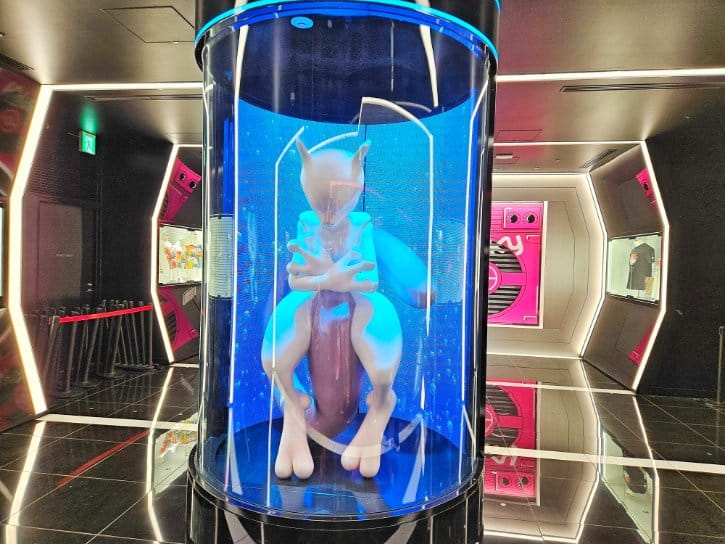
Right beside Nintendo TOKYO, Pokémon Center Shibuya takes a very different look from the usual bright, colorful shops. It leans into a matte-black, street-fashion style with subtle neon that fits Shibuya perfectly. Two things really stand out:
- The showpiece is a life-size, two-meter animatronic Mewtwo in a glass tank near the entrance, with gentle breathing, moving eyes, and soft sound effects.
- A graffiti-style art collection, made with a Japanese street artist, covers plush Pikachus, apparel, and skateboards.
- A design lab lets you create a custom Pokémon T-shirt on a touchscreen, printed on the spot.
Leaving PARCO’s world of fashion, gaming, and characters, the next stop turns to another huge side of Japanese pop culture: music. Walk down the outdoor spiral stairs to Koen-dori and continue downhill for about three minutes.
10. Tower Records Shibuya
a. Still Thriving in the Streaming Age
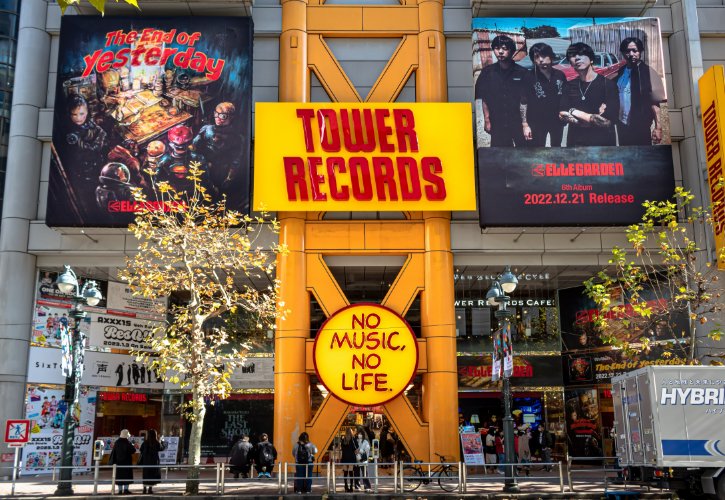
While the brand closed its stores across North America and Europe long ago, Tower Records Japan runs as its own healthy company, and this flagship is one of the largest physical music stores in the world.
You’ll spot the classic yellow-and-red building right away, along with its long-running motto, “NO MUSIC, NO LIFE”. Its survival says a lot about how much Japan still values physical music.
b. Floors Built Around Genres
The huge catalog is spread over nine floors, each with its own theme, so it’s easy to head straight to what you love:
- A massive vinyl floor with roughly 100,000 records, plus cassettes and turntables, and even a standing craft beer bar.
- One of the world’s biggest classical floors, with rich sound from high-end speakers.
- A K-pop floor styled like a neon Seoul street, with wall-sized artist displays.
- An anime, game, and idol music floor with a dance-studio-style photo spot.
- A J-pop floor highlighting the global revival of Showa-era City Pop.
c. A Window Into Japanese Fan Culture
Tower Records is one of the best places to see how fans here celebrate their favorite artists:
- Staff clip handwritten review cards to the shelves, sharing personal picks.
- Big promotional displays for new releases draw fans who gather to take photos.
- Event spaces host in-store concerts, signings, and talks throughout the year.
d. Worth a Visit Even for Non-Collectors
You don’t have to buy anything to enjoy it. Wandering the themed floors, spotting artist displays, and soaking up the energy of a place that still treats music as something physical and shared is a genuine experience. It’s a slice of culture you can’t stream.
From this dense indoor world of music, the next stop opens up into fresh air and green space. Step onto Meiji-dori, cross at the signal, and Miyashita Park is about two minutes away.
11. Miyashita Park
a. A Modern Take on Public Space
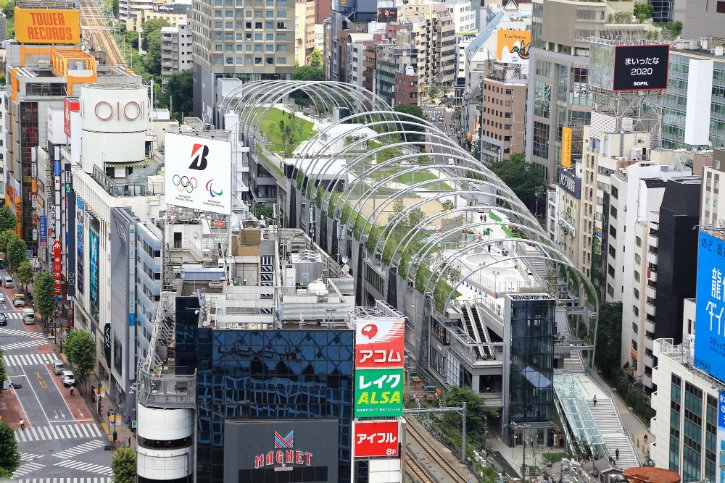
Miyashita Park shows how today’s Shibuya blends public space with shopping and city life. A long, 330-meter development running alongside the Yamanote train line, it replaced an aging elevated park with something far more inviting.
It’s a welcome change of pace, still clearly modern Shibuya but far more open and relaxed than the packed interiors nearby.
b. Four Worlds in One Development
The project pulls several very different things together in one place:
- A rooftop public park with lawns and open sky.
- A shopping and lifestyle complex below, full of streetwear brands and design shops.
- A lifestyle hotel tower at the north end.
- A street-level dining strip with a row of stalls serving comfort food from around Japan.
c. Up on the Rooftop Park
The rooftop is the easy highlight, with green lawns, wooden decking, shaded seating, and nice views of passing trains and nearby towers. Look out for:
- “Doraemon’s Door to the Future“, a bronze sculpture with a life-size “Anywhere Door” you can walk through for a photo.
- A design-focused Starbucks pavilion created with a well-known designer.
- Sports facilities including a skate park, a bouldering wall, and a sand court, which are fun to watch even if you don’t play. The skate park and bouldering wall are drop-in friendly, so you just register and pay on-site, while the sand court needs to be booked ahead as a group.
d. A Good Spot to Slow Down
This is a nice place to catch your breath before the final stretch. Down at street level, the dining strip is worth a stop for a bite, with regional dishes like Hokkaido seafood, Sendai beef tongue, Hakata ramen, and Okinawa soba. It’s easygoing, local, and a pleasant contrast to the shopping floors you’ve just left.
Miyashita Park also sets up a striking contrast for the final stop. Walk south along the tracks toward the station, and the polished buildings give way to a small opening under the elevated rail bridge.
12. Shibuya Nonbei Yokocho
a. The Old-School Finish to Your Walk
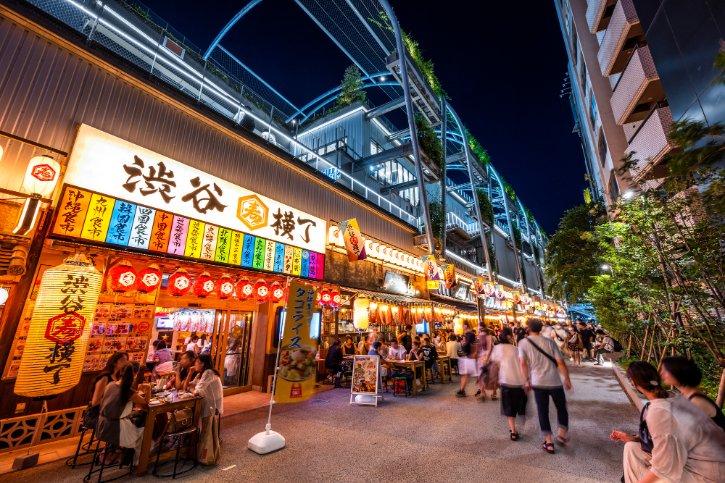
Nonbei Yokocho, often translated as “Drunkard’s Alley”, is the perfect way to end the route. It’s a preserved slice of postwar Tokyo, born when the city organized the food stalls that had gathered near the station after the war and moved them to this narrow strip beside the train tracks.
The name comes from a warm, casual word for someone who enjoys a drink and good company, which fits the friendly spirit of the place.
b. What the Alley Looks and Feels Like
Physically, it’s tiny and full of character. Two lanes only about two meters wide hold dozens of small, two-story wooden bars. As you walk through, notice:
- Weathered wood, sliding doors, hand-painted signs, and red paper lanterns lighting the lane.
- Overhead cables and the gentle hum of the buildings as trains pass just above.
- Intimate counters seating only a handful of guests, with the owner working right in front of you.
c. A Few Local Customs to Keep in Mind
Since these are working neighborhood bars rather than a tourist attraction, a little awareness goes a long way:
- Group size: it’s best visited solo or as a pair. Groups of three or more will struggle to sit together.
- Small seating fee: many bars add a modest charge that comes with a little seasonal appetizer.
- Food and drink: expect charcoal-grilled yakitori, simmered oden, home-style dishes, beer, and sake.
- Photos: the local association asks visitors to skip tripods and avoid intrusive shots into the bars.
d. The Contrast That Makes It Special
It’s fair to call this a real, active corner of the city rather than an undiscovered secret. Plenty of visitors know it, and it clearly sits inside modern Shibuya. That’s exactly what makes it work. Look up past the low wooden roofs and you’ll see the glass towers of Shibuya Scramble Square and Hikarie rising right behind them, decades of history stacked against the present day.
The Full Picture
Walk these stops in order and Shibuya’s real character comes through. In the space of a short stroll, you go from rooftop skyline views to a quiet statue with a heartfelt story, from roaring crossings and fashion floors to gaming, music, open green space, and a lantern-lit alley from another era.
Seeing them back to back is what makes it click. That final quiet drink under the train tracks, with skyscrapers glowing overhead, sums up the whole appeal: a compact, walkable district where the cutting edge and the old days sit side by side, far beyond the famous crossing.
Related Posts

Photo Credit:
Photos by PIXTA