
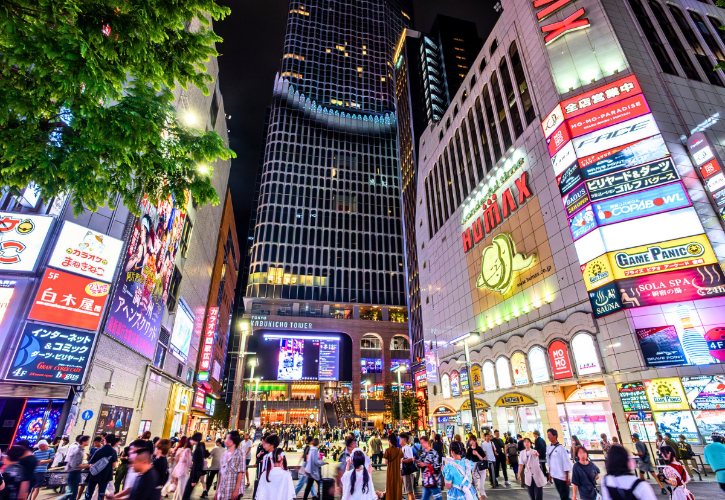
You might expect Shinjuku to wear you out. Its station alone handles more than 3.5 million passengers a day, and most first-time visitors picture endless tunnels and confusing exits.
The east side flips that idea on its head. In just a few blocks you can stand under a giant 3D cat, step into a centuries-old shrine, browse a world-class food hall, and squeeze into a tiny post-war bar. The spots sit close together, and the mood changes with almost every corner you turn.
Here is your easy, stop-by-stop walk through the best of it. 😊
1. The 3D Cat That Rules the East Exit
a. The Screen Everyone Stops to Watch
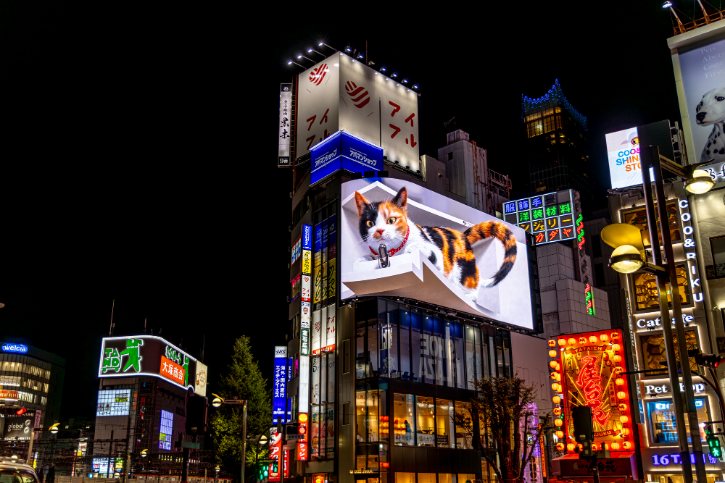
Right across from the East Exit of JR Shinjuku Station, high on the Cross Shinjuku Building, you will find Cross Shinjuku Vision. This is the home of the famous 3D cat.
- It was created by Cross Space and runs with MicroAd Digital Signage and Unica
- It went live in July 2021 and quickly became a symbol of modern Tokyo
- The screen is huge, roughly 154 square meters, about 19 meters wide and 7 to 8 meters tall
- It bends around the 90-degree corner of the building, and that curve is the secret to the whole illusion
b. What You’ll Catch the Cat Doing
The star is a giant calico cat that locals call Mia, or simply the Shinjuku East Exit Cat. It moves through short, lifelike scenes all day long.
- Waking up and stretching
- Watching the crowds below
- Yawning and twitching its ears
- Washing its paws and swiping at passing objects
- Curling up for a nap
Look closely for a clever touch. A dark patch in its fur is shaped like the outline of Shinjuku Ward. You will hear it too, since speakers send soft meows and purrs down over the crossing.
c. Why the Trick Fools Your Eyes
Most big screens fight for attention with brightness. This one plays with your sense of space instead.
- The curved, L-shaped corner lets animators add fake shadows and lighting that match the real sun
- When the cat leans a paw over the edge, your brain reads it as crossing into real air
- Fresh cat scenes appear roughly every 15 minutes, mixed in between the paid ads
d. The Buzz Around You
This corner is Shinjuku at full volume. Commuters pour out of the station onto a wide plaza framed by screens, neon, and shop fronts, while train jingles and traffic blend into one steady hum.
In the middle of all that, the cat feels like a friendly anchor. It softens the hard edges of the buildings and sets the playful tone for the rest of your walk. From here, the route drifts into the wide shopping streets of Shinjuku-sanchome.
2. Japan’s Biggest Disney Store
a. A Magical Shop on Three Floors
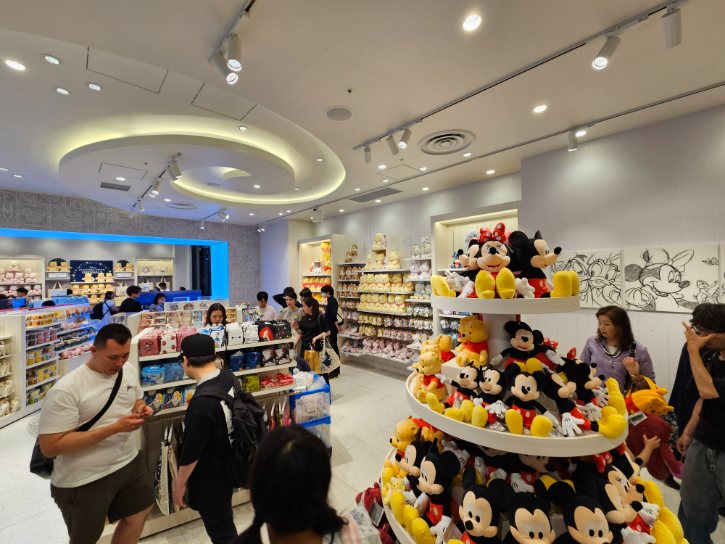
On Shinjuku-dori, inside the T&T III Building, sits the largest Disney store in the country. Disney Flagship Store Tokyo opened in December 2021 under the theme “Beyond the Imagination”.
- It spreads across three floors (Basement 1, Floor 1, and Floor 2), about 1,710 square meters in total
- A giant 440-inch LED screen called Welcome Vision plays character scenes out to the street
- Animated archways called Magical Digital Portals tie the floors together with Disney, Pixar, Marvel, and Star Wars scenes
- On Floor 2, a large Sorcerer’s Apprentice Mickey statue from the 1940 film Fantasia anchors a showroom of changing displays
b. Goods You Can Only Find Here
This is no ordinary Disney Store. A big part of the appeal is what you cannot easily get elsewhere.
- Flagship-only items stamped with the official “Disney FLAGSHIP TOKYO” design, like plush, pins, and tote bags
- Japan-exclusive plush lines such as UniBEARsity and UniBestiez, often in seasonal outfits
- Imported theme park goods from Walt Disney World and Disneyland Resort
- A whole Basement 1 zone for Marvel and Star Wars figures and apparel
- Collaborations with high-end Japanese fashion and cosmetics brands
c. Design Your Own Souvenir
The most hands-on feature is the D-Made Lab on Basement 1. You get to make a souvenir that is truly one of a kind.
- Pick from hundreds of character designs and lettering on a touchscreen
- Add them to blank hoodies, T-shirts, bags, mugs, or plush toys
- Your item is printed and put together right there in the store
- It was once available only through Disney’s Japanese website, so this is a rare chance
d. Fun Even If You Don’t Buy
You do not need to spend a yen to enjoy walking through. Think of it as a small gallery of Disney design, with details hidden in plain sight.
- Character silhouettes tucked into the light fixtures
- Small design touches along the staircases
- Character greetings built into the elevator chimes
- A Floor 2 showroom that makes an easy photo spot
e. Why It’s Worth Your Walk
In Japan, character goods are part of everyday adult style, not just toys for kids. That makes this flagship a window into the culture, showing how a global brand adapts to Japan’s high standards for design and presentation. It is a bright, cheerful start before the mood turns more refined.
3. Isetan, Shopping Raised to an Art
a. A Store That Doubles as a Landmark
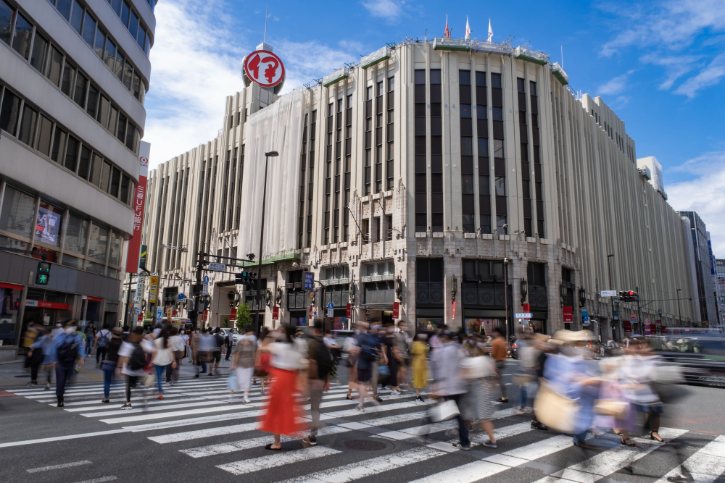
On a prime corner of Shinjuku 3-chome stands Isetan Shinjuku, one of the most famous department stores in the world.
- It began in 1886 as a kimono fabric merchant and settled here in 1933
- The main building is an official Selected Historical Building
- The facade mixes clean Art Deco shapes with tall Gothic-style detailing
- The street-level windows act like public art, with changing designer installations
b. What You’ll Find Floor to Floor
Isetan is a true trendsetter, and it is split into clear parts so you can find your interests fast.
- The Honkan (main building) covers women’s fashion, luxury accessories, cosmetics, and fine living
- The separate Isetan Men’s fills eight floors with menswear
- You will spot rising Japanese designers sitting right beside famous European brands
- Expect a polished, formal feel throughout
c. The Food Hall You Shouldn’t Skip
Head down to Basement 1 for the real crowd-pleaser, a depachika (food hall) that ranks among Japan’s best. Even if you only buy one item, it is worth a slow stroll.
- Wagashi, traditional Japanese sweets, beautifully packaged
- French, Belgian, and Japanese cakes and chocolates
- Ready-to-eat sushi, bento, and grilled skewers for takeout
- Premium seasonal fruit, aged soy sauces, and regional sake
The best part is that you need no reservation. You can grab a single pastry or a gourmet bento and taste high-end Japanese food right away.
d. Small Details Worth Knowing
A few touches make the visit feel more special.
- Look for the MacMillan tartan, Isetan’s signature pattern, now registered with the Scottish Register of Tartans
- Some basement shops sell limited treats wrapped in that tartan, which make lovely gifts
- Arrive at opening and you can watch staff bow together in a graceful welcome known as omotenashi
e. Why It’s More Than Shopping
In Japan, a store like this is a cultural institution. It preserves craft, sets fashion trends, and curates how food is presented. It shows you the calm, graceful side of Shinjuku, a gentle contrast to the neon districts just ahead.
4. Hanazono Shrine, a Hidden Pocket of Calm
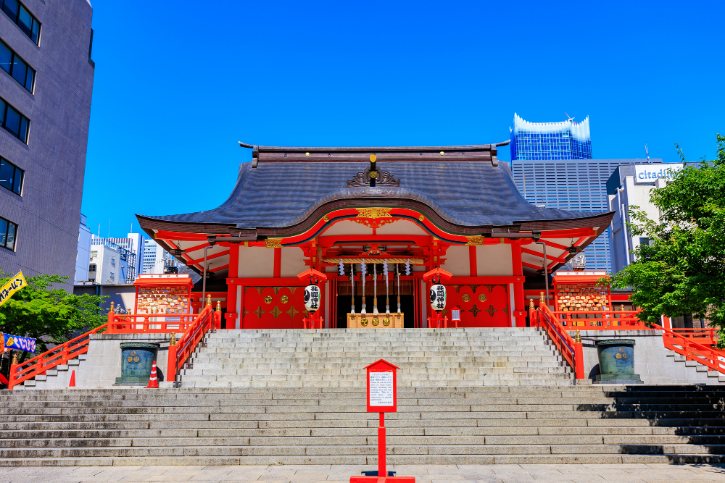
a. Sacred Ground Behind the Towers
Tucked behind the office buildings of Shinjuku 5-chome, Hanazono Shrine has long guarded this part of the city. Its roots run surprisingly deep.
- Sacred rites were held here before the city of Edo took shape in 1590
- It once stood further south, near where Isetan is today, and moved to this spot in the 1600s
- The land once held flowering gardens, which gave the shrine its name, meaning “Flower Garden”
- It honors three deities linked to prosperity, courage, and food
b. The Spots to Look For
The grounds are small, but they hold several features worth slowing down for.
- The main hall, rebuilt in vermilion and white, with a broad staircase
- A rare pair of cast-bronze lion-dogs from 1821, now a protected cultural property
- The Itoku Inari Shrine, reached through a photogenic tunnel of red torii gates, popular for prayers about love and family
- The Geino Asama Shrine, devoted to the performing arts, where wooden tablets carry the names of famous actors and singers
c. How to Pay Your Respects
If this is your first Shinto shrine, a little etiquette helps you feel at ease. The steps are simple.
- Stop at the temizuya (water basin) and rinse your left hand, right hand, then your mouth with the ladle
- Place a small coin in the offering box at the main hall
- Bow deeply twice, clap your hands twice, offer a quiet prayer, then bow once more
Take a moment to notice the contrast, with the quiet, wooded courtyard pressed right up against tall modern towers.
d. The Festival That Fills the Grounds
The shrine is closely tied to the historic Tori-no-Ichi festival, held on the “Days of the Rooster” each November. It is one of the liveliest times to visit.
- Huge crowds of merchants and entertainers pour in
- Stalls sell ornamental bamboo rakes called kumade, covered in coins and charms
- The rakes are meant to “rake in” good fortune for the year ahead
e. Why This Stop Matters
Hanazono Shrine holds the memory of old Shinjuku. Long before the neon and skyscrapers, it was the community’s spiritual heart, a place travelers stopped to seek protection. Stepping out the rear gate, the calm quickly gives way to tight wooden lanes.
5. Golden-Gai, Tokyo’s Tiniest Bar District
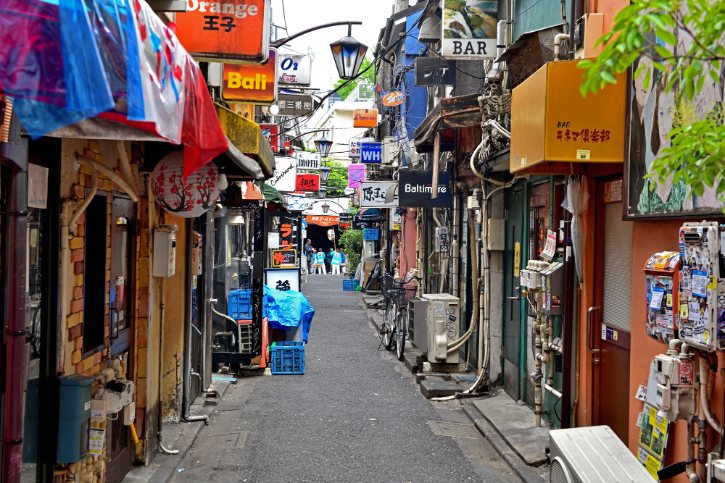
a. A Maze of Miniature Bars
Wedged between the shrine and Kabukicho, Shinjuku Golden-Gai is one of the last pockets of low-rise, post-war Tokyo. Everything here runs on a human scale.
- Six narrow lanes hold more than 200 small bars and eateries
- Most buildings are modest two-story wooden structures from the mid-1900s
- Many bars seat only four to eight people around a short counter
- Steep staircases lead up to even smaller rooms above
b. The History in the Alleys
These lanes grew out of the black markets that appeared near the station after World War II. Over the decades, the area turned into something far more creative.
- From the 1960s to the 1980s, it became Tokyo’s great meeting place for writers, musicians, and filmmakers
- Many bars took on very specific themes, filled with film posters, jazz records, or small libraries
- The streets still show their age, with tangled cables, old metal siding, and hand-painted signs
c. How to Enjoy It, Day or Night
The mood shifts completely between daylight and dark, so each visit feels different.
- By day, study the details: rustic door handles, faded posters, and narrow outside stairs
- By evening, paper lanterns and soft neon light the lanes and cast long shadows
- Look for bars with English menus or price boards by the door, a sign they welcome visitors
- Expect some spots to serve mostly regulars, which is simply part of the culture
The real charm is the closeness. Sitting shoulder to shoulder with locals leads to easy, honest conversation you rarely get in a big bar.
d. The Simple Rules to Follow
A few unwritten rules keep everyone comfortable in such tight spaces.
- Many bars add a small cover charge, often with a little snack included, so check the door board first
- Come solo or as a pair, since larger groups struggle to sit together
- Never photograph guests or shoot through doorway curtains without clear permission
- Carry cash, as many older bars do not take cards
e. Why You Shouldn’t Miss It
Golden-Gai is a living time capsule that survived decades of pressure to tear it down. It gives you an honest look at the close-knit drinking culture of old Tokyo, all within earshot of giant modern towers. Step out the western end, and the wooden maze opens into a blaze of light.
6. Kabukicho, the District That Never Sleeps
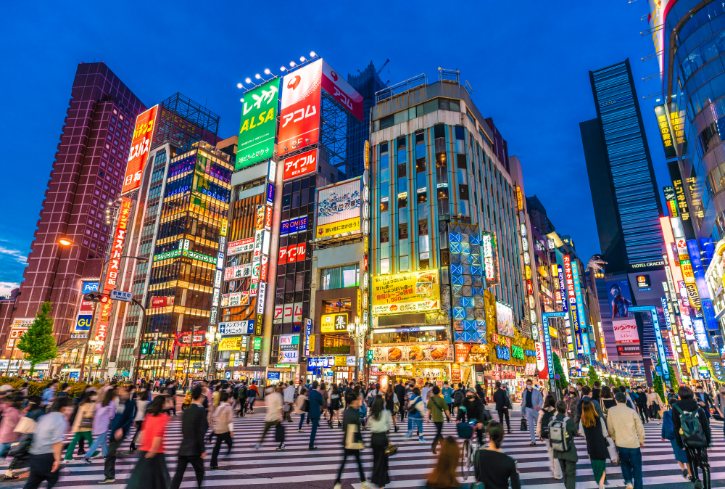
a. Tokyo’s Brightest Night-Time Playground
Kabukicho is Asia’s most famous entertainment quarter, packed into about half a square kilometer. People often call it the “Sleepless Town”.
- It holds arcades, cinemas, izakayas, karaoke towers, live venues, bars, and hotels
- By day it feels calm and practical, with delivery vans and office workers
- After dark, thousands of signs switch on at once and turn the streets into a canyon of color
b. The Surprising Story Behind the Name
The name has a twist most visitors never hear. It comes from a theater that was never built.
- Before the war, this was a quiet residential and marshy area
- After air raids flattened it in 1945, planners dreamed of a grand kabuki theater here
- The district was named Kabukicho in 1948 in the theater’s honor
- Money ran out, the theater never rose, but the name stuck
c. The Streets and Squares to Walk
On foot, Kabukicho is all about its landmark corridors.
- The bright red Kabukicho Ichiban-gai Gate, one of Tokyo’s most recognizable entrances
- Godzilla Road, a wide pedestrian avenue lined with game centers and food halls
- Cine City Square, an open plaza at the district’s heart
- Big entertainment buildings holding arcades, escape rooms, and themed restaurants
d. Where to Point Your Camera
For photos, let the lights do the heavy lifting. The strongest shots come from:
- Stacked neon and video signage
- Dense advertising climbing the buildings
- The long view up Godzilla Road
- Narrow side lanes framed by towering walls of light
e. How to Stay Smart and Safe
A little awareness goes a long way here. The district is far safer than its old reputation suggests, thanks to heavy policing, but basic street sense still helps.
- Watch for street touts who push people toward “cheap” bars and clubs
- Official signs clearly warn you never to follow them
- Doing so can lead to surprise charges and credit card trouble
- Stick to ground-floor shops and well-lit venues and you will be fine
Toward the edge of Cine City Square, the scattered neon gathers around one huge glass tower.
7. Tokyu Kabukicho Tower, Fun Stacked Sky-High
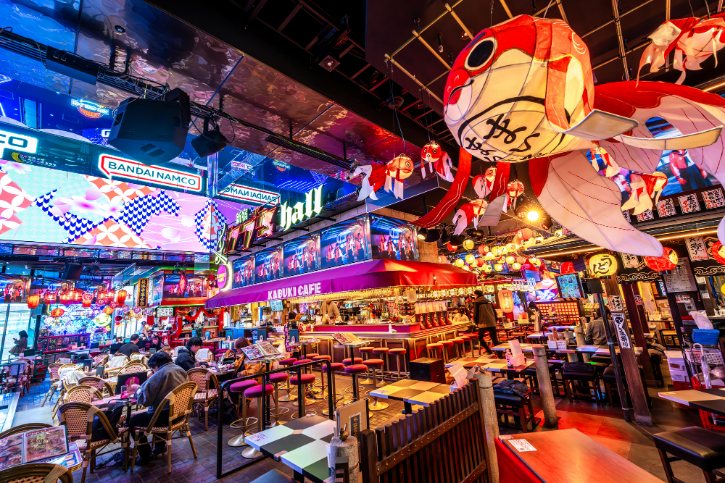
a. A Skyscraper Built Purely for Play
Opened in April 2023, Tokyu Kabukicho Tower rises 225 meters over the district. It is unlike almost any other tower in Japan.
- It has 48 floors above ground and five below
- It is the country’s first super-tall tower built only for entertainment, dining, and hotels, with no offices
- The glass exterior is shaped like a fountain, a nod to the area’s old marshland
- The design also echoes the pleats of a traditional kabuki stage curtain
b. What’s Packed Inside, Top to Bottom
The building stacks a remarkable range of venues, so there is something for nearly everyone.
- Floors 39 to 47: Bellustar Tokyo, an ultra-luxury hotel with a sky lobby
- Floors 18 to 38: Hotel Groove Shinjuku, a lifestyle hotel
- Floors 9 to 10: a premium eight-screen cinema
- Floors 6 to 8: a 900-seat theater
- Basements 1 to 4: Zepp Shinjuku, a large live music hall
c. A Neon Food Alley on Floor 2
One of the most eye-catching spaces is Kabuki Yokocho on the second floor. It reimagines a traditional food alley in bright, modern neon.
- Glowing neon art, hanging LED lanterns, and festival decorations fill the room
- Around ten stalls serve regional favorites, from Hokkaido seafood to Osaka takoyaki and Okinawan soba
- A central stage runs nightly shows with taiko drummers, dancers, and DJs
Keep in mind this is a brand-new, festive take on the idea, not a genuinely old alley.
d. Games and Gadgets at namco TOKYO
Floor 3 holds namco TOKYO, a next-generation arcade that skips the cramped old-school feel for wide, neon-lit walkways.
- Crane machines filled with exclusive anime plush and figures
- Rows of high-end capsule-toy machines
- A character bar serving themed drinks and snacks
e. Why It’s Worth Your Time
This tower sums up the new face of Kabukicho. It borrows old ideas, the food alley, the kabuki curtain, the water theme, and reshapes them into a sleek vertical playground. Head back toward Cine City Square and look east, where a famous monster waits.
8. Godzilla Head, a Monster Over the City
a. A Movie Legend Watching the Streets
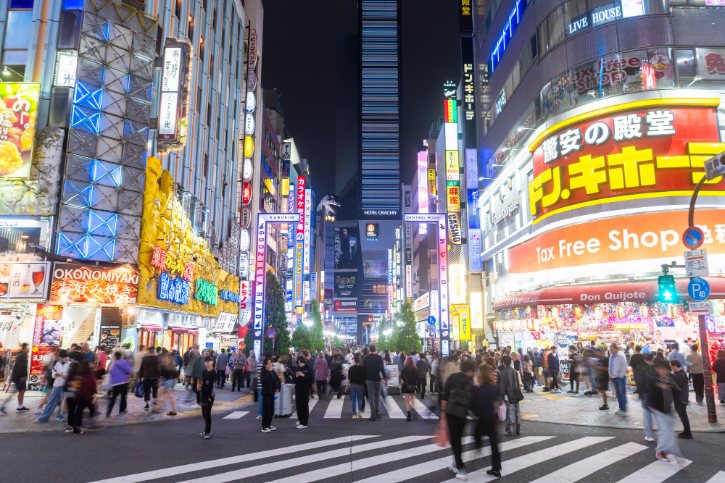
On the eighth-floor terrace of the Shinjuku Toho Building, home to a major cinema and the Hotel Gracery Shinjuku, sits the Godzilla Head. It is one of Tokyo’s most loved pop-culture landmarks.
- Toho unveiled it in April 2015
- The head is 12 meters tall and sits around 40 to 52 meters above the street
- Its design is based on Godzilla’s look in the 1992 film Godzilla vs. Mothra
- The height is no accident, as it is placed to look like a full-size monster peeking over the roof
b. The Show It Puts On
Roughly every hour from midday until the evening, the Godzilla Head comes to life. It is worth timing your visit to catch the short show.
- The eyes flash a piercing blue
- The mouth opens with a booming roar, backed by dramatic monster music
- Clouds of white smoke puff out around the head
c. Where to Get the Best View
You can enjoy the monster from a few different spots, depending on how close you want to get.
- From street level along Godzilla Road, looking north, neon signs frame the head nicely. This is the best open-air view
- Head up to the hotel’s 8th floor for an eye-level look, where the Cafe Terrace Bonjour (also called the Gracery Lounge) faces the sculpture
- The café is open to the public, not just hotel guests, so you can order a drink and watch the head through the windows
- Keep in mind the outdoor terrace is currently closed to visitors for safety, so you cannot step out right beside the sculpture
d. Why Godzilla Belongs Here
Godzilla is a powerful symbol of Japan’s post-war film culture. The city has embraced it fully, even granting the monster honorary citizenship and naming it a tourism ambassador. Seeing it loom over the cinema heart of Kabukicho captures Tokyo’s playful talent for blending movie legend with real city life. From here, the route turns back down Godzilla Road.
9. Don Quijote, a Treasure Hunt on Five Floors
a. A Maze of Everything, All at Once
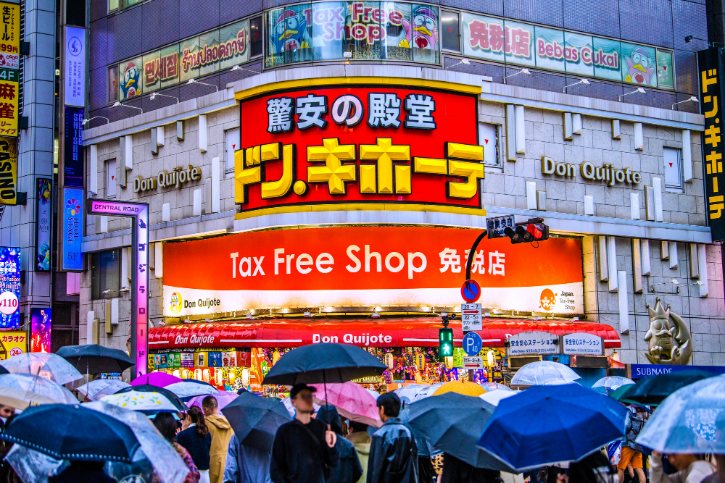
Where Godzilla Road meets Yasukuni-dori, you reach the Don Quijote Shinjuku Kabukicho store, a favorite for anyone who loves a good rummage. It fills a five-story building and never slows down.
- Shelves are stacked floor to ceiling in a style known as “compressed display”
- Aisles twist like a maze, and products spill into every corner
- Neon signs, handwritten price tags, and a looping jingle add to the happy chaos
- It draws locals, late-night shoppers, and travelers alike
b. What to Hunt for on Each Floor
The store is organized loosely by floor, which helps you aim your search.
- Basement 1: snacks, drinks, and alcohol, including regional Kit-Kat flavors and Japanese whisky
- Floor 1: souvenirs, gifts, and items featuring the penguin mascot, Donpen
- Floor 2: skincare, cosmetics, sunscreens, sheet masks, and hair tools
- Floors 3 to 4: luggage, watches, character costumes, and quirky gifts
c. How to Shop Without the Stress
Browsing here feels like a treasure hunt, but it can get overwhelming in the busy evening hours. A simple plan keeps it fun.
- Take the elevator to the 4th floor, then work your way down the inside stairs
- Collect items as you go so you never backtrack
- If you have a foreign passport, use the tax-free counters for qualifying buys
d. Why It’s the Perfect Opposite of Isetan
Put this store next to Isetan and you see the full range of Tokyo shopping in one afternoon.
- Isetan is calm, refined, and formal
- Don Quijote is loud, cheerful, and full of pop culture
- Both are true pieces of modern Tokyo, sitting just minutes apart
Step back outside and follow the tracks west, where the bright lights fade into charcoal smoke.
10. Omoide Yokocho, Old Tokyo’s Final Flavor
a. A Smoky Lane Out of Another Era
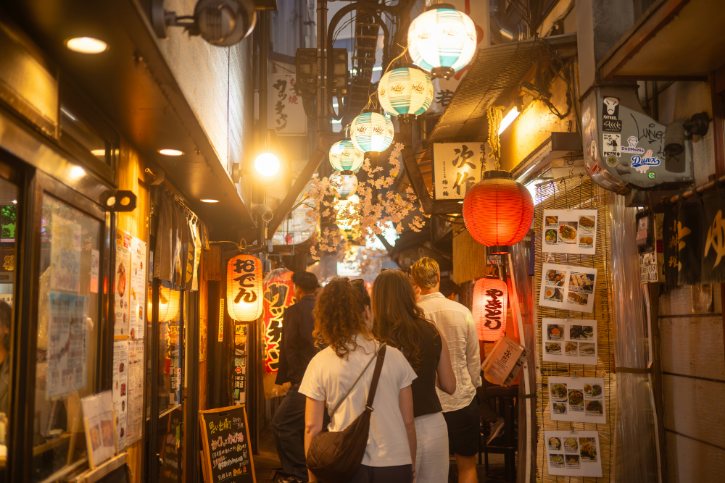
Tucked beside the western tracks of Shinjuku Station, Omoide Yokocho is one of Tokyo’s best-loved post-war food alleys. The name means “Memory Lane”, and it lives up to it.
- It began in 1946, in the rubble near the bombed-out station
- Early vendors set up makeshift stalls divided by simple wooden boards
- Today around 80 tiny shops sit packed wall to wall
- Most stalls hold only six to eight counter seats around an open grill
You may hear its blunt old nickname, “Piss Alley”. It came from a time when the market had no plumbing, and it stands as an honest reminder of how rough the city’s recovery really was.
b. The Food Born From Hard Times
The menu here grew straight out of necessity, and that story is part of the flavor.
- In 1947, strict rationing limited flour, wheat, and meat
- Organ meats were not rationed, so cooks skewered and grilled them, creating motsuyaki
- More than half the stalls still carry on that tradition today
Expect variety rather than one set menu, including:
- Charcoal skewers of chicken, pork belly, liver, and more
- Grilled eel at historic stalls like Kabuto, open since 1948
- Comfort dishes like beef tendon stew, oden, soba, and ramen
- Classic drinks such as cold beer, dry sake, and shochu highballs
c. What the Alley Feels Like Tonight
The mood here is all fire, smoke, and old wood, and it only grows richer after dark. Red paper lanterns glow over weathered fronts while trains rumble by on the tracks above.
- Seasonal decorations change through the year, from cherry blossoms to maple leaves
- Grill masters fan charcoal, sending savory smoke into the lanes
- You sit close to the cooks and your neighbors, which makes the whole thing feel personal
d. Small Tips for a Smooth Visit
A little preparation makes the experience far better in such tight quarters.
- Bring cash, as many stalls do not take cards
- Keep it moving by ordering a drink and a few skewers, then freeing your seat
- Expect a small seating fee or an automatic appetizer on the bill
- Most stalls share a renovated public restroom along the main alley
- Leave big bags in a station locker, since they will not fit inside
e. Why It’s the Perfect Finish
Omoide Yokocho is the ideal place to end your walk. After the digital billboards, grand stores, hidden shrine, neon towers, and movie landmarks, you settle onto a wooden stool with a cold drink and smoke curling past the lanterns.
It is more than a pretty photo. Born from hardship and rebuilt by hand after a fire, it carries the warm, stubborn spirit of old Tokyo. Sitting here is the perfect last reminder of what makes this corner of Shinjuku so special: the way it can shift from one world to another in just a few short steps.
Related Posts

Photo Credit:
Photos by PIXTA