Italy gives you more than postcard views. It also runs on a tangle of national systems and local rules that quietly trip up visitors who arrive unprepared.
Border procedures have changed, airport security shifts from one terminal to the next, and many cities fine you for small missteps.
What applies to you at one airport, train, or attraction may not apply at the next. Knowing a handful of key rules keeps your trip relaxed, and it pays off from the moment you land. 😊
1. The New Digital Border System Is Now Live
a. The passport stamp is quietly disappearing
When you cross into Italy from outside Europe, you probably will not get an ink stamp anymore. The EU’s Entry/Exit System (EES) has replaced manual stamping with a digital record at the border. It rolled out in stages the previous autumn, across 29 European countries, and is now fully operational.
b. What the border records about you
As you pass an external entry point such as Rome Fiumicino, Milan Malpensa, or a seaport, the system captures:
- Your passport and personal details
- Four fingerprints and a facial photo
- The exact date, time, and place of every entry, exit, or refused entry
Your record stays on file for three years after your last exit. On return trips within that window, the system checks your face against the record you already have, which can speed you through automated e-gates where they exist.
c. Where it applies, and where it does not
- 25 EU countries, plus Switzerland, Norway, Iceland, and Liechtenstein
- Ireland and Cyprus stay outside the system and still stamp passports by hand
d. Who gets checked, and who skips it
It applies to you if you hold a non-EU, non-EEA, non-Swiss passport and visit for a short stay, including travelers from the US, UK, Canada, and Australia. A short stay means up to 90 days in any 180-day window across the Schengen Area.
You are generally exempt if you:
- Hold EU, EEA, or Swiss citizenship
- Carry a long-stay visa or a valid European residence permit
- Are a UK national protected under the Withdrawal Agreement
- Are a diplomat, or a national of Andorra, Monaco, San Marino, or the Vatican
A couple of catches are worth knowing. A non-EU family member of an EU citizen who has no EU residence card still registers in full. And if you live in Italy, carry your residence permit alongside your passport. Without it, the system can process your biometrics and wrongly subtract days from your allowance.
e. Why your day count now runs itself
The system tracks your 90/180 allowance automatically and calculates your remaining days in real time. An overstay triggers an instant flag at the border, which can lead to civil fines and entry bans. Since there is no stamp to count back from anymore, it is smart to keep your own running total. You can check your status on the European Commission’s official portal before you travel.
f. The mix-up worth avoiding
- EES is the free, on-arrival border database
- ETIAS is a separate pre-travel approval, with a small fee for most visa-free travelers, and it is expected to start later
- A biometric passport is not required, but a non-biometric one cannot use the self-service kiosks and means slower manual processing
- Your first registration takes a little longer, since that is when your fingerprints and photo are captured
2. Pack Your Medicines With the Right Paperwork
a. How much you can bring
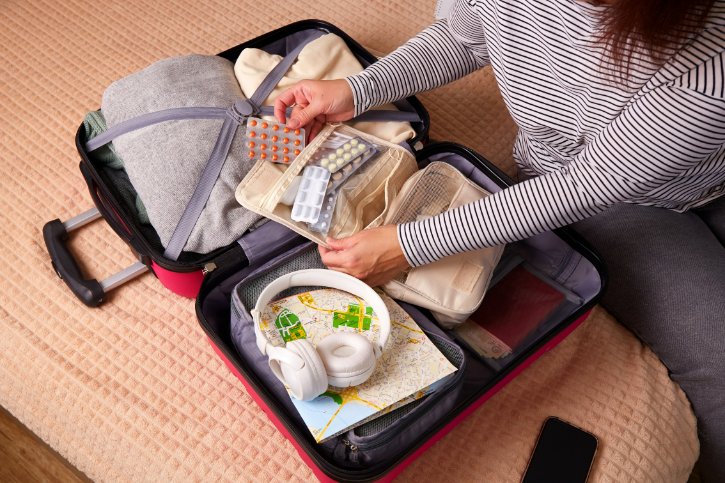
Italy lets you carry medicine for personal use, measured against a 30-day supply. Keep it reasonable and well documented.
- Carry a quantity that matches your own treatment needs
- Keep everything in its original, labeled packaging
- Do not move pills into a plain organizer, which breaks customs rules
b. The documents customs wants to see
For prescription medicine, bring an official prescription or a doctor’s letter in English or Italian that shows:
- Your full name and date of birth
- The prescribing doctor’s details, signature, and registry number
- The active ingredient name, not just the brand
- Your dosage, frequency, and length of treatment
c. Stricter rules for controlled medicines
Narcotics, strong painkillers, ADHD medication, sedatives, and similar drugs face tighter controls, and the paperwork depends on where you travel from.
- From inside Schengen, you need a Schengen medical certificate from your home health authority
- From outside Schengen, you need a doctor’s attestation, your prescription, and proof it was lawfully dispensed
- Both routes cap your supply at 30 days
d. Why the paperwork really matters
Italian customs can inspect what you carry, and gaps in documentation cause real problems. Too much medicine raises questions, and missing paperwork can lead to your medicine being seized and even chemically tested at the border. Mailing or couriering medicine to your hotel is a bad idea, since routine shipments are intercepted unless cleared in advance through an authorized Italian pharmacy.
e. What not to do
- Do not carry medicine prescribed to someone else, even a family member not traveling with you
- Do not mail or courier medicine to your accommodation
- Do not assume a brand that is legal at home is unrestricted in Italy
- Do not expect your usual brand name to exist in Italian pharmacies
f. Simple habits that keep you clear
Keep medicine in your hand luggage so it stays with you, carry copies of your prescription, and learn the generic name since pharmacies may stock different brands. If you take a controlled drug, check the rules before you leave, and verify a specific medicine with AIFA, Italy’s medicines agency, when you are unsure.
3. Airport Liquid Rules Are Not the Same Everywhere
a. Two different rules now apply
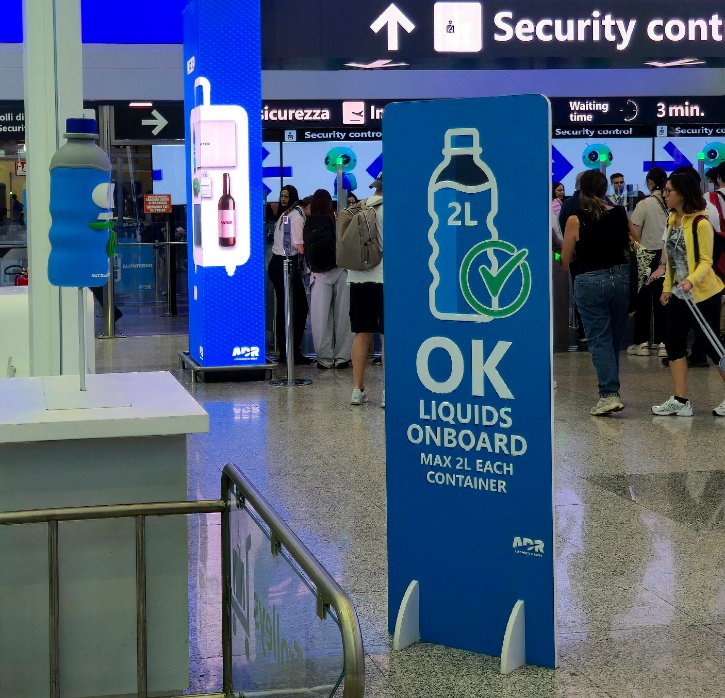
The old limit that squeezed every liquid into a tiny bottle is no longer the whole story. Newer scanners have relaxed the rules at some airports, while others still run the classic system, so your departure terminal decides what you can bring.
- Older checkpoints keep the classic rule: containers of 100 ml or less, in one clear, resealable one-liter bag
- Airports with modern CT scanners now allow liquids up to 2 liters, with no separate bag needed
- There is no single Italy-wide rule, so always check the airport and terminal you are flying from
b. Where you can now bring larger liquids
These Italian airports use CT scanners and let you carry liquids up to 2 liters, with electronics left inside your bag:
- Rome Fiumicino, all lanes
- Milan Linate, all lanes
- Bologna, all lanes
- Milan Bergamo (Orio al Serio), all lanes
- Milan Malpensa, Terminal 1 only
- Turin, fast-track lanes only
c. Where the old 100 ml rule still stands
At airports without these scanners, the classic rule holds, so you still have to:
- Keep every container at 100 ml or less
- Fit them in one clear, resealable one-liter bag
- Take the bag out and remove all laptops and tablets
Airports still on the old system include Naples, Florence, Venice, and Rome Ciampino. Rules can also differ between terminals at the same airport, so never assume.
d. The items that get an exception
Declare these at the checkpoint and expect a quick extra check:
- Essential liquid medicines and insulin, with a matching medical certificate
- Baby milk, sterilized water, and infant food, with the child present
- Duty-free liquids, sealed in a tamper-evident bag with the receipt inside
- Empty reusable bottles, which pass through freely so you can refill at the gate
e. A rule of thumb for peace of mind
The bigger allowance is spreading, but it is far from universal, so the safest move is to pack to the 100 ml rule unless you are certain both your departure and return airports allow more. A generous CT lane on the way out does nothing for you on the way back. Check your exact airport and terminal’s security page shortly before you fly, since these rules keep changing.
4. Spot the Real Taxis and Understand Fixed Fares
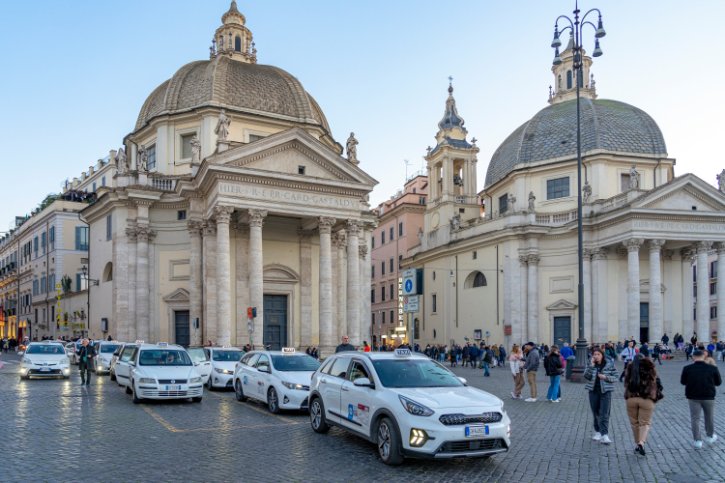
a. What a licensed taxi looks like
- The car is white, with a lit “TAXI” sign on the roof
- The front doors show a city crest and a license number
- The rear carries an official city placard, and a sealed meter is visible inside
Ignore anyone offering you a ride inside the arrivals hall. Soliciting there is banned, and those drivers are usually unlicensed and uninsured.
b. Fixed airport fares, city by city
Many cities set flat airport fares that cover luggage and surcharges, but only within set boundaries, so do not assume Rome’s rules apply elsewhere.
- Rome Fiumicino to the center: €55 inside the old city walls, for up to four passengers
- Rome Ciampino to the center: €40
- Milan Malpensa into Milan: €114, day or night
- Naples: €21 to the main station, €24 to the ferry port, if you request the fixed rate first
- Florence: €28 to the center by day, with higher rates on Sundays, holidays, and at night, plus about €1.30 per extra bag
c. When the meter takes over
Not every airport has a flat fare. Milan Linate runs on the meter with a minimum airport charge, and Florence charges more at night and on holidays. Outside a fixed-fare zone, expect the meter, so agree on the basis of your fare before the car moves. In Naples especially, ask for the fixed rate before you leave, or the driver can run the meter instead.
d. Paying, tipping, and receipts
- Drivers must accept cards, so “cash only” or “machine is broken” is not allowed
- Carry some cash anyway, since it is still common
- Always take your receipt
- Tipping is optional, not expected
e. Avoiding the usual traps
- Do not trust a “fixed fare” quoted by a stranger who approached you
- Do not assume a fixed fare covers a destination outside the regulated zone
- Do not confuse a taxi with a private NCC car, which is pre-booked, often a dark sedan, and barred from the airport rank
- Note the license number on the door if you ever need to file a complaint
5. Validate Your Train and Transit Tickets the Right Way
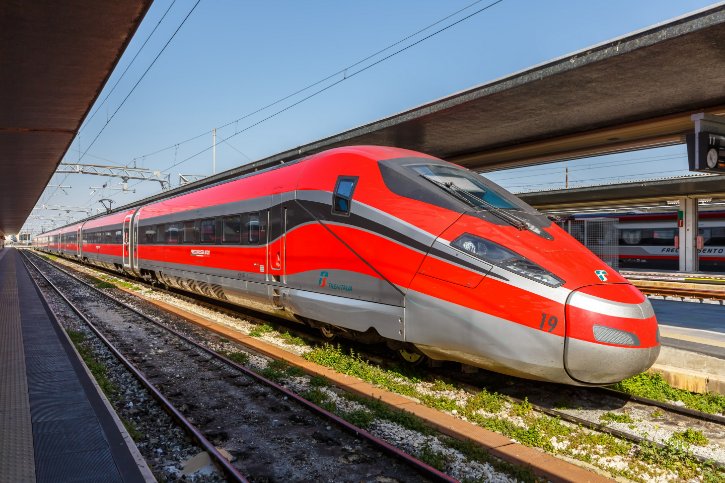
a. Paper regional tickets need a stamp
On Trenitalia regional trains, a paper ticket is not active until you stamp it.
- Use the stamping machines near the platform before boarding
- The stamp opens a four-hour travel window
- Boarding unstamped brings fines from around €50 to over €200, plus the fare
b. Digital regional tickets work differently
A digital regional ticket in the Trenitalia app validates itself automatically at your train’s scheduled departure, and the old manual check-in step is gone. You can change the date and time for free as many times as you like, even on the day of travel, right up until your chosen train leaves.
After that the ticket locks to that train, so if you miss it you cannot use it on a later one. At inspection, show the live ticket in the app, since a plain screenshot may be rejected because the moving security watermark will not appear.
c. High-speed tickets skip validation
- Frecciarossa, Frecciargento, Intercity, and Italo tickets are tied to a set train, coach, and seat
- They need no stamping and activate automatically when you board
- Do not waste time hunting for a validator with these
A reserved ticket is already locked to one train, which is why it works differently from a flexible regional paper ticket.
d. City transit changes from place to place
- Rome: stamp on first boarding, valid 100 minutes across metro, bus, and tram
- Milan: tap in and tap out of the metro, or you can get stuck at the exit gate with a penalty
- Venice: tap your card on the dock pillar before every waterbus trip, valid 75 minutes
- Florence and Naples: stamp on board the bus or tram, where separate zone pricing can apply
e. If a machine is broken
A broken validator is not an excuse on its own. Find the conductor and report it before inspectors come through, because sitting quietly with an unstamped ticket counts as fare evasion. The same logic applies on city buses, so flag a faulty machine rather than hoping no one checks.
6. Watch for ZTL Zones When Driving a Rental Car
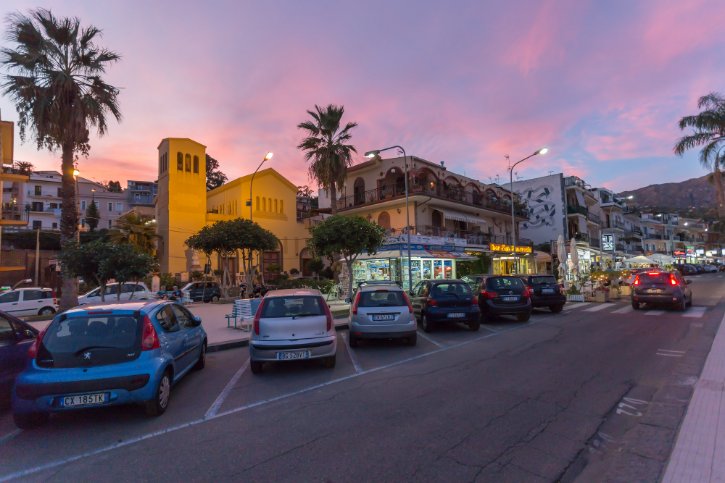
a. What a ZTL actually is
A ZTL is a limited traffic zone in a city’s historic center, where only authorized vehicles may enter during set hours. Cities use them to cut traffic and protect old streets, and you will find them in most historic centers. Operating hours differ by city and zone, so a street that is open at one time may be restricted at another.
b. Reading the signs
- Look for a round sign with a red border, meaning no entry for most vehicles
- An electronic sign at the entry point often shows whether the zone is active
- “Varco attivo” means the camera is on and fining, not that the road is open to you
- “Varco non attivo” means the cameras are off and you may pass
c. Why the fines sting
- Each crossing of an active gate can bring its own fine, so several entries can stack up
- Penalties run from roughly €83 to €332 each
- Your rental company hands your details to police, then adds its own admin fee of about €30 to €50
- A notice can reach you months after you get home, since authorities have up to a year to send it abroad
d. Clearing up common myths
- ZTLs are not always active, and the hours vary by city
- They are not only daytime restrictions, and Sundays are not always open
- A brief accidental entry still counts
- Hotel guests are not automatically exempt, and a rental car comes with no built-in permission
e. How to stay out of trouble
- Check the city’s ZTL map and hours before you drive in
- Ask your hotel to register your plate if it sits inside the zone, and confirm it was logged
- A parking garage inside the zone can sometimes register your plate too
- When in doubt, park in a garage outside the historic center
If you enter by accident and did not go through a registered hotel or garage, you usually cannot fix it afterward by calling the police.
f. The simplest advice of all
GPS does not reliably know where ZTLs are, and the street signs always outrank it. For most visitors, a car is best for the countryside and coast, while historic centers are easier and cheaper to enjoy on foot or by public transit.
7. Buy Attraction Tickets From the Right Place
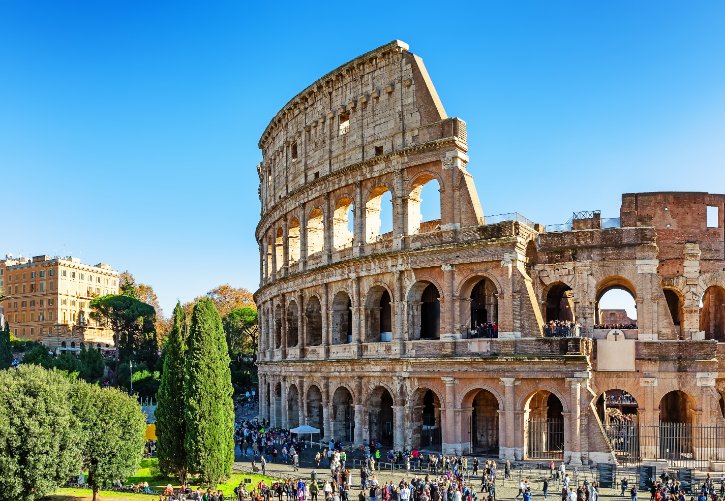
a. Go straight to the official site
Booking from the official source saves money and keeps you clear of fakes. These are the official portals:
- Colosseum and Roman Forum: ticketing.colosseo.it
- Vatican Museums: museivaticani.va
- Uffizi Gallery: uffizi.it, with booking through uffizi.it/en/tickets
- Accademia Gallery: galleriaaccademiafirenze.it
- Pompeii: through pompeiisites.org
- Doge’s Palace in Venice: visitmuve.it
Treat a seller as an “official partner” only when the attraction itself says so, not just because a site looks official.
Read More: The Best Walk From the Colosseum to Vatican City
b. One ticket does not open every door
- The Colosseum’s standard ticket covers the main tiers, Forum, and Palatine, while the Arena Floor and Underground need the Full Experience pass, often booked weeks ahead
- Florence’s cathedral floor is free, but the dome, bell tower, crypt, and museum need a separate pass, and the dome climb has a fixed time slot
- The Vatican ticket includes the Sistine Chapel, but not the Gardens or the excavations
The lesson is to read the inclusions carefully rather than assuming one ticket covers everything.
c. Why your name on the ticket matters
At the Colosseum and Pompeii, tickets carry your legal name and are checked against your ID or passport at the gate. A mismatch can mean no entry and no refund, and tickets bought from street sellers cannot be reassigned. Always book in the name of the person walking in.
d. Know the kind of seller you are using
- The official site is the attraction’s own page
- An authorized reseller is approved by the attraction
- A random marketplace is neither, and some fake pages copy the official look closely
A well-known booking platform is not automatically official or unreliable. Its status depends on the specific attraction, so verify before you pay.
e. Check these before you pay
- The exact monument and areas included
- Your date and entry time, and whether security screening is separate
- The tour language and meeting point
- The refund terms, booking charges, and ID requirements
8. “Skip-the-Line” Does Not Mean Skip Everything
a. What the phrase actually buys you
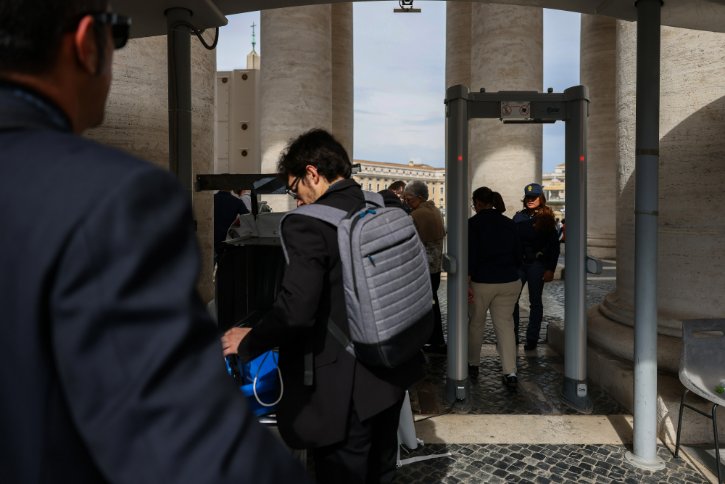
“Skip-the-line” is a marketing term, and it usually means just one thing. You avoid the ticket-buying queue. It does not let you walk past security, and it is not the same as instant entry, so read the fine print before you pay a premium for it.
b. Everyone still clears security
- At the Colosseum, expect metal detectors and bag screening, with waits of 30 to 45 minutes on busy mornings even with a timed ticket
- Large backpacks, rolling luggage, and glass are banned there, and there are no lockers
- At the Vatican Museums, screening is airport style, and large bags go to the cloakroom
- At St. Peter’s, entry is free but the security line can reach two hours in peak season
c. The options, side by side
- Timed admission skips the box office, not security, and comes with a strict entry window
- A guided group tour uses a group lane but runs on a fixed departure time
- A “hosted entry” means meeting off-site, waiting for the group, then walking to the gate together, which adds time
- General walk-up admission skips nothing at all
d. Mistakes that cost you time
- Expecting zero waiting
- Arriving late and losing your slot, since an expired time window can cancel your entry
- Buying a full tour when you only wanted a ticket
- Not checking where to meet your guide
e. Read the wording, not the label
Terms like fast track, priority entrance, and timed entry all mean slightly different things. Priority gets you ahead of the ticket queue but not past security, while timed entry simply gives you a set slot. Before you book, confirm the exact benefit rather than trusting a catchy phrase, and you will sidestep the disappointment many travelers run into here.
9. Rome’s Trevi Fountain Has New Access Rules
a. Two zones, one famous monument
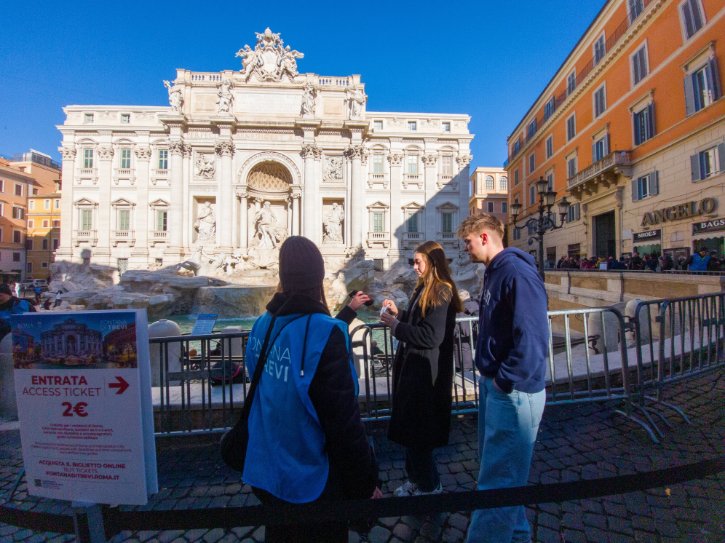
Rome recently introduced a new access system at the Trevi Fountain to ease crowds and protect it. The upper piazza stays open and free around the clock, while the lower area right by the water is now gated, with a cap of about 400 visitors at a time.
Read More: The Best Walking Route Around Trevi Fountain and Nearby Attractions
b. Getting into the lower basin
- A €2 ticket is required from 09:00 to 22:00, with last entry at 21:00
- On Mondays and Fridays it opens later, at 11:30, for coin collection and cleaning
- Payment at the barrier is by card only, with no cash accepted
- Book online through the official city site, or buy at a tourist info point or civic museum desk
Pre-bought tickets are an open type, so they are not tied to a fixed hour, and you enter through a dedicated queue during the day.
c. Who gets in free
- Residents of Rome and the wider metro area
- Children aged five and under
- Disabled visitors and one companion
- Licensed guides, all with valid ID or an official card
d. The rules that carry real fines
- Wading or bathing in the water: €450 to €500, plus a 48-hour ban from the area
- Sitting on or climbing the carvings: €160 to €400
- Eating or drinking at the fountain: €160 to €400
- Tossing a coin is fine, but collecting coins counts as theft, since they are donated to charity
e. You can still enjoy it for free
None of this stops you from admiring the fountain from the open square, which is especially lovely after it closes and the water is lit. Free viewing simply means enjoying it from the piazza rather than standing at the water’s edge. It helps to think of it as two separate things: the ticket controls how many people reach the basin, while the rules govern how everyone behaves.
10. Respect Local Rules on Sitting, Eating, and Dress
a. The rules change from city to city
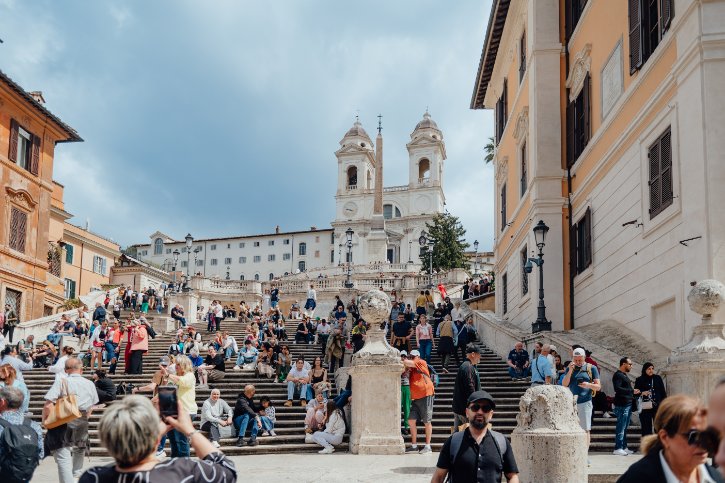
Italy has no single national rule about sitting or eating on monuments. Each city sets its own, so what passes in one place can bring a fine in the next. The safest move is to read the posted signs, usually found near monuments and in historic squares, and follow them.
b. Where you cannot sit
- Rome: sitting on the Spanish Steps brings fines of €250 to €400
- Venice: sitting on church steps, bridges, wellheads, or monument bases brings €100 to €200, plus a possible ban
- A bench is the safe choice in both cities
c. Eating and feeding animals
- Florence: eating while standing on certain central streets, such as Via de’ Neri, during peak midday and evening hours brings fines of €25 to €500
- Venice: picnicking in St. Mark’s Square is banned, with fines up to €200, and feeding pigeons carries fines too
- Eating at a restaurant’s own outdoor table is always fine
d. What to wear, and where
- Coastal towns like Sorrento fine swimwear, bare chests, or bare feet in the streets, up to €500
- Venice fines shirtless or swimwear strolling at around €250, and swimming in the canals at around €350
- At churches, cover your shoulders and knees, and men should remove their hats
Street dress rules and religious dress codes are separate things, so keep both in mind near a cathedral.
e. A few more worth remembering
- No cycling in Venice’s pedestrian core, even if you are pushing the bike
- No drones over historic centers without permission
- No climbing monuments, stepping into fountains, littering, or graffiti
f. The mindset that keeps it easy
Fines vary widely between towns, and the strictest rules tend to cluster around historic centers and protected monuments. Check the local rules for each stop on your trip, respect the signs, the monuments, and the dress codes, and Italy will feel every bit as welcoming as you hoped.