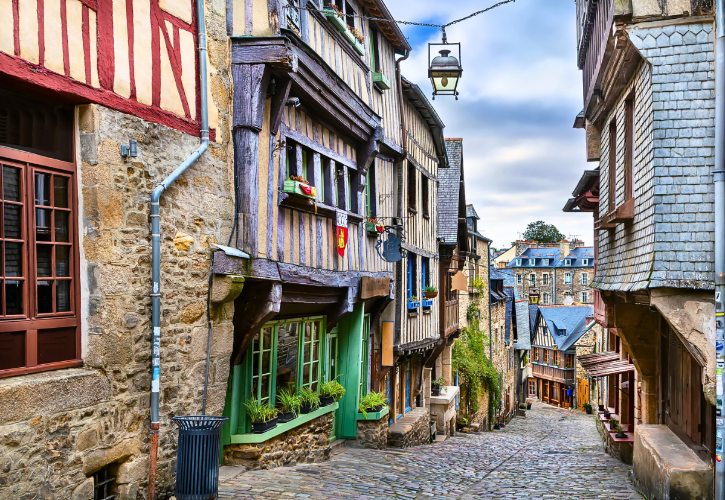
Paris is the dream that pulls most travelers to France. But some of the country’s most unforgettable beauty only begins once you leave the capital behind.
Out here you find ancient stone ramparts, wild Atlantic coasts, Roman relics, cliffside villages, tidal abbeys, harbor towns, and quiet medieval streets. Stay only in Paris, and you miss the deeper soul of the country.
This guide covers three regions that feel completely different from one another. None is a backup plan, and each is worth the trip on its own.
1. Brittany
Brittany is the rugged Celtic peninsula in France’s northwest, shaped by the Atlantic on almost every side. Its beauty comes from sea air, grey granite, walled ports, islands, lighthouses, and old streets worn by wind, waves, and tides.
This is not the postcard France most people picture. The region keeps its own identity, with the Breton language, Celtic music, and old legends. Its beauty is spread out, so the reward is in slowing down.
a. Saint-Malo – The Corsair City Behind Stone Walls
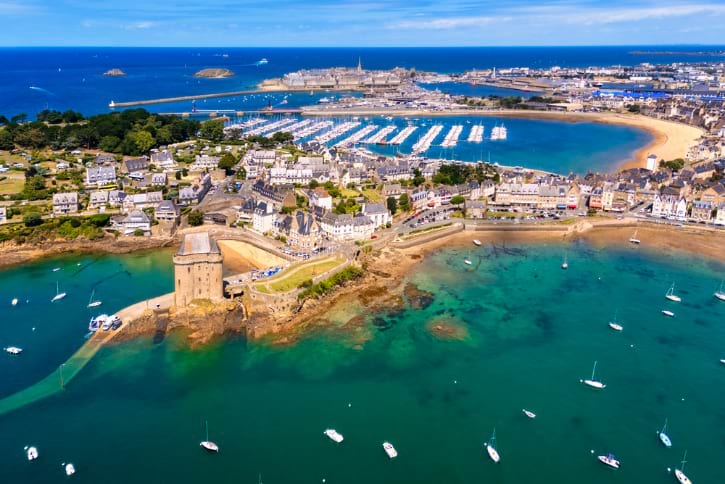
Saint-Malo rises straight out of the sea, a stone fortress wrapped in granite ramparts. The walled old town, Intra-Muros, is full of cobbled streets and church spires. Walk the ramparts for the sea on one side and slate roofs on the other.
- Built by corsairs, the privateers who gave the city its bold seafaring character.
- Some of the strongest tides in Europe pull the sea back to reveal wide sand flats.
- Explorer Jacques Cartier sailed from here in 1534, and the islet of Grand Bé is reachable on foot only at low tide.
b. Dinan – Brittany’s Best-Preserved Medieval Town
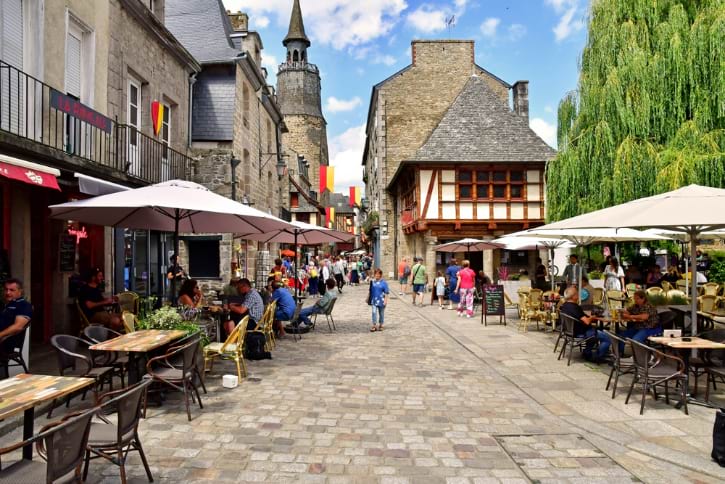
Inland along the Rance River, Dinan is wrapped in nearly three kilometers of old walls, with half-timbered houses, stone arches, and winding lanes.
- The town has two levels. The upper old town sits high above a small riverside port.
- The steep Rue du Jerzual drops to the water past artisan workshops and waterside cafés.
- Dinan Castle recalls the power of the Dukes of Brittany.
c. Rennes – The Vibrant Capital with a Medieval Heart
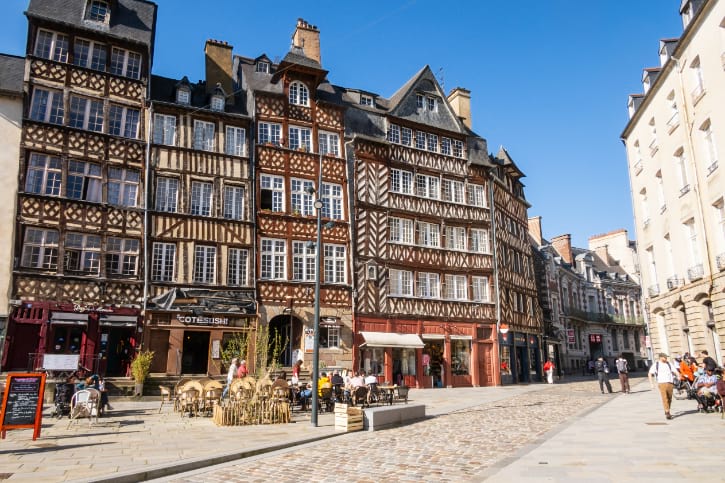
Rennes is Brittany’s capital, and it brings city life rather than seaside scenery. A great fire in 1720 spared many colorful half-timbered houses, which give the old town its tilted, painted charm.
- Look for the leaning timber houses around Place Sainte-Anne and Rue de la Soif.
- The grand Parlement de Bretagne contrasts with the medieval quarter.
- Parc du Thabor is a green escape in the heart of the city.
d. Vannes – Medieval Walls, Cobblestones, and the Gulf of Morbihan
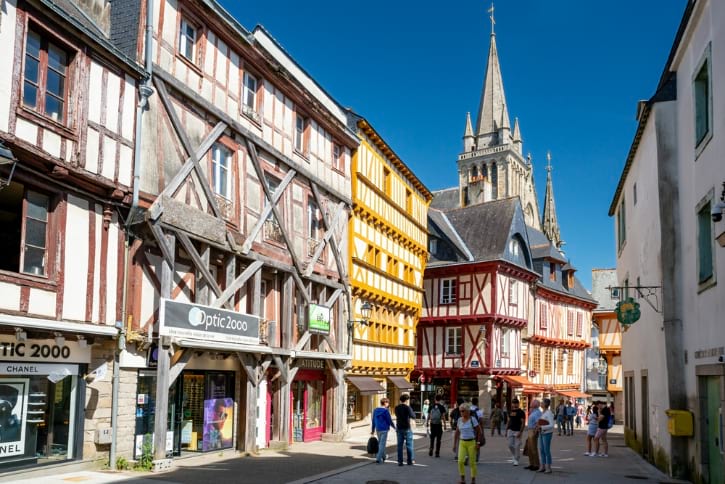
Vannes feels polished but stays deeply historic. You enter through monumental stone gates into a maze of restored half-timbered houses.
- Place Henri-IV is one of the most photogenic historic squares.
- The Jardin des Remparts frames lovely views of the walls and towers.
- The Cathedral of Saint-Pierre is the spiritual heart of the old town.
Vannes sits beside the calm, island-dotted Gulf of Morbihan and makes a good base for the prehistoric standing stones at Carnac.
e. Quimper – The Celtic Soul of Brittany
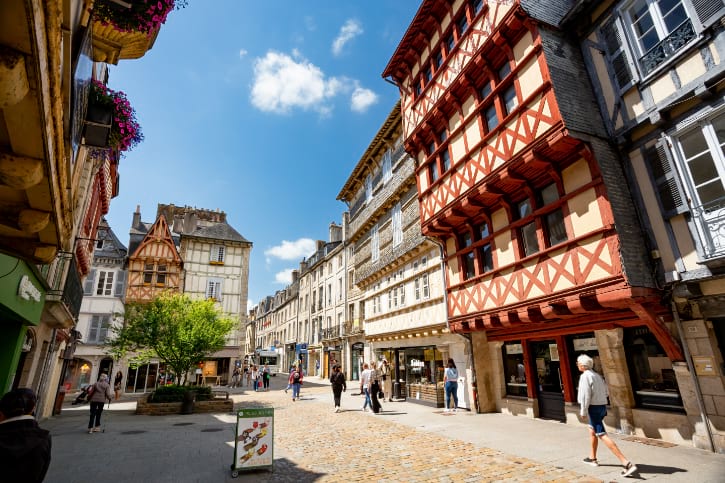
For Brittany’s traditional heart, come to Quimper. It sits along the Odet River, with flower-decked footbridges and old half-timbered streets.
- The Cathedral of Saint-Corentin has twin Gothic spires and a choir that leans slightly to one side.
- The town is known for its hand-painted faïence pottery.
- Breton music and dance fill the streets during the Festival de Cornouaille.
f. Ploumanac’h and the Pink Granite Coast
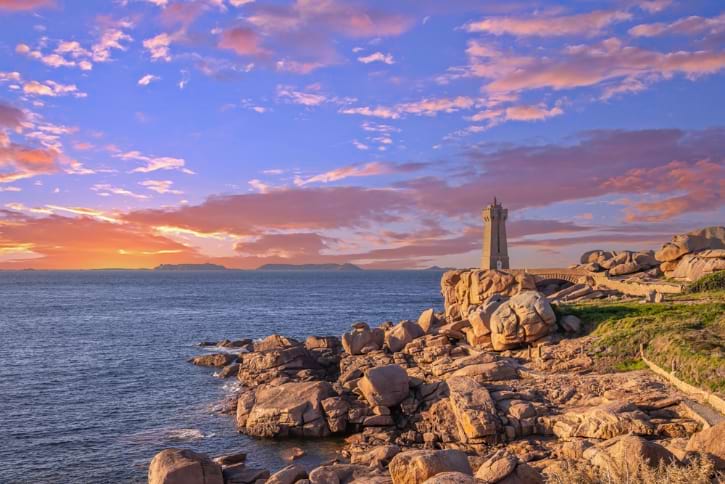
This stretch looks unlike almost anywhere else in mainland France. Along the Pink Granite Coast, giant boulders of copper-pink rock have been sculpted into strange, rounded shapes.
- Ploumanac’h is the crown jewel, best seen in soft morning or evening light.
- The pink granite Mean Ruz lighthouse rises straight from the rocks.
- The GR 34 coastal path traces headlands above coves and white sand beaches.
- Offshore lies the Sept-Îles, the largest bird reserve in France.
g. Concarneau – The Walled Fishing Town
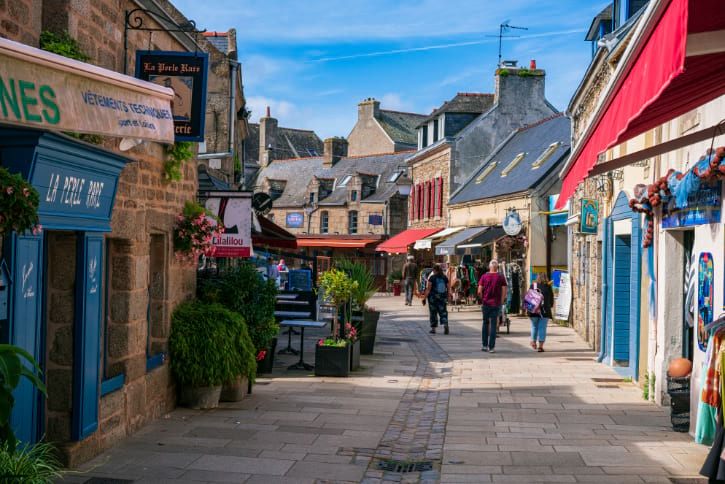
Concarneau is Brittany’s walled-town-by-the-sea moment. At its center sits the Ville Close, a medieval fortified town built on a small island and reached by a narrow bridge.
- Inside the walls you find narrow streets, granite houses, and artisan shops.
- Walk the ramparts for a peaceful marina on one side and a busy fishing port on the other.
h. Locronan – The Village That Time Forgot
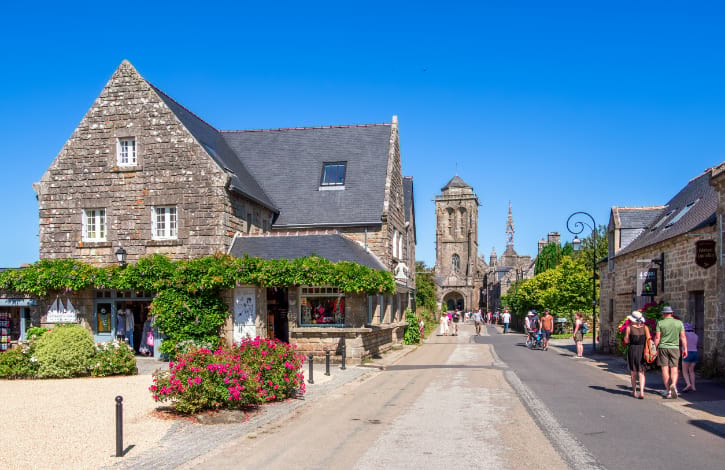
Locronan is one of Brittany’s most beautiful stone villages. Grey granite houses surround a cobbled square that looks almost untouched.
- The wealth of old sailcloth weaving shows in the uniform Renaissance-era houses.
- The Church of Saint-Ronan is the spiritual anchor.
- No overhead cables or modern signs in the historic core keep the old mood intact, which is why filmmakers love it.
i. Rochefort-en-Terre – A Fairytale Village in Morbihan
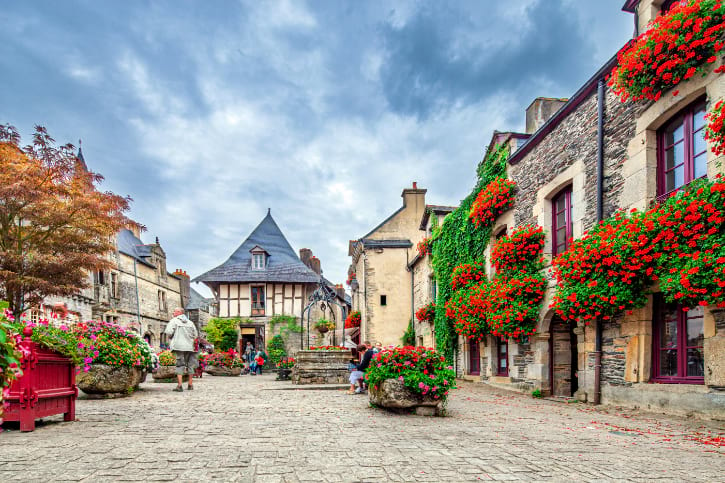
Rochefort-en-Terre is Brittany’s storybook village, perched on a rocky ridge above a wooded valley.
- The houses are draped in flowers, with window boxes and climbing roses everywhere.
- You will find old granite homes and the ruins of a medieval castle.
- Cobbled streets full of artisan shops keep it feeling lived-in.
j. Île de Bréhat – The Island of Flowers
Île de Bréhat offers a softer, slower mood. The island is car-free, so you explore on foot, by bike, or by tractor.
- A mild microclimate fills it with hydrangeas, mimosas, eucalyptus, and agaves.
- It is two islands joined by a small bridge. The south is green and sheltered, the north wilder.
- Narrow paths lead to quiet beaches and pink granite coves.
k. Belle-Île-en-Mer – Brittany’s Most Dramatic Island
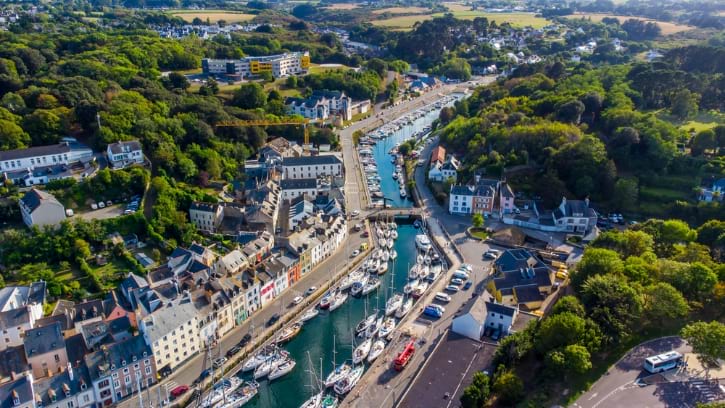
Belle-Île is the grand island finale. As Brittany’s largest island, it offers far more variety, and reaching it feels like arriving at the edge of France.
- The Côte Sauvage is all cliffs, sea arches, and crashing waves.
- The northeast coast is calmer, with sandy beaches and the port of Le Palais under a Vauban citadel.
- The wild light famously drew Claude Monet, who painted dozens of canvases here.
2. Occitanie
Now the mood changes. Occitanie is a warmer southern region, stretching from the Pyrenees and the Mediterranean to inland plateaus and river valleys.
Its beauty comes from Roman monuments, fortified medieval cities, red-brick towns, cliffside villages, and deep river gorges.
The architecture shifts to warm red brick, pale limestone, and ochre roofs. French, Catalan, and Occitan identities blend here, creating a landscape rich in fortresses, ancient ruins, and perched villages.
Think of it as the sunlit history and dramatic geography region.
a. Toulouse – La Ville Rose and the Doorway into Occitanie
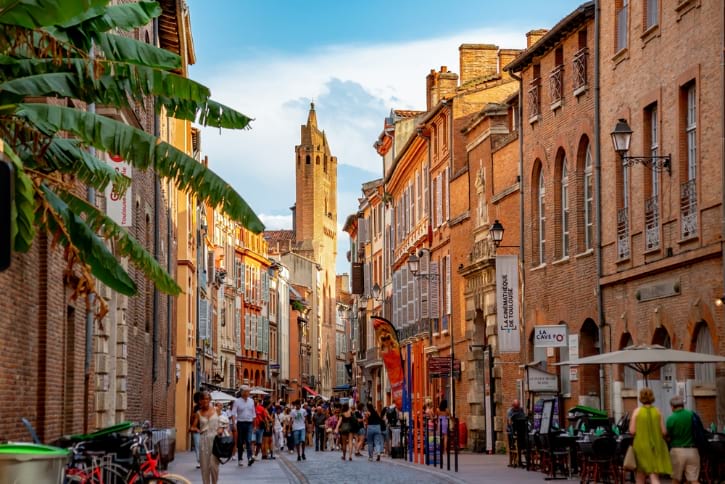
Toulouse is the warm, lively city that opens the door to Occitanie. People call it La Ville Rose, the Pink City, for the red terracotta brick that glows in the daylight.
- Place du Capitole is the central square, full of café terraces.
- The Basilica of Saint-Sernin is one of Europe’s largest Romanesque churches.
- The historic Canal du Midi winds through the old quarters under shady plane trees.
b. Carcassonne – Europe’s Most Impressive Medieval Citadel
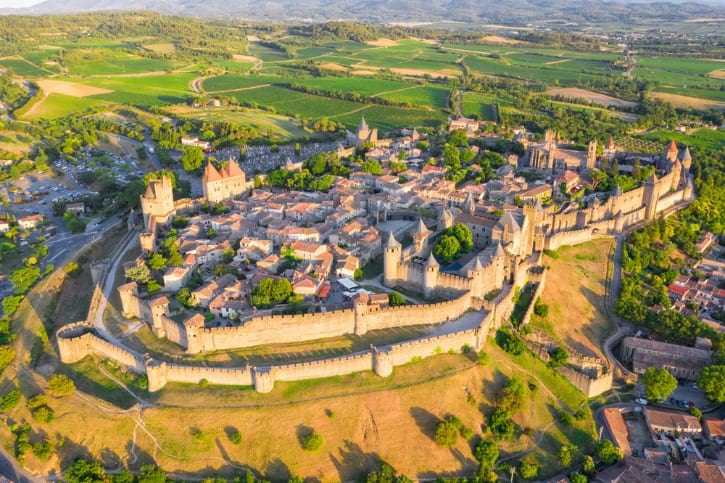
Carcassonne is one of the most complete medieval fortress cities in Europe, and approaching it is unforgettable. The walled Cité rises above the River Aude, ringed by double ramparts and dozens of towers.
- The Château Comtal is a fortress within the fortress.
- Narrow cobbled lanes wind past stone houses and artisan workshops.
- Its history runs from Roman origins to the 13th-century Albigensian Crusade.
c. Albi – The Red-Brick Cathedral City on the Tarn
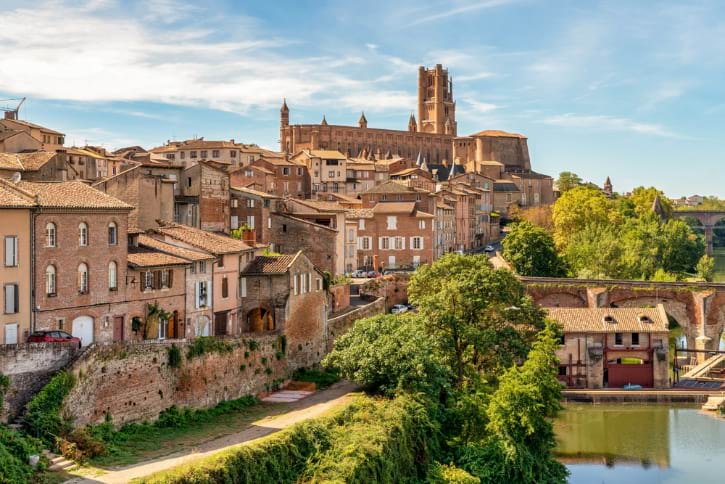
Albi sits beside the Tarn River, built almost entirely from warm red brick. It feels more refined and artistic than Carcassonne.
- The Cathédrale Sainte-Cécile looks like a brick fortress outside, then dazzles with frescoes inside.
- The Palais de la Berbie houses the Toulouse-Lautrec Museum.
- The old brick lanes and the Pont-Vieux frame lovely river views.
d. Nîmes – Rome in the Heart of France
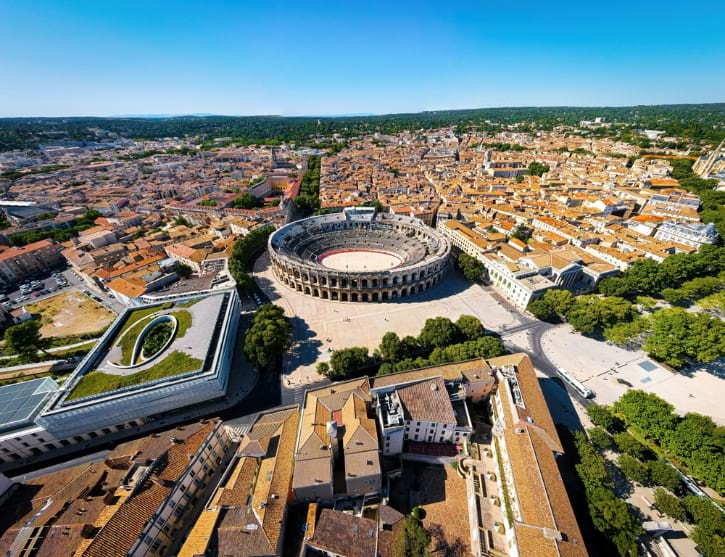
Nîmes is the Roman heart of this guide, holding some of the best-preserved Roman monuments outside Italy.
- The Arena of Nîmes is a remarkably preserved amphitheater that still hosts events.
- The Maison Carrée is one of the most perfect Roman temples anywhere, listed by UNESCO in 2023.
- The Jardins de la Fontaine wrap gardens and ruins around a sacred Roman spring.
It is a whole Roman city you can walk through, and it pairs naturally with the Pont du Gard.
e. Pont du Gard – Roman Engineering in a River Landscape
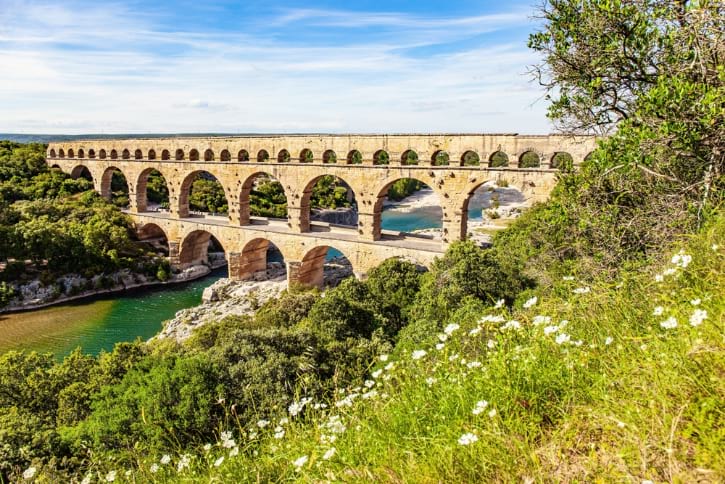
The Pont du Gard is both an engineering marvel and a beautiful landscape. This Roman aqueduct bridge spans the Gardon River with three tiers of honey-colored arches.
- It once carried spring water all the way to Nîmes.
- The stones were cut so precisely it was built without mortar.
- You can explore from both riverbanks, each with a different view.
f. Montpellier – The Sunlit Medieval City of the South
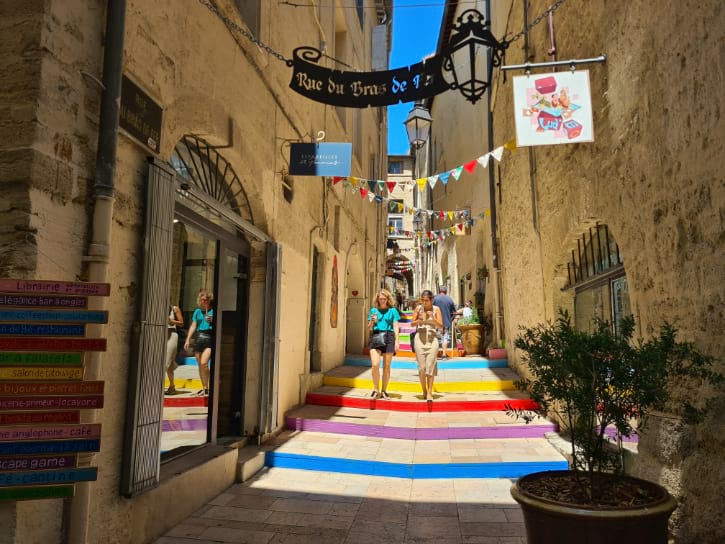
Montpellier brings youthful, sunlit Mediterranean energy. Its old center, the Écusson, is a maze of pale stone lanes with hidden courtyards.
- Place de la Comédie is the grand central square, full of café life.
- The Promenade du Peyrou offers a triumphal arch and wide views toward the Pyrenees.
- A long-standing university keeps the streets lively.
g. Rocamadour – The Vertical Village on the Cliff
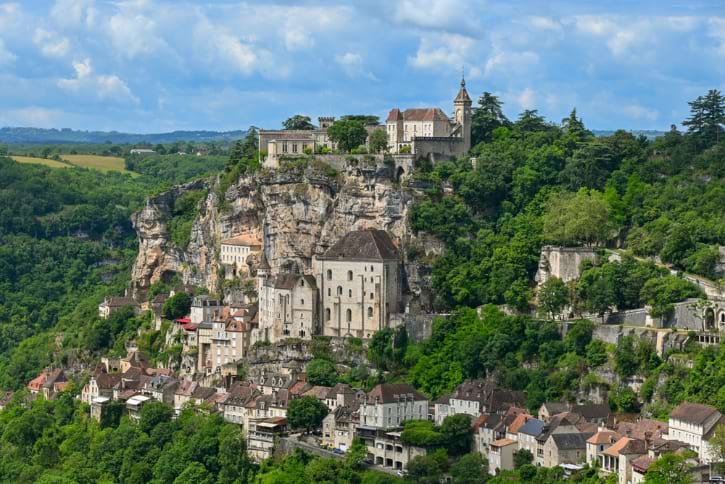
Rocamadour looks like it is defying gravity, clinging to a sheer cliff above the Alzou canyon, stacked in three levels.
- A street of medieval houses sits at the bottom.
- A sacred sanctuary, long a stop on the Way of St. James, sits in the middle.
- A castle crowns the top.
The Chapelle Notre-Dame holds the Black Madonna, reached by the old Grand Staircase. It feels especially magical when quiet, early or late in the day. One of Occitanie’s true “wow setting” places.
h. Saint-Cirq-Lapopie – The Village on the Rock
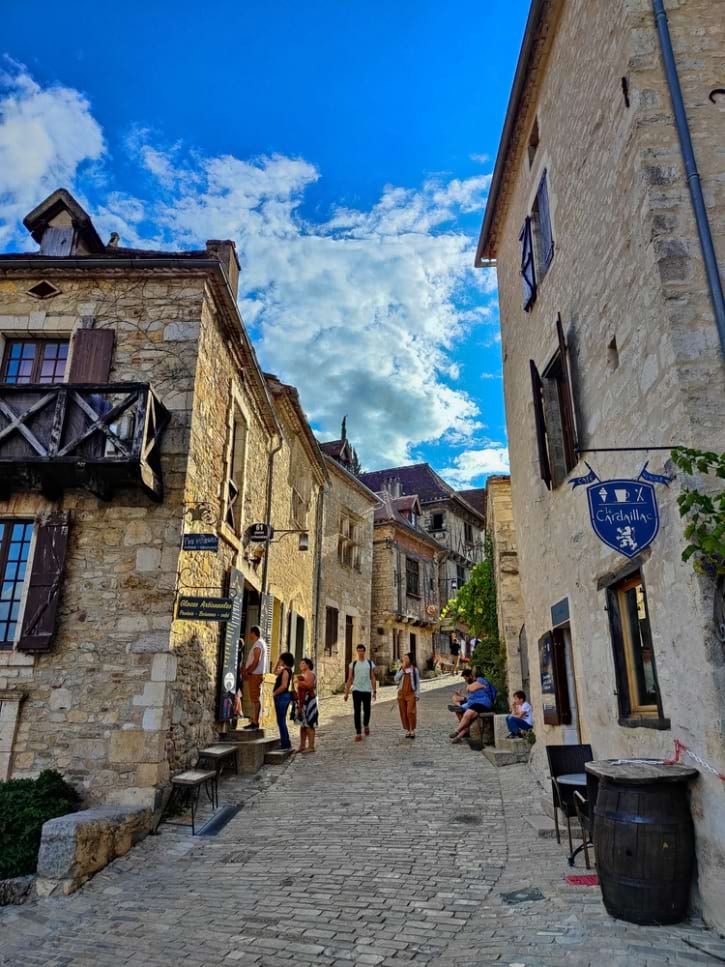
Saint-Cirq-Lapopie perches high above a bend in the Lot River, seeming to cling to the cliff. The view from below, with rooftops and a ruined château tower above the rock, is unforgettable.
- Stone lanes wind up past artisan workshops, woodcarvers, and painters.
- It sits within the limestone Causses du Quercy
- The writer André Breton made it his summer home.
i. Cordes-sur-Ciel – The City in the Clouds
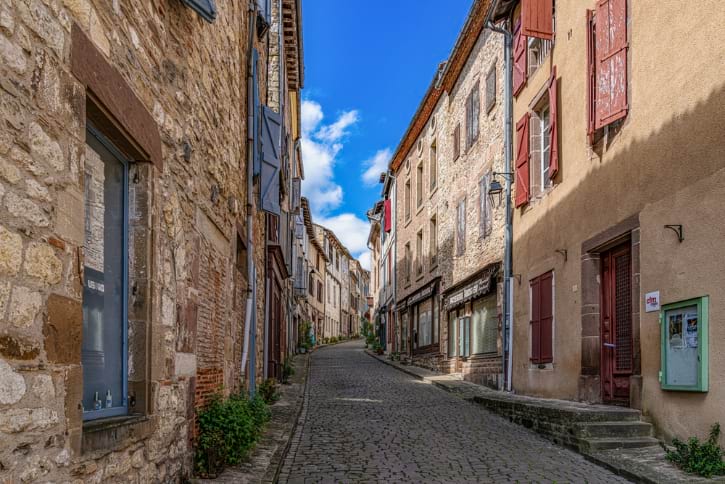
Cordes-sur-Ciel is a medieval hilltop town with a dramatic silhouette. On misty mornings the valley fills with cloud and the town seems to float, which earned its name. Treat that as a mood rather than a guarantee.
- Founded in the 13th century as a fortified bastide.
- Steep cobbled streets climb past carved Gothic merchant houses.
- The summit rewards you with wide views over hills and vineyards.
j. Collioure – Where the Pyrenees Meet the Sea
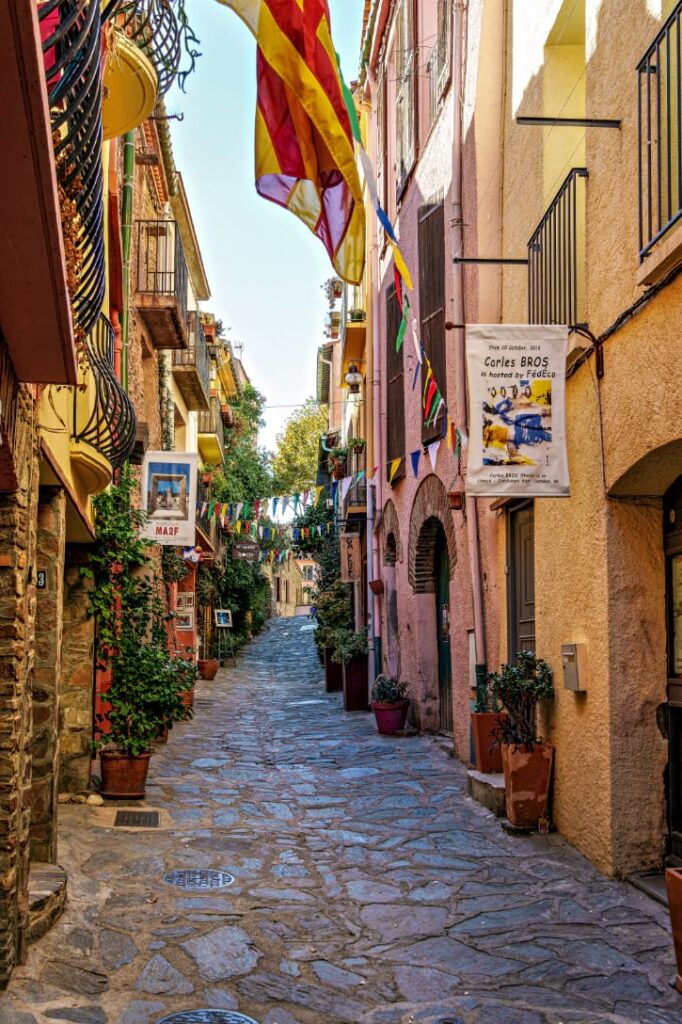
Collioure is the most colorful stop in Occitanie, a Catalan fishing port near the Spanish border where the Pyrenees drop into the Mediterranean.
- The Église Notre-Dame-des-Anges stands on the water with a round bell tower.
- The Château Royal de Collioure is a sea-facing fortress.
- The vivid light inspired Matisse and Derain, helping launch Fauvism.
It feels nothing like Brittany’s coast. Here it is all warm color and mountain-backed sea views.
k. Gorges du Tarn – Occitanie’s Wild Nature Finale
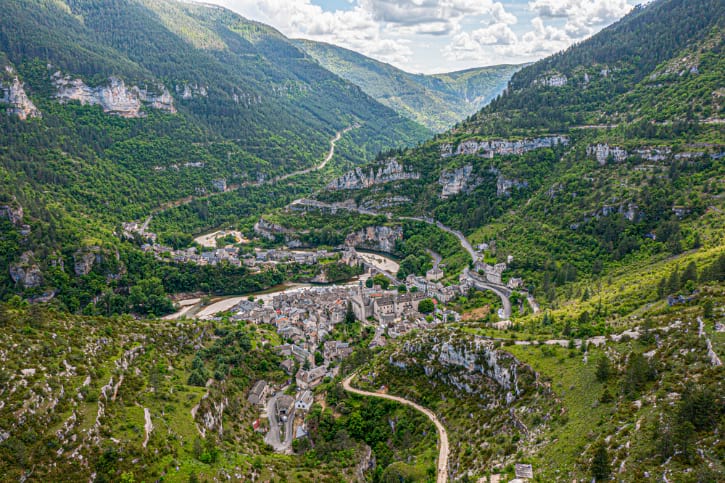
To finish Occitanie, swap cities for raw landscape. The Gorges du Tarn is a deep canyon carved by the Tarn River, one of France’s most spectacular canyon landscapes.
- Sheer cliffs rise above water that shifts from turquoise to emerald green.
- Stone villages cling to the canyon, including Sainte-Énimie and La Malène.
- Above the gorge, the bare Causses plateaus offer a stark contrast.
3. Normandy
Normandy is a region of tidal drama, white chalk cliffs, half-timbered towns, and soft painterly light. It gave birth to Impressionism, and it also carries some of the heaviest history in modern Europe.
The beauty here is layered. You move from natural grandeur to quiet countryside, from apple orchards and Gothic cathedrals to rugged cliffs and a world-famous island abbey.
Some of it is gorgeous, some reflective, and some solemn. This is the tidal, painterly, historic, and emotional region.
a. Mont-Saint-Michel – The Wonder of the West
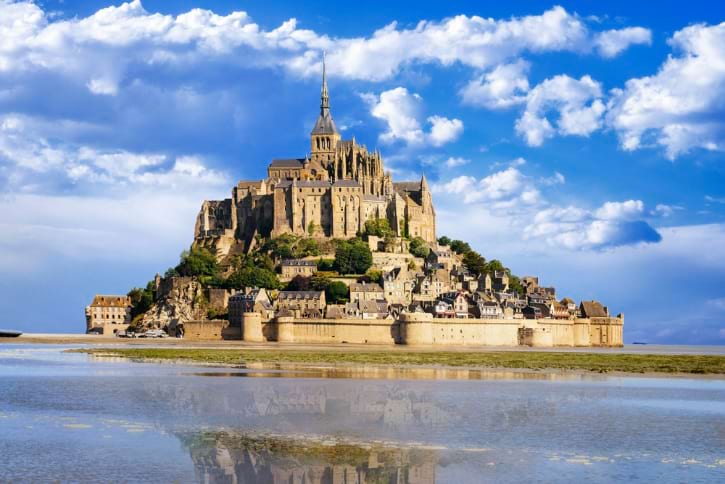
Mont-Saint-Michel proves this guide’s title by itself. A medieval abbey rises from a vast, flat bay on a rocky tidal island, and approaching it across the open sands is a sight you do not forget.
- The Gothic abbey has been a monastery, a fortress, and a prison.
- The medieval village climbs the narrow Grande Rue toward the top.
- Some of the highest tides in Europe transform the landscape as the sea retreats and returns.
High inside, La Merveille frames the sea and sky through delicate Gothic columns. The right place to begin Normandy.
b. Rouen – The Cathedral City of Joan of Arc
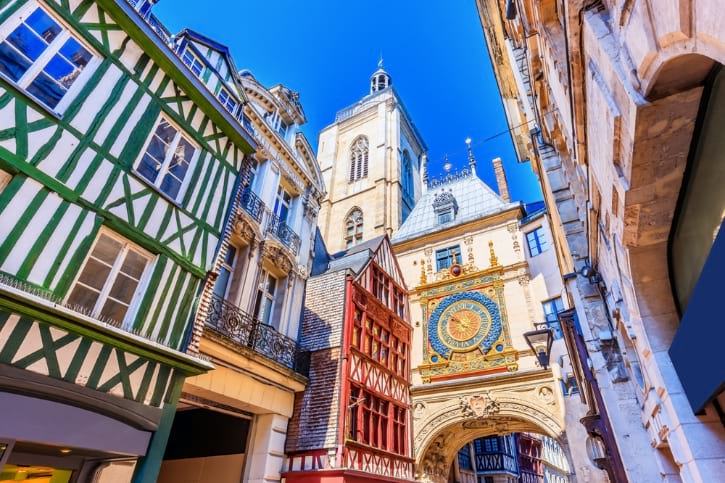
Rouen is Normandy’s great historic city, full of Gothic architecture and powerful history. Its Notre-Dame Cathedral was painted again and again by Claude Monet.
- Hundreds of half-timbered houses fill the old town.
- The Gros Horloge is a beloved Renaissance astronomical clock in a stone archway.
- Joan of Arc was executed here in 1431, marked today by the striking Church of Saint Joan of Arc.
c. Étretat – White Cliffs and Natural Arches by the Sea
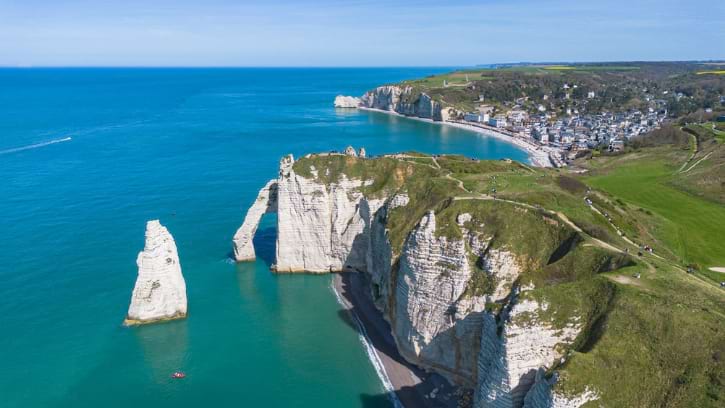
Étretat is Normandy’s most dramatic coastal landscape. White chalk cliffs and natural stone arches rise above a pebble beach on the Alabaster Coast.
- Three great cliff formations define the view, including the massive Manneporte.
- Just offshore stands the Aiguille, a tall needle of rock.
Here is my honest tip. The cliffs are good from the beach, but spectacular from above, so walk the headland paths. It feels nothing like Brittany’s coast, sharper and whiter and more sculptural.
d. Honfleur – The Harbor That Gave Birth to Impressionism
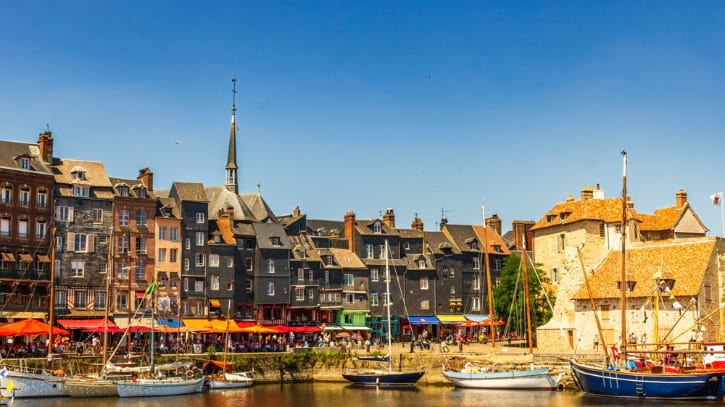
Honfleur is the postcard harbor of Normandy. Its centerpiece is the Vieux Bassin, ringed by tall, narrow timber-framed houses that reflect in the calm water.
- Artists came for centuries, including Boudin and Monet, drawn by the light.
- The Église Sainte-Catherine is a wooden church built by local shipwrights.
e. Bayeux – The Tapestry and the Norman Cathedral
Bayeux is a calm town that survived World War II largely intact, saving its medieval streets and stone houses.
- Its treasure is the Bayeux Tapestry, a long embroidered band telling the story of the Norman Conquest of 1066, full of ships, battles, and even Halley’s Comet.
- The Cathedral of Notre-Dame de Bayeux blends Norman Romanesque and Gothic styles.
f. The D-Day Landing Sites and Omaha Beach – Where History Lives in the Landscape
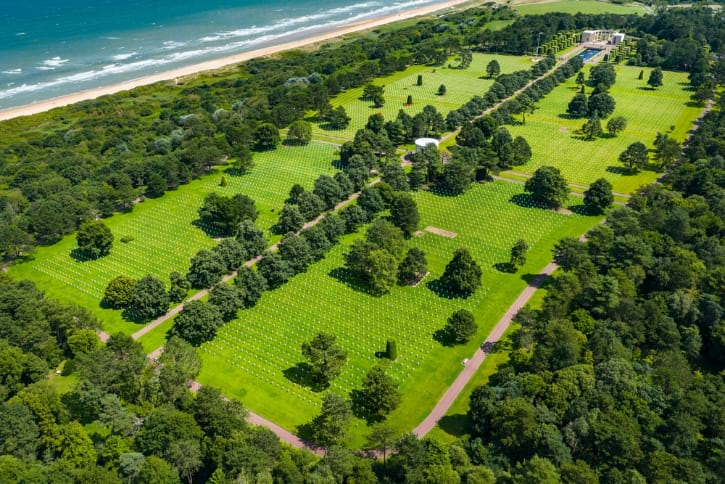
This stop is different. It is a place of memory, and it deserves a calm, respectful visit. The five landing beaches of June 6, 1944, each tell their own story: Utah, Omaha, Gold, Juno, and Sword.
- Omaha Beach today is wide and windswept, which makes the history feel even heavier.
- The Normandy American Cemetery holds thousands of graves on a bluff above the sea.
- Pointe du Hoc still bears its wartime craters and bunkers.
g. Giverny and Monet’s Gardens – Monet’s Living Painting
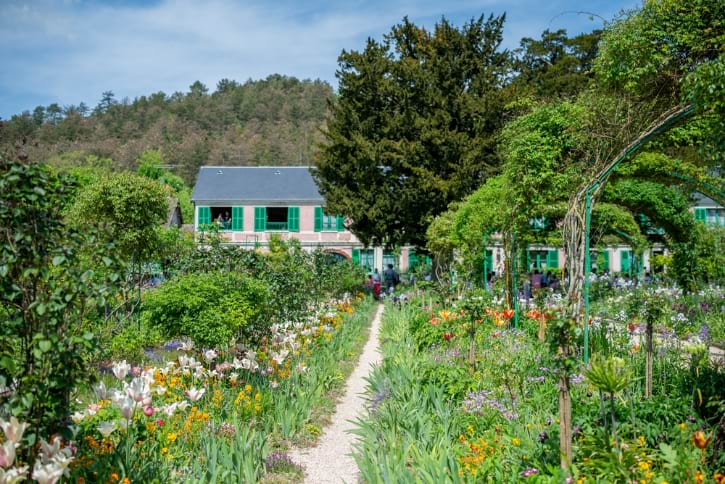
After the D-Day coast, Giverny offers gentle beauty again. This is where Claude Monet built a garden designed like a painting.
- The Clos Normand blazes with roses, irises, and tulips arranged by color.
- The Water Garden holds the famous lily pond and the green Japanese bridge.
- Here Monet painted his great Water Lilies
h. Deauville and Trouville-sur-Mer – Normandy’s Glamorous and Local Seaside Pair
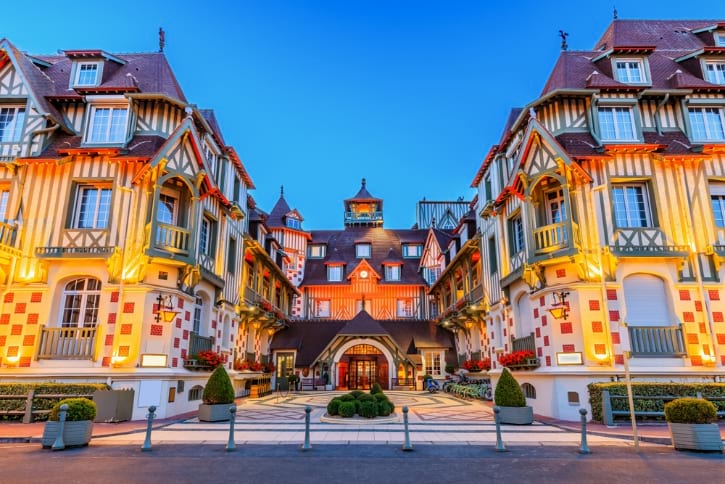
These twin towns sit across the Touques River and make a fun contrast.
Deauville is the glamorous face of the coast, with a wide beach, the famous Les Planches boardwalk, Belle Époque villas, and a grand casino.
Trouville-sur-Mer is the easygoing neighbor, grown from a real fishing village, with a working harbor and a covered seafood market where you can eat fresh oysters on the quay.
Together they sit along the Côte Fleurie, a stylish but human contrast after Honfleur and Étretat.
i. Caen – William the Conqueror’s City
Caen is a city of abbeys, castles, and deep Norman history, shaped in the 11th century by William the Conqueror.
- The Abbaye aux Hommes holds his tomb.
- The Abbaye aux Dames was founded by Queen Matilda.
- The huge Château de Caen is one of the largest medieval fortresses in Europe.
j. Beuvron-en-Auge – The Soul of the Pays d’Auge
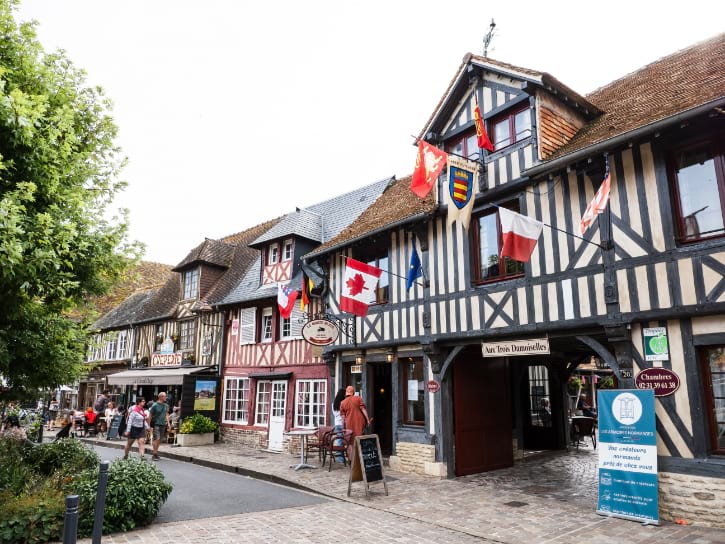
Beuvron-en-Auge is the classic Normandy village moment, set in the green Pays d’Auge of rolling hills and apple orchards.
- Restored half-timbered houses line the streets, with dark beams and flower boxes.
- The central square holds old timber market halls, now galleries and cafés.
- It sits on the Route du Cidre, linking makers of cider and Calvados.
k. Barfleur – The Granite Harbor at the Edge of the Cotentin
Barfleur is a quiet fishing village on the rugged Cotentin Peninsula, built of sturdy grey granite that looks nothing like the timber villages inland.
- The harbor is full of fishing boats, nets, and salt air.
- The fortress-like Church of Saint-Nicolas stands at the edge of the quay.
- Just north rises the tall Gatteville Lighthouse, with wide coastal views.
l. Les Andelys and Château Gaillard – Castle Ruins Above the Seine
Les Andelys is all about the Seine Valley and a dramatic castle viewpoint. High on a chalk cliff stand the ruins of Château Gaillard, built by Richard the Lionheart in just two years.
- The ruins are atmospheric rather than complete, and the setting gives them their power.
- From the clifftop you look over a sweeping bend in the Seine.
- The twin villages of Le Grand Andely and Le Petit Andely sit below.
m. Lyons-la-Forêt – A Fairy-Tale Village in the Forest
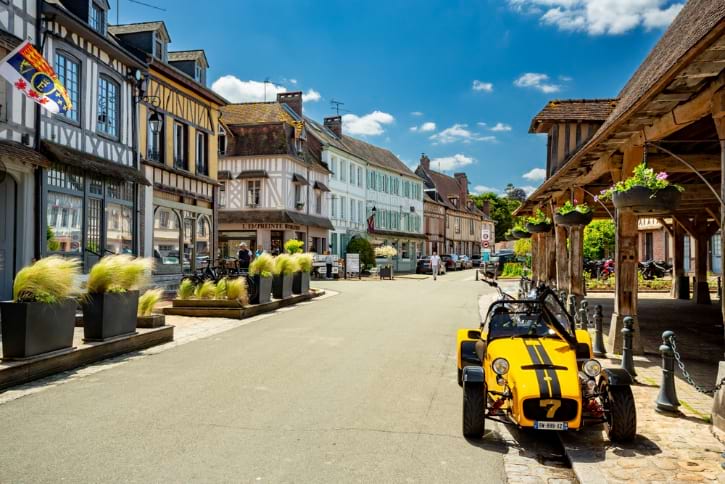
To close Normandy gently, head into the forest. Lyons-la-Forêt is a storybook village set in one of the region’s most beautiful beech forests.
- Half-timbered and pink-brick houses surround a central square.
- An old timber market hall anchors the square, ringed by cafés and antique shops.
- The village drew the composer Maurice Ravel and featured in film versions of Madame Bovary.
A soft, peaceful ending after iconic sights and dramatic coasts.
Final Thoughts
Paris will always have its place in the imagination. But the real depth and variety of French beauty live out in the regions.
- Brittany gives you a wild, granite Atlantic coast and a proud Celtic soul.
- Occitanie glows with Roman monuments, red-brick cities, and vertical villages under the southern sun.
- Normandy offers tidal bays, sculptural chalk cliffs, and quiet half-timbered valleys rich in art and memory.
These three are not side trips. They are powerful destinations in their own right. Pick any one of them, and you will come home with a deeper sense of France than Paris alone could ever give you.