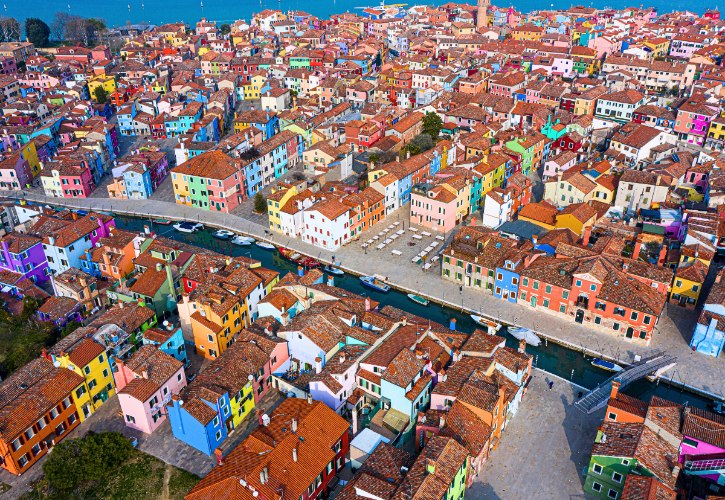
Some views make you stop and just stare. Italy has a whole collection of them, scattered along dramatic coastlines, down colorful village lanes, and around calm mountain lakes.
A few are world famous, the kind of places you’ve seen in photos and dreamed about for years. Others are quieter corners you may not know yet.
Together, they show off Italy at its most beautiful. Let’s start where the cliffs meet the sea. 😊
1. Amalfi Coast, Campania
a. Positano, Where the Houses Spill Toward the Sea
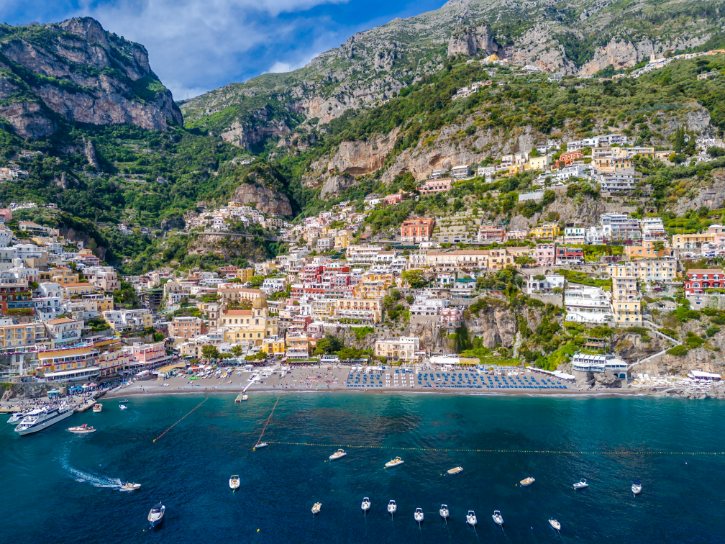
Positano climbs straight up a steep rocky ravine, where the Lattari Mountains drop into the Tyrrhenian Sea. Instead of spreading out, the town stacks upward, so one home’s roof often becomes the terrace of the house above it.
As you wander down, you’ll see:
- Pastel walls in terracotta, ochre, rose, and peach, draped in bougainvillea
- Stepped alleys and shaded lanes like Via dei Mulini leading to the shore
- Spiaggia Grande, the main beach, with that classic view up at the tiered houses
- The majolica-tiled dome of the Church of Santa Maria Assunta, glowing above the rooftops
For a quieter swim, follow the cliff path past old watchtowers to Fornillo Beach. And if you love a good walk, the Path of the Gods runs high above the coast, with views stretching all the way toward Capri.
b. Ravello, a Calm Garden Retreat in the Sky
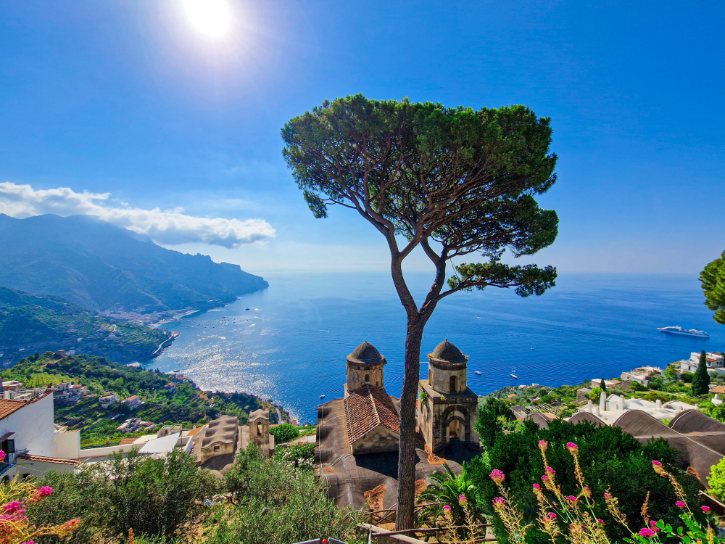
If Positano buzzes, Ravello breathes. You’ll find it about 350 meters up, where wealthy families once built quiet retreats away from the busy shore.
Here’s what you shouldn’t miss:
- Villa Cimbrone and its Terrace of Infinity, a clifftop balcony lined with marble busts and open sea views
- Villa Rufolo, with Arab-Norman arches and gardens that inspired composer Wagner
- The summer Ravello Festival, staged on a platform that seems to float over the coast
- Piazza Duomo and its 1086 cathedral, home to carved bronze doors and a marble pulpit
c. Vietri sul Mare, a Town Dipped in Color
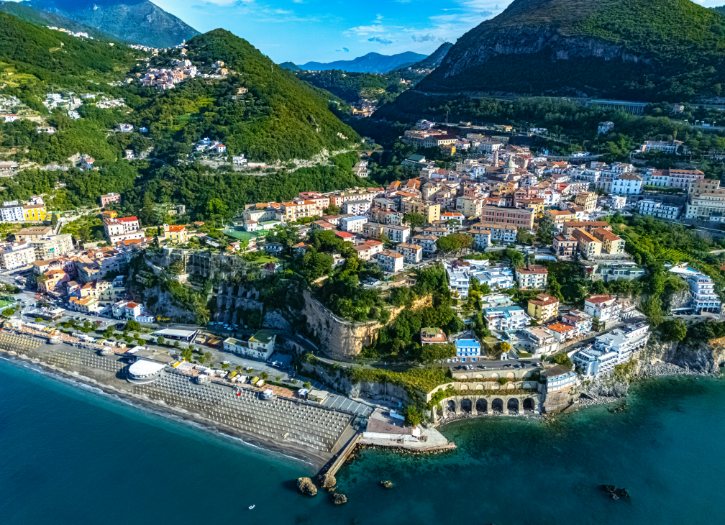
Vietri has made ceramics for five hundred years, and that craft covers almost everything you see, from street signs to whole buildings.
Keep an eye out for:
- Painted tiles on shrines, stairways, and house fronts
- The bright fish-scale tiled dome of the Church of San Giovanni Battista
- Villa Comunale, a park with mosaic railings and wide coastal views
- Marina di Vietri below, with a beach and the I Due Fratelli sea stacks
d. Which Amalfi Town Fits Your Trip
Short on time and trying to choose? Here’s a quick guide:
- Want the iconic cliff view and lively streets? Pick Positano.
- After peace, gardens, and music? Head to Ravello.
- Love color and handmade crafts? Spend your hours in Vietri.
2. Procida, Campania
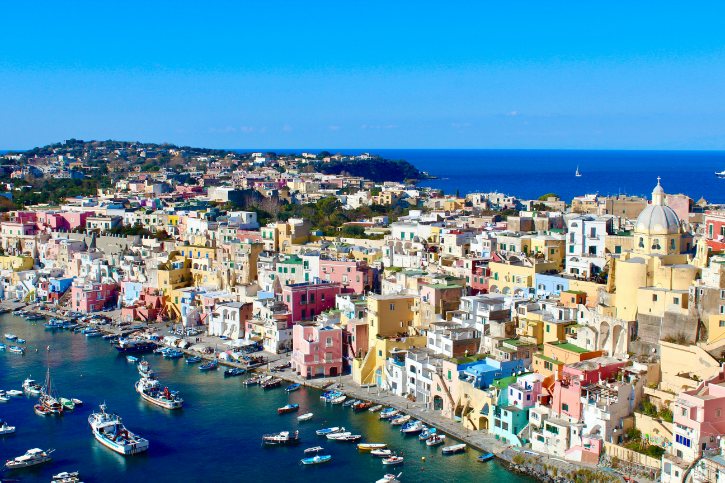
a. An Island That Stayed Beautifully Real
Procida is the smallest of the main inhabited islands in the Gulf of Naples, and it still runs on fishing, lemon groves, and ordinary daily life. That authenticity earned it the title of Italian Capital of Culture in 2022, a nod to its living heritage rather than its fame.
b. Marina Corricella and Its Rainbow Houses
The car-free harbor of Marina Corricella is the island’s signature view, a tangle of pastel homes stacked up the cliff like a natural amphitheater.
- The colors once helped fishermen spot their own homes from the water
- Look for vefi (vaulted balconies), arches, and outdoor stone stairways
- Painted wooden gozzi boats line the water’s edge
c. Climb Up to the Old Fortress Town
For a different feel, head uphill to Terra Murata, the fortified old center sitting 90 meters above the sea.
- Narrow, shadowed medieval lanes run behind thick defensive walls
- The 11th-century Abbey of San Michele Arcangelo, with a grand interior and a historic library set over several levels
- You’ll get sweeping views back over the harbor and the sea
d. Where to Catch the Best Views
- Belvedere dei Due Cannoni, looking over Marina Corricella
- The curving climb of Salita Castello toward the old town
- Marina Grande, the main harbor, lined with pastel merchant houses
e. Beaches Worth a Slow Afternoon
- Spiaggia del Pozzo Vecchio, a quiet crescent of dark volcanic sand
- Spiaggia della Chiaiolella, a long shore beside a calm marina
- A footbridge from Chiaiolella leads to the protected nature islet of Vivara
3. Lake Como, Lombardy
a. Varenna, a Romantic Village on the Water
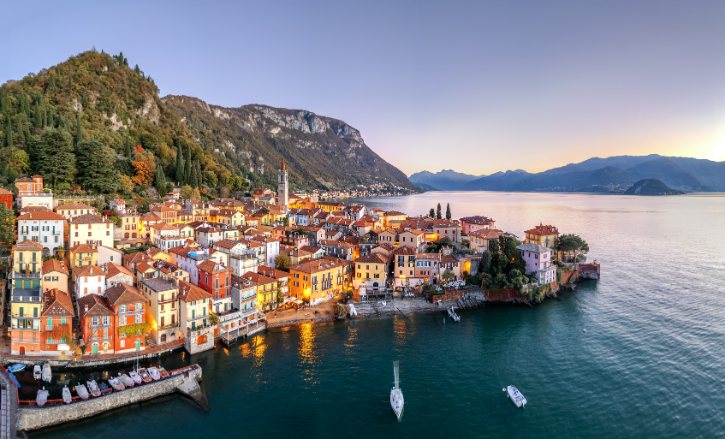
Varenna sits on the eastern shore of Lake Como, a medieval fishing village with steep stone stairways dropping straight to the water. You’ll walk in along the Passeggiata degli Innamorati, the Lovers’ Walk, a wisteria-draped path hanging over the lake.
Don’t miss:
- The small harbor of Riva Grande, ringed by terracotta and ochre houses
- Castello di Vezio high above, with a 360-degree view over the lake
- The 14th-century Church of San Giorgio on the main square
b. Bellagio, the Pearl of the Lake
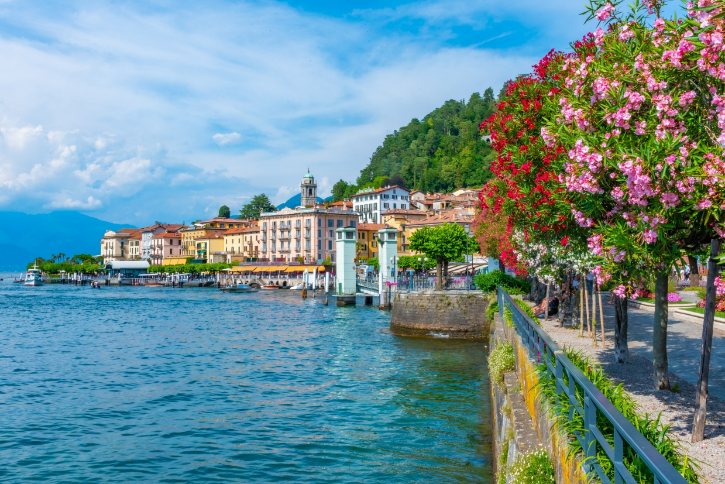
Bellagio holds one of the finest spots on the whole lake, right where Lake Como splits into two arms. The Romans built villas here long ago, and by the Renaissance its beauty had earned it the nickname “Pearl of Lake Como”.
- Salita Serbelloni, a stepped lane of pastel buildings and little shops
- Punta Spartivento, where all three arms of the lake meet, with free panoramic views
- The Romanesque Basilica di San Giacomo at the top of the village
- Pescallo, a quiet fishing hamlet just across the ridge
c. Menaggio, the Lively Lakeside Hub
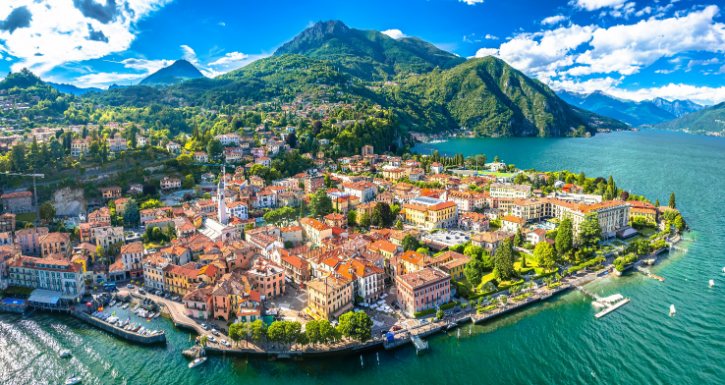
Over on the western shore sits Menaggio, directly across the water from Varenna and Bellagio. Together the three form the famous center of the lake, and Menaggio is the easygoing one, with a bright promenade and a relaxed town feel.
- A lakefront promenade lined with gardens, cafes, and ferry docks, looking straight across to Bellagio
- Piazza Garibaldi, the arcaded main square at the heart of the old town
- The Parish Church of Santo Stefano and traces of the old town walls nearby
- Castello di Menaggio, medieval ruins on a hill above town with wide lake and mountain views
- Easy trails into the hills behind, from Val Sanagra Park up toward Monte Grona and the Rifugio Menaggio
Menaggio also makes a great base. Ferries link it to Varenna and Bellagio in minutes, so you can hop between all three in a single day.
d. Two Gardens You Shouldn’t Skip
Lake Como is famous for its lakeside gardens, and these two are the highlights:
- Villa Monastero in Varenna: a two-kilometer terraced botanical garden with over 900 plant species, statues, and lakeside temples
- Villa Melzi d’Eril in Bellagio: an English-style park with azaleas, a water lily pond, and a Moorish-style pavilion by the water
e. Varenna, Bellagio, or Menaggio: How to Choose
- Pick Varenna for a smaller, more romantic village built around medieval stairways
- Pick Bellagio for grand gardens and wide peninsula views
- Pick Menaggio for a relaxed promenade town and the easiest access to the hills behind
- Honestly, the ferries link all three in minutes, so try to see them together
4. Sant’Angelo, Ischia, Campania
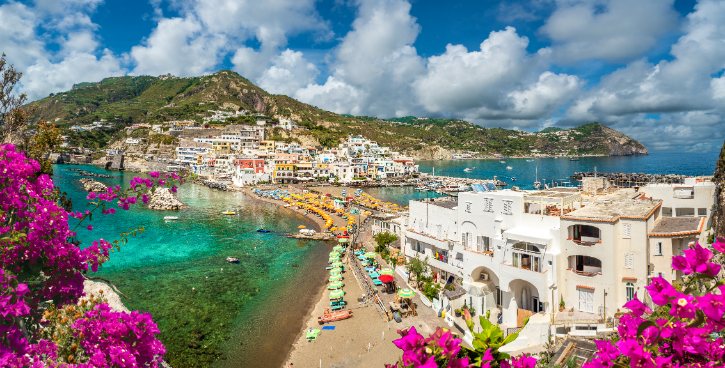
a. A Peaceful Village at the Island’s Tip
Down at the southern end of the volcanic island of Ischia, you’ll find Sant’Angelo, a car-free fishing village tucked between steep tuff cliffs and the sea. It grew up around fishing and small vineyards, and it feels wonderfully far from the busier northern towns.
b. The Giant Rock That Shapes the View
The village’s landmark is La Torre, a 106-meter tuff promontory that rises from the water like a huge pyramid.
- A thin sandy strip just a few dozen meters wide connects it to the island
- That strip works as both a beach and a natural harbor
- It once held a medieval watchtower and a monastery
c. Wander the Pastel Streets
- Cubic houses in white, apricot, turquoise, and dusty pink climb the rock
- Vaulted loggias, small terraces, and flower-lined iron balconies add to the charm
- The waterfront Piazzetta looks onto a marina full of brightly painted boats
d. Soak Up the Island’s Thermal Heat
Sant’Angelo is tied closely to Ischia’s famous thermal springs:
- Spiaggia delle Fumarole, where volcanic heat rises through the sand and warms the water
- Cavascura, an ancient thermal site with stone basins and steam carved into canyon walls
e. The Best Spots for a Photo
- The stepped path up toward the cemetery hill, with a full view over the isthmus and cliffs
- Trails heading west toward Baia di Sorgeto, past vineyards and natural rock pools
5. Cinque Terre, Liguria
a. Manarola, Colorful Houses Above the Vineyards
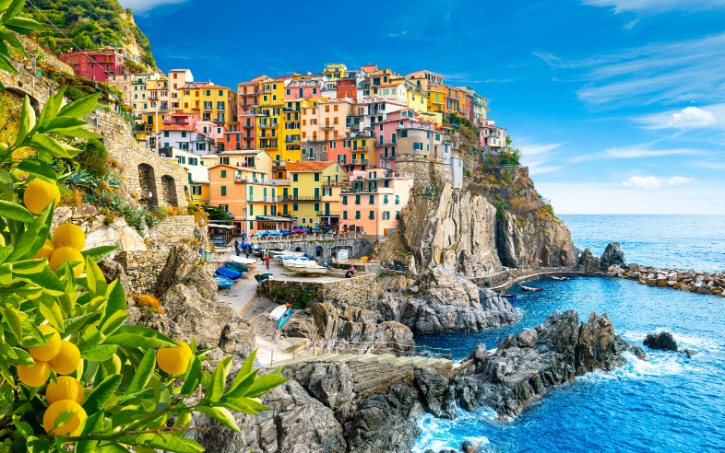
Manarola sits in a steep gorge, its tower houses painted in saffron, rose, and pale green on a dark rock headland. For the classic shot, walk out to Punta Bonfiglio, a stone terrace looking back at the stacked houses above the sea.
- No sandy beach here, just a rocky inlet where boats are craned out of the water
- The 1338 Church of San Lorenzo sits at the top with a carved rose window
- Surrounding terraces produce local wine, including the rare Sciacchetrà dessert wine
b. Vernazza, the Village With a Natural Harbor
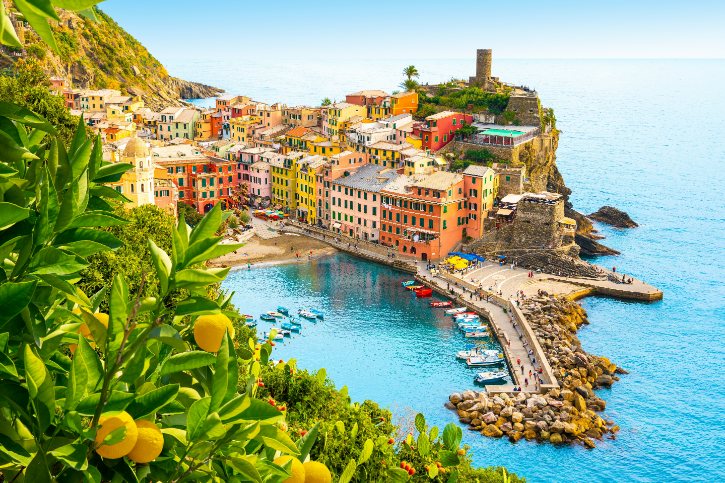
Vernazza has the only real sheltered harbor in the Cinque Terre, and it curves around a protected bay. Its heart is Piazza Marconi, a stone square opening right onto the beach.
- The Church of Santa Margherita di Antiochia is built on rock at the water’s edge
- Doria Castle and the Belforte Tower crown the point, with a full coastal view
- The coastal trails give you two of the most famous village views in Italy
c. Riomaggiore and the Path of Love
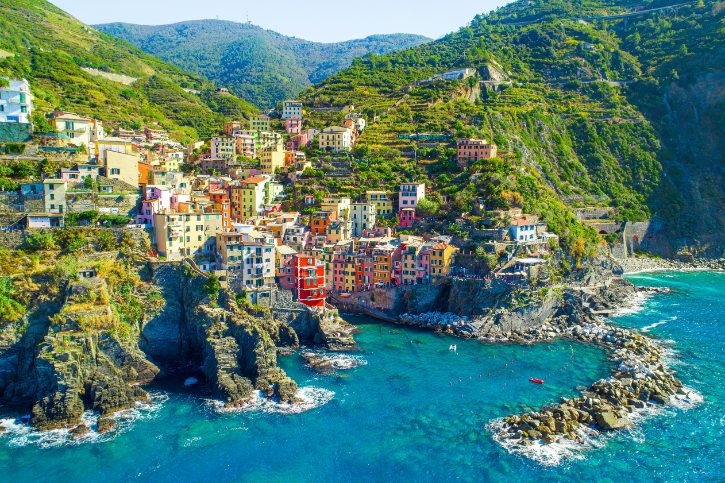
Riomaggiore fills a narrow river valley, with tall houses in rust, gold, and dusty pink. Walk down to the eastern breakwater for the best view of the colorful stack over the water.
- The Church of San Giovanni Battista and a ruined 13th-century castle sit above town
- The famous Via dell’Amore (Path of Love) toward Manarola reopened in 2024
- Access now runs one way with advance reservations to protect the cliff
d. What Makes This Coast So Special
- The whole area became a UNESCO World Heritage site in 1997
- Over 7,000 kilometers of dry-stone walls were built by hand across the slopes
- That effort turned rugged cliffs into vineyards and farmland over a thousand years
e. How the Three Villages Differ
- Manarola: a gorge, a rocky inlet, and hillsides famous for wine
- Vernazza: the only natural harbor, with a waterfront square and a seaside church
- Riomaggiore: the tallest, most tightly packed houses, and the start of the Path of Love
6. Bosa, Sardinia
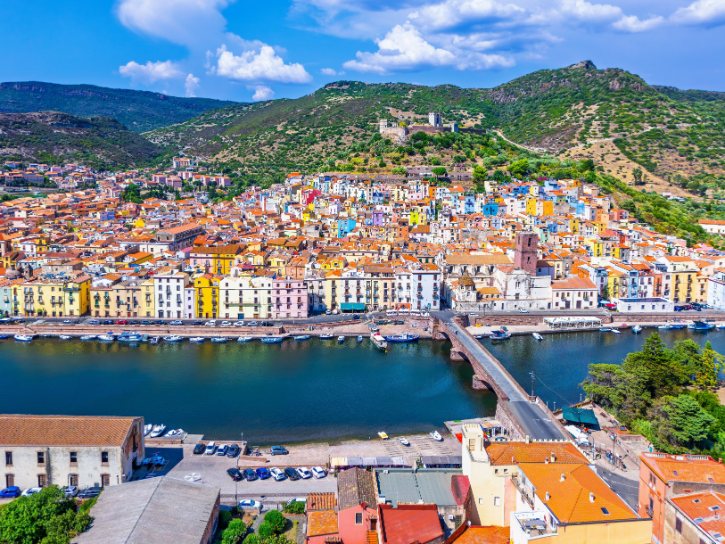
a. A River Town Unlike Any Other in Italy
Bosa breaks the usual coastal mold. Instead of hugging the sea, it lines the banks of the Temo River, the only navigable river in Sardinia, about two kilometers inland. The result is a town shaped by river trade, old defenses, and genuine local life.
b. The Candy-Colored Sa Costa Quarter
The standout feature is Sa Costa, a hillside quarter of tall, narrow houses in bold colors.
- Shades of magenta, ochre, royal blue, pastel green, and deep orange
- Stepped alleys, stone arches, and flowering courtyards link the homes
- The bright facades are a long-standing local tradition, turning the whole hillside into a patchwork of color
c. Climb Up to Malaspina Castle
At the top of the hill sits Malaspina Castle, also called Serravalle Castle, built in 1112.
- Defensive walls, restored towers, and a small chapel with rare 14th-century frescoes
- From the parapets you get the best view in town
d. Crafts, Wine, and Riverside Streets
- Corso Vittorio Emanuele II, lined with elegant stone palazzi and craft shops
- Traditional filigree jewelry and delicate filet di Bosa lace
- Sas Conzas, old riverside leather tanneries now protected as national monuments
- Malvasia di Bosa, an ancient golden dessert wine from Bosa and the surrounding Planargia hills
e. The Best Views to Seek Out
- The castle parapets, looking over the colorful roofs and the winding river
- The old three-arched Ponte Vecchio bridge across the Temo
- Bosa Marina downstream, with a sandy beach and an old watchtower
7. Capri and Anacapri, Campania
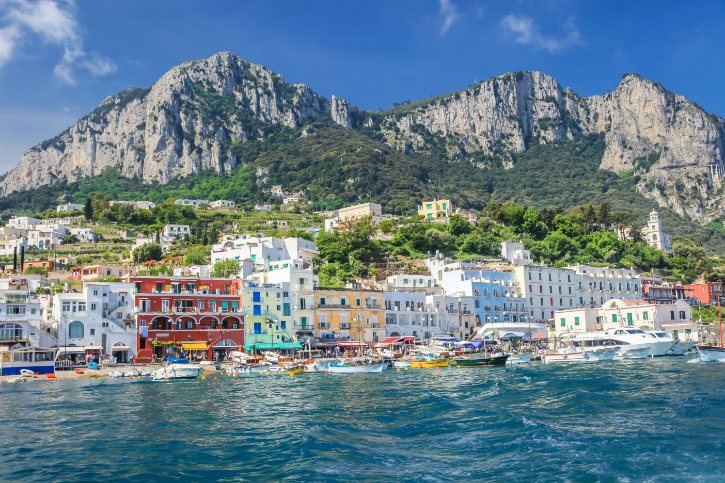
a. Capri’s Famous Sea Stacks
Capri rises from the Gulf of Naples with white cliffs, caves, and deep blue water. Its most famous sight is the Faraglioni, three huge limestone stacks just off the coast. One even has a natural arch big enough for boats to pass through.
- Best viewed from the Gardens of Augustus, a set of flower-filled terraces
- Belvedere Tragara, a quieter elevated terrace that looks down over the stacks
b. Gardens, Grottos, and Grand Views
Capri town rewards slow exploring, and a few sights stand out:
- The Piazzetta, a little marble square that feels like an open-air lounge
- Via Krupp, a cliffside path of hairpin turns that reopened in 2023
- The Blue Grotto, a sea cave that glows electric blue from light through the water
- Villa Jovis, Emperor Tiberius’s clifftop palace ruins with gulf-wide views
c. Anacapri, the Island’s Quiet Side
Up on the high western plateau, Anacapri feels calmer and more traditional, surrounded by olive groves and small workshops. In the center, the Church of San Michele hides a stunning hand-painted majolica floor from 1761 showing the Garden of Eden.
d. Up to the Top of Monte Solaro
Take the single-seat chairlift from Anacapri up to Monte Solaro, the island’s highest point at 589 meters.
- A 360-degree view over the Faraglioni and the whole island
- The Bay of Naples and the Sorrentine Peninsula spread out below
- Villa San Michele nearby, with Roman columns and an Egyptian sphinx facing the sea
e. Capri vs Anacapri: Which Is for You
- Choose Capri town for famous viewpoints, elegant streets, and buzz
- Choose Anacapri for quiet lanes, the mountain summit, and traditional crafts
- Better yet, give yourself time for both
8. Limone sul Garda, Lake Garda, Lombardy
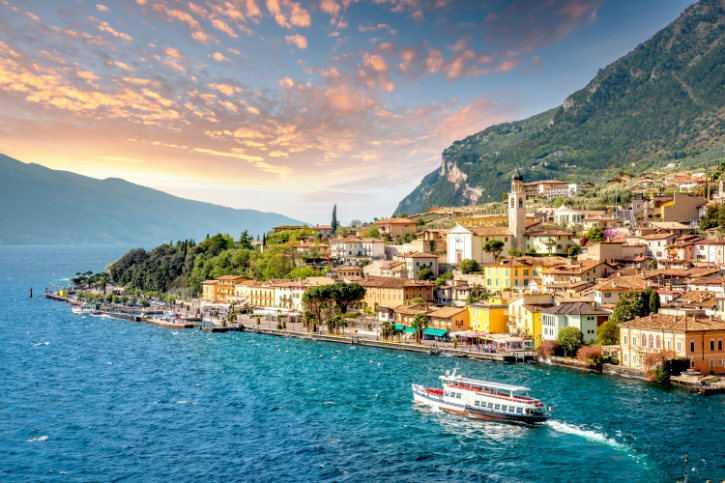
a. A Village Squeezed Between Cliffs and Lake
On the northwestern shore of Lake Garda, Limone sits pressed between the water and towering limestone cliffs. For centuries you could only reach it by boat or mountain path. And here’s a surprise: despite the name, the town has nothing to do with lemons. It comes from the Latin word for “border”.
b. The Lemon Houses That Made It Famous
Even so, Limone became the northernmost place in the world to grow citrus commercially, thanks to the lake’s mild climate.
- Limonaie (lemon houses): stone terraces backed against warm cliffs, roofed in winter
- The restored Limonaia del Castèl, with dozens of citrus varieties and a small museum
- Spring-fed canals, stone pillars, and wooden beams you can still see today
c. Stroll the Old Town and Harbor
- Cobbled lanes, covered stone arches, and colorful lakeside houses
- Porto Vecchio, a quiet old harbor ringed by pastel cottages and cafes
- The Church of San Rocco on a ledge, with a lovely view over the rooftops
d. Walk the Cliffside Boardwalk
For a real thrill, try the Ciclopista del Garda, a walking and cycling boardwalk built into the cliff.
- It’s suspended about fifty meters above the water
- You’ll feel like you’re walking right over the open lake
- The Lungolago promenade below is lined with palms and olive trees
e. The Best Views of Lake and Mountains
- From the Church of San Rocco terrace, over the lemon terraces and blue water
- Across the lake toward the huge ridge of Monte Baldo
- Along the cliffside boardwalk, looking out over the upper lake basin
9. Taormina, Sicily
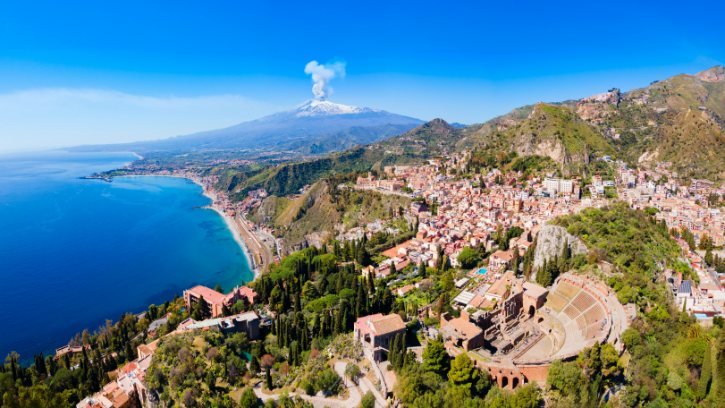
a. A Balcony High Above the Ionian Sea
Taormina sits about 204 meters up on the slopes of Monte Tauro, with one of the best settings in the Mediterranean. On one side you have turquoise water, and on the other, the snow-capped cone of Mount Etna.
b. The Ancient Theatre With a Volcano View
The town’s crown jewel is the Ancient Theatre of Taormina, begun by the Greeks and rebuilt by the Romans.
- Carved into the hillside, it once seated up to 10,000 people
- A wide gap in the old stage wall frames the coastline and Mount Etna
- Ancient stone and a living volcano in one view is a sight you won’t forget
c. Stroll Corso Umberto and Its Squares
The main street, Corso Umberto, runs between two old town gates and makes for a lovely walk.
- Palazzi mixing Sicilian Gothic, Catalan, and Baroque styles
- Piazza IX Aprile, a clifftop terrace paved in a black-and-white checkerboard
- Palazzo Corvaja, built around a 10th-century Arab tower
- Piazza del Duomo, with a fortress-like cathedral and a Baroque fountain
d. Gardens and a Tiny Island Below
- The Villa Comunale gardens, full of palms, flowers, and shaded lookouts
- Isola Bella, a small rocky islet linked to the beach by a thin sandbar
- A protected nature reserve with clear turquoise water around the islet
e. Don’t Miss These Highlights
- Sunset views of Mount Etna from the clifftop squares
- The framed volcano view from inside the Ancient Theatre
- A slow wander through the side lanes off Corso Umberto
10. Burano, Veneto
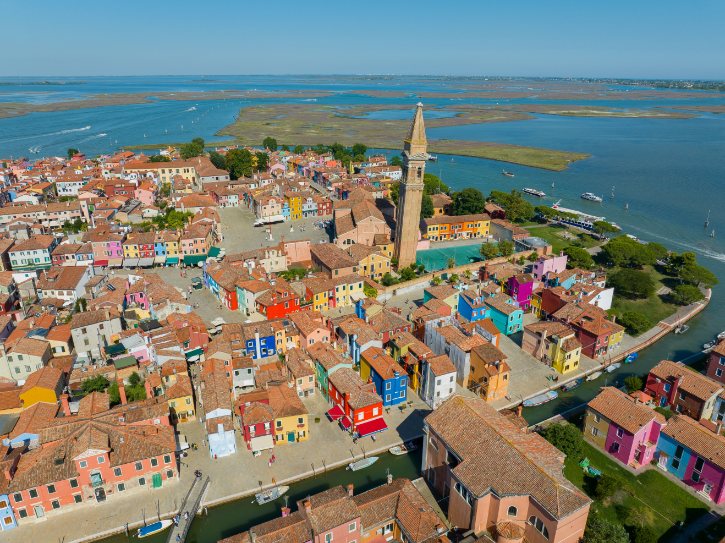
a. The Most Colorful Island in Venice
Out in the Venetian Lagoon, Burano is one of the most colorful places you’ll ever see. Forget grand stone palaces. Here the houses are small fishermen’s homes painted in pure, saturated color, all mirrored in the canal water.
b. Why the Houses Are Painted So Brightly
- The colors helped fishermen spot their own homes through thick lagoon fog
- Today the tradition is managed: residents need an approved color before repainting
- The palette runs from bright blue and vermilion to lemon yellow and magenta
c. The Best Canals and Corners
- Tre Ponti (Three Bridges), a wooden bridge spanning three canals at once
- Casa di Bepi Suà, a house covered in hand-painted geometric shapes
- Quiet residential lanes just off the main canals, where island life carries on
d. A Leaning Tower and Famous Lace
The island’s skyline is marked by the Church of San Martino and its leaning bell tower, which tilts noticeably off center.
- Inside hangs a dramatic Crucifixion painted by Tiepolo in 1725
- Burano is also famous for needle lace, made with a technique called “stitch in the air”
- The Museo del Merletto displays rare pieces and live demonstrations
e. Taste the Island’s Traditions
- Risotto di gò, made with a savory broth from a local lagoon fish
- Traditional butter biscuits from the island bakeries
- A slow lunch by the canal, watching the colors shift with the light
11. Portofino, Liguria
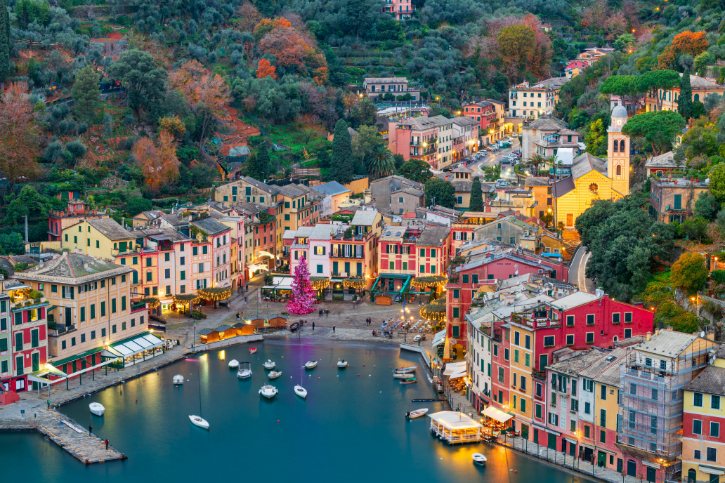
a. An Elegant Harbor on the Riviera
On the Italian Riviera, Portofino curls around a sheltered cove. It started as a humble fishing village and grew into one of the country’s most refined coastal retreats, all without losing its small-town scale.
b. The Piazzetta and Painted Houses
- A semicircular harbor framed by tall tower houses in terracotta, sienna, and yellow
- Clever trompe-l’œil details, with painted-on stone corners, windows, and shutters
- The Piazzetta, a pebble-paved square ringed by cafes looking over the boats
c. Climb Up to Castello Brown
Above the eastern side of the harbor sits Castello Brown, a stone fortress first recorded in 1425 and later turned into a villa with gardens.
- Terraces shaded by pines give you the best aerial view over the harbor
- Trust me, this is the view that sells Portofino
- The path up passes the hillside Church of San Giorgio, then carries on beyond the castle to the lighthouse at the point
d. Green Hills and a Hidden Bay
Unlike the steep vineyard terraces of Cinque Terre, Portofino is wrapped in protected forest.
- Trails climb through oaks and pines to scenic viewpoints
- Paraggi Bay nearby has calm emerald water and a small sandy cove
- A little red castle sits above the bay among the cliffs
e. How It Differs From Cinque Terre
- Portofino feels polished and gentle, with a sheltered harbor and green hills
- Cinque Terre feels rugged and dramatic, built on steep vineyard terraces
- Visit Portofino when you want calm and elegance over raw drama
12. Ponza Harbour, Lazio
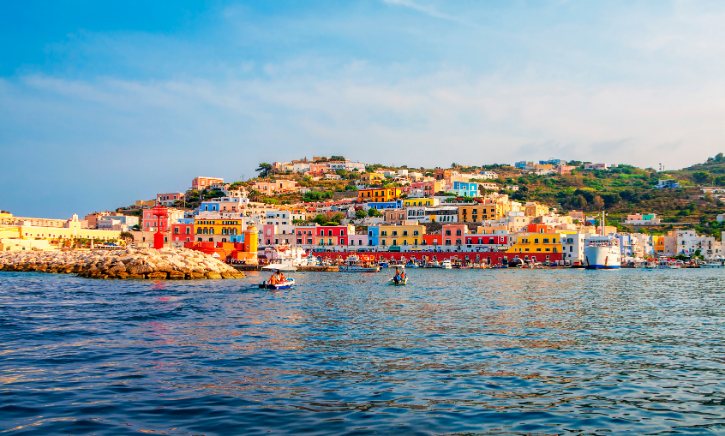
a. A Harbor Shaped Like an Amphitheater
Off the coast of Lazio, Ponza is the largest island of the Pontine Archipelago, made entirely of volcanic rock. Its harbor is unforgettable: the waterfront curves in a wide, amphitheater-like sweep around the bay.
b. Pastel Buildings With a Royal History
- Built in the 1770s under the Bourbon monarchy as a planned port
- Soft colors of dusty rose, peach, pastel yellow, sky blue, and white
- Archways, vaulted loggias, and wide stone staircases linking the quays to the streets
c. Sea Caves and Hidden Coves
The island’s volcanic cliffs hide some remarkable spots, best explored by boat:
- Grotte di Pilato, Roman rock-cut chambers once used as a marine fish farm
- Capo Bianco, a bright white cliff pierced by a natural cave
- The Piscine Naturali at Le Forna, calm emerald pools enclosed by volcanic rock
d. The Dramatic Cliffs of Moon Bay
Chiaia di Luna is a crescent beach backed by a 100-meter wall of pale tuff cliffs.
- Because of rockfall danger, the old tunnel is closed and landing is not allowed
- You can still admire it safely from a boat or the clifftop viewpoints above
e. Flavors of the Island
- Spaghetti con la granseola, a spider crab pasta
- Fresh swordfish straight from the day’s catch
- A hearty lentil stew made from tiny lentils grown on the island’s volcanic terraces
With its curved pastel harbor, volcanic cliffs, and wild character, Ponza feels different from Capri or Procida. It’s less polished and all the more rewarding for it, the perfect last stop on your Italian wish list.