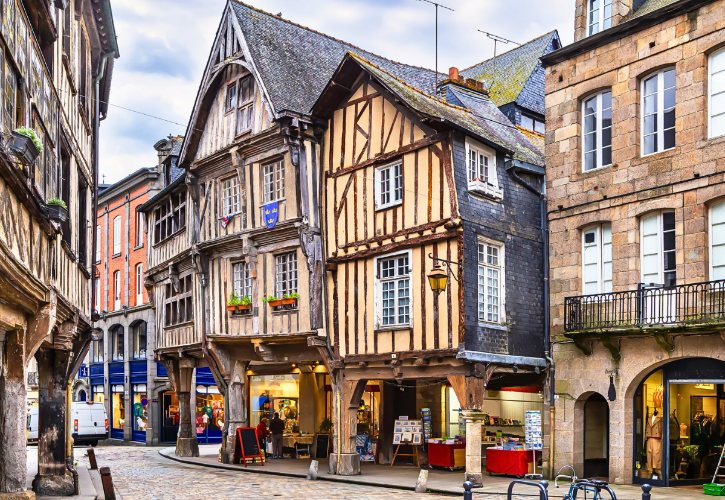
Brittany is a region that gives its best to travellers who take their time. Along this route you will find walled medieval towns, cliffs that fall straight into the sea, quiet harbour villages, and lively historic cities lined with half-timbered houses.
The roads are scenic and easy to follow, and there is always another hidden corner waiting around the next bend.
This 14-day drive is built for a relaxed pace, so you can enjoy each place fully instead of watching the clock. You will move gently from the Emerald Coast in the north, through wild western Finistère, and finally inland to the historic capital.
Let’s begin.
Day 1: Arrival & Saint-Malo (Base 1)
Overnight: Saint-Malo
a. How to Spend Your Arrival Day
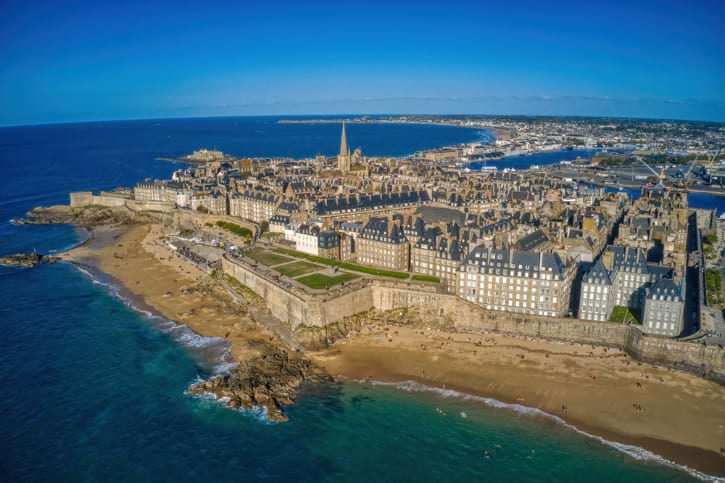
Your first day should be gentle, so resist the urge to do too much. The best plan is a slow, self-guided walk around Intra-Muros, the historic walled old town of Saint-Malo.
The day shifts depending on when you arrive.
- Early arrival: use the daylight to walk the granite ramparts and enjoy the sea views.
- Late-afternoon arrival: save your energy for the evening mood and a relaxed dinner inside the walls.
To enjoy Saint-Malo at a comfortable pace, plan for at least a half-day.
b. Where to Walk, Eat, and Watch the Evening
The nicest walking route begins at the steps near Porte Saint-Vincent, where you climb up and follow the full loop of the ramparts.
From this raised path you look out over the English Channel, the long sandy sweep of Plage du Sillon, and offshore forts such as Fort National.
Inside the walls, the streets were rebuilt in granite after the town was damaged in 1944. In the evening the warm stone catches the coastal light, and the old lanes become a lovely place for dinner and photos.
c. Where to Stay
Where you sleep in Saint-Malo shapes how the next few days feel. Here is a simple comparison.
- Walled City (Intra-Muros): you are right in the heart of the history, steps from the best evening dining and the most atmospheric lanes. It is the most charming choice, though it is also the busiest and most in-demand.
- Sillon Beach and Waterfront (Highly Recommended): a short and pleasant walk to the old gates, with lovely sea views and a calmer feel. It strikes the best balance for a road trip.
- Train Station Area: budget-friendly and modern, with easy links to the main roads. It has less old-town charm and sits a little farther from the walls.
Takeaway: for most travellers, the Sillon Beach and Waterfront area is the easiest and most relaxing base.
Day 2: DAY TRIP – Dinan & Saint-Suliac
Starting point: Saint-Malo. Overnight: Saint-Malo
a. The Best Order for the Day
Visit Dinan first in the morning, then stop at Saint-Suliac in the afternoon on your way back.
Aim to reach Dinan fairly early, before the narrow streets and cafes fill up. The town is at its most peaceful in the morning light.
Saint-Suliac is lovely later in the day. It has a quiet harbour feel and beautiful views as the sun drops over the Rance estuary.
b. Driving Times
- Saint-Malo to Dinan: about 40 minutes
- Dinan to Saint-Suliac: about 25 minutes
- Saint-Suliac to Saint-Malo: about 20 minutes
- Total driving for the day: roughly 1 hour and 25 minutes
The good news is that both towns fit comfortably into one day, with no need to rush either one.
c. Dinan
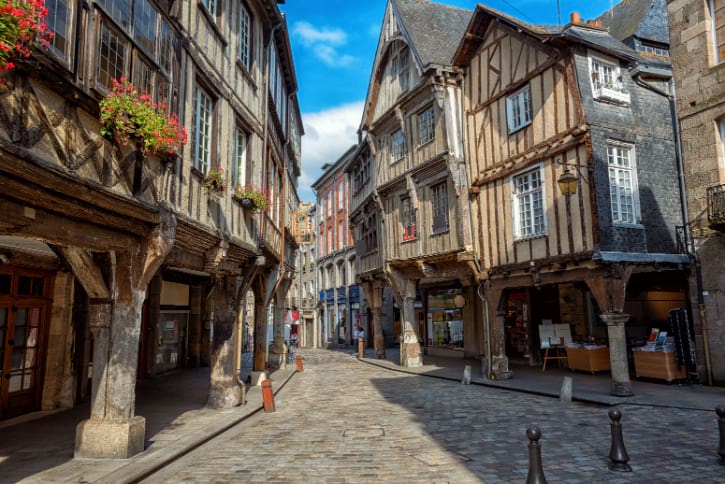
Dinan is full of half-timbered merchant houses and medieval stone walls, and it feels wonderfully unspoiled.
The highlight is walking down the steep cobbled Rue du Jerzual to the riverside port. Trust me, this little walk is one of the loveliest in the whole region.
One thing to know: the slope is steep. If walking hills is difficult for you, you can drive down to the port area and explore from there instead.
- Upper town (essential): about 3 hours among the half-timbered streets and the old clock tower.
- Port and Léhon (highly recommended): about 1 hour, with a stone bridge and quiet riverside paths.
d. Saint-Suliac
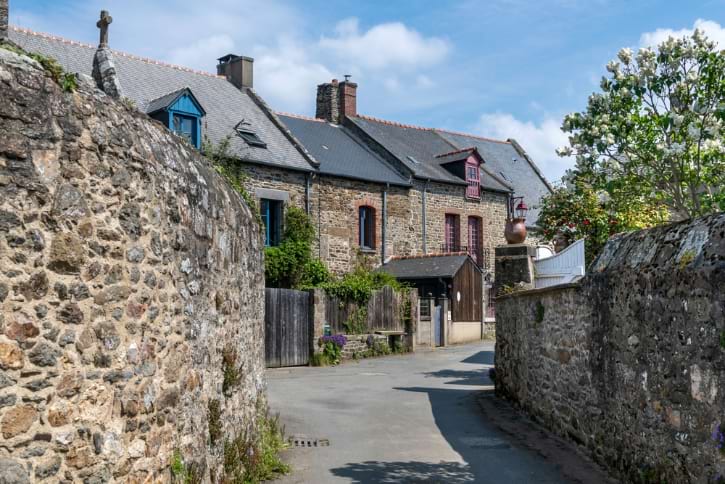
Saint-Suliac sits on the shores of the Rance estuary and is officially listed as one of France’s most beautiful villages.
This is a shorter stop of about 1.5 to 2 hours, perfect for a slow wander along the granite-lined lanes. It works so well precisely because it is small and calm, a gentle contrast to Dinan.
Day 3: DAY TRIP – Cancale
Starting point: Saint-Malo. Overnight: Saint-Malo
a. How to Structure the Day
Cancale is best enjoyed as a relaxed half-day trip paired with a scenic drive along the Emerald Coast. There is no need to stretch it into a full day.
b. Driving Times
- Saint-Malo to Cancale: about 25 minutes
- Cancale to Pointe du Grouin: about 10 minutes
- Pointe du Grouin to Saint-Malo: about 30 minutes
- Total driving for the day: roughly 1 hour
c. Cancale
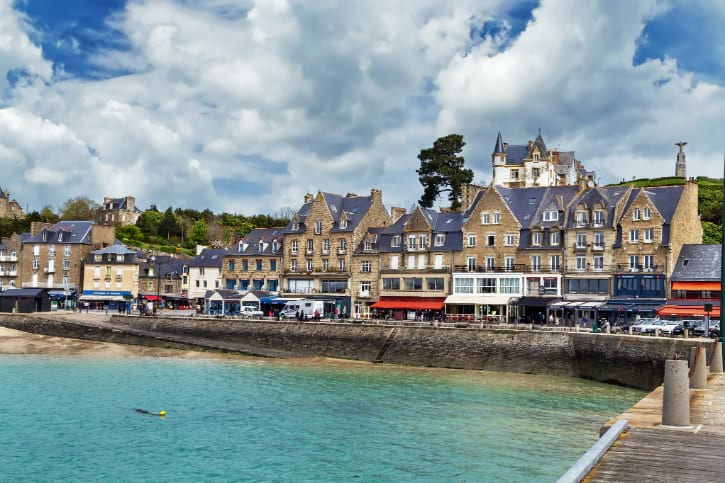
Cancale is famous for its oysters, and its heart is the harbour at Port de la Houle.
Here is the fun part. At the open-air oyster market, you can buy fresh oysters straight from local sellers.
The classic way to enjoy them is sitting on the stone pier steps, watching the tide pull back to reveal the oyster beds below.
d. Nearby Coastal Stops
- Pointe du Grouin (highly recommended): a windswept headland at the edge of the bay, with clifftop paths and views that stretch all the way to Mont-Saint-Michel.
- Plage du Verger (optional): a quiet sandy cove, ideal for a peaceful beach walk if you have time.
Day 4: TRAVEL DAY – Saint-Malo to Lannion via Tréguier (Base 2)
Visit Tréguier, then continue to Lannion. Overnight: Lannion
a. The Route
This is the day you leave the Emerald Coast behind and move toward the Pink Granite Coast. The drive is smooth and easy to follow, and Tréguier makes a natural halfway break.
- Saint-Malo to Tréguier: about 2 hours
- Tréguier to Lannion: about 25 minutes
- Total driving for the day: roughly 2 hours 25 minutes
The route is efficient, so you never feel like you are going out of your way.
b. Tréguier
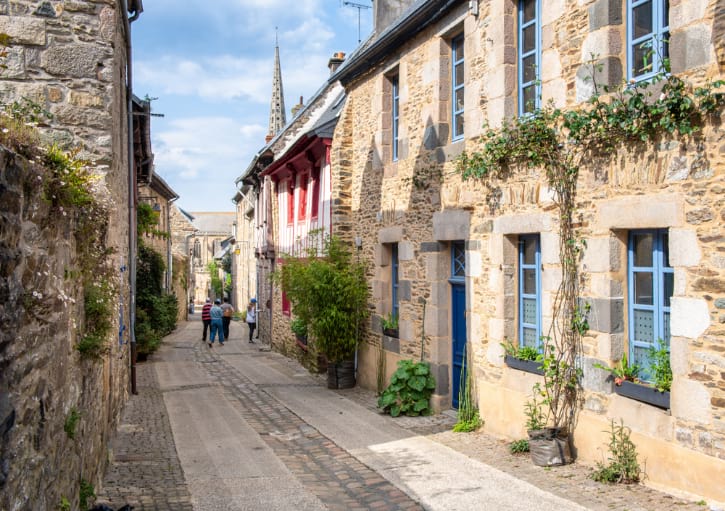
Plan for about 2 hours here.
Wander the half-timbered streets and admire the grand Gothic Cathedral of Saint-Tugdual, with its fine old cloister. A gentle lunch stroll around Place du Martray is a nice way to reset before driving on.
c. Lannion in the Afternoon or Evening
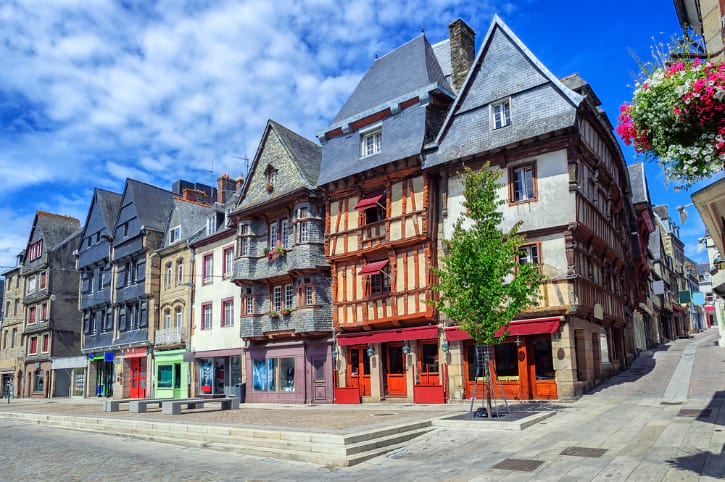
Lannion is a comfortable and welcoming base,.
- Climb the historic Escalier de Brélévenez for a lovely view of the town from the old church grounds.
- As the light softens, take a slow walk along the banks of the Léguer
d. Why Lannion Works as a Base
Perros-Guirec sits closer to the centre of the Pink Granite Coast, so it is a fair alternative to keep in mind.
Even so, Lannion is the better base for this trip. It tends to offer lower hotel prices, a calmer feel, and quick access toward Finistère, which helps you avoid the busy coastal holiday traffic the next morning.
Best area to stay: near the historic centre and the Léguer riverside. You will be able to walk to dinner and enjoy the evening on foot, with an easy start toward Finistère in the morning.
Day 5: Travel to Quimper (Base 3)
Overnight: Quimper
a. Two Ways to Travel
Today you cross from the north coast down to southern Finistère, and you have a choice to make.
- The fast route: a direct drive of about 1 hour 50 minutes. Quick, but rather plain.
- The scenic route (Highly Recommended): a slower drive of about 2 hours 25 minutes without stops, cutting through the forests of the Armorique Regional Natural Park. With the stops below, expect a full and rewarding day of around 6 to 7 hours.
Choose the scenic route.
b. The Two Essential Stops
Morlaix (essential):
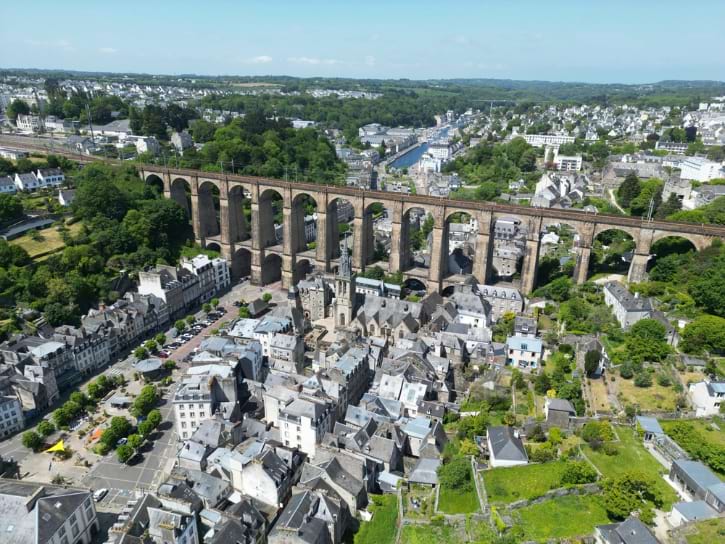
- About 45 minutes from Lannion.
- Famous for its dramatic railway viaduct striding across the valley.
- Spend about 1.5 hours in the old streets and look out for the unusual local staircase houses.
Huelgoat Forest (essential):
- About 35 minutes south of Morlaix.
- Spend about 2 hours walking among ancient mossy granite boulders, starting from the central lake.
- Look for the Devil’s Grotto and the famous Trembling Rock, a huge stone said to move with just a push in the right spot.
c. Quimper on Arrival
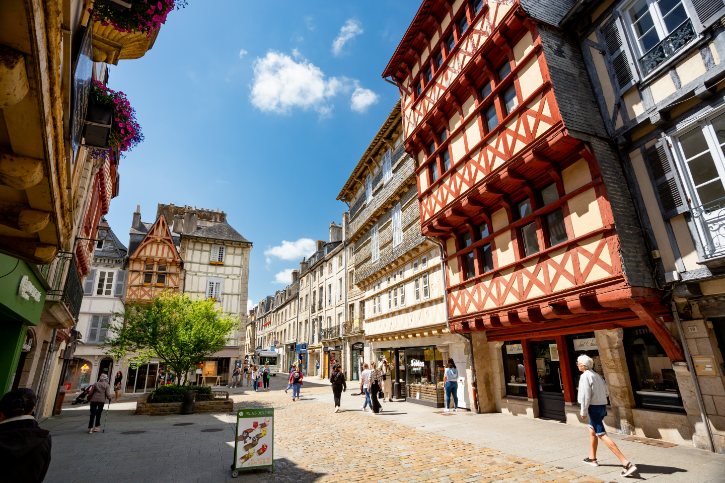
Quimper is the historic capital of Cornouaille.
In the fading light, explore the pedestrian streets around Rue Kéréon and admire the twin spires of the Cathedral of Saint-Corentin.
Best area to stay: within walking distance of the historic centre, so you can enjoy the evening dining scene entirely on foot.
Day 6: DAY TRIP – Locronan & Presqu’île de Crozon
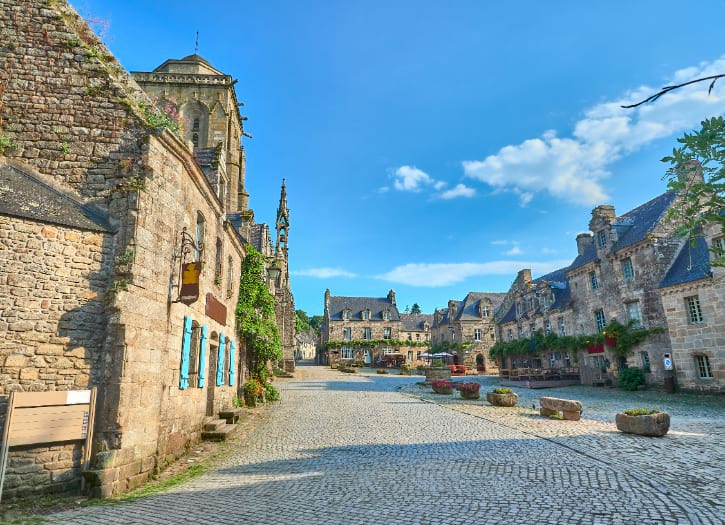
Starting point: Quimper. Overnight: Quimper
a. How the Day Fits Together
This day pairs the pretty town of Locronan with the wild cliffs of the Crozon Peninsula.
Because there is a good deal of coastal walking, this is a fuller day. To keep it relaxed, the plan focuses on just three key places rather than trying to see everything.
Visit Locronan first thing in the morning to enjoy it before the crowds, then head to the peninsula in the afternoon, when the coastal light is at its best.
b. Driving Times
- Quimper to Locronan: about 20 minutes
- Locronan to the Crozon Peninsula: about 45 minutes
- Loop around the peninsula: about 30 minutes
- Crozon Peninsula back to Quimper: about 1 hour
- Total driving for the day: roughly 2 hours 35 minutes
c. Locronan
Give Locronan about 1.5 hours. Admire the matching blue-granite houses and the quiet, handsome main square.
d. The Crozon Peninsula
- Pointe de Pen-Hir (essential): tall sandstone cliffs dropping into the sea, framing the striking Tas de Pois rock stacks. The clifftop trails here are superb.
- Cap de la Chèvre (highly recommended): wide views over the Bay of Douarnenez, with pine forests and low heather all around.
- Lagatjar Alignments (optional): a line of Neolithic standing stones near Camaret-sur-Mer.
If your day feels tight: simply skip the Lagatjar stones and keep the two coastal viewpoints. That keeps everything comfortable and unhurried.
Day 7: SIDE TRIP – Pointe du Raz
Starting point: Quimper. Overnight: Quimper
a. Driving Times
This trip takes you to the far western edge of Finistère, along the wild Cap Sizun peninsula.
- Quimper to Pointe du Raz: about 1 hour
- Return, allowing for a couple of small detours: about 1 hour 15 minutes
- Total driving for the day: roughly 2 hours 15 minutes
b. Pointe du Raz
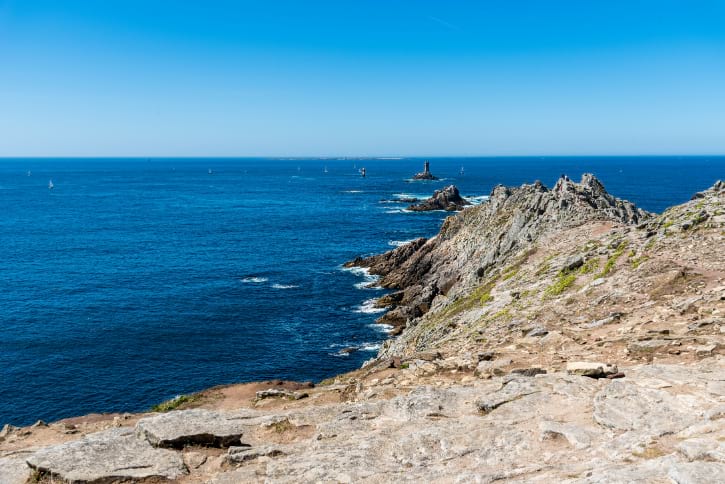
Pointe du Raz is a protected natural site, and it deserves at least 3 hours.
The walk out to the edge of the headland takes about 20 minutes.
One important tip. The wind here is strong and the weather can change quickly, so bring windproof clothing and take care on the exposed clifftop paths.
c. Worthwhile Additions
Pointe du Raz is even better as part of a wider loop through western Finistère, rather than a single stop.
- Audierne (highly recommended): a historic estuary port, ideal for lunch and a slow stroll along the quay.
- Pont-Croix (highly recommended): a small medieval town on the Goyen River, with steep cobbled streets and a lovely old collegiate church.
Day 8: Travel to Concarneau (Base 4)
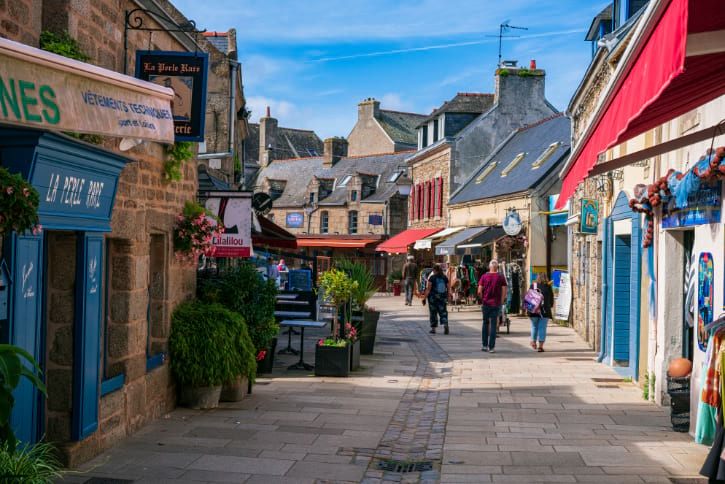
Overnight: Concarneau
a. A Short and Easy Drive
- Quimper to Concarneau: about 25 minutes
- Total driving for the day: roughly 25 minutes
Because the drive is so short, you have the whole day to enjoy Concarneau properly.
b. Concarneau
Concarneau is best known for its Ville Close, an old fortified islet sitting right in the middle of the harbour.
Give it 3 to 4 hours. Walk the stone ramparts, stroll the pedestrian Rue Vauban, and take in the working port with its fishing boats.
For a lovely extra, follow the coastal path to the Plage des Sables Blancs. It is an easy, scenic walk that rounds off the day nicely.
c. Concarneau or Pont-Aven for Your Base?
- Concarneau (Recommended): a larger town with more places to stay and easy onward links, which makes each day’s departure smooth. It is the practical, relaxed choice.
- Pont-Aven: a charming, romantic riverside town with real artistic character, though it is smaller and busier in season. It shines brightest as a day trip rather than a base.
Takeaway: base yourself in Concarneau and enjoy Pont-Aven as a day out tomorrow.
Best area to stay: close to the harbour and the old town, within easy walking distance of the Ville Close for evening strolls.
Day 9: DAY TRIP – Pont-Aven
Starting point: Concarneau. Overnight: Concarneau
a. Driving Times
- Concarneau to Pont-Aven: about 25 minutes
- Pont-Aven to Port de Kerdruc: about 20 minutes
- Port de Kerdruc back to Concarneau: about 35 minutes
- Total driving for the day: roughly 1 hour and 20 minutes
b. Pont-Aven
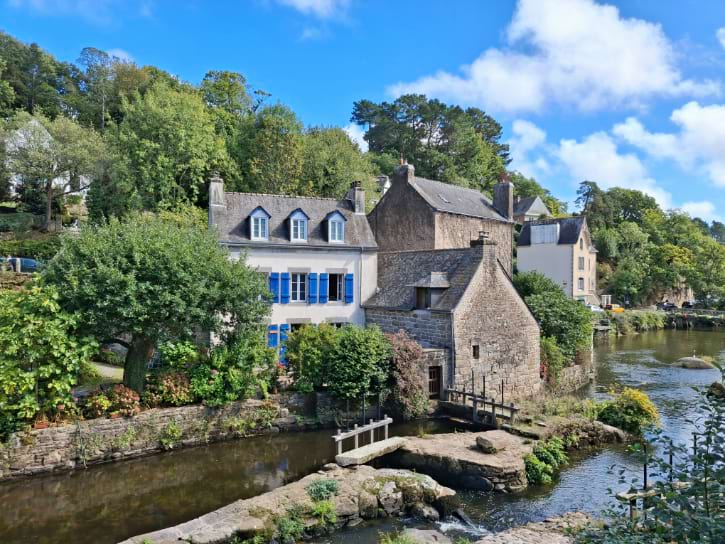
Pont-Aven is famous for the painters who once gathered here around Paul Gauguin. Plan for about 3 to 4 hours.
Two walks are especially worthwhile:
- The Promenade des Moulins, which follows the town’s old watermills along the river.
- The Bois d’Amour, a peaceful wooded path much loved by those same painters.
c. A Scenic Estuary Stop
To avoid retracing your route, drive a little south to Port de Kerdruc, a small harbour on the western bank of the Aven estuary.
It is a calm, pretty spot with traditional sailing boats and oyster beds.
Day 10: Travel to Vannes (Base 5)
Overnight: Vannes
a. The Route
Today you move from South Finistère into the Gulf of Morbihan, with a lovely stop at the historic river port of Saint-Goustan in Auray.
- Concarneau to Saint-Goustan: about 70 minutes
- Saint-Goustan to Vannes: about 20 minutes
- Total driving for the day: roughly 1 hour 30 minutes
b. Saint-Goustan in Auray
This beautifully preserved medieval river port sits tucked into a deep valley. Give it about 2 hours.
Explore the cobbled Place Saint-Sauveur, cross the old stone bridge, and climb the historic steps for a view back over the river.
c. Vannes on Arrival
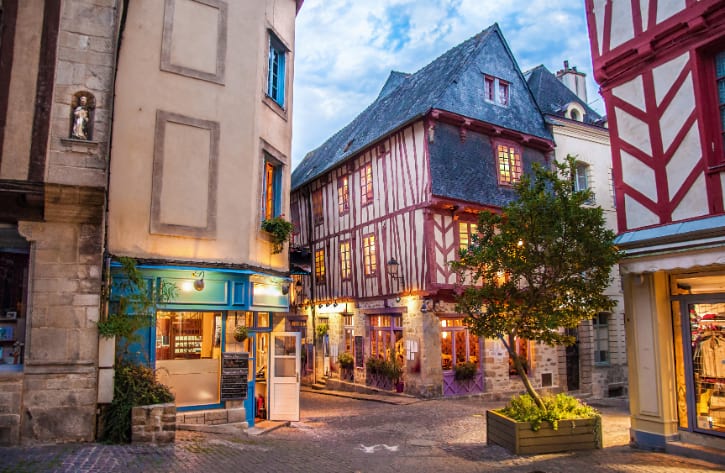
Spend the afternoon and evening in the historic core of Vannes.
- The medieval ramparts, framed by the neat Jardin des Remparts, are a highlight.
- In the evening, dine at the lively port, lined with pavement cafes and handsome old gates.
Allow a few relaxed hours to enjoy Vannes on arrival day. It rewards a slow evening wander.
Best area to stay: inside or near the walled old town, close to the port. This keeps you within walking distance of dinner and the evening atmosphere, and makes each day trip simple to begin.
Day 11: DAY TRIP – Île-aux-Moines & Carnac
Starting point: Vannes. Overnight: Vannes
a. How to Make This Full Day Work
This is a busy day, so the secret is a simple one: start early. You will visit the island of Île-aux-Moines in the morning, then the great standing stones of Carnac in the afternoon.
Take one of the first ferries of the day. That gives you a calm few hours on the island before the crowds, then plenty of time to reach Carnac while the light is still good.
If you would rather slow right down, you can always give the island a full day and move Carnac elsewhere.
b. Driving and Ferry Times
- Vannes to the ferry point at Port-Blanc, in Baden: about 20 minutes
- The ferry crossing to the island: a short hop of about 5 minutes
- Back across, then Port-Blanc to Carnac: about 35 minutes
- Carnac back to Vannes: about 40 minutes
- Total driving for the day: roughly 1 hour 35 minutes, plus the short ferry
A few practical notes on the island. Cars are not allowed, so you cross on foot and explore from there. The crossing is short and runs often, though it is worth checking the current times before you set off, especially outside the busy summer months.
c. Île-aux-Moines in the Morning
Give the island about 2.5 to 3 hours, enough to enjoy its best corners without rushing.
Here is the fun part. You can rent a bicycle right at the harbour landing, and the flat, car-free paths make cycling a pure pleasure.
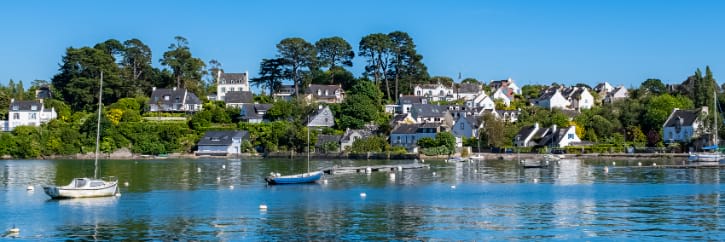
Follow part of the island loop and enjoy the little harbour, the quiet beaches, and the gentle coastal viewpoints. Then catch a ferry back around midday.
d. Carnac in the Afternoon
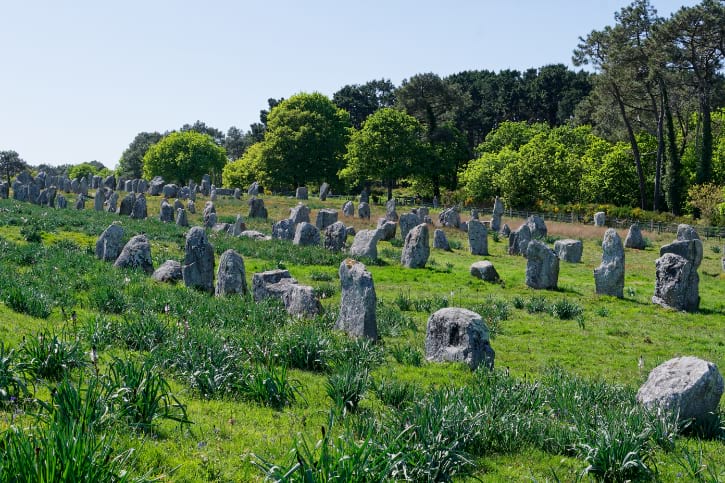
Give the famous standing stones 2 to 3 hours.
Explore the great alignments of Ménec and Kermario, walk the trail beside the ancient stones, and visit the Maison des Mégalithes visitor centre to learn about their mysterious origins. Standing among these long rows of stones is a quietly moving experience.
Day 12: DAY TRIP – Rochefort-en-Terre
Starting point: Vannes. Overnight: Vannes
a. Why This Village Is Worth the Day
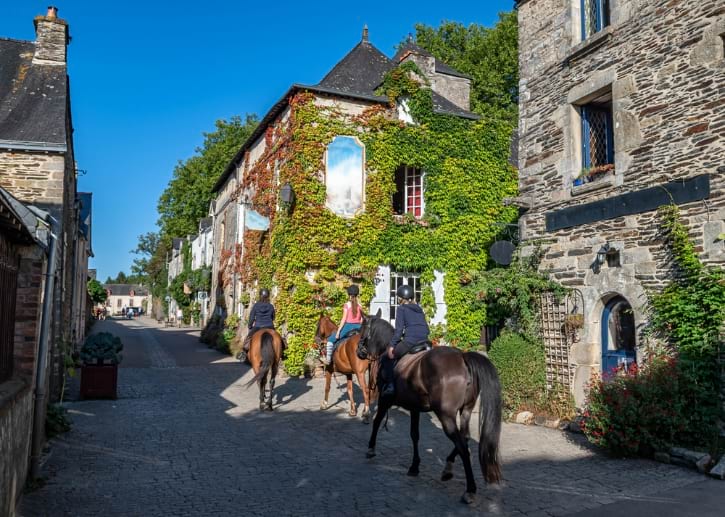
After the coast and the megaliths, Rochefort-en-Terre is a lovely change of pace. It sits inland on a rocky spur, and it is one of the officially listed most beautiful villages in France.
It is also a “flowering village”, and in spring and summer the old stone houses are covered in geraniums and other blooms.
b. Driving Times
- Vannes to Rochefort-en-Terre: about 35 minutes
- Return to Vannes: about 35 minutes
- Total driving for the day: roughly 1 hour 10 minutes
Because it is close and easy, this makes a relaxed half-day trip, with the rest of the day free to enjoy Vannes.
c. Rochefort-en-Terre
Plan for about 2 to 3 hours in the village itself. Mornings are the calmest time, before the day-trippers arrive.
- Wander the cobbled streets and the pretty central square, lined with half-timbered and granite houses.
- Look up at the Château de Rochefort-en-Terre. The grounds are open and give lovely views over the village and countryside.
- Step into the old Notre-Dame de la Tronchaye church, and look out for the village’s ancient stone lavoir, or washing place.
The village is full of craft shops and small galleries, so leave time to browse.
Day 13: TRAVEL DAY – Vannes to Rennes via Josselin (Base 6)
Visit Josselin, then continue to Rennes. Overnight: Rennes
a. The Route
Today you head inland from the coast toward the regional capital, passing through the Oust River valley and the storybook town of Josselin.
- Vannes to Josselin: about 40 minutes
- Josselin to Rennes: about 55 minutes
- Total driving for the day: roughly 1 hour 35 minutes
Josselin sits neatly along the way, so it adds no real detour.
b. Josselin
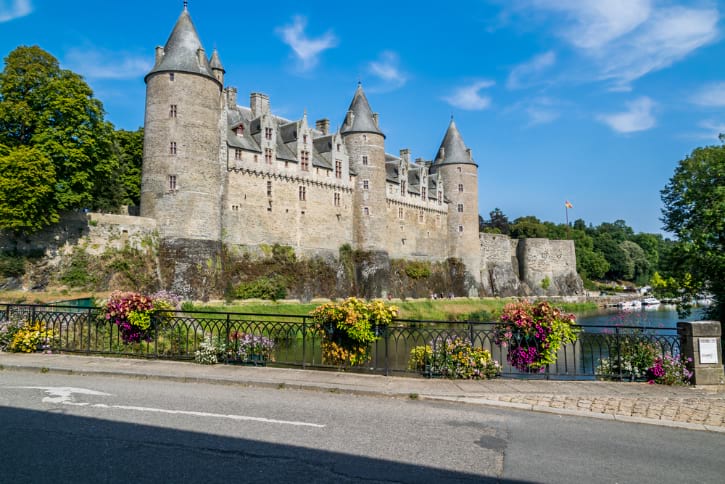
Give it about 2 hours. The town lies along a canal and is a joy to wander.
Look up at the tall towers of the Rohan Castle, then explore the medieval timber-framed houses in the old town.
c. Rennes on Arrival
Spend the afternoon walking through the pedestrian historic centre, which is full of life and character.
- Pass through the old Portes Mordelaises.
- Admire the grand architecture of the Place du Parlement de Bretagne.
One quick heads-up for drivers. Rennes has a low-emission zone in its centre, and older or non-compliant vehicles face restrictions. If you are driving an older car, it is worth checking the current rules before you arrive.
Best area to stay: near the pedestrian historic centre, so you can enjoy your final evening entirely on foot.
Day 14: Rennes & Departure
a. A Relaxed Final Day
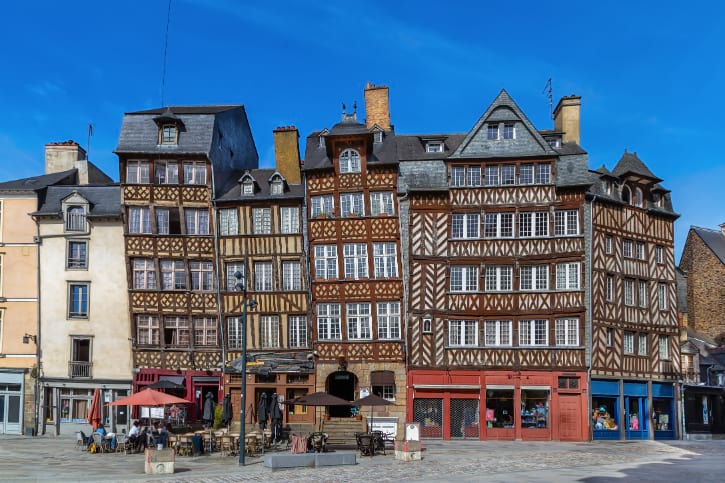
Your last day is easy to shape around your departure time. Rennes is walkable and full of charm, so even a short morning here feels rewarding.
A meaningful first taste of Rennes needs about 2 to 3 hours. Highlights to enjoy include:
- The historic gates and elegant streets.
- The Marché des Lices, a wonderful market held on Saturday mornings.
- The Palais Quarter and Place de la Mairie for a final stroll and a few last photos.
b. Plans by Departure Time
- Early departure: enjoy a quick breakfast in the old town, then set off. Fast trains reach Paris in around 1.5 hours if you are continuing onward.
- Midday departure: take a gentle stroll through the Palais Quarter and Place de la Mairie before you leave.
- Late departure: if it is a Saturday, spend more time at the Marché des Lices, then enjoy a relaxed lunch and pick up a few souvenirs in the old merchant quarter.
c. Practical Departure Tips
- By car: allow a little buffer time to return your rental vehicle before your onward journey.
- By train: the station is central and well connected, with fast links to Paris and beyond.
- By plane: leave enough time to return the car and reach the airport without hurry.
And that is your Brittany road trip, from the sea walls of Saint-Malo to the lively streets of Rennes. Take it slowly, follow the coast, and let the region’s quiet corners surprise you along the way.