Time in Paris slips away faster than you expect. A morning you pictured full of galleries and river views can vanish into queues, wrong turns, crowded trains, and a schedule that was never realistic.
The frustrating part is that you often cannot say where the hours went. The good news is that a few smarter choices change everything, and most of them come down to things tourists simply do not know until it is too late.
1. Buying Attraction Tickets Only After You Arrive
a. The System Quietly Changed
The old idea that you can walk up, buy a ticket, and stroll in is gone at most major sites. Paris now runs on timed-entry systems, where you book a slot and arrive within that window.
Even when a site still sells a few same-day tickets, that is not the same as easy entry, and your preferred times may already be gone.
b. A Reservation Is Not a Skip-the-Line Pass
This is the part that surprises people most. Booking ahead removes the ticket-office queue, and nothing else.
You can still face security screening, ticket and identity checks, lift queues, and capacity waits once you are inside. So “skip the line” never means skipping every line.
c. Every Attraction Plays by Different Rules
Here is the practical part most guides skip. Each major site has its own booking window and its own traps, so you cannot treat them the same:
- Louvre: releases slots up to two months ahead and is closed Tuesdays. Tickets are tied to your name, are non-refundable, and there is no re-entry once you leave. Arrive late and you lose your priority.
- Eiffel Tower: lift tickets and stair tickets release on different dates, and the Museum Pass does not work here, so you must buy direct. Lifts can close in high wind, and the summit shuts for maintenance in deep winter.
- Paris Catacombs: tickets release on a rolling basis only about a week ahead, at the exact hour of entry, so they vanish fast. Closed Mondays, with a strict small-bag limit and no cloakroom.
- Notre-Dame: the nave is free, but an app reservation is strongly advised. Slots open just a couple of days ahead, with a second batch a few hours before entry. Walk up unreserved in peak season and you can wait two to three hours.
- Sainte-Chapelle: needs a free timed slot and sits inside a courthouse security zone, so expect airport-style screening and an outdoor queue even with a ticket in hand.
- Versailles: requires a mandatory timed Palace slot (more on this in Section 10), is closed Mondays, and the gardens need a separate ticket on fountain-show days.
- Arc de Triomphe: a rare easy one. No online reservation is required, and the Museum Pass is accepted, which makes it a great flexible backup.
Read More: 10 Paris Attractions You Should Book Early
d. The Museum Pass Trap
A Paris Museum Pass is a payment tool, not a time slot. At busy sites like the Louvre and Versailles, it covers the cost but still leaves you needing to book a timed slot separately.
And at a few places, such as the Eiffel Tower and the Catacombs, the pass is not accepted at all. Plenty of visitors learn this at the gate.
e. The Free-Entry Surprise
Free admission does not mean walk-in. At places like the Louvre and Versailles, visitors who enter free, including children, still need a confirmed, zero-value timed reservation, booked at the same time as the paying adults. No slot means no entry, even for a child.
f. Book Your Anchors First
Because the hardest tickets sell out fast and each site releases on its own schedule, build your trip in this order:
- Reserve your most in-demand sites first, especially the Eiffel Tower and the Catacombs.
- Build the rest of the day around those confirmed times.
- Add flexible, no-reservation stops like the Arc de Triomphe afterward.
- Save your confirmations offline.
Key takeaway: the real win is not skipping a counter. It is building your day around access you already hold.
2. Planning Your Itinerary Without Checking Attraction Locations
a. The Map Lies About Distance
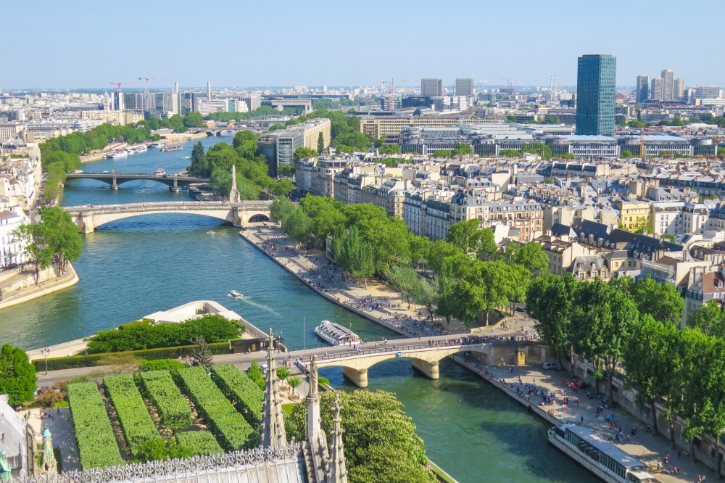
Paris looks small and tidy on a tourist map, so people group sights by interest and assume they are close. In real life, the distance between two entrances can take far longer to cross than the map suggests, especially around big monuments ringed by security fences.
b. Pin to Pin Is Not Door to Door
A map pin is not a doorway. The Louvre alone has two main entrances, the Pyramide and the quieter Carrousel, and choosing the wrong one adds a long walk. Between you and the next gate there may also be bridges, river crossings, hills, and long underground transfer corridors.
c. Think in Clusters
The fix is to group sights that genuinely sit near each other, so you move in one direction instead of zigzagging:
- The Louvre corridor: Louvre, Palais-Royal, Tuileries, Orangerie, and Concorde line up in a straight westbound walk, no Metro needed.
- The historic center: Notre-Dame, Sainte-Chapelle, and the Conciergerie all sit on Île de la Cité, so you avoid crossing the river repeatedly.
- Western Paris: the Eiffel Tower, Trocadéro (best photos are across the Pont d’Iéna), and the Quai Branly are tightly grouped by the river.
Read More:
- The Perfect Right Bank Walking Route in Paris for One Unforgettable Day
- The Best Left Bank Walking Route in Paris for One Beautiful Day
d. Montmartre Is Its Own Trip
Montmartre sits up in the north on steep, stair-heavy ground. Reach it via Abbesses or Anvers stations, and treat it as a self-contained half-day rather than a stop squeezed between central sights. The funicular up to Sacré-Cœur is included in the normal transit fare, so use it to save your legs.
Read More: The Best Walking Route to Explore Montmartre
e. Test the Day Before You Lock It
Before you commit, trace the plan entrance to entrance on a real map and ask one question: am I moving in roughly one direction, or doubling back? Pairing Versailles in the morning with Montmartre later, for example, can burn three hours in transit alone.
Key takeaway: good geography makes a day feel longer, because you waste less of it moving.
3. Packing Too Many Major Attractions Into One Day
a. The Checklist Trap
When you only have a couple of days, it feels natural to cram five famous sights into one. First-timers are often most ambitious on day one, before the city teaches them how much time things really take. The result is almost always that you experience less, not more.
b. The Hidden Hours
The advertised visit length rarely includes the real process around it:
- Finding the correct entrance and passing security.
- Cloakrooms, audio guides, and toilets.
- Navigating a huge building and reaching the exit.
- Getting back to transport.
At the Louvre or Versailles, just clearing security and checking a large bag can swallow 45 to 60 minutes before you have seen a thing.
c. What the Big Sites Actually Take
Plan against realistic visit lengths, not the time you spend looking at exhibits:
- Louvre: a focused highlights route still needs 3 to 4 hours of continuous walking.
- Versailles: a full estate visit runs 5 to 6 hours once you add the gardens and Trianon.
- Eiffel Tower: allow around 5 hours for the second floor, and noticeably longer for the summit.
d. The 1-1-1 Day
Instead of chasing a number of sights, shape each day around three things: one anchor (your major timed reservation, ideally in the morning), one flexible exploration you can shorten or drop freely, and one low-friction extra for late in the day, like a river cruise.
e. Fixed vs Flexible
Sort everything into two buckets. Fixed things are hard to move: timed tickets, tours, restaurant bookings, shows, trains. Flexible things are easy to cut: gardens, streets, viewpoints, river walks. Slot the flexible between the fixed, so a delay costs you a stroll, not a reservation.
Key takeaway: seeing fewer places properly gives you more usable time than rushing a long list.
4. Taking the Metro for Every Short Journey
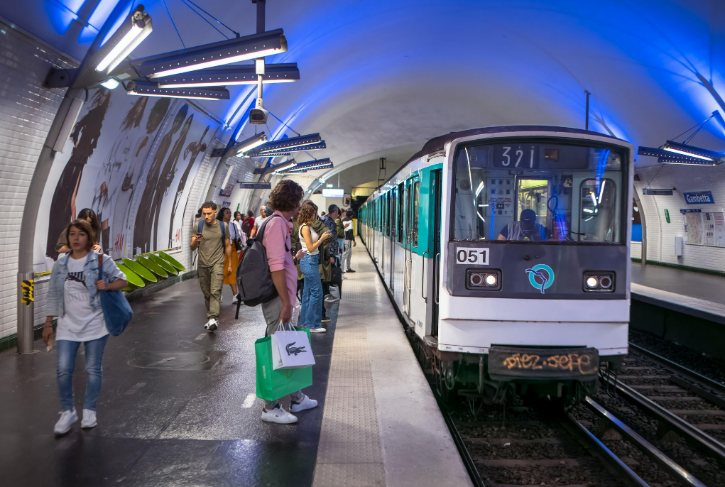
a. Going Underground Has a Cost
The Metro is superb, but not automatically fastest over short distances. The honest comparison is the full door-to-door journey, not just the ride, and the overhead of getting underground and back up is easy to forget.
b. Short Hops Where Walking Wins
For journeys under about 1.5 km in the center, walking usually beats the Metro once you count everything. You are better on foot for:
- Louvre to Palais-Royal.
- Tuileries Garden to Place de la Concorde.
- Notre-Dame to Sainte-Chapelle.
- Louvre area to Notre-Dame, where the Metro forces a slow transfer.
c. Big Stations Eat Time
Major interchanges like Châtelet, Montparnasse-Bienvenüe, and République are deeply buried, with sprawling corridors. A single “one-stop” transfer there can involve a long underground walk, which is why a quick hop rarely feels quick.
d. When the Metro Still Wins
Go underground when it clearly earns its place: long cross-city journeys, distant districts, bad weather, steep routes, a time-critical reservation, or late-evening travel.
e. Scenic Buses for a Normal Fare
Here is a tip few visitors use. Regular public buses give scenic surface rides at a standard fare. Line 69 runs past the Invalides, the Louvre, and Châtelet into the Marais, and Line 72 hugs the Seine with open views of the Eiffel Tower and the Louvre. No tourist premium, better frequency, dedicated lanes.
Key takeaway: the Metro’s value is distance. Between close sights, your feet or a bus often win.
5. Taking Taxis or Ubers During Rush Hour
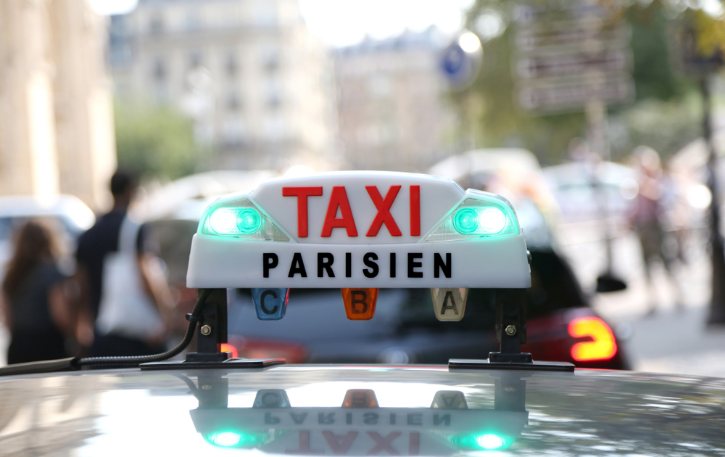
a. Convenient Until It Isn’t
A private car feels like the easy option, and in busy traffic it can become the slowest. Paris has actively cut car traffic with narrower roads, more pedestrian zones, and a restricted central zone, so peak-hour gridlock is real. Expect the worst roughly between 8 and 10 in the morning and 5 to 7:30 in the evening.
b. The Taxi vs Uber Rule Nobody Mentions
This one genuinely matters for timing. Licensed Paris taxis may use the bus lanes to slip past jammed traffic. Private-hire cars like Uber may not and must sit in normal lanes.
In heavy congestion, a standard ride-hail can take roughly twice as long as a licensed taxi over the same route. To be sure of bus-lane access, book a licensed taxi through the G7 app or use an official taxi rank.
c. Where the Time Actually Goes
The delay is more than slow traffic. It includes waiting for a driver to accept and arrive, driver cancellations, detours around one-way streets, and surge pricing that rises with demand.
d. The Drop-Off Problem
Cars usually cannot stop right at a monument. Big sites are ringed by wide plazas and security bollards, so you are dropped some distance away and finish on foot. That last stretch quietly undoes the “door to door” convenience you paid for.
e. When a Car Makes Sense
Road transport is still the right call for heavy luggage or limited mobility (much of the Metro is stair-heavy), groups of three or four where a shared fare competes with individual tickets, late-night travel after the Metro closes, and airport transfers.
Key takeaway: treat a car as a deliberate choice, not an automatic one, and never hang a timed booking on an uncertain road trip.
6. Using Hop On Hop Off Buses to Get Around Paris
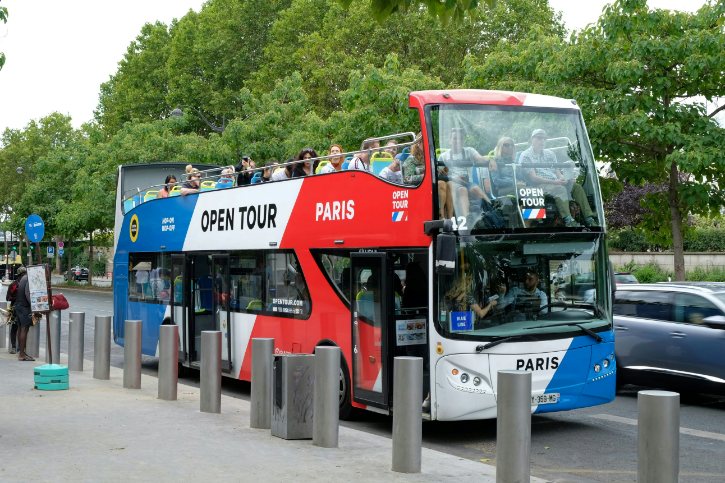
a. Great Sightseeing, Poor Transport
These open-top buses are a genuinely pleasant way to sightsee. The mistake is using them as fast, point-to-point transport, which they were never built to be.
b. Why They Are Slow as Transport
Used to actually get somewhere, they cost you time because they follow long, one-direction loops, so a short hop can mean riding most of the circuit.
They come far less often than the Metro (roughly every 15 to 20 minutes versus every few minutes), traffic throws off the schedule, and services often stop by early evening.
c. The Coverage Gap
Narrow historic districts like the Marais, Saint-Germain-des-Prés, and the Latin Quarter cannot take these big double-deckers. So some of the most charming parts of central Paris are not on the route, and a stop can still leave you a walk from the entrance.
Read More:
- The Best Route to Explore Le Marais on Foot
- The Best Walking Route to Explore Saint-Germain-des-Prés
d. Check the Ticket Clock
Do not assume your “one-day” ticket means a calendar day. Many operators run on a rolling 24-hour clock instead, and the rules vary between companies. Confirm which one applies before you plan a day around it.
e. Use Public Buses Instead
If you want the scenic ride without the tourist price, the ordinary public buses (Lines 69 and 72) roll past the same landmarks at a standard fare. Save the sightseeing bus for what it does well: one relaxed orientation loop.
Key takeaway: it is a sightseeing product first. Expect it to work like a transit line and it becomes a time sink.
7. Trying to See Everything Inside the Louvre
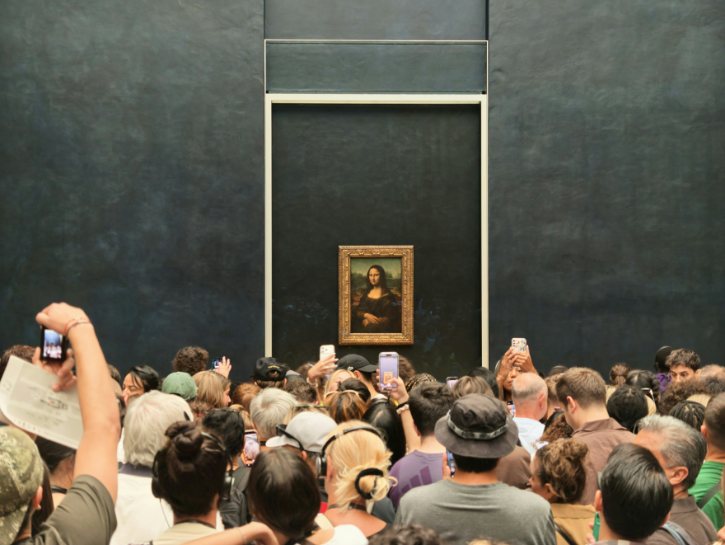
a. It Cannot Be Finished
The Louvre is the largest art museum in the world, with tens of thousands of works across miles of galleries. Trying to see it all in one visit is the surest path to exhaustion and a shallow experience. Accept that up front.
b. The Mona Lisa Bottleneck
The building splits into three wings: Denon (the Mona Lisa and the Winged Victory, and the worst crowds), Sully (the Venus de Milo and Egyptian antiquities), and Richelieu (the Napoleon III Apartments and far lighter crowds). The classic time-drain is the slow crush around the Mona Lisa in Denon.
c. Enter Smart, and No Re-Entry
Use the Carrousel underground entrance to skip the long line at the glass Pyramid. And learn this one before you go: on a standard ticket, exits are final and re-entry is not allowed, so you cannot pop out for lunch. Plan the visit as one continuous block.
d. Pick One Focus
A focused couple of hours beats a scattered half-day. Choose one approach:
- A short highlights route through the headline works.
- A single wing, such as the quieter Richelieu.
- One theme, like Egyptian art or French sculpture.
- A personal shortlist, with each work’s wing and floor noted in advance.
e. Time It for Quiet
The Louvre stays open late on two weekday evenings, and crowds thin noticeably once tour groups leave. Booking a later slot, then stopping before fatigue sets in, gives you far more real time with the art.
Key takeaway: the Louvre rewards a selective visit and is worth returning to, not a checklist to complete.
8. Spending Hours Going to the Top of the Eiffel Tower
a. The Summit Is a Time Commitment
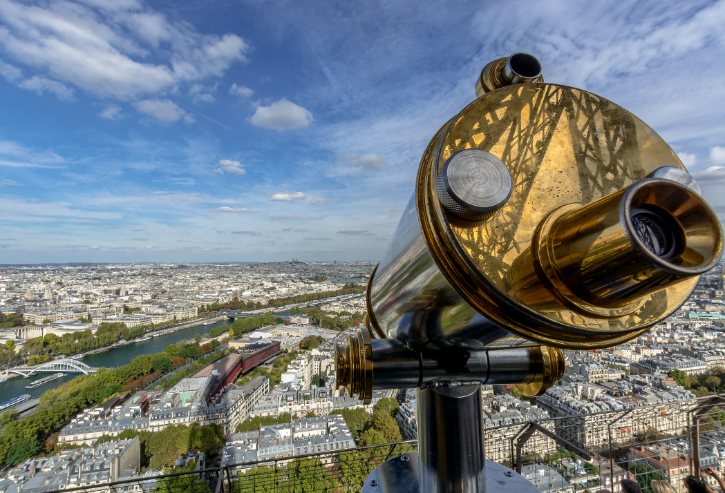
The summit is worthwhile, but many people commit to it without realizing how much of the day it eats. On a busy day, the round trip to the top can run several hours, most of it spent in lines rather than enjoying the view.
b. The Four-Queue Reality
The journey up is a chain of separate waits, not one smooth ride: the security screening at the base, the first lift to the second floor, the transfer to the summit lift, and the lift back down at the end. A timed ticket does not remove any of these.
c. The Second Floor Might Be Better
The summit view can look flattened, is very weather-dependent. The second floor often gives clearer architectural detail and skips the summit-lift queue entirely. If you are fit, the stair ticket to the second floor (674 steps) is also the fastest way to bypass the longest lift lines.
d. The Best View Is Often Free
Some of the finest tower experiences cost nothing. Watch the five-minute sparkling light show from the middle of the Pont de Bir-Hakeim, at the top of any hour after dark. Trocadéro and the Champ de Mars also give you the whole tower in one frame, which you cannot get from inside it.
Read More: 10 Best Free Spots to Take Stunning Eiffel Tower Photos
e. Alternatives Worth Knowing
If you want height without the tower’s queues, the Arc de Triomphe needs no online reservation, accepts the Museum Pass, and puts the Eiffel Tower at the center of the view. Other rooftop viewpoints each offer a different perspective.
Key takeaway: decide which experience you actually want before you book, so you do not pour hours into a version you did not understand.
9. Dining at Restaurants Right Beside Major Monuments
a. Closest Is Not Fastest
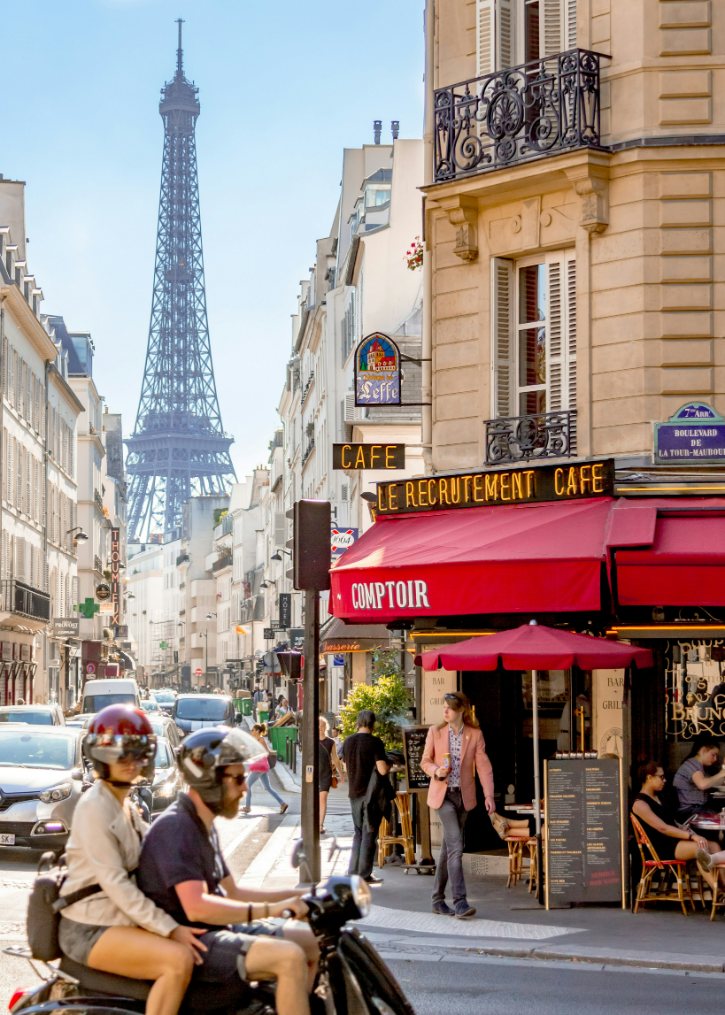
Not every restaurant near a monument is bad. The real mistake is choosing one only because it is closest, then losing time to a full room, a long wait, and a slow bill. The nearest table rarely gives the shortest or best break.
b. Service Hours Are Not Kitchen Hours
This trips up a lot of visitors. Many traditional French kitchens close between lunch and dinner, so a place can be “open” while the kitchen is not serving. Some tourist spots advertise service continu to fill the gap, and a few lean on pre-prepared food to keep it fast. Continuous service is a schedule, not a promise of quality.
c. Reading the Signs
You can spot a better spot quickly. Good signals include a short menu often handwritten on a slate board (an ardoise), clearly separate lunch and dinner service, a mostly local crowd, and transparent pricing. None is a guarantee, and a busy dining room on its own proves nothing.
Read More: 10 Mistakes Tourists Make Before Walking Into a Paris Restaurant
d. Faster, Better Options
When time is tight, these usually beat the tourist terrace:
- A boulangerie sandwich, like a jambon-beurre, eaten as a park picnic.
- A historic bouillon (Chartier, Pigalle, or Julien), serving classic dishes with fast, practiced service.
- A covered market such as the Marché des Enfants Rouges, with fresh counter-service food.
e. Plan Meals Into the Route
Treat a meal as part of your path, not an interruption. Line up one preferred place, one nearby backup, and one faster option, all in the direction of your next stop. For popular evenings, book ahead. Walking a few streets away from the monument is often quicker and tastier than the first place facing it.
Key takeaway: a good meal should support your route, and a little preparation saves both time and disappointment.
10. Visiting Versailles on a Weekend Without a Timed Ticket
a. Timed Entry Is Mandatory Every Day
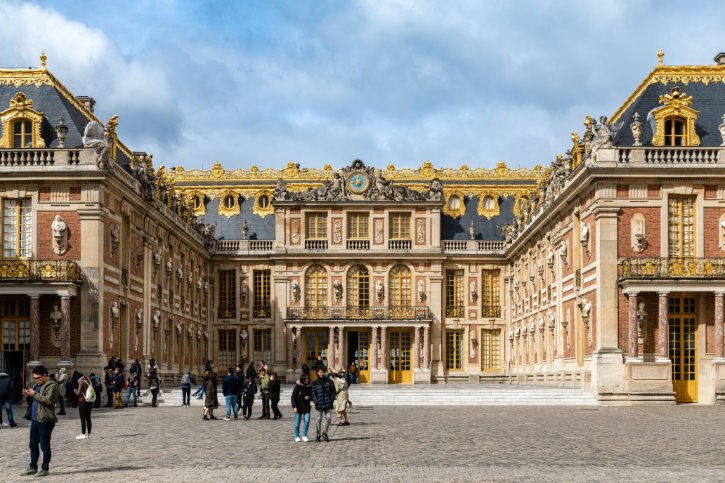
Read this one carefully. Timed Palace entry at Versailles is required on every normal opening day, for everyone, including pass holders, children, and free-admission visitors. The weekend is simply the riskiest time to arrive unprepared, because it is busiest. It does not mean weekdays are safe to walk in without a reservation.
b. It Is a Whole Estate, Not One Building
Versailles is not a single visit. The Palace needs your mandatory timed slot. The Trianon opens only after midday, so early-morning visits there are not possible.
The gardens are usually free, but need a separate paid ticket on fountain-show days. A Palace ticket does not cover the whole estate, and the Trianon is far enough away that the internal mini-train is worth using.
c. Three Stations, One Fragile Line
Getting there is a real journey, and the station depends on where you start:
- Versailles Château Rive Gauche (RER C) is the most direct, but the most disruption-prone.
- Versailles Chantiers (from Gare Montparnasse) is a strong, fast backup.
- Versailles Rive Droite (from Gare Saint-Lazare) suits Right Bank starting points.
The direct RER C route is especially vulnerable to weekend engineering works.
d. Check Rail Before You Go, and Pack Light
Because the direct line is fragile, verify service the day before through the official transit apps, watching for closures, replacement buses, and strikes.
Pack light too: large bags are prohibited inside the Palace, and the cloakrooms get slow. Reaching the station is not the finish line, since there is still a walk to the gates.
e. A Smarter Versailles Day
To protect the day, work in this order:
- Book an early Palace slot, weeks ahead for weekends.
- Confirm reservations for children and pass holders too.
- Tour the Palace first, then the gardens, then the Trianon once it opens.
- Consider a Wednesday or Thursday. Tuesdays get especially crowded at Versailles, because the palace is closed Mondays (pushing demand onto Tuesday) and the Louvre is closed Tuesdays (sending its visitors toward Versailles instead).
Key takeaway: Versailles is a planned excursion, not a casual add-on. The wrong ticket, or no ticket, can cost you the whole day.