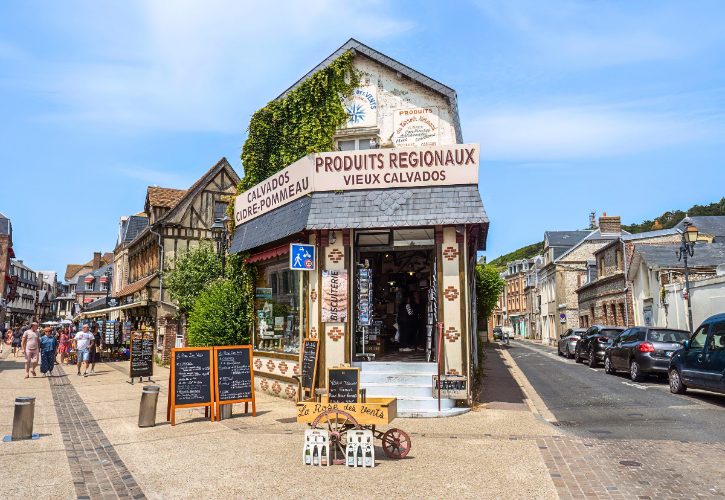
Normandy is where nature and history grow into each other. One moment you are under towering chalk cliffs, the next you are wandering medieval streets or flower-filled villages.
There are tidal bays, grand abbey ruins, artists’ gardens, and quiet fishing harbours. Here are 15 places that show just how beautiful this corner of France really is. 😊
1. Mont-Saint-Michel
a. Why It’s Unforgettable
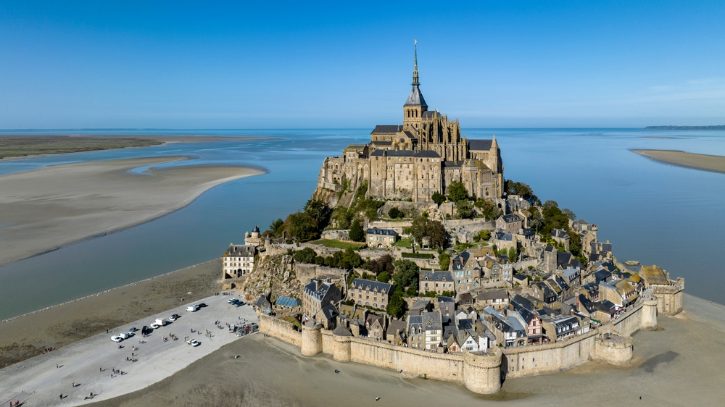
Mont-Saint-Michel looks almost unreal, an island rising straight from a flat bay, climbing higher and higher until it finishes in the abbey spire.
b. What Makes It Beautiful
The mount never looks the same twice, thanks to some of the largest tides in Europe.
- At high tide, water surrounds the island and mirrors the walls.
- At low tide, it sits amid miles of shining sand flats.
- In sun the granite looks bright. In sea mist it turns soft and mysterious.
c. Best Views
Look for the mount from the causeway and from the salt meadows where sheep graze.
d. Don’t Miss
Climb the Grande Rue, then slip onto the quieter side stairways for wide bay views. Inside, the highlight is the Merveille, a three-level Gothic masterpiece with a beautiful cloister, a grand knights’ hall, and Romanesque crypts below.
e. A Bit of History
A chapel to Saint Michael began here in 708, and monks founded the abbey in 966. During the Hundred Years’ War, the fortified mount held off English sieges, becoming a proud symbol of France. It is now a UNESCO World Heritage Site, and monks still hold daily services.
f. Safety First
The bay is dangerous, with fast-rising tides and pockets of quicksand. Only cross with an authorized guide, and always check the daily tide schedule first.
g. Insider Tip
Visit early or stay after dusk. Once the day-trippers leave, you get a quiet village where you mostly hear the wind and the tide.
2. The D-Day Landing Beaches
a. More Than One Place
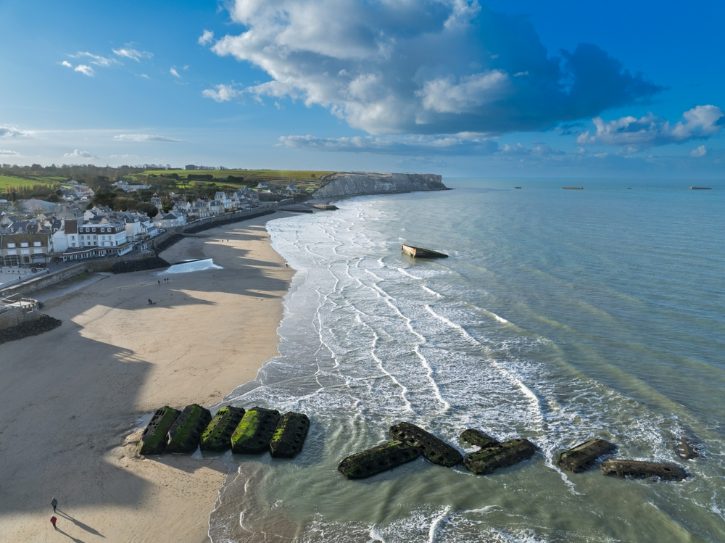
The D-Day beaches are not a single spot. They stretch across more than 80 km of coast, where quiet beauty and heavy history sit side by side.
b. The Five Sectors
The landings of June 6, 1944, happened across five beaches, from west to east:
- Utah: flat, windswept dunes and low marshes.
- Omaha: tall bluffs above a narrow beach, the costliest American landing.
- Gold: a wide sandy sector taken by British forces.
- Juno: flat shores taken by Canadian forces.
- Sword: landed by British infantry and French commandos.
c. What Makes It Move You
The feeling here comes from contrast. German bunkers and shattered gun posts sit in peaceful grassy dunes, while neat military cemeteries overlook the shore, their gravestones set against the changing colours of the Channel.
d. Essential Places
- Pointe du Hoc: a scarred clifftop where U.S. Rangers scaled the rock.
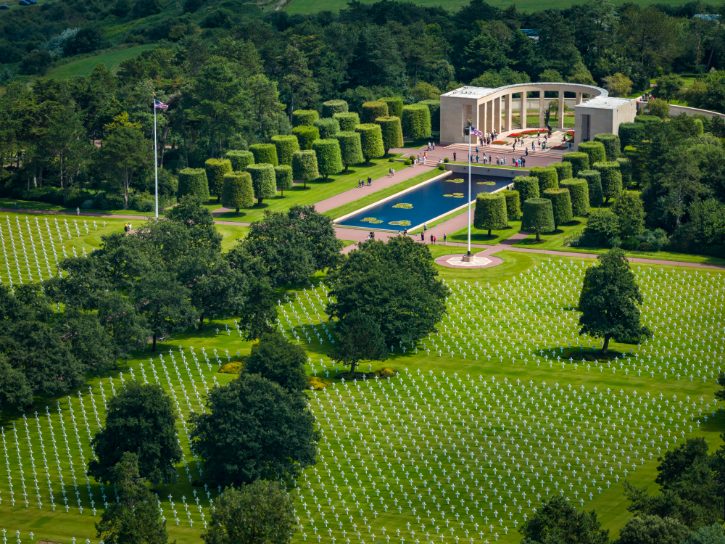
- Normandy American Cemetery: rows of white crosses above Omaha.
- Arromanches: where a British-built floating harbour still sits offshore.
- Longues-sur-Mer: the only German battery still holding its original guns.
e. How to Visit
Do not overload your plan, since one day is not enough for all five sectors. An accredited battlefield guide is well worth it, because they add the human story behind the concrete and stone.
f. Respectful Travel
Cemeteries and memorials are active resting places. Keep quiet and avoid casual photos at solemn sites. These are places of memory, not ordinary attractions.
g. Good to Know
If you come during the June anniversary period, expect big crowds, ceremonies, and road closures.
3. Barfleur and the Cotentin Coast
a. A Different Normandy
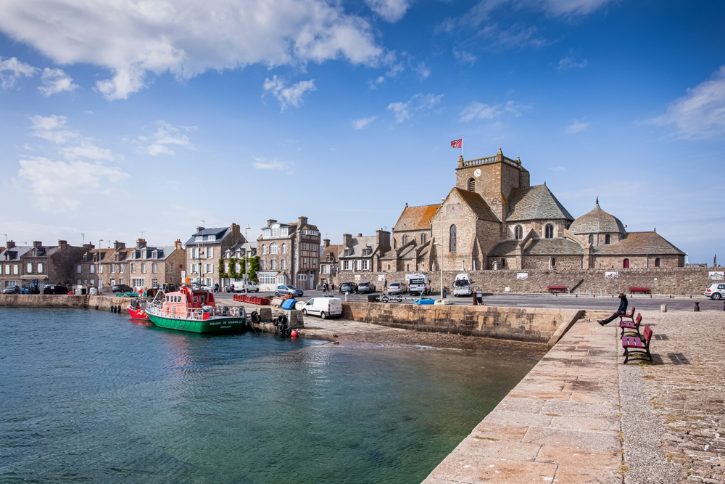
Barfleur is a working fishing port, unlike the region’s polished resorts. Sitting at the rugged tip of the Cotentin Peninsula, it is built almost entirely from dark grey granite, which gives it a strong, honest character shaped by the sea.
b. What Makes It Beautiful
The village wraps around a deep, curved harbour where colourful trawlers rise and fall against stone quays. The square-towered Saint-Nicolas Church stands at the water’s edge like a small fortress.
c. Harbour Life
The quay is the heart of daily life. Fishermen land their catch here, most famously the Blonde de Barfleur, a wild, hand-gathered mussel prized by food lovers.
d. A Bit of History
Barfleur is officially one of the Most Beautiful Villages of France. In the Middle Ages it was the main port of the Anglo-Norman kingdom, and William the Conqueror’s ship set sail from here in 1066.
e. Gatteville Lighthouse
Just north of the village stands the tall Phare de Gatteville, with a charming calendar design:
- 365 steps for the days of the year.
- 52 windows for the weeks.
- 12 levels for the months.
Climb it for a panorama of the Cotentin and the English Channel.
f. Along the Coast
The shore running from Barfleur shifts from rocky reefs to sandy coves. Follow the windswept coastal customs path past low granite walls and green pastures that run right down to the sea.
g. Best Time to Visit
Come in late afternoon, when the setting sun turns the grey stone golden.
4. Honfleur
a. A Painter’s Harbour
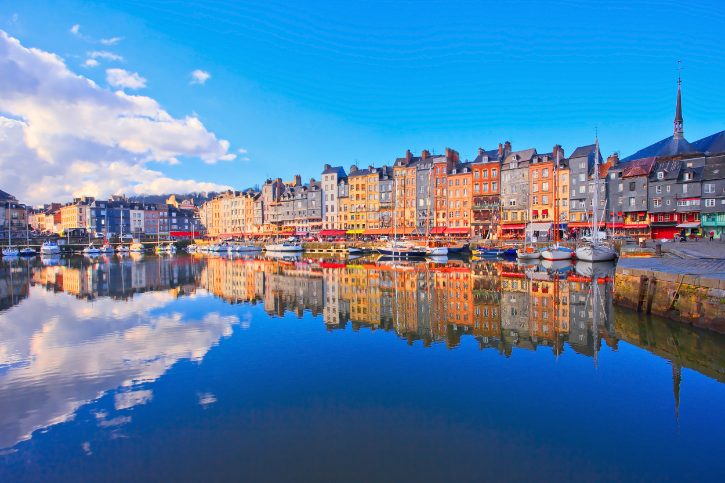
Honfleur is one of Normandy’s most photogenic port towns, at the mouth of the Seine Estuary. Its tall, narrow houses and special light helped shape the Impressionist movement.
b. What Makes It Beautiful
The heart of it all is the Vieux Bassin, an old harbour lined with tall, narrow houses. Many are clad in blue-grey slate, and their reflections shift constantly in the still water, creating a soft, ever-changing tapestry of colour.
c. Don’t Miss
- La Lieutenance: a fortified stone gateway, the last piece of the medieval walls.
- Sainte-Catherine Church: the largest wooden church in France with a separate bell tower.
- Sainte-Catherine Quarter: a maze of cobbled streets with half-timbered houses.
d. The Wooden Church
Local shipbuilders built Sainte-Catherine entirely from wood, and its timber ceilings look like upturned ship hulls. The bell tower stands apart from the church so that if lightning struck, the wooden sanctuary would not burn.
e. Art and Light
Where the Seine meets the Channel, a soft, pearly mist forms that fascinated 19th century painters. Honfleur became the birthplace of the Honfleur School, led by Eugène Boudin, who mentored a young Claude Monet here.
f. Best Viewpoint
To escape the harbour crowds, climb the Côte de Grâce, a wooded hill behind the town. At the top, a pilgrimage chapel and lookout give a panorama of Honfleur’s rooftops, the estuary, and the graceful Pont de Normandie.
g. Insider Tip
Come on a misty weekday morning in the shoulder season, when the harbour is quiet and the reflections are still.
5. Deauville and the Côte Fleurie
a. Seaside Elegance
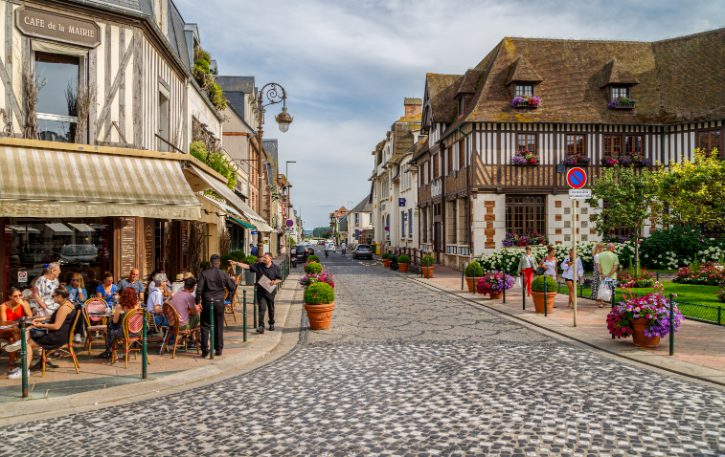
Deauville is the grand old lady of the Côte Fleurie, designed in the 1860s as a high-society resort. Its look comes from grand architecture, horse racing, cinema, and a groomed beachfront that has meant French luxury for over a century.
b. What Makes It Beautiful
- A wide sandy beach with famous primary-coloured parasols.
- Les Planches, a legendary wooden boardwalk lined with elegant bathing cabins.
- Half-timbered villas and manicured gardens framed by grand hotels.
c. The Boardwalk
Les Planches is Deauville’s open-air stage. The bathing cabins are named after the American actors and directors who attend the town’s film festival, and in summer, hundreds of striped parasols are set up daily in neat grids.
d. Grand Architecture
The residential streets hold lovely Anglo-Norman architecture, with decorative timber framing, bow windows, steep slate roofs, and elaborate brickwork.
e. Racing and Cinema
Deauville keeps its status through horse racing and film. It has two world-class racecourses and hosts the Deauville American Film Festival each September, which draws international stars and offers public screenings across town.
f. The Wider Coast
West along the coast you will find lovely side trips:
- Villers-sur-Mer: dramatic fossil-rich cliffs.
- Houlgate: a quieter resort full of preserved villas.
- Cabourg: fan-shaped streets and a link to writer Marcel Proust.
g. Who It Suits
Polished and sophisticated, Deauville suits beach lovers, architecture fans, film enthusiasts, and anyone who enjoys cafés and people watching.
h. Don’t Miss
- The Casino Barrière: a magnificent 1912 palace with classical facades and gardens.
- Villa Strassburger: the ultimate Anglo-Norman villa, built in 1907.
- Place de Morny: the octagonal central square with a fountain and boutiques.
6. Trouville-sur-Mer
a. The Local Sister
Trouville is Deauville’s working-port sister across the Touques River. It grew naturally from an old fishing village, so it feels warmer and more local than its planned neighbour.
b. What Makes It Beautiful
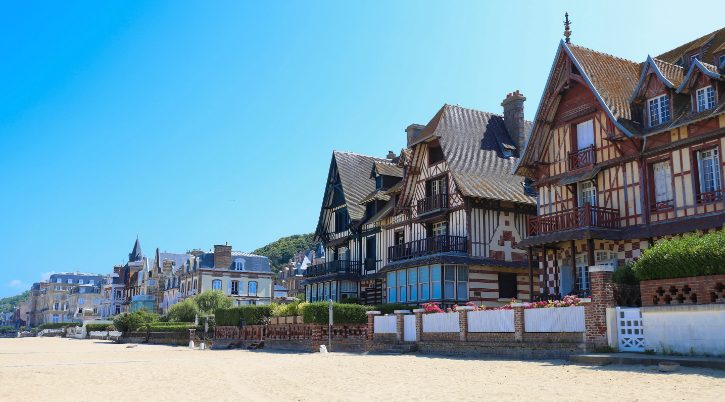
Unlike flat Deauville, Trouville rises steeply from the sea, with winding brick-and-stone streets climbing the hillside. The harbour buzzes with fishing boats, and a wide sandy beach runs along a boardwalk even older than Deauville’s.
c. The Fish Market
The Halle aux Poissons is the town’s gastronomic heart:
- Local fishmongers lay out fresh sole, scallops, and oysters straight from the boats.
- Buy a seafood plate and eat it right there at high tables on the quay.
- Pair it with local white wine or dry cider.
d. Art and Writers
Trouville was the first French seaside resort made popular by artists, and it soon became a favourite of the Paris literary set, including Flaubert and Dumas.
e. Trouville or Deauville?
- Trouville: grew from a fishing village, warm and informal, active fishing fleet.
- Deauville: a planned luxury resort, chic and formal, yacht marinas.
f. Best Walk
Start near the harbour and fish market, wander up Rue des Bains, then climb the steep hillside stairs to the villa district for panoramic views over the estuary.
g. Don’t Miss
- Villa Montebello: a striking 1865 clifftop mansion, now the local museum.
- Hôtel des Roches Noires: the former beach palace, with a lobby once painted by Monet.
- Promenade Savignac: the beach boardwalk lined with colourful posters.
7. Beuvron-en-Auge
a. Rural Normandy at Its Prettiest
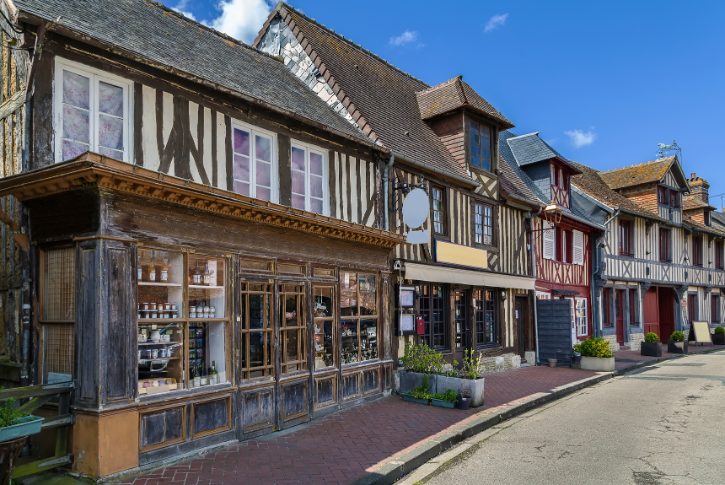
Beuvron-en-Auge is the preserved ideal of rural Normandy. Tucked into the Pays d’Auge, this tiny village is a showcase of 17th and 18th century half-timbered houses.
b. What Makes It Beautiful
The village gathers around a small square framed by houses with bold timber framing, red-brick infill, and steep clay-tile roofs. In spring and summer, cascading flowers brighten the dark oak beams.
c. Understanding the Timber Houses
Norman half-timbering, or colombage, grew from the region’s oak forests and clay soils.
d. Key Sights
- The Vieux Manoir: a fine 16th century half-timbered manor.
- The Halle: a restored wooden market hall in the square.
- The Church of Saint-Martin: a simple stone-and-brick church with historic woodwork.
e. Cider and Cheese
This is the land of Camembert, Pont-l’Évêque, and Livarot, plus dry ciders, Pommeau, and Calvados. The village anchors the signposted Route du Cidre, a driving loop linking around twenty local producers.
f. The Right Pace
Quiet and slow, the village can be walked in under an hour, which makes it perfect for slow travellers and photographers.
8. Jumièges Abbey
a. A Magnificent Ruin
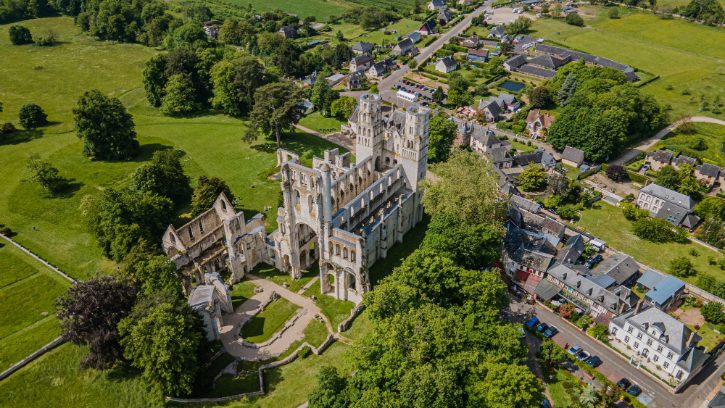
Jumièges is one of the most powerful architectural ruins in Europe. Set on a peninsula formed by a deep loop of the Seine, this huge former monastery mixes grandeur and decay, with roofless stone open to the sky.
b. What Makes It Beautiful
The twin western towers rise 46 meters, their pale stone bright against green parkland. Because the nave lost its roof long ago, you walk on lawns while stone pillars support arches that now frame the passing clouds.
c. Don’t Miss
- The Abbey Church: the monumental core, showing the shift from Romanesque to Gothic.
- The Cloister: a quiet courtyard with a huge old yew tree at its centre.
- The Abbot’s Lodging: a preserved mansion holding rescued stone fragments.
d. A Bit of History
Founded in 654, the abbey was burned by Vikings in 841, then rebuilt and consecrated in 1067 with William the Conqueror present. After the Revolution it was sold and partly dismantled for stone, before being rescued as a romantic park in the 1800s.
e. Bring It Back to Life
To picture the abbey as it once was, the site offers a 3D app on rented tablets that reconstructs the interiors as you walk through the physical ruins.
f. The Romantic Appeal
Victor Hugo once called this “the most beautiful ruin in France”. The empty windows, broken walls, and mature trees create a deeply peaceful mood.
9. Rouen
a. Normandy’s Grand City
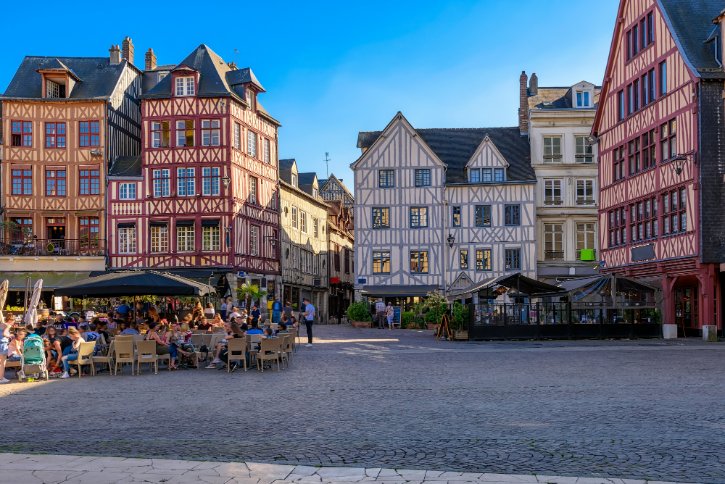
Rouen is the cultural and architectural capital of Normandy, a living museum of French Gothic design. It is famous for its soaring spires, its many timber-framed houses, and its deep links to Claude Monet and Joan of Arc.
b. What Makes It Beautiful
The skyline is crowned by Gothic towers, earning Rouen the nickname “the city of a hundred spires”. At street level, more than 2,000 half-timbered houses lean over cobbled lanes, and grand monuments carved like stone lace punctuate the streets.
c. Essential Landmarks
- Rouen Cathedral: a Gothic masterpiece with the tallest church spire in France.
- The Gros-Horloge: a magnificent Renaissance clock tower spanning the main street.
- Aître Saint-Maclou: a rare plague cemetery courtyard carved with skulls and bones.
d. The Cathedral and Monet
The cathedral’s west front, packed with carved portals and pinnacles, is the one Claude Monet painted again and again under changing light. Inside, the soaring nave holds historic tombs, including the heart of Richard the Lionheart.
e. Joan of Arc
Rouen is tied to the final chapter of Joan of Arc’s life. She was tried and burned at the stake here in 1431, and you can retrace her story at the surviving medieval tower, the striking modern memorial church, and an immersive museum in the old Archbishop’s Palace.
f. Prettiest Streets
For the best old-town wandering, seek out Rue Saint-Romain beside the cathedral, and Rue Eau-de-Robec, where houses stand along a little stream.
g. The Feel of the City
Rouen is lively and academic, full of student life, markets, and antique shops.
10. The Cliffs of Étretat and Jardins d’Étretat
a. Coastal Drama at Its Peak
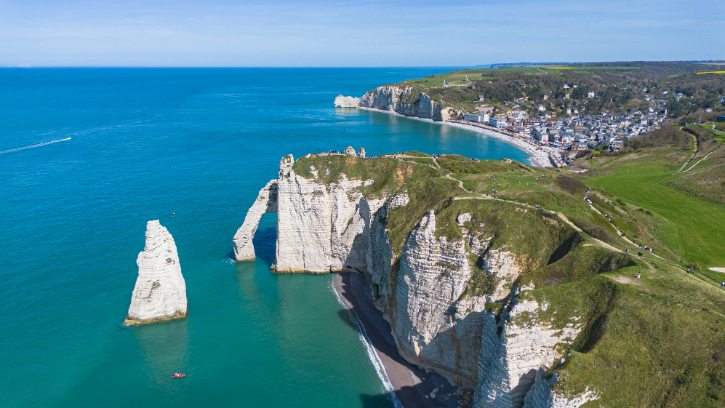
Étretat is the height of coastal drama in France. On the Alabaster Coast, it is defined by colossal white chalk arches and needle-like sea stacks above a windswept pebble beach.
b. What Makes It Beautiful
Sheer white cliffs, banded with dark flint, rise up to 90 meters above the Channel. Watch the contrast between white chalk, green grass, and grey pebbles.
c. The Famous Formations
- The Porte d’Aval: the most iconic arch, flanked by the Aiguille, a sharp needle rising from the water.
- The Manneporte: a colossal arch shaped like a cathedral doorway.
- The Falaise d’Amont: the northern cliff, topped by a small stone chapel.
d. Best Views and Walks
The clifftop trails are part of the GR21 path. A classic half-day walk runs along the bluffs to the Manneporte arch and back by inland valleys.
e. The Clifftop Garden
High on the northern cliff, the Jardins d’Étretat blends landscaping with modern art. Greenery is trimmed into wave-like shapes that echo the sea.
f. Art and Legends
Claude Monet painted the arches under shifting light, Guy de Maupassant likened the Porte d’Aval to an elephant dipping its trunk into the sea, and Maurice Leblanc made the Needle the heart of his Arsène Lupin mystery, The Hollow Needle.
g. Safety First
The cliffs are unstable, and rockfalls happen without warning.
- Obey all signs and stay strictly behind the safety fences.
- Do not walk beneath the cliffs unless you have checked the tide.
- Removing pebbles from the beach is illegal.
11. Yport
a. A Quiet Alternative
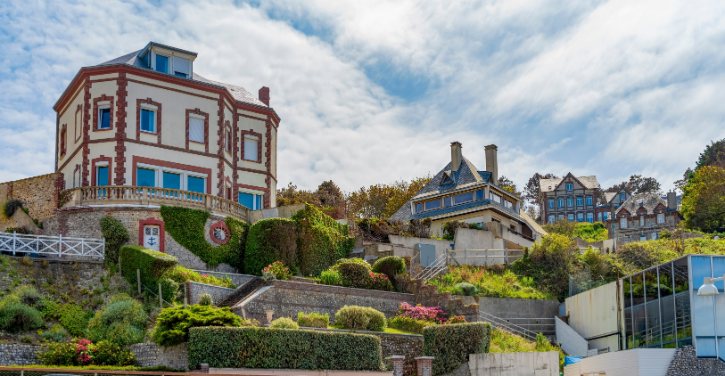
Yport is a smaller, quieter stop on the Alabaster Coast. This fishing village sits in a narrow valley carved into the chalk cliffs, and without the crowds of nearby Étretat, it offers a genuine seaside escape.
b. What Makes It Beautiful
The village is packed into a gap in the white cliffs, its cottage streets sloping down to a sheltered pebble bay. Historic wooden capstans, once used to haul boats up the shingle, sit beside brightly painted cabins.
c. Village Character
Coming down the steep road from the plateau, you drop into a town of black flint and red brick, laid in a distinctive checkerboard texture. Narrow lanes hold fishermen’s houses, old sea-captains’ villas, and a church full of model ships.
d. Walking and Nature
Yport is a great trailhead for the GR21 coastal path. Hiking north toward Fécamp crosses windswept pastures and wooded ravines opening to the sea.
e. Local Flavour
The seafront has several easygoing bistros serving fresh seafood, plus regional ciders and locally brewed beers.
f. Who It Suits
Peaceful and authentic, Yport suits slow travellers, hikers, and families.
g. Don’t Miss
- The Church of Saint-Martin: a 19th century church full of model ships.
- The seafront capstans: historic wooden winches once used to haul up the boats.
- A GR21 clifftop viewpoint: for the best look down over the village and bay.
12. Veules-les-Roses
a. The Shortest River in France
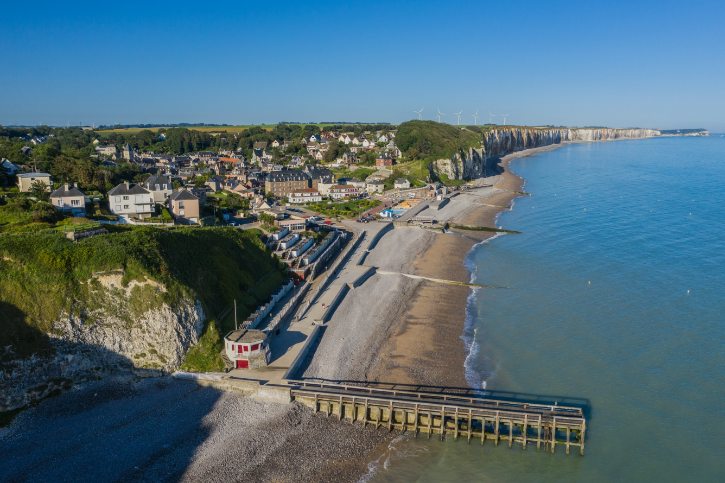
Veules-les-Roses is built around the Veules, officially the shortest sea-bound river in France at just 1,194 meters. In that short distance you pass watermills, thatched cottages, watercress beds, and ocean cliffs.
b. What Makes It Beautiful
Thatched cottages, stone walls, and historic watermills line the clear river, framed by blooming rose gardens. The water winds through watercress beds, then cuts through a gap in the white cliffs to the sea. In a fifteen-minute walk you go from riverside calm to dramatic cliffs.
c. The River Walk
A fully signposted trail follows the whole course of the river. Highlights along the way include:
- The Springs: pools where the river emerges at a steady 11°C year-round.
- The Watercress Beds: terraced pools worked since the 14th century.
- The Watermills: including one with a working wooden waterwheel.
- The Rose Gardens: curated plantings that climb the cottage walls.
d. To the Sea
Where the path ends, the river empties into the sea through a gap in the cliffs. The beach is shingle at high tide, opening to broad sand at low tide. Compared with Étretat, it is gentler and far less crowded.
e. Artists and Writers
In the late 19th century, Veules became a popular artists’ colony, drawing French writers like Victor Hugo and Russian landscape painters, all attracted by the special river-and-coastal light.
f. Best Time to Visit
The nicest time is late spring, when the roses bloom across the cottages.
13. Le Tréport and Mers-les-Bains
a. Two Towns, One Visit
Here is a fun bit of geography. Le Tréport is in Normandy, while its neighbour Mers-les-Bains is just across the estuary in the next region. They share the same harbour, cliffs, and beach, so it makes perfect sense to see them together.
b. What Makes Them Beautiful
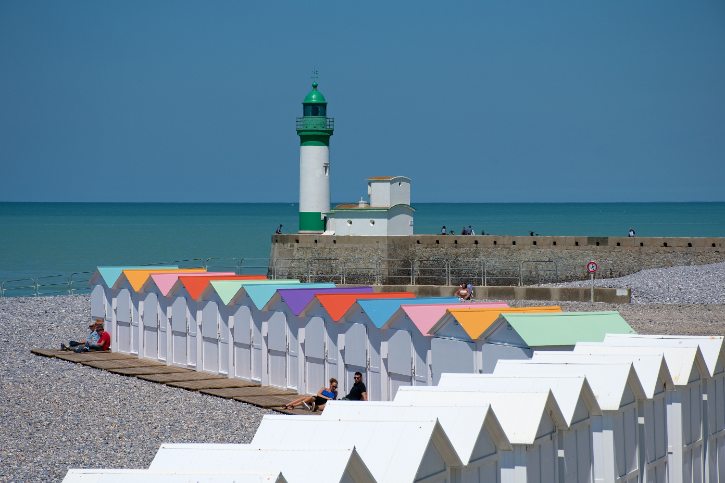
The pair is all about scale and colour. White chalk cliffs rise 110 meters above the sea. On one side, Mers-les-Bains has a curved line of Belle Époque villas painted in bright greens, blues, reds, and yellows. On the other, Le Tréport’s docks are full of active trawlers.
c. Le Tréport Highlights
- The Fishing Harbour: busy with trawlers landing herring, sole, and scallops.
- The Fish Market: on the quay, selling the catch straight from the fleet.
- Saint-Jacques Church: a majestic 16th century stone church overlooking the harbour.
d. The Cliff Funicular
A historic funicular runs through tunnels carved into the chalk, linking the harbour with the clifftop terrace. Opened in 1908 to carry Paris tourists down to the beach and restored in 2006, the short ride is a fun way to reach the best viewpoint.
e. The Colourful Villas
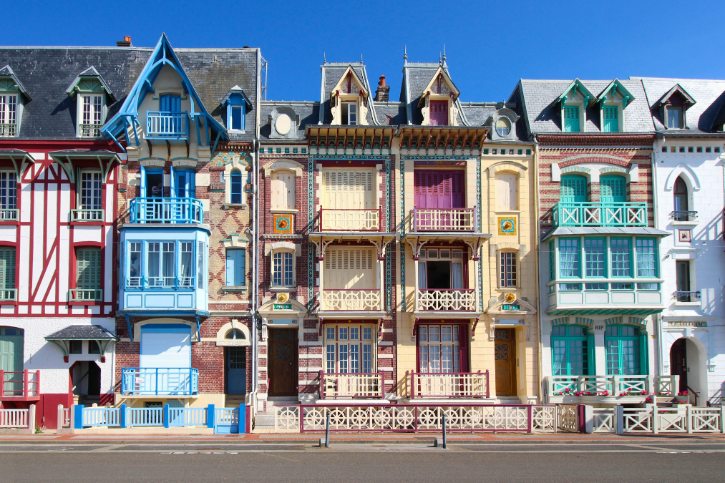
Mers-les-Bains is famous for its protected district of over 300 colourful late-19th century villas. Look for the details: ornate iron balconies, stained-glass bow windows, ceramic friezes, and whimsical house names carved into stone.
f. The Best Viewpoint
From the clifftop terrace above Le Tréport, you look down over the slate roofs, the harbour, the river mouth, and the colourful promenade of Mers-les-Bains. The villas glow best in late afternoon, when the setting sun brings out the colour.
g. Extend Your Visit
The royal town of Eu, a few kilometers inland, completes the trio known as the “Three Sister Towns”. It has a fine brick château, a historic church, and forest trails.
14. Château Gaillard and Les Andelys
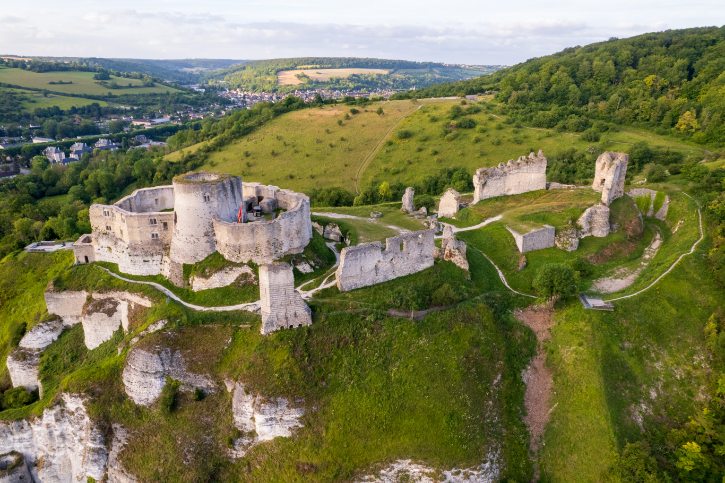
a. A Cliff-Top Fortress
Château Gaillard is one of the great military monuments of the Middle Ages, perched on a limestone spur above a sweeping curve of the Seine. It links a dramatic ruined fortress with the peaceful riverside town of Les Andelys below.
b. What Makes It Beautiful
The ruins sit on a spur that plunges straight into the green Seine. From the ramparts you look over a wide bend of the river, dotted with forested islands and the houses of Petit-Andely. It is most magical on misty autumn mornings, when the castle seems to float above the fog.
c. A Bit of History
The castle was built with astonishing speed between 1196 and 1198, on the orders of Richard the Lionheart, to block the river route to Rouen. Despite its clever design, it fell to the French king in 1204 after an eight-month siege, which opened the way for France to absorb Normandy.
d. Exploring the Ruins
The design is concentric, with walls and deep dry moats cut into the rock. The highlight is the keep, with a distinctive scalloped outer wall built to deflect siege missiles.
e. The Town Below
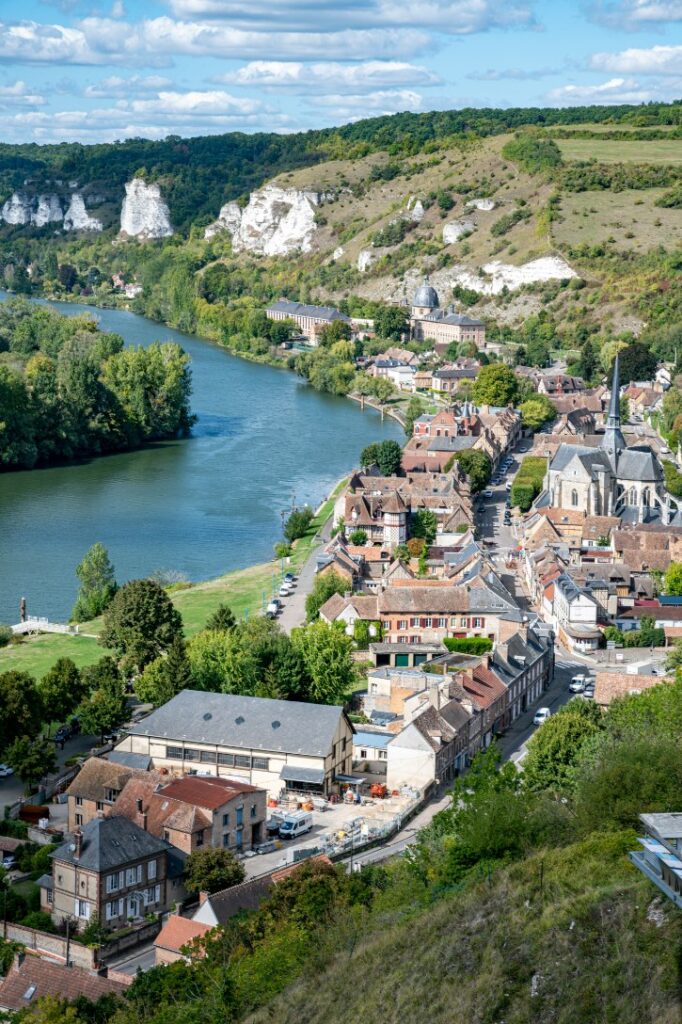
The pretty riverside Petit-Andely has 15th century half-timbered houses, a historic church, and a promenade of restaurants overlooking the Seine.
f. Best Conditions
The plateau feels wild rather than manicured, so you can explore the great walls in peace. It is especially striking in autumn, when the forests turn red and gold against the pale limestone.
g. Don’t Miss
- The keep (Donjon): the fortress core, with its distinctive scalloped wall.
- The castle plateau viewpoint: the classic panorama over the Seine meander.
- Petit-Andely riverfront: half-timbered houses and restaurants below the castle.
15. Giverny
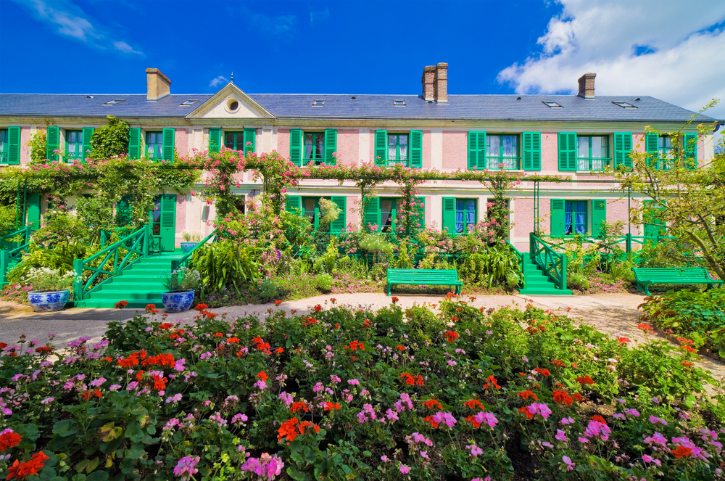
a. Where Art Meets the Garden
Giverny is where garden design and fine art meet. Claude Monet made his home in this small village from 1883 until his death in 1926. The gardens he designed were a living Impressionist painting, and they inspired his famous Water Lilies series.
b. What Makes It Beautiful
The property splits into two gardens. The structured, sun-filled Clos Normand is a living mosaic of flowers that shifts through the season. The tranquil, Japanese-inspired Water Garden is all reflection, with willows and a green bridge mirrored in the still lily pond.
c. The Clos Normand
This walled garden sits right in front of Monet’s house.
- A central avenue runs under high arches covered in climbing nasturtiums and roses.
- The beds are planted with tulips, irises, poppies, peonies, dahlias, and sunflowers.
- They are arranged for continuous colour from spring to autumn.
d. The Water Garden
Monet diverted a small stream to make the pond, then planted the banks with willows, bamboo, and Japanese maples. A green wooden bridge, inspired by Japanese prints, is draped in wisteria.
e. Inside the House
Monet’s long house keeps its bold original colours. The dining room is brilliant chrome yellow and holds over 200 Japanese woodblock prints. Upstairs, the bedrooms look over the flower garden.
f. Beyond the Gardens
Just down the road, a modern museum hosts world-class exhibitions on Impressionism, with its own lovely garden. You can also visit the village church, where Monet is buried.
g. When to Go
Giverny changes month to month, from spring tulips and wisteria to summer roses and water lilies, then golden tones in autumn. It gets very busy midday, so come early or in the late afternoon when the crowds thin and the light softens.