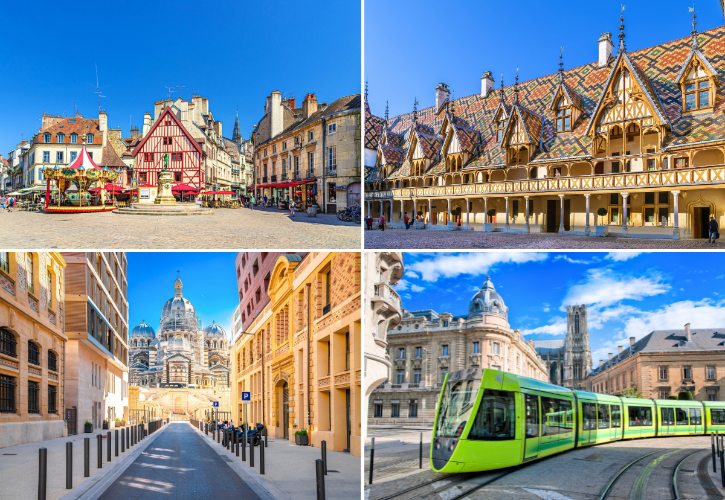
France’s railway network lets you link grand cities, the cellars of Champagne, half-timbered Alsace, the vineyards of Burgundy, sun-soaked Provence, and the Mediterranean coast in one smooth journey.
The trick is a route that flows naturally east and then south, so you never keep doubling back to Paris. Best of all, it is flexible. Stay longer where you love it, skip what does not fit, and travel at your own pace.
1. Paris
a. Why Visit Here
Paris is the smartest place to start, since it is your arrival point and it sets the tone for everything after.
Give it a proper stay. Grand avenues, world-class museums, river views, and very different neighborhoods all sit close together, and the contrast with the smaller towns later makes it the perfect opener.
b. Best Spots to Visit
The big landmarks:
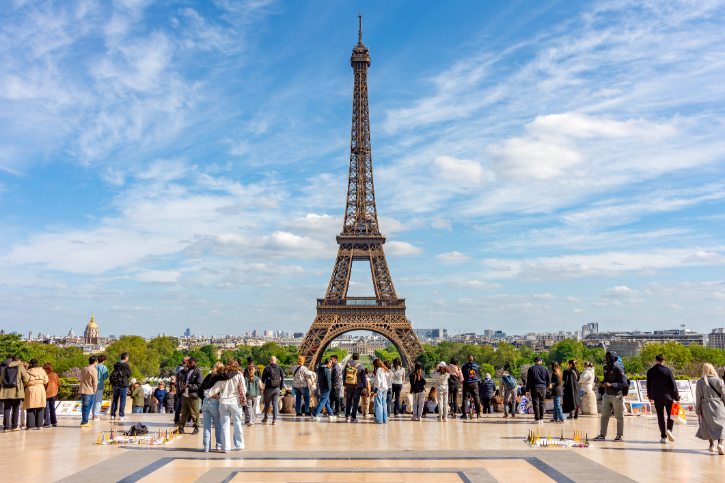
- Eiffel Tower and Trocadéro: The Trocadéro terrace gives the best full view of the tower.
- The Louvre and Tuileries Garden: Unmatched classical collections, paired nicely with a stroll through the garden next door.
- Île de la Cité: The historic cradle of Paris, with the restored Notre-Dame and the glowing Sainte-Chapelle.
- Musée d’Orsay: The finest Impressionist and Post-Impressionist collections anywhere, in a beautiful old railway station.
- Arc de Triomphe and the Champs-Élysées: A rooftop view straight down twelve radiating avenues.
Neighborhoods and river:
- Le Marais: Grand mansions, medieval lanes, independent shops, and lovely Place des Vosges.
- Montmartre: Cobbled streets climbing to the Sacré-Cœur. Slip onto the quieter northern lanes for the real atmosphere.
- Saint-Germain-des-Prés and the Latin Quarter: Literary cafés, bookshops, and streets around the Sorbonne.
- Canal Saint-Martin: Iron footbridges and a relaxed local feel in eastern Paris.
- A Seine walk or cruise: The best way to see how the whole city faces the water.
Read More:
- The Best Route to Explore Le Marais on Foot
- The Best Walking Route to Explore Montmartre
- The Best Walking Route to Explore Saint-Germain-des-Prés
c. Best Nearby Places and Day Trips
- Versailles: The palace of the Sun King, with the dazzling Hall of Mirrors and vast formal gardens. A classic full-day trip.
- Fontainebleau: A magnificent royal palace wrapped in a huge forest, quieter than Versailles.
- Giverny: Claude Monet’s house and water-lily garden, pure magic for art lovers, open by season.
- Chartres: A soaring Gothic cathedral famous for its jewel-like 13th-century stained glass.
d. How Long to Stay
- Practical minimum: 4 nights.
- Better: 5 to 6 nights, so big museums and a day trip do not leave you exhausted. Two nights feels rushed here.
e. How to Travel to the Next Stop
Paris to Reims is quick and direct. Take a TGV INOUI from Paris Gare de l’Est to Reims Ville, about 46 minutes. Reims Ville drops you right by the old town, so it beats the outlying Champagne-Ardenne TGV station. A late-morning departure gets you in for lunch.
2. Reims
a. Why Visit Here
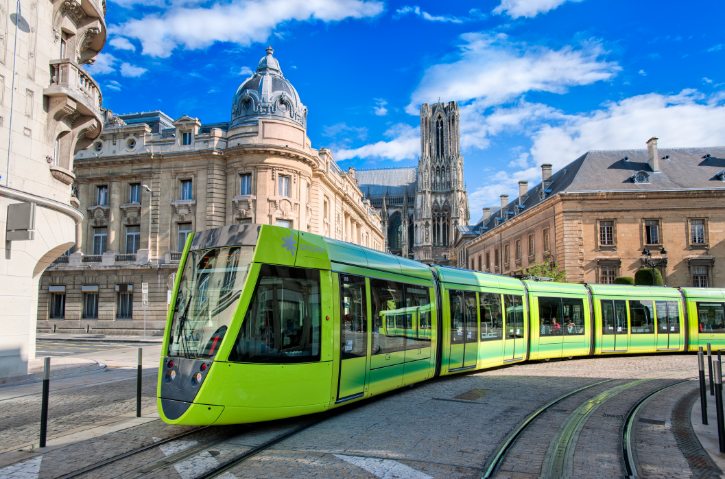
For over a thousand years, Reims was where French kings were crowned, and its Gothic cathedral still carries that weight. It is also a heart of Champagne, with wine aging in vast chalk cellars below the streets.
Rebuilt in elegant Art Deco after the First World War, it adds royal, wartime, and wine history to the route, and an overnight lets you enjoy the cathedral lit up at night.
Read More: Reims: A Walkable Champagne City Near Paris You’ll Want to Visit
b. Best Spots to Visit
Cathedral and historic sites:
- Notre-Dame de Reims Cathedral: High Gothic at its finest, with the famous “Smiling Angel” and modern Chagall windows.
- Basilique Saint-Remi: A vast, serene Romanesque-Gothic basilica.
- Musée Saint-Remi: Gallo-Roman and medieval collections in a former royal abbey.
Champagne, squares, and Art Deco:
- Champagne house cellar tours: Big names like Taittinger, Pommery, Ruinart, and Veuve Clicquot lead guided walks through their chalk cellars.
- Place Drouet-d’Erlon: The lively pedestrian hub, full of cafés and easy to orient by.
- Boulingrin Market and Carnegie Library: Two gems of the city’s Art Deco rebuild.
- Art Deco walking route: A self-guided stroll past the best post-war façades and mosaics.
c. Best Nearby Places and Day Trips
- Épernay: The spiritual capital of Champagne, with the grand Avenue de Champagne and houses like Moët & Chandon and Pol Roger.
- Hautvillers and Aÿ-Champagne: Hautvillers is the home of Dom Pérignon, and Aÿ is known for its steep grand cru Pinot Noir vineyards.
- Verzenay and the Montagne de Reims: Beautiful vineyard country crowned by the Phare de Verzenay, a lighthouse with a wine museum.
- Smaller Champagne villages: Bouzy, Ambonnay, and Mailly-Champagne are home to excellent independent growers, best visited by appointment.
d. How Long to Stay
- 1 night: Enough for the cathedral, center, and one cellar.
- 2 nights: The comfortable choice, adding Épernay or the vineyards.
e. How to Travel to the Next Stop
There are no direct trains, so use one easy connection. Take a short TER shuttle from Reims Ville to Champagne-Ardenne TGV, then a TGV INOUI on to Strasbourg-Ville, roughly 1 hour 30 minutes on the fast leg. A late-morning departure keeps things smooth.
3. Strasbourg
a. Why Visit Here
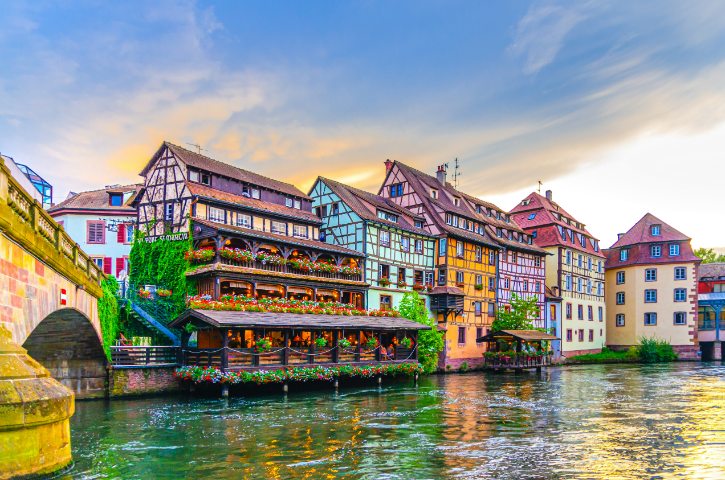
Strasbourg blends French and Germanic culture in its food, language, and architecture. Timber-framed houses lean over canals, and the UNESCO-listed core covers both the medieval island and the grand German-era Neustadt.
It is also a European institutional city and a superb base for exploring Alsace without changing hotels.
b. Best Spots to Visit
Old town and canals:
- Strasbourg Cathedral: A soaring Gothic masterpiece with a single dramatic spire and a working astronomical clock.
- Grande Île: The medieval heart, ringed by the river, full of cobbled squares and old churches.
- Petite France: The prettiest quarter, with canals, locks, and half-timbered tanners’ houses.
- Barrage Vauban and Ponts Couverts: A historic dam and covered bridge with a rooftop terrace and great views.
Museums and modern quarters:
- Palais Rohan: A grand palace holding three museums, from fine arts to archaeology.
- Alsatian Museum: Regional domestic life, crafts, and costumes in linked timber-framed homes.
- Neustadt: The monumental German imperial quarter, with grand boulevards and civic buildings.
- European Quarter and Parc de l’Orangerie: The Parliament district beside a lovely park with resident storks.
- Canal cruise: The easiest way to see the old center and European district from the water.
Read More: Strasbourg Travel Guide: Best Things to Do, See, and Know Before You Visit
c. Best Nearby Places and Day Trips
- Colmar: A beautifully preserved town with a canal-lined “Little Venice” quarter and handsome merchant houses.
- Obernai: A charming fortified medieval town in the Vosges foothills.
- Sélestat and Château du Haut-Koenigsbourg: A historic town famous for its Humanist Library, below a spectacular hilltop castle.
- Riquewihr, Ribeauvillé and Kaysersberg: Three classic wine-route villages set among the vines.
- Eguisheim: A unique circular medieval village ringed by vineyards.
d. How Long to Stay
- Minimum: 2 nights.
- Comfortable: 3 nights, or 4 to 5 for the wine villages. Book far ahead for the Christmas market season.
e. How to Travel to the Next Stop
Take a direct TGV INOUI from Strasbourg-Ville to Dijon-Ville along the Rhine-Rhône corridor, about 2 hours. Just make sure your route does not detour through Paris, which means needless backtracking.
4. Dijon
a. Why Visit Here
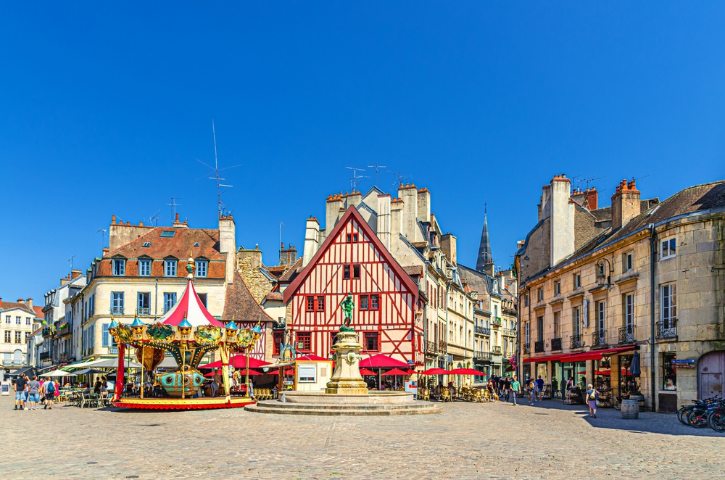
Dijon is far more than mustard. As the capital of the wealthy Dukes of Burgundy, its center escaped modern warfare, leaving an intact core of medieval and Renaissance townhouses.
It is also the northern gateway to the Route des Grands Crus, and it makes a grand, urban contrast to intimate little Beaune.
b. Best Spots to Visit
Palace and landmarks:
- Palace of the Dukes and States of Burgundy: The grand complex that anchors the center.
- Musée des Beaux-Arts: One of France’s finest regional collections, with the monumental ducal tombs.
- Tour Philippe le Bon: A 15th-century tower with sweeping views over the city’s patterned tile roofs.
- The Owl Trail: A self-guided route marked by brass plaques, linking 22 of Dijon’s key landmarks.
- Notre-Dame de Dijon: A Gothic church with carved gargoyles and the little stone owl locals touch for luck.
Streets, markets, and squares:
- Rue des Forges: One of the oldest streets, lined with Renaissance mansions and hidden courtyards.
- Les Halles Market: The city’s food heartbeat, in a grand iron-and-glass hall.
- Place de la Libération: A sweeping square facing the palace, with a warm evening buzz.
- Cité Internationale de la Gastronomie et du Vin: A modern center devoted to French food and Burgundy wine.
c. Best Nearby Places and Day Trips
- Gevrey-Chambertin and Nuits-Saint-Georges: Legendary red-wine villages along the Route des Grands Crus.
- Château du Clos de Vougeot: A walled medieval vineyard at the spiritual heart of Burgundy wine.
- Dole: A pretty canal town in the Jura and the birthplace of Louis Pasteur, a great non-wine option.
- Fontenay Abbey and Semur-en-Auxois: A superb Cistercian abbey and a dramatic walled medieval town above a gorge.
d. How Long to Stay
- 1 night: Enough for the center and museums.
- 2 nights: Comfortable, freeing a day for the Côte de Nuits.
e. How to Travel to the Next Stop
Dijon to Beaune is one of the easiest hops in France. Take a direct TER (Mobigo) from Dijon-Ville to Beaune, about 25 minutes, running several times an hour. Beaune station is a flat 10-minute walk from the old town.
5. Beaune
a. Why Visit Here
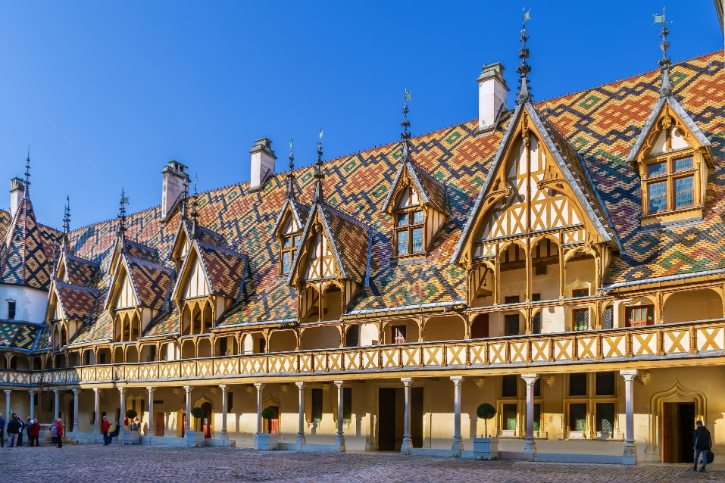
Beaune is the beating heart of the Burgundy wine trade, wrapped in preserved medieval ramparts. Its compact center revolves around wine cellars, tasting rooms, and its crown jewel, the Hospices de Beaune.
Smaller and slower than Dijon, it is at its most magical in the evening, once the day-trip buses leave.
b. Best Spots to Visit
History and monuments:
- Hospices de Beaune: A Gothic masterpiece with a famous multicolored tiled roof and a monumental Last Judgment painting.
- Historic center: Stone lanes, medieval courtyards, wine boutiques, and old mustard mills.
- Beaune ramparts: A peaceful elevated walk along the old defensive walls.
- Collégiale Notre-Dame: A Romanesque basilica with a rare set of 15th-century tapestries.
Wine, market, and vineyards:
- Cité des Climats et Vins de Bourgogne: A striking center explaining Burgundy’s climats and classifications.
- Wine cellars beneath Beaune: Houses like Bouchard and Joseph Drouhin offer walks through miles of ancient vaults.
- Marché de Beaune: A wonderful Saturday food market around the Hospices.
- Voie des Vignes: A flat cycling trail that runs straight from town into the vineyards.
c. Best Nearby Places and Day Trips
- Pommard and Volnay: Famous red-wine villages just southwest, easy to reach by bike.
- Meursault, Puligny-Montrachet and Chassagne-Montrachet: The world’s premier white-wine villages.
- Savigny-lès-Beaune and Aloxe-Corton: Smaller villages at the foot of the great Corton hill, with historic estates.
- Chalon-sur-Saône: A riverfront town celebrated as a birthplace of photography, a good non-wine trip.
d. How Long to Stay
- 1 night: A realistic minimum.
- 2 nights: Comfortable, with a day to cycle the Voie des Vignes.
e. How to Travel to the Next Stop
Take a direct TER from Beaune to Lyon Part-Dieu, about 1 hour 40 minutes, with trains throughout the day. A direct TGV INOUI is a little faster at around 1 hour 20 minutes, but it runs only once or twice a day, so the frequent TER is usually the easier, more flexible choice.
6. Lyon
a. Why Visit Here
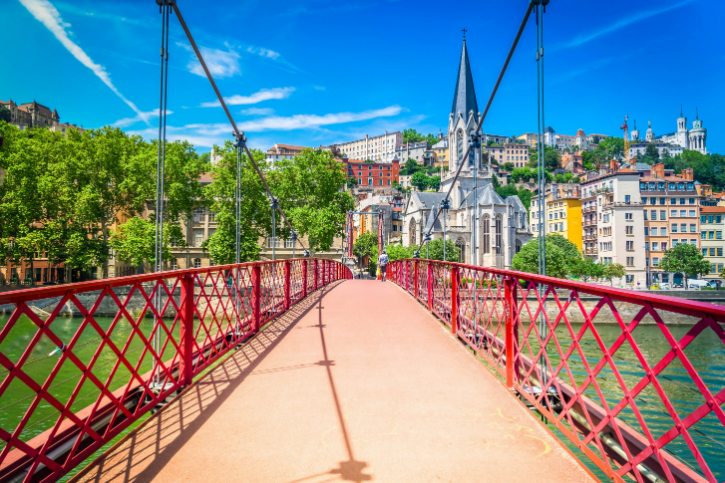
Lyon is France’s great food city, sitting where the Rhône and Saône meet, and where the north gives way to the Mediterranean south. Its history runs over two thousand years, from Roman theaters to a dense Renaissance old town and silk-weaving districts threaded with hidden passageways called traboules. After the intimate scale of Burgundy, it gives you a big, dynamic city.
b. Best Spots to Visit
Historic core and hills:
- Vieux Lyon: One of Europe’s largest Renaissance quarters, with courtyards and hidden traboules.
- Basilica of Notre-Dame de Fourvière: A hilltop basilica with mosaics and sweeping views, reached by funicular.
- Roman theatres (Lugdunum): Two well-preserved Roman theaters beside an excellent museum.
- Croix-Rousse: The old silk-weavers’ hill, with steep staircases and industrial traboules.
Rivers, markets, and food:
- The Presqu’île: The elegant center between the rivers, home to the vast Place Bellecour.
- Halles de Lyon Paul Bocuse: A famous covered market of elite cheesemongers and charcutiers.
- Musée des Confluences: A bold modernist museum right where the two rivers join.
- Riverbanks and Parc de la Tête d’Or: Long riverside paths and one of France’s largest urban parks.
- A bouchon meal: Rich Lyonnaise classics in family-run taverns. Look for the “Les Bouchons Lyonnais” label.
c. Best Nearby Places and Day Trips
- Vienne: A town with outstanding Roman monuments, including a temple and a huge amphitheater.
- Pérouges: A hilltop, stone-walled medieval merchant village that feels frozen in time.
- Beaujolais and the Golden Stone Villages: A wine region famous for warm, yellow-limestone villages like Oingt.
- Tain-l’Hermitage and Tournon-sur-Rhône: Twin wine towns on the Rhône, known for Hermitage Syrah and Valrhona chocolate.
- Annecy: A stunning alpine lake town of pastel canals and mountain backdrops, best with an overnight.
d. How Long to Stay
- Minimum: 2 nights.
- Comfortable: 3 nights, adding Les Halles and a trip to Vienne or Pérouges.
e. How to Travel to the Next Stop
The easiest option is a direct TER from Lyon Part-Dieu to Avignon Centre, about 2 hours 15 minutes, which drops you right by the old walls. A faster TGV runs to Avignon TGV in about 1 hour 10 minutes, but then needs a short shuttle into the center, so the direct TER is often simpler.
7. Avignon
a. Why Visit Here
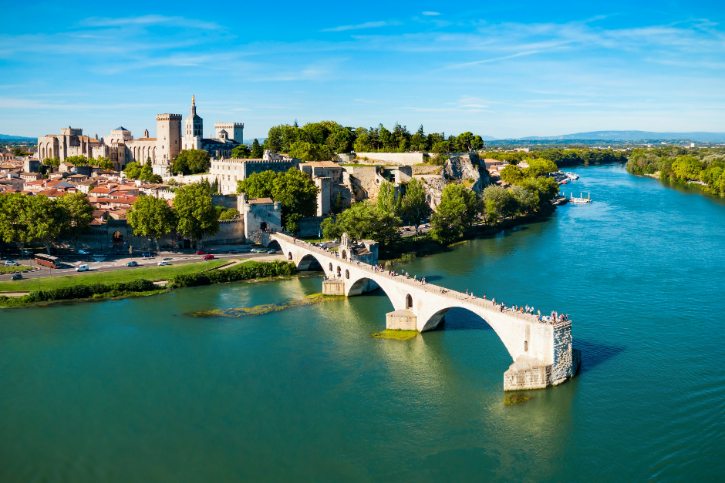
Avignon is ringed by intact 14th-century ramparts, and for much of the 1300s it was the seat of the papacy. The colossal Palais des Papes and the famous Pont Saint-Bénézet anchor a rich, walkable old town. It is also a superb rail hub, letting you day-trip across western Provence without repacking your bags.
b. Best Spots to Visit
Papal monuments and walls:
- Palais des Papes: The largest Gothic palace ever built, with tablet tours that rebuild its medieval interiors.
- Pont Saint-Bénézet: The iconic half-ruined bridge reaching out into the Rhône.
- Rocher des Doms: A hilltop park above the palace, with panoramic river and mountain views.
- Avignon ramparts: The intact walls and grand gates that shape the whole old city.
Squares, streets, and museums:
- Place de l’Horloge: The lively central square, shaded by plane trees and lined with cafés.
- Rue des Teinturiers: The most atmospheric street, running beside a canal with old wooden waterwheels.
- Les Halles d’Avignon: A covered food market with a striking living plant wall.
- Musée du Petit Palais and Musée Calvet: Fine collections of Italian paintings, sculpture, and archaeology.
c. Best Nearby Places and Day Trips
- Arles: A magnificent Roman and medieval city, with a huge amphitheater and the scenes Van Gogh painted.
- Nîmes: Home to the best-preserved Roman temple in the world and a grand Roman arena.
- L’Isle-sur-la-Sorgue: The antiques capital of southern France, built around canals and waterwheels.
- Pont du Gard: A colossal, UNESCO-listed three-tier Roman aqueduct.
- Châteauneuf-du-Pape: The premier wine village of the southern Rhône, with ruins and famous reds.
- Gordes, Roussillon and the Luberon Villages: Spectacular hilltop stone villages and ochre canyons.
d. How Long to Stay
- Minimum: 2 nights.
- Comfortable: 3 to 4 nights, with days for Arles, Nîmes, and the Pont du Gard. Book far ahead if visiting during the July theatre festival.
e. How to Travel to the Next Stop
Avignon to Arles is quick and easy. Take a direct TER from Avignon Centre to Arles, about 20 minutes, running frequently through the day. Arles station is a short, flat walk from the old town.
8. Arles
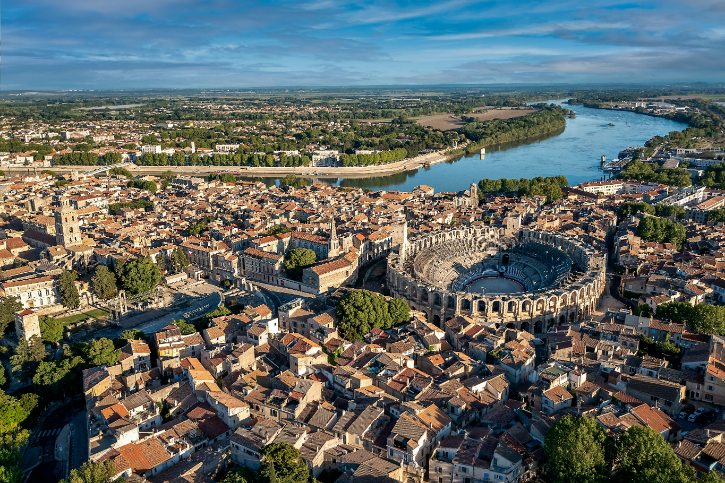
a. Why Visit Here
Arles is where Roman France and Van Gogh’s Provence meet. Its Roman and Romanesque monuments are UNESCO listed, and Van Gogh painted more than 300 works during his time here.
It is also a lively arts town and a gateway to the wild Camargue, all wrapped in a small, walkable old center that is easy to love.
b. Best Spots to Visit
Roman and Romanesque:
- Arènes d’Arles: A huge Roman amphitheater from around 90 AD, still used for events, with tower views over the city.
- Théâtre Antique: The ruins of an ancient Roman theater, still a stage for summer performances.
- Église Saint-Trophime: A Romanesque masterpiece with a superbly carved portal and a peaceful cloister.
- Les Alyscamps: An atmospheric Roman necropolis lined with old sarcophagi, painted by Van Gogh and Gauguin.
- Musée Départemental Arles Antique: A rich Roman museum, home to a full-size barge recovered from the Rhône.
Van Gogh, art, and old town:
- Place du Forum: The old town’s social heart, and the café scene behind Van Gogh’s “Café Terrace at Night”.
- Espace Van Gogh: The former hospital courtyard he painted, now a bright garden and cultural space.
- Fondation Vincent van Gogh Arles: A contemporary art center honoring his legacy, with rotating shows.
- LUMA Arles: A bold arts campus crowned by a shimmering Frank Gehry tower.
- Place de la République and the Saturday market: A grand central square and one of Provence’s great weekly markets.
c. Best Nearby Places and Day Trips
- The Camargue: A wild wetland of pink flamingos, white horses, and black bulls just south of the city.
- Saintes-Maries-de-la-Mer: A seaside pilgrimage town at the heart of the Camargue, with wide beaches.
- Les Baux-de-Provence: A dramatic hilltop village famous for the immersive Carrières des Lumières light show in old quarries.
- Saint-Rémy-de-Provence: Where Van Gogh spent his asylum year, beside the Roman ruins of Glanum.
- Aigues-Mortes: A perfectly preserved medieval walled town ringed by pink salt flats.
d. How Long to Stay
- Minimum: 1 night with one full day, though it feels rushed.
- Comfortable: 2 nights, adding a Camargue or Les Baux day trip.
e. How to Travel to the Next Stop
Take a direct TER from Arles to Marseille Saint-Charles, about 1 hour, with the fastest trains closer to 45 minutes and services throughout the day. Marseille Saint-Charles connects straight into the metro.
9. Marseille
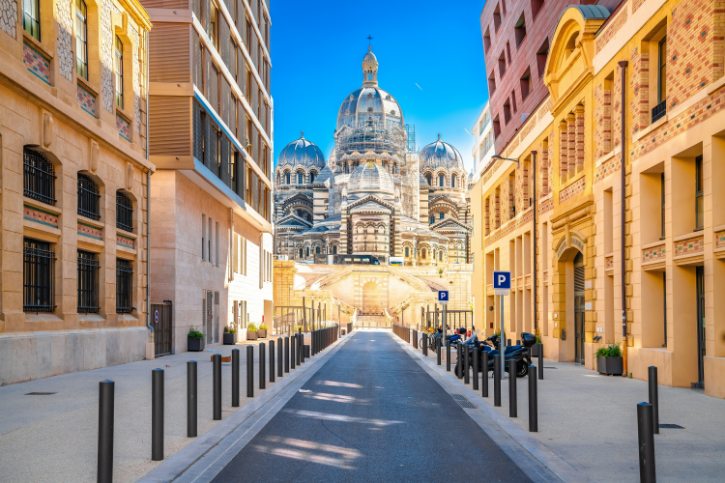
a. Why Visit Here
Marseille is France’s oldest city, founded by Greek mariners around 600 BC, and it is bold, salty, and full of life. A Mediterranean port shaped by trade and migration, it mixes historic port neighborhoods with a sleek modern waterfront and North African, Mediterranean, and Provençal influences. Take it on its own terms, and it warms you up for the coast ahead.
b. Best Spots to Visit
Port and old quarters:
- Vieux-Port: The historic heart, with a morning fish market and pedestrian quays.
- Le Panier: The oldest quarter, all steep cobbled lanes, pastel façades, and vivid street art.
- MuCEM and Fort Saint-Jean: A striking modern museum linked by footbridge to a 17th-century fortress.
- Cathédrale de la Major: A huge Byzantine-Romanesque cathedral in striped stone.
- Notre-Dame de la Garde: A hilltop basilica crowned by a golden Virgin, with 360-degree views.
Coast, markets, and islands:
- Vallon des Auffes: A picture-perfect fishing harbor tucked beneath a stone viaduct.
- Corniche Kennedy: A scenic seaside boulevard with lovely walking paths.
- Cours Julien and Noailles: A bohemian street-art district and a bustling multicultural market quarter.
- Palais Longchamp: A grand water palace housing two museums.
- Frioul Islands and Château d’If: A rugged archipelago and the fortress from The Count of Monte Cristo.
- Bouillabaisse: Marseille’s iconic saffron fish soup, best at a traditional seafood house.
c. Best Nearby Places and Day Trips
- Cassis: A postcard fishing village between steep vineyards and dramatic cliffs, and a gateway to the Calanques.
- Calanques National Park: A spectacular coast of narrow, steep-walled sea inlets, on foot or by boat.
- Frioul Islands and Château d’If: Fortifications, swimming spots, and wonderful views back at the city.
- Côte Bleue Railway: A gorgeous coastal line with beach stops like Carry-le-Rouet and Sausset-les-Pins.
- La Ciotat: A historic town celebrated as a birthplace of cinema, with the beautiful Calanque de Figuerolles.
d. How Long to Stay
- Minimum: 2 nights.
- Comfortable: 3 nights, with a day for Cassis or the Château d’If.
e. How to Travel to the Next Stop
Take a direct TGV INOUI from Marseille Saint-Charles to Nice-Ville along the coast, about 2 hours 30 minutes. For the red rocks of the Esterel, sit on the right side heading east, though the tracks curve, so views come and go.
10. Nice
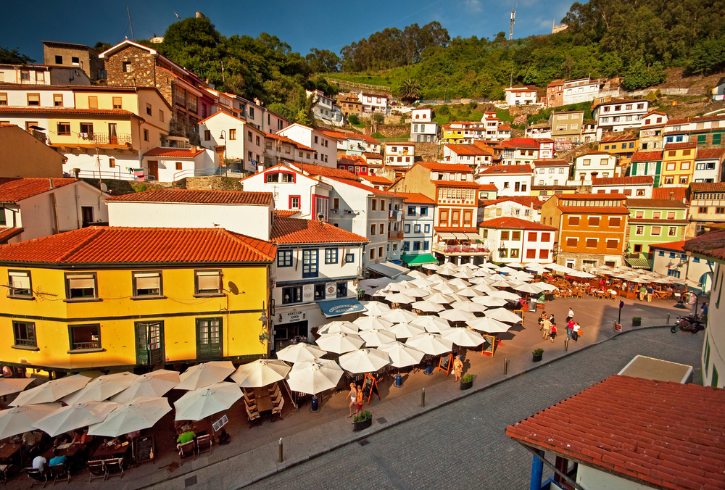
a. Why Visit Here
Nice is a superb finish and the best base for the whole French Riviera. You get the deep-blue Mediterranean, Italian-flavored old streets, and grand Belle Époque architecture, plus markets, museums, and viewpoints.
From here you can reach Monaco, Menton, Antibes, and Cannes without ever changing hotels, so settle in for several nights.
b. Best Spots to Visit
Seafront and old town:
- Promenade des Anglais: The famous seafront lined with palms and grand Belle Époque hotels.
- Vieux Nice: A shaded grid of pastel buildings, baroque churches, and local foods like socca.
- Cours Saleya Market: A legendary open-air market of flowers, food, and Monday antiques.
- Castle Hill: The best view over Nice and the bay, with ruins and a waterfall.
- Place Masséna and Port Lympia: A grand central square and a colorful historic harbor.
Museums and heights:
- Cimiez: An upscale hilltop quarter with Roman ruins and a monastery garden.
- Musée Matisse and Musée National Marc Chagall: Two exceptional collections in beautiful settings.
- Russian Orthodox Cathedral: A spectacular multi-domed cathedral with ornate tile work.
- Coastal walk to Villefranche-sur-Mer: A dramatic clifftop path with an easy train return.
Read More: 17 Best Things to Do in Nice
c. Best Nearby Places and Day Trips
- Monaco: A glamorous principality of cliffside old town, a grand palace, and the Monte Carlo casino.
- Menton: A stunning border town of pastel Italianate façades, botanical gardens, and citrus.
- Villefranche-sur-Mer and Saint-Jean-Cap-Ferrat: A deep natural bay and an exclusive peninsula with a spectacular villa.
- Èze: A breathtaking medieval village perched high on a rocky crag.
- Antibes: A walled seaside town with the Picasso Museum and a huge marina.
- Cannes: A glamorous city known for La Croisette, its harbor, and film heritage.
- Grasse: The historic world capital of perfume, with an old town and hillside setting.
d. How Long to Stay
- Minimum: 3 nights.
- Comfortable: 4 to 5 nights to explore the coast, or 6 for a slower, fuller trip.
e. Where to Continue After Nice
Nice is a natural finish line, but also a launch pad:
- Nice Airport: Tram Line 2 runs from central Nice straight to both terminals in about 25 to 30 minutes.
- Return to Paris: A direct TGV INOUI from Nice-Ville to Paris Gare de Lyon takes about 5 hours 45 minutes, with a scenic night train on some dates.
- Along the Riviera: Direct regional trains link Nice-Ville to Monaco, Menton, Villefranche, Beaulieu, Antibes, Cannes, and Grasse.
- Into Italy: A direct TER runs from Nice-Ville to the border at Ventimiglia in about 1 hour, where you change for Italian trains to Sanremo, Genoa, Turin, and Milan.
And that is the route. East through Champagne and Alsace, south through Burgundy and the Rhône, then out along the Mediterranean coast, all on one clean line of rail. Take the stops that fit your time, and let France roll by from the window.