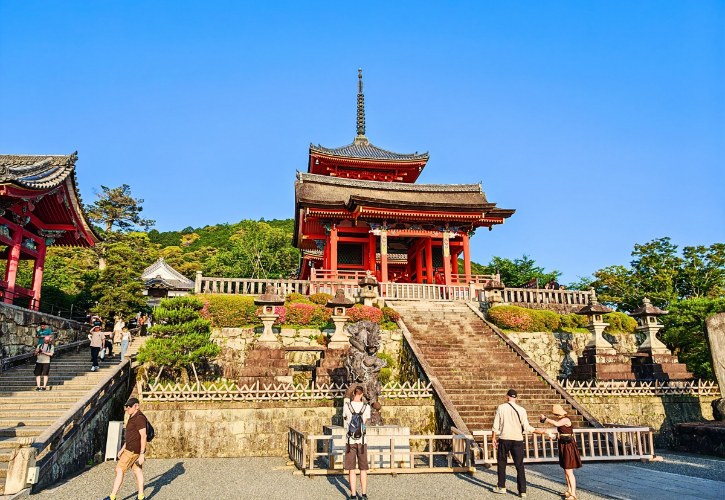
You climb the eastern hills of Kyoto, stand on Kiyomizudera’s famous wooden stage, take your photo, and start heading back down. If that sounds like your plan, you are about to miss the best part.
Just beyond the temple gates, a quiet world of old streets, hidden shrines, and family-run shops waits for you, nearly all within a few minutes of each other. Slow down, and this stretch may become the highlight of your whole trip. 😊
1. Kiyomizudera Temple
a. Why This Temple Earns Its Fame
Kiyomizudera is one of the most loved Buddhist temples in all of Japan, and it rewards you for looking closely before you move on. Its full name is Otowasan Kiyomizudera, and it was founded in 778 CE, long before Kyoto became the capital.
Today it is a UNESCO World Heritage Site, dedicated to the Thousand-Armed Kannon Bodhisattva, the Buddhist figure of compassion. Knowing that history makes the place feel like far more than a photo stop.
b. The Wooden Stage You Came to See
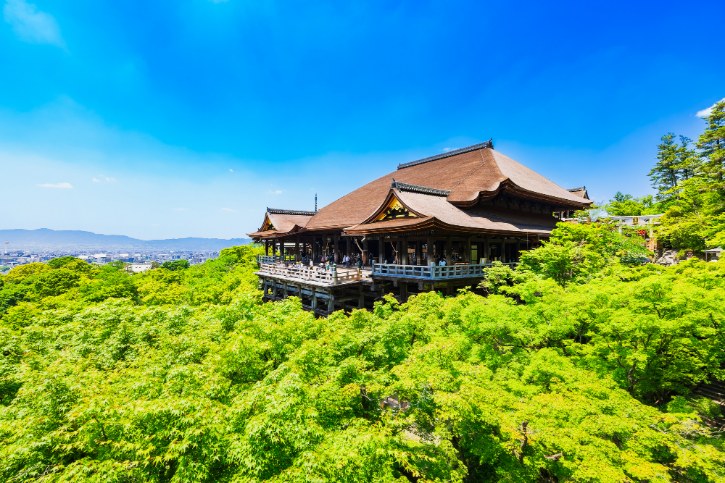
The heart of the temple is the Main Hall (Hondo), a National Treasure rebuilt in 1633. Its famous veranda is what everyone remembers.
- The “Stage of Kiyomizu” juts out over a sheer 13-meter drop.
- It was built using a traditional cliff-hanging method, with no metal nails at all.
- The platform rests on 168 massive pillars of Japanese zelkova wood, locked together by tie-beams.
- From the edge, you look out across forested slopes and the Kyoto skyline.
Here is a detail most people miss: the stage was built for sacred dance and performance, not sightseeing.
c. The Sacred Spring Beneath the Hall
Below the Main Hall flows the Otowa Waterfall, the spring that gives the temple its name, meaning “pure water”. Pilgrims have sipped from it for over a thousand years.
- The water splits into three channels, each tied in folklore to a different blessing: study, love, and long life.
- Temple custom asks you to pick only one stream, not all three.
- Drinking from all three out of greed is said to cancel the blessing.
So choose one wish, and be happy with it.
d. The Sights You Should Not Rush Past
The grounds hold treasures that a quick visit skips right over. Give yourself a few extra minutes for these.
- Nio-mon (Deva Gate): A tall vermilion gate guarded by towering statues and stone dogs.
- Three-Storied Pagoda: Around 31 meters tall, one of the largest wooden pagodas in Japan.
- West Gate: A historic spot where monks once watched the sunset in meditation.
e. Best Seasons, Best Views, and Simple Etiquette
For the finest photo of the stage, walk to the viewpoint near the Okunoin Hall. The scene transforms with the seasons, soft pink cherry blossoms in spring and fiery crimson maples in late autumn.
Treat the grounds as a living place of worship, not just a lookout. Walk slowly, keep your voice gentle, and notice the quiet details.
When you leave the incense and heavy timber behind, the path carries you straight into the lively Matsubara Street, packed with local food and crafts.
2. Matsubara Street
a. The Historic Road to the Temple
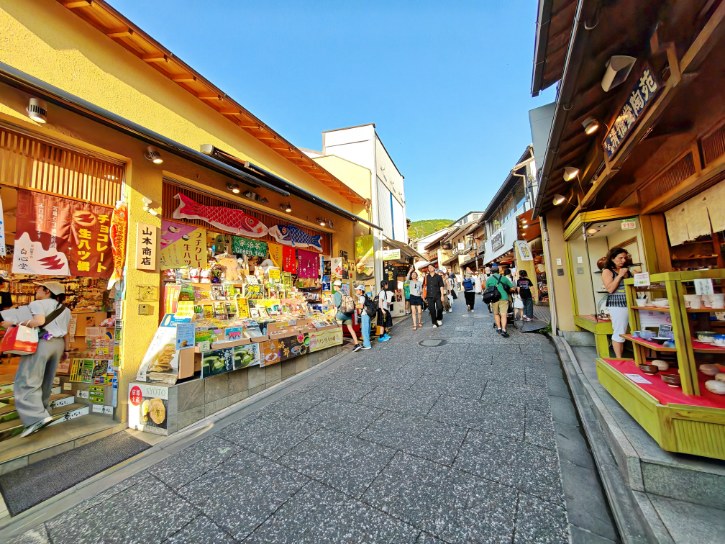
The upper part of Matsubara Street is often called Kiyomizu-zaka, and it has been the main approach to Kiyomizudera for centuries. The route grew during the Heian period to serve worshippers, nobles, and merchants.
Today it keeps that old merchant feeling. You will walk past two-story wooden townhouses, hanging cloth curtains (noren), fine wooden lattice screens, and traditional lanterns.
b. Snacks Worth Stopping For
The food here celebrates Kyoto’s love of sweets and careful cooking. A few favorites to try as you climb:
- Nama-yatsuhashi: Soft triangles of cinnamon or matcha rice dough folded around sweet red bean paste.
- Senbei rice crackers: Roasted over charcoal in front of you, brushed with soy sauce, wrapped in crisp seaweed.
- Yuba: Delicate sheets of soy milk skin, a Kyoto specialty often served warm in a light dashi broth, rooted in the city’s Buddhist cooking.
Each is a small bite that keeps you going up the hill.
c. Crafts and Souvenirs That Mean Something
Matsubara Street is the traditional home of Kiyomizu-yaki ceramics, a style made for tea masters generations ago. These are the gifts worth your luggage space.
- Delicate cups, carafes, and tea bowls painted with cobalt blue and fine gold.
- Handcrafted folding fans (sensu).
- Natural agarwood and sandalwood incense.
- Soft chirimen crepe silk textiles.
d. How to Enjoy the Street the Right Way
Part of the charm is simply the look of the place, warm aromas drifting out of dark wooden storefronts. Browse slowly and let yourself take it in.
- Local guidance discourages eating while you walk.
- Enjoy your snack inside the shop or just outside it.
- Hand your used skewers and wrappers back to the shopkeeper’s bins.
As the shops begin to slope downward, an old flagstone stairway branches off to your right, leading you into the peaceful, car-free lane of Sannenzaka.
3. Sannenzaka
a. One of Kyoto’s Prettiest Streets
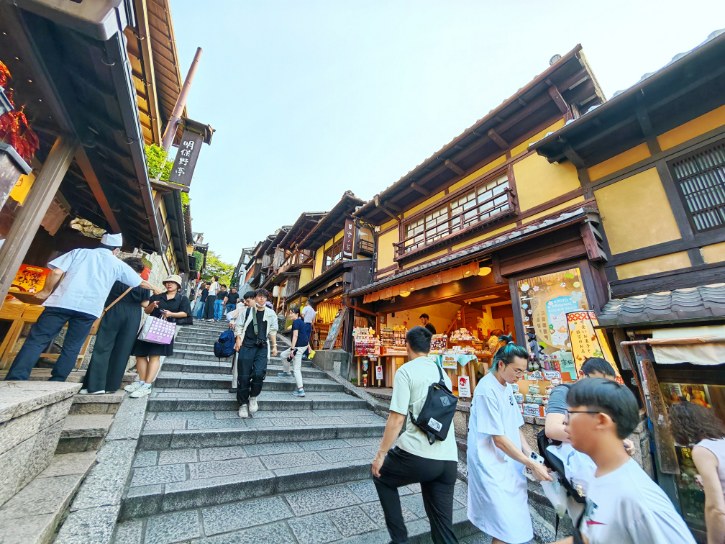
Formally known as Sanneizaka, this flagstone stairway is protected as an Important Preservation District. It holds the look of old Kyoto almost perfectly.
The overhead power lines have even been buried underground, so your view down the hill is clean and unbroken. Picture wooden townhouses, charred cedar panels, and low tiled roofs on both sides.
b. The Name and the Famous Curse
The name carries both real history and a bit of fun folklore. It helps to know which is which.
- The history: It honors mothers who once climbed here to pray for a safe birth. A second explanation traces the name to its stone paving being finished in 808 CE.
- The legend: Trip on these steps, the old story warns, and you face three years of bad luck.
- The charm: Merchants once sold small gourd charms said to soak up the misfortune.
Treat the curse as a charming tale, and simply watch your footing on the smooth stones.
c. Details to Look For as You Climb
As you make your way up, slow down and notice the craftsmanship that gives the street its historic feel.
- Dark cedar wooden facades.
- Low, tiled roofs.
- Stone steps worn smooth by centuries of feet.
- Traditional shopfronts and stone markers.
d. Sweets, Crafts, and the Best Photo Spot
The slope is lined with small shops selling classic treats like grilled dango, along with ceramics, handmade incense, and traditional cosmetics. Each doorway is a little discovery, so it pays to peek inside.
For the finest photo, stand near the top of the staircase and look down, where the flagstones curve past cedar eaves. Shoot from the edge of the steps so you do not block other walkers.
As you take in the beautiful stonework, the first dedicated food stop sits right here on the slope, Kirakuan Okamoto Sanneizaka.
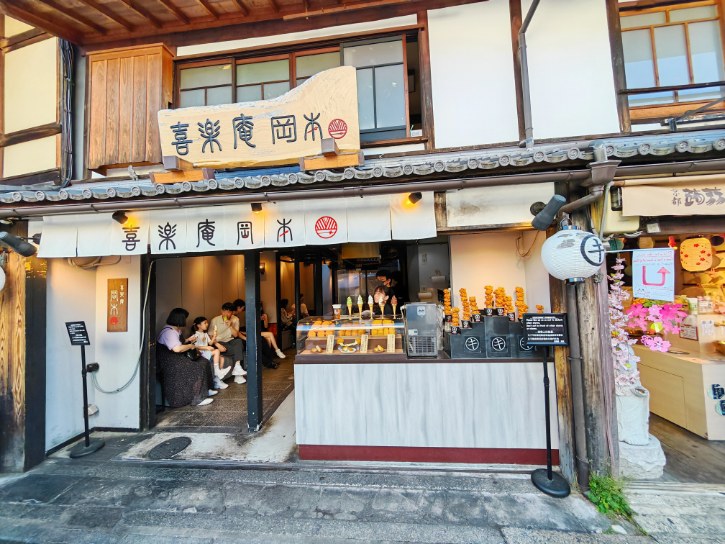
4. Kirakuan Okamoto Sanneizaka
a. A Savory Break Among the Sweets
After so many sweet shops, a warm savory bite is exactly what you will want. This friendly spot, run by a long-established Kyoto kimono company, fries its snacks fresh to order for travelers on foot.
b. The Croquette You Should Not Skip
The real star here is the croquette, filled with regional ingredients rather than ordinary fillings.
- Yuba Cream Croquette: A crisp, panko-coated shell filled with creamy sauce and delicate sheets of fresh Kyoto soy milk skin.
- The contrast between the crunchy crust and the soft, savory center is lovely.
- It turns a familiar snack into a real taste of Kyoto’s soy craft.
If you try one thing here, make it this.
c. More Warm Bites to Add On
Still hungry? A couple more options round out the stop nicely.
- Beef Croquette: Seasoned local minced beef mixed with mashed potato.
- Dashi karaage: Boneless chicken marinated in a kelp-and-bonito stock, then fried until crisp.
- Matcha soft-serve: A sweet finish if you want one.
d. Eating Here the Local Way
Because everything is fried in small batches, your food arrives piping hot. The shop keeps a small covered bench and waiting area in the storefront.
Enjoy your croquette in that space, and let the staff collect your sleeves and skewers before you walk on. A few steps further brings you to the charcoal grills of Fujinami.
5. Fujinami
a. A Sweet Shop With an Unusual Start
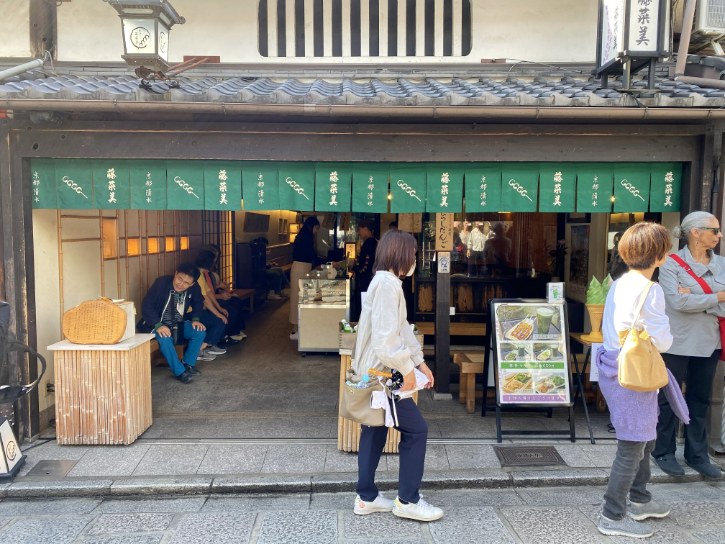
If you have been curious about traditional Japanese sweets, this is the place. Fujinami opened in 1979, and its founder was a classical Japanese dance teacher who first made rice dumplings for students.
That small habit grew into a beloved shop where sweets are still made to order. The smell of grilling dango alone is worth the stop.
b. The Grilled Dumplings Everyone Orders
The signature here is mitarashi dango, skewers of small, chewy mochi dumplings made from pure rice flour.
- Staff grill the skewers over an open flame for a light, smoky char.
- The hot dumplings are dipped in a glossy soy glaze of Kyoto soy sauce, sugar, and kelp broth.
- A dusting of unsweetened roasted soybean powder adds a nutty finish.
c. Cool, Silky Warabi Mochi
Fujinami is also known for its warabi mochi, a chilled, jelly-like sweet made from wild bracken starch. It almost melts on your tongue.
- Dusted with roasted soybean flour (kinako) or stone-ground matcha.
- Served with a dark brown sugar syrup called kuromitsu.
- To drink, order Rakusui, an iced stone-ground Uji matcha with a fresh, herbal finish.
d. Where to Sit and What to Try First
Part of the fun is watching the dango grilled and glazed right in front of you. For a first visit, the mitarashi dango paired with a Rakusui is the combination to beat.
The shop has red felt benches inside where you can rest and enjoy your order. You are welcome to photograph the grilling, as long as you do not block the counter. From here, the skyline reveals the striking Yasaka Pagoda.
6. Yasaka Pagoda (Hokan-ji Temple)
a. The Tower That Rules the Skyline
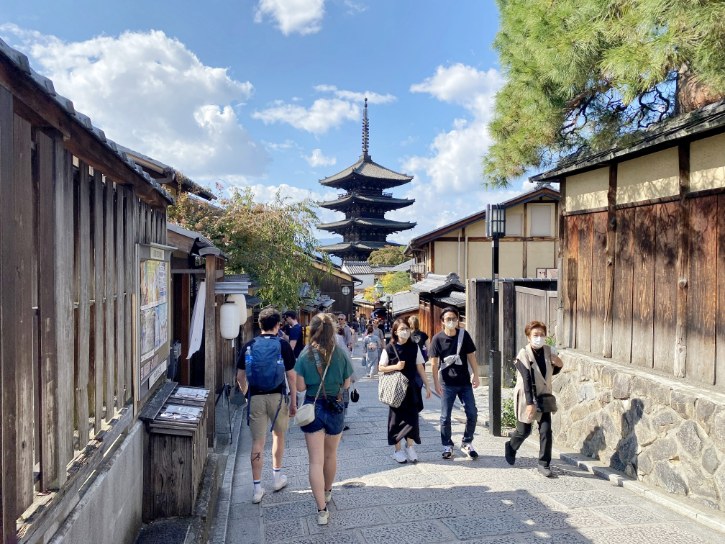
Officially part of Hokan-ji Temple, the Yasaka Pagoda rises 46 meters as a five-story wooden tower. Its layered tiled roofs rise gracefully above the old wooden houses around it.
The temple grounds are tiny, which leaves the pagoda standing alone as the last great survivor of an ancient monastery.
b. A History Older Than the City
Temple records trace the original site to Prince Shotoku in the late 500s, before Kyoto became the capital. The structure you see today was rebuilt in 1440, keeping the building traditions of its era alive.
c. Clever Engineering Hidden in Plain Sight
Look closely and you will see why this tower has stood for so long.
- A single central wooden pillar, called the shinbashira, runs up through the core of the tower.
- It helps the structure stand firm against earthquakes.
- Interlocking wooden brackets spread the weight, in the traditional style built without metal fasteners.
d. The View, the Interior, and Safe Photos
The best public viewpoint is along Yasaka-dori Street, a short walk downhill to the west. Look back up the slope, and the pagoda stands framed between rows of traditional houses. It is one of the loveliest street scenes in the city.
- When open, the interior shows statues of the Five Buddhas and faded old murals.
- Interior access is irregular, so treat it as a rare bonus, not a plan.
- Yasaka-dori is a working road, so stand on the stone curbs and keep tripods out of the lane.
Just around the corner, a sudden burst of color marks the small and fascinating Yasaka Koshin-do Temple.
7. Yasaka Koshin-do Temple
a. A Temple Draped in Color
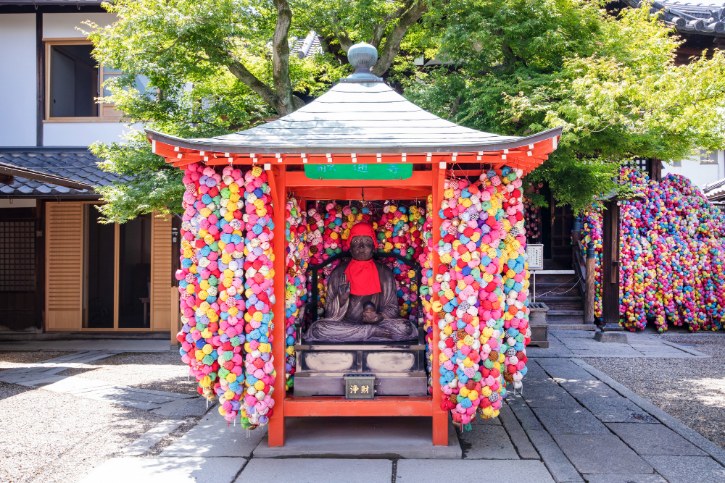
Small but unforgettable, this temple is covered in bright, hanging cloth charms. Officially named Daikokusan Kongo-ji, it is the historic heart of the Koshin faith, a folk belief blending Taoism, Buddhism, and Shinto.
Once you learn what the charms mean, the whole place becomes far more interesting than a colorful backdrop.
b. The Meaning Behind the Monkeys
The round charms are called kukurizaru, or “bound monkeys”, each handmade in the shape of a monkey with its limbs tied.
- Human desires are said to wander restlessly, like a lively monkey.
- By “binding” a monkey, you symbolically restrain one selfish desire.
- Doing so is believed to help your sincere wish come true.
The temple’s famous messengers are the Three Wise Monkeys, who see, hear, and speak no evil.
c. How to Make a Wish Here
You are welcome to take part respectfully. The tradition is simple and thoughtful.
- 1. Pick a blank cloth monkey from the temple counter.
- 2. Write one sincere wish, with the date and your name.
- 3. Choose a selfish habit you will give up while you wait.
- 4. Tie the monkey securely alongside the others.
d. Enjoying a Living Shrine With Care
The hanging charms make for striking, vivid photos, but remember this is an active place of worship.
- Do not pose at length or handle other people’s charms.
- Keep your voice low in the small courtyard.
- Give worshippers space.
Leaving this color behind, you return to the calm stone streets of Ninenzaka.
8. Ninenzaka
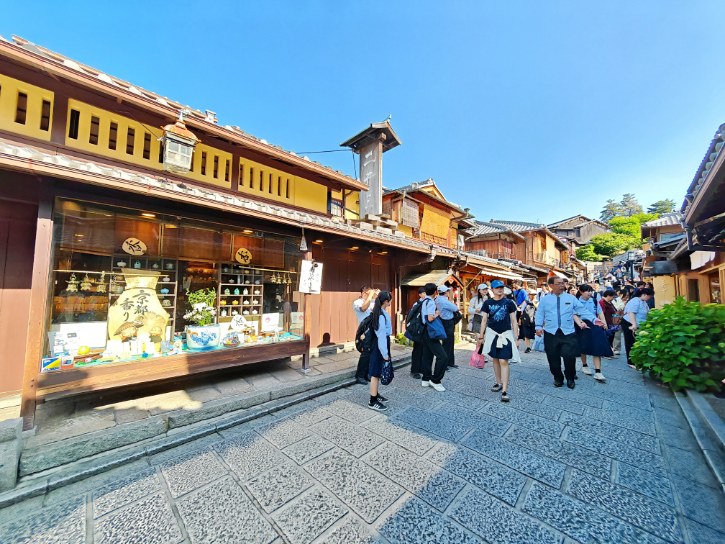
a. The Gentler Twin of Sannenzaka
If Sannenzaka is the dramatic star, Ninenzaka is its calmer sibling. Formally called Nineizaka, it connects Sannenzaka with the northern part of Higashiyama.
Instead of steep, busy staircases, you get a wider stone walkway lined with low townhouses that recall everyday Kyoto life from a century ago. It is a street made for slowing down.
b. The Name and Its Matching Legend
The name means “Year Two Slope”, and it comes with its own gentle superstition.
- Records say the stone paving was finished in 807 CE.
- It served as the lower approach leading up toward Sannenzaka.
- Local folklore warns that a slip here brings two years of bad luck.
Enjoy the story, and mind the smooth stones.
c. Craftsmanship in Every Facade
As you wander, look for the fine traditional details along the slope.
- Vertical wooden lattice screens that let air in while keeping homes private.
- Clay-plaster walls tinted with local soil.
- Hand-carved wooden shop plaques with no harsh lighting.
d. Quiet Finds and the Best Angle
The street is full of small discoveries, including shops selling handmade washi paper, tea canisters, traditional oiled umbrellas, and incense, plus teahouses tucked behind little gardens. Browsing here feels like stepping into an older, slower Kyoto.
For a lovely photo, stand at the base of the short staircase and look up, letting the curving flagstones lead your eye past the wooden eaves. Just beside the lower steps, a traditional teahouse waits at Kasagiya.
9. Kasagiya
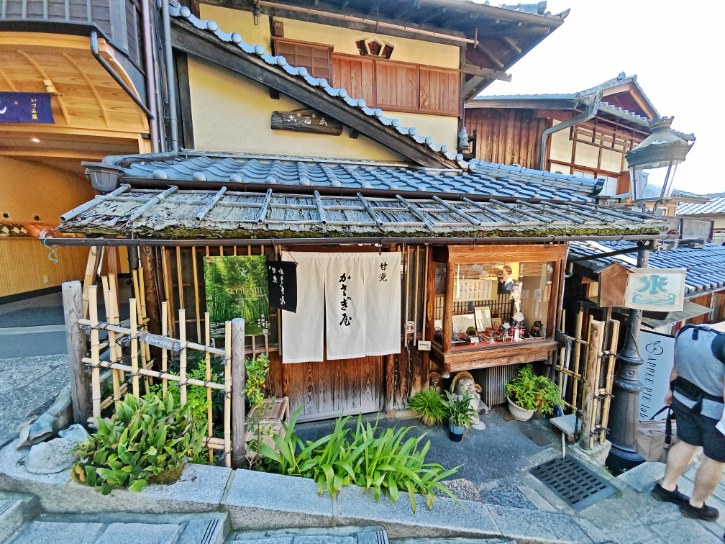
a. A Teahouse Frozen in Time
For a true old-Kyoto moment, Kasagiya is a gem. This nostalgic sweets teahouse has stood beside the stone steps of Ninenzaka since 1914.
It still carries its early Taisho-era feel, with dark cedar timbers, sliding paper-and-glass doors, and an indigo curtain joking that sweet lovers cannot pass Ninenzaka by. You may find that hard to argue with.
b. The Three-Color Sweet to Try
The signature here is San-shoku Hagino Mochi, or Three-Color Ohagi, made with premium adzuki beans slow-cooked over traditional hearths. It comes in three styles.
- Tsubuan: Coarse red bean paste, rich and rustic.
- Koshian: Smooth red bean paste that melts on the palate.
- Shiro-an or Kinako: White bean paste in cooler months, or roasted soybean flour in summer.
The rice inside is only lightly crushed, so you still feel the grains.
c. Sweets, Tea, and Seasonal Treats
Every sweet comes with a cup of warm roasted green tea called hojicha, which cleans the palate between rich bites. Beyond the ohagi, keep an eye out for these.
- Zenzai: The house specialty, a warm sweet red bean soup served with grilled mochi and plump Tamba beans.
- Uji-kintoki: Shaved ice with matcha syrup and sweet beans.
d. A Small Space to Savor Slowly
Inside, Kasagiya keeps its vintage charm, including works connected to Takehisa Yumeji, a celebrated painter and poet tied to the shop in its early Taisho days. With only a handful of wooden tables, it feels warm and intimate.
For a first visit, try the Three-Color Ohagi with hojicha. Keep your voice low, and try not to linger too long so others can enjoy the space. Step back out, and across the lane you will find a surprising twist on tradition, a Starbucks unlike any other.
10. Starbucks Kyoto Ninenzaka Yasaka Chaya
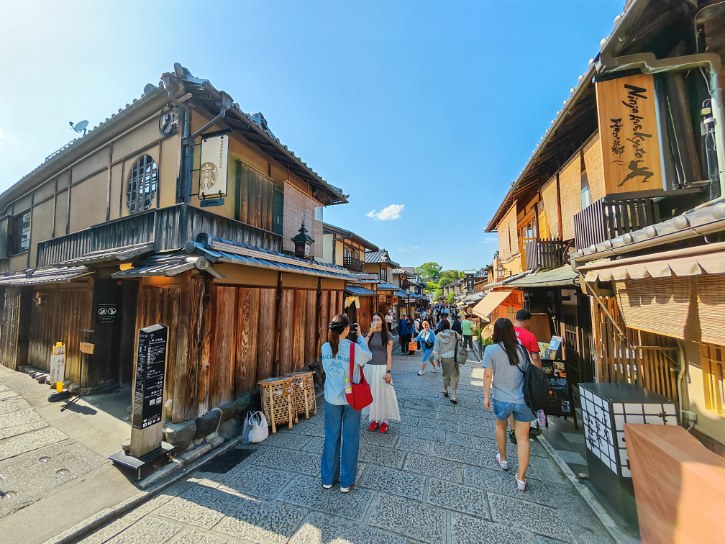
a. The Coffee Shop You Might Walk Past
Yes, it is a Starbucks, but it may be unlike any you have seen. This branch sits inside a preserved two-story townhouse, a former teahouse built over a century ago.
Rather than stripping out the old design, the building was carefully adapted around it. Many people stroll right past without realizing a cafe is inside.
b. A Facade That Blends Right In
The exterior is all about fitting into the historic street, not standing out from it.
- Dark cedar lattice and traditional clay roof tiles, with no neon.
- In place of the usual bright green logo, only a simple cloth curtain (noren) marks the way in.
- A simple wooden lantern marks the entrance.
c. Inside a Real Kyoto Townhouse
The interior follows a classic townhouse layout, built around a long earthen corridor that runs front to back. You order at a dark stone counter, then walk past small courtyard gardens.
Toward the back, a small garden is visible from the seating, a calm view that feels a world away from the busy street outside.
d. The Tatami Rooms Upstairs
This is widely known as the world’s first tatami-seated Starbucks, and the upper floor is the reason to climb the stairs.
- Three authentic tatami-floored rooms.
- Floor cushions covered in Nishijin silk.
- Paper screens looking out over the tiled roofs of Ninenzaka.
e. Simple Rules for a Respectful Visit
Even if you usually skip coffee chains, this branch is worth a look for the setting alone. A few points of etiquette keep it pleasant for everyone.
- Remove your shoes before stepping onto the tatami, and store them on the shelves.
- Wear socks rather than going barefoot, to protect the woven mats.
- Do not line up outside; step inside to speak with staff if it is full.
From a modern cafe inside an old house, another handcrafted treat waits steps away at Ishidatami.
11. Ishidatami
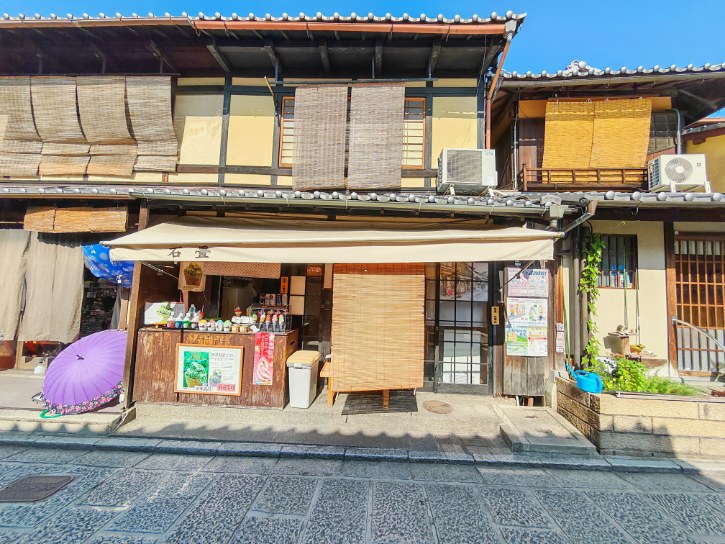
a. A Matcha Lover’s Little Stop
If you love matcha, save room for this one. Ishidatami, on Ninenzaka, is a soft-serve shop that takes its green tea seriously, and this slope is well known for its matcha soft-serve.
b. The Soft-Serve That Steals the Show
The draw here is the matcha soft-serve, made with care rather than from a generic mix.
- Made with high-grade Kyoto green tea.
- A vivid green color and a smooth, creamy texture.
- A deep, true matcha flavor, without a harsh, bitter edge.
c. More Flavors to Try
The menu changes with the seasons, so part of the fun is seeing what is on offer that day.
- Seasonal flavors may include roasted chestnut or pumpkin soft-serve.
- You may also find sundae cups layered with sweet beans and mochi.
- For a first visit, the classic matcha soft-serve is the one to beat.
d. A Gentle Word on Etiquette
Please enjoy your ice cream in or just outside the shop. Carrying an open cone down the narrow, crowded slope risks dripping on the people around you, including those in rented kimonos, and local custom discourages eating while you walk.
From here, the street shifts into something playful at Donguri Kyowakoku.
12. Donguri Kyowakoku (Ghibli Store)
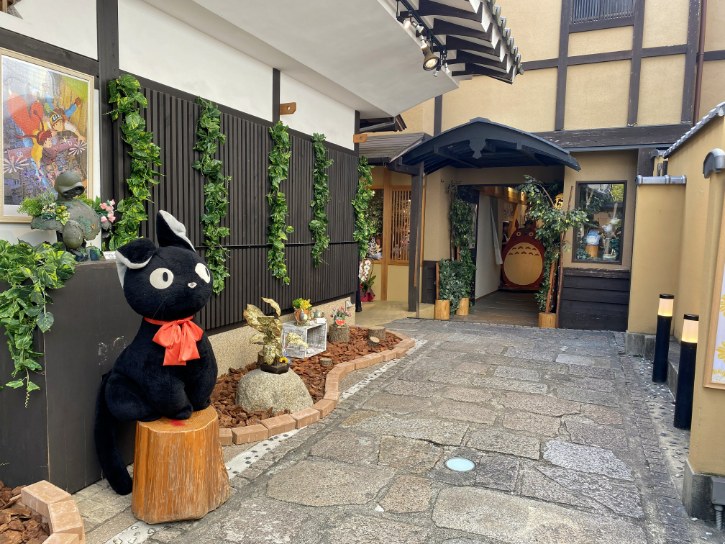
a. A Playful Change of Pace
Time for something different. This is the officially licensed shop celebrating the films of Studio Ghibli, the famous animation house behind so many beloved classics.
The Higashiyama branch is especially loved for how naturally it blends into the historic street, hiding its goods behind timber screens and garden plants.
b. The Totoro Waiting at the Door
Even the entrance is part of the fun, and it is a favorite photo spot before you step inside.
- A life-sized Totoro stands beside a replica bus stop sign.
- The whole scene is framed by greenery.
- Inside, you will find items from My Neighbor Totoro, Spirited Away, and Kiki’s Delivery Service.
c. Souvenirs You Will Not Find Everywhere
The range is wide and often unique to Kyoto. A few highlights to look for:
- Chirimen silk pouches, folding fans with soot sprites, and ceramics decorated with No-Face.
- Cast-iron wind chimes, embroidered hand towels, and wooden music boxes.
- Stationery, washi tapes, plush toys, and concept art prints.
d. Picking the Right Gift and Browsing Smart
Whatever you are after, there is something here for you. Keep in mind that stock changes often, so part of the fun is seeing what is in today.
- Casual visitors: Stationery, washi tapes, or a small plush.
- Fans: The Kyoto-artisan collaborations.
- Families and collectors: Music boxes, plush toys, and art prints.
Photos with Totoro in the entrance garden are welcome, though inside photography may be limited when busy. Leaving this animated world behind, the street leads north to the gardens of Kodaiji Temple.
13. Kodaiji Temple
a. The Temple Most People Walk Past
Many travelers glance at the entrance and keep going. Do not make that mistake. Kodaiji holds beautiful gardens, a moving human story, and some of Kyoto’s finest craftsmanship.
Formally known as Kodaijusho-zenji, this Zen temple represents the refined culture of its era, and it is worth a proper visit.
b. Nene’s Story, Carved Into the Grounds
The temple was founded in 1606 by a woman known as Nene, the noble wife of the great unifier Toyotomi Hideyoshi. Her story is woven into every corner.
- After Hideyoshi died, Nene became a Buddhist nun.
- She built this temple to pray for his soul.
- The new shogun paid for much of it, even moving buildings from Hideyoshi’s castle.
It is a story of love, loss, and devotion.
c. Gardens That Reward Slow Looking
The gardens are a National Place of Scenic Beauty, attributed to a master designer. They come in two complementary styles.
- The Dry Landscape Garden: Raked white gravel dotted with symbolic stones.
- The Stroll Pond Garden: Ponds that mirror weeping maples and a covered corridor climbing the hillside like a dragon’s spine.
They are loveliest in spring with cherry blossoms and in autumn with fiery maples, when the pond reflections feel almost unreal.
d. Treasures, Teahouses, and Bamboo
Beyond the gardens, the grounds hold cultural riches that are easy to overlook.
- Otama-ya: The mausoleum of Hideyoshi and Nene, decorated with famous Kodaiji Makie gold-and-silver lacquer.
- Kasa-tei and Shigure-tei: Two historic teahouses moved from Fushimi Castle, one with a striking umbrella-shaped bamboo ceiling.
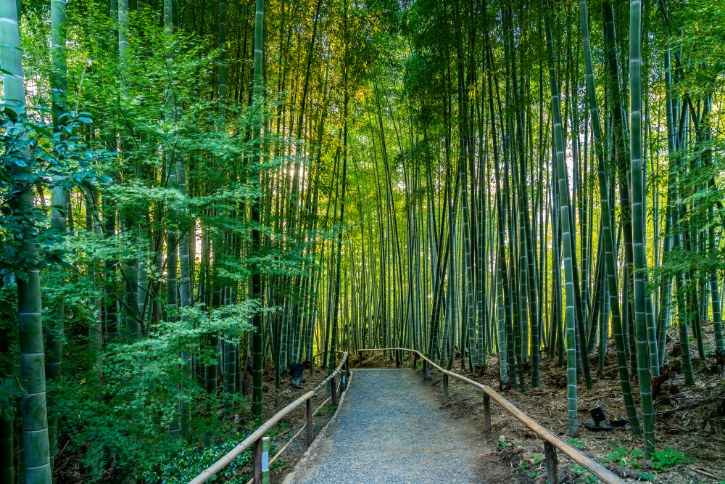
- Bamboo grove: A stone path winding beneath tall stalks, with soft light filtering through.
e. Going Deeper and Visiting Well
Just outside the gates, the Kodaiji Sho Museum displays gold lacquer pieces, portable shrines, and Nene’s own tea utensils, a lovely way to understand her world. Take your time here, follow temple etiquette, and keep a calm pace.
Nene’s story does not end at the gate. Just below, you can follow her footsteps along Nene no Michi.
14. Nene no Michi (The Path of Nene)
a. A Lane Named for a Noblewoman
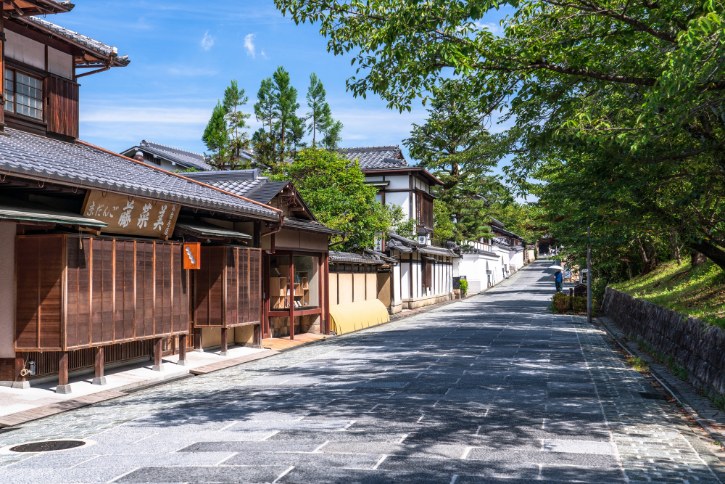
This wide, peaceful stone lane carries real history in its name. It is named after Nene, the same woman who founded Kodaiji, who spent the last nineteen years of her life in this neighborhood.
Records say she walked this very route each day, traveling between her home at the nearby Entoku-in and the memorial shrines at Kodaiji to pray. Walking it yourself connects you to her story in a quiet, moving way.
b. A Graceful, Open Walkway
Unlike the narrow, stepped lanes of Sannenzaka and Ninenzaka, this is a wide promenade of flat granite flagstones. It is an easy, unhurried stroll.
- It runs about 250 meters between Maruyama Park and the Kodaiji area.
- Overhead wiring was removed to restore the historic look.
- The flat paving makes it gentle on your feet after all those slopes.
c. The Atmosphere Around You
The lane is defined by its quiet dignity, and the surroundings do much of the work.
- High earthen walls enclose sub-temples, historic inns, and traditional restaurants.
- Pine branches, willows, and cherry trees spill over the walls.
- Stone lanterns, small shrines, and hand-pulled rickshaws complete the scene.
d. Peaceful Photos and Respectful Steps
The wide sightlines let you capture sweeping views of the stone paving and heritage walls, especially in the soft golden light of late afternoon. After the busy shopping streets, this spot feels like a calm exhale.
- Respect private homes, inns, and restricted areas.
- Along the branching lane of Ishibe-koji, photography is strictly forbidden to protect residents.
- Keep your voice low and be mindful of other walkers.
From these quiet surroundings, the path leads to the lively and spiritually important Yasaka Shrine.
15. Yasaka Shrine
a. The Guardian of Eastern Kyoto
You finish your walk at one of Kyoto’s most important shrines, known locally as “Gion-san”. It was founded in 656 CE, more than a century before Kyoto became the capital.
Today it is the head shrine for around 2,300 Yasaka shrines across Japan, dedicated to the storm deity Susanoo-no-Mikoto and his family.
b. The Festival That Began in a Plague
Yasaka Shrine is world famous as the home of the Gion Matsuri, one of Japan’s three greatest festivals. Its origins are striking.
- It began in 869 CE during a terrible epidemic.
- People carried the shrine’s portable shrines through the city to calm the spirits of disease.
- It grew into a month-long July celebration, famous for giant float processions.
c. Architecture and Glowing Lanterns
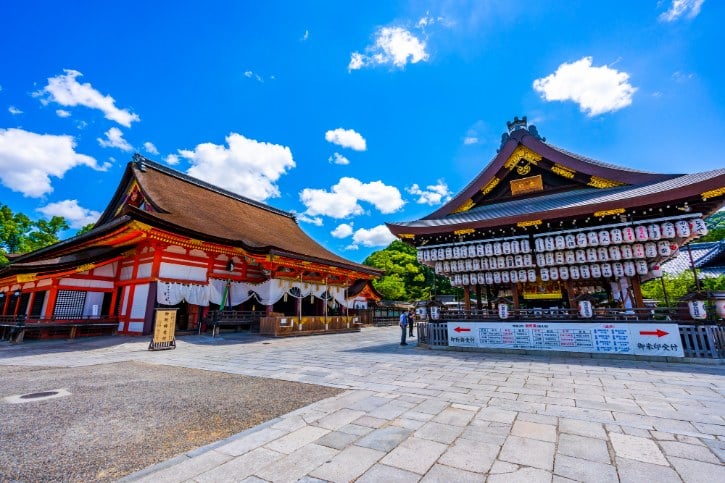
The grounds hold outstanding religious buildings, and they are at their most beautiful as night falls.
- The Main Hall (Honden): A National Treasure rebuilt in 1654, under one sweeping cypress-bark roof.
- The West Gate: A vermilion gate facing the lively Gion district.
- The Dance Pavilion: Hung with hundreds of paper lanterns that light up each evening in a warm golden glow.
d. Praying the Traditional Way
Taking part gently is a respectful way to experience a living shrine. The traditional steps are easy to follow.
- 1. Toss a coin into the offering box.
- 2. Ring the overhead bell.
- 3. Bow deeply twice.
- 4. Clap your hands twice.
- 5. Offer a silent prayer, then bow once more.
e. Small Shrines and a Fitting Finish
Before you leave, seek out the smaller shrines within the grounds. They hold some of the most charming details of all.
- Utsukushigozen-sha: Devoted to beauty goddesses, with a sacred “Beauty Water” you can dab on your hands and face.
- Okuninushi-sha: Dedicated to good fortune and matchmaking.
Visit toward evening, when the lanterns glow, for an ending you will not forget. From the heights of Kiyomizudera’s wooden stage, down through the preserved streets and quiet gardens, to these golden lanterns, one thing becomes clear. The best of Kyoto reveals itself when you step beyond the main viewing deck and take your time with the living history just below.