
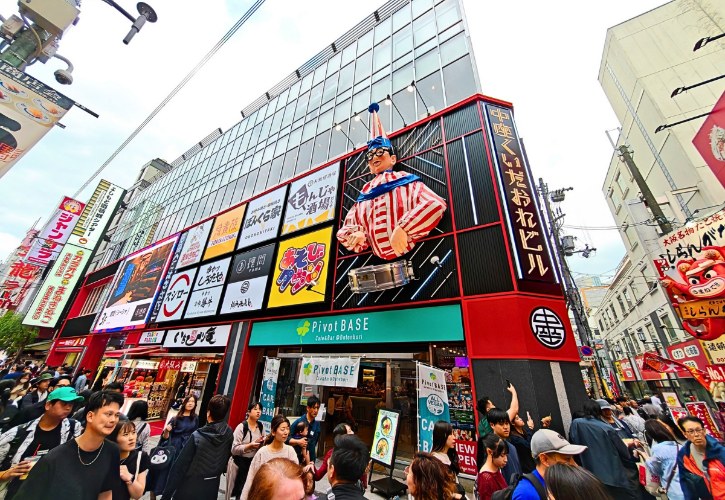
Most visitors treat Dotonbori like a quick photo stop. They snap the neon signs, grab some takoyaki, cross the famous bridge, and move on. But the streets wrapped around this district hold so much more.
Here every stop sits 1 to 5 minutes from the last: centuries-old kitchenware shops, a bustling food market, a hidden temple, quiet stone alleys, and a buzzing youth neighborhood.
The real Osaka waits beyond the crowds. Follow the route below to find all 15 stops. 😊
1. Sennichimae Doguyasuji Shopping Street
a. Where Osaka’s Restaurants Shop
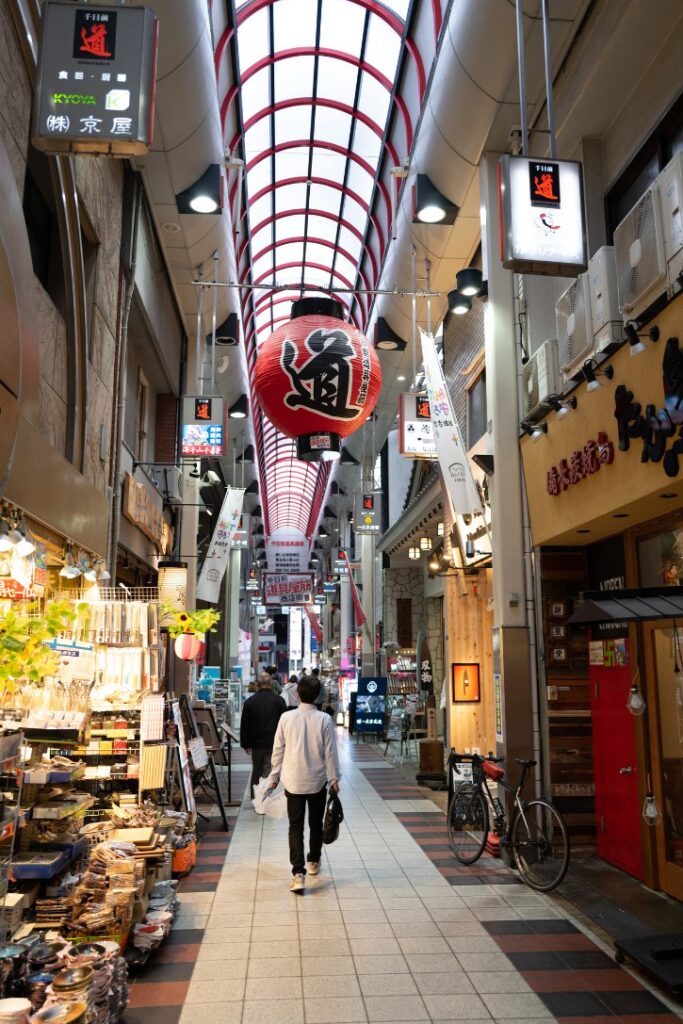
Sennichimae Doguyasuji is the quiet engine behind Osaka’s food reputation, the place where restaurants across western Japan come to buy their tools.
It began in 1882, when tool sellers and scrap dealers gathered along the road linking the Hozenji and Shitennoji temple grounds. As the entertainment districts grew, they turned to supplying restaurants, food stalls, and teahouses. Today the covered arcade is lined with specialist shops for the professional kitchen trade.
b. Blades, Pans, and Lifelike Food Models
- Japanese knives: Shops such as Sakai Ichimonji Mitsuhide sell high-carbon, hand-forged blades rooted in the samurai sword-making traditions of nearby Sakai, including rust-resistant versions for sashimi and vegetables.
- Ironware and cookware: Look for heavy cast-iron takoyaki plates, Nambu ironware, and hand-hammered copper pans.
- Tableware: Wholesalers like Osaka Shikki stock lacquered bento boxes, ceramic dishes, and hundreds of chopstick styles.
- Food replicas: At places such as Design Pocket, you can see lifelike plastic sushi and hanging noodle displays, and even join a workshop to make your own keychains, magnets, or full dishes.
- Doguyasuji Festival: Visit in autumn and you may catch this celebration of the trade, with tool markets, live demonstrations, and craft displays.
c. Why Make Time for It
- It is a close look at the craftsmanship behind Japanese cooking, from forged steel to lifelike food samples.
- You get a different view of Osaka’s food culture, one shaped by tools and tradition rather than eating alone.
- The specialist shops feel nothing like an ordinary shopping street.
d. Buying Smart and Getting It Home
- A Japanese knife or a handmade food-sample keychain makes a souvenir you will not find in an ordinary shop.
- A high-carbon knife needs careful drying to prevent rust, while stainless blades travel better.
- Many cutlery shops will engrave your name on the blade and pack it securely for your flight.
- For ceramics, check for small cracks and ask for a rigid box so nothing breaks on the way home.
2. Kuromon Market
a. The Market They Call Osaka’s Kitchen
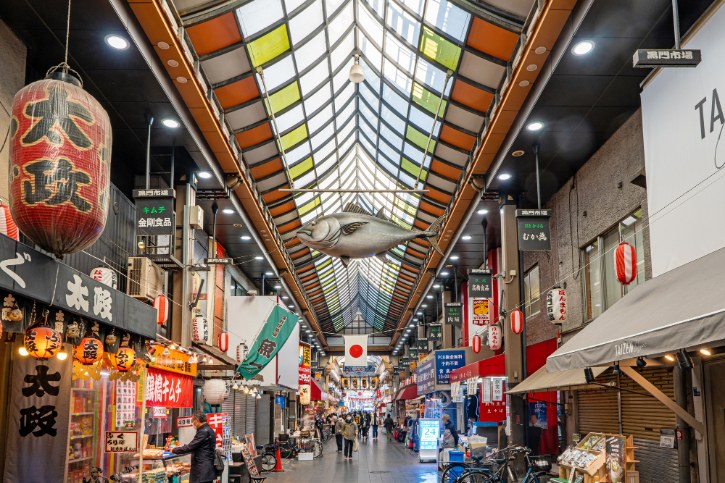
Locals have long called Kuromon Market Osaka’s Kitchen, and the name fits. For generations this was where the city’s best chefs came at dawn to buy the freshest seafood.
Fish traders have gathered here since the early 1800s, and it became an official market in 1902, then still called Enmyoji Market after a nearby temple with a striking black gate. A fire destroyed the temple and its gate in 1912, but the name Kuromon, meaning Black Gate, stuck. Today it blends old wholesale vendors with food stalls aimed at visitors.
b. What to Eat First
- Fresh tuna: At Maguroya Kurogin, watch whole bluefin tuna being cut, then try slices of rich otoro and chutoro.
- Grilled seafood: Kuromon Sanpei serves Hokkaido sea urchin straight from the shell, king crab legs, and scallops grilled with a soy-butter glaze.
- Wagyu and sweets: Look for skewers of marbled black Wagyu, freshly rolled tamagoyaki, and premium seasonal fruit such as strawberries and muskmelons.
- Seasonal catch: The market is known for wild seafood, including pufferfish in winter and pike conger in summer.
c. The Feel of the Place
Walking into Kuromon wakes up all your senses. The covered lanes run for a good stretch and hold around 150 stalls.
Above you hang seafood displays and handwritten price signs, while griddles sizzle and vendors call out. It is a working market with a visitor-friendly layer on top.
d. Why It Belongs on Your Walk
- A market shows you the raw ingredients behind Japanese cooking, not just the finished plate.
- You can watch skilled hands prepare food to order, which is half the fun.
- It gives a direct feel for Osaka’s food traditions that a restaurant cannot match.
e. Eating and Photographing with Care
- Eating while walking is discouraged in the narrow lanes, so eat at the stall’s seating or take packaged items to the Kuromon Information Center lounge.
- Keep your camera gear small, and avoid pointing your lens directly at vendors doing careful knife-work.
- Choose stalls that grill or slice to order for the freshest bites.
3. Naruto Taiyaki Hompo
a. A Rare Take on a Classic Snack
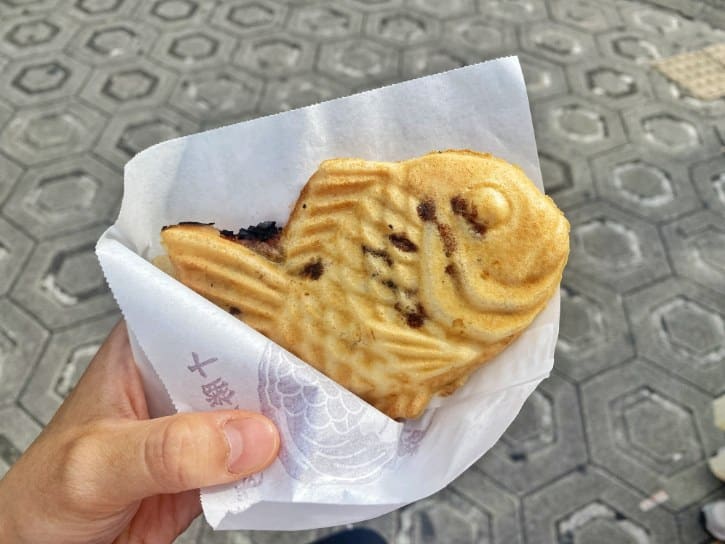
Along Sennichimae at the Aiaibashi spot, Naruto Taiyaki Hompo keeps an old street-snack tradition alive. Taiyaki is a fish-shaped cake modeled after the red sea bream, a fish seen as lucky in Japan, and a working-class favorite since the Meiji era.
Most shops now use large griddles that bake many cakes at once. Naruto holds to the older tennen method, baking each cake in its own cast-iron mold.
b. What Makes These Cakes Different
- Baked one at a time: Each cake cooks in a heavy iron mold over two kilograms, which the baker flips, opens, and turns by hand over an open flame.
- A crisp, thin shell: Direct heat crisps the batter into a thin, blistered skin with a lightly charred aroma, with none of the doughy texture of mass-made versions.
- A small show to watch: The baker’s steady rhythm turns a quick snack into a bit of craft worth pausing for.
c. The Three Fillings to Try
- Azuki red bean: A smooth paste from Hokkaido Tokachi beans, balancing gentle sweetness with whole-bean texture.
- Naruto Kintoki sweet potato: An earthy, naturally honeyed paste from Tokushima tubers.
- Egg-yolk custard: A rich, creamy option for a softer, sweeter bite.
d. Eating It Fresh off the Iron
- Each cake comes straight off the heat, so split the tail or head first to let the steam escape.
- The filling runs all the way into the fins and tail, so every bite carries flavor.
- Eat it on the spot while you watch the baker work.
4. Sennichimae (Nipponbashi) Street
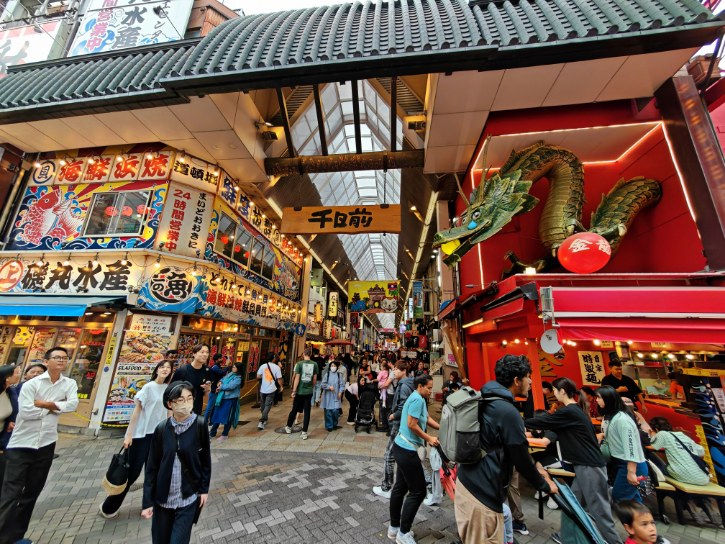
a. The Everyday Face of Minami
Sennichimae Street is one of Minami’s main commercial arteries, running between the electronics shops of Nipponbashi Den Den Town and the busy stations of Namba. Unlike the polished tourist strips by the canal, it shows you everyday Osaka: arcades, pachinko parlors, comedy venues, and casual eateries.
Long ago this was part of a cemetery district in the Edo era. After the burial grounds moved in the early Meiji period, it became a lively theater row with storytelling stages, circus halls, and cinemas.
b. Landmarks You Will Walk Past
- Kinryu Ramen’s dragon: Open since 1982, this ramen shop is marked by a huge green dragon bursting from the building, with diners seated cross-legged on raised tatami mats beside the sidewalk.
- Free toppings: Its mild pork-and-soy broth comes with help-yourself garlic chives, minced garlic, and spicy kimchi.
- Quick local bites: The street is full of fast, compact spots, from takoyaki counters to tiny standing bars where off-duty workers and performers stop for a drink.
c. Why You Should Not Just Pass Through
- Slowing down shows you the real rhythm of the city, away from the tourist strips.
- Delivery drivers, comedy fans from the nearby Namba Grand Kagetsu stage, and late-night commuters all share these sidewalks.
- The glowing signs, ticket machines, and open kitchens contrast sharply with the glossier developments nearby.
d. What to Look For
- Spot the Kinryu Ramen dragon, one of the street’s most photographed sights.
- Try a standing bar or counter stall for a quick, local-style bite.
- Notice the everyday details: neon signs, open kitchens, and the flow of people who live and work here.
5. Hozenji Temple
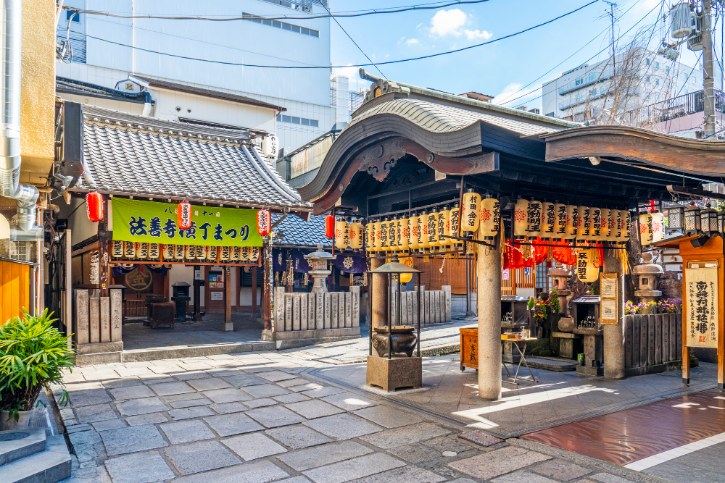
a. A Quiet Survivor in the Heart of the City
Hidden among the restaurants and bars of Minami, Hozenji Temple has been a place of quiet worship since 1637, belonging to the Pure Land school of Buddhism.
In the Edo period its grounds were larger and closely tied to the local theater scene, hosting comic storytelling, puppet plays, and acrobatics. The wooden halls were destroyed in the bombing of 1945, yet one stone figure survived the fire: the Mizukake Fudo, still the heart of the temple.
b. The Moss-Covered Statue at Its Center
- The Mizukake Fudo: This stone statue of Fudo Myo-o, a fierce guardian deity, is blanketed head to base in soft green moss, along with his two attendants.
- A living ritual: Rather than offering incense, worshippers draw water and pour it over the statue while praying. The moss has built up over years of this daily ritual.
- A piece of wartime history: The statue is one of the few things that survived the fire, which gives it deep meaning for locals.
c. A Different Kind of Calm
This is not a grand temple like those in Kyoto, and that is its charm. The small courtyard sits behind the walls of neighboring eateries, lit by paper lanterns hung from the eaves.
Candles flicker, water splashes against wet stone, and the noise of the city fades for a while.
d. Why It Is Worth Pausing For
- It is a living religious site where people still come to pray, set in a busy entertainment district.
- You can witness a genuine local tradition rather than a staged attraction.
- It shows how a small temple has held its meaning through centuries of change.
e. Visiting with Respect
- Give a small bow as you enter, and let anyone praying finish without interruption.
- Fill a wooden ladle gently from the stone basin and pour the water over the statue and its attendants.
- Keep photos discreet. Avoid flash, and do not aim your camera at people praying.
6. Hozenji Yokocho
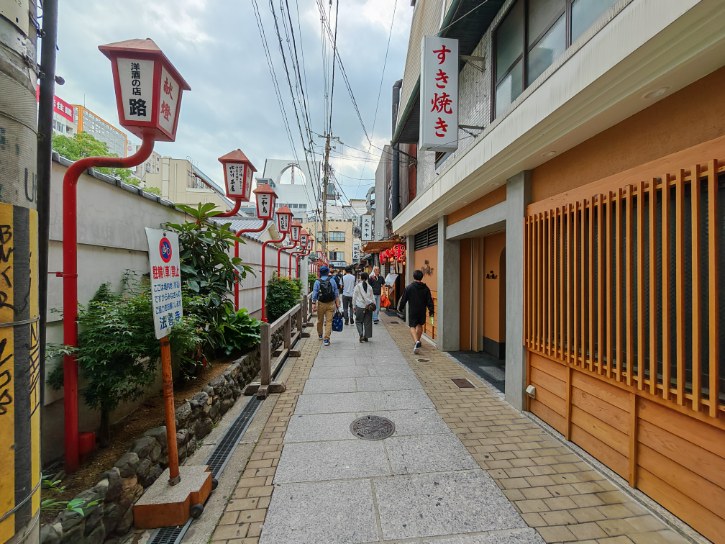
a. The Lantern-Lit Lane Beside the Temple
Right beside Hozenji Temple run two slim stone-paved alleys known as Hozenji Yokocho. They grew up over the Edo and Meiji eras, when teahouses and small taverns opened near the temple to serve pilgrims, actors, and theatergoers.
Fires in 2002 and 2003 damaged much of the old woodwork. Careful restoration rebuilt the fronts with dark-stained timber, fabric noren curtains, and real stone paving, keeping the narrow, old-Osaka feel.
b. What You Will Find Along the Alley
- Stone-paved lanes: Narrow passages lined with wooden shopfronts, hanging lanterns, and calligraphy signs.
- Meoto Zenzai: A heritage sweet shop open since 1883 that inspired a well-known 1940 novel about everyday Osaka life. Its signature is a sweet red bean soup with grilled mochi, served in two bowls as a symbol of harmony.
- Traditional dining: Refined kappo counters, yakitori grills, and old-style okonomiyaki spots such as Yakizen, known for its layered modanyaki with yakisoba noodles.
c. Why It Feels Like Stepping Back
- The traditional shopfronts and lantern glow offer a glimpse of an older, gentler Osaka.
- It is the quiet opposite of Dotonbori’s bright lights and crowds.
- Even without stopping to eat, simply walking through is a pleasure.
d. The Best Shots to Capture
- Look down the northern alley toward the stone gate, where lanterns and wooden facades line up in a row.
- The amber lanterns glow their best in the evening, especially against wet paving after rain.
- Leave the tripod behind, since the lane is narrow, and never photograph through a restaurant’s sliding doors.
7. Ukiyo Koji
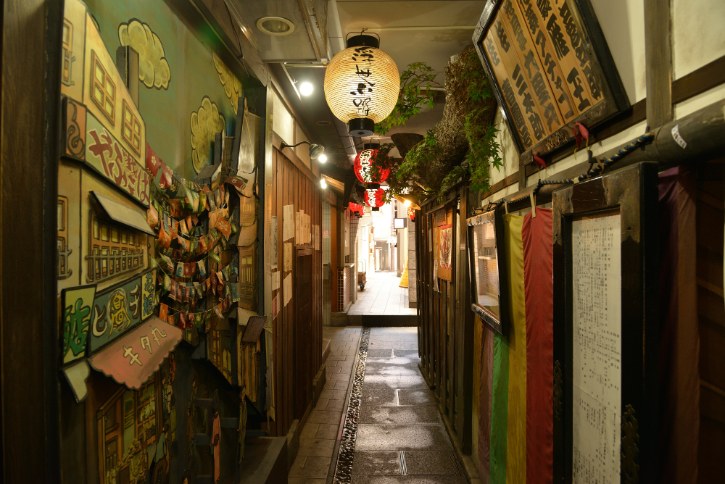
a. The Alley Most Visitors Miss
Ukiyo Koji is one of the narrowest lanes in central Osaka, barely wide enough for one person, running between Hozenji Yokocho and Dotonbori Street. The entrance is easy to miss, tucked beside the Dotonbori Imai udon shop.
Long an easily overlooked back alley, it is now a small open-air exhibit celebrating the Osaka of the Taisho and early Showa years.
b. A Wall of Nostalgia
- Retro artwork: The walls carry 3D dioramas, paper lanterns, wooden placards, and painted panels that recreate the Dotonbori of a century ago, including old jazz cafes and instrument shops.
- Old Osaka voices: Some panels show dialogue in the classic merchant dialect of old Osaka, telling small stories of actors, musicians, and locals.
- Quiet contrast: Stepping in muffles the roar of modern commerce, replaced by the creak of wooden signs and soft lantern light.
c. The Legend of the One-Inch Samurai
- Midway along the lane stands a tiny shrine to Issun-boshi, the One-Inch Samurai of Japanese folklore.
- In the tale, he set off toward Kyoto in a rice bowl using a chopstick as an oar, and local legend says he launched onto the Dotonbori River.
- Through its small doors you can see Issun-boshi in his bowl boat, and you can draw a small paper fortune.
d. Why Such a Small Lane Rewards You
- Its small size is the point, packed with folklore and quiet detail most visitors miss.
- Ducking in offers a gentle break from the loud, oversized world of Dotonbori nearby.
- The handmade displays reward anyone who slows down to look.
e. Finding It and What to Notice
- Look for the entrance right next to the Dotonbori Imai udon shop.
- Walk slowly, since the best parts are small details rather than big attractions.
- Try the fortune dispenser at the Issun-boshi shrine for a folklore-themed keepsake.
8. Dotonbori
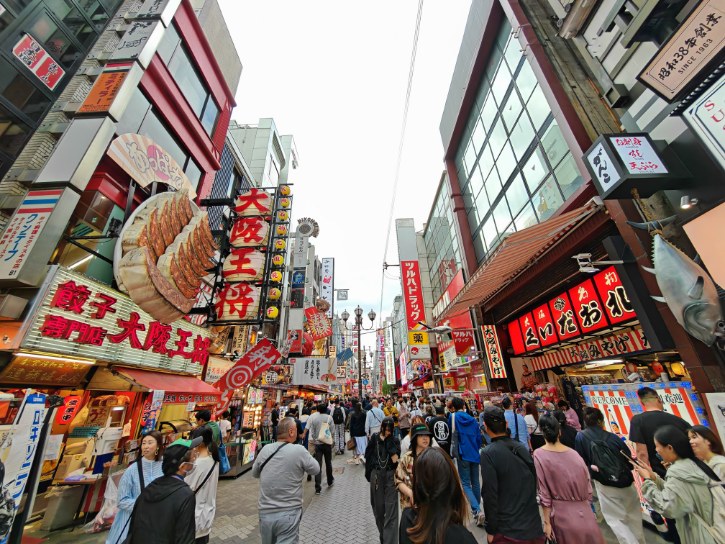
a. The Social and Culinary Center of Osaka
Dotonbori is the social and culinary center of Osaka, a canal-side strip devoted to food, fun, and spectacle. The story begins in 1612, when a merchant named Yasui Doton paid from his own pocket to dig a canal for shipping.
He died before it was finished, and his cousin completed the work. The city’s lord then named the canal in his honor. The shogunate set the south bank aside for theater in 1621, and by 1662 it held six kabuki and five puppet (bunraku) theaters, the city’s entertainment center for generations.
b. The Signs That Made It Famous
- The Glico Running Man: The glowing sign of a runner crossing a finish line is the symbol of Dotonbori.
- Kani Doraku’s giant crab: This long-running restaurant is known for the huge mechanical crab above its entrance, its legs and claws moving over the street.
- Bigger-than-life displays: Look for the drum-beating Kuidaore Taro clown, now outside the Nakaza Kuidaore building, and the giant octopus signs above the takoyaki stalls.
- A historic stage: The Osaka Shochikuza Theatre still hosts kabuki and other performances behind its 1923 Neo-Renaissance stone arch, nicknamed the Triumphal Arch of Dotonbori.
c. Why It Still Belongs on the List
Even with so much to explore beyond it, Dotonbori remains a must. The energy is unlike anywhere else, with colorful signs, steady crowds, and the smell of street food in the air. It is lively by day and electric at night, when the neon reflects off the canal.
d. The Best Things to Do Here
- Try takoyaki: These crisp octopus balls, topped with savory sauce, mayo, and dancing bonito flakes, are an Osaka classic. At stalls like Takoya Dotonbori Kukuru, you can watch cooks spin the skewers.
- Sample more favorites: Look for okonomiyaki savory pancakes and skewers of crispy fried kushikatsu.
- Admire the frontages: Wander past the restaurant signs and take in Kani Doraku’s giant mechanical crab, the octopus signs, and other bold displays.
- See the canal: Enjoy the water and the glowing billboards, and consider a sightseeing boat for a new angle on the district.
9. Ebisu Bashi-Suji Shopping Street
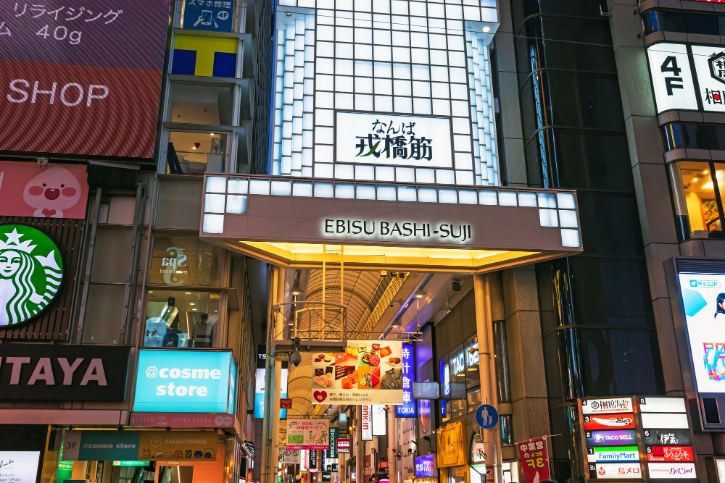
a. A Shopping Street Born from a Pilgrimage
Ebisu Bashi-Suji is a covered arcade running south from Ebisu Bridge toward Namba Station and the Takashimaya department store. People often confuse it with Shinsaibashi-Suji, but the two have different roots.
It began in the early Edo period as the main southern path to the Imamiya Ebisu Shrine, dedicated to the god of business fortune. Shops selling textiles, footwear, tea, and food settled along the route to serve travelers.
b. Shops Old and New
- Otora Kamaboko: An artisanal fish-cake maker on this street since 1876, still producing traditional Kansai-style fish pastes.
- 551 Horai: The flagship of this beloved chain, famous across Japan for its hand-folded steamed pork buns.
- Old meets new: Modern cosmetics and fashion outlets sit beside generations-old sweet shops, umbrella makers, and tea merchants.
- A comfortable arcade: A high glass-vaulted roof keeps the street pleasant in any weather, with natural light filtering through.
c. Why It Is Worth More Than a Quick Look
- It is a living piece of Osaka’s retail history, old businesses standing beside modern stores.
- Browsing shows you how the city’s commerce grew over centuries.
- It is smaller and more traditional than the fashion-focused Shinsaibashi-Suji.
d. How to Get the Most from It
- Look up as you walk, since older shops often show Edo-style plasterwork and early Showa signage above their modern storefronts.
- Seek out long-established shops for traditional sweets, tea, or a steamed pork bun from 551 Horai.
- Watch for seasonal banners tied to the Toka Ebisu festival each January, a nod to the street’s shrine-path origins.
10. Ebisu Bridge (Ebisubashi)
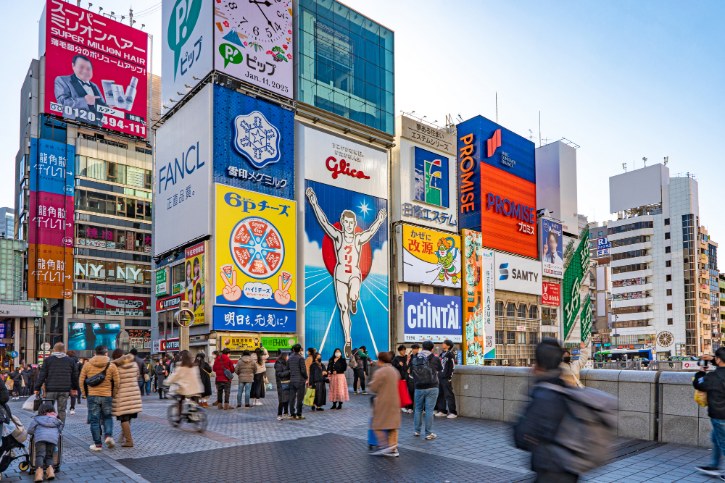
a. Osaka’s Favorite Meeting Point
Ebisu Bridge is the central gathering place of the Minami district, spanning the Dotonbori Canal. It was first built around 1615, linking the shopping quarters with the theater zone and the path to the Imamiya Ebisu Shrine, which gave the bridge its name.
Locals long called it Hikkake-bashi, or Pick-up Bridge, for its popularity as a meeting spot. The current bridge, rebuilt in 2007, has a wide deck with stepped seating that works like a small plaza above the water.
b. The View That Draws the Crowds
- The Glico Running Man up close: First raised in 1935, Osaka’s most famous sign now uses over 140,000 LED lights and cycles through seasonal scenes and Kansai landmarks behind the runner.
- Canal views: Looking along the water, you see layer upon layer of glowing signs and multi-story facades reflected below.
- A famous celebration spot: The bridge is known nationwide for sports fans leaping into the canal after big wins, a tradition tied to the Hanshin Tigers since 1985.
c. Why Standing Here Is Special
From the bridge you take in the full scale of Dotonbori at once: the canal, the towering signs, and the constant flow of people. It is one of the city’s great gathering places, and it is easy to see why so many travel photos are taken here.
d. Getting the Classic Photo
- Stand on the eastern railing facing northwest and angle your camera up to frame the Glico runner with the riverside buildings.
- Time your photo so you are not blocking the stream of people crossing.
- Return after dark, when the signs shine brightest and mirror on the canal.
11. Tombori River Walk
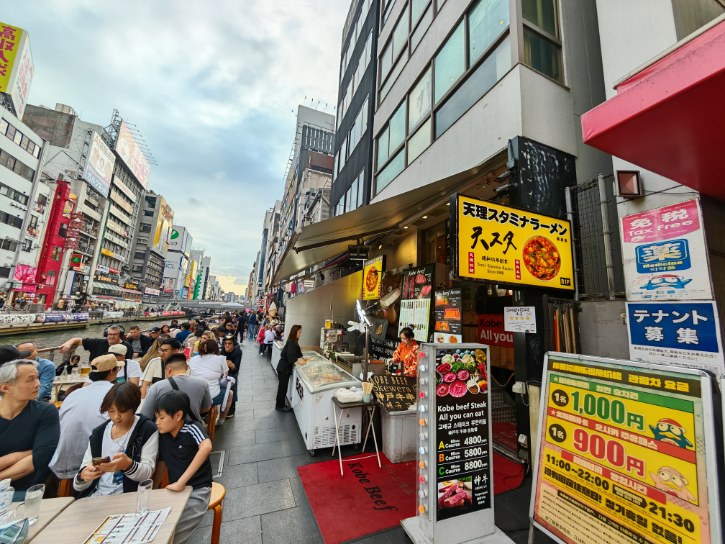
a. A Waterfront Below the Streets
The Tombori River Walk is a pedestrian path running along both banks of the Dotonbori Canal. It opened in December 2004, part of a project that turned a once-industrial canal edge into a public waterfront.
The wooden boardwalk sits just below street level and stretches between two of the canal’s bridges, lined with railings, planting beds, and lighting that glows along the steps at night.
b. What You Will See from the Water’s Edge
- Neon reflections: From water level, the giant signs, including the Glico runner and the Don Quijote Ferris wheel, shimmer across the canal.
- Passing boats: Open-top cruise boats glide by regularly, with guides pointing out sights as they slip under the low bridges.
- A layered cityscape: Looking up, you see the pedestrian deck, the road bridges, and the tall buildings stacked above the water.
c. Why Go Down to the Water
- It feels calmer than the busy streets and crowded bridge above.
- The views sit closer to the water, giving the district a fresh look.
- It is worth the detour even after seeing Dotonbori’s signs from the street.
d. Making the Most of the Walk
- Find a bench on the quieter southern side to sit and take in the view.
- The waterfront looks its best in the evening, when the signs reflect on the canal.
- During seasonal festivals, you may come across live music or cultural performances along the walkway.
12. Soemoncho
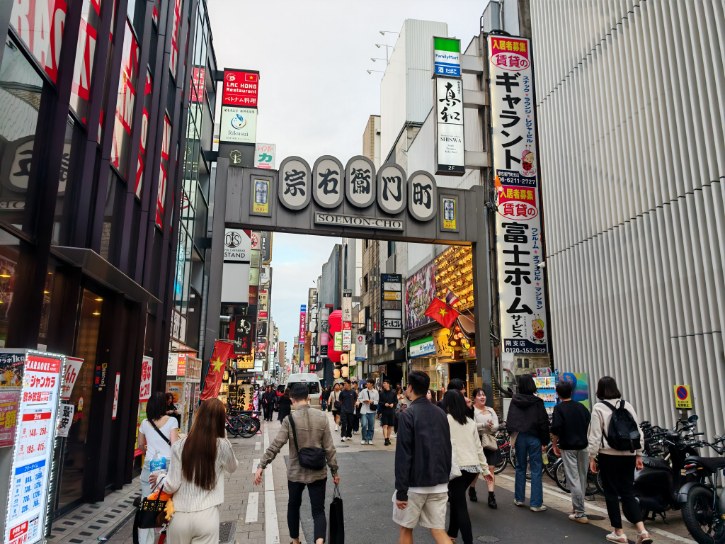
a. A Nightlife District with Deep Roots
Just north of the canal lies Soemoncho, a district with a long and colorful past. It dates to the early Edo period, soon after the Dotonbori canal was completed in 1615, and takes its name from Soemon, a local town official.
While Dotonbori’s south bank was known for public theater, Soemoncho grew into an upscale entertainment quarter of geisha teahouses and refined dining for wealthy merchants. Over the last century it became the lively nightlife area it is today.
b. What Lines the Streets
- Neon nightlife: Modern buildings stacked with glowing vertical signs line the narrow streets, dense and dramatic after dark.
- Varied dining: You will find late-night yakitori counters, ramen shops, izakayas, and cocktail bars among karaoke lounges and private clubs.
- Acchichi Honpo: A long-running takoyaki shop near the canal that keeps a steady late-night crowd.
c. Why It Is Worth a Walk
- It shows a side of Osaka that most tourist spots do not.
- The historic streetscape and the contrast with Dotonbori make it interesting day or night.
- By day it is quiet restaurants; by night it becomes one of the city’s busiest entertainment zones.
d. How to Explore It Wisely
- Walk the main street and stop at casual, street-facing restaurants and izakayas.
- Skip the touts who try to pull you into multi-story buildings, as private clubs often charge high seating and cover fees that are not posted outside.
- Stick to reputable spots that clearly display prices at the entrance.
13. Shinsaibashi-Suji Shopping Street
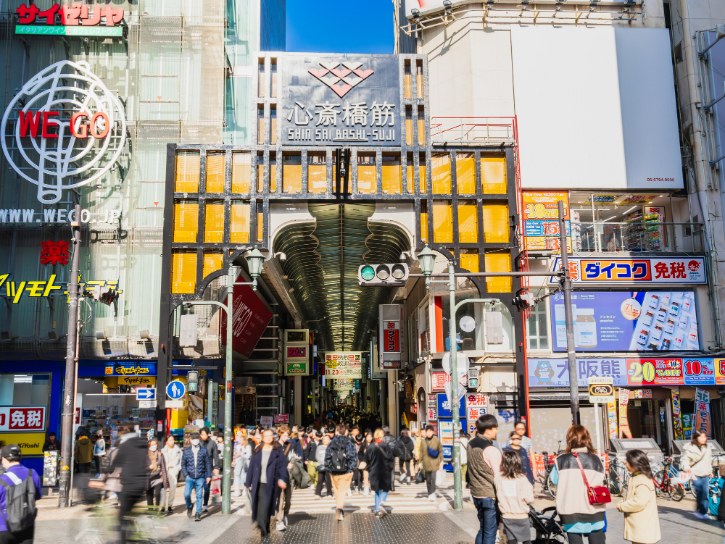
a. Osaka’s Most Famous Shopping Street
Shinsaibashi-Suji is Osaka’s most famous shopping street, a long covered arcade running north from the Dotonbori canal. It takes its name from Okada Shinsai, a merchant who funded the original Shinsaibashi Bridge in 1622 to boost trade.
Soon after, textile sellers, kimono shops, book printers, and jewelers set up here, laying the foundation for the city’s top shopping destination. It is larger and more fashion-focused than Ebisu Bashi-Suji.
b. The Shops Worth Seeking Out
- Daimaru Shinsaibashi: The street’s grand anchor traces its roots to a shop opened in 1726. Its main building was rebuilt in 2019, recreating the celebrated Art Deco design of the original by American architect William Merrell Vories, with decorative details carried over from the old building.
- Beauty and fashion: Large cosmetics and skincare stores sit beside multi-story fashion flagships.
- Traditional specialties: Among the modern stores, you can still find shops selling fine green tea, hand-dyed fabric, and lacquerware.
- A comfortable arcade: A tall vaulted roof and natural light make this one of the easiest places to shop in any weather.
c. Why Even Non-Shoppers Enjoy It
- It opens a window into Osaka’s commercial life, past and present.
- It blends centuries-old specialty shops with the latest Japanese fashion and beauty.
- The lively atmosphere and elaborate storefronts make it an experience in itself.
d. Smart Shopping Tips
- For standout buys, focus on Japanese cosmetics, skincare, and regional food gifts.
- Look for traditional shops selling tea, fabric, or lacquerware if you want something more distinctive than global brands.
- Most large stores offer tax-free shopping, so carry your physical passport to claim the exemption at checkout.
14. Mido-Suji
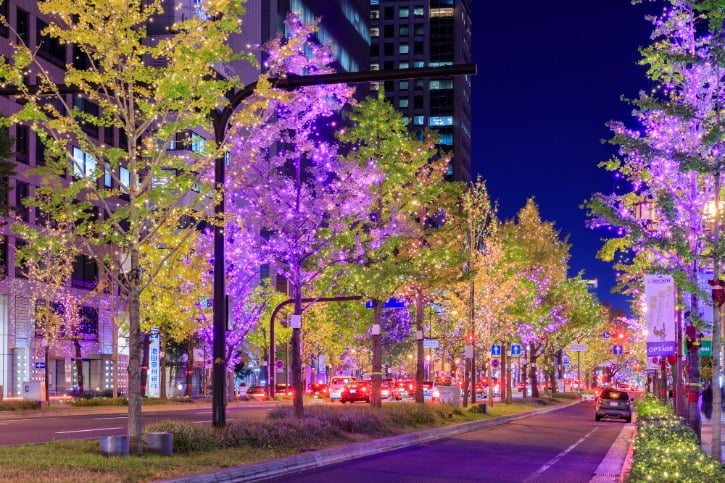
a. Osaka’s Grand Boulevard
Mido-Suji is Osaka’s grandest boulevard, a wide avenue running north to south between the Umeda and Namba areas. Its modern form came from a bold plan in the 1920s and 1930s led by mayor Hajime Seki.
He widened a cramped lane into a 44-meter boulevard and dug Japan’s first public subway line beneath it. Height limits gave the street a uniform, stately feel, much like the great avenues of Europe.
b. What Sets the Avenue Apart
- Ginkgo trees: More than 800 ginkgo trees line the granite sidewalks, turning brilliant gold in late autumn and carpeting the pavement in yellow leaves.
- Open-air sculptures: The Mido-Suji Sculpture Street displays 29 bronze works by renowned artists, including Rodin and Henry Moore.
- Grand architecture: The avenue holds luxury fashion houses, financial headquarters, and elegant heritage buildings.
c. A Welcome Change of Pace
After the tight, covered arcades of Minami, Mido-Suji feels like a deep breath. The open sky, wide granite walkways, and stately buildings invite a slower pace. You do not need to shop to enjoy it, as simply strolling beneath the trees is a pleasure in itself.
d. What to Notice as You Stroll
- Visit in late autumn if you can, when the ginkgo trees are at their golden best.
- Read the plaques beside the bronze sculptures as you pass.
- Look closely at the older financial buildings from the early Showa era for their fine architectural details.
15. American Village (Amerikamura)
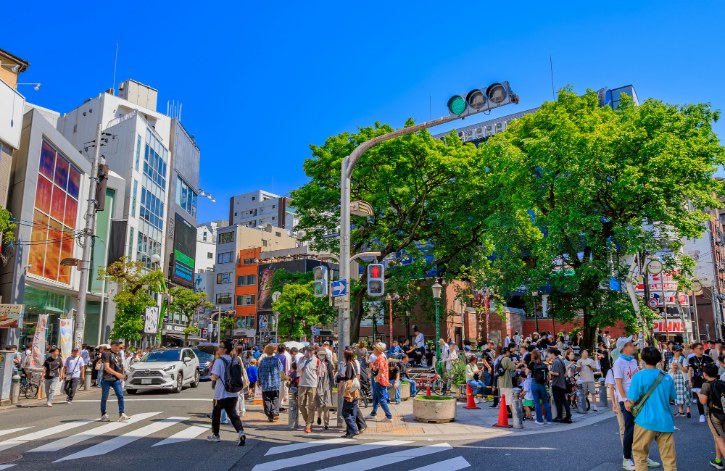
a. The Home of Osaka Street Culture
American Village, known to locals as Amerikamura or simply Amemura, is the center of Osaka’s youth and street culture. It took shape in the early 1970s, when young designers began renting cheap, empty warehouses in the area.
They filled them with imports from the American west coast: vintage Levi’s jeans, Hawaiian shirts, military surplus, surfboards, and used records. Those goods led locals to nickname the area America-mura, and it grew into a thriving creative district.
b. The Sights That Define It
- Triangle Park: The neighborhood’s social heart, Sankaku-koen, is a triangular concrete plaza with tiered steps that serves as an open-air hangout for skaters, students, and locals.
- The Peace on Earth mural: Overlooking the park, this expressive 1983 mural by artist Seitaro Kuroda is a neighborhood landmark.
- Playful street lamps: Watch for the human-shaped street lamps nearby, bent into dancing and running poses.
- Independent shops: The area is full of thrift stores, vintage streetwear boutiques, skate shops, and record stores such as the well-known Time Bomb Records.
- Big Step: This multi-level complex holds alternative fashion shops, live music venues, art galleries, and a vintage pinball arcade.
c. Why It Is the Perfect Finish
- It feels completely different from the temples, markets, and boulevards before it.
- You meet creative energy, independent fashion, and a strong local music scene.
- It is a relaxed place to browse, people-watch, and soak up youth culture.
d. How to Explore Amemura
- Grab a tray of takoyaki from Kogaryu, a famous stall across from Triangle Park, and eat it on the park ledges like the locals.
- Explore beyond street level, since some of the best shops hide up narrow staircases or down in basements.
- Afternoons tend to be the liveliest time to visit and best for discovering the shops and street life.
Osaka’s Minami district is far more than a single famous street. From forged knives and fresh seafood to hidden temples, lantern-lit alleys, grand boulevards, and bold youth culture, every stop adds a new layer. Take your time, follow your curiosity, and you will find the side of the city that most visitors walk right past.
Related Posts

Photo Credit:
Photos by PIXTA