
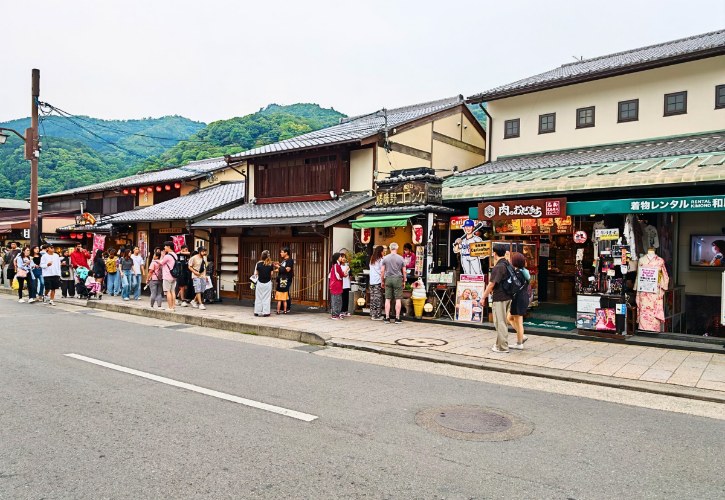
You arrive in Arashiyama with one picture in your head: that soaring green tunnel of bamboo everyone photographs. You walk it, you snap a few shots, and you feel ready to leave.
Yet the real surprise is how much sits within a few minutes of that single grove. Quiet temples, old gardens, mountain views, and streets that feel centuries old are all waiting close by.
Stay a little longer, and this corner of Kyoto opens up in ways you will not expect. 😊
1. Arashiyama Monkey Park Iwatayama
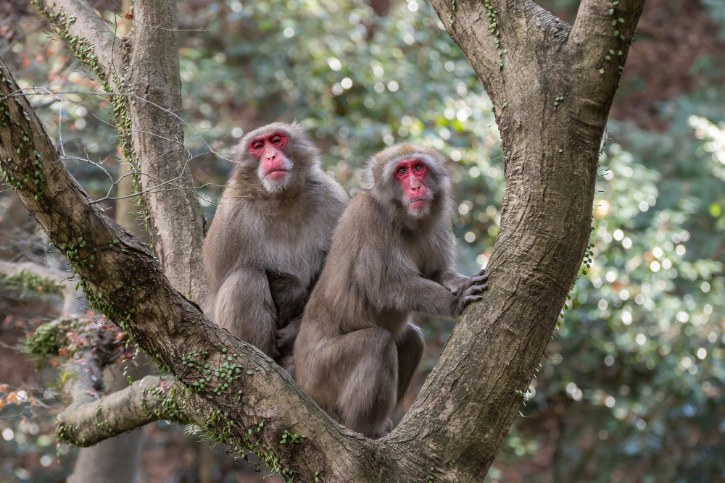
a. Meet the Monkeys Who Live Here Freely
High on Mount Iwatayama, you will find a troop of around 120 Japanese macaques living completely free on the forested slopes. There are no cages between you and them, so you watch them simply being themselves.
A few things make the setting special:
- The park has protected these monkeys since March 1957, building on primate research that began in 1948.
- You can watch them grooming one another in small groups.
- You will see mothers caring for their young up close.
- The whole troop moves about its daily social life in the open.
b. Feed Them From the Other Side of the Mesh
Here is the fun twist. Instead of the monkeys being enclosed, you are the one who steps inside.
- You enter a mesh-walled building while the monkeys roam freely outside.
- You hand them small pieces of apple or peanuts through the grid.
- Do not touch the monkeys at any time.
- Do not crouch too close to them.
- Avoid direct eye contact, which they read as a threat.
c. Take In the Best View in Arashiyama
The climb to the top gains about 160 meters, and the reward is one of the finest open views in the whole district. Here is what you can enjoy once you reach the summit clearing:
- A wide, sweeping look out over the Kyoto basin.
- The rooftops of Arashiyama and the Katsura River spread out below you.
- On a clear day, the low mountain ridges on the eastern side of the city.
- Open height and sky you will not get at the gardens and temples below.
Trust me, it is worth catching your breath for.
d. Choose Your Season for a Richer Visit
The walk up is an experience in itself, winding through quiet woodland before you reach the monkeys and the view. Each season adds something different:
- Spring and early summer (April through July): you may spot newborn babies clinging to their mothers.
- Autumn: the mountain trail glows in amber and scarlet leaves.
Even without the monkeys, the climb and the scenery would make the effort worthwhile. When you head back down, the mountain hush gives way to open water and old timber at Togetsukyō Bridge.
2. Togetsukyō Bridge
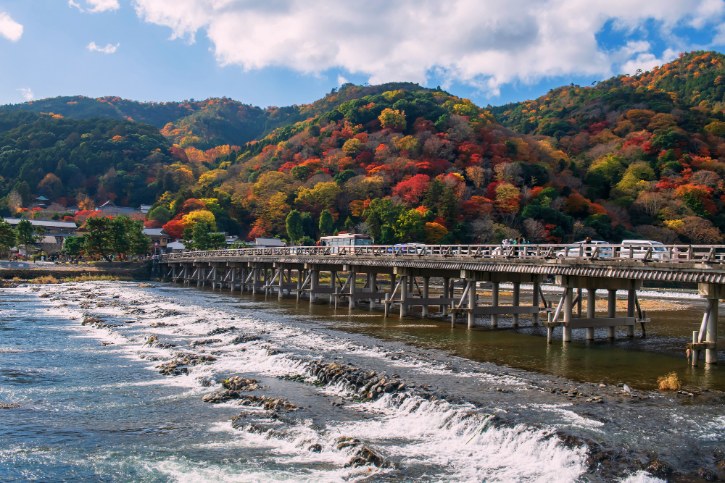
a. The Landmark That Defines Western Kyoto
Stretching across the wide Katsura River with Mount Arashiyama rising behind it, Togetsukyō Bridge is the landmark that sums up this whole area. Its story reaches back more than a thousand years:
- The first bridge is said to have been built around the year 836 by a monk named Dōshō.
- The current bridge dates to 1606, when the merchant and engineer Suminokura Ryōi had it built at its present spot.
- The structure was last rebuilt in the early 20th century and reinforced with concrete to handle seasonal flooding.
- It keeps wooden railings, so it still blends gently into the forested scenery.
b. The Gentle Story Behind Its Name
The name Togetsukyō means “Moon Crossing Bridge”, and it comes from a lovely old story.
- According to tradition, Retired Emperor Kameyama was enjoying a night boat ride during the Kamakura period (1249 to 1305).
- Watching the full moon drift slowly across a clear sky, he said it looked as though the moon itself were crossing the bridge.
- That poetic image stuck, and the name has carried it ever since.
c. Views That Change With the Seasons
The beauty of this spot comes from how the bridge sits inside the landscape. Look upstream toward the gorge and the river changes character, moving from the rushing Hozu rapids into calm, mirror-like water.
The scenery shifts through the year:
- Spring: soft pink cherry blossoms along the lower slopes.
- Mid-November: the hillside turns into a blend of crimson and gold.
- Upstream angles: the most rewarding spots if you enjoy photography.
d. Traditions Still Alive on the Water
There is more here than photos. The riverfront still carries on customs that are hundreds of years old.
- Wooden pleasure boats (yakatabune) are poled gently upstream.
- On summer nights, you may catch ukai, the old art of cormorant fishing with tethered birds and firelight.
- The bridge is part of Jūsan-mairi, a coming-of-age custom in which thirteen-year-olds in kimono cross without looking back, so their new blessings are not lost.
Step off the bridge and head north, and the open scenery gives way to shopfronts, cooking aromas, and the lively bustle of Nagatsuji-dori Street.
3. Nagatsuji-dori Street
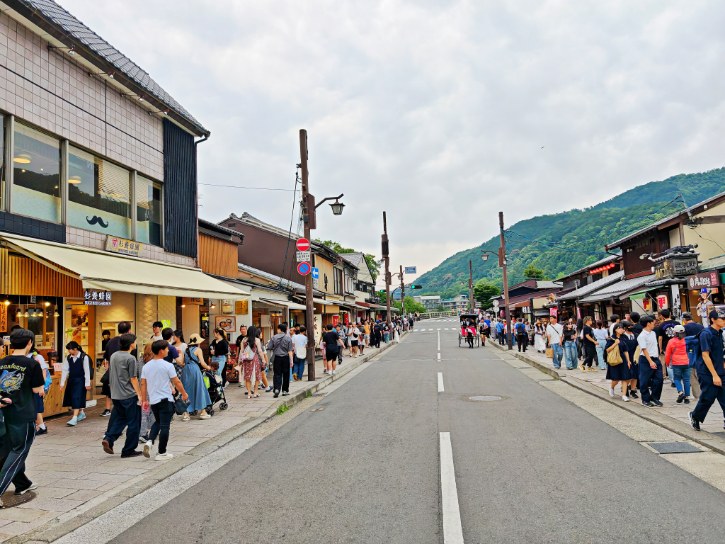
a. Arashiyama’s Main Street, Old and New Together
Nagatsuji-dori runs north from the foot of Togetsukyō Bridge through the heart of the district, mixing old and new with ease. A few things set its mood:
- Dark wooden shopfronts and vertical wooden slats (kōshi)
- Hanging cloth banners (noren) above the doorways
- Lively shops and cafés tucked between the traditional frontages
- The vintage Randen streetcars, which terminate at the nearby Arashiyama Station and add a charming, retro note
b. Eat Your Way Down the Street
This is a street to taste as you go. Many local treats come from the pure groundwater of the Sagano basin, especially soy-based foods. Keep an eye out for:
- Fried yuba (tofu skin) croquettes
- Skewers of grilled wheat gluten (nama-fu) glazed with sweet miso
- Simmered tofu (yudofu) served in calm, tucked-away dining rooms
- Warm warabi mochi dusted with roasted soybean powder (kinako)
- Roasted green tea (hojicha) gelato for something cool
c. Crafts and Gifts Worth Carrying Home
Beyond the food, the street is a showcase of local craft. If you want something to take back, look for:
- Hand-carved Arashiyama bamboo goods, such as tea whisks, baskets, and tableware
- Chirimen silk-crepe textiles
- Handmade incense blending sandalwood, cedar, and seasonal flowers
d. Slip Into the Quiet Side Alleys
Most people stick to the main road, but the real character hides just off it. Step into the stone-paved side lanes and you will find:
- Quiet homes and old storehouses (kura)
- Traditional sweet makers who still follow recipes passed down through generations
- Fine wooden louvers over the windows and banners swaying above the doorways
One of these quiet passages leads to a peaceful café, where you can slow right down.
4. eXcafe Kyoto Arashiyama Main Store
a. A Restored Old Home, Hidden From the Crowds
eXcafe sits inside a beautifully restored private house (minka) built in the early Showa period, offering a calm escape from the busy street. It feels less like a café and more like stepping into someone’s elegant old living room. Watch for the details that make it special:
- Dark timber beams and smooth wooden floors
- Sliding paper shoji screens throughout the rooms
- Sliding doors (fusuma) painted with bold, modern gold-leaf carp and plants
b. Grill Your Own Sweet Dumplings
The café is best known for its Hoku Hoku Odango Set, a hands-on treat that is as fun to make as it is to eat. Here is how it works:
- You get your own small ceramic charcoal brazier (shichirin) heated by real coals.
- You grill skewers of plain white dango and green mugwort (yomogi) dumplings yourself.
- You turn them until they puff up and develop a golden crust.
- You finish them with sweet soy glaze (mitarashi) or sweet red bean paste (tsubuan).
- Everything is paired with a bowl of frothy Uji matcha.
c. A Garden View With Every Bite
Large picture windows look out over a 400-square-meter Japanese stroll garden. From your seat on the tatami mats, you can take in:
- Sculpted black pines framing the view
- Old granite lanterns set among the greenery
- Soft moss carpets that change color through the year
It is the kind of setting that turns a simple snack into a quiet, lasting memory.
d. Small Things Worth Slowing Down For
To get the most out of your stop here:
- Grill the dumplings yourself rather than rushing, since that is the heart of the experience.
- Choose a seat facing the garden if one is free.
- Take a minute to notice how the food, the old house, and the garden all work together.
Heading back toward the Randen rail line, this quiet old home gives way to a sudden burst of color at the Kimono Forest.
5. Kimono Forest
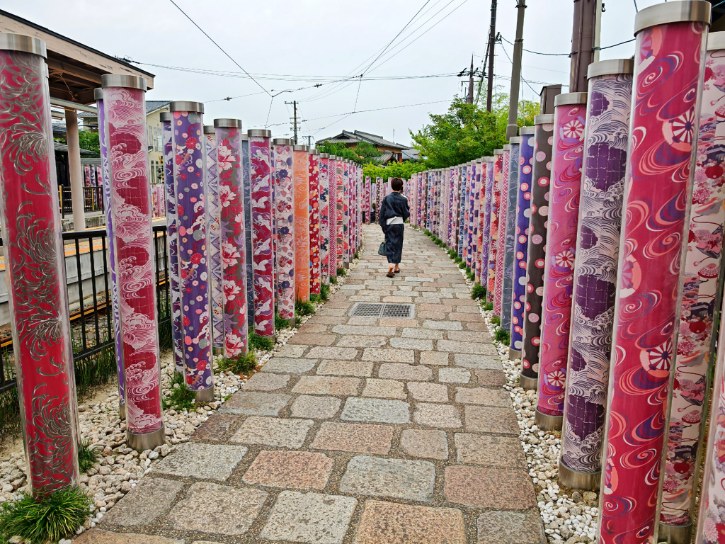
a. A Forest of Color at the Station
Right at Randen Arashiyama Station, the Kimono Forest spreads across the platforms, concourse, and garden paths. It is a public artwork that celebrates Kyoto’s long textile tradition. Interior designer Yasumichi Morita created it during the station’s redesign in 2013. He used around 600 clear acrylic pillars, each about 2 meters tall, arranged in rows that feel much like a bamboo grove. That is where the “forest” name comes from.
b. Real Silk, Daylight, and Evening Glow
Inside every pillar is a length of kimono fabric, dyed using the old Kyō-yūzen technique. The look is different depending on when you visit:
- The patterns show classic designs such as cherry blossoms, flowing river currents, pines, cranes, and tortoise-shell shapes.
- In daylight, sunlight filters through the acrylic and brings out the rich colors.
- At dusk, LED lights glow from inside each pillar, turning the station into a softly lit maze.
So try to see it in different light if you can.
c. More Than a Pretty Photo Spot
It would be easy to treat this as just a colorful backdrop, but it carries real heritage:
- The fabrics were dyed by Kamedatomi, a long-established Kyoto dye workshop dating to the Taishō era.
- They use dozens of classic Kyō-yūzen patterns, a Kyoto dyeing style from the Edo period.
- The installation ties modern, playful design to centuries of genuine Kyoto craftsmanship.
- Each pillar holds a small piece of living tradition rather than just a printed pattern.
d. The Dragon Pond at the End of the Path
Wander the different patterned pathways and you will reach a small highlight at the far end:
- Ryū no Atago, the Dragon Pond, a small pool treated as a gentle power spot.
- It is lit up after sunset, which makes the end of the walk especially pretty.
- Many visitors dip their hands in the water, said to bring a sense of peace and good fortune.
From this modern celebration of Kyoto craft, a short walk brings you to the grand gates of Tenryu-ji Temple, where centuries-old Zen tradition takes over.
6. Tenryu-ji Temple
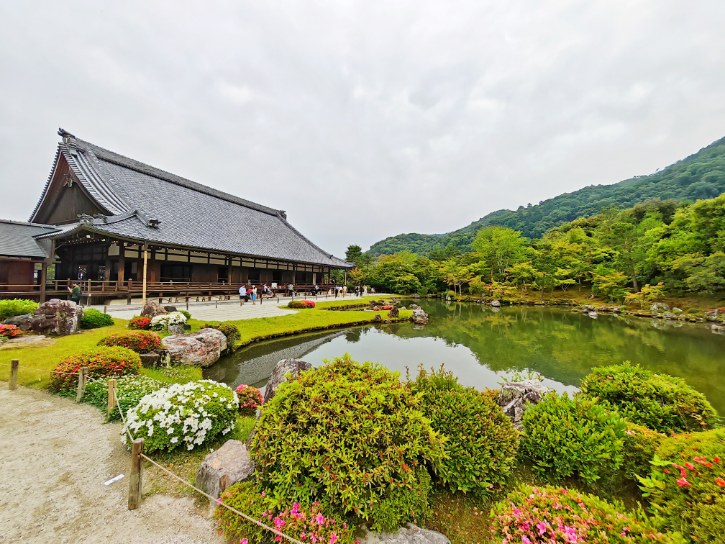
a. One of Kyoto’s Great Zen Temples
Tenryu-ji is far more than a stop on the way to the bamboo. Its history runs deep:
- Founded in 1339 by Ashikaga Takauji, the first Muromachi shogun.
- Built on the advice of Zen master Musō Soseki, to calm the spirit of Emperor Go-Daigo.
- Ranked among Kyoto’s Five Great Zen Temples, a status it still holds.
- Added to the UNESCO World Heritage list in 1994.
b. A Garden That Borrows the Mountains
The jewel of the temple is the Sōgenchi Pond Garden, counted among the most important surviving medieval gardens in East Asia.
- Musō Soseki designed it, and it became the first place in Japan named both a National Historic Site and a Special Place of Scenic Beauty.
- Its clever use of shakkei, or borrowed scenery, pulls the slopes of Mount Kameyama and Mount Arashiyama into the view.
- Across the water, look for the Dragon Gate Waterfall, with an upright carp stone that tells a Zen tale of a carp becoming a dragon.
c. Halls and Paintings to Look For
The temple buildings are just as rewarding as the garden. As you explore, keep an eye out for:
- The Daihōjō main hall, with a wide wooden veranda made for taking in the pond
- The Kuri living quarters, built in 1899, with a tall white triangular gable and a bold painting of Bodhidharma inside
- The Hattō hall, where a huge Cloud Dragon painted on the ceiling seems to follow you with its eyes wherever you stand
d. How to Enjoy It Fully
To appreciate Tenryu-ji properly, give yourself a little time rather than rushing to the bamboo. A few simple habits help:
- Sit on the veranda and watch the mountains reflect in the pond.
- Walk the garden paths to see the scene from different angles.
- Return in a different season, since each one repaints the view.
When you are ready, follow the paths to the northern gate, which leads straight into the famous grove.
7. Arashiyama Bamboo Forest
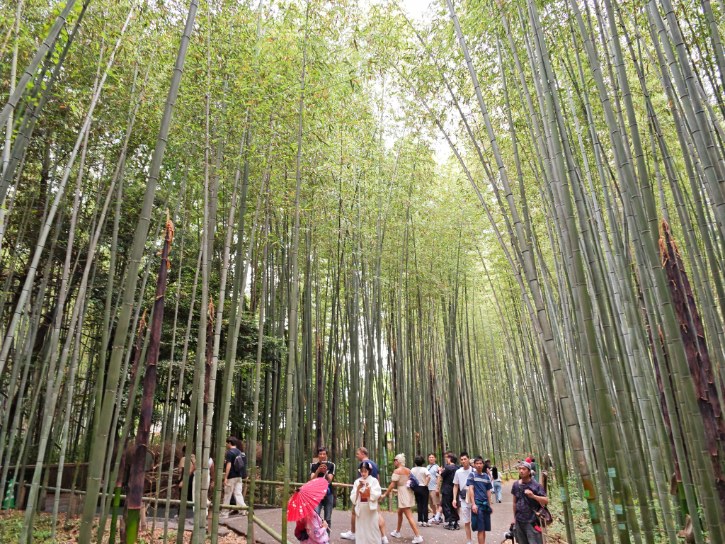
a. Stepping Into the Green Cathedral
Walk through Tenryu-ji’s north gate and you are suddenly under the towering green canopy of the Arashiyama Bamboo Forest. It is easy to see why this grove draws visitors from all over the world:
- Most of the stalks are mōsō bamboo, which can grow up to twenty meters tall.
- They rise straight and close together, forming a kind of natural cathedral.
- The dense canopy turns the harsh midday sun into cool, green light.
- Low fences woven from dried bamboo twigs line the path and protect the roots.
b. Listen, Don’t Just Look
This is a place to slow down, not rush through. The sound alone is worth pausing for:
- When wind sweeps down from Mount Atago, the tall canopies sway.
- Dry leaves rustle, and the hollow stalks knock together with a soft, wooden cadence.
- The effect is so distinctive that Japan’s Ministry of the Environment named it one of the country’s “100 Soundscapes”.
So stop for a moment, listen, and watch how the light shifts through the stalks.
c. The Shrine Hidden in the Grove
Tucked within the grove itself sits Nonomiya Shrine, a very old and meaningful Shinto site.
- In the Heian period, imperial princesses stayed here for a year of purification before traveling to the Grand Shrine of Ise.
- The shrine appears in The Tale of Genji, in the chapter where Genji says an emotional farewell to the Lady Rokujō.
- Look for its rare black torii gate, made from raw oak logs with the bark still on, one of the oldest torii styles known.
d. Get the Most From Your Walk
A little planning makes a big difference here:
- Visit early in the morning to enjoy the quiet before the crowds arrive.
- Watch for komorebi, the soft shafts of sunlight slipping through the stalks.
- Be considerate of others and of the grove itself as you take your photos.
The real magic is the atmosphere, which no single photo fully captures. At the western edge of the grove, a stone stairway leads up to the peaceful grounds of Okochi Sanso Garden.
8. Okochi Sanso Garden
a. A Film Star’s Private Mountain Retreat
Set on the eastern slopes of Mount Ogura, Okochi Sanso Garden carries a story as interesting as its scenery:
- It was the private estate of Denjirō Ōkōchi (1898 to 1962), one of pre-war Japan’s most famous silent film and samurai-movie actors.
- He began building it in 1931, at the age of thirty-four.
- He spent more than thirty years and most of his film earnings on this 20,000-square-meter retreat.
- He saw it not as a luxury but as a lasting work of art, meant to outlive his films.
b. Two Views Worth the Climb
Working with the master teahouse carpenter Kaichirō Fuefuki, Ōkōchi created several traditional buildings now registered as National Cultural Properties. The stroll garden was designed to offer views in two directions:
- Look east from the higher terraces for a sweeping scene over the Kyoto plain toward Mount Hiei.
- Walk the western ridge, where the land drops into the dramatic Hozu River Gorge, with boats drifting far below.
- Along the way, enjoy the carefully planned paths, moss carpets, and stone features.
c. A Bowl of Matcha to Finish
Following the circular trail back toward the entrance brings you to an open-air teahouse, a lovely way to rest your legs before moving on:
- A bowl of whisked matcha and a small Japanese sweet are included with your admission.
- The tea is served at the estate’s main teahouse.
- Sipping tea in a quiet mountain garden feels deeply tied to Japanese tradition.
d. A Garden for Every Season
The estate wears a different face throughout the year:
- Spring: pale weeping cherry blossoms
- Summer: deep green moss covering the grounds
- Autumn: hillsides lit up with maple leaves
Each season changes the mood of the walk, so there is always something new to notice. Leaving this retreat, a quiet lane runs north along the lower slopes of Mount Ogura toward Jōjakkōji Temple.
9. Jōjakkōji Temple
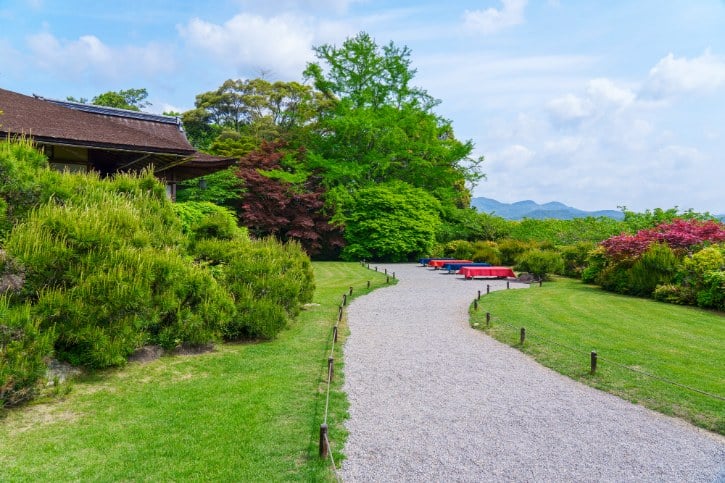
a. A Peaceful Temple on the Slopes
Tucked into the wooded slopes of Mount Ogura, Jōjakkōji is a calm escape from the crowds:
- It was founded in 1596 by the priest Nisshin Shōnin, who chose this quiet mountainside as a retreat.
- Its name comes from the Pure Land of Tranquil Light, a peaceful paradise free from suffering.
- Compared with Arashiyama’s busier sites, it offers calm, greenery, and space to breathe.
b. The Old Gate and Hilltop Pagoda
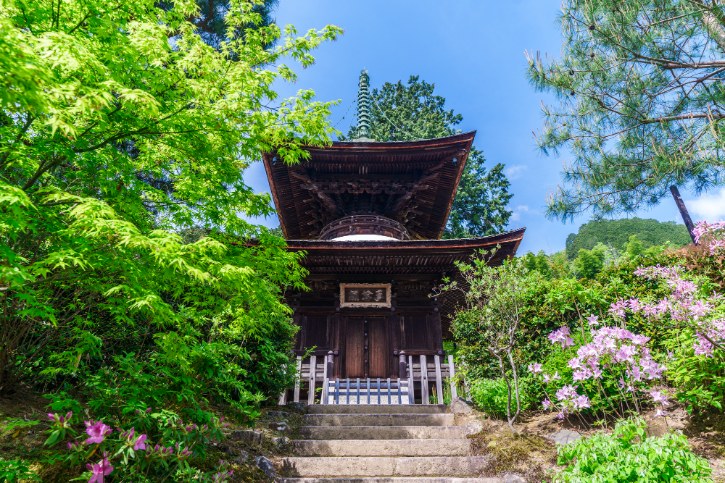
The visit begins at the Niōmon, the Gate of the Deva Kings and the oldest structure on the grounds. First built between 1345 and 1349 and moved here in 1616, its thatched roof sets the tone before you even enter. Climb the steep stone steps and you reach the temple’s highlight:
- The Tahōtō pagoda, built in 1620 and recognized as a National Important Cultural Property
- A design with a square base, a rounded upper balcony, and a bronze spire on top
- A structure that blends beautifully into the forested slope around it
c. Moss, Maples, and Quiet Beauty
The grounds are covered in soft moss, with stone steps and maple trees adding to the scene. Few places feel this calm so close to a major attraction:
- The temple is famous for its autumn colors, when its 200 maple trees turn fiery red.
- In late spring and summer, fresh green leaves cast a gentle light across the old stonework.
- Every season, the mix of moss, stone, and greenery keeps the mood peaceful.
d. A Viewpoint and Small Details
There is more here than the pagoda alone:
- Because the temple climbs the hillside, the terrace around the pagoda opens to a wide view over the rooftops of Sagano toward the Kyoto skyline.
- Take your time on the stone steps and quiet paths.
- Notice the small details, such as the weathered stonework and the way the buildings settle into the forest.
From here, a path drops down toward the open fields and quiet literary history of Rakushisha.
10. Rakushisha
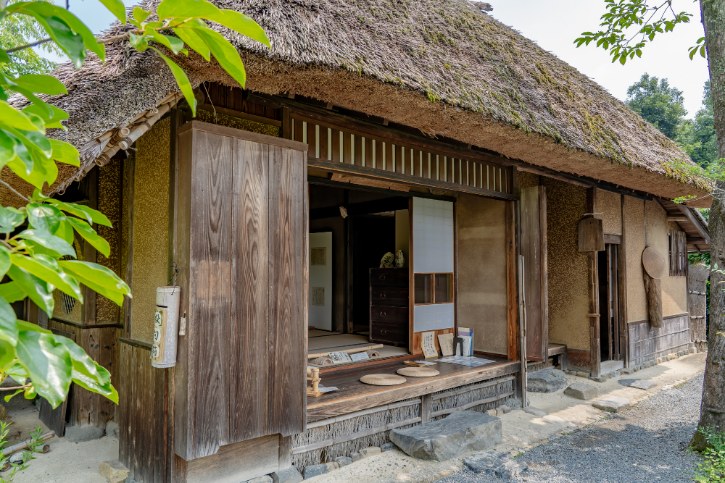
a. A Humble Hut With a Famous Past
Sitting beside small vegetable fields on the Sagano plain, Rakushisha is a modest thatched cottage with an outsized place in Japanese literary history:
- It was founded in the late 1600s by Mukai Kyorai (1651 to 1704), one of the ten main students of the haiku master Matsuo Bashō.
- Bashō visited three times, and in the summer of 1691 he wrote his travel diary, the Saga Diary, here.
- The cottage you see today is a faithful reconstruction from 1770, built to honor Kyorai’s legacy.
b. The Charming Tale of Fallen Persimmons
The name Rakushisha means “Hut of Fallen Persimmons”, and the story behind it is delightful.
- The property once had about forty persimmon trees.
- One autumn, Kyorai agreed to sell the whole crop to a Kyoto fruit merchant and took payment in advance.
- That night, a strong windstorm knocked every single persimmon to the ground.
- When the merchant returned, Kyorai simply laughed, gave the money back, and took it as a lesson in how fleeting nature can be.
He named the cottage after that storm, which is a very haiku way of seeing the world.
c. A Small Tradition at the Door
The cottage keeps its simple, rural charm, and a quiet custom at the entrance makes it feel lived in:
- The exterior has earthen plaster walls, old lattice doors, and a deep thatched roof.
- Persimmon trees still grow nearby, a nod to the hut’s name.
- A woven straw raincoat and a sedge hat hang by the door.
- In the old tradition, when those garments are hanging, the master is home to receive guests.
d. Inside the World of Haiku
Step closer and you can picture the poets at work:
- Simple tatami rooms hold an old hearth, inkstones, and hanging calligraphy scrolls.
- The garden has mossy stone markers carved with haiku by Bashō, Kyorai, and later poets.
- Bamboo groves and persimmon trees frame the cottage and keep the mood peaceful.
It is a quiet place that makes it easy to imagine the simple, thoughtful world of haiku poetry. Leaving this retreat, the path continues north into the preserved old streetscape of Saga Toriimoto.
11. Saga Toriimoto Preserved Street
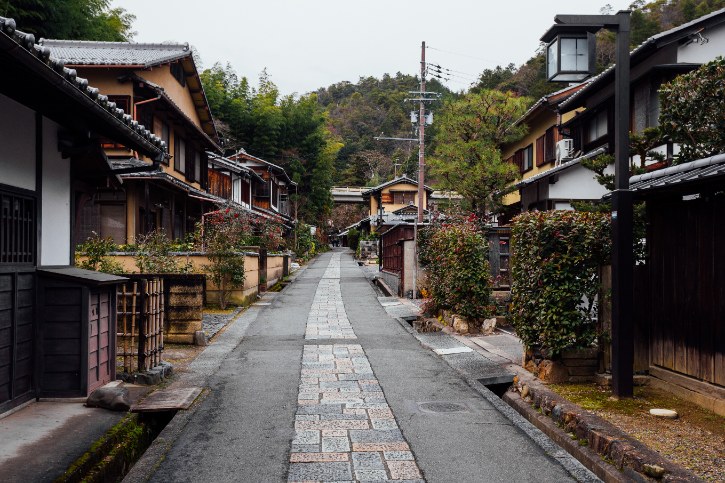
a. A Village Street Frozen in Time
Rising gently toward the northwestern hills, Saga Toriimoto Preserved Street keeps the feel of an old Kyoto village:
- In 1979, the government named it a protected district for traditional buildings, keeping modern development away.
- It follows the historic Atago Kaidō, an old pilgrimage route to the shrine on Mount Atago.
- Mount Atago was long revered for protecting the city from fire, which drew travelers up this very road.
b. Watch the Town Turn Into Countryside
Walking uphill, you can see the architecture change as the town becomes country:
- The lower section is lined with two-story wooden merchant houses (machiya), with fine lattice windows and dark timber.
- The walls are finished in plaster painted in soft, earthy tones.
- The upper section gives way to rustic farmhouses topped with steep thatched roofs (kayabuki).
- Look closely at the lattice screens, roof shapes, and weathered wood, since these details carry the street’s old-world character.
c. Teahouses That Have Served Travelers for Centuries
Near the top of the slope stands the large vermilion Ichi-no-Torii, the first gate of Atago Shrine. It is one of the most photogenic and atmospheric stretches of the whole walk:
- In its shadow sit two historic teahouses, Hiranoya and Tsutaya.
- Both have welcomed travelers for more than four hundred years.
- You can rest on wooden benches and enjoy sweet tea treats or sweetfish grilled over charcoal, just as pilgrims once did.
d. Slow Down and Soak It In
This is a place to drop your pace:
- The quiet road, bordered by old timber walls, feels worlds away from the busy center of Arashiyama.
- Whatever the season, the mix of traditional buildings and natural surroundings carries the spirit of old Kyoto.
- Give yourself time simply to stroll, with no need to rush anywhere.
As the stone road winds toward the mountain base, it leads to the peaceful, moss-covered grounds of Adashino Nenbutsuji Temple.
12. Adashino Nenbutsuji Temple
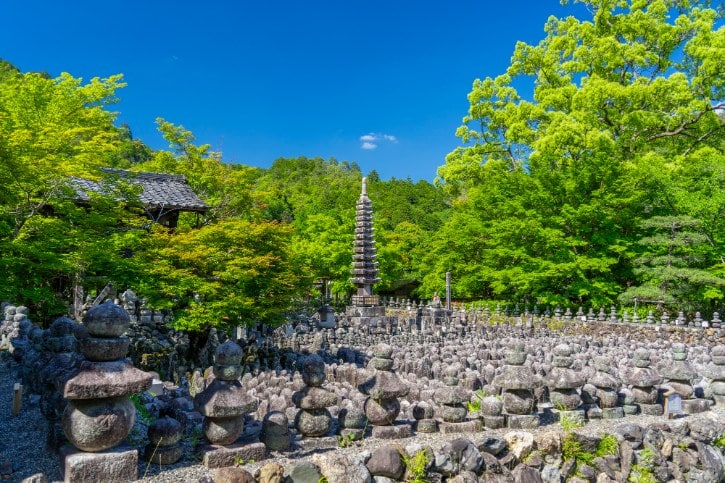
a. A Place of Deep History and Remembrance
Set on the slopes of Okusaga, Adashino Nenbutsuji stands on land with a long and solemn past. A few points help explain its meaning:
- Since the Heian period, this was an open burial ground for the poor, famine victims, and those without families.
- The old name Adashino means “the field of sorrow and transience”, a theme deep in classical Japanese poetry.
- In 811, the famous monk Kūkai founded a temple here to honor the exposed remains and comfort the departed.
- Later, the Pure Land founder Hōnen turned it into a training temple for reciting the name of Amida Buddha.
b. Thousands of Silent Stone Memorials
The heart of the temple is Sai no Kawara, an open courtyard ringed by low stone walls. Standing here in quiet rows are the temple’s most striking feature:
- Around 8,000 old stone memorials, including small pagodas, stupas, grave markers, and weathered images of Jizō and Amida.
- Stones that had once been scattered and buried across the mountains.
- A collection gathered by local villagers and priests in the late 1800s and arranged here with great care.
- A strict rule: photography inside the walls is not allowed, out of respect for the souls remembered there.
c. A Quieter Bamboo Path at the Back
The grounds themselves are deeply peaceful, with moss, stone, and quiet mountain woods all around. At the back, a hidden corner makes a fitting place to end a long day of walking:
- A stone staircase leads through a small, secluded bamboo path.
- It is a gentle, contemplative space, far calmer than the busy central Bamboo Forest.
- Many visitors find it just as beautiful, and far more restful.
d. Lanterns That Honor the Departed
The temple’s memorial traditions still continue today:
- The most notable is the annual Sentō Kuyō, or Thousand Lantern Memorial Service, held on the evenings of August 23 and 24.
- During this solemn rite, thousands of candles are lit across the field of stone markers.
- Priests chant sutras for the departed as the flickering light spreads across the memorials.
Ending at Adashino Nenbutsuji brings a thoughtful, meaningful close to a day in Arashiyama. Its quiet grounds, memorial traditions, and small bamboo path tie together everything the area has to offer.
Seeing only the famous Bamboo Forest means missing so much: riverside history, classical Zen gardens, mountaintop views, living literary heritage, and quiet historic streets.
Step a little beyond the familiar, and western Kyoto reveals a richer, deeper character, where natural beauty and centuries of tradition still sit side by side.
Related Posts

Photo Credit:
Photos by PIXTA