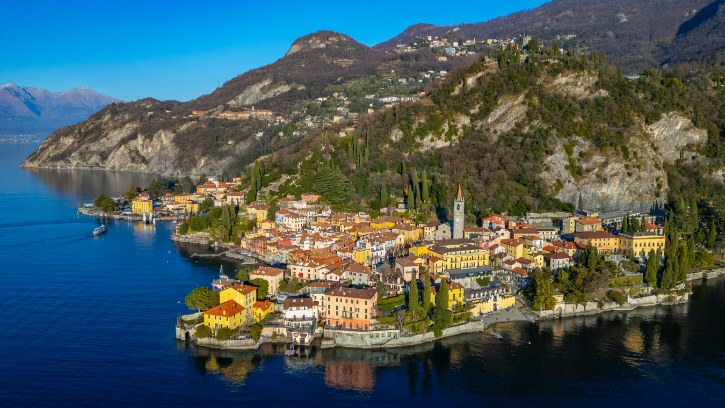
A road trip from Lake Como to Venice might sound ambitious, but it is one of the easiest and most rewarding drives in Italy.
The route links glacial lakes, medieval hill towns, Roman ruins, and vineyard country, and many stops sit just 20 to 40 minutes from the next.
You get constant changes of scenery with very little time behind the wheel, and a journey you will remember for years. 😊
1. Lake Como, Where the Journey Begins in Style
Few places give you a more dramatic start, with mountains dropping into deep water and villages clinging to the slopes.
a. Settle Into Como’s Old Town First
- Begin in Como town, tucked inside its old stone walls.
- The Duomo di Como was begun in 1396 and took three centuries to finish.
- The lakefront promenade runs along the water, with steep wooded hills rising behind, ideal for a first stroll.
b. Ride High Above the Lake to Brunate
- Take the historic funicular, climbing this slope since 1894, up in about seven minutes.
- The village is nicknamed the Balcony of the Alps, and it earns the name.
- A half-hour walk uphill reaches the Volta Lighthouse, with views toward Monte Rosa and Milan.
c. Lose Yourself in Bellagio, the Pearl of the Lake
Bellagio sits where the lake splits into two arms, and its charm is in the details: steep stone stairways, pastel buildings, silk shops, and flowering vines. Slow down and follow the lanes wherever they lead you.
d. Stroll the Serene Villa Melzi Gardens
- The Villa Melzi Gardens were laid out in the early 1800s.
- Expect plane trees, Japanese maples, water lily ponds, and marble statues.
- Nearly every path ends with a calm view across the lake.
e. Cross the Water to Romantic Varenna
- Reach it by ferry, which is part of the pleasure.
- Walk the Passeggiata degli Innamorati, a red-railed path above the water.
- Climb to Castello di Vezio for birds of prey and a sweeping lake view.
f. Save Time for the Grand Lakeside Villas
- Villa Carlotta dazzles with terraced gardens and sculptures by Antonio Canova.
- Villa del Balbianello crowns a wooded peninsula, loved for its loggia and shaped oaks.
- Hopping between shores by ferry saves the long drive and adds views from the water.
From the cliffs and deep water, the road drops through green foothills toward Bergamo.
2. Bergamo, a Medieval City in the Sky
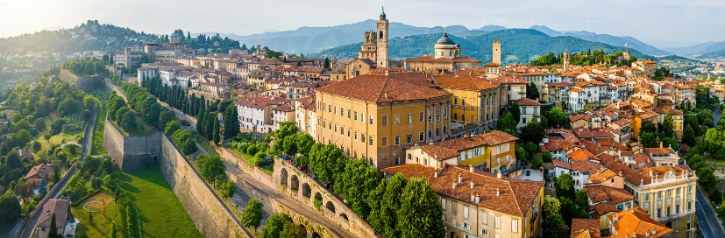
Bergamo is two cities in one: a busy lower town and, high above, a walled medieval center that ranks among the most beautiful in northern Italy.
a. Climb Into the Historic Upper Town
The Upper Town, or Città Alta, is the heart of any visit, with medieval streets and a hilltop setting that reward slow wandering. Take your time, get a little lost, and enjoy the gentle pace.
b. Walk the Mighty Venetian Walls
- They are a UNESCO World Heritage site from the days of the Venetian Republic.
- More than five kilometers of massive sixteenth-century stone wrap the old town.
- Tree-lined promenades along the top give long views across the plain.
c. Pause in Beautiful Piazza Vecchia
- Piazza Vecchia has long been admired for its harmony.
- An elegant eighteenth-century fountain anchors the space.
- Handsome historic buildings frame it on every side.
d. Step Inside Two Stunning Landmarks
- The twelfth-century Basilica di Santa Maria Maggiore hides a rich interior of tapestries and carved wood.
- The Cappella Colleoni dazzles with red, white, and black marble and delicate columns.
e. Reach the Top of the Campanone
- The Campanone bell tower still rings 100 chimes every evening.
- The tradition once signaled the closing of the city gates.
- From the top you look down onto red-tiled roofs and church domes.
f. Taste History With a Scoop of Gelato
- A hilltop gelateria is celebrated as the birthplace of stracciatella.
- The flavor was created here in 1961 with dark chocolate poured into churning cream.
- A scoop is a small, delicious piece of local history.
Leaving the towers behind, the road rolls east toward the quiet shores of Lake Iseo.
3. Lake Iseo, the Lake Most Travelers Overlook
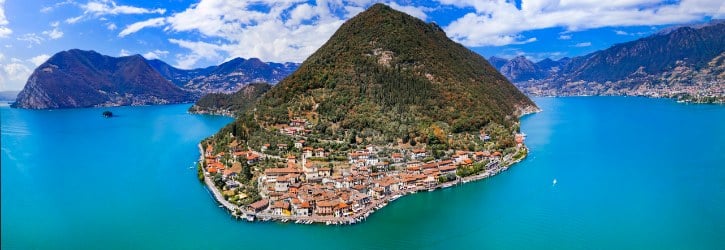
Tucked between its famous neighbors, Lake Iseo is the one many visitors miss, which is exactly its charm.
a. Soak Up a Quieter Kind of Beauty
Lake Iseo has steep limestone mountains to the north, wooded hills to the south, and cliffs dropping straight into turquoise water. The whole lake feels calm, authentic, and refreshingly unhurried.
b. Explore Monte Isola, a Car-Free Wonder
- Monte Isola is the largest inhabited lake island in Europe, rising more than 400 meters.
- Private cars are banned, so you travel on foot, by bike, or by small local bus.
- Ferries land at fishing hamlets where taverns serve local lake fish.
c. Hike Up to the Hilltop Sanctuary
- A steep cobbled trail climbs through olive terraces and chestnut woods.
- At the top stands the white Santuario della Madonna della Ceriola, built on eighth-century foundations.
- The reward is a full 360-degree view over the lake and its islets.
d. Discover Colorful Lovere and Pisogne
- Lovere, one of Italy’s loveliest villages, curves around a harbor of colorful facades.
- Its Renaissance basilica is richly decorated inside.
- Nearby Pisogne holds a powerful fresco cycle on the Passion of Christ.
e. Relax in Easygoing Iseo Town
- Wander the arcaded Piazza Garibaldi and pass the old castle.
- Follow the waterfront promenade at your own pace.
- Settle at a café and soak up the calm.
f. Add a Taste of Franciacorta Wine Country
- Just inland, Franciacorta fills with rolling vineyards and stone abbeys.
- The region is famous for classic-method sparkling wines.
- The green scenery is a lovely contrast to the lake.
Leaving the quiet water behind, the road heads east to the grand squares of Brescia.
4. Brescia, Where Rome and the Middle Ages Meet
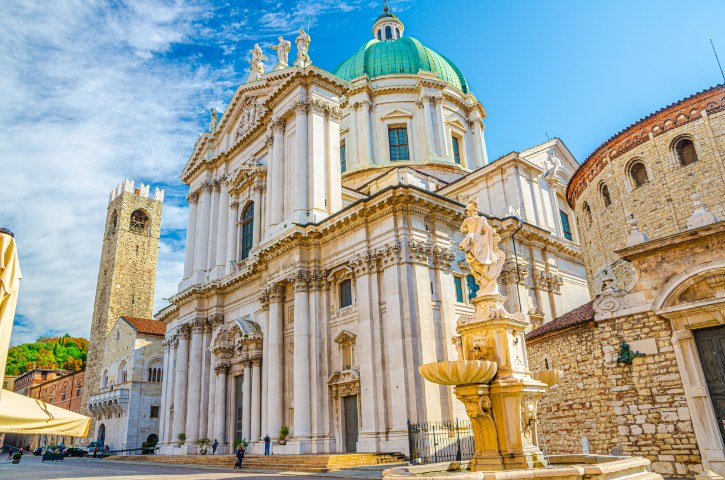
Brescia layers ancient Rome, medieval fortresses, and Renaissance squares side by side, with real history and very few crowds.
a. Marvel at the Square of Two Cathedrals
- The older Duomo Vecchio is a rare round cathedral, among the finest in Europe.
- The younger Duomo Nuovo has a white facade and one of Italy’s largest domes.
- Seeing them together, ancient and grand, is a genuine highlight.
b. Admire Elegant Piazza della Loggia
Piazza della Loggia is a refined Renaissance square with clear Venetian taste. A white marble palace lines one side, while a clock tower opposite sends two mechanical figures to strike the hours on a bronze bell.
c. Walk Among Real Roman Ruins
- The Capitolium, a temple built by Emperor Vespasian in 73 AD, anchors ancient Brixia.
- Marble columns and a nearby theater survive in an open archaeological zone.
- Standing here, you sense the layers of history underfoot.
d. Lose a Few Hours at Santa Giulia
- This museum sits inside an old Benedictine convent spanning thousands of years.
- It holds a beautifully preserved bronze Winged Victory statue.
- The whole complex carries a UNESCO listing, so plan to linger.
e. Climb to the Castle for the View
- A sprawling hilltop fortress is nicknamed the Falcon of Italy.
- Roman foundations, medieval towers, and later ramparts sit in green parkland.
- The viewpoints look out over the terracotta roofs of the old town.
f. Join the Locals for an Aperitivo
- The city’s signature drink is the Pirlo, with white wine, Campari, and soda.
- Quiet pedestrian piazzas fill up as afternoon fades.
- It is an easy way to feel part of daily life.
Leaving Brescia’s Roman stones, the road heads east as the blue of Lake Garda appears.
5. Lake Garda, Italy’s Largest and Most Varied Lake
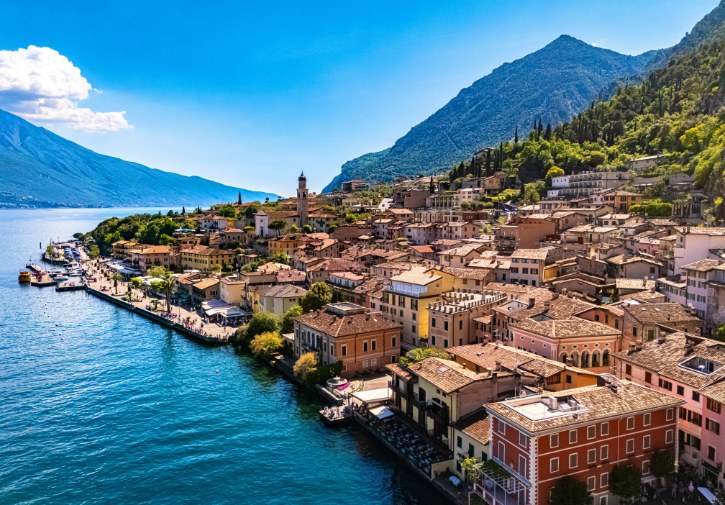
Lake Garda feels like several places at once, warm and Mediterranean in the south, dramatic and mountainous in the north.
a. Begin on the Beautiful Southern Shore
The gentle southern shore is sun-soaked, with rolling hills, olive groves, and tall cypress trees. A mild climate has welcomed travelers here since ancient times.
b. Fall for the Peninsula Town of Sirmione
- You enter across a drawbridge, beneath a fourteenth-century Scaliger Castle.
- The castle has a rare fortified harbor and a keep you can climb for lake views.
- Inside, flower-draped lanes lead past gelaterias and waterfront terraces.
c. Step Back in Time at the Grotte di Catullo
- Despite the name, the Grotte di Catullo are not caves but a grand Roman villa.
- The seaside estate is nearly two thousand years old and spreads over two hectares.
- Old olive trees shade the ruins, which overlook emerald water.
d. Soothe Your Travels in Thermal Waters
- Sirmione is famous for warm, sulfurous thermal springs rising beneath the lake.
- The mineral-rich waters have fed a celebrated spa culture since the late 1800s.
- They make a relaxing pause midway through the journey.
e. Head North to Malcesine and Monte Baldo
- Malcesine clings to the mountainside beneath its own castle.
- A rotating cable car climbs to over 1,700 meters on Monte Baldo.
- From the top, alpine meadows open onto views along the whole lake.
f. Wander the Charming Eastern-Shore Towns
- Lazise keeps its medieval walls, a lakeside castle, and a harbor of small boats.
- Bardolino charms with a pastel waterfront and light local red wines.
- Both make easy stops for a lazy afternoon by the water.
Leaving Garda’s blue water, the road follows a gentle river south to a tiny, enchanting village.
Read More: 12 Beautiful Lake Garda Spots With Only a Short Drive Between Them
6. Borghetto sul Mincio, a Village Straight From a Fairy Tale
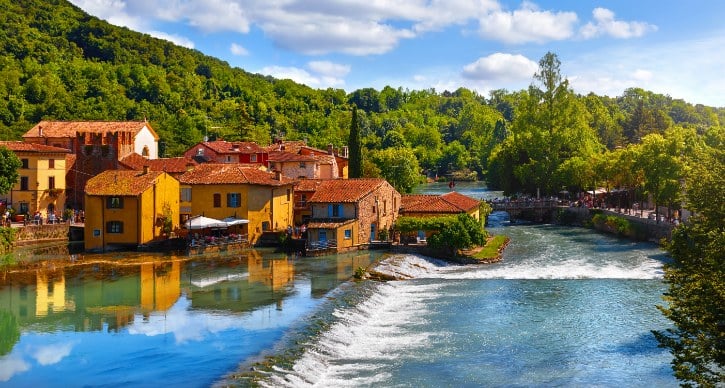
Few places feel as magical as Borghetto sul Mincio, where stone houses and watermills seem to float on the water.
a. Watch the Village Float on the Water
The river that drains Lake Garda splits here into several channels that weave through the village. That close bond with the water gives Borghetto its dreamy, storybook feel.
b. Admire the Historic Watermills
- The old watermills once ground grain with their large wooden wheels.
- Many now house riverside restaurants and cafés.
- Weeping willows trail into the water right beside them.
c. Cross the Mighty Visconti Bridge
- The Visconti Bridge, a fortified bridge-dam, was built in the 1390s by order of the Duke of Milan.
- Stretching roughly 650 meters, it worked as a crossing and a hydraulic fortress.
- Its ruined towers still give a fine view over the valley.
d. Look Up to the Hilltop Castle
- Above the valley sits a Scaliger castle tied to an old defensive wall system.
- Its keep looks out over the village, the plains, and nearby gardens.
- It is an easy add-on for history paired with a wide view.
e. Taste the Famous Knot of Love
- The Nodo d’Amore, or Knot of Love, is a hand-folded tortellino as thin as silk.
- Local legend ties it to a tragic romance and a silk ribbon left by the river.
- Tasting it beside the mill streams is a simple joy.
f. Catch the Prettiest Village Views
- Stand on the little bridges to frame the mills and old houses together.
- Early light and late afternoon are especially lovely.
- Reflections in the calm channels make every photo look like a painting.
Leaving the quiet mills, the road runs northeast to the Roman arches of Verona.
7. Verona, the City of Romance and Roman Grandeur
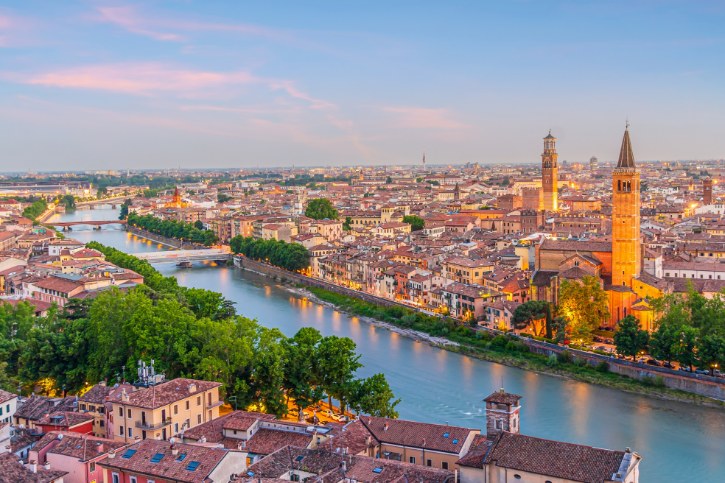
Verona has a bit of everything: Roman monuments, medieval streets, a graceful river, and the romance of Romeo and Juliet.
a. Stand Before the Ancient Arena
- The Arena di Verona was built in the first century AD, before Rome’s Colosseum.
- It is one of the best-preserved ancient structures anywhere.
- Today it hosts world-famous open-air opera, heard clearly in the top rows.
b. Relax in Lively Piazza Bra
The Arena sits in Piazza Bra, one of the largest and liveliest squares in the city. A curved promenade of cafés and elegant palaces wraps around it, making a perfect place to begin.
c. Explore the Riverside Castle
- Castelvecchio guarded the city with a moat and massive brick towers.
- Its brick bridge arches over the water, rebuilt stone by stone after wartime damage.
- The castle now holds a fine art museum.
d. Soak Up the Buzz of Piazza delle Erbe
- Piazza delle Erbe, set on the old Roman forum, buzzes with a daily market.
- Frescoed house fronts and a medieval tower frame the space.
- It is one of the most atmospheric spots in the city.
e. Find Calm in Piazza dei Signori
- Just beyond the market lies Piazza dei Signori, a quieter, refined square ringed by palaces.
- A marble statue of the poet Dante stands at its center.
- He found shelter here during his exile, adding to its stately mood.
f. Visit Juliet’s House With Clear Eyes
- Despite the fame of Juliet’s House, Shakespeare never visited Verona.
- The famous balcony was added only in the last century.
- The building is really a medieval townhouse, so enjoy it as legend.
g. Take in the Views From the Lamberti Tower
- Climb the tall Torre dei Lamberti for the best panorama.
- The view takes in red-tiled roofs, church towers, and the curving river.
- It is the easiest way to get your bearings.
Leaving Verona’s grandeur, the road heads east to a walled town crowned by a castle.
8. Soave, a Walled Town Wrapped in Vineyards
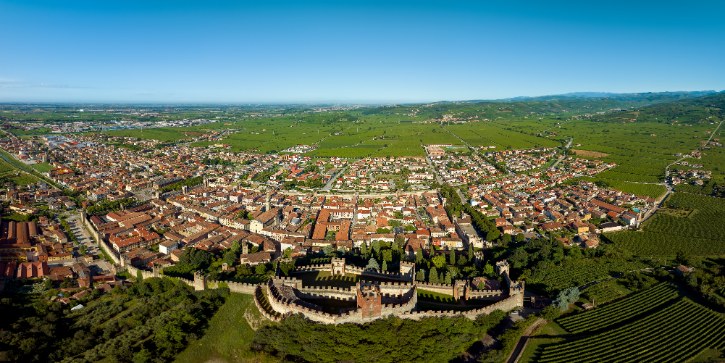
Soave is a small medieval town wrapped in intact walls, watched over by a hilltop castle and ringed by famous vineyards.
a. Step Into a Preserved Medieval Village
Small, walled Soave is full of narrow streets and charming buildings, with a peaceful, lived-in feel. Set on a hillside among the vines, it invites you to slow right down.
b. Explore the Hilltop Scaliger Castle
- The Scaliger Castle’s current layout was set in the late 1300s, around a tall central keep.
- Three descending walled courtyards once provided layered defense.
- Inside, you can see frescoed rooms and walk the patrol paths.
c. Follow the Walls Around the Town
- The medieval walls descend from the castle to enclose the center.
- The wall circuit still keeps two dozen towers and three historic gates.
- They give Soave its dramatic, unmistakable outline.
d. Discover the Heart of the Village
- The main street leads to Piazza Antenna, the town’s gathering place.
- A fourteenth-century palace with a Gothic portico overlooks it.
- Historic buildings and a handsome old church complete the square.
e. Raise a Glass of Soave Wine
- The Garganega grape forms the heart of Soave Classico, a crisp, dry white.
- Expect floral aromas and notes of almond and citrus.
- Tasting rooms pour regional wines with local cheese and cured meats.
f. Enjoy the Vineyard Views
- Rolling vineyards carpet the hills around the medieval town.
- The best viewpoints line up the castle, the walls, and the vines at once.
- The contrast of stone and greenery is a photograph in itself.
Leaving Soave’s walls, the road continues east to a city of refined palaces and symmetry.
9. Vicenza, the City Shaped by One Great Architect
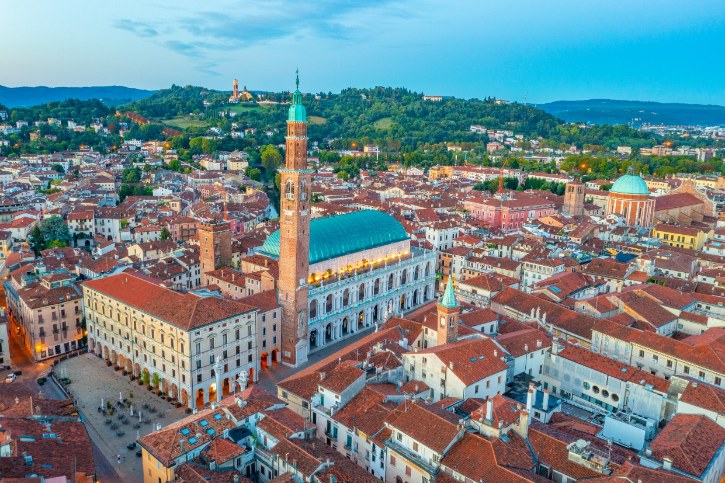
Vicenza is the City of Palladio, filled with elegant palaces and proportions that shaped building design across the western world.
a. Understand the City’s Architectural Soul
Palladio drew on ancient Roman ideas to bring balance, symmetry, and classical temple fronts to everyday buildings. His influence earned the city its UNESCO World Heritage status and a wonderfully unified look.
b. Admire the Magnificent Basilica Palladiana
- The Basilica Palladiana began as a crumbling palace that Palladio wrapped in a two-story white stone loggia.
- His famous arch-and-column motif made the design instantly iconic.
- An open upper terrace offers sweeping views over the square.
c. Step Inside the Astonishing Teatro Olimpico
- The Teatro Olimpico is the oldest surviving indoor Renaissance theater in the world.
- Palladio designed it before his death in 1580, and his pupil completed it.
- Its permanent wooden scenery creates a striking illusion of receding streets.
d. Wander the Elegant Palace-Lined Streets
- The main avenue is a parade of grand Palladian palaces.
- One palace now holds the civic art museum.
- Strolling the arcades is a real joy, so slow down and look up.
e. Climb to the Monte Berico Sanctuary
- A long eighteenth-century portico of 150 arches climbs to the Monte Berico sanctuary.
- The terrace looks out over Vicenza’s rooftops toward the foothills.
- It is a peaceful, uplifting spot away from the busy streets.
f. Visit Palladio’s Most Famous Villa
- A short trip out of town reaches Villa La Rotonda.
- It is perfectly symmetrical, a domed square with porticos on all four sides.
- For anyone who loves architecture, it is a fitting finale.
Leaving the palaces, the road climbs toward the foothills and the river town of Bassano del Grappa.
10. Bassano del Grappa, a Riverside Town With Mountain Views
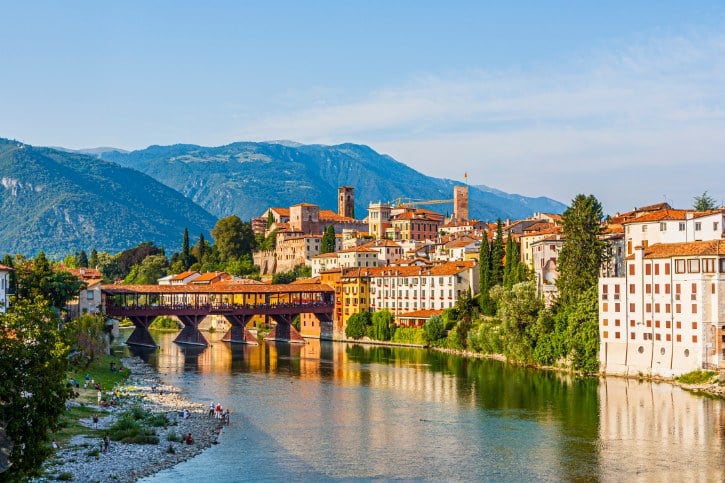
Set against Monte Grappa, Bassano is famous for its covered wooden bridge, colorful riverside houses, and long grappa tradition.
a. Cross the Beloved Wooden Bridge
- The Ponte degli Alpini was designed in 1569 by Andrea Palladio, using timber to survive mountain torrents.
- It has been rebuilt many times after floods and wartime damage.
- Walking across it, with the green river below, is the signature Bassano experience.
b. Admire the Emerald Brenta River
The clear, rushing green water of the Brenta River runs beneath the bridge, past colorful facades and toward the steep slopes to the north. That bond between river and old town gives Bassano its picture-postcard charm.
c. Sip the Town’s Famous Grappa
- The historic distillery by the bridge has operated since 1779, Italy’s first.
- Grappa is a strong, aromatic spirit distilled from the leftovers of winemaking.
- Standing at the old wood-paneled counter for a small glass is a local ritual.
d. Wander the Colorful Old Center
- Charming streets, frescoed facades, and the arcaded Piazza Garibaldi invite exploration.
- Outdoor cafés and traditional shops line the open piazzas.
- A medieval tower and historic churches add to the atmosphere.
e. Look Up to Monte Grappa
- Monte Grappa, the great peak above the town, gives the whole area its name.
- It saw bitter fighting during the First World War.
- Today it holds a large military memorial to the many who died there.
f. Take in the Classic Bridge Views
- The riverside path below gives the full scene of water, wood, and mountains.
- The terrace at the eastern end offers another lovely angle.
- Soft morning or late light makes the colors glow.
Leaving the mountains, the road heads south to the grand arcades and art of Padua.
11. Padua, a City of Great Art and Ancient Learning
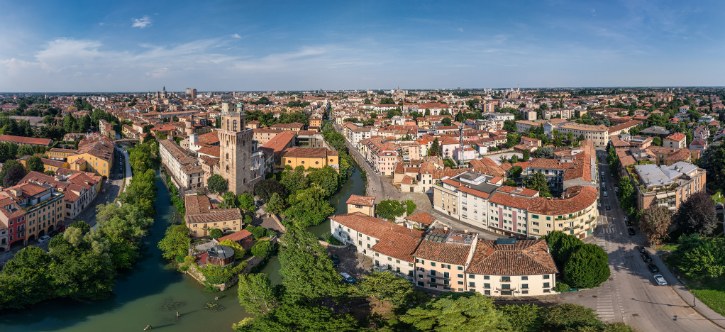
Padua is one of the oldest and richest cities in northern Italy, home to a famous university, great shrines, and masterpiece art.
a. Begin at the Enormous Prato della Valle
- Prato della Valle is one of the largest squares in Europe.
- A green island at its center is ringed by a canal.
- Dozens of marble statues of historical figures line the water.
b. Pay a Visit to the Great Basilica
The famous pilgrimage shrine known as Il Santo blends a Romanesque front, Byzantine domes, and slender towers. Inside, pilgrims gather at the saint’s chapel while art lovers admire bronzes by Donatello.
c. Stand Amazed in the Scrovegni Chapel
- Giotto decorated the interior with frescoes between 1303 and 1305.
- By giving his figures real emotion, he changed the course of western art.
- The chapel carries a UNESCO listing and ranks among the great masterpieces.
d. Dive Into the Lively Market Squares
- The linked Piazza delle Erbe and Piazza della Frutta host daily food markets.
- Colorful stalls fill the spaces with produce and local goods.
- A huge medieval palace between them holds one of Europe’s largest halls.
e. Walk in the Footsteps of Galileo
- The University of Padua, founded in 1222, is among the oldest in the world.
- You can see the rooms where Galileo once taught.
- An early anatomical theater here was the first of its kind.
f. Pause at a Historic Café
- Founded in the eighteenth century, Caffè Pedrocchi was known as the café without doors.
- It stayed open day and night as a meeting point for students and thinkers.
- The house specialty is an espresso layered with cold mint cream and cocoa.
g. Stroll Beneath the Famous Porticos
- Padua’s covered porticos stretch more than twenty-five kilometers.
- They shade students, shoppers, and café-goers all day.
- Wandering beneath them is one of the city’s simple pleasures.
Leaving Padua, the road runs its final stretch to where the land ends and the lagoon begins.
12. Venice, the Unforgettable End of the Road
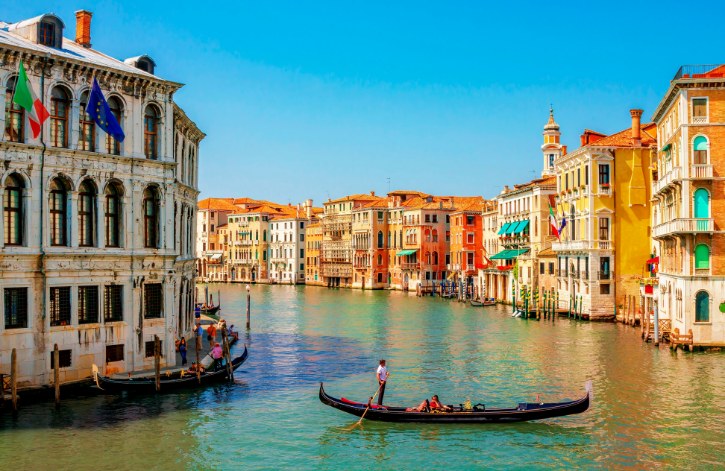
There is no better place to end this journey than Venice, a city of canals and palaces found nowhere else on earth.
a. Swap the Car for the Water
- Venice’s historic center has no cars, so the drive ends at the lagoon’s edge.
- From the western entry points, you continue on foot or by public water bus.
- A short automated monorail links the two arrival areas in about three minutes.
b. Arrive in Magnificent Piazza San Marco
Piazza San Marco, the ceremonial heart of the city, is often called the finest drawing room in Europe. Grand arcaded buildings frame it, the great basilica dominates one end, and arriving here is a moment you will never forget.
c. Gaze Up at St. Mark’s Basilica
- St. Mark’s Basilica shows five rounded Byzantine domes and carved marble portals.
- Inside, around 8,000 square meters of golden mosaics cover the walls and ceilings.
- The shimmering effect, especially in soft light, is simply dazzling.
d. Explore the Doge’s Palace and Bridge of Sighs
- The Doge’s Palace is a masterpiece of Venetian Gothic, with delicate stone arcades.
- Grand halls inside are filled with monumental art.
- From the waterfront, you can admire the enclosed white Bridge of Sighs.
e. Glide Along the Grand Canal
- The S-shaped Grand Canal is lined with more than 170 historic palaces.
- A water bus reveals centuries of architecture, from Gothic to baroque.
- At its narrowest point stands the famous Rialto Bridge, lined with shops.
f. Wander the Quiet Back Lanes
- Slip into neighborhoods like Cannaregio, Dorsoduro, and Castello.
- Narrow passageways open onto peaceful squares with laundry overhead.
- Getting pleasantly lost here is half the magic.
g. Savor Venice From the Water and the Table
- Cross the Grand Canal for a few coins on a traditional standing gondola.
- Stop at a neighborhood wine bar for cicchetti, small Venetian bites.
- Sit by a quiet canal and watch a city that lives entirely by the water.
Read More: Venice Is Surprisingly Walkable: These 17 Beautiful Spots Are Close Together
And so one unforgettable journey winds to its close. It begins on the mountain shores of Lake Como, moves through the walls of Bergamo, the quiet beauty of Lake Iseo, and the Roman stones of Brescia. It carries you along the blue expanse of Lake Garda, into the fairy-tale mills of Borghetto, past the arches of Verona, the vineyards of Soave, the palaces of Vicenza, the river bridge of Bassano del Grappa, and the frescoes of Padua.
What starts on the shores of a mountain lake ends among the floating halls of Venice. Twelve very different places, each beautiful in its own way, strung together into one remarkable drive. Venice is not just where the road runs out. It is the perfect ending to a journey filled with scenery, history, and moments you will carry home with you.