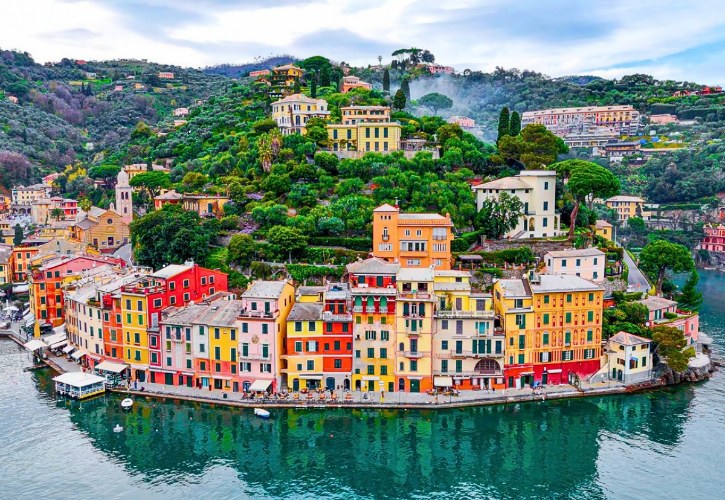
You already know about the five famous villages of Cinque Terre. What most visitors never discover is that the Italian Riviera runs far beyond those five, and the train that hugs this coast puts a whole string of other towns within easy reach.
Step off along the way and you will find sheltered harbors, pastel waterfronts, a glamorous yacht port, wild headlands, and seafood you will think about long after you go home.
Many of these towns sit just 3 to 15 minutes apart by rail. Every stop here is easy to reach by train except Portofino, which you reach by a short bus or ferry from Santa Margherita, and even that is a very short hop.
Here are 12 beautiful places along the Riviera di Levante that deserve a spot on your journey, starting with a seaside village most visitors rush right past. 😊
1. Camogli
a. A Working Fishing Port That Kept Its Soul
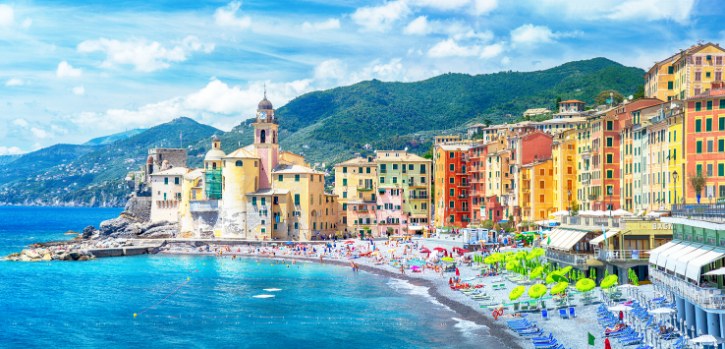
Camogli sits on the western side of the Portofino promontory, facing the Golfo Paradiso. For centuries, people here lived off the sea, and that heritage still shapes the town. You will not find polished resort glamour. Instead, you get a real Ligurian port where wooden fishing boats still tie up beside the promenade.
b. The Painted Houses Sailors Once Called Home
The first thing you notice is the wall of tall, narrow houses along the water. They were built high and thin to fit the slim strip of shore, and their warm colors had a purpose. Returning sailors once used those shades of ochre, salmon, peach, and terracotta to spot their own family homes from out at sea. Look closely and you will see painted shutters, cornices, and stonework, all brushed onto the plaster.
c. Sights You Shouldn’t Miss
- Castello della Dragonara. A twelfth-century castle built to defend the bay against Saracen raiders, with stone walls that look out over the gulf.
- Basilica di Santa Maria Assunta. Right beside the castle, this church hides a rich Baroque interior of colored marble, gilded stucco, and frescoed ceilings.
- The caruggi. Behind the beach, shadowy pedestrian lanes climb the slope under dark slate arches, past old stairways and tucked-away bakery doors.
- Punta Chiappa. A natural tongue of rock reaching into deep water, topped by the concrete bunkers of a World War II defense post with wide sea views.
d. How to Spend Your Day
- Stroll the seafront and stop for warm focaccia or camogliesi al rum, little chocolate puffs filled with rum cream.
- Walk the stone trails of the Portofino park, starting from the church square of San Rocco down toward Punta Chiappa.
- Snorkel or dive in the protected marine reserve around the headland. Note that the famous deep Grotta dei Gamberi is for experienced technical divers only.
- On calm summer days, you can often see the bronze Christ of the Abyss statue resting on the seabed near San Fruttuoso, visible through the clear water from above.
e. The Secret Abbey Around the Point
Tucked into a deep inlet on the southern side of the headland is the Abbey of San Fruttuoso di Capodimonte. Monks founded it over a thousand years ago, and the powerful Doria family later added a watchtower and marble-lined crypts.
It stands right above a small pebble beach, framed by steep pine slopes. Keep in mind you can only reach it on foot across the promontory or by boat, never by train. If you have the time, it is a magical detour.
From this working harbor, the coast softens into the sunlit Gulf of Tigullio, where Santa Margherita Ligure shows off a more elegant side of the Riviera.
2. Santa Margherita Ligure
a. Where the Riviera Puts On Its Finest Clothes
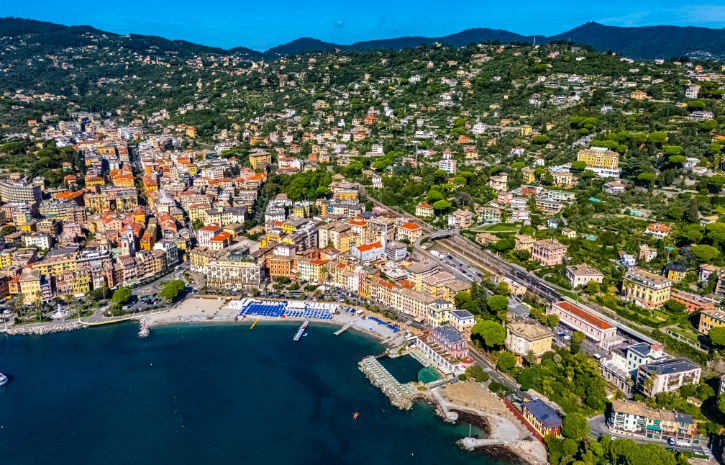
This is the graceful face of the coast. Santa Margherita grew from a cluster of fishing villages into a fashionable seaside resort in the late nineteenth and early twentieth centuries, and it still carries that refined air. Palm-lined avenues, tidy gardens, and elegant old hotels line the water. Yet the town never lost its roots, and a working fishing fleet still shares the harbor with the yachts.
b. Grand Villas and Seafront Squares
- Villa Durazzo. A seventeenth-century villa above the harbor, wrapped in a tiered park of formal gardens, palms, camellias, and citrus.
- Basilica di Santa Margherita d’Antiochia. A richly decorated Baroque church lit by crystal chandeliers, in the heart of the old center.
- Piazza Martiri della Libertà. An open seaside square lined with historic cafés and gelaterie, perfect for a slow pause.
- Abbazia della Cervara. A monastery with the only grand Renaissance garden that looks straight onto the Ligurian Sea. Visits are limited to select dates, usually twice a month on set Sundays from spring through autumn, or by advance group booking.
c. Things You’ll Want to Do
- Take a morning walk along the palm-lined promenade, watching sailing boats and working craft share the water.
- Visit the fish market at the southern pier in the afternoon, when the trawlers come in.
- Time your trip to catch one of the colorful sailing regattas that fill the gulf through the warmer months.
d. The Red Prawn Worth Travelling For
If you try one thing here, make it the gambero rosso di Santa Margherita. This deep-water red prawn is famous for its sweet, delicate flavor. Locals eat it raw with good olive oil or lightly seared at the waterfront trattorie. Trust me, it is the kind of simple dish you will remember.
From Santa Margherita, a short road curls out to the very tip of the promontory, where the Riviera’s most storied little harbor waits. Portofino is only a few minutes away by bus or ferry.
3. Portofino
a. The Riviera’s Most Famous Little Harbor
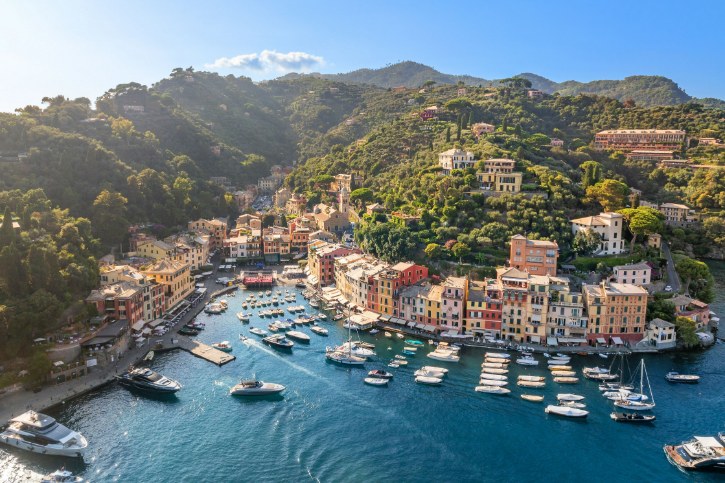
Portofino is tiny, and that is the secret of its charm. A single perfect curve of pastel houses wraps around a small harbor at the tip of the green Portofino promontory, with yachts and old fishing boats sharing the same calm water. It grew from a humble fishing village into a byword for glamour, drawing film stars and royalty, yet the setting itself stays simple and intimate. You come here to soak up one of the most photographed harbors in Italy.
b. Getting There Without a Train
Portofino has no train station of its own, but reaching it could not be easier. You take the train to Santa Margherita Ligure, then finish the short journey by bus or boat.
- By bus. The local line runs from outside Santa Margherita station to Portofino’s harbor in roughly 15 to 20 minutes, hugging the coast and stopping at Paraggi on the way. Buy your ticket before boarding.
- By ferry. Boats link Santa Margherita and Portofino in about 15 minutes, with lovely views of the coast from the water.
- How far. It is only about 5 kilometers along the shore, so the trip stays short however you travel.
c. Sights Around the Harbor
- The Piazzetta. The little harborfront square, officially Piazza Martiri dell’Olivetta, is the heart of Portofino. Ringed by ochre and pink façades and café terraces, it looks out over the moored boats.
- Castello Brown. A former Genoese coastal fortress on the hill above the harbor. A British consul, Montague Yeats-Brown, bought it in the late nineteenth century and turned it into a home, and the town has owned it since 1961. The terrace gives you one of the best views over the bay.
- Chiesa di San Giorgio. A short climb up from the Piazzetta brings you to this church, which holds relics said to belong to Saint George and looks straight down over the harbor.
- Chiesa di San Martino. The village’s Romanesque parish church, tucked into the oldest corner just behind the waterfront.
d. Walks, Views, and a Quiet Beach
- The lighthouse walk. An easy, level path leads from Castello Brown out to the Faro di Portofino at the point, with wide views across the Gulf of Tigullio. It is loveliest in the late afternoon.
- The regional park. Portofino sits inside a protected natural park and marine reserve, laced with stone trails through pine and olive groves toward San Fruttuoso and beyond.
- Paraggi. The only beach near Portofino is this small cove of clear emerald water on the road back to Santa Margherita. Much of it is private beach club, but there is a small free patch, so arrive early in summer.
e. How to Spend Your Time
- Nurse a coffee on the Piazzetta and watch the harbor come and go. It is pricey, but the view earns it.
- Climb to Castello Brown and the lighthouse for the classic panorama over the bay.
- Browse the small boutiques and sample fresh seafood at a harborside table.
Head back along the gulf and the coast opens up again at Rapallo, a bigger, livelier town where a seafront fortress meets steep mountain scenery.
4. Rapallo
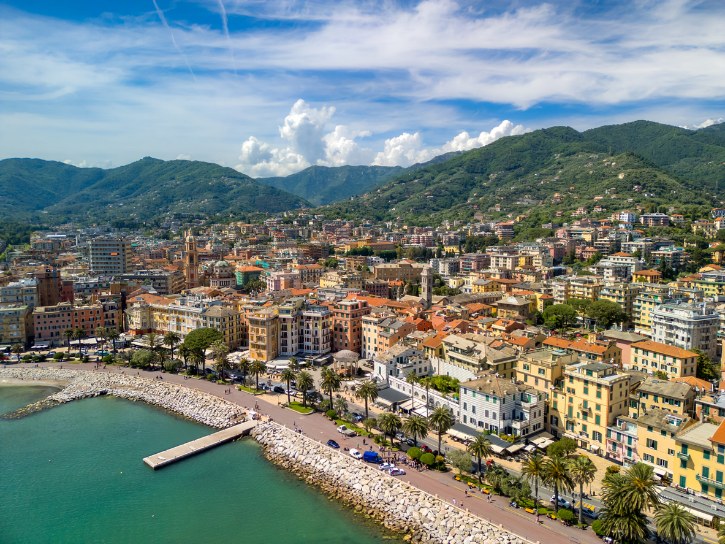
a. A Lively Town That Never Really Slows Down
Rapallo is the largest town on the Gulf of Tigullio, and it keeps its energy all year rather than just in summer. As an international resort a century ago, it drew diplomats, writers, and thinkers. You will feel that layered history as you walk its streets, and the setting is dramatic, with steep peaks rising straight behind the shore.
b. A Castle That Rises Out of the Sea
The town’s signature sight is the Castello sul Mare, a fortress perched on a rocky outcrop and linked to the promenade by a stone walkway. It was built in 1550 and 1551, after a brutal raid by the corsair Dragut in 1549, and it helped guard the western side of the Gulf of Tigullio as one of a chain of coastal forts. Today it hosts local exhibitions, and it makes a striking photo from the waterfront.
c. Landmarks and Views to Chase
- Lungomare Vittorio Veneto. A palm-shaded seafront esplanade fronted by grand old buildings and lively restaurants.
- Santuario di Nostra Signora di Montallegro. A sixteenth-century sanctuary high on the ridge, with sweeping views over the whole gulf. A historic cable car carries you up the terraced mountainside and is running today.
- Monastero di Valle Christi. Gothic convent ruins in a quiet inland valley, with a pointed bell tower and roofless nave rising from green lawns.
d. How to Fill Your Hours
- Get lost in the shaded caruggi of the old town, where shops display dried porcini, honeys, and fresh trofie pasta.
- Ride the cable car up to Montallegro, then follow the panoramic ridge trails through oak and chestnut woods.
- If you visit in early July, catch the Feste di Luglio, when the town stages maritime processions and competes with huge fireworks over the water.
e. Hemingway’s Rainy Rapallo
There is a literary story here too. Ernest Hemingway stayed at the seafront Hotel Splendide, today the Splendide Riviera, with his wife Hadley in the winter of 1923. That stay inspired his short story Cat in the Rain. You can still look out from the seafront toward the gardens and war memorial and sense the same quiet mood he wrote about.
Head east and the coast narrows into something unusual. A thin neck of land with a bay on each side marks the way into Sestri Levante.
5. Sestri Levante
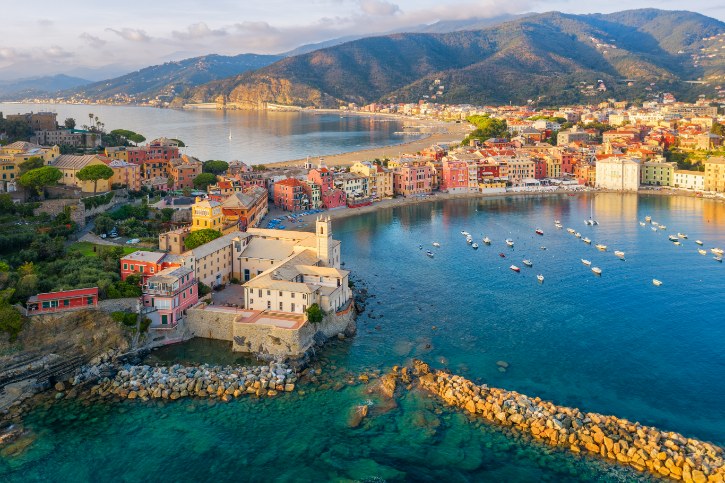
a. The Town With a Bay on Each Side
Sestri Levante has one of the most unusual settings on the whole coast. Known as the City of Two Seas, its old center sits on a narrow strip of land that links the mainland to a rocky headland. That shape gives you two very different bays, side by side, just a short walk apart.
b. Two Beaches, Two Different Moods
- Baia del Silenzio. The smaller eastern bay, an almost closed crescent of golden sand edged by pastel fishermen’s houses. Wooden boats rest right on the shore, and the water stays calm and quiet.
- Baia delle Favole. The larger western bay, open to the gulf with a broad beach of sand and pebbles, beach clubs, and the town marina. It has a livelier, more active feel.
c. Old Streets and High Views
- Via XXV Aprile. A pedestrian street along the spine of the old town, lined with Renaissance slate doorways, artisan shops, and trattorie.
- Convento dei Frati Cappuccini. A seventeenth-century convent above the Baia del Silenzio, with a viewpoint that takes in both bays at once.
d. What to Do by Day
- Swim or paddleboard in the gentle water of the Baia del Silenzio.
- Follow the walking path south onto the Punta Manara headland, winding through pines and cork oaks to an old Genoese watchtower with views toward Cinque Terre.
- Visit in spring for the Hans Christian Andersen Festival, a lively run of street theatre, music, and storytelling.
e. A Fairy-Tale Legacy and a Fisherman’s Stew
The Danish writer Hans Christian Andersen stayed here long ago, and the town still honors him with annual literary awards. Just east of the center is the fishing quarter of Riva Trigoso, home of bagnun, a simple stew of fresh anchovies, tomatoes, olive oil, and basil, ladled over crunchy ship’s biscuits. It is humble, hearty, and worth ordering.
Beyond the twin bays, the coast grows steeper and quieter. The railway threads through rocky tunnels into the peaceful valley of Moneglia.
6. Moneglia
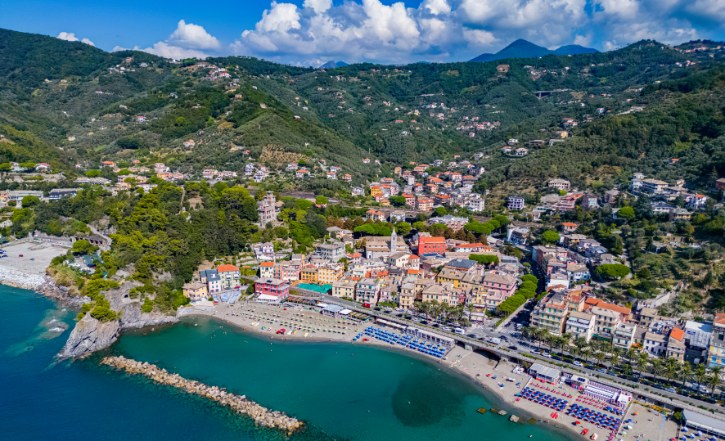
a. A Quiet Village Made for Slowing Down
Moneglia rests in a green bowl between two rocky headlands, Punta Moneglia to the west and Punta Rospo to the east. This is where you come to unwind rather than tick off sights. It keeps the slow rhythm of a real Ligurian village, and it is an official member of Italy’s most beautiful villages list.
b. A Safe Beach and an Old Main Street
- Spiaggia di Moneglia. A wide, curving beach of fine sand and small pebbles. Offshore breakwaters calm the swell, so the swimming here feels especially safe for families.
- Via Vittorio Emanuele. The medieval main lane, lined with tall pastel fronts, carved slate doorways, and old coats of arms above the doors.
- Chiesa di San Giorgio. A fourteenth-century Gothic church with a peaceful cloister and works by the local-born painter Luca Cambiaso.
- Two old fortresses. A pair of Genoese-era strongholds sit at either end of the village, the medieval Castello di Villafranca and the Castello di Monleone, both looking down over the bay.
c. Where to Walk Above the Sea
- Climb east toward Punta Rospo and Lemeglio through olive groves, with views back over the bay.
- Head west on coastal paths toward Punta Baffe, rising through pines and scrub to an old watchtower above the sea. This route suits more experienced walkers.
d. Local Flavors You Should Try
Moneglia is proud of its olive oil, pressed from hillside varieties. At the trattorie, look for scabeggio, a traditional dish of small fried fish soaked in a warm marinade of wine vinegar, garlic, rosemary, and bay. Sailors first made it to preserve their catch on long trips, and you will still find it served as an antipasto all along the coast.
Keep going and the railway threads on through rocky tunnels to Levanto, a broader bay with wide sands and the first real sense that Cinque Terre is near.
7. Levanto
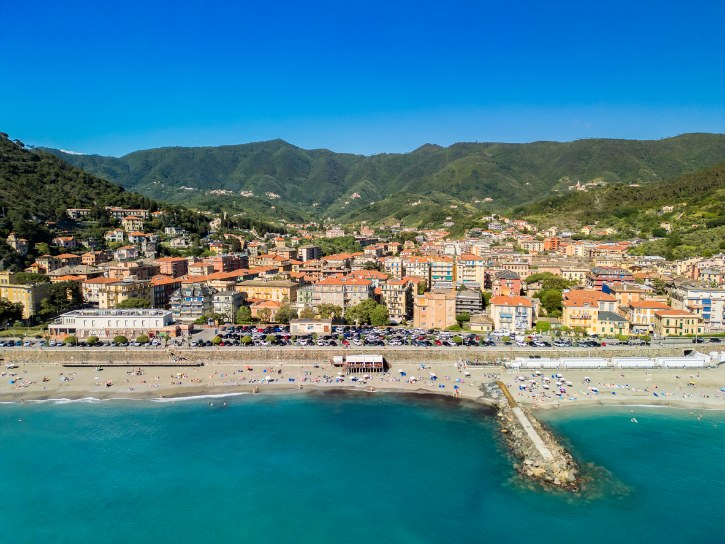
a. More Than Just a Gateway to Cinque Terre
Levanto is the northern doorway to the Cinque Terre National Park, but it stands tall on its own. It spreads across a wide river valley that opens into a broad coastal gulf, which gives the town a spacious, open feel. You get a swimmable beach, a walkable old center, valley trails, and a real surf culture, all in one easygoing place.
b. The Sights Around Town
- Levanto Gulf and Beach. A long crescent of sand and shingle below a promenade of pines and palms, with views toward the cliffs of Punta Mesco.
- Piazza Cavour. The civic heart of town, once a convent cloister, now ringed by pastel houses and cafés.
- Loggia Medievale. A thirteenth-century arcade resting on stone columns with Romanesque capitals. In 2007 UNESCO named it a monument witness of culture and peace.
- Chiesa di Sant’Andrea. A Gothic church striped in dark green and white marble, crowned by a carved rose window.
- Castello di Levanto. A well-preserved medieval castle above the old quarter, with thick stone walls and watchtowers. It is privately owned, so you admire it from the outside.
c. Catch a Wave or Walk the Hills
- Surf the bay, which is one of the best spots in the Mediterranean, especially in autumn and spring. Surf schools and rental shops line the beachfront.
- Paddleboard or sea kayak along the caves near Punta Mesco in calmer summer water.
- Hike the classic route south over Punta Mesco toward Monterosso, passing a ruined fourteenth-century hermitage with sweeping coastal views.
d. Tastes of the Town
Spend time in the old town, where bakeries and delis serve traditional focaccia and fresh pesto alla genovese, made with fragrant local basil, pine nuts, garlic, cheese, and olive oil. It is the kind of honest food that tastes even better after a morning in the water.
Round the big headland of Punta Mesco and you finally cross into the national park. The first of the five famous villages, Monterosso al Mare, is also the largest and the most beach-friendly.
8. Monterosso al Mare
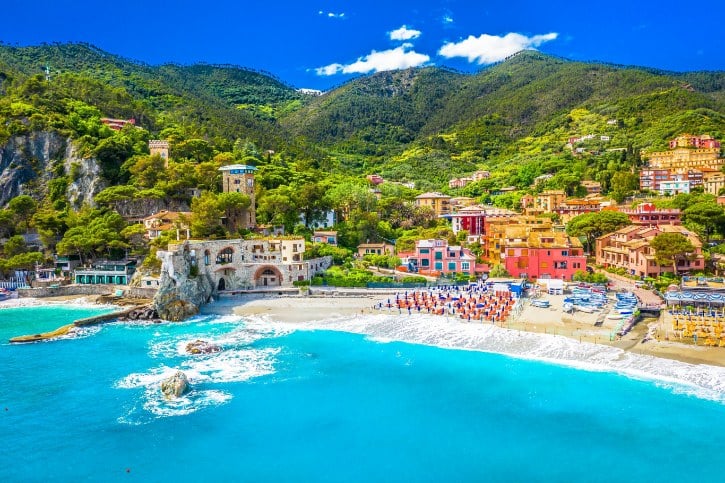
a. The Largest of the Five Famous Villages
Monterosso is the westernmost, biggest, and oldest of the Cinque Terre villages. Where its neighbours cling to tight ravines, it spreads across a wider coastal bowl. This is the village to choose if you want both beach time and history in one stop.
b. A Town Split in Two
A rocky hill called San Cristoforo divides the town. To the west lies the modern Fegina district, with wide beach promenades and early twentieth-century villas. To the east sits the historic Old Town, full of medieval lanes and old churches. You can walk between the two halves through a pedestrian tunnel beneath the hill.
c. Standout Sights
- Fegina Beach. The main beach and the only long sandy beach in all of Cinque Terre, with a huge natural sea stack rising offshore.
- Il Gigante. A giant concrete statue of Neptune at the western end of the beach, battered by time but still standing as a landmark.
- Torre Aurora. A sixteenth-century Genoese watchtower at the foot of the San Cristoforo hill, dividing the old town from the Fegina side.
- Chiesa di San Giovanni Battista. A fourteenth-century church with a striking two-tone marble facade and a grand Gothic rose window.
- Convento dei Cappuccini. A hilltop convent holding a celebrated Crucifixion linked to the Flemish master van Dyck, with peaceful terraces overlooking the coast.
d. Beaches, Lemons, and Trails
- Start your day on the loungers of Fegina Beach, with a swim in the clear bay.
- Taste the town’s lemon heritage through aromatic limoncino, citrus granita, and lemon cakes. A lemon festival dresses the streets in citrus boughs each May.
- Try the local salted anchovies, a protected regional delicacy cured in sea salt inside chestnut barrels.
- Climb the popular stretch of the Sentiero Azzurro (Blue Trail) over the cliffs toward Vernazza.
Leaving the broad beaches behind, a quick tunnel brings you to Vernazza, where the mood tightens into one small, colorful harbor set against dramatic cliffs.
9. Vernazza
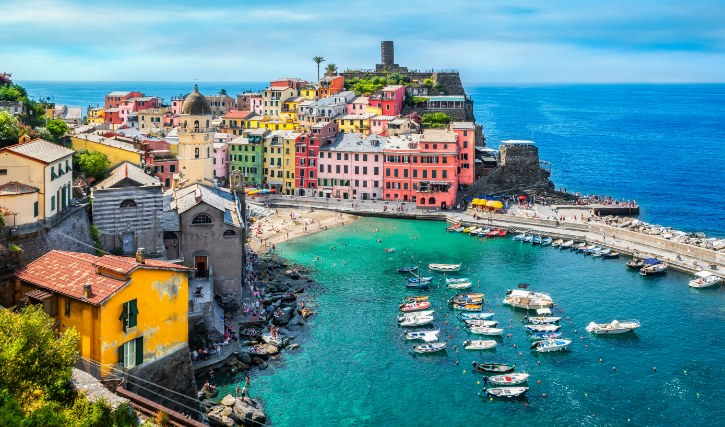
a. The Village That Steals Everyone’s Heart
Vernazza is often called one of the most beautiful villages in Italy, and it is an official member of the country’s prettiest-villages list. Its magic comes from a natural rocky amphitheater that frames the only secure natural harbor among the five villages. Colorful tower-houses stack around the water, and a lively square spills right down to the boats.
b. The Harbor, the Church, and the Castle
- Piazza Marconi. The beating heart of the village, a waterfront square lined with pastel houses, trattorie, and shaded tables over the harbor.
- Chiesa di Santa Margherita d’Antiochia. A Gothic church built right on a coastal rock shelf, with a tall octagonal bell tower topped by an open cupola.
- Castello Doria. A medieval castle on the cliff above the harbor. Its surviving round keep crowns the point and gives you 360-degree views over rooftops, hills, and sea.
c. Views You’ll Want to Chase
The trail segments above town, running north toward Monterosso and south toward Corniglia, deliver the world-famous views that capture Vernazza’s harbor and church tower nestled by the sea. For a smaller fee and a short climb, you can also stand atop the castle keep and watch the coastline open up beneath you. Save some camera space for this one.
d. Swimming and Seafood by the Water
- Swim at the sheltered sandy shore inside the harbor, or at a wilder pebble beach on the eastern side, reached through a rock tunnel. Always check the sea first, since the open water beyond the breakwater can pull with strong currents.
- Order tegame alla vernazzina, a baked casserole of fresh anchovies layered with potatoes, tomatoes, and herbs.
- Pair it with a crisp local white wine and watch the fishing boats come home.
From this sea-level harbor, the route climbs inland and upward to Corniglia, the one village that watches the sea from the heights.
10. Corniglia
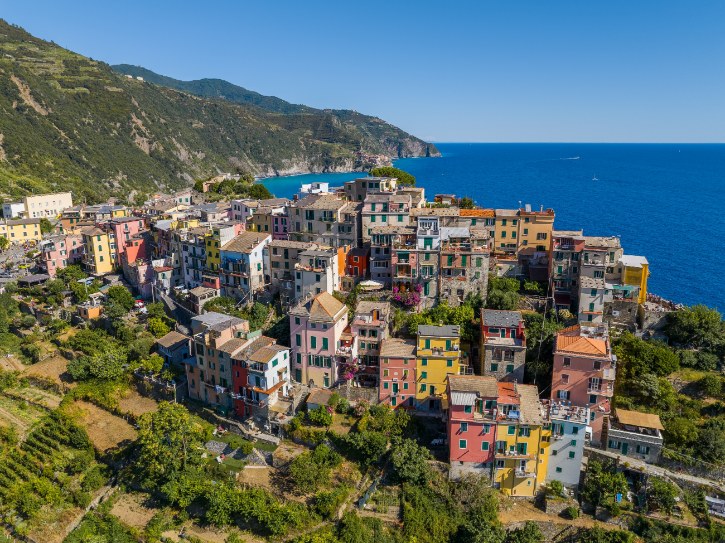
a. The One Village That Sits High Above the Sea
Corniglia is the only one of the five villages without direct sea access. It perches on top of a sheer promontory about 100 meters high, surrounded on three sides by terraced vineyards held up by ancient dry-stone walls. Because you have to earn the climb, it sees fewer day-trippers and keeps a quiet, rural feel.
b. Getting Up to the Village
You have two choices when you arrive at the station below. The classic route is the Scalinata Lardarina, a grand staircase of 33 flights and 382 steps that zigzags up the slope, rewarding you with wider views at every landing. If the climb is not for you, a municipal shuttle bus also runs between the station and the village center.
c. Quiet Corners Worth Finding
- Belvedere di Santa Maria. A terrace at the western tip of the promontory that drops straight to the sea, with open views north and south along the coast.
- Chiesa di San Pietro. A Gothic church with an openwork rose window carved from white Carrara marble and fine floral detailing.
- Piazza Largo Taragio. A shaded village square ringed by wine bars, cafés, and an old oratory, with medieval lanes leading off it.
d. Wine, Walks, and Sunsets
- Taste the region’s wines, grown on the terraces around the village, including the crisp local white and the prized Sciacchetrà dessert wine.
- Try local treats in the small shops, from fresh basil gelato to honey-drizzled pecorino.
- Walk the footpath toward the hamlet of San Bernardino, with wide views over the farmed slopes.
- Stay for sunset at the Belvedere di Santa Maria, one of the most serene viewpoints on the whole coast.
Drop back down toward the sea and the shoreline leads to Manarola, where pastel houses tumble down a dark slate ridge to a rocky boat haven.
11. Manarola
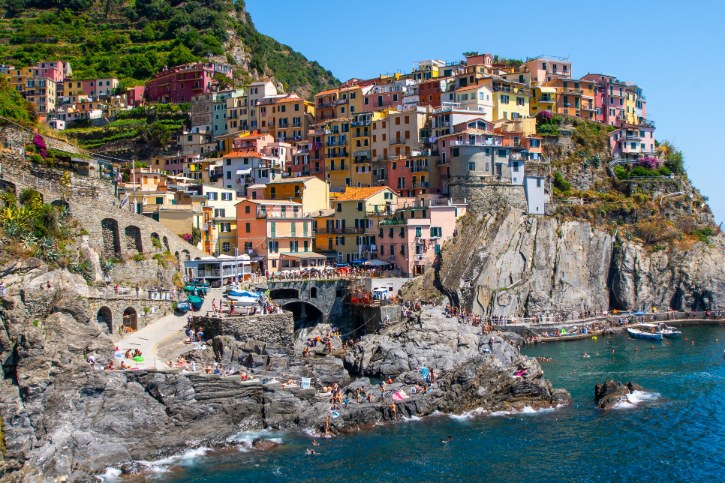
a. The Most Photographed View on the Coast
Manarola is the romantic postcard of the Cinque Terre. Its colorful tower-houses seem to pour down a sheer black slate cliff, ending at a deep, rocky inlet. Vineyard terraces climb the hills all around. The mix of dark rock, turquoise water, and pastel buildings makes one of the most photographed scenes in the Mediterranean, and you will want to linger.
b. Around the Harbor and the Upper Village
- Marina di Manarola. A small rocky haven where fishing boats are lifted onto the main street by crane to keep them safe from the sea.
- Nessun Dorma and Punta Bonfiglio. The scenic path around the northern headland leads to the raised garden that gives you the classic view of the village against the cliff.
- Chiesa di San Lorenzo. A fourteenth-century Gothic church in the upper square, with a marble rose window and an old triptych inside, plus a separate bell tower nearby.
- Piazza Capellini. A relaxed square in the heart of the village, built over the old railway line, surrounded by colorful fronts and small shops.
c. Swimming, Walking, and Wine
- Swim in the deep, sheltered rocky cove, entering by stone stairs and metal ladders. Take care on the slippery rocks, and skip the cliff jumping, since hidden reefs lurk below.
- Sip chilled local white with warm focaccia in the upper village.
- Climb the historic stone trail through the vineyard terraces toward the old hill village of Volastra and its ancient sanctuary.
d. The Path of Love, One Way Only
At the southern edge of the village is the northern gate of the famous Via dell’Amore (Path of Love). Before you plan, know the current rule: you cannot walk south from Manarola toward Riomaggiore. The path runs strictly one way, starting in Riomaggiore and ending here in Manarola.
A short tunnel through the coastal cliff carries you to the final stop, Riomaggiore, the last of the five villages.
12. Riomaggiore
a. A Colorful Finish to Your Journey
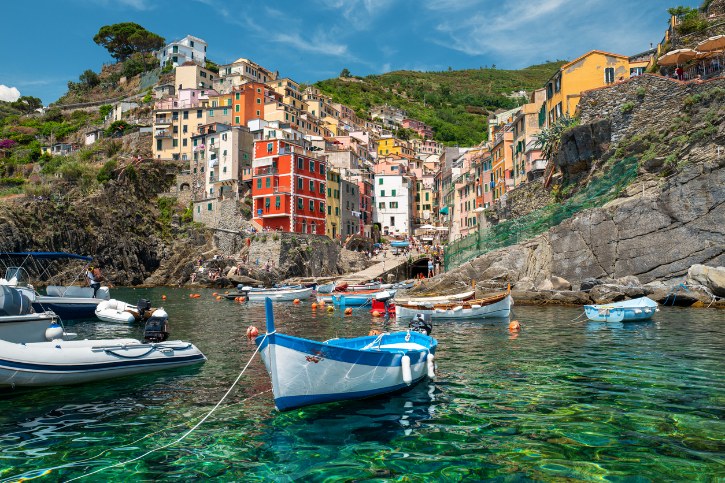
Riomaggiore is the southeasternmost of the five villages and the administrative seat of the national park. People settled here eight centuries ago, building along a steep valley now hidden beneath the main street. Tall, brightly painted houses climb the ravine walls, creating a vivid wall of color that drops toward a rocky harbor. It is a fitting place to end your trip, and it shines brightest in the late afternoon.
b. The Harbor and the Streets Above It
- Marina di Riomaggiore. The signature view, a small boat slipway framed by cliffs and tall houses. A breakwater of large boulders gives you a spot to look back across the boats and pastel fronts.
- Via Colombo. The lively central street, lined with trattorie, focaccerie, wine bars, and local shops.
- Castello di Riomaggiore. A hilltop castle with two round towers and a public terrace offering panoramic sea views.
- Chiesa di San Giovanni Battista. A parish church in the upper quarter, with a neo-Gothic facade, pointed doorways, and a marble rose window.
- Spiaggia del Fossola. A wilder beach of dark grey shingle and boulders, just east of the harbor around the rocky spur.
c. How to Enjoy the Evening
- Gather on the rocky breakwater as the sun drops toward the horizon and its golden light washes over the painted harbor fronts.
- Fill your camera roll with the colorful facades catching the last light.
- Join the locals in the wine bars along Via Colombo for fried seafood in paper cones and glasses of chilled local white.
d. Walking the Reopened Path of Love
Riomaggiore is the official start of the famous Via dell’Amore. Cut into the cliff about thirty meters above the sea, this 900-meter paved path connects Riomaggiore to Manarola. It reopened in the summer of 2024 after twelve years closed by a rockslide, and access is now carefully managed.
You will need to book a 30-minute time slot in advance and hold a valid Cinque Terre Card. The path runs one way only, starting here in Riomaggiore, just left of the station exit, and ending in Manarola. The cliffside scenery along the way is something you will not forget.